Shoutout to Belt Publishing for all the great Rust Belt-ish books they put out. I don’t get around to reading enough of them, but when I pick one up, I know it’s going to be good. Belt Publishing’s 2016 release The New Midwest by Mark Athitakis is still a bible of Rust Belt lit for me, and my copy resides permanently in my bookshelves. And then there’s Edward McClelland’s super clever How to Speak Midwestern (linguistics is never not fun!).
Of Belt’s newer releases, I’m most excited to read Patrick Wensink’s The Great Black Swamp: Toxic Algae, Toxic Relationships, and the Most Interesting Place in America that Nobody’s Ever Heard Of. (I am so here for long titles and of books that make me feel like a somebody–in that I have heard of the Great Black Swamp, since my dad lives in Northern Ohio. Also, when the personal and the environmental collide–which should be often–fantastic storytelling happens, imo.)
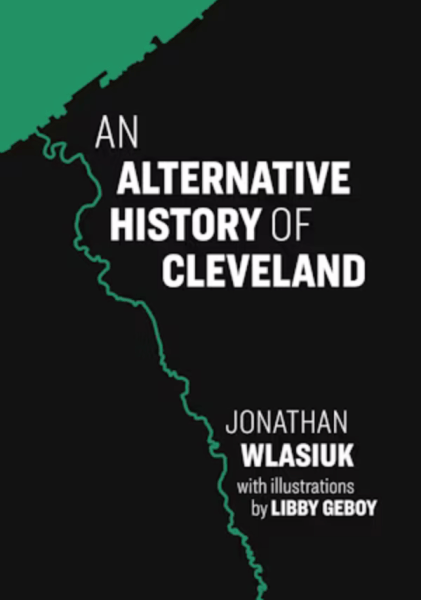
I just finished Jonathan Wlasiuk’s An Alternative History of Cleveland, and thought, yep, Belt Publishing did it again. (I think Ed Simon–of Belt Magazine, now Rust Belt Magazine–wrote An Alternative History of Pittsburgh, which is bound to be as great, if not even better.) I’ve been dipping in and out of this history of my native northeast Ohio for months, not because it isn’t gipping but because it’s so layered. A summary for you from the back jacket copy:
Part natural history, part archaeological essay, and part a contemporary call to arms to reclaim and rewild Cleveland’s future, this unforgettable trek into the heart of ‘the land’ will change the way you see the city forever.
No easy task, the author attempts to provide at least a bird’s eye view (both figuratively and literally, as you’ll see) of 10,000 years of human history. He zooms in on the relationship (fraught, as you can imagine) between humans and the environment–of which there’s a lot to find interesting, as northeast Ohio is situated along the eastern shore of Lake Erie, bountiful in flora and fauna, when it’s left alone, that is.
Incredibly well-researched and cited, the parts of the book that “sang” to me best were those moments where the personal and the environmental intersected in a visceral way. In the final chapter, “The Land,” Wlasiuk describes his work for an organization called Lights Out Cleveland, which has him looking for dead birds on the sidewalks of Cleveland before dawn during the heart of migration season. These birds came to an untimely end along their journeys due to humans’ penchant for light, of course, and see-through buildings.
This might sound like a depressing chapter start, but the author has a knack for involving fascinating local voices–including the “irreverent” and mostly-anonymous voice behind the @trashfish_cle account on IG, who spends his days in a kayak fishing trash out of the Cuyahoga River–and for providing hope, often in the way of a call to action. Or, at least we get lessons by watching locals who are doing their part to “remediate the environment and spread awareness.”
And look, we can do our part–not just for the Rust Belt-ish literary world but for the world at large, for our flora and fauna neighbors–by talking about the books we read that not only entertain but open our eyes to the ways we are connected to each other and to these ancient environments we call home. Right?
What are you reading, reading, or watching right now? Let me know in the comments.
Like this post? Comment below or on my FB page. And please share with your friends and social network.
Are you a Rust Belt writer interested in seeing if your own post, or author interview, or book review might be right for Rust Belt Girl? Hit me up through this site’s contact function.
Check out my categories above for more interviews, book reviews, guest posts, literary musings, and writing advice we can all use. Never miss a post when you follow Rust Belt Girl. Thanks! ~Rebecca
I interrupt this Covid haze–mine, yes, I was gifted the virus for Christmas–to present a round-up of all the Rust Belt Girl goodness in 2023, made possible by you amazing readers and followers. (For you math and science types, here are your facts and stats):
2023 total views: 5,069, from 3,575 viewers, for 231 likes, and 170 comments. Thank you for engaging!
Most Viewed Author Interview: My interview with John W. Kropf, author of Color Capital of the World. (Though John and I both live in the Greater Washington D.C. area, as luck would have it, we were in Ohio at the same time earlier this year, and I was able to meet him and his lovely wife Eileen at a reading and book-signing not far from where Color Capital takes place.)
2023 felt pretty good and creative outside of the blog, too: I published a short story and a poem(!) and started querying a novel (a couple of you blog followers and friends beta-read!). I am infinitely lucky and grateful to cross paths with as many of you as I do–even if only on these interwebs.
I think we deserve a happy and healthy 2024 with all the writerly and readerly connections we desire. Those of you local to these D.C./Baltimore parts, find me on January 14 at EC Poetry & Prose’s Salon Series. Thank you again to Patti, my fellow blogger–and extraordinary poet and spoken word artist “little pi”–for inviting me to read!
As for Rust Belt Girl, keep in mind that I love a guest post–author interview, book review, or essay on the writing life and beyond–so hit me up.
Oh, and if you want to check out my reading superlatives for 2023, they’re at Goodreads. Or, find me on FB. Share your top posts or top reads for 2023 in the comments. I’d love to hear about your writerly, readerly year.
David Giffels is the author of The Beginning Was the End: Devo in Ohio, coauthored by Jade Dellinger and published by University of Akron Press in 2023.
…this is a story of five spuds from an industrial wasteland with big ideas. It never should have happened. But it did. And in its wake, it leaves a parable.
Hold onto your energy domes, readers! I spoke with award-winning author, Akron Ohio’s own David Giffels, about all things Devo–and much more.
David, how did your Devo fascination begin? How much did you know about the band before you started writing about it?
My first encounter with Devo was when they were on Saturday Night Live in 1978. I remember it being this spectacle of a rock and roll band, like something I hadn’t seen before—and being equally freaked out and intrigued. This was in their yellow suit era and they were doing their robotic stage moves. My parents were watching with us, and my mom said something about them being from Akron. I don’t know how much that resonated with me then. But I recognize now that I did associate them with the place I was from, and that meant something abstract but important to me then. And it means something very specific to me now, that in their era, Devo really did define what Akron was.
What made you want to go down the Devo rabbit hole, conducting scores of interviews with Devo members and Devo-tees to write this—and your last Devo book? And what changed between your last book and this one?
My coauthor Jade Dellinger and I met in 2000 at one of the first of the Devo fan conventions, called DEVOtionals. I was there covering the story for the Akron Beacon Journal and Jade was an independent art curator. I had been dabbling with the notion of writing a book about Devo, because there was no biography of them. At the same time, Jade had been compiling research. We were introduced and immediately hit it off and combined forces.
In 2003, we published the first serious biography of the band: Are We Not Men? We Are Devo, the title taken from the band’s first album. The book went out of print, and for years we’d wanted to bring it back. When we approached the University of Akron Press about publishing it, we hit on the idea of reshaping it into what we really felt was the heart of the book. The original book covers Devo’s entire career. But the most interesting part is everything that happens up until they become a famous, commercial band: the ten years that takes place in anonymity in Northeast Ohio.
The Beginning Was the End: Devo in Ohio is revised to tell the story of these outsider artists, who found each other in an unlikely industrial landscape and started to explore all forms of media, art, and music, and what it was like for them to not only be ignored but also almost universally reviled. And yet they stuck to it and found a way into the mainstream. What’s so fascinating is the moment of them making it is also the beginning of the end. I don’t want to spoil the book’s ending, but there’s this moment of: ah, we’ve arrived, and here at the arrival is the specter of doom.
This book includes so many wonderful photographs of the early days of Devo. That’s a change from the first book, right?
Yeah, by creating a tighter focus, there was room for more than 80 new photographs that had never been seen before. It’s an amazing collection of memorabilia that we were able to showcase in this book that we couldn’t in the last book. Most of the photos were taken by Bobbie Watson Whitaker, who was a Kent State student and there from the very beginning of the band. She was always taking pictures and really documented Devo’s whole first decade—it’s just amazing.
What was it about the Rust Belt of the 1970s, and specifically Northeast Ohio, that was the perfect petri dish to birth Devo?
I make the argument in the intro to the book that Devo couldn’t have come from anywhere except Akron and Kent, really. There are factors in their development and aesthetic and philosophy that are directly tied to their environment. The most important is that the key members of Devo were students at Kent State University on May 4, 1970, when the national guard murdered four students and wounded several others. Two of them were friends of Devo co-founder Jerry Casale. He witnessed the event, and it changed everything. Devo’s dabbling with the philosophy that humans are evolving in reverse—de-evolution, where they got their band name—became something much more real. Here was an inhuman act by the government that happened right before Casale’s eyes, and it changed his life.
Then there’s the waning industrial backdrop of Northeast Ohio, the factories and the monochromatic gray polluted skies, the monolithic blimp hanging overhead. It almost had a German Expressionist feel, and it worked like an art-directed backdrop for the music Devo was making. Early on, they were working with mechanical sounds, and while they are not an industrial band, they have a strong industrial aesthetic. The yellow suits, their defining uniform in the early days of the band, came from a janitorial supply company that supplied the factories—so they were picking up on these industrial elements.
Another very important factor specific to Northeast Ohio was a guy named Ghoulardi, who hosted a Friday night B-horror-movie show out of Cleveland. He wore a weird wig and sunglasses and performed in this hipster schtick way. He was this anti-authoritarian guy, who played primal rock and roll in the background while he was doing his monologue in between segments of the movies he made fun of. Out of Cleveland, he was seen by vast numbers of teens in the 1960s, who were also watching Ed Sullivan and the Beatles. Many artists and musicians who came from Northeast Ohio site Ghoulardi as a key influence for their twisted sense of humor and rebellious natures, and that was the case with Devo.
And then there’s the work ethic of a working factory town. Devo stuck to this not-very-commercial art project for a decade—and that’s really the heart of the book—before they got any validation. That comes from that stick to it attitude that is baked into the nature of an industrial landscape.
What’s a favorite story of yours from Devo’s early days?
One of my favorite stories is the way they would get gigs around the local music scene. Most of the bars would only hire cover bands. So the guys from Devo would call up the owner and say, “Hey, we’re this band called Devo and we play covers,” and they’d get booked. And they’d go on stage and say, “Here’s one by Bad Company,” and then they’d play one of their tuneless songs. They were using a homemade electronic drum kit at the time that made these atonal sounds of metal on metal. So this was clearly not a Bad Company song. And they’d get through one song and then say, “Okay, here’s one by Foghat,” and they’d do it again. By about the third song, they’d get the plug pulled or be paid by the club owner to leave. But they just fed on that. It was a total punk rock move—without the glamour of punk.
Do you label Devo punk rock or new wave?
I think Devo is new wave, and Iggy Pop makes the case too that they are the defining new wave band. Their quirkiness, the colorful presentation, the use of new technology, they embraced and embodied all of that. Not only would I call them new wave but I’d say they are the quintessential new wave band.
Devo was made up of art majors and outsider artists who were just as interested in Art Devo and related artistic theories as in music. How much of this was real artistic statement? Performance art? Something else?
The first two people who started playing around with this were Jerry Casale and his friend Bob Lewis, who met at end of 1960s as freshmen at Kent State. As often happens with curious people when they make that big step from high school to college, every new idea seems like a bolt of lightning. Those two started having these late-night, pot smoke-fueled conversations about the fact that humans were devolving, and they started to write poems and manifestos about this, and I’m sure it had a serious intent, but it was also theoretical and philosophical. It was something they were trying out, as one does at that stage of one’s life.
I don’t think it was a joke, but until May 4, 1970, I don’t think there was as strong a political and social intent behind it. But the Kent State shootings changed this from theoretical to graphically real, right in front of them. Everything changed going forward.
One thing Devo did well was to mix up the joke with the serious intent in a way that one can’t be extracted from the other. So many songs that could be taken on the surface one way have something completely other underneath. Take for example “Whip It,” which has been cited among the Top 5 songs about masturbation, but it’s also a song that’s very much Dale Carnegie-pull-yourself-up-by-the-bootstraps: “When a problem comes along, you must whip it,” as a serious self-help statement. As I write in the book, if the intent was serious, it was meant to be laughed at, and if it was a joke, it was meant to be taken seriously.
Devo’s costumes are iconic. Can you talk about the importance of the masks and uniforms they made into their costumes?
Masks go back to their very first performance in 1973—50 years ago—at an art festival at Kent State. Mark Mothersbaugh by default became the singer, and he was not at all comfortable on stage. The band was almost anti-music; they were making really atonal, mechanical kinds of sounds. Mothersbaugh wore a mask because he was terrified to be on stage. So it began with that, but as they went on and began experimenting with a performance art kind of presentation of their image, they started to adapt—first of all this sense of a uniform. They wanted to be seen as indistinguishable as individuals; that was part of the philosophy of Devo. It was part of the aesthetic, but also the philosophy that the individual is not important.
One thing they were trying to do was to undermine what had become part of established rock and roll culture. Men with beards, wearing faded jeans and leather—Devo wanted to reject that. The way to do it would be to put on a uniform and confront what rock and roll was. Of course, the first splash they made was by taking the quintessential rock and roll song, “Satisfaction” by The Rolling Stones, and turning it completely inside out. Musically and visually, that’s what they were doing to a rock and roll culture that thought it was radical.
How about the red, cone-shaped hats?
If you were going to have one new wave symbol, it would be those red energy dome hats they wore for the Freedom of Choice campaign of 1980, which are almost always referred to as the upside-down-flowerpots. And that seems like a silly, cartoonish, tossed-off gimmick. And yet you could write an academic thesis about what the energy domes really are. First of all, they’re drawn from an early image in Jerry Casale’s imaginative mind as a student at St. Patrick’s Elementary School in Kent, Ohio. He would walk down the hallways, and above him were these light fixtures that were art deco ziggurat shapes. Something about them stuck in his artistic mind.
Devo had a new look for every album and was very much about their visual presentation. So, when the members were designing the Freedom of Choice look, Casale went with this art deco, ziggurat shape. But it wasn’t just that. Devo also decided to call them energy domes, and the idea was that this would be a way to concentrate the psychic energy of the universe into the mind of the wearer. And of course nobody knew or cared—they were just the red flowerpot hats. But again, if it’s a joke it was meant to be taken seriously, and if it was serious it was meant to be taken as a joke. And I think the members of Devo are quite happy that the people who get it, get it, and the people who don’t, don’t.
Devo left Ohio in the late 70s and didn’t play in Akron again until 30 years later. Did you see them perform?
Yes. The last show they’d played in Akron was their homecoming tour in 1978. Then in 2008, they were invited to do a fundraiser for the local democrat party. It was Devo, Chrissie Hynde and the Black Keys—the three most iconic musical acts from Akron’s rock history—and they played together and it was an amazing night, to see those artists on the same stage. They jammed at the end, all playing together, which was really cool.
We all know Devo’s 1980 MTV pop hit “Whip It,” but what Devo songs do you think we should be listening to today?
The most interesting Devo music to me has always been what falls under the tag of hardcore Devo, which is their early demos of what became their early albums. It’s the pre-Warner Brothers recordings. There’s a new hardcore collection that just came out. [50 YEARS OF DE-EVOLUTION (1973–2023), a retrospective collection, also released in 2023.] I would recommend that more than their mainstream commercial releases, because I think it captures their rough edges. To me that’s the true spirit of Devo.
Devo has been on tour this year, what’s being called their farewell tour, though they don’t like it called that. Part of it is that they’ve been nominated for the Rock & Roll Hall of Fame the past few years. This is another one of those ironies of Devo. An outsider band being put in the museum for rock and roll—that would be very Devo.
What’s the current Northeast Ohio music scene like? In addition to writing, you play in a band. Can you tell us about it?
I’m currently playing bass in a band called Dave Rich and His Enablers. It’s sort of indie rock power pop. The drummer is Chis Butler, who was the founder of The Waitresses [“I Know What Boys Like”], another Akron new wave icon. He had a lot of interaction with Devo, because they were in the scene at the same time, so he has lots of Devo stories to tell, himself. As far as the Northeast Ohio music scene, it feels like things got splintered with Covid. Over the pandemic everything was done alone in isolation, and the music is just now creeping out of the basement and back into the light of day.
What is the Devo parable, and what can we learn from their story? One of the parables is that if you mess with the system, the system will devour you. It’s better to know that it’ll happen and do it anyway than fear it’ll happen and not do it. That’s very much what happened with Devo. At some point they changed from wanting to be pure artists to wanting to join the music industry and get signed to a commercial label. As they were undergoing that transition, they were very aware that they were just meat in a world of vultures. That’s the main parable. They knew they were going to get scalped, but they did it anyway.
The second lesson is that their own theory also defined them. Their belief that evolution is working in reverse applied to them. Their music was so vibrant and new when they began, and then they slowly fell into some of the cliches of the rock and roll world: drugs, infighting, and problems with the record label. All of that started to pull them apart and they devolved from being bold iconoclasts to having to play the game. As they devolved, their music devolved—as they had predicted it would.
David Giffels is the author of eight books of nonfiction, most recently The Beginning Was the End: Devo in Ohio, coauthored with Jade Dellinger. His 2020 book Barnstorming Ohio: To Understand America, was described by Publishers Weekly as a “trenchant mix of memoir, reportage, and political analysis,” and selected as one of Library Journal’s Best Books of 2020. His other books include the memoirs Furnishing Eternity and All the Way Home, both winners of the Ohioana Book Award, and The Hard Way on Purpose, a NewYork Times Book Review “Editors’ Choice.” A former columnist at the Akron Beacon Journal, his writing has appeared in the New York Times Magazine, The Atlantic, Parade, The Iowa Review, Esquire, Grantland, and many other publications. He also wrote for the MTV animated series Beavis and Butt-Head. He is a professor of English at the University of Akron, where he serves on the faculty of the NEOMFA creative writing program.
Like this interview? Comment below or on my fb page. And please share with your friends and social network. Want more? Follow Rust Belt Girl. Thanks! ~ Rebecca
I take umbrage with whomever coined the phrase “lazy days of summer.” And I might demand a refund. Except, while my summer has been anything but lazy, it has been fun.
After a little hiatus I return to you loveliest of followers with Rust Belt pics and books–and news of a reading in one of my favorite port cities (and rollercoaster capital), Sandusky, Ohio.
Off to OHio
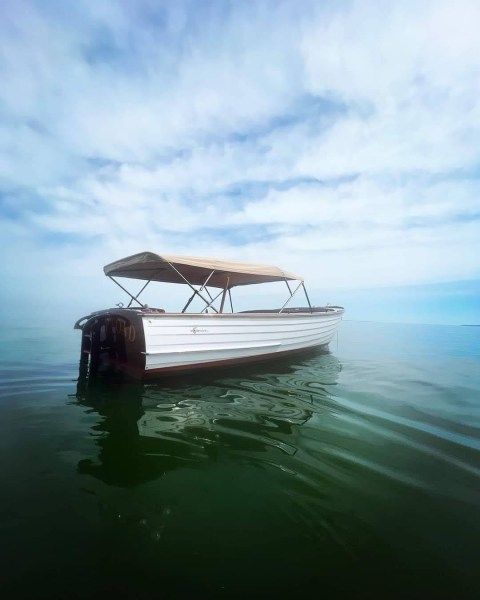
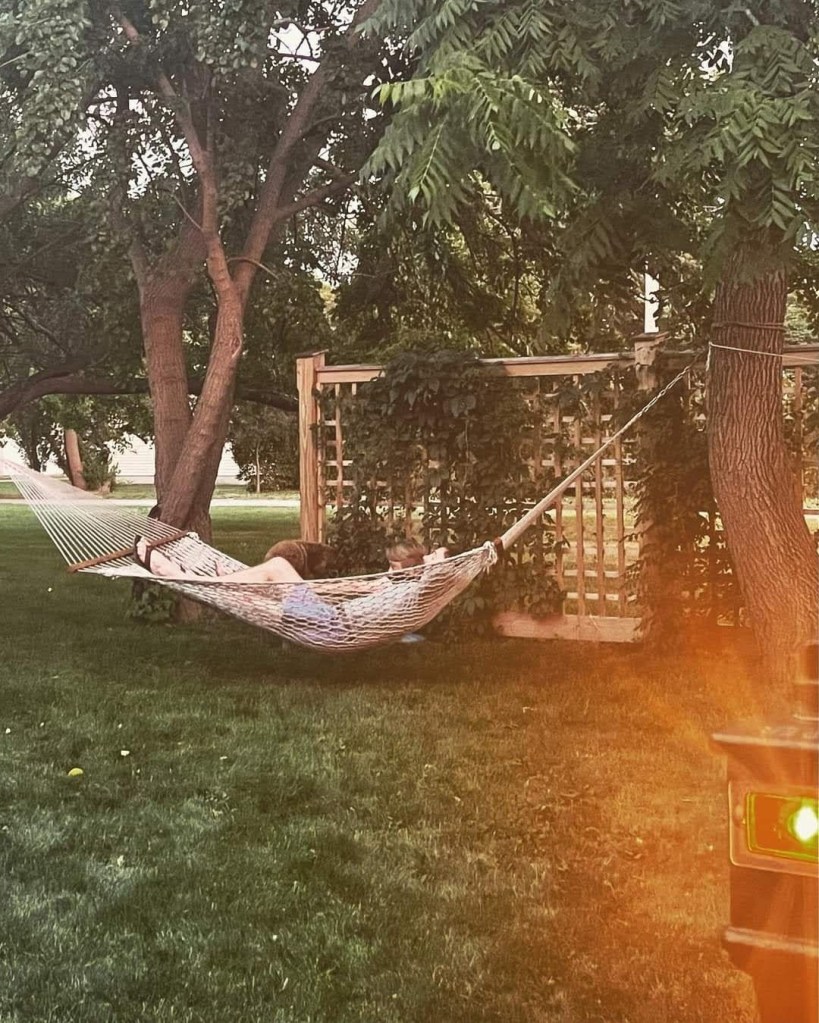
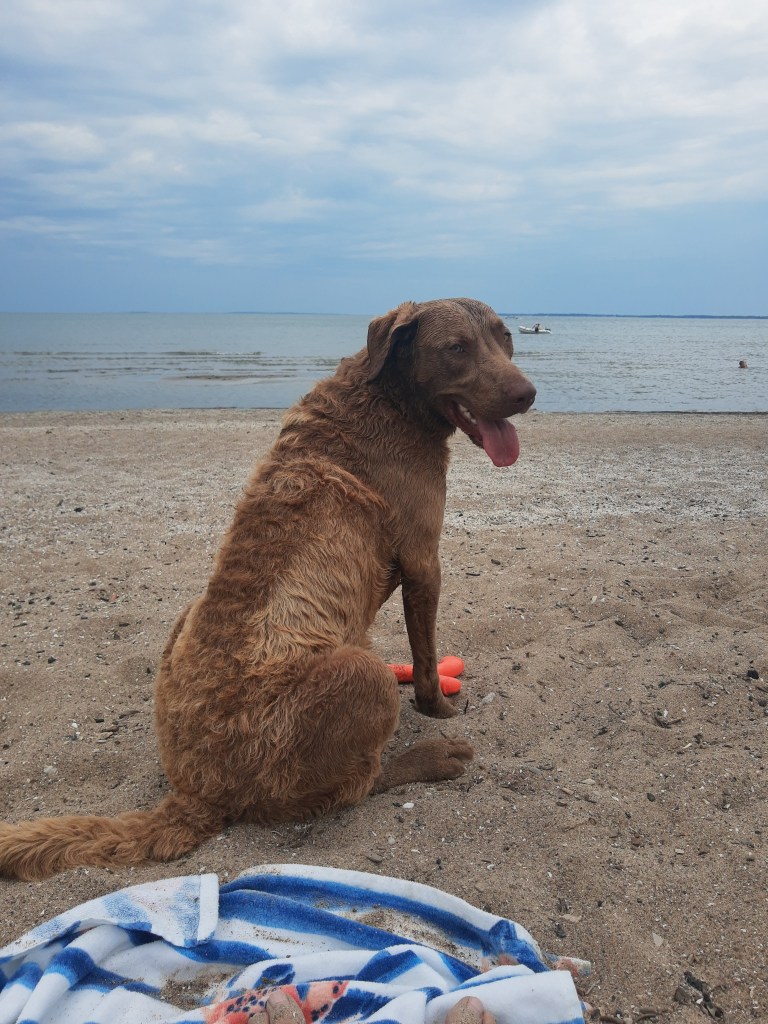
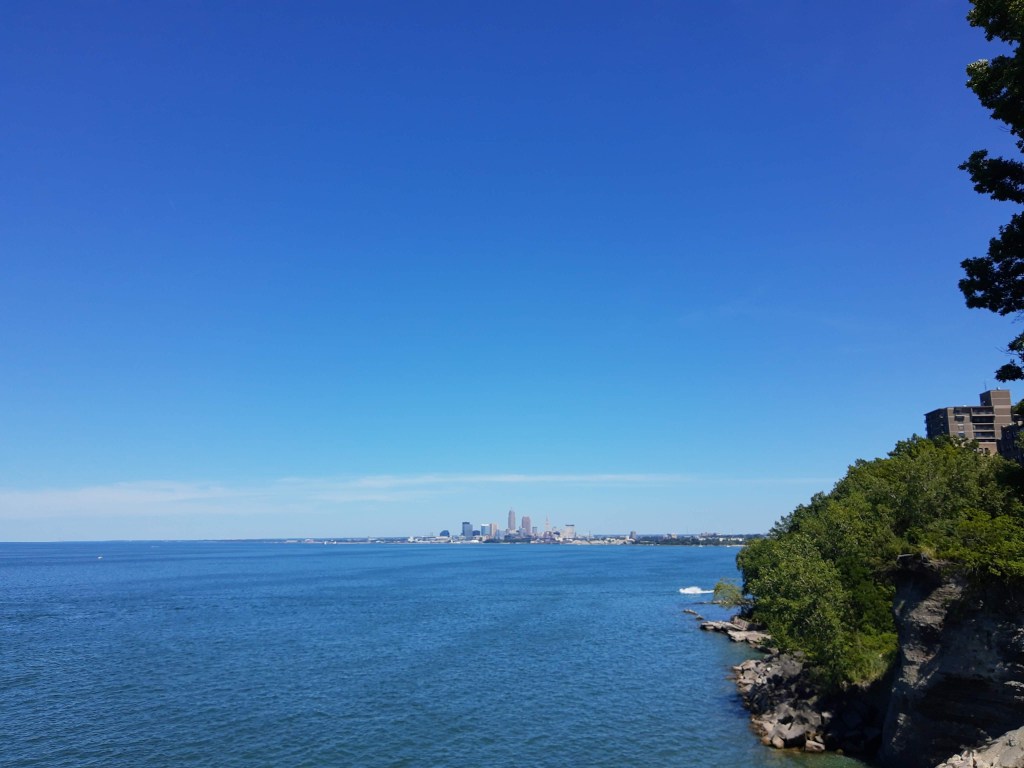
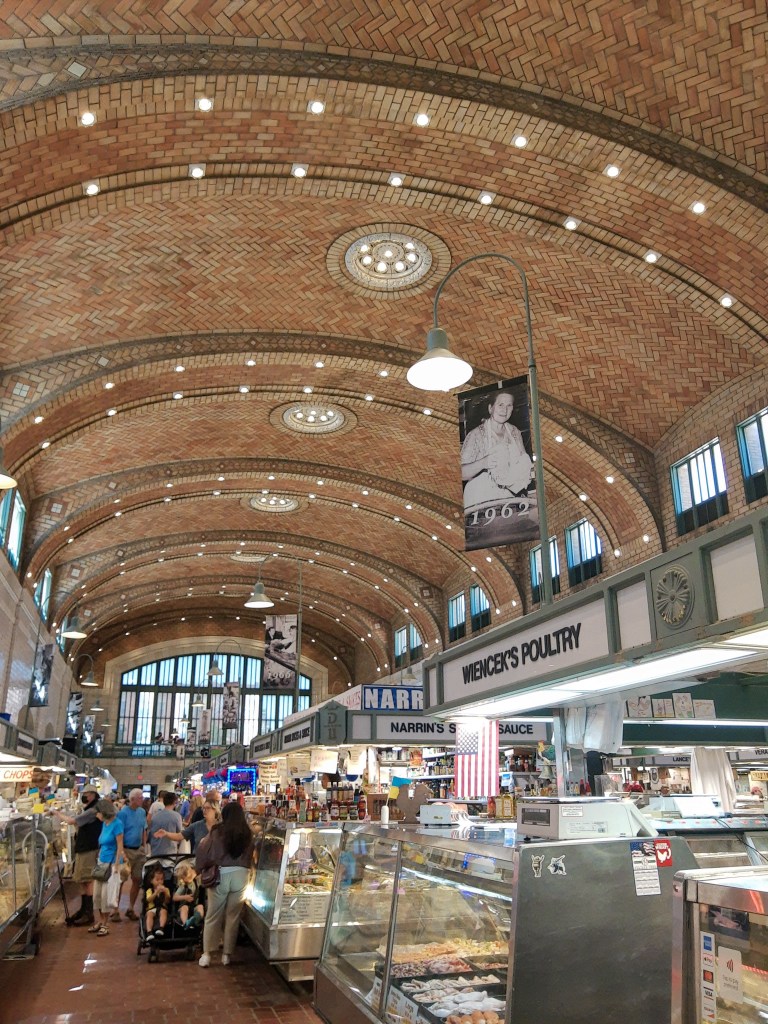
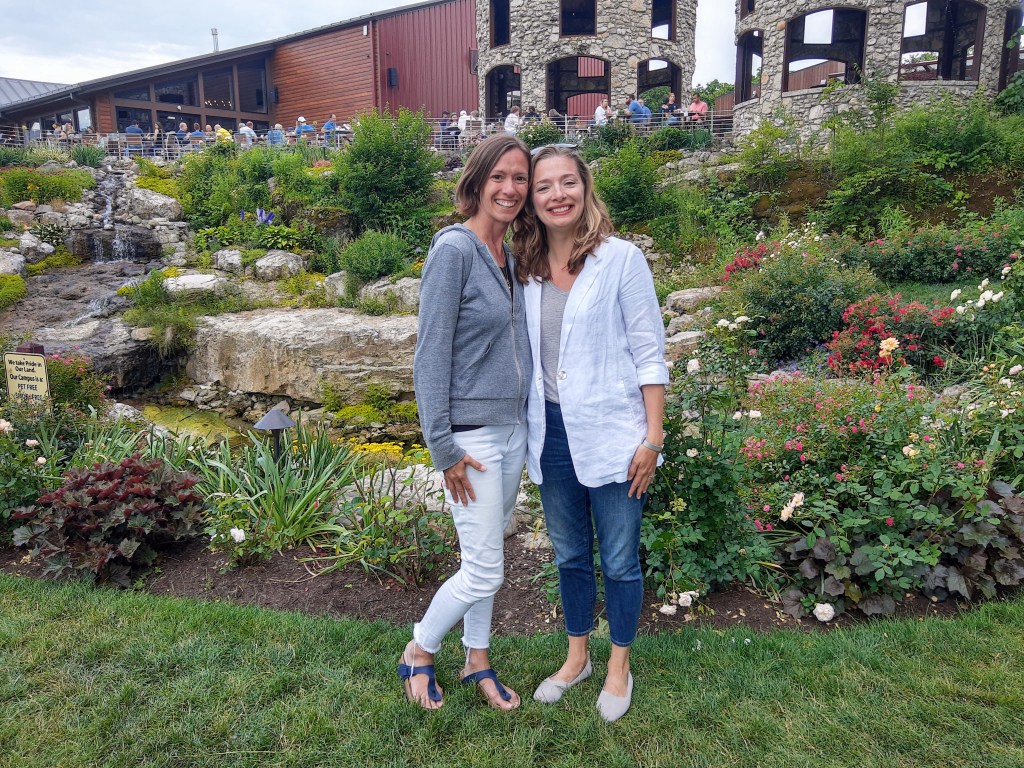
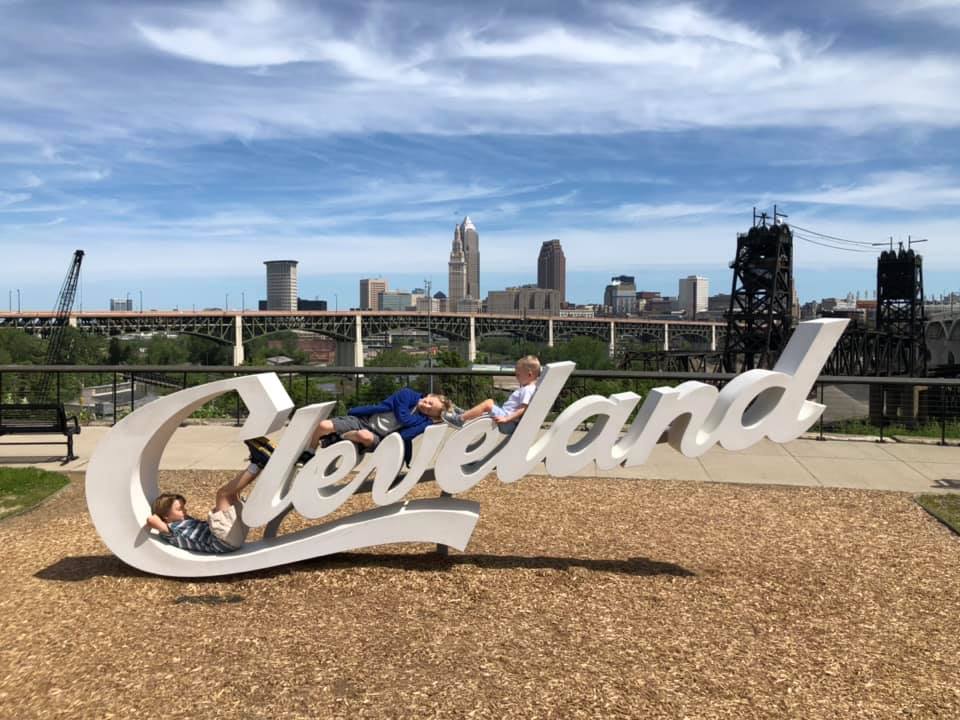
The fam and I headed to Port Clinton, Ohio, walleye capital of the world–don’t fight me on this, MN friends–in June. Sailing for my little guys, boating for the rest of us, swimming, sisters-lunching, friends reuniting, and plenty of hammock-ing and back porch-sitting were the highlights. Of course, no visit to Northern Ohio is complete without a trip to Cleveland and a visit to the West Side Market. And who could forget Rufus, who lived his best Lake Erie Shores & Islands life for a week. Boat aficionados, make sure to check out my dad’s antique Lyman boat above, his fourth child basically. Boat name? Hoptoad, named for Pippi Longstocking’s father’s ship in the favorite book series. (Who woulda thunk I’d become a writer?)
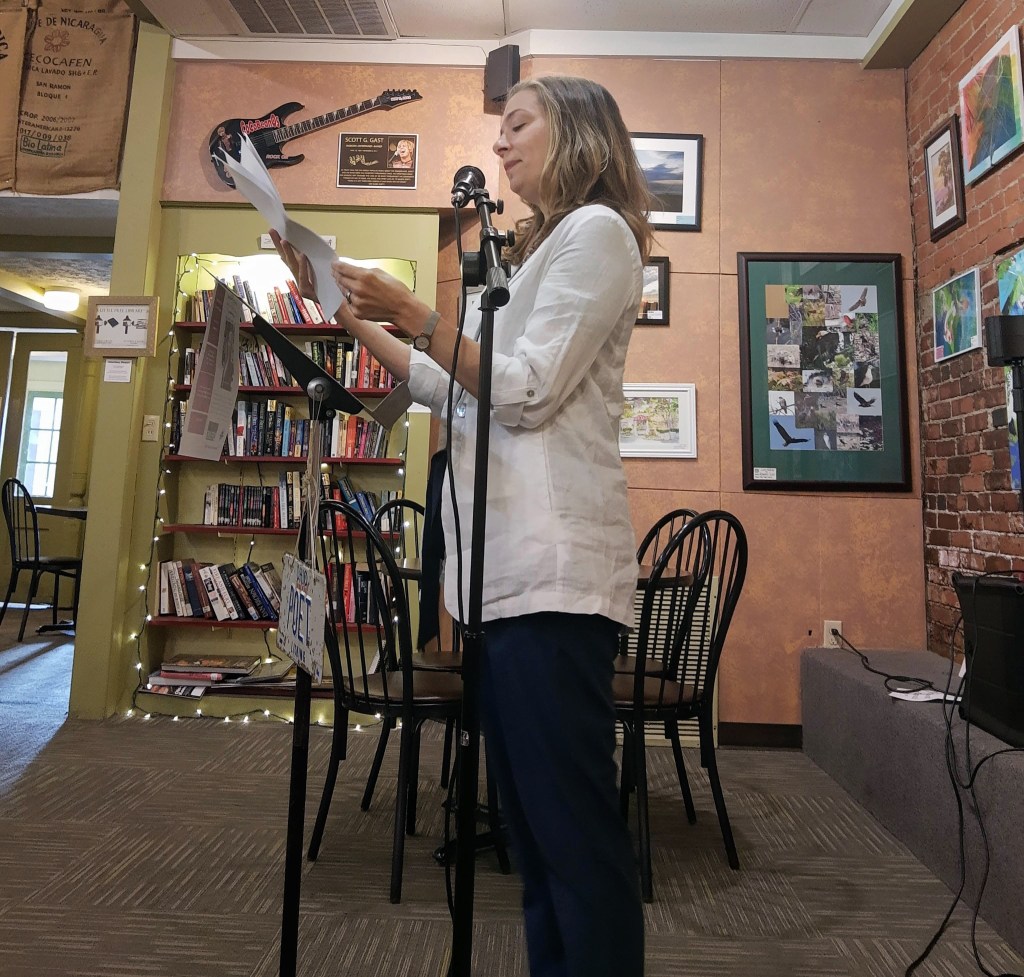
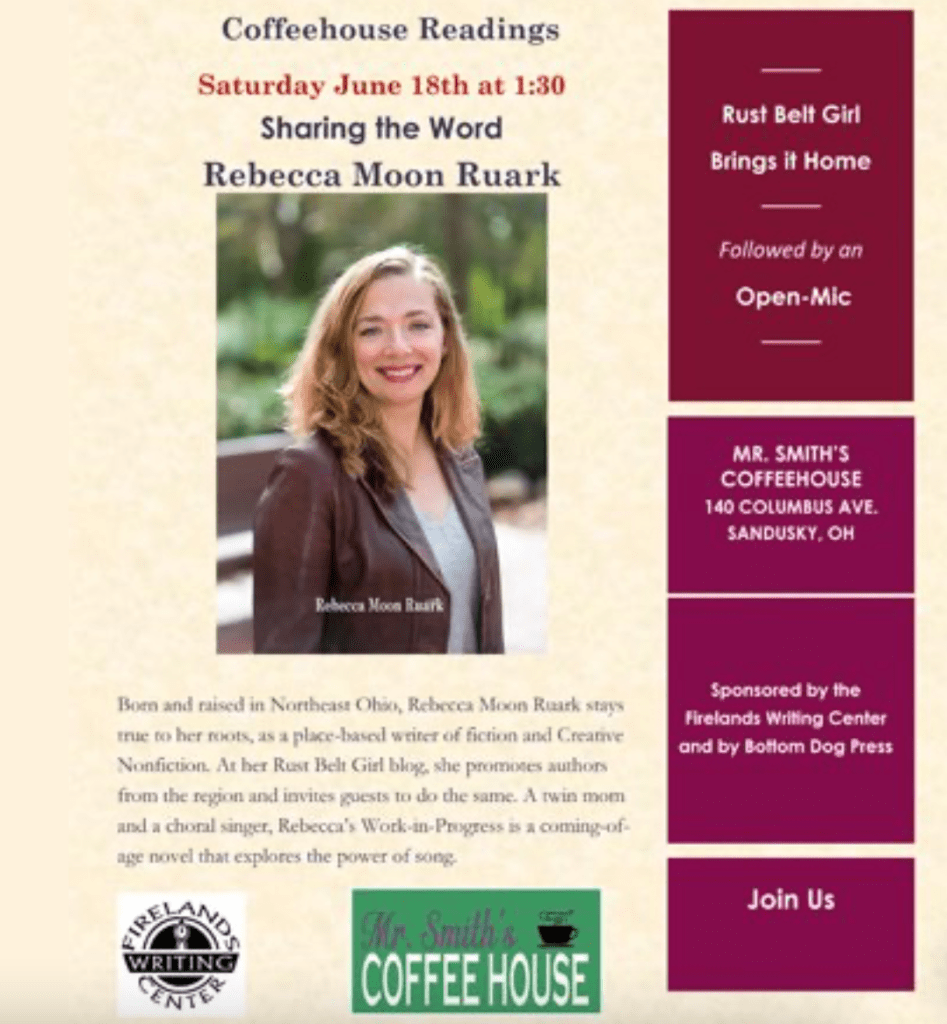
While in the area, I had the honor of serving as the featured reader for the Firelands Writing Center’s monthly reading series in Sandusky. Thank you again to fearless leader Larry Smith and his Bottom Dog Press for sponsoring the event (and putting me on a flyer–that doesn’t happen often). I read some older work and some newer pieces from my WIP, a coming of age novel partly set in Ohio that explores the power of song. And thanks to those who came out (or in) on a beautiful afternoon to share their own work with the group. It felt very much like home. (Flyer photo credit: @melanieraebuonavolonta)
Reading the Rust Belt…
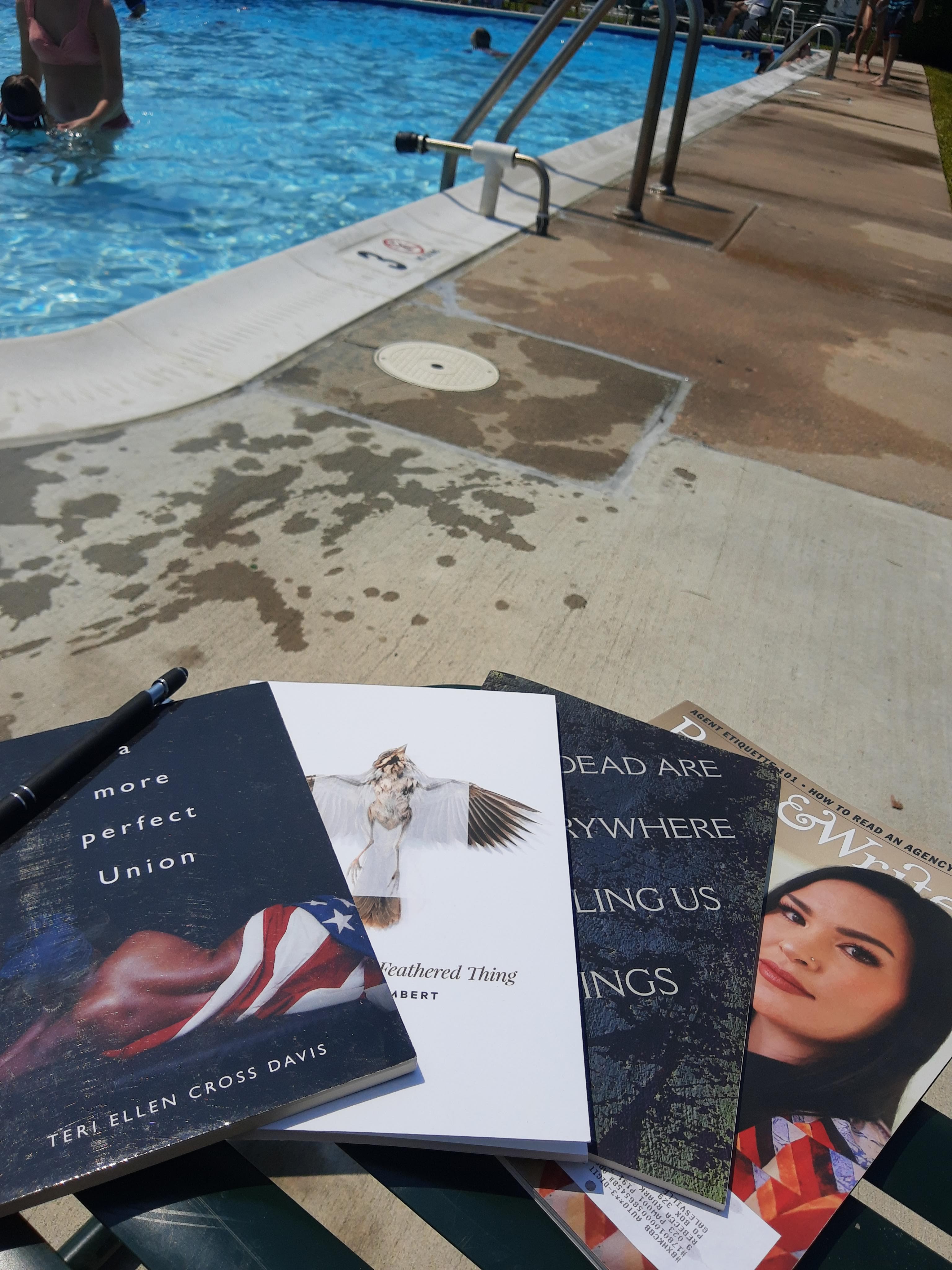
Of course, I’ve fit in some Rust Belt reading. And who said summer reads can’t be deep? Poolside poetry is just my speed, and here are a few I’ve enjoyed immensely: Cleveland native Teri Ellen Cross Davis‘ A More Perfect Union; Columbus, Ohio, poet Paula J. Lambert’s The Ghost of Every Feathered Thing, and Erie, Pennsylvania, poet Sean Thomas Dougherty’s The Dead are Everywhere Telling Us Things. Btw, if we’re not connected on Goodreads, where I recently reviewed another poetry collection, let’s do!
And Beyond
There’s an old, writerly adage that says if you’re talking about it you’re not writing it. So, let’s just keep all our fingers and toes crossed for my WIP as I begin to query literary agents for it this fall.
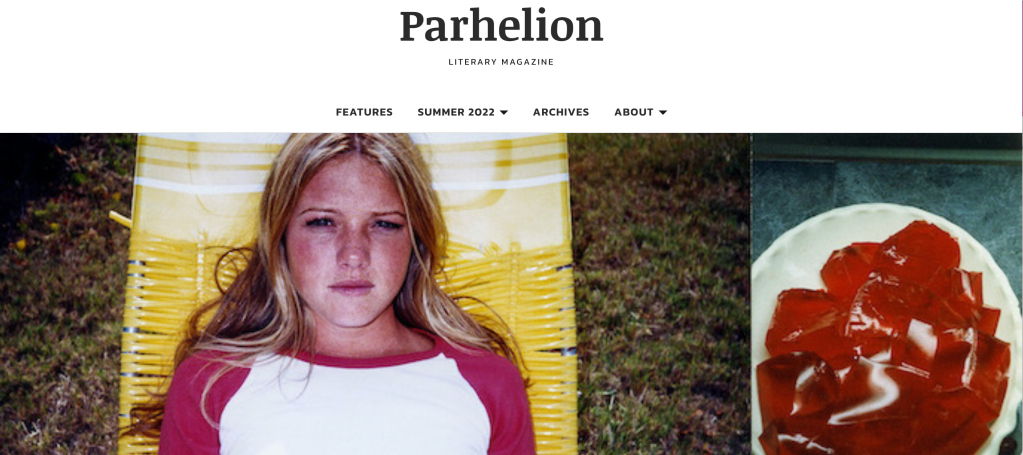
Unfortunately, there’s no adage I know of that says if you’re talking about your editing you’re not working on it. But what would be the fun in that? You may know I’m the associate editor of Parhelion Literary Magazine, in charge of the features department. How I love my craft essays, book reviews, and author interviews! But you might not know that I got that gig because the magazine’s editor-in-chief saw what I was doing right here on Rust Belt Girl and wanted some for her Richmond, Virginia-based online publication.
In addition to editing features for Parhelion, I’m a reader for fiction. (If you aspire to write literary fiction, creative nonfiction, or poetry, there is no better way to become better at it than to read literary journal submissions, imho.) Parhelion’s summer issue (our journal’s 14th–not too shabby) launched this week. If you like fresh and bold fiction, CNF, and poetry I hope you’ll check it out.
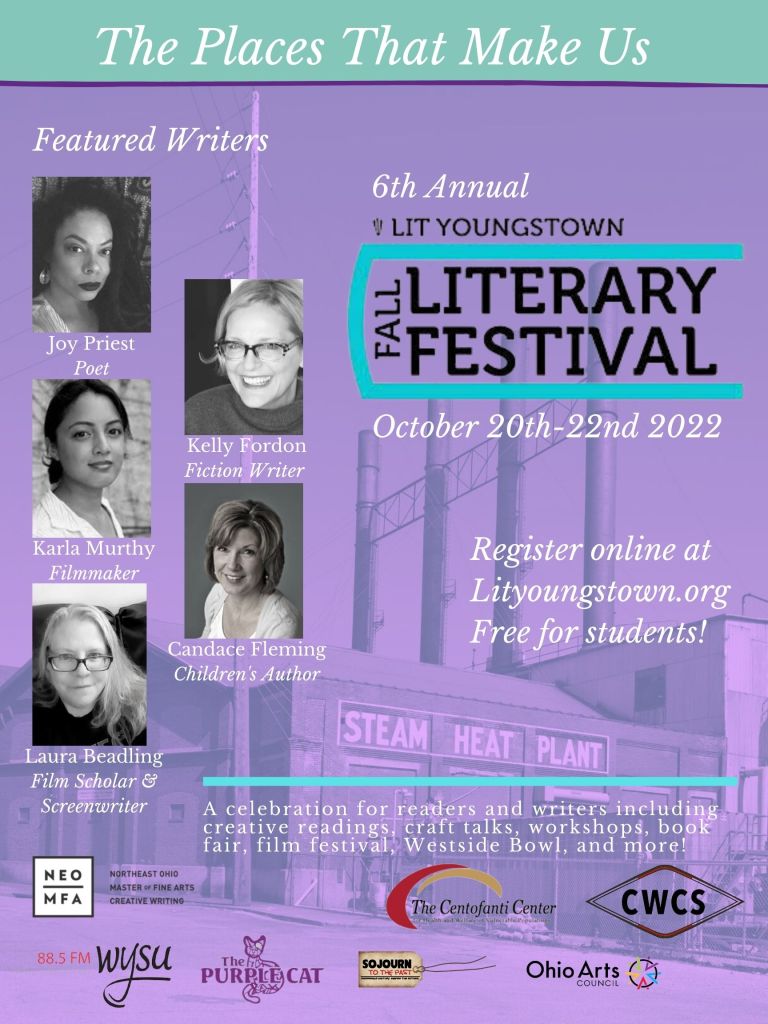
Must we? OK, I suppose the pool days will come to a close. My small guys (who are quickly catching up to me) will head back to school. And I will start packing for the literary highlight of the season, Lit Youngstown’s Fall Literary Festival. If by some strange occurrence you live within driving distance of the festival and I haven’t hit you up, my apologies. This is the best literary conference of the year–if you like a supportive community, generative workshops, eye-opening and ear-bending panel discussions, inspiring readings, and affordability. Oh, and this year’s book fair promises to be the best yet. Also, there will be bowling and films. So, what are you waiting for? The Rust Belt calls.
And that, most patient of readers, is what I’ve been up to. But, as blogging is a two-way street, let’s keep the convo going. What has your summer looked like–or whatever season it is where you hang your hat? Where are you visiting. What are you writing, reading, and discovering? Do tell!
Want more Rust Belt writing, author interviews, book reviews, writing advice, and more? Check out the handy categories above.
In Part I of this interview, Eliese told us a story of the steel mill that didn’t make it into her memoir and about how being a female steelworker helped her find her strength. She talked about hope and despair and holding on through tough times. And she talked about her current work, teaching writing to college students, and about how she shaped the narrative we’re all talking about. If you missed Part I, be sure to catch up, here.
Today, I’m happy to invite the author back. Eliese Colette Goldbach is the author of Rust: A Memoir of Steel and Grit, published by Flatiron Books in 2020.
Eliese Colette Goldbach, author of Rust: A Memoir of Steel and Grit Photo credit: Cheryl DeBono/Michaelangelos Photography
“…Eliese dreamed of escaping Cleveland and achieving greatness in the convent as a nun.” Instead, as a steelworker at ArcelorMittal Cleveland, she “discovers solace in the tumultuous world of steel, unearthing a love and a need for her hometown she didn’t know existed.” *
Eliese, your debut memoir was published to lots of praise and national attention. One reviewer compared Rust to Hillbilly Elegy. How did that sit with you? How do you come down on the Elegy issue?
There are definitely parallels between Rust and Hillbilly Elegy. They’re Midwestern memoirs—and Ohio memoirs, in particular—and both stories try to capture the spirit of a misunderstood place through the people who inhabit it. I think readers have a lot to learn from any account written by a native-born soul, especially when that soul is writing about “forgotten” places like the Rust Belt and Appalachia, so I don’t begrudge the comparison. I do, however, fear that some of the generalizations and moralizations made in Hillbilly Elegy aren’t as nuanced or productive as they claim to be.
In addition to memoir, you write essays. And I read a hysterically funny piece of dark humor you wrote published in McSweeney’s Internet Tendency: “An Open Letter to Everyone in the Event of My Likely Demise While Hiking the Appalachian Trail.” Can you tell us what inspired you to write the piece—and where you learned to write funny? Also, can you tell us a little about what you are writing, now?
I’ve always had a little bit of a funny bone buried deep inside. You wouldn’t know it when you meet me. I’m really shy and reserved at first. I smile a lot. I don’t say much. New friends always assume that I’m nice and uncomplicated, but then I’ll land a zinger out of nowhere. People always do a double-take. “Did Eliese really say that? She’s always so quiet!” Humor writing is the perfect way for this unabashed introvert to say something funny. Plus, I’ve always enjoyed clicking through the pages of McSweeney’s Internet Tendency. It never fails to make me laugh. When you read enough of something, you kind of internalize the prevailing tone. From there, you can experiment with your writing and go wild.
In truth, though, I have to give my best friend credit for lighting the spark behind this particular piece. I was actually making plans to thru-hike the Appalachian Trail at the time, and my friend and I started joking around about all the things that could go wrong. I’m pretty sure we were mostly talking about bears. “This should be in McSweeney’s,” she said. The rest is history. I immediately set to work writing. I submitted the draft a few days before setting out for Springer Mountain, and I got the acceptance letter while crashing at a hostel in Georgia. Unfortunately, I didn’t make it very far on the trail. I fractured my heel bone, which made walking pretty painful, but at least I have a little humor to show for it!
As far as current projects go, I’m a little leery of jinxing myself. The process of hammering out my next book idea has involved a lot of dead-end drafts. A few months ago, I told people, “I’m writing a book about X!” Then X changed to Y, so I said, “I’m writing a book about Y!” Now Y has changed to Z and I’m all out of sorts. I’m hoping that Z will stick, but I don’t want to press my luck. We’ll just say that the next book will likely involve a lot of research, although it’ll still be grounded in my personal experience.
For us avid readers, could you give us some recommendations? A few recent favorites from authors in the Cleveland area or beyond? A memoir? Creative nonfiction? A novel or story collection? Poetry?
Admittedly, I’ve been diving deep into the research component of “Book Project Z” lately. Most of the reading material on my nightstand is pretty old-fashioned. St. Augustine. Emile Durkheim. David Hume. I’ve also been immersed in A False Report: A True Story of Rape in America, which is both riveting and gut-wrenching. I strongly recommend it. When it comes to all-time favorites, I always mention the work of David Giffels. Barnstorming Ohio was an absolute pleasure. Another must-read. And I have to give a shout out to poet Damien McClendon. We both read at an event a few months back, and I was just so taken with his words. Have you ever felt sapped as a writer? Maybe the inspiration has run dry.
Maybe the ideas aren’t flowing. Maybe the cursor on the computer screen fills you with dread. Then, all of a sudden, you hear another writer create something beautiful with language and you feel like you can keep going.
That’s what Damien McClendon’s poetry did for me. I was slogging through my writing at the time, and his words gave me a much-needed dose of inspiration.
Of course, this is a reading and writing blog, Eliese, but we need fuel to do both. Also, I’m always longing for food from home. So, what’s a hometown food you can’t live without?
Like this interview? Comment below or on my FB page. And please share with your friends and social network. Want more author interviews, book reviews, writing advice, and general Rust Belt goodness? Follow me here. Thanks! ~Rebecca
Eliese Colette Goldbach, author of Rust: A Memoir of Steel and Grit Photo credit: Cheryl DeBono/Michaelangelos Photography
“Eliese dreamed of escaping Cleveland and achieving greatness in the convent as a nun.” Instead, as a steelworker at ArcelorMittal Cleveland, she “discovers solace in the tumultuous world of steel, unearthing a love and a need for her hometown she didn’t know existed.” *
Rebecca here, so thrilled to share this author interview with you! A little backstory first: several years ago, when I was interviewing author David Giffels about his memoir, Furnishing Eternity: A Father, a Son, a Coffin, and a Measure of Life, he told me about a writer to watch, a young woman who worked in Cleveland’s gargantuan steel mill. Actually he called her a “Cleveland steelworker-slash-amazing literary star.” Growing up in the Cleveland area, I knew of the steel mill, its flare stack’s tall orange flame a potent symbol of Cleveland industry–and grit. And I’d read steelworkers’ stories. But never one by a woman. My interest was piqued.
Reader, Eliese’s memoir exceeded my high expectations, balancing harrowing tales of hard times, hard work, and hard-won revelations with gorgeous, lyrical prose.
Meet Eliese: Eliese Colette Goldbach is the author of Rust: A Memoir of Steel and Grit, published by Flatiron Books in 2020. Rust is the author’s debut memoir. The award-winning writer now works at John Carroll University in Cleveland, where she lives with her husband.
*Trigger warning: this interview contains a mention of sexual assault
Eliese, place is so central to the story you tell in this memoir. And you give your reader access to a place most of us will never know as an insider: Cleveland’s nearly 950-acre steel mill. As a steelworker there, your personal story got wrapped up with the story of the mill. Is there a story that didn’t make it into the book you could tell us?
There were so many stories that never made it to the pages of Rust. I worked in a wide variety of jobs during my tenure at the steel mill, and I probably could have written a book about each one. I learned to put rocks into giant receptacles in a dusty place called The Bin Floor. I spent some time as a “Rough Rider” in the Basic Oxygen Furnace, where the molten steel was made. Every day, I hopped into a tow motor and whizzed around the mill, replenishing the raw materials that were used in the process. I even did a brief stint as a crane operator in the Hot Mill, where glowing slabs of steel were pressed into sheets. It was one of the most interesting—and terrifying—jobs I had ever worked. You spend your hours in a tiny box that smells like body odor. There’s a wonky captain’s chair in the middle of the space, and the walls are covered in a yellowish substance that rubs off on your fingers when you touch it. I later learned that you shouldn’t touch the mystery substance. It’s the sticky accumulation of everyone else’s nicotine tar.
On one of my first nights flying solo behind the controls of the crane, I had a rather frightening experience. A mechanic asked me to move a three-hundred-ton contraption to the other side of the building. At first, I protested. My crane was only rated to lift one-hundred tons, but the man brushed off my concerns. He told me that the three-hundred-ton thing was rigged up to a bunch of pulleys and levers that would supposedly lighten the load, so I conjured up vague images from high school physics class and told myself that everything would be fine. Famous last words, right?
When I started working the gears and levers necessary to move this three-hundred-ton thing, it barely budged. My crane, on the other hand, started to struggle immediately. The gears were grinding. The motor was moaning. I could feel the whole crane begin to buckle in the middle, which wasn’t good. Keep in mind, this crane weighed as much as a blue whale—it was beyond huge—and the mechanic who had asked me to move the three-hundred-ton thing was on the ground, directly below the crane. He was right in harm’s way, and I was still pretty green as a crane operator. I knew that I needed to stop what I was doing, but I didn’t react fast enough. Right before I eased off of the controls, something snapped. Metal twisted and pinged. The hook of the crane went flying. All I could think about was the man on the ground below me.
When everything settled, I opened my window and called down to him. Thankfully, he was okay. The pulleys that were attached to the contraption had shattered—and huge shards of metal had shot off in all directions like gigantic bullets—but luckily the renegade pieces hadn’t hit him. Disaster was avoided, and I whispered a prayer of relief. But the experience shook me. The mill never stopped reminding you of its dangers.
View of downtown Cleveland from the steel mill
You write, “This place [the steel mill] never failed to remind me that power is double-pronged. The very forces that could rip everything apart were the same ones that tempered something strong and resilient…” Would you say being a female steelworker helped you find your own power—in and out of the mill? How?
I definitely learned a lot about my own strength in the steel mill. It wasn’t always easy being a woman in the mill. There were many subtle (and not-so-subtle) displays of sexism, and I really think that the experience taught me to be more assertive when I saw something that went against my values. I also found a vibrant community of other women in the mill, which reminded me of what we can accomplish together, and the strange jobs I performed gave me a sense of self-assurance that extended into other areas of my life. If you can run a hulking crane for twelve hours a day, then you can manage just about anything. When I think back on my time at the mill, however, I know that one of the most important things it gave me was a respectable paycheck. They say that money doesn’t buy happiness, but I don’t necessarily agree. Making a good living can give you confidence and security and independence. It can provide you with opportunities that you wouldn’t otherwise have, and it felt especially good to know that I was working in a field where men and women were paid the same.
Your having grown up as a Catholic school kid, aspiring nun to steelworker was quite a change in career trajectory. Like many children, you aspired to greatness, to being known for making a difference. You write, “…the religious life seemed to be the only vocation worthy of its power.” Today, your chosen vocation is teaching. Can you tell us what you love to teach the most? What you like to impart to your students—about writing about place, itself, or writing about their place in the world?
I love teaching the nuts-and-bolts to beginning writers. It doesn’t matter if we’re working with academic essays or creative pieces. I like showing students the beauty of a well-crafted scene, a tight bit of dialogue, or a perfectly-wrought thesis statement. I also enjoy giving feedback to students at all levels. It’s so much fun to dive into a piece of writing in the hopes of offering encouragement and constructive criticism, and it’s even more fun to watch students implement those suggestions in revision. Overall, I think the biggest thing that I’d like my students to take away from class is a sense of self-efficacy and personal power. Writing gives us the ability to create meaning and empathy and wonder. It allows us to see our surroundings in a new light. It helps us understand the roles we play within those surroundings, and it gives us the opportunity to reach audiences that we may never meet in person. I want my students to understand just how influential the written word can be, and I also want them to feel capable of putting their unique stories down on the page.
Your own college experience was shattered when you were raped by a classmate, after which point you were diagnosed with mixed-state bipolar disorder. You talk in the book about the rape taking away your faith. Yet, your book is filled with the language of religion, images both harrowing and redemptive. How, as a writer, do you sit with such seemingly disparate aspects of life, including faith in humanity and utter distrust in the same? And what do you hope the story of your mental health journey does for readers?
The most interesting stories are always the ones that let contradictions breathe. Nothing in life is as simple as we’d like it to be, and the core of good writing lies in those moments of ambiguity when something raw and gritty and human is revealed. Lately I’ve been going over a lot of old books that I read back in college, and I happened to re-familiarize myself with the pages of Plato’s Phaedo the other day. I can’t help but be reminded of this great line: “What a strange thing that which men call pleasure seems to be, and how astonishing the relation it has with what is thought to be the opposite, namely pain! A man cannot have both at the same time. And yet if he pursues and catches the one, he is almost always bound to catch the other, like two creatures with one head.” I just love that image. Two creatures with one head. I think it relates to so much more than just pleasure and pain.
You can’t have faith in humanity if you don’t also doubt its goodness. You can’t have hope if you don’t also invite despair. And I’m talking about real hope here, not the cockeyed optimist kind that’s divorced from reality. Real hope has an axe to grind. Real hope has bloody knuckles. I like to think that’s a lesson I’ve learned from living with bipolar disorder. I’ve struggled through the bleakest kinds of despair, but those moments were never the ones that scared me. Despair is just hope earning its stripes. It can always come around the bend. The true enemy doesn’t seem to have a name. You might call it emptiness, or perhaps apathy, but it isn’t really either of those things. It’s this sensation you get when you’re content with a blackness that has not bottom. You feel like a shadow that can no longer be stitched to a body. There’s no despair, no emotion, no longing. It’s a frightening place to be, and I hope that my story can speak to anyone who’s grappling with that place now. I’ve been there. I know what it’s like.
Take it from a kindred soul: It’s possible to survive. Just hold onto something and don’t let go.
Eliese, as I read your memoir, I kept forgetting it wasn’t a novel, because all the tension and suspense I expect in a good novel were there, keeping me feverishly turning pages. In addition to your story as a steelworker reclaiming your home and yourself after much struggle, there is also a compelling and very real love story here. For us writers, can you talk about how you decided to structure your memoir—if you set out to structure it like a novel?
Structure is the thing I struggle with most as a writer. I’m still traumatized by my 5th grade English class, when the teacher called on me to answer a simple question: “What’s the climax of Where the Red Fern Grows?” I froze. My mind went blank. My palms got sweaty. The whole class was staring at me, but I just shrugged my shoulders. In my mind, there were a thousand tiny climactic moments throughout the novel. How could I possibly pick one? Even now, I’m always overwhelmed by the sheer possibilities of structure. You can use the same material to tell a million different stories, and sometimes I want to tell all of those stories at the same time. As such, I inevitably cycle through a lot of failed drafts to figure out the structure that fits the material best.
With Rust, I experimented with everything. I tried making it an essay. I tried making it a chapbook of prose poems. I played around with footnotes. I wrote a pretty long and miserable draft that incorporated tons of research about irony. There’s even a notebook in the back of my closet that contains a feeble attempt to imitate Anne Carson’s Nox. Those drafts took a lot of time and energy, but they gave me a little distance from the lived experience of the steel mill. As a nonfiction writer, it can be difficult to see the shape of a story when you’re still living parts of that story in your daily life. Most of Rust was written while I was still employed as a steelworker, which made it difficult to see where the book needed to end. I kept wanting to add more anecdotes. I kept wanting to change the climax. Luckily, I had an awesome editor and an amazing agent who helped to usher me in the right direction. And once I was able to take a step back and analyze everything I’d written, I realized that a novel-like arc already existed inside the material. From there, the structure settled into place. Sometimes it takes time and revision (and lots of feedback from trusted friends) to discover something’s shape.
*Quotes from the book jacket copy; all images used with permission of the author
Stay tuned for Part II of my interview with Eliese Colette Goldbach, coming soon…
Like this interview? Comment below or on my FB page. And please share with your friends and social network. Want more author interviews, book reviews, writing advice, and general Rust Belt goodness? Follow me here. Thanks! ~Rebecca
What doesn’t bite? A surprise gift. One of my favorite surprise gifts I received this past Christmas was a book (shocker, right?): Cleveland Then and Now by Laura DeMarco, with Now photography by Karl Mondon.
The large-format book celebrates the storied history and vibrant present of my home city of Cleveland. (Granted, I grew up in Cleveland’s hinterlands, but Cleveland–and especially its Playhouse Square, where I danced with the School of the Cleveland Ballet–has my whole heart.) Having left home at 19, I now have lived longer away from Ohio (and below the Mason Dixon, God forbid) than in Ohio. Still, I consider it home.
Much of my Christmas afternoon was spent poring over the landmarks in this book. There’s Cleveland’s most beautiful building, the historic Cleveland Arcade (pictured below), where my dad worked for a time; hippie haven Hessler Road, where my mom lived when in college; Little Italy, where my parents married at Holy Rosary Church; the Cleveland Museum of Art; Playhouse Square, the largest center of performing arts between New York and Chicago; the Streamline Moderne Greyhound station, which I rolled in and out of on trips home from college in Virginia; and much more.
The book’s author: arts and culture reporter and editor for the Plain Dealer–Cleveland’s newspaper of record–a reporter who specialized in local history and lost landmarks in the city. As many newspapers have, my hometown paper has seen its share of layoffs in recent times. Then, just last month, the news about more layoffs started coming fast and furious into my Twitter feed. Or more aptly put in this article with all the ins and outs: it was a “gutting” of a newsroom and a sure blow to journalism and journalists the Northeast Ohio community relies on. When remaining journalists were faced with losing their beats and told they would no longer be able to cover the city, a round of resignations yesterday included that of DeMarco.
Since the coronavirus reared its ugly, spiked head, journalists, writers, and bloggers have found ways of making sense of pandemic-havoc by telling the stories of our communities. While my platform is small, my community, my “beat,” during this isolation, is my family. And so I’ve been using these daily prompts to tell our stories: there’s Isolation Lent; Reviled Remote School; Close-Proximity Parenting (if my kids say to me, “OK, Boomer,” one more time, I might lose it); Extended Family Worries, and all the rest.
I’m keeping it together as best as this (ahem) Generation X-er can, which, according to DeMarco, might be pretty OK. In a piece she wrote last month, she notes that our Reality Bites generation is getting this isolation thing right: “While millennials and Gen Z kept partying and going to the beach, and boomers who didn’t want to recognize they are not so young anymore kept brunching, Gen X stood up and took action — and stayed in.” In this fun piece, she highlights the voices of several local Gen X-ers. The story brought to mind my own time in Cleveland with my best Gen-X girlfriends…dressed like we’d shopped at a Depeche Mode garage sale…drinking coffee and smoking cigarettes…watching the skaters outside Arabica on Coventry…acting all moody, sorta like isolating even when not alone.
Yeah, today’s reality–and it’s far-reaching impacts on our society–bites, and my heart goes out to all who are suffering from job loss and worse. What can we do? It is a very small thing, but today I’ll tell it like it is and hope for a better tomorrow. I hope you’ll join me.
I’m so thrilled to present this interview with Johnny Joo, a fellow Northeast Ohio native, whose photography* I’ve featured at the blog before. But this time, we get the stories behind the lens…
Johnny Joo is an internationally accredited artist, most notably recognized for his photography of abandoned architecture and surrealistic digital compositions. Growing up sandwiched between the urban cityscape of Cleveland and boundless fields of rural Northeast Ohio provided Johnny with a front row ticket to a specialized cycle of abandonment, destruction, and nature’s reclamation of countless structures. Since he started, his art has expanded, including the publication of four books, music, spoken word poetry, art installations, and videography.
Johnny, how did you first get into photography–and abandonment photography in particular?
I was an art student in high school, and photography was another art class I could take, so I took it to fill space with as much art stuff as I could–not thinking that I would like it as much as I did. I got super interested in the whole science behind it and being able to capture a moment in time that would not happen again. For one of the first projects, I photographed some empty rooms in the high school, and also photographed an old farm house. It reminded me of Silent Hill and other horror games and movies I enjoyed.
I thought it was a great subject for photos, and I loved the way nature wore it down to create something so dark and eerie, yet calm and beautiful. That’s the film photo of the empty class room [above]. I gave the rest of my film and binder to my photography teacher, so I don’t have anything else, but I did keep my favorite photo–and it’s the first photo I developed successfully.
I just kept photographing any abandoned or creepy historic place I could find (along with EVERYTHING else) and started sifting through papers in some of the old buildings and found so much history left behind.
I thought it was interesting to piece a life and history together–being able to know so much without ever having known any of the people beforehand.
My mom’s old shade garden. My dad’s fence still looks good.
Jiggety-jig.
Did your mom say that nursery rhyme upon returning home (with our without the fat pig?). Mine did, and now I do the same, fully expecting the eye-rolls from the kids in the back seat.
So, I promised a photo-filled post of my trip home to Ohio, and I’m finally delivering. If you came here looking for writing advice, reviews, or interviews, please see the categories above. Or, take this advice: returning to your childhood home with your children for the first time can feel daunting, but it’s good for the soul–and stories.
My boys and I celebrated the end of another school year with a trip to Ohio. Photo-heavy post to come, but for now, suffice it to say we had a blast. Hung out in CLE with one of my best friends and her son and then pressed on to to my dad’s, where we vacationed in Lake Erie Shores and Islands fashion.
As any parent will tell you, I could use a post-vacation vacation, but it’s time to get back to work, while my boys enjoy the freedom of summer vacation. First, I wanted to touch base with you and thank you for following my journey here at the blog. With my birthday coming up, I’m feeling a little reminiscent: thanks for helping to make this past year great!
Speaking of reminiscing, one of my fave smart-funny mom bloggers, Becca, interviewed me for her blog: With Love, Becca: Funny Mom, Career Coach, Storytelling Enthusiast. We chatted about my blog, about freelance writing, creative writing, rejection, and resiliency. Of course, we also talked kids and humor-as-saving-grace. And I submitted to a 90s rapid fire Q&A that took me all the way back. Good times. And such a fun interview to do. I hope you’ll check it out and follow Becca’s blog. She’s inspiring plenty of career-swiveling-fun parenting-sanity saving change over there. Developing Resiliency in Your Creative Pursuits: Q&A with Writer Rebecca Moon Ruark.
Happy almost summer! What are your plans? Vacay? Creative pursuits? And please let me know what books you’re looking to read by the pool this summer. I love suggestions!


















 Rust Belt Girl