Top 5 Things to Take from a Literary Conference (not just swag)

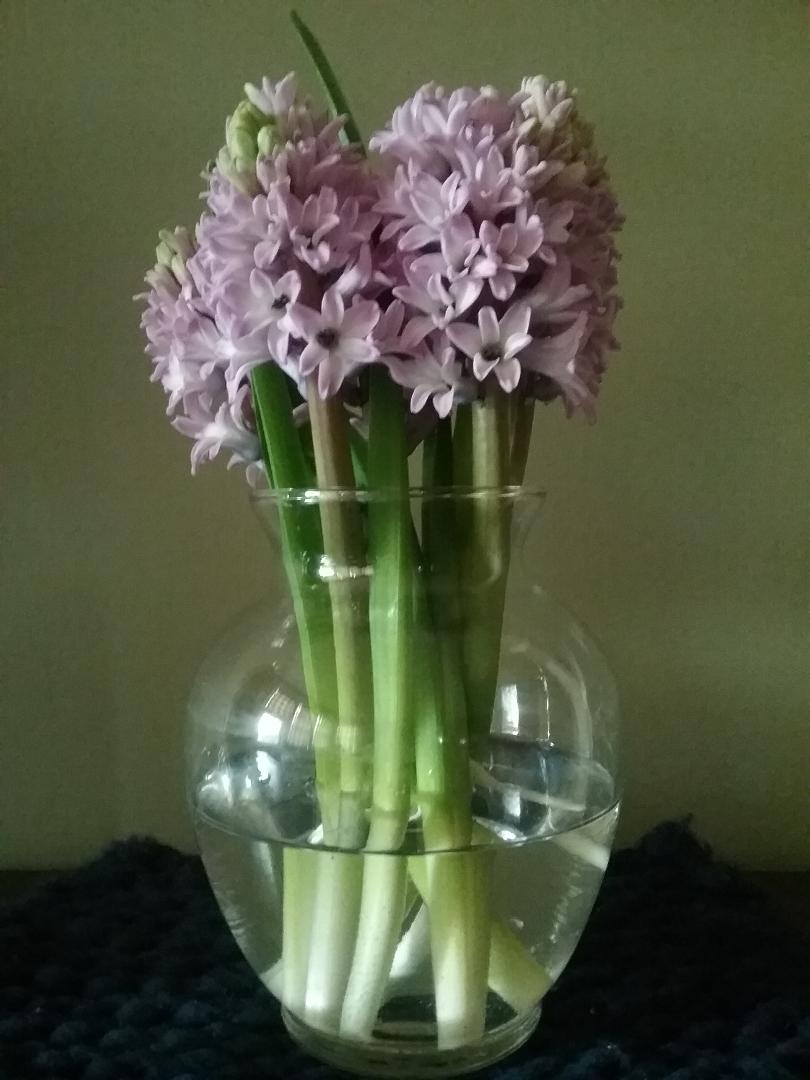
Photo by Pixabay on Pexels.com

Saturday, I attended Conversations and Connections, a one-day writer’s conference organized by literary magazine, Barrelhouse, chock full of practical lessons from published literary authors, editors, and publishers. Note: I said practical. (Leave your insta-agent-three-book-deal fantasies at the door.) Really, it was like transporting myself back to my MFA program for the day–complete with the insecurities and boxed wine! All right in my world.

  1. Advice: The first of three panels/workshops I attended featured a memoirist, a novelist, a nonfiction writer, and a poet who all engage with the past–and endure much historical research–for their writing. Some of the most helpful advice suggested writers utilize first-person accounts to better instruct our characters in how to engage with historical fact. There was also an interesting discussion exposing the differences between creative nonfiction and fiction when making meaning of historical events. In fiction, the research must become a part of the narrative arc; in nonfiction, the journey to understand can become another part of the story, a knew way of knowing.
  2. Beginnings: For my second session of the day, I attended a hands-on craft workshop on developing short story openings that grab a reader’s attention. Flash Fiction author, instructor, and editor Tommy Dean led us workshoppers using four prompts for four different story openings. All the prompts started with character/setting/conflict, then added another element to complicate the story start–like subverting the setting or flipping a normal, everyday activity. I am not a prompt person, relying instead on the ideas that fly at me and then stick–usually long about 4am–but even I came away with a few solid story starts, a real win.
  3. Connections: MFA programs are a wealth of information on the art and craft of writing. But then what? How do we get our work out there, and just where is there? Enter the literary journal editors with hands-on experience in the world of literary publishing for a 10-minute editing session, a la speed dating. I took a flash fiction piece of mine; however, I knew going in, I wanted to use that precious time to ask advice of the editor on the other side of the desk. My question was about chapbooks (short collections of poetry or stories). But the point is I used my 10 minutes to connect with someone I could learn from. Not to leave out my fellow conference attendees, time waiting in line for the editor session was a good chance to meet local writers (shout-out to Sonora!).
  4. Inspiration: With the growing popularity of spoken-word and oral storytelling heard on programs like The Moth Radio Hour, today’s creative writing readings are not the cure for insomnia they once were. The featured author readings at C&C did not disappoint. Going in, I knew of the work of only one of the authors, essayist Randon Billings Noble, who I connected with in an online critique group years ago (the writing world being both huge and small). I was delighted to be introduced to the poetry of Kyle Dargan and the fiction of Ivelisse Rodriguez and of Gabino Iglesias, who read their work with such passion–the highlight of my day and very inspiring.
  5. Books…and more books: Want to make an author (and their small press publisher) happy and earn your good literary citizen card? Buy the book. I came away with autographed copies of Billings Noble’s essay collection, Be With Me Always; Iglesias’ horror/crime novel Coyote Songs; Matthew Ferrance’s memoir, Appalachia North; and the poetry collection, Haint, from Cleveland native (yes, we are all over) Teri Ellen Cross Davis, who sat on the panel for the third of my three sessions, focused on publishing and offering great advice on connecting with the local literary community. (These last two authors, I plan to talk about more here on the blog!)

For writers across genres, and for bloggers alike–there’s a conference made for you. This one was a good fit for me, and I’ll be back next year.

Do you conference? What are your top tips? Have you read any of these books? How was your weekend? Comment below–I always love to hear from you… ~Rebecca

‘Midwesterners Have Seen Themselves As Being in the Center of Everything.’

When I was 9, the Ohio state tourism slogan became: Ohio, The Heart of it All, and I felt vindicated, this little girl who dreamed of the bright lights of big, cosmopolitan (coastal) cities. Maybe, after all, the middle was the sweet spot! And now here comes another HEARTLAND… I’m still reading Sarah Smarsh’s HEARTLAND: A MEMOIR…, when this author interview found my inbox. Thought I’d share with you what might prove to be an interesting historical perspective of the American Midwest. More soon. ~Rebecca

Bridey Heing's avatarLongreads

Bridey Heing | Longreads | April 2019 | 10 minutes (2,589 words)

The American Midwest is hard to define. Even which states can be considered “Midwestern” depends on who you ask; is it what lies between Ohio and Iowa? Or does the Midwest stretch further west across the Great Plains; north into Wisconsin, Minnesota, and the Dakotas; or east into parts of Pennsylvania and New York state? Perhaps part of the confusion over the term is rooted in the idea that the Midwest represents far more than a geographic space — it represents a vision of the country as a whole, and is a stand-in for nostalgia, despite the fact that the reality of the nation, and the Midwest along with it, has always been far messier than any myth.

In her new book, The Heartland: An American History, University of Illinois professor Kristin L. Hoganson tells the story…

View original post 2,413 more words

Trash on Easter

“Tie-dyed variety this year–cute, right?

This Easter, I’m thinking about trash. Of course, I’m also thinking about the usual holiday trappings—the decorated eggs, the leg of lamb, and flowers for the table. Then, there are small shirts to be ironed, my slip to find… Wait. Why trash? Well, as I was listening to The Passion read at Good Friday mass, last night, arm around one of my boys, I tried to see myself in the “Crowd” role we congregants play. You know, the crowd, who witnesses the suffering and death of Jesus, the crowd who yells out in unison “crucify him,” several times—something which felt fairly naughty to me when I was a kid and feels just plain conflicting now.

Before I lose you… whether you view Jesus as a savior, a prophet, or simply a literary figure, today, it can be instructive to think how we might have viewed him if we were his contemporaries. This poor vagabond, wandering around preaching too loud, associating with prostitutes, beggars, and the diseased. We might have thought his sandal-ed feet smelled bad. We might have even called Jesus “trash.”

This one terrible word, “trash,” shorthand (on our worst days and in the worst ways) for something we Americans have a hard time discussing—class—is following me around in my wider reading and pondering.

I just finished the audio version of Elizabeth Strout’s novel, MY NAME IS LUCY BARTON, in anticipation of the sequel to her Pulitzer Prize-winning OLIVE KITTERIDGE. In the deft, character-studying way Strout has with fiction, her Lucy Barton character discusses her family’s poor upbringing in the Midwest with her mother, who visits at her hospital bedside. (And this is the thrust of the entire novel; do not expect plot from this one.) After a strained discussion between mother and daughter about Elvis Presley and his upbringing, Lucy’s mother says he was from a “trash” family. Then, in a moment of painful clarity, Lucy responds: “We were trash. That’s exactly what we were.”

Really, I should have pulled the car over, listening to those words, like a gut punch if there ever was one in literature. But, why? I wondered. Why is it so hard to even hear—from a character at that, not even a real person—that insult, “trash.”

In my tandem-reading way (find my last tandem read here) I consulted Sarah Smarsh’s well-researched HEARTLAND: A MEMOIR OF WORKING HARD AND BEING BROKE IN THE RICHEST COUNTRY ON EARTH (a finalist for the National Book Award) in which the journalist author examines class in America through her own personal lens, having grown up in a working poor family in Kansas.

We were “below the poverty line,” I’d later understand…And we were of a place, the Great Plains, spurned by more powerful corners of the country…”Flyover country,” people called it…Its people were “backward,” “rednecks.” Maybe even “trash.”

Sarah Smarsh in Heartland

And, so what? We read about it, think about it, write about it, publish the stories of the underdog if we have the means. For the rest of us, our influence may be small. But witnessing something is something. As is finding our voice, however small, in the crowd.

Now, it’s your turn. Have you read either of these books? Do you read or write about that other C-word: class?

And on a lighter, holiday note, Happy Easter to you and yours from me and mine…

~Rebecca

This Month In Books: Botanize Your Past To Save the Future

As a “regional” writer and booster of Rust Belt writing and writers, I found this month’s book newsletter from Dana Snitzky at Longreads fascinating. Have you read any of these books? And what do you think of this premise: “Paying attention to where we live — attention to where we really very specifically are, in space and in time — might give us the empathetic capacity to save the planet, is basically the idea.” Chime in, if you like, and I’ll be back with a new post in a day or two. ~Rebecca

Dana Snitzky's avatarLongreads

Dear Reader,

This month’s books newsletter is overflowing with regional fiction and travel writing. Kali Fajardo-Anstine and Bryan Washington have both written short story collections set in the cities they are from (in Washington’s Lot, each story is even named after a different street in Houston) and featuring characters that are representative of the communities the authors grew up in. Speaking about her collection Sabrina & Corina Fajardo-Anstine describes her struggle to stake out physical space in literature for herself and for the Chicano and Indigenous community she is a part of:

I’m always writing against this idea that Denver’s a white space … How does my community loom so large in my consciousness and in all the choices I make, but when I talk to people on the street they’re like, “What do you mean you’re from Colorado? What do you mean there are brown people here?”

In…

View original post 1,217 more words

My interview with author, poet, and publisher Larry Smith

When I first met Larry Smith in Ohio, he was sporting a Cleveland Browns cap–not an unusual fashion choice for a sports venue or bar, but we were at a literary conference. From this first impression, I could sense two things: the cap wasn’t ironical and Larry was my kind of literary people.

As it turns out, the Ohio-based author, poet, and director of Bottom Dog Press/Bird Dog Publishing and I have much more in common than rooting for the home team. There’s an abiding sense of creative responsibility, a promise to tell our own stories, that comes with hailing from a place like ours. I’m going to go out on a limb and say Larry and I try to make good on that promise. Larry has definitely made good on his.

This National Poetry Month of April, Larry was also gracious enough to take the time to answer over email my questions–about the writing life and what it means to publish poems and stories rooted in place. “There is always some blurring of identity here,” says Larry, “between Larry Smith and Bottom Dog Press.”

Though much of my life is Bottom Dog Press, my life extends beyond that, and Bottom Dog Press is more than I am, too, it’s over 210 books and about 500 authors.

Let’s learn more…

Larry, how did growing up in the Rust Belt, specifically an Ohio mill town, affect your writing sensibilities and choices?

Well, this goes to the heart of it and of myself. You can’t take out of me the Ohio Valley and the working-class world I grew up in. I was nurtured on that life and those values of hard work and character, of family and neighborhood, of just accepting and caring for each other. I write from who I am, and though I worked as a college professor and live in a middle class neighborhood now, I am still that kid getting up to deliver morning papers and watch my father pack his lunch for work on the railroad. Read more

Today’s Book-Love Triangle…

Photo credit: me, on my recent writers retreat with a view of the Blue Ridge Mountains of Virginia

We know we must read–and “read enthusiastically and omnivorously”–to become better writers, and better everything else-ers, really.

Yet, for this reader, it sometimes feels like directionless reading. Oh, I have my reading piles: one to inform this blog, one to inform my completed historical MS; one to inform my new MS; one for pure pleasure, which typically dwarfs the others out of neglect.

And, so, to experience a moment of reading kismet, when one book I love references another book I love, is a thing of beauty: a book-love triangle, if you will. This particular book-love triangle also happens to connect my blog reading with my pleasure reading, making me feel on this cold and dreary “spring” day a little more whole.

Enough lead-up, here it is: In Anthony Doerr’s memoir, Four Seasons In Rome: On Twins, Insomnia, and the Biggest Funeral in the History of the World, he quotes a line from Marilynne Robinson’s novel, Gilead:

There are a thousand thousand reasons to live this life, every one of them sufficient.

There are as many reasons Doerr, the Pulitzer Prize-winning author who has long lived in Idaho, would quote the Pulitzer Prize-winning Robinson, who was born in and has set stories in Idaho. Doerr and Robinson share more than external landscape; they share a sensibility, an exploration of the internal landscape of the spirit, spirits accustomed to the miracle of the everyday.

Any parent of twin infants will tell you (if they’re being honest), one baby at a time would have been sufficient. Because I am a twin parent, myself, Doerr’s memoir was recommended to me, though it didn’t make the tough moments in the memoir easier to read from having gone through similar ones myself. Still, it always seemed, the fog of nursing, holding, walking, changing and bathing sleepless little people would eventually lift, if for only a fleeting moment.

In one such moment of sleep deprived twin-parent frustration, the fog lifts for Doerr by a baby’s “first,” one of those little everyday miracles in the life of a parent: the first finger-squeeze, first smile, first crawl. In this instance, one of Doerr’s boys says “Ciao” to a Roman man passing in the stairwell. His first “Ciao.”

One of “a thousand thousand” reasons… And we could spend time here talking about the meaning behind “sufficiency” and behind “thousand” for Doerr, who quotes Robinson, America’s most famous living religious author–who, no doubt, uses “thousand” as the Bible does, to signify a multitude, a vast abundance. You can read my thoughts on Robinson’s Gilead, which I read for the first time only recently, here. You can read my initial thoughts on Doerr’s memoir, which I tandem read with The Gondola Maker–for a centuries-spanning “trip” to Italy–here.

But here is where I stop, today, to return to reading, for the multitude of little miracles that happen when we make connections across the piles of tomes of words that are waiting for us.

Have you experienced a book-love triangle you’d like to share? A baby’s “first”? A fog lifted? I’d love to hear from you in the comments!

Tiny Water Bottles

If there’s one blog I read every day, it’s this one–BREVITY’s Nonfiction Blog. Outside of writing for my blog, I mostly write fiction, but, boy, those CNF and memoir folks really do a good job of pondering their work and the writing life in general. Often, Brevity’s blog features guest posts, which are generally excellent, but when their Social Media Editor, Allison K. Williams, posts, I find myself nodding along. “This is it; this is just what I needed to read this morning.” So, while I plan blog posts downloading the highlights of my writers retreat, last weekend; and writing advice about reading and researching outside one’s usual genres, I’m re-blogging this gem today… I hope you find it as useful to your life–writing or otherwise–as I did. ~Rebecca

Allison K Williams's avatarThe Brevity Blog

Many people think I’m an overachiever with everything under control. If you’re also an overachiever, you probably understand the hollow laughter that inspires in me. So often, the symptoms of organization—paper planners, to-do apps, regular social media appearances—mask what feels from the inside like abject laziness.

But Allison, you reassure me, you do a lot. You blog! You edit! You write! You travel all over!

Thanks. That’s true, and I’m privileged to get to do those things. Paradoxically, I often feel the most lazy when I’ve gotten the most done. Sure, I checked six things off my list…but I know in my heart I did them because they were easy instead of working on a larger, more difficult goal. I vacuumed instead of working on my proposal. Ran errands instead of analyzing the structure of my novel. Read 100 pages for clients instead of writing one of my own.

Often…

View original post 721 more words

Aloud: Off the Page, Into the World

Photo by Skitterphoto on Pexels.com

In my next life, I will be an opera singer. This is not the first time I’ve made this declaration and it won’t be the last. (Mind you, the next-life gods need to suit me up with a better voice and the ability to read music, at the very least.) It’s not that I believe in next lives, but such a dream–belting out “o mio babbino caro” a la Maria Callas–is more of a this-life mantra. The hot stage lights, the costumes, the adulation–none of this is what appeals. It’s the voice. Our first instrument. When I tilt to strains of a violin, it’s because it reminds me of singing or crying, even keening. Same for the clarinet played in a minor key, like a folk singer’s lament.

Still, my voice is generally reserved for the rote songs of Mass, a little shower-singing, and belting out Whitney’s “I Wanna Dance…” with one of my boys. Fairly private venues; certainly not performance-grade.

As a young adult, I went from one silent art form–ballet–to the next–creative writing. We college-age fiction writers kept fairly quiet–our work was there on the page–until our monthly reading series held at a local art gallery, called Movable Feast (after Hemingway’s memoir and the relocatable series, which featured brie-and-crackers and grocery store sushi, when my friend and I were in charge of said feast).

My friend did–and does–write poetry, an art form more suited to recitation. Mic-ed, there were those poets at our Movable Feast, whose words took flight on the strains of their voices, some breathy and soft, some staccato and sharp, some exotically-accented. Sometimes, the words all but disappeared in the song of those poets’ voices.

Tone. Mood. Interesting language and turns of phrase. Even a surprise rhyme scheme. Moments. These are the elements that shine in recitation and are perhaps more dense and readily-found in poetry than fiction.

How to recite fiction? It’s not an easy task: Plotlines and plot points. Character names and descriptions. Landscapes. These details are easily lost to the ear when recited and best read on the page, in the quiet.

I know now that my success and failure (I don’t remember what I read aloud in grad school, and I’ll bet no one else does, either) when it comes to readings is less about my actual voice than choice.

My actual voice is not breathy and light; I cannot master the soothing monotone of an NPR announcer. My accent might grate on some more gentile listeners. Still, to read our work aloud is an exercise in performance we writers should seize–and so I do.

It’s been a year or so of finding my reading voice. There was the audio feature I recorded of my short story “Recruit,” for Flock literary journal. Then, I read a piece of flash fiction at a literary festival near where I grew up, where I felt at home, where everyone’s voices sounded something like mine. Most recently, I read at Little Patuxent Review‘s issue launch event from my short story, “While Our Grown Men Played.”

I had five minutes. Five minutes–to a fiction writer who trades in thousands of words on the page, sometimes daily. Five minutes for time and place and character and mood and theme and… voice.

As it was when I was a dancer on the stage, the during part is a blur. But I remember the after-the-reading discussions with several fellow readers at that issue launch, including local author and poet, Alan King. Thinking on it further, I have a few takeaways. Here are five ways to deliver a good reading:

  1. Forget the frame of a story; keep it short and tight.
  2. Pick a pivotal scene.
  3. Sensory description lets the audience in.
  4. Humor helps, when appropriate.
  5. Use your own voice (accent be damned).

I’m coming a little late to spoken word, poetry meant to be read aloud– performed really, rather than simply recited. But I think it has a lot to offer, not only in and of itself, but as inspiration for writing–and reading aloud–works of fiction or anything else. Check out spoken word artist “little pi,” who I met at the LPR issue launch event. And many thanks to Miami University Press in Oxford, Ohio, for introducing me to Janice A. Lowe, poet and composer of musical theater and opera(!), whose collection Leaving CLE: poems of nomadic dispersal, I’m currently devouring. People, I dare you to “unhear” such compelling voices, even if you only get to read them to yourself on the page.

Do you attend poetry, spoken word, or fiction readings? Listen to podcasts? Is there a poet or author whose voice speaks volumes to you? Have you read your own stories or poems aloud?


From Architectural Afterlife: “This Cleveland Church has Sat Abandoned for 27 Years”

Interior of Nativity of the Blessed Virgin Mary Roman Catholic Church in Cleveland, Ohio. Photo and story credit: Johnny Joo, architecturalafterlife.com

Maybe old buildings are in my blood. For forty years, my dad worked as a draftsman and designer for structural engineering firms, drawing up plans by hand. On trips into Cleveland for the art museum or bagels, Dad would point out the buildings he’d had a hand in. His job: ensuring they would stay standing.

So, it feels like a personal affront to watch buildings–especially beautiful historic places–go to ruin, abandoned.

I’ve talked on the blog before about “Ruin Porn,” a type of photography that glorifies falling-down structures, often in post-industrial places, like my native Cleveland. I’ve said before, that to me Ruin Porn looks like the American Dream on its knees with no dreamer in the scene. (I wrote a three-part essay you can read here, here, and here.) So, what do we do? How to salvage falling-down places?

Read more

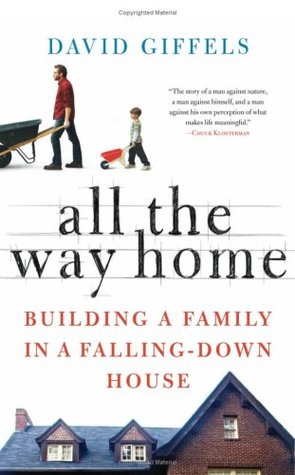
ALL THE WAY HOME and the back- and heart-breaking art of the DIY

I’m re-posting this review-lite of David Giffels’s first memoir, _All the Way Home: Building a Family in a Falling-Down House_ in response to a writing prompt–Dream House–over at Lorna’s site, Gin & Lemonade. As my house is still recovering (slowly) from the excitement of a burst pipe, I thought a bit of house reno humor was in order. To respond to Lorna’s prompt, yourself, go here: https://ginlemonade.com/2019/02/13/house-hunting-as-a-wheelchair-user-other-stories/ Happy Friday! ~ Rebecca

Rebecca Moon Ruark's avatarRust Belt Girl

2205542

I was sixteen before I knew a dad who didn’t drive a pickup truck.

Of course, this speaks as much to my limited teenage powers of observation as it does to my rural Ohio upbringing. Still…

My dad’s life was–and is–in his truck. A dad without a truck? How else would one: haul his 84 Lumber finds to turn the attic into proper living quarters; bring home fresh-split logs–and the log-splitter–to stoke the wood stove in winter; tow a rotted shell of a boat to be restored from the ribs up–in the workshop designed and built yourself?

In my eyes, my dad was the original DIY-er, before that catchy name was put to skillful industriousness, craftsmanship, and thrift.

As such…reading award-winning Akron, Ohio, author David Giffels’ memoir All the Way Home: Building a Family in a Falling-Down House felt like going home. Cursory jacket copy summary:

With their infant son…

View original post 786 more words