My interview with David Giffels, author of The Beginning Was the End: Devo in Ohio


David Giffels is the author of The Beginning Was the End: Devo in Ohio, coauthored by Jade Dellinger and published by University of Akron Press in 2023.

…this is a story of five spuds from an industrial wasteland with big ideas. It never should have happened. But it did. And in its wake, it leaves a parable.

Hold onto your energy domes, readers! I spoke with award-winning author, Akron Ohio’s own David Giffels, about all things Devo–and much more.

David, how did your Devo fascination begin? How much did you know about the band before you started writing about it?

My first encounter with Devo was when they were on Saturday Night Live in 1978. I remember it being this spectacle of a rock and roll band, like something I hadn’t seen before—and being equally freaked out and intrigued. This was in their yellow suit era and they were doing their robotic stage moves. My parents were watching with us, and my mom said something about them being from Akron. I don’t know how much that resonated with me then. But I recognize now that I did associate them with the place I was from, and that meant something abstract but important to me then. And it means something very specific to me now, that in their era, Devo really did define what Akron was.

What made you want to go down the Devo rabbit hole, conducting scores of interviews with Devo members and Devo-tees to write this—and your last Devo book? And what changed between your last book and this one?

My coauthor Jade Dellinger and I met in 2000 at one of the first of the Devo fan conventions, called DEVOtionals. I was there covering the story for the Akron Beacon Journal and Jade was an independent art curator. I had been dabbling with the notion of writing a book about Devo, because there was no biography of them. At the same time, Jade had been compiling research. We were introduced and immediately hit it off and combined forces.

In 2003, we published the first serious biography of the band: Are We Not Men? We Are Devo, the title taken from the band’s first album. The book went out of print, and for years we’d wanted to bring it back. When we approached the University of Akron Press about publishing it, we hit on the idea of reshaping it into what we really felt was the heart of the book. The original book covers Devo’s entire career. But the most interesting part is everything that happens up until they become a famous, commercial band: the ten years that takes place in anonymity in Northeast Ohio.

The Beginning Was the End: Devo in Ohio is revised to tell the story of these outsider artists, who found each other in an unlikely industrial landscape and started to explore all forms of media, art, and music, and what it was like for them to not only be ignored but also almost universally reviled. And yet they stuck to it and found a way into the mainstream. What’s so fascinating is the moment of them making it is also the beginning of the end. I don’t want to spoil the book’s ending, but there’s this moment of: ah, we’ve arrived, and here at the arrival is the specter of doom.

This book includes so many wonderful photographs of the early days of Devo. That’s a change from the first book, right?

Yeah, by creating a tighter focus, there was room for more than 80 new photographs that had never been seen before. It’s an amazing collection of memorabilia that we were able to showcase in this book that we couldn’t in the last book. Most of the photos were taken by Bobbie Watson Whitaker, who was a Kent State student and there from the very beginning of the band. She was always taking pictures and really documented Devo’s whole first decade—it’s just amazing.

What was it about the Rust Belt of the 1970s, and specifically Northeast Ohio, that was the perfect petri dish to birth Devo?

I make the argument in the intro to the book that Devo couldn’t have come from anywhere except Akron and Kent, really. There are factors in their development and aesthetic and philosophy that are directly tied to their environment. The most important is that the key members of Devo were students at Kent State University on May 4, 1970, when the national guard murdered four students and wounded several others. Two of them were friends of Devo co-founder Jerry Casale. He witnessed the event, and it changed everything. Devo’s dabbling with the philosophy that humans are evolving in reverse—de-evolution, where they got their band name—became something much more real. Here was an inhuman act by the government that happened right before Casale’s eyes, and it changed his life.

Then there’s the waning industrial backdrop of Northeast Ohio, the factories and the monochromatic gray polluted skies, the monolithic blimp hanging overhead. It almost had a German Expressionist feel, and it worked like an art-directed backdrop for the music Devo was making. Early on, they were working with mechanical sounds, and while they are not an industrial band, they have a strong industrial aesthetic. The yellow suits, their defining uniform in the early days of the band, came from a janitorial supply company that supplied the factories—so they were picking up on these industrial elements.

Another very important factor specific to Northeast Ohio was a guy named Ghoulardi, who hosted a Friday night B-horror-movie show out of Cleveland. He wore a weird wig and sunglasses and performed in this hipster schtick way. He was this anti-authoritarian guy, who played primal rock and roll in the background while he was doing his monologue in between segments of the movies he made fun of. Out of Cleveland, he was seen by vast numbers of teens in the 1960s, who were also watching Ed Sullivan and the Beatles. Many artists and musicians who came from Northeast Ohio site Ghoulardi as a key influence for their twisted sense of humor and rebellious natures, and that was the case with Devo.

And then there’s the work ethic of a working factory town. Devo stuck to this not-very-commercial art project for a decade—and that’s really the heart of the book—before they got any validation. That comes from that stick to it attitude that is baked into the nature of an industrial landscape. 

What’s a favorite story of yours from Devo’s early days?

One of my favorite stories is the way they would get gigs around the local music scene. Most of the bars would only hire cover bands. So the guys from Devo would call up the owner and say, “Hey, we’re this band called Devo and we play covers,” and they’d get booked. And they’d go on stage and say, “Here’s one by Bad Company,” and then they’d play one of their tuneless songs. They were using a homemade electronic drum kit at the time that made these atonal sounds of metal on metal. So this was clearly not a Bad Company song. And they’d get through one song and then say, “Okay, here’s one by Foghat,” and they’d do it again. By about the third song, they’d get the plug pulled or be paid by the club owner to leave. But they just fed on that. It was a total punk rock move—without the glamour of punk.

Do you label Devo punk rock or new wave?

I think Devo is new wave, and Iggy Pop makes the case too that they are the defining new wave band. Their quirkiness, the colorful presentation, the use of new technology, they embraced and embodied all of that. Not only would I call them new wave but I’d say they are the quintessential new wave band. 

Devo was made up of art majors and outsider artists who were just as interested in Art Devo and related artistic theories as in music. How much of this was real artistic statement? Performance art? Something else?

The first two people who started playing around with this were Jerry Casale and his friend Bob Lewis, who met at end of 1960s as freshmen at Kent State. As often happens with curious people when they make that big step from high school to college, every new idea seems like a bolt of lightning. Those two started having these late-night, pot smoke-fueled conversations about the fact that humans were devolving, and they started to write poems and manifestos about this, and I’m sure it had a serious intent, but it was also theoretical and philosophical. It was something they were trying out, as one does at that stage of one’s life.

I don’t think it was a joke, but until May 4, 1970, I don’t think there was as strong a political and social intent behind it. But the Kent State shootings changed this from theoretical to graphically real, right in front of them. Everything changed going forward.

One thing Devo did well was to mix up the joke with the serious intent in a way that one can’t be extracted from the other. So many songs that could be taken on the surface one way have something completely other underneath. Take for example “Whip It,” which has been cited among the Top 5 songs about masturbation, but it’s also a song that’s very much Dale Carnegie-pull-yourself-up-by-the-bootstraps: “When a problem comes along, you must whip it,” as a serious self-help statement. As I write in the book, if the intent was serious, it was meant to be laughed at, and if it was a joke, it was meant to be taken seriously. 

Devo’s costumes are iconic. Can you talk about the importance of the masks and uniforms they made into their costumes?

Masks go back to their very first performance in 1973—50 years ago—at an art festival at Kent State. Mark Mothersbaugh by default became the singer, and he was not at all comfortable on stage. The band was almost anti-music; they were making really atonal, mechanical kinds of sounds. Mothersbaugh wore a mask because he was terrified to be on stage. So it began with that, but as they went on and began experimenting with a performance art kind of presentation of their image, they started to adapt—first of all this sense of a uniform. They wanted to be seen as indistinguishable as individuals; that was part of the philosophy of Devo. It was part of the aesthetic, but also the philosophy that the individual is not important.

One thing they were trying to do was to undermine what had become part of established rock and roll culture. Men with beards, wearing faded jeans and leather—Devo wanted to reject that. The way to do it would be to put on a uniform and confront what rock and roll was. Of course, the first splash they made was by taking the quintessential rock and roll song, “Satisfaction” by The Rolling Stones, and turning it completely inside out. Musically and visually, that’s what they were doing to a rock and roll culture that thought it was radical.

How about the red, cone-shaped hats?

If you were going to have one new wave symbol, it would be those red energy dome hats they wore for the Freedom of Choice campaign of 1980, which are almost always referred to as the upside-down-flowerpots. And that seems like a silly, cartoonish, tossed-off gimmick. And yet you could write an academic thesis about what the energy domes really are. First of all, they’re drawn from an early image in Jerry Casale’s imaginative mind as a student at St. Patrick’s Elementary School in Kent, Ohio. He would walk down the hallways, and above him were these light fixtures that were art deco ziggurat shapes. Something about them stuck in his artistic mind.

Devo had a new look for every album and was very much about their visual presentation. So, when the members were designing the Freedom of Choice look, Casale went with this art deco, ziggurat shape. But it wasn’t just that. Devo also decided to call them energy domes, and the idea was that this would be a way to concentrate the psychic energy of the universe into the mind of the wearer. And of course nobody knew or cared—they were just the red flowerpot hats. But again, if it’s a joke it was meant to be taken seriously, and if it was serious it was meant to be taken as a joke. And I think the members of Devo are quite happy that the people who get it, get it, and the people who don’t, don’t.

Devo left Ohio in the late 70s and didn’t play in Akron again until 30 years later. Did you see them perform?

Yes. The last show they’d played in Akron was their homecoming tour in 1978. Then in 2008, they were invited to do a fundraiser for the local democrat party. It was Devo, Chrissie Hynde and the Black Keys—the three most iconic musical acts from Akron’s rock history—and they played together and it was an amazing night, to see those artists on the same stage. They jammed at the end, all playing together, which was really cool. 

We all know Devo’s 1980 MTV pop hit “Whip It,” but what Devo songs do you think we should be listening to today?

The most interesting Devo music to me has always been what falls under the tag of hardcore Devo, which is their early demos of what became their early albums. It’s the pre-Warner Brothers recordings. There’s a new hardcore collection that just came out. [50 YEARS OF DE-EVOLUTION (1973–2023), a retrospective collection, also released in 2023.] I would recommend that more than their mainstream commercial releases, because I think it captures their rough edges. To me that’s the true spirit of Devo.

Devo has been on tour this year, what’s being called their farewell tour, though they don’t like it called that. Part of it is that they’ve been nominated for the Rock & Roll Hall of Fame the past few years. This is another one of those ironies of Devo. An outsider band being put in the museum for rock and roll—that would be very Devo.

What’s the current Northeast Ohio music scene like? In addition to writing, you play in a band. Can you tell us about it?

I’m currently playing bass in a band called Dave Rich and His Enablers. It’s sort of indie rock power pop. The drummer is Chis Butler, who was the founder of The Waitresses [“I Know What Boys Like”], another Akron new wave icon. He had a lot of interaction with Devo, because they were in the scene at the same time, so he has lots of Devo stories to tell, himself. As far as the Northeast Ohio music scene, it feels like things got splintered with Covid. Over the pandemic everything was done alone in isolation, and the music is just now creeping out of the basement and back into the light of day.

What is the Devo parable, and what can we learn from their story? One of the parables is that if you mess with the system, the system will devour you. It’s better to know that it’ll happen and do it anyway than fear it’ll happen and not do it. That’s very much what happened with Devo. At some point they changed from wanting to be pure artists to wanting to join the music industry and get signed to a commercial label. As they were undergoing that transition, they were very aware that they were just meat in a world of vultures. That’s the main parable. They knew they were going to get scalped, but they did it anyway.

The second lesson is that their own theory also defined them. Their belief that evolution is working in reverse applied to them. Their music was so vibrant and new when they began, and then they slowly fell into some of the cliches of the rock and roll world: drugs, infighting, and problems with the record label. All of that started to pull them apart and they devolved from being bold iconoclasts to having to play the game. As they devolved, their music devolved—as they had predicted it would.


David Giffels is the author of eight books of nonfiction, most recently The Beginning Was the End: Devo in Ohio, coauthored with Jade Dellinger. His 2020 book Barnstorming Ohio: To Understand America, was described by Publishers Weekly as a “trenchant mix of memoir, reportage, and political analysis,” and selected as one of Library Journal’s Best Books of 2020. His other books include the memoirs Furnishing Eternity and All the Way Home, both winners of the Ohioana Book Award, and The Hard Way on Purpose, a New York Times Book Review “Editors’ Choice.” A former columnist at the Akron Beacon Journal, his writing has appeared in the New York Times MagazineThe AtlanticParadeThe Iowa ReviewEsquireGrantland, and many other publications. He also wrote for the MTV animated series Beavis and Butt-Head. He is a professor of English at the University of Akron, where he serves on the faculty of the NEOMFA creative writing program.


The Beginning Was the End: Devo in Ohio

by Jade Dellinger and David Giffels

University of Akron Press


Many thanks to David Giffels for sharing his insights and time with us here at Rust Belt Girl. Can’t wait to read what’s next!

Check David out at his website. And be sure to pick up The Beginning Was the End: Devo in Ohio for all the new wave fans on your holiday gift lists!

Like this interview? Comment below or on my fb page. And please share with your friends and social network. Want more? Follow Rust Belt Girl. Thanks! ~ Rebecca

*Photos provided by David Giffels

Enter your email address to subscribe to this blog and receive notifications of new posts by email.

Emma Riva of Petrichor reviews WAYS OF PITTSBURGH

Rust Belt Girl readers, don’t miss the latest from Petrichor–Pittsburgh, Pennsylvania’s art scene magazine. Founder and Editor-in-Chief Emma Riva is doing an incredible job covering the scene.

Ways of Pittsburgh: Exploring and Painting our Skinny Streets captures the plein air painting of Pittsburgh’s own Ron Donoughe. Let me tell you, his work is like no plein air landscape painting I’ve ever seen! Donoughe paints the city’s narrow backstreets–even the graffiti. A real talent at capturing light, I think some of his paintings of houses resemble Edward Hopper’s work. See if you agree, when you check out Emma’s review–and give Petrichor a well-deserved follow!

If Emma’s name seems familiar, you might remember her review of Tess Gunty’s National Book Award-winning novel: The Rabbit Hutch‘s Rust Belt Renaissance–published right here at Rust Belt Girl.

We’re closing in on the end of the year, friends, which means reading roundup time! So, tell me, what’s been your favorite book of the year? Let me know in the comments.

Let’s start a discussion! Comment below or on my FB page. And please share with your friends and social network.

Check out my categories above for more interviewsbook reviewsliterary musings, and writing advice we can all use. Never miss a post when you follow Rust Belt Girl. Thanks! ~Rebecca

*header image courtesy of Pexels Free Photos

Lit Fest ’23 Lowdown (with slideshow)

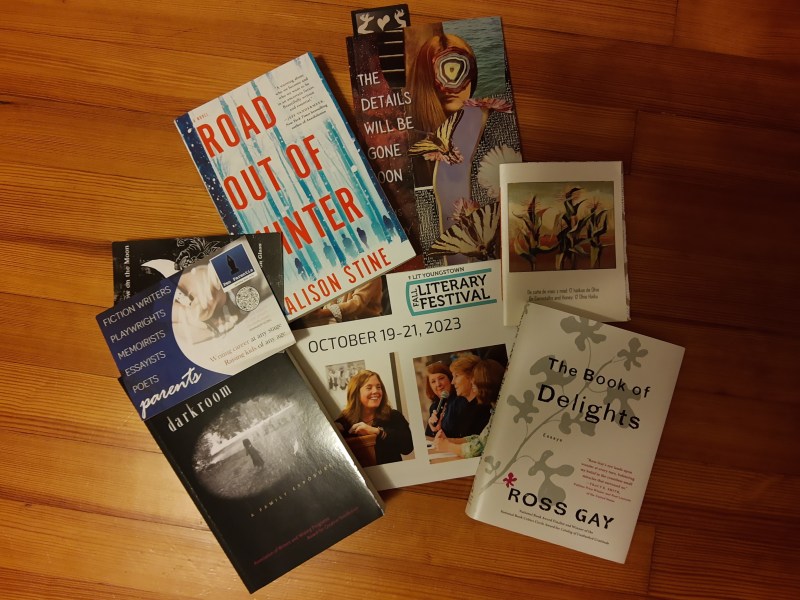
Much overdue, I’m back to recap Lit Youngstown’s 7th annual Fall Literary Festival. Who can put into words the inspiration and joy that happens when a couple hundred members of the literary community come together to create, share, and add to our towering TBRs, of course. (And did I mention nearly 50 sessions focused on various genres of writing and the writing process–how to choose, how to choose?) And, all in one fantastic Ohio city with the best Italian food around and against a backdrop of changing leaves for some extra fall magic. Well, I’ll give it a try…

Perhaps what I love most about this festival is that I can reinvent my creative self each time. I make it a habit to step outside my usual writerly lane and try something new.

Day 1

The first day of the festival I did just that. Parma, Ohio, Poet Laureate, workshopper extraordinaire, and friend Jeremy Jusek started off the day with a craft talk called “Verbal Alchemy: Visualizing Poetic Structure as a Formula.” If you couldn’t tell, Jeremy is a science guy in addition to being a poetry guy. He used chemical formulas and definitions to help “shake up” the structure of our poems. The ultimate goal: “To give structure to figurative language.” My major takeaways: the graphing of a reader’s reaction to a poem to illustrate the overcoming of a reader’s ground state to the point of truly feeling. Also, the idea of developing unit cells for a poem. (For instance a unit cell might consist of 2 similes or metaphors and one question. A poem might contain 6 of these units.)

Maybe it’s my uncertainty with writing poetry that makes me to want to learn all I can about poetic structure, but I stayed in the poetry lane that morning and attended superstar poet Sandra Beasley’s talk: “Lyric A to Z: Exploring Abecedarian Forms in Poetry and Creative Nonfiction.” If the term “Abecedarian” is new to you, you’re in good company. From Sandra’s handout: “In an ‘abecedarian,’ consecutive lines, sentences, or paragraphs lead with consecutive letters of the alphabet. Note that abecedarians can use any language system, not just American English.” (Abecedarian poetry and a Prince fan? Check out a fantastic example by poet Randall Man called, of course, “Alphabet Street.”)

Another highlight of the day was sitting in on the conversation between poet, essayist, and educator Ross Gay and poet and educator Jennifer Sperry Steinorth. Much of the discussion was pedagogy-focused. They discussed the MFA workshop, a process that has received close scrutiny in recent years. The traditional way, Ross feels isn’t “good for our soul or our work.” Instead he tries to stick close to what he notices on the page. His workshop goals are not a stellar poem or essay but are “care and imagination” in the class.

For my last session of the day, I moderated a roundtable led by author, editor and educator Meagan Lucas (whom I interviewed about her debut novel years ago for Parhelion and was excited to meet irl!). Called “I’m a Lit Mag Editor: Ask Me Anything,” the session allowed participants to get a behind-the-scenes on just what rises to the top of the “slush pile.” A couple tips I took with me: the fiction word count sweet spot for Reckon Review, where Meagan is EIC : about 3,000 words; and don’t forget the importance of a catchy title (when that’s all lit mag readers see in their queue!).

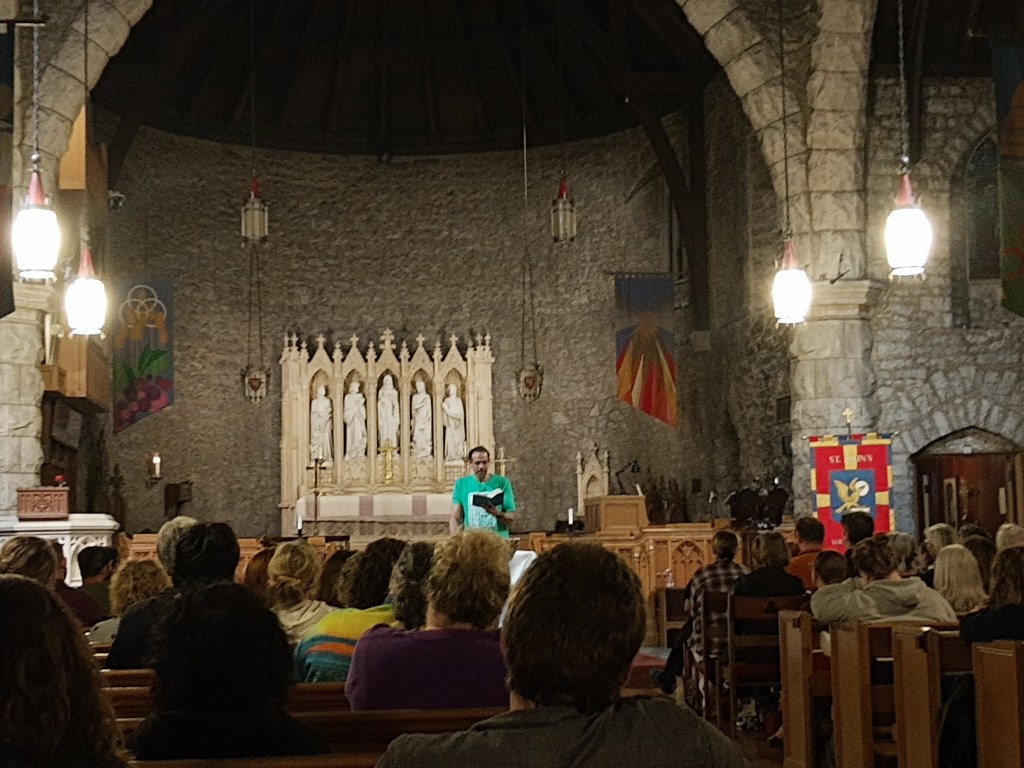
Last, if you’ve been around these blog parts for a while, you know Ross Gay’s work has inspired some of mine, including this essay. And so I was prepared to be moved by his reading at the beautiful, historic St. John’s Episcopal Church–much from his new book of essays, Inciting Joy. But reader, I wasn’t just whelmed but overwhelmed. Ross’s mission of joy has been a guiding light not just for my fledgling essays and poetry, but for a new path where my art and faith can live together. And (in 2023, as I’m sure you can imagine) that’s a lot.

Day 2

The next day started off with a fantastic author reading. One essayist, my friend and editing co-conspirator Renée K. Nicholson; novelist Jason Kapcala, whom I interviewed here; and two poets, Amy M. Alvarez and Randi Ward read from their creative work “set in the mountains and hollers of Appalachia and the hardscrabble steel towns of the rust belt.” Themes of place and displacement ran through these works and I found myself transported–just what a creative reading should do!

The next session found me back in my fiction-writing lane. Novelist Alison Stine focused on “the urgency of cli-fi as we deal with the worsening impacts of climate change” in her craft talk called “Writing Climate Fiction as the World Burns.” Alison has a really inspiring way of talking about writing, even if she writes dystopian stories that deal with tough stuff–like the end of the environment and nature as we know it. It’s clear writing has saved Alison time and again. Writing, she said “is making people sit up straight,” and is also something that can “give us hope” and “give us a way.” And my practical takeaway from her session: wait for your characters to start acting before you start to write your ideas.

My final session of the festival found me marveling at the difference storytelling and writing can make–not just on our spirits but on our whole selves and in the ways we care for one another. Dani Naffziger led an inspiring talk called “Collaborative Writing with Adults with Disabilities,” a writing service she says “provides tangible and rewarding benefits for all involved,” highlighting stories from a population “rarely represented” and introducing “new writing processes for established and emerging writers.”

Under the umbrella of The Healing Impact of Writing, for the other part of the session West Virginia University Humanities Center director Renée K. Nicholson and physician Ryan McCarthy talked about their Healthcare is Human initiative. Through a unique partnership between WVU Medicine and the WVU Humanities Center, the initiative promotes the work of narrative medicine and health humanities. Its seeds were planted during the pandemic, when Dr. McCarthy began journaling about his own experiences and then gathering the stories of his fellow front line workers. He has said: “…projects like this, which highlight the real human stories of healthcare workers, nurture our own humanity.”

My own humanity certainly nurtured, my writing self restored, I left the festival inspired by the work of my fellow writers and by what’s to come. Thank you to Lit Youngstown director Karen Schubert and all who make it happen, year after year. And trust me, you won’t want to miss next year’s festival. Details here.

Now, tell me in the comments, did you attend the festival? What was the highlight for you? Do you attend writing conferences in general, book fairs? What gets your creative juices flowing?

Hankering for Rust Belt author interviews, book reviews, and more? Check out my categories above. I hope you’ll follow me here, if you don’t already, so you never miss a (quite infrequent) post. Thanks! ~Rebecca

Enter your email address to subscribe to this blog and receive notifications of new posts by email.

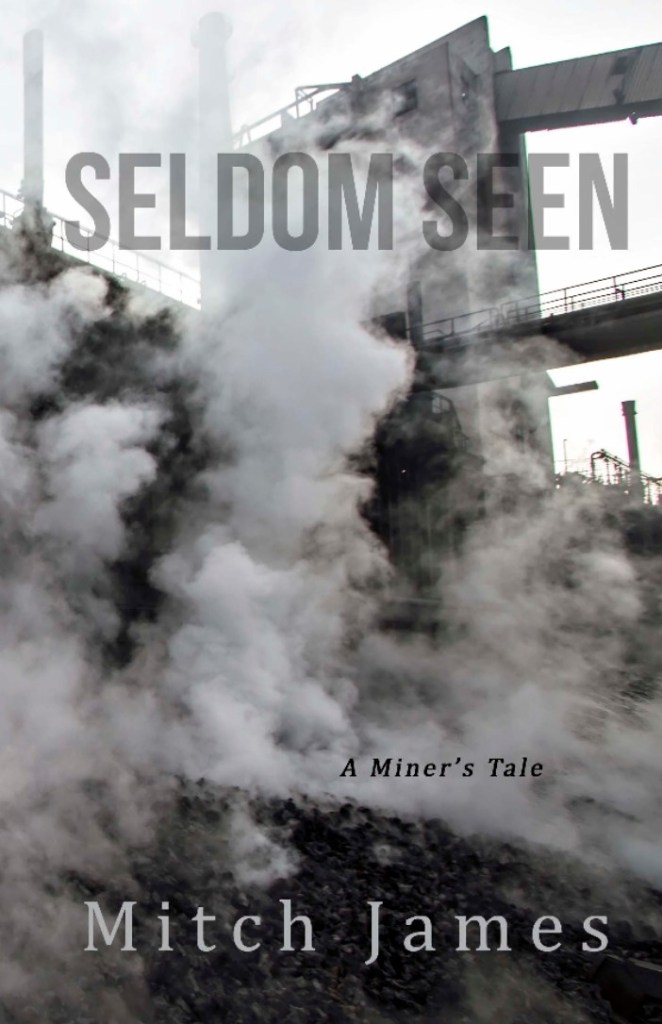
My interview with Mitch James, author of Seldom Seen: A Miner’s Tale

For my Appalachian lit aficionados, Grit Lit fans, and readers who aren’t afraid of the dark … I’m thrilled to share with you my conversation with author and professor Mitch James about his debut novel.

From the back cover, an intriguing blurb:

A dead mother. An auctioned childhood home. Loss in the womb of a coal mine.

Seldom Seen follows main character Brander, who encounters a “specter of a man who promises him that the answers to life are in Seldom Seen Mine, the largest coal mine in the United States.

With nothing holding him back, Brander … takes a job at Seldom Seen Mine, and fails at every attempt to amend his life, losing a friend, a lover, and maybe his mind.”

Reader friends, how does an author make good on such a blurb? I’ll tell you. With prose like this. I’m prefacing my first question for Mitch with one of my favorite passages in the novel. This is from early in the story, when Brander first enters Seldom Seen Mine:

Brander was surprised. The road was rather smooth and well-lit, the air stale but not dirty. They rolled along, everyone quiet. Brander stared around. The mine’s back had a skeletal structure of beams and crossbars and cribs, packed tight with backfill in places and all sealed up with gunite. It was surprisingly silent beneath the earth, the hum of the transport, the crunch of residue below the tires, the occasional whoosh of an air course. If not for the forced mechanization, there would be no sound, not like on the surface. Noise is life. But even free of men, the mine wasn’t dead, exactly; there was something, a kind of energy present in the long back road, an innate awareness, like the womb of a pulse-filled thing.

Mitch, welcome to Rust Belt Girl! Let’s dive in. The mine in this story works as much more than a compelling setting but a real character. I’d say we readers end up knowing as much about the mine as we do about Brander. How did you decide where to set this story? How did you learn so much about mines and mining? What kind of research did this entail?

I’m so happy to hear you’re engaging with the mine in that way because it is very much its own organism. It felt that way when writing the book, and it means a lot to hear that it felt that way to you as you read it. When I wrote the novel, I was up to my ears in rural Pennsylvania, working on farms, mountain biking old logging roads, kayaking rivers, and clearing land. I couldn’t get enough. I lived not far from the real Seldom Seen Mine. The research I did that allowed me to accidentally stumble into the idea for the novel also happened there. It was a perfect recipe—the need to express the region as I had experienced it as a transplant who had been there awhile, the need to tell Brander’s story, the need to imagine others’ lives and suffering alongside my own.

As for research, I read literary books on mining. There aren’t many. And I read short stories about mining in the U.S. and abroad. I read historical writing about mining at different periods in the U.S. in microfilm and microfiche. I watched a lot of YouTube videos, read instructional handbooks on mining equipment, found out who sold it, and found videos on how to operate it. I was friends with a mining engineer who guided me some.  A little bit of everything.   

Here at the Rust Belt Girl blog we’re a little fascinated with how place works in story. Place helps plots turn. Place also helps form characters. While a rural setting, I’d say that your Seldom Seen mine situates your novel squarely in Rust Belt lit territory. There are other commonly-appearing aspects to Rust Belt lit (or contemporary Grit Lit, writ large) that feature in your story: teenage pregnancy and the meth crisis for just two examples. Can you talk about how you explore such aspects of Rust Belt life and the characters living these lives without resorting to stereotypes in your novel (you do this well!)? 

I’m relieved to hear you don’t think my characters are stereotypical. I would never want that. That said, though, if I’m being honest, I think all fiction runs off a little bit of stereotype. I think most readers need to see characters that are somewhat familiar and that present themselves as equations they believe they can calculate, at least at the start. Lucky’s the gruff, crude, masculine man. Brander is the wounded, self-loathing Midwesterner. But beneath the stereotypes that reveal a small percentage of what makes up who we are is the rest of us, the best of us, the parts of us that are unique. Brander and Lucky also have these qualities within them. It’s my job to complicate their stereotypes by fleshing out the rest of their characters, for they drive the story. I see stereotypes everywhere, including in myself. But by seeing them, I can perceive their limits, their boundaries; I can peer around them to what else presents itself, and that’s gold as a writer, the stories everyone tells but doesn’t mean to.

Basically, look for the people within the people and write about that. Then be prepared to conscientiously employ a little stereotype to get the ball rolling.     

For those of us who are writers, ourselves, I wonder if you could take us through the process of crafting this novel. What was the first idea/image that came to you? When did you know you had to write this story? How long did it take? What’s your writing process like? We craft junkies want all the details!

The idea for the novel came to me when I was reading a translation of a Russian short story from the early 1800s, a story about a miner who encounters a ghost in a mine. The ghost starts manifesting in his life outside the mine until he goes insane and, if I remember correctly, kills himself. The story was so short. I wanted so much more. So I made it. 

When did I know I had to write the story? Immediately. I can always tell the difference between something I could write and something I must write. I had to write Seldom Seen.

As for the process, I woke up at 3 a.m., wrote a 1000 words a day five or so days a week, and had the first draft in a few months. Then it took me 10 years to publish the book, so you can imagine the revisions, drinking, and self-loathing that occurred after repeated failures. Brander had to get it from somewhere!  

I often wonder how Rust Belt lit will appear in American Literature textbooks a hundred years from now. Since you’re a college professor—maybe you wonder about this too? For me, my most formative American Literature course introduced me to William Dean Howells, the father of American realism. I’m not going to draw a perfectly straight line from American realism of the late 19th century to Southern Gothic of the early 20th century and the Grit Lit of today, but somebody could try. All that’s to ask where you see Seldom Seen fitting into the canon of American Literature? What are your reading/literary influences? What literary characters informed Brander, who—despite hard work and, yes, grit, fails, fails, and fails again?

It makes me feel a little pretentious to think of my work in any kind of canon. But my writing, including Seldom Seen, is influenced by myriad Appalachian, Midwestern, and American Western and South-Western writers, all rural and spread across the genres of fiction, nonfiction, and poetry. I would hope Seldom Seenwould be welcomed by the Appalachian literary community and rural literary communities more broadly. 

As for character influences, I have to be honest, I don’t know that I’ve ever consciously (though certainly subconsciously I have) created characters based on other characters about whom I’ve read. The characters begin with me, but they take over their story, and I just try and keep up and do justice through my writing to what they show me. I know that sounds mystic and woo-woo, but it’s the truth. For example, Lucky wasn’t a character I intended to have in the story, but when he showed up, he had plans, and I went along with them. Now, I can’t imagine the novel without him. 

As for the last part of your questions, I don’t need to read a book to see hard work, grit, and abundant failure in a person. I’ve witnessed it in the working poor rural communities I’ve lived in my entire life. But I want to make something clear; I’m not saying the working poor are failures or that their efforts are in vain. I was working poor until I was thirty-two years old. I worked fifty hours a week with multi-billion-dollar industries and still had no healthcare or money, and couldn’t afford a vacation or a car that could make it out of the county. Goals like a home instead of a rental, good health insurance, the ability to take a vacation or have a safe vehicle all create comfort and stability in one’s life. The working poor are grinding but failing to reach important thresholds like these and others. There are many reasons why, but amongst them are certainly socio-economic and political barriers. These folks, my mother and father, cousins, aunts, uncles, neighbors—they’ve taught me how to create characters with grit that fight and fight and fight.

This world has shown me how to write characters who fail.

And final question: What are you teaching, reading, and writing right now? What’s next?

I’m teaching various writing composition courses. I’m reading, gosh, so many random things. I feel like I read and read and finish nothing. I’m reading Larry McMurtry’s Horseman, Pass By; Marilynne Robinson’s Gilead; Adam Grims’ The Art and Science of Technical Analysis; Pema Chödrön’s When Things Fall Apart, and a textbook on world history because I screwed around too much in school when I was younger. I’m ashamed by how much basic knowledge I missed out on for being too stupid to know better. 

As far as writing goes, I just finished a book of poetry that a press requested and for which there is a promising chance of publication. I’m pitching a couple of short story collections and two novels and am kind of tinkering around on a new one, so if there are any publishers/agents out there who think my work and I might be a good fit, reach out. I’m doing some final revisions on two peer-reviewed articles due out soon as well. Keeping busy. 

Upcoming? I’m excited about the Lit Youngstown Fall Literary Festival. It’s one of my favorite events all year!  


Mitch James is a Professor of Composition and Literature at Lakeland Community College in Kirtland, OH and the Editor-at-Large at Great Lakes Review. Mitch is the author of the novel Seldom Seen: A Miner’s Tale (Sunbury Press) and has published works across the genres of short fiction, poetry, and academic scholarship. You can find his latest short fiction in Made of Rust and Glass: Midwest Literary Fiction Vol. 2Red Branch Review, and Bull; poetry at Shelia-Na-Gig, Watershed Journal, I Thought I Heard a Cardinal Sing: Ohio’s Appalachian Voices; and scholarship at Journal of Creative Writing Studies. Find more at mitchjamesauthor.com and on Twitter @mrjames5527. 


Like this interview? Comment below or on my FB page. And please share with your friends and social network.

Check out my categories above for more interviewsbook reviewsliterary musings, and writing advice we can all use. Never miss a post when you follow Rust Belt Girl. Thanks! ~Rebecca

Enter your email address to subscribe to this blog and receive notifications of new posts by email.

Literary citizenship alive and well, Twit*er as ‘dead’ emoticon, and bonus Europe pics for playing along

We’re no longer tweeting, we’re xeeting—writer Amber Sparks might have coined that–and the literary landscape has changed, yet again. What used to provide a good social media home for the #writingcommunity now feels like a hut, maybe a hovel. The best writerly take I heard was from writer Anna Gazmarian (I think), who said the X logo that replaced the cute blue bird reminded her of some boutique hotel she couldn’t afford. I look at the new logo and can see nothing but the emoticon for “dead”: Xs for eyes. But so long as there are writers connecting, there will be a writing community. Really, the literary landscape is always changing, and one certainly can’t rely on a social media site for real connections (except for maybe this one).

I talk a lot about literary citizenship but don’t often talk about what it looks like in practice. It definitely has a lot to do with reading and reviewing the work of other writers, but that’s just the beginning. To be clear, it has little to do with getting an MFA, for that paper in a frame on my office wall has played no part in most of the connections I’ve made in the writing community. So, a few on-the-ground examples:

Not long ago, I braved the open-mic at one of my favorite literary conferences and read a prose poem I was working on, called “Jesus, My Son’s Buckteeth.” (Clearly I’m staking out the fertile publishing ground of: Is she religious or just ignorantly blasphemous? Let’s just keep them guessing.) The poem needed a little work but it was getting somewhere interesting, capturing a complicated mother-love characterized now by running the kids to ortho appointments and no longer by rocking them to sleep. After the open-mic, a writer friend who is also an editor of a wonderful poetry journal said I might consider submitting it. I re-worked the poem, with the help of my trusted writing group, sent it off, and crossed my fingers. It was accepted–but this isn’t where the story of literary citizenship stops. I made sure to attend the online issue launch, and as I scanned all the names and faces in Zoom boxes, I recognized the name of one of my undergraduate writing teachers, who is also a poet. I used the chat function to say hi, and she remembered me, 20+ years on!

Sometimes it’s about saying hi to someone who may or may not remember you. Sometimes it’s saying yes to the the next generation of writers when you might rather be making Christmas cookies. OK, I’ll back up. A writer friend of a writer friend asked if I’d judge the 2022 AWP Intro Journals Project awards for creative nonfiction. When I could have been making cookies over my winter break, I was reading essays from MFA students, more than 60 of them: reading, re-reading, and picking my winners from so many admirable essays. But that wasn’t the end of the connecting. Long after the winning essays were published in university-run literary journals, one of the writers reached out. She was in the throes of preparing to turn in her thesis before graduation, but she wanted to take a moment to thank me for helping her feel like a writer with that award. I remembered her essay: it was excellent and showcased her journalism chops. I fact, she’d had a career before retiring and pursuing an MFA in creative writing–a time where you’re always a student no matter your age or experience. I told her I’d love to see an essay about just that, and I hope I do.

So, sometimes literary citizenship is leaving the door open for more, is encouraging personal history and story to be shared. Sometimes it’s just saying: you’re writing, I’m reading, and I’m so happy to be sharing this connection. Love a book? Tell the author.

And then there are so many more examples: the blogging friendships that started right here and have turned into real-life and writing-life friendships and critique groups and beta reading relationships. 

Like any deep relationship, cultivating literary relationships does take time. Being a good literary citizen requires that you know the writing world and its players. What time I once used to doom scroll on the bird site I hope to devote to this blog. In a few days, my boys and I leave for our summer break in Northern Ohio, and I have a stack of Rust Belt lit to bring with me. I hope to get back to you here with a couple reviews and an author interview this fall, so stay tuned. 

What are you reading and writing this week, this weekend? Want more stories from me, or author interviews, book reviews, guest posts, more? Follow me here:

Enter your email address to subscribe to this blog and receive notifications of new posts by email.

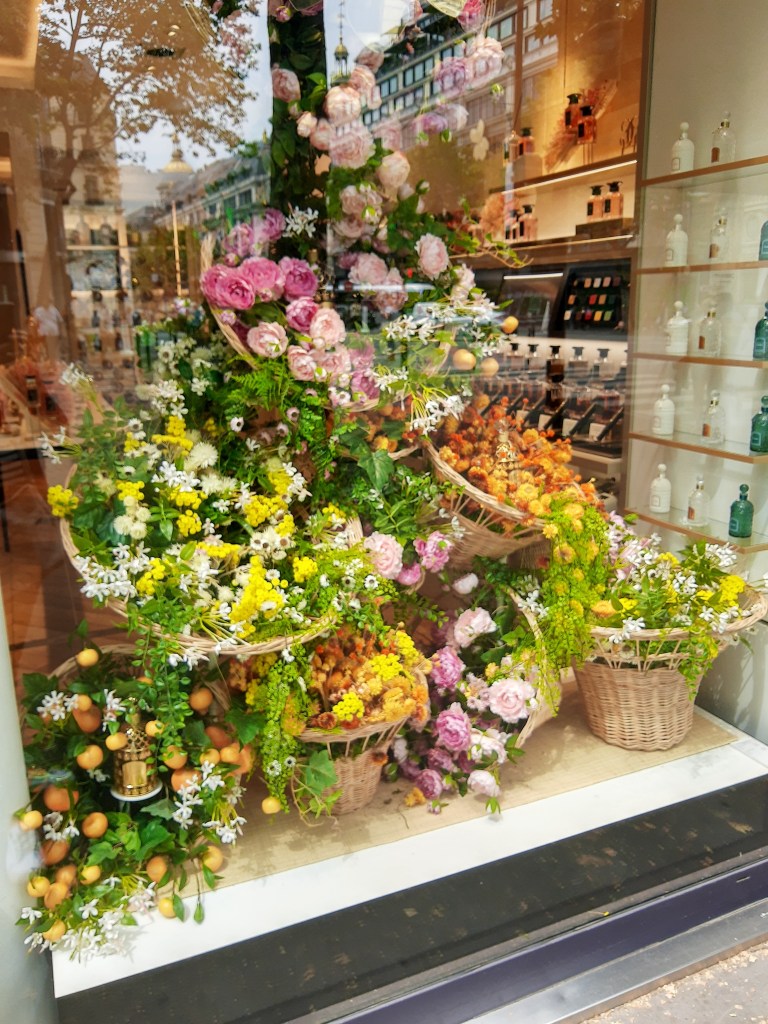
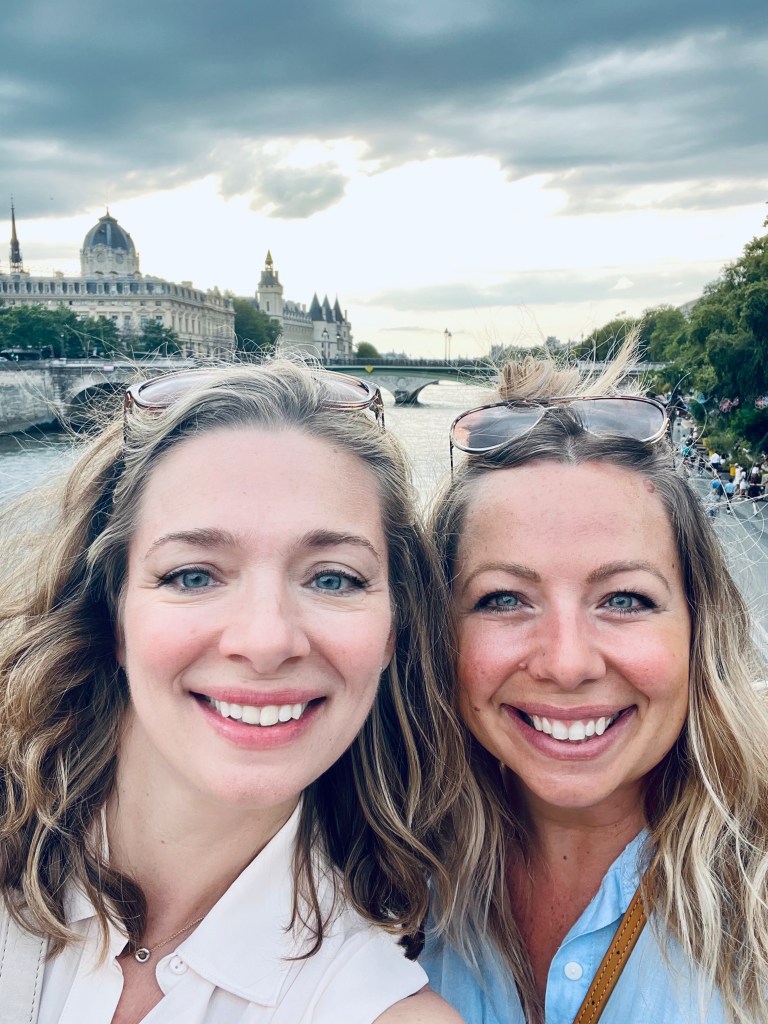
If you follow me at FB or IG (@MoonRuark), you’ve been inundated with photos from my European vacation in July. The most Rust Belt-ish place: Vigo, Spain–industrial, historical, and wonderful. A few pics for those who haven’t had enough (in order: Paris’ Eiffel Tower (of course), a pretty shop window, the D’Orsay Museum, and us sisters by the Seine; Barcelona hills and palm trees and basilica; Vigo’s cathedral; and a view of the Spanish countryside from Valenca, Portugal:

Building thriving post-industrial cities, one story at a time

We talk a lot about place here on the blog. While I’m usually talking about place or setting in literature, I’m also interested in the real places that inspire—especially Rust Belt places.

I never gave much thought to England’s rust belt, until a conversation with a good friend, who is English, last summer. Born a “southern softie,” a not-very-nice term for a person from the South of England, my friend recently moved to Sheffield, in the North of England. It’s basically smack dab in the middle of England’s rust belt, she told me.

As coincidence—or bots—would have it, I learned of a symposium hosted on Monday by the University of Sheffield featuring writers, community organizers, academics and the like from the UK and US. I found it fascinating and thought I’d give you a taste, here. 

An “across-the-pond conversation,” the symposium featured four panels that explored how to build “thriving, integrated post-industrial cities.” There was talk of architecture, anthropology, heritage, history and more. Panelists discussed new ways of connecting with the past, such as through urban explorations and art—including writing.

Thanks to Zoom, I was able to check in on the first panel of the half-day event, which included a presentation by award-winning author, essayist, and journalist David Giffels—dubbed “the bard of Akron” [Ohio] by the New York Times. If you’ve been here at Rust Belt Girl for a while, that’s a name you’ll recognize. David has graciously talked with us before about a couple of his books: The Hard Way on Purpose: Essays and Dispatches from the Rust Belt and Furnishing Eternity: A Father, a Son, a Coffin, and a Measure of Life.

As a featured speaker, David touched on the idea of our place’s “story.” He talked about sometimes feeling like our place isn’t worthy of story because it’s a humble place. But, of course, every place is worthy of story. He talked about pushing back against a prevailing narrative that comes from the outside (see: flyover journalism) by championing the local voice and lived experience.

David dug into his own past lived experience, as a student at the University of Akron during a time when the city’s downtown was full of abandoned buildings. “As young people we didn’t see it as failure,” he said, but as a place of promise. “You could reimagine the built environment”—a bookstore here, an art gallery there. 

Just don’t call it a “dying” city. Rather, cities evolve. David’s story of Akron is important to tell, because “it’s the story of hard times”—and hard times can be instructive. Take the COVID-19 pandemic. Ohio was ahead of the curve, David noted. The reason? The state had been dealing with a public health crisis—the opioid crisis, with Akron at the epicenter—for years. The realigning of emergency and social services necessary to deal with such a crisis, Ohio was on it. “Our hard times had something to teach,” David said.

Let’s not “fly over” the stories of lived experience—the hard and good times—in places like Akron and Youngstown, like Sheffield and Liverpool. It’s important to get cities talking, David said. “Dialogue between cities can remind us of the value of our narrative.”

Thanks to the symposium organizers and participants, especially David, for spreading the word about this symposium. It developed from new-genre artist Jennifer Vanderpool’s social practice art exhibitions, called Untold Stories, a series of exhibitions taking place in the post-industrial Midwest region of the US and the industrial North of England. Maybe catch one of the artist’s exhibitions if you can? 


What are you attending, watching, reading, and writing this month? Let me know in the comments…

Want more Rust Belt writing, author interviews, book reviews, writing advice, and more? Check out the handy categories above. 

Find me on FB and on IG and Twitter @MoonRuark

And follow me here. Thanks!

Behind the Scenes: “A New Nuclear”

The lovely folks at Great Lakes Review published my story, “A New Nuclear,” about my favorite fictional dental hygienist Patty’s struggle to find herself during the last summer before her child leaves for college. It is a most Rust Belt-y story, and I’m grateful to editor Mitch James for giving it a fine home along my favorite Great Lake.

One of the questions writers hear most–even about fictional works–is: “Is this story inspired by your life? Is this you?” Yes and no. Do I understand Patty’s situation? Do I feel a sense of my nest emptying out? Sure, my boys are 13 now, and every day becoming more independent. But also no. Patty is not me, and is definitely not my mom (read on). But I thought I’d give a little backstory in case my followers want a peek into the real-life influences and (really weird) brain of a fiction writer.

Family might recognize Patty’s stint with the No Nukes! environmental chapter. My mom–who would have been proud to be called a tree hugger, if we used that term then–did a stint with the group that protested the local nuclear power plant. (The plant’s still in operation, btw. Planned to be deactivated in 2021, it’s now licensed to operate until 2037.) I remember my mom’s bright yellow No Nukes! shirt. She might have participated in one protest but was much more often spotted at the church basement food co-op she helped run. Also, note the spiderwort plants in my story–plants that are able to detect small amounts of radiation. My mom would have loved that fact. Maybe she knew it? I wish I could ask her.

A writer friend–hi, Jessica!–who is more perceptive than I noted that I have teeth on the creative brain as of late. She also read a prose poem of mine, recently published in the print journal, Presence: A Journal of Catholic Poetry,” titled “Jesus, My Son’s Buckteeth.” What do they say about teeth dreams? Spurred on by anxiety, right? Should I be worried if teeth are taking over my creative mind? (Don’t tell me.)

And a note on the craft of writing and the novel process: Writer friends who’ve read my WIP–a novel set over one Ohio summer, bridging two lakeshores and three generations–will recognize Patty. Early drafts of the novel included Patty’s perspective and more time for her on the page. In later revisions, Patty’s POV–but not Patty’s character–was cut. Still, I couldn’t leave the protest scene (or the dental chair scene!) on the cutting room floor. “Kill your darlings,” they say. But, also, sometimes those darlings can make for a good story.

I hope you like it: “A New Nuclear”

What are you reading and writing this week, this weekend? Want more stories from me, or author interviews, book reviews, guest posts, more? Follow me here:

Enter your email address to subscribe to this blog and receive notifications of new posts by email.

*free header image from Pexels

My interview with Valerie Nieman, author of In the Lonely Backwater: Part II

Part II of my interview with Valerie Nieman continues our discussion of her novel and her poetry and also covers the poetry she loved to teach her students. She also shares what she’s writing and reading, right now. (Spot the friend of Rust Belt Girl in her TBR!) Missed Part I of the interview? Find it here.)

Valerie Nieman’s latest, In the Lonely Backwater, a mystery in the Southern gothic tradition, has been named the 2022 Sir Walter Raleigh Award winner for the best novel by a North Carolina writer. To the Bones, her genre-bending folk horror/thriller about coal country, was a finalist for the 2020 Manly Wade Wellman Award. She is also the author of Blood Clay (Eric Hoffer Award) and two other novels. She has published a short fiction collection and three poetry collections, most recently, Leopard Lady: A Life in Verse, which was runner-up for the Brockman-Campbell Prize. She has published widely in journals and anthologies, and appears regularly in juried reading series such as Piccolo Spoleto, Why There Are Words, and Women of Appalachia. She has held state and NEA creative writing fellowships. Nieman has degrees from West Virginia University and Queens University of Charlotte, and was a reporter and farmer in West Virginia before moving to North Carolina, where she worked as an editor and a creative writing professor at NC A&T State University. 

Valerie, In the Lonely Backwater has been praised for its “deep sense of the wonderment of the natural world.” I see this in your poetry, too:

Can you talk about this poem of yours, its impetus, its rooting in the bog but also “close to the sun?” 

This is a poem that came directly from observation. I was walking in the Bog Garden in Greensboro when I came upon a group of people staring up into the treetops. It’s that barred owl, I thought, a resident of the garden. Instead, I was shocked to see a full-grown groundhog up there grazing on the new leaves. I went home and looked it up online, finding numerous videos and learning that it’s not uncommon for woodchucks to climb trees.

Among other inspirations was the late Gerald Stern’s poem “Behaving Like a Jew” and his line about a dead opossum’s “little dancing feet.”

Poet and author Valerie Nieman

The family at the center of your novel is part of the “Appalachian diaspora.” What does this term mean for you personally—and for your poetry, especially?

Well, it’s who I am. I grew up in northern Appalachia, the Allegheny Plateau in western New York where the Allegheny River rises and flows to Pittsburgh. I went to school at West Virginia University, and worked as a reporter and editor at papers in Fairmont and Morgantown,  both on the Monongahela, before leaving the Ohio River watershed for the first time in my life. I moved to central North Carolina in 1997 for a newspaper job. Now I live one county line over from Appalachia as defined by the ARC, but Rockingham County has all the earmarks of Appalachia—rural, with faded industry and a changing agricultural life, and beautiful hills and rivers. Not really mountainous enough, I guess. So my work draws on my upbringing in dairy country, 20-plus years in the coal fields, and then working as an editor in tobacco country before a final 20 years in academia. Nature poet, blue collar writer, Appalachian writer, Southern writer.

“Tinder” feels like a nature poem, an ode to Shakespeare’s witchy “double toil and trouble,” and a horror story all at once:

Tinder

I am the woman your mother 
warned you about. 

I am boiling bones boiling bones boiling bones. 
I am washing out the war-rags at the ford,
blood pluming downstream 
gaudy to catch the heart.
 
I am scraping scraping scraping
on the stretched skin of the world. 
My pet is a scrofulous cur,
my bird a dobsonfly all wings and jaws.

I look under rocks.
I find what I expect to find. 

Can you talk about your influences here and what you want your reader to know about the persona in the poem?

Ah, that’s a dangerous woman. She harbors grudges and has a long memory for those who’ve done wrong by her. What bones are those in her broth? Difficult to say.

Influences indeed include Shakespeare, and Poe as well, a bit of Hawthorne—all of whom I read as a child, pulling the classics from the shelves during long western New York winters. I also was influenced by many years of research into early Celtic and Norse cultures. “The washer at the ford” or bean-nighe is found across the Celtic nations. She’s seen in wild places, kneeling beside a lake or river, washing the blood out of the clothes of men who are fated to die. So that was in my mind as the image of the dobsonfly appeared. It’s the quite terrifying winged adult of the hellgrammite, a stream insect with enormous pinching jaws. As a child I spent a lot of time in “the crick,” turning over rocks, and as an angler I’ve done the same for years, to see what fish might be eating, and just because I like to see what’s underneath.

What was your favorite poem or story to teach students when you were a professor at NC A&T State University?

“Out, Out” by Robert Frost is a favorite, to show how a poet can compress an entire short story into 34 lines—dialog, description, setting, plot. I liked showing students the flexibility of the sonnet, comparing traditional forms with Terrence Hayes’ “American Sonnets.” I also loved teaching humanities and exposing students to ancient work from the negative confessionsof the Egyptian Book of the Dead, to framing a discussion about war and the death of young men through Priam’s visit to Achilles.

What are you reading right now? What are you writing? What can we look forward to, next?

The top of one stack: Hemlock Hollow by Culley Holderfield, The Sound of Rabbits by Janice Deal, Red Clay Suzie by Jeffrey Dale Lofton, All the Little Hopes by Leah Weiss, and Hungry Town by Jason Kapcala. Dipping into a number of poetry books as well, including Anything that Happens by Cheryl Wilder. Eager also to get back to some science fiction, with Kim Stanley Robinson’s Ministry of the Future. There are many shelves, and many stacks, and I keep adding to the accumulation.

I’ve just (as of 4/3) completed the first draft of Dead Hand, a sequel to To the Bones. I had almost as much fun writing this as the first one! The action moves from the West Virginia coalfields to Ireland. I revisited places I’d seen a few years ago, from the Shannon Pot to County Cavan to Dublin, and added others including an Irish coal mine. While that simmers in the hands of beta readers, I’m working on pulling together a new book of poetry.

In the Lonely Backwater

By Valerie Nieman

Regal House Publishing $18.95


Like this interview? Comment below or on my FB page. And please share with your friends and social network. 

Are you a Rust Belt writer interested in seeing if an author interview or book review of yours might be right for Rust Belt Girl? Pitch me through this site’s contact function.

Check out my categories above for more interviewsbook reviewsliterary musings, and writing advice we can all use.

What are you reading and writing this week? Let us know in the comments…

And never miss a post when you follow Rust Belt Girl. Thanks! ~Rebecca

Enter your email address to subscribe to this blog and receive notifications of new posts by email.

My interview with Valerie Nieman, author of In the Lonely Backwater: Part I

Author Valerie Nieman grew up in the Rust Belt of western New York State, lived and worked for many years in the northern coalfields of West Virginia, and now lives in a North Carolina town that’s still recovering from loss of the Lucky Strike plant. In short, Valerie explains, she’s “seen a lot of industrial wastelands.”

How do these evocative locations inform her prose and poetry? In the following author interview, I asked Valerie about this, about her latest, award-winning novel–and much more.

Valerie Nieman’s latest, In the Lonely Backwater, a mystery in the Southern gothic tradition, has been named the 2022 Sir Walter Raleigh Award winner for the best novel by a North Carolina writer. To the Bones, her genre-bending folk horror/thriller about coal country, was a finalist for the 2020 Manly Wade Wellman Award. She is also the author of Blood Clay (Eric Hoffer Award) and two other novels. She has published a short fiction collection and three poetry collections, most recently, Leopard Lady: A Life in Verse, which was runner-up for the Brockman-Campbell Prize. She has published widely in journals and anthologies, and appears regularly in juried reading series such as Piccolo Spoleto, Why There Are Words, and Women of Appalachia. She has held state and NEA creative writing fellowships. Nieman has degrees from West Virginia University and Queens University of Charlotte, and was a reporter and farmer in West Virginia before moving to North Carolina, where she worked as an editor and a creative writing professor at NC A&T State University. 

Valerie, can you tell us about your Rust Belt upbringing and how it informs your creative work? What was it like to not only live but work in the coalfields of West Virginia? You were both a farmer and a reporter there. Can you talk about how those roles are similar/different?

I grew up the child of a factory worker who’d wanted to be a farmer. His plant in Jamestown, NY, built desks and filing systems. I remember copies of “The Machinist” in the bathroom, and the annual July shutdowns and factory picnics. Royal Metal was part of a thriving factory district that produced everything from heavy equipment to tools to furniture. Crescent Tool, Proto Tool, Blackstone, and so many others used to run three shifts. The last time I was there, I found a ghost district, post-apocalyptic. It’s been a long time and maybe things have gotten better, but this part of the Rust Belt was truly “rusty.”

My father had to leave the factory when it closed and go to one in South Bend, IN, that carried on for a few more years. When he could no longer walk concrete floors as a foreman because of worsening knee injuries from the Korean War, he and Mom followed me to West Virginia. They opened a bait and tackle shop near the Monongahela River just outside Fairmont, WV, where I worked for the newspaper.

That city had a prominent and troubled history as a coal center. Consolidation Coal was founded there, and the Watson mansion became an inspiration for the Kavanagh home in To the Bones. Marion County had two of the nation’s most deadly mine accidents, Monongah 1907 and Farmington No. 9 in 1968, both of which led to massive overhauls of mine safety regulations. The offices of UMWA District 31, headed by Richard Trumka, were next door to the church I attended.

During my time as a reporter, I covered the coal industry and the environment, along with the police beat, so I got to see everything from murder investigations to the working longwall at Martinka Mine. I later became editor and helmed major investigations, one into the county’s secretive dealings with a waste coal entrepreneur and another about acid mine drainage, both of which won state AP public service awards and other recognition.

My home was a small version of the classic Appalachian hill farm. It rested above some of the former Consol No. 9 workings and a mine crack furrowed the hayfield. My ex and I built a house and barn and were creating a partial subsistence lifestyle there, with beef cattle, organic garden and orchards, before divorce ended that part of my life.

I’ve never regretted the newspaper years, despite the low pay and often difficult working situations, because I got to see and experience so much! My novels and poems draw on those years still.

Valerie Nieman, Winner of the 2022 Sir Walter Raleigh Award

Your poem, “The size of West Virginia,” begins “Few know the Mountain State…” Here’s a taste:

“The size of West Virginia”

Few know the Mountain State but all
recognize it, easiest puzzle-piece of the states,
its awkward panhandles and pendulous gut
lolling into East Virginia.

A vast aquifer "lake" lies trapped under southeastern 
Greenland, larger than the size of West Virginia.

It’s a convenient scale for journalists, 
standard candle like the Cepheid Variables 
or Type Ia Supernovae that allow 
for dead reckoning on distant stars.

As of July 15th, fires have blackened nearly 21,000 
square miles. (That's nearly the size of West Virginia.)

Can you talk about that—how being from a lesser-known (or maybe even unknowable to outsiders) kind of place informs your writing?

Appalachia remains “the other” for so many in America, a stereotype compounded of Snuffy Smith comics and Disney cartoons and Deliverance. The people are lumped together as white, poor, ignorant, violent.

This didn’t happen by accident. The dispossession of Irish and Scots crofters by “noble” landowners who considered them an impediment— “lice on the land” as one said—led to mass migrations and  provided many of the region’s early immigrants. That legacy of dispossession continued with the rape of Appalachia’s land for timber and coal, at the expense of smallholders and their communities. And writers from the Northeast found a willing market for stories of the region’s exotic and dangerous folk.

The region was and is diverse, from the many Native American tribes that lived, traded, farmed, and hunted there, to German, Polish, Italian, Hungarian, Spanish immigrants who came to work the mines and mills, along with Black families moving up from the Deep South, Lebanese merchants who served the coal communities, and more recently, people from Nigeria to India and the world over who come to study at West Virginia University or  work in industry.

I began to notice the repeated use of West Virginia as a unit of size comparison for other places, did a search online and found many more, and that brought about this poem. 

Although I’ve lived in North Carolina for many years, West Virginia was where I became a writer and the place that continues to feed my work. Along the lines of this poem, my 2018 novel To the Bones uses and subverts some of those cliches about this “unknown place” in a genre-crossing tale about the coal industry and its enormous impact on the people and place.  

How did you transition from journalism to poetry and fiction? How do these disciplines influence one another?

Brevity, compression, observation are the watchwords for journalism. Equally true for poetry. And while I can wax descriptive in my prose writing, it’s always economical—no wasted words. At least I like to think so, and readers have said as much. 

Your latest novel, In the Lonely Backwater, features a teen protagonist, Maggie Warshauer. What a voice! (Take note, fiction writers.) Here’s how Maggie describes a detective who’s come to her North Carolina high school to ask her and other students about a girl who’s disappeared, a girl Maggie is related to and with whom has had some “squabbles”:

I didn't expect a detective to look like my dentist. He waited, watching me like an underfed hound. If I were going to place him in the marina, I'd say he was a fishing boat. A small one, from Sears, not on a slip but parked on the monthly lot. Plain aluminum johnboat with a little outboard.

Can you tell us when and how Maggie first started speaking to you as a writer, when you knew you needed to write this story? 

Maggie’s been speaking to me all my life: a version of my sarcastic inner voice that doesn’t get spoken aloud very often. She’s not me, but there’s a lot of me in her. Specifically, she began speaking with the opening line, “There wasn’t anything wrong between Charisse Swicegood and me except that she was her and I was me, and with the family history and all it was just natural.”

Her character has many roots, including my lifetime of solo wandering in the woods, an interest in biology and ecology, and a number of years sailing a “pocket cruiser” at Kerr Lake. Like Maggie, I was a girl who preferred boy things, in a time when the terms gender-fluid and nonperforming had not yet appeared.

The spark that brought together many disparate elements was the discovery of an inscription in my senior yearbook. A girl I do not remember wrote, “I hope all our misunderstandings are cleared up.” It’s signed Love. I do not remember anything about the disagreement, but I did recall the intensity of emotions in those years.

The town you live in now, in North Carolina, is still recovering from the loss of the Lucky Strike plant. Coal and tobacco both had their boom and bust. I’m reminded of Emma Riva’s review here at Rust Belt Girl of Tess Gunty’s novel, The Rabbit Hutch, set in a fictionalized Indiana town decimated by the loss of an auto plant. What makes these “wastelands” fertile settings for your creative work, for suspense, and even horror?

I think such hollowed-out industrial centers have much in common with haunted houses, and with the beloved ruins of the Romantic poets and artists, in the evocation of what once was and is now gone. I’m drawn to them, as I am to songs by Bruce Springsteen that depict these same broken places and the people who despair, maybe leave, or maybe find the grit to keep going and rise up again. I most like cities that have a past, Pittsburgh, Glasgow, Greensboro, but have reinvented themselves without losing that slight acrid tang of their former smokes, their former selves. 

I remember when retraining programs were offered for West Virginia miners losing their jobs in the transition from conventional mining to long wall. They were offered welding or computer coding, both honorable careers, but pretty specific. It’s good to see current efforts to train miners and legacy factory workers for careers in new industries that may better fit or expand their existing skill sets, such as wind turbine maintenance, electric motor building, ecological remediation, and solar installation.

Where I now live, in Reidsville, NC, the landscape is marked by the former tobacco warehouses, the mill houses and owner’s mansions, old curing sheds, and over all, the smokestack of the former Lucky Strike plant emblazoned with that logo. It’s been purchased and is being repurposed as an e-commerce hub. I hope they keep that emblematic stack standing as a symbol of this community.


Please check back for Part II of my interview with Valerie Nieman–for more of her poetry, for what she loved to teach her students, and for what she’s writing and reading, right now. For more about her latest novel, follow the link below:

In the Lonely Backwater

By Valerie Nieman

Regal House Publishing $18.95


Like this interview? Comment below or on my FB page. And please share with your friends and social network. 

Are you a Rust Belt writer interested in seeing if an author interview or book review of yours might be right for Rust Belt Girl? Pitch me through this site’s contact function.

Check out my categories above for more interviewsbook reviewsliterary musings, and writing advice we can all use.

In case you missed it, my review of Megan Giddings’ latest novel, The Women Could Fly, which first appeared here at Rust Belt Girl was republished at Belt Magazine last month. Check it out!

Never miss a post when you follow Rust Belt Girl. Thanks! ~Rebecca

Enter your email address to subscribe to this blog and receive notifications of new posts by email.

THE RABBIT HUTCH’s Rust Belt Renaissance

By Emma Riva

People in Pittsburgh will tell you where things are based on what used to be there. Most of the time, the landmark that used to be there is food related. A fancy seafood restaurant. An ice cream shop. In a small city, those are the sorts of things people remember. To out-of-towners, this might seem like a quaint practice, but something I’ve come to realize is that it is a profoundly human one.

As a fiction writer, I often find myself navigating the complicated narrative of how our memories and associations of the past interact with our experiences of the present. I look at a candle and think of my favorite candle store in Elizabeth, Pennsylvania, which I went to for the first time because I couldn’t use the bathroom on the Y46 bus and I bolted in not expecting them to have a restroom, but they did. The candle reminds me of my desire to go back there, of the friends I know in Elizabeth. All of this interacts with the energy of the place, the former boating hub, the Monongahela River Valley that built Lewis and Clark’s boat. All of that comes from the split second of looking at a burning wick. 

Sharpsburg over the Allegheny River from the 62 St. Bridge; photo credit: Emma Riva

Tess Gunty’s 2022 debut novel, The Rabbit Hutch, is a master class in this mixture of memory and present, owing in part to its setting within the Rust Belt. The novel’s setting of Vacca Vale, Indiana, is a facsimile of her hometown of South Bend, though she’s fictionalized a car manufacturer named Zorn as the ghost of industry haunting the town’s abandoned structures. “I wanted to be able to pull from Gary, Ind., and Flint, Mich., and Youngstown, Ohio, and a number of other cities in the Rust Belt whose economic devastation was much worse, I think, than it was in South Bend when Studebaker closed,” Gunty said in an interview with the South Bend Tribune

The Rabbit Hutch is a genre-bending work that follows a cast of characters who all live in an affordable housing complex called La Lapiniére, nicknamed “The Rabbit Hutch.” Its central character is Blandine Watkins, née Tiffany, an eccentric former foster youth obsessed with Christian mystics to the point where she changed her own name to a martyred French woman’s. But the book switches between the past and the present and between the perspectives of different residents of the apartment complex, including one of Blandine’s roommates, another  former foster youth who serves as an omniscient narrator for several parts of the book which foreshadow some horror described as Blandine “leaving her body.” Though the characters’ Vacca Vale has its echoes of Gunty’s own South Bend, it’s an imaginary future where the University of Notre Dame didn’t fill the gaps in South Bend left behind by Studebaker. Here’s what Gunty’s characters say of Vacca Vale, while stoned and watching a commercial for a new apartment complex, much nicer than the titular complex they live in:

“Vacca Vale, Welcome Home,” scoffed Todd, but he looked sort of emotional to me. “What the hell kind of slogan is that?”
	“More like—Vacca Vale: Don’t Touch the Rust,” said Malik. 
	“Vacca Vale: Excuse Me, Sir, Are You Lost?” I added.
	“Vacca Vale: We’ll Clean That Up in the Morning,” said Todd.
        We laughed. We warmed. We didn’t know who we were trying to impress.
	“Vacca Vale,” joked Malik. “We Used to Make Cars Here!” 
	“Vacca Vale: Where the Churches Outnumber the Humans.” 
	“Vacca Vale: Where the Rabbits Outnumber the Churches.” 
	“Vacca Vale: At Least You Can Still Fuck Here.”

For many in the literary publishing world Gunty has ascended into, the Rust Belt is only a feeling, not a region. It’s an image from the movie Flashdance or a short chapter in a history textbook. So, it’s important to define what it is exactly we’re talking about when we say “the Rust Belt.” There’s some confusion among people who don’t live here about the categorical differences between the Rust Belt, Appalachia, and the Midwest. Pittsburgh and Buffalo aren’t exactly in the Midwest, but they’re still in the Rust Belt. The map in the Encyclopedia Brittanica looks like a gasoline blotch on a sidewalk or an oddly shaped hickey.

It’s a region defined by things which used to be there, sites of innovation and excess then turned to rot, now home to … what? Those of us who live there will be familiar with the exchange that takes place in one scene of The Rabbit Hutch. Blandine and Jack get into a heated argument in the loft of a real-estate developer who plans to “revitalize” their city. Blandine complains about how the real estate development is ruining Chastity Valley, one of her favorite parts of the city, and Jack shoots back: 

“Look,” says Jack. “I know what you want me to say. You want everyone to hate the Valley plan as much as you do. But I just don’t. A lot of people are excited about it, and I think you’re being sort of judgmental and shortsighted. I mean, a lot people say it’s going to help our economy and make jobs and stuff. And I’ve only met him a couple of times, but Pinky doesn’t seem that bad. From what I’ve heard, he grew up poor, he knows what it’s like not to have what you need, and now he wants to help Vacca Vale get out of the gutter. Sure, he’s making money off it. But so what, if it helps people at the end of the day? We need to get out of the gutter.”

Gunty then notes: “In the ensuing silence, Blandine spots a camera, situated atop a thick book called Rust Belt: The Second Coming.” There is much reference to Catholicism in The Rabbit Hutch, and “the Second Coming” refers to resurrection, that most American of impulses. It’s no coincidence that the nature park to be bulldozed for the buildings is called Chastity Valley. But The Rabbit Hutch is no hollow anti-gentrification plea. 

From having grown up in New York, I have a keen and nuanced understanding of gentrification and the ways in which contemporary activism often ignores its tangled nature. The Rabbit Hutch frames the Chastity Valley developments and the so-called “revitalization” of Vacca Vale as part of a meditation on the uncomfortable truth about change. One of the most gutting lines in the book is: “Six months after Tiffany/Blandine had submitted her court papers, proof of birth and $210, she discovered that the name Blandine is Latin for ‘mild,’ while Tiffany is Greek for “Manifestation of God.’”  I, too, went through long stretches of hating my own name, wanting to replace it with something more elegant and powerful. In those lines, Blandine reveals how, though her activism comes from a genuine love for Vacca Vale, there’s a deeper hypocrisy and insecurity there. Though she wants Vacca Vale to retain its grit, the scars that give it character, she is unable to deal with her own scars, to the point where she threw away her own name for a fantasy. 

The South Side from the Birmingham Bridge over the Monongahela River; photo credit: Emma Riva

There is much more to talk about in The Rabbit Hutch, and the only way to truly experience all of it is to read it for yourself. But here are a few sneak peeks. There’s the death of an aging child star and the vengeance of her bitter, angry son—another scar of the past opened into a wound. There’s the woman who moderates content on a site for obituaries, who spurns that son by deleting his callous comment on his mother’s obituary—a marker of the absurdity of how we deal with loss. 

The Rabbit Hutch is all about people on the margins, people who are orphaned by society in some way, regardless of their age or their circumstances. In the contemporary publishing industry, there’s a certain obsession with “marginalized” or “underrepresented” identities. It feels like a reduction, like generational oppression is a badge of suffering for coastal publishing executives to give out to those poor, unfortunate souls in quote-unquote Middle America. I’m perhaps one of the people Blandine and her friends might laugh at, who traded New York for this strange, desolate place. But I know exactly how Blandine feels about Chastity Valley, because I watched my childhood public library in Washington Heights get bulldozed to make space for an “affordable” housing complex with a supposed library inside of it, the skeleton of which now looms over Broadway like a dying animal. I know exactly how it feels to not care how many people get to live in that building or how many families get to make nicer dinners because of the paychecks the developer creates, because connecting to a sad, poor place makes you feel like your suffering matters in some grand story of socio-economic distress.

In the same conversation, above, Jack says to Blandine: “’I’m not judging you.’ The tenderness in his expression catches Blandine off guard, makes the room glitter vertiginously. ‘I just want to know what happened to you.’”

What happened to you? I hate the passive voice. As a literature tutor, my screed to my students is that passive voice makes them sound less confident. I don’t say weak but the implication is there. And of course, there are political and emotional implications. We’ve all heard mistakes were made or I was assaulted. Of course, it’s an important step in reclamation of your life and accountability to say You made mistakes or He assaulted me. But in modern American language, we are profoundly uncomfortable with the passive voice even when we overuse it. Being scarred by your history is a hard thing to admit. You have to admit that things affected you. That (how terrible to admit!) they damaged you. That (even worse!) you are damaged. The Rust Belt is one big, glaring scar of affectation and damage. Its very name is spoil and decay. We spend a lot of our lives teaching ourselves not to be affected by things. In The Rabbit Hutch, what Blandine seeks when she wants to leave her body, is truly to feel instead of simply to suffer. 

The Rabbit Hutch, winner of the 2022 National Book Award for fiction, is available from Penguin Random House or wherever books are sold.


Emma Riva is an author and art writer living and working in Pittsburgh. She serves as the managing editor of UP, an international online and print magazine covering street art, graffiti, fine arts, and their intersections in popular culture. She is also a staff writer at regional magazine Belt and a contributor to Pittsburgh-based art criticism site Bunker Review. You can find out more about her on her website and her Instagram and order her book Night Shift in Tamaqua wherever books are sold. 


Rebecca here, with huge thanks to Emma for her fascinating review.

What are you reading and writing this month, as we look forward to spring? Let’s discuss in the comments.

Are you a Rust Belt writer? Do you write book reviews or conduct interviews of Rust Belt authors? If so, think of Rust Belt Girl for a guest post, like this one. And check out the categories above for more writing from rusty places.

Find me on FB, and on IG and Twitter: @MoonRuark

And follow me here. Thanks!

Enter your email address to subscribe to this blog and receive notifications of new posts by email.