Shoutout to Belt Publishing for all the great Rust Belt-ish books they put out. I don’t get around to reading enough of them, but when I pick one up, I know it’s going to be good. Belt Publishing’s 2016 release The New Midwest by Mark Athitakis is still a bible of Rust Belt lit for me, and my copy resides permanently in my bookshelves. And then there’s Edward McClelland’s super clever How to Speak Midwestern (linguistics is never not fun!).
Of Belt’s newer releases, I’m most excited to read Patrick Wensink’s The Great Black Swamp: Toxic Algae, Toxic Relationships, and the Most Interesting Place in America that Nobody’s Ever Heard Of. (I am so here for long titles and of books that make me feel like a somebody–in that I have heard of the Great Black Swamp, since my dad lives in Northern Ohio. Also, when the personal and the environmental collide–which should be often–fantastic storytelling happens, imo.)
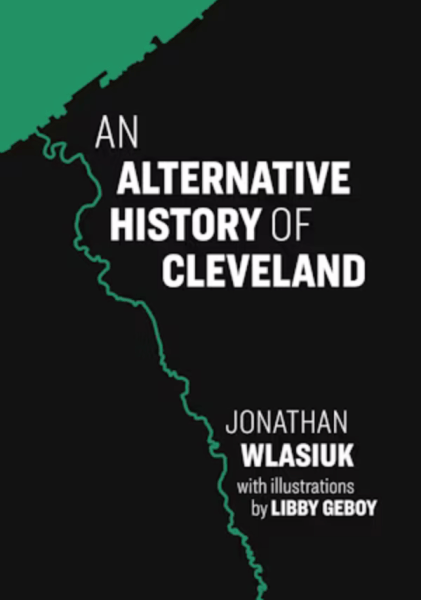
I just finished Jonathan Wlasiuk’s An Alternative History of Cleveland, and thought, yep, Belt Publishing did it again. (I think Ed Simon–of Belt Magazine, now Rust Belt Magazine–wrote An Alternative History of Pittsburgh, which is bound to be as great, if not even better.) I’ve been dipping in and out of this history of my native northeast Ohio for months, not because it isn’t gipping but because it’s so layered. A summary for you from the back jacket copy:
Part natural history, part archaeological essay, and part a contemporary call to arms to reclaim and rewild Cleveland’s future, this unforgettable trek into the heart of ‘the land’ will change the way you see the city forever.
No easy task, the author attempts to provide at least a bird’s eye view (both figuratively and literally, as you’ll see) of 10,000 years of human history. He zooms in on the relationship (fraught, as you can imagine) between humans and the environment–of which there’s a lot to find interesting, as northeast Ohio is situated along the eastern shore of Lake Erie, bountiful in flora and fauna, when it’s left alone, that is.
Incredibly well-researched and cited, the parts of the book that “sang” to me best were those moments where the personal and the environmental intersected in a visceral way. In the final chapter, “The Land,” Wlasiuk describes his work for an organization called Lights Out Cleveland, which has him looking for dead birds on the sidewalks of Cleveland before dawn during the heart of migration season. These birds came to an untimely end along their journeys due to humans’ penchant for light, of course, and see-through buildings.
This might sound like a depressing chapter start, but the author has a knack for involving fascinating local voices–including the “irreverent” and mostly-anonymous voice behind the @trashfish_cle account on IG, who spends his days in a kayak fishing trash out of the Cuyahoga River–and for providing hope, often in the way of a call to action. Or, at least we get lessons by watching locals who are doing their part to “remediate the environment and spread awareness.”
And look, we can do our part–not just for the Rust Belt-ish literary world but for the world at large, for our flora and fauna neighbors–by talking about the books we read that not only entertain but open our eyes to the ways we are connected to each other and to these ancient environments we call home. Right?
What are you reading, reading, or watching right now? Let me know in the comments.
Like this post? Comment below or on my FB page. And please share with your friends and social network.
Are you a Rust Belt writer interested in seeing if your own post, or author interview, or book review might be right for Rust Belt Girl? Hit me up through this site’s contact function.
Check out my categories above for more interviews, book reviews, guest posts, literary musings, and writing advice we can all use. Never miss a post when you follow Rust Belt Girl. Thanks! ~Rebecca




 Rust Belt Girl