We’re no longer tweeting, we’re xeeting—writer Amber Sparks might have coined that–and the literary landscape has changed, yet again. What used to provide a good social media home for the #writingcommunity now feels like a hut, maybe a hovel. The best writerly take I heard was from writer Anna Gazmarian (I think), who said the X logo that replaced the cute blue bird reminded her of some boutique hotel she couldn’t afford. I look at the new logo and can see nothing but the emoticon for “dead”: Xs for eyes. But so long as there are writers connecting, there will be a writing community. Really, the literary landscape is always changing, and one certainly can’t rely on a social media site for real connections (except for maybe this one).
I talk a lot about literary citizenship but don’t often talk about what it looks like in practice. It definitely has a lot to do with reading and reviewing the work of other writers, but that’s just the beginning. To be clear, it has little to do with getting an MFA, for that paper in a frame on my office wall has played no part in most of the connections I’ve made in the writing community. So, a few on-the-ground examples:
Not long ago, I braved the open-mic at one of my favorite literary conferences and read a prose poem I was working on, called “Jesus, My Son’s Buckteeth.” (Clearly I’m staking out the fertile publishing ground of: Is she religious or just ignorantly blasphemous? Let’s just keep them guessing.) The poem needed a little work but it was getting somewhere interesting, capturing a complicated mother-love characterized now by running the kids to ortho appointments and no longer by rocking them to sleep. After the open-mic, a writer friend who is also an editor of a wonderful poetry journal said I might consider submitting it. I re-worked the poem, with the help of my trusted writing group, sent it off, and crossed my fingers. It was accepted–but this isn’t where the story of literary citizenship stops. I made sure to attend the online issue launch, and as I scanned all the names and faces in Zoom boxes, I recognized the name of one of my undergraduate writing teachers, who is also a poet. I used the chat function to say hi, and she remembered me, 20+ years on!
Sometimes it’s about saying hi to someone who may or may not remember you. Sometimes it’s saying yes to the the next generation of writers when you might rather be making Christmas cookies. OK, I’ll back up. A writer friend of a writer friend asked if I’d judge the 2022 AWP Intro Journals Project awards for creative nonfiction. When I could have been making cookies over my winter break, I was reading essays from MFA students, more than 60 of them: reading, re-reading, and picking my winners from so many admirable essays. But that wasn’t the end of the connecting. Long after the winning essays were published in university-run literary journals, one of the writers reached out. She was in the throes of preparing to turn in her thesis before graduation, but she wanted to take a moment to thank me for helping her feel like a writer with that award. I remembered her essay: it was excellent and showcased her journalism chops. I fact, she’d had a career before retiring and pursuing an MFA in creative writing–a time where you’re always a student no matter your age or experience. I told her I’d love to see an essay about just that, and I hope I do.
So, sometimes literary citizenship is leaving the door open for more, is encouraging personal history and story to be shared. Sometimes it’s just saying: you’re writing, I’m reading, and I’m so happy to be sharing this connection. Love a book? Tell the author.
And then there are so many more examples: the blogging friendships that started right here and have turned into real-life and writing-life friendships and critique groups and beta reading relationships.
Like any deep relationship, cultivating literary relationships does take time. Being a good literary citizen requires that you know the writing world and its players. What time I once used to doom scroll on the bird site I hope to devote to this blog. In a few days, my boys and I leave for our summer break in Northern Ohio, and I have a stack of Rust Belt lit to bring with me. I hope to get back to you here with a couple reviews and an author interview this fall, so stay tuned.
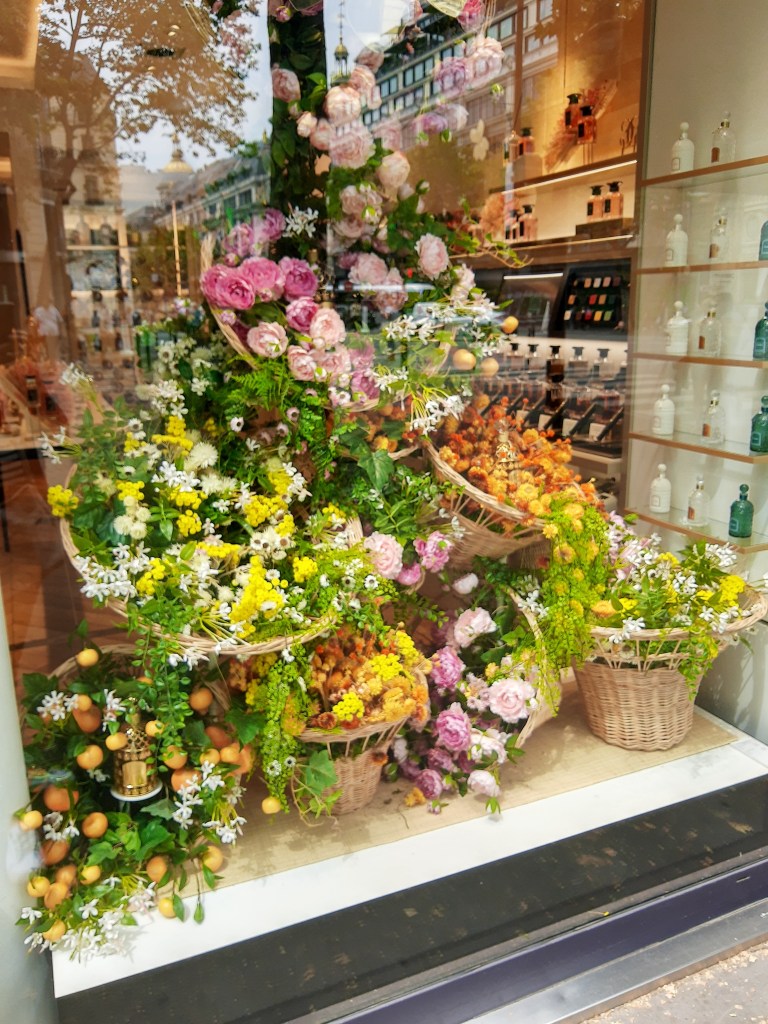
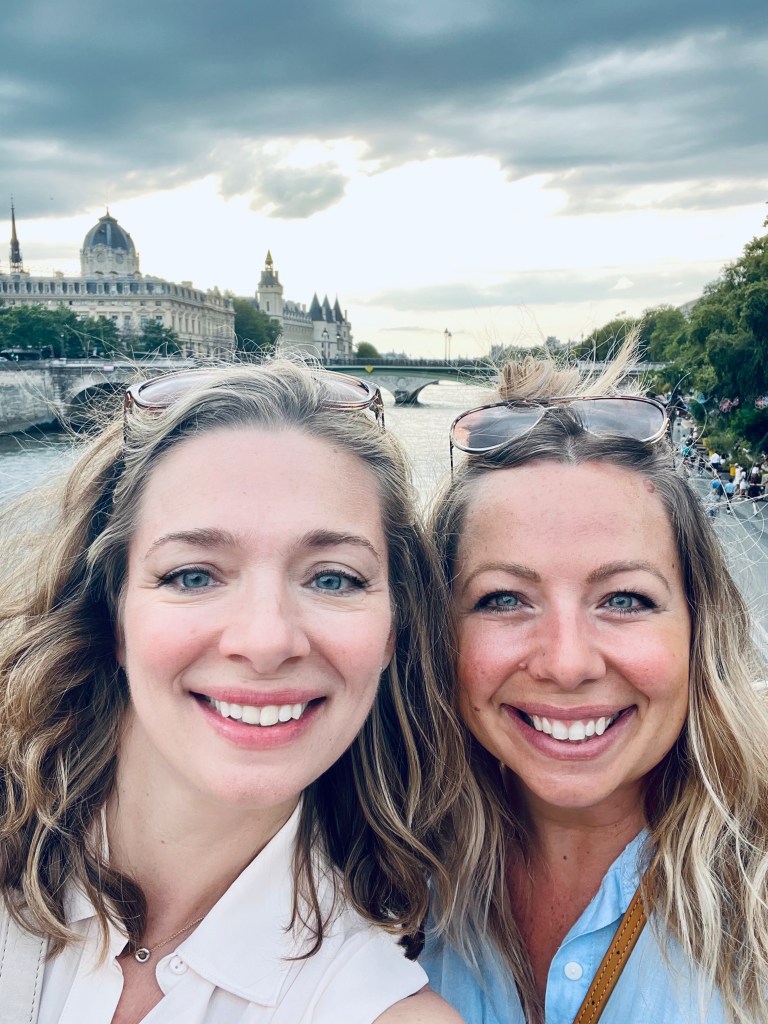
If you follow me at FB or IG (@MoonRuark), you’ve been inundated with photos from my European vacation in July. The most Rust Belt-ish place: Vigo, Spain–industrial, historical, and wonderful. A few pics for those who haven’t had enough (in order: Paris’ Eiffel Tower (of course), a pretty shop window, the D’Orsay Museum, and us sisters by the Seine; Barcelona hills and palm trees and basilica; Vigo’s cathedral; and a view of the Spanish countryside from Valenca, Portugal:
Author Valerie Nieman grew up in the Rust Belt of western New York State, lived and worked for many years in the northern coalfields of West Virginia, and now lives in a North Carolina town that’s still recovering from loss of the Lucky Strike plant. In short, Valerie explains, she’s “seen a lot of industrial wastelands.”
How do these evocative locations inform her prose and poetry? In the following author interview, I asked Valerie about this, about her latest, award-winning novel–and much more.
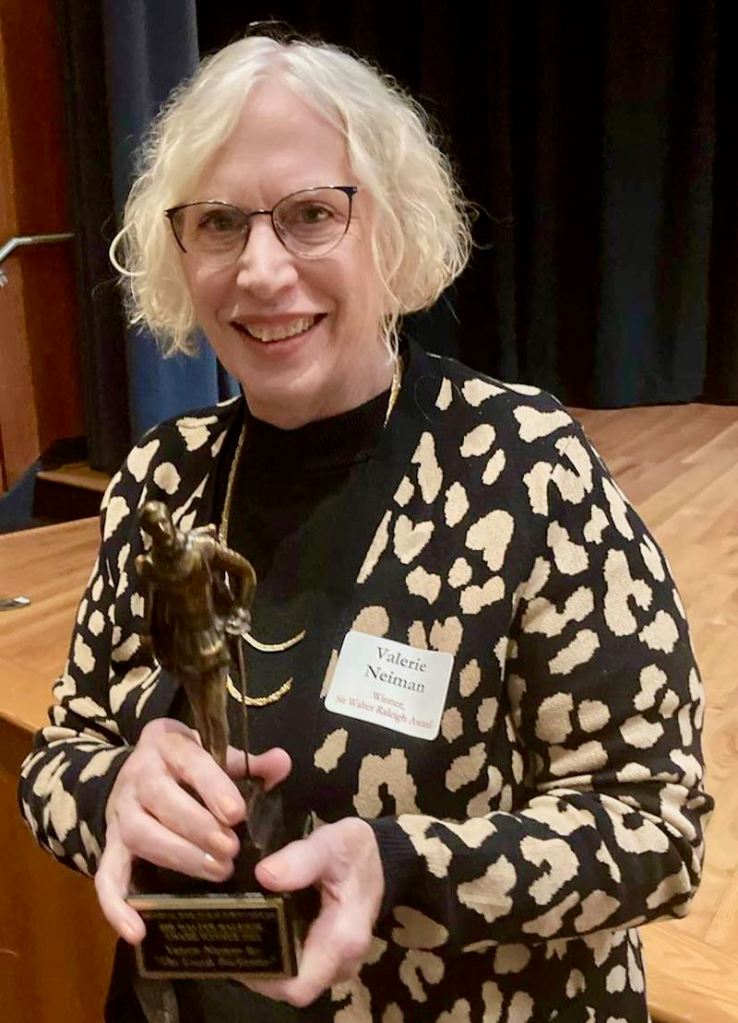
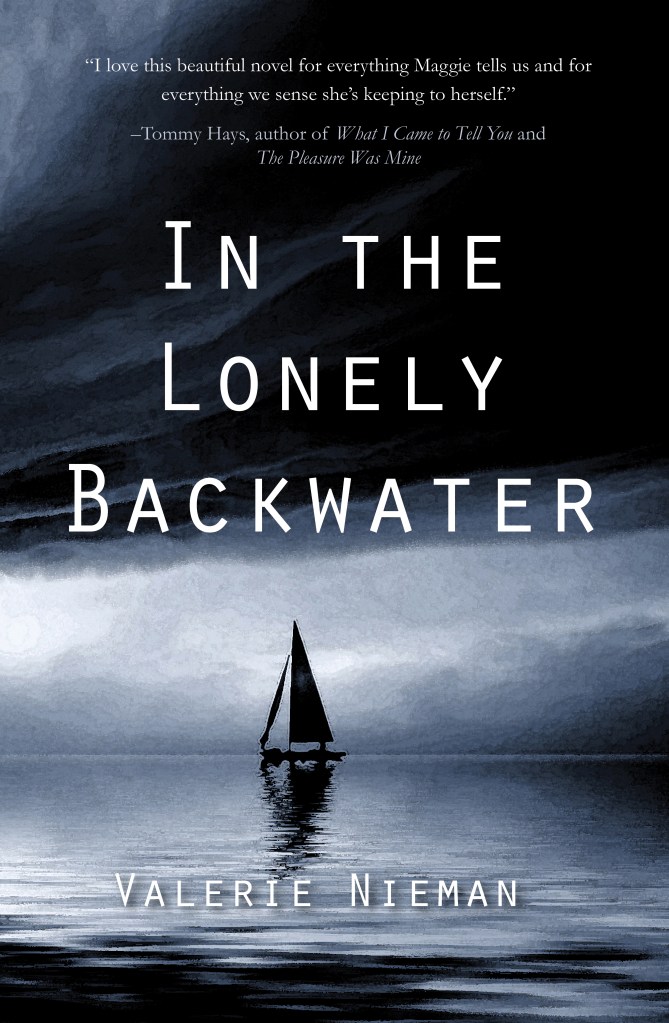
Valerie Nieman’s latest, In the Lonely Backwater, a mystery in the Southern gothic tradition, has been named the 2022 Sir Walter Raleigh Award winner for the best novel by a North Carolina writer. To the Bones, her genre-bending folk horror/thriller about coal country, was a finalist for the 2020 Manly Wade Wellman Award. She is also the author of Blood Clay (Eric Hoffer Award) and two other novels. She has published a short fiction collection and three poetry collections, most recently, Leopard Lady: A Life in Verse, which was runner-up for the Brockman-Campbell Prize. She has published widely in journals and anthologies, and appears regularly in juried reading series such as Piccolo Spoleto, Why There Are Words, and Women of Appalachia. She has held state and NEA creative writing fellowships. Nieman has degrees from West Virginia University and Queens University of Charlotte, and was a reporter and farmer in West Virginia before moving to North Carolina, where she worked as an editor and a creative writing professor at NC A&T State University.
Valerie, can you tell us about your Rust Belt upbringing and how it informs your creative work? What was it like to not only live but work in the coalfields of West Virginia? You were both a farmer and a reporter there. Can you talk about how those roles are similar/different?
I grew up the child of a factory worker who’d wanted to be a farmer. His plant in Jamestown, NY, built desks and filing systems. I remember copies of “The Machinist” in the bathroom, and the annual July shutdowns and factory picnics. Royal Metal was part of a thriving factory district that produced everything from heavy equipment to tools to furniture. Crescent Tool, Proto Tool, Blackstone, and so many others used to run three shifts. The last time I was there, I found a ghost district, post-apocalyptic. It’s been a long time and maybe things have gotten better, but this part of the Rust Belt was truly “rusty.”
My father had to leave the factory when it closed and go to one in South Bend, IN, that carried on for a few more years. When he could no longer walk concrete floors as a foreman because of worsening knee injuries from the Korean War, he and Mom followed me to West Virginia. They opened a bait and tackle shop near the Monongahela River just outside Fairmont, WV, where I worked for the newspaper.
That city had a prominent and troubled history as a coal center. Consolidation Coal was founded there, and the Watson mansion became an inspiration for the Kavanagh home in To the Bones. Marion County had two of the nation’s most deadly mine accidents, Monongah 1907 and Farmington No. 9 in 1968, both of which led to massive overhauls of mine safety regulations. The offices of UMWA District 31, headed by Richard Trumka, were next door to the church I attended.
During my time as a reporter, I covered the coal industry and the environment, along with the police beat, so I got to see everything from murder investigations to the working longwall at Martinka Mine. I later became editor and helmed major investigations, one into the county’s secretive dealings with a waste coal entrepreneur and another about acid mine drainage, both of which won state AP public service awards and other recognition.
My home was a small version of the classic Appalachian hill farm. It rested above some of the former Consol No. 9 workings and a mine crack furrowed the hayfield. My ex and I built a house and barn and were creating a partial subsistence lifestyle there, with beef cattle, organic garden and orchards, before divorce ended that part of my life.
I’ve never regretted the newspaper years, despite the low pay and often difficult working situations, because I got to see and experience so much! My novels and poems draw on those years still.
Valerie Nieman, Winner of the 2022 Sir Walter Raleigh Award
Your poem, “The size of West Virginia,” begins “Few know the Mountain State…” Here’s a taste:
“The size of West Virginia”

Few know the Mountain State but all
recognize it, easiest puzzle-piece of the states,
its awkward panhandles and pendulous gut
lolling into East Virginia.

A vast aquifer "lake" lies trapped under southeastern
Greenland, larger than the size of West Virginia.

It’s a convenient scale for journalists,
standard candle like the Cepheid Variables
or Type Ia Supernovae that allow
for dead reckoning on distant stars.

As of July 15th, fires have blackened nearly 21,000
square miles. (That's nearly the size of West Virginia.)
Can you talk about that—how being from a lesser-known (or maybe even unknowable to outsiders) kind of place informs your writing?
Appalachia remains “the other” for so many in America, a stereotype compounded of Snuffy Smith comics and Disney cartoons and Deliverance. The people are lumped together as white, poor, ignorant, violent.
This didn’t happen by accident. The dispossession of Irish and Scots crofters by “noble” landowners who considered them an impediment— “lice on the land” as one said—led to mass migrations and provided many of the region’s early immigrants. That legacy of dispossession continued with the rape of Appalachia’s land for timber and coal, at the expense of smallholders and their communities. And writers from the Northeast found a willing market for stories of the region’s exotic and dangerous folk.
The region was and is diverse, from the many Native American tribes that lived, traded, farmed, and hunted there, to German, Polish, Italian, Hungarian, Spanish immigrants who came to work the mines and mills, along with Black families moving up from the Deep South, Lebanese merchants who served the coal communities, and more recently, people from Nigeria to India and the world over who come to study at West Virginia University or work in industry.
I began to notice the repeated use of West Virginia as a unit of size comparison for other places, did a search online and found many more, and that brought about this poem.
Although I’ve lived in North Carolina for many years, West Virginia was where I became a writer and the place that continues to feed my work. Along the lines of this poem, my 2018 novel To the Bones uses and subverts some of those cliches about this “unknown place” in a genre-crossing tale about the coal industry and its enormous impact on the people and place.
How did you transition from journalism to poetry and fiction? How do these disciplines influence one another?
Brevity, compression, observation are the watchwords for journalism. Equally true for poetry. And while I can wax descriptive in my prose writing, it’s always economical—no wasted words. At least I like to think so, and readers have said as much.
Your latest novel, In the Lonely Backwater, features a teen protagonist, Maggie Warshauer. What a voice! (Take note, fiction writers.) Here’s how Maggie describes a detective who’s come to her North Carolina high school to ask her and other students about a girl who’s disappeared, a girl Maggie is related to and with whom has had some “squabbles”:
I didn't expect a detective to look like my dentist. He waited, watching me like an underfed hound. If I were going to place him in the marina, I'd say he was a fishing boat. A small one, from Sears, not on a slip but parked on the monthly lot. Plain aluminum johnboat with a little outboard.
Can you tell us when and how Maggie first started speaking to you as a writer, when you knew you needed to write this story?
Maggie’s been speaking to me all my life: a version of my sarcastic inner voice that doesn’t get spoken aloud very often. She’s not me, but there’s a lot of me in her. Specifically, she began speaking with the opening line, “There wasn’t anything wrong between Charisse Swicegood and me except that she was her and I was me, and with the family history and all it was just natural.”
Her character has many roots, including my lifetime of solo wandering in the woods, an interest in biology and ecology, and a number of years sailing a “pocket cruiser” at Kerr Lake. Like Maggie, I was a girl who preferred boy things, in a time when the terms gender-fluid and nonperforming had not yet appeared.
The spark that brought together many disparate elements was the discovery of an inscription in my senior yearbook. A girl I do not remember wrote, “I hope all our misunderstandings are cleared up.” It’s signed Love. I do not remember anything about the disagreement, but I did recall the intensity of emotions in those years.
The town you live in now, in North Carolina, is still recovering from the loss of the Lucky Strike plant. Coal and tobacco both had their boom and bust. I’m reminded of Emma Riva’s review here at Rust Belt Girl of Tess Gunty’s novel, The Rabbit Hutch, set in a fictionalized Indiana town decimated by the loss of an auto plant. What makes these “wastelands” fertile settings for your creative work, for suspense, and even horror?
I think such hollowed-out industrial centers have much in common with haunted houses, and with the beloved ruins of the Romantic poets and artists, in the evocation of what once was and is now gone. I’m drawn to them, as I am to songs by Bruce Springsteen that depict these same broken places and the people who despair, maybe leave, or maybe find the grit to keep going and rise up again. I most like cities that have a past, Pittsburgh, Glasgow, Greensboro, but have reinvented themselves without losing that slight acrid tang of their former smokes, their former selves.
I remember when retraining programs were offered for West Virginia miners losing their jobs in the transition from conventional mining to long wall. They were offered welding or computer coding, both honorable careers, but pretty specific. It’s good to see current efforts to train miners and legacy factory workers for careers in new industries that may better fit or expand their existing skill sets, such as wind turbine maintenance, electric motor building, ecological remediation, and solar installation.
Where I now live, in Reidsville, NC, the landscape is marked by the former tobacco warehouses, the mill houses and owner’s mansions, old curing sheds, and over all, the smokestack of the former Lucky Strike plant emblazoned with that logo. It’s been purchased and is being repurposed as an e-commerce hub. I hope they keep that emblematic stack standing as a symbol of this community.
Please check back for Part II of my interview with Valerie Nieman–for more of her poetry, for what she loved to teach her students, and for what she’s writing and reading, right now. For more about her latest novel, follow the link below:
Like this interview? Comment below or on my FB page. And please share with your friends and social network.
Are you a Rust Belt writer interested in seeing if an author interview or book review of yours might be right for Rust Belt Girl? Pitch me through this site’s contact function.
In case you missed it, my review of Megan Giddings’ latest novel, The Women Could Fly, which first appeared here at Rust Belt Girl was republished at Belt Magazine last month. Check it out!
Never miss a post when you follow Rust Belt Girl. Thanks! ~Rebecca
[Read in your most guilt-laden “Mom” voice] “Oh, 2020. It’s not that we’re mad; we’re just disappointed and maybe a little sad.”
Scratch that, of course we’re mad, too. But rather than stew, let’s do the old superlative list to close out this dumpster fire year. It was a weird one here at the blog, but I’d say that’s par for the course.
2020 Most Liked (you know, the popular girl): On *Not* Writing (with thanks to Stephen King) garnered 112 likes, so it seems I wasn’t the only one who was finding it hard to put pen to paper, this summer.
2020 Surprise Finisher (the scrappy underdog): for being a bummer of a post, The Dead Mom Club…and other lessons in grief got quite a bit of traction (172 views and 63 likes)–though I wish it hadn’t. Next year, let’s plan for “lessons in joy,” shall we?
Special shout-out to the WordPress Editors, who brought back WordPress Discover Prompts for the month of April. The one-word prompts helped me chronicle my family’s isolation at the beginning of the pandemic and also helped me connect with other bloggers–now friends. My most-viewed: my response to Day 2’s prompt, open: Open…water, heart, art
Top author interview was my 2020 two-parter with Sonja Livingston, Rochester NY native and award-winning memoirist. In addition to being a fantastic interview subject, Livingston’s latest book, The Virgin of Prince Street: Expeditions Into Devotion, was top on my list of favorite nonfiction reads, this year.
Top book review was my 2020 review of Pittsburgh-area native Margo Orlando Littell’s second novel, A Distance from Four Points. Telling a beautiful mother-daughter story, the setting of post-coal country, Pennsylvania, adds a gritty realness that makes this book a standout. Also, among the prettiest book covers of 2020, for sure!
Reading superlatives: I read more in translation in 2020 than any other blog year (there have been 4), concentrating on Moomin-famous Tove Jansson, whose literature for adults informs my current WIP, set partly in Finland. Favorite novel this year: Shiner by Amy Jo Burns. Favorite backlist novels: a three-way tie (I know, I’m pretty terrible at superlatives) between (the very different) The Heretic’s Daughter by Kathleen Kent; The Golden State by Lydia Kiesling; and The Ninth Hour by Alice McDermott, which I read with a book club. Favorite memoir: Rust: a memoir of steel and grit by ElieseColette Goldbach. As for poetry, I haven’t been reading many collections, but I have been getting good daily doses over at Parhelion. Poet Clay Matthews, especially, drew me in.
In other creative writing and editing news: I backburner-ed one novel in favor of concentrating on the new one (55K into draft 1–so I’m beginning to see the light). I’ll have exciting news from short story land early in the new year (woot!). And I’ve been trying my hand at a little essay writing, which has been a nice change. (I keep my About page up to date with my published pieces, if you’re interested.)
I was promoted to associate editor at Parhelion Literary Magazine, where I’m also the features editor. I was proud to help introduce 15 features to the world, including one by fellow blogger, Lani V. Cox, and a few I wrote myself. Not to mention three issues of the magazine, including the latest holiday issue, which has some fantastic fiction, flash, CNF, and poetry for your holiday enjoyment.
One of my fellow bloggers, over at You Can Always Start Now, is doing a #2021wordchallenge, and without really thinking about it, I lit on my word: still. Of course, there’s one of my favorite Christmas carols, “Still, still, still,” which might have been running through my head at the time. But more than that, “still” is a word of resilience. I’m still here, still writing and connecting. Which makes “still” a kind of promise. And then there’s the act of being still–of inviting silence and space for inspiration and creativity, whatever that looks like that day. I want more of that.
I wish for more of that–stillness in all its forms–for both of us, in 2021.
Meet me there.
~Rebecca
Interested in more Rust Belt author interviews, book reviews, essays, and more? Start here. Are we social? Find me at FB and on Twitter and IG @MoonRuark
Free image courtesy of KathrynMaloney at Pixabay.com
It’s been a minute, or much more than a minute, since I checked in with my blogger-reader-writer friends. How’s it been? Around here, work and family life have filled every spare moment of mine this past month, except for a few precious minutes before bed–that I give to reading (just finished Dominico Starnone’s Trick, trans. by Jhumpa Lahiri–and I’ll definitely be blogging about it).
Any creative writing I’ve been doing has been mostly in my mind. One thing I’ve been mulling over: why do we write about what we write about? Some write to excise their greatest anxieties. (“Write toward your fear,” go the writing prompts.) Some write to work through a conundrum, to better understand. Why do we pick the subjects we pick? Love, sex, parenthood, sickness, birds, flight, death, water, dance…
An artist chooses his subjects. That is the way he praises.
Friedrich Nietzsche
Why do you create what you create? Why do you write about, what you write about? What compels you? What are you writing–or reading–this weekend? I hope it’s a good one!
Want some more writerly advice? See my categories, above. And, as always, you can also find me at FB and @moonruark on Twitter.
In my next life, I will be an opera singer. This is not the first time I’ve made this declaration and it won’t be the last. (Mind you, the next-life gods need to suit me up with a better voice and the ability to read music, at the very least.) It’s not that I believe in next lives, but such a dream–belting out “o mio babbino caro” a la Maria Callas–is more of a this-life mantra. The hot stage lights, the costumes, the adulation–none of this is what appeals. It’s the voice. Our first instrument. When I tilt to strains of a violin, it’s because it reminds me of singing or crying, even keening. Same for the clarinet played in a minor key, like a folk singer’s lament.
Still, my voice is generally reserved for the rote songs of Mass, a little shower-singing, and belting out Whitney’s “I Wanna Dance…” with one of my boys. Fairly private venues; certainly not performance-grade.
As a young adult, I went from one silent art form–ballet–to the next–creative writing. We college-age fiction writers kept fairly quiet–our work was there on the page–until our monthly reading series held at a local art gallery, called Movable Feast (after Hemingway’s memoir and the relocatable series, which featured brie-and-crackers and grocery store sushi, when my friend and I were in charge of said feast).
My friend did–and does–write poetry, an art form more suited to recitation. Mic-ed, there were those poets at our Movable Feast, whose words took flight on the strains of their voices, some breathy and soft, some staccato and sharp, some exotically-accented. Sometimes, the words all but disappeared in the song of those poets’ voices.
Tone. Mood. Interesting language and turns of phrase. Even a surprise rhyme scheme. Moments. These are the elements that shine in recitation and are perhaps more dense and readily-found in poetry than fiction.
How to recite fiction? It’s not an easy task: Plotlines and plot points. Character names and descriptions. Landscapes. These details are easily lost to the ear when recited and best read on the page, in the quiet.
I know now that my success and failure (I don’t remember what I read aloud in grad school, and I’ll bet no one else does, either) when it comes to readings is less about my actual voice than choice.
My actual voice is not breathy and light; I cannot master the soothing monotone of an NPR announcer. My accent might grate on some more gentile listeners. Still, to read our work aloud is an exercise in performance we writers should seize–and so I do.
It’s been a year or so of finding my reading voice. There was the audio feature I recorded of my short story “Recruit,” for Flock literary journal. Then, I read a piece of flash fiction at a literary festival near where I grew up, where I felt at home, where everyone’s voices sounded something like mine. Most recently, I read at Little Patuxent Review‘s issue launch event from my short story, “While Our Grown Men Played.”
I had five minutes. Five minutes–to a fiction writer who trades in thousands of words on the page, sometimes daily. Five minutes for time and place and character and mood and theme and… voice.
As it was when I was a dancer on the stage, the during part is a blur. But I remember the after-the-reading discussions with several fellow readers at that issue launch, including local author and poet, Alan King. Thinking on it further, I have a few takeaways. Here are five ways to deliver a good reading:
Forget the frame of a story; keep it short and tight.
Pick a pivotal scene.
Sensory description lets the audience in.
Humor helps, when appropriate.
Use your own voice (accent be damned).
I’m coming a little late to spoken word, poetry meant to be read aloud– performed really, rather than simply recited. But I think it has a lot to offer, not only in and of itself, but as inspiration for writing–and reading aloud–works of fiction or anything else. Check out spoken word artist “little pi,” who I met at the LPR issue launch event. And many thanks to Miami University Press in Oxford, Ohio, for introducing me to Janice A. Lowe, poet and composer of musical theater and opera(!), whose collection Leaving CLE: poems of nomadic dispersal, I’m currently devouring. People, I dare you to “unhear” such compelling voices, even if you only get to read them to yourself on the page.
Do you attend poetry, spoken word, or fiction readings? Listen to podcasts? Is there a poet or author whose voice speaks volumes to you? Have you read your own stories or poems aloud?
Thanks to a couple of my favorite bloggers*, I’ve been thinking about the “side hustle” lately. Seems the popular term for side job has shifted from “gig” to “hustle,” and with it, comes a more pejorative connotation.
Let’s start here: once upon a time, when graduating with my MFA in Creative Writing, I learned of an opportunity to do part-time contract work in internal communications—for the credit card company headquartered nearby. Not for a hip advertising firm. Not even for a nonprofit with a compelling cause. Nope, this job would require clocking in and out for the Fortune 500 company sometimes referred to around town as “the devil.”
Internal communications for the devil meant digesting leadership meeting notes on risk management and summarizing and synthesizing said notes into digestible PowerPoint presentations. (Oh, the myriad PowerPoint presentations!) And then came the fun of organizing the presentation highlights into multi-colored graphs on oversized Excel spreadsheets that required a special printer. This job was the opposite of every vision I’d had of my post-school self, teaching creative this and creative that.
Hot Stuff, right here at least once a week in 2018
How’s that for hyperbole? If you’ve been here a while, you’re probably guessing that by great I mean middling and by experiment I mean absolutely nothing scientific. Still, looking at the year’s blogtivities–what you liked*, what you liked less–could help us all achieve blog bliss in 2019. It could happen. But, first, some preliminary stats, because numbers are fun so long as WordPress is doing the crunching.
I published a perfectly round 100 posts in 2018 (not counting this one) to receive 9,736 views from 5,434 visitors. Thank you for being here; without you, I’m a complete narcissist. Likes: 2,515, and my favorite thing in the world: Comments: 924. (Yep, they still count if I’m the one commenting.)
Your Favorite Posts from 2018 (in descending order, based on views)
My interview with FURNISHING ETERNITY author David Giffels was a WordPress Discover feature, so there’s that. Plus, the author has so many useful things to say about writing memoir, writing about place, about grief, about making your own casket (true story)…
“Sleeping Naked”: the final snippet (catchy title, right?) is the last part of a story of mine that appeared in Carve magazine many moons ago.
My interview with author Amy Jo Burns was a joy to conduct, and I’m glad her take on her memoir, Cinderland, struck a chord; watch out for her first novel, Shiner, coming soon.
The Sunshine Blogger Award: Woot (if tardy)! featured my take on 11 probing questions and my nominations of 11 blogs that are totally worth your time. (Bad post timing? Too much in your reading queue? Are we tired of the award posts? What do you think?)
OK, I’m no statistician, but I’m seeing a trend: gimme more writerly guests, you say. I’m so glad you asked! Coming up in early 2019, I will be featuring an interview with Ohio’s Poet Laureate and hopefully one with a small press publisher. Inquiring minds and all…
So, next up on the old arcade Love Meter: Uncontrollable! I can’t picture just what an uncontrollable blog looks like, but you can help me get there. The American Rust Belt is a big place with a lot of worthy lit–stories real and imagined, memoir, poetry and more. Know a Rust Belt writer with a story to tell? Let me know in the comments.
Other bloggish lessons learned in 2018
Share the work of others and you will be recognized (see above). It’s not just about garnering views, comments, and followers–the stuff of stats. It’s about being a good citizen in this writing life, wherever and whatever you write. I’ll never forget the blogger who responded to one of my very first blog posts by saying something along the lines of “blogging isn’t just writing, it’s communicating.” This is two-way street stuff. This is our blog.
Because I truly believe that, I spend a lot of time out on the WordPress Reader scoping out new blogs; I drop comments; and I share what I love. Case in point: WordPress Discover shared their 2018 roundup: A Year of Great Writing: The Most-Read Editors’ Picks of 2018, which is a great list btw, and in conclusion the editors asked for our picks. I didn’t have to think twice before hyping in the comments Ella Ames’ blog Not Enough Middle Fingers (and not just for the name). I was thrilled to maybe send a few bloggers Ella’s way for funny, poignant, deep, and daring writing plus her homegrown illustrations. Know what happened next? My comment drew visitors–and even a few new followers–to my site. (Welcome!) So, let’s all spread the blog love in 2019.
Will next year be the year my writing hits Uncontrollable on the Love Meter? I don’t know. But, together, we can make connections that count for a lot.
All the best to you and yours for a safe, happy, and healthy New Year!
Around the house, there’s laundry prep and meal prep.
For the kids, there’s book report prep and school uniform prep (see above laundry prep), and don’t forget tomorrow’s lunch prep. If I’m really on the ball, there’ll be breakfast smoothie prep. But let’s not get too excited, kids.
That’s just today.
And that leaves out me. Yep, even pantsers require a bit of preparation.
For work, there’s interview prep and invoicing prep. For committee A, there’s spreadsheet prep; for B, there’s list prep. For this blog, there’s reading prep and photo credit prep.
For my creative writing, there’s research: that’s composition prep. There’s writing group meeting prep.
Then comes the age old litany of publication prep. In other words: revise, revise, revise before a piece has a shot at finding a home in a literary journal. And all that’s before submission prep.
The process of submitting to literary journals and magazines has changed in recent years. (I’ve talked here about how sites like Submittable are making it easier to submit your poetry and fiction.) Still, it remains a time-consuming–albeit formative–exercise to close in on the right journals to which to submit, to discover the dozen or two or three (out of the thousands) of journals and magazines that might work for your creative work: (i.e. your veritable guts on the page).
For my creative writing friends out there, here’s where the submission prep gets a little easier.
It’s called Literistic. From their website: “Every month, we collect an exhaustive list of deadlines for submissions to literary publications, contests and fellowships and send out an email.”
What sets Literistic apart, as far as I can see, is that, hailing from Canada, they collect deadlines for publications, etc., from the U.S., Canada, and the UK, so this may be helpful to some of my writerly friends across the pond.
That’s Literistic’s deal. And if you decide the deal’s for you and you subscribe to their list of literary deadlines using this link, I’ll get a little compensation.*
So, happy house-, kid-, creative-, or whatever other kind of prepping you’ve got going on, and Happy Monday!
By that, I mean you will find no images and taglines here that you could use to make into a poster for your conference room. No cute kittens of mine will ever tell you to “hang in there”–or anywhere. (That’s my kid, above; my arms hurt just looking at him.) If I were to make such a poster, it might say, “Bitch a lot, and hope for sympathy–or at least free coffee.”
Still, I am not totally, cynically immune to pep-talks, or at least subtle reminders that bitching gets us nowhere, usually not even heard. But perseverance can get us writers, bloggers, and do-ers of all kinds off the starting block (or whatever tired motivational metaphor you prefer).
Call it perseverance. Call it stick-to-itivness. Call it sisu, if you’re in with the Finns. Please just don’t call it grit. (Am I the only one sick of that word? People: meet thesaurus; thesaurus meet people.)
All that’s to say, sometimes one (me) has to stop bitching and start working, which for this story writer looks like: composing, revising, editing, more editing; and lastly, the dreaded submitting.
The tale of my most recent story submission goes like this. (Here’s hoping it’s mildly inspirational.)
It was a story that I had to tell. While I generally enjoy a football field-sized writerly distance from the characters I explore in my fiction, this one hit much closer to home. Call it cheap therapy, but my mom was battling breast cancer and I was a 12-hour Greyhound bus ride away and English major-angsty. What to do with all that anger at the plain meanness and stupidity of cancer for targeting the one person who “got” me?
I wrote about it. I framed my confusion into a story about going home to be with the fictional her at the end and about how a cancer death–the coagulating of so many errant cells–made the fictional me dream of growing another kind of ball of cells, which would turn into a kid (or kids, as it turned out) of my own.
Like much fiction, there was truth in this story (along with much artifice). And it felt good to get my truth on the page, and then into the ether, and maybe even under the nose of a literary journal editor–or 58 (yep, I just counted).
Fast-forward a dozen years or more, and a much-revised version of this story will see the light. I received the glorious email with “acceptance” in the subject line a week after logging three rejections of other stories.
Some stories come easily; some take just a couple revisions before I’ve deemed them to be editor-ready. Not this story of my mom and me and breasts and death as beautiful as birth.
My story of writerly perseverance, by the numbers: revision No. 15; story title No. 3; 1,200 additional words since first draft, written for English 666 (no joke); and 1 fewer mention of the show, Friends, and also 9-layer dip, since that first draft (phew).
You get the gist. The story grew with me, and I with it, but I didn’t let it go–just like my little guy up there on the rock wall. I could have, but I didn’t.
More to come on my story’s new home, journal information, and issue launch.
Want more writerly advice? I’ve got a category for that.
Want to follow me on FB? Twitter? Let’s persevere together in all the social fun…
Every human being has hundreds of separate people living under his skin. The talent of a writer is his ability to give them their separate names, identities, and personalities, and have them relate to other characters living with him.
Amen, Mel. (Ahem, with the addition of “her skin,” “her ability,” and “with her,” thank you very much.)
Ever have one of those weeks (or months) when you feel like you’re juggling too many balls–but also too many names, identities, and personalities? And not only on the page.
I am a creative writer (“dang it,” she pounds fist on desk), but I am also a writer and editor for modest pay universities and etc. It is this latter personality that lately has taken precedence over the former (because the fruits of this personality can buy actual fruit, or veggies, or ice cream from the truck that smartly parks itself at our neighborhood pool.)
Fear not, one of two looming work deadlines met, I am seeing the light. (Sometime, I’m going to see how many myriad scads of mixed metaphors I can cram into a single post!) Back to my creative endeavors I WILL BE (soon-ish).
In the meantime, I enjoy my work that allows me to pick the brains of academics young and seasoned and learn things I’d never come to on my own, like the powers of biofilms, the miracles of flexible solar cells, what rotorcraft even is. Really, I remind myself, it’s all creative, right? Who knows, maybe this work will create burgeoning new identities in my fiction.
I talked in my last post about list-making, reining in those cows. (Another metaphor gone awry.) I’m trying to be better about writing it all down, so I see what I must do, and what I AM DOING. (Sleeping past 8am, now that the kids are out of school, for one. Big, big win!)
Creative right now:
Reading: A Gentleman in Moscow (read me gush about it on my FB page.); next up, Warlight
Listening to: Above Us Only Sky, audio novel by my uber-talented author friend from my MFA program days, Michele Young-Stone
Submitting: yesterday, a travel-ish short story of mine set in India to the literary travel mag, Nowhere; agent query submissions coming soon (see next line)
Editing: that last 40 pages of my historical novel manuscript–woo to the hoo!
How’s your creative list looking? What are you reading, writing, loving right now? Let me know here or at FB.









 Rust Belt Girl