Last month’s AWP (the Association of Writers & Writing Programs) Conference & Bookfair—think writer-prom—wasn’t in the cards for me this year. My rational brain knew this, but that doesn’t mean I didn’t suffer from some FOMO. Writer friends, the warm L.A. sun, and the lure of the unknown—will I meet the literary agent of my dreams in the hotel bar?!—are attractive elements, for sure. But I decided to save my pennies and hold out for next year’s event in nearby Baltimore. (Who’s in?)
Really, that March weekend, I hardly had time to wallow in my FOMO (the name of my upcoming memoir, stay tuned, ha). But seriously, the indomitable Justin Hamm, poet and super solid literary citizen, created StayWP, an online poet and writers conference, to slake our literary thirst, as it were. What’s better than poetry in your pajamas!? Here’s a sampling of what us nearly 100 participants from around the country enjoyed from Friday evening through Sunday evening:
Readings from novelists including Mark Ostrowski and poets including Sean Thomas Dougherty
Generative workshops with titles like “Where the Poetry Rises like Dough Workshop” and “Rooted in Place,” led by former Missouri Poet Laureate Karen Craigo, which I attended, and “Like it’s my job. (‘Cause it is): Writing, Motherhood, and the (Re)Formation of Work”
Enthralling discussions, including “In Dialogue,” “Casting Spells for the Future,” and “Power of the Poet Posse” (that’s a gang I could get behind!)
Saturday, my super talented friend Shemaiah Gonzalez (whose debut collection of essays launches next week!) hosted a generative workshop over Zoom. The hook: How do you even begin to get ideas on what to write: let alone something joyful? Looking at three pieces of writing, we participants came up with our own. I got a couple really good starts for essays and even a prayer (for our sweet neighbor who snowplows our drive in the winter, even before he does his cousin’s drive next door).
One of the prompts was so intriguing I’ll share it, paraphrased, with Shemaiah’s permission. We were asked to draw a sketch of a place we knew well: a home, or place of work or worship. Then, we were to pick a specific spot to interrogate. I think about writing about place a lot here on the blog, but Shemaiah made that importance plain: “We write about place because place is where we keep our stuff.” And, of course, the stuff we choose to keep is important to us. I ended up writing about the rattan rocking chair—the best seat—my dad would often occupy when our family would go out on to the porch to watch rain showers. (My kids think it’s hysterical we did this. But then I also truly enjoyed The Waltons. It was a different time.)
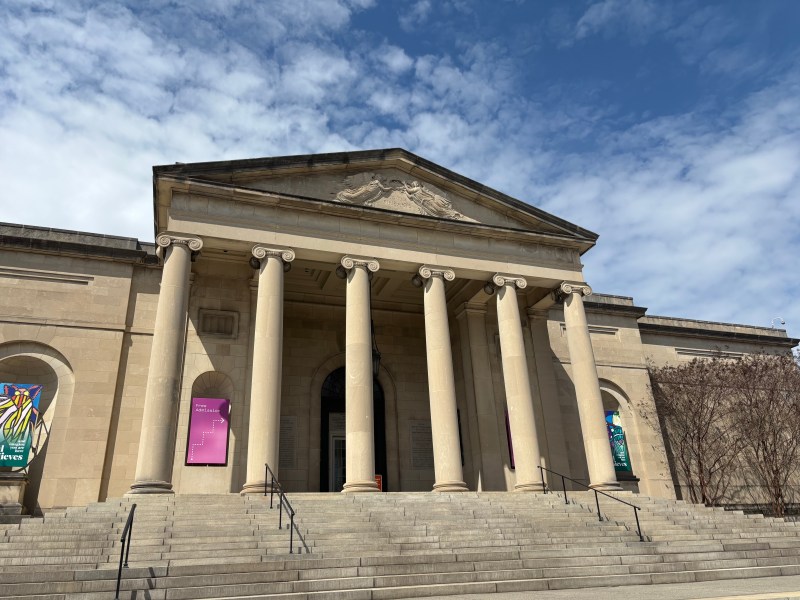
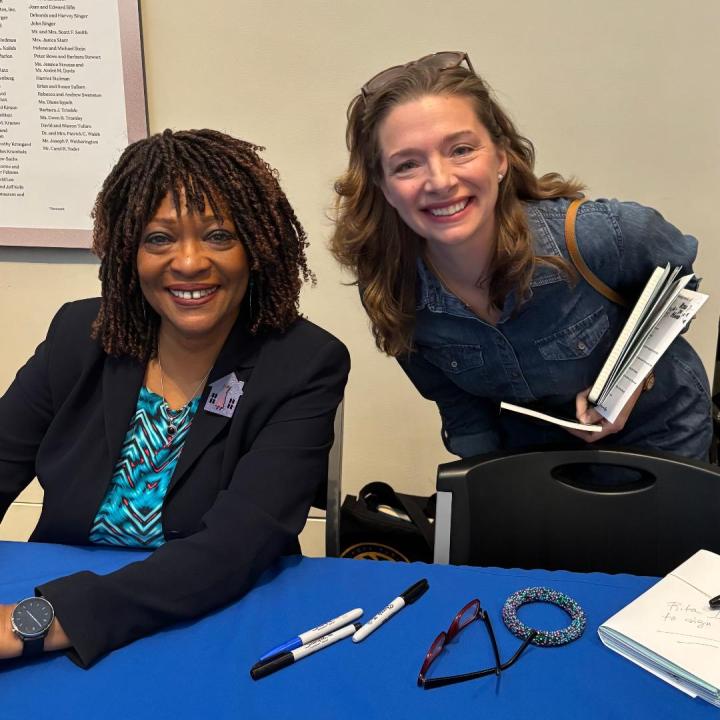
My weekend of creativity continued on Sunday, when I took one of my sons with me to hear Akron, Ohio, native poet Rita Dove (who received the National Humanities Medal from President Bill Clinton the National Medal of Arts from President Barack Obama—the only poet ever to receive both medals) at the Baltimore Museum of Art. (Thank you to co-sponsor Johns Hopkins Center for Talented Youth!) The little I knew of Dove, I learned from talking with Akron’s own David Giffels in an interview right here at Rust Belt Girl. This poetry reading was my son’s first, and so now he is ruined for all other poetry readings, I’m afraid. But what a way to go down!
As I’m wont to do, I took a notebook and jotted images I liked from the poems she read. Here are several lines from Dove’s beautiful work, which I smushed together like a found poem, a found Dove poem:
scabbed like a colt, our stuttering pride
my Cleveland cousins, hachety smiles
we were a musical lantern
tired of singing for someone else
what you bear is a lifetime of song
if you can't be free, be a mystery
Baltimore Museum of Art
Piece of art from artist Raúl de Nieves
Yes, I got it signed and it’s special. What should I read next?
Rita Dove and me (taken and posted with the poet’s permission)
Baltimore street scene–gotta love some row houses
There are few things that improve with age. Wine is one. Hutzpah is another, and don’t you know my hand was the first that shot up during the Q&A with Dove? Since I knew I’d be writing about this reading for Rust Belt Girl, I asked her what it meant to her poetry to be from the Rust Belt. Her answer was really interesting. She talked about understanding and appreciating work and its value from her family members and neighbors. She talked about the value of diversity, including a strong Hungarian presence among the immigrant groups in her part of town. A singular place, she also noted the term that makes Akron its own unique think: the “devil’s strip” for the tree lawn or berm between the sidewalk and the street. What do you call that strip, where you’re from?
Dove also talked about her journey from aspiring musician to poet. (She still plays the cello.) She noted that she was very shy and didn’t want to get up in front of people and so turned to words. Ha. There we were, all 200 or so of us. She later learned to play the viola de gamba and took voice lessons, and learned to sing opera, which helped her to “embody the words” in her poetry. She has worked with musicians on song cycles, collaborations that helped her feel “less afraid of being bold.”
I’ll end there. I know I wish for that. Here’s to words in poems and in song—and to being bold.
Now it’s your turn: tell me, if you’re a writer, have you been to AWP? Do you plan on attending next year? How do you quash FOMO in your creative life or otherwise? And how do you tap into your boldest self?
Hankering for Rust Belt author interviews, book reviews, and more? Check out my categories above. I hope you’ll follow me here, if you don’t already, so you never miss a (quite infrequent) post. Thanks! ~Rebecca
I interrupt this Covid haze–mine, yes, I was gifted the virus for Christmas–to present a round-up of all the Rust Belt Girl goodness in 2023, made possible by you amazing readers and followers. (For you math and science types, here are your facts and stats):
2023 total views: 5,069, from 3,575 viewers, for 231 likes, and 170 comments. Thank you for engaging!
Most Viewed Author Interview: My interview with John W. Kropf, author of Color Capital of the World. (Though John and I both live in the Greater Washington D.C. area, as luck would have it, we were in Ohio at the same time earlier this year, and I was able to meet him and his lovely wife Eileen at a reading and book-signing not far from where Color Capital takes place.)
2023 felt pretty good and creative outside of the blog, too: I published a short story and a poem(!) and started querying a novel (a couple of you blog followers and friends beta-read!). I am infinitely lucky and grateful to cross paths with as many of you as I do–even if only on these interwebs.
I think we deserve a happy and healthy 2024 with all the writerly and readerly connections we desire. Those of you local to these D.C./Baltimore parts, find me on January 14 at EC Poetry & Prose’s Salon Series. Thank you again to Patti, my fellow blogger–and extraordinary poet and spoken word artist “little pi”–for inviting me to read!
As for Rust Belt Girl, keep in mind that I love a guest post–author interview, book review, or essay on the writing life and beyond–so hit me up.
Oh, and if you want to check out my reading superlatives for 2023, they’re at Goodreads. Or, find me on FB. Share your top posts or top reads for 2023 in the comments. I’d love to hear about your writerly, readerly year.
Much overdue, I’m back to recap Lit Youngstown’s 7th annual Fall Literary Festival. Who can put into words the inspiration and joy that happens when a couple hundred members of the literary community come together to create, share, and add to our towering TBRs, of course. (And did I mention nearly 50 sessions focused on various genres of writing and the writing process–how to choose, how to choose?) And, all in one fantastic Ohio city with the best Italian food around and against a backdrop of changing leaves for some extra fall magic. Well, I’ll give it a try…
Perhaps what I love most about this festival is that I can reinvent my creative self each time. I make it a habit to step outside my usual writerly lane and try something new.
Day 1
The first day of the festival I did just that. Parma, Ohio, Poet Laureate, workshopper extraordinaire, and friend Jeremy Jusek started off the day with a craft talk called “Verbal Alchemy: Visualizing Poetic Structure as a Formula.” If you couldn’t tell, Jeremy is a science guy in addition to being a poetry guy. He used chemical formulas and definitions to help “shake up” the structure of our poems. The ultimate goal: “To give structure to figurative language.” My major takeaways: the graphing of a reader’s reaction to a poem to illustrate the overcoming of a reader’s ground state to the point of truly feeling. Also, the idea of developing unit cells for a poem. (For instance a unit cell might consist of 2 similes or metaphors and one question. A poem might contain 6 of these units.)
Maybe it’s my uncertainty with writing poetry that makes me to want to learn all I can about poetic structure, but I stayed in the poetry lane that morning and attended superstar poet Sandra Beasley’s talk: “Lyric A to Z: Exploring Abecedarian Forms in Poetry and Creative Nonfiction.” If the term “Abecedarian” is new to you, you’re in good company. From Sandra’s handout: “In an ‘abecedarian,’ consecutive lines, sentences, or paragraphs lead with consecutive letters of the alphabet. Note that abecedarians can use any language system, not just American English.” (Abecedarian poetry and a Prince fan? Check out a fantastic example by poet Randall Man called, of course, “Alphabet Street.”)
Another highlight of the day was sitting in on the conversation between poet, essayist, and educator Ross Gay and poet and educator Jennifer Sperry Steinorth. Much of the discussion was pedagogy-focused. They discussed the MFA workshop, a process that has received close scrutiny in recent years. The traditional way, Ross feels isn’t “good for our soul or our work.” Instead he tries to stick close to what he notices on the page. His workshop goals are not a stellar poem or essay but are “care and imagination” in the class.
For my last session of the day, I moderated a roundtable led by author, editor and educator Meagan Lucas (whom I interviewed about her debut novel years ago for Parhelion and was excited to meet irl!). Called “I’m a Lit Mag Editor: Ask Me Anything,” the session allowed participants to get a behind-the-scenes on just what rises to the top of the “slush pile.” A couple tips I took with me: the fiction word count sweet spot for Reckon Review, where Meagan is EIC : about 3,000 words; and don’t forget the importance of a catchy title (when that’s all lit mag readers see in their queue!).
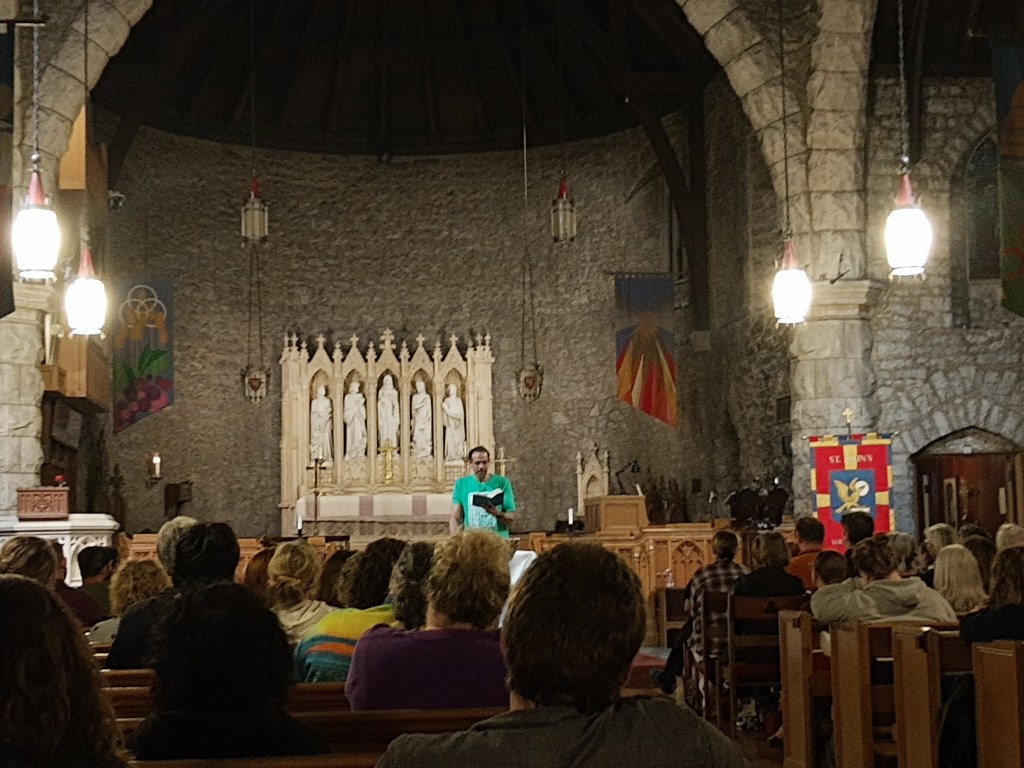
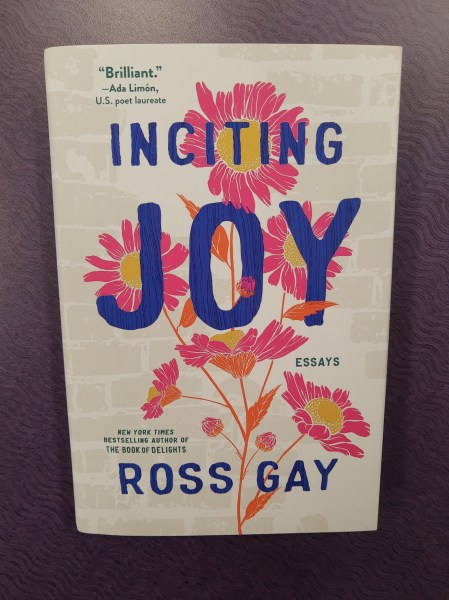
Last, if you’ve been around these blog parts for a while, you know Ross Gay’s work has inspired some of mine, including this essay. And so I was prepared to be moved by his reading at the beautiful, historic St. John’s Episcopal Church–much from his new book of essays, Inciting Joy. But reader, I wasn’t just whelmed but overwhelmed. Ross’s mission of joy has been a guiding light not just for my fledgling essays and poetry, but for a new path where my art and faith can live together. And (in 2023, as I’m sure you can imagine) that’s a lot.
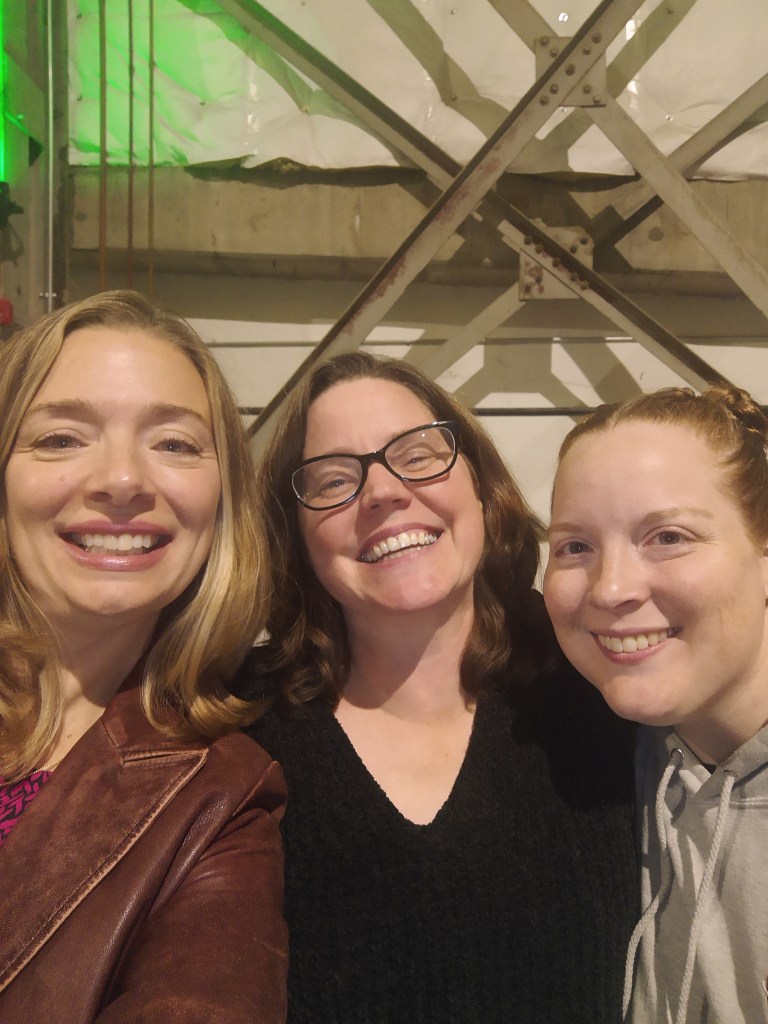
With fellow VCU MFA grad, author, poet and educator John Hoppenthaler
With the fearless director of Lit Youngstown, Karen Schubert
With amazing writers and literary citizens, Jonie McIntire and R.W. Franklin
With writer, friend, and guest DJ, John Dyer
With memoirist, poet, educator and the sweetest of humans, Rebe Huntman
Ross Gay, reading at St. John’s Episcopal Church, Youngstown Ohio
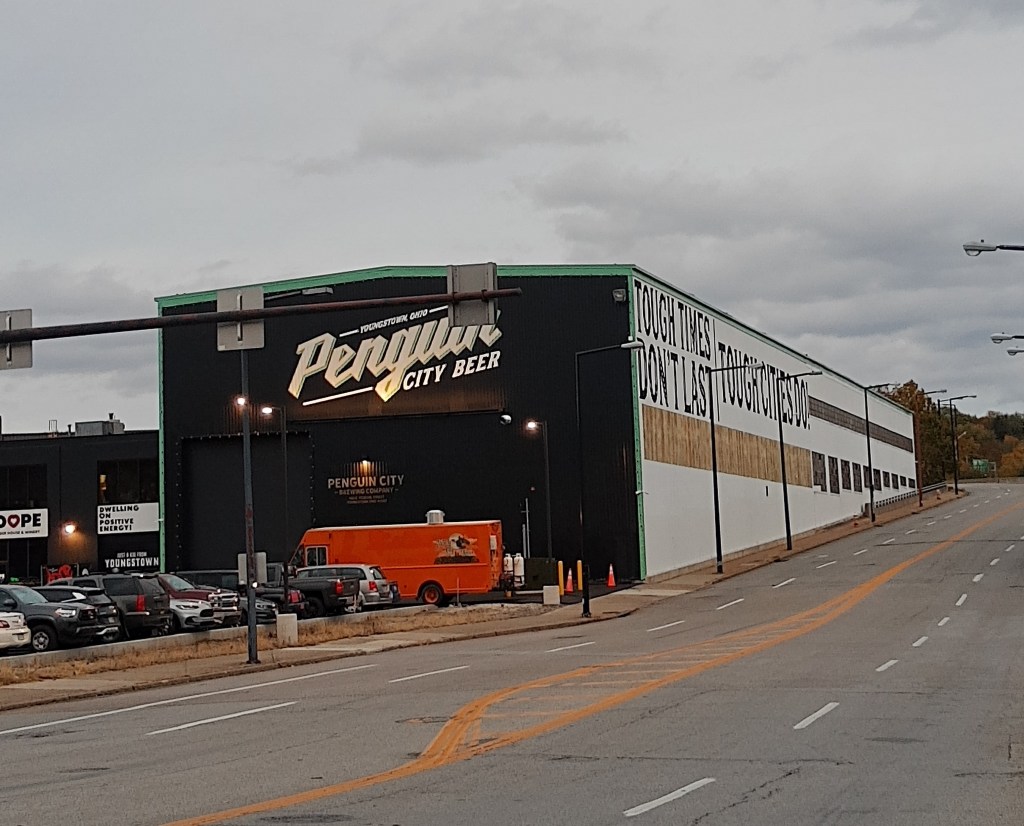
Our end-of-festival party venue, Penguin City Beer
After the festival, I soaked up the Ohio fall with a friend and her family at a pumpkin patch and apple orchard.
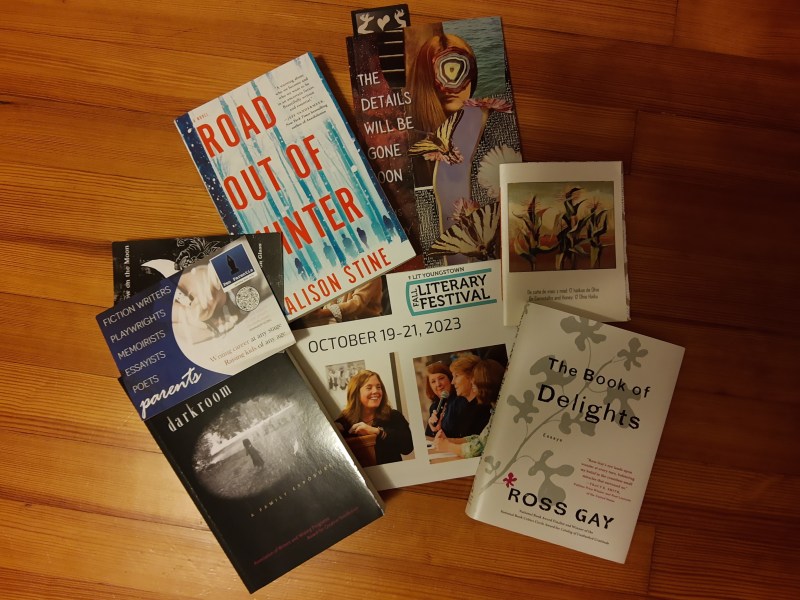
Book and swag haul
Day 2
The next day started off with a fantastic author reading. One essayist, my friend and editing co-conspirator Renée K. Nicholson; novelist Jason Kapcala, whom I interviewed here; and two poets, Amy M. Alvarez and Randi Ward read from their creative work “set in the mountains and hollers of Appalachia and the hardscrabble steel towns of the rust belt.” Themes of place and displacement ran through these works and I found myself transported–just what a creative reading should do!
The next session found me back in my fiction-writing lane. Novelist Alison Stine focused on “the urgency of cli-fi as we deal with the worsening impacts of climate change” in her craft talk called “Writing Climate Fiction as the World Burns.” Alison has a really inspiring way of talking about writing, even if she writes dystopian stories that deal with tough stuff–like the end of the environment and nature as we know it. It’s clear writing has saved Alison time and again. Writing, she said “is making people sit up straight,” and is also something that can “give us hope” and “give us a way.” And my practical takeaway from her session: wait for your characters to start acting before you start to write your ideas.
My final session of the festival found me marveling at the difference storytelling and writing can make–not just on our spirits but on our whole selves and in the ways we care for one another. Dani Naffziger led an inspiring talk called “Collaborative Writing with Adults with Disabilities,” a writing service she says “provides tangible and rewarding benefits for all involved,” highlighting stories from a population “rarely represented” and introducing “new writing processes for established and emerging writers.”
Under the umbrella of The Healing Impact of Writing, for the other part of the session West Virginia University Humanities Center director Renée K. Nicholson and physician Ryan McCarthy talked about their Healthcare is Human initiative. Through a unique partnership between WVU Medicine and the WVU Humanities Center, the initiative promotes the work of narrative medicine and health humanities. Its seeds were planted during the pandemic, when Dr. McCarthy began journaling about his own experiences and then gathering the stories of his fellow front line workers. He has said: “…projects like this, which highlight the real human stories of healthcare workers, nurture our own humanity.”
My own humanity certainly nurtured, my writing self restored, I left the festival inspired by the work of my fellow writers and by what’s to come. Thank you to Lit Youngstown director Karen Schubert and all who make it happen, year after year. And trust me, you won’t want to miss next year’s festival. Details here.
Now, tell me in the comments, did you attend the festival? What was the highlight for you? Do you attend writing conferences in general, book fairs? What gets your creative juices flowing?
Hankering for Rust Belt author interviews, book reviews, and more? Check out my categories above. I hope you’ll follow me here, if you don’t already, so you never miss a (quite infrequent) post. Thanks! ~Rebecca
We’re no longer tweeting, we’re xeeting—writer Amber Sparks might have coined that–and the literary landscape has changed, yet again. What used to provide a good social media home for the #writingcommunity now feels like a hut, maybe a hovel. The best writerly take I heard was from writer Anna Gazmarian (I think), who said the X logo that replaced the cute blue bird reminded her of some boutique hotel she couldn’t afford. I look at the new logo and can see nothing but the emoticon for “dead”: Xs for eyes. But so long as there are writers connecting, there will be a writing community. Really, the literary landscape is always changing, and one certainly can’t rely on a social media site for real connections (except for maybe this one).
I talk a lot about literary citizenship but don’t often talk about what it looks like in practice. It definitely has a lot to do with reading and reviewing the work of other writers, but that’s just the beginning. To be clear, it has little to do with getting an MFA, for that paper in a frame on my office wall has played no part in most of the connections I’ve made in the writing community. So, a few on-the-ground examples:
Not long ago, I braved the open-mic at one of my favorite literary conferences and read a prose poem I was working on, called “Jesus, My Son’s Buckteeth.” (Clearly I’m staking out the fertile publishing ground of: Is she religious or just ignorantly blasphemous? Let’s just keep them guessing.) The poem needed a little work but it was getting somewhere interesting, capturing a complicated mother-love characterized now by running the kids to ortho appointments and no longer by rocking them to sleep. After the open-mic, a writer friend who is also an editor of a wonderful poetry journal said I might consider submitting it. I re-worked the poem, with the help of my trusted writing group, sent it off, and crossed my fingers. It was accepted–but this isn’t where the story of literary citizenship stops. I made sure to attend the online issue launch, and as I scanned all the names and faces in Zoom boxes, I recognized the name of one of my undergraduate writing teachers, who is also a poet. I used the chat function to say hi, and she remembered me, 20+ years on!
Sometimes it’s about saying hi to someone who may or may not remember you. Sometimes it’s saying yes to the the next generation of writers when you might rather be making Christmas cookies. OK, I’ll back up. A writer friend of a writer friend asked if I’d judge the 2022 AWP Intro Journals Project awards for creative nonfiction. When I could have been making cookies over my winter break, I was reading essays from MFA students, more than 60 of them: reading, re-reading, and picking my winners from so many admirable essays. But that wasn’t the end of the connecting. Long after the winning essays were published in university-run literary journals, one of the writers reached out. She was in the throes of preparing to turn in her thesis before graduation, but she wanted to take a moment to thank me for helping her feel like a writer with that award. I remembered her essay: it was excellent and showcased her journalism chops. I fact, she’d had a career before retiring and pursuing an MFA in creative writing–a time where you’re always a student no matter your age or experience. I told her I’d love to see an essay about just that, and I hope I do.
So, sometimes literary citizenship is leaving the door open for more, is encouraging personal history and story to be shared. Sometimes it’s just saying: you’re writing, I’m reading, and I’m so happy to be sharing this connection. Love a book? Tell the author.
And then there are so many more examples: the blogging friendships that started right here and have turned into real-life and writing-life friendships and critique groups and beta reading relationships.
Like any deep relationship, cultivating literary relationships does take time. Being a good literary citizen requires that you know the writing world and its players. What time I once used to doom scroll on the bird site I hope to devote to this blog. In a few days, my boys and I leave for our summer break in Northern Ohio, and I have a stack of Rust Belt lit to bring with me. I hope to get back to you here with a couple reviews and an author interview this fall, so stay tuned.
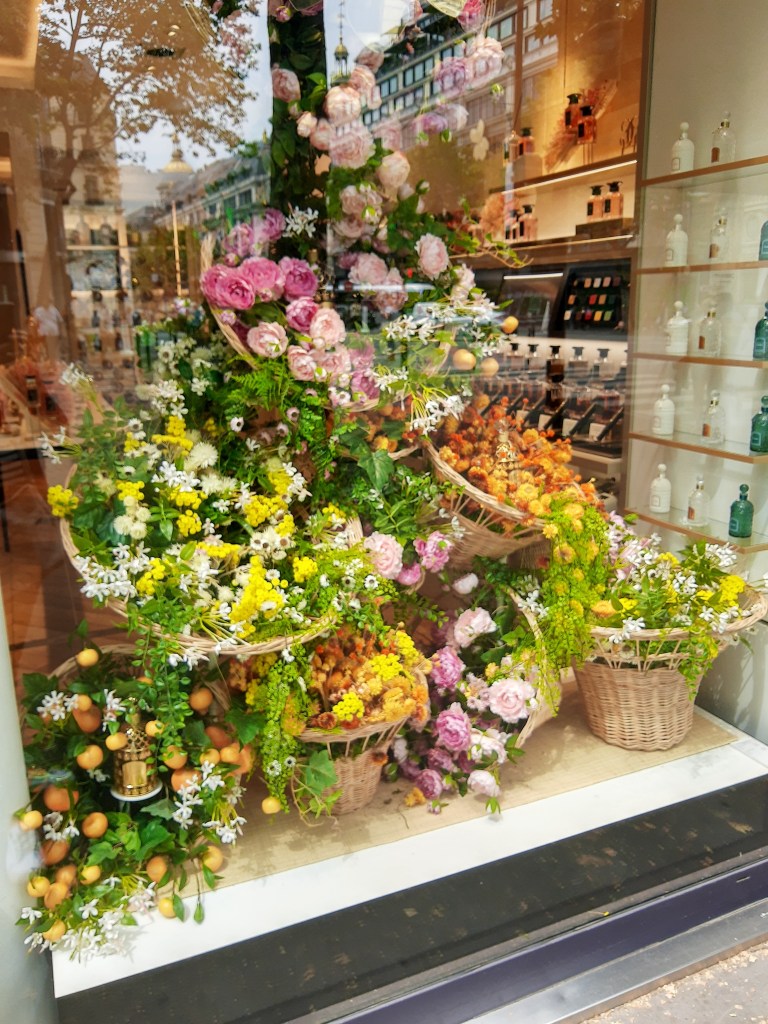
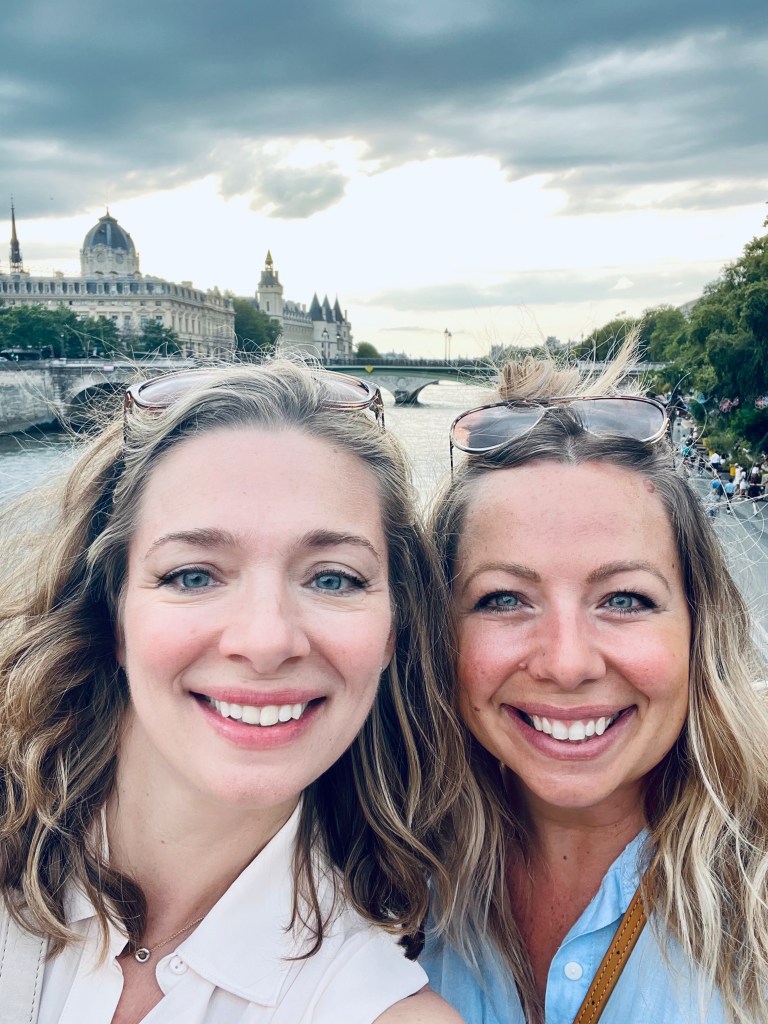
If you follow me at FB or IG (@MoonRuark), you’ve been inundated with photos from my European vacation in July. The most Rust Belt-ish place: Vigo, Spain–industrial, historical, and wonderful. A few pics for those who haven’t had enough (in order: Paris’ Eiffel Tower (of course), a pretty shop window, the D’Orsay Museum, and us sisters by the Seine; Barcelona hills and palm trees and basilica; Vigo’s cathedral; and a view of the Spanish countryside from Valenca, Portugal:
WordPress, the lovely content management system that hosts the Rust Belt Girl blog and so many others, is running something called #Bloganuary. Hmm. Not exactly catchy. However, today’s prompt spurred me to write to you, dear followers and readers.
“Who is your favorite author and why?”
Well, we could be here a year, and I hate to choose favorites. But let’s go with the author I’m reading right now, who is certainly among my favorites. If you’ve ever had a friend who knows just the right thing to say when you’re mourning or elated, terribly empty or full to bursting … you know what it’s like to read Ross Gay.
You know, that friend you can sit with in companionable silence (is there anything better for us avid readers?) without any awkwardness. How is it that an author whose business is words exudes a watchful, waiting, respectful quietude? Yet, at the same time, Gay’s words demand to be read–in the chillest come-and-stay-awhile kind of way. The latest book from the Youngstown, Ohio, native, Inciting Joy: Essays, is an open invitation. Yet, let me make clear there is nothing easy about Gay’s work. This is heart-opening-with-a-crowbar stuff, and that takes work on the reader’s part. But if there is a more grace-filled writer alive today I don’t know them. For comparison: think a secular Henri Nouwen (who was, of course, a Catholic priest.) I bet Gay would excel at the Jesuits’ daily examen, just sayin’.
But isn’t that what the best essays do? Examine something of the author’s life? And in our reading, then, our own understanding is enlarged, enlightened. My favorite essay of the book so far is “Through My Tears I Saw (Death: The Second Incitement). It’s my favorite for its subject matter, the author’s father, “an uncomplaining dude if ever there was one” in his last days on earth; and also for Gay’s humor and voice (see: “dude”) when grappling with a subject as difficult as a parent’s death. I’m not spoiling anything to give you a bit of the conclusion of that essay: “It was through my tears I saw my father was a garden.” (And, yes, if you’re wondering: this is a book about joy–creating it, fashioning it out of what you have. Find me someone who doesn’t have pains and sorrows. Joy can be ours, too.)
There’s a lot of gardening, a lot of tending and watering, nurturing, pruning, and surviving in Gay’s work. Read a couple essays and you’ll quickly learn that this is not only metaphorical gardening. The author is a founding board member of the Bloomington Community Orchard in Indiana, where he’s a professor and a poet and essayist, and, from the sounds of it, a fairly uncomplaining dude, himself.
One of his poems from a previous book, “Ode to Drinking Water from My Hands,” which begins in a garden, inspired a short essay of mine, “Ode to an Ode about Hands.” Written during the darker days of the pandemic, my essay is about grief. How we tend to it, what we make of grief, is directly related to the joy we feel. (It’s not free is what Gay’s saying, I think, and I agree.)
Are you new to Ross Gay? Where to begin? I think of his The Book of Delights: Essays as the gateway drug. This is the book I gift to family and friends who might not even be big readers. Short essays about absolutely everything (including joy)–there’s a great chance you’ll connect with (and come back to over and over) at least a few. From there, I recommend his Catalog of Unabashed Gratitude, an award-winning collection of poems that reviewer Evie Shockley called “shout-outs to the earth’s abundance.” The Ross Gay trinity of poetry, gardening, and basketball wouldn’t be complete without an ode to the hardcourt, which you can find in Be Holding, an epic poem and a “love song” to basketball legend Dr. J.
Now for a couple plugs: Lit Youngstown, my favorite community literary organization, is hosting Gay twice this year. The first is an online reading; the second is the in-person, weekend-long Fall Literary Festival in Northeast Ohio, where Gay will be one of the featured writers. I’ll be at both. Maybe I’ll see you there!
Who’s your favorite author? Who are you reading right now? Are you taking part in #bloganuary? Have you made any fun connections?
And check back here next week, when I will be interviewing John Kropf, author of Color Capital of the World: Growing up with the Legacy of a Crayon Company. You won’t want to miss it!
*header image is the cover of Inciting Joy: Essays by Ross Gay (Algonquin Books, 2022); jacket design by Christopher Moisan
Part II of my interview with Sonja Livingston continues our discussion of her new book, The Virgin of Prince Street: Expeditions into Devotion. We talk feminism and the need for human connection in faith. Sonja also offers her take on teaching students of writing–and the rest of us–to “notice what’s not being talked about,” and fills us in on what she’s writing, right now. (Missed Part I of the interview? Find it here.)
Sonja, as if writing about faith and devotion weren’t a hard enough sell in today’s fairly secular literary world, you’ve noted before that as a professor of writing, students often bristle at the use of the “R word,” religion. How do you encourage your students or other writers to get past the initial bristling to explore their relationship with faith—or any other challenging aspect of identity?
I encourage students to write about what’s important to them. It doesn’t matter if it’s important to me, their mothers, their best friends, their social media followers. This is so simple, but it’s tough.
It used to be that writing about issues related to abuse, trauma, and sexuality was especially risky, but those subjects have become standard fare in nonfiction writing workshops these days. In other words, what’s hard to open up about today is not the same as a decade ago. And what we’ll be afraid to speak (or write) in ten years will likely be different still. But I tell my students that this is where the power is. To notice what’s not being talked about, what subjects make us feel shame or small or tender. This might be something as big as religion or spirituality, but it might also be relatively minor, like the TV show character you’re obsessed with or the voice message you keep on your phone and listen to when you are alone. I remind students that whether we write about religion or our crush from 7th grade, HOW we write is at least as important as WHAT we write. Keeping the focus on the process helps writers to see that any topic tackled honestly and with humility and curiosity can be the stuff of powerful writing.
In one of the essays in your book, “Act of Contrition,” you journey to southern Louisiana to meet the priest who has converted an old ambulance into a mobile confessional, what he calls a Spiritual Care Unit. The priest drives around through Cajun country, offering the sacrament to the Catholics in the area. With the pandemic, local churches around the country have gotten creative—streaming Mass and even doing drive-through confessions. Through your own devotional journey, how do you reconcile all that hasn’t changed in our very traditional Church with all that could or should?
This is such a good question. It’s maybe THE question. Of course, I have opinions about what should change in the Church and I tend be friends with people who hold similar opinions, so they become pretty firmly entrenched. But I also understand that our opinions don’t actually change much. I don’t mean to sound pessimistic. I can (and do) write what I love about the liturgy or a good priest or an old prayer—and even, at times, criticize what seems so blatantly wrong—but ultimately, the Church has shown itself unconcerned with popular opinion and is even dying, in many places, rather than change. I suppose, on some level, I believe that people have a profound need for reverence. Wow. This is a very long way of answering the question! Basically, I try to find balance between my opinions and letting things be, while trusting in the human need for meaning and connection and hoping that this very difficult phase for traditional religion will lead to some sort of rebirth.
I love a detour essay, and “A Brief History of Prayer,” is a great example of that. On a trip to visit a monastery in Georgia, you instead end up succumbing to a desire to see the ocean and wind up in North Carolina’s Outer Banks. The essay is a lyrical, historical exploration of the Wright Brothers’ flight punctuated by notes on the history of prayer—and your own imagining of what might have been the first prayer, “the moment Adam first saw Eve.” What follows is my favorite passage in the book:
…and perhaps because one of his bones had been recently stolen, the cage over his heart had loosened and freed up space for the first prayer to launch from his still-tender chest.
Here, Eve is being looked upon, as we look upon our statues of Mary. We talk a lot about gazing and gazes in literary criticism and in feminist works. Do you think of yourself as a feminist? If so, how does your writing and your Mary fit in?
This is such an interesting question, because, of course, both Eve and Mary are gazed upon—gazing upon Mary is a Catholic tradition, in fact. That said, I do consider myself a feminist. In that section (and thank you for your kind words!) Eve is both an object of enthrallment and the source of essential action as I imagined circumstances for the first human prayer. I suppose I was using Eve (and Adam) to look at the various occasions when humans tend to pray—usually times of tremendous fear and love and desperation.
I’m also thinking that gazing at Mary is more than merely gazing at a pleasing female figure. It is, in some ways, a meditative act. Catholics don’t tend to use this language because it sounds too Eastern or New Agey—but, like candles and incense, a holy image can help center and focus our attention as we pray/meditate.
I have to also admit that while I now see Mary as a figure of peace and love, I rejected poor Mary for years because she seemed such an anti-feminist symbol. As a young woman I was embarrassed by what I saw as tacky Marian displays and a submissive girlish figure. My mother had a bathtub Virgin once and I was not a fan. Now I wish I could go back in time. I’d bring a buckets of pink flowers and plant them at her feet.
In your memoir and in this book, you explore the physical space of your church—a second home to you as a child. We Catholics have been away from our physical places of worship for a couple months now. How is that for you?
It’s been really tough. I’m answering some of these questions on a Sunday after trying and failing to Zoom into Mass. My church has limited resources and the technology isn’t consistently up to snuff. But even when I do manage to connect on Zoom, it’s nice, of course to see people and hear the prayers, but the physicality that is so important is simply not there. Not only the church, but the statues, the ability to receive Communion. I’ve found myself starting to light candles and sit still at home or listen to music and talk softly with my husband every night before bed. It’s not prayer exactly, but the time is sacred and has made the isolation not only bearable but even beautiful at times.
In your memoir, Ghostbread, you worked against the stereotype that says a girl who looks like you can’t be impoverished, can’t live in a slum. I feel like in this book you’re working against the stereotype that says an educated, reasonable person can’t also be a person of faith—that we can’t hold worldly intelligence and mystery at the same time. You write: “Devotion alone may not translate to transformation…But it’s equally true that many of us have been too quick to dismiss it as an essential entry point in our attempt to build meaningful lives.” Thank you for letting this reader in on your journey! What are you working on now? What are you reading?
That’s such a smart way of framing things! I hadn’t quite thought of it that way. But yes, a lot of my writing is about letting people know what can’t be seen or known on the surface of things. I often use a writing prompt with my students that asks them to make a list of things that others can’t tell about them simply by looking at them. The lists are always rich. And you are right on about this book. It was about exploring/challenging that apparent dichotomy (between education and faith) for myself and others.
As for what I’m reading: I just found Max Porter’s Grief is the Thing With Feathers and Fever Dream by Samantha Schweblin. Both are very short experimental novels which interest me because I’m working on a very short experimental novel set in Niagara Falls, New York. In fact, I started on the novel before writing these essays. It deals with similar questions—about tradition, religion, family— in a much more embodied way. My main character is a pregnant teen who shows up to her old aunt’s house. The question is what she’ll do about the pregnancy but the action centers around their planning of a communal feast celebrated in certain regions of the U.S., including western New York. So basically, I’m still writing about gritty cities and tradition and what it means to break bread together—how we might find and love each other even as things fall apart.
For more about Sonja Livingston and her latest book, The Virgin of Prince Street: Expeditions into Devotion, follow the links. Sonja’s first book, Ghostbread, won an AWP Book Prize for Nonfiction and has been adopted for classroom use around the nation. Sonja’s two other essay collections, Ladies Night at the Dreamland and Queen of the Fall, combine history, memory and imagination to illuminate the lives of girls and women. Her writing has been honored with many awards and her essays appear in outlets such as Salon, LitHub, The Kenyon Review, America, Sojourners and are anthologized in many textbooks on creative writing. Sonja is a popular speaker and is currently an associate professor of English at Virginia Commonwealth University in Richmond and teaches in the Postgraduate Program at Vermont College of Fine Arts. She is married to the artist Jim Mott and splits her time between New York State and Virginia. Find her here: https://www.sonjalivingston.com/
For Part I of my interview with Sonja, click here.
Quotes and bio pulled from the author’s book and website.
***
Interested in more Rust Belt author interviews? See here. Are we social? Find me at FB and on Twitter and IG @MoonRuark
Sonja Livingston, author of The Virgin of Prince Street: Expeditions into Devotion Photo credit: Gregory Gerard
What does the term “Rust Belt” conjure for you?
Rust itself requires steel, water, and neglect–three things gritty cities across the post-industrial landscape of America know well. With the decline of industry and population in Rust Belt cities like my native Cleveland and my mother’s native Buffalo, many of the people there have seen their Catholic churches shuttered. With the churches goes the sacred art–statues and other devotional items. Some are lost, and some (almost miraculously) are found again.
In Sonja Livingston latest book, The Virgin of Prince Street: Expeditions into Devotion, the award-winning writer goes on a quest to find a missing blue-cloaked statue of the Virgin Mary from her childhood church in Rochester, New York. Her unexpected return to her home parish offers her “an occasion to travel through space and time to explore the changes in the larger Church and in her own life.”
I adored this book for its lyrical and honest portrayal of a journey of the spirit. It’s a journey relatable to spiritual seekers of all kinds–as rooted in the gritty earth as it is to the sacred. And I loved my conversation about it with Sonja and hope you do, too.
***
Sonja, in your Author’s Note that starts your book, you describe yourself as “astonished,” to find yourself back at your childhood church in Rochester. With all that has gone wrong with our childhood churches in the Rust Belt–and the institution of the Catholic Church–why was this journey the right one for you to take?
Great question. What we’re drawn to really matters! Our memories, dreams, obsessions, worries—these are arrows pointing to our material as writers and human beings. The trick is to trust those arrows—even and especially when they make no sense. I spent lots of time wondering why I kept returning to my old church and while I developed a few theories, the most important takeaway relates to faith. Not faith in the doctrinal sense, but faith in the raw sense. As in, not being sure about something but proceeding anyway.
For me, writing itself is a tremendous act of faith.
That said, there’s no getting around the Church’s problems. Their stance on issues of sexuality and gender, as well the abuse scandals and cover-ups, have sent people packing. When I left church in my 20s, I believed that Catholicism was either good or bad. Going back required that I blast those categories wide open. Most churches and religions are a mix of bad and good, ugly and beautiful, vulgar and holy. To get the good, I needed to put up with some of the bad—not all the bad, or the really bad, of course. Still, love and trouble often go hand and hand. You won’t see that on any greeting card but it seems to be true. Unfortunately, we don’t get to choose which troubles visit us—and trouble is, by its very nature, painful. Which is a very long way of saying that this journey was about church but, even more so, about growing my heart enough to contain the mix of pain and joy inherent to all relationships.
So, the narrative thread that binds your essays of devotion together is the mystery of a missing statue of the Virgin Mary from your childhood church, “Queen of a working-class parish,” you call her. Since this is the Rust Belt Girl blog, I wonder if you could tell me a little bit about where you grew up and what your home parish was like and is like now?
My family of 7 kids and a single mom moved around when I was young—from the northeast section of Rochester to rural Orleans County to an Indian Reservation near Buffalo and back again. The one thing these places had in common was poverty and as I wrote in one of the essays, my family’s one consistency was being among the poorest of families in whatever enclave of poor people we found ourselves.
Corpus Christi Church was a hub we returned to over the years—the one source of beauty of light we could count on when we lived in the city. Like many parishes in the region, it was built to accommodate immigrants who came to work on the Erie Canal, in the railroads and textile factories in the late 19th century. Later, their sons and daughters and grandchildren worked production jobs at Kodak and Xerox or as secretaries and bus drivers. By the time I was on the scene (in the late-1970s and 80s), anyone who could afford to left the neighborhood which resulted in empty pews in all those old churches their grandparents had worked so hard to build.
Today, my old church is one a handful of parishes still open in Rochester’s northeast quadrant. I’m not sure how COVID will impact us as human beings in terms of spirituality and faith, but I’m guessing it will be the end for many parishes such as my own which were barely holding on before the pandemic. But for now, the church is still a place of beauty and light in my life—and one I appreciate all the more as its survival becomes more tenuous.
“What is this attachment?” to the Prince Street Virgin, you ask yourself early in your book. The importance of statues and relics and other devotional items can seem pretty strange to non-Catholics. In your essay “The Heart is a First-Class Relic,” you visit a shrine in Montreal that contains the preserved heart of a saint. In your thinking and writing—for a reader—how do you move past the foreign, strange, and even grotesque of our religion to a place that might engender more universal searching?
These essays were, in part, an attempt to explore those aspects of tradition I thought I’d outgrown or never quite understood. Whether it’s the statues at church or the bloody images of Jesus or the use of relics, I’ve come to realize that Catholic devotional practices often underscore the belief that the world is saturated with the divine. If the physical objects and elements at church—like holy water, statues, or stained glass—can be sacred, so too can things outside the building. Which is to say that some of these seemingly strange Catholic traditions are about making the sacred visible, tangible, solid, and real in people’s lives.
I hope this is relatable to people regardless of belief or background. So many of us recognize this in nature—the way the sun lights up new leaves or the pure magic of dogwood blossoms. And no matter how we explain it, often feel buoyed by such physical manifestations of beauty/holiness/light.
The Catholic religion is very much body-centered. Over most altars we see a crucified, bloodied Christ, nailed to a cross. In your writing in this book and your memoir of childhood, Ghostbread, you are very attuned to the body: from girlhood, when your body often went hungry, through adolescence to womanhood. Your reaction to returning to church is described as a feeling—not a lofty spiritual feeling, but a feeling in your body. You write: “…my body returned to a church pew as if it were an old love.” The sense of devotion as a body-centered act—do you feel that’s a bridge even non-believers can cross to understand your essays more fully?
You’re so right, Catholicism is all about the body! The celebration of the mysterious transformation of the bread to Body is the very heart of the Catholic Mass, for instance. To worship is to kneel, to stand, to sing, to cross yourself, to genuflect and bow.
Devotion is not an exercise of the head.
To participate in the Mass, at least for me, is not about “thinking” but feeling and doing. Like “losing yourself” or “falling” in love, the body seems to take over as the mind spins and second-guesses.
Regardless of how we label ourselves religiously, we humans are spiritual creatures and I hope most people will relate to the pull of the body in matters of love or hunger and possibly use it as a way to similarly understand the longing for mystery, ritual and faith.
In your inward journey of devotion, you covered a lot of actual miles—part faithful pilgrim, part objective observer. You travel to St. Brigid’s Well in Ireland, to an Orthodox Catholic celebration in Florida, to a Death and Marigold Parade in New Mexico. Is there a destination that didn’t make it into the book you’d like to describe?
A few Christmases ago, I attended a funeral at the local Catholic Worker House. I was shadowing my parish priest to write a profile and the weekly Mass he was scheduled to celebrate became a funeral service for a man whose family otherwise couldn’t afford one. This wasn’t a “big” destination—it was only a few miles from my house, in fact. But sitting there listening to the gospel choir while looking at a framed photograph of Dorothy Day and this man in his casket and meeting someone from my old neighborhood—all during the height of the holiday season—caused me to think about poverty and gifts in a new way.
***
Please check back for Part II of my interview with Sonja Livingston–for more from this book of hers, for her take on teaching students of writing to “notice what’s not being talked about,” and for what Sonja’s writing and reading, right now.
For more about Sonja Livingston and her latest book, The Virgin of Prince Street: Expeditions into Devotion, follow the links. Sonja’s first book, Ghostbread, won an AWP Book Prize for Nonfiction and has been adopted for classroom use around the nation. Sonja’s two other essay collections, Ladies Night at the Dreamland and Queen of the Fall, combine history, memory and imagination to illuminate the lives of girls and women. Her writing has been honored with many awards and her essays appear in outlets such as Salon, LitHub, The Kenyon Review, America, Sojourners and are anthologized in many textbooks on creative writing. Sonja is a popular speaker and is currently an associate professor of English at Virginia Commonwealth University in Richmond and teaches in the Postgraduate Program at Vermont College of Fine Arts.
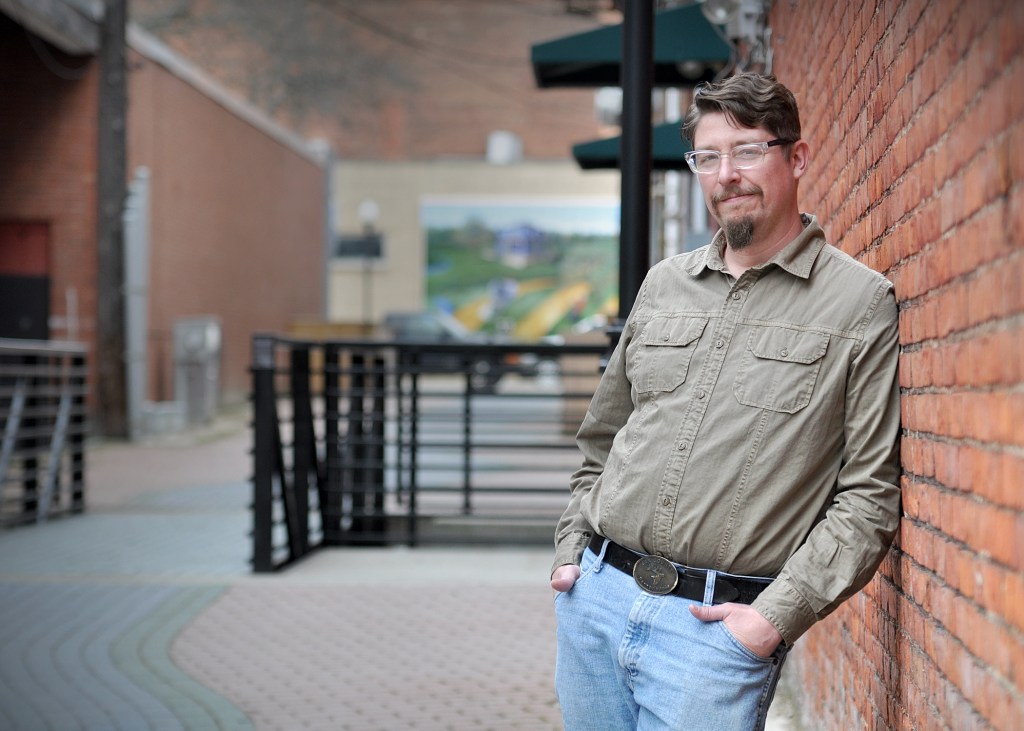
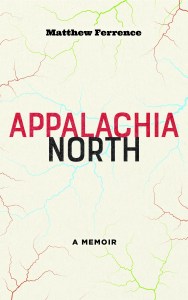
For a blog focused on the idea of place in all the stories we tell, I can’t think of a better person to talk to today. I met author and professor, Matthew Ferrence, at a writers conference in the spring, where I picked up his memoir, Appalachia North — the first book-length treatment of the cultural position of Northern Appalachia.
Matthew and I are from similar places. But more than a book of essays exploring geology and place, Appalachia North is a very personal memoir that allows the reader to journey alongside the writer as he is diagnosed with a brain tumor. From the book jacket:
Appalachia North is an investigation of how the labels of Appalachia have been drawn and written, and also a reckoning with how a body always in recovery can, like a region viewed always as a site of extraction, find new territories of growth.
***
Matthew, how did you come to write this book?
I wrote through a somewhat circuitous path for Appalachia North. The project began with a rejection, for a collection of essays I’d been working on for some time. But that opened up a conversation with Andrew Berzanskis, who was then editor-at-large for WVU Press (he’s now a senior acquisitions editor at the University of Washington Press), and a contract to write a book about northern Appalachia. While we both knew this was to take the form of a memoir, what we didn’t know is that I was going to be banging on the keys and finding some dreadful resistance. I’d recently finished treatments for my brain tumor, and I wrote an essay called “The Foxes of Prince Edward Island,” which was all about that. And I knew that I really wanted to write about recovery and brains and foxes.
So, one day I just decided that I’d do both, and see what happened if I tried to simultaneously write the book I had a contract for, and the book that was gnawing at me, somehow as one book. With that, the writing started to open up, and I began to see the connections between geography and self, between recovered bodies and recovered regions, of how erosion could function as a reframing metaphor of beauty and hope. Then, draft done, I had to tell Andrew. Who, much to his credit, looked at this new book he hadn’t bargained for, saw what it could be, pushed me to revise toward directions I’d neglected, and Appalachia North came into form.
I love the idea of mapping — both of your native geography and (the native geography) of your body. Could you describe the process by which you came to “see” the terrain of your journey enough to write it?
Mapping as a literal act came with the earliest versions of the book, that I would seek out the corners of the official parts of Appalachia north of the Mason Dixon line, to sort of survey and consider the delineations. As I did that, I was surprised by the recurring mutability of the lines that seem so permanent on an actual map. Most of all, I was struck by how the three counties of northeastern Ohio included in the official Appalachian Regional Commission map were late entries, “becoming” Appalachia forty-some years after the ARC put out its first map. So I became preoccupied with thinking about ways that map lines just don’t work. That connected with my figurative sense of self as an Appalachian exiled by birth, simply by the fate of being from Pennsylvania instead of the parts that usually count as Appalachia. This has bugged me for a long time.
For the body, I experienced the way clinical treatment exiles a person from a sense of self, because your body becomes defined by blood test numbers, and MRI scans, and radiation beam coordinates. Your sense of self becomes a cartography of medical rationality, and that makes you feel, well, not yourself really. You get lost the more you’re mapped. Somewhere in that irony, you start to get a sense that you’re tired of letting other people draw the maps.
In your essay, “Conduits,” you discuss those who make geographical maps — generally, those people in power. By writing about place, you do feel you’re map-making? Do you see this as a way to wrest some control over your native place?
For sure. Like, just the other day, a colleague was saying they didn’t really agree with my “claims” that Pennsylvania is part of Appalachia, because they spent a lot of time in “real” Appalachia in the North Carolina mountains. I was sort of stunned, frankly, because even the official maps back me up on this one! But at the same time, this is the tyranny of cartography: that people can draw lines for whatever reason they want. Money. Politics. Taxes. On and on. And there was some weird power exercised here in this very moment, about who gets to actually lay claim to the definition of a region…and in this case, as is often the case, the person making the definitive claim was not from the region and “correcting” someone from the region. We don’t even get to draw maps of our own places.
Yet the terrain — I love that word! — just doesn’t care. Trees grow. Dirt erodes. Mountains emerge. When you’re walking in the woods on many borders so clear on a map, you really can’t tell where the line is, since terrain is fluid. Really, there is no line. So in looking around at places on the ground where the lines are supposed to be, I started thinking a lot about all the lines that people try to place on our lives: healthy and not, for one, or legit Appalachian or not. Maybe because I’m on the “wrong” side of both of those lines, I became determined to refuse the lines altogether.
You challenge the conventions of regional dialect in one of your essays. As in, we’re supposed to say “Appalachia” a certain way — to prove we’re an insider in the region. Why this struggle for Appalachian authenticity, do you think? Why does it remain a region so intent on staying true to its roots? What does it mean for you?
I get the hard and fast claims for rightness in saying App-uh-latch-a, because lots of people have been made to feel small and unimportant for being themselves. Authenticity — including accent — becomes a way to fight for your own sense of worth. So on one hand I totally root for that, and I kind of relish the way Appalachians can smack down the folks who don’t know anything about the region. But at the same time, well, I don’t want to be kicked out of where I’m from. That’s the trouble of the northern part, for sure. We can feel sort of absent. Another one of my pet peeves: all sorts of people (again, who are not from here) keep telling me this is the Midwest. And I’m always thinking, fuck off on your Midwest. They’ll make some claim about jello salads or politeness, but it all comes with this sense of diminishment. Because they usually mean this in the context of explaining either how they’re from more sophisticated spaces not the Midwest, or as a way to deepen their disdain for northern Appalachia by refusing to even acknowledge it as being a place with its own claim to regionality.
I want to be clear, I don’t mean this to disparage the Midwest, but very much to defend how places like it, and like Appalachia, have to stick up for themselves as legitimate locales, as distinctive and meaningful, because everyone basically says over and over, fly-over country. So, on pronunciations, I love the variance of Appalachia, which has a whole spectrum of pronunciations, which is another way of saying it’s a place of vibrancy and nuance. I’m not going to give away my corner of that, so I’ve become comfortable using both the soft and hard vowels, but will still totally make fun of someone from outside the region who pronounces it wrong. The nice thing is, I can make fun of them no matter what they say. Cruel, I suppose.
In your memoir’s preface, you say, “So many writers…seek to make a declaration: this is what a place is.” You, like a good essayist, seem to be happier delving into the ambiguities of place. You also seek to reclaim your native place for the next generation — your own kids among them. How do you do this without defining that place?
Yes! This is what we love, I think, ambiguity and gray edges and journeys. I say this a bit cheekily: essayists love to squirm away from anything declarative, relish the provisional, even as we love to make big claims…which we then overturn and twist and turn inside out. On the matter of place, the big thing to me is that it matters, but when a place seems to carry rigid definitions — Trump Country, Red States, Fly-Over, all that — such restrictions wind up wrecking a place. That’s when we become totemic monoliths or, really, tools. So, for me and for my kids, I long for a vibrant connection to terrain and geography, with a sense that what a place means can also evolve and contradict and carry the fluidity the essayist loves. I want my kids to love a place, but I want them to be able to live in it with a sense of reciprocal love. I’m frustrated and angry, these days, by how places redouble their restrictive sense of who counts, who looks or loves or behaves the “right” way. That’s the wreckage of definition, as it crushes back to stereotype and turfiness and xenophobia and trope. Ambiguity, I think, invites inclusion and expansiveness. Because we can’t say this instead of that.
The language of geography and of the body — especially around medicine — can get really technical; yet, you do a lovely job of softening both of these languages. Instead of unapproachable moments of medical jargon, you note the moments of “mercy” between you and our doctors. You call it: “The precise language of medicine facing off against my growing recognition of life.” Yet, as a writer, language is your tool. Did it ever feel useless? Did you ever think, I don’t know how to write about what’s happening to my body in my language?
The veer to the metaphorical helps, for me at least. The peripheral look, the askance view, the detailed description of some concrete object that suddenly emerges with a new dimension of meaning, well for me, that’s how language becomes the only way to make sense of the ineffable. The biggest example is my recognition of the geology of my home, that it’s a dissected plateau instead of a worn out mountain. My Dad filled me in on that, part way through the writing, and it was a literal geological process that changed everything for me, metaphorically. Suddenly, I could see the post-surgical me in a different way, not as something grand that is now worn out and wrecked, but something shaping into a new form that can carry its own beauty. The metaphor was everything. On the flip side, cliché strikes me as the enemy of health writing, because it’s almost all you get from people when you’re ill. Directness felt better, on the page, that this happened and that happened. Combining the direct with the cascading metaphors helped me use language very much as the tool for narrative recovery.
In your essay, “The Molt,” you compare your emotional state, traversing your medical condition, to molting, as an animal does. Through your sickness you waited for “the hardening,” for a new shell, as it were, to help you bear up. Yet, the best writing, I believe, comes from exploring those times before the hardening, don’t you think?
I agree. Totally! I guess the hardening is the lived desire, that you just want things to stop being difficult, to end, maybe to stop feeling, at least for a little bit. Because things are so difficult. But, no, the hardening is a false desire, because actually developing it would be catastrophic. Maybe the essayist’s stance is to write about the moments when hardening fails and, more so, to write as an act of resisting hardening. Writing softens us up, so we can actually find the substance.
What’s your favorite thing to teach students in your college courses — about nonfiction writing and about Appalachian Studies?
About Appalachia, it’s pretty much always a combo of you’re in it and you are it. Up here in the northwest corner of Pennsylvania, there aren’t a lot of people who actively think about themselves as Appalachians, nor who have had any reason to think deeply about the region. Yet close to half of our students are from places that are literally in Appalachia. I love the immediate shake-up that provides, which I shared. First you think, that can’t be right. Then something like, but I’m not… And then, …but wait I am. So what we all think about Appalachia is…not accurate!
That moment of recognition and depth is what I love most about nonfiction itself, that we find new avenues constantly, so long as we cultivate a practice of curiosity and attention.
I love helping students unlock the potential in two disparate personal narratives, or figuring out how oblique research can deepen a complicated narrative line. Most of all, I love getting to spend time with a group of students all committed to the deep reflection of the world we walk around in. And language. Maybe this is really the best part: helping students understand the power of the lyric sentence, how the gestures of poetry and art, applied to real experience, yield the best nonfiction.
In thinking about your take on place, I learned that you’re taking a run at the PA House in 2020. In what ways did your writing get you to this decision?
Without a doubt, part of the motivation stems from writing books that have allowed me to dive deeply into how my home turf has been used and exploited by politics. That’s part of the framing of my candidacy, in fact, that there are stories that we tell ourselves over and over again that never turn out well for us. So let’s write new ones. The incumbent, as well, has not been, shall we say, a friend of the arts during his decade-and-a-half in office. My rallying cry, I suppose, came from his remarks suggesting that the state shouldn’t give student aid to people majoring in “poetry or other pre-Walmart majors.” Well now. Hmmm. That didn’t sit with me. Even if we want to stay in the spheres of practicality and economic policy, the arts sector is huge, and can have a tremendously positive impact on rural areas like ours. And at the same time, I long for a politics that doesn’t limit its vision to the spreadsheet. Politics is about people, in fact is the people. We talk about vision in politics, but we rarely see candidates who want to run on creativity and possibility.
I’d say the brain tumor factors in here, too: for one thing, I saw first hand what it means to get sick and suddenly see how expensive staying alive is. I was lucky, because of my insurance. Many other people would be bankrupt now, if they’d faced what I did. That’s not right. Then, existentially, I’m tired of living in a world attenuated by the small-minded nightmares of regressive politicians. Part of the after-effect of having a brain tumor is the relative ease at which I find myself saying, fuck it, and doing the thing that matters to me that’s the sort of thing we all have a tendency to be afraid to undertake. Running for office is that. I refuse to leave Appalachia to the troglodytes. The national narrative tells us that’s who we all are, and we most definitely are not. I want to stand up and write it differently.
What’s next for your writing? What should readers look out for?
I have two projects I’m wrestling with right now, each in very early stages. One is fiction, which is taking shape as either a novel or a collection of linked stories. Appalachian. Eco-futurist. Focusing on the possible presence of magical creatures in nighttimes threatened by a radical growth in light pollution. The other is an essay project, more or less the writing of a Catholic Mass, to address the ways I am simultaneously deeply lapsed from the Church yet unable to shake the feeling of mystical deep spirituality I find within it. In both projects, I’m trying to find a way to toggle toward radical beauty, to write of dark things but with gratitude and joy. I’m thinking of Ross Gay’s work in both poetry and nonfiction here, and how moving I find his devotion to that serious artistic stance. More and more, I find myself wanting to write toward hope and goodness, particularly as the world churning around us seems to only call us to critique, which is vital, but also wearying. Art helps us imagine new futures, and I long to imagine my way toward hopeful ones even when most of what we see suggests dystopia as our fate. Maybe we can write a better future into being.
***
Matthew Ferrence lives and writes at the confluence of Appalachia. He is the author of Appalachia North: a memoir and All-American Redneck, a well as numerous essays published in North American literary journals. He teaches creative writing at Allegheny College and in 2020 is vying for a seat in the Pennsylvania House of Representatives, representing Crawford and Erie Counties.
Happy Paper Anniversary! (Ironic, but true.) It’s Rust Belt Girl’s one year blogiversary.
Happy, happy day! We made it a year. I appreciate you sticking by me—and just think of all the writing paper we haven’t wasted!
For the obligatory anniversary stats: this post make 51, with an average word count of 370 (wordy me), for 347 total comments (lots by me) from 593 total followers, some of whom hopped on this train on that banner day when my post was a WordPress Discover feature. Thanks again, WordPress editors!
I started this blog to wrap my head around the literature of my native Rust Belt. For sure, one of my favorite comments, starting out in the Community Pool (best place to be on a Monday) went something like this: I don’t know where the *#$& the Rust Belt is, but I like it!
WordPress is definitely global. As much as I enjoy connecting with my fellow native or current Midwesterners (and I really do), one of the best things about this blog has been finding commonalities between far flung people and places—and the literature and art that comes out of those places.
This blogiversary coincides with the anniversary of my jump onto social media via FB. Yep, you read that right. When everyone else starts jumping ship, I’m like: that boat looks nice and sturdy! (Really, dinghy pics definitely forthcoming.) What have I found as a social media newbie? If I let it, social media zaps my focus so that I have the attention span of a hyper puppy. (Nope, still haven’t taken the real puppy plunge yet; I’ll keep you posted.) Social media also keeps me connected to friends, family, and writers too nice to ignore my friend requests! But those connections are more like taps on the shoulder—“remember me?”—than conversations.
We’re conversing here—real two-way street stuff. So, now it’s your turn. Happy Blogiversary to you, because it definitely takes two! What would you like to see from me in year two? (Cotton anniversary, btw.) I’ll try to oblige. ~ Rebecca
Here at Rust Belt Girl, I’m thrilled to connect with other writers who explore America’s post-industrial heartland, the Rust Belt, and find that its rich history is still being discovered. Paul Hertneky and I share no relation except for a love of these hardscrabble places and for representing the voices of these places truthfully. For more than twenty-six years, Paul Hertneky has written stories, essays, and scripts for the Boston Globe, Pittsburgh Post-Gazette, NBC News, and many more outlets. Rust Belt Boy: Stories of an American Childhood is his memoir.
“Rust Belt Boy brings to life in loving, lyric detail an essential but over-looked portrait of America’s blue collar heart,” writes National Book Award Finalist, Sy Montgomery. [It] illuminates moments that change our lives and the small recurrences that shape our decisions. In a millworker’s milieu—seldom seen by outsiders, filled with soot, solvents, and sharp edges—we encounter the work ethic of immigrants, then as now. These pages explore the push-and-pull of family and a hometown, the gravity—nearby or at a distance—that keeps us in orbit around our roots. (Book jacket copy)
Paul—Rust Belt Boy is an exploration of your roots, your personal history and the history of your hometown of Ambridge, Pennsylvania. In the writing of this memoir, what was the most surprising thing you learned about your native place?
That honor goes to the Harmonists. By most people’s reckoning [the Christian separatist society—a celibate “utopia”—founded in Pennsylvania in the early 1800s] was the most financially successful community of the time, probably anywhere. To have three stanzas devoted to the society in Lord Byron’s Don Juan; to be a subject of discussion between Marx and Engels; to have more money at the time under the bed of the founder than in the U.S. treasury. What a force these people were. How we ignored it! That might be the biggest surprise: the fact that we were not entirely cognizant of where we were.
Image of Old Economy Village (the Harmonist Society’s historic settlement) courtesy of ambridgeconnection.com
The question is: does our writing in some way put people in touch with their past? That’s the role we can play. That was maybe most surprising. This place was far more pivotal in American history than we knew. It points out how little attention we paid to the past—that distance between the immigrant experience of the here and now and the heritage of where we were.


















 Rust Belt Girl