Poet, photographer, and model literary citizen, Justin Hamm inspires with his offering–the third installment of a series of guest posts here at Rust Belt Girl. Thank you, Justin! His essay about speaking in tongues feels especially personal, presented as it is from a child’s perspective. It feels “close” to me, in more than one way. Justin’s essay is accompanied by his original folk art, and I have to say, I didn’t see this coming. But I absolutely love it. Here at Rust Belt Girl, we know the American Midwest is vast and multitudinous, and so are its people, their inspirations, their stories, and their art.
Because Justin is truly “Midwest Nice” and humble, he might not brag to you about his TEDxOshKosh Talk, “The American Midwest: A Story in Poems & Photographs, but I’ll do it for him. This is a good place to start, if you’re new to Justin. In his talk, he asks some of the same questions we’ve been asking at Rust Belt Girl all these years. A big one: Is “flyover country” an appropriate term for the Midwest? Justin explores that vital question through inspection of the overlooked or the avoided, including rust (holla!), thunderstorms, everyday people doing everyday things, politics, social class, and more. It’s well worth a watch-and-listen.
But first. Let’s read and discuss Justin Hamm’s…
The Wind With a Secret Shape
I was eight maybe nine years old Wednesday nights my grandparents used to
take me to a small Pentecostal church that sat on a grassy rise just outside of
town it had once felt isolated tucked out in the quiet but the town had crept
outward now it sat beside a gas station a lumberyard and a row of fast-food
joints the holy and the ordinary rubbing shoulders the church rectangular part
brick part white siding a white cross stretching off the roofline like an arrow
pointing to the shifting Illinois sky inside the pews angled toward a low
platform where the preacher shouted and a four-piece band laid down rhythm
the cushions a deep royal blue clean saturated almost regal I remember that
color better than my childhood bedroom the building always felt old but never
run-down the women cleaned it like a calling while the men kept it maintained
it smelled of floor polish and breath mints old hymnals and hairspray a past
preserved a place where time seemed fixed in place
I wanted to be a good boy I tried to follow the sermons caught a phrase here or
there but mostly folded handouts into paper planes or built hymnbook
pyramids sometimes I curled up on the back pew and drifted off lulled by the
rhythm of scripture and song until the spirit moved when it hit the preacher
everything changed he’d leap down the steps whirling stomping at the devil
howling Jesus’ name until his face went red and purple sweat soaking his brow
and then the tongues came strange breathless syllables rolling out like a chant
that bypassed the brain entirely the holy ghost made you do things that was
just how it worked I accepted it the way you’d accept sunrise or gravity
and I believed too believed fully if somebody said the spirit is with us tonight
I’d scan the sanctuary up in the corners where wall met ceiling under pews
between swaying bodies I didn’t expect to see it exactly but I wanted to know
where it was it filled me with something like fear but not only fear there was
longing in it too hunger a sense that something just out of reach might solve
everything the holy ghost like a wind with a secret shape a bird made of breath
maybe God’s own breath moving invisibly through the room I believed it
entered through the mouth that explained what came out the old men would
rise in their too-large suits limping loops around the sanctuary hands raised
speaking in tongues the women would fall stiff to the ground eyes rolled back
mouths twitching that’s how I knew the ghost was on the move I tracked it
sinner to sinner and sometimes it came close the person next to me would
sway eyelids flickering syllables rising up like springwater through stone my
chest would lift my legs would buzz my mouth would soften and open almost
involuntarily I’d think this is it just let yourself go let it take you I opened my
mouth and nothing came I tried again wider harder I prayed the best I knew
how I swallowed the air like it might carry something eternal and then I waited
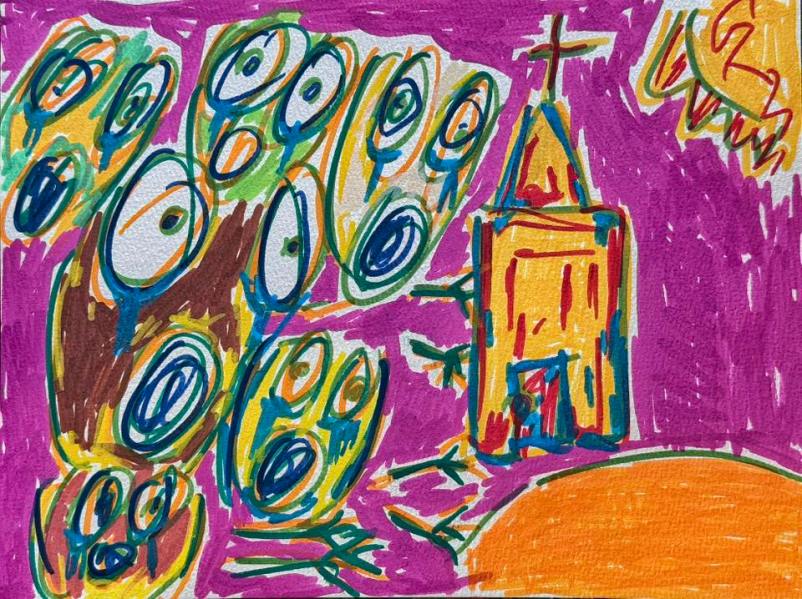
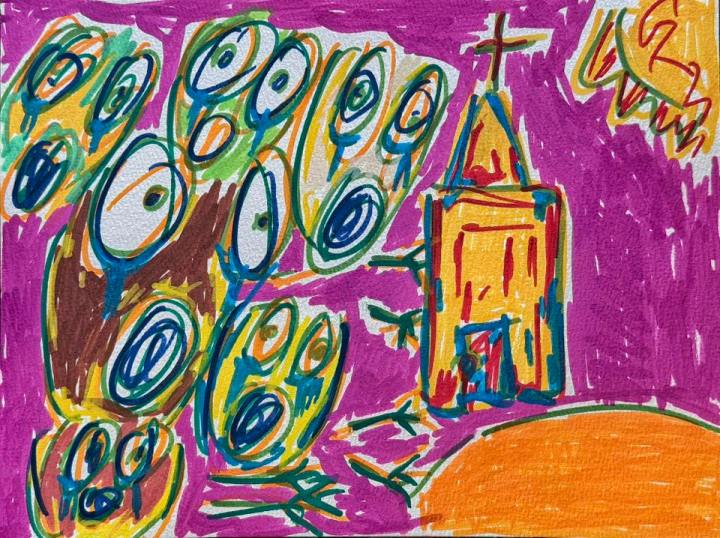
“The Hungry” by Justin Hamm
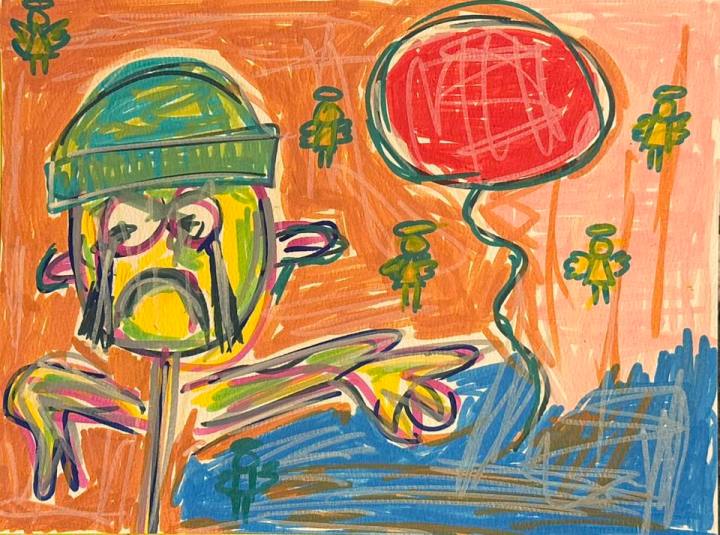
“Balloon” by Justin Hamm
“Laying on of Hands” by Justin Hamm
“Sinners Prayer” by Justin Hamm
Justin Hamm is the author of five poetry collections, including O Death (2024), Drinking Guinness With the Dead (2022), and The Inheritance (2019), as well as a book of photography, Midwestern. He is the founding editor of the museum of americana and the creator of Poet Baseball Cards.
Like this post? Like this series? Let’s discuss! Comment below or on my FB page. And please share with your friends and social network.
Are you a Rust Belt writer interested in seeing if your own post, or author interview, or book review might be right for Rust Belt Girl? Hit me up through this site’s contact function.
Check out my categories above for more guest posts, interviews, book reviews, literary musings, and writing advice we all cab use. Never miss a post when you follow Rust Belt Girl. Thanks! ~Rebecca
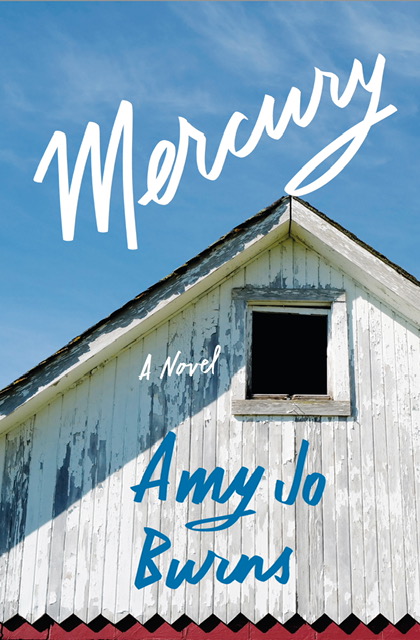
Let’s begin with a sample paragraph from Amy Jo’s stunning literary (also mystery) family saga:
Spring was breaking through in lilac buds and daffodil shoots, but winter held on. Tufts of dirty snow clung to curbs, and porch steps, and parking lots. The heat had stopped working in the Citation, and Marley shivered. Theo was bundled in the backseat; she caught a glimpse of him in the rearview mirror. Then her eye snagged something else behind her–someone limping from a snowbank into the intersection. Marley slowed to a stop and turned around.
Whew. Good stuff.
Amy Jo, your main character in this Western-PA-set novel is Marley, whom we first meet when she’s 17. You left your Western-PA hometown for college around that age. What was it like to write this book and “inhabit” Marley’s character in a place (and time) similar to the one you were raised in? And how similar is your real-life family to Marley’s found family?
Marley is a really special character to me. When I was creating her, I took the qualities I love most about my best friends from home and put them into her character. Her willingness to step into someone else’s messiness, her ability to tell the truth in such a loving way, and her desire to build a business with her own creative stamp on it are all qualities I really admire about my oldest friends. Marley showcases what I think real resilience actually looks like. It isn’t perfection or misery or loneliness—it just comes through in a big-hearted, flawed human who shows up for the people in her life.
The Joseph family in the novel is like mine in that we’re both a family of roofers—which means both houses were full of grand storytellers, brave hearts, and lots of tar-stained jeans. The house I imagined the Josephs living in was inspired by the old Victorian house my grandparents used to own in my hometown. I’d always loved that house and couldn’t imagine any other place a family of roofers would live. The characters in Mercury come from my imagination, but the bond they feel with each other—the sometimes too-close intimacy they have with one another is absolutely something any member of my extended family can relate to. When it comes down to it, I’d say both families care about the same thing—keeping people safe under roofs and on top of them.
This novel is mostly set in the fictionalized town of Mercury. How did you go about constructing this place, this “forgotten Rust Belt town.” Did you use Pinterest boards or clip photos from magazines? Was there map-making involved to mark where the salon, post office, and library stand? And, as the daughter of real-life roofers, do you picture this town from an aerial/rooftop view?
Mercury is heavily inspired by my own hometown, which I also wrote about in my memoir Cinderland. When I started writing the early pages of this book, I knew it had to be set in Mercury—a place I know, love, and left. So most of the early “research” came from my own memory, and then I squared it with pictures from the 1990s and also by talking with my parents. My dad drew a map of the church steeple and attic (which both play an important role in the story), and I talked with my mom about what it was like to help build a roofing business from an administrative perspective. It was really special to get to share a bit of this project with them, especially since so much of the book is about what it means to belong and how we claim home for ourselves.
I hadn’t imagined my hometown from any aerial views until I started putting characters on roofs pretty early in the process of drafting the book, and it was the coolest thing to envision this place anew from an entirely fresh perspective. I was able to find a few aerial videos of my hometown to watch, which really helped me fill in the landscape for what these characters find when they’re up higher than everyone else.
I’d call this book a literary family saga; however, there is also a lot of romance—some steamy! What’s your best tip for writing romance or sex that deepens character and moves plot?
I would say my best tip is that sex is never just sex. Falling in love is one of the most monumental things we experience as humans—it shows us at our best and our worst—and I think it’s really important to reflect it in literature. When I’m writing romantic scenes, I’m always considering what each character is risking about themselves in a very unique way—are they sharing something no one else knows? Are they saying one thing and thinking another? What is it about falling in (or out of) love that changes how they see themselves? What past events have shaped how a person approaches their most intimate moments? Those scenes are such a great way to show what a character deeply wants and what they fear, whether they’re aware of it or not. And when all that juicy backstory collides with someone else who is just as complicated—it’s fictional gold!
Like in your last (gorgeous) novel, Shiner, you explore profound female friendships in Mercury. Can you talk about how you developed the friendship on the page between Marley and Jade? When you’re writing, do you do character studies/background/backstory with detailed info–any that doesn’t make it into the book?
Mostly what I do when I’m building relationships between characters is think about it A LOT. I write many drafts over a long period of time and throw out a lot of material, usually because that’s how I’m getting to know the characters. Scenes will start off as sketches and they get more detailed as I learn who the characters are. Many of the scenes between Jade and Marley felt very cliché for a long time as I was working, and I’d have to go back in and re-work them to go deeper so they felt earned and true.
I am such an impatient person (what a terrible trait for a writer!), so character studies always feel like they’re detracting from the real heat of the story I’m working on. The only thing I usually do outside of drafting itself is create a playlist for each book that I write, and I’ll include songs for each of the characters. It helps me track down their psyches, their moods, their secrets. You can learn a lot about a person if you know what songs they’re listening to when they’re alone.
In this novel you touch on dementia. What kind of research was involved there? As this book is set in the 90s mostly, was there any other, historical research you had to conduct for verisimilitude?
I had a family member with a form of dementia (though under different circumstances than those in the book), so I used that as the basis for building it in the novel. I decided not to do much clinical research on it because I wanted to portray it through the eyes of a family who isn’t sure what is going on. So often we don’t get the answers we are looking for in real life when it comes to medical diagnoses, and it was really important to me to give that truth a lot of space in the novel.
Motherhood is portrayed in a very real, and sometimes heartbreaking, way in this novel. Marley’s mother-in-law says, “This life is unmerciful to mothers.” You’ve got two young children at home. How has your writing practice (and product) changed since becoming a mom? And, follow-up, what is your favorite novel for exploring themes of motherhood?
The biggest difference in my writing practice is that I have to keep my working hours to match my kids’ schedule. It is GIGANTICALLY easier now that they’re both in school, though I rarely get done what I’d like to in the course of a day. I remember when my son was an infant and my writing sessions were so short, I thought I’d never finish the book I was working on, which turned out to be Shiner. Sometimes my writing sessions would only produce a few hundred words. I had to learn to talk myself through it and say, “Maybe no one will ever see it, but I’d still like to try.” And I’d repeat that to myself over and over when my daily frustrations came. And the book got done!
In terms of my favorite book about motherhood, I once attended a talk by Nicole Krauss just after she’d published Great House. Someone in the audience asked her how she was able to write and be a mother, and she said, “I wouldn’t have been able to write this book if I hadn’t become a mother.” It was so encouraging to me, as I was contemplating how I might have kids and continue to write. That story inspires me still.
A lot of the plot of Mercury centers around the family’s church—but not necessarily around worship. No spoilers, but can you talk about how religion, faith, and or belief works in the world of this novel—and maybe also in your own life?
My faith is a huge part of my life and my creative process. I think maybe writing books is a form of prayer for me. What I love about it is that the page becomes a place for my uncensored thoughts, my questions, my frustrations, and—most powerfully—the things that I love and I think are worth fighting for. It feels like a quiet place where I can meet God without judgment, where I don’t have to be any other version of myself but the real one. Also, I do a lot of listening when I’m writing which feels very peaceful.
In this particular story, many of the characters have an idea of what “religion” is, but what they’re all hungry for is faith. Faith in a God who loves them just as they are, and faith in each other. I like to think each of them encounters God in an unexpectedly meaningful way in the book, and usually it’s through they way they learn to love each other.
For those of us who aren’t just readers but who are also writers, what’s your favorite generative prompt for a writing day when the words just aren’t coming?
I absolutely recommend starting with a memory from childhood you can’t get out of your head. Try retelling it to yourself from an adult perspective (which you can interpret any way you like). I actually began Mercury in just this way—the opening scene of the book is a memory of mine from a little league game when I was around nine years old. This exercise was how Waylon’s character first came to life.
Tell us how the reaction to Mercury has been on your visits to libraries, bookstores, etc.?
It’s been really wonderful. When Shiner came out in spring of 2020, there were no stores open, so getting to visit libraries and bookstores has been the best thing about publishing Mercury. My favorite thing is hearing about readers’ favorite characters and how they saw themselves in the story. I love it when that happens in a book I’m reading, so getting to provide that experience for fellow readers is a real gift.
What are you writing and reading right now? And what are your kids’ favorite children’s books, lately?
I love this question! This year I’ve been trying to take my time and read longer books (which I’m calling “biggies”), so right now I’m reading two—Iron Flame by Rebecca Yarros and East of Eden by John Steinbeck. I’m really enjoying them both. Right now my son, who is nine, is loving the entire Percy Jackson universe by Rick Riordan, and my six-year-old daughter is very into Dog Man by Dav Pilkey and the Max Meow series by John Gallagher. I love seeing them read!
Writing-wise, right now I’m working on a novel about the true story behind a famous country-folk singer’s disappearance. I don’t know if it will be my next book or not, but I’m really enjoying the work itself. Thank you so much, Rebecca!
Amy Jo Burns is the author of the memoir Cinderland and the novel Shiner, which was a Barnes & Noble Discover Pick, NPR Best Book of the year, and “told in language as incandescent as smoldering coal,” according to The New York Times. Her latest novel, Mercury, is a Barnes & Noble Book Club Pick, a Book of the Month Pick, a People Magazine Book of the Week, and an Editor’s Choice selection in The New York Times. Amy Jo’s writing has appeared in The Paris Review Daily, Elle, Good Housekeeping, and the anthology Not That Bad.
Many thanks to Amy Jo Burns for sharing her insights and time–and kid book recs– with us here at Rust Belt Girl. I know I can’t wait to read what’s next from Amy Jo!
Like this interview? Comment below or on my fb page. And please share with your friends and social network. Want more? Follow Rust Belt Girl. Thanks! ~ Rebecca
In Part I of this interview, Eliese told us a story of the steel mill that didn’t make it into her memoir and about how being a female steelworker helped her find her strength. She talked about hope and despair and holding on through tough times. And she talked about her current work, teaching writing to college students, and about how she shaped the narrative we’re all talking about. If you missed Part I, be sure to catch up, here.
Today, I’m happy to invite the author back. Eliese Colette Goldbach is the author of Rust: A Memoir of Steel and Grit, published by Flatiron Books in 2020.
Eliese Colette Goldbach, author of Rust: A Memoir of Steel and Grit Photo credit: Cheryl DeBono/Michaelangelos Photography
“…Eliese dreamed of escaping Cleveland and achieving greatness in the convent as a nun.” Instead, as a steelworker at ArcelorMittal Cleveland, she “discovers solace in the tumultuous world of steel, unearthing a love and a need for her hometown she didn’t know existed.” *
Eliese, your debut memoir was published to lots of praise and national attention. One reviewer compared Rust to Hillbilly Elegy. How did that sit with you? How do you come down on the Elegy issue?
There are definitely parallels between Rust and Hillbilly Elegy. They’re Midwestern memoirs—and Ohio memoirs, in particular—and both stories try to capture the spirit of a misunderstood place through the people who inhabit it. I think readers have a lot to learn from any account written by a native-born soul, especially when that soul is writing about “forgotten” places like the Rust Belt and Appalachia, so I don’t begrudge the comparison. I do, however, fear that some of the generalizations and moralizations made in Hillbilly Elegy aren’t as nuanced or productive as they claim to be.
In addition to memoir, you write essays. And I read a hysterically funny piece of dark humor you wrote published in McSweeney’s Internet Tendency: “An Open Letter to Everyone in the Event of My Likely Demise While Hiking the Appalachian Trail.” Can you tell us what inspired you to write the piece—and where you learned to write funny? Also, can you tell us a little about what you are writing, now?
I’ve always had a little bit of a funny bone buried deep inside. You wouldn’t know it when you meet me. I’m really shy and reserved at first. I smile a lot. I don’t say much. New friends always assume that I’m nice and uncomplicated, but then I’ll land a zinger out of nowhere. People always do a double-take. “Did Eliese really say that? She’s always so quiet!” Humor writing is the perfect way for this unabashed introvert to say something funny. Plus, I’ve always enjoyed clicking through the pages of McSweeney’s Internet Tendency. It never fails to make me laugh. When you read enough of something, you kind of internalize the prevailing tone. From there, you can experiment with your writing and go wild.
In truth, though, I have to give my best friend credit for lighting the spark behind this particular piece. I was actually making plans to thru-hike the Appalachian Trail at the time, and my friend and I started joking around about all the things that could go wrong. I’m pretty sure we were mostly talking about bears. “This should be in McSweeney’s,” she said. The rest is history. I immediately set to work writing. I submitted the draft a few days before setting out for Springer Mountain, and I got the acceptance letter while crashing at a hostel in Georgia. Unfortunately, I didn’t make it very far on the trail. I fractured my heel bone, which made walking pretty painful, but at least I have a little humor to show for it!
As far as current projects go, I’m a little leery of jinxing myself. The process of hammering out my next book idea has involved a lot of dead-end drafts. A few months ago, I told people, “I’m writing a book about X!” Then X changed to Y, so I said, “I’m writing a book about Y!” Now Y has changed to Z and I’m all out of sorts. I’m hoping that Z will stick, but I don’t want to press my luck. We’ll just say that the next book will likely involve a lot of research, although it’ll still be grounded in my personal experience.
For us avid readers, could you give us some recommendations? A few recent favorites from authors in the Cleveland area or beyond? A memoir? Creative nonfiction? A novel or story collection? Poetry?
Admittedly, I’ve been diving deep into the research component of “Book Project Z” lately. Most of the reading material on my nightstand is pretty old-fashioned. St. Augustine. Emile Durkheim. David Hume. I’ve also been immersed in A False Report: A True Story of Rape in America, which is both riveting and gut-wrenching. I strongly recommend it. When it comes to all-time favorites, I always mention the work of David Giffels. Barnstorming Ohio was an absolute pleasure. Another must-read. And I have to give a shout out to poet Damien McClendon. We both read at an event a few months back, and I was just so taken with his words. Have you ever felt sapped as a writer? Maybe the inspiration has run dry.
Maybe the ideas aren’t flowing. Maybe the cursor on the computer screen fills you with dread. Then, all of a sudden, you hear another writer create something beautiful with language and you feel like you can keep going.
That’s what Damien McClendon’s poetry did for me. I was slogging through my writing at the time, and his words gave me a much-needed dose of inspiration.
Of course, this is a reading and writing blog, Eliese, but we need fuel to do both. Also, I’m always longing for food from home. So, what’s a hometown food you can’t live without?
Like this interview? Comment below or on my FB page. And please share with your friends and social network. Want more author interviews, book reviews, writing advice, and general Rust Belt goodness? Follow me here. Thanks! ~Rebecca
Eliese Colette Goldbach, author of Rust: A Memoir of Steel and Grit Photo credit: Cheryl DeBono/Michaelangelos Photography
“Eliese dreamed of escaping Cleveland and achieving greatness in the convent as a nun.” Instead, as a steelworker at ArcelorMittal Cleveland, she “discovers solace in the tumultuous world of steel, unearthing a love and a need for her hometown she didn’t know existed.” *
Rebecca here, so thrilled to share this author interview with you! A little backstory first: several years ago, when I was interviewing author David Giffels about his memoir, Furnishing Eternity: A Father, a Son, a Coffin, and a Measure of Life, he told me about a writer to watch, a young woman who worked in Cleveland’s gargantuan steel mill. Actually he called her a “Cleveland steelworker-slash-amazing literary star.” Growing up in the Cleveland area, I knew of the steel mill, its flare stack’s tall orange flame a potent symbol of Cleveland industry–and grit. And I’d read steelworkers’ stories. But never one by a woman. My interest was piqued.
Reader, Eliese’s memoir exceeded my high expectations, balancing harrowing tales of hard times, hard work, and hard-won revelations with gorgeous, lyrical prose.
Meet Eliese: Eliese Colette Goldbach is the author of Rust: A Memoir of Steel and Grit, published by Flatiron Books in 2020. Rust is the author’s debut memoir. The award-winning writer now works at John Carroll University in Cleveland, where she lives with her husband.
*Trigger warning: this interview contains a mention of sexual assault
Eliese, place is so central to the story you tell in this memoir. And you give your reader access to a place most of us will never know as an insider: Cleveland’s nearly 950-acre steel mill. As a steelworker there, your personal story got wrapped up with the story of the mill. Is there a story that didn’t make it into the book you could tell us?
There were so many stories that never made it to the pages of Rust. I worked in a wide variety of jobs during my tenure at the steel mill, and I probably could have written a book about each one. I learned to put rocks into giant receptacles in a dusty place called The Bin Floor. I spent some time as a “Rough Rider” in the Basic Oxygen Furnace, where the molten steel was made. Every day, I hopped into a tow motor and whizzed around the mill, replenishing the raw materials that were used in the process. I even did a brief stint as a crane operator in the Hot Mill, where glowing slabs of steel were pressed into sheets. It was one of the most interesting—and terrifying—jobs I had ever worked. You spend your hours in a tiny box that smells like body odor. There’s a wonky captain’s chair in the middle of the space, and the walls are covered in a yellowish substance that rubs off on your fingers when you touch it. I later learned that you shouldn’t touch the mystery substance. It’s the sticky accumulation of everyone else’s nicotine tar.
On one of my first nights flying solo behind the controls of the crane, I had a rather frightening experience. A mechanic asked me to move a three-hundred-ton contraption to the other side of the building. At first, I protested. My crane was only rated to lift one-hundred tons, but the man brushed off my concerns. He told me that the three-hundred-ton thing was rigged up to a bunch of pulleys and levers that would supposedly lighten the load, so I conjured up vague images from high school physics class and told myself that everything would be fine. Famous last words, right?
When I started working the gears and levers necessary to move this three-hundred-ton thing, it barely budged. My crane, on the other hand, started to struggle immediately. The gears were grinding. The motor was moaning. I could feel the whole crane begin to buckle in the middle, which wasn’t good. Keep in mind, this crane weighed as much as a blue whale—it was beyond huge—and the mechanic who had asked me to move the three-hundred-ton thing was on the ground, directly below the crane. He was right in harm’s way, and I was still pretty green as a crane operator. I knew that I needed to stop what I was doing, but I didn’t react fast enough. Right before I eased off of the controls, something snapped. Metal twisted and pinged. The hook of the crane went flying. All I could think about was the man on the ground below me.
When everything settled, I opened my window and called down to him. Thankfully, he was okay. The pulleys that were attached to the contraption had shattered—and huge shards of metal had shot off in all directions like gigantic bullets—but luckily the renegade pieces hadn’t hit him. Disaster was avoided, and I whispered a prayer of relief. But the experience shook me. The mill never stopped reminding you of its dangers.
View of downtown Cleveland from the steel mill
You write, “This place [the steel mill] never failed to remind me that power is double-pronged. The very forces that could rip everything apart were the same ones that tempered something strong and resilient…” Would you say being a female steelworker helped you find your own power—in and out of the mill? How?
I definitely learned a lot about my own strength in the steel mill. It wasn’t always easy being a woman in the mill. There were many subtle (and not-so-subtle) displays of sexism, and I really think that the experience taught me to be more assertive when I saw something that went against my values. I also found a vibrant community of other women in the mill, which reminded me of what we can accomplish together, and the strange jobs I performed gave me a sense of self-assurance that extended into other areas of my life. If you can run a hulking crane for twelve hours a day, then you can manage just about anything. When I think back on my time at the mill, however, I know that one of the most important things it gave me was a respectable paycheck. They say that money doesn’t buy happiness, but I don’t necessarily agree. Making a good living can give you confidence and security and independence. It can provide you with opportunities that you wouldn’t otherwise have, and it felt especially good to know that I was working in a field where men and women were paid the same.
Your having grown up as a Catholic school kid, aspiring nun to steelworker was quite a change in career trajectory. Like many children, you aspired to greatness, to being known for making a difference. You write, “…the religious life seemed to be the only vocation worthy of its power.” Today, your chosen vocation is teaching. Can you tell us what you love to teach the most? What you like to impart to your students—about writing about place, itself, or writing about their place in the world?
I love teaching the nuts-and-bolts to beginning writers. It doesn’t matter if we’re working with academic essays or creative pieces. I like showing students the beauty of a well-crafted scene, a tight bit of dialogue, or a perfectly-wrought thesis statement. I also enjoy giving feedback to students at all levels. It’s so much fun to dive into a piece of writing in the hopes of offering encouragement and constructive criticism, and it’s even more fun to watch students implement those suggestions in revision. Overall, I think the biggest thing that I’d like my students to take away from class is a sense of self-efficacy and personal power. Writing gives us the ability to create meaning and empathy and wonder. It allows us to see our surroundings in a new light. It helps us understand the roles we play within those surroundings, and it gives us the opportunity to reach audiences that we may never meet in person. I want my students to understand just how influential the written word can be, and I also want them to feel capable of putting their unique stories down on the page.
Your own college experience was shattered when you were raped by a classmate, after which point you were diagnosed with mixed-state bipolar disorder. You talk in the book about the rape taking away your faith. Yet, your book is filled with the language of religion, images both harrowing and redemptive. How, as a writer, do you sit with such seemingly disparate aspects of life, including faith in humanity and utter distrust in the same? And what do you hope the story of your mental health journey does for readers?
The most interesting stories are always the ones that let contradictions breathe. Nothing in life is as simple as we’d like it to be, and the core of good writing lies in those moments of ambiguity when something raw and gritty and human is revealed. Lately I’ve been going over a lot of old books that I read back in college, and I happened to re-familiarize myself with the pages of Plato’s Phaedo the other day. I can’t help but be reminded of this great line: “What a strange thing that which men call pleasure seems to be, and how astonishing the relation it has with what is thought to be the opposite, namely pain! A man cannot have both at the same time. And yet if he pursues and catches the one, he is almost always bound to catch the other, like two creatures with one head.” I just love that image. Two creatures with one head. I think it relates to so much more than just pleasure and pain.
You can’t have faith in humanity if you don’t also doubt its goodness. You can’t have hope if you don’t also invite despair. And I’m talking about real hope here, not the cockeyed optimist kind that’s divorced from reality. Real hope has an axe to grind. Real hope has bloody knuckles. I like to think that’s a lesson I’ve learned from living with bipolar disorder. I’ve struggled through the bleakest kinds of despair, but those moments were never the ones that scared me. Despair is just hope earning its stripes. It can always come around the bend. The true enemy doesn’t seem to have a name. You might call it emptiness, or perhaps apathy, but it isn’t really either of those things. It’s this sensation you get when you’re content with a blackness that has not bottom. You feel like a shadow that can no longer be stitched to a body. There’s no despair, no emotion, no longing. It’s a frightening place to be, and I hope that my story can speak to anyone who’s grappling with that place now. I’ve been there. I know what it’s like.
Take it from a kindred soul: It’s possible to survive. Just hold onto something and don’t let go.
Eliese, as I read your memoir, I kept forgetting it wasn’t a novel, because all the tension and suspense I expect in a good novel were there, keeping me feverishly turning pages. In addition to your story as a steelworker reclaiming your home and yourself after much struggle, there is also a compelling and very real love story here. For us writers, can you talk about how you decided to structure your memoir—if you set out to structure it like a novel?
Structure is the thing I struggle with most as a writer. I’m still traumatized by my 5th grade English class, when the teacher called on me to answer a simple question: “What’s the climax of Where the Red Fern Grows?” I froze. My mind went blank. My palms got sweaty. The whole class was staring at me, but I just shrugged my shoulders. In my mind, there were a thousand tiny climactic moments throughout the novel. How could I possibly pick one? Even now, I’m always overwhelmed by the sheer possibilities of structure. You can use the same material to tell a million different stories, and sometimes I want to tell all of those stories at the same time. As such, I inevitably cycle through a lot of failed drafts to figure out the structure that fits the material best.
With Rust, I experimented with everything. I tried making it an essay. I tried making it a chapbook of prose poems. I played around with footnotes. I wrote a pretty long and miserable draft that incorporated tons of research about irony. There’s even a notebook in the back of my closet that contains a feeble attempt to imitate Anne Carson’s Nox. Those drafts took a lot of time and energy, but they gave me a little distance from the lived experience of the steel mill. As a nonfiction writer, it can be difficult to see the shape of a story when you’re still living parts of that story in your daily life. Most of Rust was written while I was still employed as a steelworker, which made it difficult to see where the book needed to end. I kept wanting to add more anecdotes. I kept wanting to change the climax. Luckily, I had an awesome editor and an amazing agent who helped to usher me in the right direction. And once I was able to take a step back and analyze everything I’d written, I realized that a novel-like arc already existed inside the material. From there, the structure settled into place. Sometimes it takes time and revision (and lots of feedback from trusted friends) to discover something’s shape.
*Quotes from the book jacket copy; all images used with permission of the author
Stay tuned for Part II of my interview with Eliese Colette Goldbach, coming soon…
Like this interview? Comment below or on my FB page. And please share with your friends and social network. Want more author interviews, book reviews, writing advice, and general Rust Belt goodness? Follow me here. Thanks! ~Rebecca
Part II of my interview with Sonja Livingston continues our discussion of her new book, The Virgin of Prince Street: Expeditions into Devotion. We talk feminism and the need for human connection in faith. Sonja also offers her take on teaching students of writing–and the rest of us–to “notice what’s not being talked about,” and fills us in on what she’s writing, right now. (Missed Part I of the interview? Find it here.)
Sonja, as if writing about faith and devotion weren’t a hard enough sell in today’s fairly secular literary world, you’ve noted before that as a professor of writing, students often bristle at the use of the “R word,” religion. How do you encourage your students or other writers to get past the initial bristling to explore their relationship with faith—or any other challenging aspect of identity?
I encourage students to write about what’s important to them. It doesn’t matter if it’s important to me, their mothers, their best friends, their social media followers. This is so simple, but it’s tough.
It used to be that writing about issues related to abuse, trauma, and sexuality was especially risky, but those subjects have become standard fare in nonfiction writing workshops these days. In other words, what’s hard to open up about today is not the same as a decade ago. And what we’ll be afraid to speak (or write) in ten years will likely be different still. But I tell my students that this is where the power is. To notice what’s not being talked about, what subjects make us feel shame or small or tender. This might be something as big as religion or spirituality, but it might also be relatively minor, like the TV show character you’re obsessed with or the voice message you keep on your phone and listen to when you are alone. I remind students that whether we write about religion or our crush from 7th grade, HOW we write is at least as important as WHAT we write. Keeping the focus on the process helps writers to see that any topic tackled honestly and with humility and curiosity can be the stuff of powerful writing.
In one of the essays in your book, “Act of Contrition,” you journey to southern Louisiana to meet the priest who has converted an old ambulance into a mobile confessional, what he calls a Spiritual Care Unit. The priest drives around through Cajun country, offering the sacrament to the Catholics in the area. With the pandemic, local churches around the country have gotten creative—streaming Mass and even doing drive-through confessions. Through your own devotional journey, how do you reconcile all that hasn’t changed in our very traditional Church with all that could or should?
This is such a good question. It’s maybe THE question. Of course, I have opinions about what should change in the Church and I tend be friends with people who hold similar opinions, so they become pretty firmly entrenched. But I also understand that our opinions don’t actually change much. I don’t mean to sound pessimistic. I can (and do) write what I love about the liturgy or a good priest or an old prayer—and even, at times, criticize what seems so blatantly wrong—but ultimately, the Church has shown itself unconcerned with popular opinion and is even dying, in many places, rather than change. I suppose, on some level, I believe that people have a profound need for reverence. Wow. This is a very long way of answering the question! Basically, I try to find balance between my opinions and letting things be, while trusting in the human need for meaning and connection and hoping that this very difficult phase for traditional religion will lead to some sort of rebirth.
I love a detour essay, and “A Brief History of Prayer,” is a great example of that. On a trip to visit a monastery in Georgia, you instead end up succumbing to a desire to see the ocean and wind up in North Carolina’s Outer Banks. The essay is a lyrical, historical exploration of the Wright Brothers’ flight punctuated by notes on the history of prayer—and your own imagining of what might have been the first prayer, “the moment Adam first saw Eve.” What follows is my favorite passage in the book:
…and perhaps because one of his bones had been recently stolen, the cage over his heart had loosened and freed up space for the first prayer to launch from his still-tender chest.
Here, Eve is being looked upon, as we look upon our statues of Mary. We talk a lot about gazing and gazes in literary criticism and in feminist works. Do you think of yourself as a feminist? If so, how does your writing and your Mary fit in?
This is such an interesting question, because, of course, both Eve and Mary are gazed upon—gazing upon Mary is a Catholic tradition, in fact. That said, I do consider myself a feminist. In that section (and thank you for your kind words!) Eve is both an object of enthrallment and the source of essential action as I imagined circumstances for the first human prayer. I suppose I was using Eve (and Adam) to look at the various occasions when humans tend to pray—usually times of tremendous fear and love and desperation.
I’m also thinking that gazing at Mary is more than merely gazing at a pleasing female figure. It is, in some ways, a meditative act. Catholics don’t tend to use this language because it sounds too Eastern or New Agey—but, like candles and incense, a holy image can help center and focus our attention as we pray/meditate.
I have to also admit that while I now see Mary as a figure of peace and love, I rejected poor Mary for years because she seemed such an anti-feminist symbol. As a young woman I was embarrassed by what I saw as tacky Marian displays and a submissive girlish figure. My mother had a bathtub Virgin once and I was not a fan. Now I wish I could go back in time. I’d bring a buckets of pink flowers and plant them at her feet.
In your memoir and in this book, you explore the physical space of your church—a second home to you as a child. We Catholics have been away from our physical places of worship for a couple months now. How is that for you?
It’s been really tough. I’m answering some of these questions on a Sunday after trying and failing to Zoom into Mass. My church has limited resources and the technology isn’t consistently up to snuff. But even when I do manage to connect on Zoom, it’s nice, of course to see people and hear the prayers, but the physicality that is so important is simply not there. Not only the church, but the statues, the ability to receive Communion. I’ve found myself starting to light candles and sit still at home or listen to music and talk softly with my husband every night before bed. It’s not prayer exactly, but the time is sacred and has made the isolation not only bearable but even beautiful at times.
In your memoir, Ghostbread, you worked against the stereotype that says a girl who looks like you can’t be impoverished, can’t live in a slum. I feel like in this book you’re working against the stereotype that says an educated, reasonable person can’t also be a person of faith—that we can’t hold worldly intelligence and mystery at the same time. You write: “Devotion alone may not translate to transformation…But it’s equally true that many of us have been too quick to dismiss it as an essential entry point in our attempt to build meaningful lives.” Thank you for letting this reader in on your journey! What are you working on now? What are you reading?
That’s such a smart way of framing things! I hadn’t quite thought of it that way. But yes, a lot of my writing is about letting people know what can’t be seen or known on the surface of things. I often use a writing prompt with my students that asks them to make a list of things that others can’t tell about them simply by looking at them. The lists are always rich. And you are right on about this book. It was about exploring/challenging that apparent dichotomy (between education and faith) for myself and others.
As for what I’m reading: I just found Max Porter’s Grief is the Thing With Feathers and Fever Dream by Samantha Schweblin. Both are very short experimental novels which interest me because I’m working on a very short experimental novel set in Niagara Falls, New York. In fact, I started on the novel before writing these essays. It deals with similar questions—about tradition, religion, family— in a much more embodied way. My main character is a pregnant teen who shows up to her old aunt’s house. The question is what she’ll do about the pregnancy but the action centers around their planning of a communal feast celebrated in certain regions of the U.S., including western New York. So basically, I’m still writing about gritty cities and tradition and what it means to break bread together—how we might find and love each other even as things fall apart.
For more about Sonja Livingston and her latest book, The Virgin of Prince Street: Expeditions into Devotion, follow the links. Sonja’s first book, Ghostbread, won an AWP Book Prize for Nonfiction and has been adopted for classroom use around the nation. Sonja’s two other essay collections, Ladies Night at the Dreamland and Queen of the Fall, combine history, memory and imagination to illuminate the lives of girls and women. Her writing has been honored with many awards and her essays appear in outlets such as Salon, LitHub, The Kenyon Review, America, Sojourners and are anthologized in many textbooks on creative writing. Sonja is a popular speaker and is currently an associate professor of English at Virginia Commonwealth University in Richmond and teaches in the Postgraduate Program at Vermont College of Fine Arts. She is married to the artist Jim Mott and splits her time between New York State and Virginia. Find her here: https://www.sonjalivingston.com/
For Part I of my interview with Sonja, click here.
Quotes and bio pulled from the author’s book and website.
***
Interested in more Rust Belt author interviews? See here. Are we social? Find me at FB and on Twitter and IG @MoonRuark
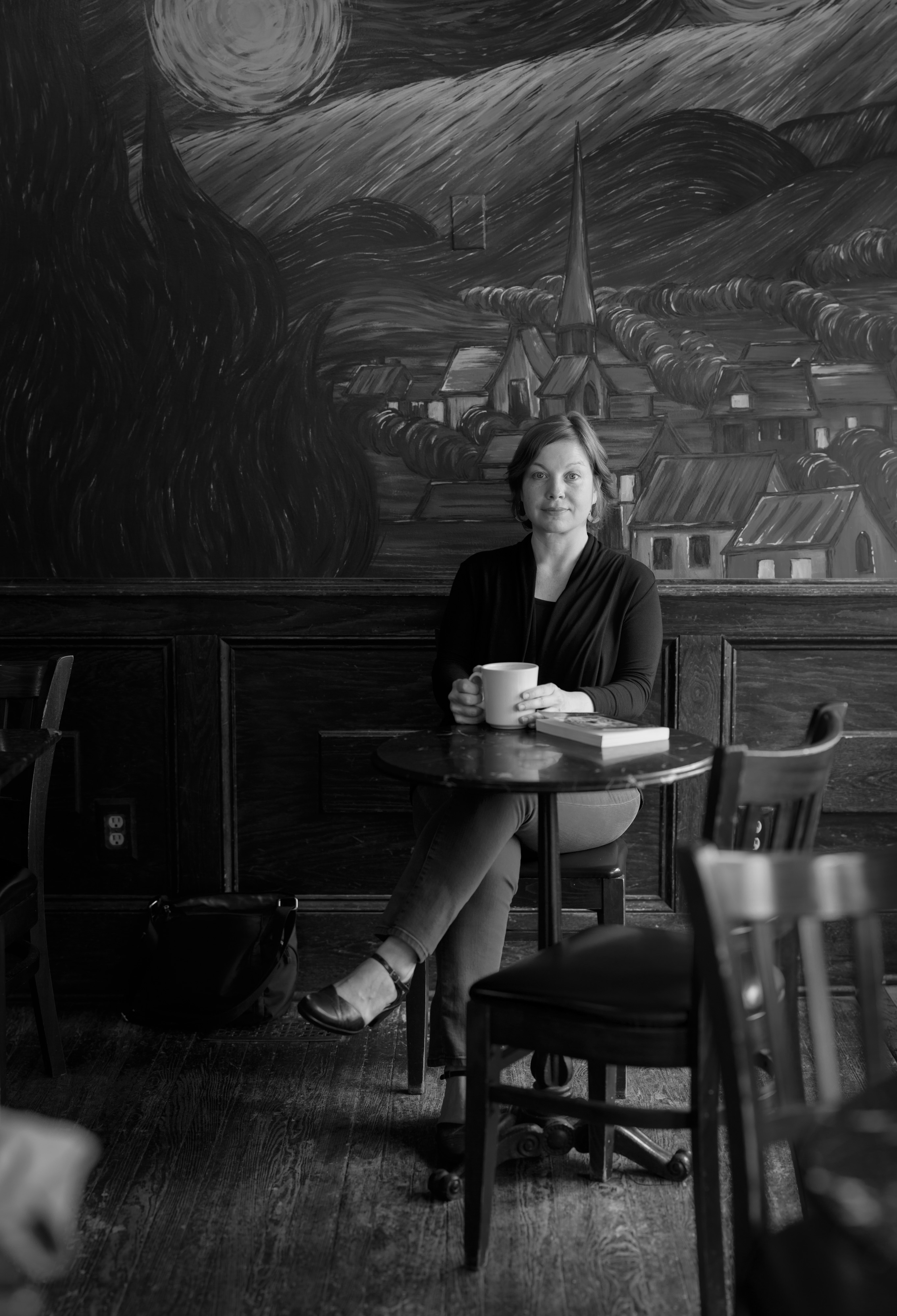
Sonja Livingston, author of The Virgin of Prince Street: Expeditions into Devotion Photo credit: Gregory Gerard
What does the term “Rust Belt” conjure for you?
Rust itself requires steel, water, and neglect–three things gritty cities across the post-industrial landscape of America know well. With the decline of industry and population in Rust Belt cities like my native Cleveland and my mother’s native Buffalo, many of the people there have seen their Catholic churches shuttered. With the churches goes the sacred art–statues and other devotional items. Some are lost, and some (almost miraculously) are found again.
In Sonja Livingston latest book, The Virgin of Prince Street: Expeditions into Devotion, the award-winning writer goes on a quest to find a missing blue-cloaked statue of the Virgin Mary from her childhood church in Rochester, New York. Her unexpected return to her home parish offers her “an occasion to travel through space and time to explore the changes in the larger Church and in her own life.”
I adored this book for its lyrical and honest portrayal of a journey of the spirit. It’s a journey relatable to spiritual seekers of all kinds–as rooted in the gritty earth as it is to the sacred. And I loved my conversation about it with Sonja and hope you do, too.
***
Sonja, in your Author’s Note that starts your book, you describe yourself as “astonished,” to find yourself back at your childhood church in Rochester. With all that has gone wrong with our childhood churches in the Rust Belt–and the institution of the Catholic Church–why was this journey the right one for you to take?
Great question. What we’re drawn to really matters! Our memories, dreams, obsessions, worries—these are arrows pointing to our material as writers and human beings. The trick is to trust those arrows—even and especially when they make no sense. I spent lots of time wondering why I kept returning to my old church and while I developed a few theories, the most important takeaway relates to faith. Not faith in the doctrinal sense, but faith in the raw sense. As in, not being sure about something but proceeding anyway.
For me, writing itself is a tremendous act of faith.
That said, there’s no getting around the Church’s problems. Their stance on issues of sexuality and gender, as well the abuse scandals and cover-ups, have sent people packing. When I left church in my 20s, I believed that Catholicism was either good or bad. Going back required that I blast those categories wide open. Most churches and religions are a mix of bad and good, ugly and beautiful, vulgar and holy. To get the good, I needed to put up with some of the bad—not all the bad, or the really bad, of course. Still, love and trouble often go hand and hand. You won’t see that on any greeting card but it seems to be true. Unfortunately, we don’t get to choose which troubles visit us—and trouble is, by its very nature, painful. Which is a very long way of saying that this journey was about church but, even more so, about growing my heart enough to contain the mix of pain and joy inherent to all relationships.
So, the narrative thread that binds your essays of devotion together is the mystery of a missing statue of the Virgin Mary from your childhood church, “Queen of a working-class parish,” you call her. Since this is the Rust Belt Girl blog, I wonder if you could tell me a little bit about where you grew up and what your home parish was like and is like now?
My family of 7 kids and a single mom moved around when I was young—from the northeast section of Rochester to rural Orleans County to an Indian Reservation near Buffalo and back again. The one thing these places had in common was poverty and as I wrote in one of the essays, my family’s one consistency was being among the poorest of families in whatever enclave of poor people we found ourselves.
Corpus Christi Church was a hub we returned to over the years—the one source of beauty of light we could count on when we lived in the city. Like many parishes in the region, it was built to accommodate immigrants who came to work on the Erie Canal, in the railroads and textile factories in the late 19th century. Later, their sons and daughters and grandchildren worked production jobs at Kodak and Xerox or as secretaries and bus drivers. By the time I was on the scene (in the late-1970s and 80s), anyone who could afford to left the neighborhood which resulted in empty pews in all those old churches their grandparents had worked so hard to build.
Today, my old church is one a handful of parishes still open in Rochester’s northeast quadrant. I’m not sure how COVID will impact us as human beings in terms of spirituality and faith, but I’m guessing it will be the end for many parishes such as my own which were barely holding on before the pandemic. But for now, the church is still a place of beauty and light in my life—and one I appreciate all the more as its survival becomes more tenuous.
“What is this attachment?” to the Prince Street Virgin, you ask yourself early in your book. The importance of statues and relics and other devotional items can seem pretty strange to non-Catholics. In your essay “The Heart is a First-Class Relic,” you visit a shrine in Montreal that contains the preserved heart of a saint. In your thinking and writing—for a reader—how do you move past the foreign, strange, and even grotesque of our religion to a place that might engender more universal searching?
These essays were, in part, an attempt to explore those aspects of tradition I thought I’d outgrown or never quite understood. Whether it’s the statues at church or the bloody images of Jesus or the use of relics, I’ve come to realize that Catholic devotional practices often underscore the belief that the world is saturated with the divine. If the physical objects and elements at church—like holy water, statues, or stained glass—can be sacred, so too can things outside the building. Which is to say that some of these seemingly strange Catholic traditions are about making the sacred visible, tangible, solid, and real in people’s lives.
I hope this is relatable to people regardless of belief or background. So many of us recognize this in nature—the way the sun lights up new leaves or the pure magic of dogwood blossoms. And no matter how we explain it, often feel buoyed by such physical manifestations of beauty/holiness/light.
The Catholic religion is very much body-centered. Over most altars we see a crucified, bloodied Christ, nailed to a cross. In your writing in this book and your memoir of childhood, Ghostbread, you are very attuned to the body: from girlhood, when your body often went hungry, through adolescence to womanhood. Your reaction to returning to church is described as a feeling—not a lofty spiritual feeling, but a feeling in your body. You write: “…my body returned to a church pew as if it were an old love.” The sense of devotion as a body-centered act—do you feel that’s a bridge even non-believers can cross to understand your essays more fully?
You’re so right, Catholicism is all about the body! The celebration of the mysterious transformation of the bread to Body is the very heart of the Catholic Mass, for instance. To worship is to kneel, to stand, to sing, to cross yourself, to genuflect and bow.
Devotion is not an exercise of the head.
To participate in the Mass, at least for me, is not about “thinking” but feeling and doing. Like “losing yourself” or “falling” in love, the body seems to take over as the mind spins and second-guesses.
Regardless of how we label ourselves religiously, we humans are spiritual creatures and I hope most people will relate to the pull of the body in matters of love or hunger and possibly use it as a way to similarly understand the longing for mystery, ritual and faith.
In your inward journey of devotion, you covered a lot of actual miles—part faithful pilgrim, part objective observer. You travel to St. Brigid’s Well in Ireland, to an Orthodox Catholic celebration in Florida, to a Death and Marigold Parade in New Mexico. Is there a destination that didn’t make it into the book you’d like to describe?
A few Christmases ago, I attended a funeral at the local Catholic Worker House. I was shadowing my parish priest to write a profile and the weekly Mass he was scheduled to celebrate became a funeral service for a man whose family otherwise couldn’t afford one. This wasn’t a “big” destination—it was only a few miles from my house, in fact. But sitting there listening to the gospel choir while looking at a framed photograph of Dorothy Day and this man in his casket and meeting someone from my old neighborhood—all during the height of the holiday season—caused me to think about poverty and gifts in a new way.
***
Please check back for Part II of my interview with Sonja Livingston–for more from this book of hers, for her take on teaching students of writing to “notice what’s not being talked about,” and for what Sonja’s writing and reading, right now.
For more about Sonja Livingston and her latest book, The Virgin of Prince Street: Expeditions into Devotion, follow the links. Sonja’s first book, Ghostbread, won an AWP Book Prize for Nonfiction and has been adopted for classroom use around the nation. Sonja’s two other essay collections, Ladies Night at the Dreamland and Queen of the Fall, combine history, memory and imagination to illuminate the lives of girls and women. Her writing has been honored with many awards and her essays appear in outlets such as Salon, LitHub, The Kenyon Review, America, Sojourners and are anthologized in many textbooks on creative writing. Sonja is a popular speaker and is currently an associate professor of English at Virginia Commonwealth University in Richmond and teaches in the Postgraduate Program at Vermont College of Fine Arts.









 Rust Belt Girl