Ann Patchett’s Tom Lake, and playing God in our life stories:

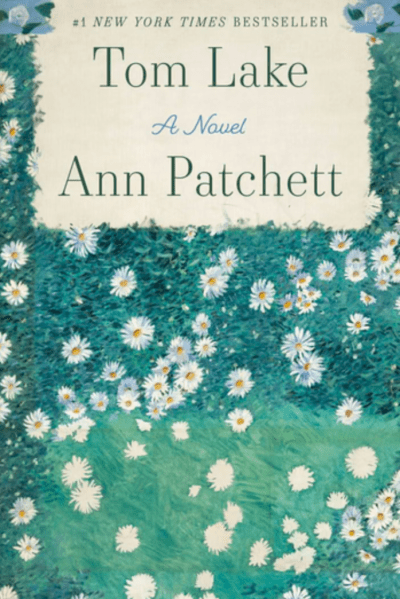
Image of cover of Ann Patchett's novel Tom Lake

I am a writer who loves story—and homework. I’m sure I’m not alone there. So, before I sat down to read—or more specifically listen to Meryl Streep read—Ann Patchett’s most recent novel, Tom Lake, I watched Thornton Wilder’s classic play Our Town, which features quite a bit in Patchett’s story. I caught the excellent PBS “Great Performances” production from the 1980s featuring Spaulding Gray as the narrating stage manager, a young Penelope Ann Miller as Emily Webb, and Eric Stolz (swoon) as George Gibbs, her love interest.

Tom Lake, then, is a story about a story about telling stories—or, the act of dramatic portrayal. Lights, camera, characters. Confused yet?

Okay, the front story, or more immediate narrative of Tom Lake, follows 50-something Lara Nelson, a wife and mother living on a Northern Michigan cherry farm (another dramatic subtext) as she tells her three grown daughters, home during the 2020 pandemic, about her long-ago love affair with famous actor Peter Duke (think: a 1980s James Dean; I’m picturing 90210-era Luke Perry). 

Note that in this novel there is not a whole lot of Rust Belt significance to hang our hats on here at Rust Belt Girl. This setting is not Rust Belt Michigan, but the Michigan of the Upper Midwest’s Fruit Belt. But, hey, we contain—and read—multitudes, right? And, really, Patchett rarely disappoints.

Told as a dual narrative, Tom Lake’s backstory follows the love affair between then-young actors, Lara and Peter, at a summer stock theatre in Michigan where they perform both Our Town and Sam Shepard’s one-act Fool for Love, which I need to watch next. (A girl can only do so much homework.) Quick distillation, Our Town is a gentle (even genteel in that puritanical New England way) portrayal of young love; Fool for Love explores romantic love’s dark and destructive side.
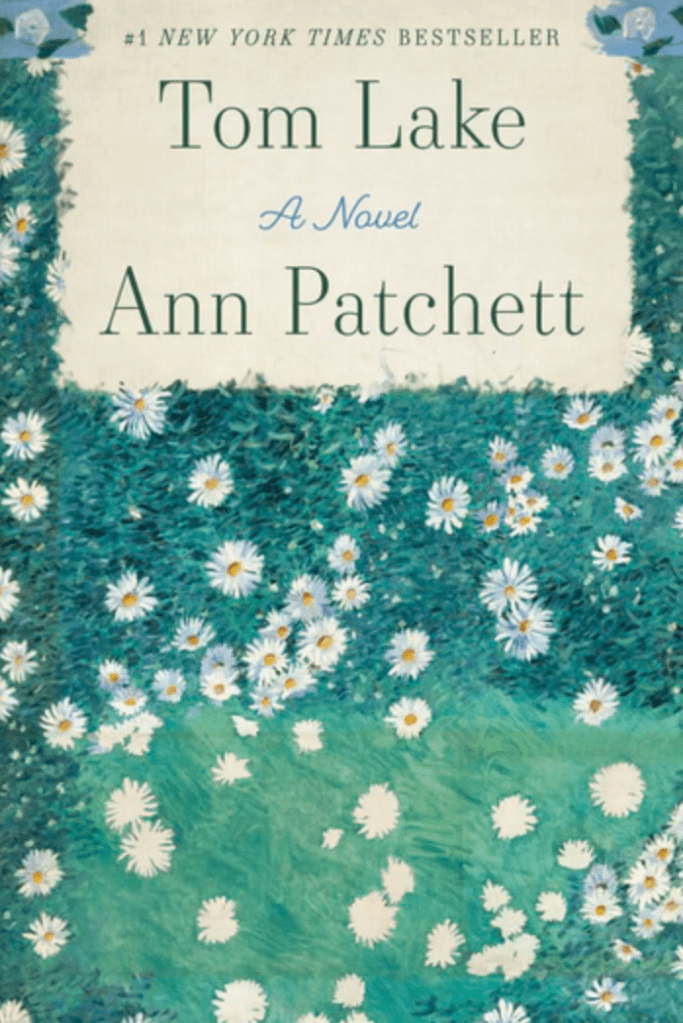
Image: Harper Collins website

So, Patchett’s novel Tom Lake is a story about the light and dark of love. But it’s also—and this might be even more interesting and applicable to us writers—a story about storytelling. Who tells the story, when, how, why, and about whom and to whom. What’s included in the storytelling and, maybe even more importantly, what’s left out?

A dual narrative novel is difficult to pull off; I know because I’ve tried this twice. Invariably, a reader will like one narrative more than the other and grow impatient when their favorite narrative is offstage. For me, Tom Lake’s 1980s narrative, its backstory, is more compelling (because much more is happening) than the 2020 narrative, which is mostly telling, with less forward-moving action (think: literal cherry picking). Which left the modern timeline feeling more like a frame or bookends for the real story—a way to go back in time to the main action and a way to come out of it again. 

I won’t digress too long on why writers like Ann Patchett feel the need for modern-day frames for historical stories. (Yes, a novel set in the 1980s is considered a historical novel.) My guess is it’s because historical novels today are often relegated to the “genre” genre, as in not the literary fiction shelf. Okay, digression over.

My favorite (oft quoted) line from Our Town, which feels very instrumental to this discussion on storytelling (and okay there’s a little spoiler here): Toward the end of the play, the dead character Emily, who returns to her life for just one day, asks the stage manager if any living person ever realizes “life as they live it,” and he says no, but then adds an exception. “The saints and poets maybe—they do some.” 

There’s a lot of smart stuff happening in this novel of Patchett’s when it comes to the all-important telling of life’s story—our human way of re-living what we can’t grasp with our little human minds in the moment. We can’t all be—though maybe we can all aspire to be—saints and poets.

Patchett’s main character, Lara, who is narrating her story of young love, to her grown daughters, is basically the stage manager of her own story, choosing how and what to tell as she goes. At one point Lara equates the stage manager in Our Town with God, which brings up interesting ideas about faith (Patchett was raised Catholic and it often shows in her writing) as well as destiny/Providence in our lives, and agency in how we portray our life stories.

What about the part of our story we leave untold, for our hearts, alone? I thought about this a lot as I read Patchett’s novel. For the main character, Lara, it was a dark part, and (dare I say) foolish aspect of young romantic love she shields from her grown daughters. In not telling her whole story, the light and the dark, is she playing God? Are we all?

In my writerly opinion, the darkness in her story Lara keeps to herself isn’t earned by the character, un unusual flaw in character development on Patchett’s part. (Also very important to know when to wrap up a narrative.) But it is a stumble far outweighed by all the really fine storytelling she does in this novel. If this criticism feels vague, it’s because I don’t want to spoil the reveal. (Read it and tell me what you think!)

If there’s one author I’ve followed closely for some time, it’s Patchett. Her annotated version of Bel Canto—my favorite novel of hers—makes a great gift for the literary fiction (or opera) lover. Of her more recent novels, her 2019 release, The Dutch House, felt like a near perfect novel to me: quiet, to be sure, with none of the Le Carre-like action of Bel Canto, but an incredibly immersive read with characters who felt like my own brother and sister by the end of the book. Family ties Patchett writes about brilliantly, if she’s a little less adept at depicting romantic love and specifically sex.

Saints? I might know a few in the making. Poets? I’m honored to know a good handful. But for the rest of us, Patchett’s got me thinking about how lucky we writers are to get to craft our stories. How lucky we readers are to watch other writers and poets tell their stories just as they wish. We receive such instrumental gifts this way!

Have you read this novel? Have you seen the plays that informed this novel? What elements of craft and storytelling did they bring up for you?

And…what was your favorite bookish gift you gave or received so far this holiday season?

Check out my categories above for more guest posts, interviews, book reviews, literary musings, and writing advice we can all use. Never miss a post when you follow Rust Belt Girl. Thanks! ~Rebecca

Enter your email address to subscribe to this blog and receive notifications of new posts by email.


NaNo progress: or, the method writer’s lament

NaNo progress–see how I did that?

OK, let’s call it NaNo Lite, this journey I’m on.

What’s NaNo? NaNoWriMo, if we’re being formal, is a kooky little challenge, whereby one writes a 50,000-word novel draft in the month of November.

Yeah. That.

You see, this past weekend was the first weekend (before monsoon season returned in force) that felt like fall. Crisp, sunny, sweater weather. I tossed a baseball with my kid, twice, and it was like a Hallmark card. Forgive me if I couldn’t hole myself up 24/7 in my office to bang away on my keyboard, but I’ve written before about the importance of living to writing that is not-so-sucky. Yep, dreams.

20181104_152707
My wonderful neighbor’s Little Free Library and bench provide a good spot to stop and smell the book glue.

Another excuse for my lackluster NaNo progress: this manuscript I’m beginning is historical (in parts), which requires research, which is SLOW, but not un-fun. I’ve mentioned before that I’ve been researching Finland–it’s Winter War (which began in 1939) and its culture (then and now), which I believe would have slapped me hard had I wasted my glorious fall weekend indoors–NaNo or not.

There are method actors, right? I think I need to be the next method writer. (Just imagine how clever I just thought I was coming up with that idea; until I googled and found this, and this, and this.) Truly, there is nothing new under the sun.

However, speaking of sun, why not, in addition to getting inside my characters’ heads, get outside in an environment like that experienced by my characters. In short, this novel may require me to brave some colder temps this fall–maybe even some cold-weather swimming (up to my knees, perhaps!). In doing so, I hope to find my sisu (a Finnish term for stick-to-it-iveness, fortitude, guts) and maybe also find this novel.

20181104_153002.jpg
My ride to my outdoors writing spot. I know, right? Notebooks and special pen (first draft is always longhand!) in the basket.

You want numbers? NaNo is a numbers game. Well, I admit I started with several thousand words prior to Nov. 1 and have hit 7,115. A good chunk of it I wrote outside, Sunday, using up that extra hour given to us by the Fall Back gods here in the U.S.

I’ve also finished reading one book on Finnish culture, and the pertinent parts of another on the Winter War against the Soviets (which is all kinds of David vs. Goliath awe-inspiring). As I research, I keep adding books to my TBR: a book on Finnish fairy tales; a translation of the Finnish epic poem, the Kalevala; a book about the Lottas, the female version of the Finnish Defense Corps. (Special shout-out to my Finnish blog followers (of which I believe I have two!))

And thanks to all for sticking with me on this blogging journey and NaNo detour. Here’s hoping the destination is sunny.

20181104_133529
My view from my outdoor writing spot. I’m not complaining; well, my butt got a little cold sitting at a picnic table, but still…

Are you doing NaNo? How’s it going? What’s your word count? How many research books have you added to your TBR since Nov. 1?


Love in Cleveland: a story-review of CROOKED RIVER BURNING

81zSeikDc3L

There’s something special about a love story set in the time and place one’s parents fell in love.

Paris? London? Niagara Falls? Nope. I’m talking about Cleveland, Ohio.

The real love story (that eventually begat me and my siblings) started with a blind date. Here goes: the young man who would become my dad met the young woman who would become my mom at her apartment door. Her first words to him: “You’re not as bald as they said you were.” Ah, romance. Long story short, she liked his car, a racing-green Austin Healey convertible, and him too, no doubt.

Crooked River Burning*, a novel by Mark Winegardner, explores parallel love stories—between a boy from Cleveland’s West Side and a girl from Cleveland’s East Side (read: upstart vs. old money); and between the people of Cleveland and their city itself.

From the book jacket:

In 1948 Cleveland was America’s sixth biggest city; by 1969 [the year my parents married] it was the twelfth…In the summer of 1948, fourteen-year-old David Zielinsky can look forward to a job at the docks. Anne O’Connor, at twelve, is the apple of her political boss father’s eye. David and Anne will meet—and fall in love—four years later, and for the next twenty years this pair will be reluctantly star-crossed lovers in a troubled and turbulent country.

The city of Cleveland is a microcosm of this changing country. The author gives the reader a window into organized crime in the 40s, when we meet real-life Clevelander Eliot Ness; into the 50s rock and roll scene starring disc jockey Alan Freed; and into the race riots of the 60s, when we meet Carl Stokes, the first black mayor of a major U.S. city.

For sports fans (Winegardner is also the author of The Veracruz Blues about baseball), there are stories plenty about the Indians and the Browns (with Art Modell cast as the Machiavellian villain he was, IMO.) Masterfully blending fact (replete with entertaining footnotes) and fiction, this novel is comparable to the works of E.L. Doctorow. Where Doctorow explored New York, Winegardner explores Cleveland.

Does Winegardner know Cleveland! One of my favorite Cleveland bits—and never more appropriate than now, as we endure “wet-winter” into April:

“In Cleveland there is no spring. In Cleveland there is winter, then a wetter-meaner sort of winter…Then one day winter/wet-winter ends and, bingo-bango, it’s summertime.”

But why talk weather when we can talk love? Wingardner on love:

“A person can be in love with the idea of love. A person can fall in love with the idea of another person. Less commonly, a person can fall in love with another person.

In fact, a person always falls in love with the idea of another person, not the person. Falling in love with the actual person takes time and too much honesty…

Some people luck out. The thing they’ve been calling love turns out to be just that. Such people exist. Film at eleven.”

Oh, you were looking for love between David and Anne? I’m not spoiling much when I tell you that the most romantic setting in the book, a snowy New York at Christmastime in a posh hotel suite, and Anne is down with the flu. On the other extreme, the setting of the Cuyahoga (“crooked”) River on fire finds our protagonists in, well, love as real as it gets.

Is the book perfect? Not quite. For me, some of the real-life Cleveland profile sections ran a little long: among them, Mayor Carl Stokes, Cleveland newspaper editor Louie Seltzer, maybe-murderer Dr. Sam Sheppard, pioneer news broadcaster Dorothy Fuldheim. Still, this book will find a place on my bookshelves, alongside Ian McEwan’s The Innocent, perhaps, for its mastery of a real time and place in history overlaid with a timeless love story and for a lyrical yet playful use of language.

But back to our fictional lovers…through their twenties and thirties, David and Anne attempt to make their childhood professional dreams (Cleveland mayor, and war correspondent, respectively) come true. But, like thwarted love stories talk of ships passing, most of us don’t become our childhood heroes.

If the real Cleveland love story—starring my dad and my mom—could have met the imagined one starring David and Anne, they would have come together in the late 60s. Both couples were in love as the real city burned its land and its water. The Cuyahoga River burned (helping to create the Clean Water Act); and the Hough Riots, among the first of the 1960s race riots, turned Clevelanders against their neighbors and even against themselves.

Like many Clevelanders who could, my parents left the city for a house in the country, where they would raise a few chickens and ducks, a goat named Esmeralda, and three human kids. In trading one setting for another, I’m sure they’d say they gained more than they lost. I wonder about those who didn’t leave.

Did Winegardner intend for this dual love story to be a cautionary tale? In 2018, one could read the book that way—especially through the lens of race. One of the most chilling parts of the book comes from Anne’s perspective. It’s a month after the riots, and Anne is questioning everything in her life and in her city:

“Human beings don’t destroy their own homes, do they? In Anne’s experience, they do…Rome burns. Has burned, is burning, always will be burning. Look harder. Smell it. It’s not Rome we’re talking about, sport. (Who knows but on the lower frequencies, Cleveland burns for you?) Yet you sit there. We sit there. Don’t move.”

My rating: 4.5 stars

What’s the best book you’ve read about your hometown? If you were going to write your own love story, where would you set it?

*Published in 2001 by Mariner Books (576 pages). Yep, I’m late to the party.

Like this review? Check out my “reviews” category above for more.

Thanks! ~ Rebecca