Literary citizenship alive and well, Twit*er as ‘dead’ emoticon, and bonus Europe pics for playing along

We’re no longer tweeting, we’re xeeting—writer Amber Sparks might have coined that–and the literary landscape has changed, yet again. What used to provide a good social media home for the #writingcommunity now feels like a hut, maybe a hovel. The best writerly take I heard was from writer Anna Gazmarian (I think), who said the X logo that replaced the cute blue bird reminded her of some boutique hotel she couldn’t afford. I look at the new logo and can see nothing but the emoticon for “dead”: Xs for eyes. But so long as there are writers connecting, there will be a writing community. Really, the literary landscape is always changing, and one certainly can’t rely on a social media site for real connections (except for maybe this one).

I talk a lot about literary citizenship but don’t often talk about what it looks like in practice. It definitely has a lot to do with reading and reviewing the work of other writers, but that’s just the beginning. To be clear, it has little to do with getting an MFA, for that paper in a frame on my office wall has played no part in most of the connections I’ve made in the writing community. So, a few on-the-ground examples:

Not long ago, I braved the open-mic at one of my favorite literary conferences and read a prose poem I was working on, called “Jesus, My Son’s Buckteeth.” (Clearly I’m staking out the fertile publishing ground of: Is she religious or just ignorantly blasphemous? Let’s just keep them guessing.) The poem needed a little work but it was getting somewhere interesting, capturing a complicated mother-love characterized now by running the kids to ortho appointments and no longer by rocking them to sleep. After the open-mic, a writer friend who is also an editor of a wonderful poetry journal said I might consider submitting it. I re-worked the poem, with the help of my trusted writing group, sent it off, and crossed my fingers. It was accepted–but this isn’t where the story of literary citizenship stops. I made sure to attend the online issue launch, and as I scanned all the names and faces in Zoom boxes, I recognized the name of one of my undergraduate writing teachers, who is also a poet. I used the chat function to say hi, and she remembered me, 20+ years on!

Sometimes it’s about saying hi to someone who may or may not remember you. Sometimes it’s saying yes to the the next generation of writers when you might rather be making Christmas cookies. OK, I’ll back up. A writer friend of a writer friend asked if I’d judge the 2022 AWP Intro Journals Project awards for creative nonfiction. When I could have been making cookies over my winter break, I was reading essays from MFA students, more than 60 of them: reading, re-reading, and picking my winners from so many admirable essays. But that wasn’t the end of the connecting. Long after the winning essays were published in university-run literary journals, one of the writers reached out. She was in the throes of preparing to turn in her thesis before graduation, but she wanted to take a moment to thank me for helping her feel like a writer with that award. I remembered her essay: it was excellent and showcased her journalism chops. I fact, she’d had a career before retiring and pursuing an MFA in creative writing–a time where you’re always a student no matter your age or experience. I told her I’d love to see an essay about just that, and I hope I do.

So, sometimes literary citizenship is leaving the door open for more, is encouraging personal history and story to be shared. Sometimes it’s just saying: you’re writing, I’m reading, and I’m so happy to be sharing this connection. Love a book? Tell the author.

And then there are so many more examples: the blogging friendships that started right here and have turned into real-life and writing-life friendships and critique groups and beta reading relationships. 

Like any deep relationship, cultivating literary relationships does take time. Being a good literary citizen requires that you know the writing world and its players. What time I once used to doom scroll on the bird site I hope to devote to this blog. In a few days, my boys and I leave for our summer break in Northern Ohio, and I have a stack of Rust Belt lit to bring with me. I hope to get back to you here with a couple reviews and an author interview this fall, so stay tuned. 

What are you reading and writing this week, this weekend? Want more stories from me, or author interviews, book reviews, guest posts, more? Follow me here:

Enter your email address to subscribe to this blog and receive notifications of new posts by email.

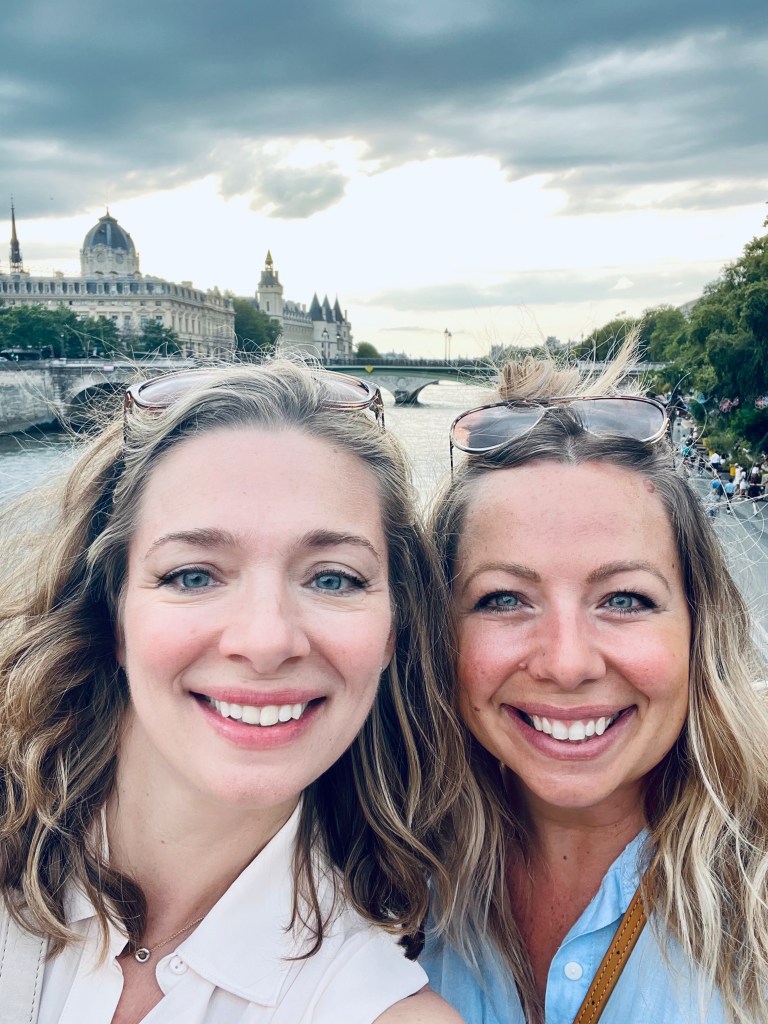
If you follow me at FB or IG (@MoonRuark), you’ve been inundated with photos from my European vacation in July. The most Rust Belt-ish place: Vigo, Spain–industrial, historical, and wonderful. A few pics for those who haven’t had enough (in order: Paris’ Eiffel Tower (of course), a pretty shop window, the D’Orsay Museum, and us sisters by the Seine; Barcelona hills and palm trees and basilica; Vigo’s cathedral; and a view of the Spanish countryside from Valenca, Portugal:

Top 5 Things to Take from a Literary Conference (not just swag)

Photo by Pixabay on Pexels.com

Saturday, I attended Conversations and Connections, a one-day writer’s conference organized by literary magazine, Barrelhouse, chock full of practical lessons from published literary authors, editors, and publishers. Note: I said practical. (Leave your insta-agent-three-book-deal fantasies at the door.) Really, it was like transporting myself back to my MFA program for the day–complete with the insecurities and boxed wine! All right in my world.

  1. Advice: The first of three panels/workshops I attended featured a memoirist, a novelist, a nonfiction writer, and a poet who all engage with the past–and endure much historical research–for their writing. Some of the most helpful advice suggested writers utilize first-person accounts to better instruct our characters in how to engage with historical fact. There was also an interesting discussion exposing the differences between creative nonfiction and fiction when making meaning of historical events. In fiction, the research must become a part of the narrative arc; in nonfiction, the journey to understand can become another part of the story, a knew way of knowing.
  2. Beginnings: For my second session of the day, I attended a hands-on craft workshop on developing short story openings that grab a reader’s attention. Flash Fiction author, instructor, and editor Tommy Dean led us workshoppers using four prompts for four different story openings. All the prompts started with character/setting/conflict, then added another element to complicate the story start–like subverting the setting or flipping a normal, everyday activity. I am not a prompt person, relying instead on the ideas that fly at me and then stick–usually long about 4am–but even I came away with a few solid story starts, a real win.
  3. Connections: MFA programs are a wealth of information on the art and craft of writing. But then what? How do we get our work out there, and just where is there? Enter the literary journal editors with hands-on experience in the world of literary publishing for a 10-minute editing session, a la speed dating. I took a flash fiction piece of mine; however, I knew going in, I wanted to use that precious time to ask advice of the editor on the other side of the desk. My question was about chapbooks (short collections of poetry or stories). But the point is I used my 10 minutes to connect with someone I could learn from. Not to leave out my fellow conference attendees, time waiting in line for the editor session was a good chance to meet local writers (shout-out to Sonora!).
  4. Inspiration: With the growing popularity of spoken-word and oral storytelling heard on programs like The Moth Radio Hour, today’s creative writing readings are not the cure for insomnia they once were. The featured author readings at C&C did not disappoint. Going in, I knew of the work of only one of the authors, essayist Randon Billings Noble, who I connected with in an online critique group years ago (the writing world being both huge and small). I was delighted to be introduced to the poetry of Kyle Dargan and the fiction of Ivelisse Rodriguez and of Gabino Iglesias, who read their work with such passion–the highlight of my day and very inspiring.
  5. Books…and more books: Want to make an author (and their small press publisher) happy and earn your good literary citizen card? Buy the book. I came away with autographed copies of Billings Noble’s essay collection, Be With Me Always; Iglesias’ horror/crime novel Coyote Songs; Matthew Ferrance’s memoir, Appalachia North; and the poetry collection, Haint, from Cleveland native (yes, we are all over) Teri Ellen Cross Davis, who sat on the panel for the third of my three sessions, focused on publishing and offering great advice on connecting with the local literary community. (These last two authors, I plan to talk about more here on the blog!)

For writers across genres, and for bloggers alike–there’s a conference made for you. This one was a good fit for me, and I’ll be back next year.

Do you conference? What are your top tips? Have you read any of these books? How was your weekend? Comment below–I always love to hear from you… ~Rebecca

“Out there”…toward some semblance of literary citizenship

Photo by Anthony on Pexels.com

Out where? Well, there, and there, and there.

I’m talking about getting the creative writing out there, into the great wide open–beyond the blog, and into news outlets, magazines, and journals–and so are a lot of other bloggers. So, I thought I might start a convo here, where we can collect some pros, cons, and lessons learned.

Sound good? I’ll start with a disclaimer. I am no expert. I have an MFA in Creative Writing under my belt (along with a lot of Xmas cheese); yet we rarely discussed in short fiction and novel-writing courses what to do with our pieces after we’d written them–past the Sisyphean process of write-edit-trash-revisit-rewrite-edit, that is. Really, a piece of writing may never be “finished,” but eventually, it’s good to let it go. How do you know if your writing might be ready to submit?

Read more