Lit Fest Roundup 2025: who I met, what I wrote, how much pizza I consumed


This October I attended my eighth annual Fall Literary Festival hosted by Lit Youngstown. It was the Ohio literary organization’s ninth—and final—fall lit fest (at least for now). I could just be weepy about it (I’m weepy about much these days, tbh), but I’m too grateful to stay weepy. Since it’s a weekend to do grateful, let’s get into it…

Don’t worry, Lit Youngstown itself—with all of its amazing programming–is going strong at 10 years old. But before I get into my 2025 lit fest roundup I want to take a moment to share a few highlights from lit fests gone by (forgive my literary nostalgia), in no particular order:

  • Novelist Rachel Swearingen telling us craft session participants to, “Write towards change.” And “Stop thinking about characters and start thinking about relationships.” (Fiction writing changemaker right there!)
  • Me, getting to tell my story of my mom’s protesting of a nuclear power plant near my hometown when I was a kid (I wrote about it here) and detailing how that story turned into an integral part of my eco-novel (published someday, world!)
  • Exploring ekphrastic writing at the Butler Institute of American Art (great museum road-trip idea for you out of towners!) and exploring Youngstown writ large (getting to stay with friends and enjoying the local cuisine (there will never be enough pickle pizza, noggin-sized meatballs, and pierogis!))
  • Getting to be a student of Sandra Beasley, Ross Gay, Lawrence Coates, and so many other teacher-writers and getting to tell them over charcuterie and a glass of wine: “you wrote my favorite poem, essay, novella, thank you…”
  • Meeting writer friends (like the talented Melissa Fraterrigo) in person after years of reading her work (her novel Glory Days inspired a lot of what I’ve been trying to highlight at this blog these last nine years or so—stay tuned for a review of her memoir in essays, pictured). And meeting other friends year after year and weaving our stories—and lives—together.
  • The highest highlight? You. Becoming a member of the Lit Youngstown community through the fall lit fest has been incredibly rewarding for my literary life—and my life-life. Thank you, friends.
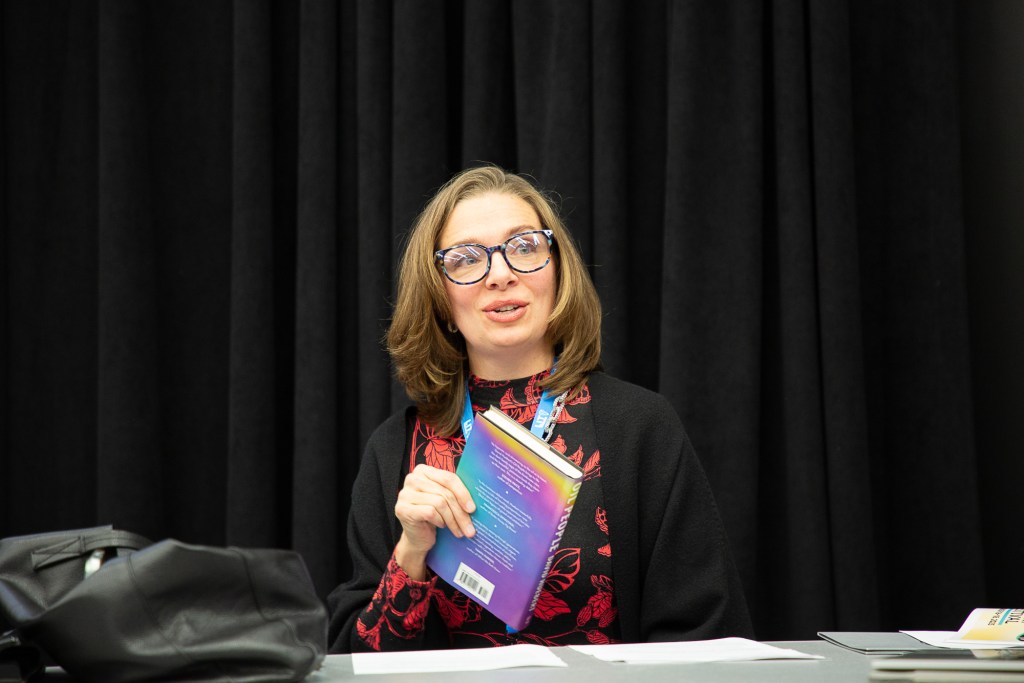
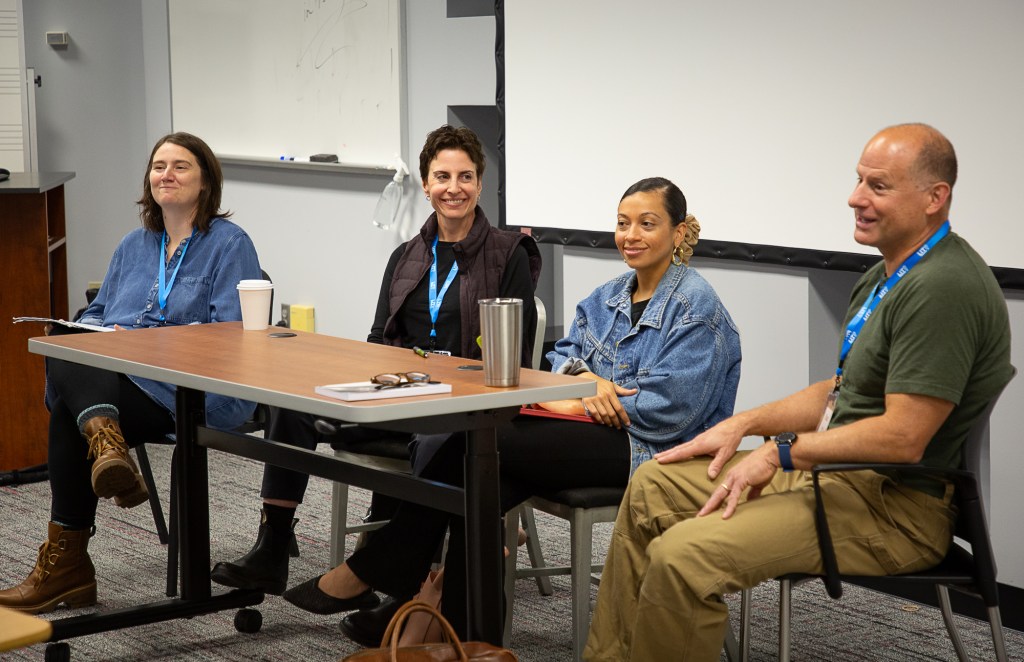
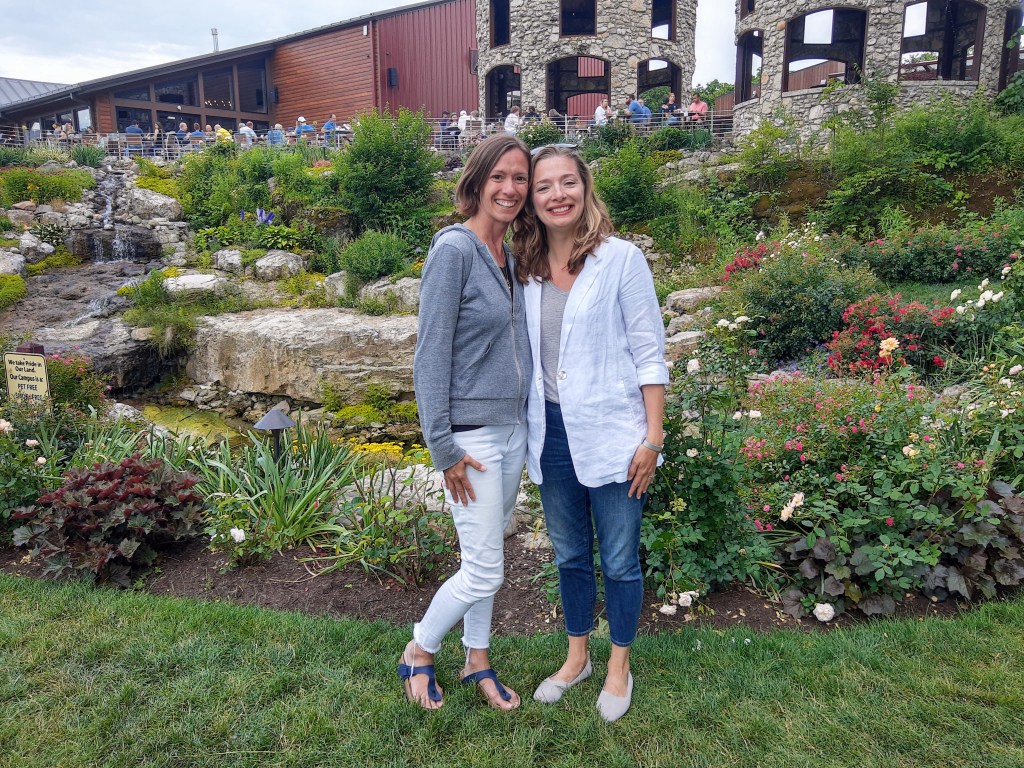
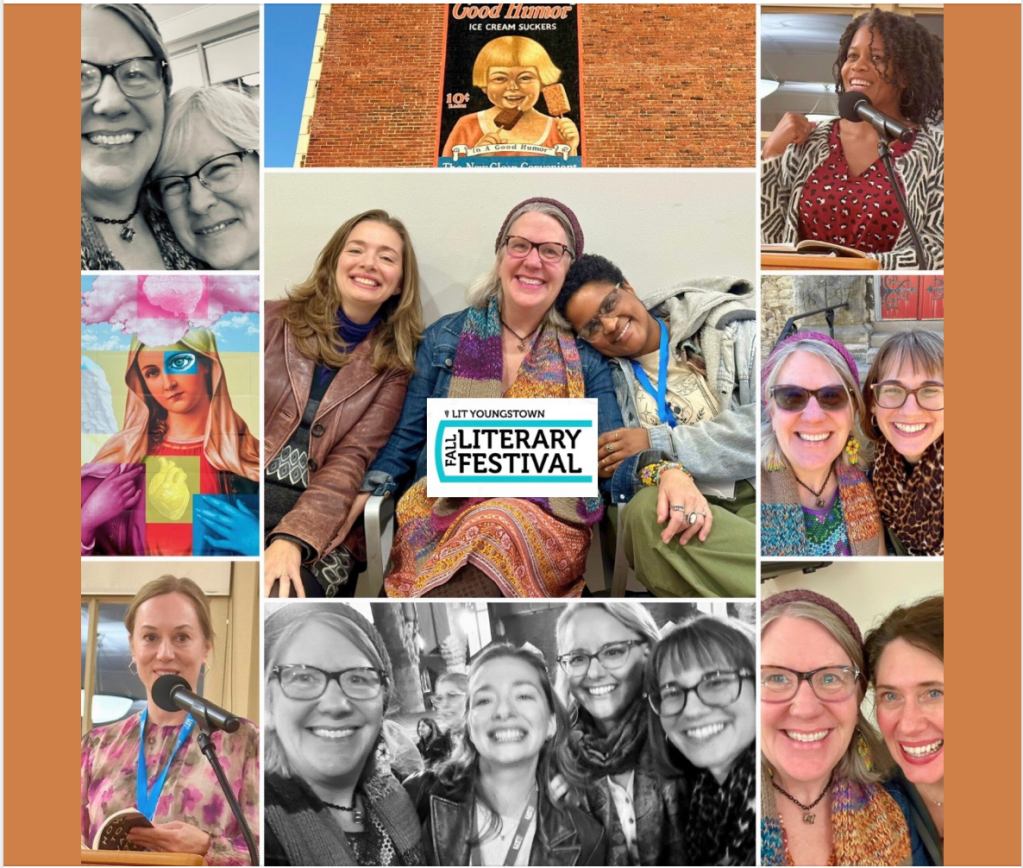
Now, 2025’s list fest was one for the books. (Peruse a few pics above and below.) And if you thought the environmental theme was going to mean a slew of nature poems…well, yes, and… Yes, and fascinating eco-fiction and challenging environmental memoir and poetry about nature redefined—from a place that was once an indigo plantation to the night sky over the Grand Canyon to trails cut by troubled teens into the Pacific Northwest woods—and so much more that “shapes our experience and identity, and represents our rootedness in earth.” Whew! I encourage you to read the impressive bios of the five 2025 featured presenters

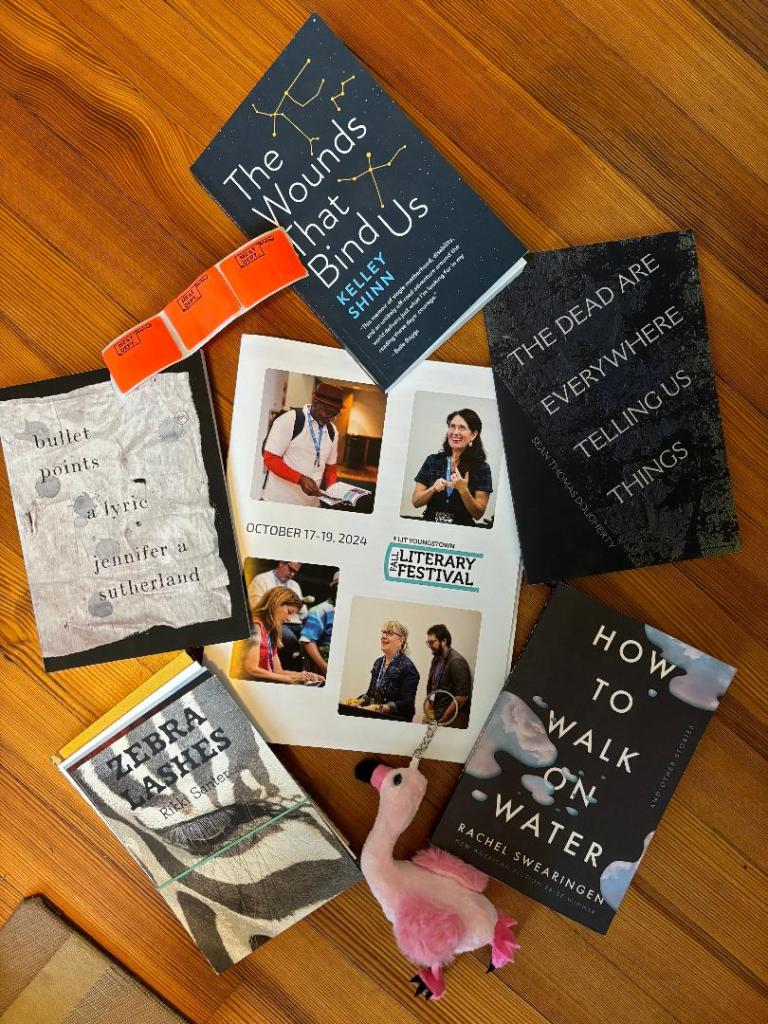
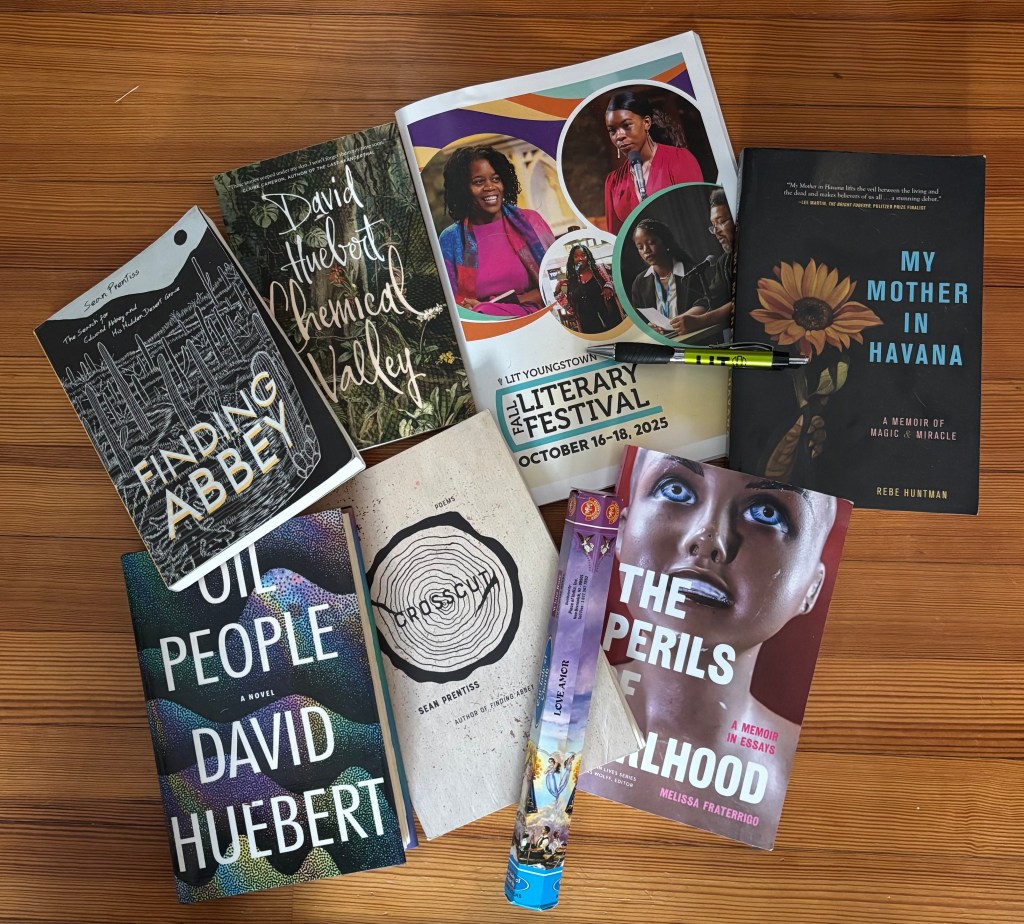
My preparation for this lit fest happily began months in advance of the event. (Once a student, always a student.) For my conversation with fiction writer David Huebert and memoirist and poet Sean Prentiss I read several of their books—she gestures to collage artfully displayed on her office floor—representing an array of what we lump under the term “environmental writing.” Look for a follow-up post with a good chunk of our discussion—fascinating and fun!

Other personal highlights from this year’s lit fest. (Know that this is just a fraction of the offerings and I, once again, wished I could have cloned myself, so I could make every single session.):

Day 1:

  • Narrative Medicine [definition: healthcare practiced with narrative competence]: A Generative Workshop, facilitated by family nurse practitioner and poet Dana Reeher. Imagine me taking furious notes for the anthology project I’m co-editing: Body of Work, essays at the intersection of dance and health. For a little workshop exercise, Dana asked us participants to respond to a writing prompt, “an expansive invitation to open the mind,” so I thought I’d write a very short piece about my own dancing and its impact on my physical and mental health outlook:
Maybe the mistake was I listened too well, that I pointed my feet too hard, that I really could feel that string coming out of the top of my head lifting me up to the studio ceiling. Maybe I postured too much, wanted too much. Maybe I turned out until I was turned in. Maybe all that looking in the mirror made me someone else. I can still spot a dancer, or an anorexic, from fifty paces.

My dancer friends here will likely recognize a lot of this, but especially the posture-reminder telling baby ballet dancers to imagine there’s a string coming out of the top of your head… After sharing my short piece of writing, a couple of the other workshop participants said the string image reminded them of a marionette. I’d never thought of that before, and I’ll tell you that image is still working on me!

  • The Pamela Papers: A Mostly E-pistolary Story of Academic Pandemic Pandemonium: The Musical. Based on the award-winning novel by Nancy McCabe, published by Outpost 19 in 2024, the presentation included a dramatic reading (with singing—who was expecting a musical at the lit fest? Not I. And it was such fun!).
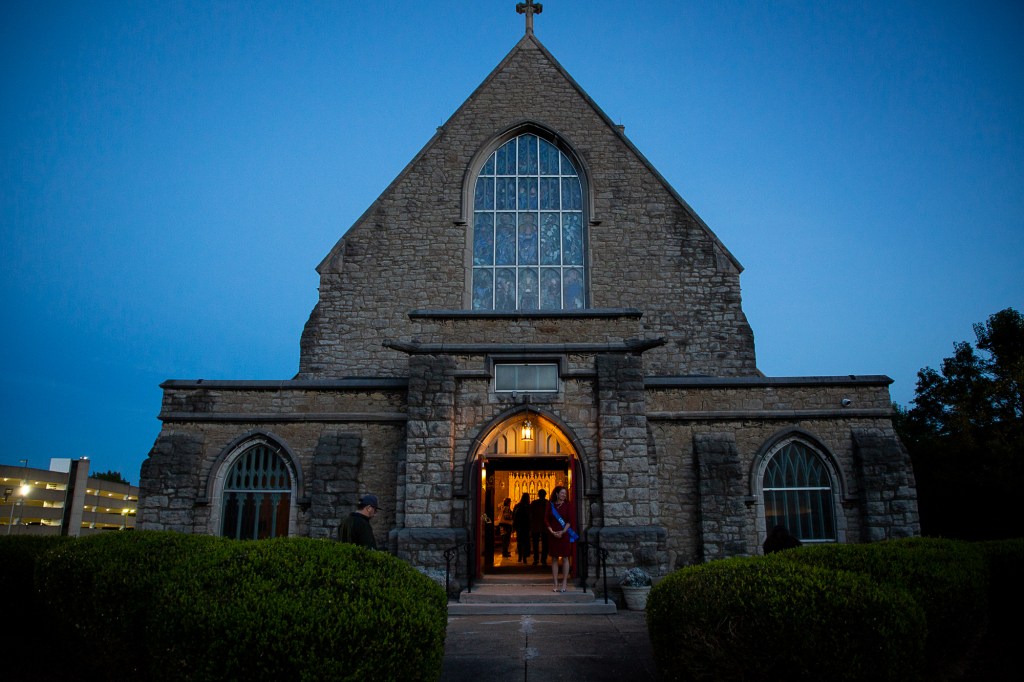
  • Readings by David Huebert and Sean Prentiss in St. John’s (gorgeous limestone and stained glass) Episcopal Church sanctuary. Your girl provided introductions to both writers—thanks for putting up with my unorthodox investigative process to make sure they were exciting, guys!

Day 2:

  • Bengal Tiger Moments: Time Perception in Creative Writing, facilitated by Sean Prentiss. In this fascinating session, we talked about speed on the page, presented in five categories from fastest to slowest: Gaps, Summary, Scene, Dilation, and Pause. Sean presented examples of these techniques from creative nonfiction and explained the brain science behind our understanding of the movement of time—irl and on the page.
  • Rooting the Self: Writing as an Act of Person, Political & Environmental Transformation & Transcendence, a multi-genre workshop with (beautiful and talented) Rebe Huntman, author of My Mother in Havana: A Memoir of Magic & Miracle: Rebe took us through various stages/ways of honoring our voice and our writing by making space for it and celebrating it, including meditation, morning pages, repetitive activity (including list-making), “the writing cave,” and writing constraints and freewrites. My favorite prompt, a list-making exercise we did in this session, produced these lists, below. (From there I spun out a short prose piece, “Reasons to Revere Your Vagus Nerve” (we’ll see where that weirdness goes!):
5 Things I Consider a Miracle
High arches
Warm pie
The vagus nerve
Sweating carafes of water
Tanned leather
5 Recurring Obsessions
Ballet hands
Song
Accents, dialects, and regionalisms
Mom, mom, mom
Delight
  • Readings by poets Lauren Camp, Todd Davis & Kourtney Morrow: poems of cityscape to countryside to the night sky over the Grand Canyon left us audience members awed.

Days After

And then, after… there’s nothing better than returning home from a literary event inspired, nurtured, and with a few new ideas for writing already on the page.

If you’re reading this on Small Business Saturday, might I suggest you also read small and lit small by supporting your local indie bookstores and your favorite literary organizations today?!

Did you attend Lit Youngstown’s Fall Literary Festival last month? Another lit fest? What was your favorite part? Have an inspiration gleaned or a piece of writing captured you’d like to share? Feel free to jot it in the comments. 

Like this post? Comment below or on my FB page. And please share with your friends and social network. 

Are you a Rust Belt writer interested in seeing if your own post, or author interview, or book review might be right for Rust Belt Girl? Hit me up through this site’s contact function.

Check out my categories above for more guest posts, interviews, book reviews, literary musings, and writing advice we can all use. Never miss a post when you follow Rust Belt Girl. Thanks! ~Rebecca

Enter your email address to subscribe to this blog and receive notifications of new posts by email.


Lit Fest ’24 Rundown

Or, the post you’ve been waiting for, maybe.

Last month, I attended Lit Youngstown‘s 8th annual Fall Literary Festival. From modest beginnings, the writing conference has grown to welcome some 200 attendees each year. Proud to be among them, I served on the planning committee for a couple years, have served as a session moderator, read my own creative work, sat on an editors’ panel, and, this year, engaged a featured writer in a conversation about her writing craft, process, and life.

I’ve met most of my writer friends through this literary festival. (You’re probably nodding your head, reading this. Such joy those in-between conversations, Elise, Susan, Jeremy!) Writers come to this conference for the genuine connections, the generative craft sessions, inspiring creative readings, and Youngstown pizza (or maybe that’s just me?). I was thrilled to walk away having experienced an abundance of all of the above again this year!

Can I entice you to make the trip, next year? Let’s hope this rundown does just that. (And, bring your friends.)

Day 1

My first day of the festival began with meeting Rachel Swearingen, Chicago-based author of the award-winning story collection How to Walk on Water. After reading through her stunning book, twice, I had a feeling Rachel would have a lot to teach fiction writers, like me, about the craft of writing–and the inspiration behind it. Her morning session, “The More the Merrier: Juggling Multiple Characters in a Single Scene” tackled one of those age-old fiction-writing conundrums: how to make the dinner party (or other large group) scene sing, rather than sink.

Main takeaway: big group scenes can invite drama and suspense (think: Shirley Jackson’s “The Lottery”) but things can go awry when the writer hasn’t anchored the scene. Especially helpful to me was Rachel’s discussion of panning out and zooming in, as if we’re creating a scene on film. Featuring compelling examples from classic and contemporary stories, Rachel illustrated how great writers make scenes active to “write toward change.” For those of us (all of us?) who sometimes struggle to create a propulsive plot, these tips promised to help us give our stories the jhuzh they need!

One thing I love about literary festivals is the opportunity for literary escape. (And not just geographically.) I make it my mission to get outside my usual genres and comfort zones. I’m not joking when I say it’s only been a few years since I learned what ekphrastic writing was. So, taking part in an ekphrastic poetry workshop is far outside my usual lane. Of course, I jumped at the chance, when I learned that award-winning poet (and dancer!) Ama Codjoe was leading a workshop titled “Doorways into Ekphrasis” held at the Butler Institute of American Art, right across the street from our festival headquarters. (Confession time: I usually play hooky for one session of a festival or conference to visit a museum or gallery or other local arts hotspot; this time, I didn’t have to.)

Crowdsourcing time: help me find the name and artist of the piece I wrote about, please! Yes, I stared at a stunning piece of transparent, aqua glass sculpture–two rectangular columns, one larger and standing, one smaller, reclined–and didn’t write down the name of the piece or artist. The three minutes we took to examine the art we chose, without jotting a note–which should be 10 minutes, says Ama–honestly felt like hours. But this works, folks.

It’s fascinating now to look back at the notes I made after my examination and see how I went from describing the artwork’s material–ruined glass, panes shattered, shards–to the artwork’s position and pose–teetering, discarded, toppled–to what the pose might suggest: he has dropped his partner, who does not shatter, small glass tower sheared. Finally, I wrote a little in lines, inspired by the art:

How many the pains of art we 
layer and nudge and shimmy?
How shiny this body, this instrument,
until we lay it down, sharded,
but not discarded, dust to dust,
sand to glass to sand.

For my last session of the day, I caught up with a couple writers I follow on social media but had yet to meet in person, so I was thrilled (and got their books I brought from home signed–yes, I’m that kind of literary nerd). The prolific and super generous Sean Thomas Dougherty and Jennifer Sutherland (her debut collection is Bullet Points: A Lyric) are poets who spend some time writing in the “slipstream,” in between literary genres. They and Sarah Carson and Cynthia Maria Hoffman read from their work and talked about what writing in between genres (is it a poem, nonfiction flash, a prose poem?) means for their work and creative outlooks. I was so rapt by the writers’ creative readings that I didn’t take many notes, but I did take this gem down from Sean Thomas: “We push against genre” so forms can (paraphrasing here) dissolve and come together again to address neurodiversity, trauma, and more.

Day 2

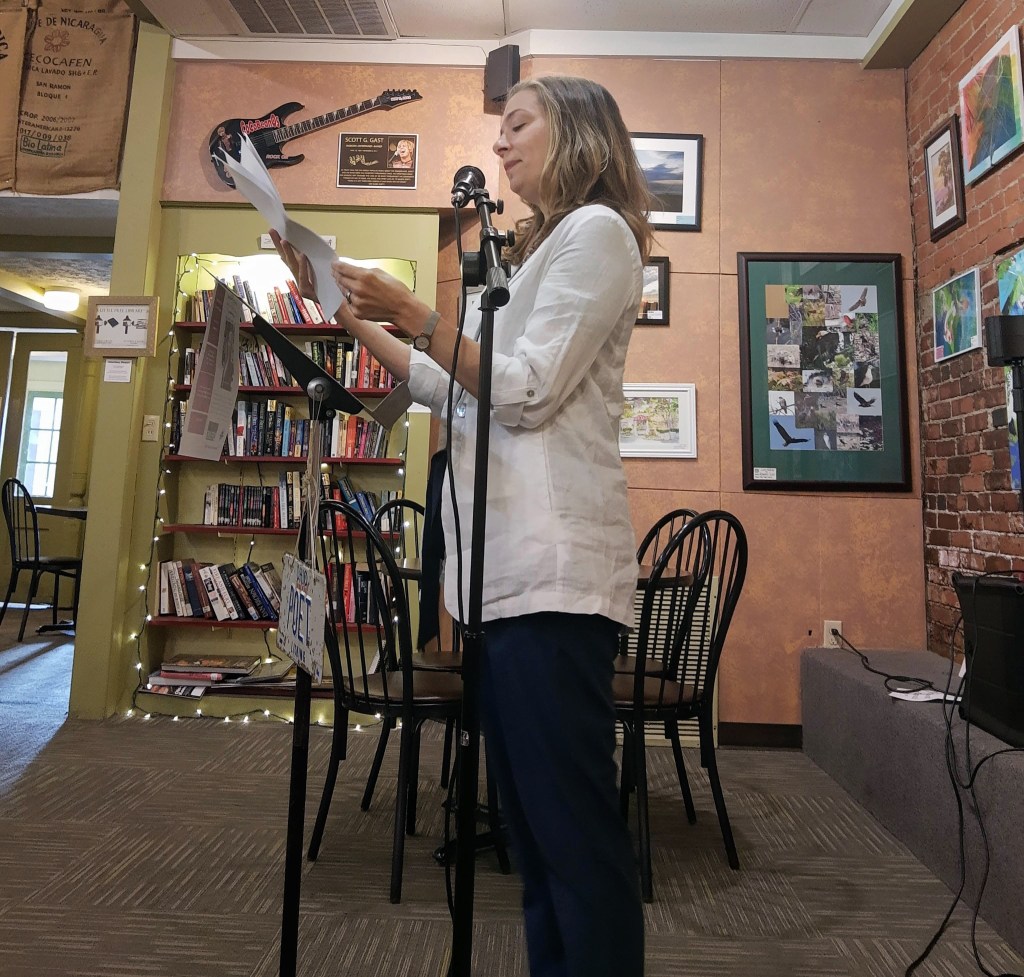
I am often reluctant to read my creative work in public. Poetry is meant to be read aloud; not so fiction. However, I thought it might be instructive to read from a blog post I wrote here at Rust Belt Girl and then read the resulting scene that appeared in a story of mine published in Great Lakes Review last year. Like public journaling, I find blogging fertile ground for planting the seeds of story. Pro tip: keep your reading short and everyone will like it.

Thank goodness I read first, because there is no way I’d want to follow memoirist Kelley Shinn or poet Rikki Santer, whose readings were nothing short of incredible. Kelley is the author of the memoir, The Wounds That Bind Us, which I bought at the bookstore directly after her reading from it (I got the last signed copy: conference win!). Rikki read from her collection, Resurrection Letter: Leonora, her Tarot, and Me, which was inspired by the surrealist painter Leonora Carrington–fascinating stuff.

Later that day, Rachel and I joined “in conversation” in a small theater to discuss her stunning debut story collection and its influences: from contemporary art to cult film to a creepy old radio program. I wondered if she went searching for inspiration or if it found her (both). I wondered how her growing up with her family in rural Wisconsin impacted her work (a lot). I am seriously kicking myself for not recording this conversation, but also it would have been a shame to interfere with the intimacy of the conversation. Those of us who write know that it can be a sacred space, and so to share a deep conversation about the inspiration behind the writing work can also feel so meaningful–you hate to break the spell.

Craft takeaways from Rachel: her process involves repeating steps: drafting, reverse outlining, noting of turns in the narrative, noting of where things get sticky or stick out–and here, an earlier Rachel might have smoothed those over, but now she explores them–and an opening up and rooting out of those interesting sticky spots.

In chatting, Rachel and I discovered that we’re both at work on novels set in Nordic/Scandinavian places (must be a Midwest thing). We shared inspiring writers: mine, Dorthe Nors; hers, Jon Fosse.

I was also inspired by Rachel’s fierceness when it comes to trying new genres on for size–in her case, the screenplay.

And the last big takeaway from Rachel, which I jotted during our conversation and aim to never forget (ahem, there’s been a reason it’s taken me three weeks to write this rundown): “Writing is energy management.”

Oh, and there was so much more I missed–next year, I will clone myself–on editing and writing and querying and “unlocking plot.”

Thank you to Lit Youngstown director Karen Schubert and all who make it happen, year after year. And trust me, you won’t want to miss next year’s festival. Thank you also to Rebe Huntman for letting me use the beautiful photo collage she put together (now, go pre-order her gorgeous memoir).

Tell me in the comments, did you attend the festival? What was the highlight for you? What did I miss? Do you attend writing conferences in general, book fairs? What gets your creative juices flowing?

Hankering for Rust Belt author interviews, book reviews, and more? Check out my categories above. I hope you’ll follow me here, if you don’t already, so you never miss a (quite infrequent) post. Thanks! ~Rebecca
Enter your email address to subscribe to this blog and receive notifications of new posts by email.

What I did this totally unlazy Rust Belt summer…

I take umbrage with whomever coined the phrase “lazy days of summer.” And I might demand a refund. Except, while my summer has been anything but lazy, it has been fun.

After a little hiatus I return to you loveliest of followers with Rust Belt pics and books–and news of a reading in one of my favorite port cities (and rollercoaster capital), Sandusky, Ohio.

Off to OHio

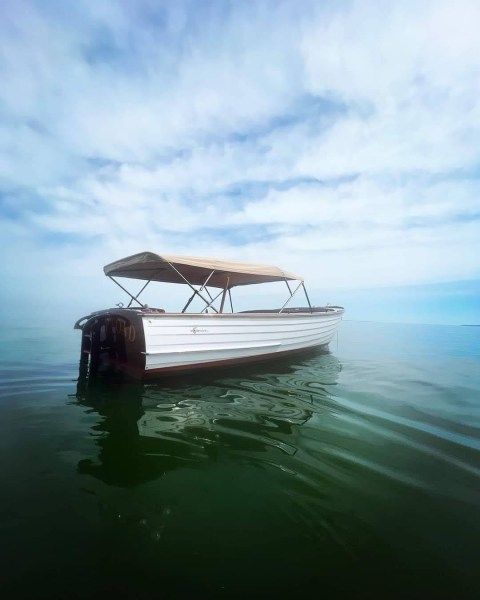
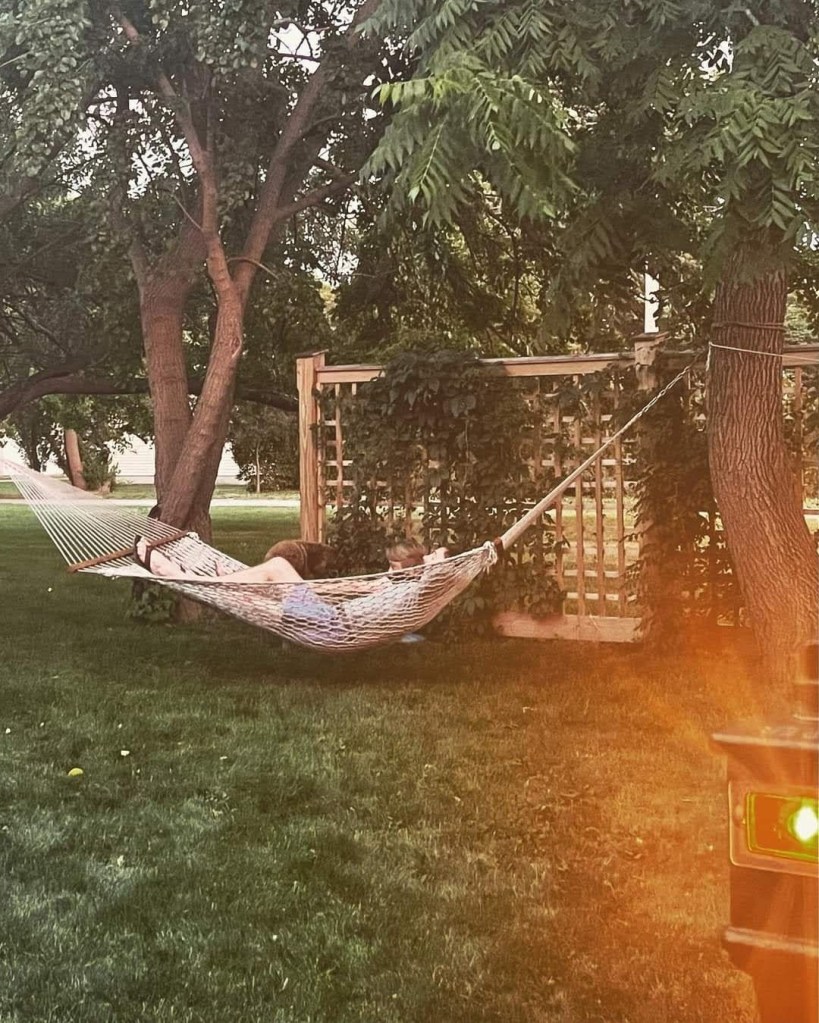
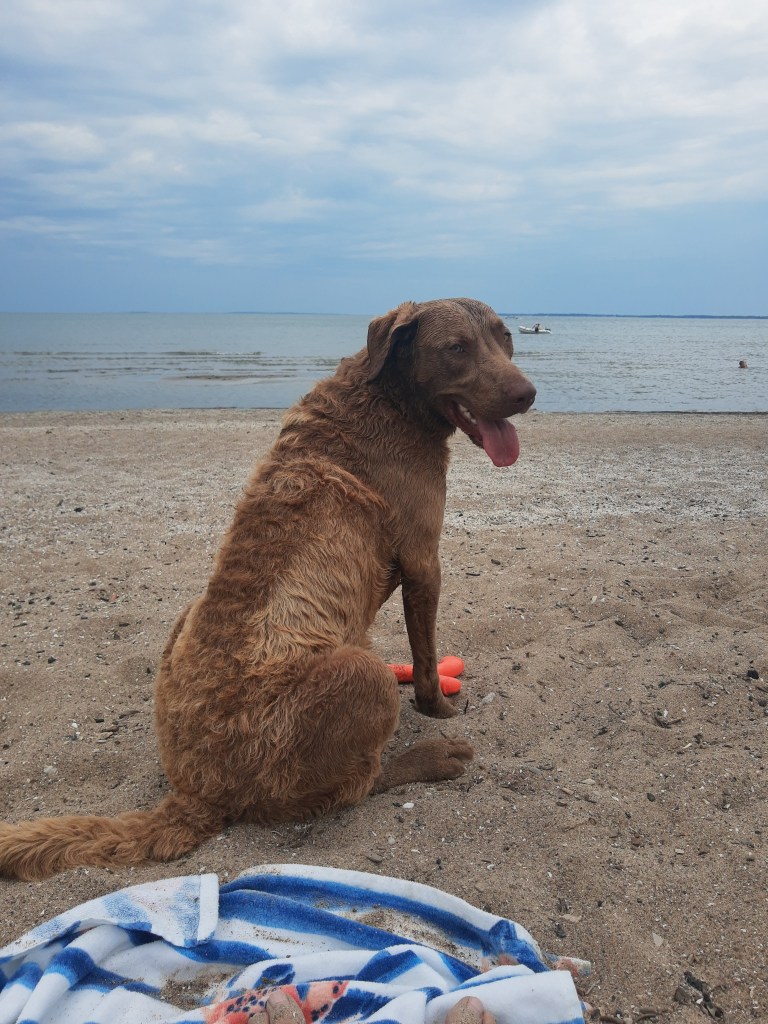
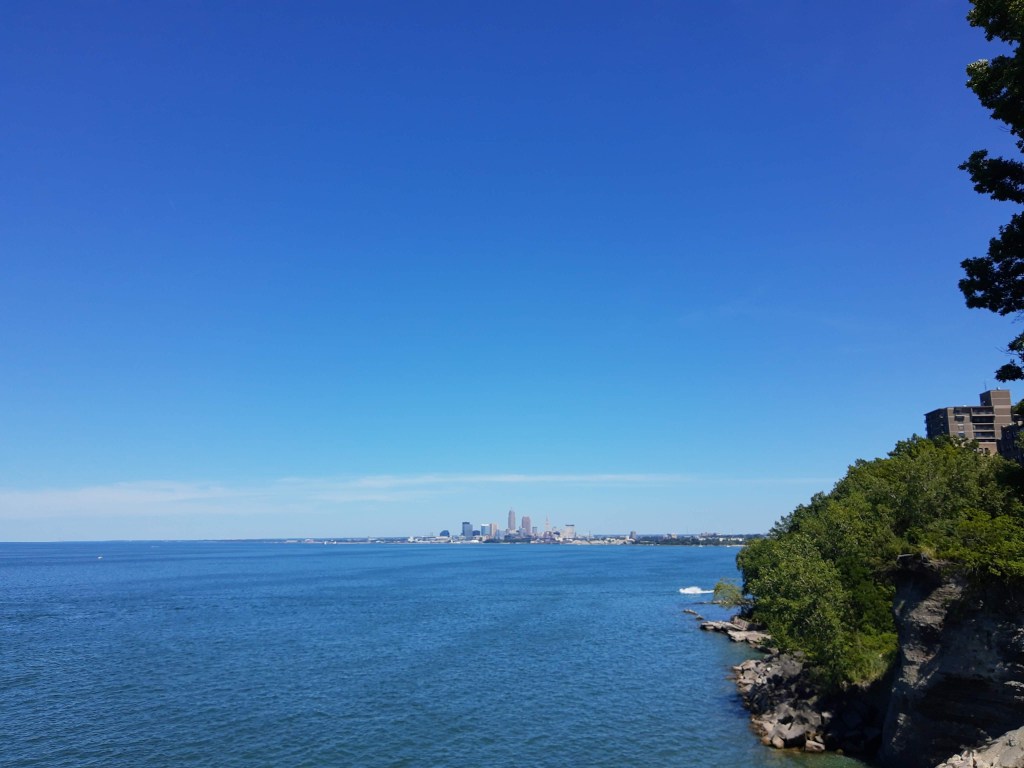
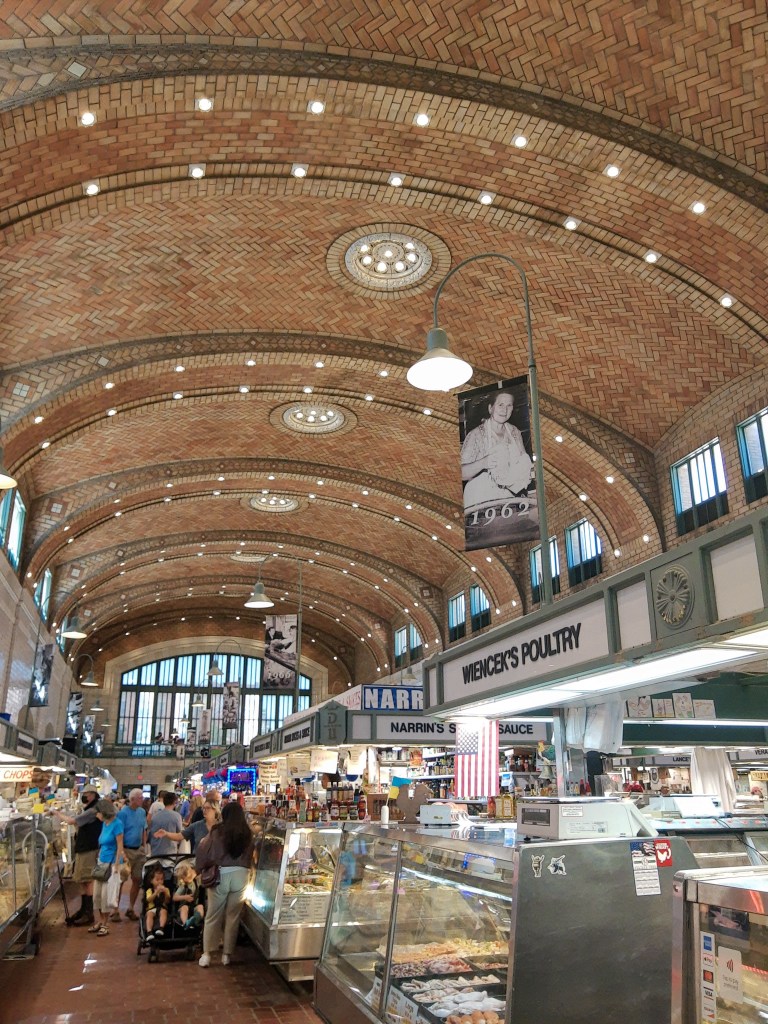
The fam and I headed to Port Clinton, Ohio, walleye capital of the world–don’t fight me on this, MN friends–in June. Sailing for my little guys, boating for the rest of us, swimming, sisters-lunching, friends reuniting, and plenty of hammock-ing and back porch-sitting were the highlights. Of course, no visit to Northern Ohio is complete without a trip to Cleveland and a visit to the West Side Market. And who could forget Rufus, who lived his best Lake Erie Shores & Islands life for a week. Boat aficionados, make sure to check out my dad’s antique Lyman boat above, his fourth child basically. Boat name? Hoptoad, named for Pippi Longstocking’s father’s ship in the favorite book series. (Who woulda thunk I’d become a writer?)

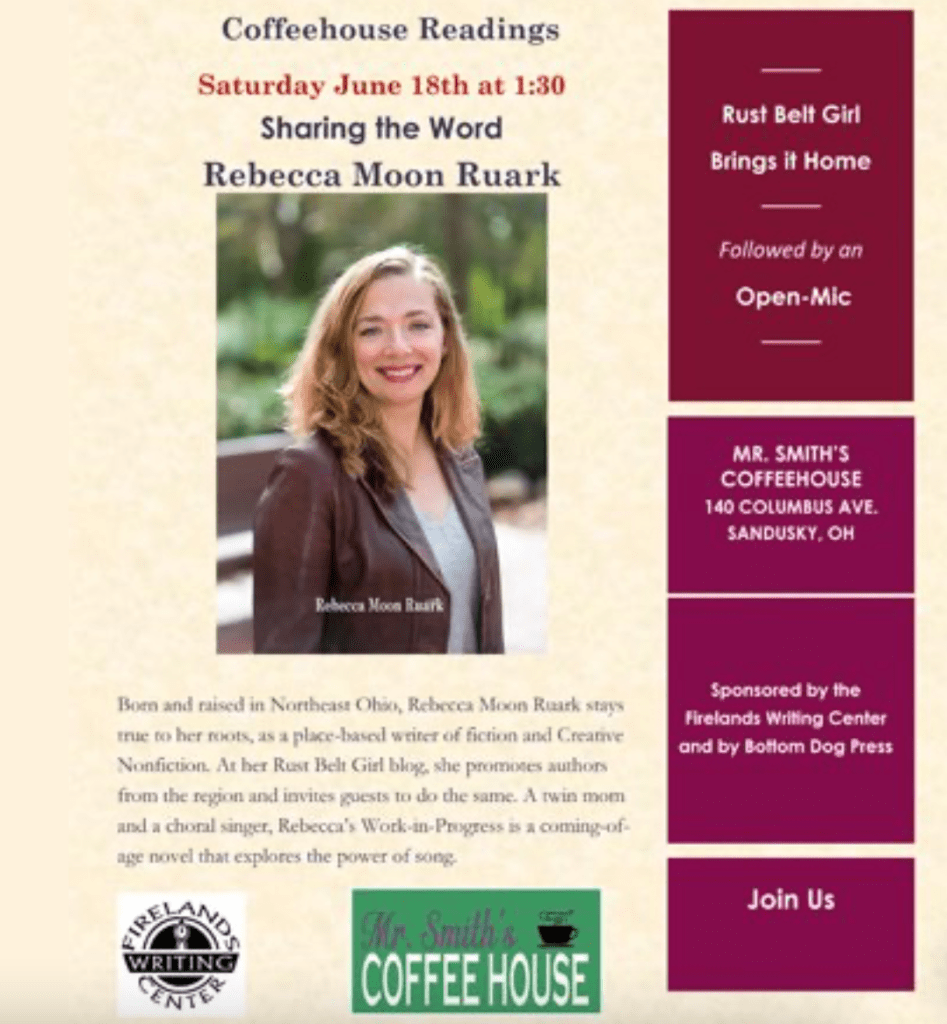
While in the area, I had the honor of serving as the featured reader for the Firelands Writing Center’s monthly reading series in Sandusky. Thank you again to fearless leader Larry Smith and his Bottom Dog Press for sponsoring the event (and putting me on a flyer–that doesn’t happen often). I read some older work and some newer pieces from my WIP, a coming of age novel partly set in Ohio that explores the power of song. And thanks to those who came out (or in) on a beautiful afternoon to share their own work with the group. It felt very much like home. (Flyer photo credit: @melanieraebuonavolonta)

Reading the Rust Belt…

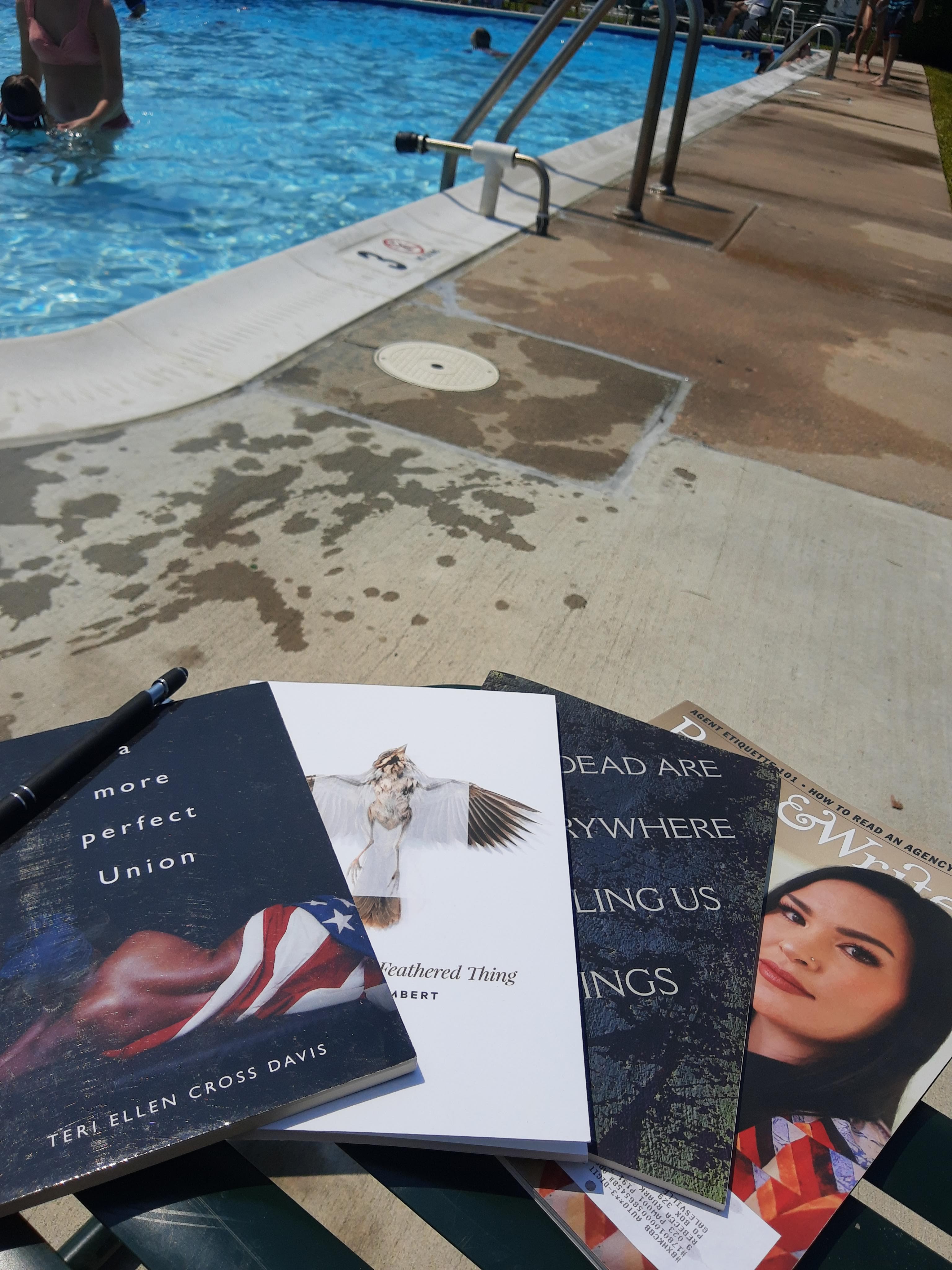
Of course, I’ve fit in some Rust Belt reading. And who said summer reads can’t be deep? Poolside poetry is just my speed, and here are a few I’ve enjoyed immensely: Cleveland native Teri Ellen Cross DavisA More Perfect Union; Columbus, Ohio, poet Paula J. Lambert’s The Ghost of Every Feathered Thing, and Erie, Pennsylvania, poet Sean Thomas Dougherty’s The Dead are Everywhere Telling Us Things. Btw, if we’re not connected on Goodreads, where I recently reviewed another poetry collection, let’s do!

And Beyond

There’s an old, writerly adage that says if you’re talking about it you’re not writing it. So, let’s just keep all our fingers and toes crossed for my WIP as I begin to query literary agents for it this fall.

Unfortunately, there’s no adage I know of that says if you’re talking about your editing you’re not working on it. But what would be the fun in that? You may know I’m the associate editor of Parhelion Literary Magazine, in charge of the features department. How I love my craft essays, book reviews, and author interviews! But you might not know that I got that gig because the magazine’s editor-in-chief saw what I was doing right here on Rust Belt Girl and wanted some for her Richmond, Virginia-based online publication.

In addition to editing features for Parhelion, I’m a reader for fiction. (If you aspire to write literary fiction, creative nonfiction, or poetry, there is no better way to become better at it than to read literary journal submissions, imho.) Parhelion’s summer issue (our journal’s 14th–not too shabby) launched this week. If you like fresh and bold fiction, CNF, and poetry I hope you’ll check it out.

Parhelion Literary Magazine

Summer 2022 Issue

Looking Toward Fall

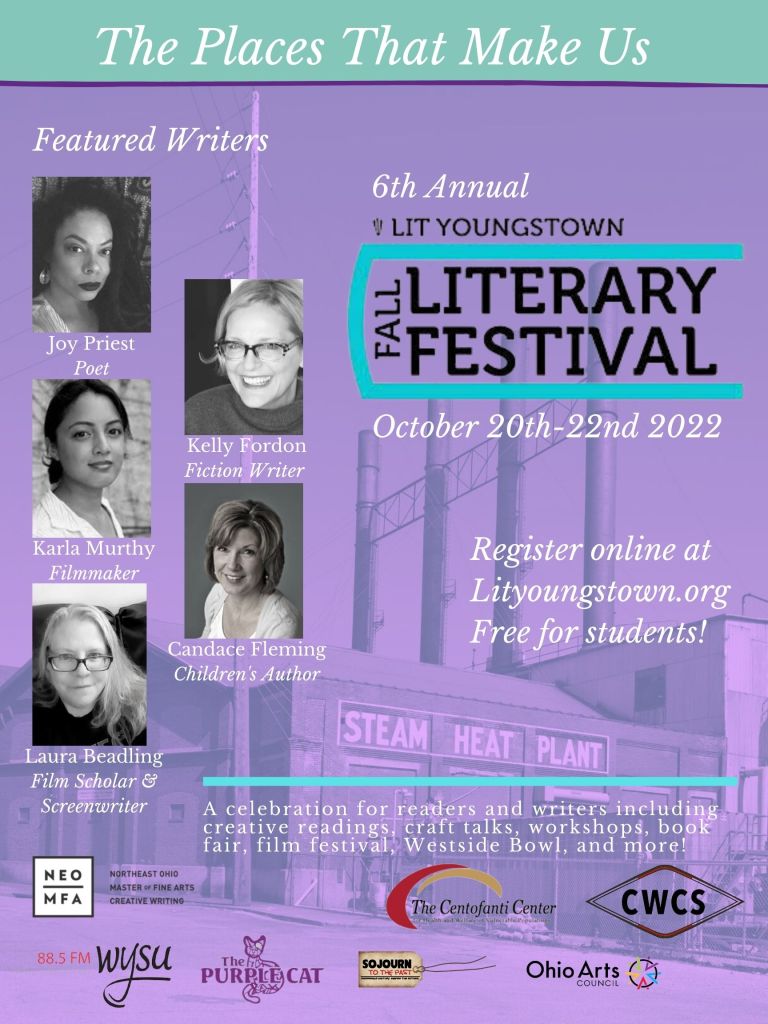
Must we? OK, I suppose the pool days will come to a close. My small guys (who are quickly catching up to me) will head back to school. And I will start packing for the literary highlight of the season, Lit Youngstown’s Fall Literary Festival. If by some strange occurrence you live within driving distance of the festival and I haven’t hit you up, my apologies. This is the best literary conference of the year–if you like a supportive community, generative workshops, eye-opening and ear-bending panel discussions, inspiring readings, and affordability. Oh, and this year’s book fair promises to be the best yet. Also, there will be bowling and films. So, what are you waiting for? The Rust Belt calls.

And that, most patient of readers, is what I’ve been up to. But, as blogging is a two-way street, let’s keep the convo going. What has your summer looked like–or whatever season it is where you hang your hat? Where are you visiting. What are you writing, reading, and discovering? Do tell!

Want more Rust Belt writing, author interviews, book reviews, writing advice, and more? Check out the handy categories above.

Find me on FB and on IG and Twitter @MoonRuark

And follow me here. Thanks!

Enter your email address to subscribe to this blog and receive notifications of new posts by email.

Top 5 Things to Take from a Literary Conference (not just swag)

Photo by Pixabay on Pexels.com

Saturday, I attended Conversations and Connections, a one-day writer’s conference organized by literary magazine, Barrelhouse, chock full of practical lessons from published literary authors, editors, and publishers. Note: I said practical. (Leave your insta-agent-three-book-deal fantasies at the door.) Really, it was like transporting myself back to my MFA program for the day–complete with the insecurities and boxed wine! All right in my world.

  1. Advice: The first of three panels/workshops I attended featured a memoirist, a novelist, a nonfiction writer, and a poet who all engage with the past–and endure much historical research–for their writing. Some of the most helpful advice suggested writers utilize first-person accounts to better instruct our characters in how to engage with historical fact. There was also an interesting discussion exposing the differences between creative nonfiction and fiction when making meaning of historical events. In fiction, the research must become a part of the narrative arc; in nonfiction, the journey to understand can become another part of the story, a knew way of knowing.
  2. Beginnings: For my second session of the day, I attended a hands-on craft workshop on developing short story openings that grab a reader’s attention. Flash Fiction author, instructor, and editor Tommy Dean led us workshoppers using four prompts for four different story openings. All the prompts started with character/setting/conflict, then added another element to complicate the story start–like subverting the setting or flipping a normal, everyday activity. I am not a prompt person, relying instead on the ideas that fly at me and then stick–usually long about 4am–but even I came away with a few solid story starts, a real win.
  3. Connections: MFA programs are a wealth of information on the art and craft of writing. But then what? How do we get our work out there, and just where is there? Enter the literary journal editors with hands-on experience in the world of literary publishing for a 10-minute editing session, a la speed dating. I took a flash fiction piece of mine; however, I knew going in, I wanted to use that precious time to ask advice of the editor on the other side of the desk. My question was about chapbooks (short collections of poetry or stories). But the point is I used my 10 minutes to connect with someone I could learn from. Not to leave out my fellow conference attendees, time waiting in line for the editor session was a good chance to meet local writers (shout-out to Sonora!).
  4. Inspiration: With the growing popularity of spoken-word and oral storytelling heard on programs like The Moth Radio Hour, today’s creative writing readings are not the cure for insomnia they once were. The featured author readings at C&C did not disappoint. Going in, I knew of the work of only one of the authors, essayist Randon Billings Noble, who I connected with in an online critique group years ago (the writing world being both huge and small). I was delighted to be introduced to the poetry of Kyle Dargan and the fiction of Ivelisse Rodriguez and of Gabino Iglesias, who read their work with such passion–the highlight of my day and very inspiring.
  5. Books…and more books: Want to make an author (and their small press publisher) happy and earn your good literary citizen card? Buy the book. I came away with autographed copies of Billings Noble’s essay collection, Be With Me Always; Iglesias’ horror/crime novel Coyote Songs; Matthew Ferrance’s memoir, Appalachia North; and the poetry collection, Haint, from Cleveland native (yes, we are all over) Teri Ellen Cross Davis, who sat on the panel for the third of my three sessions, focused on publishing and offering great advice on connecting with the local literary community. (These last two authors, I plan to talk about more here on the blog!)

For writers across genres, and for bloggers alike–there’s a conference made for you. This one was a good fit for me, and I’ll be back next year.

Do you conference? What are your top tips? Have you read any of these books? How was your weekend? Comment below–I always love to hear from you… ~Rebecca

Sport in the Art of Place

I went for the art of the place: the earthy poetry and fiction borne by writers tied to the ever-evolving American Rust Belt, which has seen its share of glories and struggles, stemming from the rise and fall of mining and heavy industry.

And, I admit, I fretted just a little bit about what to wear. Stay with me…I haven’t gone all fashion blog on you.

No surprise that among the students of creative writing, the authors, editors, publishers, and poets attending the literary conference–there were ensembles of black, a poet skirt or two, and a pair of cat face-festooned flats (for real; they were fabulous shoes).

There was also a Browns cap. Yep, those Browns. The NFL team that went win-less last year (after which the people of Cleveland held a perfect-season parade).

At the sight of that beautiful brown and orange hat at a literary festival, I knew I’d found my people.

It got me to thinking, if you Venn diagram a place (and this is as math-y as I get), how much overlap is there between the place’s art and the place’s sport? Let’s think on that a minute, while I take you with me on another trip.

Earlier this month, as the fall foliage reached its peak color, my family visited the lovely village of Cooperstown, New York.


20181006_123517
At Cooperstown’s Farmers’ Museum’s 19th-century Historic Village, a lovely way to spend an afternoon with the kids

For its small size, Cooperstown is a place with impressive arts offerings, but it is known far and wide for being the home of the National Baseball Hall of Fame and Museum.

Read more

3 Reasons to Connect with Your Creative Community; 3 Words of Thanks; 3 Inspiring Writers

The writing life is often, necessarily, an isolated one. To create a world on paper (or screen) takes holing ourselves up, cutting ourselves off from the myriad distractions of modern life.

For our writing to matter to anyone outside our own heads, however, we must connect.

20180922_171431

3 good reasons to connect with your creative community:

To find readers: Not surprisingly, most of the followers of this blog are other bloggers; the readers of my short fiction are other writers. You will find readers in writers, and v.v.

To research that next WIP: Let’s not research entirely online (pleads this former college composition instructor). Speaking of research, heartfelt Kiiitos paljon (Thanks a lot!) to all the wonderful folks at the Finnish Heritage Museum and to Lasse Hiltunen, president, in particular for the wonderful tour and background information on everything Finnish! (If you ever find yourself near Fairport Harbor, Ohio, don’t miss this gem of a museum.) Lesson-learned: take your research on-site, when you can.


To gain inspiration: How inspiring is that library carrel? As delightful as isolation can be, even the most introverted writer needs to get “out there” once in a while.

While online writing communities and critique groups, library databases and catalogues have been invaluable to my perspective, there’s no substitute for the in-the-flesh writing community.

I’m a writer interested in exploring place, specifically the U.S. Rust Belt (more specifically, Ohio), and yet I no longer live in that place. No, the irony isn’t lost on me. It’s one of the reasons I started this blog–to connect with readers and writers and photographers in my native place.

20180922_171453.jpg

But virtual connection is not enough. Sometimes one has to be boots-on-the-ground there. And so, after some preparation to make the most of the conference, I drove my proverbial boots the five-and-a-half hours to attend Lit Youngstown’s 2nd Annual Literary Festival this past weekend. 3 inspiring festival highlights–not just to plug this literary festival (but do come next year, if you’re in the area; I plan to) but every and all such excuses to communally share our stories:

Dave Lucas, Ohio Poet Laureate and author of Weather: Poems, presented a piece about the mythic in poetry for an audience of fiction writers, creative nonfiction writers, and poets. (Poetry not your thing? I get that, and have talked about my on-again-off-again relationship with poetry. But Lucas is all about finding the poetic in the everyday; he talks about that here–from about minute 8 on).

Lesley Nneka Arimah, author of the amazing short story collection What It Means When a Man Falls from the Sky, read a few of her stories and graciously shared a little from her formative years. Arimah told a story about visiting the public library in summer with her sister, where they would each check out the max amount of books–50–and when finished with her tower, trade, and read her sister’s. Sure, Arimah read literature with a capital “L”, she joked; but she also read romance novels and fantasy, and continues to do so today–and her literary short fiction is all the more playful and magical because of it.

Jon Kerstetter, read from his memoir, Crossings: A Doctor-Soldier’s Story, which chronicles a life begun in poverty on the Oneida Reservation in Wisconsin to a life in business before Kerstetter pursued his dream of becoming a physician. When his days as an emergency doctor weren’t proving exciting enough, he volunteered for tours as an emergency military medic. After three tours in Iraq, Kerstetter returned to the U.S., injured, but this was only the start of his stateside struggles, as he suffered a stroke–leading to his reinvention as an author through the writing of his life’s story.


Inspiration abounded at this literary conference–and not just from the big names but from the poems and stories bravely shared by writers at all stages at open-mic and in conversation.

Me, I braved the mic to read a flash fiction piece of mine set not far from where we sat, amid the rolling hills and history of Northeastern Ohio. I also took part in a publishing panel to extol the virtues of connecting through traditional and nontraditional publishing, including sites like this blog–when we can’t connect in person.

And today I returned to my writing desk feeling inspired and connected in a meaningful way to the stories of home. Thanks a lot to all who made it happen!

Have you done the conference thing–for writing, blogging, or anything else? What are the benefits to in-the-flesh arts and literary communities?

Are you a Rust Belt author, blogger, or photographer? I’m always looking for stories to share.


*Photos from top down are of Youngstown, Ohio, buildings, the Finnish Heritage Museum in Fairport Harbor, and interior shots of St. John’s Episcopal Church in Youngtown, where the Arimah and Kerstetter readings were held.


Making the most of a literary conference…with a card and a queen

On my writing desk sits a small box filled with even smaller business cards I ordered for the Literary Festival I will be attending next month. These cards are, in effect, the professional “me.” On one side is listed my freelance biz; on the other (shown below) my creative writing credentials.

My two-sided business card mirrors the divided roles I play in this writing life of mine. This is the gig economy in action, folks, and I am a 2 inch-by-3 inch fraud. OK, no, there are no untruths on my business card, but still I feel like a fake sometimes.

It’s natural, self-doubt–especially when pulled in many directions–and inherent in this introverted writer. But business cards? Networking? I mean, networking is no less than 5,000 miles away from my natural habitat. So, what to do to make the most of my time at a literary (or any other kind of) conference?

Come along for the ride…

First, strike a power pose. What does that look like for an introverted writer? Particular pose aside, power-posing is all about boosting your confidence and is key to overcoming “imposter syndrome,” says super-talented career coach and humor blogger, Becca–who encourages those of us who unjustly feel like frauds to “Fake It ‘Till You Become It.”

OK, so I’ve got my business card. And practiced body language (time to break out the full-length mirror I don’t have!).

Second, follow a three-tier plan for getting what I want out of this conference (and by extension this writing life, but…baby steps).

Let’s be clear, I’m attending this festival for the backside (ahem), the creative side of me. With so many talks, readings, and panel discussions to choose from, I need to choose wisely to return home not exhausted but ready to write.

Craft: outside of an online writing workshop or two, it’s been a good while since I took part in a proper fiction workshop, so this tops my list of must-dos.

Connect: one big reason I started Rust Belt Girl was to connect with writers writing from and about the post-industrial Midwest, and I’ll have ample opportunity at this Ohio event; I also hope to meet a few of the many literary journal editors who will be there–always helpful to hear what they’re looking for in submissions.

Soak it in: with a schedule full of creative readings–from poets, fiction writers, and creative nonfiction writers–I hope to come away inspired enough by the stories of others to return, re-energized, to my own.

And then there are the side-perks of discovering a city I’ve never visited before and of being close enough to an Ohio site I want to research for my WIP that I can make the weekend a two-fer.

But, even before that, there’s the preparation*, and I don’t just mean packing “serious writer” outfits and a wrap for cool conference rooms. And, of course, having my own stuff together for my creative reading and appearance on a panel about publishing from the writer’s perspective. I mean reading up: not just writer bios, but the book of collected stories from the keynote speaker, Leslie Nneka Arimah; and poems from the Ohio poet laureate, Dave Lucas.

Many thanks to super-knowledgeable blogger, Lorna, at Gin & Lemonade for helping me to develop this plan for slaying it (insert power pose here) at the literary festival and for passing along this post with helpful tips for making the most of a conference as an introvert: “Breathe” is a good one to remember. So is: “Grab People’s Business Cards.”

If all else fails, I’ll just summon my inner Ally McBeal–yep, showing my age here–and come to the literary festival ready with an inspirational song in my head.

With the recent death of Aretha Franklin, followed by the singer’s Detroit funeral that included a procession of 130 pink Cadillacs (more details on that here), I thought I’d take a confidence cue from the Queen of Soul. So many powerful songs: “Respect,” “A Natural Woman.”

My fave: “I Say a Little Prayer”

Have any tips to share for making the most of a conference–literary or otherwise? I’d love to hear them!

*Update: One more item to prepare before a conference–literary or otherwise: the 30-second elevator pitch. Do you have one? “It’s a good idea to have one of these prepared for your art,” says poet and former marketing executive Danielle Hanson, in a wonderfully-informative article in the latest (Sept/Oct) issue of Poets & Writers magazine, which is pretty much the bible for literary writers. Your elevator pitch should answer the question: What do you do?

Here’s my working elevator pitch: I write fiction. I’m interested in exploring the idea of the American Dream in place–both during wartime and at peace. My historical novel manuscript explores lives on the WWII home-front and tells the largely unknown story of the internment of Italians in America during that time. My short stories explore the contemporary American Rust Belt, with many set in my native Ohio. I also blog at Rust Belt Girl to connect with authors, photographers, and readers in the region and beyond. There I feature discussions on “ruin porn,” author interviews, and my own craft essays, drawn from my experiences as a writer and as a former college writing instructor.

What do you think? What am I missing?