Refusing to bog itself down in any medical jargon or victimhood, Jason Irwin’s memoir “These Fragments I Have Shored” offers 265 pages of grief-writing that are as funny as they are unsparing. Irwin’s May 5, 2026, release is a memoir essay collection in accordance with his experience as caretaker for his mother over the last stretch of her life. With humor and humility, Irwin weaves two medical histories, placing his 1980s childhood—one spent in and out of surgeries, an ostomy bag fastened to his abdomen—in conversation with his mother’s cancer diagnosis nearly 40 years later. Not so much a chronology of illness but rather a family portrait of dysfunction, bodily decline and a mother-son relationship defined by mutual stubbornness.
It is Irwin’s refusal to stall in the dense medical digressions that allows him to move quickly from his own birth to his youth, all the way through his marriage and the death of his mother. His brevity is buoyed by a voice that feels conversational and cynical, without being glib. His pacing reflects the experience of chronic illness and its whiplash of appointments, argument and gallows humor.
Isolated and bullied for his surgical deformities, the sections of his childhood are vivid. But even in the passages of suffering, levity surfaces. In one tender anecdote, we learn of his childhood best friend Jojo, memorably described as “a phantom plucked from darkness.” The troublemaker with a good heart, the neighborhood delinquent who befriends and also protects Irwin, described as “threatening to kill anyone who made fun of my brace, the way I walked, or questioned why, at age twelve, my bicycle still had training wheels.” Inclusions such as Jojo render a whole image of instability—it can be destructive, but not without being formative.
In one devastating episode, a classmate punches Irwin’s ostomy bag. But the humiliation comes through plainly, without attempts of swelling authenticity. Not interested in being a victim, nor dignifying his younger self, Irwin details the destructive bravado of high school. He admits to drinking as a performance of toughness among many moments of cruelty. He confesses to his own actions as a bully, acknowledging, “I knocked books out of upper classmates’ hands as they walked the halls and made fun of those students I knew were weaker than me, like Ezra, a refugee from Central America, and Tammy, who chased after pennies I threw at her.” It’s here where the memoir’s humility lies and Irwin does not paint himself any kinder than he was. He calls it what it was: insecurity, and his candor is refreshing.
He approaches his deceased mother with the same clarity, depicting a woman with personhood rather than an archetype of maternal failure. Sixteen years after discovering a tumor in her nose, the cancer eventually spread to her bones, killing her just after her 75th birthday. We see her resist medical advice, refuse to stop smoking and grow petulant in doctors’ offices. In it, Irwin lets her read as irritable, even unpleasant, and we witness her unraveling along with him; from snide to exhausted, from a sick woman to a dying one. But, crucially, Irwin restores her to a fullness that posthumous portraits of motherhood tend to flatten. He shows us the mistakes she made, but also her agency: the late-in-life decision to enroll in college to study creative writing, her curt candor in the face of growing weakness. When her old friends try to reconcile with her upon her diagnosis, she dismisses it: “Fuck ‘em. If they can’t visit me while I’m healthy and alive, I don’t want them looking at my body when I’m dead, crying their fake tears.” She does not get reduced to the dying parent. Evidently, she was difficult. But Irwin makes sure we know she was a full person too.
Finally, Irwin gives us a self-referential depiction of being a creative. The fear of inadequacy and the suspicious longevity of art as a career is embedded in Irwin’s prose. The effect is intimate and locates Irwin among writers: “Sometimes I wondered if I was in over my head. Was I really a poet, I wondered.” Irwin struggles; he drinks; he creates. He falters and he keeps writing.
Irwin resists the manufactured epiphany. The memoir closes on a quiet image of his mother, still instructing him in how to endure. It is appropriate and true to the book’s spirit.
Emily Harris is a senior at the University of Pittsburgh studying History and Nonfiction Writing. She is Copy Chief at The Pitt News and has written criticism on contemporary memoir, narrative craft, and literary nonfiction.
Like this post? Comment below or on my FB page. And please share with your friends and social network.
Are you a Rust Belt writer interested in seeing if your own post, or author interview, or book review might be right for Rust Belt Girl? Hit me up through this site’s contact function.
Check out my categories above for more guest posts, book reviews, interviews, literary musings, and writing advice we can all use. Never miss a post when you follow Rust Belt Girl. Thanks! ~Rebecca
This October I attended my eighth annual Fall Literary Festival hosted by Lit Youngstown. It was the Ohio literary organization’s ninth—and final—fall lit fest (at least for now). I could just be weepy about it (I’m weepy about much these days, tbh), but I’m too grateful to stay weepy. Since it’s a weekend to do grateful, let’s get into it…
Don’t worry, Lit Youngstown itself—with all of its amazing programming–is going strong at 10 years old. But before I get into my 2025 lit fest roundup I want to take a moment to share a few highlights from lit fests gone by (forgive my literary nostalgia), in no particular order:
Novelist Rachel Swearingen telling us craft session participants to, “Write towards change.” And “Stop thinking about characters and start thinking about relationships.” (Fiction writing changemaker right there!)
Me, getting to tell my story of my mom’s protesting of a nuclear power plant near my hometown when I was a kid (I wrote about it here) and detailing how that story turned into an integral part of my eco-novel (published someday, world!)
Exploring ekphrastic writing at the Butler Institute of American Art (great museum road-trip idea for you out of towners!) and exploring Youngstown writ large (getting to stay with friends and enjoying the local cuisine (there will never be enough pickle pizza, noggin-sized meatballs, and pierogis!))
Getting to be a student of Sandra Beasley, Ross Gay, Lawrence Coates, and so many other teacher-writers and getting to tell them over charcuterie and a glass of wine: “you wrote my favorite poem, essay, novella, thank you…”
Meeting writer friends (like the talented Melissa Fraterrigo) in person after years of reading her work (her novel Glory Days inspired a lot of what I’ve been trying to highlight at this blog these last nine years or so—stay tuned for a review of her memoir in essays, pictured). And meeting other friends year after year and weaving our stories—and lives—together.
The highest highlight? You. Becoming a member of the Lit Youngstown community through the fall lit fest has been incredibly rewarding for my literary life—and my life-life. Thank you, friends.
Now, 2025’s list fest was one for the books. (Peruse a few pics above and below.) And if you thought the environmental theme was going to mean a slew of nature poems…well, yes, and… Yes, and fascinating eco-fiction and challenging environmental memoir and poetry about nature redefined—from a place that was once an indigo plantation to the night sky over the Grand Canyon to trails cut by troubled teens into the Pacific Northwest woods—and so much more that “shapes our experience and identity, and represents our rootedness in earth.” Whew! I encourage you to read the impressive bios of the five 2025 featured presenters.
My preparation for this lit fest happily began months in advance of the event. (Once a student, always a student.) For my conversation with fiction writer David Huebert and memoirist and poet Sean Prentiss I read several of their books—she gestures to collage artfully displayed on her office floor—representing an array of what we lump under the term “environmental writing.” Look for a follow-up post with a good chunk of our discussion—fascinating and fun!
Other personal highlights from this year’s lit fest. (Know that this is just a fraction of the offerings and I, once again, wished I could have cloned myself, so I could make every single session.):
Day 1:
Narrative Medicine [definition: healthcare practiced with narrative competence]: A Generative Workshop, facilitated by family nurse practitioner and poet Dana Reeher. Imagine me taking furious notes for the anthology project I’m co-editing: Body of Work, essays at the intersection of dance and health. For a little workshop exercise, Dana asked us participants to respond to a writing prompt, “an expansive invitation to open the mind,” so I thought I’d write a very short piece about my own dancing and its impact on my physical and mental health outlook:
Maybe the mistake was I listened too well, that I pointed my feet too hard, that I really could feel that string coming out of the top of my head lifting me up to the studio ceiling. Maybe I postured too much, wanted too much. Maybe I turned out until I was turned in. Maybe all that looking in the mirror made me someone else. I can still spot a dancer, or an anorexic, from fifty paces.
My dancer friends here will likely recognize a lot of this, but especially the posture-reminder telling baby ballet dancers to imagine there’s a string coming out of the top of your head… After sharing my short piece of writing, a couple of the other workshop participants said the string image reminded them of a marionette. I’d never thought of that before, and I’ll tell you that image is still working on me!
The Pamela Papers: A Mostly E-pistolary Story of Academic Pandemic Pandemonium: The Musical. Based on the award-winning novel by Nancy McCabe, published by Outpost 19 in 2024, the presentation included a dramatic reading (with singing—who was expecting a musical at the lit fest? Not I. And it was such fun!).
Readings by David Huebert and Sean Prentiss in St. John’s (gorgeous limestone and stained glass) Episcopal Church sanctuary. Your girl provided introductions to both writers—thanks for putting up with my unorthodox investigative process to make sure they were exciting, guys!
Day 2:
Bengal Tiger Moments: Time Perception in Creative Writing, facilitated by Sean Prentiss. In this fascinating session, we talked about speed on the page, presented in five categories from fastest to slowest: Gaps, Summary, Scene, Dilation, and Pause. Sean presented examples of these techniques from creative nonfiction and explained the brain science behind our understanding of the movement of time—irl and on the page.
Rooting the Self: Writing as an Act of Person, Political & Environmental Transformation & Transcendence, a multi-genre workshop with (beautiful and talented) Rebe Huntman, author of My Mother in Havana: A Memoir of Magic & Miracle: Rebe took us through various stages/ways of honoring our voice and our writing by making space for it and celebrating it, including meditation, morning pages, repetitive activity (including list-making), “the writing cave,” and writing constraints and freewrites. My favorite prompt, a list-making exercise we did in this session, produced these lists, below. (From there I spun out a short prose piece, “Reasons to Revere Your Vagus Nerve” (we’ll see where that weirdness goes!):
5 Things I Consider a Miracle
High arches
Warm pie
The vagus nerve
Sweating carafes of water
Tanned leather
5 Recurring Obsessions
Ballet hands
Song
Accents, dialects, and regionalisms
Mom, mom, mom
Delight
Readings by poets Lauren Camp, Todd Davis & Kourtney Morrow: poems of cityscape to countryside to the night sky over the Grand Canyon left us audience members awed.
Days After
And then, after… there’s nothing better than returning home from a literary event inspired, nurtured, and with a few new ideas for writing already on the page.
If you’re reading this on Small Business Saturday, might I suggest you also read small and lit small by supporting your local indie bookstores and your favorite literary organizations today?!
Did you attend Lit Youngstown’s Fall Literary Festival last month? Another lit fest? What was your favorite part? Have an inspiration gleaned or a piece of writing captured you’d like to share? Feel free to jot it in the comments.
Like this post? Comment below or on my FB page. And please share with your friends and social network.
Are you a Rust Belt writer interested in seeing if your own post, or author interview, or book review might be right for Rust Belt Girl? Hit me up through this site’s contact function.
Check out my categories above for more guest posts, interviews, book reviews, literary musings, and writing advice we can all use. Never miss a post when you follow Rust Belt Girl. Thanks! ~Rebecca
Essayist Melissa Ballard contributes the fourth in our series of guest posts here at Rust Belt Girl, and, let me tell you, you’re in for a treat. Melissa has a talent for bringing the past to life and making her ancestors feel like our shared family. In this essay we meet Phyllis, Melissa’s grandmother, a woman of Northern Appalachian Ohio, whom Melissa writes about in a loving yet candid way, deftly delving into what makes personhood–class, sex, education, place and much more. (We also hope Phyllis is having the “time of her life,” Melissa.)
This Woman
by Melissa Ballard
This woman is my grandma, but not yet.
In this black and white photograph, a small, dark hat of woven straw covers her hair and shades her forehead. She wears a walking suit: a jacket and skirt in a light wool pin check with a belt of the same fabric, over a silky, patterned, blouse. The tips of the fingers of her left-hand rest in the pocket of her slim skirt. Her only jewelry is a ring on the little finger of that hand. I can imagine her cropped left foot pointing out, her dark stockings and t-straps. She slouches just a bit and turns her body toward the unidentified photographer. She looks directly at the camera. Her smile is slight, but it reaches her eyes.
This woman’s slight curves contrast with the riveted metal beam, perhaps part of a railroad bridge, that rises at a sharp diagonal behind her. In the early 1920s, her family lived on a side street a few blocks from the train station in Dennison, Ohio. Her father was an inspector for the railroad, so she had a free pass to ride.
This woman could be waiting for the early train to Pittsburgh or Columbus, where she will walk the streets with confidence, on her way to a job interview. But she is not. Or at least I don’t think so. I know little about this brief period, but I hope she is having the time of her life.
In 1925 she has a job in an ice cream shop, lives with her parents. Both she and her mother, who is preoccupied with social status, are named “Margaret.” This woman has already started to express her individuality and goes by her middle name, Phyllis or, on documents, “M. Phyllis.”
On June 18, 1925, eleven days before her nineteenth birthday, Phyllis and her neighbor, Harry, will travel 65.3 miles, maybe by train, to Brooke County, a tapering finger of West Virginia tucked between Ohio and Pennsylvania, where they can get a marriage license with no waiting period. Later that day, they will return to Ohio and be married at the home of the groom’s family.
I wonder whether Phyllis’ parents even attended. They had a reception for her later, but I gather it was her mother’s attempt at saving face. I can’t imagine she approved of my grandpa or his family, and I can easily hear her saying, “He’ll never make a decent living. You’ll end up in the poor house.”
Five months and five days later, their first child will be born. On January 14, 1928, their second child, my dad, will be born.
Phyllis c. 1920
The woman I remember, my grandma, was in her fifties. She had slim legs but a solid middle. She wore silver, cat-eye glasses before they were retro. Her short, dark hair was streaked with gray and white, her fingernails chewed to the quick. Wearing a well-washed cotton housedress covered with a flowered or checked apron and heavy lace-up shoes, she kept chickens and goats, grew vegetables and flowers, ran the laundry through a wringer before hanging it outside to dry, cooked meals from scratch. She kept a battered pan under the kitchen sink, filling it with food scraps. Every morning she fed it to the three hound dogs Grandpa had brought home from the dog pound, kept in a pen at the back of the yard. “Oh, hush up,” she said as they yipped and howled at her.
When Grandma wasn’t busy with chores, she answered the phone for Grandpa, who was the dog warden. She wrote messages in her flowery cursive: the name, address and phone number of the caller, and a brief description of the stray dog. She followed him to his dark green truck, reading her notes out loud. Grandpa never wrote anything down. Before she finished talking, he was backing out of the long driveway, kicking up gravel as he went.
They lived in a worn-out house on a liminal strip of land in Brightwood, part of Goshen Township, Tuscarawas County; my parents and I had moved to a suburb of Cleveland. Once a month, we made the two-hour trip down home to visit, and I spent more time there during the summer.
On hot afternoons, Grandma and I often sat together on the front porch swing, she doing her mending and me reading, trying to catch a breeze. A two-lane road ran close to the front of the house. The cars seemed to fly by, and the exhaust from the trucks taught me to mouth breathe, a skill I perfected when I ran into the hen house to collect eggs.
This route was nicknamed the “slow road” after a highway, the “fast road,” was built behind the house. One summer Saturday, Grandpa drove us into town on the slow road to get ice cream. Grandma and I sat on a bench with our cones, people-watching while Grandpa ran one of his mysterious errands. If Grandma asked him where he was going, he always said, “I need to see a man about a horse.” Which was odd, because my grandparents didn’t have any horses.
On the way home, I noticed a large house on a hill. “Who lives there?” I asked.
Grandma stiffened. “That’s the poor house. Where you go to live if you don’t have any money. It’s not a nice place.”
I immediately pictured a nineteenth-century orphanage from one of the many books I read. Rows of rusty metal cots with stained mattresses, thin sheets, and scratchy blankets. Peeling paint on crumbling walls. I shuddered and looked away.
…
The dining room at Grandma’s was small, with windows on three sides, some covered in plastic to keep out drafts. It was an afterthought tacked on to one side of the house next to the living room. It contained a water-spotted stand of neglected African violets, a treadle sewing machine with a clove-studded dried orange tucked in one of its small oak drawers, a large dining room table and chairs, and a handmade oak China cabinet Grandma had purchased for ten dollars with the money she made selling eggs.
When Grandma made Sunday dinner for our extended family it was served at noon. Grandma removed elegant pieces of stemmed glassware and individual salt cellars from the cabinet and set the dining room table with her good silverware. As we passed roasted chicken with gravy, noodles, and side dishes, Grandpa arrived late (he was known for having “girlfriends”), threw his work cap in the corner, and took his seat at the head of the table.
Only now do I realize how little Grandma wasted. Usually, she cooked one of her own chickens on Sunday, but she occasionally made a pork roast. After the meal, any scraps of meat were set aside, combined with corn meal mush (I can only imagine her reaction to polenta recipes in upscale restaurants) and baked in a loaf pan. For breakfast the next day, she fried slices and we covered them with butter and syrup. They were delicious.
Over time, and with deaths and disagreements, our extended family grew smaller, and we began eating all our meals in the large kitchen. The food was still delicious. One time, Grandma asked how everything tasted. Grandpa was the only one who didn’t answer. She stared at him, and he finally grumbled, “If anything’s not good, I’ll let you know.” Already showing signs of Parkinson’s, he poured a bit of his coffee into a saucer with shaky hands, and leaned down to slurp it.
Eventually, an old couch was jammed into a corner of the dining room, next to the china cabinet. It became my reading space when I visited. Now, as I sit down to read on my own sofa, I look at that same cabinet on the front wall of my living room in Oberlin, just two hours away from where Grandma lived. I have covered the top with family photographs.
Phyllis and the author c. 1960
Grandma taught me how to tie my shoes–we were both left-handed–after everyone else had given up; gave me my first sip of coffee, strong but cut with generous portions of sugar and thick cream; slipped me some of her beer while we watched Gunsmoke. As I got older and visited less, we wrote letters.
Shortly after my twenty-first birthday, Grandma and I walk in her back yard.We stop under the hot sun to admire the clumps of purple, yellow, and white miniature pansies that flourish in the crumbling foundation of an old shed.I started college three years late; I tell her I am overwhelmed and don’t think I can do the work. She is quiet, removes a flowered hanky from her apron pocket, pats her damp forehead and the back of her neck.
As we start slowly up the steps to the relative cool of the house, I link arms with her. I brush the cool copper of the bracelet she always wears because she believes it helps her arthritis. Her fingers are crooked, as mine are now. As I write this, I touch the copper cuff bracelet I bought years ago but have never worn. I keep it on my desk as a reminder of Grandma, and I wonder what happened to the soft, linked one she always wore.
I open the back door with my other hand. Grandma suddenly stands as straight as she is able and says firmly, “You stay in school.” She adds this, which I will hear her say more than once: “You need to be able to make your own money.”
…
After I’ve finished graduate school, married, and had a child. After Grandpa, who spent years in a nursing home with Parkinson’s, has died. On what will turn out to be the day my dad, her son, dies, Grandma moves into an assisted living facility. With Dad being ill, no one has had the time to take Grandma to see the place prior to moving in. She’s been calling me several times a day, anxious about the change.
She surveys the room: her favorite chair with an afghan she made folded over the back; her dresser, its top covered with a lacy scarf and family photographs, including several of my daughter; a large window that looks out on gardens; the new spread my mom placed on her bed that morning; a private bath.
She leans close to me and whispers, “Oh, Melissa, this is beautiful. I was afraid it would be like the poor house.”
Melissa Ballard has written essays for The Brevity Blog, Belt, Berea College magazine, and other publications. She is currently working on a book-length collection of essays about the women in her Northern Appalachia family.
Like this post? Want more? Comment below or on my FB page. And please share with your friends and social network.
Are you a Rust Belt writer interested in seeing if your own post, or author interview, or book review might be right for Rust Belt Girl? Hit me up through this site’s contact function.
Check out my categories above for more guest posts, interviews, book reviews, literary musings, and writing advice we can all use. Never miss a post when you follow Rust Belt Girl. Thanks! ~Rebecca
David Giffels is the author of The Beginning Was the End: Devo in Ohio, coauthored by Jade Dellinger and published by University of Akron Press in 2023.
…this is a story of five spuds from an industrial wasteland with big ideas. It never should have happened. But it did. And in its wake, it leaves a parable.
Hold onto your energy domes, readers! I spoke with award-winning author, Akron Ohio’s own David Giffels, about all things Devo–and much more.
David, how did your Devo fascination begin? How much did you know about the band before you started writing about it?
My first encounter with Devo was when they were on Saturday Night Live in 1978. I remember it being this spectacle of a rock and roll band, like something I hadn’t seen before—and being equally freaked out and intrigued. This was in their yellow suit era and they were doing their robotic stage moves. My parents were watching with us, and my mom said something about them being from Akron. I don’t know how much that resonated with me then. But I recognize now that I did associate them with the place I was from, and that meant something abstract but important to me then. And it means something very specific to me now, that in their era, Devo really did define what Akron was.
What made you want to go down the Devo rabbit hole, conducting scores of interviews with Devo members and Devo-tees to write this—and your last Devo book? And what changed between your last book and this one?
My coauthor Jade Dellinger and I met in 2000 at one of the first of the Devo fan conventions, called DEVOtionals. I was there covering the story for the Akron Beacon Journal and Jade was an independent art curator. I had been dabbling with the notion of writing a book about Devo, because there was no biography of them. At the same time, Jade had been compiling research. We were introduced and immediately hit it off and combined forces.
In 2003, we published the first serious biography of the band: Are We Not Men? We Are Devo, the title taken from the band’s first album. The book went out of print, and for years we’d wanted to bring it back. When we approached the University of Akron Press about publishing it, we hit on the idea of reshaping it into what we really felt was the heart of the book. The original book covers Devo’s entire career. But the most interesting part is everything that happens up until they become a famous, commercial band: the ten years that takes place in anonymity in Northeast Ohio.
The Beginning Was the End: Devo in Ohio is revised to tell the story of these outsider artists, who found each other in an unlikely industrial landscape and started to explore all forms of media, art, and music, and what it was like for them to not only be ignored but also almost universally reviled. And yet they stuck to it and found a way into the mainstream. What’s so fascinating is the moment of them making it is also the beginning of the end. I don’t want to spoil the book’s ending, but there’s this moment of: ah, we’ve arrived, and here at the arrival is the specter of doom.
This book includes so many wonderful photographs of the early days of Devo. That’s a change from the first book, right?
Yeah, by creating a tighter focus, there was room for more than 80 new photographs that had never been seen before. It’s an amazing collection of memorabilia that we were able to showcase in this book that we couldn’t in the last book. Most of the photos were taken by Bobbie Watson Whitaker, who was a Kent State student and there from the very beginning of the band. She was always taking pictures and really documented Devo’s whole first decade—it’s just amazing.
What was it about the Rust Belt of the 1970s, and specifically Northeast Ohio, that was the perfect petri dish to birth Devo?
I make the argument in the intro to the book that Devo couldn’t have come from anywhere except Akron and Kent, really. There are factors in their development and aesthetic and philosophy that are directly tied to their environment. The most important is that the key members of Devo were students at Kent State University on May 4, 1970, when the national guard murdered four students and wounded several others. Two of them were friends of Devo co-founder Jerry Casale. He witnessed the event, and it changed everything. Devo’s dabbling with the philosophy that humans are evolving in reverse—de-evolution, where they got their band name—became something much more real. Here was an inhuman act by the government that happened right before Casale’s eyes, and it changed his life.
Then there’s the waning industrial backdrop of Northeast Ohio, the factories and the monochromatic gray polluted skies, the monolithic blimp hanging overhead. It almost had a German Expressionist feel, and it worked like an art-directed backdrop for the music Devo was making. Early on, they were working with mechanical sounds, and while they are not an industrial band, they have a strong industrial aesthetic. The yellow suits, their defining uniform in the early days of the band, came from a janitorial supply company that supplied the factories—so they were picking up on these industrial elements.
Another very important factor specific to Northeast Ohio was a guy named Ghoulardi, who hosted a Friday night B-horror-movie show out of Cleveland. He wore a weird wig and sunglasses and performed in this hipster schtick way. He was this anti-authoritarian guy, who played primal rock and roll in the background while he was doing his monologue in between segments of the movies he made fun of. Out of Cleveland, he was seen by vast numbers of teens in the 1960s, who were also watching Ed Sullivan and the Beatles. Many artists and musicians who came from Northeast Ohio site Ghoulardi as a key influence for their twisted sense of humor and rebellious natures, and that was the case with Devo.
And then there’s the work ethic of a working factory town. Devo stuck to this not-very-commercial art project for a decade—and that’s really the heart of the book—before they got any validation. That comes from that stick to it attitude that is baked into the nature of an industrial landscape.
What’s a favorite story of yours from Devo’s early days?
One of my favorite stories is the way they would get gigs around the local music scene. Most of the bars would only hire cover bands. So the guys from Devo would call up the owner and say, “Hey, we’re this band called Devo and we play covers,” and they’d get booked. And they’d go on stage and say, “Here’s one by Bad Company,” and then they’d play one of their tuneless songs. They were using a homemade electronic drum kit at the time that made these atonal sounds of metal on metal. So this was clearly not a Bad Company song. And they’d get through one song and then say, “Okay, here’s one by Foghat,” and they’d do it again. By about the third song, they’d get the plug pulled or be paid by the club owner to leave. But they just fed on that. It was a total punk rock move—without the glamour of punk.
Do you label Devo punk rock or new wave?
I think Devo is new wave, and Iggy Pop makes the case too that they are the defining new wave band. Their quirkiness, the colorful presentation, the use of new technology, they embraced and embodied all of that. Not only would I call them new wave but I’d say they are the quintessential new wave band.
Devo was made up of art majors and outsider artists who were just as interested in Art Devo and related artistic theories as in music. How much of this was real artistic statement? Performance art? Something else?
The first two people who started playing around with this were Jerry Casale and his friend Bob Lewis, who met at end of 1960s as freshmen at Kent State. As often happens with curious people when they make that big step from high school to college, every new idea seems like a bolt of lightning. Those two started having these late-night, pot smoke-fueled conversations about the fact that humans were devolving, and they started to write poems and manifestos about this, and I’m sure it had a serious intent, but it was also theoretical and philosophical. It was something they were trying out, as one does at that stage of one’s life.
I don’t think it was a joke, but until May 4, 1970, I don’t think there was as strong a political and social intent behind it. But the Kent State shootings changed this from theoretical to graphically real, right in front of them. Everything changed going forward.
One thing Devo did well was to mix up the joke with the serious intent in a way that one can’t be extracted from the other. So many songs that could be taken on the surface one way have something completely other underneath. Take for example “Whip It,” which has been cited among the Top 5 songs about masturbation, but it’s also a song that’s very much Dale Carnegie-pull-yourself-up-by-the-bootstraps: “When a problem comes along, you must whip it,” as a serious self-help statement. As I write in the book, if the intent was serious, it was meant to be laughed at, and if it was a joke, it was meant to be taken seriously.
Devo’s costumes are iconic. Can you talk about the importance of the masks and uniforms they made into their costumes?
Masks go back to their very first performance in 1973—50 years ago—at an art festival at Kent State. Mark Mothersbaugh by default became the singer, and he was not at all comfortable on stage. The band was almost anti-music; they were making really atonal, mechanical kinds of sounds. Mothersbaugh wore a mask because he was terrified to be on stage. So it began with that, but as they went on and began experimenting with a performance art kind of presentation of their image, they started to adapt—first of all this sense of a uniform. They wanted to be seen as indistinguishable as individuals; that was part of the philosophy of Devo. It was part of the aesthetic, but also the philosophy that the individual is not important.
One thing they were trying to do was to undermine what had become part of established rock and roll culture. Men with beards, wearing faded jeans and leather—Devo wanted to reject that. The way to do it would be to put on a uniform and confront what rock and roll was. Of course, the first splash they made was by taking the quintessential rock and roll song, “Satisfaction” by The Rolling Stones, and turning it completely inside out. Musically and visually, that’s what they were doing to a rock and roll culture that thought it was radical.
How about the red, cone-shaped hats?
If you were going to have one new wave symbol, it would be those red energy dome hats they wore for the Freedom of Choice campaign of 1980, which are almost always referred to as the upside-down-flowerpots. And that seems like a silly, cartoonish, tossed-off gimmick. And yet you could write an academic thesis about what the energy domes really are. First of all, they’re drawn from an early image in Jerry Casale’s imaginative mind as a student at St. Patrick’s Elementary School in Kent, Ohio. He would walk down the hallways, and above him were these light fixtures that were art deco ziggurat shapes. Something about them stuck in his artistic mind.
Devo had a new look for every album and was very much about their visual presentation. So, when the members were designing the Freedom of Choice look, Casale went with this art deco, ziggurat shape. But it wasn’t just that. Devo also decided to call them energy domes, and the idea was that this would be a way to concentrate the psychic energy of the universe into the mind of the wearer. And of course nobody knew or cared—they were just the red flowerpot hats. But again, if it’s a joke it was meant to be taken seriously, and if it was serious it was meant to be taken as a joke. And I think the members of Devo are quite happy that the people who get it, get it, and the people who don’t, don’t.
Devo left Ohio in the late 70s and didn’t play in Akron again until 30 years later. Did you see them perform?
Yes. The last show they’d played in Akron was their homecoming tour in 1978. Then in 2008, they were invited to do a fundraiser for the local democrat party. It was Devo, Chrissie Hynde and the Black Keys—the three most iconic musical acts from Akron’s rock history—and they played together and it was an amazing night, to see those artists on the same stage. They jammed at the end, all playing together, which was really cool.
We all know Devo’s 1980 MTV pop hit “Whip It,” but what Devo songs do you think we should be listening to today?
The most interesting Devo music to me has always been what falls under the tag of hardcore Devo, which is their early demos of what became their early albums. It’s the pre-Warner Brothers recordings. There’s a new hardcore collection that just came out. [50 YEARS OF DE-EVOLUTION (1973–2023), a retrospective collection, also released in 2023.] I would recommend that more than their mainstream commercial releases, because I think it captures their rough edges. To me that’s the true spirit of Devo.
Devo has been on tour this year, what’s being called their farewell tour, though they don’t like it called that. Part of it is that they’ve been nominated for the Rock & Roll Hall of Fame the past few years. This is another one of those ironies of Devo. An outsider band being put in the museum for rock and roll—that would be very Devo.
What’s the current Northeast Ohio music scene like? In addition to writing, you play in a band. Can you tell us about it?
I’m currently playing bass in a band called Dave Rich and His Enablers. It’s sort of indie rock power pop. The drummer is Chis Butler, who was the founder of The Waitresses [“I Know What Boys Like”], another Akron new wave icon. He had a lot of interaction with Devo, because they were in the scene at the same time, so he has lots of Devo stories to tell, himself. As far as the Northeast Ohio music scene, it feels like things got splintered with Covid. Over the pandemic everything was done alone in isolation, and the music is just now creeping out of the basement and back into the light of day.
What is the Devo parable, and what can we learn from their story? One of the parables is that if you mess with the system, the system will devour you. It’s better to know that it’ll happen and do it anyway than fear it’ll happen and not do it. That’s very much what happened with Devo. At some point they changed from wanting to be pure artists to wanting to join the music industry and get signed to a commercial label. As they were undergoing that transition, they were very aware that they were just meat in a world of vultures. That’s the main parable. They knew they were going to get scalped, but they did it anyway.
The second lesson is that their own theory also defined them. Their belief that evolution is working in reverse applied to them. Their music was so vibrant and new when they began, and then they slowly fell into some of the cliches of the rock and roll world: drugs, infighting, and problems with the record label. All of that started to pull them apart and they devolved from being bold iconoclasts to having to play the game. As they devolved, their music devolved—as they had predicted it would.
David Giffels is the author of eight books of nonfiction, most recently The Beginning Was the End: Devo in Ohio, coauthored with Jade Dellinger. His 2020 book Barnstorming Ohio: To Understand America, was described by Publishers Weekly as a “trenchant mix of memoir, reportage, and political analysis,” and selected as one of Library Journal’s Best Books of 2020. His other books include the memoirs Furnishing Eternity and All the Way Home, both winners of the Ohioana Book Award, and The Hard Way on Purpose, a NewYork Times Book Review “Editors’ Choice.” A former columnist at the Akron Beacon Journal, his writing has appeared in the New York Times Magazine, The Atlantic, Parade, The Iowa Review, Esquire, Grantland, and many other publications. He also wrote for the MTV animated series Beavis and Butt-Head. He is a professor of English at the University of Akron, where he serves on the faculty of the NEOMFA creative writing program.
Like this interview? Comment below or on my fb page. And please share with your friends and social network. Want more? Follow Rust Belt Girl. Thanks! ~ Rebecca
For you Rust Belt boosters, Sandusky aficionados, history buffs, arts lovers, and education champions … I’m so pleased John Kropf agreed to answer my questions about his fascinating historical memoir …
John Kropf is the author of Color Capital of the World: Growing Up with the Legacy of a Crayon Factory (University of Akron Press, 2022). Color Capital provides a history of the crayon through the build, boom, and bust of the American Crayon Company. Readers will come away feeling a greater appreciation of the human story behind the crayon and the Ohio town that produced more crayons and paints than anywhere else in the world. Melissa Scholes Young, author of The Hive and Flood, described it as a “delightful and engaging read.” Kropf’s earlier work, Unknown Sands: Travels in the World’s Most Isolated Country, was praised as a fascinating narrative bound to hook adventurers. His writing has appeared in The Baltimore Sun, Florida Sun-Sentinel, The Washington Post, the Middle West Review, and elsewhere. Kropf was born in Sandusky and raised in Erie County, Ohio. He works as an attorney in Washington, D.C., area.
John, multiple lines of your family came together to make the American Crayon Company, begun not long after the end of the Civil War. Your grandmother was the one to tell you the stories of the company. In Color Capital, you write that it was at her “Sunday afternoon dinner table with its white tablecloth and real silverware [where it] felt almost like I was receiving a sacrament in church. I was hearing the gospel of the crayon.” You also write, “Crayons were my birthright.” What did it feel like to have this legacy, as a child, and then see it decline and finally disappear?
Be careful of the stories you tell your children! My grandmother’s stories and the magic of crayons was a powerful combination for a young child. Crayons were somehow different–not like ball bearings or rolls of finished steel. Crayons were something easily understandable and exciting for a kid. And from a kid’s perspective, I thought there must be a way to keep it going. As I mentioned in the book, I desperately wanted to find a way to be part of it, but by the time I entered high school, I realized the company had been sold from the founding families and I could see the decline of the company coming. Maybe the hardest thing was decades later reading the stories in the Sandusky Register that the abandoned factory building had been neglected for so long it was falling into ruin. It was kind of like seeing an old family relative with no one to take care of them. There’s a head-heart issue going on–your head knows it is the natural end of a business but your heart reacts to mourn the loss.
I am a big crayon fan now! I never gave so much thought to the importance of crayons. One very important point you make in the book is that this was something made and built for children. I was fascinated to learn that the crayon movement and the kindergarten movement (pushed by German immigrants) coincided. Yes, there were crayons made for train workers, carpenters, and other industries, along with crayons made for artists; but the bulk of crayons made were made with children and their art and education in mind. In your research, what was the thinking behind these Germans interested in putting color sticks in children’s hands? What a shift after a time of war, I would think, this time of color. That shift in the company from the “rugged utility of blackboard chalk and industrial markers” to “pure creativity and imagination of children and artists.” What do you make of that?
Yes–it was an exciting time in education. The crayons that American Crayon Company and others, like Binney & Smith, created in the first part of the 1900s were practical and inexpensive. American Crayon even made “penny-packs” that had different pictures on the back of the package to encourage children to color. We think of computers in a similar way being introduced in the 1980s in schools and colleges. The introduction of affordable color crayons to young children was revolutionary. Coloring contests in schools were a big deal, where the winners could earn prizes and national recognition. American Crayon even developed a magazine written by educators, called Everyday Art, to help teachers with coloring projects.
It goes hand and hand with the art education of young students that Sandusky was a pioneer in secondary public education, as one of the first towns in Ohio to develop a public high school. From your research, can you tell us what made Sandusky an education leader? What were the conditions that made that possible?
I think some of the conditions go all the way back to Ohio being part of the Northwest Territories. The Northwest Ordinance that carved out Ohio and other Midwest states mandated public education among its first articles. The emphasis on public education created a demand for new and innovative teaching techniques–the kind that drew one of American Crayon’s founders, Marcellus Cowdrey, to Sandusky to become its first superintendent of schools. Marcellus had been educated at a teaching academy in Kirtland, Ohio, and he emphasized good penmanship as a critical skill to learning. From his start in Sandusky, Marcellus wanted to ensure his students would have practical effective means of practicing their penmanship, starting with chalk on the blackboard. His techniques helped create Sandusky as an innovative center for public schools and set the stage for better writing implements.
Your book helped me learn about Sandusky from the ground up, as “The Color Capital of the World,” as a relative of yours said the city was known. Sandusky is also known for its gypsum mines. I had no idea what gypsum was, until I read this, and I certainly didn’t know it was used to make crayons (among other things). You detail the development of the formula for crayons (slightly different across brands). I’m thinking the crayon recipe likely ran parallel to other industrial recipes. Can you give us a sense of what else was being developed in the time period that this development is happening?
Researching the book, I learned that gypsum deposits in northern Ohio were a vestige of glaciers. The deposits are found in silts and clays in the beds of former glacial lakes. William Curtis, the crayon company’s inventor, had access to the gypsum through his brother-in-law, John Cowdery, who ran a local outdoor nursery located near an abandoned quarry with a deep pond in it. I like to think the American Crayon Company was truly connected to the land and water of Ohio and nearby Sandusky Bay.
In your book, you also give readers a history lesson of the greater area, going back to the end of the Revolutionary War. At the time, Sandusky was part of the Northwest Territories, created in 1787 by congressional ordinance. This fascinating piece of history I didn’t know: “…the ordinance did something the U.S. Constitution had not been able to do—explicitly ban slavery throughout the territory.” That fact, along with the fact that Canada is just across Lake Erie made Sandusky a “critical link” on the Underground Railroad. Can you tell us another historical fact of the area, one that maybe didn’t make it into the book?
Sandusky had been at the center of innovation in the 1800s. I mentioned in the book that the first chartered railroad west of the Allegheny Mountains was started in Sandusky, The Mad River and Lake Erie Railroad. The railroad created a demand for skilled mechanics and engineers and that is what attracted my great, great grandfather, Jonathan Whitworth who emigrated from England. It was his son who was one of the founders of the crayon company.
It’s also worth mentioning that at the very end of the 1800s Sandusky begin building segments of an electric interurban railway that later merged Lake Shore Electric Railway that connected numerous small communities with Cleveland, Toledo, and Detroit. The was the second railway of its kind in the country. Coincidentally, Thomas Edison had been born in Milan, Ohio, in Erie County just 10 miles south of Sandusky.
The American Crayon Company, at its peak, employed about 500 factory workers, salespeople, and staff across several offices around the country, with the factory in Sandusky. What was Sandusky like in this heyday?
I don’t know if it was the heyday, but as a child in the 1960s, Sandusky, like so many other small and medium sized towns, still had a thriving downtown shopping district including a department store. It was in the early 1970s that the Sandusky mall was built south of town and the downtown followed the pattern of so many others with stores closing. What’s ironic is now many of these malls are struggling to survive or closing. I’d like to think people truly value the downtown experience of a real town.
There are glossy, full-color photos in the center of the book that really are compelling. Can you talk about your favorite photo(s)—one that was a challenge to get, maybe, or one with personal significance?
I suppose the one that I’m partial to is of William Curtis in his Union Army uniform holding a sword. He has the most intense, hardened look on this face. I try to imagine what he must have been thinking at the time.
Your personal connections are what makes this a memoir, even more than a fascinating history of a place, and I most like when you consider how the generations before you might have felt. Your great-grandfather went from grocery clerk at age fifteen to a bank president to American Crayon Company president in thirty years. This is American Dream kind of stuff. You went to law school and have a good career. What do you think he would say if he time-traveled to the here and now to see you?
I’m not so sure I could imagine what he would say or think. I know, I’d have many questions for him about how he learned about business and how he took a risk with financing the crayon company.
I found the parallels you draw in the book between Sandusky and your personal journey really illuminating. You write of the difficult times in your family, when over the course of a few years, your grandmother died, and then your parents divorced and you moved with your mother to a nearby town. You say, “The outside world in the mid-seventies also seemed to be in decline…Familiar stores in downtown Sandusky were closing and land was being cleared south of the town for the new Sandusky Mall.” (If that’s not a death-knell for our historic downtowns, I don’t know what is.) Do you think these parallel declines helped push you to go away for your education and career?
I didn’t think about it consciously. I suppose I didn’t see the kind of opportunities that I wanted in my future with so many businesses closing. The metals company that my father worked for in Sandusky was bought out and he was transferred out of state. I even worked there a summer in college but that foundry was later shuttered and demolished. I suppose I was lucky enough to have very supportive and encouraging parents who had lots of books in the house that exposed me to many different places and ideas. Pursuing a law degree was what I felt was a form of security in reaction to the insecurity I saw around me.
After college, you made the same journey your grandfather did 70 years before, across the U.S. from Sandusky to Pasadena, California, where he had American Crayon offices. Why did you make his trek? And what was the most important thing you learned from yours?
I think having an adventure before I stepped into the professional world was something I had to do and it was also a way for me to connect with my grandfather who had just gotten out of the army after World War I [when he made his trip]. One of the parallels that I loved was that we were both 26 when we made our trips. I was preparing to start my first job as a lawyer and he was preparing to go into the family business at American Crayon. I even hope to write a book about his trip and my trip, together. I published a magazine article out of it and I still haven’t given up the thought that I could do a book on our parallel trips, me following in his footsteps.
In 1988, you moved to D.C. and started your professional journey. Fast-forward to your book. Why did you write it when you did? What was the impetus?
In short it was loss. In 2014, I first read about the abandoned American Crayon Company in Sandusky and the long drawn out wrangling over its demolition. A short time later, I lost both my mother and sister who were part of that crayon story. Two years in a row, I returned to Oakland Cemetery in Sandusky, both times to bury them next to the founding family members of the crayon company. My father also died about this time and I felt I was the last one standing that had the stories I wanted to share.
You talk about Sandusky as a younger sibling of Cleveland to the east and Detroit to the west. I’m reminded of the smokestacks our native cities have in common. You’ve been taking your story to the Cleveland area and other neighboring places. I’m guessing you’re hearing some similar stories of the rise and fall of industry and small manufacturing in other places. What’s the reception been like?
It seems like a natural fit to me that the story of an innovative and successful industry hits its bust. People understand that story in Cleveland, Akron, Toledo, Detroit, and many of the other Midwestern industrial towns. In researching my book, I read a lot of other memoirs from these cities and understood their build, boom, and bust stories.
You write, “…under the monochrome, gray skies of northern Ohio, was an explosion of color.” Northern Ohio, along the lake, is known for its overcast skies. I think it’s romantic but it can take some getting used to. I’m imagining crayons and colors mean so much more to children who don’t get to glimpse the sun from November through March. (That might be an exaggeration.) Can you tell us a personal childhood crayon story that didn’t make it into the book?
When I wrote that, I kept thinking about the contrast between the grayness of northern Ohio in the winter and the spectrum of brilliant colors being produced on the inside of the factory, and how the colors were being sent out to the world to help brighten things up.
The fall of the American Crayon Company mirrors the decline of manufacturing and industry across the Rust Belt. What did it mean for Sandusky when the company was sold and the manufacturing moved to Mexico? What did it mean for you, personally, as a son of Sandusky and a legacy child of the American Crayon Company?
It seemed like adding insult to injury in ending such a great company. When I spoke at the Sadusky library about my book, there were union members from the factory who told me they refused to train their Mexican counterparts and that scabs had to be brought in to try to train them on the antiquated and delicate equipment. When the venture in Mexico failed within a year of its relocation, it seemed like there was some sort of small irony at play–equipment taken from the American Crayon Company transported outside the country was never meant to operate anywhere else but Sandusky, Ohio, U.S.A.
What has it meant for you to see Sandusky come back again, the action on the waterfront, new condos where old industry was. What are your favorite places to go when you go back? How about your favorite local beer or other beverage? And, if there is one, a particularly Sandusky meal you never miss?
It’s actually very inspiring to see Sandusky making this transition. It will never be the same type of manufacturing center it was but I don’t think that could ever come back. What I’m pleased to see is the preservation of some of its great old limestone buildings and city and business leaders looking ahead to capitalize on Sandusky’s location on the waterfront along with nearby Cedar Point Amusement Park and Sandusky’s other historical sites and markers like the Underground Railroad.
Favorite places are the downtown waterfront, including a look at the coal docks that are a prominent feature of Sandusky’s skyline. Other stops are the Sandusky Library and Oakland Cemetery and newer spots like the rooftop bar of the Kilbourne Hotel that overlooks Sandusky Bay.
As far as food goes, whenever I’m in town, I always stop for a Lake Erie Perch sandwich.
Be sure to follow John on Twitter (@JKropf)–especially if you’re in Ohio. His pinned tweet lists his author events, a few of them next month!
Like this interview? Comment below or on my FB page. And please share with your friends and social network.
Are you a Rust Belt writer interested in seeing if an author interview or book review of yours might be right for Rust Belt Girl? Pitch me through this site’s contact function.
I know what you’re thinking. Where are all the leaf-peeping pics? We know you drove along the PA turnpike to Ohio, climbing, winding, glimpsing down into little hamlets surrounding the sweetest, steepled white churches. All around were reds and every other burnished color. Oh, the autumn leaves!
Hold your trees for a moment, reader friends. First, a literary roundup. If you’ve never been to Lit Youngstown’s Fall Literary Festival, I’ll see you there next fall. In the meantime, here’s how I made my way through my favorite literary conference of the year (yes, even besting AWP, which I made it to in the spring).
Thursday
This year’s festival featured the theme, The Places that Make Us, and I was so happy to be able to return–5th year running for me–to this conference held not far from the place where I grew up in Northeast Ohio. Big shoutout to all my fellow festival planning committee members. We did it (again)!
Special in a lot of ways, besides all the usual literary goodness, this year’s festival provided attendees front-row access to three film screenings.
But really, year in and year out, this festival always impresses me. What’s so special? Lit Youngstown’s director, Karen Schubert, is a literary conference alchemist, joining poets, fiction writers, memoirists, and even filmmakers this year for just the right mix of craft talks, generative workshops, creative readings, and roundtable and panel discussions. What do you get? Literary conference gold, no exaggeration.
OK, onward … Thursday evening featured the Gathering In, with a reception and open-mic to begin the conference. This year, I had a special guest in tow. My dad drove in from Port Clinton; we had dinner beforehand (your meatballs are outstanding, Bistro 1907) and then headed to the Gathering In. I will tell you, my dad did not even doze at what I believe was his first-ever open mic and found it delightful. We salute you poets and writers who can whittle your words down to a few minutes of magic!
Friday
My first full day of the festival began with a craft talk by novelist June Gervais titled Honoring Others with Our Fiction Research. Intentional and inspirational are the two words that come to mind when I think about this talk. In it, June described her research process for her debut novel, Jobs for Girls with Artistic Flair. Braving the sometimes-fraught conversation around appropriation, authenticity, and sensitivity, when it comes to depicting readers from different professions or backgrounds, June exuded positivity. So, how do we honor others with our research?
First, have a goal. For June, she decided, “to make the most beautiful and honest book possible.” Second: do the research well–whether that’s in-person interviews, archival research, or hiring authenticity and sensitivity readers in later writing stages. Third (and this is June’s whole beautiful thing): show gratitude by thanking the helpers along the journey. Sometimes this means generous payment. Sometimes this means reciprocity–trading literary favors. Always this means a real thank-you in the mail and on social media and all the shoutouts possible, including on the old Acknowledgements page. “I try to be a living acknowledgement,” she said.
This year, I was intentional about attending the sessions (there are so many, I wish I could attend them all!) in my writerly “lane.” But I don’t seem to be able to resist the poets. In a roundtable discussion called “Moving Past Influence,” poets Mary Biddinger, Ali Black, and Dylan Morris talked about influences in creative writing–model writers and how they influence a poet’s style, and moving past influences as we develop our craft. When asked why she writes and why poetry, Ali talked about writing as an act of remembrance for those who’ve gone before her, those she’s lost. The stories are hers to tell, and poetry her form, she said, before she delivered one of the best lines of the weekend: “Poetry is my baby, and I’m poetry’s baby.”
Marketing-me felt right at home in Gabriel Welsch‘s craft talkMarketing Your Book–Tips From a Professional Marketer and Writer. How to generate pre-orders for your book … how to get it reviewed … how to develop a (shudder at the word) platform … and, ya know, actually sell your book. These were just a few of the practical tips covered. We listeners were asked first to consider our goal. What do we want from our book: readers? high regard? money? Gabriel covered Marketing’s 4 Ps: product, price, promotion, and place. Who said it first, I can’t remember now, but he repeated this gem a few times: “All arts marketing is local.” Along those lines, he said, don’t underestimate the wideness of one’s potential audience. Think about local clubs that aren’t book clubs, local fraternal organizations, historical societies, etc., etc. And, as if he and June had shared notes beforehand, he stressed gratitude. “Don’t underestimate the power of thanking.” (Thank you, Gabriel!)
Short story writer and poet Kelly Fordon (of Let’s Deconstruct a Story podcast fame–do check it out) led a generative workshop. I caught the second of two parts: the first, a workshop to deconstruct a story to understand its parts and how they work together; the second, a chance to get some words of our own on the page. There’s something about a good writing prompt. The simpler the better seems to work for me. Kelly gave this prompt: “Start with ‘We lived then …'” I’m not always in the writerly frame of mind to churn it out on demand, but here’s what I got:
We lived then spitting distance from the train tracks, the river, and the West Virginia border--so much winding, the running tracks leading not to any home I understood. A limbo, the twins not yet in school, not babies either. How many times did we stop the car by the tracks, watch the train pull tractors east and west--Kubota, Deere. In our rental house, the boys slept on a mattress on the floor, when they slept.
One positive of the pandemic was finding a new writing group. I guess Zoom is good for some things. Among the Cleveland-area members is Jeremy Jusek, Parma, Ohio’s poet laureate, host of the Ohio Poetry Association’s podcast Poetry Spotlight (check it out), and consummate literary citizen. Jeremy’s craft talk, Strengthening Artistic Communication Through Podcasts, covered how podcasts can be used by small creative groups to humanize its members and strengthen communities. I love bookish podcasts and meeting the person behind the book. He called podcasts “the ultimate bridging medium,” and I can totally see that. He said that when he edits the podcast interviews of poets–the last one was with Hanif Abdurraqib(!)–he shoots for no more than 7 percent Jeremy, the rest the interviewee, an impressive stat I will remember when I conduct interviews.
OK, this isn’t a great pic (sorry Karla, thank you, Rebe!) of one fantastic panel discussion with the featured presenters (minus Laura Beadling). The gist: the writers Karla Murthy, Candace Fleming, Joy Priest, and Kelly Fordon weighed in on “the element of place, real and imagined, in the literary arts.” Side note: if you can catch a Joy Priest poetry reading, run don’t walk to catch it.
Now, don’t let my festival book fair’s book haul–pictured below–throw you, I guarantee there was plenty of time in the evenings for catching up with literary friends over jazz and a local craft beer (and pierogi and pickle pizza–someone saw me coming!).
Saturday
June Gervais started off the second full day of the conference tackling a subject close to my heart–and that of anyone about to dive into the query trenches. In her craft talk, Persevering to Publication: Some Practical Tips, June covered her (long) journey to the publication of her debut novel. Again, she walked the line between inspiration and practical steps to take. “Expect difficulty, but leave room for wonder,” she said. Now, could I please have a June Gervais quote-a-day calendar?
Along the practical side of things, she discussed making a practice of community while writing a novel (or anything else really). My favorite analogy she offered: think of the novel as the Thanksgiving turkey. It’s not enough. You need to support the turkey-novel with delicious sides, including the writing and publication of short pieces (short stories, essays, craft pieces, poems, etc.) Other crucial sides: an author website, a social media presence, and a literary community. (Check!)
Oh, the literary agent querying-getting-sustaining process. Should you want to endure the agent search, be prepared for it to be long and winding, June said. Most of all, enjoy life in this tough stage of the writing, find gratitude in the work and in your community, and “become a master of the polite check-in.”
I was happy to moderate two sessions during this festival. The first was a creative reading featuring poet and memoirist Jennifer Militello, whose love poems were nothing short of arresting and awe-inspiring. Youngstown native, poet Rikki Santer also read from her vast portfolio of poems, many centered on place–including some that explore the imaginary realm of place through old Twilight Zone episodes. And novelist Janet Beard read–and sang!–from her latest novel, The Ballad of Laurel Springs, which shares with readers some of the stories delivered by the old murder ballads Janet grew up hearing in her Appalachian hometown in East Tennessee.
The second session I moderated was novelist Erin Flanagan’s The Window or the Door: Transitioning from Writing Stories to Novels. (Or, The Plight of the MFA Grad–ha.) This craft talk was super instructional and featured 13 handy novel-writing tips. I’ll give you just a few and you’re going to have to hunt Erin down for the rest. #2: Start a novel-writing journal. #6: Figure out where your novel ends in time. (Also check out The Art of Time in Fiction for help with pacing.) #10: (Oh, this one is hard–but so necessary–to swallow.) Keep in mind that chapters aren’t short stories, meaning your chapter end needs to create more questions, more tension, etc., to pull the reader through.
If I have pulled you through this post this far, you have shown your readerly diligence and win a star! Or, how about a slideshow of the foliage, cliffs, boulders, and even 200-year-old petroglyphs I enjoyed with one of my oldest (she’s not old, our relationship is) and best friends and her son (who poses for pics like a Jet from West Side Story–and this is my everything now!). Please enjoy the treasures of Cuyahoga Valley National Park, where I visited on a post-conference side trip.
Have you attended this festival or another literary festival? What’s your favorite part of a writing conference? Have you been to this national park? Let’s chat in the comments.
Want more Rust Belt writing, author interviews, book reviews, guest posts, writing advice, and more? Check out the handy categories above.
Find me on FB and on IG and Twitter @MoonRuark. Find me at Goodreads and learn what novel I listened to on my way to and from the conference. Hint: I’m recommending it for fans of Tea Obrecht’s latest novel, Inland.
Also, please follow me here at Rust Belt Girl, so you never miss a (fairly infrequent) post, and feel free to share this post with the world. Want me to consider a guest post featuring you, yep, you!? Hit me up. There’s a lot of Rust Belt literary goodness to spread around.
*free header image of a fall foliage-colored door from Pexels
I’m embarrassed to admit that, at first read, I took the title of JRW Case’s memoir, Cycling Through Columbine, at face value. That is, mostly literally. The cover image is of a man (maybe Case himself) on a bicycle, and I knew this memoir by my fellow Northeast Ohio native to be a travelogue–and the author to have a connection to Columbine. So you can see how I got there: cyclingthrough, as in moving past, moving beyond the terrible 1999 school shooting that forever colored how we think of Columbine, Colorado.
It wasn’t until the recent school shooting in Uvalde, Texas, that I began to readthe title’s first word in a different way–cycling as a repeating cycle of violence chronicled in these pages. The memoir is an emotional journey of remembrance and a physical journey of forward-moving action. But there is no moving beyond such violence, is there? Maybe only a “metabolizing,” as Case says, “the chaos of memories like those from Columbine.”
It was then that I lamented once more my own connection to a school shooting, however removed. Nearly 20 years after I graduated from Chardon High School, a student opened fire in the cafeteria, killing three other students. According to Wikepedia, the motive was a personal beef; the shooter is serving a life sentence. I’ve never written about this event, a stain on my hometown, but much more a stain on our collective American–and human–morality.
In one of Case’s blurbs, memoirist Emily Rapp Black summarizes the power of the reckoning with violence that Case attempts within these pages:
“The aftermath of Columbine is the aftermath for all of us.”
A little dust jacket plot summary to get you up to speed: JRW (Robert) Case’s “bicycle journey across the USA began during the summer of 2017, the story of which became this travelogue adventure, which includes a quest for values and the tragic massacre of Columbine in 1999 with its profound and pervasive implications. Robert worked then as a child protection attorney with a personal connection to one of the Columbine victims and deep ties to the community.”
If the form of this memoir is a bit ambitious–dual timeline narrative travelogue, utilizing written letters and texts from his past while contextualizing the narrative present with lesser-known history of spots along his route–Case’s heart is in it all. He grapples, and I like that kind of struggle for purchase in a memoir:
“…I find myself wondering if this adventure is more than just a travelogue about five guys who band together out of a shared interest in completing a bicycle tour across the USA,” Case says. “Or is it a coming of age story told by an aging parent trying to reconnect with a prodigal child, who is an adult daughter and Iraq war veteran? Or, maybe, the real story is a quest of a self-sufficient cyclist and former child protection attorney, who gets blown over by a ghost from Columbine, and has to come to grips with his long-avoided beliefs in a higher power?”
The memoir is all these things. Which makes me think that maybe neat narrative arcs are for fiction writers. Memoirs, like real life, can chart their own way, look forward and back, start and stop, and take detours before they find their way home.
Case’s bicycle journey begins is Astoria, Oregon, and ends in Minneapolis, Minnesota, short of his planned destination of Bar Harbor, Maine. Still, a summer of 2,000+ miles on a bicycle leaves him with plenty of time for exploration–emotional and physical, both. Case’s quest starts simply enough, as “a journey, a personal quest to reclaim some lost health and vitality.” He heads east, first among a group of cyclists, before breaking off on his own, left to find friendly campsites and the occasional motel room along with enough food-as-fuel to make the trip. The panniers over his bicycles sides can only carry so much. The one over his handlebars carries his trusty journal–the beginnings of this memoir.
“We have wind for breakfast this morning.”
In the reading of Case’s story, I note the camaraderie and language all its own between riders, these “self-propelled tourists,” and their bicycles. One of Case’s favorite things about cycling: “feeling a kind of kinship developing between me and this two-wheeled, mechanical device,” his own, Daedelus, named after the ancient Greek inventor. Cycling seems the perfect way to engage in a more eco-friendly tourism, while getting a real feel for the land and people along this country’s “blue highways.” Theirs is a much different experience than that of tourists enclosed in the metal, plastic, and glass of cars and trucks. All the senses are explored in this journey. “We have wind for breakfast this morning,” Case writes. Shortly into the trip, he and his pack of cyclists find themselves riding through several small-town July Fourth celebrations, and form a sort of Greek chorus in comment on the Americans they meet:
In one celebration they “joined in the festivities by purchasing, slicing, and consuming an entire watermelon, all five of us, in a grocery store parking lot. We aped for the passersby, grey-bearded men in bicycle attire laughing together and allowing the sweet sticky juice to run down our cheeks and chins. A few last-minute shoppers would even let their natural curiosity detain them long enough to connect with perfect strangers and ask the easiest of questions, “Where are you going? Where’d ya come from?” Such answers, for Case, are easier than the answers to the questions he’s sorting out in his mind on this quest for emotional peace.
A travelogue of this kind allows for much reflection, and Case turns his attention to sorting out one of the most harrowing events of his adult life, when two students from Columbine High School opened fire, killing twelve students and one teacher. In describing the events, Case’s voice is concise and clear, as it is throughout the memoir:
“When the shooting started, I was about fifteen miles away in Golden, Colorado, the home of Coors beer and Colorado School of Mines. But I worked at the courthouse. That’s where I was when I heard the news, eating lunch in the basement cafeteria…” his children were about the same age as the students who were killed, and, Case says, “that was more than I wanted to think about during the daylight hours.” The author was also there at the memorial service for the victims, national dignitaries spoke–with much grandstanding and not enough memorializing. “When do we start paying tribute to the victims?” Case wondered. The fact that the NRA was scheduled to come to nearby Denver within a week for its annual convention feels like fiction…but was not.
What’s that quote about time and distance?
Nearly twenty years later, on his cycling quest, Case would get the time in the saddle and distance–from Oregon to Minnesota–he needed to come to some emotional terms with Columbine. Except that it keeps happening, as we were reminded earlier this spring, when we learned of the news out of Uvalde. No printed record of these shootings can keep up, it seems. Case’s statistic is already out of date. “…more than two thousand living, breathing Americans have been killed or wounded in mass casualty events since the 1999 Columbine Massacre.”
How to balance grief with gratitude at being alive? For Case, a youth on his caseload left for school at Columbine one morning and never returned home. I struggle with this, as I drop my kids off at school each morning, and I pray. Case also grapples with the “higher power” and its place in our lives and finds a well-earned peace within these pages:
“With every crank of the pedals my endurance is building…my confidence grows. Today is for riding next to this wild and scenic river, a self-propelled visitor moving through majestic forests shimmering with filtered sunlight…I’m feeling grateful to be alive for the first time in years.”
Case’s memoir soars where he connects the emotional resonance of cycling with his emotional past. And in this connection, this parsing out of life’s lowest valleys and highest heights, we find hope. What more could we want from such a story?
Hope makes all the difference.
“The day is still young and there is hope for a better campsite ahead. My mid-morning fatigue is nothing compared to the hopeless resignation that once deadened my senses and stooped my shoulders when I came through the door after work on that first Friday evening, three days after the massacre. Hope makes all the difference.”
*Features photo, free from Pexels, of Idaho, one of the states along JRW Case’s bicycle journey
Do you read memoirs? Have you written yours? Do you ride? Have you ever taken a cross-country trip? I’d love to hear about it. And, what are you reading or writing this week?
Want more Rust Belt writing, author interviews, book reviews, writing advice, and more? Follow me here. Thanks!
I am not a poet, though some of my prose has aspirations. However, if writing is about invention–and re-invention–maybe my prose knows something I don’t.
How glorious to reinvent ourselves through our writing, over and over, on the page (or screen). I do find invention the most exciting part of being a fiction writer, blogger, and even a marketing professional–well, second only to the excitement of connecting with likeminded creative folks.
Remember in-person literary events? I’d almost forgotten that some of my favorite writerly faces can been seen in the literary wild, outside of their confining Zoom boxes. For those of you readers who’ve been around these blog parts for a while, this festival gave the pleasure of meeting several of my Rust Belt interviewees in person for the first time: memoirist and poet Robert Miltner, poet Teri Ellen Cross Davis, and novelist Margo Orlando Littell. Also, in small-literary-world news, a writer friend I made while attending a writing retreat in Virginia in the spring made it to the fall conference (hi, Rebe!).
Teri Ellen Cross Davis reads from A More Perfect Union, her latest book of poems. (Photo by Ashley Dillon.)
Author Bonnie Proudfoot reads from her novel, Goshen Road. (Photo by Ashley Dillon.)
Playwright Mike Geither interwove excerpts of songs throughout his staged reading of The Body is the Best, and his voice resonated in this space. (Photo by Ashley Dillon.)
Brendan Burke on bass, Andrew Karkosiak on guitar, and Owen Davis on drums. (Photo by Ashley Dillon.)
So, what exactly goes down at a literary festival? The “gathering in” night at a downtown art studio included a cookie table, a local tradition. And, not only did I cookie, but I also put on my brave writer pants and read a short piece at the open mic (following maybe some of my best advice for speaking–or singing–in public).
The first full day of the festival, I moderated a craft session on writing memoir; attended a panel discussion on rewriting women into history (take that Jack London–just trust me); attended a poetry discussion on transforming grief into a gift; and took an epistolary poetry workshop. Yes, me, the non-poet. At the risk of total embarrassment, here’s my epistolary poem from the class:
Dear Son,
A hotel bed big enough for the four of us, but it sleeps only me. I could say I wish you were here,
but Youngstown, this place I only discovered when I was no longer young, feels like mine
alone. Here, the people talk like me, the nasal accent that cuts through a crowd. You will love
a campus like this someday, a place that will watch you become a stronger you, tempered
like the steel of this place. Your Youngstown might be Annapolis or College Park or Cambridge.
You know we can't afford the Ivies, right? Do your homework, get a good night's sleep, and know
I love you.
~Mom
One of the coolest aspects of having a literary festival on a college campus is the other arts to be found. A short walk took me to a university art museum that was featuring an installation by artist Diane Samuels. My photos don’t do her work justice, so you’re going to want to check out her site. Here, you see Moby Dick, Romeo and Juliet, and The Overstory–with every word of those texts hand-transcribed on various materials. The quilt-like pieces are gorgeous from afar or up close, where you can read every word.
From the art museum, we then had dinner–pierogi and halushki–at a local, historic stone church, where after, in the sanctuary we heard from a jazz trio before the evening’s creative readings. (See pics above.) From there, I followed the locals to a tiny jazz and blues club where we heard, you guessed it, live jazz and blues–some originals and some covers of Marvin Gaye, Otis Redding, and other sing-alongable songs. And my weekend just kept getting more art-full.
The second day of the conference, I played hooky. It’s true. Rule-following me. Of course, before that I did my duty as part of the planning committee and worked at the book fair (which was a lot of fun!). I also took poet Teri Ellen Cross Davis’ poetry workshop about writing from family history (one of her best tips: to avoid sentimentality, get very specific and use details sparingly); I’m still working on that poem. And later, I took a poetry workshop on the Golden Shovel form (news-to-me: it has nothing to do with a shovel shape). And then, I played hooky.
Book fair book haul: Don’t miss Teri Ellen Cross Davis’ latest book of poems, A More Perfect Union.
For the several years I’ve been attending this literary festival, everyone’s told me I must make it to the Butler Museum of American Art, a short walk from the conference venue. This time, a couple writer friends and I made it, took the tour, the whole thing. Reader, there was an Edward Hopper. I knew I was in the right place. (Pictured: Edward Hopper’s Pennsylvania Coal Town, William Gropper’s Youngstown Strike, Henry Martin Gasser’s Intersection, Grant Wood’s In the Spring, a name-that-abstract piece I didn’t take a good enough picture of the id card, Peter Maier’s Horse-Power (Ben)–a floor-to-ceiling rendering of a Clydesdale painted on metal–and Alfred Leslie’s High Tea.)
After my fill of American art, I enjoyed dinner (Italian, if you’re keeping track) and literary conversation that alternately had me jotting notes (the TBR pile grows ever taller) and laughing. There again, my idea of heaven. To cap off the final evening of the festival: another reading (at another downtown art gallery), this time by Jan Beatty–raw, real, and revelational! I can’t wait to dive into this one, too.
Huge kudos to Lit Youngstown director Karen Schubert and outreach coordinator Cassandra Lawton, the board, and planning committee folks–for another successful literary festival. It felt like a miracle that was over too soon!
Have you ever been to a literary festival or conference? What were the highlights for you? Did you stay in your literary lane or reinvent yourself in a weekend? Do you enjoy creative readings? What makes a reading memorable for you?
I’ve been terrible about keeping in touch, but I hope you’ll check in here. What are you reading, writing? What authors have moved you, lately? Are you getting out to any in-person activities?
Hankering for Rust Belt author interviews, book reviews, and more? Check out my categories above. I hope you’ll follow me here, if you don’t already, so you never miss a (quite infrequent) post. Thanks! ~Rebecca
Ohio Apertures (2021) is Robert Miltner’s latest work, a collection of short creative nonfiction pieces that comprise a memoir. The author of two books of prose poetry, poetry chapbooks, and a short story collection, his memoir represents a cohesive journey. From stories of youth to young and older adulthood; from reflections of Ohio to the American West and trips abroad; from journeys by foot and by car—the car such a potent symbol of the post-industrial Midwest—the reader journeys with the author, and it is a satisfying and solace-making trip that doesn’t look away from the remains of Midwestern heydays past. Miltner provides the objects of his looking and perceiving and also the vehicle of that looking, and I think that matters in studies of observation, in studies of life, which is what we readers want in memoir—the particular and personal expanded to the universal, expanded to include our lives, too.
The objects Miltner ruminates upon in these short essays are often small—he’s so good at detail. There’s the watch pocket in a pair of Levi’s; the pneumatic tube at the bank drive thru; the crescent roll of youth and croissant of maturity; the sound an old car makes, like “sarcastic laughter”; the song that was playing at the bar after he was robbed as a young man. There’s a lot of music in these pages—a few of these pieces feel like they have their own soundtracks—but most of the music comes from the lyrical quality of these essays. And the quiet, the white space, the musical rests, the silence that is, Miltner says, “both the context for prayer and prayer itself.”
Always, the author returns to Ohio, the name alone like a song, and to the state’s flowing rivers and Great Lake Erie and its shale coastline that makes for violent, crescendo-like waves at its cliffs. My favorite piece in the collection is the last, “Black River Bridge,” an ode to a bridge that the author has traveled many times to cross his home-town river. He speaks to it, lovingly, in this essay: “Poor Black River, you lonely stepsister in this sad fairy tale of Ohio rivers…No one, lost river of industry, dark river of my youth, kisses your mouth each night along your shale and sand shoreline.” Though somber in tone, the piece ends optimistically, or in a tone I like to think of as Northeast Ohio optimism—which is as tempered as our steel.
Cover art by Morgan Dyer, “Climbing Uphill”; design by Shelby Ballweg and Colton Bahr
Recently, I asked the author a few questions about this collection, about his writing process and projects, and about writing in community:
Robert, Ohio Apertures is a lyric memoir in short pieces. You’ve written a lot of poetry and fiction, but this represents your debut memoir. What do you like about creative nonfiction? Were there things you could say about your life that you couldn’t say—or hadn’t said yet—through other mediums that you said in these pages?
I view myself as a writer, which I use in the comprehensive sense, rather than identifying by a single genre, because it feels restrictive. In terms of genre, I’ve felt compelled to “contain multitudes.” Writing in a new genre is like acquiring a new language; it’s like becoming bilingual or, for me with Ohio Apertures, trilingual. I used to think adding genres would be about learning the guidelines for new puzzles. Any new genre is like a puzzle, and what is produced is a piece of writing that is one solution to the puzzle. In that way, my collection of short stories was, for me, a collection of individual solutions to a general question regarding the art and craft of short fiction. What I discovered was an art akin to drama, to theater. I create characters then put them in situations; or, I imagine situations then insert characters. Variations on puzzles. What I learned was a way of speaking through masks, wherein the first person singular “I” is not me being lyrical, but some other person engaged in narrative action—it’s not me speaking.
When the first person singular “I” speaks in a poem or a creative nonfiction, that’s me. It’s like revelatory song lyrics or confessional poetry. And it’s risky to speak for yourself, and safer to speak through a character. In looking back at And Your Bird Can Sing, my collection of short fictions, there are several pieces that are very autobiographical, and so much so, that I can now see them as memoir that I didn’t recognize as such. So here is what my response to your question has been arching toward:
What I like about creative nonfiction, or lyric memoir, or lyric-narrative memoir, is the element of risk. Of being open and honest and as true as is possible to the material. It’s the risk of being vulnerable.
Ironically, while I was shaping individual pieces of creative nonfiction—memoir, lyric essays, narrative nonfiction, travelogue pieces—into a book where I was experiencing the most lyric freedom, I was concurrently shaping a new manuscript of poetry in which I was developing these sparse, minimalist prose poems that I can only define as not exactly a-lyrical, but more like lyric zero; they’re textual equivalents to Edward Hopper paintings: empty rooms where we sense the presence of people who are absent. Crazy, huh?
It’s like I transferred all my lyrical attention from my prose poems into my creative nonfiction memoir. The risk was exhilarating and the results of both manuscripts generated exciting new material through which I have discovered this: choice of genre is really about where I stand in relationship to the subject matter. It’s like the Wallace Stevens poem in which he writes, “I was of three minds,/Like a tree/In which there are three blackbirds.” If I read the three minds as the three genres I write—poetry, fiction, and now nonfiction—the blackbirds can be seen as the creative impulse. But what’s most interesting to me is that Stevens isn’t really addressing the puzzle of the three minds—instead he’s telling us that the blackbirds are in a tree. For them, it’s about where they perch. And for me, now, writing is about where I stand, finding the site that allows the best relationship to the subject matter.
I asked your friend and mine, memoirist David Giffels once if memoirists have great memories—I thought,how else to capture a moment from one’s distant past? He told me that, for him, there’s a lot of research involved, even for personal memoir—research in the way of interviews of family and friends who might have a different perspective on a past event. Can you tell us a little about your research process for one of the pieces in this book?
David is a brilliant nonfiction writer; he came into the creative nonfiction room through the journalism door. His The Hard Way on Purpose: Essays and Dispatches from the Rust Belt really made me keenly aware of the necessity of detail, exactness, and precision in crafting creative nonfiction. His work showed me possibilities that lead me into the creative nonfiction room. I was also influenced by the Appalachian Ohio writer Richard Hague, whom I met when we were in college together; he came to creative nonfiction through the poetry door. In his Milltown Natural, about growing up in Steubenville, Ohio—a city that is categorized as both Rust Belt and Appalachia—Richard fleshed out his collection of creative nonfiction pieces with memorable details that made his Steubenville three-dimensional. But he did something else: as a poet writing prose, the level of attention to language, syntax, the sound of words and the rhythm of sentences showed me the possibility of lyrical prose. He wonderfully disrupted my sense of how poetry and nonfiction are like lost cousins.
One of the epigrams in Ohio Apertures is from W. G. Sebald, whose creative nonfiction is mesmerizing because almost every third sentence is like a labyrinth: “You adulterate the truth as you write. There isn’t any pretense that you try to arrive at the literal truth. And the only consolation when you confess to this flaw is that you are seeking to arrive at poetic truth.” Sebald argues for the craft of writing, the attention to make art—that the idea of poetic truth is akin to an aesthetic truth. Sebald laid down the dictum to balance the literal with the poetic, and, of course, poetic license is as valid here, due the lyrical nature of both poetry and memoir. But I learned in writing my book that while the poetic/lyric/aesthetic truth is the goal, it can only be accomplished when the literal truth—much of it sharpened into precision—is researched.
The piece I recall researching the most—or perhaps the most satisfyingly—is “Desperados,” which in early drafts was very much a linear narrative only. Denver’s Capitol Hill in the 1970s; a sort of “bank” robbery; the Broker Bar on 17th Street; the culture class of the bankers, lawyers, and part-time college student working for a shady landscape company. The need for such geographical precision necessary for linear narrative is like filming a documentary. But the challenge in this piece was to get the poetic/lyric/aesthetic to be equal, co-present, operating almost like it was a character in the narrative. I began to imagine this piece as a film I could see, with me as the director and lead actor. The numerous references to film, to movie acting, the final scene where I imagine film credits, I had to research that. And when I decided a good film needs a soundtrack, I turned to Glenn Frey of the Eagles. I had to know the songs that were released before the day of the robbery, and that had me running down song lyrics.
Along the bar, bottles of liquor gathered together like an ensemble of actors in a film version of a Charles Bukowski novel. … The glint and dazzle reminded me of theater marquees on opening night. The jukebox played We may lose and we may win, we will never be here again. It could have been the final soundtrack of a movie.
As I drank that second shot of Tennessee whiskey, I swear I saw the closing credits of a film scroll down the mirror’s silver screen.
From “Desperados” by Robert Miltner
Those literal details, augmented by mirrors and movie screen allusions—as well as resonant images, emotion, language play, leaps and jump cuts—bring together the literal and the aesthetic for a poetic closure to the piece.
~~~
In a recent post here at Rust Belt Girl, I talked about the idea of writing companions, authors we avid readers and writers follow faithfully and who shape our work. In your essay, “Into the Bargain,” you describe finding a volume of Raymond Carver’s poetry, Where Water Comes Together with Other Water at a bargain book store, and you’re “entranced and transported.” The book becomes a “talisman” for you, for what it helps you discover about yourself upon reading and re-reading. Can you tell us more about what this writing companion did for you as a poet—and a writer and as founding editor of The Raymond Carver Review?
Toward the end of that piece, I contrast J. D. Salinger’s The Cather in the Rye,a book that I felt I identified with in my adolescence, with Raymond Carver’s Where Water Comes Together with Other Water, a book that I identified with during my mid-life transition. There are books and libraries and reading throughout Ohio Apertures. I was a shy, bookish middle child who stuttered, and I became a high school teacher and then a university professor, and an author. Actually, I went on to write my doctoral dissertation on Carver’s poetry, more from a sociological lens than an aesthetic one. Raymond Carver was a sort of mirror in which I could catch a glimpse of myself: an awkward child, a kid who liked to fish, a man who was drawn to rivers and lakes, a multiple-genre writer who began as a poet, eventually a university professor, and ultimately a man who came to understand and accept his human flaws enough to seek forgiveness and atonement.
The brilliance of Carver’s writing, and in particular his poetry, is his gift of stated or implied metaphor. The water of two rivers—one the past, one the present—that converge to carry him into the future resonates imagistically in Ohio Apertures. Carver was a very autobiographical writer, so much so, that at times much of his work can be read almost like creative nonfiction. Having read his letters and manuscript drafts in library archives, as well as interviews and biographical studies, many of his poems and stories are autobiographical. He wrote what his second wife, the poet Tess Gallagher, especially in his late poetry and in many of his autobiographical stories, calls “lyric narrative poems,” that is, poems in which the poet, or more so the poet’s imagination, become the hero of the narrative. That sounds to me much like a way to describe a lyric memoir, especially one that arcs toward a “poetic truth.” As a scholar-writer, I founded The Raymond Carver Review as a scholarly journal that would recognize Carver’s impact as a writer, and the quality and value of the body of his work. He was just 50 when he died, in his eleventh year of sobriety. During his last few years be began to write essays, prose poetry, and screen plays.
From my perspective as a writer and Carver scholar, I can see he was finding new sites, new places to stand in relationship to his subject material, new ways to grow as a writer.
Can you get us up to speed with what you’re working on now?
The past two years have been an amazing culmination of several concurrent projects. I published a book of prose poems, Orpheus & Echo, in the three-in-one book Triptych by Etruscan Press in March 2020; I finished Ohio Apertures, which was published by Cornerstone Press in March; and I’ve finished a new book of prose poems, Capital of Sorrows, that is under review. The pantry is empty, so to speak.
I’ve been re-reading some of my travel notebooks, and working on some new drafts of poems; I expect I’ll see what tendencies the poems take, looking for a pattern to occur that may shape a next book of poems. I’m re-reading an early draft of a novel that I’m returning to, looking to reshape and revise it into a new draft. It’s an historical novel and there have been some recent books that I’ve acquired, as research, so as to expand my original draft. I put the book aside because I couldn’t solve the puzzles the genre posed, but I’ve re-imagined the book and will write my way to a different solution than I did the first time around. I’ve located copies of some letters written by the character whose section is epistolary, and two books, both recent, are packed with new information I will cull for what can expand the character. And for another character, one who is complex yet relatively unknown, I’m drawing from the use of cinema and documentary, the site where I’m going to stand in, as I revise that section. Also, I’m sketching out notes for a book of long pieces of creative nonfiction, tentatively titled Mid-Century. While re-reading my travel notebooks I’ve come across several pages of questions I would have liked to have asked my father if he were still alive. How interesting it is that I’m ending this interview with an idea for a second book of creative nonfiction, based on questions addressed to my late father, like one would address in an interview.
~~~
Robert Miltner is the award-winning author of two books of prose poetry, Hotel Utopia and Orpheus & Echo, and a short story collection, And Your Bird Can Sing. A professor emeritus of English at Kent State University Stark and the Northeast Ohio MFA in Creative Writing, Miltner lives in Northeast Ohio.
Like this interview? Comment below or on my FB page. And please share with your friends and social network. Want more author interviews, book reviews, writing advice, and general Rust Belt goodness? Follow me here. Thanks! ~Rebecca
In Part I of this interview, Eliese told us a story of the steel mill that didn’t make it into her memoir and about how being a female steelworker helped her find her strength. She talked about hope and despair and holding on through tough times. And she talked about her current work, teaching writing to college students, and about how she shaped the narrative we’re all talking about. If you missed Part I, be sure to catch up, here.
Today, I’m happy to invite the author back. Eliese Colette Goldbach is the author of Rust: A Memoir of Steel and Grit, published by Flatiron Books in 2020.
Eliese Colette Goldbach, author of Rust: A Memoir of Steel and Grit Photo credit: Cheryl DeBono/Michaelangelos Photography
“…Eliese dreamed of escaping Cleveland and achieving greatness in the convent as a nun.” Instead, as a steelworker at ArcelorMittal Cleveland, she “discovers solace in the tumultuous world of steel, unearthing a love and a need for her hometown she didn’t know existed.” *
Eliese, your debut memoir was published to lots of praise and national attention. One reviewer compared Rust to Hillbilly Elegy. How did that sit with you? How do you come down on the Elegy issue?
There are definitely parallels between Rust and Hillbilly Elegy. They’re Midwestern memoirs—and Ohio memoirs, in particular—and both stories try to capture the spirit of a misunderstood place through the people who inhabit it. I think readers have a lot to learn from any account written by a native-born soul, especially when that soul is writing about “forgotten” places like the Rust Belt and Appalachia, so I don’t begrudge the comparison. I do, however, fear that some of the generalizations and moralizations made in Hillbilly Elegy aren’t as nuanced or productive as they claim to be.
In addition to memoir, you write essays. And I read a hysterically funny piece of dark humor you wrote published in McSweeney’s Internet Tendency: “An Open Letter to Everyone in the Event of My Likely Demise While Hiking the Appalachian Trail.” Can you tell us what inspired you to write the piece—and where you learned to write funny? Also, can you tell us a little about what you are writing, now?
I’ve always had a little bit of a funny bone buried deep inside. You wouldn’t know it when you meet me. I’m really shy and reserved at first. I smile a lot. I don’t say much. New friends always assume that I’m nice and uncomplicated, but then I’ll land a zinger out of nowhere. People always do a double-take. “Did Eliese really say that? She’s always so quiet!” Humor writing is the perfect way for this unabashed introvert to say something funny. Plus, I’ve always enjoyed clicking through the pages of McSweeney’s Internet Tendency. It never fails to make me laugh. When you read enough of something, you kind of internalize the prevailing tone. From there, you can experiment with your writing and go wild.
In truth, though, I have to give my best friend credit for lighting the spark behind this particular piece. I was actually making plans to thru-hike the Appalachian Trail at the time, and my friend and I started joking around about all the things that could go wrong. I’m pretty sure we were mostly talking about bears. “This should be in McSweeney’s,” she said. The rest is history. I immediately set to work writing. I submitted the draft a few days before setting out for Springer Mountain, and I got the acceptance letter while crashing at a hostel in Georgia. Unfortunately, I didn’t make it very far on the trail. I fractured my heel bone, which made walking pretty painful, but at least I have a little humor to show for it!
As far as current projects go, I’m a little leery of jinxing myself. The process of hammering out my next book idea has involved a lot of dead-end drafts. A few months ago, I told people, “I’m writing a book about X!” Then X changed to Y, so I said, “I’m writing a book about Y!” Now Y has changed to Z and I’m all out of sorts. I’m hoping that Z will stick, but I don’t want to press my luck. We’ll just say that the next book will likely involve a lot of research, although it’ll still be grounded in my personal experience.
For us avid readers, could you give us some recommendations? A few recent favorites from authors in the Cleveland area or beyond? A memoir? Creative nonfiction? A novel or story collection? Poetry?
Admittedly, I’ve been diving deep into the research component of “Book Project Z” lately. Most of the reading material on my nightstand is pretty old-fashioned. St. Augustine. Emile Durkheim. David Hume. I’ve also been immersed in A False Report: A True Story of Rape in America, which is both riveting and gut-wrenching. I strongly recommend it. When it comes to all-time favorites, I always mention the work of David Giffels. Barnstorming Ohio was an absolute pleasure. Another must-read. And I have to give a shout out to poet Damien McClendon. We both read at an event a few months back, and I was just so taken with his words. Have you ever felt sapped as a writer? Maybe the inspiration has run dry.
Maybe the ideas aren’t flowing. Maybe the cursor on the computer screen fills you with dread. Then, all of a sudden, you hear another writer create something beautiful with language and you feel like you can keep going.
That’s what Damien McClendon’s poetry did for me. I was slogging through my writing at the time, and his words gave me a much-needed dose of inspiration.
Of course, this is a reading and writing blog, Eliese, but we need fuel to do both. Also, I’m always longing for food from home. So, what’s a hometown food you can’t live without?
Like this interview? Comment below or on my FB page. And please share with your friends and social network. Want more author interviews, book reviews, writing advice, and general Rust Belt goodness? Follow me here. Thanks! ~Rebecca
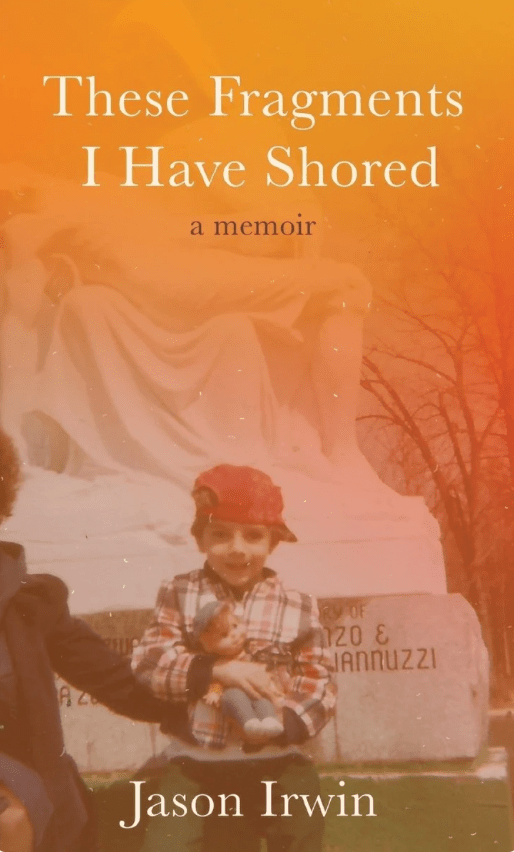

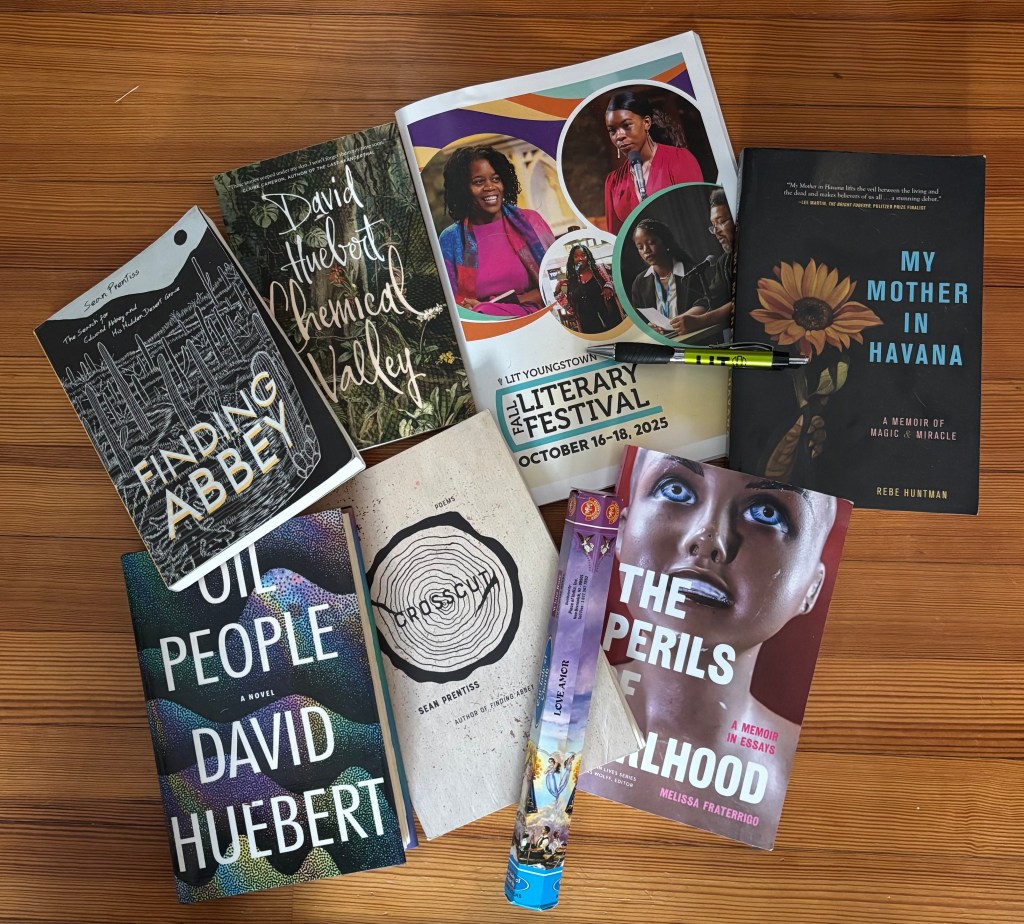
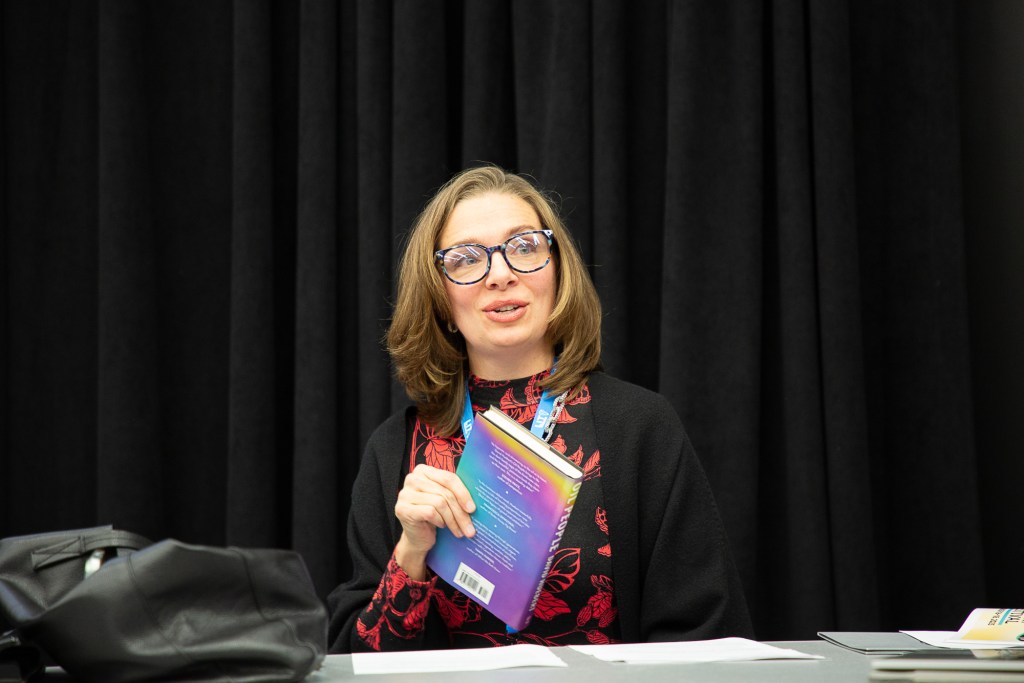
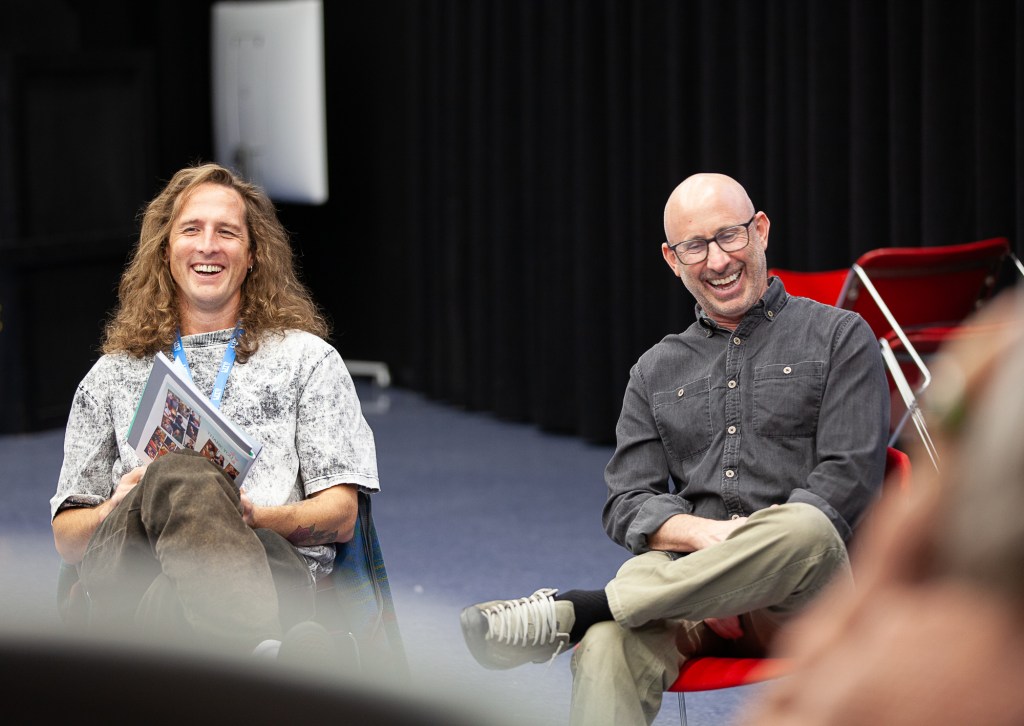
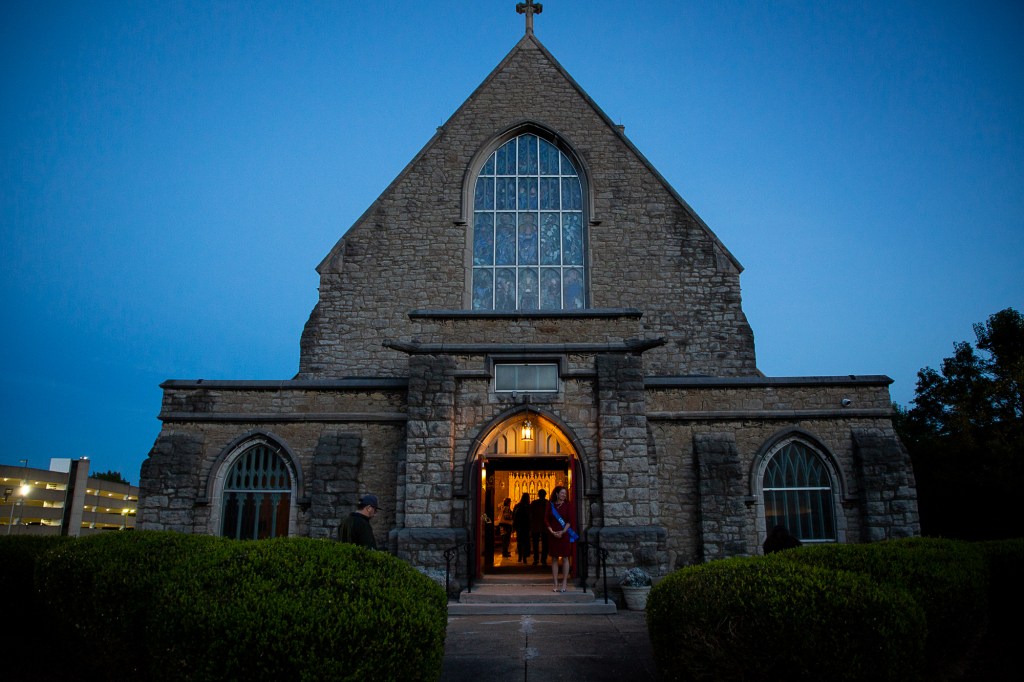
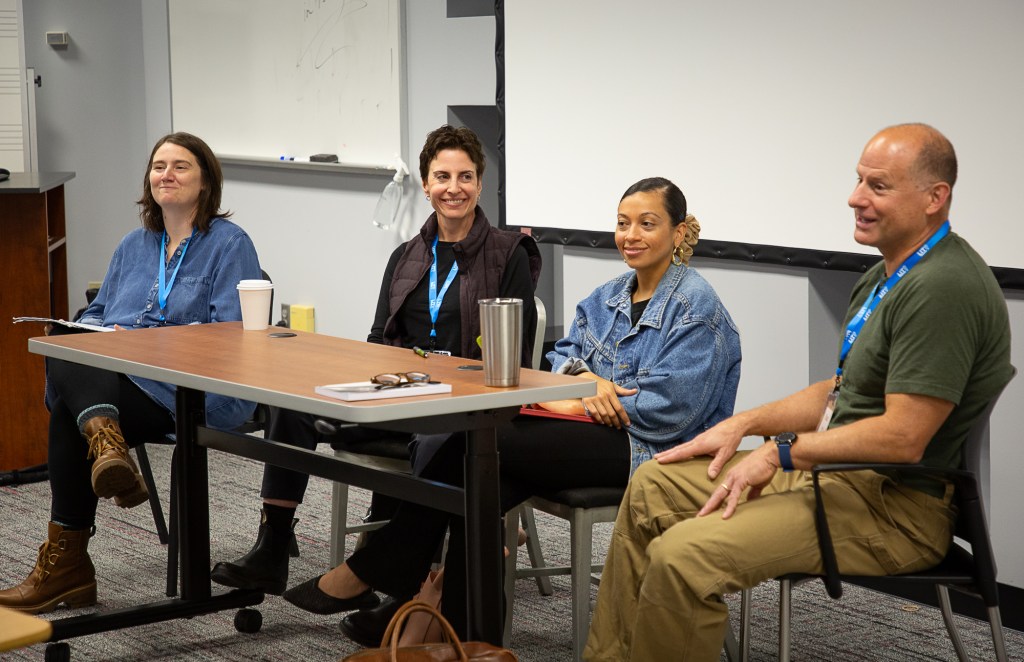


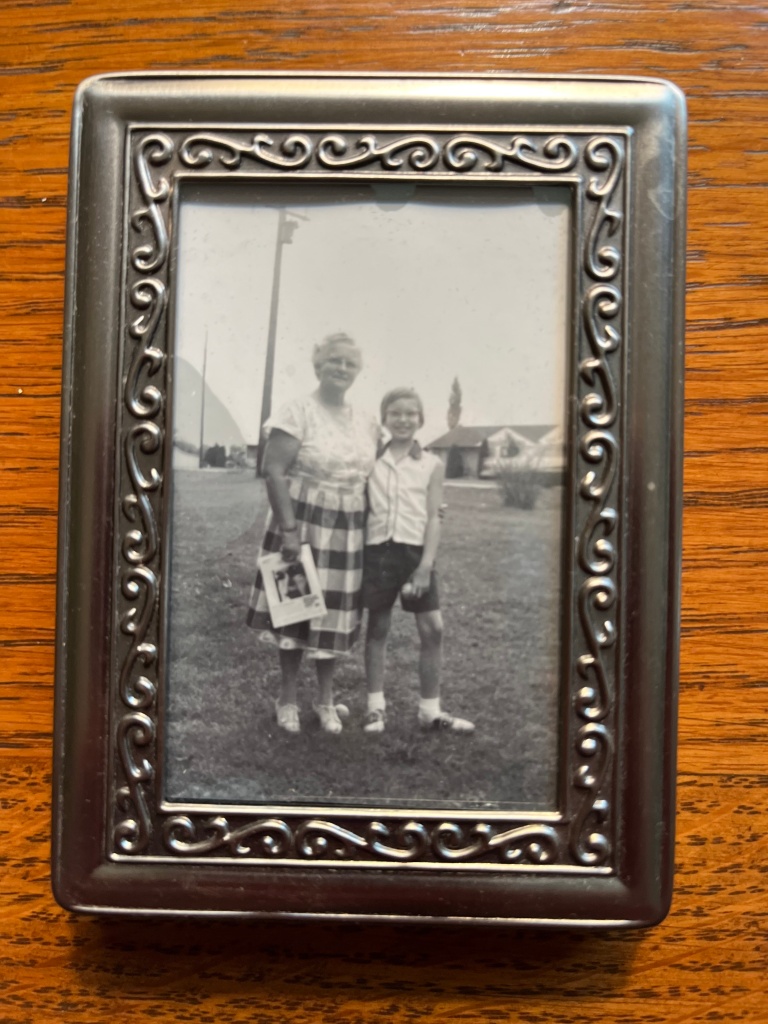



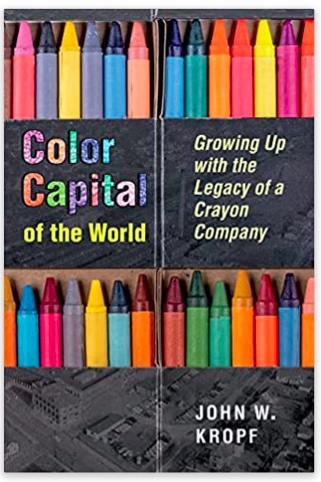
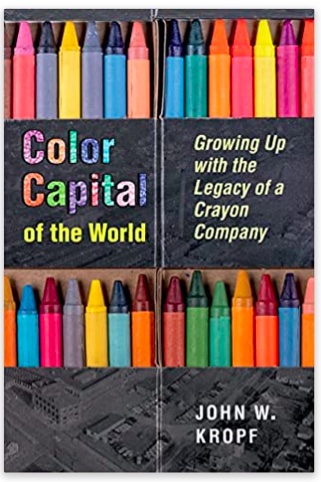

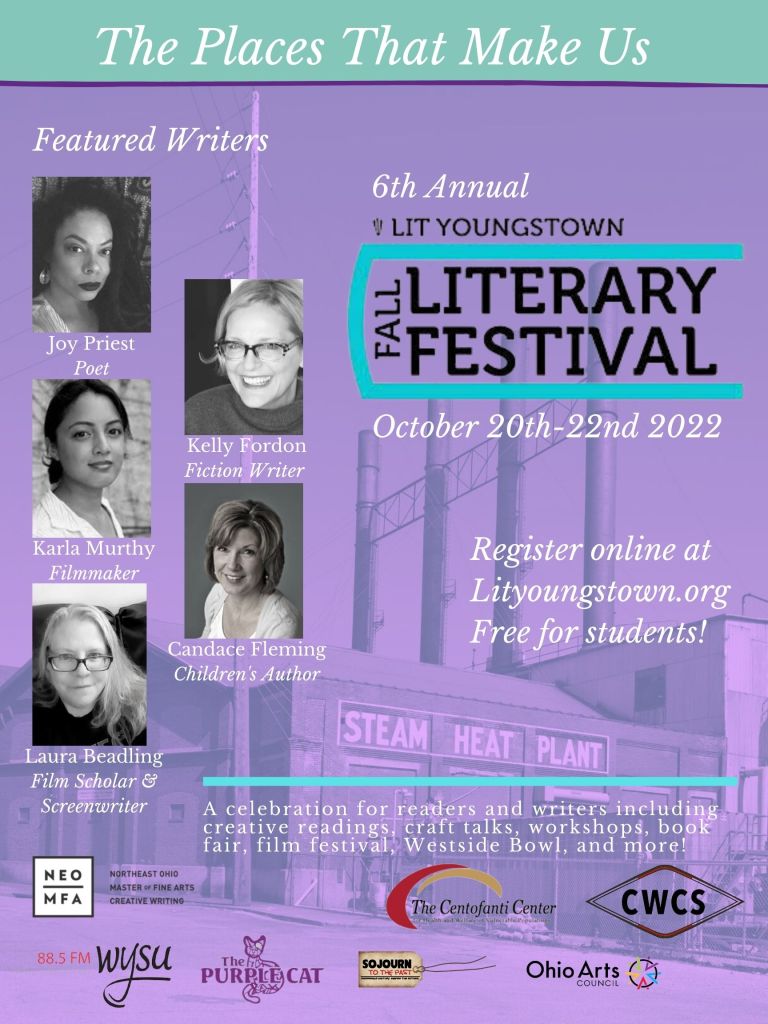
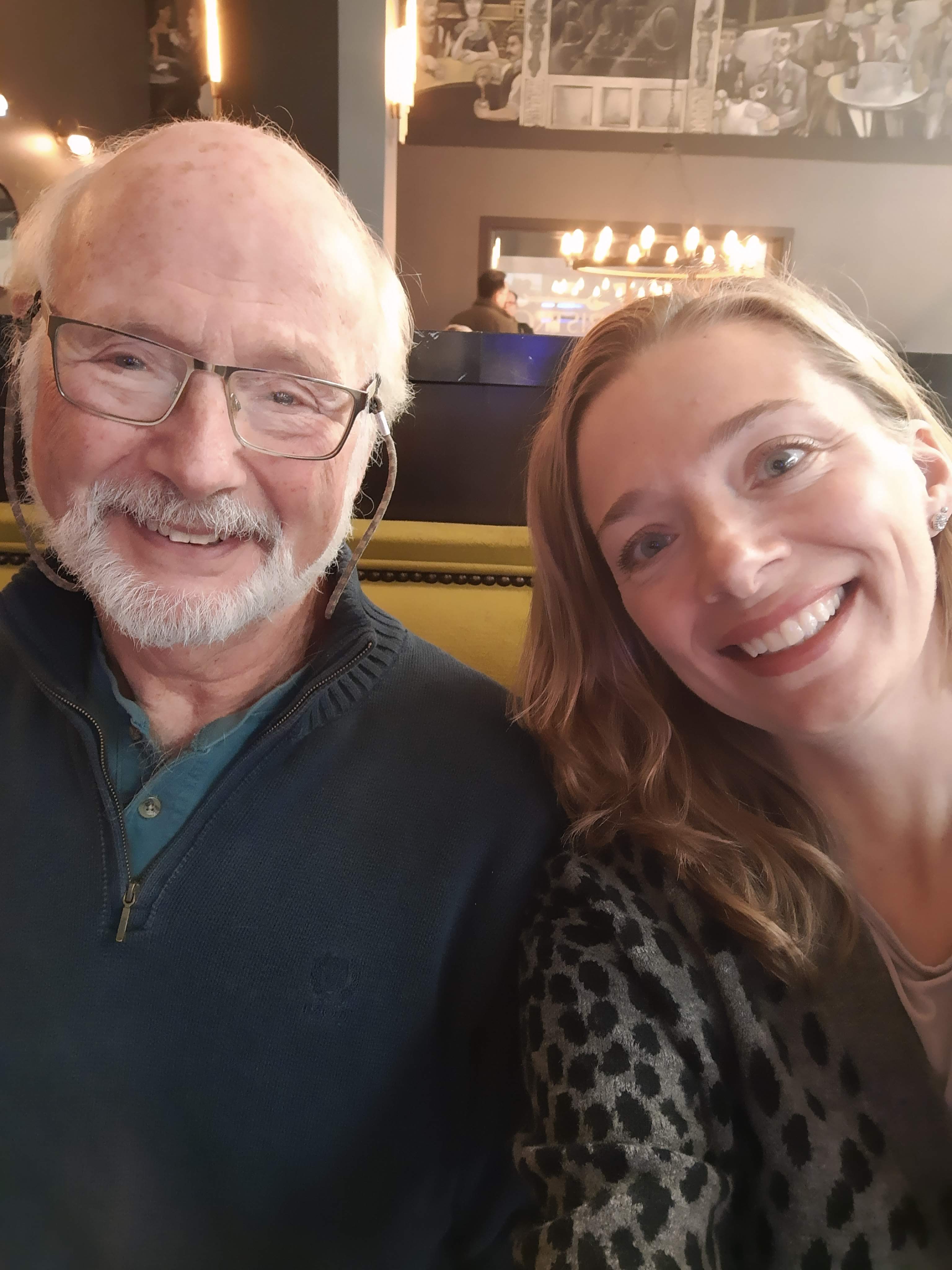

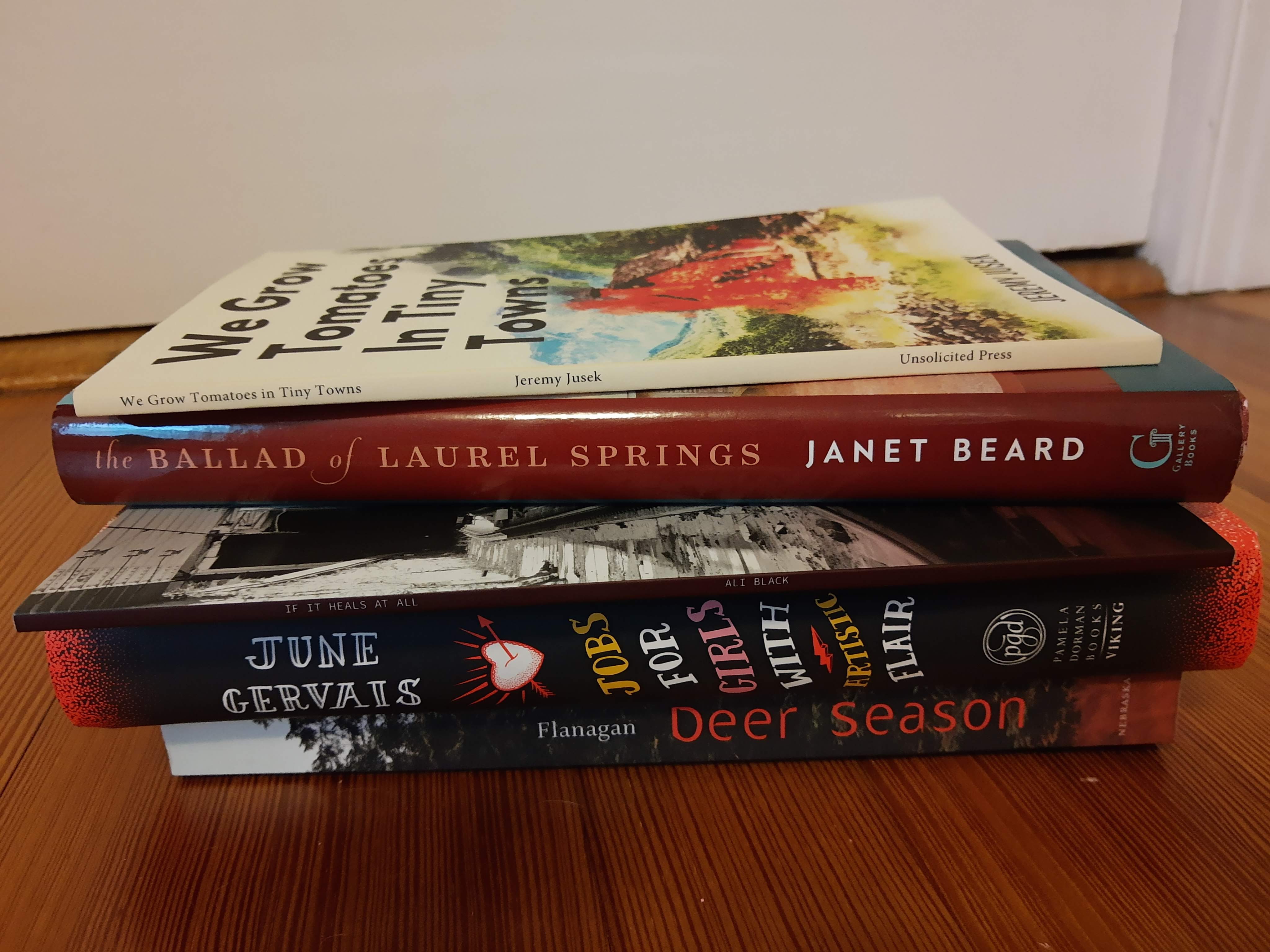
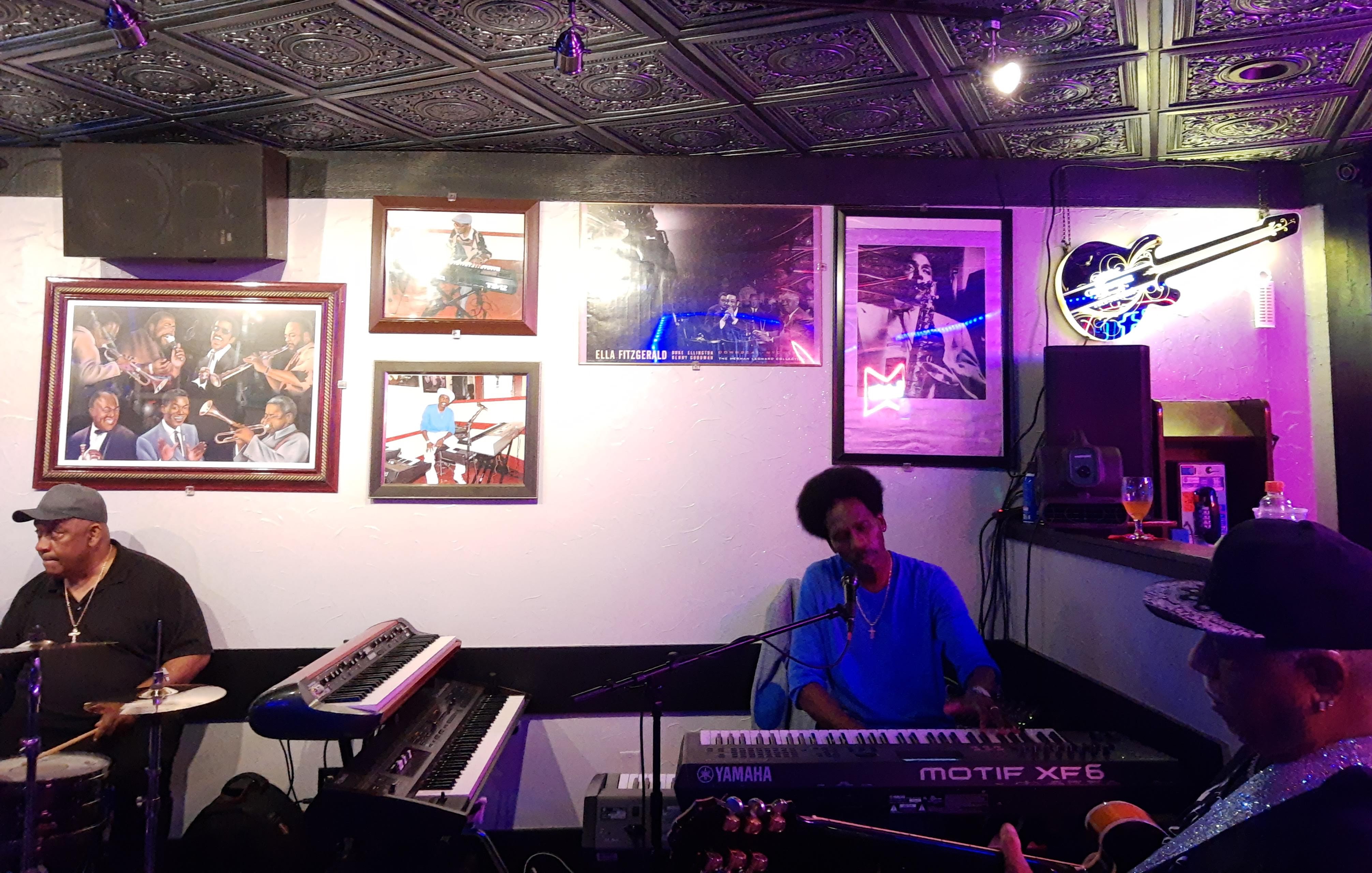

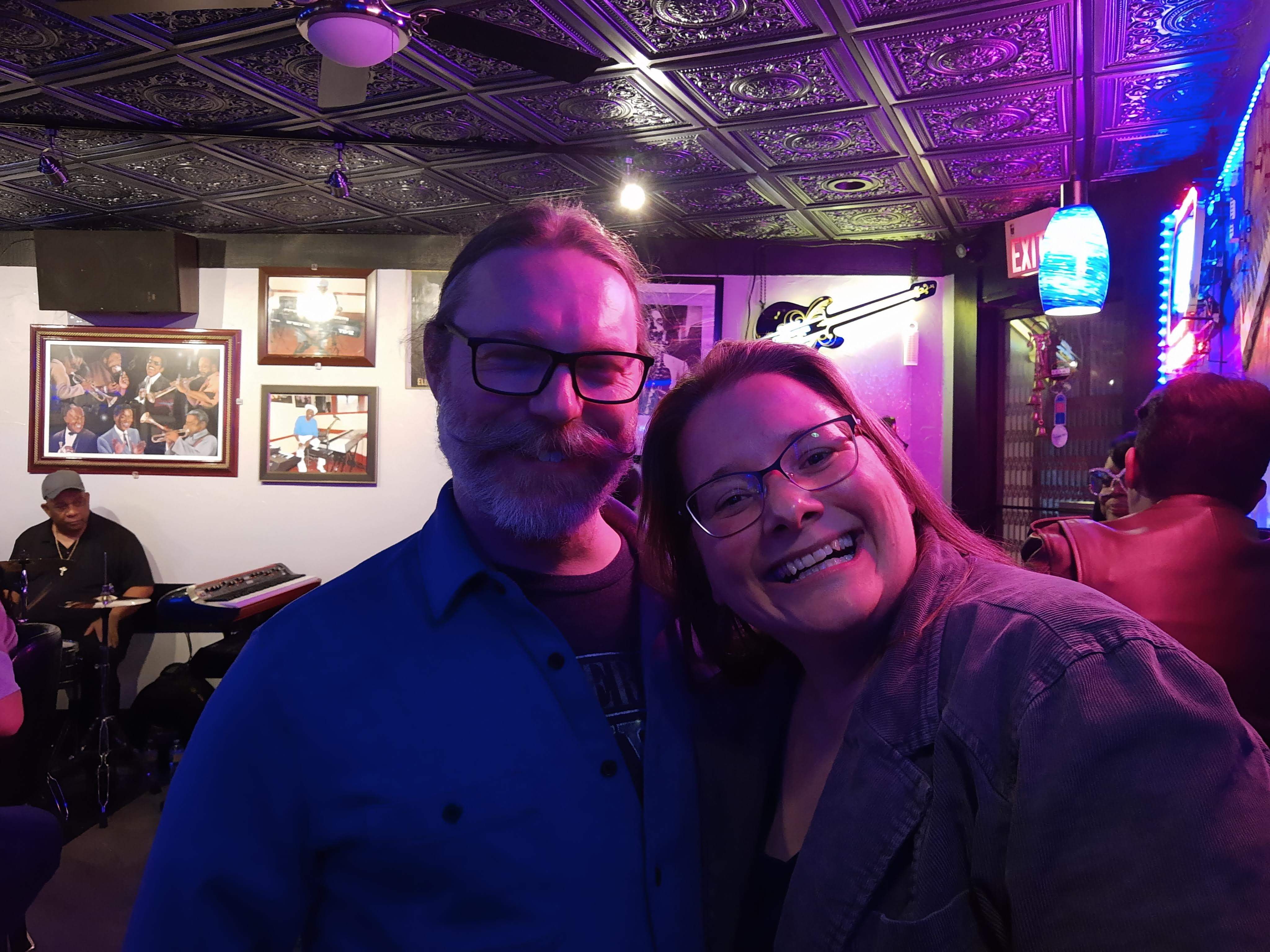


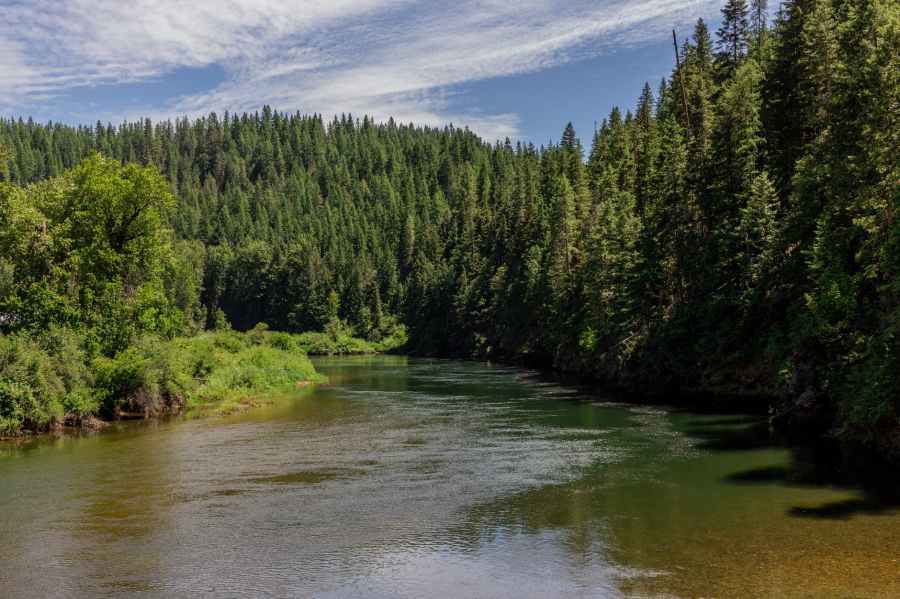


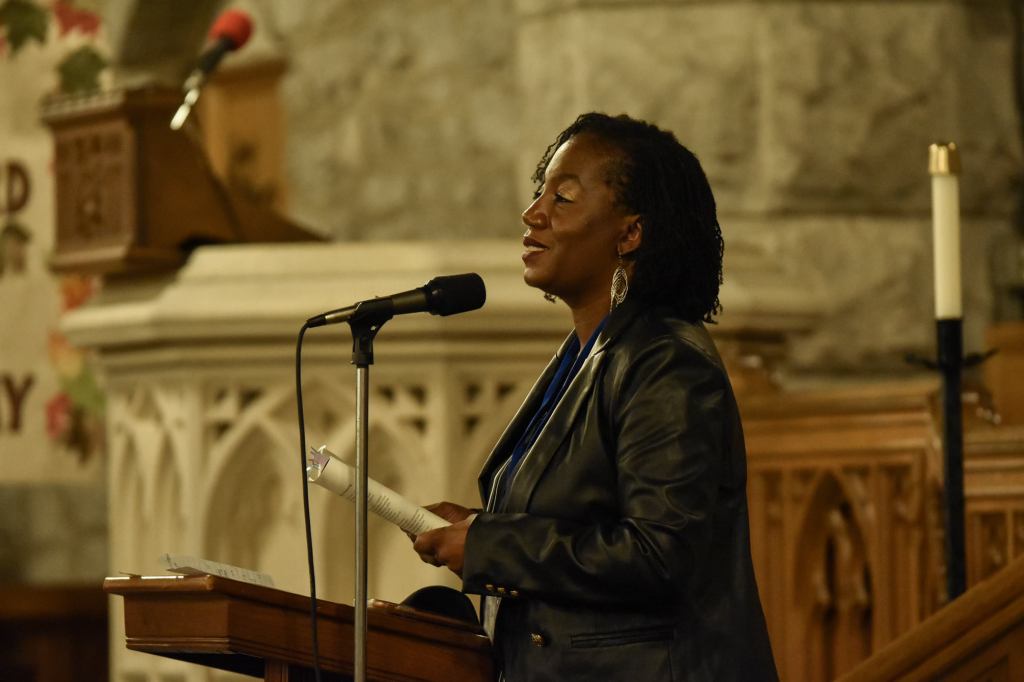


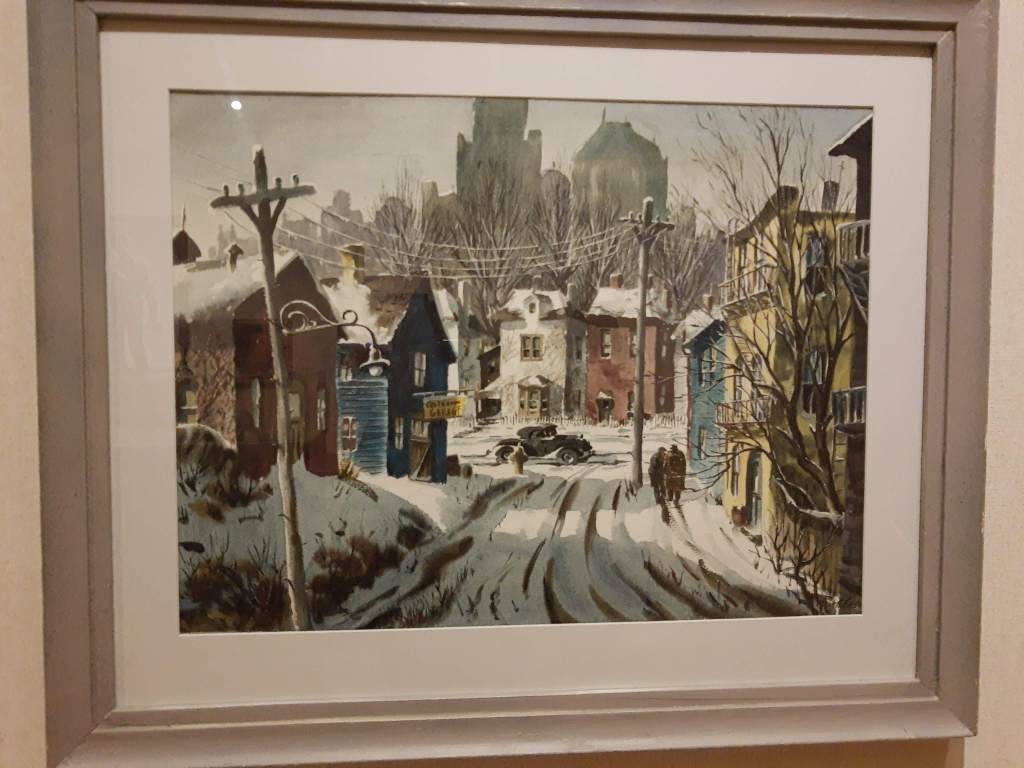


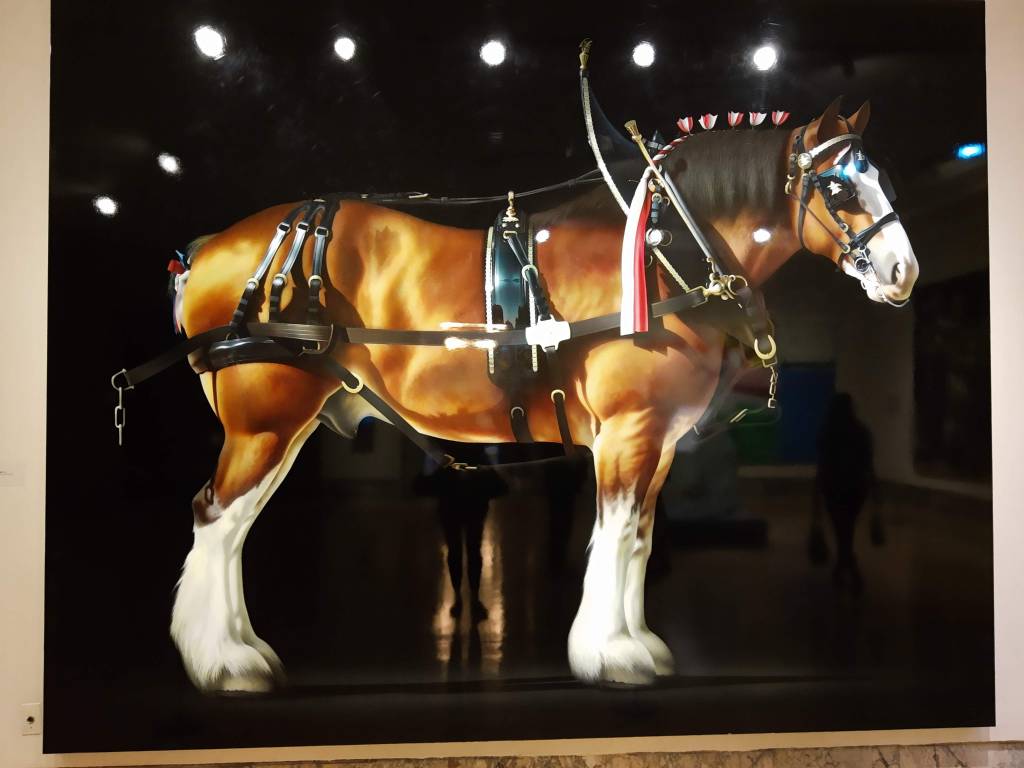


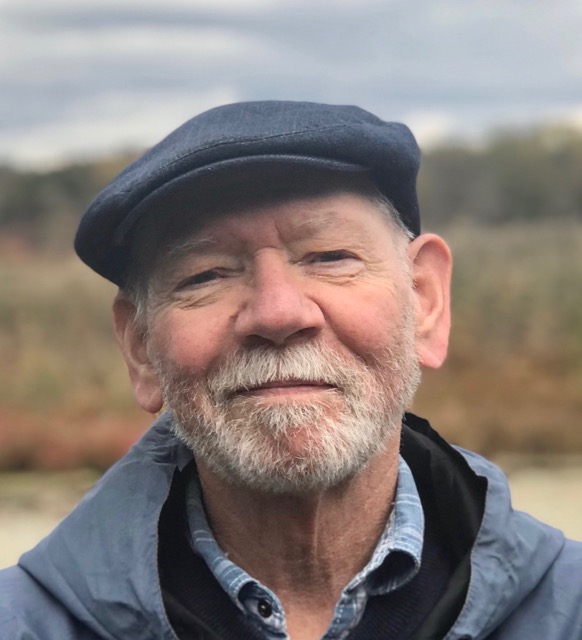


 Rust Belt Girl