This October I attended my eighth annual Fall Literary Festival hosted by Lit Youngstown. It was the Ohio literary organization’s ninth—and final—fall lit fest (at least for now). I could just be weepy about it (I’m weepy about much these days, tbh), but I’m too grateful to stay weepy. Since it’s a weekend to do grateful, let’s get into it…
Don’t worry, Lit Youngstown itself—with all of its amazing programming–is going strong at 10 years old. But before I get into my 2025 lit fest roundup I want to take a moment to share a few highlights from lit fests gone by (forgive my literary nostalgia), in no particular order:
Novelist Rachel Swearingen telling us craft session participants to, “Write towards change.” And “Stop thinking about characters and start thinking about relationships.” (Fiction writing changemaker right there!)
Me, getting to tell my story of my mom’s protesting of a nuclear power plant near my hometown when I was a kid (I wrote about it here) and detailing how that story turned into an integral part of my eco-novel (published someday, world!)
Exploring ekphrastic writing at the Butler Institute of American Art (great museum road-trip idea for you out of towners!) and exploring Youngstown writ large (getting to stay with friends and enjoying the local cuisine (there will never be enough pickle pizza, noggin-sized meatballs, and pierogis!))
Getting to be a student of Sandra Beasley, Ross Gay, Lawrence Coates, and so many other teacher-writers and getting to tell them over charcuterie and a glass of wine: “you wrote my favorite poem, essay, novella, thank you…”
Meeting writer friends (like the talented Melissa Fraterrigo) in person after years of reading her work (her novel Glory Days inspired a lot of what I’ve been trying to highlight at this blog these last nine years or so—stay tuned for a review of her memoir in essays, pictured). And meeting other friends year after year and weaving our stories—and lives—together.
The highest highlight? You. Becoming a member of the Lit Youngstown community through the fall lit fest has been incredibly rewarding for my literary life—and my life-life. Thank you, friends.
Now, 2025’s list fest was one for the books. (Peruse a few pics above and below.) And if you thought the environmental theme was going to mean a slew of nature poems…well, yes, and… Yes, and fascinating eco-fiction and challenging environmental memoir and poetry about nature redefined—from a place that was once an indigo plantation to the night sky over the Grand Canyon to trails cut by troubled teens into the Pacific Northwest woods—and so much more that “shapes our experience and identity, and represents our rootedness in earth.” Whew! I encourage you to read the impressive bios of the five 2025 featured presenters.
My preparation for this lit fest happily began months in advance of the event. (Once a student, always a student.) For my conversation with fiction writer David Huebert and memoirist and poet Sean Prentiss I read several of their books—she gestures to collage artfully displayed on her office floor—representing an array of what we lump under the term “environmental writing.” Look for a follow-up post with a good chunk of our discussion—fascinating and fun!
Other personal highlights from this year’s lit fest. (Know that this is just a fraction of the offerings and I, once again, wished I could have cloned myself, so I could make every single session.):
Day 1:
Narrative Medicine [definition: healthcare practiced with narrative competence]: A Generative Workshop, facilitated by family nurse practitioner and poet Dana Reeher. Imagine me taking furious notes for the anthology project I’m co-editing: Body of Work, essays at the intersection of dance and health. For a little workshop exercise, Dana asked us participants to respond to a writing prompt, “an expansive invitation to open the mind,” so I thought I’d write a very short piece about my own dancing and its impact on my physical and mental health outlook:
Maybe the mistake was I listened too well, that I pointed my feet too hard, that I really could feel that string coming out of the top of my head lifting me up to the studio ceiling. Maybe I postured too much, wanted too much. Maybe I turned out until I was turned in. Maybe all that looking in the mirror made me someone else. I can still spot a dancer, or an anorexic, from fifty paces.
My dancer friends here will likely recognize a lot of this, but especially the posture-reminder telling baby ballet dancers to imagine there’s a string coming out of the top of your head… After sharing my short piece of writing, a couple of the other workshop participants said the string image reminded them of a marionette. I’d never thought of that before, and I’ll tell you that image is still working on me!
The Pamela Papers: A Mostly E-pistolary Story of Academic Pandemic Pandemonium: The Musical. Based on the award-winning novel by Nancy McCabe, published by Outpost 19 in 2024, the presentation included a dramatic reading (with singing—who was expecting a musical at the lit fest? Not I. And it was such fun!).
Readings by David Huebert and Sean Prentiss in St. John’s (gorgeous limestone and stained glass) Episcopal Church sanctuary. Your girl provided introductions to both writers—thanks for putting up with my unorthodox investigative process to make sure they were exciting, guys!
Day 2:
Bengal Tiger Moments: Time Perception in Creative Writing, facilitated by Sean Prentiss. In this fascinating session, we talked about speed on the page, presented in five categories from fastest to slowest: Gaps, Summary, Scene, Dilation, and Pause. Sean presented examples of these techniques from creative nonfiction and explained the brain science behind our understanding of the movement of time—irl and on the page.
Rooting the Self: Writing as an Act of Person, Political & Environmental Transformation & Transcendence, a multi-genre workshop with (beautiful and talented) Rebe Huntman, author of My Mother in Havana: A Memoir of Magic & Miracle: Rebe took us through various stages/ways of honoring our voice and our writing by making space for it and celebrating it, including meditation, morning pages, repetitive activity (including list-making), “the writing cave,” and writing constraints and freewrites. My favorite prompt, a list-making exercise we did in this session, produced these lists, below. (From there I spun out a short prose piece, “Reasons to Revere Your Vagus Nerve” (we’ll see where that weirdness goes!):
5 Things I Consider a Miracle
High arches
Warm pie
The vagus nerve
Sweating carafes of water
Tanned leather
5 Recurring Obsessions
Ballet hands
Song
Accents, dialects, and regionalisms
Mom, mom, mom
Delight
Readings by poets Lauren Camp, Todd Davis & Kourtney Morrow: poems of cityscape to countryside to the night sky over the Grand Canyon left us audience members awed.
Days After
And then, after… there’s nothing better than returning home from a literary event inspired, nurtured, and with a few new ideas for writing already on the page.
If you’re reading this on Small Business Saturday, might I suggest you also read small and lit small by supporting your local indie bookstores and your favorite literary organizations today?!
Did you attend Lit Youngstown’s Fall Literary Festival last month? Another lit fest? What was your favorite part? Have an inspiration gleaned or a piece of writing captured you’d like to share? Feel free to jot it in the comments.
Like this post? Comment below or on my FB page. And please share with your friends and social network.
Are you a Rust Belt writer interested in seeing if your own post, or author interview, or book review might be right for Rust Belt Girl? Hit me up through this site’s contact function.
Check out my categories above for more guest posts, interviews, book reviews, literary musings, and writing advice we can all use. Never miss a post when you follow Rust Belt Girl. Thanks! ~Rebecca
Shoutout to Belt Publishing for all the great Rust Belt-ish books they put out. I don’t get around to reading enough of them, but when I pick one up, I know it’s going to be good. Belt Publishing’s 2016 release The New Midwest by Mark Athitakis is still a bible of Rust Belt lit for me, and my copy resides permanently in my bookshelves. And then there’s Edward McClelland’s super clever How to Speak Midwestern (linguistics is never not fun!).
Of Belt’s newer releases, I’m most excited to read Patrick Wensink’s The Great Black Swamp: Toxic Algae, Toxic Relationships, and the Most Interesting Place in America that Nobody’s Ever Heard Of. (I am so here for long titles and of books that make me feel like a somebody–in that I have heard of the Great Black Swamp, since my dad lives in Northern Ohio. Also, when the personal and the environmental collide–which should be often–fantastic storytelling happens, imo.)
I just finished Jonathan Wlasiuk’s An Alternative History of Cleveland, and thought, yep, Belt Publishing did it again. (I think Ed Simon–of Belt Magazine, now Rust Belt Magazine–wrote An Alternative History of Pittsburgh, which is bound to be as great, if not even better.) I’ve been dipping in and out of this history of my native northeast Ohio for months, not because it isn’t gipping but because it’s so layered. A summary for you from the back jacket copy:
Part natural history, part archaeological essay, and part a contemporary call to arms to reclaim and rewild Cleveland’s future, this unforgettable trek into the heart of ‘the land’ will change the way you see the city forever.
No easy task, the author attempts to provide at least a bird’s eye view (both figuratively and literally, as you’ll see) of 10,000 years of human history. He zooms in on the relationship (fraught, as you can imagine) between humans and the environment–of which there’s a lot to find interesting, as northeast Ohio is situated along the eastern shore of Lake Erie, bountiful in flora and fauna, when it’s left alone, that is.
Incredibly well-researched and cited, the parts of the book that “sang” to me best were those moments where the personal and the environmental intersected in a visceral way. In the final chapter, “The Land,” Wlasiuk describes his work for an organization called Lights Out Cleveland, which has him looking for dead birds on the sidewalks of Cleveland before dawn during the heart of migration season. These birds came to an untimely end along their journeys due to humans’ penchant for light, of course, and see-through buildings.
This might sound like a depressing chapter start, but the author has a knack for involving fascinating local voices–including the “irreverent” and mostly-anonymous voice behind the @trashfish_cle account on IG, who spends his days in a kayak fishing trash out of the Cuyahoga River–and for providing hope, often in the way of a call to action. Or, at least we get lessons by watching locals who are doing their part to “remediate the environment and spread awareness.”
And look, we can do our part–not just for the Rust Belt-ish literary world but for the world at large, for our flora and fauna neighbors–by talking about the books we read that not only entertain but open our eyes to the ways we are connected to each other and to these ancient environments we call home. Right?
What are you reading, reading, or watching right now? Let me know in the comments.
Like this post? Comment below or on my FB page. And please share with your friends and social network.
Are you a Rust Belt writer interested in seeing if your own post, or author interview, or book review might be right for Rust Belt Girl? Hit me up through this site’s contact function.
Check out my categories above for more interviews, book reviews, guest posts, literary musings, and writing advice we can all use. Never miss a post when you follow Rust Belt Girl. Thanks! ~Rebecca
Essayist Melissa Ballard contributes the fourth in our series of guest posts here at Rust Belt Girl, and, let me tell you, you’re in for a treat. Melissa has a talent for bringing the past to life and making her ancestors feel like our shared family. In this essay we meet Phyllis, Melissa’s grandmother, a woman of Northern Appalachian Ohio, whom Melissa writes about in a loving yet candid way, deftly delving into what makes personhood–class, sex, education, place and much more. (We also hope Phyllis is having the “time of her life,” Melissa.)
This Woman
by Melissa Ballard
This woman is my grandma, but not yet.
In this black and white photograph, a small, dark hat of woven straw covers her hair and shades her forehead. She wears a walking suit: a jacket and skirt in a light wool pin check with a belt of the same fabric, over a silky, patterned, blouse. The tips of the fingers of her left-hand rest in the pocket of her slim skirt. Her only jewelry is a ring on the little finger of that hand. I can imagine her cropped left foot pointing out, her dark stockings and t-straps. She slouches just a bit and turns her body toward the unidentified photographer. She looks directly at the camera. Her smile is slight, but it reaches her eyes.
This woman’s slight curves contrast with the riveted metal beam, perhaps part of a railroad bridge, that rises at a sharp diagonal behind her. In the early 1920s, her family lived on a side street a few blocks from the train station in Dennison, Ohio. Her father was an inspector for the railroad, so she had a free pass to ride.
This woman could be waiting for the early train to Pittsburgh or Columbus, where she will walk the streets with confidence, on her way to a job interview. But she is not. Or at least I don’t think so. I know little about this brief period, but I hope she is having the time of her life.
In 1925 she has a job in an ice cream shop, lives with her parents. Both she and her mother, who is preoccupied with social status, are named “Margaret.” This woman has already started to express her individuality and goes by her middle name, Phyllis or, on documents, “M. Phyllis.”
On June 18, 1925, eleven days before her nineteenth birthday, Phyllis and her neighbor, Harry, will travel 65.3 miles, maybe by train, to Brooke County, a tapering finger of West Virginia tucked between Ohio and Pennsylvania, where they can get a marriage license with no waiting period. Later that day, they will return to Ohio and be married at the home of the groom’s family.
I wonder whether Phyllis’ parents even attended. They had a reception for her later, but I gather it was her mother’s attempt at saving face. I can’t imagine she approved of my grandpa or his family, and I can easily hear her saying, “He’ll never make a decent living. You’ll end up in the poor house.”
Five months and five days later, their first child will be born. On January 14, 1928, their second child, my dad, will be born.
Phyllis c. 1920
The woman I remember, my grandma, was in her fifties. She had slim legs but a solid middle. She wore silver, cat-eye glasses before they were retro. Her short, dark hair was streaked with gray and white, her fingernails chewed to the quick. Wearing a well-washed cotton housedress covered with a flowered or checked apron and heavy lace-up shoes, she kept chickens and goats, grew vegetables and flowers, ran the laundry through a wringer before hanging it outside to dry, cooked meals from scratch. She kept a battered pan under the kitchen sink, filling it with food scraps. Every morning she fed it to the three hound dogs Grandpa had brought home from the dog pound, kept in a pen at the back of the yard. “Oh, hush up,” she said as they yipped and howled at her.
When Grandma wasn’t busy with chores, she answered the phone for Grandpa, who was the dog warden. She wrote messages in her flowery cursive: the name, address and phone number of the caller, and a brief description of the stray dog. She followed him to his dark green truck, reading her notes out loud. Grandpa never wrote anything down. Before she finished talking, he was backing out of the long driveway, kicking up gravel as he went.
They lived in a worn-out house on a liminal strip of land in Brightwood, part of Goshen Township, Tuscarawas County; my parents and I had moved to a suburb of Cleveland. Once a month, we made the two-hour trip down home to visit, and I spent more time there during the summer.
On hot afternoons, Grandma and I often sat together on the front porch swing, she doing her mending and me reading, trying to catch a breeze. A two-lane road ran close to the front of the house. The cars seemed to fly by, and the exhaust from the trucks taught me to mouth breathe, a skill I perfected when I ran into the hen house to collect eggs.
This route was nicknamed the “slow road” after a highway, the “fast road,” was built behind the house. One summer Saturday, Grandpa drove us into town on the slow road to get ice cream. Grandma and I sat on a bench with our cones, people-watching while Grandpa ran one of his mysterious errands. If Grandma asked him where he was going, he always said, “I need to see a man about a horse.” Which was odd, because my grandparents didn’t have any horses.
On the way home, I noticed a large house on a hill. “Who lives there?” I asked.
Grandma stiffened. “That’s the poor house. Where you go to live if you don’t have any money. It’s not a nice place.”
I immediately pictured a nineteenth-century orphanage from one of the many books I read. Rows of rusty metal cots with stained mattresses, thin sheets, and scratchy blankets. Peeling paint on crumbling walls. I shuddered and looked away.
…
The dining room at Grandma’s was small, with windows on three sides, some covered in plastic to keep out drafts. It was an afterthought tacked on to one side of the house next to the living room. It contained a water-spotted stand of neglected African violets, a treadle sewing machine with a clove-studded dried orange tucked in one of its small oak drawers, a large dining room table and chairs, and a handmade oak China cabinet Grandma had purchased for ten dollars with the money she made selling eggs.
When Grandma made Sunday dinner for our extended family it was served at noon. Grandma removed elegant pieces of stemmed glassware and individual salt cellars from the cabinet and set the dining room table with her good silverware. As we passed roasted chicken with gravy, noodles, and side dishes, Grandpa arrived late (he was known for having “girlfriends”), threw his work cap in the corner, and took his seat at the head of the table.
Only now do I realize how little Grandma wasted. Usually, she cooked one of her own chickens on Sunday, but she occasionally made a pork roast. After the meal, any scraps of meat were set aside, combined with corn meal mush (I can only imagine her reaction to polenta recipes in upscale restaurants) and baked in a loaf pan. For breakfast the next day, she fried slices and we covered them with butter and syrup. They were delicious.
Over time, and with deaths and disagreements, our extended family grew smaller, and we began eating all our meals in the large kitchen. The food was still delicious. One time, Grandma asked how everything tasted. Grandpa was the only one who didn’t answer. She stared at him, and he finally grumbled, “If anything’s not good, I’ll let you know.” Already showing signs of Parkinson’s, he poured a bit of his coffee into a saucer with shaky hands, and leaned down to slurp it.
Eventually, an old couch was jammed into a corner of the dining room, next to the china cabinet. It became my reading space when I visited. Now, as I sit down to read on my own sofa, I look at that same cabinet on the front wall of my living room in Oberlin, just two hours away from where Grandma lived. I have covered the top with family photographs.
Phyllis and the author c. 1960
Grandma taught me how to tie my shoes–we were both left-handed–after everyone else had given up; gave me my first sip of coffee, strong but cut with generous portions of sugar and thick cream; slipped me some of her beer while we watched Gunsmoke. As I got older and visited less, we wrote letters.
Shortly after my twenty-first birthday, Grandma and I walk in her back yard.We stop under the hot sun to admire the clumps of purple, yellow, and white miniature pansies that flourish in the crumbling foundation of an old shed.I started college three years late; I tell her I am overwhelmed and don’t think I can do the work. She is quiet, removes a flowered hanky from her apron pocket, pats her damp forehead and the back of her neck.
As we start slowly up the steps to the relative cool of the house, I link arms with her. I brush the cool copper of the bracelet she always wears because she believes it helps her arthritis. Her fingers are crooked, as mine are now. As I write this, I touch the copper cuff bracelet I bought years ago but have never worn. I keep it on my desk as a reminder of Grandma, and I wonder what happened to the soft, linked one she always wore.
I open the back door with my other hand. Grandma suddenly stands as straight as she is able and says firmly, “You stay in school.” She adds this, which I will hear her say more than once: “You need to be able to make your own money.”
…
After I’ve finished graduate school, married, and had a child. After Grandpa, who spent years in a nursing home with Parkinson’s, has died. On what will turn out to be the day my dad, her son, dies, Grandma moves into an assisted living facility. With Dad being ill, no one has had the time to take Grandma to see the place prior to moving in. She’s been calling me several times a day, anxious about the change.
She surveys the room: her favorite chair with an afghan she made folded over the back; her dresser, its top covered with a lacy scarf and family photographs, including several of my daughter; a large window that looks out on gardens; the new spread my mom placed on her bed that morning; a private bath.
She leans close to me and whispers, “Oh, Melissa, this is beautiful. I was afraid it would be like the poor house.”
Melissa Ballard has written essays for The Brevity Blog, Belt, Berea College magazine, and other publications. She is currently working on a book-length collection of essays about the women in her Northern Appalachia family.
Like this post? Want more? Comment below or on my FB page. And please share with your friends and social network.
Are you a Rust Belt writer interested in seeing if your own post, or author interview, or book review might be right for Rust Belt Girl? Hit me up through this site’s contact function.
Check out my categories above for more guest posts, interviews, book reviews, literary musings, and writing advice we can all use. Never miss a post when you follow Rust Belt Girl. Thanks! ~Rebecca
Last month’s AWP (the Association of Writers & Writing Programs) Conference & Bookfair—think writer-prom—wasn’t in the cards for me this year. My rational brain knew this, but that doesn’t mean I didn’t suffer from some FOMO. Writer friends, the warm L.A. sun, and the lure of the unknown—will I meet the literary agent of my dreams in the hotel bar?!—are attractive elements, for sure. But I decided to save my pennies and hold out for next year’s event in nearby Baltimore. (Who’s in?)
Really, that March weekend, I hardly had time to wallow in my FOMO (the name of my upcoming memoir, stay tuned, ha). But seriously, the indomitable Justin Hamm, poet and super solid literary citizen, created StayWP, an online poet and writers conference, to slake our literary thirst, as it were. What’s better than poetry in your pajamas!? Here’s a sampling of what us nearly 100 participants from around the country enjoyed from Friday evening through Sunday evening:
Readings from novelists including Mark Ostrowski and poets including Sean Thomas Dougherty
Generative workshops with titles like “Where the Poetry Rises like Dough Workshop” and “Rooted in Place,” led by former Missouri Poet Laureate Karen Craigo, which I attended, and “Like it’s my job. (‘Cause it is): Writing, Motherhood, and the (Re)Formation of Work”
Enthralling discussions, including “In Dialogue,” “Casting Spells for the Future,” and “Power of the Poet Posse” (that’s a gang I could get behind!)
Saturday, my super talented friend Shemaiah Gonzalez (whose debut collection of essays launches next week!) hosted a generative workshop over Zoom. The hook: How do you even begin to get ideas on what to write: let alone something joyful? Looking at three pieces of writing, we participants came up with our own. I got a couple really good starts for essays and even a prayer (for our sweet neighbor who snowplows our drive in the winter, even before he does his cousin’s drive next door).
One of the prompts was so intriguing I’ll share it, paraphrased, with Shemaiah’s permission. We were asked to draw a sketch of a place we knew well: a home, or place of work or worship. Then, we were to pick a specific spot to interrogate. I think about writing about place a lot here on the blog, but Shemaiah made that importance plain: “We write about place because place is where we keep our stuff.” And, of course, the stuff we choose to keep is important to us. I ended up writing about the rattan rocking chair—the best seat—my dad would often occupy when our family would go out on to the porch to watch rain showers. (My kids think it’s hysterical we did this. But then I also truly enjoyed The Waltons. It was a different time.)
My weekend of creativity continued on Sunday, when I took one of my sons with me to hear Akron, Ohio, native poet Rita Dove (who received the National Humanities Medal from President Bill Clinton the National Medal of Arts from President Barack Obama—the only poet ever to receive both medals) at the Baltimore Museum of Art. (Thank you to co-sponsor Johns Hopkins Center for Talented Youth!) The little I knew of Dove, I learned from talking with Akron’s own David Giffels in an interview right here at Rust Belt Girl. This poetry reading was my son’s first, and so now he is ruined for all other poetry readings, I’m afraid. But what a way to go down!
As I’m wont to do, I took a notebook and jotted images I liked from the poems she read. Here are several lines from Dove’s beautiful work, which I smushed together like a found poem, a found Dove poem:
scabbed like a colt, our stuttering pride
my Cleveland cousins, hachety smiles
we were a musical lantern
tired of singing for someone else
what you bear is a lifetime of song
if you can't be free, be a mystery
Baltimore Museum of Art
Piece of art from artist Raúl de Nieves
Yes, I got it signed and it’s special. What should I read next?
Rita Dove and me (taken and posted with the poet’s permission)
Baltimore street scene–gotta love some row houses
There are few things that improve with age. Wine is one. Hutzpah is another, and don’t you know my hand was the first that shot up during the Q&A with Dove? Since I knew I’d be writing about this reading for Rust Belt Girl, I asked her what it meant to her poetry to be from the Rust Belt. Her answer was really interesting. She talked about understanding and appreciating work and its value from her family members and neighbors. She talked about the value of diversity, including a strong Hungarian presence among the immigrant groups in her part of town. A singular place, she also noted the term that makes Akron its own unique think: the “devil’s strip” for the tree lawn or berm between the sidewalk and the street. What do you call that strip, where you’re from?
Dove also talked about her journey from aspiring musician to poet. (She still plays the cello.) She noted that she was very shy and didn’t want to get up in front of people and so turned to words. Ha. There we were, all 200 or so of us. She later learned to play the viola de gamba and took voice lessons, and learned to sing opera, which helped her to “embody the words” in her poetry. She has worked with musicians on song cycles, collaborations that helped her feel “less afraid of being bold.”
I’ll end there. I know I wish for that. Here’s to words in poems and in song—and to being bold.
Now it’s your turn: tell me, if you’re a writer, have you been to AWP? Do you plan on attending next year? How do you quash FOMO in your creative life or otherwise? And how do you tap into your boldest self?
Hankering for Rust Belt author interviews, book reviews, and more? Check out my categories above. I hope you’ll follow me here, if you don’t already, so you never miss a (quite infrequent) post. Thanks! ~Rebecca
You are forgiven if you’re not up on the middle school slang that has redefined the word “Ohio” (my beautiful native state) as cringey or weird.
Does that mean the writing from Ohio authors or about Ohio places is also weird? In some cases (and often my favorite cases) yes.
It has been more than a minute, Rust Belt Girl followers, and I appreciate you for hanging on. Busy days around here with a book project going and essays popping up here and there. And of course there’s work-work to contend with. And my teenagers who keep me hip (surely that’s not a word they’d use) through their generation’s reinvention of language, music, and fashion. (A whole wardrobe of hooded sweatshirts and oversized black jeans, anyone?)
But I’m thrilled to share with you my latest essay, which is part essay and part book review. The book? Matthew Meduri’s debut novel Collegiate Gothic. Part satirical campus novel, part crime procedural, and part Italian architectural treatise, this one is quite fun (and, yes, a little Ohio.)
What have you been reading and writing lately, readerly and writerly friends?
Hankering for Rust Belt author interviews, book reviews, and more? Check out my categories above. I hope you’ll follow me here, if you don’t already, so you never miss a (quite infrequent) post. Thanks! ~Rebecca
William Heath, born in Youngstown, grew up in the nearby town of Poland. A graduate of Hiram College, he has a Ph.D. in American Studies from Case Western Reserve University and has taught American literature and creative writing at Kenyon, Transylvania, Vassar, the University of Seville, and Mt. St. Mary’s University, where the William Heath Award is given annually to the best student writer. He has published four poetry books: The Walking Man, Steel Valley Elegy, Going Places, and Alms for Oblivion; three chapbooks: Night Moves in Ohio, Leaving Seville, and Inventing the Americas; three novels: The Children Bob Moses Led (winner of the Hackney Award), Devil Dancer, and Blacksnake’s Path; a work of history, William Wells and the Struggle for the Old Northwest (winner of two Spur Awards and the Oliver Hazard Perry Award); and a collection of interviews, Conversations with Robert Stone. He received a Lifetime Achievement Award from Hiram. He and his wife Roser live in Annapolis, Maryland.
Let’s begin with a taste of “Steel Valley Elegy” from William Heath’s poetry collection of the same name. Here’s the first stanza:
I speak Steel Valley American. Once mills
lined the Mahoning River from Youngstown
Sheet and Tube’s Jeannette Blast Furnace
on Brier Hill to Republic Steel in Struthers.
Coal intensified to coke turned iron ore
into molten ingots that were rolled into slabs,
scarfed free of impurities, shaped for strength:
bridges to span waters, girders for skyscrapers,
tanks, ships, guns, and shells to win World War II,
machines and factories for our bounty.
What I love about this poem is how the poet unearths the beauty (and more obvious power and destruction) present in industry, a beauty borne by the transformation of a thing, like dirty coal, to another thing, like shining steel.
The transformation is accomplished by people and fire, which always lends to these scenes of the mills a sense of the miraculous for me, something to be found among the gods of Olympus. And if I spin out this analogy, steelworkers are mini gods then, prone to falling from on high, of course—so much transformation and story in this history of our shared native place.
William, you are from one of my favorite adopted cities, Youngstown, Ohio (“Little Chicago,” as you call it in the above poem). Can you tell us about your Rust Belt upbringing and how it perhaps sparked your creative work? Or has informed it? Did you dream of becoming a writer and teacher when you were young? How did place factor into those dreams?
I was born in Youngstown in 1942, spent my first six years in Gerard. I have few memories of that other than a big snow that we kids tunneled under and riding a neighbor’s large dog. My parents, Oberlin graduates, were teachers; my dad became principal at Hays Junior High in Youngstown; my mom substituted a lot in a variety of subjects. The family moved to Poland, a small New England style town nearby where my memories begin. Like most boys I was interested in sports and girls, not necessarily in that order; the poems that start off Steel Valley Elegy are based on my boyhood. For better or worse, I was better at sports than girls, especially basketball and track. Poland High won the sectional tournament, which meant beating the best Youngstown teams, then lost to Warren in the next round (I was guarded by the future Ohio State and Cleveland Browns star Paul Warfield). In track I qualified in the high jump for the state tournament in Columbus, where I was an also-ran against that top competition (no small school/large school divisions then).
When I was a boy I wanted be a high school history teacher and a basketball coach, then at Hiram College I widened my perspectives: switched from Republican to Democrat, decided to become an English professor. Since teenage boys love to brag, what was most notorious about my area were Mafia wars to control a gambling game called “the bug,” resulting in many bombings, at least a dozen deaths; Youngstown was dubbed “Little Chicago.” I never witnessed first-hand any of that violence, but when I was visiting my cousin in posh Shaker Heights, I saw the aftermath of a shooting described in “A Hit in Shaker Heights.” I once was a suspect in a robbery at a boathouse where I worked in the summers that brought me to the dreaded Youngstown police station for a lie-detector test, see “An Inside Job.” In sum, I lived a fairly typical small town Midwest boyhood, with the usual teenage antics that feature in some of my poems, while next door was a thriving steel city with a lot of good-paying union jobs but also a gangland war between the Cleveland and Pittsburgh mobs.
Your literary influences are many. With a Ph.D. in American studies, you became a professor, poet, and novelist. Your 1995 novel, The Children Bob Moses Led, is about the civil rights moment in Mississippi. Mississippi is fairly far afield from your Ohio beginnings. Can you talk about the inspiration for this historical novel?
After majoring in history with a minor in English at Hiram, I went to Case Western Reserve University in American Studies. As a college teacher, I realized my students knew little about the civil rights movement. I began my writing career as a poet, then switched to writing fiction, and decided to write a novel about Freedom Summer in 1964, when college students, mostly white, went to Mississippi where three young men were murdered by the Klan shortly after they arrived. That courageous effort was a moral high water mark of my generation, and I wanted to write a true account of it. Bob Moses (a charismatic Black man from Harlem who had studied philosophy as a graduate student at Harvard) was the key SNCC leader, indeed he was a legend in the movement; he died a few years ago and lamentably is largely forgotten. I had participated in the March on Washington in 1963, not Freedom Summer; I knew about the civil rights movement but not nearly enough. I devoted many years of research to the project, my most important archives were the SNCC papers at the Martin Luther King Center in Atlanta and the invaluable Sixties files at the Wisconsin Historical Society in Madison. My wife and I made several trips to Mississippi where I interviewed Black and white participants in Freedom Summer. I have a wealth of stories about those experiences, one is recounted in Alms for Oblivion, “Preacher Knox.” Several of my other poems about the South appeared in The Dead Mule School of Southern Literature, my favorite name for a poetry magazine.
I like to think that my skills as a novelist, historian, literary critic, and poet enrich each genre.
The Children Bob Moses Led was published by Milkweed Editions who made it their feature fall selection and nominated it for the Pulitzer Prize. It did win the Hackney Award for best novel, was reissued as a paperback, and then re-printed by NewSouth Books (now a part of the University of Georgia Press) in a twentieth-anniversary edition. It has sold the most of my novels and has been used in classes from junior high to graduate studies. My multi-award winning history book, William Wells and the Struggle for the Old Northwest, has also sold well and remains in print. Both books epitomize my interest in American Studies, since I was able to draw upon my extensive interdisciplinary training to cover multiple aspects of the topic to make them valid history and vivid literature. I think my early years as a poet also served to give my prose a distinctive tone. I like to think that my skills as a novelist, historian, literary critic, and poet enrich each genre.
You began publishing your poetry in the 60s. Can you talk about the differences between writing the novel and writing poetry? Have you found that there are seasons of life for each, when you are drawn to one form or the other? Or is it that the subject matter demands the form? Can you talk a little about your creative intuition or your creative process, or both?
My first teaching job was at Kenyon College, then the epicenter of contemporary writing thanks to John Crowe Ransom’s Kenyon Review, which drew a host of talented students and teachers to that lovely campus in rural Ohio. I attended his 80th birthday party and met several famous authors, including Robert Lowell, Kenneth Burke, Peter Taylor, et. al. Carl Thayler, an older student who had been a bit player in Hollywood films and was intensely interested in poetry, also brought writers to the campus—that is how I met Toby Olson and Paul Blackburn, who encouraged me to write. For the first fifteen years of my college teaching career I wrote mainly poetry and published some hundred poems in various little magazines, but that did not carry much weight when I came up for new contracts and tenure. Thus I went from Kenyon, to Transylvania (where my poetry writing improved markedly), to Vassar; in 1979 I was selected as a Fulbright professor of American literature at the University of Seville.
During phase one of my poetry career, I was influenced by William Carlos Williams, James Wright, Philip Levine, as well as other poets who wrote free verse with a sharp-eyed realism about the gritty side of American life. I was drawn to the idea that poets should be grounded in specific images that evoke the world of the poem and resonate with readers. I read poetry widely in those days and had strong opinions about many poets. At some point, however, I made a major mistake: I decided that the next poem I wrote should be better than the previous one; not surprisingly that proved counterproductive. I also was frustrated that my focus on poetry stood in the way of obtaining a permanent place in my profession. At Vassar, I solicited comments from contemporary poets I admired, but did not know personally; as a result I received high praise from James Wright, Philip Levine, Richard Wilbur, and others that was certainly encouraging, although their kind words did not move the tenure committee at Vassar.
More than one critic has noted your adept storytelling in your poetry. Do you come to a poem with a story in mind you’d like to tell? Or do you usually begin with an image and a story emerges from it? Can you point to a poem of yours I haven’t mentioned here that tells a particularly necessary or good story?
I like to tell stories, covering a wide range of topics; I think that is one of my strengths. My first poetry book, containing the best of my early work, The Walking Man, opens with “The Boy Who Would Be Perfect,” a true story based on a summer I spent as a counselor at a camp in the Adirondacks teaching boys from wealthy Jewish families in Great Neck, Long Island, how to play tennis. As it turned out, two of ten boys in my cabin were mentally disturbed, something I had not been told; they proved to be very difficult. I conflate the two boys into one in the poem, which is true to what transpired. That summer I also took my campers at night to see black bears (they didn’t believe bears existed anywhere near them) feeding at a garbage dump—but that’s another story yet to become a poem.
When I returned to writing poetry following my retirement in 2007, I realized that many of the stories I liked to tell had poetic possibilities—a particular focus and sharp images—so I turned them into poems. Steel Valley Elegy opens with autobiographical poems that tell stories; my next book, Going Places, features stories about the two years I lived in Seville, the next section contains poems based on the years (when you add up all the extended visits) I spent in or near Barcelona, where my wife was born. My most recent book, Alms for Oblivion, has narrative poems, a few several pages long. Some narrative poems are not from personal experience, rather on the experiences of my generation, such as “Chicago 1968,” “Bringing the War Home,” “Shut It Down,” “At the Commune,” and “Jail, No Bail.” As with The Children Bob Moses Led, they are designed to put the Sixties into critical perspective.
Your most recent poetry collection, Alms for Oblivion, is broken into six parts. Part II is titled Flyover Country. The poem by the same name concludes: “We folks down below look up / and out … Beware of our resentment.”
Reading that poem, of course the notion of “flyover journalism” comes to mind, when a place’s stories are told by outsiders. As I am like you, a NE Ohio native living on the East Coast, I’m wondering, how do you keep at least somewhat rooted to your native region in your work? Through memory and history? Do you return to Ohio? Are there literary organizations, local news outlets, or podcasts you seek out for a current, local perspective?
What is your relationship now to the notion of Flyover Country, and why do you think it keeps popping up in your work, despite having lived on the East Coast for many years now?
As you note, “Flyover Country” tries to capture how people in the Midwest feel about the rest of the nation looking down their noses at them. This is not always true, but has become an article of faith; the resulting “resentment” helped lead to the disastrous, in my view, reelection of Donald Trump, who has no interest in or understanding of the Midwest but an uncanny ability to play upon people’s fears and anxieties. My parents have been dead for years, but my sister still lives in Delaware, Ohio, and I visit her every year or so. I have attended the Buckeye Book Fair in Wooster, the Midwest Historians Convention in Grand Rapids, the Youngstown Lit festival, and the Ohioana Book Festival in Columbus. That enables me to keep in touch with what is happening on the ground in Ohio and elsewhere (I also lived in Kentucky for five years). I must admit I am delighted to do a Rust Belt Girl interview, because like you I love the Midwest (even if I sometimes weep for it).
For better or worse I am not a high tech person; my cell phone stays in my car, I respond to Facebook posts but rarely post myself; I’m on Linkedin but never use it; I have never twittered; when asked for my twitter name I sometimes respond “Curmudgeon.” This dates me, I know, yet I really would welcome poetry lovers who are active on the internet, if they are so inclined, to promote my work. I would love to see one of my poems go viral! George Bilgere, a poet we both admire, did include “The Vet” on his wonderful Poetry Town recently. And Grace Cavalieri featured me on her “The Poet and the Poem” series from the Library of Congress.
Before you lived in Maryland, you and your wife, the novelist Roser Caminals-Heath, lived in Europe and traveled extensively. While remaining rooted to your past, your poetry takes the reader to foreign shores, as it were. “The Starlings of Rome” is one I particularly like. Here are the first few lines:
At setting sun hundreds of thousands
swoop and swarm over the Vatican
and other vital organs of the city.
What I notice in these lines is a simplicity and a precision in the language and—and I might be reaching—a return to the body. We’re talking about starlings making their ethereal patterns in the sky; yet “organs” brings us back to ourselves, back to earth then. Do you see it this way? I’d love to know how you developed your poetic style that is at once reaching and reachable, if that makes sense.
I’m grateful you asked about my wife Roser, who as you mention is a distinguished writer in her native Barcelona. She writes in Catalan, a distinct language from Spanish, and has published ten highly praised novels, one won the prestigious Saint Joan prize. Steel Valley Elegy contains poems set in the United States, while its companion volume, Going Places, is set abroad. I met Roser when I was a Fulbright in Seville and she was at the University of Barcelona. For years we spent our summers at Vilanova i la Geltru on the coast, then her parents moved to Frederick, MD until their deaths. We love to travel, not only in Catalonia, which Roser considers a separate country from Spain, but extensively in Europe and elsewhere, including Russia, Morocco, Egypt, Turkey, Canada, the Dominican Republic, Guatemala, and Mexico. Our most exotic trip was to Nuku Hiva, in the Marquesan Islands, for a Melville conference. A few poems in Going Places are set in countries I have not visited in person, only in my imagination. Especially in my poems set in Spain and Catalonia, I try to speak not like a tourist and more like someone with personal knowledge of a people and place.
As you mention concerning “The Starlings of Rome,” my poems are based on concrete images and thus have “body.” The starlings make marvelous spirals in the sky, suggesting a spiritual dimension, while their droppings present a major problem. It’s that double-sided nature of life that appeals to me. The “Starlings” poem is part of a sequence detailing how strangely other creatures sense the world with its good and bad vibrations. Wallace Stevens once said “the greatest poverty is not to live in the physical world,” and William Carlos Williams added “No ideas / but in things.” Hence the human body and the “body” of the world are essential to me in poetry, which should draw on all of our senses—taste, touch, sight, hearing, smell. In my fiction, I also ground my work in a lot of physical detail, “How the weather was,” as Hemingway once said. Hence I keep my characters in fiction, and the speakers in my poems, in voice, each with a distinctive way of saying things.
With eco-fiction booming and nature poetry always compelling, I read with interest “The World at Low Tide,” which feels like a nature poem and cautionary tale all at once. Here’s the first stanza:
High above spruce trees
the rosy breast of a soaring gull
catches the glory of the risen sun.
Seabirds skim over tide flats
waiting to feed on what waves
bring in and leave behind.
Can you talk about the inspiration for this poem or other nature poems of yours? Does living on the crowded coast put into stark relief our relationship to the water and earth we call home? How does this place infuse your poetry?
Although I’m from the landlocked Midwest, I am very fond of coastal settings, especially the Mediterranean but also here in Annapolis on the Chesapeake Bay where we have lived since 2022. Every summer we go to Lewes, Delaware, for a week at the beach; and in the winter to Key West (I have written poems about both places). As Melville wrote, “meditation and water are wedded forever,” which also brings to mind a haunting Robert Frost stanza:
They cannot look out far
They cannot look in deep
But when was that ever a bar
To any watch they keep.
These lines capture the poignant, sometimes troubling, limited nature of us human beings. I must admit the lines are more troubling nowadays, since Trump’s re-election. I had hoped for more from my fellow citizens than they were able to give. As I say in one of my yet to be published poems on the election: “we are not / who we think we are / or pretend to be.”
Coastal areas do draw out a meditative dimension in us, I think, we gain a deep sense of time since we know the ocean and its waves have been doing the same thing for eons, and will continue to do so. Not much seems to change in the short term, but in the long run we know that continents shift position, species come and go, and thanks to climate change and human limitations, our species may not be around as long as we like to assume it will. I try to write poems that capture something of the processes that surround us: how do I love thee / let me count the waves, as the poet might have said.
As a professor for many years, what poem did you most love to teach—of your own, of another poet, either historical or contemporary? And why?
When I taught poets I admired like Whitman, Dickinson, Williams, Stevens, Frost, et. al., I used to look first for short poems—I call them “program poems”—that suggest what the poet’s sensibility and assumptions are. Williams’ “The Red Wheelbarrow” poem, for example, is by no stretch a major poem, yet it is a concise introduction to what he is up to in terms of images; then I would move on to poems I did consider major like “To Else,” the one that begins “beat hell out of it / beautiful thing.” A favorite statement about what makes a poem good poetry is by C. S. Lewis, which goes something like “To Write a great love poem, you may or may not have been greatly in love, but you must love language.” “On Poetry,” in Alms for Oblivion, is one of my attempts to say what poets should aim for. I would place my own poems in a tradition that goes back to Catullus, whose blunt, often obscene poems broke through social and poetic decorum to strike us with an irrepressibly lively human voice. Another favorite, by the way, is Keats’ “What shocks the virtuous philosopher delights the chameleon poet.” While opinions will always differ, I do believe that some poems are much better than others, and I made an effort to teach poems I thought were a poet’s best (I often disagree with those selected for anthologies). As a poet I use the analogy of baseball: a single is a poem, a double is a good poem, a triple is a very good poem, and a homerun is, well, a homerun. The more students are taught to appreciate those “homeruns” the better. Value judgments are relative, but they not absolutely relative.
I’m enthralled by creative couples. How do you and your wife inform each other’s work or creative life?
Contrary to popular belief about literary couples, my wife and I are not jealous of each other’s work and we see ourselves as co-conspirators in our life and our writing. Unfortunately, because I know very little Catalan, I can offer her no help with her prose, although I do serve as a sounding board for her ideas as a novel is in progress. I hope that I am of help in that way. Roser, on the other hand, is of enormous help to me. She reads drafts of all my work. I try to give her what I consider a polished draft—when it returns from her red pen I realize how wrong I was—and this serves as a welcome stimulus to try harder, as revision follows revision. I believe that the best poetry and fiction are written in a kind of reverie, producing rough drafts that must then be revised with lucidity. Vladimir Nabokov used the analogy that his pencils outlive his erasures. Everything I write is revised numerous times, a process I find very satisfying, since I always feel even the smallest changes make a manuscript better. I am astonished and appalled by the notion that all works of literature are created equal and value judgments are of no value. Why would any author strive so hard to write as well as possible if that were the case? When I wrote fiction, Roser often accompanied me on my research trips, some quite memorable like our various visits to Mississippi—Indiana, not so much—and I always enjoy going with her to Barcelona for her media interviews and other PR events related to the publication of one of her novels.
What are you reading and writing right now?
When I retired in 2007 to devote myself to writing, the first ten years of that resulted in a novel, Devil Dancer, begun during my Fulbright years in Spain then revised multiple times before coming out as a book. During the decade I also published a historical novel, Blacksnake’s Path: The True Adventures of William Wells, and a history of his life, William Wells and the Struggle for the Old Northwest (University of Oklahoma, 2015), which won two Spur Awards from the Western Writers of America and the Oliver Hazard Perry Award for military history. It is still available in paperback and sells well at book fairs and my talks at history centers. I didn’t devote myself fully to writing poetry again until 2017. Since then I have published some 350 poems and three full-length poetry books plus three chapbooks.
My next poetry book, Not My Country, will open with poems about the dangers Donald Trump presents to our democracy. While I think my poems stand out for my distinctive voice, the way I move a poem down the page, and the wide range of topics I dramatize, I believe poets are obligated to reflect what’s happening around them. The re-election of a person who is literally insane, with an acute case of malignant narcissism, presents a daunting challenge for our country that must be addressed; I plan a series of viable poems that depict the situation. Other sections of the book will deal with my usual topics: autobiography, meditations, Americana, travels abroad, and so forth. Some titles already published that will appear in my next book suggest that most of my poems won’t be about our dire political situation: “Killer Whales Attack Yachts Off Gibraltar,” “Trigger Warnings,” “Men’s Book Club,” “Walt and the Supremes,” “Prime Time,” “Bass Man,” “A Trip to Montreal,” and “Big Man on Campus.”
Since I’ve returned to writing poetry full time, my reading habits have changed. In my first incarnation as a poet I read as many poets as I could to find out whom to admire and emulate while keeping my own signature. I wrote a short poem about the process: “read a lot of poetry / until it starts / coming out your ears / then listen.” During the decades I was mainly a novelist, historian, and literary critic, my reading was in those genres, while now I read mostly poetry and books that I think might stimulate my poetic imagination. A good example of the latter is Ed Yong’s An Immense World, which inspired me to write a sequence of nature poems that appear in Alms for Oblivion. Some of the poets I’m reading nowadays are old friends, David Salner, Holly Bergon, Hope Maxwell Snyder, and Kit Hathaway, as well as new discoveries like George Bilgere, Bob Hicok, and David Stevenson. I also make good use of my extensive library that contains the selected or collected poems of many important poets.
I always keep in mind the words of William Carlos Williams that “it is difficult to get / the news from poems,” as well as his lines addressed to an old woman: “I wanted to write a poem / that you could understand / for what good is it to me / if you can’t understand it?” Most people are baffled by poetry, and go into a sort of panic mode when presented with poems to read. My poems are not “obscure,” I write in the American idiom in lines that are concise, direct, and clear. My poems often, as we noted, tell stories, and their images speak to each other, providing coherence and resonance. This year I once again will be working to open my imagination to new poems and trying to find the best words to bring them to life.
Signed copies of William Heath’s books can be at Bill’s Books, a part of abebooks.com.
Like this interview? Comment below or on my fb page. And please share with your friends and social network. Want more? Follow Rust Belt Girl. Thanks! ~ Rebecca
Last month, I attended Lit Youngstown‘s 8th annual Fall Literary Festival. From modest beginnings, the writing conference has grown to welcome some 200 attendees each year. Proud to be among them, I served on the planning committee for a couple years, have served as a session moderator, read my own creative work, sat on an editors’ panel, and, this year, engaged a featured writer in a conversation about her writing craft, process, and life.
I’ve met most of my writer friends through this literary festival. (You’re probably nodding your head, reading this. Such joy those in-between conversations, Elise, Susan, Jeremy!) Writers come to this conference for the genuine connections, the generative craft sessions, inspiring creative readings, and Youngstown pizza (or maybe that’s just me?). I was thrilled to walk away having experienced an abundance of all of the above again this year!
Can I entice you to make the trip, next year? Let’s hope this rundown does just that. (And, bring your friends.)
Day 1
My first day of the festival began with meeting Rachel Swearingen, Chicago-based author of the award-winning story collection How to Walkon Water. After reading through her stunning book, twice, I had a feeling Rachel would have a lot to teach fiction writers, like me, about the craft of writing–and the inspiration behind it. Her morning session, “The More the Merrier: Juggling Multiple Characters in a Single Scene” tackled one of those age-old fiction-writing conundrums: how to make the dinner party (or other large group) scene sing, rather than sink.
Main takeaway: big group scenes can invite drama and suspense (think: Shirley Jackson’s “The Lottery”) but things can go awry when the writer hasn’t anchored the scene. Especially helpful to me was Rachel’s discussion of panning out and zooming in, as if we’re creating a scene on film. Featuring compelling examples from classic and contemporary stories, Rachel illustrated how great writers make scenes active to “write toward change.” For those of us (all of us?) who sometimes struggle to create a propulsive plot, these tips promised to help us give our stories the jhuzh they need!
One thing I love about literary festivals is the opportunity for literary escape. (And not just geographically.) I make it my mission to get outside my usual genres and comfort zones. I’m not joking when I say it’s only been a few years since I learned what ekphrastic writing was. So, taking part in an ekphrastic poetry workshop is far outside my usual lane. Of course, I jumped at the chance, when I learned that award-winning poet (and dancer!) Ama Codjoe was leading a workshop titled “Doorways into Ekphrasis” held at the Butler Institute of American Art, right across the street from our festival headquarters. (Confession time: I usually play hooky for one session of a festival or conference to visit a museum or gallery or other local arts hotspot; this time, I didn’t have to.)
Crowdsourcing time: help me find the name and artist of the piece I wrote about, please! Yes, I stared at a stunning piece of transparent, aqua glass sculpture–two rectangular columns, one larger and standing, one smaller, reclined–and didn’t write down the name of the piece or artist. The three minutes we took to examine the art we chose, without jotting a note–which should be 10 minutes, says Ama–honestly felt like hours. But this works, folks.
It’s fascinating now to look back at the notes I made after my examination and see how I went from describing the artwork’s material–ruined glass, panes shattered, shards–to the artwork’s position and pose–teetering, discarded, toppled–to what the pose might suggest: he has dropped his partner, who does not shatter, small glass tower sheared. Finally, I wrote a little in lines, inspired by the art:
How many the pains of art we
layer and nudge and shimmy?
How shiny this body, this instrument,
until we lay it down, sharded,
but not discarded, dust to dust,
sand to glass to sand.
For my last session of the day, I caught up with a couple writers I follow on social media but had yet to meet in person, so I was thrilled (and got their books I brought from home signed–yes, I’m that kind of literary nerd). The prolific and super generous Sean Thomas Dougherty and Jennifer Sutherland (her debut collection is Bullet Points: A Lyric) are poets who spend some time writing in the “slipstream,” in between literary genres. They and Sarah Carson and Cynthia Maria Hoffman read from their work and talked about what writing in between genres (is it a poem, nonfiction flash, a prose poem?) means for their work and creative outlooks. I was so rapt by the writers’ creative readings that I didn’t take many notes, but I did take this gem down from Sean Thomas: “We push against genre” so forms can (paraphrasing here) dissolve and come together again to address neurodiversity, trauma, and more.
Day 2
I am often reluctant to read my creative work in public. Poetry is meant to be read aloud; not so fiction. However, I thought it might be instructive to read from a blog post I wrote here at Rust Belt Girl and then read the resulting scene that appeared in a story of mine published in Great Lakes Review last year. Like public journaling, I find blogging fertile ground for planting the seeds of story. Pro tip: keep your reading short and everyone will like it.
Thank goodness I read first, because there is no way I’d want to follow memoirist Kelley Shinn or poet Rikki Santer, whose readings were nothing short of incredible. Kelley is the author of the memoir, The Wounds That Bind Us, which I bought at the bookstore directly after her reading from it (I got the last signed copy: conference win!). Rikki read from her collection, Resurrection Letter: Leonora, her Tarot, and Me, which was inspired by the surrealist painter Leonora Carrington–fascinating stuff.
Later that day, Rachel and I joined “in conversation” in a small theater to discuss her stunning debut story collection and its influences: from contemporary art to cult film to a creepy old radio program. I wondered if she went searching for inspiration or if it found her (both). I wondered how her growing up with her family in rural Wisconsin impacted her work (a lot). I am seriously kicking myself for not recording this conversation, but also it would have been a shame to interfere with the intimacy of the conversation. Those of us who write know that it can be a sacred space, and so to share a deep conversation about the inspiration behind the writing work can also feel so meaningful–you hate to break the spell.
Craft takeaways from Rachel: her process involves repeating steps: drafting, reverse outlining, noting of turns in the narrative, noting of where things get sticky or stick out–and here, an earlier Rachel might have smoothed those over, but now she explores them–and an opening up and rooting out of those interesting sticky spots.
In chatting, Rachel and I discovered that we’re both at work on novels set in Nordic/Scandinavian places (must be a Midwest thing). We shared inspiring writers: mine, Dorthe Nors; hers, Jon Fosse.
I was also inspired by Rachel’s fierceness when it comes to trying new genres on for size–in her case, the screenplay.
And the last big takeaway from Rachel, which I jotted during our conversation and aim to never forget (ahem, there’s been a reason it’s taken me three weeks to write this rundown): “Writing is energy management.”
Oh, and there was so much more I missed–next year, I will clone myself–on editing and writing and querying and “unlocking plot.”
Thank you to Lit Youngstown director Karen Schubert and all who make it happen, year after year. And trust me, you won’t want to miss next year’s festival. Thank you also to Rebe Huntman for letting me use the beautiful photo collage she put together (now, go pre-order her gorgeous memoir).
Tell me in the comments, did you attend the festival? What was the highlight for you? What did I miss? Do you attend writing conferences in general, book fairs? What gets your creative juices flowing?
Hankering for Rust Belt author interviews, book reviews, and more? Check out my categories above. I hope you’ll follow me here, if you don’t already, so you never miss a (quite infrequent) post. Thanks! ~Rebecca
David Giffels is the author of The Beginning Was the End: Devo in Ohio, coauthored by Jade Dellinger and published by University of Akron Press in 2023.
…this is a story of five spuds from an industrial wasteland with big ideas. It never should have happened. But it did. And in its wake, it leaves a parable.
Hold onto your energy domes, readers! I spoke with award-winning author, Akron Ohio’s own David Giffels, about all things Devo–and much more.
David, how did your Devo fascination begin? How much did you know about the band before you started writing about it?
My first encounter with Devo was when they were on Saturday Night Live in 1978. I remember it being this spectacle of a rock and roll band, like something I hadn’t seen before—and being equally freaked out and intrigued. This was in their yellow suit era and they were doing their robotic stage moves. My parents were watching with us, and my mom said something about them being from Akron. I don’t know how much that resonated with me then. But I recognize now that I did associate them with the place I was from, and that meant something abstract but important to me then. And it means something very specific to me now, that in their era, Devo really did define what Akron was.
What made you want to go down the Devo rabbit hole, conducting scores of interviews with Devo members and Devo-tees to write this—and your last Devo book? And what changed between your last book and this one?
My coauthor Jade Dellinger and I met in 2000 at one of the first of the Devo fan conventions, called DEVOtionals. I was there covering the story for the Akron Beacon Journal and Jade was an independent art curator. I had been dabbling with the notion of writing a book about Devo, because there was no biography of them. At the same time, Jade had been compiling research. We were introduced and immediately hit it off and combined forces.
In 2003, we published the first serious biography of the band: Are We Not Men? We Are Devo, the title taken from the band’s first album. The book went out of print, and for years we’d wanted to bring it back. When we approached the University of Akron Press about publishing it, we hit on the idea of reshaping it into what we really felt was the heart of the book. The original book covers Devo’s entire career. But the most interesting part is everything that happens up until they become a famous, commercial band: the ten years that takes place in anonymity in Northeast Ohio.
The Beginning Was the End: Devo in Ohio is revised to tell the story of these outsider artists, who found each other in an unlikely industrial landscape and started to explore all forms of media, art, and music, and what it was like for them to not only be ignored but also almost universally reviled. And yet they stuck to it and found a way into the mainstream. What’s so fascinating is the moment of them making it is also the beginning of the end. I don’t want to spoil the book’s ending, but there’s this moment of: ah, we’ve arrived, and here at the arrival is the specter of doom.
This book includes so many wonderful photographs of the early days of Devo. That’s a change from the first book, right?
Yeah, by creating a tighter focus, there was room for more than 80 new photographs that had never been seen before. It’s an amazing collection of memorabilia that we were able to showcase in this book that we couldn’t in the last book. Most of the photos were taken by Bobbie Watson Whitaker, who was a Kent State student and there from the very beginning of the band. She was always taking pictures and really documented Devo’s whole first decade—it’s just amazing.
What was it about the Rust Belt of the 1970s, and specifically Northeast Ohio, that was the perfect petri dish to birth Devo?
I make the argument in the intro to the book that Devo couldn’t have come from anywhere except Akron and Kent, really. There are factors in their development and aesthetic and philosophy that are directly tied to their environment. The most important is that the key members of Devo were students at Kent State University on May 4, 1970, when the national guard murdered four students and wounded several others. Two of them were friends of Devo co-founder Jerry Casale. He witnessed the event, and it changed everything. Devo’s dabbling with the philosophy that humans are evolving in reverse—de-evolution, where they got their band name—became something much more real. Here was an inhuman act by the government that happened right before Casale’s eyes, and it changed his life.
Then there’s the waning industrial backdrop of Northeast Ohio, the factories and the monochromatic gray polluted skies, the monolithic blimp hanging overhead. It almost had a German Expressionist feel, and it worked like an art-directed backdrop for the music Devo was making. Early on, they were working with mechanical sounds, and while they are not an industrial band, they have a strong industrial aesthetic. The yellow suits, their defining uniform in the early days of the band, came from a janitorial supply company that supplied the factories—so they were picking up on these industrial elements.
Another very important factor specific to Northeast Ohio was a guy named Ghoulardi, who hosted a Friday night B-horror-movie show out of Cleveland. He wore a weird wig and sunglasses and performed in this hipster schtick way. He was this anti-authoritarian guy, who played primal rock and roll in the background while he was doing his monologue in between segments of the movies he made fun of. Out of Cleveland, he was seen by vast numbers of teens in the 1960s, who were also watching Ed Sullivan and the Beatles. Many artists and musicians who came from Northeast Ohio site Ghoulardi as a key influence for their twisted sense of humor and rebellious natures, and that was the case with Devo.
And then there’s the work ethic of a working factory town. Devo stuck to this not-very-commercial art project for a decade—and that’s really the heart of the book—before they got any validation. That comes from that stick to it attitude that is baked into the nature of an industrial landscape.
What’s a favorite story of yours from Devo’s early days?
One of my favorite stories is the way they would get gigs around the local music scene. Most of the bars would only hire cover bands. So the guys from Devo would call up the owner and say, “Hey, we’re this band called Devo and we play covers,” and they’d get booked. And they’d go on stage and say, “Here’s one by Bad Company,” and then they’d play one of their tuneless songs. They were using a homemade electronic drum kit at the time that made these atonal sounds of metal on metal. So this was clearly not a Bad Company song. And they’d get through one song and then say, “Okay, here’s one by Foghat,” and they’d do it again. By about the third song, they’d get the plug pulled or be paid by the club owner to leave. But they just fed on that. It was a total punk rock move—without the glamour of punk.
Do you label Devo punk rock or new wave?
I think Devo is new wave, and Iggy Pop makes the case too that they are the defining new wave band. Their quirkiness, the colorful presentation, the use of new technology, they embraced and embodied all of that. Not only would I call them new wave but I’d say they are the quintessential new wave band.
Devo was made up of art majors and outsider artists who were just as interested in Art Devo and related artistic theories as in music. How much of this was real artistic statement? Performance art? Something else?
The first two people who started playing around with this were Jerry Casale and his friend Bob Lewis, who met at end of 1960s as freshmen at Kent State. As often happens with curious people when they make that big step from high school to college, every new idea seems like a bolt of lightning. Those two started having these late-night, pot smoke-fueled conversations about the fact that humans were devolving, and they started to write poems and manifestos about this, and I’m sure it had a serious intent, but it was also theoretical and philosophical. It was something they were trying out, as one does at that stage of one’s life.
I don’t think it was a joke, but until May 4, 1970, I don’t think there was as strong a political and social intent behind it. But the Kent State shootings changed this from theoretical to graphically real, right in front of them. Everything changed going forward.
One thing Devo did well was to mix up the joke with the serious intent in a way that one can’t be extracted from the other. So many songs that could be taken on the surface one way have something completely other underneath. Take for example “Whip It,” which has been cited among the Top 5 songs about masturbation, but it’s also a song that’s very much Dale Carnegie-pull-yourself-up-by-the-bootstraps: “When a problem comes along, you must whip it,” as a serious self-help statement. As I write in the book, if the intent was serious, it was meant to be laughed at, and if it was a joke, it was meant to be taken seriously.
Devo’s costumes are iconic. Can you talk about the importance of the masks and uniforms they made into their costumes?
Masks go back to their very first performance in 1973—50 years ago—at an art festival at Kent State. Mark Mothersbaugh by default became the singer, and he was not at all comfortable on stage. The band was almost anti-music; they were making really atonal, mechanical kinds of sounds. Mothersbaugh wore a mask because he was terrified to be on stage. So it began with that, but as they went on and began experimenting with a performance art kind of presentation of their image, they started to adapt—first of all this sense of a uniform. They wanted to be seen as indistinguishable as individuals; that was part of the philosophy of Devo. It was part of the aesthetic, but also the philosophy that the individual is not important.
One thing they were trying to do was to undermine what had become part of established rock and roll culture. Men with beards, wearing faded jeans and leather—Devo wanted to reject that. The way to do it would be to put on a uniform and confront what rock and roll was. Of course, the first splash they made was by taking the quintessential rock and roll song, “Satisfaction” by The Rolling Stones, and turning it completely inside out. Musically and visually, that’s what they were doing to a rock and roll culture that thought it was radical.
How about the red, cone-shaped hats?
If you were going to have one new wave symbol, it would be those red energy dome hats they wore for the Freedom of Choice campaign of 1980, which are almost always referred to as the upside-down-flowerpots. And that seems like a silly, cartoonish, tossed-off gimmick. And yet you could write an academic thesis about what the energy domes really are. First of all, they’re drawn from an early image in Jerry Casale’s imaginative mind as a student at St. Patrick’s Elementary School in Kent, Ohio. He would walk down the hallways, and above him were these light fixtures that were art deco ziggurat shapes. Something about them stuck in his artistic mind.
Devo had a new look for every album and was very much about their visual presentation. So, when the members were designing the Freedom of Choice look, Casale went with this art deco, ziggurat shape. But it wasn’t just that. Devo also decided to call them energy domes, and the idea was that this would be a way to concentrate the psychic energy of the universe into the mind of the wearer. And of course nobody knew or cared—they were just the red flowerpot hats. But again, if it’s a joke it was meant to be taken seriously, and if it was serious it was meant to be taken as a joke. And I think the members of Devo are quite happy that the people who get it, get it, and the people who don’t, don’t.
Devo left Ohio in the late 70s and didn’t play in Akron again until 30 years later. Did you see them perform?
Yes. The last show they’d played in Akron was their homecoming tour in 1978. Then in 2008, they were invited to do a fundraiser for the local democrat party. It was Devo, Chrissie Hynde and the Black Keys—the three most iconic musical acts from Akron’s rock history—and they played together and it was an amazing night, to see those artists on the same stage. They jammed at the end, all playing together, which was really cool.
We all know Devo’s 1980 MTV pop hit “Whip It,” but what Devo songs do you think we should be listening to today?
The most interesting Devo music to me has always been what falls under the tag of hardcore Devo, which is their early demos of what became their early albums. It’s the pre-Warner Brothers recordings. There’s a new hardcore collection that just came out. [50 YEARS OF DE-EVOLUTION (1973–2023), a retrospective collection, also released in 2023.] I would recommend that more than their mainstream commercial releases, because I think it captures their rough edges. To me that’s the true spirit of Devo.
Devo has been on tour this year, what’s being called their farewell tour, though they don’t like it called that. Part of it is that they’ve been nominated for the Rock & Roll Hall of Fame the past few years. This is another one of those ironies of Devo. An outsider band being put in the museum for rock and roll—that would be very Devo.
What’s the current Northeast Ohio music scene like? In addition to writing, you play in a band. Can you tell us about it?
I’m currently playing bass in a band called Dave Rich and His Enablers. It’s sort of indie rock power pop. The drummer is Chis Butler, who was the founder of The Waitresses [“I Know What Boys Like”], another Akron new wave icon. He had a lot of interaction with Devo, because they were in the scene at the same time, so he has lots of Devo stories to tell, himself. As far as the Northeast Ohio music scene, it feels like things got splintered with Covid. Over the pandemic everything was done alone in isolation, and the music is just now creeping out of the basement and back into the light of day.
What is the Devo parable, and what can we learn from their story? One of the parables is that if you mess with the system, the system will devour you. It’s better to know that it’ll happen and do it anyway than fear it’ll happen and not do it. That’s very much what happened with Devo. At some point they changed from wanting to be pure artists to wanting to join the music industry and get signed to a commercial label. As they were undergoing that transition, they were very aware that they were just meat in a world of vultures. That’s the main parable. They knew they were going to get scalped, but they did it anyway.
The second lesson is that their own theory also defined them. Their belief that evolution is working in reverse applied to them. Their music was so vibrant and new when they began, and then they slowly fell into some of the cliches of the rock and roll world: drugs, infighting, and problems with the record label. All of that started to pull them apart and they devolved from being bold iconoclasts to having to play the game. As they devolved, their music devolved—as they had predicted it would.
David Giffels is the author of eight books of nonfiction, most recently The Beginning Was the End: Devo in Ohio, coauthored with Jade Dellinger. His 2020 book Barnstorming Ohio: To Understand America, was described by Publishers Weekly as a “trenchant mix of memoir, reportage, and political analysis,” and selected as one of Library Journal’s Best Books of 2020. His other books include the memoirs Furnishing Eternity and All the Way Home, both winners of the Ohioana Book Award, and The Hard Way on Purpose, a NewYork Times Book Review “Editors’ Choice.” A former columnist at the Akron Beacon Journal, his writing has appeared in the New York Times Magazine, The Atlantic, Parade, The Iowa Review, Esquire, Grantland, and many other publications. He also wrote for the MTV animated series Beavis and Butt-Head. He is a professor of English at the University of Akron, where he serves on the faculty of the NEOMFA creative writing program.
Like this interview? Comment below or on my fb page. And please share with your friends and social network. Want more? Follow Rust Belt Girl. Thanks! ~ Rebecca
Much overdue, I’m back to recap Lit Youngstown’s 7th annual Fall Literary Festival. Who can put into words the inspiration and joy that happens when a couple hundred members of the literary community come together to create, share, and add to our towering TBRs, of course. (And did I mention nearly 50 sessions focused on various genres of writing and the writing process–how to choose, how to choose?) And, all in one fantastic Ohio city with the best Italian food around and against a backdrop of changing leaves for some extra fall magic. Well, I’ll give it a try…
Perhaps what I love most about this festival is that I can reinvent my creative self each time. I make it a habit to step outside my usual writerly lane and try something new.
Day 1
The first day of the festival I did just that. Parma, Ohio, Poet Laureate, workshopper extraordinaire, and friend Jeremy Jusek started off the day with a craft talk called “Verbal Alchemy: Visualizing Poetic Structure as a Formula.” If you couldn’t tell, Jeremy is a science guy in addition to being a poetry guy. He used chemical formulas and definitions to help “shake up” the structure of our poems. The ultimate goal: “To give structure to figurative language.” My major takeaways: the graphing of a reader’s reaction to a poem to illustrate the overcoming of a reader’s ground state to the point of truly feeling. Also, the idea of developing unit cells for a poem. (For instance a unit cell might consist of 2 similes or metaphors and one question. A poem might contain 6 of these units.)
Maybe it’s my uncertainty with writing poetry that makes me to want to learn all I can about poetic structure, but I stayed in the poetry lane that morning and attended superstar poet Sandra Beasley’s talk: “Lyric A to Z: Exploring Abecedarian Forms in Poetry and Creative Nonfiction.” If the term “Abecedarian” is new to you, you’re in good company. From Sandra’s handout: “In an ‘abecedarian,’ consecutive lines, sentences, or paragraphs lead with consecutive letters of the alphabet. Note that abecedarians can use any language system, not just American English.” (Abecedarian poetry and a Prince fan? Check out a fantastic example by poet Randall Man called, of course, “Alphabet Street.”)
Another highlight of the day was sitting in on the conversation between poet, essayist, and educator Ross Gay and poet and educator Jennifer Sperry Steinorth. Much of the discussion was pedagogy-focused. They discussed the MFA workshop, a process that has received close scrutiny in recent years. The traditional way, Ross feels isn’t “good for our soul or our work.” Instead he tries to stick close to what he notices on the page. His workshop goals are not a stellar poem or essay but are “care and imagination” in the class.
For my last session of the day, I moderated a roundtable led by author, editor and educator Meagan Lucas (whom I interviewed about her debut novel years ago for Parhelion and was excited to meet irl!). Called “I’m a Lit Mag Editor: Ask Me Anything,” the session allowed participants to get a behind-the-scenes on just what rises to the top of the “slush pile.” A couple tips I took with me: the fiction word count sweet spot for Reckon Review, where Meagan is EIC : about 3,000 words; and don’t forget the importance of a catchy title (when that’s all lit mag readers see in their queue!).
Last, if you’ve been around these blog parts for a while, you know Ross Gay’s work has inspired some of mine, including this essay. And so I was prepared to be moved by his reading at the beautiful, historic St. John’s Episcopal Church–much from his new book of essays, Inciting Joy. But reader, I wasn’t just whelmed but overwhelmed. Ross’s mission of joy has been a guiding light not just for my fledgling essays and poetry, but for a new path where my art and faith can live together. And (in 2023, as I’m sure you can imagine) that’s a lot.
With fellow VCU MFA grad, author, poet and educator John Hoppenthaler
With the fearless director of Lit Youngstown, Karen Schubert
With amazing writers and literary citizens, Jonie McIntire and R.W. Franklin
With writer, friend, and guest DJ, John Dyer
With memoirist, poet, educator and the sweetest of humans, Rebe Huntman
Ross Gay, reading at St. John’s Episcopal Church, Youngstown Ohio
Our end-of-festival party venue, Penguin City Beer
After the festival, I soaked up the Ohio fall with a friend and her family at a pumpkin patch and apple orchard.
Book and swag haul
Day 2
The next day started off with a fantastic author reading. One essayist, my friend and editing co-conspirator Renée K. Nicholson; novelist Jason Kapcala, whom I interviewed here; and two poets, Amy M. Alvarez and Randi Ward read from their creative work “set in the mountains and hollers of Appalachia and the hardscrabble steel towns of the rust belt.” Themes of place and displacement ran through these works and I found myself transported–just what a creative reading should do!
The next session found me back in my fiction-writing lane. Novelist Alison Stine focused on “the urgency of cli-fi as we deal with the worsening impacts of climate change” in her craft talk called “Writing Climate Fiction as the World Burns.” Alison has a really inspiring way of talking about writing, even if she writes dystopian stories that deal with tough stuff–like the end of the environment and nature as we know it. It’s clear writing has saved Alison time and again. Writing, she said “is making people sit up straight,” and is also something that can “give us hope” and “give us a way.” And my practical takeaway from her session: wait for your characters to start acting before you start to write your ideas.
My final session of the festival found me marveling at the difference storytelling and writing can make–not just on our spirits but on our whole selves and in the ways we care for one another. Dani Naffziger led an inspiring talk called “Collaborative Writing with Adults with Disabilities,” a writing service she says “provides tangible and rewarding benefits for all involved,” highlighting stories from a population “rarely represented” and introducing “new writing processes for established and emerging writers.”
Under the umbrella of The Healing Impact of Writing, for the other part of the session West Virginia University Humanities Center director Renée K. Nicholson and physician Ryan McCarthy talked about their Healthcare is Human initiative. Through a unique partnership between WVU Medicine and the WVU Humanities Center, the initiative promotes the work of narrative medicine and health humanities. Its seeds were planted during the pandemic, when Dr. McCarthy began journaling about his own experiences and then gathering the stories of his fellow front line workers. He has said: “…projects like this, which highlight the real human stories of healthcare workers, nurture our own humanity.”
My own humanity certainly nurtured, my writing self restored, I left the festival inspired by the work of my fellow writers and by what’s to come. Thank you to Lit Youngstown director Karen Schubert and all who make it happen, year after year. And trust me, you won’t want to miss next year’s festival. Details here.
Now, tell me in the comments, did you attend the festival? What was the highlight for you? Do you attend writing conferences in general, book fairs? What gets your creative juices flowing?
Hankering for Rust Belt author interviews, book reviews, and more? Check out my categories above. I hope you’ll follow me here, if you don’t already, so you never miss a (quite infrequent) post. Thanks! ~Rebecca
For my Appalachian lit aficionados, Grit Lit fans, and readers who aren’t afraid of the dark … I’m thrilled to share with you my conversation with author and professor Mitch James about his debut novel.
From the back cover, an intriguing blurb:
A dead mother. An auctioned childhood home. Loss in the womb of a coal mine.
Seldom Seen follows main character Brander, who encounters a “specter of a man who promises him that the answers to life are in Seldom Seen Mine, the largest coal mine in the United States.
With nothing holding him back, Brander … takes a job at Seldom Seen Mine, and fails at every attempt to amend his life, losing a friend, a lover, and maybe his mind.”
Reader friends, how does an author make good on such a blurb? I’ll tell you. With prose like this. I’m prefacing my first question for Mitch with one of my favorite passages in the novel. This is from early in the story, when Brander first enters Seldom Seen Mine:
Brander was surprised. The road was rather smooth and well-lit, the air stale but not dirty. They rolled along, everyone quiet. Brander stared around. The mine’s back had a skeletal structure of beams and crossbars and cribs, packed tight with backfill in places and all sealed up with gunite. It was surprisingly silent beneath the earth, the hum of the transport, the crunch of residue below the tires, the occasional whoosh of an air course. If not for the forced mechanization, there would be no sound, not like on the surface. Noise is life. But even free of men, the mine wasn’t dead, exactly; there was something, a kind of energy present in the long back road, an innate awareness, like the womb of a pulse-filled thing.
Mitch, welcome to Rust Belt Girl! Let’s dive in. The mine in this story works as much more than a compelling setting but a real character. I’d say we readers end up knowing as much about the mine as we do about Brander. How did you decide where to set this story? How did you learn so much about mines and mining? What kind of research did this entail?
I’m so happy to hear you’re engaging with the mine in that way because it is very much its own organism. It felt that way when writing the book, and it means a lot to hear that it felt that way to you as you read it. When I wrote the novel, I was up to my ears in rural Pennsylvania, working on farms, mountain biking old logging roads, kayaking rivers, and clearing land. I couldn’t get enough. I lived not far from the real Seldom Seen Mine. The research I did that allowed me to accidentally stumble into the idea for the novel also happened there. It was a perfect recipe—the need to express the region as I had experienced it as a transplant who had been there awhile, the need to tell Brander’s story, the need to imagine others’ lives and suffering alongside my own.
As for research, I read literary books on mining. There aren’t many. And I read short stories about mining in the U.S. and abroad. I read historical writing about mining at different periods in the U.S. in microfilm and microfiche. I watched a lot of YouTube videos, read instructional handbooks on mining equipment, found out who sold it, and found videos on how to operate it. I was friends with a mining engineer who guided me some. A little bit of everything.
Here at the Rust Belt Girl blog we’re a little fascinated with how place works in story. Place helps plots turn. Place also helps form characters. While a rural setting, I’d say that your Seldom Seen mine situates your novel squarely in Rust Belt lit territory. There are other commonly-appearing aspects to Rust Belt lit (or contemporary Grit Lit, writ large) that feature in your story: teenage pregnancy and the meth crisis for just two examples. Can you talk about how you explore such aspects of Rust Belt life and the characters living these lives without resorting to stereotypes in your novel (you do this well!)?
I’m relieved to hear you don’t think my characters are stereotypical. I would never want that. That said, though, if I’m being honest, I think all fiction runs off a little bit of stereotype. I think most readers need to see characters that are somewhat familiar and that present themselves as equations they believe they can calculate, at least at the start. Lucky’s the gruff, crude, masculine man. Brander is the wounded, self-loathing Midwesterner. But beneath the stereotypes that reveal a small percentage of what makes up who we are is the rest of us, the best of us, the parts of us that are unique. Brander and Lucky also have these qualities within them. It’s my job to complicate their stereotypes by fleshing out the rest of their characters, for they drive the story. I see stereotypes everywhere, including in myself. But by seeing them, I can perceive their limits, their boundaries; I can peer around them to what else presents itself, and that’s gold as a writer, the stories everyone tells but doesn’t mean to.
Basically, look for the people within the people and write about that. Then be prepared to conscientiously employ a little stereotype to get the ball rolling.
For those of us who are writers, ourselves, I wonder if you could take us through the process of crafting this novel. What was the first idea/image that came to you? When did you know you had to write this story? How long did it take? What’s your writing process like? We craft junkies want all the details!
The idea for the novel came to me when I was reading a translation of a Russian short story from the early 1800s, a story about a miner who encounters a ghost in a mine. The ghost starts manifesting in his life outside the mine until he goes insane and, if I remember correctly, kills himself. The story was so short. I wanted so much more. So I made it.
When did I know I had to write the story? Immediately. I can always tell the difference between something I could write and something I must write. I had to write Seldom Seen.
As for the process, I woke up at 3 a.m., wrote a 1000 words a day five or so days a week, and had the first draft in a few months. Then it took me 10 years to publish the book, so you can imagine the revisions, drinking, and self-loathing that occurred after repeated failures. Brander had to get it from somewhere!
I often wonder how Rust Belt lit will appear in American Literature textbooks a hundred years from now. Since you’re a college professor—maybe you wonder about this too? For me, my most formative American Literature course introduced me to William Dean Howells, the father of American realism. I’m not going to draw a perfectly straight line from American realism of the late 19th century to Southern Gothic of the early 20th century and the Grit Lit of today, but somebody could try. All that’s to ask where you see Seldom Seen fitting into the canon of American Literature? What are your reading/literary influences? What literary characters informed Brander, who—despite hard work and, yes, grit, fails, fails, and fails again?
It makes me feel a little pretentious to think of my work in any kind of canon. But my writing, including Seldom Seen, is influenced by myriad Appalachian, Midwestern, and American Western and South-Western writers, all rural and spread across the genres of fiction, nonfiction, and poetry. I would hope Seldom Seenwould be welcomed by the Appalachian literary community and rural literary communities more broadly.
As for character influences, I have to be honest, I don’t know that I’ve ever consciously (though certainly subconsciously I have) created characters based on other characters about whom I’ve read. The characters begin with me, but they take over their story, and I just try and keep up and do justice through my writing to what they show me. I know that sounds mystic and woo-woo, but it’s the truth. For example, Lucky wasn’t a character I intended to have in the story, but when he showed up, he had plans, and I went along with them. Now, I can’t imagine the novel without him.
As for the last part of your questions, I don’t need to read a book to see hard work, grit, and abundant failure in a person. I’ve witnessed it in the working poor rural communities I’ve lived in my entire life. But I want to make something clear; I’m not saying the working poor are failures or that their efforts are in vain. I was working poor until I was thirty-two years old. I worked fifty hours a week with multi-billion-dollar industries and still had no healthcare or money, and couldn’t afford a vacation or a car that could make it out of the county. Goals like a home instead of a rental, good health insurance, the ability to take a vacation or have a safe vehicle all create comfort and stability in one’s life. The working poor are grinding but failing to reach important thresholds like these and others. There are many reasons why, but amongst them are certainly socio-economic and political barriers. These folks, my mother and father, cousins, aunts, uncles, neighbors—they’ve taught me how to create characters with grit that fight and fight and fight.
This world has shown me how to write characters who fail.
And final question: What are you teaching, reading, and writing right now? What’s next?
I’m teaching various writing composition courses. I’m reading, gosh, so many random things. I feel like I read and read and finish nothing. I’m reading Larry McMurtry’s Horseman, Pass By; Marilynne Robinson’s Gilead; Adam Grims’ The Art and Science of Technical Analysis; Pema Chödrön’s When Things Fall Apart, and a textbook on world history because I screwed around too much in school when I was younger. I’m ashamed by how much basic knowledge I missed out on for being too stupid to know better.
As far as writing goes, I just finished a book of poetry that a press requested and for which there is a promising chance of publication. I’m pitching a couple of short story collections and two novels and am kind of tinkering around on a new one, so if there are any publishers/agents out there who think my work and I might be a good fit, reach out. I’m doing some final revisions on two peer-reviewed articles due out soon as well. Keeping busy.
Mitch James is a Professor of Composition and Literature at Lakeland Community College in Kirtland, OH and the Editor-at-Large at Great Lakes Review. Mitch is the author of the novel Seldom Seen: A Miner’s Tale (Sunbury Press) and has published works across the genres of short fiction, poetry, and academic scholarship. You can find his latest short fiction in Made of Rust and Glass: Midwest Literary Fiction Vol. 2, Red Branch Review, and Bull; poetry at Shelia-Na-Gig, Watershed Journal, I Thought I Heard a Cardinal Sing: Ohio’s Appalachian Voices; and scholarship at Journal of Creative Writing Studies. Find more at mitchjamesauthor.com and on Twitter @mrjames5527.
Like this interview? Comment below or on my FB page. And please share with your friends and social network.

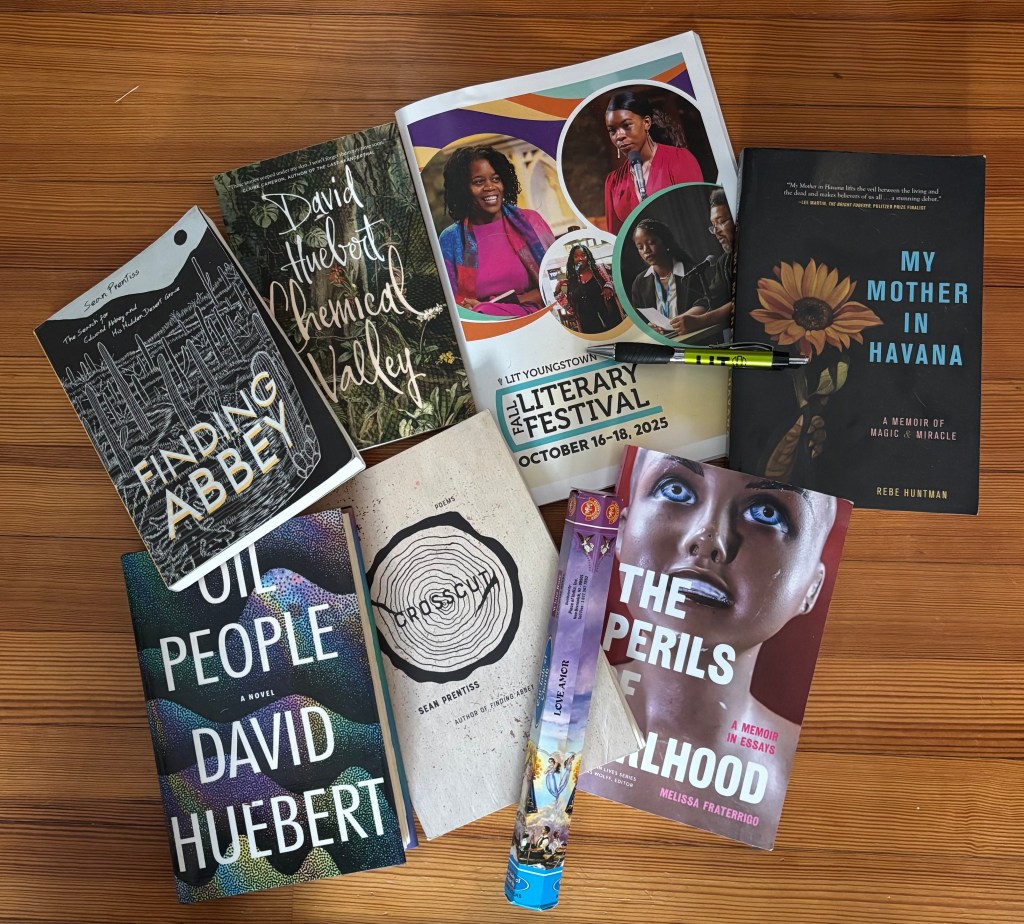
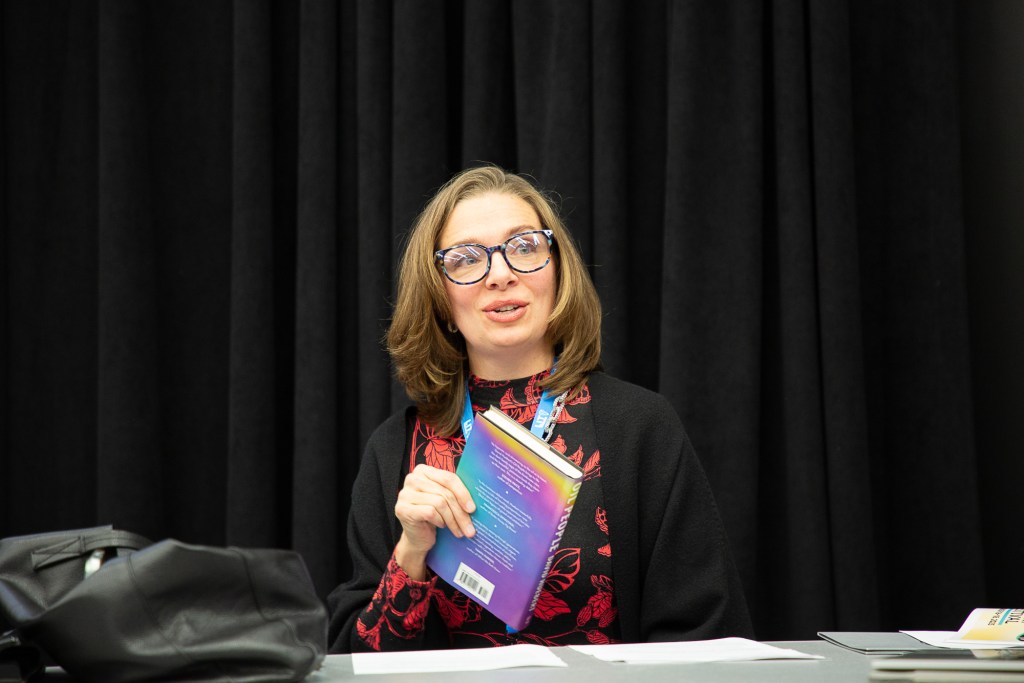
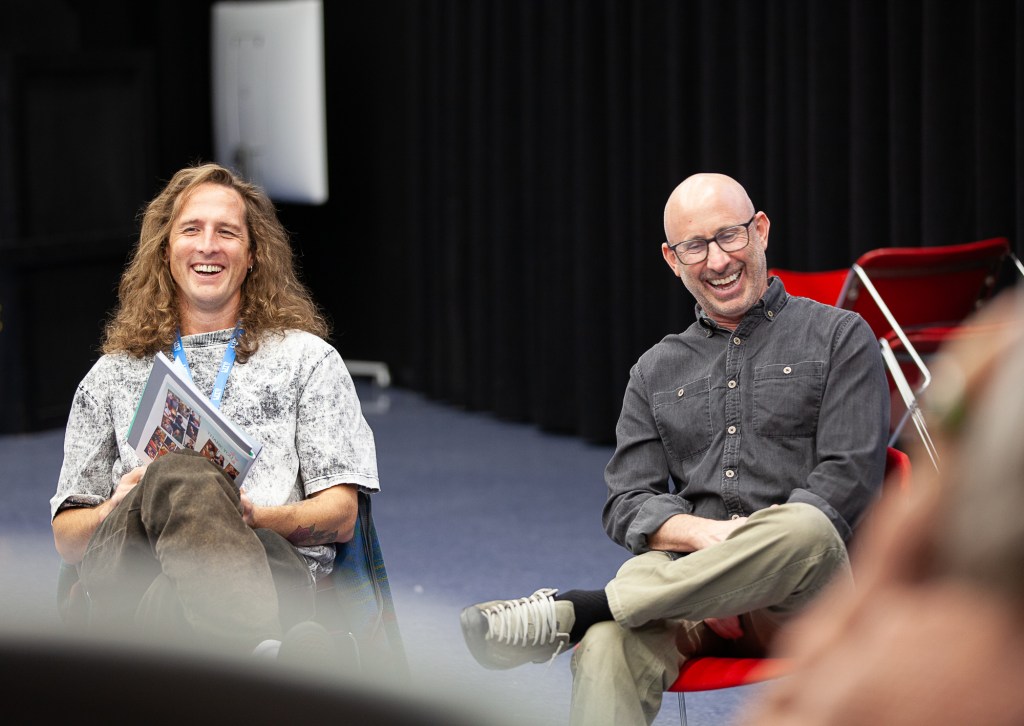
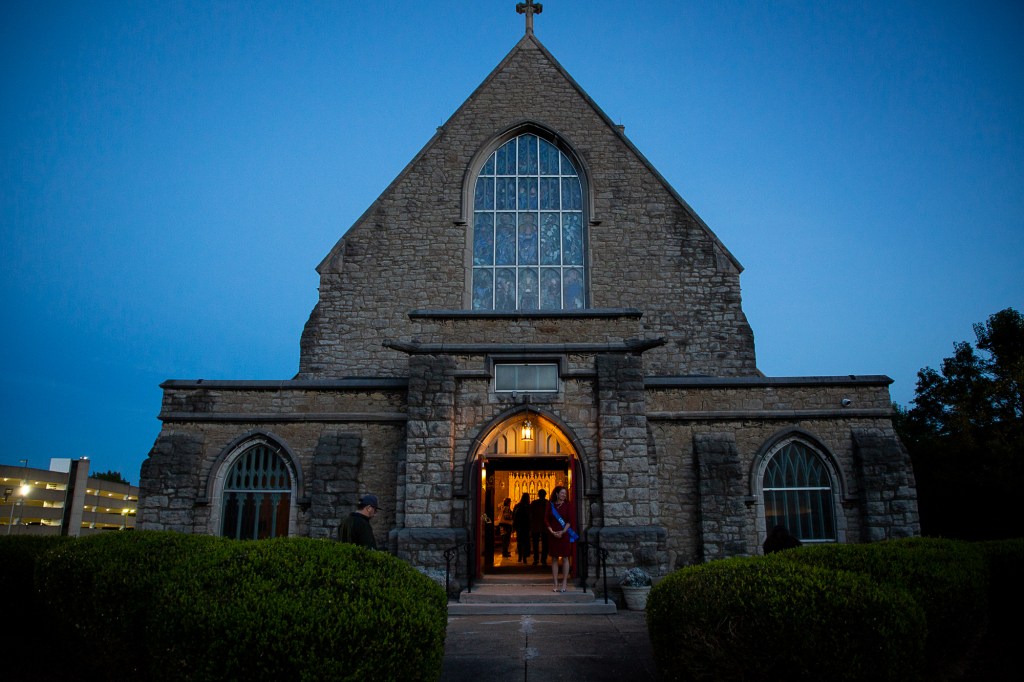
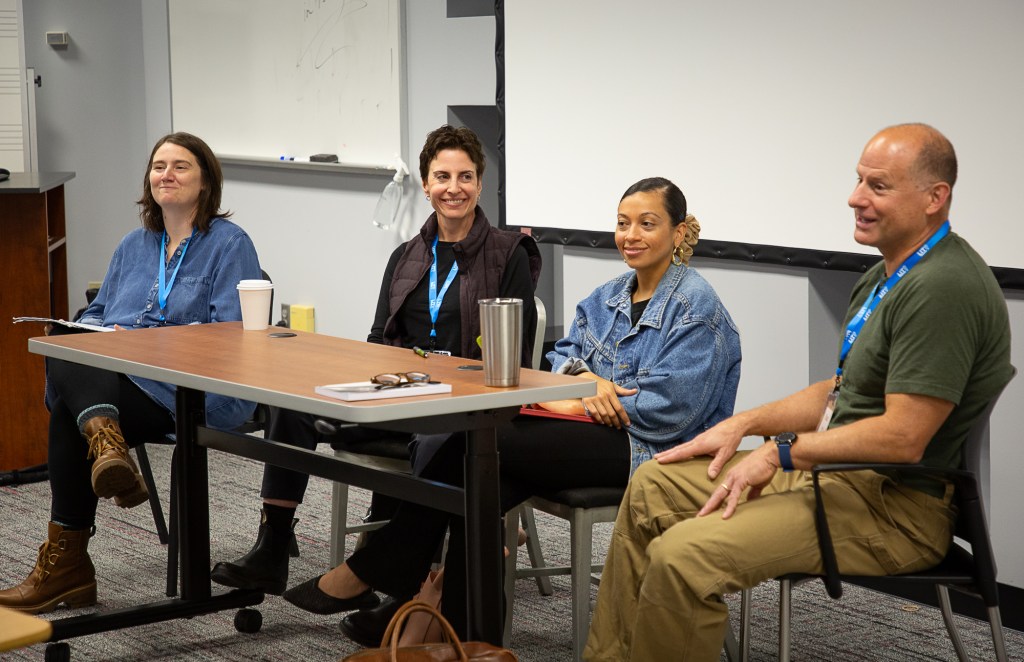


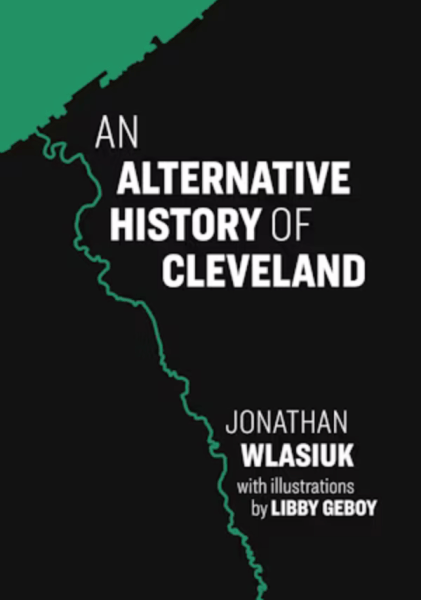


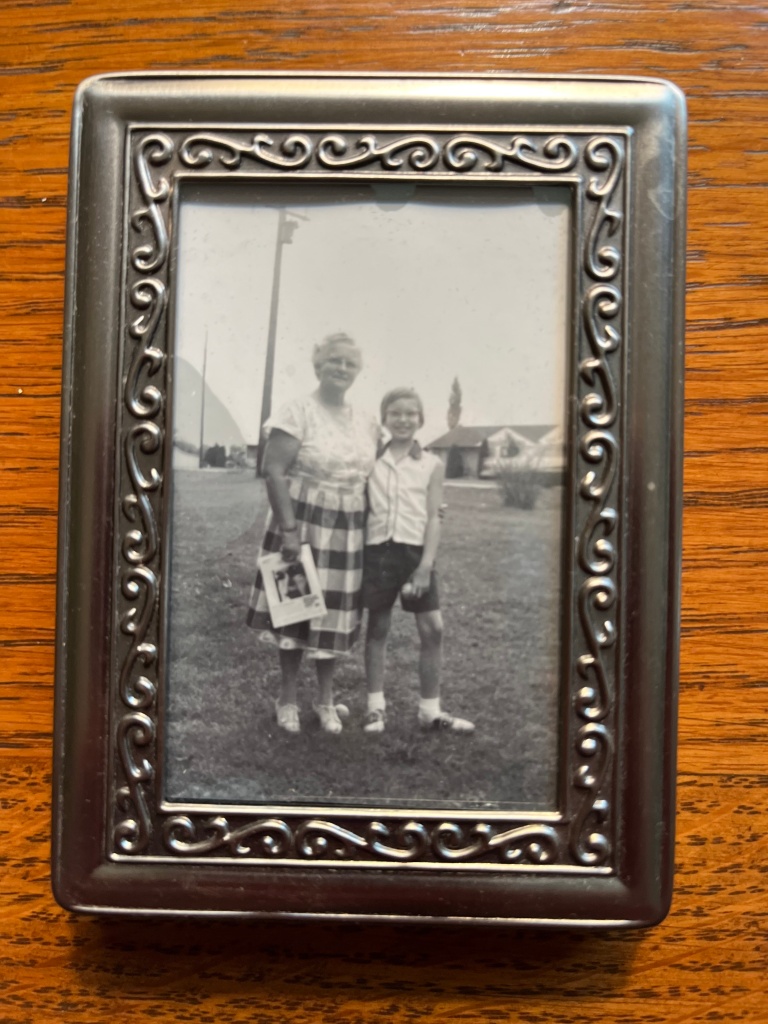

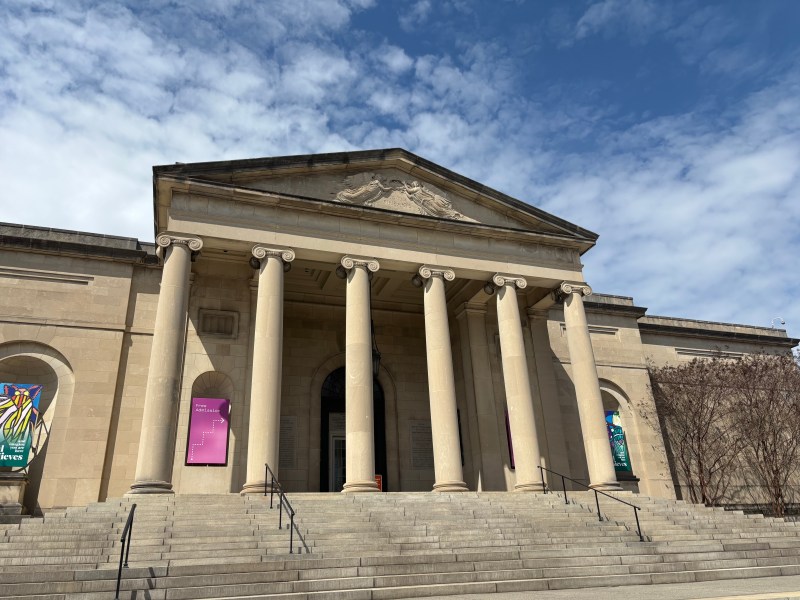


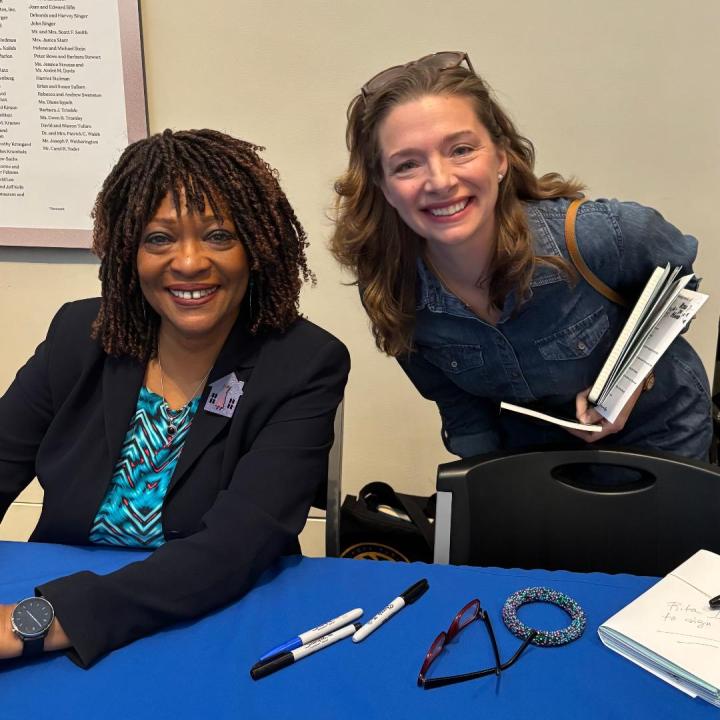


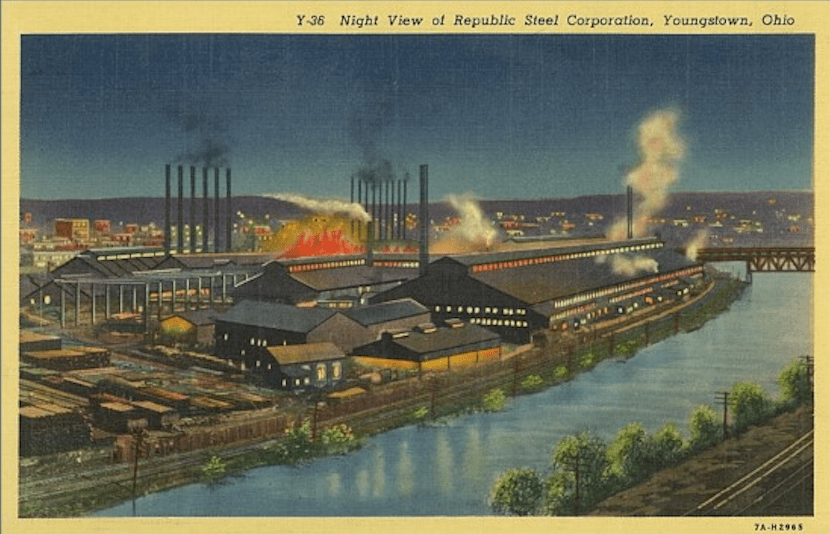
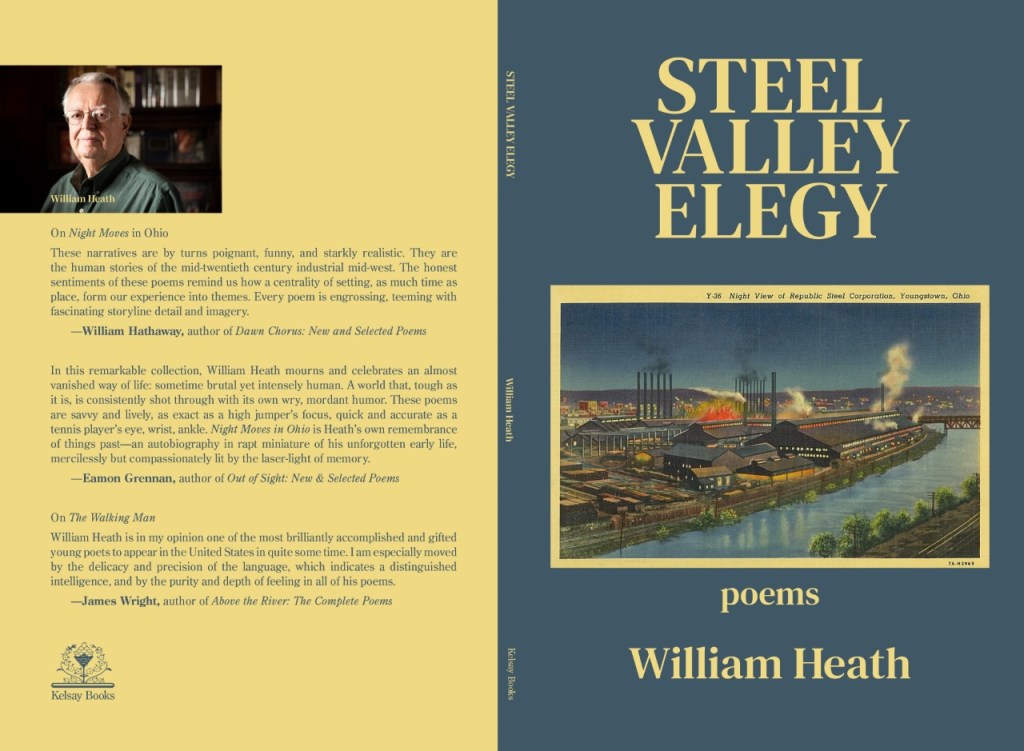
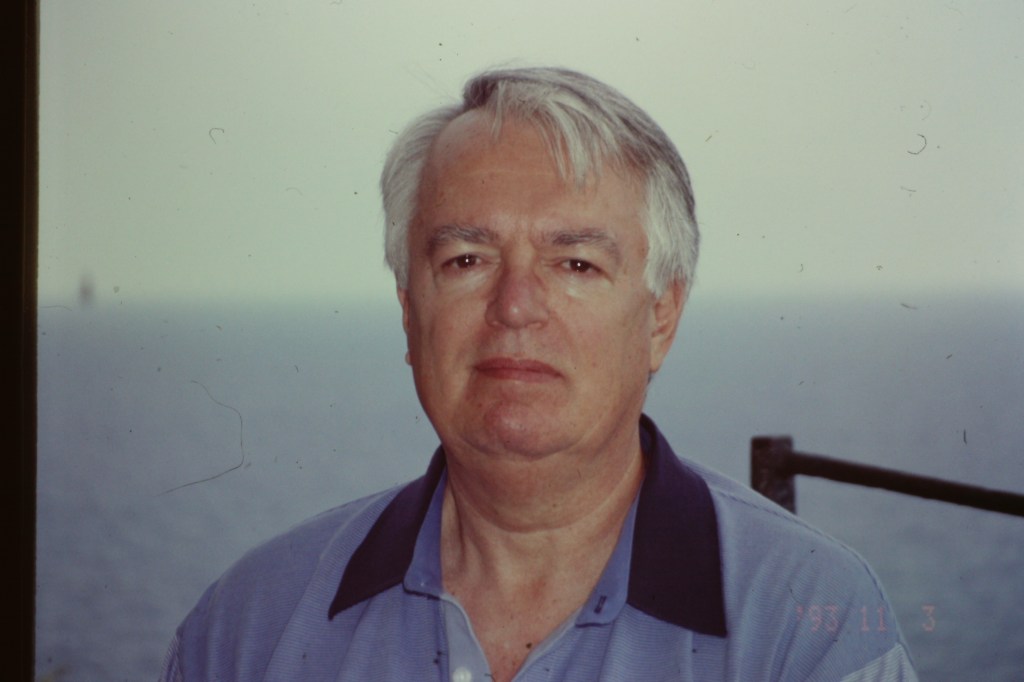
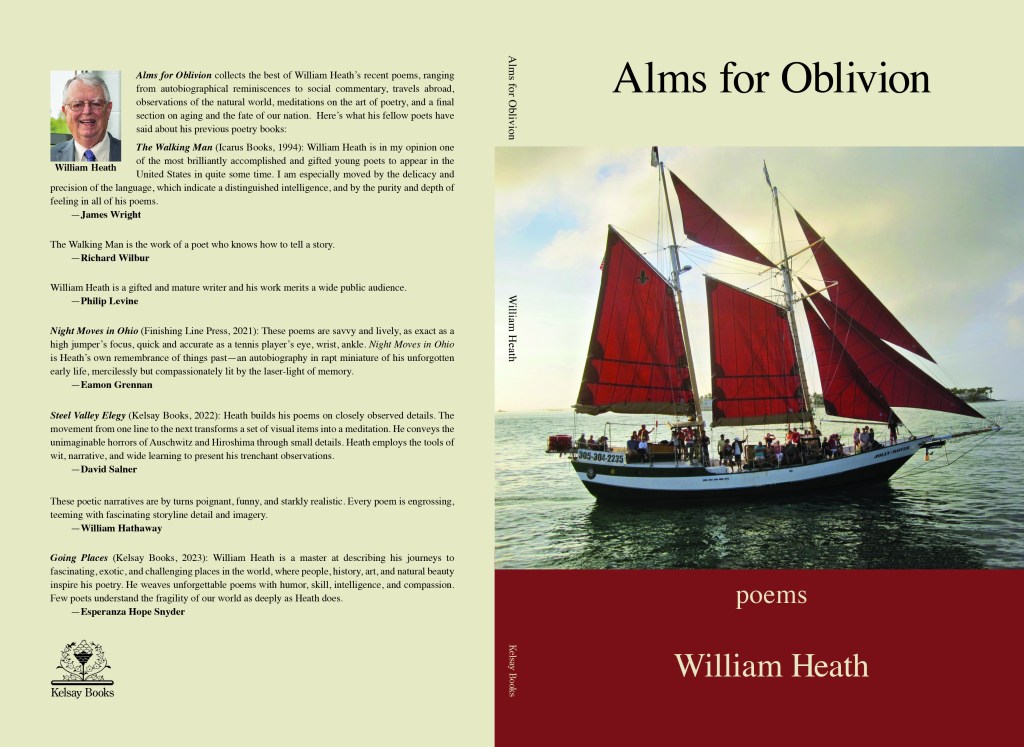

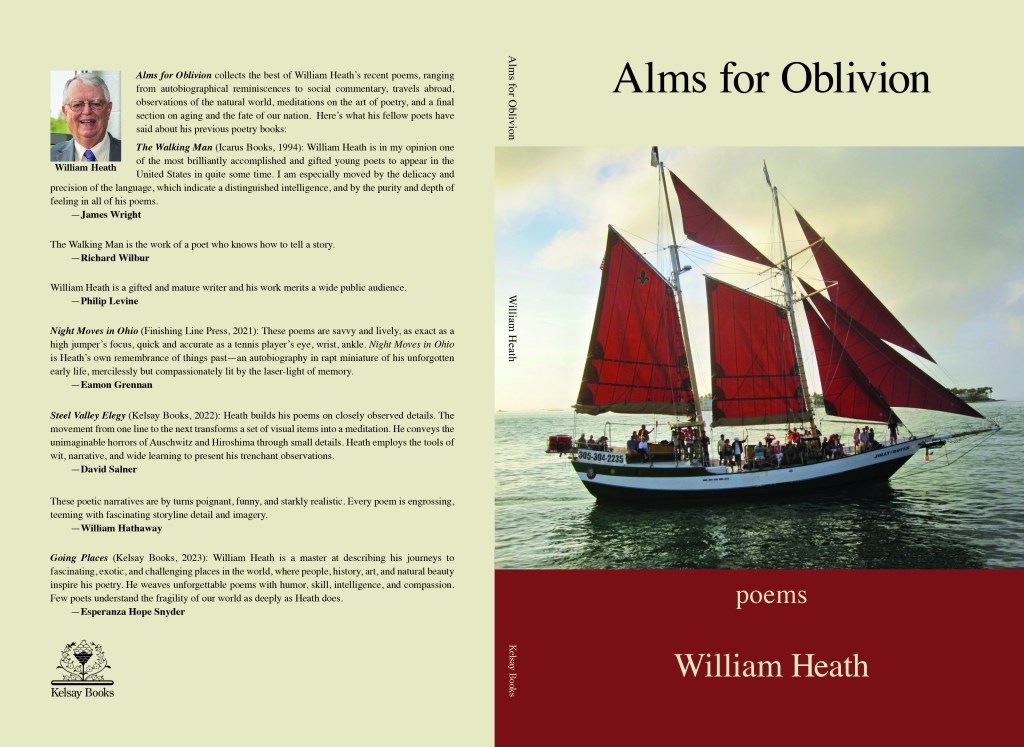

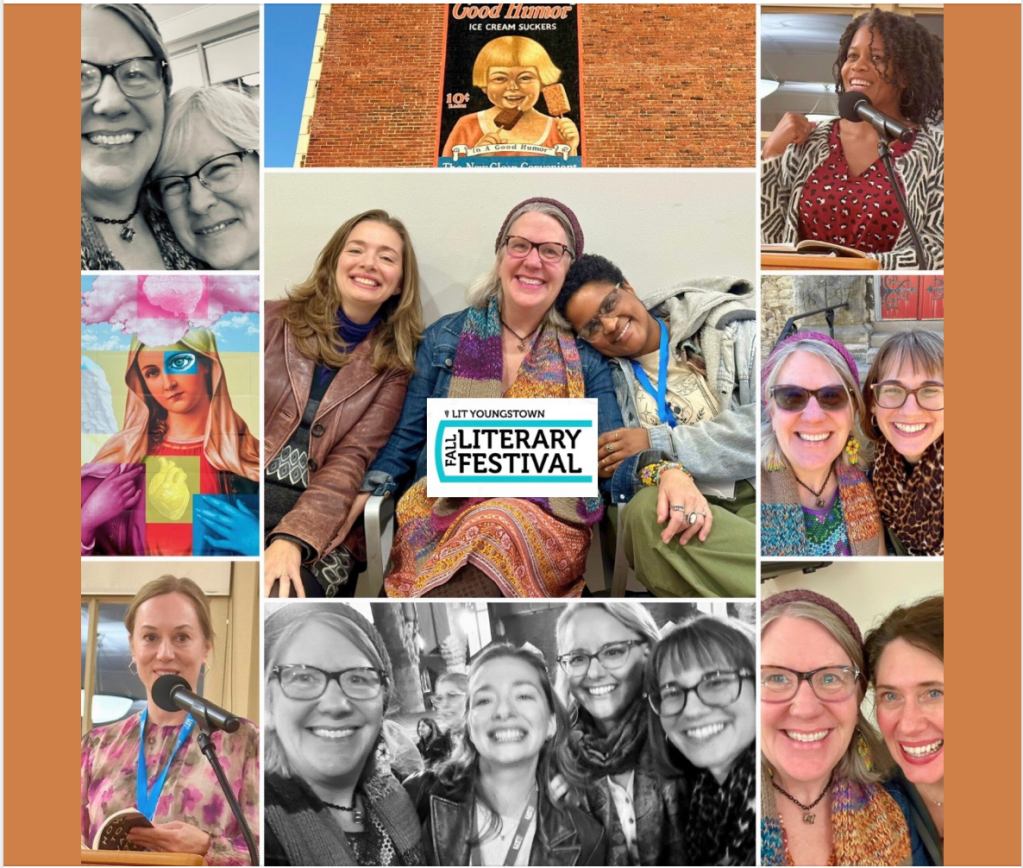
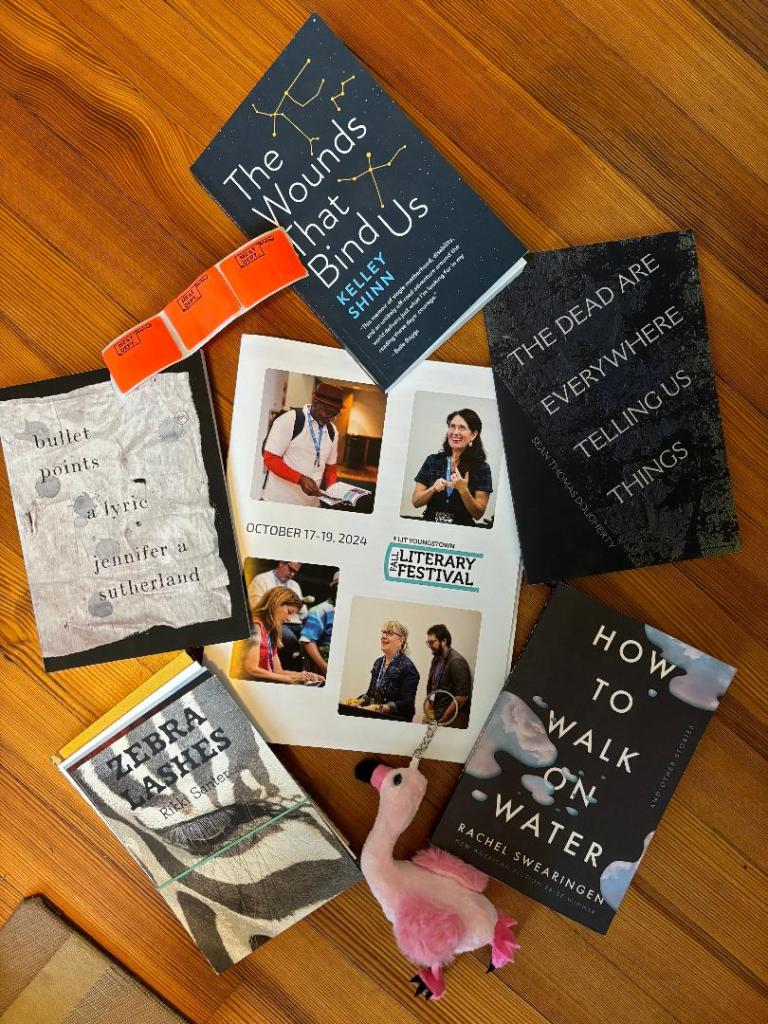


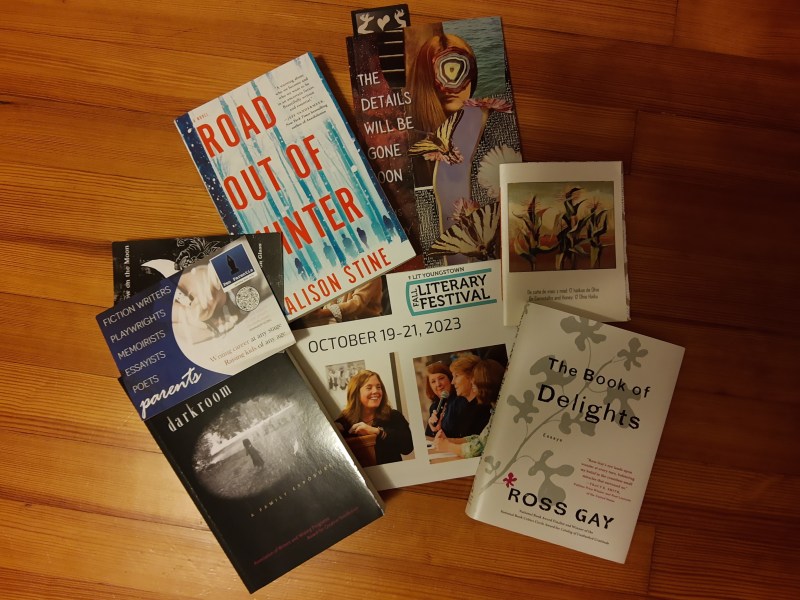


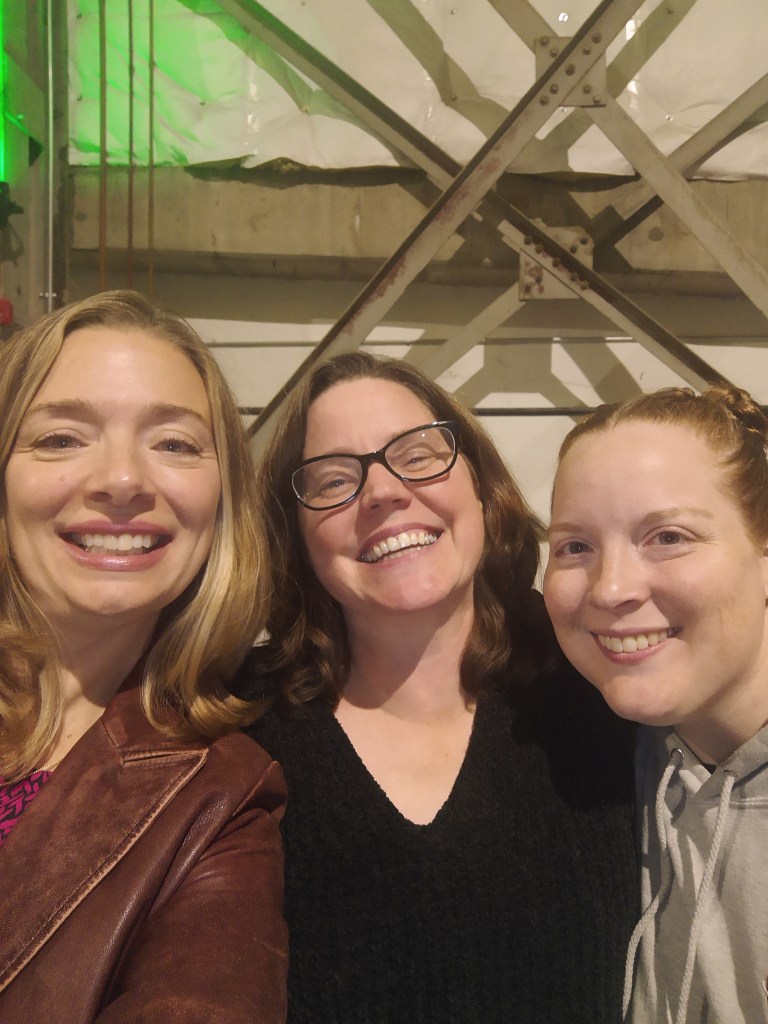


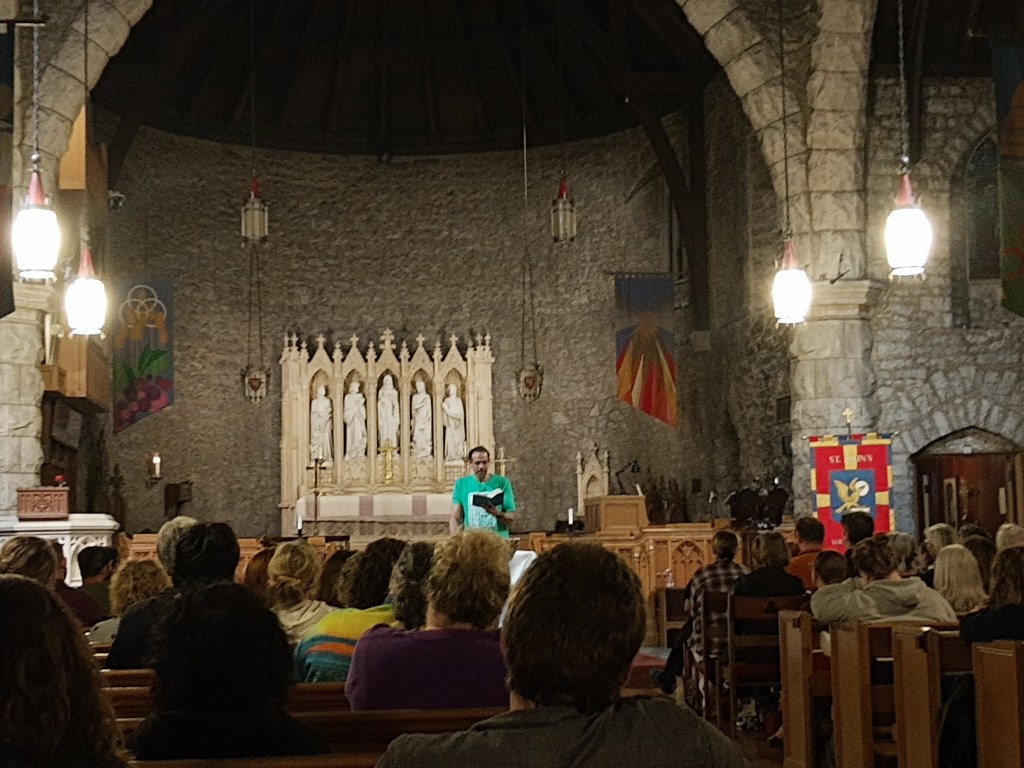
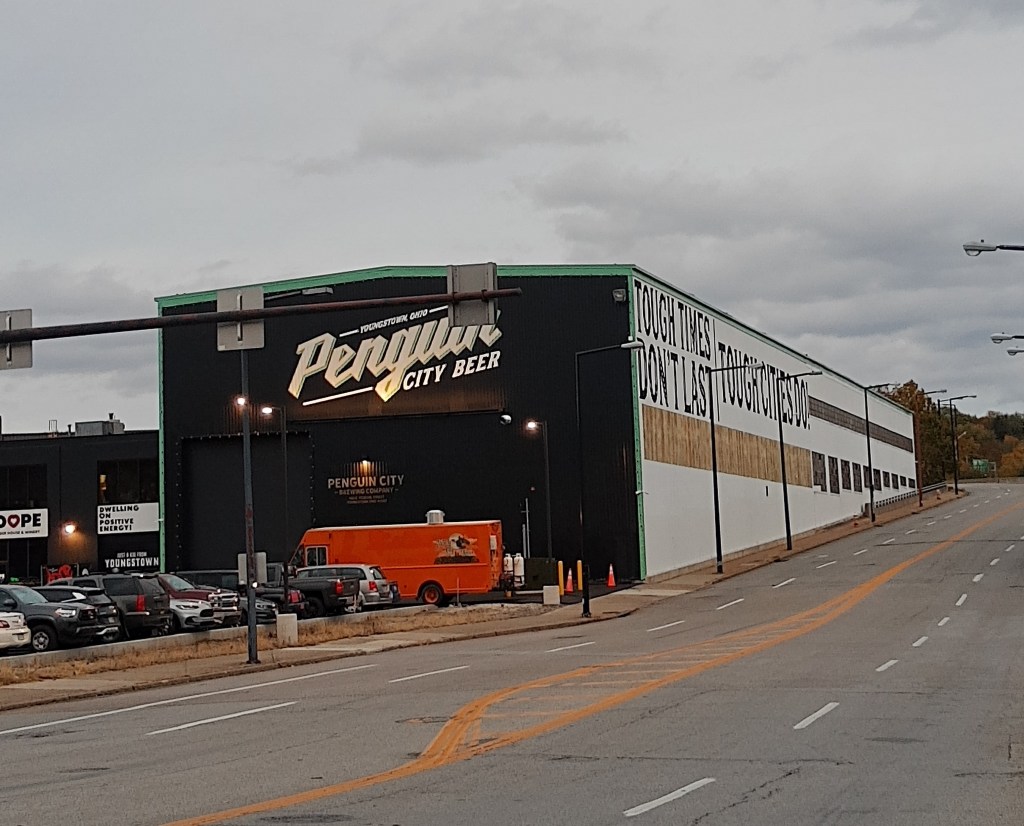


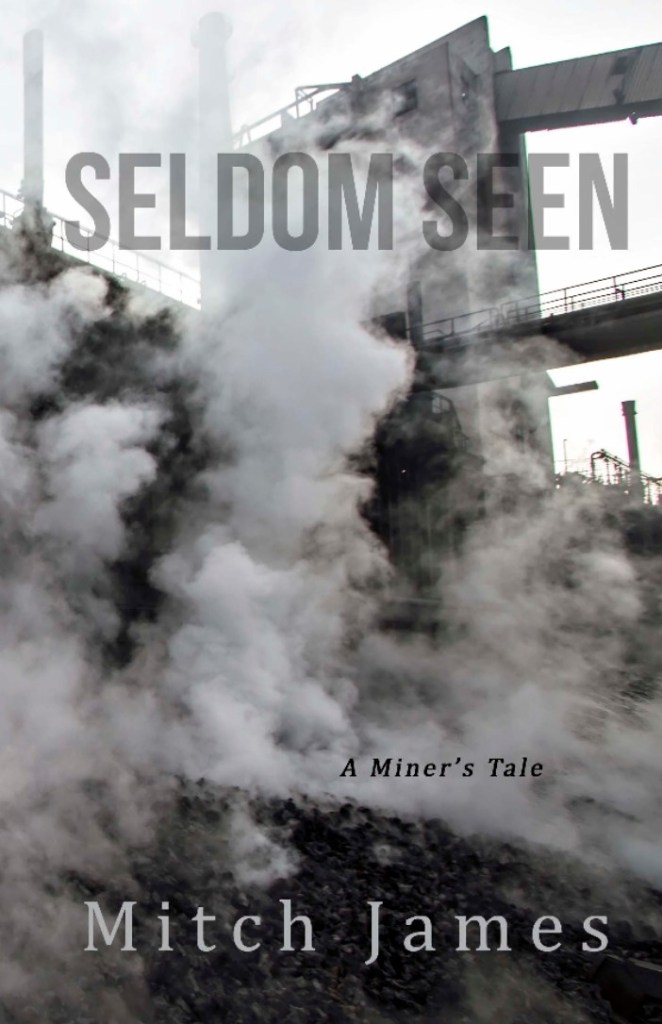

 Rust Belt Girl