We talk a lot about place here on the blog. While I’m usually talking about place or setting in literature, I’m also interested in the real places that inspire—especially Rust Belt places.
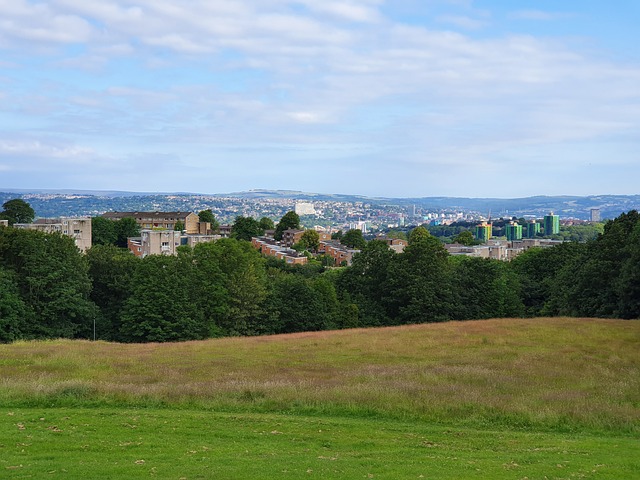
I never gave much thought to England’s rust belt, until a conversation with a good friend, who is English, last summer. Born a “southern softie,” a not-very-nice term for a person from the South of England, my friend recently moved to Sheffield, in the North of England. It’s basically smack dab in the middle of England’s rust belt, she told me.
As coincidence—or bots—would have it, I learned of a symposium hosted on Monday by the University of Sheffield featuring writers, community organizers, academics and the like from the UK and US. I found it fascinating and thought I’d give you a taste, here.
An “across-the-pond conversation,” the symposium featured four panels that explored how to build “thriving, integrated post-industrial cities.” There was talk of architecture, anthropology, heritage, history and more. Panelists discussed new ways of connecting with the past, such as through urban explorations and art—including writing.
Thanks to Zoom, I was able to check in on the first panel of the half-day event, which included a presentation by award-winning author, essayist, and journalist David Giffels—dubbed “the bard of Akron” [Ohio] by the New York Times. If you’ve been here at Rust Belt Girl for a while, that’s a name you’ll recognize. David has graciously talked with us before about a couple of his books: The Hard Way on Purpose: Essays and Dispatches from the Rust Belt and Furnishing Eternity: A Father, a Son, a Coffin, and a Measure of Life.
As a featured speaker, David touched on the idea of our place’s “story.” He talked about sometimes feeling like our place isn’t worthy of story because it’s a humble place. But, of course, every place is worthy of story. He talked about pushing back against a prevailing narrative that comes from the outside (see: flyover journalism) by championing the local voice and lived experience.
David dug into his own past lived experience, as a student at the University of Akron during a time when the city’s downtown was full of abandoned buildings. “As young people we didn’t see it as failure,” he said, but as a place of promise. “You could reimagine the built environment”—a bookstore here, an art gallery there.
Just don’t call it a “dying” city. Rather, cities evolve. David’s story of Akron is important to tell, because “it’s the story of hard times”—and hard times can be instructive. Take the COVID-19 pandemic. Ohio was ahead of the curve, David noted. The reason? The state had been dealing with a public health crisis—the opioid crisis, with Akron at the epicenter—for years. The realigning of emergency and social services necessary to deal with such a crisis, Ohio was on it. “Our hard times had something to teach,” David said.
Let’s not “fly over” the stories of lived experience—the hard and good times—in places like Akron and Youngstown, like Sheffield and Liverpool. It’s important to get cities talking, David said. “Dialogue between cities can remind us of the value of our narrative.”
Thanks to the symposium organizers and participants, especially David, for spreading the word about this symposium. It developed from new-genre artist Jennifer Vanderpool’s social practice art exhibitions, called Untold Stories, a series of exhibitions taking place in the post-industrial Midwest region of the US and the industrial North of England. Maybe catch one of the artist’s exhibitions if you can?
What are you attending, watching, reading, and writing this month? Let me know in the comments…
Want more Rust Belt writing, author interviews, book reviews, writing advice, and more? Check out the handy categories above.
Find me on FB and on IG and Twitter @MoonRuark
And follow me here. Thanks!

 Rust Belt Girl