I interrupt this Covid haze–mine, yes, I was gifted the virus for Christmas–to present a round-up of all the Rust Belt Girl goodness in 2023, made possible by you amazing readers and followers. (For you math and science types, here are your facts and stats):
2023 total views: 5,069, from 3,575 viewers, for 231 likes, and 170 comments. Thank you for engaging!
Most Viewed Author Interview: My interview with John W. Kropf, author of Color Capital of the World. (Though John and I both live in the Greater Washington D.C. area, as luck would have it, we were in Ohio at the same time earlier this year, and I was able to meet him and his lovely wife Eileen at a reading and book-signing not far from where Color Capital takes place.)
2023 felt pretty good and creative outside of the blog, too: I published a short story and a poem(!) and started querying a novel (a couple of you blog followers and friends beta-read!). I am infinitely lucky and grateful to cross paths with as many of you as I do–even if only on these interwebs.
I think we deserve a happy and healthy 2024 with all the writerly and readerly connections we desire. Those of you local to these D.C./Baltimore parts, find me on January 14 at EC Poetry & Prose’s Salon Series. Thank you again to Patti, my fellow blogger–and extraordinary poet and spoken word artist “little pi”–for inviting me to read!
As for Rust Belt Girl, keep in mind that I love a guest post–author interview, book review, or essay on the writing life and beyond–so hit me up.
Oh, and if you want to check out my reading superlatives for 2023, they’re at Goodreads. Or, find me on FB. Share your top posts or top reads for 2023 in the comments. I’d love to hear about your writerly, readerly year.
Much overdue, I’m back to recap Lit Youngstown’s 7th annual Fall Literary Festival. Who can put into words the inspiration and joy that happens when a couple hundred members of the literary community come together to create, share, and add to our towering TBRs, of course. (And did I mention nearly 50 sessions focused on various genres of writing and the writing process–how to choose, how to choose?) And, all in one fantastic Ohio city with the best Italian food around and against a backdrop of changing leaves for some extra fall magic. Well, I’ll give it a try…
Perhaps what I love most about this festival is that I can reinvent my creative self each time. I make it a habit to step outside my usual writerly lane and try something new.
Day 1
The first day of the festival I did just that. Parma, Ohio, Poet Laureate, workshopper extraordinaire, and friend Jeremy Jusek started off the day with a craft talk called “Verbal Alchemy: Visualizing Poetic Structure as a Formula.” If you couldn’t tell, Jeremy is a science guy in addition to being a poetry guy. He used chemical formulas and definitions to help “shake up” the structure of our poems. The ultimate goal: “To give structure to figurative language.” My major takeaways: the graphing of a reader’s reaction to a poem to illustrate the overcoming of a reader’s ground state to the point of truly feeling. Also, the idea of developing unit cells for a poem. (For instance a unit cell might consist of 2 similes or metaphors and one question. A poem might contain 6 of these units.)
Maybe it’s my uncertainty with writing poetry that makes me to want to learn all I can about poetic structure, but I stayed in the poetry lane that morning and attended superstar poet Sandra Beasley’s talk: “Lyric A to Z: Exploring Abecedarian Forms in Poetry and Creative Nonfiction.” If the term “Abecedarian” is new to you, you’re in good company. From Sandra’s handout: “In an ‘abecedarian,’ consecutive lines, sentences, or paragraphs lead with consecutive letters of the alphabet. Note that abecedarians can use any language system, not just American English.” (Abecedarian poetry and a Prince fan? Check out a fantastic example by poet Randall Man called, of course, “Alphabet Street.”)
Another highlight of the day was sitting in on the conversation between poet, essayist, and educator Ross Gay and poet and educator Jennifer Sperry Steinorth. Much of the discussion was pedagogy-focused. They discussed the MFA workshop, a process that has received close scrutiny in recent years. The traditional way, Ross feels isn’t “good for our soul or our work.” Instead he tries to stick close to what he notices on the page. His workshop goals are not a stellar poem or essay but are “care and imagination” in the class.
For my last session of the day, I moderated a roundtable led by author, editor and educator Meagan Lucas (whom I interviewed about her debut novel years ago for Parhelion and was excited to meet irl!). Called “I’m a Lit Mag Editor: Ask Me Anything,” the session allowed participants to get a behind-the-scenes on just what rises to the top of the “slush pile.” A couple tips I took with me: the fiction word count sweet spot for Reckon Review, where Meagan is EIC : about 3,000 words; and don’t forget the importance of a catchy title (when that’s all lit mag readers see in their queue!).
Last, if you’ve been around these blog parts for a while, you know Ross Gay’s work has inspired some of mine, including this essay. And so I was prepared to be moved by his reading at the beautiful, historic St. John’s Episcopal Church–much from his new book of essays, Inciting Joy. But reader, I wasn’t just whelmed but overwhelmed. Ross’s mission of joy has been a guiding light not just for my fledgling essays and poetry, but for a new path where my art and faith can live together. And (in 2023, as I’m sure you can imagine) that’s a lot.
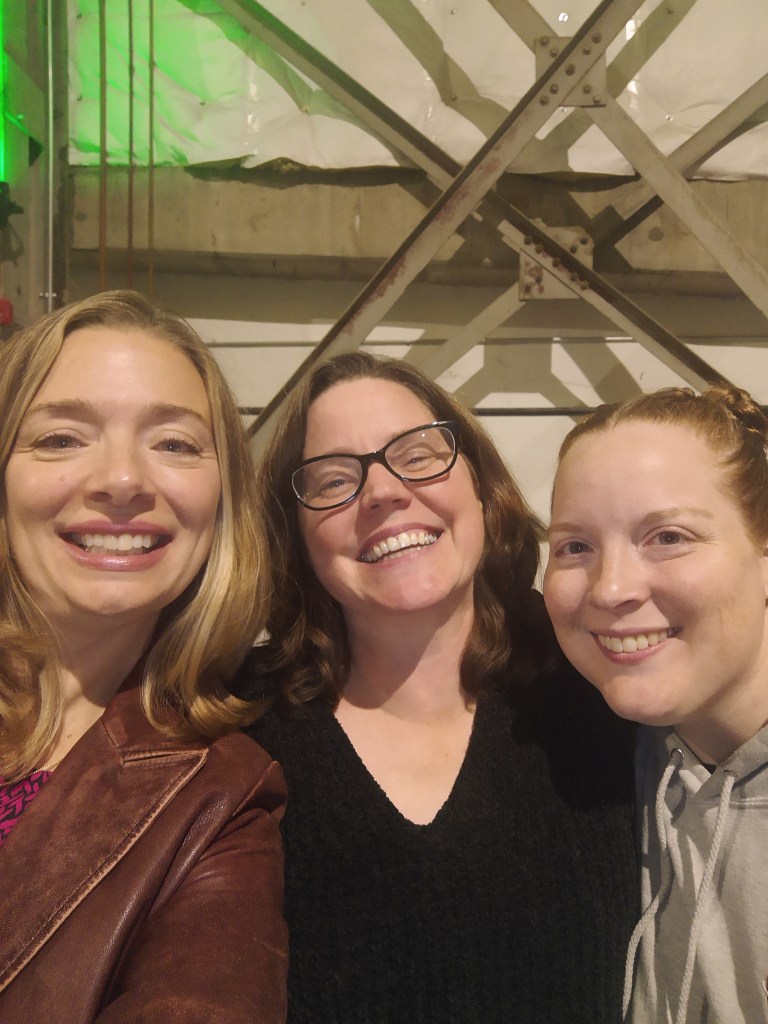
With fellow VCU MFA grad, author, poet and educator John Hoppenthaler
With the fearless director of Lit Youngstown, Karen Schubert
With amazing writers and literary citizens, Jonie McIntire and R.W. Franklin
With writer, friend, and guest DJ, John Dyer
With memoirist, poet, educator and the sweetest of humans, Rebe Huntman
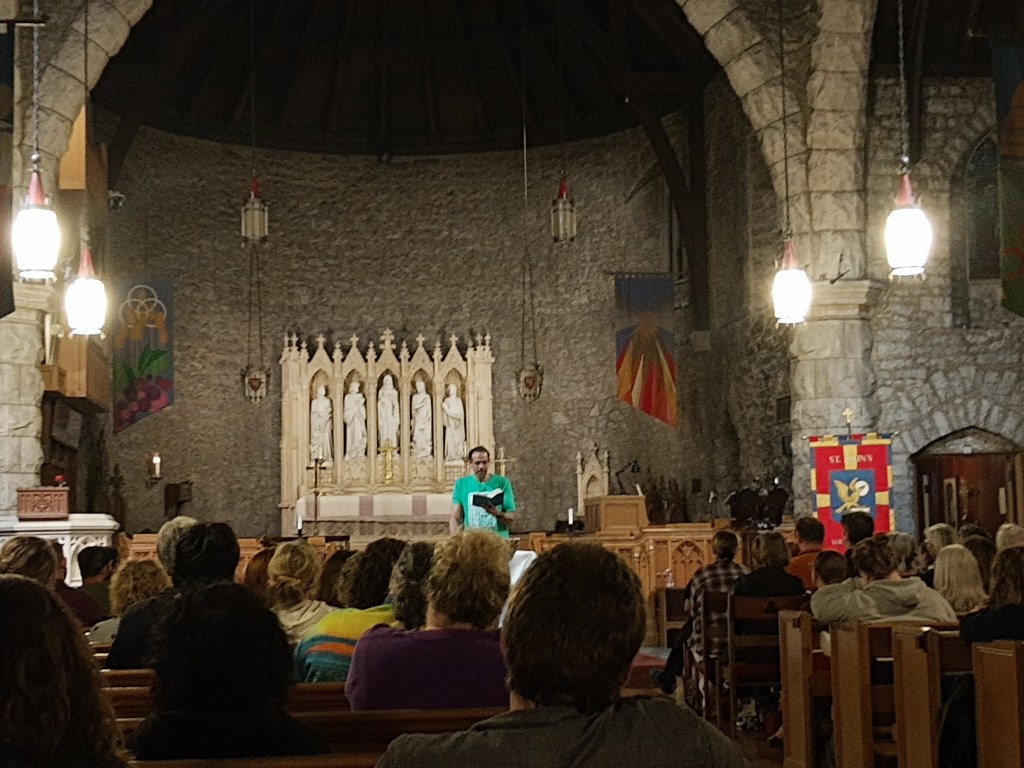
Ross Gay, reading at St. John’s Episcopal Church, Youngstown Ohio
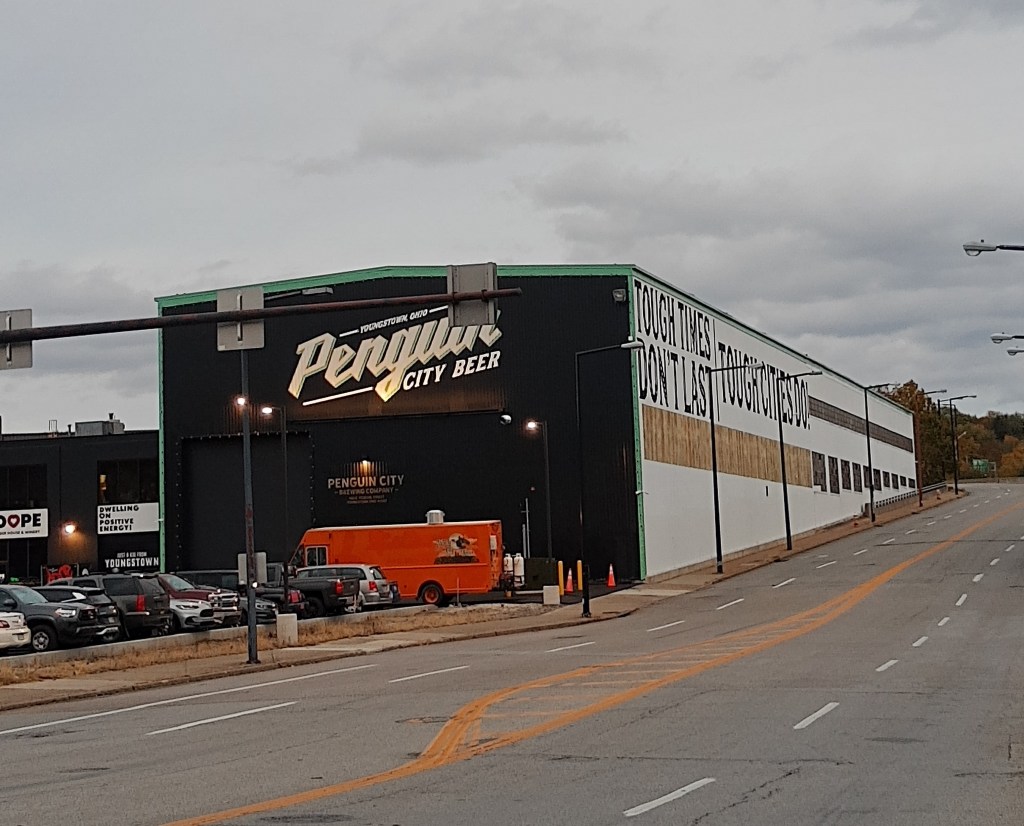
Our end-of-festival party venue, Penguin City Beer
After the festival, I soaked up the Ohio fall with a friend and her family at a pumpkin patch and apple orchard.
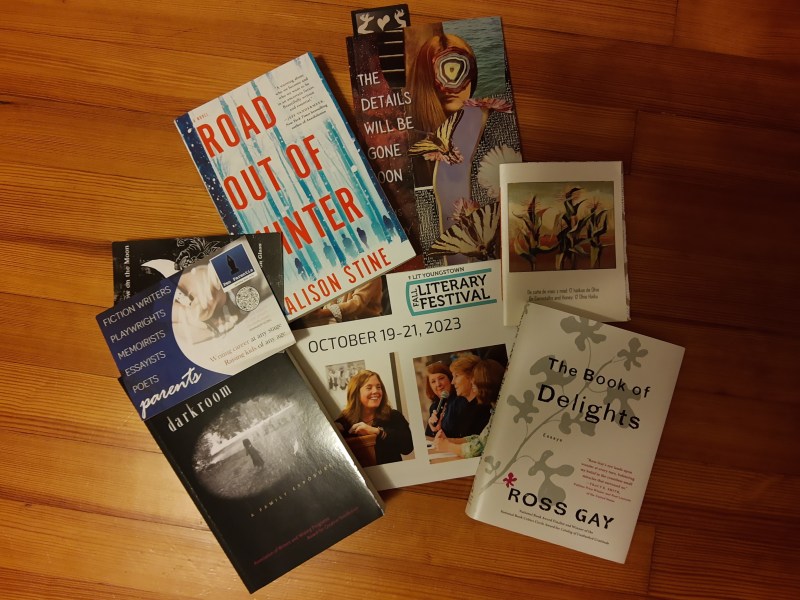
Book and swag haul
Day 2
The next day started off with a fantastic author reading. One essayist, my friend and editing co-conspirator Renée K. Nicholson; novelist Jason Kapcala, whom I interviewed here; and two poets, Amy M. Alvarez and Randi Ward read from their creative work “set in the mountains and hollers of Appalachia and the hardscrabble steel towns of the rust belt.” Themes of place and displacement ran through these works and I found myself transported–just what a creative reading should do!
The next session found me back in my fiction-writing lane. Novelist Alison Stine focused on “the urgency of cli-fi as we deal with the worsening impacts of climate change” in her craft talk called “Writing Climate Fiction as the World Burns.” Alison has a really inspiring way of talking about writing, even if she writes dystopian stories that deal with tough stuff–like the end of the environment and nature as we know it. It’s clear writing has saved Alison time and again. Writing, she said “is making people sit up straight,” and is also something that can “give us hope” and “give us a way.” And my practical takeaway from her session: wait for your characters to start acting before you start to write your ideas.
My final session of the festival found me marveling at the difference storytelling and writing can make–not just on our spirits but on our whole selves and in the ways we care for one another. Dani Naffziger led an inspiring talk called “Collaborative Writing with Adults with Disabilities,” a writing service she says “provides tangible and rewarding benefits for all involved,” highlighting stories from a population “rarely represented” and introducing “new writing processes for established and emerging writers.”
Under the umbrella of The Healing Impact of Writing, for the other part of the session West Virginia University Humanities Center director Renée K. Nicholson and physician Ryan McCarthy talked about their Healthcare is Human initiative. Through a unique partnership between WVU Medicine and the WVU Humanities Center, the initiative promotes the work of narrative medicine and health humanities. Its seeds were planted during the pandemic, when Dr. McCarthy began journaling about his own experiences and then gathering the stories of his fellow front line workers. He has said: “…projects like this, which highlight the real human stories of healthcare workers, nurture our own humanity.”
My own humanity certainly nurtured, my writing self restored, I left the festival inspired by the work of my fellow writers and by what’s to come. Thank you to Lit Youngstown director Karen Schubert and all who make it happen, year after year. And trust me, you won’t want to miss next year’s festival. Details here.
Now, tell me in the comments, did you attend the festival? What was the highlight for you? Do you attend writing conferences in general, book fairs? What gets your creative juices flowing?
Hankering for Rust Belt author interviews, book reviews, and more? Check out my categories above. I hope you’ll follow me here, if you don’t already, so you never miss a (quite infrequent) post. Thanks! ~Rebecca
We’re no longer tweeting, we’re xeeting—writer Amber Sparks might have coined that–and the literary landscape has changed, yet again. What used to provide a good social media home for the #writingcommunity now feels like a hut, maybe a hovel. The best writerly take I heard was from writer Anna Gazmarian (I think), who said the X logo that replaced the cute blue bird reminded her of some boutique hotel she couldn’t afford. I look at the new logo and can see nothing but the emoticon for “dead”: Xs for eyes. But so long as there are writers connecting, there will be a writing community. Really, the literary landscape is always changing, and one certainly can’t rely on a social media site for real connections (except for maybe this one).
I talk a lot about literary citizenship but don’t often talk about what it looks like in practice. It definitely has a lot to do with reading and reviewing the work of other writers, but that’s just the beginning. To be clear, it has little to do with getting an MFA, for that paper in a frame on my office wall has played no part in most of the connections I’ve made in the writing community. So, a few on-the-ground examples:
Not long ago, I braved the open-mic at one of my favorite literary conferences and read a prose poem I was working on, called “Jesus, My Son’s Buckteeth.” (Clearly I’m staking out the fertile publishing ground of: Is she religious or just ignorantly blasphemous? Let’s just keep them guessing.) The poem needed a little work but it was getting somewhere interesting, capturing a complicated mother-love characterized now by running the kids to ortho appointments and no longer by rocking them to sleep. After the open-mic, a writer friend who is also an editor of a wonderful poetry journal said I might consider submitting it. I re-worked the poem, with the help of my trusted writing group, sent it off, and crossed my fingers. It was accepted–but this isn’t where the story of literary citizenship stops. I made sure to attend the online issue launch, and as I scanned all the names and faces in Zoom boxes, I recognized the name of one of my undergraduate writing teachers, who is also a poet. I used the chat function to say hi, and she remembered me, 20+ years on!
Sometimes it’s about saying hi to someone who may or may not remember you. Sometimes it’s saying yes to the the next generation of writers when you might rather be making Christmas cookies. OK, I’ll back up. A writer friend of a writer friend asked if I’d judge the 2022 AWP Intro Journals Project awards for creative nonfiction. When I could have been making cookies over my winter break, I was reading essays from MFA students, more than 60 of them: reading, re-reading, and picking my winners from so many admirable essays. But that wasn’t the end of the connecting. Long after the winning essays were published in university-run literary journals, one of the writers reached out. She was in the throes of preparing to turn in her thesis before graduation, but she wanted to take a moment to thank me for helping her feel like a writer with that award. I remembered her essay: it was excellent and showcased her journalism chops. I fact, she’d had a career before retiring and pursuing an MFA in creative writing–a time where you’re always a student no matter your age or experience. I told her I’d love to see an essay about just that, and I hope I do.
So, sometimes literary citizenship is leaving the door open for more, is encouraging personal history and story to be shared. Sometimes it’s just saying: you’re writing, I’m reading, and I’m so happy to be sharing this connection. Love a book? Tell the author.
And then there are so many more examples: the blogging friendships that started right here and have turned into real-life and writing-life friendships and critique groups and beta reading relationships.
Like any deep relationship, cultivating literary relationships does take time. Being a good literary citizen requires that you know the writing world and its players. What time I once used to doom scroll on the bird site I hope to devote to this blog. In a few days, my boys and I leave for our summer break in Northern Ohio, and I have a stack of Rust Belt lit to bring with me. I hope to get back to you here with a couple reviews and an author interview this fall, so stay tuned.
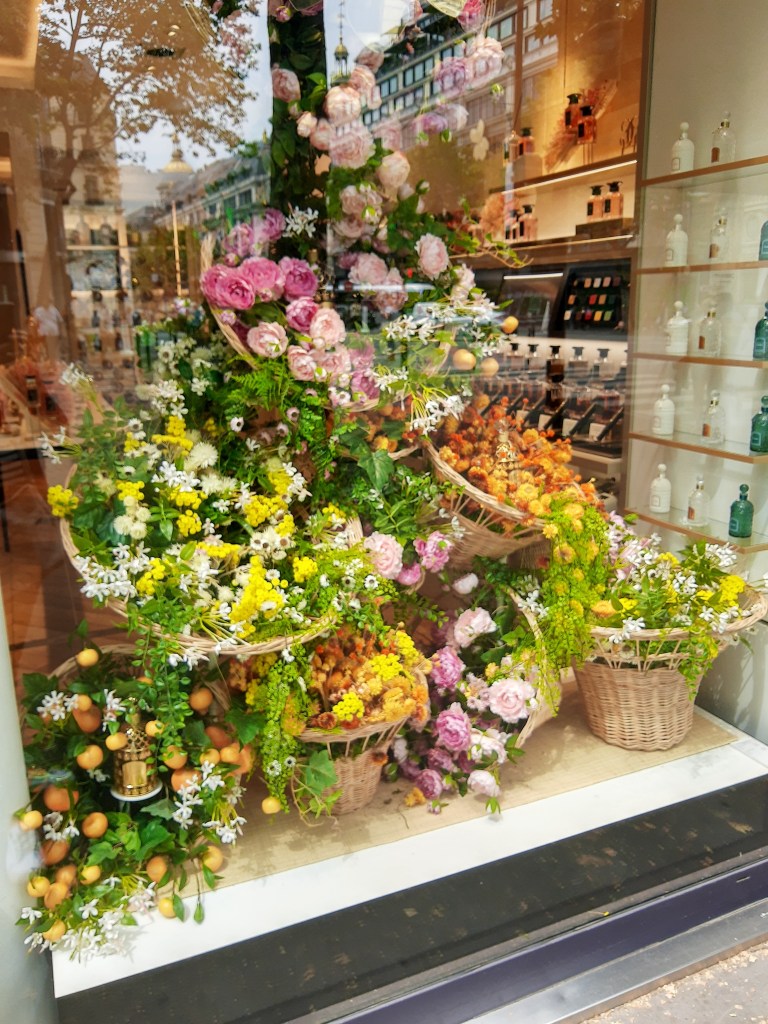
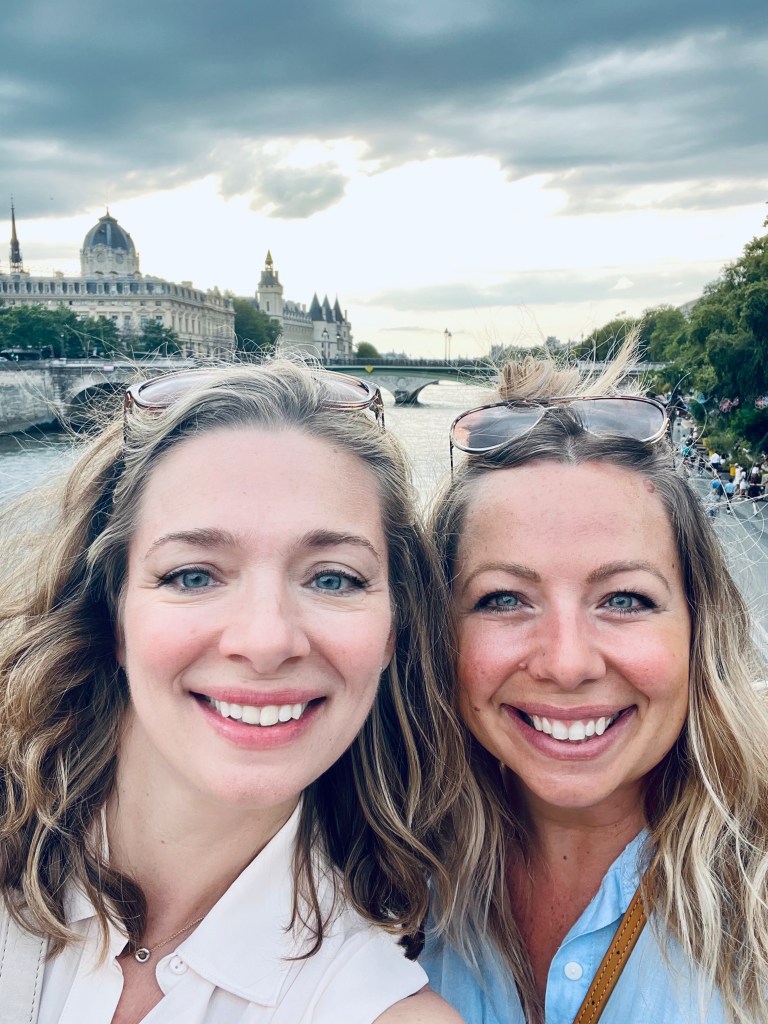
If you follow me at FB or IG (@MoonRuark), you’ve been inundated with photos from my European vacation in July. The most Rust Belt-ish place: Vigo, Spain–industrial, historical, and wonderful. A few pics for those who haven’t had enough (in order: Paris’ Eiffel Tower (of course), a pretty shop window, the D’Orsay Museum, and us sisters by the Seine; Barcelona hills and palm trees and basilica; Vigo’s cathedral; and a view of the Spanish countryside from Valenca, Portugal:
Part II of my interview with Valerie Nieman continues our discussion of her novel and her poetry and also covers the poetry she loved to teach her students. She also shares what she’s writing and reading, right now. (Spot the friend of Rust Belt Girl in her TBR!) Missed Part I of the interview? Find it here.)
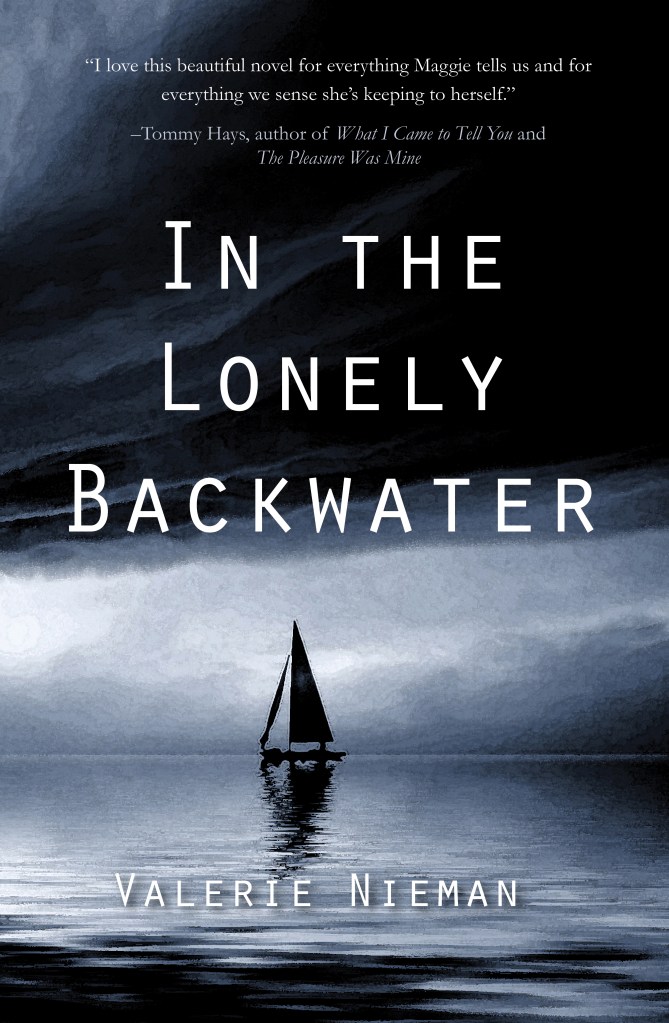
Valerie Nieman’s latest, In the Lonely Backwater, a mystery in the Southern gothic tradition, has been named the 2022 Sir Walter Raleigh Award winner for the best novel by a North Carolina writer. To the Bones, her genre-bending folk horror/thriller about coal country, was a finalist for the 2020 Manly Wade Wellman Award. She is also the author of Blood Clay (Eric Hoffer Award) and two other novels. She has published a short fiction collection and three poetry collections, most recently, Leopard Lady: A Life in Verse, which was runner-up for the Brockman-Campbell Prize. She has published widely in journals and anthologies, and appears regularly in juried reading series such as Piccolo Spoleto, Why There Are Words, and Women of Appalachia. She has held state and NEA creative writing fellowships. Nieman has degrees from West Virginia University and Queens University of Charlotte, and was a reporter and farmer in West Virginia before moving to North Carolina, where she worked as an editor and a creative writing professor at NC A&T State University.
Valerie, In the Lonely Backwater has been praised for its “deep sense of the wonderment of the natural world.” I see this in your poetry, too:
Can you talk about this poem of yours, its impetus, its rooting in the bog but also “close to the sun?”
This is a poem that came directly from observation. I was walking in the Bog Garden in Greensboro when I came upon a group of people staring up into the treetops. It’s that barred owl, I thought, a resident of the garden. Instead, I was shocked to see a full-grown groundhog up there grazing on the new leaves. I went home and looked it up online, finding numerous videos and learning that it’s not uncommon for woodchucks to climb trees.
Among other inspirations was the late Gerald Stern’s poem “Behaving Like a Jew” and his line about a dead opossum’s “little dancing feet.”
Poet and author Valerie Nieman
The family at the center of your novel is part of the “Appalachian diaspora.” What does this term mean for you personally—and for your poetry, especially?
Well, it’s who I am. I grew up in northern Appalachia, the Allegheny Plateau in western New York where the Allegheny River rises and flows to Pittsburgh. I went to school at West Virginia University, and worked as a reporter and editor at papers in Fairmont and Morgantown, both on the Monongahela, before leaving the Ohio River watershed for the first time in my life. I moved to central North Carolina in 1997 for a newspaper job. Now I live one county line over from Appalachia as defined by the ARC, but Rockingham County has all the earmarks of Appalachia—rural, with faded industry and a changing agricultural life, and beautiful hills and rivers. Not really mountainous enough, I guess. So my work draws on my upbringing in dairy country, 20-plus years in the coal fields, and then working as an editor in tobacco country before a final 20 years in academia. Nature poet, blue collar writer, Appalachian writer, Southern writer.
“Tinder” feels like a nature poem, an ode to Shakespeare’s witchy “double toil and trouble,” and a horror story all at once:
Tinder

I am the woman your mother
warned you about.

I am boiling bones boiling bones boiling bones.
I am washing out the war-rags at the ford,
blood pluming downstream
gaudy to catch the heart.

I am scraping scraping scraping
on the stretched skin of the world.
My pet is a scrofulous cur,
my bird a dobsonfly all wings and jaws.

I look under rocks.
I find what I expect to find.
Can you talk about your influences here and what you want your reader to know about the persona in the poem?
Ah, that’s a dangerous woman. She harbors grudges and has a long memory for those who’ve done wrong by her. What bones are those in her broth? Difficult to say.
Influences indeed include Shakespeare, and Poe as well, a bit of Hawthorne—all of whom I read as a child, pulling the classics from the shelves during long western New York winters. I also was influenced by many years of research into early Celtic and Norse cultures. “The washer at the ford” or bean-nighe is found across the Celtic nations. She’s seen in wild places, kneeling beside a lake or river, washing the blood out of the clothes of men who are fated to die. So that was in my mind as the image of the dobsonfly appeared. It’s the quite terrifying winged adult of the hellgrammite, a stream insect with enormous pinching jaws. As a child I spent a lot of time in “the crick,” turning over rocks, and as an angler I’ve done the same for years, to see what fish might be eating, and just because I like to see what’s underneath.
What was your favorite poem or story to teach students when you were a professor at NC A&T State University?
“Out, Out” by Robert Frost is a favorite, to show how a poet can compress an entire short story into 34 lines—dialog, description, setting, plot. I liked showing students the flexibility of the sonnet, comparing traditional forms with Terrence Hayes’ “American Sonnets.” I also loved teaching humanities and exposing students to ancient work from the negative confessionsof the Egyptian Book of the Dead, to framing a discussion about war and the death of young men through Priam’s visit to Achilles.
What are you reading right now? What are you writing? What can we look forward to, next?
The top of one stack: Hemlock Hollow by Culley Holderfield, The Sound of Rabbits by Janice Deal, Red Clay Suzie by Jeffrey Dale Lofton, All the Little Hopes by Leah Weiss, and Hungry Town by Jason Kapcala. Dipping into a number of poetry books as well, including Anything that Happens by Cheryl Wilder. Eager also to get back to some science fiction, with Kim Stanley Robinson’s Ministry of the Future. There are many shelves, and many stacks, and I keep adding to the accumulation.
I’ve just (as of 4/3) completed the first draft of Dead Hand, a sequel to To the Bones. I had almost as much fun writing this as the first one! The action moves from the West Virginia coalfields to Ireland. I revisited places I’d seen a few years ago, from the Shannon Pot to County Cavan to Dublin, and added others including an Irish coal mine. While that simmers in the hands of beta readers, I’m working on pulling together a new book of poetry.
Like this interview? Comment below or on my FB page. And please share with your friends and social network.
Are you a Rust Belt writer interested in seeing if an author interview or book review of yours might be right for Rust Belt Girl? Pitch me through this site’s contact function.
Author Valerie Nieman grew up in the Rust Belt of western New York State, lived and worked for many years in the northern coalfields of West Virginia, and now lives in a North Carolina town that’s still recovering from loss of the Lucky Strike plant. In short, Valerie explains, she’s “seen a lot of industrial wastelands.”
How do these evocative locations inform her prose and poetry? In the following author interview, I asked Valerie about this, about her latest, award-winning novel–and much more.
Valerie Nieman’s latest, In the Lonely Backwater, a mystery in the Southern gothic tradition, has been named the 2022 Sir Walter Raleigh Award winner for the best novel by a North Carolina writer. To the Bones, her genre-bending folk horror/thriller about coal country, was a finalist for the 2020 Manly Wade Wellman Award. She is also the author of Blood Clay (Eric Hoffer Award) and two other novels. She has published a short fiction collection and three poetry collections, most recently, Leopard Lady: A Life in Verse, which was runner-up for the Brockman-Campbell Prize. She has published widely in journals and anthologies, and appears regularly in juried reading series such as Piccolo Spoleto, Why There Are Words, and Women of Appalachia. She has held state and NEA creative writing fellowships. Nieman has degrees from West Virginia University and Queens University of Charlotte, and was a reporter and farmer in West Virginia before moving to North Carolina, where she worked as an editor and a creative writing professor at NC A&T State University.
Valerie, can you tell us about your Rust Belt upbringing and how it informs your creative work? What was it like to not only live but work in the coalfields of West Virginia? You were both a farmer and a reporter there. Can you talk about how those roles are similar/different?
I grew up the child of a factory worker who’d wanted to be a farmer. His plant in Jamestown, NY, built desks and filing systems. I remember copies of “The Machinist” in the bathroom, and the annual July shutdowns and factory picnics. Royal Metal was part of a thriving factory district that produced everything from heavy equipment to tools to furniture. Crescent Tool, Proto Tool, Blackstone, and so many others used to run three shifts. The last time I was there, I found a ghost district, post-apocalyptic. It’s been a long time and maybe things have gotten better, but this part of the Rust Belt was truly “rusty.”
My father had to leave the factory when it closed and go to one in South Bend, IN, that carried on for a few more years. When he could no longer walk concrete floors as a foreman because of worsening knee injuries from the Korean War, he and Mom followed me to West Virginia. They opened a bait and tackle shop near the Monongahela River just outside Fairmont, WV, where I worked for the newspaper.
That city had a prominent and troubled history as a coal center. Consolidation Coal was founded there, and the Watson mansion became an inspiration for the Kavanagh home in To the Bones. Marion County had two of the nation’s most deadly mine accidents, Monongah 1907 and Farmington No. 9 in 1968, both of which led to massive overhauls of mine safety regulations. The offices of UMWA District 31, headed by Richard Trumka, were next door to the church I attended.
During my time as a reporter, I covered the coal industry and the environment, along with the police beat, so I got to see everything from murder investigations to the working longwall at Martinka Mine. I later became editor and helmed major investigations, one into the county’s secretive dealings with a waste coal entrepreneur and another about acid mine drainage, both of which won state AP public service awards and other recognition.
My home was a small version of the classic Appalachian hill farm. It rested above some of the former Consol No. 9 workings and a mine crack furrowed the hayfield. My ex and I built a house and barn and were creating a partial subsistence lifestyle there, with beef cattle, organic garden and orchards, before divorce ended that part of my life.
I’ve never regretted the newspaper years, despite the low pay and often difficult working situations, because I got to see and experience so much! My novels and poems draw on those years still.
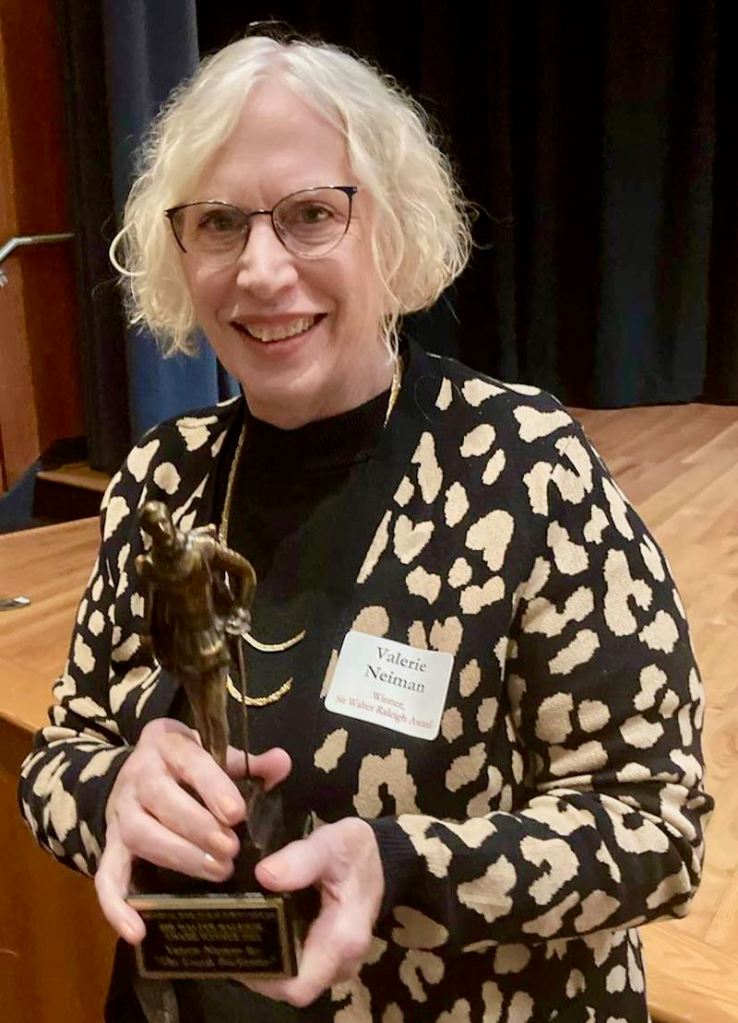
Valerie Nieman, Winner of the 2022 Sir Walter Raleigh Award
Your poem, “The size of West Virginia,” begins “Few know the Mountain State…” Here’s a taste:
“The size of West Virginia”

Few know the Mountain State but all
recognize it, easiest puzzle-piece of the states,
its awkward panhandles and pendulous gut
lolling into East Virginia.

A vast aquifer "lake" lies trapped under southeastern
Greenland, larger than the size of West Virginia.

It’s a convenient scale for journalists,
standard candle like the Cepheid Variables
or Type Ia Supernovae that allow
for dead reckoning on distant stars.

As of July 15th, fires have blackened nearly 21,000
square miles. (That's nearly the size of West Virginia.)
Can you talk about that—how being from a lesser-known (or maybe even unknowable to outsiders) kind of place informs your writing?
Appalachia remains “the other” for so many in America, a stereotype compounded of Snuffy Smith comics and Disney cartoons and Deliverance. The people are lumped together as white, poor, ignorant, violent.
This didn’t happen by accident. The dispossession of Irish and Scots crofters by “noble” landowners who considered them an impediment— “lice on the land” as one said—led to mass migrations and provided many of the region’s early immigrants. That legacy of dispossession continued with the rape of Appalachia’s land for timber and coal, at the expense of smallholders and their communities. And writers from the Northeast found a willing market for stories of the region’s exotic and dangerous folk.
The region was and is diverse, from the many Native American tribes that lived, traded, farmed, and hunted there, to German, Polish, Italian, Hungarian, Spanish immigrants who came to work the mines and mills, along with Black families moving up from the Deep South, Lebanese merchants who served the coal communities, and more recently, people from Nigeria to India and the world over who come to study at West Virginia University or work in industry.
I began to notice the repeated use of West Virginia as a unit of size comparison for other places, did a search online and found many more, and that brought about this poem.
Although I’ve lived in North Carolina for many years, West Virginia was where I became a writer and the place that continues to feed my work. Along the lines of this poem, my 2018 novel To the Bones uses and subverts some of those cliches about this “unknown place” in a genre-crossing tale about the coal industry and its enormous impact on the people and place.
How did you transition from journalism to poetry and fiction? How do these disciplines influence one another?
Brevity, compression, observation are the watchwords for journalism. Equally true for poetry. And while I can wax descriptive in my prose writing, it’s always economical—no wasted words. At least I like to think so, and readers have said as much.
Your latest novel, In the Lonely Backwater, features a teen protagonist, Maggie Warshauer. What a voice! (Take note, fiction writers.) Here’s how Maggie describes a detective who’s come to her North Carolina high school to ask her and other students about a girl who’s disappeared, a girl Maggie is related to and with whom has had some “squabbles”:
I didn't expect a detective to look like my dentist. He waited, watching me like an underfed hound. If I were going to place him in the marina, I'd say he was a fishing boat. A small one, from Sears, not on a slip but parked on the monthly lot. Plain aluminum johnboat with a little outboard.
Can you tell us when and how Maggie first started speaking to you as a writer, when you knew you needed to write this story?
Maggie’s been speaking to me all my life: a version of my sarcastic inner voice that doesn’t get spoken aloud very often. She’s not me, but there’s a lot of me in her. Specifically, she began speaking with the opening line, “There wasn’t anything wrong between Charisse Swicegood and me except that she was her and I was me, and with the family history and all it was just natural.”
Her character has many roots, including my lifetime of solo wandering in the woods, an interest in biology and ecology, and a number of years sailing a “pocket cruiser” at Kerr Lake. Like Maggie, I was a girl who preferred boy things, in a time when the terms gender-fluid and nonperforming had not yet appeared.
The spark that brought together many disparate elements was the discovery of an inscription in my senior yearbook. A girl I do not remember wrote, “I hope all our misunderstandings are cleared up.” It’s signed Love. I do not remember anything about the disagreement, but I did recall the intensity of emotions in those years.
The town you live in now, in North Carolina, is still recovering from the loss of the Lucky Strike plant. Coal and tobacco both had their boom and bust. I’m reminded of Emma Riva’s review here at Rust Belt Girl of Tess Gunty’s novel, The Rabbit Hutch, set in a fictionalized Indiana town decimated by the loss of an auto plant. What makes these “wastelands” fertile settings for your creative work, for suspense, and even horror?
I think such hollowed-out industrial centers have much in common with haunted houses, and with the beloved ruins of the Romantic poets and artists, in the evocation of what once was and is now gone. I’m drawn to them, as I am to songs by Bruce Springsteen that depict these same broken places and the people who despair, maybe leave, or maybe find the grit to keep going and rise up again. I most like cities that have a past, Pittsburgh, Glasgow, Greensboro, but have reinvented themselves without losing that slight acrid tang of their former smokes, their former selves.
I remember when retraining programs were offered for West Virginia miners losing their jobs in the transition from conventional mining to long wall. They were offered welding or computer coding, both honorable careers, but pretty specific. It’s good to see current efforts to train miners and legacy factory workers for careers in new industries that may better fit or expand their existing skill sets, such as wind turbine maintenance, electric motor building, ecological remediation, and solar installation.
Where I now live, in Reidsville, NC, the landscape is marked by the former tobacco warehouses, the mill houses and owner’s mansions, old curing sheds, and over all, the smokestack of the former Lucky Strike plant emblazoned with that logo. It’s been purchased and is being repurposed as an e-commerce hub. I hope they keep that emblematic stack standing as a symbol of this community.
Please check back for Part II of my interview with Valerie Nieman–for more of her poetry, for what she loved to teach her students, and for what she’s writing and reading, right now. For more about her latest novel, follow the link below:
Like this interview? Comment below or on my FB page. And please share with your friends and social network.
Are you a Rust Belt writer interested in seeing if an author interview or book review of yours might be right for Rust Belt Girl? Pitch me through this site’s contact function.
In case you missed it, my review of Megan Giddings’ latest novel, The Women Could Fly, which first appeared here at Rust Belt Girl was republished at Belt Magazine last month. Check it out!
Never miss a post when you follow Rust Belt Girl. Thanks! ~Rebecca
WordPress, the lovely content management system that hosts the Rust Belt Girl blog and so many others, is running something called #Bloganuary. Hmm. Not exactly catchy. However, today’s prompt spurred me to write to you, dear followers and readers.
“Who is your favorite author and why?”
Well, we could be here a year, and I hate to choose favorites. But let’s go with the author I’m reading right now, who is certainly among my favorites. If you’ve ever had a friend who knows just the right thing to say when you’re mourning or elated, terribly empty or full to bursting … you know what it’s like to read Ross Gay.
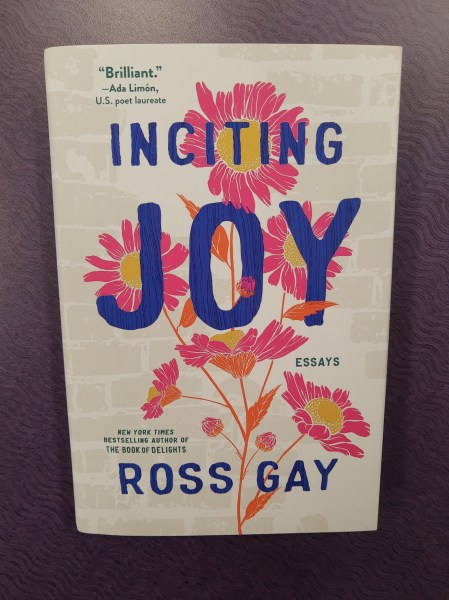
You know, that friend you can sit with in companionable silence (is there anything better for us avid readers?) without any awkwardness. How is it that an author whose business is words exudes a watchful, waiting, respectful quietude? Yet, at the same time, Gay’s words demand to be read–in the chillest come-and-stay-awhile kind of way. The latest book from the Youngstown, Ohio, native, Inciting Joy: Essays, is an open invitation. Yet, let me make clear there is nothing easy about Gay’s work. This is heart-opening-with-a-crowbar stuff, and that takes work on the reader’s part. But if there is a more grace-filled writer alive today I don’t know them. For comparison: think a secular Henri Nouwen (who was, of course, a Catholic priest.) I bet Gay would excel at the Jesuits’ daily examen, just sayin’.
But isn’t that what the best essays do? Examine something of the author’s life? And in our reading, then, our own understanding is enlarged, enlightened. My favorite essay of the book so far is “Through My Tears I Saw (Death: The Second Incitement). It’s my favorite for its subject matter, the author’s father, “an uncomplaining dude if ever there was one” in his last days on earth; and also for Gay’s humor and voice (see: “dude”) when grappling with a subject as difficult as a parent’s death. I’m not spoiling anything to give you a bit of the conclusion of that essay: “It was through my tears I saw my father was a garden.” (And, yes, if you’re wondering: this is a book about joy–creating it, fashioning it out of what you have. Find me someone who doesn’t have pains and sorrows. Joy can be ours, too.)
There’s a lot of gardening, a lot of tending and watering, nurturing, pruning, and surviving in Gay’s work. Read a couple essays and you’ll quickly learn that this is not only metaphorical gardening. The author is a founding board member of the Bloomington Community Orchard in Indiana, where he’s a professor and a poet and essayist, and, from the sounds of it, a fairly uncomplaining dude, himself.
One of his poems from a previous book, “Ode to Drinking Water from My Hands,” which begins in a garden, inspired a short essay of mine, “Ode to an Ode about Hands.” Written during the darker days of the pandemic, my essay is about grief. How we tend to it, what we make of grief, is directly related to the joy we feel. (It’s not free is what Gay’s saying, I think, and I agree.)
Are you new to Ross Gay? Where to begin? I think of his The Book of Delights: Essays as the gateway drug. This is the book I gift to family and friends who might not even be big readers. Short essays about absolutely everything (including joy)–there’s a great chance you’ll connect with (and come back to over and over) at least a few. From there, I recommend his Catalog of Unabashed Gratitude, an award-winning collection of poems that reviewer Evie Shockley called “shout-outs to the earth’s abundance.” The Ross Gay trinity of poetry, gardening, and basketball wouldn’t be complete without an ode to the hardcourt, which you can find in Be Holding, an epic poem and a “love song” to basketball legend Dr. J.
Now for a couple plugs: Lit Youngstown, my favorite community literary organization, is hosting Gay twice this year. The first is an online reading; the second is the in-person, weekend-long Fall Literary Festival in Northeast Ohio, where Gay will be one of the featured writers. I’ll be at both. Maybe I’ll see you there!
Who’s your favorite author? Who are you reading right now? Are you taking part in #bloganuary? Have you made any fun connections?
And check back here next week, when I will be interviewing John Kropf, author of Color Capital of the World: Growing up with the Legacy of a Crayon Company. You won’t want to miss it!
*header image is the cover of Inciting Joy: Essays by Ross Gay (Algonquin Books, 2022); jacket design by Christopher Moisan
Rebecca here–and absolutely thrilled to present this guest post featuring the poetry of Moundsville, West Virginia native, poet and professor Carrie Conners. All three poems shared here explore Rust Belt themes and can be found in Carrie’s latest collection, titled Species of Least Concern. Please read, share, and join in the conversation in the comments.
Carrie Conners, originally from Moundsville, West Virginia, lives in Queens, New York and is an English professor at LaGuardia Community College-CUNY. Her first poetry collection, Luscious Struggle (BrickHouse Books, 2019), was a 2020 Paterson Poetry Prize Finalist. Her second collection, Species of Least Concern was published by Main Street Rag in 2022. Her poetry has been nominated for a Pushcart Prize and has appeared in Bodega, Kestrel, Split Rock Review, RHINO, and The Monarch Review, among others. She is also the author of the book, Laugh Lines: Humor, Genre, and Political Critique in Late Twentieth-Century American Poetry (University Press of Mississippi, 2022).
Are you a Rust Belt poet or writer? Do you write book reviews–or conduct interviews of Rust Belt authors? If so, think of Rust Belt Girl for a guest post. And check out the handy categories for more writing from rusty places.
I know what you’re thinking. Where are all the leaf-peeping pics? We know you drove along the PA turnpike to Ohio, climbing, winding, glimpsing down into little hamlets surrounding the sweetest, steepled white churches. All around were reds and every other burnished color. Oh, the autumn leaves!
Hold your trees for a moment, reader friends. First, a literary roundup. If you’ve never been to Lit Youngstown’s Fall Literary Festival, I’ll see you there next fall. In the meantime, here’s how I made my way through my favorite literary conference of the year (yes, even besting AWP, which I made it to in the spring).
Thursday
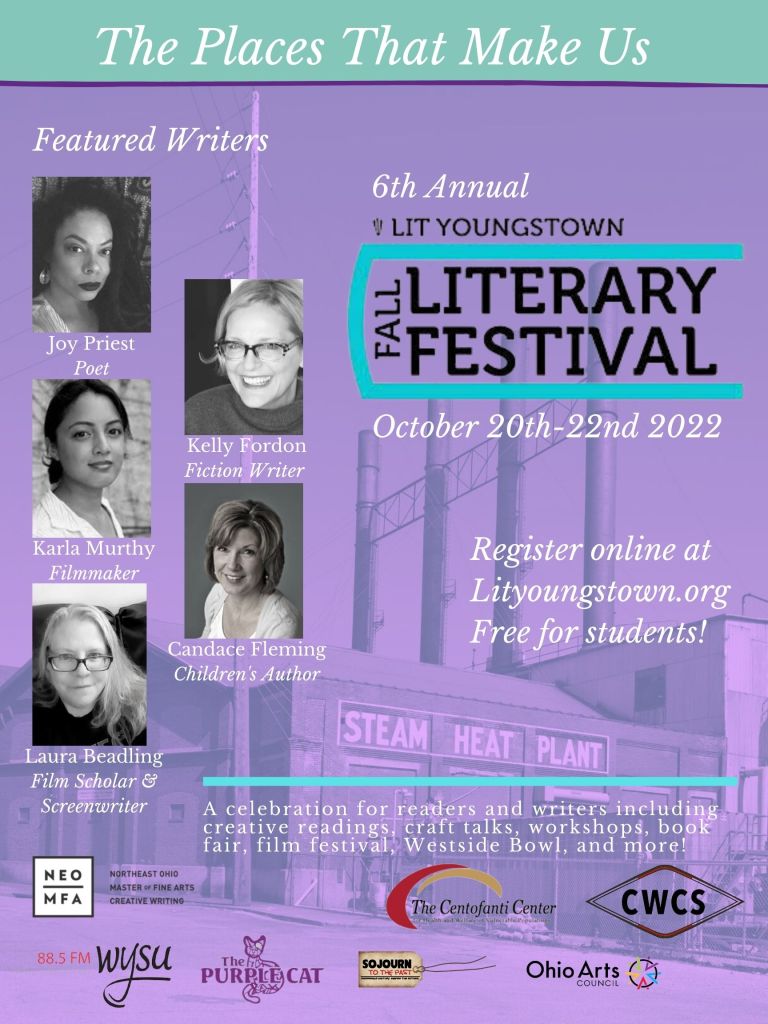
This year’s festival featured the theme, The Places that Make Us, and I was so happy to be able to return–5th year running for me–to this conference held not far from the place where I grew up in Northeast Ohio. Big shoutout to all my fellow festival planning committee members. We did it (again)!
Special in a lot of ways, besides all the usual literary goodness, this year’s festival provided attendees front-row access to three film screenings.
But really, year in and year out, this festival always impresses me. What’s so special? Lit Youngstown’s director, Karen Schubert, is a literary conference alchemist, joining poets, fiction writers, memoirists, and even filmmakers this year for just the right mix of craft talks, generative workshops, creative readings, and roundtable and panel discussions. What do you get? Literary conference gold, no exaggeration.
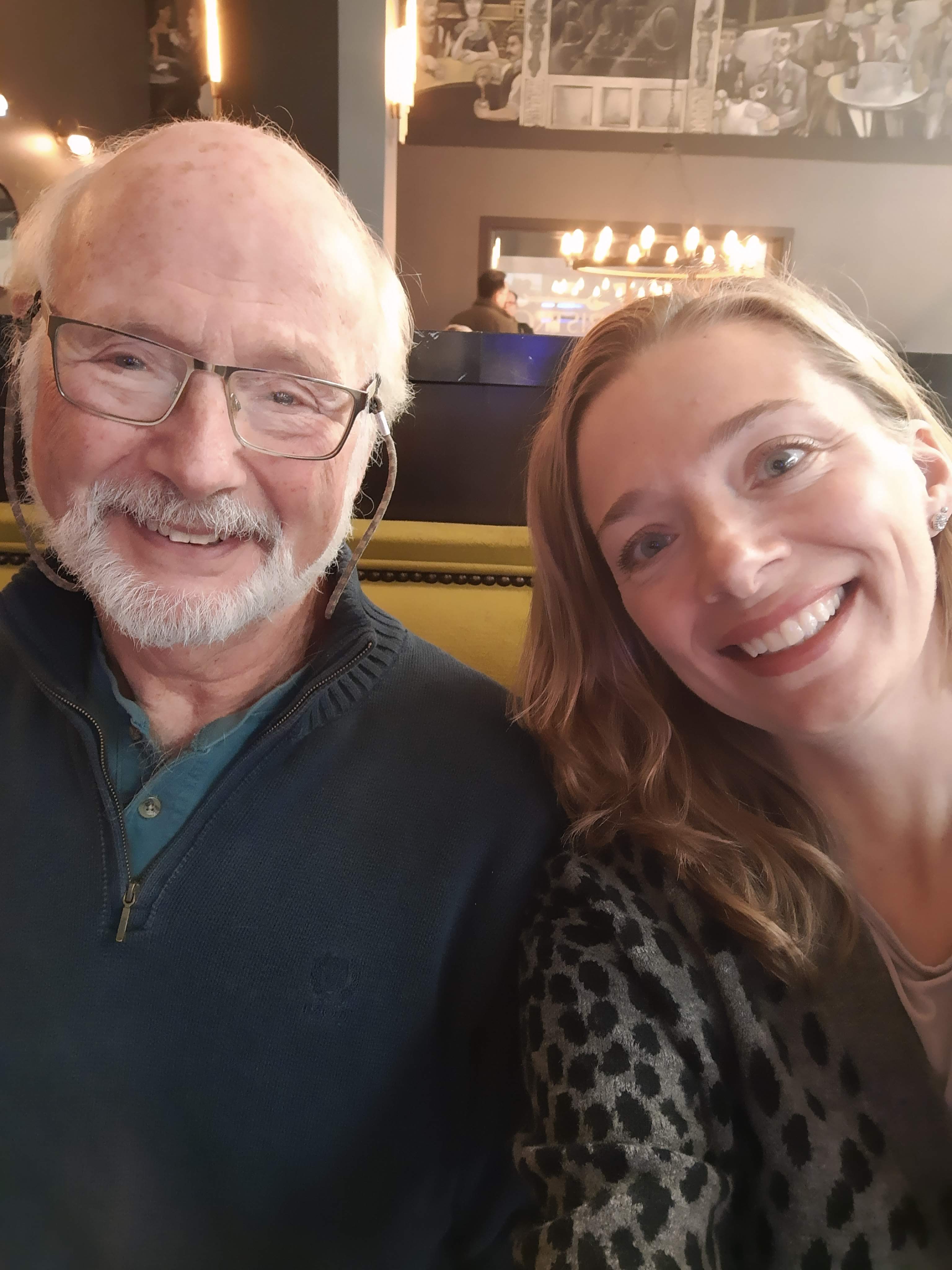
OK, onward … Thursday evening featured the Gathering In, with a reception and open-mic to begin the conference. This year, I had a special guest in tow. My dad drove in from Port Clinton; we had dinner beforehand (your meatballs are outstanding, Bistro 1907) and then headed to the Gathering In. I will tell you, my dad did not even doze at what I believe was his first-ever open mic and found it delightful. We salute you poets and writers who can whittle your words down to a few minutes of magic!
Friday
My first full day of the festival began with a craft talk by novelist June Gervais titled Honoring Others with Our Fiction Research. Intentional and inspirational are the two words that come to mind when I think about this talk. In it, June described her research process for her debut novel, Jobs for Girls with Artistic Flair. Braving the sometimes-fraught conversation around appropriation, authenticity, and sensitivity, when it comes to depicting readers from different professions or backgrounds, June exuded positivity. So, how do we honor others with our research?
First, have a goal. For June, she decided, “to make the most beautiful and honest book possible.” Second: do the research well–whether that’s in-person interviews, archival research, or hiring authenticity and sensitivity readers in later writing stages. Third (and this is June’s whole beautiful thing): show gratitude by thanking the helpers along the journey. Sometimes this means generous payment. Sometimes this means reciprocity–trading literary favors. Always this means a real thank-you in the mail and on social media and all the shoutouts possible, including on the old Acknowledgements page. “I try to be a living acknowledgement,” she said.
This year, I was intentional about attending the sessions (there are so many, I wish I could attend them all!) in my writerly “lane.” But I don’t seem to be able to resist the poets. In a roundtable discussion called “Moving Past Influence,” poets Mary Biddinger, Ali Black, and Dylan Morris talked about influences in creative writing–model writers and how they influence a poet’s style, and moving past influences as we develop our craft. When asked why she writes and why poetry, Ali talked about writing as an act of remembrance for those who’ve gone before her, those she’s lost. The stories are hers to tell, and poetry her form, she said, before she delivered one of the best lines of the weekend: “Poetry is my baby, and I’m poetry’s baby.”
Marketing-me felt right at home in Gabriel Welsch‘s craft talkMarketing Your Book–Tips From a Professional Marketer and Writer. How to generate pre-orders for your book … how to get it reviewed … how to develop a (shudder at the word) platform … and, ya know, actually sell your book. These were just a few of the practical tips covered. We listeners were asked first to consider our goal. What do we want from our book: readers? high regard? money? Gabriel covered Marketing’s 4 Ps: product, price, promotion, and place. Who said it first, I can’t remember now, but he repeated this gem a few times: “All arts marketing is local.” Along those lines, he said, don’t underestimate the wideness of one’s potential audience. Think about local clubs that aren’t book clubs, local fraternal organizations, historical societies, etc., etc. And, as if he and June had shared notes beforehand, he stressed gratitude. “Don’t underestimate the power of thanking.” (Thank you, Gabriel!)
Short story writer and poet Kelly Fordon (of Let’s Deconstruct a Story podcast fame–do check it out) led a generative workshop. I caught the second of two parts: the first, a workshop to deconstruct a story to understand its parts and how they work together; the second, a chance to get some words of our own on the page. There’s something about a good writing prompt. The simpler the better seems to work for me. Kelly gave this prompt: “Start with ‘We lived then …'” I’m not always in the writerly frame of mind to churn it out on demand, but here’s what I got:
We lived then spitting distance from the train tracks, the river, and the West Virginia border--so much winding, the running tracks leading not to any home I understood. A limbo, the twins not yet in school, not babies either. How many times did we stop the car by the tracks, watch the train pull tractors east and west--Kubota, Deere. In our rental house, the boys slept on a mattress on the floor, when they slept.
One positive of the pandemic was finding a new writing group. I guess Zoom is good for some things. Among the Cleveland-area members is Jeremy Jusek, Parma, Ohio’s poet laureate, host of the Ohio Poetry Association’s podcast Poetry Spotlight (check it out), and consummate literary citizen. Jeremy’s craft talk, Strengthening Artistic Communication Through Podcasts, covered how podcasts can be used by small creative groups to humanize its members and strengthen communities. I love bookish podcasts and meeting the person behind the book. He called podcasts “the ultimate bridging medium,” and I can totally see that. He said that when he edits the podcast interviews of poets–the last one was with Hanif Abdurraqib(!)–he shoots for no more than 7 percent Jeremy, the rest the interviewee, an impressive stat I will remember when I conduct interviews.
OK, this isn’t a great pic (sorry Karla, thank you, Rebe!) of one fantastic panel discussion with the featured presenters (minus Laura Beadling). The gist: the writers Karla Murthy, Candace Fleming, Joy Priest, and Kelly Fordon weighed in on “the element of place, real and imagined, in the literary arts.” Side note: if you can catch a Joy Priest poetry reading, run don’t walk to catch it.
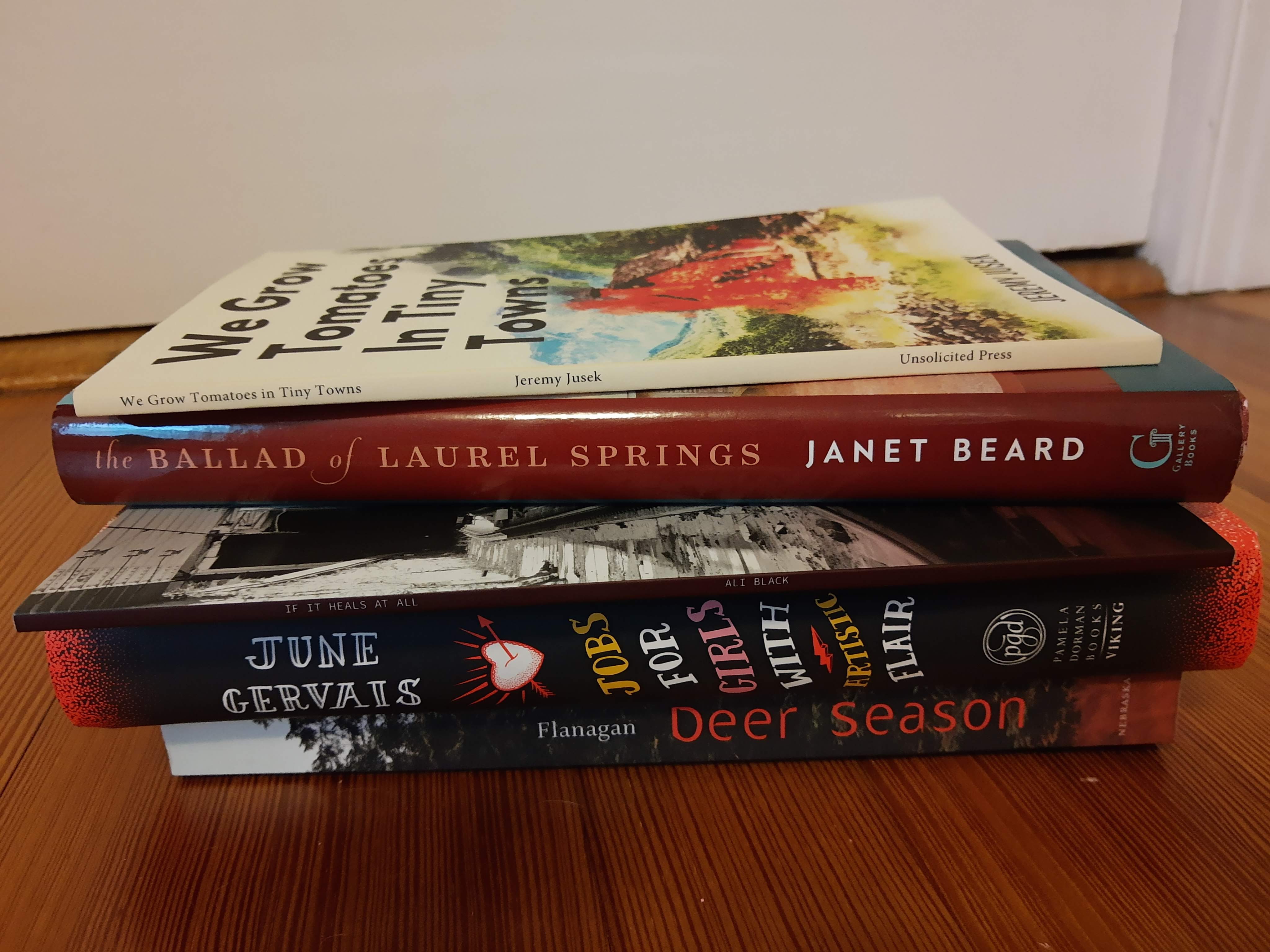
Now, don’t let my festival book fair’s book haul–pictured below–throw you, I guarantee there was plenty of time in the evenings for catching up with literary friends over jazz and a local craft beer (and pierogi and pickle pizza–someone saw me coming!).
Saturday
June Gervais started off the second full day of the conference tackling a subject close to my heart–and that of anyone about to dive into the query trenches. In her craft talk, Persevering to Publication: Some Practical Tips, June covered her (long) journey to the publication of her debut novel. Again, she walked the line between inspiration and practical steps to take. “Expect difficulty, but leave room for wonder,” she said. Now, could I please have a June Gervais quote-a-day calendar?
Along the practical side of things, she discussed making a practice of community while writing a novel (or anything else really). My favorite analogy she offered: think of the novel as the Thanksgiving turkey. It’s not enough. You need to support the turkey-novel with delicious sides, including the writing and publication of short pieces (short stories, essays, craft pieces, poems, etc.) Other crucial sides: an author website, a social media presence, and a literary community. (Check!)
Oh, the literary agent querying-getting-sustaining process. Should you want to endure the agent search, be prepared for it to be long and winding, June said. Most of all, enjoy life in this tough stage of the writing, find gratitude in the work and in your community, and “become a master of the polite check-in.”
I was happy to moderate two sessions during this festival. The first was a creative reading featuring poet and memoirist Jennifer Militello, whose love poems were nothing short of arresting and awe-inspiring. Youngstown native, poet Rikki Santer also read from her vast portfolio of poems, many centered on place–including some that explore the imaginary realm of place through old Twilight Zone episodes. And novelist Janet Beard read–and sang!–from her latest novel, The Ballad of Laurel Springs, which shares with readers some of the stories delivered by the old murder ballads Janet grew up hearing in her Appalachian hometown in East Tennessee.
The second session I moderated was novelist Erin Flanagan’s The Window or the Door: Transitioning from Writing Stories to Novels. (Or, The Plight of the MFA Grad–ha.) This craft talk was super instructional and featured 13 handy novel-writing tips. I’ll give you just a few and you’re going to have to hunt Erin down for the rest. #2: Start a novel-writing journal. #6: Figure out where your novel ends in time. (Also check out The Art of Time in Fiction for help with pacing.) #10: (Oh, this one is hard–but so necessary–to swallow.) Keep in mind that chapters aren’t short stories, meaning your chapter end needs to create more questions, more tension, etc., to pull the reader through.
If I have pulled you through this post this far, you have shown your readerly diligence and win a star! Or, how about a slideshow of the foliage, cliffs, boulders, and even 200-year-old petroglyphs I enjoyed with one of my oldest (she’s not old, our relationship is) and best friends and her son (who poses for pics like a Jet from West Side Story–and this is my everything now!). Please enjoy the treasures of Cuyahoga Valley National Park, where I visited on a post-conference side trip.
Have you attended this festival or another literary festival? What’s your favorite part of a writing conference? Have you been to this national park? Let’s chat in the comments.
Want more Rust Belt writing, author interviews, book reviews, guest posts, writing advice, and more? Check out the handy categories above.
Find me on FB and on IG and Twitter @MoonRuark. Find me at Goodreads and learn what novel I listened to on my way to and from the conference. Hint: I’m recommending it for fans of Tea Obrecht’s latest novel, Inland.
Also, please follow me here at Rust Belt Girl, so you never miss a (fairly infrequent) post, and feel free to share this post with the world. Want me to consider a guest post featuring you, yep, you!? Hit me up. There’s a lot of Rust Belt literary goodness to spread around.
*free header image of a fall foliage-colored door from Pexels
For those who don’t know poet Timothy (Tim) Russell, I want to introduce you to as solid a working-class poet as there is. Tim qualifies as a working-class poet not just because he wrote of that life (as did famed James Wright and Kenneth Patchen), but because he also lived it. He worked for 20 years as a boiler repairman in the Weirton Steel plant ‘til his lupus (MDS preleukemia disease) forced him to retire. He retired from the labor but not from the life and not from writing. For the next 30 years, he and his wife Jodi and kids lived along mile 61 of the Ohio River in small-town Toronto, Ohio.
Tim Russell, featured in the book, A Red Shadow of Steel Mills (1991); photo credit: Jodi Russell
The Ohio River along the West Virginia panhandle is a ripe area for steel mills and poets.
I grew up about 20 minutes south of there in Mingo Junction, about 20 minutes north of Martin’s Ferry, Ohio, where Wright grew up. The Ohio River along the West Virginia panhandle is a ripe area for steel mills and poets. In 1991 David Shevin and I edited A Red Shadow of Steel Mills (a line from Wright) which included poetry chapbooks of Tim Russell, Richard Hague, David J. Adams, and Kip Knott. It was one of our first books in the Working Lives Series from Bottom Dog Press.
Last month, other poets and I gathered with his family and friends for his memorial, at which Jodi and grandkids spread Tim’s ashes in the river about a block away from their home. Here’s a bit of West Virginia Poet Laureate Marc Harshman’s eulogy quoting Tim’s poem, “Plano.”
Because hills are not on the maps,
it's easy to get lost here, distant
neighborhoods appear to be adjacent.
“Even though I lived a long time in the rural heart of Appalachia,” Harshman said, “those words obviously ring true for Tim’s urban mill town as well. And it is ‘easy to get lost here,’ but Tim’s poems seemed always to be pointing a way, providing an anchor, enabling us, his readers, and his friends to feel just a little bit less lost. That’s a gift, a gift worth remembrance at any time but certainly here, today, as we do our best to remember and to honor Tim and know this is one of many reasons we miss him.”
Tim’s poems seemed always to be pointing a way, providing an anchor, enabling us, his readers, and his friends to feel just a little bit less lost.
In the mill, Tim was nicknamed “Mad Dog”; among poets he was the “Steel Mill Poet,” though he is equally a fine nature poet. A sample of his work reveals how enmeshed he was with the mills and his place, its people, and their language:
In Adversa  by Timothy Russell

March is the nuthatch
skittering head-first
down the bare black walnut
or the bare silver maple.

April is forsythia
beneath hazy pastel willows
weeping over the bank
of the orange creek.

May is mock orange
scattered like mortar explosions,
the most delicate mist
rising all around.

June is the red squirrel
fleeing the blue joy
both of them caught in the morning
sun crackling in the sycamore.

August is sulfur
moths twirling above the crown
vetch, deer prints in silt
at the culvert.

September is crab
apples, so red
on the roadside
near the Tin Mill
carpenter shop.

October is a buck
swimming the river,
climbing the gray slag bank
toward red and yellow
trees on the island.
Tim Russell; photo credit: Jodi Russell
Tim authored many books, each winning prizes and literary recognition. He is the author of the chapbook The Possibility of Turning to Salt 1987, which received the Golden Webb Award, 1987; of In Dubio 1988, which received State Street Press, 1988; and of In Medias Res, 1991. His full-length book, Adversaria, in 1993 received the Terrence des Pres Prizeia Poetry (Tri Quarterly Books). Chapbooks What We Don’t Know Hurts, 1995, and Lacrimae, 1997, followed; his haiku writing received the 4th Shiki International Haiku award Shiki team, Ehime Prefecture, Japan, 1999.
In Integrum by Timothy Russell

I’ve put my white shirt on
to celebrate my neighbor’s glaring roof,
the brick chimney leaning against its
own shadow,
the next of black branches above it all
dissolving into brilliance.
I’ve put my white shirt on
to celebrate cookies on a plate downstairs
and the pears and oranges in a bowl
with one perfectly curved banana.
I am celebrating the Christmas cactus
blooming in March.
I am celebrating nothing.
I am celebrating today.
I’ve put a white shirt on.
How did Tim share his days? Besides parenting, his wife Jodi says, “Tim tended to his gardens along the Ohio riverbank and built a stone henge across from his house fondly called ‘Tim Henge.’ He also grew poppies, zinnias, and sunflowers in it throughout the years. Battling knotweed on the hillside, he turned it into a bird and wildlife sanctuary. He would ride along the banks of the river in his boat collecting garbage and debris trying to keep the river clean. He was mindful of sharing and taking care of the earth for everyone and everything.”
Tim had a great sense of humor and a fine sense of image and form. He uses the common language to touch us. A world-published poet, he wrote many haiku and won many prizes with them, including a trip to Japan. Here is the last haiku he wrote, a few days before he died:
                 Snoozles
        The little dog knows
                 I’m toast

                       – 9/13/21
A fund has been established at the University of Pittsburgh, Tim’s alma mater. It will help support a freshman majoring in English Creative Writing. Donations may be made online at http://www.giveto.pitt.edu/russellmemorial or a check may be made payable to “University of Pittsburgh” with a memo “Timothy W. Russell Fund” and mailed to: University of Pittsburgh, P.O. Box 640093, Pittsburgh, PA 15264-0093.
~~~
Timothy W. Russell was born May 25, 1951, and raised in Follansbee, West Virginia. As a sergeant of the U.S. Army during the Vietnam Era he served as a handler of Military Police Sentry Dogs 1970-1972. He had graduated from Madonna High School (1969) in Weirton and following the war, went on to receive his bachelor’s degree from West Liberty College (1977) and master’s degree in Creative Writing from the University of Pittsburgh (1979). He passed away on September 16, 2021, at 70.
~~~
Larry Smith grew up in the industrial Ohio River Valley and graduated from Muskingum College and Kent State University with a doctorate in literature. He taught at Bowling Green State University’s Firelands College for over 35 years and is the author of 8 books of poetry, 5 books of fiction, a book of memoirs, 2 literary biographies, and more. He’s written film scripts for “James Wright’s Ohio” and “Kenneth Patchen: An Art of Engagement” and is director of Bottom Dog Press/Bird Dog Publishing in Ohio. He reviews for New York Journal of Books. Bottom Dog Press hopes to publish the collected poems of Timothy Russell soon.
Header image of Ohio River is credited to Larry Smith
~~~
Rebecca here–many thanks to Larry Smith for this beautiful tribute to the the life and work of Tim Russell. Please visit Bottom Dog Press’ website for his Working Lives series…and much more.
Are you a Rust Belt poet or writer? Do you write book reviews–or conduct interviews of Rust Belt authors? If so, think of Rust Belt Girl for a guest post. And check out the handy categories for more writing from rusty places.
I take umbrage with whomever coined the phrase “lazy days of summer.” And I might demand a refund. Except, while my summer has been anything but lazy, it has been fun.
After a little hiatus I return to you loveliest of followers with Rust Belt pics and books–and news of a reading in one of my favorite port cities (and rollercoaster capital), Sandusky, Ohio.
Off to OHio
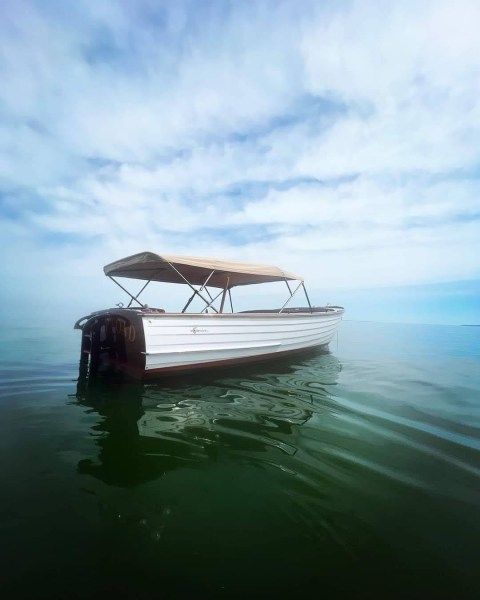
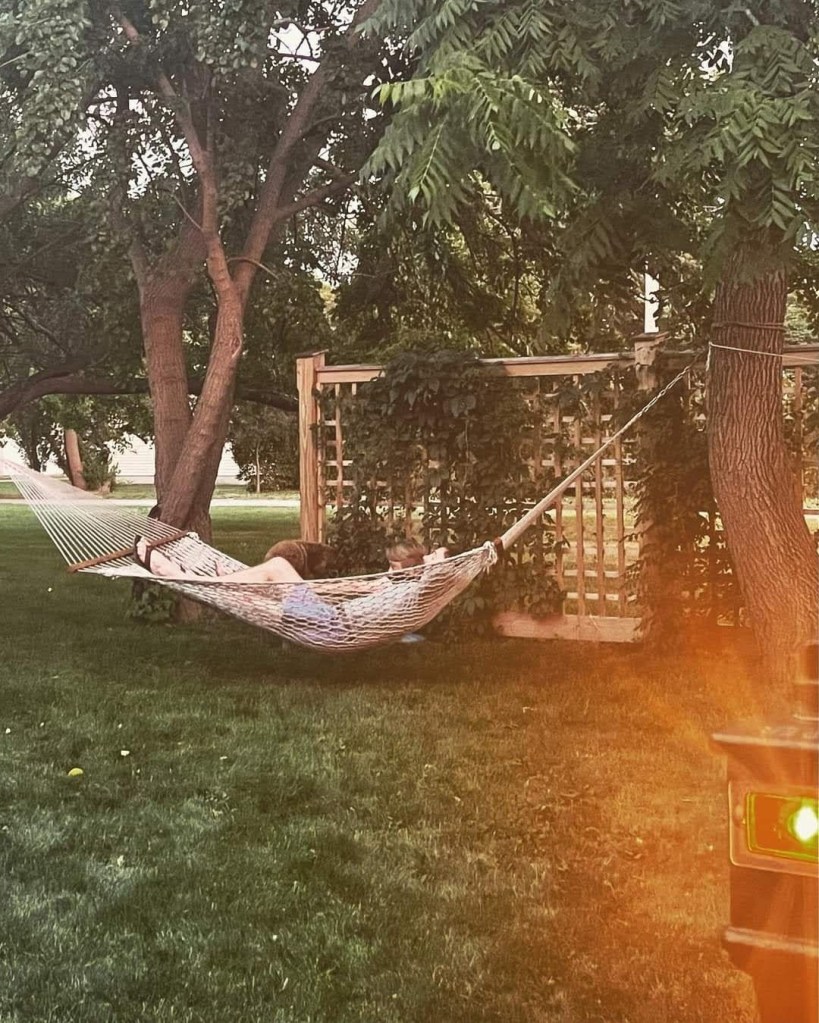
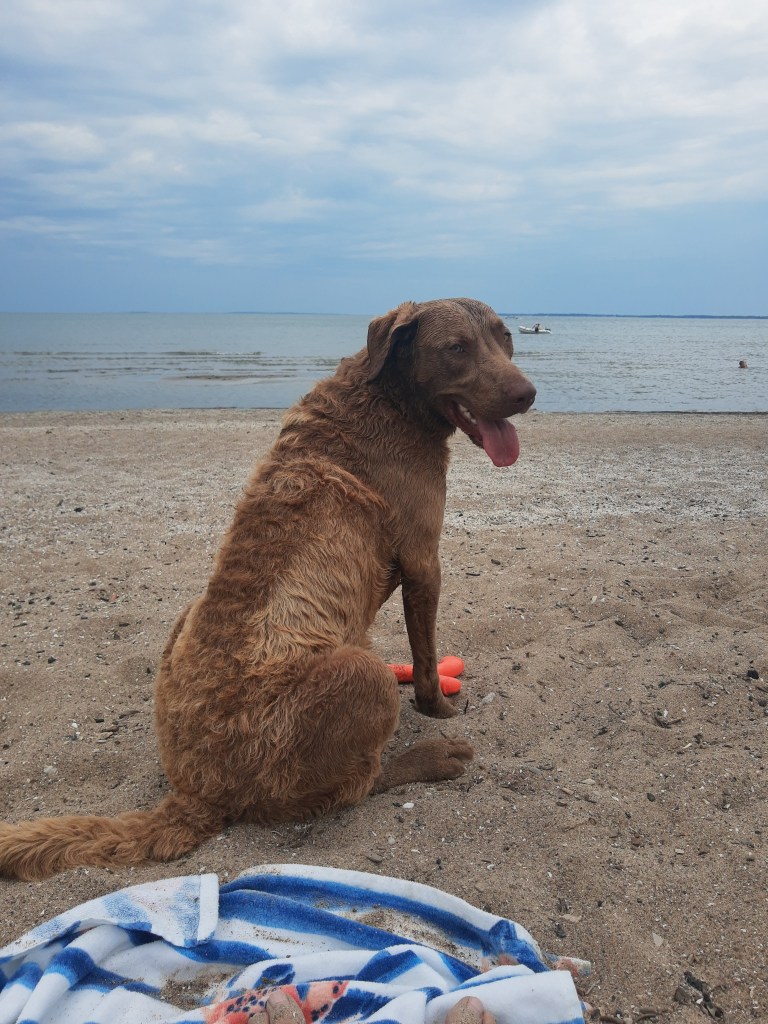
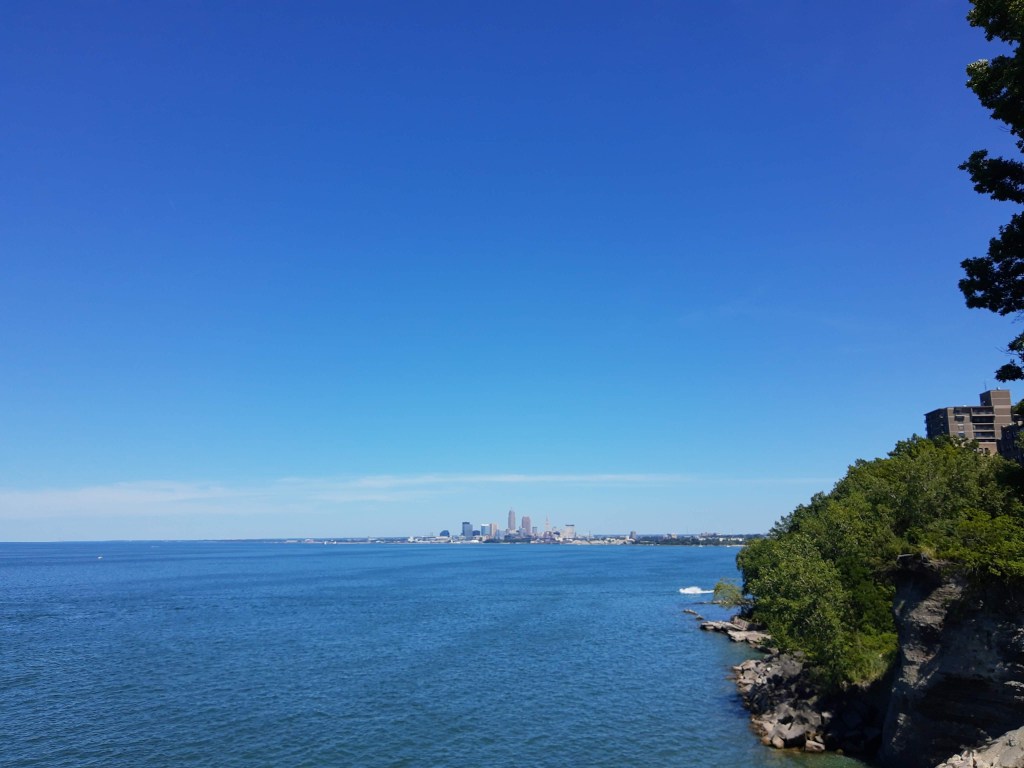
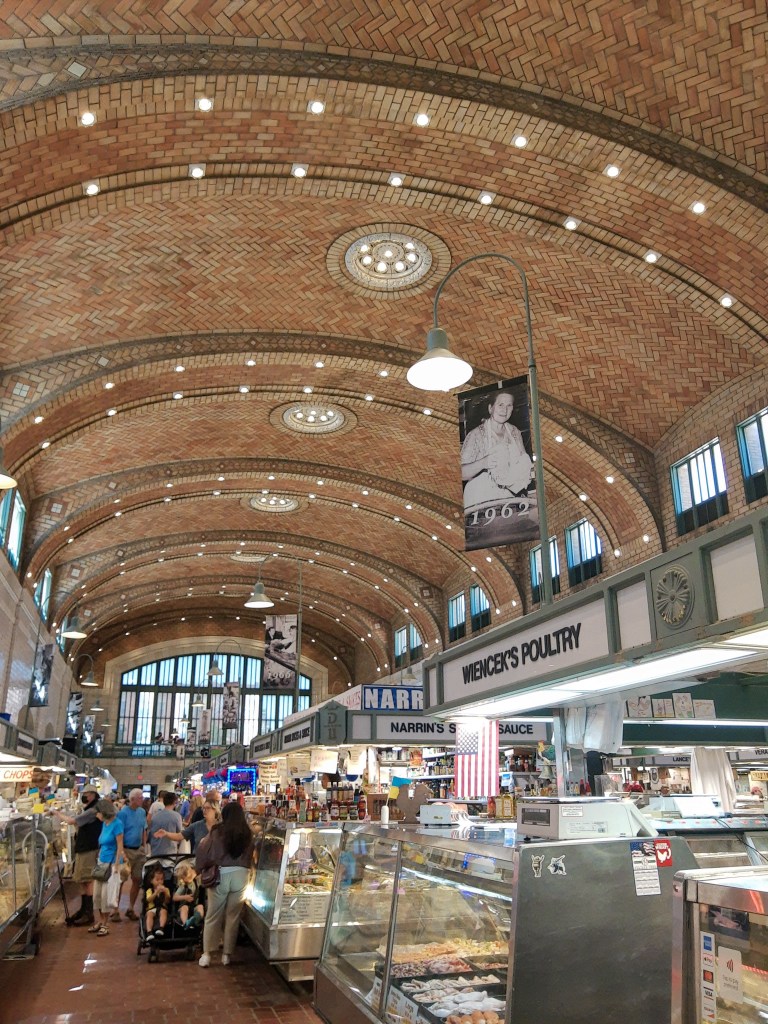
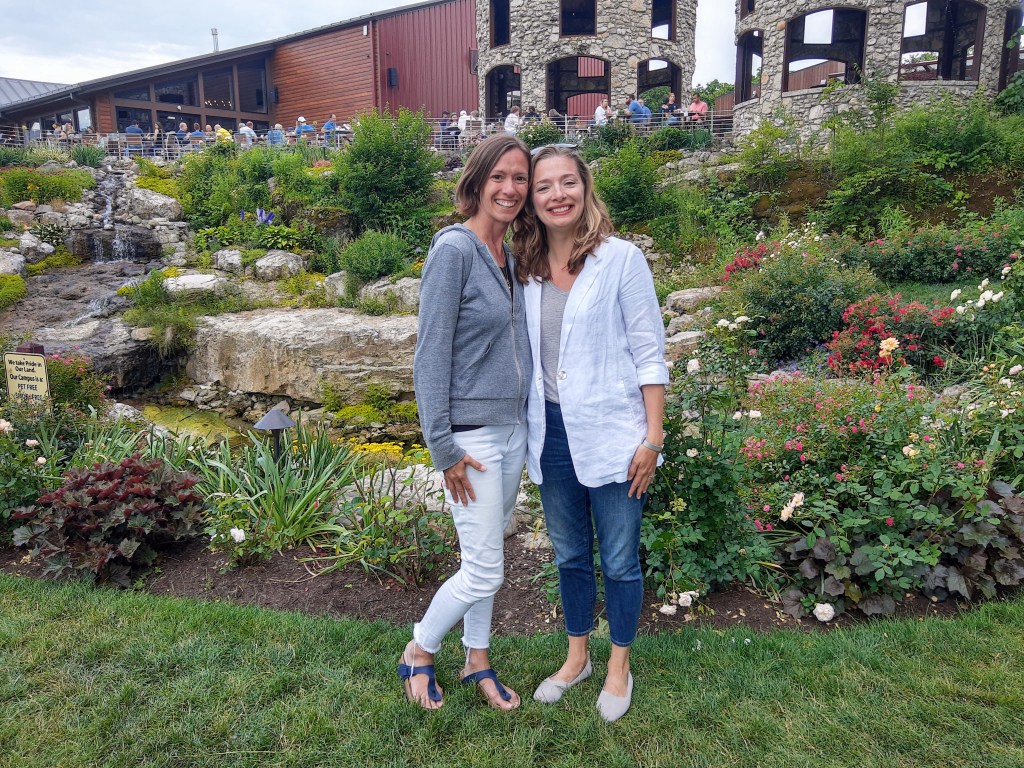
The fam and I headed to Port Clinton, Ohio, walleye capital of the world–don’t fight me on this, MN friends–in June. Sailing for my little guys, boating for the rest of us, swimming, sisters-lunching, friends reuniting, and plenty of hammock-ing and back porch-sitting were the highlights. Of course, no visit to Northern Ohio is complete without a trip to Cleveland and a visit to the West Side Market. And who could forget Rufus, who lived his best Lake Erie Shores & Islands life for a week. Boat aficionados, make sure to check out my dad’s antique Lyman boat above, his fourth child basically. Boat name? Hoptoad, named for Pippi Longstocking’s father’s ship in the favorite book series. (Who woulda thunk I’d become a writer?)
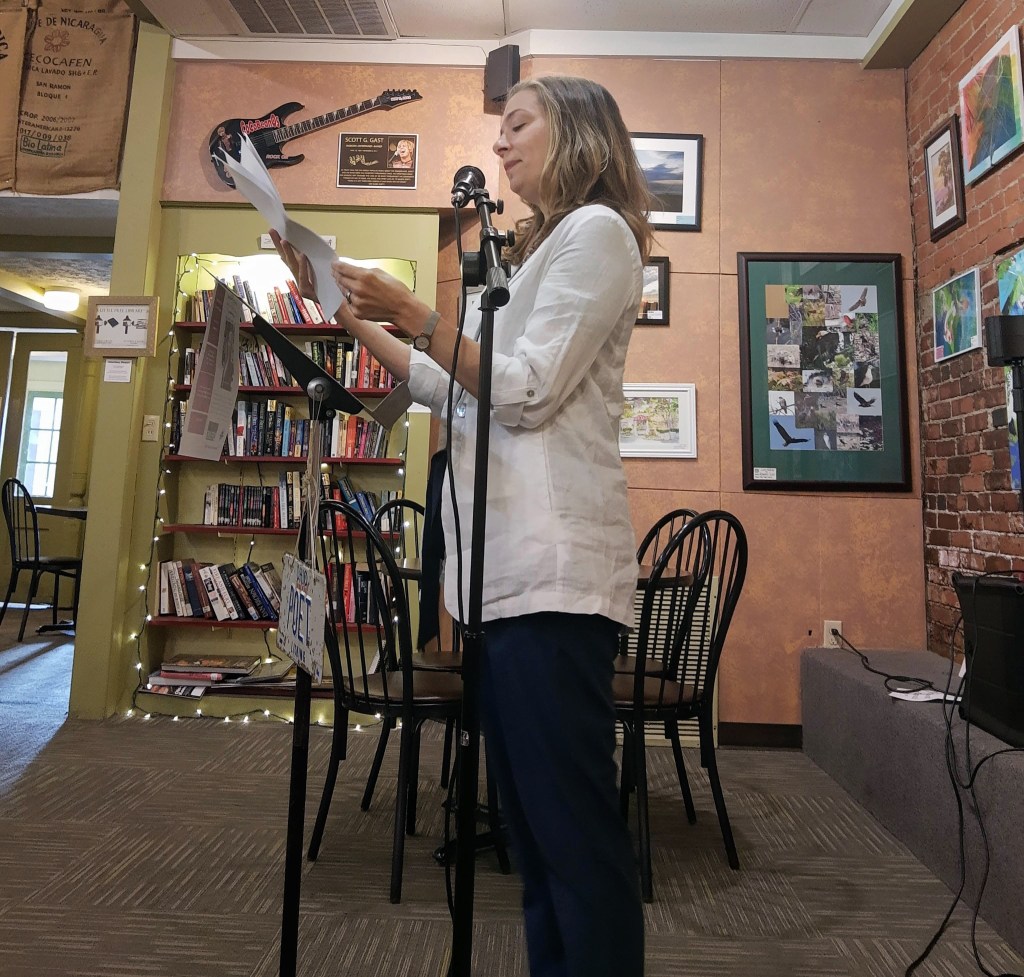
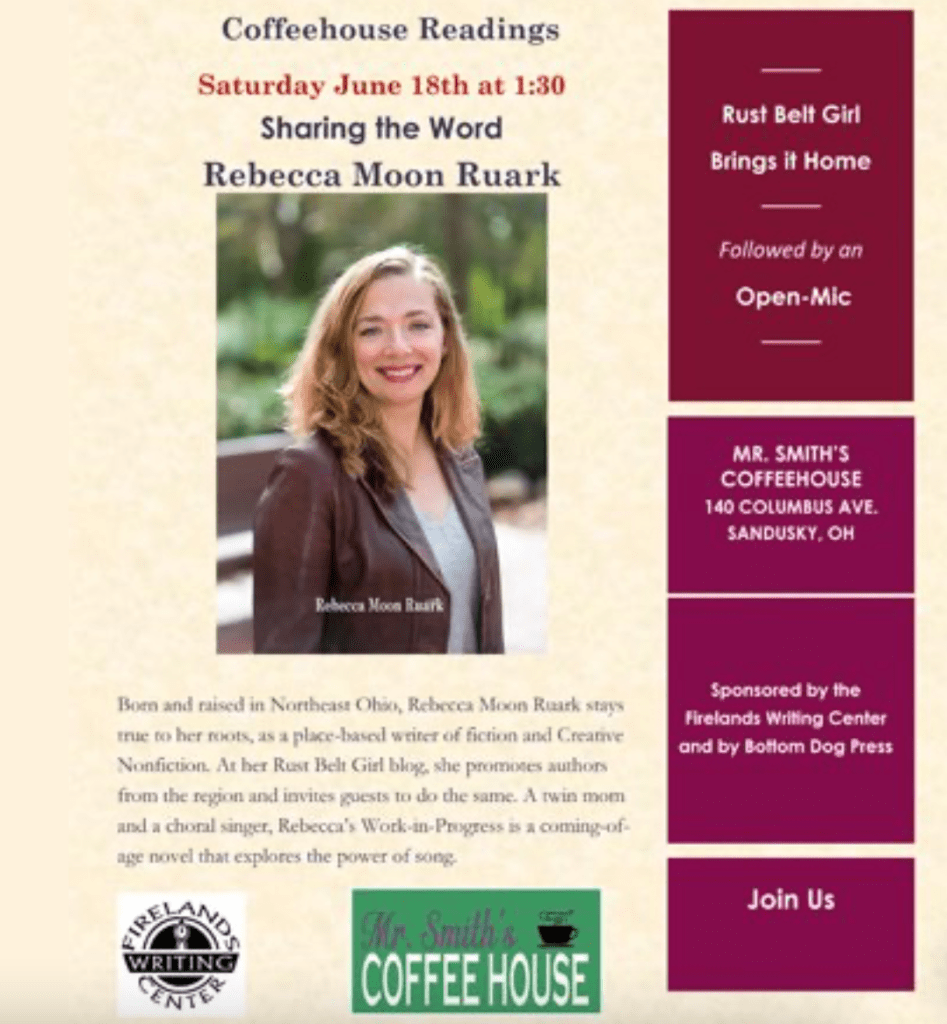
While in the area, I had the honor of serving as the featured reader for the Firelands Writing Center’s monthly reading series in Sandusky. Thank you again to fearless leader Larry Smith and his Bottom Dog Press for sponsoring the event (and putting me on a flyer–that doesn’t happen often). I read some older work and some newer pieces from my WIP, a coming of age novel partly set in Ohio that explores the power of song. And thanks to those who came out (or in) on a beautiful afternoon to share their own work with the group. It felt very much like home. (Flyer photo credit: @melanieraebuonavolonta)
Reading the Rust Belt…
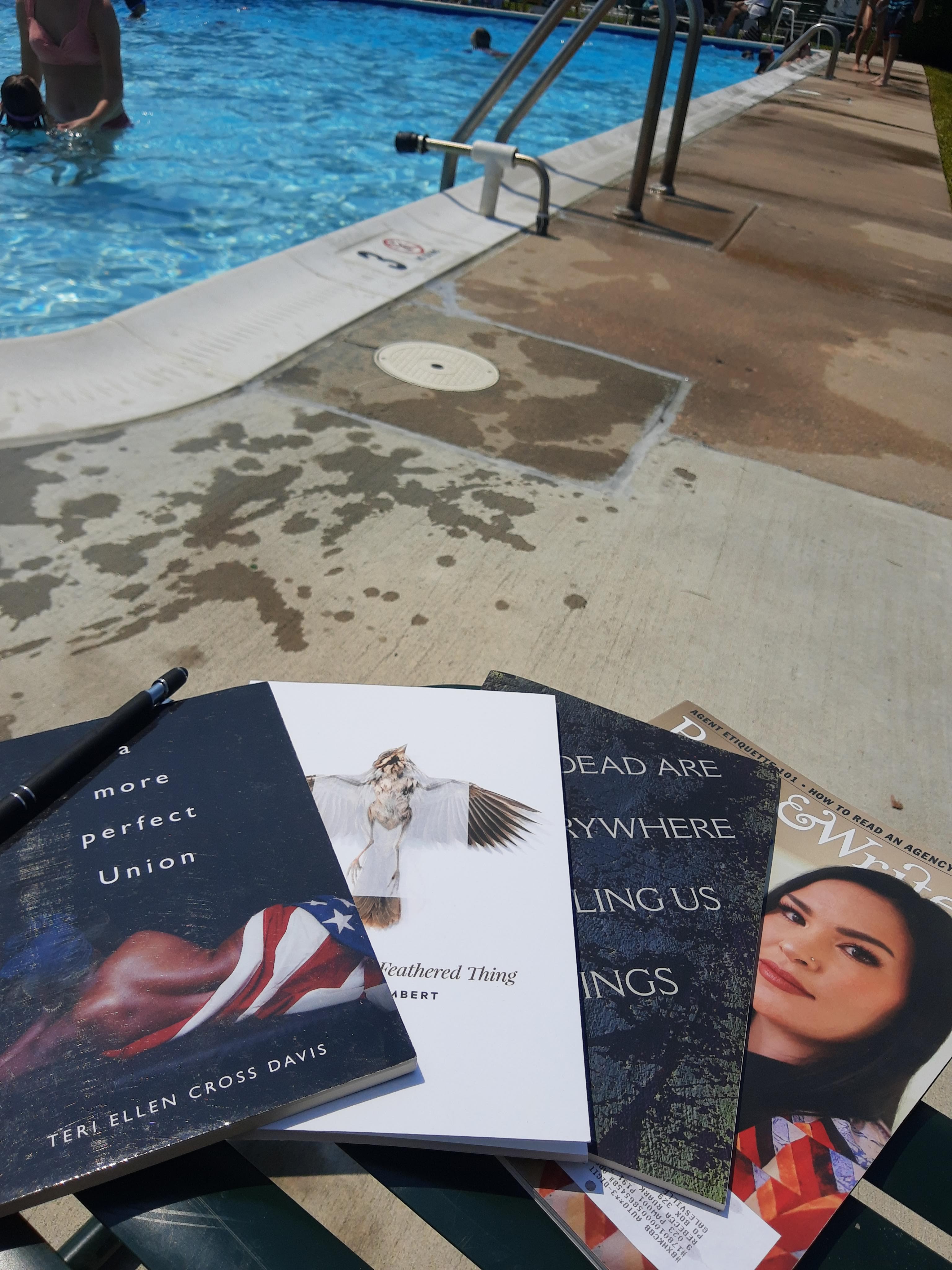
Of course, I’ve fit in some Rust Belt reading. And who said summer reads can’t be deep? Poolside poetry is just my speed, and here are a few I’ve enjoyed immensely: Cleveland native Teri Ellen Cross Davis‘ A More Perfect Union; Columbus, Ohio, poet Paula J. Lambert’s The Ghost of Every Feathered Thing, and Erie, Pennsylvania, poet Sean Thomas Dougherty’s The Dead are Everywhere Telling Us Things. Btw, if we’re not connected on Goodreads, where I recently reviewed another poetry collection, let’s do!
And Beyond
There’s an old, writerly adage that says if you’re talking about it you’re not writing it. So, let’s just keep all our fingers and toes crossed for my WIP as I begin to query literary agents for it this fall.
Unfortunately, there’s no adage I know of that says if you’re talking about your editing you’re not working on it. But what would be the fun in that? You may know I’m the associate editor of Parhelion Literary Magazine, in charge of the features department. How I love my craft essays, book reviews, and author interviews! But you might not know that I got that gig because the magazine’s editor-in-chief saw what I was doing right here on Rust Belt Girl and wanted some for her Richmond, Virginia-based online publication.
In addition to editing features for Parhelion, I’m a reader for fiction. (If you aspire to write literary fiction, creative nonfiction, or poetry, there is no better way to become better at it than to read literary journal submissions, imho.) Parhelion’s summer issue (our journal’s 14th–not too shabby) launched this week. If you like fresh and bold fiction, CNF, and poetry I hope you’ll check it out.
Must we? OK, I suppose the pool days will come to a close. My small guys (who are quickly catching up to me) will head back to school. And I will start packing for the literary highlight of the season, Lit Youngstown’s Fall Literary Festival. If by some strange occurrence you live within driving distance of the festival and I haven’t hit you up, my apologies. This is the best literary conference of the year–if you like a supportive community, generative workshops, eye-opening and ear-bending panel discussions, inspiring readings, and affordability. Oh, and this year’s book fair promises to be the best yet. Also, there will be bowling and films. So, what are you waiting for? The Rust Belt calls.
And that, most patient of readers, is what I’ve been up to. But, as blogging is a two-way street, let’s keep the convo going. What has your summer looked like–or whatever season it is where you hang your hat? Where are you visiting. What are you writing, reading, and discovering? Do tell!
Want more Rust Belt writing, author interviews, book reviews, writing advice, and more? Check out the handy categories above.























 Rust Belt Girl