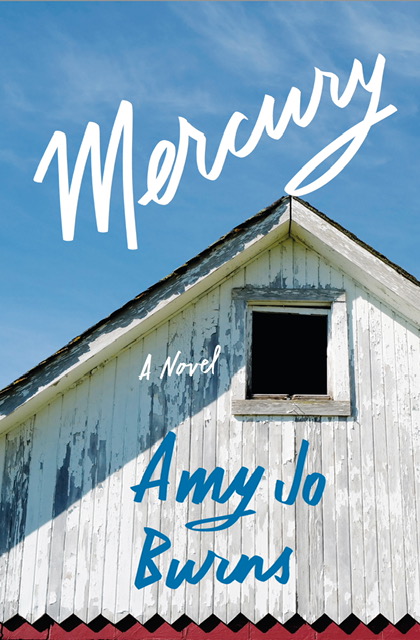
My interview with Amy Jo Burns, author of Mercury


Let’s begin with a sample paragraph from Amy Jo’s stunning literary (also mystery) family saga:

Spring was breaking through in lilac buds and daffodil shoots, but winter held on. Tufts of dirty snow clung to curbs, and porch steps, and parking lots. The heat had stopped working in the Citation, and Marley shivered. Theo was bundled in the backseat; she caught a glimpse of him in the rearview mirror. Then her eye snagged something else behind her–someone limping from a snowbank into the intersection. Marley slowed to a stop and turned around.

Whew. Good stuff.

Amy Jo, your main character in this Western-PA-set novel is Marley, whom we first meet when she’s 17. You left your Western-PA hometown for college around that age. What was it like to write this book and “inhabit” Marley’s character in a place (and time) similar to the one you were raised in? And how similar is your real-life family to Marley’s found family?

    Marley is a really special character to me. When I was creating her, I took the qualities I love most about my best friends from home and put them into her character. Her willingness to step into someone else’s messiness, her ability to tell the truth in such a loving way, and her desire to build a business with her own creative stamp on it are all qualities I really admire about my oldest friends. Marley showcases what I think real resilience actually looks like. It isn’t perfection or misery or loneliness—it just comes through in a big-hearted, flawed human who shows up for the people in her life. 

    The Joseph family in the novel is like mine in that we’re both a family of roofers—which means both houses were full of grand storytellers, brave hearts, and lots of tar-stained jeans. The house I imagined the Josephs living in was inspired by the old Victorian house my grandparents used to own in my hometown. I’d always loved that house and couldn’t imagine any other place a family of roofers would live. The characters in Mercury come from my imagination, but the bond they feel with each other—the sometimes too-close intimacy they have with one another is absolutely something any member of my extended family can relate to. When it comes down to it, I’d say both families care about the same thing—keeping people safe under roofs and on top of them.

    This novel is mostly set in the fictionalized town of Mercury. How did you go about constructing this place, this “forgotten Rust Belt town.” Did you use Pinterest boards or clip photos from magazines? Was there map-making involved to mark where the salon, post office, and library stand? And, as the daughter of real-life roofers, do you picture this town from an aerial/rooftop view?

    Mercury is heavily inspired by my own hometown, which I also wrote about in my memoir Cinderland. When I started writing the early pages of this book, I knew it had to be set in Mercury—a place I know, love, and left. So most of the early “research” came from my own memory, and then I squared it with pictures from the 1990s and also by talking with my parents. My dad drew a map of the church steeple and attic (which both play an important role in the story), and I talked with my mom about what it was like to help build a roofing business from an administrative perspective. It was really special to get to share a bit of this project with them, especially since so much of the book is about what it means to belong and how we claim home for ourselves.

    I hadn’t imagined my hometown from any aerial views until I started putting characters on roofs pretty early in the process of drafting the book, and it was the coolest thing to envision this place anew from an entirely fresh perspective. I was able to find a few aerial videos of my hometown to watch, which really helped me fill in the landscape for what these characters find when they’re up higher than everyone else.

    I’d call this book a literary family saga; however, there is also a lot of romance—some steamy! What’s your best tip for writing romance or sex that deepens character and moves plot?

    I would say my best tip is that sex is never just sex. Falling in love is one of the most monumental things we experience as humans—it shows us at our best and our worst—and I think it’s really important to reflect it in literature. When I’m writing romantic scenes, I’m always considering what each character is risking about themselves in a very unique way—are they sharing something no one else knows? Are they saying one thing and thinking another? What is it about falling in (or out of) love that changes how they see themselves? What past events have shaped how a person approaches their most intimate moments? Those scenes are such a great way to show what a character deeply wants and what they fear, whether they’re aware of it or not. And when all that juicy backstory collides with someone else who is just as complicated—it’s fictional gold!

    Like in your last (gorgeous) novel, Shiner, you explore profound female friendships in Mercury. Can you talk about how you developed the friendship on the page between Marley and Jade? When you’re writing, do you do character studies/background/backstory with detailed info–any that doesn’t make it into the book?

    Mostly what I do when I’m building relationships between characters is think about it A LOT. I write many drafts over a long period of time and throw out a lot of material, usually because that’s how I’m getting to know the characters. Scenes will start off as sketches and they get more detailed as I learn who the characters are. Many of the scenes between Jade and Marley felt very cliché for a long time as I was working, and I’d have to go back in and re-work them to go deeper so they felt earned and true. 

    I am such an impatient person (what a terrible trait for a writer!), so character studies always feel like they’re detracting from the real heat of the story I’m working on. The only thing I usually do outside of drafting itself is create a playlist for each book that I write, and I’ll include songs for each of the characters. It helps me track down their psyches, their moods, their secrets. You can learn a lot about a person if you know what songs they’re listening to when they’re alone.

    In this novel you touch on dementia. What kind of research was involved there? As this book is set in the 90s mostly, was there any other, historical research you had to conduct for verisimilitude?

    I had a family member with a form of dementia (though under different circumstances than those in the book), so I used that as the basis for building it in the novel. I decided not to do much clinical research on it because I wanted to portray it through the eyes of a family who isn’t sure what is going on. So often we don’t get the answers we are looking for in real life when it comes to medical diagnoses, and it was really important to me to give that truth a lot of space in the novel. 

    Motherhood is portrayed in a very real, and sometimes heartbreaking, way in this novel. Marley’s mother-in-law says, “This life is unmerciful to mothers.” You’ve got two young children at home. How has your writing practice (and product) changed since becoming a mom? And, follow-up, what is your favorite novel for exploring themes of motherhood?

    The biggest difference in my writing practice is that I have to keep my working hours to match my kids’ schedule. It is GIGANTICALLY easier now that they’re both in school, though I rarely get done what I’d like to in the course of a day. I remember when my son was an infant and my writing sessions were so short, I thought I’d never finish the book I was working on, which turned out to be Shiner. Sometimes my writing sessions would only produce a few hundred words. I had to learn to talk myself through it and say, “Maybe no one will ever see it, but I’d still like to try.” And I’d repeat that to myself over and over when my daily frustrations came. And the book got done!

    In terms of my favorite book about motherhood, I once attended a talk by Nicole Krauss just after she’d published Great House. Someone in the audience asked her how she was able to write and be a mother, and she said, “I wouldn’t have been able to write this book if I hadn’t become a mother.” It was so encouraging to me, as I was contemplating how I might have kids and continue to write. That story inspires me still.

    A lot of the plot of Mercury centers around the family’s church—but not necessarily around worship. No spoilers, but can you talk about how religion, faith, and or belief works in the world of this novel—and maybe also in your own life?

    My faith is a huge part of my life and my creative process. I think maybe writing books is a form of prayer for me. What I love about it is that the page becomes a place for my uncensored thoughts, my questions, my frustrations, and—most powerfully—the things that I love and I think are worth fighting for. It feels like a quiet place where I can meet God without judgment, where I don’t have to be any other version of myself but the real one. Also, I do a lot of listening when I’m writing which feels very peaceful.

    In this particular story, many of the characters have an idea of what “religion” is, but what they’re all hungry for is faith. Faith in a God who loves them just as they are, and faith in each other. I like to think each of them encounters God in an unexpectedly meaningful way in the book, and usually it’s through they way they learn to love each other.

    For those of us who aren’t just readers but who are also writers, what’s your favorite generative prompt for a writing day when the words just aren’t coming?

    I absolutely recommend starting with a memory from childhood you can’t get out of your head. Try retelling it to yourself from an adult perspective (which you can interpret any way you like). I actually began Mercury in just this way—the opening scene of the book is a memory of mine from a little league game when I was around nine years old. This exercise was how Waylon’s character first came to life.

    Tell us how the reaction to Mercury has been on your visits to libraries, bookstores, etc.?

    It’s been really wonderful. When Shiner came out in spring of 2020, there were no stores open, so getting to visit libraries and bookstores has been the best thing about publishing Mercury. My favorite thing is hearing about readers’ favorite characters and how they saw themselves in the story. I love it when that happens in a book I’m reading, so getting to provide that experience for fellow readers is a real gift.

    What are you writing and reading right now? And what are your kids’ favorite children’s books, lately?

      I love this question! This year I’ve been trying to take my time and read longer books (which I’m calling “biggies”), so right now I’m reading two—Iron Flame by Rebecca Yarros and East of Eden by John Steinbeck. I’m really enjoying them both. Right now my son, who is nine, is loving the entire Percy Jackson universe by Rick Riordan, and my six-year-old daughter is very into Dog Man by Dav Pilkey and the Max Meow series by John Gallagher. I love seeing them read!

      Writing-wise, right now I’m working on a novel about the true story behind a famous country-folk singer’s disappearance. I don’t know if it will be my next book or not, but I’m really enjoying the work itself. Thank you so much, Rebecca!


      Amy Jo Burns is the author of the memoir Cinderland and the novel Shiner, which was a Barnes & Noble Discover Pick, NPR Best Book of the year, and “told in language as incandescent as smoldering coal,” according to The New York Times. Her latest novel, Mercury, is a Barnes & Noble Book Club Pick, a Book of the Month Pick, a People Magazine Book of the Week, and an Editor’s Choice selection in The New York Times. Amy Jo’s writing has appeared in The Paris Review Daily, Elle, Good Housekeeping, and the anthology Not That Bad.

      You can find her on Instagram at @burnsamyjo.


      Mercury

      By Amy Jo Burns

      Celadon Books

      Many thanks to Amy Jo Burns for sharing her insights and time–and kid book recs– with us here at Rust Belt Girl. I know I can’t wait to read what’s next from Amy Jo!

      Like this interview? Comment below or on my fb page. And please share with your friends and social network. Want more? Follow Rust Belt Girl. Thanks! ~ Rebecca

      *Photos provided by Amy Jo Burns

      Enter your email address to subscribe to this blog and receive notifications of new posts by email.

      Read what you love … and other writing advice

      I’ve been reading Francine Prose’s What to Read and Why, a dictatorial-sounding title, true, but a great book to explore the craft of reading. (I’m late to this one, published in 2018, as I am late to most things.)

      Wait a minute, you say. Reading’s a craft now? Can’t I just read what I love? Of course, I say, and I’m sure Francine would agree. But if we’re reading for sport–that is reading to improve our writing or even ourselves–she is here for us. That is, this book–a compilation of essays responding to various works of literature–is a tool to employ to help us on our writing journeys. I especially enjoyed Prose’s essay in response to Charles Dickens’ Great Expectations, her essay on Jane Austen (I, embarrassingly, only recently read Pride and Prejudice for the first time), and her essay titled “Lolita, Just the Dirty Parts: On the Erotic and Pornographic,” (in case you like your Valentine’s Day reading on the saucy side.)

      From that last essay on a novel I loved (for all kinds of writerly reasons–like fun play with an unreliable narrator) I especially liked her discussion on what’s been lost in how we think about “Eros and erotic, words that have always included the sexual but have also suggested the mysterious…connection between sex and life, between sex and pleasure, between the origin of life and the celebration of life…”

      My guess is Lolita is a contender for the top spot in the latest rash of books to be banned and even burned…maybe partly due to limited understanding of Eros. I’m also guessing that many who would wish to rid the world of Lolita haven’t read it–“a work of art” that functions not to arouse the reader but to “deepen our well of compassion and sympathy.”

      My quick take: I read what I love and leave the books I don’t love for others to consider. And in reading what I love I absorb the best of it as lessons to write well.

      One delightful effect of my being between revisions of my WIP is that I have ample time to read. Add to that the fact that I’m not yet querying agents for my WIP, which means my reading time isn’t eaten up by searching for comps (comparative titles), and I am really reading what I love.

      My TBR keeps climbing to the ceiling, but in addition to Prose’s craft book, I’m also reading Kirstin Valdez Quade’s The Five Wounds, based on her short story by the same name. (I highly recommend her collection if you are a short story fan.)

      In nonfiction, I’m currently reading Final Bow for Yellowface: Dancing Between Intention and Impact by Phil Chan with Michelle Chase, about Asian representation in classical ballet. I heard Chan speak on a West Virginia University webinar, and this former dancer (me) was enthralled.

      So, tell me, what are your Valentine’s Day reads? Are you knocking on Eros’s door for the holiday? Reading short stories or a novel? What’s the best nonfiction book you’ve picked up lately? Any of my current reads appeal to you?

      Hankering for my latest Rust Belt interviews, book reviews, and more? Check out my categories above. I hope you’ll follow me here, if you don’t already, so you never miss a (quite infrequent) post or more unsolicited advice. Thanks for reading, and Happy Valentine’s Day! ~Rebecca

      Enter your email address to subscribe to this blog and receive notifications of new posts by email.

      A bit of writerly advice for July 12, 2021…

      We shall not cease from exploration, and at the end of all our exploring will be to arrive where we started and know the place for the first time.

      T.S. Eliot

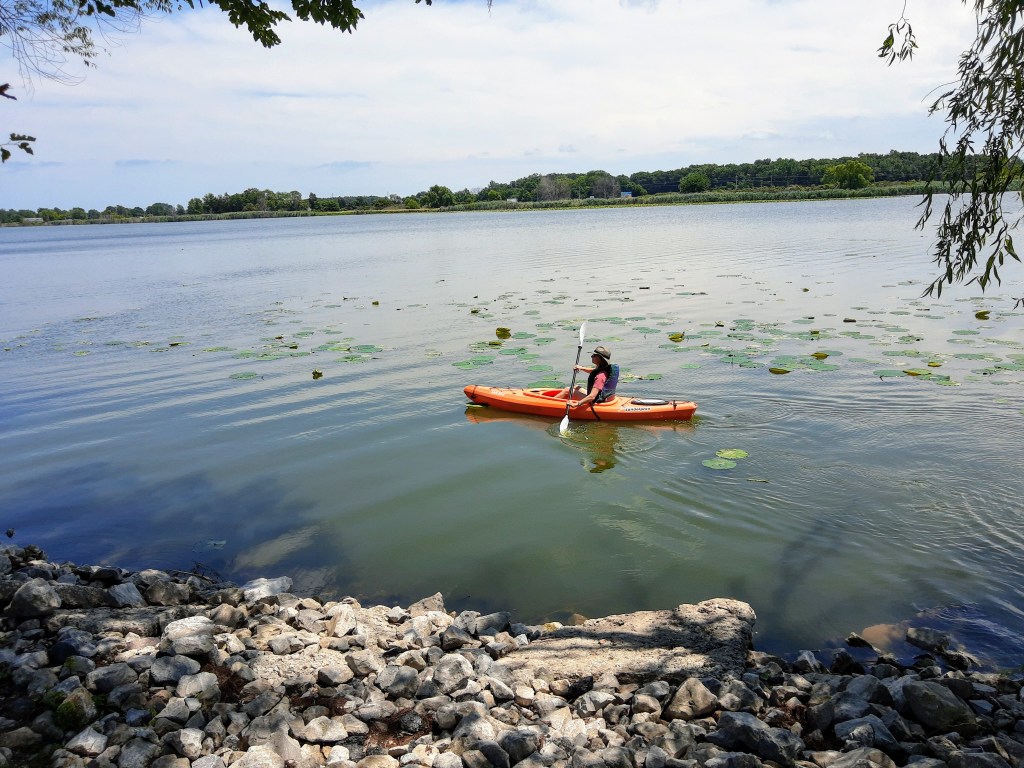
      Greetings from my post-vacation fog. It’s been a while. How are you? I’m sharing one vacay photo here–a bit of exploration along a river’s edge in Ohio. (See more photos over at my page on FB.) Ahead of me there, to the north, is Lake Erie, though this kayaking newbie didn’t make it that far. I did spy several great egrets, some red-winged blackbirds, and a row of tiny ducklings on this one outing. (Thanks for the pic, Dad!)

      Much of my vacation was spent on, in, or near the water–just how I like it–but you know I got some reading in. I brought along a good mix of fiction, essays, and poetry and finished up Fierce and Delicate: Essays on Dance and Illness by Renée Nicholson, which I adored. (Look for a review over at Goodreads at some point.)

      My vacation felt extra-celebratory, this year, as I had just finished up the first (very exploratory) draft of my new novel. (The first chapter, as it stands now, was published in the latest issue of The Halcyone Literary Review.) I’m enjoying this period of simmering–keeping the novel draft on the back burner a while. (May it grow rich for my absence!)

      Have you had such a fallow period in your own writing? What do you do while you’re letting a manuscript rest? I tend to fill my writing time with reading, and it’s been fun to pick up potential “comps”–novels that might compare in some way to mine. Among them is the new historical, coming-of-age novel, The People We Keep by Allison Larkin–so far, so good. (Though I have to say I feel a little offended that books set in the 1990s are now labeled “historical.” Wasn’t that just last week?)

      What are you reading or writing this week? What’s your favorite writing advice? What kind of exploration are you on?

      Let’s keep in touch in the comments here, over at FB, at Goodreads, or at @MoonRuark over at Twitter and IG. (What did we do before all this socializing. Oh yeah, socialize irl.)

      Looking for Rust Belt author interviews, book reviews, and more? Check out my categories above. I hope you’ll follow me here, if you don’t already, so you never miss a (quite infrequent) post. Thanks! ~Rebecca

      Enter your email address to subscribe to this blog and receive notifications of new posts by email.

      Writerly advice…for “Wet Winter”

      Welp, it’s been more than a minute, hasn’t it? I hope you’re well and reading and writing, if that’s your bag, this “Wet Winter.” Of all the wonderfully descriptive passages I’ve read in so much prose and poetry set in the Rust Belt over these four years of blogging, “Wet Winter” is perhaps the most succinctly and perfectly apt (like the opposite of this very sentence). I don’t know if he coined it, but I’m thanking author Mark Winegardner in his 2001, Cleveland-set novel, Crooked River Burning. As in… there’s Winter, and then there’s Wet Winter. I mean, just because the crocuses are popping up, doesn’t mean we’re not due for another few feet of snow.

      Here in Maryland, we’re warmer but mighty wet–a good excuse to stay in and read, research, or write, though it doesn’t always work. I am close to finishing a very exploratory first draft of a new novel manuscript I’m excited about. And because I don’t like to jinx things too much, I’ll just say it’s a dual timeline historical set partly in Northeastern Ohio about the healing power of song.

      “Write to your passions” is advice that gets tossed out a lot, but I’m not sure I always followed it. I am, wholeheartedly, with this project (and it certainly does make the research and writing easier!). And, Emily, I feel open to the possibilities…

      The soul should always stand ajar, ready to welcome the ecstatic experience.

      Emily Dickinson

      This quote jumped out at me today. Because “the ecstatic experience” has various meanings and can allude to experiences of the supernatural–like visions. And isn’t that what we hope to impart in our writing? That we might be guided by “the muse” or inspired by visions so that our readers, eventually, can see what we see? Until the bots figure out how we can get readers to simply read our minds, our creative vision must be put down in words.

      Because I’ve been writing about song, I realize my words must also sing.

      To me, the greatest pleasure of writing is not what it’s about, but the inner music the words make.

      Truman Capote

      What are you writing and reading, this “Wet Winter?” Do you have any recommendations for novels inspired by song? (I’m currently reading Caitlin Horrocks’ The Vexations about French composer Erik Satie.) Any poetry to share that just sings?

      Looking for Rust Belt author interviews, book reviews, and more? Check out my categories above. What’s your favorite writing advice? Comment below or on my FB page. And I hope you’ll follow me here, if you don’t already, so you never miss a (quite infrequent) post. Thanks! ~Rebecca

      Enter your email address to subscribe to this blog and receive notifications of new posts by email.

      a bit of writerly advice for October 29, 2020…

      Writing-and-reading is a reciprocal relationship. Of course this is true, if I sometimes forget it, as I write. Bestselling American author and comedian David Sedaris makes it plain:

      Writing gives you the illusion of control, and then you realize it’s just an illusion, that people are going to bring their own stuff into it.

      David Sedaris

      And don’t we love those books the most? The ones that invite us to bring our “stuff” to the narrative? To bring our anxieties and passions, our joys and fears? How else to truly connect with story, if we don’t add ourselves to the mix?

      I recently finished Tove Jansson’s (autobiographical) novel, Fair Play. (Yes, my Jansson fascination continues.) Those who have read any Jansson will not be surprised that it is a quiet story–a story of two women, partners in life and art–that feels incredibly brave at the same time it is a meditation.

      Written in short chapters accumulating in just 100 pages, the reader watches the artists–one woman is a writer, one a visual artist–go about their daily lives of work and play, as the two remain open always to creative possibilities. Yes, there are arguments and bickering; they don’t always agree on their art or their life’s comings and goings. But the space they give each other to be the artists–and humans–they need to be, is more touching (and romantic, really) than any standard-fare romance could be for me.

      The space to create is at the heart of this engaging read–and I’m going to hold onto that feeling as I write. Readers aren’t a byproduct of writing; they’re partners in it. They are a vital part of the creation.

      Which is why community–no matter your art–is so important. Thank you for being here!

      What are you reading? What are you writing this week?

      Did you read any of Jansson’s famous Moomin books for children, when you were a child? Have you seen the trailer for the first full-length film based on Jansson’s life?

      Interested in author interviews, book reviews, essays, and more? Check out my handy-dandy categories, above. Are we social? Find me at FB and on Twitter and IG @MoonRuark

      *Free header image courtesy of KathrynMaloney at Pixabay.com

      On *Not* Writing

      First off, let me confess right here that I have read one and only one Stephen King book: On Writing: A Memoir of the Craft. I know. I could promise you that I will change my ways, and pick up Carrie or maybe the epic, The Stand. But I’m not about to make a promise I know I won’t keep. Time is short and my TBR is a leaning tower that grows taller by the day.

      While it’s been a while since I read On Writing for a grad school class, one scene from King’s craft memoir sticks out in my mind. It features a young King up after the rest of his family is asleep in their trailer, using a washing machine as a writing desk. I can picture him hunkered over it, writing his horror-inducing, future-bestselling heart out.

      Now that scene stands as a sort of gritty yet romantic image of the aspiring novelist who will stop at nothing to write–everyday–no matter what.

      And, it’s an image that can serve us writers well–and ill.

      Because, hear me out, there’s more to writing than the writing part. Novelist Lauren Groff put it better than I could on Twitter several days ago, and she went on to explain herself in a thread. But the initial tweet rang true for me, and maybe it will for you, too:

      I don’t know who needs to hear this today (I do), but the vast majority of the time one spends writing a book isn’t spent in writing the book, but rather reading, dreaming, running, walking, experimenting, restarting, writing things that gradually bring you closer to the book.

      Lauren Groff via Twitter

      Something like 3.5 thousand retweets of Groff’s tweet later, and let’s assume quite a few writers needed to hear those words.

      Boiled down: a lot of writing a book isn’t. It’s researching, reading a ton, writing around it, writing “off the book,” as they say–even if there’s no book yet.

      And I’m going to venture: a lot of writing a book is about living with the idea of the book for a little while.

      I was writing in the spring, even as my pandemic-anxiety shifted into gear (and sometimes overdrive). I wasn’t writing the book, but I was writing short reflections here at the blog that–from a distance–I can see thematically inform my book. I was reading–a lot–and connecting with writers I admire through interviews and reviews. I participated in a couple writing workshops, and even wrote a little “poetry” (note the quotes). (If you’re really paying close attention, my little guy’s buckteeth haven’t been fixed yet. “Soon and very soon,” as the hymn goes.)

      Over the summer, which is not over quite yet, I lived, albeit safely and distanced–that’s my boys’ sailing class above, each kid to their own boat. I swam and ate Lake Erie perch and Maryland blue crabs and read and laughed and sang and read some more. Finnish author Tove Jansson is my current read-around-the-book obsession, and I’m loving her The Summer Book!

      Reader, my tank is full, and so is my plate.

      It’s my busy season as a development writer by day, but I’m writing the book: not 1,000 words a day, but it’s coming, because I was ready to write the book.

      What are you reading this week? What are you writing? Are you a write-everyday-no-matter-what-writer? I admire you! #nextlifegoals

      Interested in Rust Belt author interviews, book reviews, essays, and more? Check out my handy-dandy categories, above. Are we social? Find me at FB and on Twitter and IG @MoonRuark

      a bit of writerly advice…for July 31, 2020

      Free image courtesy of KathrynMaloney at Pixabay.com

      We are a thing-ful culture. A quick scan of my writing desk, and I realize I’m awash in things: a mouse that needs batteries, a coffee mug, an old manuscript in a box, a calendar, a laptop with more calendars inside, kids’ immunization records, a rolodex (I know, I know, welcome to the 21st century), a mouth guard for teeth-grinding I need to boil and use, a note card with an illustration of the Eiffel Tower (a really big thing made small), a recorder that also needs new batteries, a birthday card leftover from June, a fabric-covered box with love notes from my kids inside (things inside of thing)…

      Paper-things many of these, but things, nonetheless.

      For a minute, Marie Kondo’s less-clutter-more-happy idea made me disdain of my multitudinous things. Pandemic 2020 made me happy for them again, especially the stacks of books I’m still reading. I guess you’d call this relationship with things complicated.

      Which brings me to my spot of writing advice for today, which was inspired by today’s feature over at Parhelion Literary Magazine, where I was recently promoted from features editor to associate editor. I encourage you to check out this short essay; in it the essayist, Darcie Abbene, calls upon authors and poets, including Ray Bradbury, Terry Tempest Williams, and William Carlos Williams to help her with her own writing. In turn, her essay helped me in my thinking about my writing–and it might do the same for yours.

      As for those pesky things…Williams was a poet, whose most famous poetic phrase (probably) remains:

      No ideas but in things

      William Carlos Williams–from his poem “A Sort of a Song” and repeated in his epic collage titled Paterson

      As a leader of the movements of modernism and imagism in poetry written in English–it makes sense that the poet was concerned with things. Of course, my things are not his things, just as yours aren’t mine. Williams was a physician, and I like to imagine how his professional things–and place things like a hospital or even (ahem) a red wheelbarrow–informed his thinking. So, things before ideas.

      I’m paying close attention to things in my reading today. Working down my stack of withdraws from my local library ($1 each–sad, but lucky things for me), I’m currently reading Spy of the First Person, Sam Shepard, playwright, musician, and novelist’s, final fiction. So far, I’m flooded with things: a rocking chair, a beach, a cot, corpuscles both red and white… But I’m having trouble seeing the forest for the trees (the idea for the things?). I’ll keep working on it.

      Which brings me to my own writing (Lord knows something should!). I’m back at it, my novel-in-progress, working in fits and starts, but working. And for all my anxieties over the things of my current state of life: 3-ply masks, school uniforms, new kids’ sneakers… It’s things–those concrete simple images set down on paper–that keep me writing.

      Maybe it’ll work for you, too?

      What are you writing? What are you reading this week? Any exciting weekend plans?

      Interested in Rust Belt author interviews, book reviews, essays, and more? Check out my handy-dandy categories, above. Are we social? Find me at FB and on Twitter and IG @MoonRuark

      2 workshops, 2 prompts, and 1 weird writing season

      Image by DarkWorkX from Pixabay

      Who even am I? Is pandemic time throwing anyone else’s writing for a loop? Just me then?

      Really, I remember thinking to myself way back in March that I was going to use the time I was no longer spending driving my kids to and from school to write. I definitely wasn’t going to fill that time with shower-cries or deciding if I’m a chocolate-loving, peanut butter-loving, or original goodness-loving sort of Reese’s Peanut Butter Cups connoisseur.

      Silly me.

      I have, despite these pandemic extracurriculars, been writing some–but certainly not the same as I was. Fiction has been tough-going, but I’ve written some short essays and snippets someone really nice (or related to me) might call prose poems. I’ll say it again: I am not a poet.

      And while I’m not a big fan of Zooming as substitute for activities I was engaged with, pre-pandemic; I’ve enjoyed new Zoom opportunities, in particular two writing workshops I wouldn’t have made in person because of distance.

      I thought of these workshops, one I attended just yesterday, when Lorna over at Gin & Lemonade mentioned writing prompts. (You’re going to want to visit her if you don’t already.)

      Ah, writing prompts. Controversial stuff, right? I’ll admit to assuming most of my writing teachers who started every class with a prompt were using the time to lesson-plan on the fly. Maybe some were. I know I did just that, once I began teaching. As a student, however, I generally used writing prompt time to work on whatever short story or novel chapter I was mulling over, largely ignoring said prompt.

      Prompts were for memoirists and poets always gazing longingly out the window for inspiration.

      What a stubborn idiot I was. Sure, some prompts don’t hit you right, some work better than others. But the best ones flip a kind of switch in your brain to get at often-forgotten and sometimes really-weird-good material in there. I’d wade through a million mediocre prompts, now, to come across the best ones.

      That said, there was no wading in either of the workshops I took this spring–both of which included several generative writing prompts. So, here are a couple of my favorite prompts and my responses.

      Maybe one of these will flip your writing switch today?

      You might remember that I interviewed poet and editor Jessica Fischoff, just the day before I took her Persona Workshop. Over Zoom from her home in Cincinnati, Jessica discussed persona poetry and character in prose–and then let us writers loose, scribbling to her prompts. Jessica is a prompts queen, but the one that flipped the right switch for me was to…

      Use an inanimate object as the persona of a poem or prose piece, and here’s my attempt:

      Figures the Ferris Wheel
      
      If I could count, I would tell you
      how many proposals I've heard
      proposed at the apex of my grand wheel.
      How many rings dropped, how many squeals
      of delight, and how many women murmured
      under their breathes, looked down at their bare fingers
      gripping my bar, and said something like
      "I have to think," softly, as if they knew I was listening.
      I am always listening.
      
      If I could count, I'd tell you how many boys scared girls,
      and girls scared boys, shaking my cars, pretending they would 
      break a spoke, heave this wheel, and make it all come crashing down
      to the ground, where they would keep falling out of fear.
      How many times.

      ~~~

      Yesterday’s workshop with memoirist, essayist, and writing professor Sonja Livingston, who I interviewed right here and here for Rust Belt Girl, was also just what I needed to get out of my own way and write for an afternoon: new stuff, which is gratifying (especially when at work on a novel). New starts mean the writing well is not dry, folks! One of my attempts came in response to a prompt inspired by the work of Ross Gay. (If you’ve been here a while you know I’m always, always inspired by Ross Gay.):

      Write about a “delight” or a list of “delights” and I picked one of my little guys:

      My Son's Buckteeth
      
      the orthodontist wants to fix
      the goofy faces he pulls with them
      the way his cowlick makes his blond hair stick up
      hair that will go dirty like mine
      and fall out like my brother's
      the fact he still gives a good squeeze I don't have to take
      the fact his hugs put him at my chest height but
      he doesn't yet think this is weird

      ~~~

      What weird and wonderful stuff have you come up with from a good writing prompt? Let me know if the comments.

      What are you reading and writing this week? Are we social? Find me at FB and on Twitter and IG @MoonRuark

      Take note: Discover Prompts, Day 23

      Image by DarkWorkX from Pixabay

      Though I’ve been writing creatively (and otherwise, believe me) for a long time, I’ve always balked at journaling. You know the kind: the unfocused early-morning stare out the window at the lifting fog and write until the well runs dry kind of thing. The stuff of dream revelations, unlocked memories, and Hallmark card feelings.

      I take notes, sure. Furiously jotted questions to research; those in-shower aha moments for revision; essays to read; agents to query. But if I’m writing, I’m not engaging in stream-of-consciousness free-writing exercises. I’m not unlocking a poet’s chakra I didn’t know I had in me. I’m really writing: characters, scenes, story arc, conflict, resolution.

      Then came this pandemic.

      Shutdowns and closures haven’t meant isolation chez this girl. They haven’t meant I get quiet time and space in which to research, write, revise, edit, repeat, and submit, submit, submit. Those with school-age kids are nodding their heads right now. Shutdowns have meant the exact opposite. We’re fine around here. We’re lucky. We have jobs, our health, a house and a yard. We’re also stressed and frustrated and not sleeping well and are really missing normal. Let’s just say it’s a little bit of an Isolation Circus–and this ring leader is tired.

      But I can’t not write.

      Writing is how I remember and process. It’s the way I make sense of things–especially things that make zero sense. So, when the world shuts down, abnormal is normal, topsey is turvey, and all else fails. What is this writer to do?

      Kind reader, I journaled.

      No, not at dawn, while musing on lifting fog. More like right now, on this blog. I mean, what else is this but journaling? Color you disappointed, maybe, but these are my innermost thoughts.

      I’ve said it before, strange times call for taking strange measures. Some advice that’s been working for me: Stories not coming? Try it as a prose poem. Stuck on the next chapter of your WIP? Begin an off-the-book essay that utilizes some of your research. Stuck in your own head, arrange to interview a writer you admire. Don’t journal on some strange and cynical principle? Try it! (Trust me.)

      And, forever and ever, read everything you can. Buy books from your local bookstores or straight from the author. Join in with the virtual book clubs popping up online. And let’s all work together to keep the book world from shutting down, too.

      Know of an author whose book is releasing during these pandemic times? Share the title in the comments. I’ll start, as I have two books arriving soon I’m super excited for: Amy Jo Burns’ (who I interviewed here) novel, Shiner; and Ellen O’Connell Whittet’s memoir, What You Become in Flight.

      Your turn: what are you writing and reading now?

      I’m chronicling our isolation with the help of WordPress Discover Prompts. This post was in response to Discover’s daily prompt: Note. Care to join in? Read others’ responses here. My other prompts responses:

      Like what you read? Check out my categories above, with Rust Belt author and photographer interviews, essays, stories, book reviews, writing advice, and more. Are we social? Find me at FB and at Twitter @MoonRuark

      a bit of writerly advice for March 7, 2020…

      Free image courtesy of KathrynMaloney at Pixabay.com

      It’s been a minute, or much more than a minute, since I checked in with my blogger-reader-writer friends. How’s it been? Around here, work and family life have filled every spare moment of mine this past month, except for a few precious minutes before bed–that I give to reading (just finished Dominico Starnone’s Trick, trans. by Jhumpa Lahiri–and I’ll definitely be blogging about it).

      Any creative writing I’ve been doing has been mostly in my mind. One thing I’ve been mulling over: why do we write about what we write about? Some write to excise their greatest anxieties. (“Write toward your fear,” go the writing prompts.) Some write to work through a conundrum, to better understand. Why do we pick the subjects we pick? Love, sex, parenthood, sickness, birds, flight, death, water, dance…

      An artist chooses his subjects. That is the way he praises.

      Friedrich Nietzsche

      Why do you create what you create? Why do you write about, what you write about? What compels you? What are you writing–or reading–this weekend? I hope it’s a good one!

      Want some more writerly advice? See my categories, above. And, as always, you can also find me at FB and @moonruark on Twitter.