I'm a fiction and CNF writer and editor focused on my novel-in-progress about the healing power of song and an anthology of essays I'm co-editing that are about dance and health. I earned an MFA from Virginia Commonwealth University and was the associate editor of Parhelion Literary Magazine for several years. I've parlayed those editing skills to improve my own work and the work of other writers. I also run my own blog, Rust Belt Girl, where I hype the writing of my native region. Essays, book reviews, author interviews--it's all there. By day, I'm a higher education writer and journalist. Find all the goods at rebeccamoonruark.com.
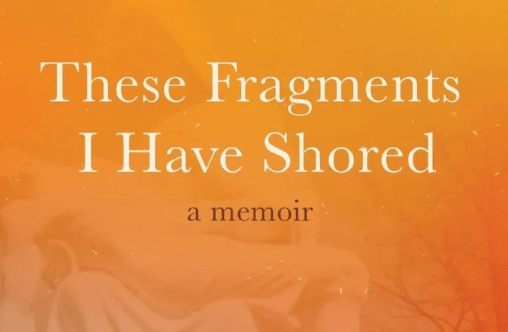
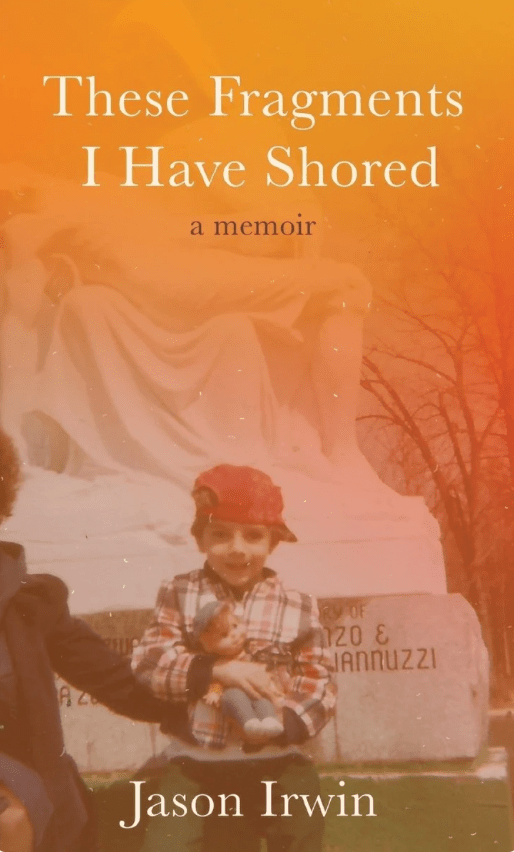
Refusing to bog itself down in any medical jargon or victimhood, Jason Irwin’s memoir “These Fragments I Have Shored” offers 265 pages of grief-writing that are as funny as they are unsparing. Irwin’s May 5, 2026, release is a memoir essay collection in accordance with his experience as caretaker for his mother over the last stretch of her life. With humor and humility, Irwin weaves two medical histories, placing his 1980s childhood—one spent in and out of surgeries, an ostomy bag fastened to his abdomen—in conversation with his mother’s cancer diagnosis nearly 40 years later. Not so much a chronology of illness but rather a family portrait of dysfunction, bodily decline and a mother-son relationship defined by mutual stubbornness.
It is Irwin’s refusal to stall in the dense medical digressions that allows him to move quickly from his own birth to his youth, all the way through his marriage and the death of his mother. His brevity is buoyed by a voice that feels conversational and cynical, without being glib. His pacing reflects the experience of chronic illness and its whiplash of appointments, argument and gallows humor.
Isolated and bullied for his surgical deformities, the sections of his childhood are vivid. But even in the passages of suffering, levity surfaces. In one tender anecdote, we learn of his childhood best friend Jojo, memorably described as “a phantom plucked from darkness.” The troublemaker with a good heart, the neighborhood delinquent who befriends and also protects Irwin, described as “threatening to kill anyone who made fun of my brace, the way I walked, or questioned why, at age twelve, my bicycle still had training wheels.” Inclusions such as Jojo render a whole image of instability—it can be destructive, but not without being formative.
In one devastating episode, a classmate punches Irwin’s ostomy bag. But the humiliation comes through plainly, without attempts of swelling authenticity. Not interested in being a victim, nor dignifying his younger self, Irwin details the destructive bravado of high school. He admits to drinking as a performance of toughness among many moments of cruelty. He confesses to his own actions as a bully, acknowledging, “I knocked books out of upper classmates’ hands as they walked the halls and made fun of those students I knew were weaker than me, like Ezra, a refugee from Central America, and Tammy, who chased after pennies I threw at her.” It’s here where the memoir’s humility lies and Irwin does not paint himself any kinder than he was. He calls it what it was: insecurity, and his candor is refreshing.
He approaches his deceased mother with the same clarity, depicting a woman with personhood rather than an archetype of maternal failure. Sixteen years after discovering a tumor in her nose, the cancer eventually spread to her bones, killing her just after her 75th birthday. We see her resist medical advice, refuse to stop smoking and grow petulant in doctors’ offices. In it, Irwin lets her read as irritable, even unpleasant, and we witness her unraveling along with him; from snide to exhausted, from a sick woman to a dying one. But, crucially, Irwin restores her to a fullness that posthumous portraits of motherhood tend to flatten. He shows us the mistakes she made, but also her agency: the late-in-life decision to enroll in college to study creative writing, her curt candor in the face of growing weakness. When her old friends try to reconcile with her upon her diagnosis, she dismisses it: “Fuck ‘em. If they can’t visit me while I’m healthy and alive, I don’t want them looking at my body when I’m dead, crying their fake tears.” She does not get reduced to the dying parent. Evidently, she was difficult. But Irwin makes sure we know she was a full person too.
Finally, Irwin gives us a self-referential depiction of being a creative. The fear of inadequacy and the suspicious longevity of art as a career is embedded in Irwin’s prose. The effect is intimate and locates Irwin among writers: “Sometimes I wondered if I was in over my head. Was I really a poet, I wondered.” Irwin struggles; he drinks; he creates. He falters and he keeps writing.
Irwin resists the manufactured epiphany. The memoir closes on a quiet image of his mother, still instructing him in how to endure. It is appropriate and true to the book’s spirit.
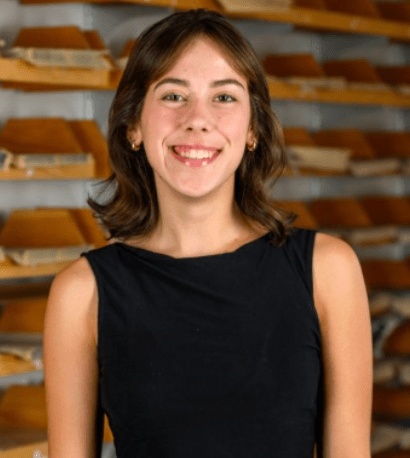
Emily Harris is a senior at the University of Pittsburgh studying History and Nonfiction Writing. She is Copy Chief at The Pitt News and has written criticism on contemporary memoir, narrative craft, and literary nonfiction.
Like this post? Comment below or on my FB page. And please share with your friends and social network.
Are you a Rust Belt writer interested in seeing if your own post, or author interview, or book review might be right for Rust Belt Girl? Hit me up through this site’s contact function.
Check out my categories above for more guest posts, book reviews, interviews, literary musings, and writing advice we can all use. Never miss a post when you follow Rust Belt Girl. Thanks! ~Rebecca
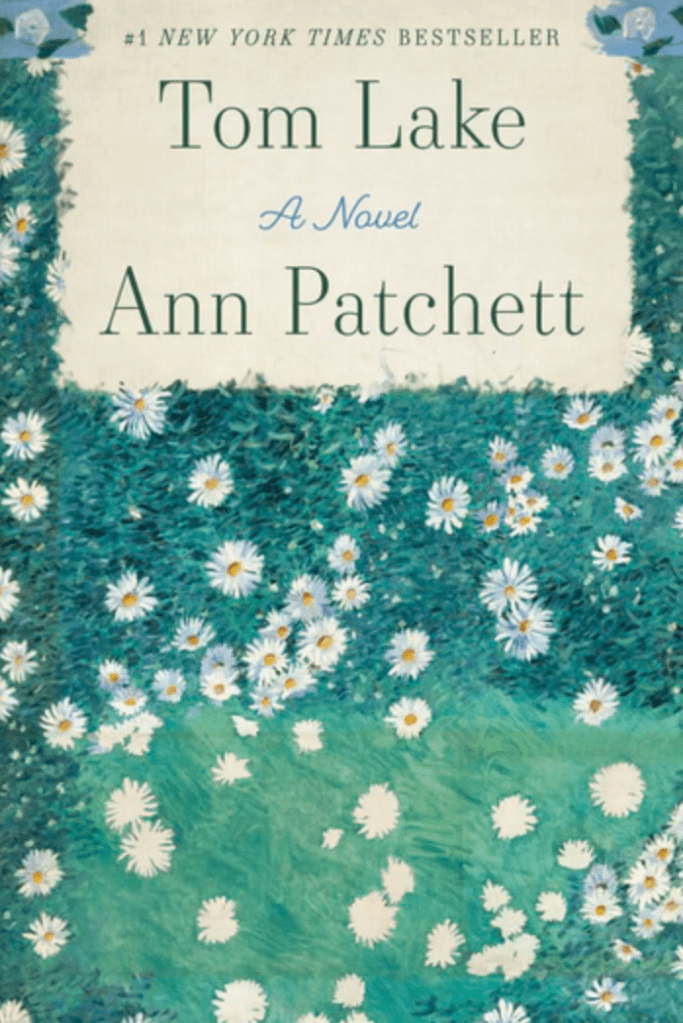
I am a writer who loves story—and homework. I’m sure I’m not alone there. So, before I sat down to read—or more specifically listen to Meryl Streep read—Ann Patchett’s most recent novel, Tom Lake, I watched Thornton Wilder’s classic play Our Town, which features quite a bit in Patchett’s story. I caught the excellent PBS “Great Performances” production from the 1980s featuring Spaulding Gray as the narrating stage manager, a young Penelope Ann Miller as Emily Webb, and Eric Stolz (swoon) as George Gibbs, her love interest.
Tom Lake, then, is a story about a story about telling stories—or, the act of dramatic portrayal. Lights, camera, characters. Confused yet?
Okay, the front story, or more immediate narrative of Tom Lake, follows 50-something Lara Nelson, a wife and mother living on a Northern Michigan cherry farm (another dramatic subtext) as she tells her three grown daughters, home during the 2020 pandemic, about her long-ago love affair with famous actor Peter Duke (think: a 1980s James Dean; I’m picturing 90210-era Luke Perry).
Note that in this novel there is not a whole lot of Rust Belt significance to hang our hats on here at Rust Belt Girl. This setting is not Rust Belt Michigan, but the Michigan of the Upper Midwest’s Fruit Belt. But, hey, we contain—and read—multitudes, right? And, really, Patchett rarely disappoints.
Told as a dual narrative, Tom Lake’s backstory follows the love affair between then-young actors, Lara and Peter, at a summer stock theatre in Michigan where they perform both Our Town and Sam Shepard’s one-act Fool for Love, which I need to watch next. (A girl can only do so much homework.) Quick distillation, Our Town is a gentle (even genteel in that puritanical New England way) portrayal of young love; Fool for Love explores romantic love’s dark and destructive side.
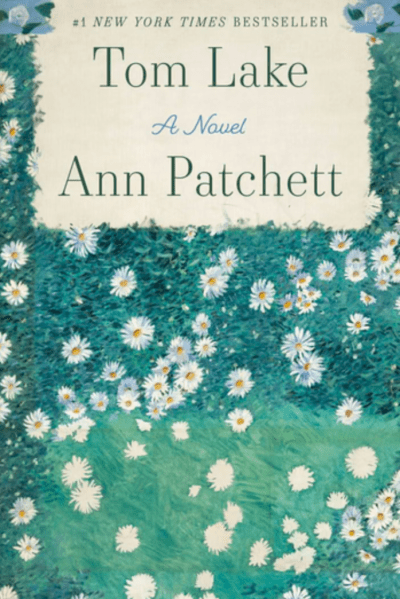
Image: Harper Collins website
So, Patchett’s novel Tom Lake is a story about the light and dark of love. But it’s also—and this might be even more interesting and applicable to us writers—a story about storytelling. Who tells the story, when, how, why, and about whom and to whom. What’s included in the storytelling and, maybe even more importantly, what’s left out?
A dual narrative novel is difficult to pull off; I know because I’ve tried this twice. Invariably, a reader will like one narrative more than the other and grow impatient when their favorite narrative is offstage. For me, Tom Lake’s 1980s narrative, its backstory, is more compelling (because much more is happening) than the 2020 narrative, which is mostly telling, with less forward-moving action (think: literal cherry picking). Which left the modern timeline feeling more like a frame or bookends for the real story—a way to go back in time to the main action and a way to come out of it again.
I won’t digress too long on why writers like Ann Patchett feel the need for modern-day frames for historical stories. (Yes, a novel set in the 1980s is considered a historical novel.) My guess is it’s because historical novels today are often relegated to the “genre” genre, as in not the literary fiction shelf. Okay, digression over.
My favorite (oft quoted) line from Our Town, which feels very instrumental to this discussion on storytelling (and okay there’s a little spoiler here): Toward the end of the play, the dead character Emily, who returns to her life for just one day, asks the stage manager if any living person ever realizes “life as they live it,” and he says no, but then adds an exception. “The saints and poets maybe—they do some.”
There’s a lot of smart stuff happening in this novel of Patchett’s when it comes to the all-important telling of life’s story—our human way of re-living what we can’t grasp with our little human minds in the moment. We can’t all be—though maybe we can all aspire to be—saints and poets.
Patchett’s main character, Lara, who is narrating her story of young love, to her grown daughters, is basically the stage manager of her own story, choosing how and what to tell as she goes. At one point Lara equates the stage manager in Our Town with God, which brings up interesting ideas about faith (Patchett was raised Catholic and it often shows in her writing) as well as destiny/Providence in our lives, and agency in how we portray our life stories.
What about the part of our story we leave untold, for our hearts, alone? I thought about this a lot as I read Patchett’s novel. For the main character, Lara, it was a dark part, and (dare I say) foolish aspect of young romantic love she shields from her grown daughters. In not telling her whole story, the light and the dark, is she playing God? Are we all?
In my writerly opinion, the darkness in her story Lara keeps to herself isn’t earned by the character, un unusual flaw in character development on Patchett’s part. (Also very important to know when to wrap up a narrative.) But it is a stumble far outweighed by all the really fine storytelling she does in this novel. If this criticism feels vague, it’s because I don’t want to spoil the reveal. (Read it and tell me what you think!)
If there’s one author I’ve followed closely for some time, it’s Patchett. Her annotated version of Bel Canto—my favorite novel of hers—makes a great gift for the literary fiction (or opera) lover. Of her more recent novels, her 2019 release, The Dutch House, felt like a near perfect novel to me: quiet, to be sure, with none of the Le Carre-like action of Bel Canto, but an incredibly immersive read with characters who felt like my own brother and sister by the end of the book. Family ties Patchett writes about brilliantly, if she’s a little less adept at depicting romantic love and specifically sex.
Saints? I might know a few in the making. Poets? I’m honored to know a good handful. But for the rest of us, Patchett’s got me thinking about how lucky we writers are to get to craft our stories. How lucky we readers are to watch other writers and poets tell their stories just as they wish. We receive such instrumental gifts this way!
Have you read this novel? Have you seen the plays that informed this novel? What elements of craft and storytelling did they bring up for you?
And…what was your favorite bookish gift you gave or received so far this holiday season?
Check out my categories above for more guest posts, interviews, book reviews, literary musings, and writing advice we can all use. Never miss a post when you follow Rust Belt Girl. Thanks! ~Rebecca
This October I attended my eighth annual Fall Literary Festival hosted by Lit Youngstown. It was the Ohio literary organization’s ninth—and final—fall lit fest (at least for now). I could just be weepy about it (I’m weepy about much these days, tbh), but I’m too grateful to stay weepy. Since it’s a weekend to do grateful, let’s get into it…
Don’t worry, Lit Youngstown itself—with all of its amazing programming–is going strong at 10 years old. But before I get into my 2025 lit fest roundup I want to take a moment to share a few highlights from lit fests gone by (forgive my literary nostalgia), in no particular order:
Novelist Rachel Swearingen telling us craft session participants to, “Write towards change.” And “Stop thinking about characters and start thinking about relationships.” (Fiction writing changemaker right there!)
Me, getting to tell my story of my mom’s protesting of a nuclear power plant near my hometown when I was a kid (I wrote about it here) and detailing how that story turned into an integral part of my eco-novel (published someday, world!)
Exploring ekphrastic writing at the Butler Institute of American Art (great museum road-trip idea for you out of towners!) and exploring Youngstown writ large (getting to stay with friends and enjoying the local cuisine (there will never be enough pickle pizza, noggin-sized meatballs, and pierogis!))
Getting to be a student of Sandra Beasley, Ross Gay, Lawrence Coates, and so many other teacher-writers and getting to tell them over charcuterie and a glass of wine: “you wrote my favorite poem, essay, novella, thank you…”
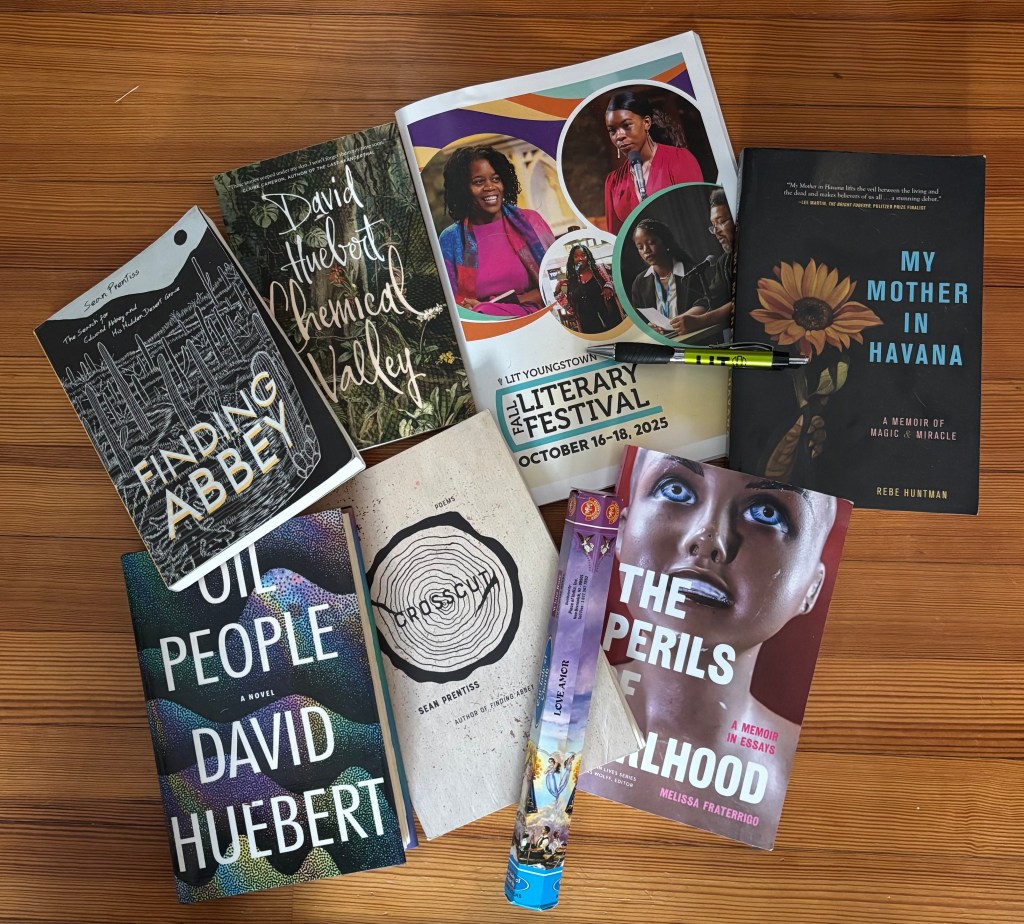
Meeting writer friends (like the talented Melissa Fraterrigo) in person after years of reading her work (her novel Glory Days inspired a lot of what I’ve been trying to highlight at this blog these last nine years or so—stay tuned for a review of her memoir in essays, pictured). And meeting other friends year after year and weaving our stories—and lives—together.
The highest highlight? You. Becoming a member of the Lit Youngstown community through the fall lit fest has been incredibly rewarding for my literary life—and my life-life. Thank you, friends.
Now, 2025’s list fest was one for the books. (Peruse a few pics above and below.) And if you thought the environmental theme was going to mean a slew of nature poems…well, yes, and… Yes, and fascinating eco-fiction and challenging environmental memoir and poetry about nature redefined—from a place that was once an indigo plantation to the night sky over the Grand Canyon to trails cut by troubled teens into the Pacific Northwest woods—and so much more that “shapes our experience and identity, and represents our rootedness in earth.” Whew! I encourage you to read the impressive bios of the five 2025 featured presenters.
My preparation for this lit fest happily began months in advance of the event. (Once a student, always a student.) For my conversation with fiction writer David Huebert and memoirist and poet Sean Prentiss I read several of their books—she gestures to collage artfully displayed on her office floor—representing an array of what we lump under the term “environmental writing.” Look for a follow-up post with a good chunk of our discussion—fascinating and fun!
Other personal highlights from this year’s lit fest. (Know that this is just a fraction of the offerings and I, once again, wished I could have cloned myself, so I could make every single session.):
Day 1:
Narrative Medicine [definition: healthcare practiced with narrative competence]: A Generative Workshop, facilitated by family nurse practitioner and poet Dana Reeher. Imagine me taking furious notes for the anthology project I’m co-editing: Body of Work, essays at the intersection of dance and health. For a little workshop exercise, Dana asked us participants to respond to a writing prompt, “an expansive invitation to open the mind,” so I thought I’d write a very short piece about my own dancing and its impact on my physical and mental health outlook:
Maybe the mistake was I listened too well, that I pointed my feet too hard, that I really could feel that string coming out of the top of my head lifting me up to the studio ceiling. Maybe I postured too much, wanted too much. Maybe I turned out until I was turned in. Maybe all that looking in the mirror made me someone else. I can still spot a dancer, or an anorexic, from fifty paces.
My dancer friends here will likely recognize a lot of this, but especially the posture-reminder telling baby ballet dancers to imagine there’s a string coming out of the top of your head… After sharing my short piece of writing, a couple of the other workshop participants said the string image reminded them of a marionette. I’d never thought of that before, and I’ll tell you that image is still working on me!
The Pamela Papers: A Mostly E-pistolary Story of Academic Pandemic Pandemonium: The Musical. Based on the award-winning novel by Nancy McCabe, published by Outpost 19 in 2024, the presentation included a dramatic reading (with singing—who was expecting a musical at the lit fest? Not I. And it was such fun!).
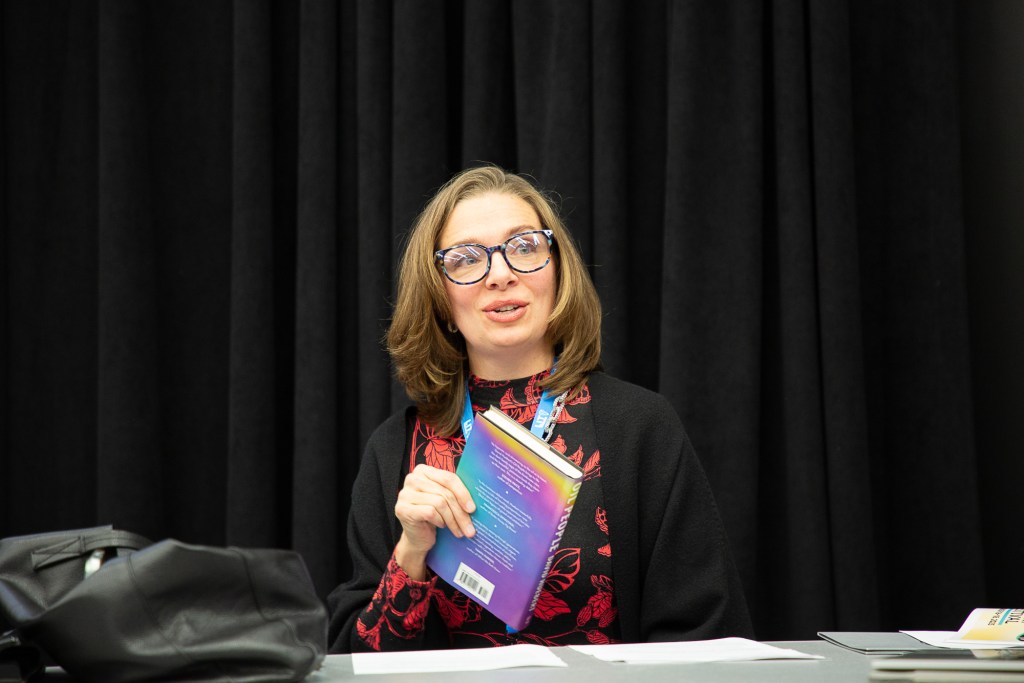
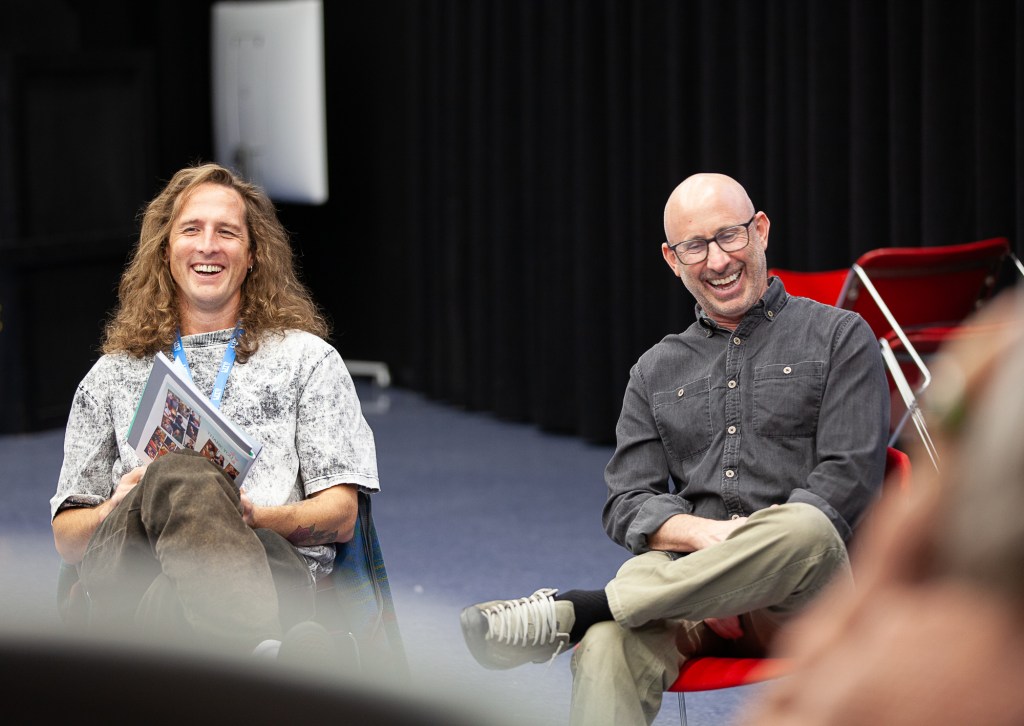
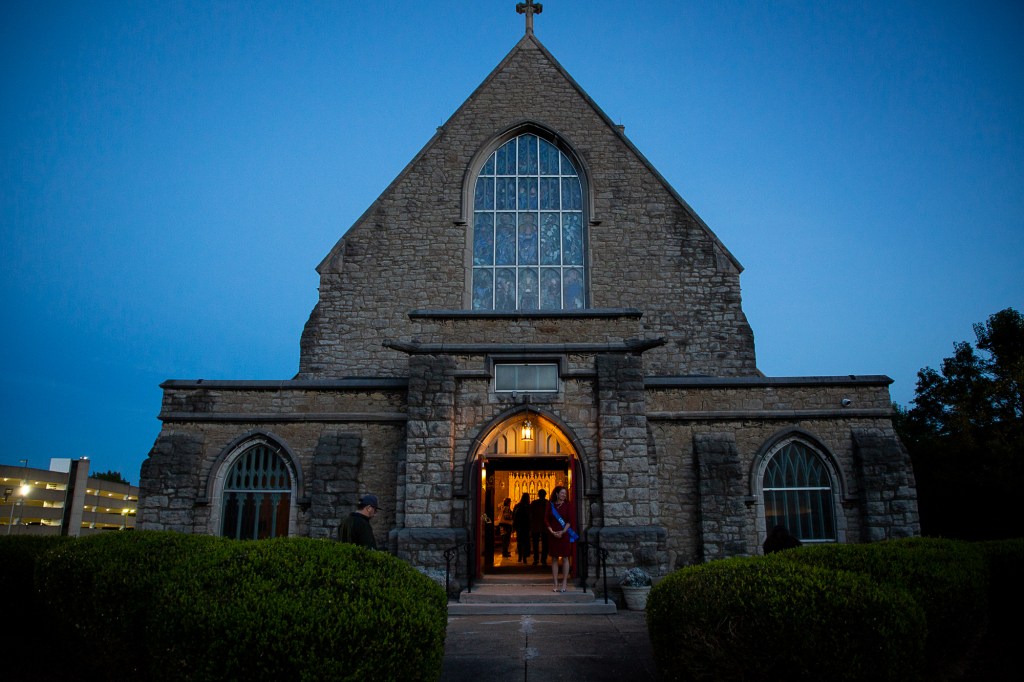
Readings by David Huebert and Sean Prentiss in St. John’s (gorgeous limestone and stained glass) Episcopal Church sanctuary. Your girl provided introductions to both writers—thanks for putting up with my unorthodox investigative process to make sure they were exciting, guys!
Day 2:
Bengal Tiger Moments: Time Perception in Creative Writing, facilitated by Sean Prentiss. In this fascinating session, we talked about speed on the page, presented in five categories from fastest to slowest: Gaps, Summary, Scene, Dilation, and Pause. Sean presented examples of these techniques from creative nonfiction and explained the brain science behind our understanding of the movement of time—irl and on the page.
Rooting the Self: Writing as an Act of Person, Political & Environmental Transformation & Transcendence, a multi-genre workshop with (beautiful and talented) Rebe Huntman, author of My Mother in Havana: A Memoir of Magic & Miracle: Rebe took us through various stages/ways of honoring our voice and our writing by making space for it and celebrating it, including meditation, morning pages, repetitive activity (including list-making), “the writing cave,” and writing constraints and freewrites. My favorite prompt, a list-making exercise we did in this session, produced these lists, below. (From there I spun out a short prose piece, “Reasons to Revere Your Vagus Nerve” (we’ll see where that weirdness goes!):
5 Things I Consider a Miracle
High arches
Warm pie
The vagus nerve
Sweating carafes of water
Tanned leather
5 Recurring Obsessions
Ballet hands
Song
Accents, dialects, and regionalisms
Mom, mom, mom
Delight
Readings by poets Lauren Camp, Todd Davis & Kourtney Morrow: poems of cityscape to countryside to the night sky over the Grand Canyon left us audience members awed.
Days After
And then, after… there’s nothing better than returning home from a literary event inspired, nurtured, and with a few new ideas for writing already on the page.
If you’re reading this on Small Business Saturday, might I suggest you also read small and lit small by supporting your local indie bookstores and your favorite literary organizations today?!
Did you attend Lit Youngstown’s Fall Literary Festival last month? Another lit fest? What was your favorite part? Have an inspiration gleaned or a piece of writing captured you’d like to share? Feel free to jot it in the comments.
Like this post? Comment below or on my FB page. And please share with your friends and social network.
Are you a Rust Belt writer interested in seeing if your own post, or author interview, or book review might be right for Rust Belt Girl? Hit me up through this site’s contact function.
Check out my categories above for more guest posts, interviews, book reviews, literary musings, and writing advice we can all use. Never miss a post when you follow Rust Belt Girl. Thanks! ~Rebecca
I have long admired the art writing and advocacy of Emma Riva, Petrichor’s founder and editor-in-chief. After reading this exhibit review, you’re going to want to follow Petrichor and everything Emma does! Click below…
A little more from Emma about Pittsburgh’s art scene and her place in it:
“I do know one thing, whether Pittsburgh is in the Midwest, Appalachia, or the Mid-Atlantic, Pittsburgh is home. And something great is happening here. My writing background is in the novel, and I’ve struggled with whether being an art critic and being an author are mutually exclusive. But maybe I was never meant to tell stories by myself. This magazine is the novel of our art scene here in Pittsburgh. I want us all to create it together.”
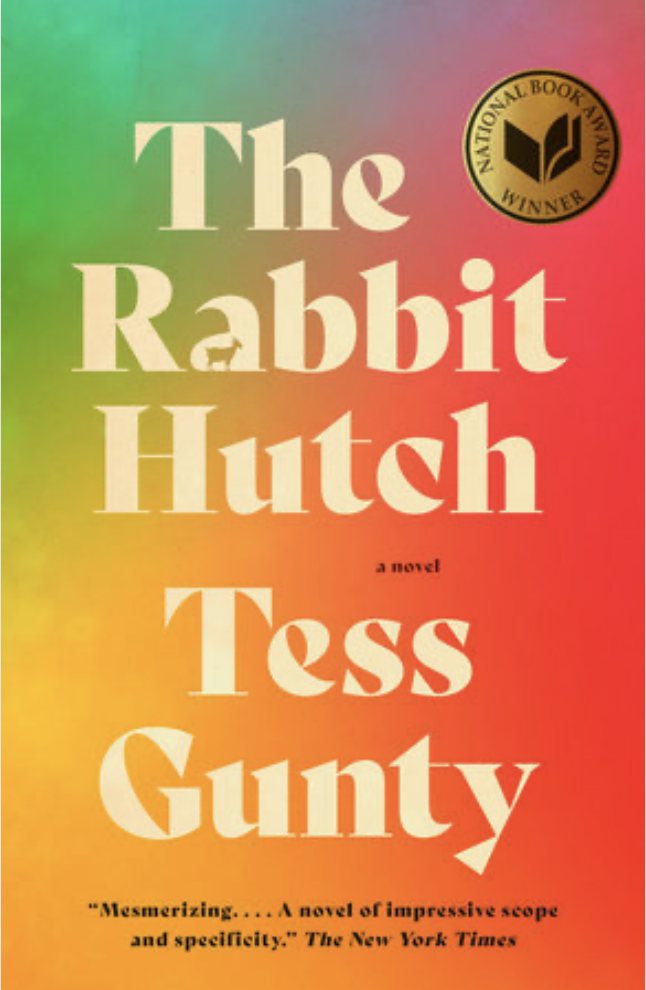
Tess Gunty’s 2022 debut novel, The Rabbit Hutch, won that year’s National Book Award for Fiction (and other awards) and also won hearts—especially among Rust Belt readers.
Pittsburgh-based author and art writer Emma Riva wrote a wonderful essay about The Rabbit Hutch published here at Rust Belt Girl I encourage you to read next—if you haven’t already.
I was late to the novel, myself, and was struck by how Catholic it felt, despite not being marketed that way (for obvious reasons).
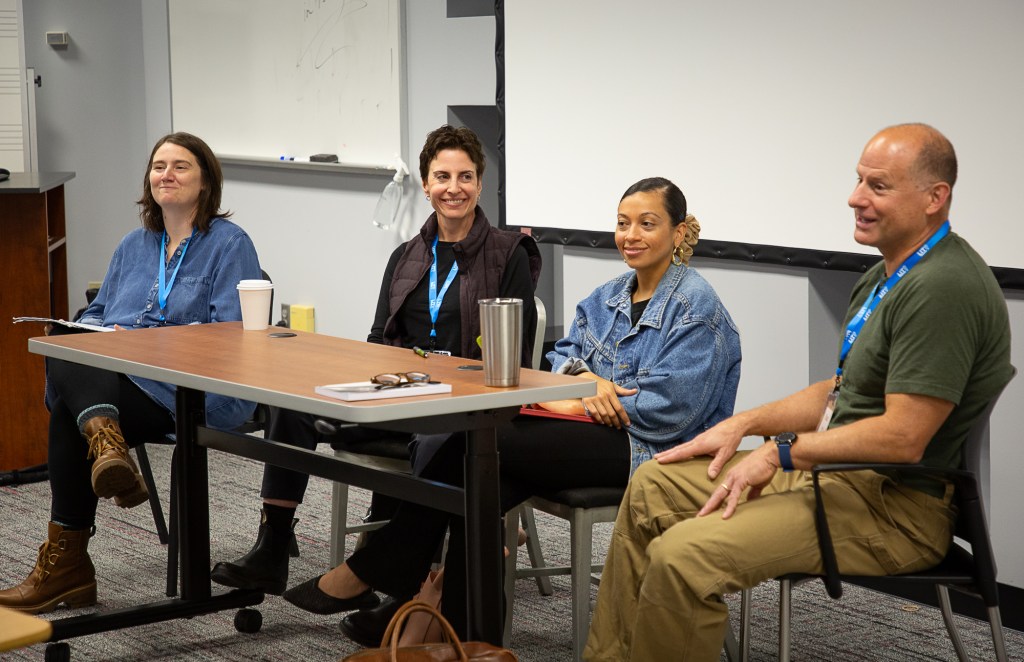
I was thrilled to “meet” Gunty yesterday evening through the Jesuit Media Lab‘s conversation over Zoom with the author. A sizable group of us avid readers tuned in to listen to Gunty talk about being raised Catholic and writing about The Rabbit Hutch main character’s deep interest in female mystics and mysticism, about researching Hildegard von Bingen and discovering her “extraordinary theatre of mental activity” and agency, about technology and art and how Mary Shelley’s Frankenstein is a “perfect allegory for AI,” and much more!
“I wanted to make art out of my characters’ lives, including their digital lives,” the author said about her novel that still feels very much of this technological moment. (Gunty herself doesn’t partake in social media and, clearly, it benefits her writing. “You need to keep the tool of your mind as sharp and clean as possible,” she said.)
As for the novel’s fictional setting of Vacca Vale, Indiana, Gunty said that the place was the only thing she knew for certain she wanted to portray, going in, that the setting started out being the MC—until she was about three-quarters of the way through writing the first draft.
She said she wanted to capture the “purgatorial” nature of post-industrial cities like Youngstown, Ohio, Flint, Michigan, and Gary, Indiana. (No shade intended, I don’t think!) How to capture the sensation of such places, like her hometown of South Bend, on which the novel’s setting is based? In the books she read, Gunty said, “I never encountered any place like my hometown.” And yet politicians and movies portray a flat stereotype of such post-industrial Midwestern places.
Gunty’s description sparked pride in me, last night. She described our Midwestern and Rust Belt cities as places of mystery, magnitude, and complexity. When you don’t see a place like your home reflected in literature, “you feel like it doesn’t matter,” she said. For Gunty, writing this novel, then, was an attempt to insist upon the “dynamism and multi-dimensionality” of her hometown—and others like it.
Like mine. Maybe like yours, too.
I encourage you to check out JML for their book talks and other events.
Have you read The Rabbit Hutch? What did you think? Did you read Emma Riva’s essay about it?
Like this post? Comment below or on my FB page. And please share with your friends and social network.
Are you a Rust Belt writer interested in seeing if your own post, or author interview, or book review might be right for Rust Belt Girl? Hit me up through this site’s contact function.
Check out my categories above for more guest posts, interviews, book reviews, literary musings, and writing advice we can all use. Never miss a post when you follow Rust Belt Girl. Thanks! ~Rebecca
Shoutout to Belt Publishing for all the great Rust Belt-ish books they put out. I don’t get around to reading enough of them, but when I pick one up, I know it’s going to be good. Belt Publishing’s 2016 release The New Midwest by Mark Athitakis is still a bible of Rust Belt lit for me, and my copy resides permanently in my bookshelves. And then there’s Edward McClelland’s super clever How to Speak Midwestern (linguistics is never not fun!).
Of Belt’s newer releases, I’m most excited to read Patrick Wensink’s The Great Black Swamp: Toxic Algae, Toxic Relationships, and the Most Interesting Place in America that Nobody’s Ever Heard Of. (I am so here for long titles and of books that make me feel like a somebody–in that I have heard of the Great Black Swamp, since my dad lives in Northern Ohio. Also, when the personal and the environmental collide–which should be often–fantastic storytelling happens, imo.)
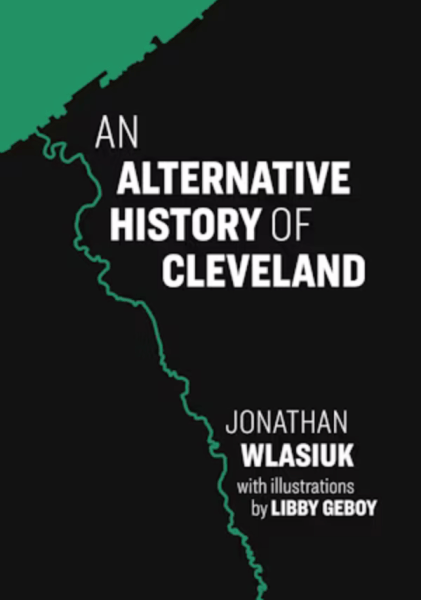
I just finished Jonathan Wlasiuk’s An Alternative History of Cleveland, and thought, yep, Belt Publishing did it again. (I think Ed Simon–of Belt Magazine, now Rust Belt Magazine–wrote An Alternative History of Pittsburgh, which is bound to be as great, if not even better.) I’ve been dipping in and out of this history of my native northeast Ohio for months, not because it isn’t gipping but because it’s so layered. A summary for you from the back jacket copy:
Part natural history, part archaeological essay, and part a contemporary call to arms to reclaim and rewild Cleveland’s future, this unforgettable trek into the heart of ‘the land’ will change the way you see the city forever.
No easy task, the author attempts to provide at least a bird’s eye view (both figuratively and literally, as you’ll see) of 10,000 years of human history. He zooms in on the relationship (fraught, as you can imagine) between humans and the environment–of which there’s a lot to find interesting, as northeast Ohio is situated along the eastern shore of Lake Erie, bountiful in flora and fauna, when it’s left alone, that is.
Incredibly well-researched and cited, the parts of the book that “sang” to me best were those moments where the personal and the environmental intersected in a visceral way. In the final chapter, “The Land,” Wlasiuk describes his work for an organization called Lights Out Cleveland, which has him looking for dead birds on the sidewalks of Cleveland before dawn during the heart of migration season. These birds came to an untimely end along their journeys due to humans’ penchant for light, of course, and see-through buildings.
This might sound like a depressing chapter start, but the author has a knack for involving fascinating local voices–including the “irreverent” and mostly-anonymous voice behind the @trashfish_cle account on IG, who spends his days in a kayak fishing trash out of the Cuyahoga River–and for providing hope, often in the way of a call to action. Or, at least we get lessons by watching locals who are doing their part to “remediate the environment and spread awareness.”
And look, we can do our part–not just for the Rust Belt-ish literary world but for the world at large, for our flora and fauna neighbors–by talking about the books we read that not only entertain but open our eyes to the ways we are connected to each other and to these ancient environments we call home. Right?
What are you reading, reading, or watching right now? Let me know in the comments.
Like this post? Comment below or on my FB page. And please share with your friends and social network.
Are you a Rust Belt writer interested in seeing if your own post, or author interview, or book review might be right for Rust Belt Girl? Hit me up through this site’s contact function.
Check out my categories above for more interviews, book reviews, guest posts, literary musings, and writing advice we can all use. Never miss a post when you follow Rust Belt Girl. Thanks! ~Rebecca
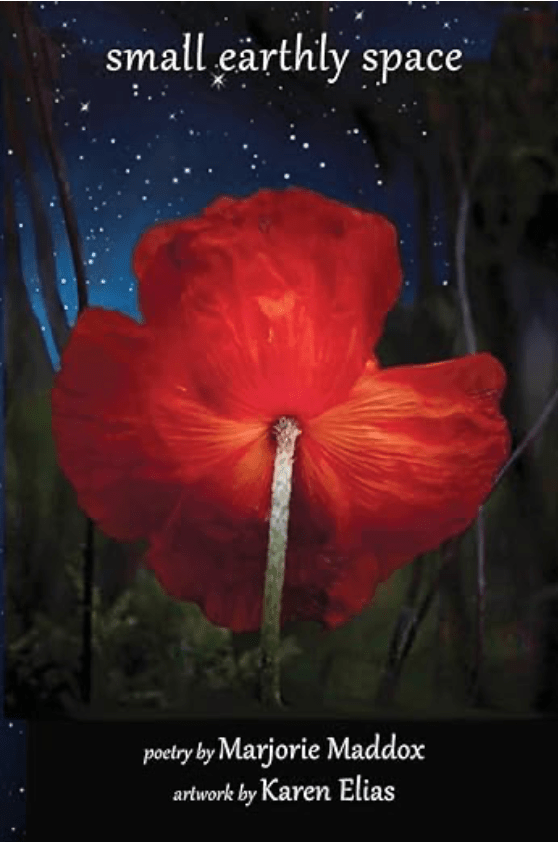
Marjorie Maddox’s new poetry collection, Small Earthly Space (Shanti Arts Publishing, 2025) accompanies a series of dreamy digital visual collages by artist Karen Elias. Together, they depict a world not only fraught with imminent disaster, but one of beauty and hope. Maddox’s poems, inspired by Ali Smith’s lyrical novel, Companion Piece, place the curlew as a central, and recurring figure in the collection. Like a canary in the coal mine, Maddox’s curlew warns about the environmental devastation that is happening now.
Known as the bringer of bad omens in Celtic folklore, forecasting bad weather, sorrow and death, the curlew, with its haunting cries, is also associated with the passing of seasons, rebirth, and renewal. “When our planetary conditions render even the saints tongue-tied and stuttering,” Maddox writes in the introduction, “the bird appears as guide, as psychopomp, as Beatrice in a kind of Dantean descent,” requiring us to “grow humble,” to “pass through the smallest of doors” and experience “the long, slow burn of loss.”
Maddox’s poems are also deeply religious and read like prayers or holy visions. “How far would you go for wisdom?” Maddox asks in “Dive Down,” where she links humanity’s fate with nature’s and invites the reader to dig deeper and discover those epiphanies hidden in daily life, to find “one drenched syllable of rescued hallelujah.” In “Tightrope Walker,” we are instructed to “unzip all our divisions” and position ourselves on the “fine line that binds sky and dirt” and “welds together every season of belief and reason.”
Known as the bringer of bad omens in Celtic folklore, forecasting bad weather, sorrow and death, the curlew, with its haunting cries, is also associated with the passing of seasons, rebirth, and renewal.
“Still Life: 1950s,” which opens section two, leaves nature and moves inward. The poem speaks of the fraught relationships of generations and the societal demands placed on mothers. “What can be said to the perfect mother?/Poised, she smiles beautifully but doesn’t hear.” In the accompanying collage, Karen Elias has created a powerful scene: the mother as a stone statue, sitting in on the sofa, elegant and demure, yet deaf to the needs of her daughter, who crouches on the stairs, doing her best to “protect… this beautiful sculpture,” not daring to speak unpleasant syllables, words that might cause her mother grief, or destroy the facade of their silent perfection.
Other poems speak of the uncertainty and allure of the unknown that lies just outside the boundaries of our perceptions and manicured lawns, and the anxiety of returning to a home that only survives in memory: a place full of phantoms, where picket fences turn to stone. “Strange Light,” the eerie black and white photo collage that accompanies the poem “Calling Hours: August 21, 2017,” has a bed that floats on water in an otherwise empty room. From the window the eclipsed sun, like a voyeur, peers in. The poem uses the eclipse (the first total eclipse since 1979 to be visible from anywhere in the U.S. mainland) as a metaphor for the death of a loved one. “What can harm us lingers there/beneath the bright posthumous display/of the body…” Maddox writes, noting that “looking directly or too long/into the face of the loved” could, like looking at the eclipsed sun, permanently harm us.
Throughout these poems of impending environmental and spiritual doom, a tempered hope permeates, a hope made possible by our faith and resilience, as well as our willingness to accept blame for the state of the world. In “Snapshot,” the dead arise and call for mercy. “Will you listen?” Maddox asks, like the prophets of old. “Will I?” she responds, before observing, “The earth/waits impatiently.”
The curlew returns in “The Witnesses” to see the devastation wrought by the 2018 wildfire in Curlew, Washington. “Smoke rewrites the sky,” Maddox writes, as “Flames attack its map and habitat.” The collection ends with a nod toward Emily Dickinson. “The curlew is the thing,” Maddox states in “Hope Is the Thing with Feathers.” It is “The beak wildly waving its frayed/but flapping ribbons/of persistence, of hope.”
Throughout these poems of impending environmental and spiritual doom, a tempered hope permeates, a hope made possible by our faith and resilience, as well as our willingness to accept blame for the state of the world.
The poems in Small Earthly Space are a dire plea to take up arms against the “Chaos/of this human-caused catastrophic carnival.” With an “ecstasy of words” Maddox dares us to “Embody the action of verbs” and “Delete the expected ending,” to imagine a world where “IF” still exists. In Maddox’s vision, however, imagining isn’t enough. It is our responsibility in the here and now to do something to ensure a better future, a world brimming with the “intoxication of possibility.”
Jason Irwin is the author of three full-length poetry collections, most recently The History of Our Vagrancies (Main Street Rag, 2020), and the memoir These Fragments I Have Shored, forthcoming from Apprentice House Press. In 2022 he was a Zoeglossia Fellow and took part in the Poetry Foundation’s Disability Poetics Project.
Like this post? Comment below or on my FB page. And please share with your friends and social network.
Are you a Rust Belt writer interested in seeing if your own post, or author interview, or book review might be right for Rust Belt Girl? Hit me up through this site’s contact function.
Check out my categories above for more guest posts, interviews, book reviews, literary musings, and writing advice we can all use. Never miss a post when you follow Rust Belt Girl. Thanks! ~Rebecca
Essayist Melissa Ballard contributes the fourth in our series of guest posts here at Rust Belt Girl, and, let me tell you, you’re in for a treat. Melissa has a talent for bringing the past to life and making her ancestors feel like our shared family. In this essay we meet Phyllis, Melissa’s grandmother, a woman of Northern Appalachian Ohio, whom Melissa writes about in a loving yet candid way, deftly delving into what makes personhood–class, sex, education, place and much more. (We also hope Phyllis is having the “time of her life,” Melissa.)
This Woman
by Melissa Ballard
This woman is my grandma, but not yet.
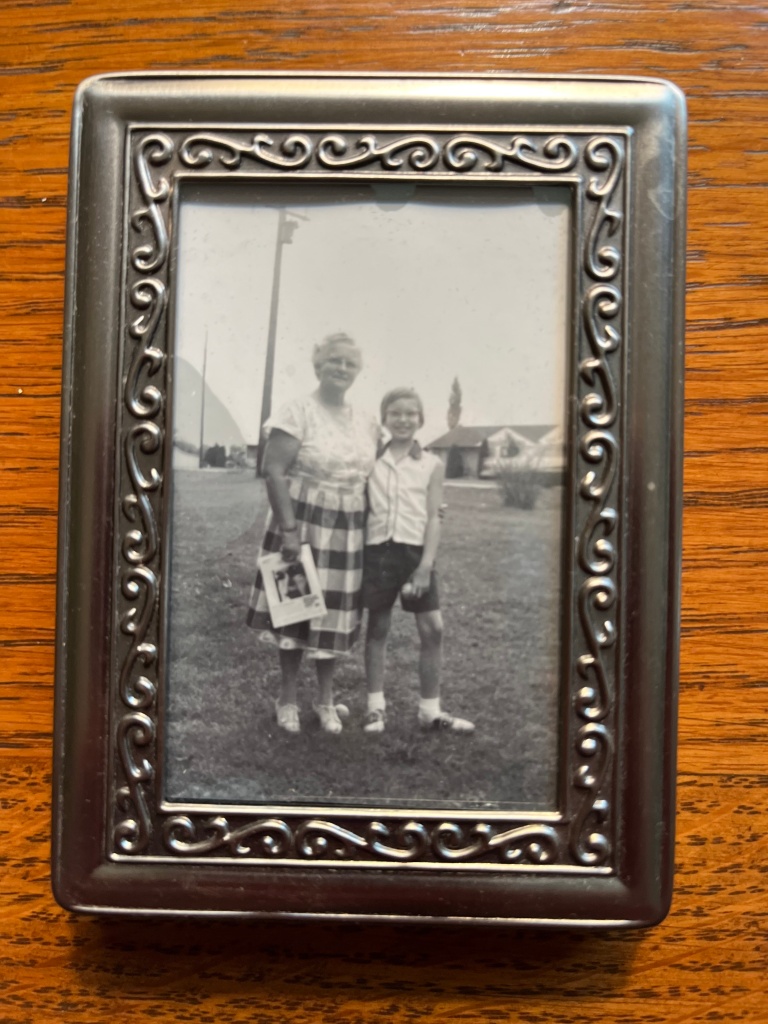
In this black and white photograph, a small, dark hat of woven straw covers her hair and shades her forehead. She wears a walking suit: a jacket and skirt in a light wool pin check with a belt of the same fabric, over a silky, patterned, blouse. The tips of the fingers of her left-hand rest in the pocket of her slim skirt. Her only jewelry is a ring on the little finger of that hand. I can imagine her cropped left foot pointing out, her dark stockings and t-straps. She slouches just a bit and turns her body toward the unidentified photographer. She looks directly at the camera. Her smile is slight, but it reaches her eyes.
This woman’s slight curves contrast with the riveted metal beam, perhaps part of a railroad bridge, that rises at a sharp diagonal behind her. In the early 1920s, her family lived on a side street a few blocks from the train station in Dennison, Ohio. Her father was an inspector for the railroad, so she had a free pass to ride.
This woman could be waiting for the early train to Pittsburgh or Columbus, where she will walk the streets with confidence, on her way to a job interview. But she is not. Or at least I don’t think so. I know little about this brief period, but I hope she is having the time of her life.
In 1925 she has a job in an ice cream shop, lives with her parents. Both she and her mother, who is preoccupied with social status, are named “Margaret.” This woman has already started to express her individuality and goes by her middle name, Phyllis or, on documents, “M. Phyllis.”
On June 18, 1925, eleven days before her nineteenth birthday, Phyllis and her neighbor, Harry, will travel 65.3 miles, maybe by train, to Brooke County, a tapering finger of West Virginia tucked between Ohio and Pennsylvania, where they can get a marriage license with no waiting period. Later that day, they will return to Ohio and be married at the home of the groom’s family.
I wonder whether Phyllis’ parents even attended. They had a reception for her later, but I gather it was her mother’s attempt at saving face. I can’t imagine she approved of my grandpa or his family, and I can easily hear her saying, “He’ll never make a decent living. You’ll end up in the poor house.”
Five months and five days later, their first child will be born. On January 14, 1928, their second child, my dad, will be born.
Phyllis c. 1920
The woman I remember, my grandma, was in her fifties. She had slim legs but a solid middle. She wore silver, cat-eye glasses before they were retro. Her short, dark hair was streaked with gray and white, her fingernails chewed to the quick. Wearing a well-washed cotton housedress covered with a flowered or checked apron and heavy lace-up shoes, she kept chickens and goats, grew vegetables and flowers, ran the laundry through a wringer before hanging it outside to dry, cooked meals from scratch. She kept a battered pan under the kitchen sink, filling it with food scraps. Every morning she fed it to the three hound dogs Grandpa had brought home from the dog pound, kept in a pen at the back of the yard. “Oh, hush up,” she said as they yipped and howled at her.
When Grandma wasn’t busy with chores, she answered the phone for Grandpa, who was the dog warden. She wrote messages in her flowery cursive: the name, address and phone number of the caller, and a brief description of the stray dog. She followed him to his dark green truck, reading her notes out loud. Grandpa never wrote anything down. Before she finished talking, he was backing out of the long driveway, kicking up gravel as he went.
They lived in a worn-out house on a liminal strip of land in Brightwood, part of Goshen Township, Tuscarawas County; my parents and I had moved to a suburb of Cleveland. Once a month, we made the two-hour trip down home to visit, and I spent more time there during the summer.
On hot afternoons, Grandma and I often sat together on the front porch swing, she doing her mending and me reading, trying to catch a breeze. A two-lane road ran close to the front of the house. The cars seemed to fly by, and the exhaust from the trucks taught me to mouth breathe, a skill I perfected when I ran into the hen house to collect eggs.
This route was nicknamed the “slow road” after a highway, the “fast road,” was built behind the house. One summer Saturday, Grandpa drove us into town on the slow road to get ice cream. Grandma and I sat on a bench with our cones, people-watching while Grandpa ran one of his mysterious errands. If Grandma asked him where he was going, he always said, “I need to see a man about a horse.” Which was odd, because my grandparents didn’t have any horses.
On the way home, I noticed a large house on a hill. “Who lives there?” I asked.
Grandma stiffened. “That’s the poor house. Where you go to live if you don’t have any money. It’s not a nice place.”
I immediately pictured a nineteenth-century orphanage from one of the many books I read. Rows of rusty metal cots with stained mattresses, thin sheets, and scratchy blankets. Peeling paint on crumbling walls. I shuddered and looked away.
…
The dining room at Grandma’s was small, with windows on three sides, some covered in plastic to keep out drafts. It was an afterthought tacked on to one side of the house next to the living room. It contained a water-spotted stand of neglected African violets, a treadle sewing machine with a clove-studded dried orange tucked in one of its small oak drawers, a large dining room table and chairs, and a handmade oak China cabinet Grandma had purchased for ten dollars with the money she made selling eggs.
When Grandma made Sunday dinner for our extended family it was served at noon. Grandma removed elegant pieces of stemmed glassware and individual salt cellars from the cabinet and set the dining room table with her good silverware. As we passed roasted chicken with gravy, noodles, and side dishes, Grandpa arrived late (he was known for having “girlfriends”), threw his work cap in the corner, and took his seat at the head of the table.
Only now do I realize how little Grandma wasted. Usually, she cooked one of her own chickens on Sunday, but she occasionally made a pork roast. After the meal, any scraps of meat were set aside, combined with corn meal mush (I can only imagine her reaction to polenta recipes in upscale restaurants) and baked in a loaf pan. For breakfast the next day, she fried slices and we covered them with butter and syrup. They were delicious.
Over time, and with deaths and disagreements, our extended family grew smaller, and we began eating all our meals in the large kitchen. The food was still delicious. One time, Grandma asked how everything tasted. Grandpa was the only one who didn’t answer. She stared at him, and he finally grumbled, “If anything’s not good, I’ll let you know.” Already showing signs of Parkinson’s, he poured a bit of his coffee into a saucer with shaky hands, and leaned down to slurp it.
Eventually, an old couch was jammed into a corner of the dining room, next to the china cabinet. It became my reading space when I visited. Now, as I sit down to read on my own sofa, I look at that same cabinet on the front wall of my living room in Oberlin, just two hours away from where Grandma lived. I have covered the top with family photographs.
Phyllis and the author c. 1960
Grandma taught me how to tie my shoes–we were both left-handed–after everyone else had given up; gave me my first sip of coffee, strong but cut with generous portions of sugar and thick cream; slipped me some of her beer while we watched Gunsmoke. As I got older and visited less, we wrote letters.
Shortly after my twenty-first birthday, Grandma and I walk in her back yard.We stop under the hot sun to admire the clumps of purple, yellow, and white miniature pansies that flourish in the crumbling foundation of an old shed.I started college three years late; I tell her I am overwhelmed and don’t think I can do the work. She is quiet, removes a flowered hanky from her apron pocket, pats her damp forehead and the back of her neck.
As we start slowly up the steps to the relative cool of the house, I link arms with her. I brush the cool copper of the bracelet she always wears because she believes it helps her arthritis. Her fingers are crooked, as mine are now. As I write this, I touch the copper cuff bracelet I bought years ago but have never worn. I keep it on my desk as a reminder of Grandma, and I wonder what happened to the soft, linked one she always wore.
I open the back door with my other hand. Grandma suddenly stands as straight as she is able and says firmly, “You stay in school.” She adds this, which I will hear her say more than once: “You need to be able to make your own money.”
…
After I’ve finished graduate school, married, and had a child. After Grandpa, who spent years in a nursing home with Parkinson’s, has died. On what will turn out to be the day my dad, her son, dies, Grandma moves into an assisted living facility. With Dad being ill, no one has had the time to take Grandma to see the place prior to moving in. She’s been calling me several times a day, anxious about the change.
She surveys the room: her favorite chair with an afghan she made folded over the back; her dresser, its top covered with a lacy scarf and family photographs, including several of my daughter; a large window that looks out on gardens; the new spread my mom placed on her bed that morning; a private bath.
She leans close to me and whispers, “Oh, Melissa, this is beautiful. I was afraid it would be like the poor house.”
Melissa Ballard has written essays for The Brevity Blog, Belt, Berea College magazine, and other publications. She is currently working on a book-length collection of essays about the women in her Northern Appalachia family.
Like this post? Want more? Comment below or on my FB page. And please share with your friends and social network.
Are you a Rust Belt writer interested in seeing if your own post, or author interview, or book review might be right for Rust Belt Girl? Hit me up through this site’s contact function.
Check out my categories above for more guest posts, interviews, book reviews, literary musings, and writing advice we can all use. Never miss a post when you follow Rust Belt Girl. Thanks! ~Rebecca
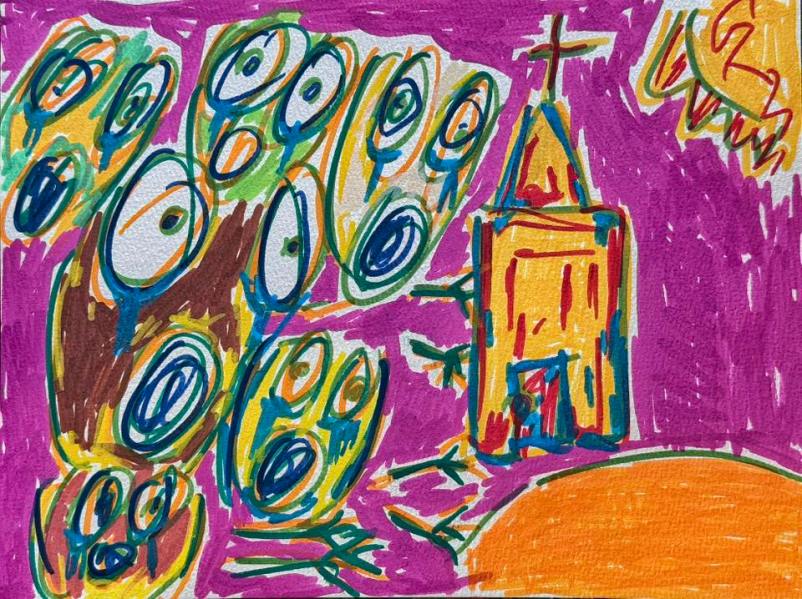
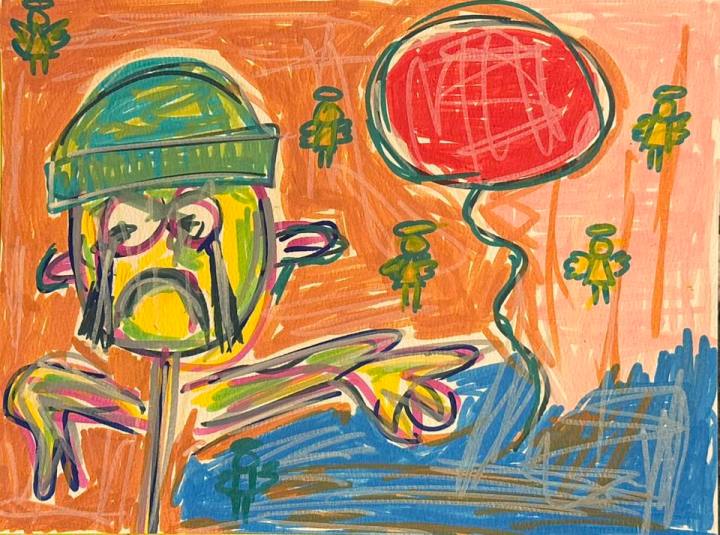
Poet, photographer, and model literary citizen, Justin Hamm inspires with his offering–the third installment of a series of guest posts here at Rust Belt Girl. Thank you, Justin! His essay about speaking in tongues feels especially personal, presented as it is from a child’s perspective. It feels “close” to me, in more than one way. Justin’s essay is accompanied by his original folk art, and I have to say, I didn’t see this coming. But I absolutely love it. Here at Rust Belt Girl, we know the American Midwest is vast and multitudinous, and so are its people, their inspirations, their stories, and their art.
Because Justin is truly “Midwest Nice” and humble, he might not brag to you about his TEDxOshKosh Talk, “The American Midwest: A Story in Poems & Photographs, but I’ll do it for him. This is a good place to start, if you’re new to Justin. In his talk, he asks some of the same questions we’ve been asking at Rust Belt Girl all these years. A big one: Is “flyover country” an appropriate term for the Midwest? Justin explores that vital question through inspection of the overlooked or the avoided, including rust (holla!), thunderstorms, everyday people doing everyday things, politics, social class, and more. It’s well worth a watch-and-listen.
But first. Let’s read and discuss Justin Hamm’s…
The Wind With a Secret Shape
I was eight maybe nine years old Wednesday nights my grandparents used to
take me to a small Pentecostal church that sat on a grassy rise just outside of
town it had once felt isolated tucked out in the quiet but the town had crept
outward now it sat beside a gas station a lumberyard and a row of fast-food
joints the holy and the ordinary rubbing shoulders the church rectangular part
brick part white siding a white cross stretching off the roofline like an arrow
pointing to the shifting Illinois sky inside the pews angled toward a low
platform where the preacher shouted and a four-piece band laid down rhythm
the cushions a deep royal blue clean saturated almost regal I remember that
color better than my childhood bedroom the building always felt old but never
run-down the women cleaned it like a calling while the men kept it maintained
it smelled of floor polish and breath mints old hymnals and hairspray a past
preserved a place where time seemed fixed in place
I wanted to be a good boy I tried to follow the sermons caught a phrase here or
there but mostly folded handouts into paper planes or built hymnbook
pyramids sometimes I curled up on the back pew and drifted off lulled by the
rhythm of scripture and song until the spirit moved when it hit the preacher
everything changed he’d leap down the steps whirling stomping at the devil
howling Jesus’ name until his face went red and purple sweat soaking his brow
and then the tongues came strange breathless syllables rolling out like a chant
that bypassed the brain entirely the holy ghost made you do things that was
just how it worked I accepted it the way you’d accept sunrise or gravity
and I believed too believed fully if somebody said the spirit is with us tonight
I’d scan the sanctuary up in the corners where wall met ceiling under pews
between swaying bodies I didn’t expect to see it exactly but I wanted to know
where it was it filled me with something like fear but not only fear there was
longing in it too hunger a sense that something just out of reach might solve
everything the holy ghost like a wind with a secret shape a bird made of breath
maybe God’s own breath moving invisibly through the room I believed it
entered through the mouth that explained what came out the old men would
rise in their too-large suits limping loops around the sanctuary hands raised
speaking in tongues the women would fall stiff to the ground eyes rolled back
mouths twitching that’s how I knew the ghost was on the move I tracked it
sinner to sinner and sometimes it came close the person next to me would
sway eyelids flickering syllables rising up like springwater through stone my
chest would lift my legs would buzz my mouth would soften and open almost
involuntarily I’d think this is it just let yourself go let it take you I opened my
mouth and nothing came I tried again wider harder I prayed the best I knew
how I swallowed the air like it might carry something eternal and then I waited
“The Hungry” by Justin Hamm
“Balloon” by Justin Hamm
“Laying on of Hands” by Justin Hamm
“Sinners Prayer” by Justin Hamm
Justin Hamm is the author of five poetry collections, including O Death (2024), Drinking Guinness With the Dead (2022), and The Inheritance (2019), as well as a book of photography, Midwestern. He is the founding editor of the museum of americana and the creator of Poet Baseball Cards.
Like this post? Like this series? Let’s discuss! Comment below or on my FB page. And please share with your friends and social network.
Are you a Rust Belt writer interested in seeing if your own post, or author interview, or book review might be right for Rust Belt Girl? Hit me up through this site’s contact function.
Check out my categories above for more guest posts, interviews, book reviews, literary musings, and writing advice we all cab use. Never miss a post when you follow Rust Belt Girl. Thanks! ~Rebecca













 Rust Belt Girl