Reading VARINA with Jesmyn

mississippi-80478_640

OK, not exactly with Jesmyn (Ward, that is, the author of two National Book Award-winning novels and one of TIME‘s most influential people of the year).

Let’s back up. Varina is the latest painstakingly-researched period novel by Charles Frazier (of Cold Mountain fame); his protagonist, Varina, has the dubious–and real–historical distinction of having served as the first lady of the American Confederacy. But before she married Jefferson Davis, (who became president of the Confederate States of America during the American Civil War from 1861 to 1865), she was Varina Howell of Mississippi.

I was halfway through Varina, when I came upon Ward’s essay in TIME, “My True South: Why I Decided to Return Home” [to live and raise her children in her native Mississippi], introduced and excerpted at Longreads by Aaron Gilbreath.

I knew Ward and Varina would make good reading companions. And so, across vast differences–most notably, race and more than a century-and-a-half of time–two women from Mississippi meet, with me, and discuss the fractured meaning of home.

Picture the state of Mississippi, and you might conjure a grand river boat from gentile times gone by, paddle churning behind; you might as readily imagine a vast field of cotton being picked by slaves; or, you might picture the scene of a lynching. For Ward,

Mississippi is the memory America invokes whenever it wants to convince itself that racial violence and subjugation are mostly lodged in the past, that they have no space in our present moment, save in this backwoods, backward place.

Of course, we know that native places, like their people, have long memories and a long reach.

So, I’m straying from the American Rust Belt (again) to examine how Varina and Ward characterize another distinctly American place, the South they hail from: the land and legacies they (and all Americans, really) are tied to, for better and worse.

Though the American South is not in my bones, I am not wholly unqualified to join these women in this character-study of the place. I’ve never been to Mississippi, but I spent more than a decade living in Richmond, Virginia, which served as the Capital of the Confederacy. As a nineteen-year-old from Ohio, with a grasp of Civil War history that mostly came from watching Patrick Swayze in the 80s miniseries North and South, I would gain an education–inside and out of my college classrooms.

One hundred and thirty years after Richmond burned, I, like many students, lived on Monument Avenue (a residential boulevard bearing large-scale monuments of Confederate heroes, Jefferson Davis, included)–first on J.E.B. Stuart’s circle and later just off Robert E. Lee’s.* When, after a terrible summer storm, much of the city, including my sweltering apartment, was without power for more than a week, Robert E. Lee was first on the block to be back on the grid–lit up in the night like Christmas. The irony of that “enlightenment” wasn’t lost on me.

Still, Richmond was where I fell in love with American literature and found the slim canon I knew from high school stretched to include the autobiographies of slaves; up through the writers of the Harlem Renaissance; to Toni Morrison; and to my teacher, novelist Marita Golden.

Then, along that historic grassy boulevard where I lived, modern-day tennis star and humanitarian, African-American and Richmond native Arthur Ashe was memorialized with the first non-Confederate statue. And I watched the pickup trucks of skinheads descend upon Monument Avenue and circle the statue in protest, Confederate flags flying, as if their capital city had never fallen.

The novel Varina basically begins on the “Friday night before Richmond burned,” when Varina flees the “false White House and the capital city,” with a companion, Ellen, a former slave; and their children. The plan: to escape capture by the Union army by fleeing south on wagons–and living off the land, a few friends, and more strangers–first to “Floridaland,” and finally to Havana. (Here is where Frazier’s depictions of the raw Southern landscape shine.) But, escape doesn’t come easily for those so firmly in the wrong, as Varina laments.

Her recalling of her childhood in Mississippi reveals some of the most interesting facets of the novel–a novel which, though geographically and historically illuminating, doesn’t grip this reader as Frazier’s Cold Mountain and, especially, his Nightwoods did. The author writes of Varina’s (incomplete) childhood epiphany, the girl and then woman forever walking a tightrope stretched between complicity and geographical removal designed to save face:

She grew up where and when she did. [Slavery] was a given. But she began feeling the strangeness of it at about nine or ten…The sense that a strong line cut through all the people she knew…free on her side, enslaved on the other…the line between slave and free might have been only a foot across–but even then it cut deep, a bottomless chasm. Yet the only determinant of which side you occupied was a paper-thin layer a skin, a fraction of blood degree.

Would that we could say things have changed enough in 150 years, but Ward chronicles in her essay the racial aggressions–sometimes “slight and interpersonal,” sometime “deeper, systemic” that forever loom. Says Ward,

Living in the American South for generations, my family has collected so many accounts of racial terror, passed down over the decades.

And yet… when she might flee never to return, Ward goes back to her childhood home to live, because it is just that, home, for her and her children. Her depictions of the Mississippi landscape are both stifling and stunning:

…tall pines and verdant vines and lush shrubs, it was as if the very water in the air buoyed me up so I could float through the heat.

But it’s even more than her place. It’s all of this collected America in pieces. Gilbreath calls Ward’s essay, a “portrait of an entire nation,” and I would say the same for the story of Varina Howell Davis–my two reading companions, Ward and Varina, standing on opposite sides of a chasm we can only work to close through generations of building and rebuilding our best approximations of home.

Ward says,

I like to think that after I die, my children will look at that place and see a place of refuge, of rest. I hope they do not flee… Even as the South remains troubled by its past, there are people here who are fighting so it can find its way to a healthier future, never forgetting the lessons of its long, brutal history, ever present, ever instructive.

What are you reading right now? How does it inform your notion of home?

Ward’s story is part of TIME’s August 6 special issue on the American South. More from the issue here.

*Richmond’s historic avenue of Civil War monuments has not escaped controversy, which has raged from its inception in the early 20th century until now. Stay tuned.

*Image of a Mississippi wood courtesy of Pixabay.com


a bit of writerly advice for July 31, 2018

banner-2748305__480
Free image courtesy of KathrynMaloney at Pixabay.com

Every parent knows the torment of a four-year-old’s interrogation. Why is the sky blue? How do birds fly? … Questions are the backflips of the mind. They are, as the early-twentieth-century explorer Frank Kingdon-Ward once said, ‘the creative acts of intelligence.’ –from Lisa Garrigues’ Writing Motherhood

The past couple years, I’ve gotten in touch with my inner four-year-old in a way I never thought I would. I don’t often talk about my work-work here (except for lessons learned from writing direct mail); however, I will now, briefly.

In the last year, I’ve conducted what feels like a bazillion but is probably closer to 50 interviews, in order to write articles. All have dealt with science–not exactly in my cozy-and-comfortable arts and humanities wheelhouse. I’ve queried doctors about the symptoms of stroke and about virtual medical delivery systems. I’ve asked engineering students about minuscule solar cells and unmanned aerial vehicles. And I’ve asked budding scientists to describe and describe again a headset that can help detect Alzheimer’s. And much, much more.

Have all my questions spurred Grade A scientific conversation? Probably not. Have I asked a dumb question or two. Probably.

But I asked, and oftentimes asked a second time. (In layman’s terms please, I ask. If I still don’t understand, I say, Pretend you had to teach this concept to a child.)

There it is.

Ask questions like a child. Listen. Ask again. That’s my writerly advice for the week.

(Looking for interviewing tips? Here you go.)

What’s your best “writerly” advice?


Dear Poetry…

Dear poetry,

It’s not you. Really. You’re great, if sometimes hard to read.

20180716_061442
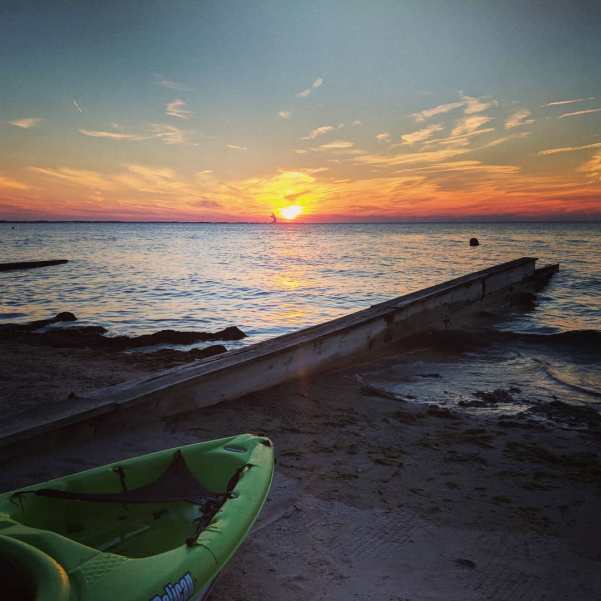
Sun setting on my poetry romance (er, over Lake Erie)

OK, poetry and I were never very serious. But I want to try, try again.

Last year, a great friend (and great poet) turned me on to Marie Howe (the Stevie Nicks of poetry, am I right?) through several of Howe’s poems from her book What the Living Do and this amazing interview from On Being. I listened to that interview with Howe (the former Poet Laureate of New York) over and over, thinking, if I can “get” the poet, I can “get” the poems. She’s a woman, a mother; she was raised Catholic. Check, check, and check. I’m still working through her Magdalene, from which the poem “Magdalene–The Seven Devils” may be my fave. Do I get every single reference? Probably not? Do I still feel like a fiction writer in poet’s clothing? Sorta.

I don’t expect you to be easy, poetry. Really, I’m trying to meet you halfway here.

I recently came across the work of Ohio Poet Laureate Dave Lucas, who grew up in Northeastern Ohio, like this girl. Check. And he had something interesting to say about writing about place:

For a lot of writers, there’s a realization: I can write about where I’m from, about what I know.

He says more in this interview here about “de-mystifying” poetry and about liking food and beer. Check and check.

I mean, we’re on the same wavelength now, poetry and me.

I’m looking forward to hearing Lucas read at the Lit Youngstown Fall Literary Festival. Here’s Lucas reading his poems “Midwestern Cities” and “River on Fire” from his 2012 book Weather. I’m also hoping I can get up the gumption to see if he’ll answer a few questions for the ol’ blog here!

If I imagine you in your underwear, poetry, maybe I won’t feel so unworthy.

Humor can be an entry to literature, even poetry. Right?

I saw the poet Billy Collins read several years ago. My twin boys were infants and I remember feeling so free–and literary–leaving my brand new, screaming offspring with my sleep-deprived husband to hear poetry at a downtown theater by myself. Collins is a huge deal, the former U.S. Poet Laureate, the “most popular poet in America.” Is he read by “serious” poets; I don’t know. He’s read by me. The Rain in Portugal. Come on, that’s brilliant.

Is Collins funny and wise? He was that day, as much as I needed those things, sitting alone in that theater, contemplating the senior citizens around me who’d raised their kids and made it to older age with their sanity intact, it seemed.

The poet smiled and rubbed his bald head and read poems about his cat. I like cats. Check.

Maybe I’m the one who’s easy, poetry. Let’s try again!

First poem you loved? Last poem you read? And…go!


Like this post? Give a girl a “share.” Thanks! ~ Rebecca

*image my own


OH

37517946_10161121436100455_3609514206598004736_o

I have to say, I felt a little bit vindicated when reading author Lauren Groff‘s latest interview with Poets & Writers magazine (her short story collection, Florida, was released earlier this year) in which she asserts: “Florida is the biggest joke of all the states. It is the punchline to every other state’s joke.”

Oh?

That statement, itself, feels like a joke to this Cleveland, Ohio native. A quick recap for the Buckeye State-uninitiated: OH is flyover country; Cleveland is the “Mistake on the Lake”; the home team Cleveland Browns’ last season went 0 and 16. (Yep, it’s a rebuilding year–again.)

Read more

Rust Belt Girl roundup for July 15, 2018

20180709_210627

We’re at the midpoint of the middle month of the summer, in my view. (We warm up early here in Maryland). And I’m feeling like I’ve only just begun to check off items on my summer to-do list. My boys filled out a summer bucket list on the last day of school. (Thanks for setting me up to fail, teach!) I have yet to pen my own. Top of the list would be “visit the Lake Erie shores and islands with fam.” (Yes, there are islands in Lake Erie–something for everyone, unless you’re allergic to ferries.)

That’s where we’re headed, my boys and me, to visit with family. Picture us in the scene above. So, I’ll be taking a brief hiatus from the blog, but not from reading and writing. That never happens.

On the work front, I made a deadline last week, handing in a 4,000-word feature story (I think I rocked it; I hope the editor agrees!). There will be edits. Oh, there always will be edits.

A creative item of note: I found out earlier this week that I will be a presenter at the Lit Youngstown Fall Literary Festival, and I’m so excited! In addition to doing a creative reading of a flash fiction piece of mine, I will sit on the Writers’ Publishing Panel–to talk about the ol’ blog. (Maybe see a few of you there!)

Thanks to my followers and friends here who encouraged me to submit a proposal. Your support means so much!

On my upcoming vacation, I hope to catch up on all I’ve missed recently on my WordPress Reader and to finish the books I’ve started: on audio (for my WWII list) Above Us Only Sky by Michele Young-Stone, a friend, former fellow MFA classmate, and all-around major literary talent); and in book form (for my Rust Belt list): The Weight of Heaven by novelist and memoirist Thrity Umrigar, who lives and teaches in Cleveland. (I’m interested to see if any Rust Belt sensibilities rub off on her characters.)

Mostly though, I am hoping for boat rides and swims at the pool and backyard fish fries and back deck-sitting with family until the mosquitoes drive us inside. Bucket list done and done.

Here’s to summer.

~Rebecca

“…until you don’t suck as much.”

36341620

No, not you…me.

And so I sat at my computer last night, wondering…

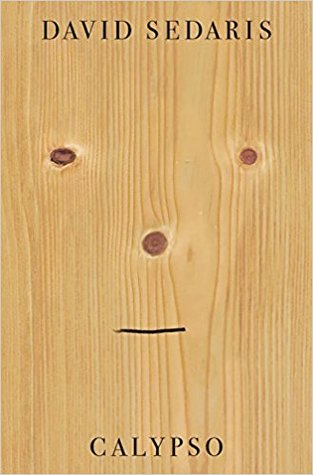
How to make David Sedaris apropos for the ol’ blog.

Hmm.

The author/humorist is a native of Binghamton, New York. That’s Rust Belt-ish, right?

Who cares? It’s David Sedaris! He’s got a new book out. Bookish Beck reviews it here. And so he’s been top-of-mind.

On a day when I’m feeling kind of stuck, creative writing-wise, and even a little sucky, I went searching for some writing advice and found Sedaris’s. It’s funny and wise and talks as much about our current share-heavy-and-share-often culture as it does about writing.

So, obviously, I will share it here, now.

“David Sedaris on Keeping a Diary in the Age of Over-Sharing” in The Atlantic.

I kept a diary for all of a week, when I was nineteen. I probably called it journaling, but it’s the same thing, I think. My mistake, according to Sedaris, is that I read what I had written–and was embarrassed by the detailing of overwrought emotions in response to a series of banal-at-best events. So I stopped journaling.

In my interview with memoirist David Giffels (another very funny guy), he had this to say about journaling:

I have journaled at various times, but to me, writing is getting down to work and doing it when it needs to be done. I think in banker’s hours. Once I’m working on a project, it’s all-consuming. I’m always taking notes. When you’re working on a writing project, you become a selective magnet, like all of a sudden everything in the world is being tested to see whether it’s going to be drawn to your subject. If it is, it comes flying at you and sticks. I’ll hear or see something and think, I have to write that down right away. That’s urgent journaling, I guess.

It’s good that I stopped journaling when I did, I think, because I hadn’t lived yet. I was writing about nothing. Certainly, I didn’t know enough to feel any sense of creative urgency.

So I started living and still try to; to do otherwise scares me. (Guess I should write about it). These days, when I’m writing, I’m writing, when I’m not, I’m reading–and attempting to live outside paper-and-ink worlds. How else does one have anything to write about?

Memoirists must have an abundance of personal story, but truth makes the narrative choices fewer. Amy Jo Burns, author of Cinderland, told me this in my interview with her this spring:

I’ll put it like this–novelists suffer from having too many choices, and memoirists suffer from the lack of them. I think I’ve used the same kind of creativity to solve both problems, but the boundaries are very separate.

Nonfiction and fiction writers alike trade in personal truths, of course. We are what and who we write–no matter the genre, no matter the distance we try to create between our characters and ourselves.

So, tell me, do you journal, write in a diary? When did you start? When did you first show it to someone? Does it spark your personal essays, blogs, stories?

Here’s to journaling–urgent or not. To writing and writing until we “don’t suck as much.” To funny writers. To beautiful weekend weather that took me outside to swim, bike, and shoot hoops with my boys. To live in the world off the page, so that I might feel inspired enough to get back to it today.

Happy Monday, all.

~Rebecca

*book image from goodreads.com

3 things we can learn from a not-great book

books-768426_640

There are great books and not-great books.

The joy of a great book is getting swept up in the narrative so that we forget the laundry that needs doing, the garden that needs weeding, the kids that need watering (kidding/not kidding).

Thing is, when we get swept up in a book, it can be hard to see the mechanics behind the thing: to discern where the scenes begin and end and where the author uses exposition; to follow the plot points and point to where the plot lines converge; to chart the character development; to consider the themes. And so on.

3 things a not-great book can teach us about writing:

The data dump: or, your research is showing

Any book takes some research; to write a historical novel takes a ton. Been there. The trick is digesting all your research so that it comes out through the natural interactions between the characters as they go about being testing and wrung out by the machinations of the author before coming out the other side changed. Whew!

A not-great historical novelist will reveal his or her research; often you’ll see it plunked down without much artistry in chunks at not-so-strategic points. Listen hard and you can hear the book’s editor saying: “You need to set this part of the story in time here; don’t forget World War Take-Your-Pick was going on…”

Backstory as dialogue: or, real people don’t talk like that

Novels are not screenplays, and vice versa. Screenplay writers have it tough. All scene (the showing part). No exposition (the telling part)! A little stage direction maybe–but, still, that’s tough stuff.

With exposition at our disposal, we fiction writers have it easy-ish. Exposition is an efficient way to dispense necessary information about the time and place where our story is set, about a character, or anything else. Exposition is also a good way to tell your reader about a character’s past (or backstory). It’s better than wrenching backstory into dialogue, which sounds kinda like this:

Character 1: “Remember the time we went on that train ride, and we met Jesse James, and fought Al Capone, and stopped for ice cream with Marilyn Monroe? And remember I said that was the best day ever and I felt like I knew what it was I needed to do with my life, and so here I am?”

Character 2: “Yep. Now, tell me more about that time I remember.”

And so this inane conversation goes…

I’m not saying I have backstory all figured out. More on my little backstory addiction here. But rather than try to wrench backstory into conversation, we can make it exposition. Or, think long and hard about whether that backstory is needed at all.

Got to start somewhere: or, an author’s earlier books

I’m a big fan of Amy Bloom, author of Lucky Us and Away. But, while I love these novels, which are later works of hers, her first book–a collection of stories called Come to Me: Stories–is the one I’ve studied. If you love to write and want to get better at it, give this a try: find early books by authors you admire and see how they crafted their stories.

Want to know what historical novel prompted this post? Hop on over to my FB page. And please share if you like.

What are you reading and writing this week?

via The Performance of Writing: What Writers Can Learn From Elite Athletes

Rebecca here: From “low dread” to sports psych to the art and patience of practice, this guest essay featured on Brevity’s Nonfiction Blog was spot-on for me. Hope it strikes a chord in you, too.

A quick story before I go–about humility and performance and the knowledge of our elders, etc., etc. My regular readers know I was a ballet dancer as a kid. It wasn’t just my thing; it was my only thing for a while, which is dangerous enough that one’s identity becomes wholly wrapped up in it. So that, when the pirouette fails, the person fails.

Anyway…about those pirouettes, I could practice and practice in a corner of the studio, sweating my proverbial balls off (sorry), but I wouldn’t entertain any other notions of practice besides putting myself in fourth position and taking off, spot, spot, spot, tight core, and land. Or fall. Or fall off pointe. Or spin out into the wall.

Before a performance of some kind, I remember my mom asking me if I ever visualized doing a perfect triple pirouette. I rolled my eyes in reply. Visualization, along with the self help-mumbo jumbo-yoga-reiki-dalai lama nonsense she’d gotten into since she got sick was just that.

Then, of course, she died (not just then, but years later) with more grace than I’d ever been able to perform with. No matter all my practice and all my sweat.

To borrow from this essay on the practice of writing, I wasn’t yet ready. I couldn’t yet plunge to the “deepest depths” for my art. My art is different now, but I think I can.

Yep, I’m ready.

Good evening and good writing and reading. Good practice–what ever that looks like for you.

What does writing practice look like for you?

Rust Belt Girl roundup for June 26, 2018

But first…a bit of inspiration (and my last reference to Amor Towles’s novel, A Gentleman in Moscow and its hero, Count Rostov–I promise–at least until the TV adaptation comes out.):

For what matters in life is not whether we receive a round of applause; what matters is whether we have the courage to venture forth despite the uncertainty of acclaim.

I’m adapting “acclaim” for my uses, loosely here. And “venture” in the creative vein. (No bungee jumping or sky-diving for me.)

Here’s the thing…recently, funny mom blogger extraordinaire, Becca, from With Love and a Little Self-Deprecation, got me to thinking, when she asked of herself a question I’m asking myself, this week. When was the last time I did something brave?

Not just something required that was maybe a tad-bit outside of my wheelhouse (to use  my fave maritime-inspired jargon). No, something that required guts.

Guts I’ve got when it comes to my kids. (Ask any mom.) Birth twins sans drugs–sure, got that… Forget my introversion (and the book I’m dying to read!) to introduce my toddlers to fellow toddlers on the playground–because, go figure, humans aren’t born knowing how to make introductions… Stick up for my kids when confronted by bullies… Overcome elementary math phobia to become a math club coach to teach kids that math is cool. Done, done, and done. Brave-ish Mom strikes and strikes again.

Now, can I be brave for myself? And can I be brave, when there’s no paycheck attached to it, when I’m the only one relying on me? Can I be creative-brave?

OK, let me back up to say that one reason I’m a writer is that I’m a nervous public speaker–and sometimes even not-so-public speaker. I’m just better on paper (you’re welcome). It’s one reason that I have five times the number of WordPress followers as FB friends.

And, funny thing, I taught freshman and sophomore-level college composition courses (yea, essays!) throughout my MFA, but teaching is different than speaking. Reading is different, too, if still a little scary. (Best done in a closet, as I was when I recorded my story, “Recruit.”) Reading my work before a group, letting my “weird” accent hang out–this I haven’t done in a while.

So, on my gutsy creative to-do list, this week: send my first, long-awaited literary agent query (first stop on the publishing road map) for my behemoth historical novel manuscript; and, even more to the bravery point, apply to present at a fall literary festival in my home state of Ohio, where much of my short fiction is set. This is new literary territory for me.

Part of my nervousness is due to the fact that to present at this festival really will be going home, and there’s a fear that I will be looked at as an outsider. (After so many years south of the Mason Dixon, I do say “ya’ll,” after all.)

Still, I’m going to submit my proposal. Worst thing that can happen is that they say no. Second worse, they say yes, and then I need to start stewing with nerves until September!

So, help a girl out, readers and writers:

Ever been to a literary festival? What do you look for (besides free books–yeah, I’m with you there)? What do you want to hear? Learn? I have no wares to hawk, no tsotchkes to share. It’s just me. And, in the immortal brand slogan of L’Oreal and imitator memes everywhere, I’m worth it.

I hope.

What’s on your gutsy creative to-do list this week?


The stadium had hosted over 1,500 football games for the high schools in Akron, as well as for Ohio High School Athletic Association playoff games. The Cleveland Browns had also used the stadium for 19 preseason games over the years.

via Abandoned Akron Rubber Bowl Stadium Comes Down — Architectural Afterlife

Rebecca here: Photographer Johnny Joo is “Preserving History Through Imagery” at his site, Architectural Afterlife. You don’t have to be a Northeast Ohio native (like Johnny and this gal) to appreciate his stirring photography. Much more than capturing abandoned sites, he provides the history behind the sites–separating his work from the likes of “ruin porn,” in my opinion.

What do you think?

What’s on your plate today? Photography? A good summer read? I can’t get enough of discussing A Gentleman in Moscow. Otherwise, I’m buried under work-writing but hope to surface soon!