I'm a fiction and CNF writer and editor focused on my novel-in-progress about the healing power of song and an anthology of essays I'm co-editing that are about dance and health. I earned an MFA from Virginia Commonwealth University and was the associate editor of Parhelion Literary Magazine for several years. I've parlayed those editing skills to improve my own work and the work of other writers. I also run my own blog, Rust Belt Girl, where I hype the writing of my native region. Essays, book reviews, author interviews--it's all there. By day, I'm a higher education writer and journalist. Find all the goods at rebeccamoonruark.com.
The genesis of the PBS film Moundsville and its companion blog Moundsville.org, about a classic American postindustrial town, was a mid-life crisis mixed with the 2016 election and a curiosity about the truth of Rust Belt communities.
Six years ago, I was on staff at the Wall Street Journal, covering mining and the steel industry out of its Pittsburgh bureau.
Like everybody else, I watched as the Trump-Clinton presidential election blew anger, confusion, and fear through the culture.
Personally, I was going through my own crisis. I was about to turn 40, and experiencing mid-life’s deepening cravings for meaning and direction. That second mountain beckoned.
After 13 years roaming the world for one of the world’s great newspapers, I simply wasn’t enjoying it anymore. So I quit, and started climbing. After some discernment, I decided to stay in Pittsburgh.
Poking around for creative projects, I started driving to Moundsville, a small town in West Virginia on the Ohio River 75 minutes from Pittsburgh. In 2013, I’d reported on it for the Journal.
2,200-year old Native American burial mound in Moundsville, West Virginia
The town fascinated me. I grew up in Belgium, the child of American musicians who’d wandered around Europe in 1976 and dropped an anchor in Brussels. I’m fascinated by places in America that tell a deeper story about my ancestral homeland.
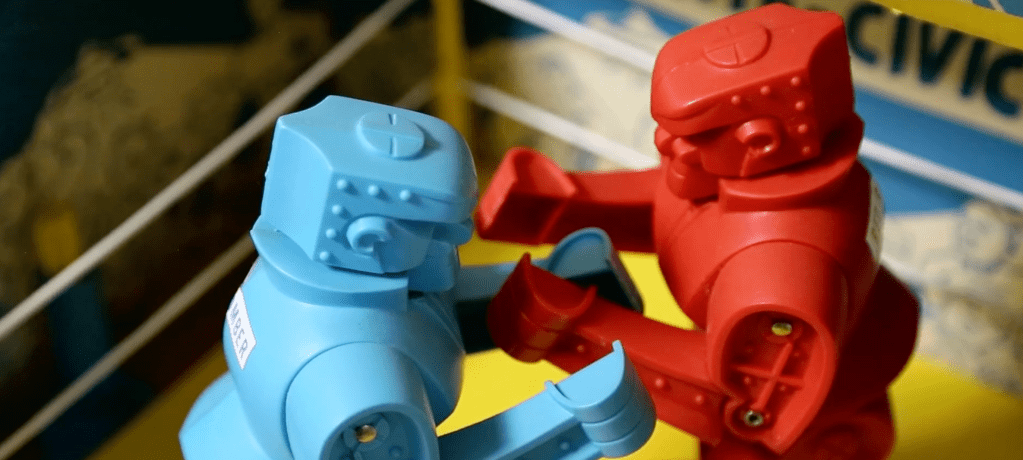
In late 2017, I connected with filmmaker Dave Bernabo. We put together a proposal to tell the story of Moundsville in a documentary. I thought that town was a perfect place to tell a deeper story about America because it’s built around a 2,200-year old Native American burial mound, it harbored a glorious industrial age including the world’s biggest toy factory (Marx Toys, maker of Rock’em Sock’em Robots!), and it now subsists on a service-based economy anchored by a Walmart. There’s also a lot of pain and grief in Moundsville. In a generation, the town lost 8,000 jobs. The population halved. Young people left for Pittsburgh and New York.
Rock’em Sock’em Robots! first manufactured by Marx Toys of Moundsville, West Virginia
David and I spent most of 2018 driving down to Moundsville and interviewing people. At the end of each interview, we’d ask a question about Trump and national politics. Almost always, the answers lacked depth. It dawned on me: These people didn’t know about Trump. They didn’t live in DC. They weren’t very thoughtful about politics. But when we asked them about their work lives and their parents’ work lives, they engaged with depth and wisdom. Those questions, I realized, were actually loving. Almost always, I decided, asking about Trump simply wasn’t loving.
After experimenting with a voiceover, we opted to tell the story without a so-called “voice of God” as narrator. The movie is an oral history, without any academics or outside experts.
In our interviews, we heard about grief a lot, but we also heard and told tales of resilience, from a back-to-the-land farming couple, a small manufacturer of kitchen cabinets, and the leaders of a burgeoning tourism sector. The ancient burial mound looming above the town is a daily reminder that civilizations ebb and flow, and that time moves only forward. My hope is that we acknowledged grief in a healing way while pointing the way forward with stories of hope and perseverance.
In December 2018, we premiered Moundsville in the town itself, a practice of sharing work that anthropologists recommend. Over 170 people showed up. A few grumbled about our portrayal of segregation in the film, but at the end, we received an ovation.
A month later, we screened at America, the Jesuit magazine I had started writing for, in New York City, on Sixth Avenue in Manhattan across the street from News Corp., home of the Wall Street Journal.
To my surprise–and gratitude–the movie holds up. People appreciate its openness and listening attitude. “This amazing project reflects a diversity of stories that I needed to experience to remind me of hope and resilience and kindness,” wrote Anupama Jain, head of a Pittsburgh diversity training group, on Twitter.
The biggest lesson I’ve learned making and showing Moundsville is that every place carries an organic placeness that deserves respect for its uniqueness. You can find wisdom and thoughtfulness in people when you engage them over that place and recognize its differences from your place. We can’t love our neighbors as brothers and sisters if we expect them to be just like us.
I created the Moundsville.org site to promote the film, but quickly found an audience for pieces I was posting. It gets an average of 10,000 readers a month. So I keep writing and posting. I’ve written over 100 pieces for the blog, on everything from Lady Gaga’s mom, who grew up in Moundsville, to people going to watch baseball inside the prison in the 1950s.
I’m still on a journey of figuring out a new kind of journalism that suits my skills, and my heart. I’ve co-directed Out of Reach, a new movie about the American Dream. I’m developing a podcast called Philosophy with Strangers, where I go with an older friend to small towns and ask big questions. First episode: We went to Charleroi, PA and asked people: What is happiness? I contribute regularly to America, a monthly magazine run by Jesuits. I coach baseball. Lots of other stuff, too. But wherever my career takes me, it was forever changed by the road that ran through Moundsville, West Virginia.
John W. Miller is a Pittsburgh-based writer and filmmaker, and co-director of the PBS film Moundsville.
~~~
What are you watching, reading, and writing this month. Let me know in the comments…
Are you a Rust Belt writer? What’s your story? Would you care to share? Do you write book reviews–or conduct interviews of Rust Belt authors? If so, think of Rust Belt Girl for a guest post. And check out the handy categories for more writing from rusty places.
When I say “Rust Belt literature,” what comes to mind? Gritty, realistic narratives, no doubt. Hard-bitten characters. Upper Midwest settings redolent of industry and machines. Or settings found in a time of post-industry, a time of automation over humanity–of darkness. Coal or steel may factor in, or maybe it’s a landscape made barren by the extraction of one and the decline of the other. More recently, themes appear to be borne from loss after loss: environmental destruction, job loss, poverty, the opioid crisis …
When I said “Rust Belt literature,” did fantasy or speculative fiction come to mind? How about air, water, light? How about women? How about women flying?
You won’t find Megan Giddings’ novels tagged as Rust Belt lit at your local library, but you will here. For Giddings chose to set her latest, feminist dystopian novel, The Women Could Fly (HarperCollins, 2022), a story in which witches are real, not in a fantastical place but in Michigan and the Great Lakes. And why not?
The novel’s overarching plot: main character Jo is “offered the opportunity to honor a request from her mother’s will” by traveling to an island off Michigan’s Upper Peninsula, where she will explore the “powers women have to transgress and transcend” the limits women face in this larger world.
And, of course, there will be trouble, a lot of trouble. But back to the setting.
“She [Jo’s mother] had loved the lakes. Michigan was for luxury. Erie was for mourning. Ontario was for Canadians. Huron was for daydreaming. And Superior was for mystery. The lake that kept its secrets.”
Why not set a story about the secrets women keep for self-preservation on an imaginary island off an imaginary shore? Why Michigan’s UP? Verity, I presume. In this novel, the speculative elements rub up against the very real setting, and say to this reader: don’t get too comfortable. The nightmare scenario you might think can’t happen in real life, absolutely can–and it can happen right in your backyard. For, what weight does social commentary have if it’s set in a fantastical place? Much less than if that commentary is grounded in a place we think we know so well.
This is not your typical witch story (if there is such a thing) and my regular followers know this is outside my regular reading wheelhouse. From the dust jacket copy, so you get a sense (sans spoilers) of this dystopian time not altogether different from our own, here’s some backstory on Jo and her lost mother:
“Josephine Thomas has heard every conceivable theory about her mother’s disappearance. That she’d been kidnapped; murdered; had taken on a new identity; started a new family. Most troubling of all was the charge that her mother had been a witch, for in a world where witches are real, peculiar behavior can raise suspicions and result in a woman–especially a Black woman–being put on trial for witchcraft.”
How do we writers choose where to set our stories? Do we write of the places of our dreams? Google Earth and the ease of internet searching of local customs, accents, etc., mean a writer can set her story anywhere. (So you would think more writers would eschew the default American settings of NYC and Southern California–wonderful places both, but perhaps overexposed.) What makes us craft a setting after our home? I’ll let Giddings’ gorgeous riff on Michigan answer that question:
“One of the pleasures of driving through Michigan is the trees. Farther and farther north, they shift, become taller and thinner, go from full Christmas trees to pipe cleaner versions. The sky changes too. The clouds come lower, the blue always feels a little brighter, the towns spread farther apart, and there are more dips, hills to make up the distance. It wakes up something animal in me …”
In this novel, Giddings walks a literary tightrope between realism and speculative fiction, grief and humor, old prejudices and new possibilities, pragmatism and magic–and all in concise and biting prose. Enjoy the ride. You don’t even need to know how to fly!
How would you define Rust Belt lit? What are you reading and writing this week? Let me know in the comments.
Rebecca here–and absolutely thrilled to present this guest post featuring the poetry of Moundsville, West Virginia native, poet and professor Carrie Conners. All three poems shared here explore Rust Belt themes and can be found in Carrie’s latest collection, titled Species of Least Concern. Please read, share, and join in the conversation in the comments.
Carrie Conners, originally from Moundsville, West Virginia, lives in Queens, New York and is an English professor at LaGuardia Community College-CUNY. Her first poetry collection, Luscious Struggle (BrickHouse Books, 2019), was a 2020 Paterson Poetry Prize Finalist. Her second collection, Species of Least Concern was published by Main Street Rag in 2022. Her poetry has been nominated for a Pushcart Prize and has appeared in Bodega, Kestrel, Split Rock Review, RHINO, and The Monarch Review, among others. She is also the author of the book, Laugh Lines: Humor, Genre, and Political Critique in Late Twentieth-Century American Poetry (University Press of Mississippi, 2022).
Are you a Rust Belt poet or writer? Do you write book reviews–or conduct interviews of Rust Belt authors? If so, think of Rust Belt Girl for a guest post. And check out the handy categories for more writing from rusty places.
I know what you’re thinking. Where are all the leaf-peeping pics? We know you drove along the PA turnpike to Ohio, climbing, winding, glimpsing down into little hamlets surrounding the sweetest, steepled white churches. All around were reds and every other burnished color. Oh, the autumn leaves!
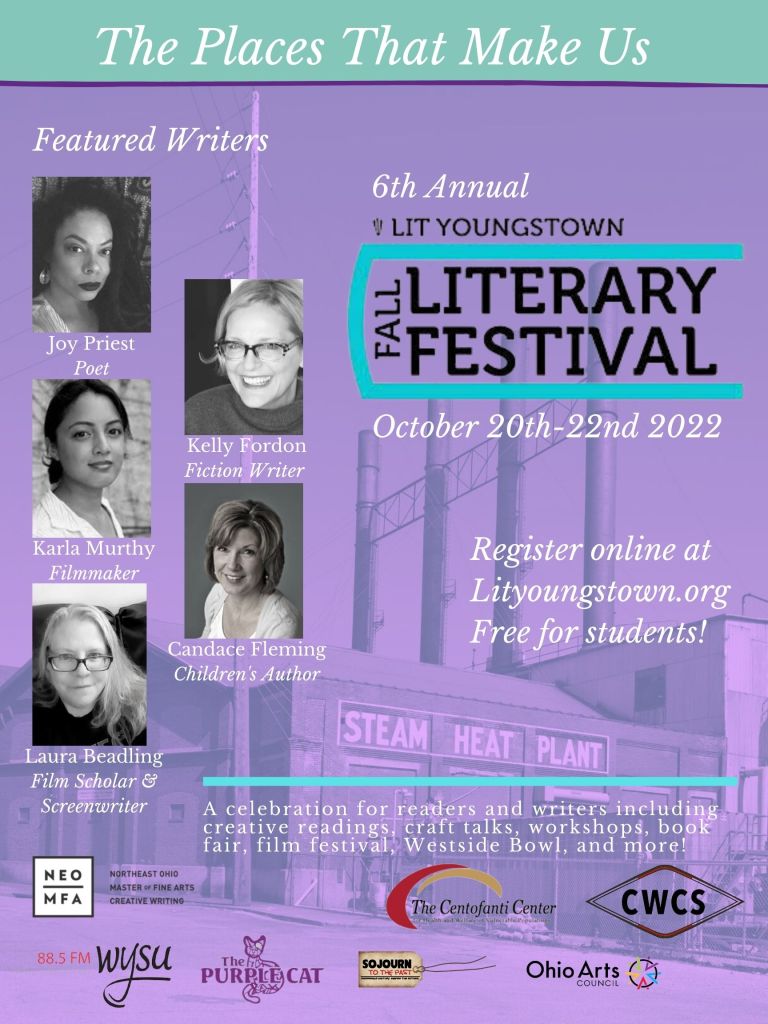
Hold your trees for a moment, reader friends. First, a literary roundup. If you’ve never been to Lit Youngstown’s Fall Literary Festival, I’ll see you there next fall. In the meantime, here’s how I made my way through my favorite literary conference of the year (yes, even besting AWP, which I made it to in the spring).
Thursday
This year’s festival featured the theme, The Places that Make Us, and I was so happy to be able to return–5th year running for me–to this conference held not far from the place where I grew up in Northeast Ohio. Big shoutout to all my fellow festival planning committee members. We did it (again)!
Special in a lot of ways, besides all the usual literary goodness, this year’s festival provided attendees front-row access to three film screenings.
But really, year in and year out, this festival always impresses me. What’s so special? Lit Youngstown’s director, Karen Schubert, is a literary conference alchemist, joining poets, fiction writers, memoirists, and even filmmakers this year for just the right mix of craft talks, generative workshops, creative readings, and roundtable and panel discussions. What do you get? Literary conference gold, no exaggeration.
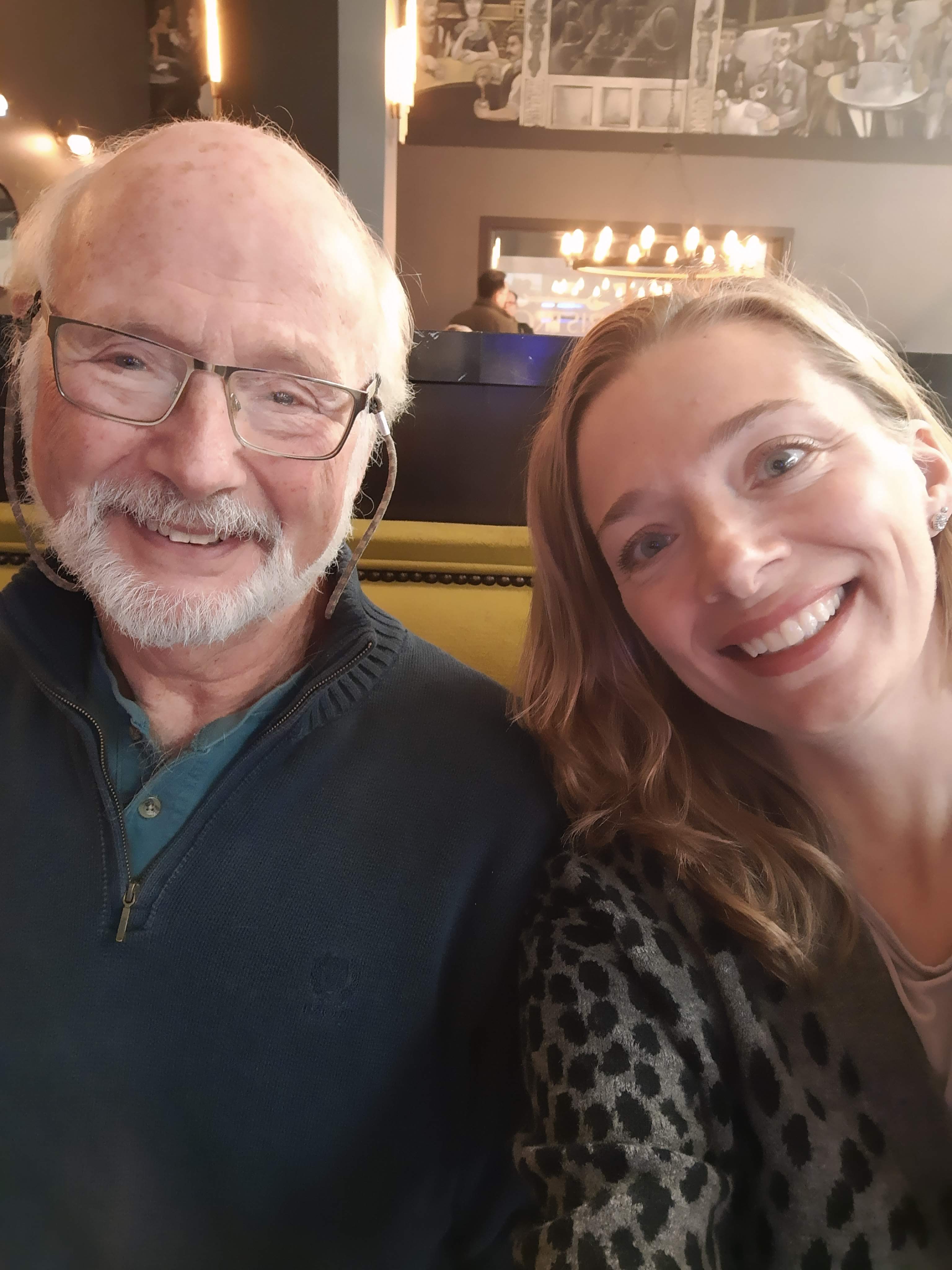
OK, onward … Thursday evening featured the Gathering In, with a reception and open-mic to begin the conference. This year, I had a special guest in tow. My dad drove in from Port Clinton; we had dinner beforehand (your meatballs are outstanding, Bistro 1907) and then headed to the Gathering In. I will tell you, my dad did not even doze at what I believe was his first-ever open mic and found it delightful. We salute you poets and writers who can whittle your words down to a few minutes of magic!
Friday
My first full day of the festival began with a craft talk by novelist June Gervais titled Honoring Others with Our Fiction Research. Intentional and inspirational are the two words that come to mind when I think about this talk. In it, June described her research process for her debut novel, Jobs for Girls with Artistic Flair. Braving the sometimes-fraught conversation around appropriation, authenticity, and sensitivity, when it comes to depicting readers from different professions or backgrounds, June exuded positivity. So, how do we honor others with our research?
First, have a goal. For June, she decided, “to make the most beautiful and honest book possible.” Second: do the research well–whether that’s in-person interviews, archival research, or hiring authenticity and sensitivity readers in later writing stages. Third (and this is June’s whole beautiful thing): show gratitude by thanking the helpers along the journey. Sometimes this means generous payment. Sometimes this means reciprocity–trading literary favors. Always this means a real thank-you in the mail and on social media and all the shoutouts possible, including on the old Acknowledgements page. “I try to be a living acknowledgement,” she said.
This year, I was intentional about attending the sessions (there are so many, I wish I could attend them all!) in my writerly “lane.” But I don’t seem to be able to resist the poets. In a roundtable discussion called “Moving Past Influence,” poets Mary Biddinger, Ali Black, and Dylan Morris talked about influences in creative writing–model writers and how they influence a poet’s style, and moving past influences as we develop our craft. When asked why she writes and why poetry, Ali talked about writing as an act of remembrance for those who’ve gone before her, those she’s lost. The stories are hers to tell, and poetry her form, she said, before she delivered one of the best lines of the weekend: “Poetry is my baby, and I’m poetry’s baby.”
Marketing-me felt right at home in Gabriel Welsch‘s craft talkMarketing Your Book–Tips From a Professional Marketer and Writer. How to generate pre-orders for your book … how to get it reviewed … how to develop a (shudder at the word) platform … and, ya know, actually sell your book. These were just a few of the practical tips covered. We listeners were asked first to consider our goal. What do we want from our book: readers? high regard? money? Gabriel covered Marketing’s 4 Ps: product, price, promotion, and place. Who said it first, I can’t remember now, but he repeated this gem a few times: “All arts marketing is local.” Along those lines, he said, don’t underestimate the wideness of one’s potential audience. Think about local clubs that aren’t book clubs, local fraternal organizations, historical societies, etc., etc. And, as if he and June had shared notes beforehand, he stressed gratitude. “Don’t underestimate the power of thanking.” (Thank you, Gabriel!)
Short story writer and poet Kelly Fordon (of Let’s Deconstruct a Story podcast fame–do check it out) led a generative workshop. I caught the second of two parts: the first, a workshop to deconstruct a story to understand its parts and how they work together; the second, a chance to get some words of our own on the page. There’s something about a good writing prompt. The simpler the better seems to work for me. Kelly gave this prompt: “Start with ‘We lived then …'” I’m not always in the writerly frame of mind to churn it out on demand, but here’s what I got:
We lived then spitting distance from the train tracks, the river, and the West Virginia border--so much winding, the running tracks leading not to any home I understood. A limbo, the twins not yet in school, not babies either. How many times did we stop the car by the tracks, watch the train pull tractors east and west--Kubota, Deere. In our rental house, the boys slept on a mattress on the floor, when they slept.
One positive of the pandemic was finding a new writing group. I guess Zoom is good for some things. Among the Cleveland-area members is Jeremy Jusek, Parma, Ohio’s poet laureate, host of the Ohio Poetry Association’s podcast Poetry Spotlight (check it out), and consummate literary citizen. Jeremy’s craft talk, Strengthening Artistic Communication Through Podcasts, covered how podcasts can be used by small creative groups to humanize its members and strengthen communities. I love bookish podcasts and meeting the person behind the book. He called podcasts “the ultimate bridging medium,” and I can totally see that. He said that when he edits the podcast interviews of poets–the last one was with Hanif Abdurraqib(!)–he shoots for no more than 7 percent Jeremy, the rest the interviewee, an impressive stat I will remember when I conduct interviews.
OK, this isn’t a great pic (sorry Karla, thank you, Rebe!) of one fantastic panel discussion with the featured presenters (minus Laura Beadling). The gist: the writers Karla Murthy, Candace Fleming, Joy Priest, and Kelly Fordon weighed in on “the element of place, real and imagined, in the literary arts.” Side note: if you can catch a Joy Priest poetry reading, run don’t walk to catch it.
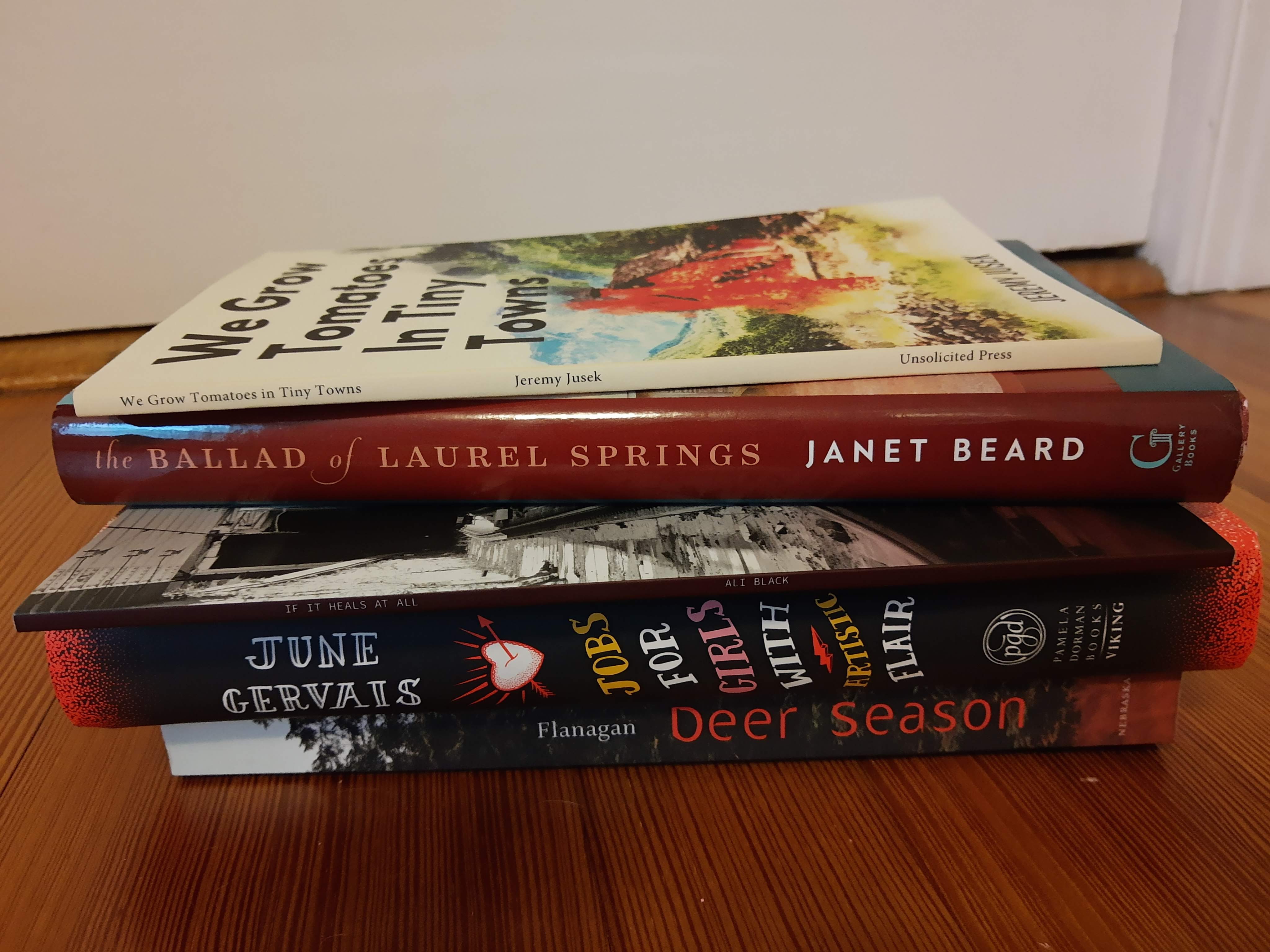
Now, don’t let my festival book fair’s book haul–pictured below–throw you, I guarantee there was plenty of time in the evenings for catching up with literary friends over jazz and a local craft beer (and pierogi and pickle pizza–someone saw me coming!).
Saturday
June Gervais started off the second full day of the conference tackling a subject close to my heart–and that of anyone about to dive into the query trenches. In her craft talk, Persevering to Publication: Some Practical Tips, June covered her (long) journey to the publication of her debut novel. Again, she walked the line between inspiration and practical steps to take. “Expect difficulty, but leave room for wonder,” she said. Now, could I please have a June Gervais quote-a-day calendar?
Along the practical side of things, she discussed making a practice of community while writing a novel (or anything else really). My favorite analogy she offered: think of the novel as the Thanksgiving turkey. It’s not enough. You need to support the turkey-novel with delicious sides, including the writing and publication of short pieces (short stories, essays, craft pieces, poems, etc.) Other crucial sides: an author website, a social media presence, and a literary community. (Check!)
Oh, the literary agent querying-getting-sustaining process. Should you want to endure the agent search, be prepared for it to be long and winding, June said. Most of all, enjoy life in this tough stage of the writing, find gratitude in the work and in your community, and “become a master of the polite check-in.”
I was happy to moderate two sessions during this festival. The first was a creative reading featuring poet and memoirist Jennifer Militello, whose love poems were nothing short of arresting and awe-inspiring. Youngstown native, poet Rikki Santer also read from her vast portfolio of poems, many centered on place–including some that explore the imaginary realm of place through old Twilight Zone episodes. And novelist Janet Beard read–and sang!–from her latest novel, The Ballad of Laurel Springs, which shares with readers some of the stories delivered by the old murder ballads Janet grew up hearing in her Appalachian hometown in East Tennessee.
The second session I moderated was novelist Erin Flanagan’s The Window or the Door: Transitioning from Writing Stories to Novels. (Or, The Plight of the MFA Grad–ha.) This craft talk was super instructional and featured 13 handy novel-writing tips. I’ll give you just a few and you’re going to have to hunt Erin down for the rest. #2: Start a novel-writing journal. #6: Figure out where your novel ends in time. (Also check out The Art of Time in Fiction for help with pacing.) #10: (Oh, this one is hard–but so necessary–to swallow.) Keep in mind that chapters aren’t short stories, meaning your chapter end needs to create more questions, more tension, etc., to pull the reader through.
If I have pulled you through this post this far, you have shown your readerly diligence and win a star! Or, how about a slideshow of the foliage, cliffs, boulders, and even 200-year-old petroglyphs I enjoyed with one of my oldest (she’s not old, our relationship is) and best friends and her son (who poses for pics like a Jet from West Side Story–and this is my everything now!). Please enjoy the treasures of Cuyahoga Valley National Park, where I visited on a post-conference side trip.
Have you attended this festival or another literary festival? What’s your favorite part of a writing conference? Have you been to this national park? Let’s chat in the comments.
Want more Rust Belt writing, author interviews, book reviews, guest posts, writing advice, and more? Check out the handy categories above.
Find me on FB and on IG and Twitter @MoonRuark. Find me at Goodreads and learn what novel I listened to on my way to and from the conference. Hint: I’m recommending it for fans of Tea Obrecht’s latest novel, Inland.
Also, please follow me here at Rust Belt Girl, so you never miss a (fairly infrequent) post, and feel free to share this post with the world. Want me to consider a guest post featuring you, yep, you!? Hit me up. There’s a lot of Rust Belt literary goodness to spread around.
*free header image of a fall foliage-colored door from Pexels
For those who don’t know poet Timothy (Tim) Russell, I want to introduce you to as solid a working-class poet as there is. Tim qualifies as a working-class poet not just because he wrote of that life (as did famed James Wright and Kenneth Patchen), but because he also lived it. He worked for 20 years as a boiler repairman in the Weirton Steel plant ‘til his lupus (MDS preleukemia disease) forced him to retire. He retired from the labor but not from the life and not from writing. For the next 30 years, he and his wife Jodi and kids lived along mile 61 of the Ohio River in small-town Toronto, Ohio.
Tim Russell, featured in the book, A Red Shadow of Steel Mills (1991); photo credit: Jodi Russell
The Ohio River along the West Virginia panhandle is a ripe area for steel mills and poets.
I grew up about 20 minutes south of there in Mingo Junction, about 20 minutes north of Martin’s Ferry, Ohio, where Wright grew up. The Ohio River along the West Virginia panhandle is a ripe area for steel mills and poets. In 1991 David Shevin and I edited A Red Shadow of Steel Mills (a line from Wright) which included poetry chapbooks of Tim Russell, Richard Hague, David J. Adams, and Kip Knott. It was one of our first books in the Working Lives Series from Bottom Dog Press.
Last month, other poets and I gathered with his family and friends for his memorial, at which Jodi and grandkids spread Tim’s ashes in the river about a block away from their home. Here’s a bit of West Virginia Poet Laureate Marc Harshman’s eulogy quoting Tim’s poem, “Plano.”
Because hills are not on the maps,
it's easy to get lost here, distant
neighborhoods appear to be adjacent.
“Even though I lived a long time in the rural heart of Appalachia,” Harshman said, “those words obviously ring true for Tim’s urban mill town as well. And it is ‘easy to get lost here,’ but Tim’s poems seemed always to be pointing a way, providing an anchor, enabling us, his readers, and his friends to feel just a little bit less lost. That’s a gift, a gift worth remembrance at any time but certainly here, today, as we do our best to remember and to honor Tim and know this is one of many reasons we miss him.”
Tim’s poems seemed always to be pointing a way, providing an anchor, enabling us, his readers, and his friends to feel just a little bit less lost.
In the mill, Tim was nicknamed “Mad Dog”; among poets he was the “Steel Mill Poet,” though he is equally a fine nature poet. A sample of his work reveals how enmeshed he was with the mills and his place, its people, and their language:
In Adversa  by Timothy Russell

March is the nuthatch
skittering head-first
down the bare black walnut
or the bare silver maple.

April is forsythia
beneath hazy pastel willows
weeping over the bank
of the orange creek.

May is mock orange
scattered like mortar explosions,
the most delicate mist
rising all around.

June is the red squirrel
fleeing the blue joy
both of them caught in the morning
sun crackling in the sycamore.

August is sulfur
moths twirling above the crown
vetch, deer prints in silt
at the culvert.

September is crab
apples, so red
on the roadside
near the Tin Mill
carpenter shop.

October is a buck
swimming the river,
climbing the gray slag bank
toward red and yellow
trees on the island.
Tim Russell; photo credit: Jodi Russell
Tim authored many books, each winning prizes and literary recognition. He is the author of the chapbook The Possibility of Turning to Salt 1987, which received the Golden Webb Award, 1987; of In Dubio 1988, which received State Street Press, 1988; and of In Medias Res, 1991. His full-length book, Adversaria, in 1993 received the Terrence des Pres Prizeia Poetry (Tri Quarterly Books). Chapbooks What We Don’t Know Hurts, 1995, and Lacrimae, 1997, followed; his haiku writing received the 4th Shiki International Haiku award Shiki team, Ehime Prefecture, Japan, 1999.
In Integrum by Timothy Russell

I’ve put my white shirt on
to celebrate my neighbor’s glaring roof,
the brick chimney leaning against its
own shadow,
the next of black branches above it all
dissolving into brilliance.
I’ve put my white shirt on
to celebrate cookies on a plate downstairs
and the pears and oranges in a bowl
with one perfectly curved banana.
I am celebrating the Christmas cactus
blooming in March.
I am celebrating nothing.
I am celebrating today.
I’ve put a white shirt on.
How did Tim share his days? Besides parenting, his wife Jodi says, “Tim tended to his gardens along the Ohio riverbank and built a stone henge across from his house fondly called ‘Tim Henge.’ He also grew poppies, zinnias, and sunflowers in it throughout the years. Battling knotweed on the hillside, he turned it into a bird and wildlife sanctuary. He would ride along the banks of the river in his boat collecting garbage and debris trying to keep the river clean. He was mindful of sharing and taking care of the earth for everyone and everything.”
Tim had a great sense of humor and a fine sense of image and form. He uses the common language to touch us. A world-published poet, he wrote many haiku and won many prizes with them, including a trip to Japan. Here is the last haiku he wrote, a few days before he died:
                 Snoozles
        The little dog knows
                 I’m toast

                       – 9/13/21
A fund has been established at the University of Pittsburgh, Tim’s alma mater. It will help support a freshman majoring in English Creative Writing. Donations may be made online at http://www.giveto.pitt.edu/russellmemorial or a check may be made payable to “University of Pittsburgh” with a memo “Timothy W. Russell Fund” and mailed to: University of Pittsburgh, P.O. Box 640093, Pittsburgh, PA 15264-0093.
~~~
Timothy W. Russell was born May 25, 1951, and raised in Follansbee, West Virginia. As a sergeant of the U.S. Army during the Vietnam Era he served as a handler of Military Police Sentry Dogs 1970-1972. He had graduated from Madonna High School (1969) in Weirton and following the war, went on to receive his bachelor’s degree from West Liberty College (1977) and master’s degree in Creative Writing from the University of Pittsburgh (1979). He passed away on September 16, 2021, at 70.
~~~
Larry Smith grew up in the industrial Ohio River Valley and graduated from Muskingum College and Kent State University with a doctorate in literature. He taught at Bowling Green State University’s Firelands College for over 35 years and is the author of 8 books of poetry, 5 books of fiction, a book of memoirs, 2 literary biographies, and more. He’s written film scripts for “James Wright’s Ohio” and “Kenneth Patchen: An Art of Engagement” and is director of Bottom Dog Press/Bird Dog Publishing in Ohio. He reviews for New York Journal of Books. Bottom Dog Press hopes to publish the collected poems of Timothy Russell soon.
Header image of Ohio River is credited to Larry Smith
~~~
Rebecca here–many thanks to Larry Smith for this beautiful tribute to the the life and work of Tim Russell. Please visit Bottom Dog Press’ website for his Working Lives series…and much more.
Are you a Rust Belt poet or writer? Do you write book reviews–or conduct interviews of Rust Belt authors? If so, think of Rust Belt Girl for a guest post. And check out the handy categories for more writing from rusty places.
I take umbrage with whomever coined the phrase “lazy days of summer.” And I might demand a refund. Except, while my summer has been anything but lazy, it has been fun.
After a little hiatus I return to you loveliest of followers with Rust Belt pics and books–and news of a reading in one of my favorite port cities (and rollercoaster capital), Sandusky, Ohio.
Off to OHio
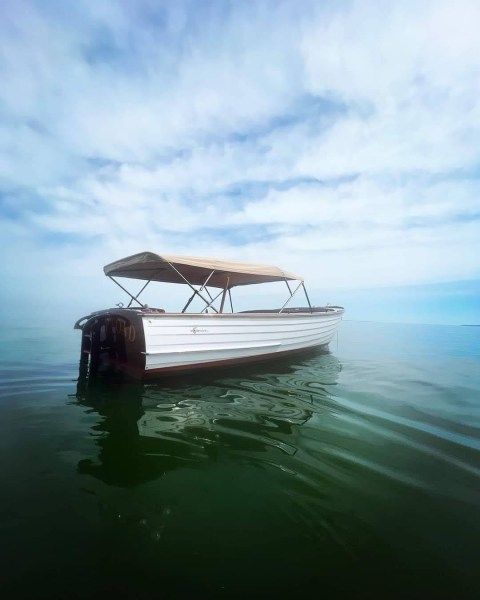
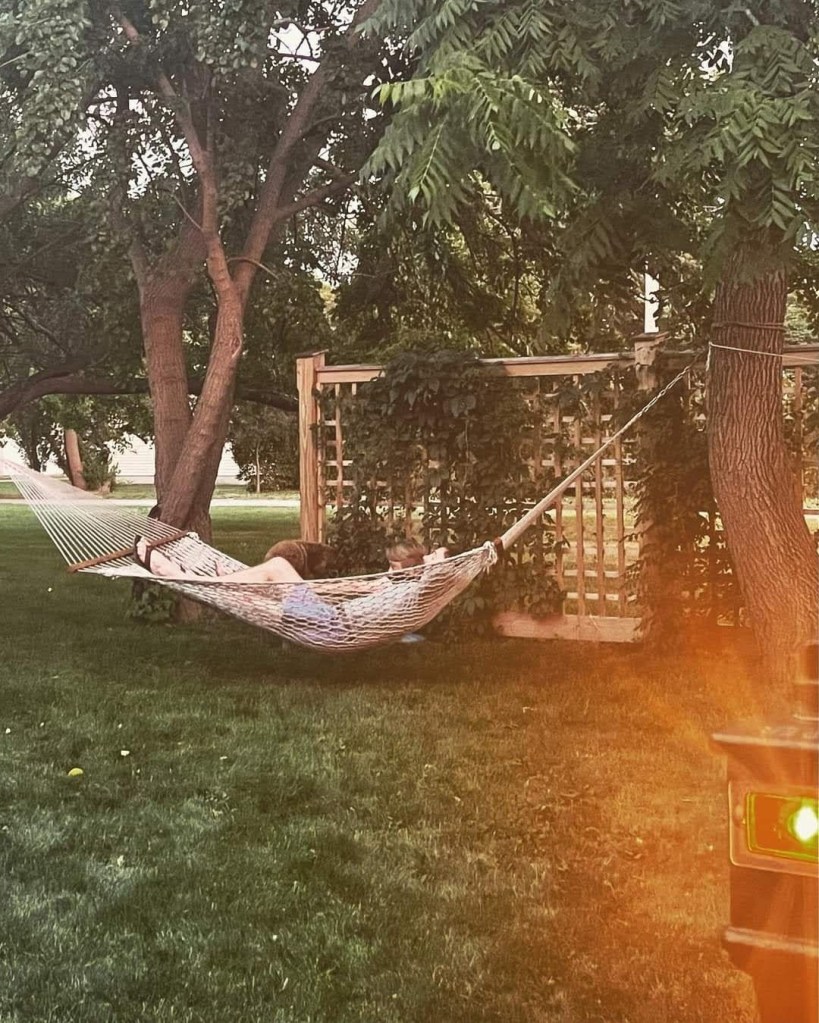
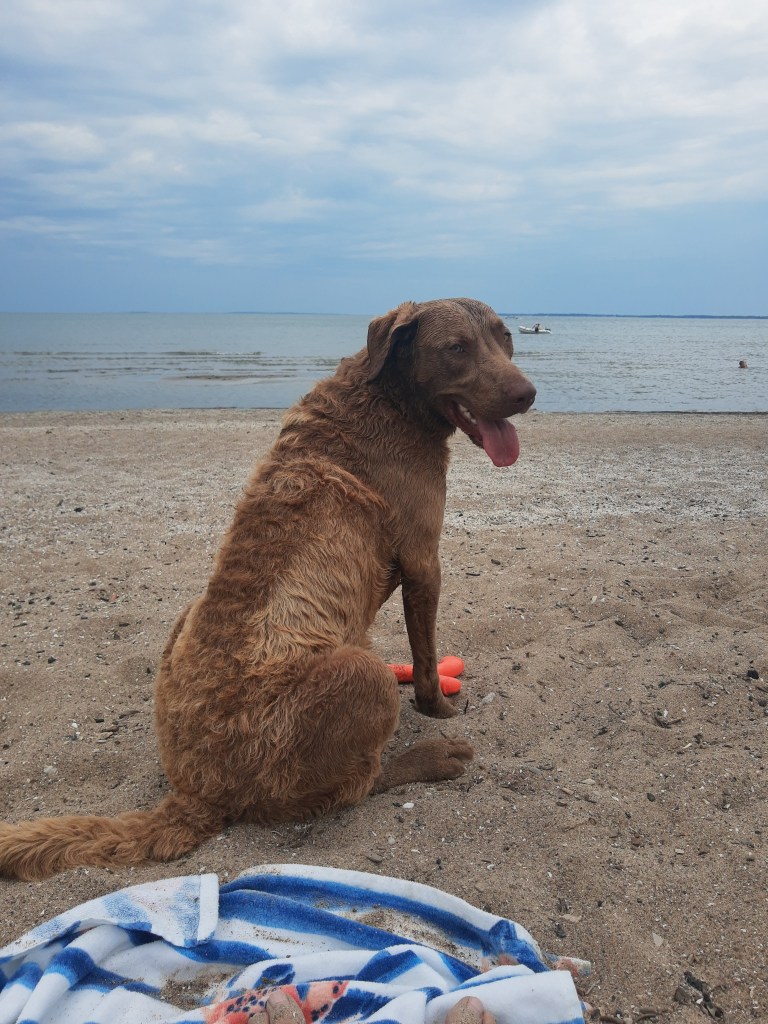
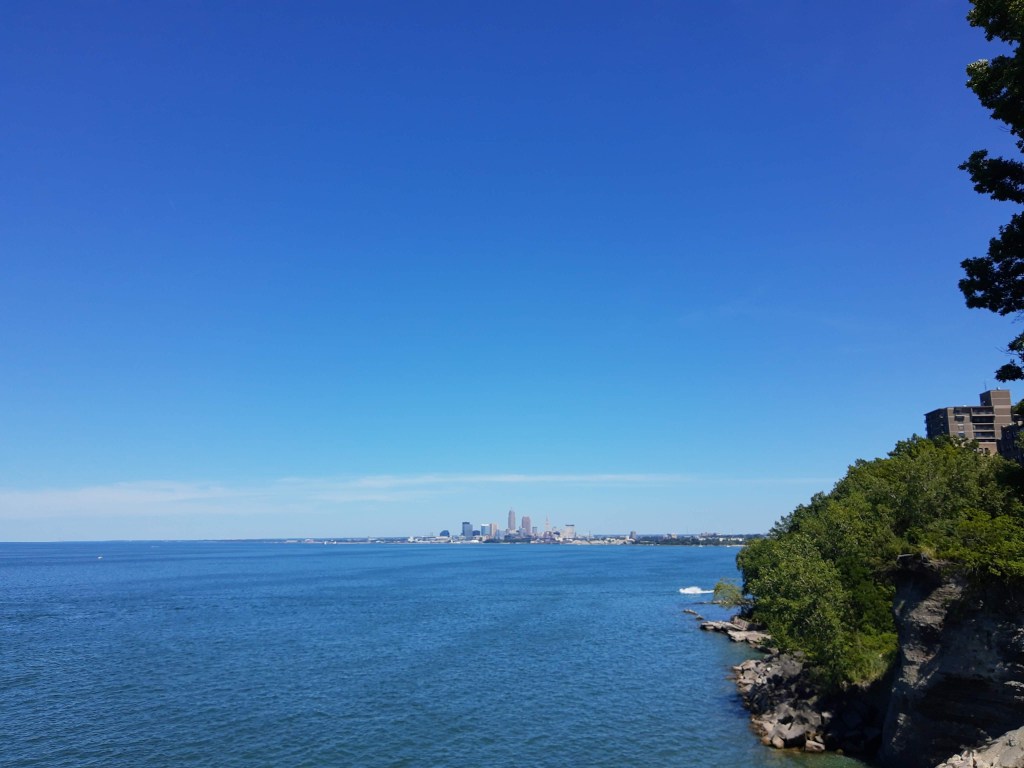
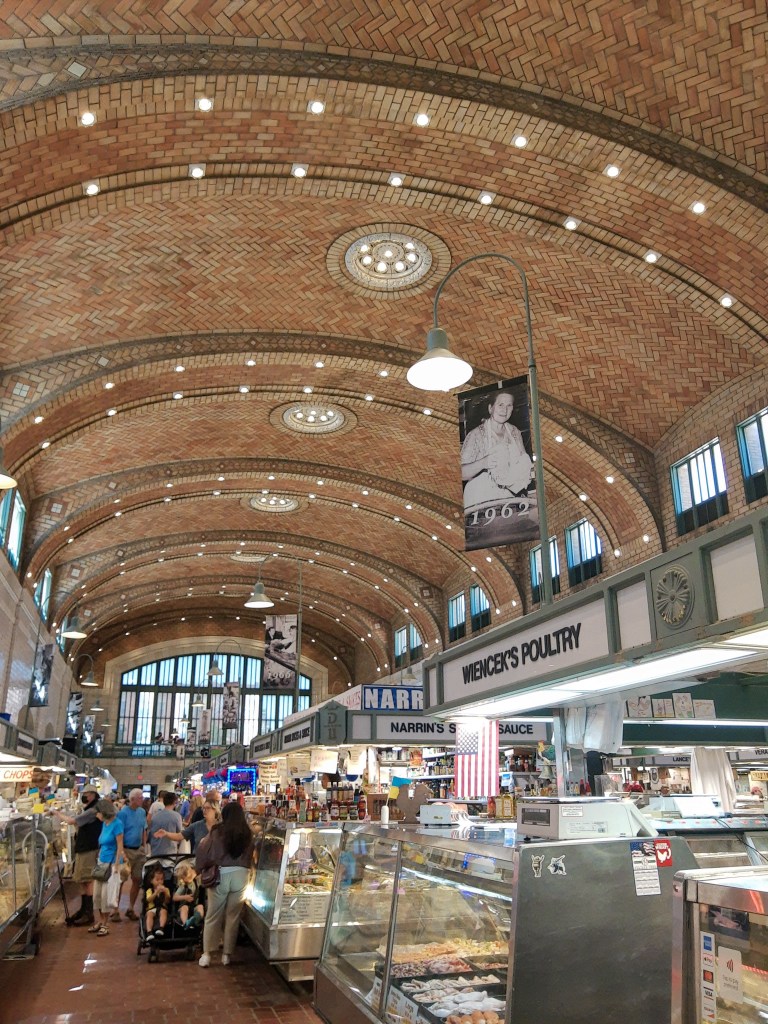
The fam and I headed to Port Clinton, Ohio, walleye capital of the world–don’t fight me on this, MN friends–in June. Sailing for my little guys, boating for the rest of us, swimming, sisters-lunching, friends reuniting, and plenty of hammock-ing and back porch-sitting were the highlights. Of course, no visit to Northern Ohio is complete without a trip to Cleveland and a visit to the West Side Market. And who could forget Rufus, who lived his best Lake Erie Shores & Islands life for a week. Boat aficionados, make sure to check out my dad’s antique Lyman boat above, his fourth child basically. Boat name? Hoptoad, named for Pippi Longstocking’s father’s ship in the favorite book series. (Who woulda thunk I’d become a writer?)
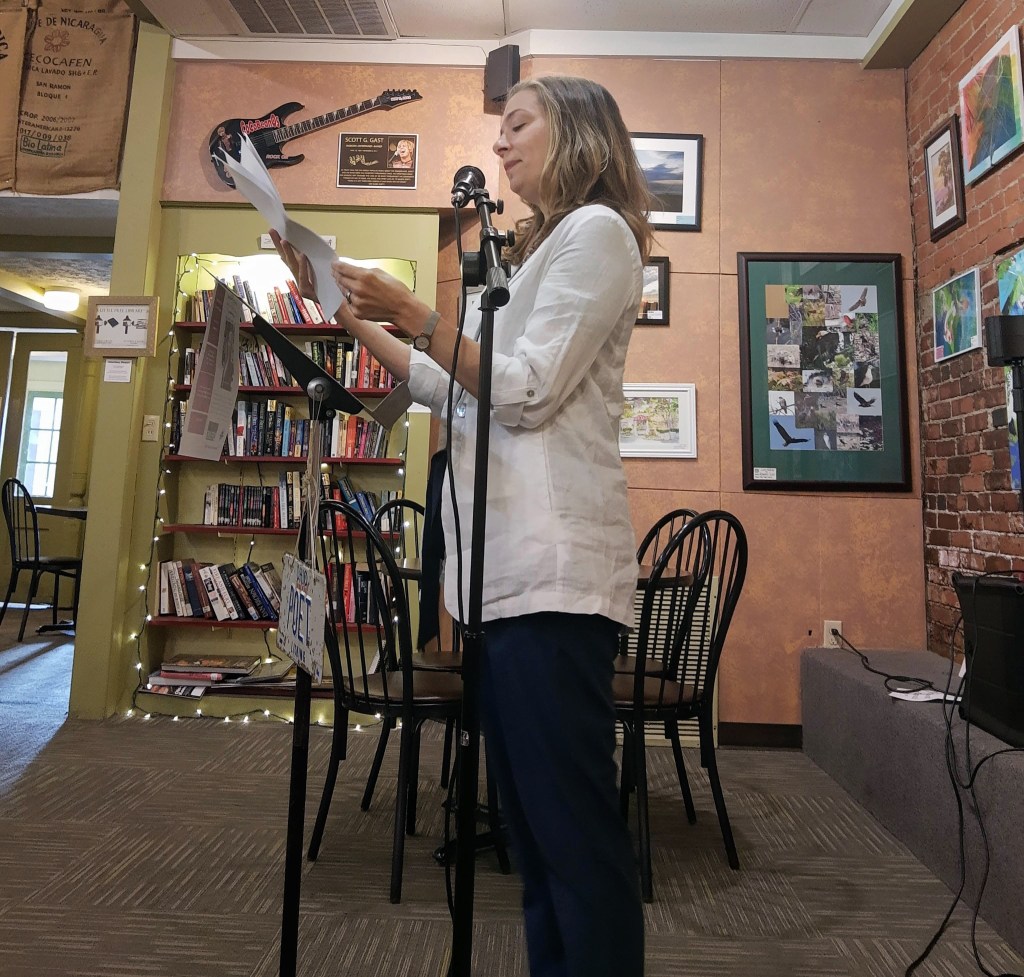
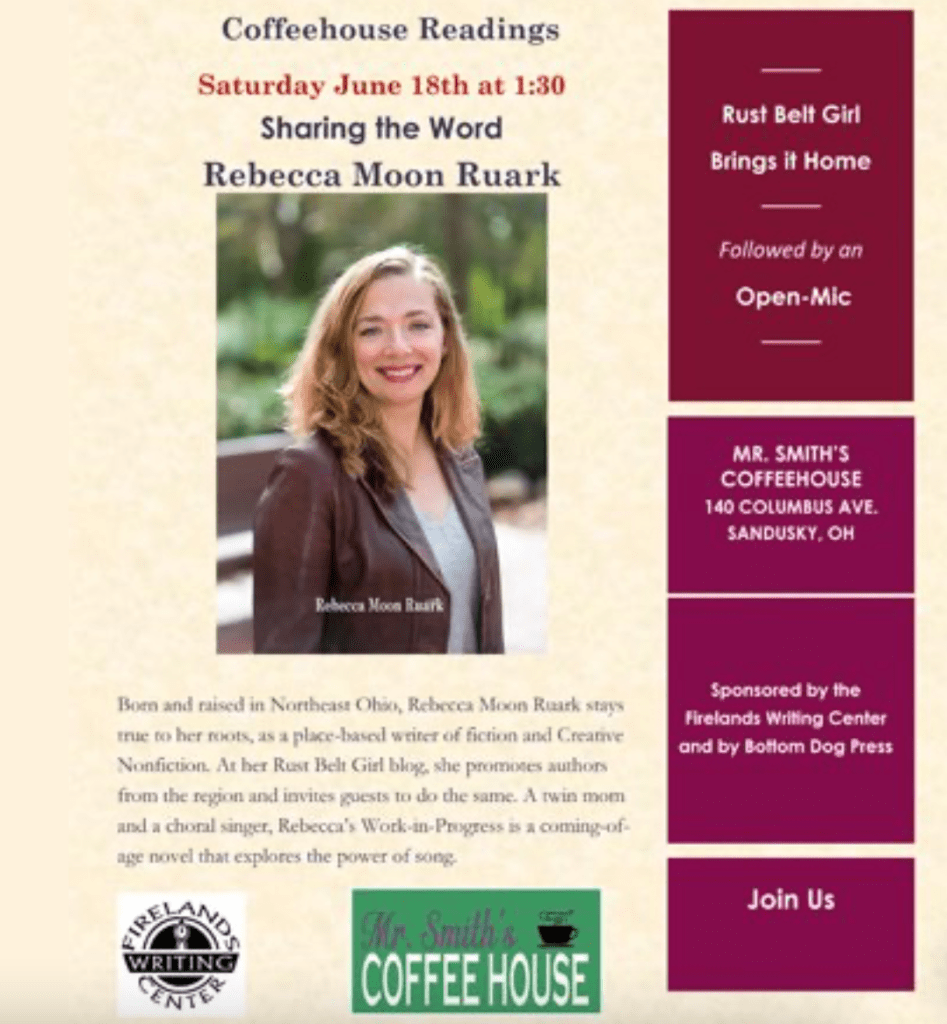
While in the area, I had the honor of serving as the featured reader for the Firelands Writing Center’s monthly reading series in Sandusky. Thank you again to fearless leader Larry Smith and his Bottom Dog Press for sponsoring the event (and putting me on a flyer–that doesn’t happen often). I read some older work and some newer pieces from my WIP, a coming of age novel partly set in Ohio that explores the power of song. And thanks to those who came out (or in) on a beautiful afternoon to share their own work with the group. It felt very much like home. (Flyer photo credit: @melanieraebuonavolonta)
Reading the Rust Belt…
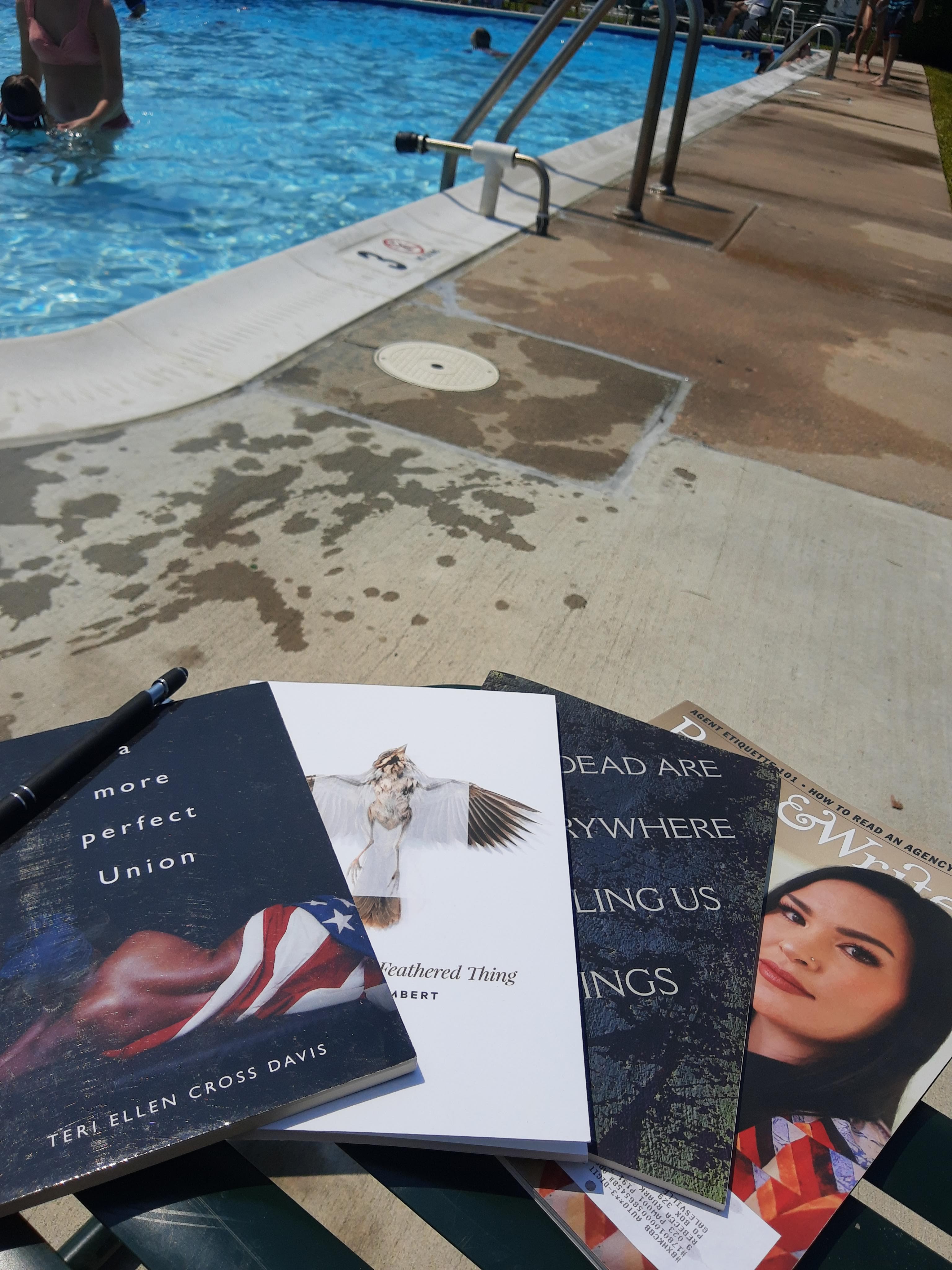
Of course, I’ve fit in some Rust Belt reading. And who said summer reads can’t be deep? Poolside poetry is just my speed, and here are a few I’ve enjoyed immensely: Cleveland native Teri Ellen Cross Davis‘ A More Perfect Union; Columbus, Ohio, poet Paula J. Lambert’s The Ghost of Every Feathered Thing, and Erie, Pennsylvania, poet Sean Thomas Dougherty’s The Dead are Everywhere Telling Us Things. Btw, if we’re not connected on Goodreads, where I recently reviewed another poetry collection, let’s do!
And Beyond
There’s an old, writerly adage that says if you’re talking about it you’re not writing it. So, let’s just keep all our fingers and toes crossed for my WIP as I begin to query literary agents for it this fall.
Unfortunately, there’s no adage I know of that says if you’re talking about your editing you’re not working on it. But what would be the fun in that? You may know I’m the associate editor of Parhelion Literary Magazine, in charge of the features department. How I love my craft essays, book reviews, and author interviews! But you might not know that I got that gig because the magazine’s editor-in-chief saw what I was doing right here on Rust Belt Girl and wanted some for her Richmond, Virginia-based online publication.
In addition to editing features for Parhelion, I’m a reader for fiction. (If you aspire to write literary fiction, creative nonfiction, or poetry, there is no better way to become better at it than to read literary journal submissions, imho.) Parhelion’s summer issue (our journal’s 14th–not too shabby) launched this week. If you like fresh and bold fiction, CNF, and poetry I hope you’ll check it out.
Must we? OK, I suppose the pool days will come to a close. My small guys (who are quickly catching up to me) will head back to school. And I will start packing for the literary highlight of the season, Lit Youngstown’s Fall Literary Festival. If by some strange occurrence you live within driving distance of the festival and I haven’t hit you up, my apologies. This is the best literary conference of the year–if you like a supportive community, generative workshops, eye-opening and ear-bending panel discussions, inspiring readings, and affordability. Oh, and this year’s book fair promises to be the best yet. Also, there will be bowling and films. So, what are you waiting for? The Rust Belt calls.
And that, most patient of readers, is what I’ve been up to. But, as blogging is a two-way street, let’s keep the convo going. What has your summer looked like–or whatever season it is where you hang your hat? Where are you visiting. What are you writing, reading, and discovering? Do tell!
Want more Rust Belt writing, author interviews, book reviews, writing advice, and more? Check out the handy categories above.
I’m embarrassed to admit that, at first read, I took the title of JRW Case’s memoir, Cycling Through Columbine, at face value. That is, mostly literally. The cover image is of a man (maybe Case himself) on a bicycle, and I knew this memoir by my fellow Northeast Ohio native to be a travelogue–and the author to have a connection to Columbine. So you can see how I got there: cyclingthrough, as in moving past, moving beyond the terrible 1999 school shooting that forever colored how we think of Columbine, Colorado.
It wasn’t until the recent school shooting in Uvalde, Texas, that I began to readthe title’s first word in a different way–cycling as a repeating cycle of violence chronicled in these pages. The memoir is an emotional journey of remembrance and a physical journey of forward-moving action. But there is no moving beyond such violence, is there? Maybe only a “metabolizing,” as Case says, “the chaos of memories like those from Columbine.”
It was then that I lamented once more my own connection to a school shooting, however removed. Nearly 20 years after I graduated from Chardon High School, a student opened fire in the cafeteria, killing three other students. According to Wikepedia, the motive was a personal beef; the shooter is serving a life sentence. I’ve never written about this event, a stain on my hometown, but much more a stain on our collective American–and human–morality.
In one of Case’s blurbs, memoirist Emily Rapp Black summarizes the power of the reckoning with violence that Case attempts within these pages:
“The aftermath of Columbine is the aftermath for all of us.”
A little dust jacket plot summary to get you up to speed: JRW (Robert) Case’s “bicycle journey across the USA began during the summer of 2017, the story of which became this travelogue adventure, which includes a quest for values and the tragic massacre of Columbine in 1999 with its profound and pervasive implications. Robert worked then as a child protection attorney with a personal connection to one of the Columbine victims and deep ties to the community.”
If the form of this memoir is a bit ambitious–dual timeline narrative travelogue, utilizing written letters and texts from his past while contextualizing the narrative present with lesser-known history of spots along his route–Case’s heart is in it all. He grapples, and I like that kind of struggle for purchase in a memoir:
“…I find myself wondering if this adventure is more than just a travelogue about five guys who band together out of a shared interest in completing a bicycle tour across the USA,” Case says. “Or is it a coming of age story told by an aging parent trying to reconnect with a prodigal child, who is an adult daughter and Iraq war veteran? Or, maybe, the real story is a quest of a self-sufficient cyclist and former child protection attorney, who gets blown over by a ghost from Columbine, and has to come to grips with his long-avoided beliefs in a higher power?”
The memoir is all these things. Which makes me think that maybe neat narrative arcs are for fiction writers. Memoirs, like real life, can chart their own way, look forward and back, start and stop, and take detours before they find their way home.
Case’s bicycle journey begins is Astoria, Oregon, and ends in Minneapolis, Minnesota, short of his planned destination of Bar Harbor, Maine. Still, a summer of 2,000+ miles on a bicycle leaves him with plenty of time for exploration–emotional and physical, both. Case’s quest starts simply enough, as “a journey, a personal quest to reclaim some lost health and vitality.” He heads east, first among a group of cyclists, before breaking off on his own, left to find friendly campsites and the occasional motel room along with enough food-as-fuel to make the trip. The panniers over his bicycles sides can only carry so much. The one over his handlebars carries his trusty journal–the beginnings of this memoir.
“We have wind for breakfast this morning.”
In the reading of Case’s story, I note the camaraderie and language all its own between riders, these “self-propelled tourists,” and their bicycles. One of Case’s favorite things about cycling: “feeling a kind of kinship developing between me and this two-wheeled, mechanical device,” his own, Daedelus, named after the ancient Greek inventor. Cycling seems the perfect way to engage in a more eco-friendly tourism, while getting a real feel for the land and people along this country’s “blue highways.” Theirs is a much different experience than that of tourists enclosed in the metal, plastic, and glass of cars and trucks. All the senses are explored in this journey. “We have wind for breakfast this morning,” Case writes. Shortly into the trip, he and his pack of cyclists find themselves riding through several small-town July Fourth celebrations, and form a sort of Greek chorus in comment on the Americans they meet:
In one celebration they “joined in the festivities by purchasing, slicing, and consuming an entire watermelon, all five of us, in a grocery store parking lot. We aped for the passersby, grey-bearded men in bicycle attire laughing together and allowing the sweet sticky juice to run down our cheeks and chins. A few last-minute shoppers would even let their natural curiosity detain them long enough to connect with perfect strangers and ask the easiest of questions, “Where are you going? Where’d ya come from?” Such answers, for Case, are easier than the answers to the questions he’s sorting out in his mind on this quest for emotional peace.
A travelogue of this kind allows for much reflection, and Case turns his attention to sorting out one of the most harrowing events of his adult life, when two students from Columbine High School opened fire, killing twelve students and one teacher. In describing the events, Case’s voice is concise and clear, as it is throughout the memoir:
“When the shooting started, I was about fifteen miles away in Golden, Colorado, the home of Coors beer and Colorado School of Mines. But I worked at the courthouse. That’s where I was when I heard the news, eating lunch in the basement cafeteria…” his children were about the same age as the students who were killed, and, Case says, “that was more than I wanted to think about during the daylight hours.” The author was also there at the memorial service for the victims, national dignitaries spoke–with much grandstanding and not enough memorializing. “When do we start paying tribute to the victims?” Case wondered. The fact that the NRA was scheduled to come to nearby Denver within a week for its annual convention feels like fiction…but was not.
What’s that quote about time and distance?
Nearly twenty years later, on his cycling quest, Case would get the time in the saddle and distance–from Oregon to Minnesota–he needed to come to some emotional terms with Columbine. Except that it keeps happening, as we were reminded earlier this spring, when we learned of the news out of Uvalde. No printed record of these shootings can keep up, it seems. Case’s statistic is already out of date. “…more than two thousand living, breathing Americans have been killed or wounded in mass casualty events since the 1999 Columbine Massacre.”
How to balance grief with gratitude at being alive? For Case, a youth on his caseload left for school at Columbine one morning and never returned home. I struggle with this, as I drop my kids off at school each morning, and I pray. Case also grapples with the “higher power” and its place in our lives and finds a well-earned peace within these pages:
“With every crank of the pedals my endurance is building…my confidence grows. Today is for riding next to this wild and scenic river, a self-propelled visitor moving through majestic forests shimmering with filtered sunlight…I’m feeling grateful to be alive for the first time in years.”
Case’s memoir soars where he connects the emotional resonance of cycling with his emotional past. And in this connection, this parsing out of life’s lowest valleys and highest heights, we find hope. What more could we want from such a story?
Hope makes all the difference.
“The day is still young and there is hope for a better campsite ahead. My mid-morning fatigue is nothing compared to the hopeless resignation that once deadened my senses and stooped my shoulders when I came through the door after work on that first Friday evening, three days after the massacre. Hope makes all the difference.”
*Features photo, free from Pexels, of Idaho, one of the states along JRW Case’s bicycle journey
Do you read memoirs? Have you written yours? Do you ride? Have you ever taken a cross-country trip? I’d love to hear about it. And, what are you reading or writing this week?
Want more Rust Belt writing, author interviews, book reviews, writing advice, and more? Follow me here. Thanks!
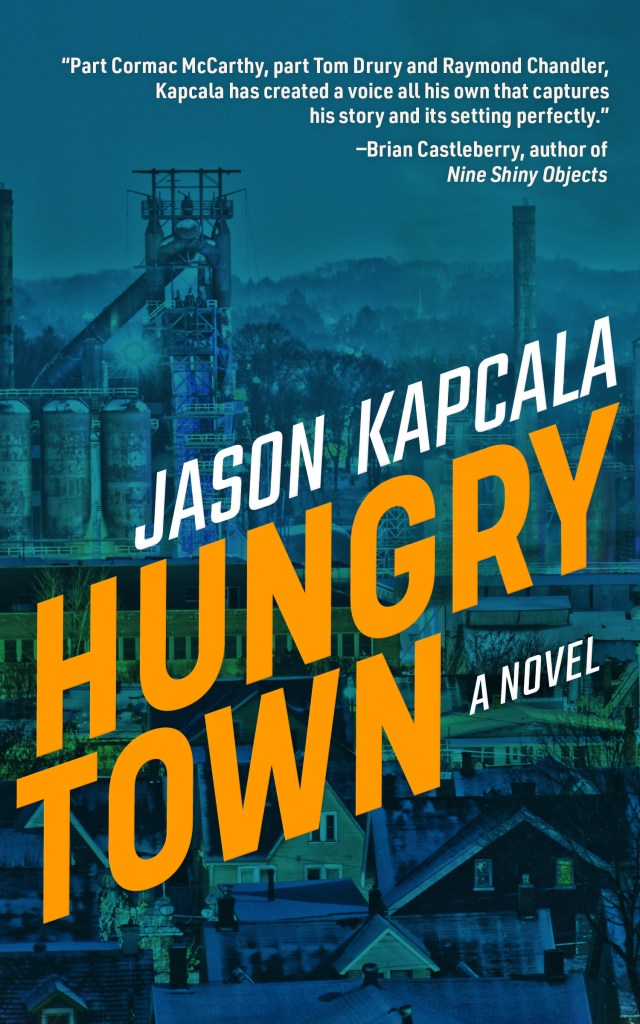
For fans of American Rustby Philipp Meyer and Ohio by Stephen Markley . . . comes Jason Kapcala’s Hungry Town (2022), a Rust Belt-set crime drama with serious literary chops. From the back cover summary:
"One October night in the depressed steel town of Lodi, Ohio, two police officers respond to a call about trespassers in the derelict Lodi Steel Machine shop. A chase through the crumbling cathedral of steel columns launches a chain of events that will test the officers' partnership and leave a boy to fend for himself in a decaying Rust Belt neighborhood choked by joblessness, boredom, and addition.

On the opposite end of town, a young woman steps out of a rust-bucket Grand Marquis into an all-night diner...She doesn't realize her ex-boyfriend has hired two brothers to track her down and bring her back, by any means necessary."
I was delighted to meet the author in person at AWP22 and even more delighted that he agreed to answer my questions about his novel—its literary (and culinary) influences, its Rust Belt influences, and more . . .
Jason, of course definitions of noir vary, but the crime genre’s traditional elements consist often of an outsider perspective, systemic failure, economic insecurity, and existential despair. To my mind, the Rust Belt feels like a perfect tableau on which to set a noir. I mean, take for example this description of setting, your novel’s fictionalized Ohio town of Lodi—just stunning:
“Outside, night curdled into matte blackness, still and quiet, except for the breathy whine of motors on the hill, low rumblings as the delivery trucks downshifted on the steep grade and made their early morning runs into town.”
How did you come up with the setting for this novel? Which came first, the setting or the story? Can you talk about influences—in literature, film, TV, or other artistic mediums—for this literary crime novel?
It’s funny but I don’t know that I ever set out to write a noir. Of course, I realized, at a point, that I was working in that tradition, but I don’t recall sitting back and thinking about what makes a noir a noir, or from a definitional perspective, what I could do to adapt the noir genre to the Rust Belt setting. I just had this town—I knew it was a hard place where rusty steel meets barren farmland—and I had these characters who spent their days bearing the crucible of that place, and I followed that thread.
To that point, most of the authors who influenced me aren’t overtly noir writers. My biggest influence was Kent Haurf, particularly his book Plainsong. I love the way he uses language and image, how he ends a scene by cinematically pulling back from the characters.
For sure, Philipp Meyer’s American Rust is another novel I admire which opens with similar circumstances—an accident in an abandoned mill—but Hungry Town winds up being more related in spirit than in plot or style.
Laurie Lynn Drummond’s Anything You Say Can and Will Be Used Against You is a story collection about women police officers in New Orleans, and I admired how much time Drummond spent establishing the little evocative details of being a police officer, some of them quite mundane, some of them anything but.
Though it feels weird to say, I also remember thinking about William Faulkner’s As I Lay Dying when I was working with the character of Stanley Peach. Faulkner opens with the little boy Vardaman who has just caught a fish and who is processing the fact that his mother has recently died. Both the fish and his mother are dead, and Vardaman simply says, “My mother is a fish,” conflating the two. In Hungry Town, Stanley knows that his brother has died. He also knows that the last place he saw him alive was in the mill, and so he begins to believe, on some level, that his brother now resides in the mill.
Cover design by Than Saffel / WVU Press
Did you know when you began writing that the inciting action of the novel would happen in an old abandoned steel mill? And can you talk about how you how you went about researching what a mill is like in order to describe it? Did your hometown influence your selection of the mill as setting?
You have an abandoned mill, a broken window at the end of the line . . . there’s really only a few places it can go from there.
I would say the setting and the opening action came as a package deal.
I set all my writing in fictional locales—that freedom to manipulate setting provides a lot of freedom, but it still requires an internal coherence. Early on, in order to keep things straight, I drew a map of Lodi, the setting of Hungry Town, with the mill and all of the smaller boroughs located on it, street names, and so on. That helped ensure that I was remaining geographically consistent.
Even though the setting is imagined, I took inspiration from a few places I know well. I grew up not far from Bethlehem, Pennsylvania, and have family who live in that area. I’d go there with my dad and brother to get my hair cut as a kid at the old-fashioned barber shop and then we’d stop and get hot dogs at one of the local stands in the Lehigh Valley. So I’ve probably passed the Bethlehem Steel Works hundreds of times in my life, and that wound up being an important analog for the mill in my novel.
The Bethlehem Steel plant is not attractive in the way that a beautiful natural space is attractive—a forest or a mountain—but it has its own power of attraction, and I always found that frozen industry mysterious and intriguing, especially the Number 2 Machine Shop. It’s an immense building, a quarter-mile long and eight stories high, held up inside by a seemingly endless row of steel columns on each side. It’s practically a tunnel. I had a folder on my computer full of artistic photographs of the Bethlehem Steel Works that I looked at regularly while I was writing. You mention the big event that sets off the novel, and it sort of had to occur in that space. The mill was always going to be the key setting of the book just because of my fascination with it.
In Hungry Town, there is also a recurring image of an enormous shattered window at the very end of the machine shop. I borrowed that from the film The Crow, which opens with the main character being shot and falling through a large, round window. Not that I set out to lift it, but I know that’s where the image came from—to my knowledge, there’s no window like that in the actual machine shop. It’s just one of those images that stuck with me for whatever reason and wound up finding its way into the writing.
You have an abandoned mill, a broken window at the end of the line . . . there’s really only a few places it can go from there. I believe Ron Carlson calls that “building an inventory”—the idea that you gather up enough details, and images, and expressions, and you observe how they begin sticking together on their own to form Story. I always picture the story like it’s a hermit crab, scuttling along, adorning itself with whatever interesting detritus it comes across. That’s pretty close to how this novel started.
I was also inspired by Athens, Ohio, where I lived for two years during grad school. It’s a much smaller town, but it shared some attributes with Bethlehem—river running through it, train tracks, an industrial past (in Athens it was the brick company), and a hot dog stand where all the dogs are named after burlesque dancers. That inspired the dog shop that Harry Mulqueen opens in the book (though Harry’s hot dogs are more pedestrian).
Noir is often characterized by cynicism and fatalism—so much so in this novel that I think your setting rises to the level of full-blown villain. The reader gets a heavy dose of that here in one of the first few chapters:
“…for all his grim toughness, Harry had trouble resigning himself to a world where kids were out screwing in mills when they should have been at home sleeping. A world where kids died of senselessness, impaled on hundred-year-old pieces of scrap in the middle of the night.”
One of your main characters, Harry, an ex-cop, fights against the fatalistic sense of doom that pervades this town. Did you need him to leave the force to do this? Without spoiling the plot, do you think he succeeds?
A lot of people have commented on how dark Hungry Town is, and they’re right, of course, but for whatever reason I don’t think of the story as being that dark or cynical. The characters do treat the mill like antagonist—at one point, Mulqueen thinks of it as a place that consumes people—but there’s beauty in Lodi, just as there is beauty in the abandoned Bethlehem Steel buildings. It may be a town of limited opportunity, but the characters are resilient and they have moments of grace, I think. They may or may not escape their circumstances—I like to think the jury is still out.
Did Mulqueen need to quit the police force in order to retain his idealism or his sense of hope? Probably. That’s the sort of guy he is. That’s how he takes a stand. And his partner, Rieux—well, she had plenty of opportunities over the years to leave the force and plenty of reason, but she stayed and made her stand that way, because that’s how she’s built.
Your cast of characters is varied, but each is an outsider in his or her own way. Even the good cop, Rieux, is an outsider; for all her excellence over many years on the police force, she is often seen as a woman playing at a man’s game. Other characters are old and dying, are on the run, are criminals, are neglected children left to their own devices. One way I think you turn traditional noir on its head is by featuring two females in main character roles. Why was that important for you to do?
I knew, from the moment I started, that I wanted to take the tropes of cop dramas and turn them on their heads.
When I’m writing, I honestly don’t have many axes to grind. In fact, I try very hard not to make the story be “about” anything in a larger, moralistic sense. I have nothing to sell you. No lessons to impart. No greater Truths about life to reveal. Just curiosity about the characters and their circumstances, and a willingness to follow them wherever they go.
Now, I say all that, but there is one exception that comes to mind. I knew, from the moment I started, that I wanted to take the tropes of cop dramas and turn them on their heads. I grew up watching cop movies—Dirty Harry and Lethal Weapon and so on—and they are great fun, but there are also a lot of problems with that mythos. The idea that a tough, anti-hero cop can take the law into his own hands, play by his own rules, sidestep bureaucracy, clean up a dirty town, and righteously mete out justice, all because his innate sense of right or wrong somehow remains intact on some higher moral plane—well, that’s starting to become less and less attractive as it ages. So I spent a lot of time thinking about tropes and how I could flip them or subvert them in interesting ways.
For instance, there’s usually a jaded veteran cop who gets paired with a rookie. That veteran will likely check off a number of boxes demographically. He’ll be an old-fashioned tough guy who lets his actions do the talking. His sidekick may be more emotionally intelligent but will probably also be portrayed as overeager and naïve. Often, that neophyte cop will be minoritized in some way—a woman, a person of color, an outsider of some sort.
In Hungry Town, Ivery intentionally chose to make the veteran cop a woman. Rieux is the gritty one, the one who’s just a bit jaded. She’s tough and instinctive. Mulqueen may be more physically imposing, but he’s the cerebral cop and the more sensitive of the two. They both take the work home with them, but Rieux drowns her bad feelings in alcohol whereas Mulqueen sits up all night feeling guilty and pondering whether or not Freud was right about there being no such thing as an accident. That inversion of stereotypes was a conscious choice and a part of the project itself.
I find titles terribly difficult. At what point in your writing of this novel did you light on Hungry Town. And what does that title mean for you?
I’m a huge fan of music, and I always put together playlist for every project I’m working on. I try to capture the feeling or atmosphere of the project in the music I select. One of the songs I chose for this project was “Hungry Town” by Chuck Prophet. It’s a great song with a killer line: “the devil eats for free in a hungry town.” I kept coming back to that. In the book, one of the characters, Bel, says something about there being a lot of hungry people in Lodi, most of them willing to do anything in exchange for a bite to eat. Her expression takes on a metaphorical double meaning that I like, and so I landed on Hungry Town as a title.
What are you writing, right now? What are you reading? What can you recommend?
Currently, I am reading The Other Ones by Dave Housley, about a group of office workers who win the lottery. It’s a terrific book, funny but not without considerable depth. Next on my list is Neema Avashia’s Another Appalachia: Coming Up Queer and Indian in a Mountain Place, Mike Ingram’s Notes from the Road, and Mark Powell’s Lioness.
I’m currently working on a novel that I’m calling “The Mourning Afters.” It’s set in the fictional ghost town of Stillwater, Pennsylvania, which I’m basing on Centralia, PA. There’s a mine fire that has been burning beneath the town for almost a decade, and the town is basically abandoned, most people having relocated to the neighboring town.
The protagonist is a rock singer named Kev Cassady. About nine years earlier, he was the front man of a band called The Mourning Afters. They were on the verge of a breakthrough, had finally gotten the attention of a record producer in California, when there was a falling out. Kev skipped town with their demo tapes, took the opportunity for himself, and wound up squandering it all.
Fast forward to the present, and Kev gets a late-night call from one of his former bandmates, Muzzie, who he hasn’t spoken to in years. He tells Kev that another member of the band has unexpectedly died. Kev decides to return to Pennsylvania for the funeral and winds up having to face all of the bandmates he left behind, including his drummer ex-girlfriend, Ramie Valentine. In the time since he left, she has raised an eight-year-old daughter, and Kev is trying to do the math on that to figure out if he’s the father.
It all sounds very dire in exposition, but it’s actually supposed to be a comedy and the characters find themselves in one ridiculous situation after another. It’s a departure from Hungry Town, in any case.
I understand you did a lot of research into the culinary masterpiece that is the hot dog in writing this book. What do you take on your dog, and where can we find a good one if we’re in your neck of the woods in northern West Virginia?
I appreciate you ending with the most important question, and I’ve really enjoyed having a chance to chat about Hungry Town.
As I mentioned, I grew up not far from the Lehigh Valley where there’s a unique food culture and many excellent hot dog stands, so I’d been eating hot dogs a long time before writing this book. There, the hot dogs typically come with mustard and chopped onion on the bottom and chili on top. (The order of that is important.) It’s usually a thinner chili than you find other places. That’s how I’ve always taken my dogs.
When it came to writing the novel, I didn’t necessarily need to do any research, but a good writing friend, Renée K. Nicholson, found out about the project early on and offered to take me to different hot dog stands all over West Virginia in the name of research, and I figured, well . . . who am I to argue?
We ate at a lot of hot dog joints.
I’m going to use the fact that I am a state employee and therefore forbidden to offer endorsements as a way to weasel out of having to declare a favorite, but I will say this: if you like hot dogs and you’ve never had a West Virginia slaw dog before, you need to remedy that as soon as possible. Until my “research” trips, I had never had one before, and I quickly became a fan. Mulqueen probably doesn’t sell them at his hot dog stand in northern Ohio—at least, I never recall seeing them when I lived in Ohio—but they would be a welcome addition, for sure.
~~~
Jason Kapcala is the author of the short story collection North to Lakeville. His writing has been nominated for numerous prizes, including the Pushcart Prize. He grew up on northeastern Pennsylvania, near the ruins of the Bethlehem Steel Works, and now lives in northern West Virginia.
Like this author interview? Comment below or on my FB page. And please share with your friends and social network. Want more author interviews, book reviews, writing advice, and general Rust Belt goodness? Follow me here. Thanks! ~Rebecca
Another AWP (Association of Writers & Writing Programs) is in the books, and I figured a recap was a good way to share–and learn from–our lit conference experiences. (Yes, even the mortifying ones!) Some to-do’s and not to-do’s follow. Did you attend AWP in Philly? Have you attended past AWPs? Have you attended other literary conferences? What’s your take?
In Philadelphia for #AWP22. Name that gorgeous landmark, and…go.
Be Prepared (and also flexible)
I’m a bit of a planner, so I built my ideal AWP schedule out of the myriad panels and readings (and one very cool makerspace) I could potentially attend over the 3+ days. However, I underestimated the gargantuan size of the convention center where the conference was held. Sometimes proximity won out and I didn’t follow my schedule. Sometimes the meeting rooms were already packed. In the end, my highlights were “The Wick Poetry Center’s Traveling Stanzas Makerspace,” an interactive exhibit using digital expressive writing tools; “Strike a Chord: The Lyric Essay Forms of A Harp in the Stars; and “Opening & Growing: Adapting & Sustaining a Literary Magazine in the 2020s,” put on by the awesome editorial team over at Typehouse Magazine.
Allow for surprises, is what I’m saying–and for plenty of time to wander around the book fair, especially the last day, when book prices drop.
Also, as with the rest of life, pack so you can dress in layers.
Plan Your Pitch
AWP is not a pitch wars sort of environment; however there are always some literary agents in attendance. I didn’t meet up with any–though I did have a pitch ready for my current novel (along with a few copies of my query letter, just in case). That preparation came in handy, when answering fellow writers who wondered what my book was about. Also, on my car ride to the conference, I worked up elevator pitches for my other roles–that of an editor and a blogger. If you’re an outgoing sort, you might be great on the fly, but for the rest of us, preparation is key.
And if you can share your business card with someone you’re first meeting, that’s a nice conclusion to your pitch. I gave out quite a few cards for my gig over at Parhelion Literary Magazine and received a few cards from writers with new books out. (The cards are in portrait alignment and feature their book covers–really nice.)
Bring Your books
When you go to AWP, you know you’re going to be hauling home a million books from the book fair (which is also gargantuan). Novelist Matt Bell (who has a great newsletter) had a great tip: since most convention centers have a UPS Store, you can box your books up and send them home to arrive shortly after you unpack. But, you should also remember to bring books with you that you want to get signed. (I am that sort of nerdy reader!) In this tenuous environment, who knows when you will get another chance to have your favorite author autograph your well-loved copy?
NOT bringing my laptop (a first for me–yes, one can use an automatic vacation reply even if they’re a freelancer) left a little more room in my suitcase for books–win-win.
Build in Time for off-site meet-ups
And also naps. Really, for my money, the meet-ups at AWP are where it’s at. I roomed with a couple friends from my MFA program, so mini-reunion! We connected with other program friends and friends of friends at off-site readings and meetings, where we got a taste of the city (figuratively and literally, in the way of some great tacos, Chinese pork belly soup, pho, pupusas, and Lebanese food–but no cheesesteak somehow!)
There’s a lot you can discuss and plan over lunch with a writer friend that you might not get to over email or Zoom–so, skip that panel and go to lunch, is what I’m saying.
Know Your Hosts
I share this literary cautionary tale with you so you don’t have to endure the embarrassment I did. I attended an on-site dinner, because I judged an AWP contest, and while I knew the contest program director, I didn’t know who was throwing the dinner. I arrived before the meal was served, by myself–so already there were butterflies–and was seated at a table with no one I knew. In desperation, I pulled out my phone and texted my husband. His (extroverted) reply was to say anything, talk about Rufus, our dog. I talked very little, until someone at my table approached me and introduced herself… and this is where it gets interesting.
We meet, and she turns to the woman next to her and says that of course (of course!) I recognize this second woman. Reader, I do not, and I say as much. So, of course, this is the executive director of the whole AWP shebang, and I turn to stone right then and there: A monument to ill-preparedness that will stand forever in the downtown Philly Marriott.
Really, they were lovely table companions and I hope I was, in turn. (Also, the clam chowder was amazing!). And once we all sat, I chatted with the women on either side of me: one was from New Mexico by way of Ireland, and so we had Ballykissangel and more to discuss; and the other was a twin mom from the Midwest who is a choral singer when she’s not working or writing–so we didn’t lack for conversation either.
Now, it’s your turn. Hit me with all your do’s and not to-do’s of literary conferencing–or any kind of conferencing, really! And name the gorgeous building in that photo above, because I can’t! Also, when will AWP hit the Rust Belt? This blogger wants to know!
Hankering for my latest Rust Belt interviews, book reviews, and more? Check out my categories above. I hope you’ll follow me here, if you don’t already, so you never miss a post or more unsolicited advice. And now, a nap. ~ Rebecca
I’ve been reading Francine Prose’s What to Read and Why, a dictatorial-sounding title, true, but a great book to explore the craft of reading. (I’m late to this one, published in 2018, as I am late to most things.)
Wait a minute, you say. Reading’s a craft now? Can’t I just read what I love? Of course, I say, and I’m sure Francine would agree. But if we’re reading for sport–that is reading to improve our writing or even ourselves–she is here for us. That is, this book–a compilation of essays responding to various works of literature–is a tool to employ to help us on our writing journeys. I especially enjoyed Prose’s essay in response to Charles Dickens’ Great Expectations, her essay on Jane Austen (I, embarrassingly, only recently read Pride and Prejudice for the first time), and her essay titled “Lolita, Just the Dirty Parts: On the Erotic and Pornographic,” (in case you like your Valentine’s Day reading on the saucy side.)
From that last essay on a novel I loved (for all kinds of writerly reasons–like fun play with an unreliable narrator) I especially liked her discussion on what’s been lost in how we think about “Eros and erotic, words that have always included the sexual but have also suggested the mysterious…connection between sex and life, between sex and pleasure, between the origin of life and the celebration of life…”
My guess is Lolita is a contender for the top spot in the latest rash of books to be banned and even burned…maybe partly due to limited understanding of Eros. I’m also guessing that many who would wish to rid the world of Lolita haven’t read it–“a work of art” that functions not to arouse the reader but to “deepen our well of compassion and sympathy.”
My quick take: I read what I love and leave the books I don’t love for others to consider. And in reading what I love I absorb the best of it as lessons to write well.
One delightful effect of my being between revisions of my WIP is that I have ample time to read. Add to that the fact that I’m not yet querying agents for my WIP, which means my reading time isn’t eaten up by searching for comps (comparative titles), and I am really reading what I love.
My TBR keeps climbing to the ceiling, but in addition to Prose’s craft book, I’m also reading Kirstin Valdez Quade’s The Five Wounds, based on her short story by the same name. (I highly recommend her collection if you are a short story fan.)
In nonfiction, I’m currently reading Final Bow for Yellowface: Dancing Between Intention and Impact by Phil Chan with Michelle Chase, about Asian representation in classical ballet. I heard Chan speak on a West Virginia University webinar, and this former dancer (me) was enthralled.
So, tell me, what are your Valentine’s Day reads? Are you knocking on Eros’s door for the holiday? Reading short stories or a novel? What’s the best nonfiction book you’ve picked up lately? Any of my current reads appeal to you?
Hankering for my latest Rust Belt interviews, book reviews, and more? Check out my categories above. I hope you’ll follow me here, if you don’t already, so you never miss a (quite infrequent) post or more unsolicited advice. Thanks for reading, and Happy Valentine’s Day! ~Rebecca