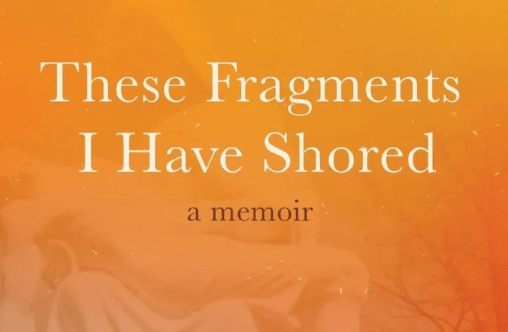
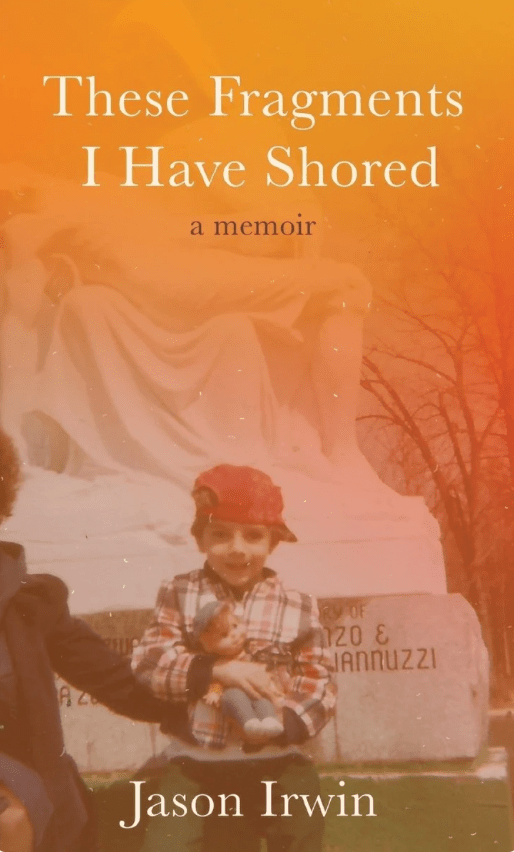
Refusing to bog itself down in any medical jargon or victimhood, Jason Irwin’s memoir “These Fragments I Have Shored” offers 265 pages of grief-writing that are as funny as they are unsparing. Irwin’s May 5, 2026, release is a memoir essay collection in accordance with his experience as caretaker for his mother over the last stretch of her life. With humor and humility, Irwin weaves two medical histories, placing his 1980s childhood—one spent in and out of surgeries, an ostomy bag fastened to his abdomen—in conversation with his mother’s cancer diagnosis nearly 40 years later. Not so much a chronology of illness but rather a family portrait of dysfunction, bodily decline and a mother-son relationship defined by mutual stubbornness.
It is Irwin’s refusal to stall in the dense medical digressions that allows him to move quickly from his own birth to his youth, all the way through his marriage and the death of his mother. His brevity is buoyed by a voice that feels conversational and cynical, without being glib. His pacing reflects the experience of chronic illness and its whiplash of appointments, argument and gallows humor.
Isolated and bullied for his surgical deformities, the sections of his childhood are vivid. But even in the passages of suffering, levity surfaces. In one tender anecdote, we learn of his childhood best friend Jojo, memorably described as “a phantom plucked from darkness.” The troublemaker with a good heart, the neighborhood delinquent who befriends and also protects Irwin, described as “threatening to kill anyone who made fun of my brace, the way I walked, or questioned why, at age twelve, my bicycle still had training wheels.” Inclusions such as Jojo render a whole image of instability—it can be destructive, but not without being formative.
In one devastating episode, a classmate punches Irwin’s ostomy bag. But the humiliation comes through plainly, without attempts of swelling authenticity. Not interested in being a victim, nor dignifying his younger self, Irwin details the destructive bravado of high school. He admits to drinking as a performance of toughness among many moments of cruelty. He confesses to his own actions as a bully, acknowledging, “I knocked books out of upper classmates’ hands as they walked the halls and made fun of those students I knew were weaker than me, like Ezra, a refugee from Central America, and Tammy, who chased after pennies I threw at her.” It’s here where the memoir’s humility lies and Irwin does not paint himself any kinder than he was. He calls it what it was: insecurity, and his candor is refreshing.
He approaches his deceased mother with the same clarity, depicting a woman with personhood rather than an archetype of maternal failure. Sixteen years after discovering a tumor in her nose, the cancer eventually spread to her bones, killing her just after her 75th birthday. We see her resist medical advice, refuse to stop smoking and grow petulant in doctors’ offices. In it, Irwin lets her read as irritable, even unpleasant, and we witness her unraveling along with him; from snide to exhausted, from a sick woman to a dying one. But, crucially, Irwin restores her to a fullness that posthumous portraits of motherhood tend to flatten. He shows us the mistakes she made, but also her agency: the late-in-life decision to enroll in college to study creative writing, her curt candor in the face of growing weakness. When her old friends try to reconcile with her upon her diagnosis, she dismisses it: “Fuck ‘em. If they can’t visit me while I’m healthy and alive, I don’t want them looking at my body when I’m dead, crying their fake tears.” She does not get reduced to the dying parent. Evidently, she was difficult. But Irwin makes sure we know she was a full person too.
Finally, Irwin gives us a self-referential depiction of being a creative. The fear of inadequacy and the suspicious longevity of art as a career is embedded in Irwin’s prose. The effect is intimate and locates Irwin among writers: “Sometimes I wondered if I was in over my head. Was I really a poet, I wondered.” Irwin struggles; he drinks; he creates. He falters and he keeps writing.
Irwin resists the manufactured epiphany. The memoir closes on a quiet image of his mother, still instructing him in how to endure. It is appropriate and true to the book’s spirit.
Emily Harris is a senior at the University of Pittsburgh studying History and Nonfiction Writing. She is Copy Chief at The Pitt News and has written criticism on contemporary memoir, narrative craft, and literary nonfiction.
Like this post? Comment below or on my FB page. And please share with your friends and social network.
Are you a Rust Belt writer interested in seeing if your own post, or author interview, or book review might be right for Rust Belt Girl? Hit me up through this site’s contact function.
Check out my categories above for more guest posts, book reviews, interviews, literary musings, and writing advice we can all use. Never miss a post when you follow Rust Belt Girl. Thanks! ~Rebecca
I have long admired the art writing and advocacy of Emma Riva, Petrichor’s founder and editor-in-chief. After reading this exhibit review, you’re going to want to follow Petrichor and everything Emma does! Click below…
A little more from Emma about Pittsburgh’s art scene and her place in it:
“I do know one thing, whether Pittsburgh is in the Midwest, Appalachia, or the Mid-Atlantic, Pittsburgh is home. And something great is happening here. My writing background is in the novel, and I’ve struggled with whether being an art critic and being an author are mutually exclusive. But maybe I was never meant to tell stories by myself. This magazine is the novel of our art scene here in Pittsburgh. I want us all to create it together.”
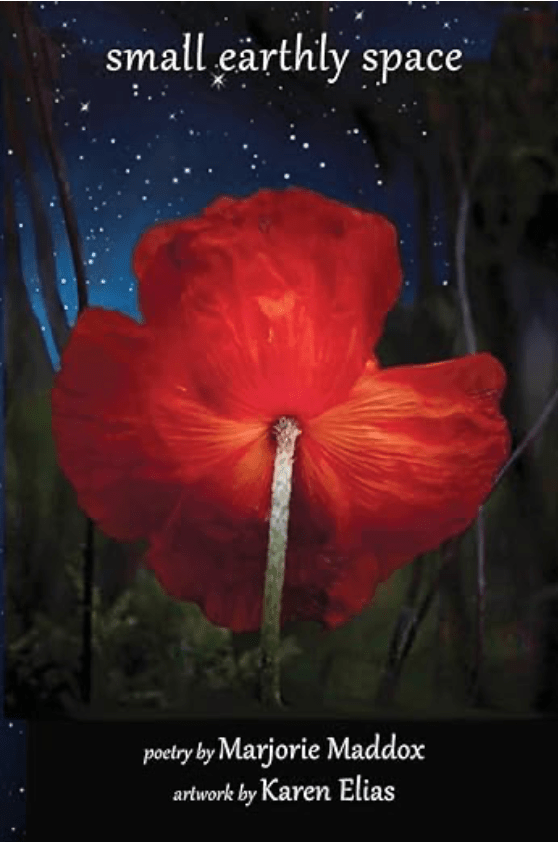
Marjorie Maddox’s new poetry collection, Small Earthly Space (Shanti Arts Publishing, 2025) accompanies a series of dreamy digital visual collages by artist Karen Elias. Together, they depict a world not only fraught with imminent disaster, but one of beauty and hope. Maddox’s poems, inspired by Ali Smith’s lyrical novel, Companion Piece, place the curlew as a central, and recurring figure in the collection. Like a canary in the coal mine, Maddox’s curlew warns about the environmental devastation that is happening now.
Known as the bringer of bad omens in Celtic folklore, forecasting bad weather, sorrow and death, the curlew, with its haunting cries, is also associated with the passing of seasons, rebirth, and renewal. “When our planetary conditions render even the saints tongue-tied and stuttering,” Maddox writes in the introduction, “the bird appears as guide, as psychopomp, as Beatrice in a kind of Dantean descent,” requiring us to “grow humble,” to “pass through the smallest of doors” and experience “the long, slow burn of loss.”
Maddox’s poems are also deeply religious and read like prayers or holy visions. “How far would you go for wisdom?” Maddox asks in “Dive Down,” where she links humanity’s fate with nature’s and invites the reader to dig deeper and discover those epiphanies hidden in daily life, to find “one drenched syllable of rescued hallelujah.” In “Tightrope Walker,” we are instructed to “unzip all our divisions” and position ourselves on the “fine line that binds sky and dirt” and “welds together every season of belief and reason.”
Known as the bringer of bad omens in Celtic folklore, forecasting bad weather, sorrow and death, the curlew, with its haunting cries, is also associated with the passing of seasons, rebirth, and renewal.
“Still Life: 1950s,” which opens section two, leaves nature and moves inward. The poem speaks of the fraught relationships of generations and the societal demands placed on mothers. “What can be said to the perfect mother?/Poised, she smiles beautifully but doesn’t hear.” In the accompanying collage, Karen Elias has created a powerful scene: the mother as a stone statue, sitting in on the sofa, elegant and demure, yet deaf to the needs of her daughter, who crouches on the stairs, doing her best to “protect… this beautiful sculpture,” not daring to speak unpleasant syllables, words that might cause her mother grief, or destroy the facade of their silent perfection.
Other poems speak of the uncertainty and allure of the unknown that lies just outside the boundaries of our perceptions and manicured lawns, and the anxiety of returning to a home that only survives in memory: a place full of phantoms, where picket fences turn to stone. “Strange Light,” the eerie black and white photo collage that accompanies the poem “Calling Hours: August 21, 2017,” has a bed that floats on water in an otherwise empty room. From the window the eclipsed sun, like a voyeur, peers in. The poem uses the eclipse (the first total eclipse since 1979 to be visible from anywhere in the U.S. mainland) as a metaphor for the death of a loved one. “What can harm us lingers there/beneath the bright posthumous display/of the body…” Maddox writes, noting that “looking directly or too long/into the face of the loved” could, like looking at the eclipsed sun, permanently harm us.
Throughout these poems of impending environmental and spiritual doom, a tempered hope permeates, a hope made possible by our faith and resilience, as well as our willingness to accept blame for the state of the world. In “Snapshot,” the dead arise and call for mercy. “Will you listen?” Maddox asks, like the prophets of old. “Will I?” she responds, before observing, “The earth/waits impatiently.”
The curlew returns in “The Witnesses” to see the devastation wrought by the 2018 wildfire in Curlew, Washington. “Smoke rewrites the sky,” Maddox writes, as “Flames attack its map and habitat.” The collection ends with a nod toward Emily Dickinson. “The curlew is the thing,” Maddox states in “Hope Is the Thing with Feathers.” It is “The beak wildly waving its frayed/but flapping ribbons/of persistence, of hope.”
Throughout these poems of impending environmental and spiritual doom, a tempered hope permeates, a hope made possible by our faith and resilience, as well as our willingness to accept blame for the state of the world.
The poems in Small Earthly Space are a dire plea to take up arms against the “Chaos/of this human-caused catastrophic carnival.” With an “ecstasy of words” Maddox dares us to “Embody the action of verbs” and “Delete the expected ending,” to imagine a world where “IF” still exists. In Maddox’s vision, however, imagining isn’t enough. It is our responsibility in the here and now to do something to ensure a better future, a world brimming with the “intoxication of possibility.”
Jason Irwin is the author of three full-length poetry collections, most recently The History of Our Vagrancies (Main Street Rag, 2020), and the memoir These Fragments I Have Shored, forthcoming from Apprentice House Press. In 2022 he was a Zoeglossia Fellow and took part in the Poetry Foundation’s Disability Poetics Project.
Like this post? Comment below or on my FB page. And please share with your friends and social network.
Are you a Rust Belt writer interested in seeing if your own post, or author interview, or book review might be right for Rust Belt Girl? Hit me up through this site’s contact function.
Check out my categories above for more guest posts, interviews, book reviews, literary musings, and writing advice we can all use. Never miss a post when you follow Rust Belt Girl. Thanks! ~Rebecca
Essayist Melissa Ballard contributes the fourth in our series of guest posts here at Rust Belt Girl, and, let me tell you, you’re in for a treat. Melissa has a talent for bringing the past to life and making her ancestors feel like our shared family. In this essay we meet Phyllis, Melissa’s grandmother, a woman of Northern Appalachian Ohio, whom Melissa writes about in a loving yet candid way, deftly delving into what makes personhood–class, sex, education, place and much more. (We also hope Phyllis is having the “time of her life,” Melissa.)
This Woman
by Melissa Ballard
This woman is my grandma, but not yet.
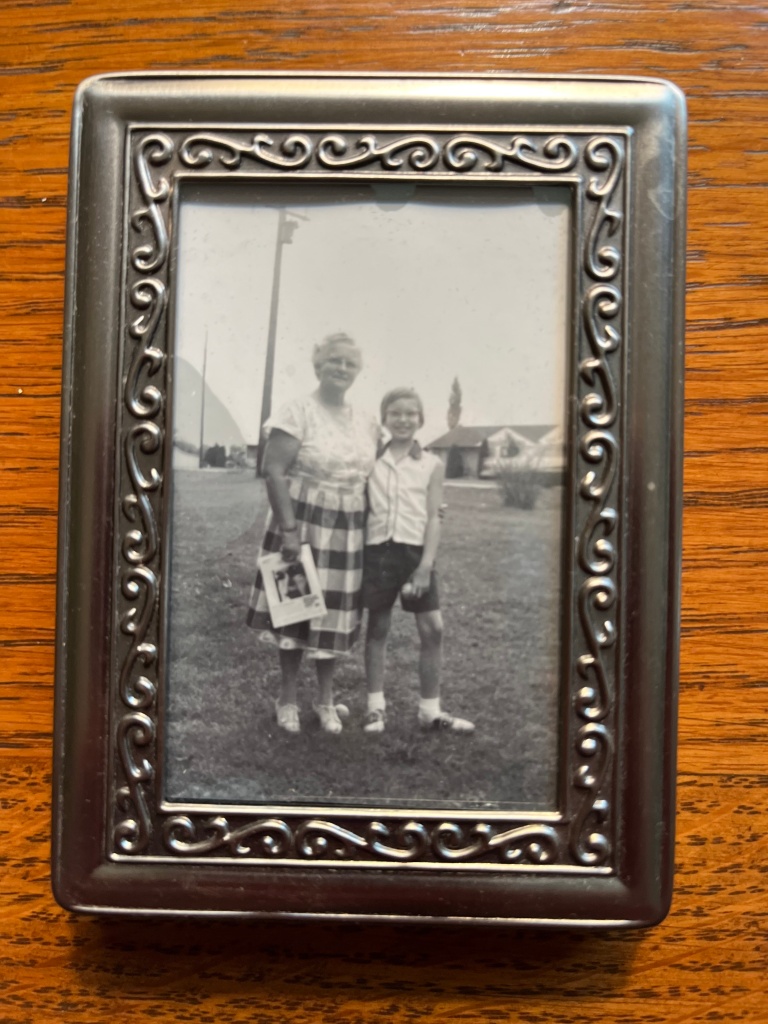
In this black and white photograph, a small, dark hat of woven straw covers her hair and shades her forehead. She wears a walking suit: a jacket and skirt in a light wool pin check with a belt of the same fabric, over a silky, patterned, blouse. The tips of the fingers of her left-hand rest in the pocket of her slim skirt. Her only jewelry is a ring on the little finger of that hand. I can imagine her cropped left foot pointing out, her dark stockings and t-straps. She slouches just a bit and turns her body toward the unidentified photographer. She looks directly at the camera. Her smile is slight, but it reaches her eyes.
This woman’s slight curves contrast with the riveted metal beam, perhaps part of a railroad bridge, that rises at a sharp diagonal behind her. In the early 1920s, her family lived on a side street a few blocks from the train station in Dennison, Ohio. Her father was an inspector for the railroad, so she had a free pass to ride.
This woman could be waiting for the early train to Pittsburgh or Columbus, where she will walk the streets with confidence, on her way to a job interview. But she is not. Or at least I don’t think so. I know little about this brief period, but I hope she is having the time of her life.
In 1925 she has a job in an ice cream shop, lives with her parents. Both she and her mother, who is preoccupied with social status, are named “Margaret.” This woman has already started to express her individuality and goes by her middle name, Phyllis or, on documents, “M. Phyllis.”
On June 18, 1925, eleven days before her nineteenth birthday, Phyllis and her neighbor, Harry, will travel 65.3 miles, maybe by train, to Brooke County, a tapering finger of West Virginia tucked between Ohio and Pennsylvania, where they can get a marriage license with no waiting period. Later that day, they will return to Ohio and be married at the home of the groom’s family.
I wonder whether Phyllis’ parents even attended. They had a reception for her later, but I gather it was her mother’s attempt at saving face. I can’t imagine she approved of my grandpa or his family, and I can easily hear her saying, “He’ll never make a decent living. You’ll end up in the poor house.”
Five months and five days later, their first child will be born. On January 14, 1928, their second child, my dad, will be born.
Phyllis c. 1920
The woman I remember, my grandma, was in her fifties. She had slim legs but a solid middle. She wore silver, cat-eye glasses before they were retro. Her short, dark hair was streaked with gray and white, her fingernails chewed to the quick. Wearing a well-washed cotton housedress covered with a flowered or checked apron and heavy lace-up shoes, she kept chickens and goats, grew vegetables and flowers, ran the laundry through a wringer before hanging it outside to dry, cooked meals from scratch. She kept a battered pan under the kitchen sink, filling it with food scraps. Every morning she fed it to the three hound dogs Grandpa had brought home from the dog pound, kept in a pen at the back of the yard. “Oh, hush up,” she said as they yipped and howled at her.
When Grandma wasn’t busy with chores, she answered the phone for Grandpa, who was the dog warden. She wrote messages in her flowery cursive: the name, address and phone number of the caller, and a brief description of the stray dog. She followed him to his dark green truck, reading her notes out loud. Grandpa never wrote anything down. Before she finished talking, he was backing out of the long driveway, kicking up gravel as he went.
They lived in a worn-out house on a liminal strip of land in Brightwood, part of Goshen Township, Tuscarawas County; my parents and I had moved to a suburb of Cleveland. Once a month, we made the two-hour trip down home to visit, and I spent more time there during the summer.
On hot afternoons, Grandma and I often sat together on the front porch swing, she doing her mending and me reading, trying to catch a breeze. A two-lane road ran close to the front of the house. The cars seemed to fly by, and the exhaust from the trucks taught me to mouth breathe, a skill I perfected when I ran into the hen house to collect eggs.
This route was nicknamed the “slow road” after a highway, the “fast road,” was built behind the house. One summer Saturday, Grandpa drove us into town on the slow road to get ice cream. Grandma and I sat on a bench with our cones, people-watching while Grandpa ran one of his mysterious errands. If Grandma asked him where he was going, he always said, “I need to see a man about a horse.” Which was odd, because my grandparents didn’t have any horses.
On the way home, I noticed a large house on a hill. “Who lives there?” I asked.
Grandma stiffened. “That’s the poor house. Where you go to live if you don’t have any money. It’s not a nice place.”
I immediately pictured a nineteenth-century orphanage from one of the many books I read. Rows of rusty metal cots with stained mattresses, thin sheets, and scratchy blankets. Peeling paint on crumbling walls. I shuddered and looked away.
…
The dining room at Grandma’s was small, with windows on three sides, some covered in plastic to keep out drafts. It was an afterthought tacked on to one side of the house next to the living room. It contained a water-spotted stand of neglected African violets, a treadle sewing machine with a clove-studded dried orange tucked in one of its small oak drawers, a large dining room table and chairs, and a handmade oak China cabinet Grandma had purchased for ten dollars with the money she made selling eggs.
When Grandma made Sunday dinner for our extended family it was served at noon. Grandma removed elegant pieces of stemmed glassware and individual salt cellars from the cabinet and set the dining room table with her good silverware. As we passed roasted chicken with gravy, noodles, and side dishes, Grandpa arrived late (he was known for having “girlfriends”), threw his work cap in the corner, and took his seat at the head of the table.
Only now do I realize how little Grandma wasted. Usually, she cooked one of her own chickens on Sunday, but she occasionally made a pork roast. After the meal, any scraps of meat were set aside, combined with corn meal mush (I can only imagine her reaction to polenta recipes in upscale restaurants) and baked in a loaf pan. For breakfast the next day, she fried slices and we covered them with butter and syrup. They were delicious.
Over time, and with deaths and disagreements, our extended family grew smaller, and we began eating all our meals in the large kitchen. The food was still delicious. One time, Grandma asked how everything tasted. Grandpa was the only one who didn’t answer. She stared at him, and he finally grumbled, “If anything’s not good, I’ll let you know.” Already showing signs of Parkinson’s, he poured a bit of his coffee into a saucer with shaky hands, and leaned down to slurp it.
Eventually, an old couch was jammed into a corner of the dining room, next to the china cabinet. It became my reading space when I visited. Now, as I sit down to read on my own sofa, I look at that same cabinet on the front wall of my living room in Oberlin, just two hours away from where Grandma lived. I have covered the top with family photographs.
Phyllis and the author c. 1960
Grandma taught me how to tie my shoes–we were both left-handed–after everyone else had given up; gave me my first sip of coffee, strong but cut with generous portions of sugar and thick cream; slipped me some of her beer while we watched Gunsmoke. As I got older and visited less, we wrote letters.
Shortly after my twenty-first birthday, Grandma and I walk in her back yard.We stop under the hot sun to admire the clumps of purple, yellow, and white miniature pansies that flourish in the crumbling foundation of an old shed.I started college three years late; I tell her I am overwhelmed and don’t think I can do the work. She is quiet, removes a flowered hanky from her apron pocket, pats her damp forehead and the back of her neck.
As we start slowly up the steps to the relative cool of the house, I link arms with her. I brush the cool copper of the bracelet she always wears because she believes it helps her arthritis. Her fingers are crooked, as mine are now. As I write this, I touch the copper cuff bracelet I bought years ago but have never worn. I keep it on my desk as a reminder of Grandma, and I wonder what happened to the soft, linked one she always wore.
I open the back door with my other hand. Grandma suddenly stands as straight as she is able and says firmly, “You stay in school.” She adds this, which I will hear her say more than once: “You need to be able to make your own money.”
…
After I’ve finished graduate school, married, and had a child. After Grandpa, who spent years in a nursing home with Parkinson’s, has died. On what will turn out to be the day my dad, her son, dies, Grandma moves into an assisted living facility. With Dad being ill, no one has had the time to take Grandma to see the place prior to moving in. She’s been calling me several times a day, anxious about the change.
She surveys the room: her favorite chair with an afghan she made folded over the back; her dresser, its top covered with a lacy scarf and family photographs, including several of my daughter; a large window that looks out on gardens; the new spread my mom placed on her bed that morning; a private bath.
She leans close to me and whispers, “Oh, Melissa, this is beautiful. I was afraid it would be like the poor house.”
Melissa Ballard has written essays for The Brevity Blog, Belt, Berea College magazine, and other publications. She is currently working on a book-length collection of essays about the women in her Northern Appalachia family.
Like this post? Want more? Comment below or on my FB page. And please share with your friends and social network.
Are you a Rust Belt writer interested in seeing if your own post, or author interview, or book review might be right for Rust Belt Girl? Hit me up through this site’s contact function.
Check out my categories above for more guest posts, interviews, book reviews, literary musings, and writing advice we can all use. Never miss a post when you follow Rust Belt Girl. Thanks! ~Rebecca
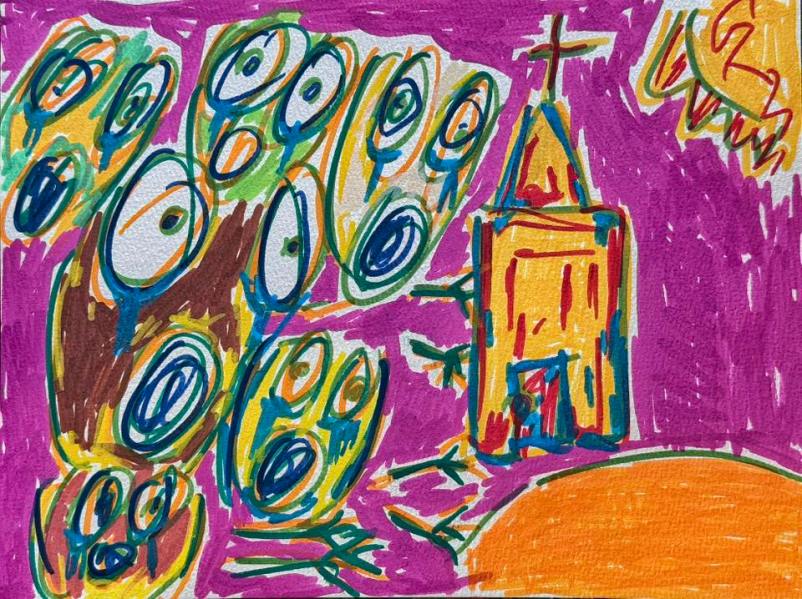
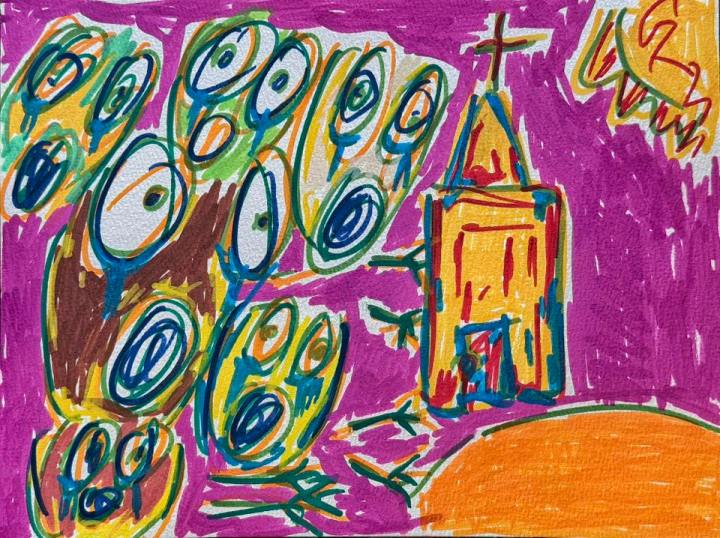
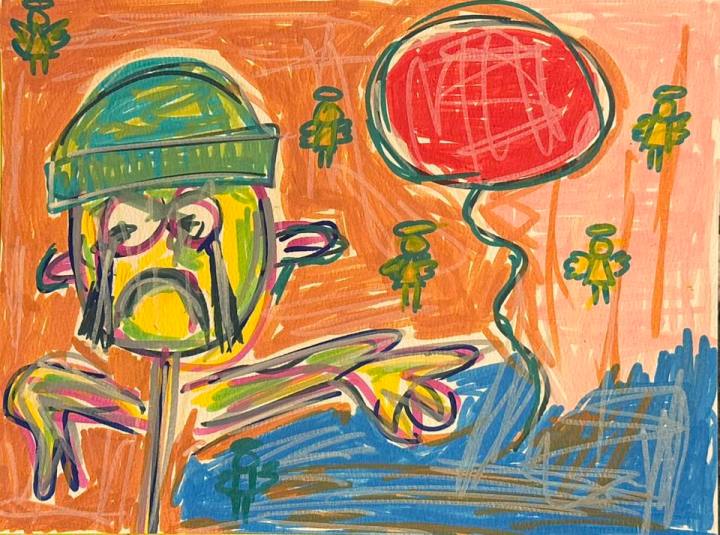
Poet, photographer, and model literary citizen, Justin Hamm inspires with his offering–the third installment of a series of guest posts here at Rust Belt Girl. Thank you, Justin! His essay about speaking in tongues feels especially personal, presented as it is from a child’s perspective. It feels “close” to me, in more than one way. Justin’s essay is accompanied by his original folk art, and I have to say, I didn’t see this coming. But I absolutely love it. Here at Rust Belt Girl, we know the American Midwest is vast and multitudinous, and so are its people, their inspirations, their stories, and their art.
Because Justin is truly “Midwest Nice” and humble, he might not brag to you about his TEDxOshKosh Talk, “The American Midwest: A Story in Poems & Photographs, but I’ll do it for him. This is a good place to start, if you’re new to Justin. In his talk, he asks some of the same questions we’ve been asking at Rust Belt Girl all these years. A big one: Is “flyover country” an appropriate term for the Midwest? Justin explores that vital question through inspection of the overlooked or the avoided, including rust (holla!), thunderstorms, everyday people doing everyday things, politics, social class, and more. It’s well worth a watch-and-listen.
But first. Let’s read and discuss Justin Hamm’s…
The Wind With a Secret Shape
I was eight maybe nine years old Wednesday nights my grandparents used to
take me to a small Pentecostal church that sat on a grassy rise just outside of
town it had once felt isolated tucked out in the quiet but the town had crept
outward now it sat beside a gas station a lumberyard and a row of fast-food
joints the holy and the ordinary rubbing shoulders the church rectangular part
brick part white siding a white cross stretching off the roofline like an arrow
pointing to the shifting Illinois sky inside the pews angled toward a low
platform where the preacher shouted and a four-piece band laid down rhythm
the cushions a deep royal blue clean saturated almost regal I remember that
color better than my childhood bedroom the building always felt old but never
run-down the women cleaned it like a calling while the men kept it maintained
it smelled of floor polish and breath mints old hymnals and hairspray a past
preserved a place where time seemed fixed in place
I wanted to be a good boy I tried to follow the sermons caught a phrase here or
there but mostly folded handouts into paper planes or built hymnbook
pyramids sometimes I curled up on the back pew and drifted off lulled by the
rhythm of scripture and song until the spirit moved when it hit the preacher
everything changed he’d leap down the steps whirling stomping at the devil
howling Jesus’ name until his face went red and purple sweat soaking his brow
and then the tongues came strange breathless syllables rolling out like a chant
that bypassed the brain entirely the holy ghost made you do things that was
just how it worked I accepted it the way you’d accept sunrise or gravity
and I believed too believed fully if somebody said the spirit is with us tonight
I’d scan the sanctuary up in the corners where wall met ceiling under pews
between swaying bodies I didn’t expect to see it exactly but I wanted to know
where it was it filled me with something like fear but not only fear there was
longing in it too hunger a sense that something just out of reach might solve
everything the holy ghost like a wind with a secret shape a bird made of breath
maybe God’s own breath moving invisibly through the room I believed it
entered through the mouth that explained what came out the old men would
rise in their too-large suits limping loops around the sanctuary hands raised
speaking in tongues the women would fall stiff to the ground eyes rolled back
mouths twitching that’s how I knew the ghost was on the move I tracked it
sinner to sinner and sometimes it came close the person next to me would
sway eyelids flickering syllables rising up like springwater through stone my
chest would lift my legs would buzz my mouth would soften and open almost
involuntarily I’d think this is it just let yourself go let it take you I opened my
mouth and nothing came I tried again wider harder I prayed the best I knew
how I swallowed the air like it might carry something eternal and then I waited
“The Hungry” by Justin Hamm
“Balloon” by Justin Hamm
“Laying on of Hands” by Justin Hamm
“Sinners Prayer” by Justin Hamm
Justin Hamm is the author of five poetry collections, including O Death (2024), Drinking Guinness With the Dead (2022), and The Inheritance (2019), as well as a book of photography, Midwestern. He is the founding editor of the museum of americana and the creator of Poet Baseball Cards.
Like this post? Like this series? Let’s discuss! Comment below or on my FB page. And please share with your friends and social network.
Are you a Rust Belt writer interested in seeing if your own post, or author interview, or book review might be right for Rust Belt Girl? Hit me up through this site’s contact function.
Check out my categories above for more guest posts, interviews, book reviews, literary musings, and writing advice we all cab use. Never miss a post when you follow Rust Belt Girl. Thanks! ~Rebecca
I’m thrilled to present the second in a series of guest posts interrogating place here at Rust Belt Girl. Christina Fisanick is a champion for Appalachian writing–and Appalachian voices, young and old. (Read her whole bio below.) “Taking the Cow Path to Culture” appears in her book, Pulling the Thread: Untangling Wheeling History, which was published in 2024 by North Meridian Press.
Taking the Cow Path to Culture
by Christina Fisanick
Route 88 meanders through the Ohio Valley countryside, connecting the city of Wheeling, West Virginia, to Oglebay Park and small, rural towns and farms along the way. More significantly, for some, Route 88 is the lifeline that carries students, faculty, staff and visitors to two of the area’s oldest institutions of higher education, West Liberty University and Bethany College. This important role earned Route 88 the seemingly humorous moniker, “The Cow Path to Culture,” and is a standing metaphor for much of life in the northern part of the Mountain State and throughout Appalachia.
Route 88 was once an actual cow path upon which animals were herded across the farmlands of the region. Like many other places in the country, it made more sense to locals to pave the beaten cow path than to blaze a new trail as modes of travel advanced. But as has been somewhat painfully obvious over the last century, maintaining the well-trodden road might not be the best way to go.
In 1893, a minor New England poet, Sam Walter Foss, wrote a poem with a major message. “The Calf-Path” tells the story in verse of a path driven by a calf through Boston, which, after years of other animals, and eventually humans, following the path, was paved and became a major thoroughfare. The funny, yet poignant, poem takes readers on a journey through time and encourages deep thought about life decisions. Mainly, Foss wonders, why should we continue going down the same road in deed and thought when it might not be the most direct or even the best route?
Just like the calf path in the poem, Route 88 rambles and turns and plunges on its trek from Wheeling past Oglebay Park beyond the farmlands and homes and on to West Liberty University and then Bethany College. I commuted to West Liberty in the 1990s and cursed the winding road more than once during the icy winter months. My classmates and I anxiously wondered who would build a college on top of that hill? More so, we jokingly wondered how we made it to graduation.
We were not the first students to ponder such things. A 1972 Sports Illustrated article tells the tale of four student-athletes from Israel—Avraham Melamed, Moshe Gertel, Yoel Kende and Danny Stern —and their “250-pound Irish Catholic coach,” Tom Grall. The students were recruited for the West Liberty swim team. Avraham Melamed described their journey from the Pittsburgh airport along Route 88 in harrowing, awe-struck terms then concludes: “It was easier getting from Ramat Yohanan [Israel] to Pittsburgh than it was to get from Pittsburgh to West Liberty.” Writer Mortin Sharnik paraphrases Melamed:
“All roads do not lead to West Liberty, but one that does, Route 88, is called the Cow Path to Culture. The Israeli was taken on a more scenic route, a roller-coaster ride over a ribbon of cracked concrete, with no guardrails to prevent a car from taking a shortcut down a ravine. Melamed kept his nose pressed to the car window, looking for the bright lights. Instead, he saw farms, strip mines and hairpin curves.”
The effort, of course, was worth it. The Israeli students went on to make the swim team as winning as West Liberty football, which at the time the article was written had two consecutive undefeated seasons. More so, they earned great educations from the oldest institution of higher education in the state of West Virginia.
While Sharnik’s article is a fascinating and humorous look at the past, it is the title that catches my attention: “Wandering Jews in an Unpromising Land.” Clearly, Sharnik was playing on the students’ ethnicity and well-known Biblical references. Regrettably, the term “unpromising” is simply the same old stereotype of West Virginia arrived at by taking the same old mental cow path. Now, 46 years later, that cow path has been paved over again and again, and few people outside the state (and even within its borders) are willing to blaze a new trail. West Virginia needs to free itself of the shackles of presupposition that continue to hold us back from achieving greater success.
These stereotypes not only negatively color West Virginia, but all of Appalachia. We are told time and again by the popular media (and even ourselves) that there is nothing here. Appalachia is a wasteland, people say. A no man’s land of little possibility and less opportunity, they echo. And more often than not, this lack is blamed not on politicians or exploitive company owners, but on Appalachians themselves.
This blame goes back decades to early literature, TV shows and movies that exploit the region’s hardships for book sales, ratings and box office records. Few can forget The Beverly Hillbillies and their clueless, backwoods characters with hearts of gold or the psychologically deranged figures from Deliverance. Popular culture tells us that Appalachians are poor, willfully ignorant souls who are too lazy to improve their lots in life. These ideals have been further entrenched by presidential “poverty tours” conducted by presidents and other politicians throughout the 1960s to prove to the American people outside the region that Appalachians are poor, white trash that need their help.
Unfortunately, many of our own people have embraced these ill-conceived views of ourselves and live accordingly. Of course, we never see ourselves as morally-bankrupt, ne’er-do-wells, but we willingly believe it of our neighbors. J.D. Vance does this in Hillbilly Elegy, of course. He encourages the country to continue to blame Appalachians for our misfortunes. It is our own fault that we suffer from the world’s highest rates of opiate addiction, he argues. It is our own fault that many of our children live in poverty, he states. By continuing to claim that Appalachia’s poor are responsible for their own conditions, the nation’s eyes can be averted, not out of guilt but out of blame. Our country’s hands can be washed clean since Appalachians create our own misery and wallow in it.
It is easy to see why this particular cow path has been well-worn and paved over. It is to the benefit of politicians whose pockets are lined with money from the oil and gas industry to continue to shame and blame our people so that they never ask for more. Our land has been raped of resources while our people have been underpaid and exploited. None of this could happen if not for desperation and mentally following a well-worn cow path that leads to broad, self-defeating conclusions about poverty, drug abuse, and job loss.
Even now, young men fight for jobs in the dying coal industry for the promise of what they believe once was but will never be (again). Now is the time to take a different path. One that is not littered with stereotypes and preconceived notions. I am reminded, as I am sure you are by now, of another poem that urges readers to take the road “less traveled by.” I urge you, my fellow West Virginians, imagine a different life for yourselves and for generations to come. I’ll always take the cow path to culture to serve my alma mater. West Liberty University is in my heart forever. But my mind will be on a different metaphorical route that allows for new possibilities for West Virginia, Appalachia, and its people.
We no longer have to play the role of eager simpletons to keep our jobs. There are no jobs. Let’s create our own through education, new industries, and innovation. A change in mindset will make all the difference. In this moment we must abandon who we are told we are and become who we know we are. We are West Virginians. We are Appalachians. Toughened by adversity, wizened by necessity, and softened by empathy.
Dr. Christina Fisanick is the author or editor of more than 30 books and dozens of articles, essays, and poems. Her latest book, Pulling the Thread: Untangling Wheeling History, is a collection of essays focusing on little known stories from Wheeling’s past. She is currently working on an historic novel which takes place at Fostoria Glass in Moundsville, WV, in the years immediately following WWII and co-editing an anthology, “We Are Here!”: New Writing from Northern Appalachian (forthcoming for University of Kentucky Press). In addition, Fisanick is an English professor and an internationally recognized scholar in the teaching of digital storytelling as public history. Fisanick serves as the president of the Writers Association of Northern Appalachia (WANA) and the co-host of WANA LIVE!: The Reading Series. Learn more: christinafisanick.com.
Doesn’t this essay just get you thinking? What are a place’s histories, byways, characteristics, and quirks–and how have they shaped its people and its art? How have they shaped the stories we tell? For this series, I suspect we will get some fascinating answers to these questions and many more I haven’t thought of. I hope you’ll join in and share your thoughts!
Like this post? Want more? Comment below or on my FB page. And please share with your friends and social network.
Are you a Rust Belt writer interested in seeing if your own post, or author interview, or book review might be right for Rust Belt Girl? Hit me up through this site’s contact function.
Check out my categories above for more guest posts, interviews, book reviews, literary musings, and writing advice we can all use. Never miss a post when you follow Rust Belt Girl. Thanks! ~Rebecca
Thank you, thank you to Jason Irwin, who kicks off a series of guest posts at Rust Belt Girl, and to you, for being here! What is a Rust Belt place–and who defines the perameters? What does post-industrial mean today? What are a place’s histories, characteristics, and quirks–and how have they shaped its people and its art? How have they shaped the stories we tell, and what have those stories meant for Grit Lit and Rural Noir writing and for other mediums of creative expression? For this series, I suspect we will get some fascinating answers to these questions and many more I haven’t thought of.
A guest post by Jason Irwin
Though I have used film in the past, as well as digital cameras, I consider myself an amateur. I owned a flip phone for 22 years but finally gave in and bought a smart phone during the summer of 2024. Do I love my smart phone? Well, no, but it makes life easier, and I do love the camera feature.
I believe my photos are already out there waiting for me to stumble upon. I like taking photos of people naturally, most often without them knowing I’m taking their photos. I prefer them off-center. I also like wide-open, desolate landscapes and cityscapes: derelict, sometimes abandoned buildings, windows, doorways, big skies, fields, and bodies of water. My hometown of Dunkirk, New York, is a perfect place for such photos. I hope the three photos in this post show this.
Serendipity, the storefront boutique in Madison, Indiana, looked lost in time to me, as my wife and I drove past. Maybe not in the 50s but still lost in time. Using the grayscale setting on my Samsung smartphone ads to the notion that this photo is older than it appears. Madison is her hometown, or rather Deputy, an unincorporated rural community about 18 miles northwest of Madison. Just outside the borders of what the Britannica website’s map marks as the Rust Belt. Madison was first settled in 1805, five years before my hometown of Dunkirk. Though not a Rust Belt town, Madison, like Dunkirk, was once a railroad town. The Madison and Indianapolis Railroad was completed in 1836. The first train stopped in Dunkirk on May 15, 1851, and at the time it was the last stop on the New York and Erie Railroad.
I chose color for the photo of the old Regent movie theater, which closed in the late 1980s, but still stands, minus its marquee, on the corner of Washington Avenue and Third Street in Dunkirk, because of the recent addition of the mural, which pays homage to Dunkirk’s Hispanic and African American communities. As a child I went to the Regent, owned by Mr. Burget and his sad-eyed basset hound, to see movies like Back to the Future, E.T., and Rocky II. Many nights my mother would have a craving for popcorn, and she’d park our car out front and send me in to the concession stand to buy a large tub with extra salt and butter and then we’d go home and eat it while watching TV.
The harbor in Barcelona, New York (a former fishing hamlet a few miles north of the village of Westfield), was where one of the scenes from the 2020 movie A Quiet Place Part II staring Cillian Murphy was filmed. Besides its huge commercial fishing industry that died out in the 1970s, the area is home to various wineries and agriculture, including Welch’s Grape Juice. Just out of frame to the left, up a small hill sits the Barcelona Lighthouse. Built in 1829, it is the first gas-powered lighthouse in the world. My father was born next door in the lighthouse keeper’s cottage in 1941. The grayscale setting gives this photo an eerie presence, but I love how the trees reflect in the water.
Jason Irwin is the author of three full-length poetry collections, most recently The History of Our Vagrancies (Main Street Rag, 2020), and the memoir These Fragments I Have Shored, forthcoming from Apprentice House Press. In 2022 he was a Zoeglossia Fellow and took part in the Poetry Foundation’s Disability Poetics Project.
Like this post? Comment below or on my FB page. And please share with your friends and social network.
Are you a Rust Belt writer interested in seeing if your own post, or author interview, or book review might be right for Rust Belt Girl? Hit me up through this site’s contact function.
Check out my categories above for more guest posts, interviews, book reviews, literary musings, and writing advice we can all use. Never miss a post when you follow Rust Belt Girl. Thanks! ~Rebecca
If you’ve ever visited Pittsburgh, you’ve likely encountered “Pittsburghese,” the local dialect of the people of Pittsburgh that distinguishes residents of the city from their Rust Belt neighbors. Pittsburghese is partially defined by dropping the words “to be” from certain phrases, such as The car needs washed instead of The car needs to bewashed. It’s using words such as pop instead of soda, or buggy instead of shopping cart. Sure, many linguists may say that these examples are not pure Pittsburgh (my mother, for example, who grew up in rural Pennsylvania, always called shopping carts, buggies). But there is one word that always seems to be on the lips of Pittsburgh citizens and on the t-shirts found in city souvenir shops. That word is the second-person plural vernacular, Yinz, a contracted form of “you ones” or “you’ins.”
It’s the word Yinz that echoed through my head as I read the latest poetry collection by Robert Gibb. Pittsburghese is an elegy for a place: Homestead, Pennsylvania, a borough located about 11 miles southeast of Pittsburgh. Homestead is rich with labor history, but like so many places, saw a huge economic decline in the 1970s and 1980s. With every image, I am reminded of the tiny Rust Belt town of my youth and the importance of story and memory.
The poems in Gibb’s collection take us through an industrial world struggling to survive, and thus, the overarching images in most of these poems have to do with debris, or rust – a word that is celebrated in the poem “The Etymologies of Rust.” In this poem, the narrator describes the red-orange oxidation that appears in so many poems written about the Rust Belt as a “slow, remorseless kind of oxidation” that is “red, orange or tawny. The ferrous of flakes.” It’s a perfect description for those of us who know rust intimately as the corrosion that flakes metal mailboxes, parts of bicycles and chain-linked fences. For Gibb, the color of rust may be beautiful, but the effects of rust are devastating for it “cankers like corrosion on idled iron.”
Physical landscapes, often held together by rust, are at the heart of many of Gibb’s poems. As someone who grew up in a small factory town, I recognize some of the images while others are new. I don’t know the slag pots described in “Deskulling the Slag Pots,” but I know the descriptions of derelict phone booths and furniture being auctioned off from fancy buildings. No matter the image, there is a story. And for many readers, the stories may be a bit familiar. For example, in the poem “Elegy for the Park Theater” the narrator tells us about a time when “we’d be plunged into darkness/Beneath the beam of light figures rode/Onto the screen.” In this world, the images are “mantis-like invaders from Mars” and “several avatars of Tarzan.” Later, he explains that the theatre became a roller skating rink. The transformation of space is common in places struggling to survive. In Gibb’s world, the theater turns into a roller skating rink – in my world, the single movie theatre found in my tiny hometown was turned into a hardware store before it was finally torn down. Other stories can be found in such poems as “The Play of Memory of Childhood Spaces,” where a narrator remembers a class trip to St. Anthony’s Chapel in Pittsburgh, or in “Voice-Over,” where the narrator recounts working different shifts in the mills when he “never got used to eating dinner/First thing in the morning, heading to work/At bedtime.”
Clearly, the narrator is present in many of these poems, as if drawing from personal memory, but other poems reflect more historical memory, taking their inspiration from photos and works of arts. For instance, in “Homestead, ca 1929, Oil on Canvas,” the poet describes a John Kane painting where “Homestead/Is crowded rows of houses/Steel mills billowing/identical plumes of smoke.” The first lines may not be especially picturesque, but later, the poem captures the artist at work, “painting scenes on the sides of boxcars during the lunchbreaks/at work.” The final lines in this poem are a commentary on what is to come for this world, as the “slurry is just right” because the economy is “about to tank as if in another country.” In another poem, “Worker, Steel Mill,” Gibb focuses on the human being seen in a 1955 photograph by W. Eugene Smith, by explaining that at first, he is “anonymous in those glare-filled goggles.” Later, in the poem, however, there is praise for this man who is “garbed/to be garbed in fire” and who works for “weeks have been divided into shifts” all because “of the cost of production.”
In spite of my love of story and image, my favorite poem is one that interrogates etymology, echoing the title of the collection. In “Pittsburghese” the poet explores the word jaggers which is “vernacular for brambles.” Jaggers are thorns, and if one is caught in jaggers, it is painful, but it is very possible to lift the thorns away. Still, there are the ones that “splintered beneath your skin” that are the most painful, even when the jagger is removed. There is a strong metaphor here: pain may be left behind, even when the source of that pain is removed, but resilience stands. And with this resilience is some kind of hope for a less painful future. It’s this type of hope that is found in every poem in this collection – even those poems that recall painful pasts.
In the preface to this collection, Anita Skeen, Wheelbarrow Books Series Editor, quotes Thomas Wolfe by saying “You can’t go home again.” She explains, “I would argue that in poems and in memory, you can.” Skeen goes on to say that the images remind her of her childhood home located near Charleston, West Virginia. Anyone who grew up in the Rust Belt will be reminded of home, and perhaps inspired to write about that home through the lens of history, memory, and image.
Karen J. Weyant‘s poems and essays have been published in Chautauqua, Crab Creek Review, Crab Orchard Review, Cream City Review, Fourth River, Lake Effect, Rattle, River Styx, Slipstream, and Whiskey Island. The author of two poetry chapbooks, her first full-length collection is Avoiding the Rapture. She is an Associate Professor of English at Jamestown Community College in Jamestown, New York. She lives, reads, and writes in Warren, Pennsylvania.
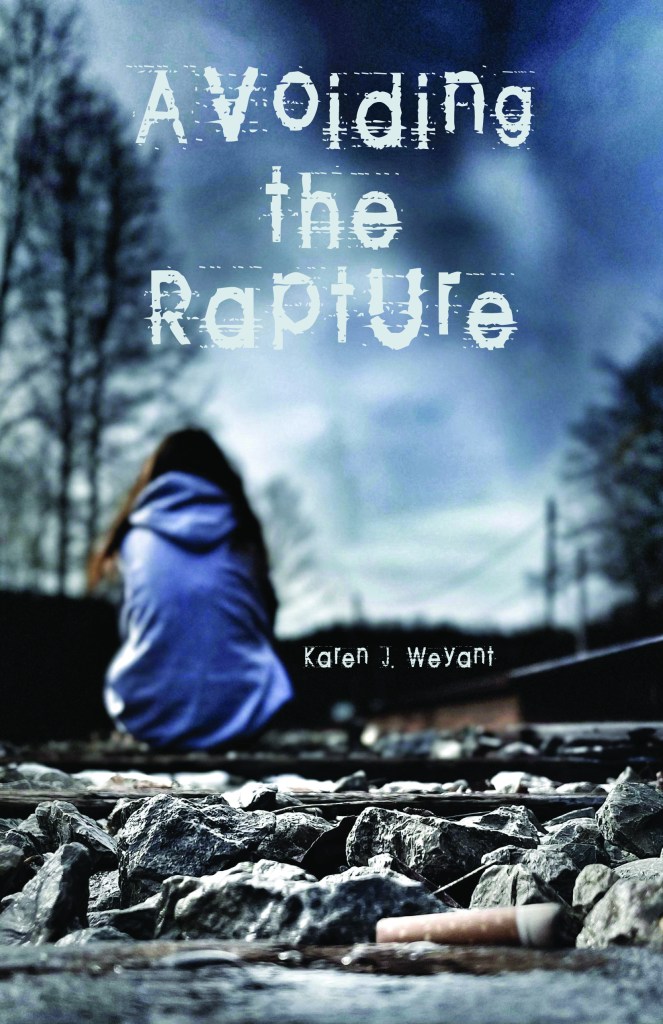
In Karen J. Weyant’s first full-length book of poetry, Avoiding the Rapture, there is no avoiding the evocative and sometimes contradictory landscape and convictions of the Rust Belt. In a town defined by its bars and churches, river and railroad tracks, closed factories and forbidden swimming holes, Weyant gives us both the desire to leave and the need to cleave. No matter our background, she makes this space ours—ownership and rebellion a familiar if not always pleasant home.
We begin with belief so strong it takes hold of a town—“Every girl I knew got religion/at the same time they caught Disco Fever.” Salvation is a type of escape to be embraced or rejected. “Facing uncertain futures,” the poet explains, “we waited to be whisked away in [both kinds of] sparkle.” And yet by “avoiding the rapture,” she counters, “[w]hen everything disappears, everything you see will be yours,” a mixed motivator for a place that when you aren’t reveling in it, you’re scheming a quick departure.
Within this back-and-forth identity quest, the narrator looks for signs and visions in roadkill rising from the dead, in Jesus in dryer steam at the local laundromat, in “one of the Horsemen/in the hind leg of a Holstein cow,” and in “saints/in real estate signs buckling under buckshot.” There are also “man-made miracles” where the narrator “dump[s] grape juice into Gallagher Run,/hoping the muddy swirl would turn into wine,/. . . [or] pretend[s] the stale angel food cake. . . was really manna.”
Woven throughout the book is a sequence that often begins “The Girl Who…” and perceptively defines identity. “The Girl Who Parted Mill Creek with Her Toes” offers nature as one way to “ignore the grown-up talk/of factory closings, lost jobs, and foreclosures.” This path also allows for leaving the church while retaining its lore and, at times, alure. For example, the post-industrial mass exodus of families is linked to the narrator’s Exodus-like parting of the creek with her toes. Likewise, in another poem, an abandoned and deteriorating church evolves into a new type of sanctuary.
Throughout, insects swarm, dazzle, or sting. There is “the drone/of factories in a metallic round of cricket song” and “june bugs hurling against back doors.” Not unlike the town’s inhabitants, in “To the Girl Who Talked to Summer Insects” “[s]ome insects were silent, others angry or lost.” Elsewhere, mayflies—“ghost stories [come] alive”—become reminders “we lived among the dead.” The plague-like buzzing of blackflies usher in arguments over money and heat. “June/ [is] heavy with horseflies. . . .cicada shells. . .cracked under our feet.” In dreams, butterflies get “caught in backyard grills”; in real life yellowjackets die in/escape from a flaming nest; the narrator rescues grasshoppers from a ball of ice. Eventually, end-of-the-world prophesies drown out miracles.
In this way, even the word “miracles” begins to lose its mystery. In family life, the word becomes synonymous with describing impossible situations: a truck that “would need a miracle to get through the summer,” a sister who “would need a miracle to get through high school,” and a father who “would need/a miracle to get a job at his age.”
As tensions increase in the run-down town, so does the narrator’s desire for flight. “[W]e planned our new world. . . . we knew we had to leave,” she recalls. The coming-of-age departures are small and large: heels, makeup, drinking, boyfriends with the nicknames of beers, the recognition that, on many levels, “every ripple has danger” and that [r]eal girls learn to toughen/the soles of their feet. . . .Accept . . .fate.”
That doesn’t mean, however, that there aren’t moments of daring and flight. Through sheer determination, the narrator “[spins] in the August heat until [she] could fly.” Bravely, she catches bees or reaches out to touch a two-headed calf. We watch as her father helps her bury a dead bird. Always drawn to water, she listens to rivers talk and “sw[ims] late at night/in the gravel pit pond.” She counsels, “Follow the fireflies.”
In these ways and others, Avoiding the Rapture whoops and hollers with independence and survival. It is a stirring, well-crafted ode to place, where “girls still ride the beds of pickup trucks . . . .[and] learn how to catch maple seeds/in their teeth, and how to spit them out.” It is a depiction of individuals who, even if they don’t learn to fly, learn to balance while wind “comb[s] through their long hair.”
Here’s to the young women of the Rust Belt, fiercely and perceptively portrayed in Karen J. Weyant’s new collection, Avoiding the Rapture.
Karen J. Weyant‘s poems and essays have been published in Chautauqua, Crab Creek Review, Crab Orchard Review, Cream City Review, Fourth River, Lake Effect, Rattle, River Styx, Slipstream, and Whiskey Island. The author of two poetry chapbooks, her first full-length collection is Avoiding the Rapture. She is an Associate Professor of English at Jamestown Community College in Jamestown, New York. She lives, reads, and writes in Warren, Pennsylvania.
Professor of English at the Lock Haven campus of Commonwealth University, MarjorieMaddox has published 14 collections of poetry—including Transplant, Transport, Transubstantiation (Yellowglen Prize); Begin with a Question (International Book and Illumination Book Award Winners); and the Shanti Arts ekphrastic collaborations Heart Speaks, Is Spoken For (with photographer Karen Elias) and In the Museum of My Daughter’s Mind, a collaboration with her artist daughter, Anna Lee Hafer (www.hafer.work) andothers. How Can I Look It Up When I Don’t Know How It’s Spelled? Spelling Mnemonics and Grammar Tricks (Kelsay) and Seeing Things (Wildhouse) are forthcoming in 2024. In addition, she has published the story collection What She Was Saying (Fomite) and 4 children’s and YA books. With Jerry Wemple, she is co-editor of Common Wealth: Contemporary Poets on Pennsylvania and the forthcoming Keystone: Contemporary Poets on Pennsylvania (PSU Press) and is assistant editor of Presence. She hosts Poetry Moment at WPSU. See www.marjoriemaddox.com
Rebecca here, with many thanks to Marjorie for this beautiful review of Karen’s poetry collection. I can’t wait to dig in! What are you reading and writing this month, as we start working our way through the new year? Let’s discuss in the comments.
Are you a Rust Belt poet or writer? Do you write book reviews–or conduct interviews of Rust Belt authors? If so, think of Rust Belt Girl for a guest post, like this one. And check out the handy categories above for more writing from rusty places.
Find me on FB and on IG, Twitter, and Bluesky @MoonRuark
I interrupt this Covid haze–mine, yes, I was gifted the virus for Christmas–to present a round-up of all the Rust Belt Girl goodness in 2023, made possible by you amazing readers and followers. (For you math and science types, here are your facts and stats):
2023 total views: 5,069, from 3,575 viewers, for 231 likes, and 170 comments. Thank you for engaging!
Most Viewed Author Interview: My interview with John W. Kropf, author of Color Capital of the World. (Though John and I both live in the Greater Washington D.C. area, as luck would have it, we were in Ohio at the same time earlier this year, and I was able to meet him and his lovely wife Eileen at a reading and book-signing not far from where Color Capital takes place.)
2023 felt pretty good and creative outside of the blog, too: I published a short story and a poem(!) and started querying a novel (a couple of you blog followers and friends beta-read!). I am infinitely lucky and grateful to cross paths with as many of you as I do–even if only on these interwebs.
I think we deserve a happy and healthy 2024 with all the writerly and readerly connections we desire. Those of you local to these D.C./Baltimore parts, find me on January 14 at EC Poetry & Prose’s Salon Series. Thank you again to Patti, my fellow blogger–and extraordinary poet and spoken word artist “little pi”–for inviting me to read!
As for Rust Belt Girl, keep in mind that I love a guest post–author interview, book review, or essay on the writing life and beyond–so hit me up.
Oh, and if you want to check out my reading superlatives for 2023, they’re at Goodreads. Or, find me on FB. Share your top posts or top reads for 2023 in the comments. I’d love to hear about your writerly, readerly year.












 Rust Belt Girl