
Get inspired by these three bloggers who share why they write.
via Inspiration Station: Three Bloggers on Why They Write — Discover
*Rebecca here–just when I felt like I was heading into a blogging slump, I found this inspiration…
Get inspired by these three bloggers who share why they write.
via Inspiration Station: Three Bloggers on Why They Write — Discover
*Rebecca here–just when I felt like I was heading into a blogging slump, I found this inspiration…
On my writing desk sits a small box filled with even smaller business cards I ordered for the Literary Festival I will be attending next month. These cards are, in effect, the professional “me.” On one side is listed my freelance biz; on the other (shown below) my creative writing credentials.
My two-sided business card mirrors the divided roles I play in this writing life of mine. This is the gig economy in action, folks, and I am a 2 inch-by-3 inch fraud. OK, no, there are no untruths on my business card, but still I feel like a fake sometimes.
It’s natural, self-doubt–especially when pulled in many directions–and inherent in this introverted writer. But business cards? Networking? I mean, networking is no less than 5,000 miles away from my natural habitat. So, what to do to make the most of my time at a literary (or any other kind of) conference?
Come along for the ride…
First, strike a power pose. What does that look like for an introverted writer? Particular pose aside, power-posing is all about boosting your confidence and is key to overcoming “imposter syndrome,” says super-talented career coach and humor blogger, Becca–who encourages those of us who unjustly feel like frauds to “Fake It ‘Till You Become It.”
OK, so I’ve got my business card. And practiced body language (time to break out the full-length mirror I don’t have!).
Second, follow a three-tier plan for getting what I want out of this conference (and by extension this writing life, but…baby steps).
Let’s be clear, I’m attending this festival for the backside (ahem), the creative side of me. With so many talks, readings, and panel discussions to choose from, I need to choose wisely to return home not exhausted but ready to write.
Craft: outside of an online writing workshop or two, it’s been a good while since I took part in a proper fiction workshop, so this tops my list of must-dos.
Connect: one big reason I started Rust Belt Girl was to connect with writers writing from and about the post-industrial Midwest, and I’ll have ample opportunity at this Ohio event; I also hope to meet a few of the many literary journal editors who will be there–always helpful to hear what they’re looking for in submissions.
Soak it in: with a schedule full of creative readings–from poets, fiction writers, and creative nonfiction writers–I hope to come away inspired enough by the stories of others to return, re-energized, to my own.
And then there are the side-perks of discovering a city I’ve never visited before and of being close enough to an Ohio site I want to research for my WIP that I can make the weekend a two-fer.
But, even before that, there’s the preparation*, and I don’t just mean packing “serious writer” outfits and a wrap for cool conference rooms. And, of course, having my own stuff together for my creative reading and appearance on a panel about publishing from the writer’s perspective. I mean reading up: not just writer bios, but the book of collected stories from the keynote speaker, Leslie Nneka Arimah; and poems from the Ohio poet laureate, Dave Lucas.
Many thanks to super-knowledgeable blogger, Lorna, at Gin & Lemonade for helping me to develop this plan for slaying it (insert power pose here) at the literary festival and for passing along this post with helpful tips for making the most of a conference as an introvert: “Breathe” is a good one to remember. So is: “Grab People’s Business Cards.”
If all else fails, I’ll just summon my inner Ally McBeal–yep, showing my age here–and come to the literary festival ready with an inspirational song in my head.
With the recent death of Aretha Franklin, followed by the singer’s Detroit funeral that included a procession of 130 pink Cadillacs (more details on that here), I thought I’d take a confidence cue from the Queen of Soul. So many powerful songs: “Respect,” “A Natural Woman.”
My fave: “I Say a Little Prayer”
Have any tips to share for making the most of a conference–literary or otherwise? I’d love to hear them!
*Update: One more item to prepare before a conference–literary or otherwise: the 30-second elevator pitch. Do you have one? “It’s a good idea to have one of these prepared for your art,” says poet and former marketing executive Danielle Hanson, in a wonderfully-informative article in the latest (Sept/Oct) issue of Poets & Writers magazine, which is pretty much the bible for literary writers. Your elevator pitch should answer the question: What do you do?
Here’s my working elevator pitch: I write fiction. I’m interested in exploring the idea of the American Dream in place–both during wartime and at peace. My historical novel manuscript explores lives on the WWII home-front and tells the largely unknown story of the internment of Italians in America during that time. My short stories explore the contemporary American Rust Belt, with many set in my native Ohio. I also blog at Rust Belt Girl to connect with authors, photographers, and readers in the region and beyond. There I feature discussions on “ruin porn,” author interviews, and my own craft essays, drawn from my experiences as a writer and as a former college writing instructor.
What do you think? What am I missing?

Editing is veritable cake.
Editing ourselves might mean a trip to the hairdresser; editing our lifestyle might mean getting to bed on time; editing our house might take a can of paint. Editing a WIP means re-tooling, re-telling, and finding and following the right style guide.
But revising–really re-seeing–ourselves, our places and lifestyles, and, by extension, the stories we tell, takes much more time, energy, and lobotomy-level introspection.
Revising is the opposite of cake: not at all light and fluffy. Maybe something more like swamp muck, quicksand, or even asphalt.
Revising a WIP? My condolences. You’re in the muck of re-seeing and re-forming, struggling, hopefully, to once again resurface. Only then can you can catch your breath to dig in again.
Me, I’m in the last, surface-y editing stage of one project and the first-draft stage of another–the former like frosting, the latter all discovery and flashes of light. (And here’s where the pastry analogy has worn thin, become too tough–ha.)
OK, back to the poor, unfortunate revising soul: to revise a WIP is an act of soul-searching, on the part of the author and the author’s characters. To revise a memoir must be a frightening process of destroying and remaking again and again one’s own image on paper. Bless you, memoirists; you are a brave lot.
I’ll lump the late Jefferson Davis in here–with memoirists, but not with the blessing. If you missed my recent post, I was reading Varina by author Charles Frazier of Cold Mountain fame. (Varina was Mrs. Jefferson Davis, first lady of the false country of the Confederate States of America during the U.S. Civil War.) In this historical novel, which explores the lives of real historical figures, there is a wonderful description of what it means to write and revise, provided by the character of Sara Dorsey.
Dorsey had been something of a writer, herself, and it’s at her home where Jefferson Davis is writing his memoirs (which, after his death, his wife ultimately revised). Dorsey describes the arduous task of writing memoirs this way:
…sitting still at a table draining memory dry to fill blank pages with strong words.
Tough enough. But then she describes revising–on the page but also on the page of history that found Jefferson Davis clearly on the side of the wrong:
…the joy of revising…which unlike life allows you to go back and rethink and make yourself better than you really are. … Even if the work comes to nothing, he will have these days to shape the past, make sense of how the runes fell against him.
Runes or no, what’s your favorite part of revising? Least favorite?
*above photo of a house seen and re-seen all at once, provided by Bill Moon of Port Clinton, Ohio–thanks, Dad!

Every parent knows the torment of a four-year-old’s interrogation. Why is the sky blue? How do birds fly? … Questions are the backflips of the mind. They are, as the early-twentieth-century explorer Frank Kingdon-Ward once said, ‘the creative acts of intelligence.’ –from Lisa Garrigues’ Writing Motherhood
The past couple years, I’ve gotten in touch with my inner four-year-old in a way I never thought I would. I don’t often talk about my work-work here (except for lessons learned from writing direct mail); however, I will now, briefly.
In the last year, I’ve conducted what feels like a bazillion but is probably closer to 50 interviews, in order to write articles. All have dealt with science–not exactly in my cozy-and-comfortable arts and humanities wheelhouse. I’ve queried doctors about the symptoms of stroke and about virtual medical delivery systems. I’ve asked engineering students about minuscule solar cells and unmanned aerial vehicles. And I’ve asked budding scientists to describe and describe again a headset that can help detect Alzheimer’s. And much, much more.
Have all my questions spurred Grade A scientific conversation? Probably not. Have I asked a dumb question or two. Probably.
But I asked, and oftentimes asked a second time. (In layman’s terms please, I ask. If I still don’t understand, I say, Pretend you had to teach this concept to a child.)
There it is.
Ask questions like a child. Listen. Ask again. That’s my writerly advice for the week.
(Looking for interviewing tips? Here you go.)
What’s your best “writerly” advice?

I have to say, I felt a little bit vindicated when reading author Lauren Groff‘s latest interview with Poets & Writers magazine (her short story collection, Florida, was released earlier this year) in which she asserts: “Florida is the biggest joke of all the states. It is the punchline to every other state’s joke.”
Oh?
That statement, itself, feels like a joke to this Cleveland, Ohio native. A quick recap for the Buckeye State-uninitiated: OH is flyover country; Cleveland is the “Mistake on the Lake”; the home team Cleveland Browns’ last season went 0 and 16. (Yep, it’s a rebuilding year–again.)
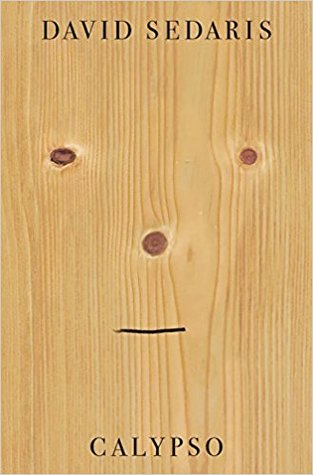
No, not you…me.
And so I sat at my computer last night, wondering…
How to make David Sedaris apropos for the ol’ blog.
Hmm.
The author/humorist is a native of Binghamton, New York. That’s Rust Belt-ish, right?
Who cares? It’s David Sedaris! He’s got a new book out. Bookish Beck reviews it here. And so he’s been top-of-mind.
On a day when I’m feeling kind of stuck, creative writing-wise, and even a little sucky, I went searching for some writing advice and found Sedaris’s. It’s funny and wise and talks as much about our current share-heavy-and-share-often culture as it does about writing.
So, obviously, I will share it here, now.
“David Sedaris on Keeping a Diary in the Age of Over-Sharing” in The Atlantic.
I kept a diary for all of a week, when I was nineteen. I probably called it journaling, but it’s the same thing, I think. My mistake, according to Sedaris, is that I read what I had written–and was embarrassed by the detailing of overwrought emotions in response to a series of banal-at-best events. So I stopped journaling.
In my interview with memoirist David Giffels (another very funny guy), he had this to say about journaling:
I have journaled at various times, but to me, writing is getting down to work and doing it when it needs to be done. I think in banker’s hours. Once I’m working on a project, it’s all-consuming. I’m always taking notes. When you’re working on a writing project, you become a selective magnet, like all of a sudden everything in the world is being tested to see whether it’s going to be drawn to your subject. If it is, it comes flying at you and sticks. I’ll hear or see something and think, I have to write that down right away. That’s urgent journaling, I guess.
It’s good that I stopped journaling when I did, I think, because I hadn’t lived yet. I was writing about nothing. Certainly, I didn’t know enough to feel any sense of creative urgency.
So I started living and still try to; to do otherwise scares me. (Guess I should write about it). These days, when I’m writing, I’m writing, when I’m not, I’m reading–and attempting to live outside paper-and-ink worlds. How else does one have anything to write about?
Memoirists must have an abundance of personal story, but truth makes the narrative choices fewer. Amy Jo Burns, author of Cinderland, told me this in my interview with her this spring:
I’ll put it like this–novelists suffer from having too many choices, and memoirists suffer from the lack of them. I think I’ve used the same kind of creativity to solve both problems, but the boundaries are very separate.
Nonfiction and fiction writers alike trade in personal truths, of course. We are what and who we write–no matter the genre, no matter the distance we try to create between our characters and ourselves.
So, tell me, do you journal, write in a diary? When did you start? When did you first show it to someone? Does it spark your personal essays, blogs, stories?
Here’s to journaling–urgent or not. To writing and writing until we “don’t suck as much.” To funny writers. To beautiful weekend weather that took me outside to swim, bike, and shoot hoops with my boys. To live in the world off the page, so that I might feel inspired enough to get back to it today.
Happy Monday, all.
~Rebecca
*book image from goodreads.com

There are great books and not-great books.
The joy of a great book is getting swept up in the narrative so that we forget the laundry that needs doing, the garden that needs weeding, the kids that need watering (kidding/not kidding).
Thing is, when we get swept up in a book, it can be hard to see the mechanics behind the thing: to discern where the scenes begin and end and where the author uses exposition; to follow the plot points and point to where the plot lines converge; to chart the character development; to consider the themes. And so on.
3 things a not-great book can teach us about writing:
The data dump: or, your research is showing
Any book takes some research; to write a historical novel takes a ton. Been there. The trick is digesting all your research so that it comes out through the natural interactions between the characters as they go about being testing and wrung out by the machinations of the author before coming out the other side changed. Whew!
A not-great historical novelist will reveal his or her research; often you’ll see it plunked down without much artistry in chunks at not-so-strategic points. Listen hard and you can hear the book’s editor saying: “You need to set this part of the story in time here; don’t forget World War Take-Your-Pick was going on…”
Backstory as dialogue: or, real people don’t talk like that
Novels are not screenplays, and vice versa. Screenplay writers have it tough. All scene (the showing part). No exposition (the telling part)! A little stage direction maybe–but, still, that’s tough stuff.
With exposition at our disposal, we fiction writers have it easy-ish. Exposition is an efficient way to dispense necessary information about the time and place where our story is set, about a character, or anything else. Exposition is also a good way to tell your reader about a character’s past (or backstory). It’s better than wrenching backstory into dialogue, which sounds kinda like this:
Character 1: “Remember the time we went on that train ride, and we met Jesse James, and fought Al Capone, and stopped for ice cream with Marilyn Monroe? And remember I said that was the best day ever and I felt like I knew what it was I needed to do with my life, and so here I am?”
Character 2: “Yep. Now, tell me more about that time I remember.”
And so this inane conversation goes…
I’m not saying I have backstory all figured out. More on my little backstory addiction here. But rather than try to wrench backstory into conversation, we can make it exposition. Or, think long and hard about whether that backstory is needed at all.
Got to start somewhere: or, an author’s earlier books
I’m a big fan of Amy Bloom, author of Lucky Us and Away. But, while I love these novels, which are later works of hers, her first book–a collection of stories called Come to Me: Stories–is the one I’ve studied. If you love to write and want to get better at it, give this a try: find early books by authors you admire and see how they crafted their stories.
Want to know what historical novel prompted this post? Hop on over to my FB page. And please share if you like.
What are you reading and writing this week?
via The Performance of Writing: What Writers Can Learn From Elite Athletes
Rebecca here: From “low dread” to sports psych to the art and patience of practice, this guest essay featured on Brevity’s Nonfiction Blog was spot-on for me. Hope it strikes a chord in you, too.
A quick story before I go–about humility and performance and the knowledge of our elders, etc., etc. My regular readers know I was a ballet dancer as a kid. It wasn’t just my thing; it was my only thing for a while, which is dangerous enough that one’s identity becomes wholly wrapped up in it. So that, when the pirouette fails, the person fails.
Anyway…about those pirouettes, I could practice and practice in a corner of the studio, sweating my proverbial balls off (sorry), but I wouldn’t entertain any other notions of practice besides putting myself in fourth position and taking off, spot, spot, spot, tight core, and land. Or fall. Or fall off pointe. Or spin out into the wall.
Before a performance of some kind, I remember my mom asking me if I ever visualized doing a perfect triple pirouette. I rolled my eyes in reply. Visualization, along with the self help-mumbo jumbo-yoga-reiki-dalai lama nonsense she’d gotten into since she got sick was just that.
Then, of course, she died (not just then, but years later) with more grace than I’d ever been able to perform with. No matter all my practice and all my sweat.
To borrow from this essay on the practice of writing, I wasn’t yet ready. I couldn’t yet plunge to the “deepest depths” for my art. My art is different now, but I think I can.
Yep, I’m ready.
Good evening and good writing and reading. Good practice–what ever that looks like for you.
What does writing practice look like for you?
But first…a bit of inspiration (and my last reference to Amor Towles’s novel, A Gentleman in Moscow and its hero, Count Rostov–I promise–at least until the TV adaptation comes out.):
For what matters in life is not whether we receive a round of applause; what matters is whether we have the courage to venture forth despite the uncertainty of acclaim.
I’m adapting “acclaim” for my uses, loosely here. And “venture” in the creative vein. (No bungee jumping or sky-diving for me.)
Here’s the thing…recently, funny mom blogger extraordinaire, Becca, from With Love and a Little Self-Deprecation, got me to thinking, when she asked of herself a question I’m asking myself, this week. When was the last time I did something brave?
Not just something required that was maybe a tad-bit outside of my wheelhouse (to use my fave maritime-inspired jargon). No, something that required guts.
Guts I’ve got when it comes to my kids. (Ask any mom.) Birth twins sans drugs–sure, got that… Forget my introversion (and the book I’m dying to read!) to introduce my toddlers to fellow toddlers on the playground–because, go figure, humans aren’t born knowing how to make introductions… Stick up for my kids when confronted by bullies… Overcome elementary math phobia to become a math club coach to teach kids that math is cool. Done, done, and done. Brave-ish Mom strikes and strikes again.
Now, can I be brave for myself? And can I be brave, when there’s no paycheck attached to it, when I’m the only one relying on me? Can I be creative-brave?
OK, let me back up to say that one reason I’m a writer is that I’m a nervous public speaker–and sometimes even not-so-public speaker. I’m just better on paper (you’re welcome). It’s one reason that I have five times the number of WordPress followers as FB friends.
And, funny thing, I taught freshman and sophomore-level college composition courses (yea, essays!) throughout my MFA, but teaching is different than speaking. Reading is different, too, if still a little scary. (Best done in a closet, as I was when I recorded my story, “Recruit.”) Reading my work before a group, letting my “weird” accent hang out–this I haven’t done in a while.
So, on my gutsy creative to-do list, this week: send my first, long-awaited literary agent query (first stop on the publishing road map) for my behemoth historical novel manuscript; and, even more to the bravery point, apply to present at a fall literary festival in my home state of Ohio, where much of my short fiction is set. This is new literary territory for me.
Part of my nervousness is due to the fact that to present at this festival really will be going home, and there’s a fear that I will be looked at as an outsider. (After so many years south of the Mason Dixon, I do say “ya’ll,” after all.)
Still, I’m going to submit my proposal. Worst thing that can happen is that they say no. Second worse, they say yes, and then I need to start stewing with nerves until September!
So, help a girl out, readers and writers:
Ever been to a literary festival? What do you look for (besides free books–yeah, I’m with you there)? What do you want to hear? Learn? I have no wares to hawk, no tsotchkes to share. It’s just me. And, in the immortal brand slogan of L’Oreal and imitator memes everywhere, I’m worth it.
I hope.
What’s on your gutsy creative to-do list this week?


My powers of observation are not so keen that I’m going to brave the very crowded depths of reviews of A Gentleman in Moscow. (Want to read my reviews, I’ve got a whole category, above.)
Let’s just agree that Amor Towles’s second novel is a modern masterpiece, shall we? If you are one of the four people on the planet who haven’t read or at least heard about this story of Count Alexander Rostov, here’s a brief intro (from the jacket copy):
When, in 1922, the thirty-year-old Count is deemed an unrepentant aristocrat by a Bolshevik tribunal, he is sentenced to house arrest in the Metropol, a grand hotel across the street from the Kremlin…the [erudite and witty] Count’s reduced circumstances provide him entry to a much larger world of emotional discovery as he forges friendships…
Basically, drama, relationships, and meaningful meditations ensue. Just read this novel about the Russian soul–its art, history, toil, treasures, and catastrophes. (And be sure to watch the best novel trailer I’ve ever seen at Towles’s website, above.)
Just as this former kid ballet dancer (me) can’t watch a ballet without my feet twitching, my calves contracting, my back straightening, and my head lilting this way and that with those on stage, I can’t read a book without wondering how?
But here’s not the place for a deep-dive into craft. I simply want to note a few miracles of invention in A Gentleman… and provide a word of caution to the dutifully outlining and character backstory-charting new(er) writers out there.
An image of note: the Count’s twice-tolling clock is much more than a clock that tells time by tolling only at noon and at midnight. It provides a mechanism to discuss industriousness, for Towles to tell us of the Count’s father, who had the clock made because a man (of a certain class, time, and place) should be too busy with work to heed the chimes between waking and noon. And by noon, having had an industrious morning, a man should then leave his work to commune with others. Should he hear the midnight chime, he is too late to bed. And the replete uses for this image are only beginning…
Description of note: readers come to a book like this expecting description befitting its learned main character. Towles delivers, but fear not, he doesn’t (like in real Russian novels) let his pacing lag in many-paged sections of description. No, his descriptions are just as clippy and cutting as his dialogue.
Take the goose chase section (trust me), a funny and farcical bit that brings together in a hotel hallway a melange of worldly guests: two French journalists, a Swiss diplomat, three Uzbek fur traders, a representative of the Roman Catholic Church, a Russian opera tenor with his family of five, and an American general. (All that’s missing is a partridge you know where, but then we do have geese!) Each becomes a character–and a caricature in the Count’s eyes–in the briefest of scenes, thanks to Towles’s powers of description. The ambassador from the Vatican advised; the Swiss diplomat heard the Russian and the Italian out, mouth shut; the tenor, “who spoke only a few words of Italian, informed the prelate (fortissimo) that he was not a man to be toyed with.” The American general, from “The Great State of Texas” took charge and threw the geese out the window.
A sleight of hand (and humor) of note: recently I read a wonderfully-informative and instructive piece on Brevity‘s nonfiction blog, “The Sound of a Memoir,” about shying away from using song lyrics in our writing (whether fiction or nonfiction). Practically-speaking, citing song lyrics (titles are OK) can be an expensive endeavor–if a writer manages to get permission to use them. Creatively-speaking, there are better ways to note a song in a story–to provide a bit of soundtrack to a piece, to get the reader’s foot tapping and put him or her in mind of a certain time when that song said so much! (If you now, as I do, have Elton John’s “Sad Songs (Say So Much)” in your head, you’re welcome.)
Back to Towles’s mastery: In A Gentleman… the author artfully explores the passing of time and trends, in one part commenting on jazz music. In not one but a few places the author has the Count muse about the popular jazz tune that speaks of a distinct absence of bananas, a lack of bananas, for want of bananas… You get the idea. Anyone who hasn’t lived his entire life in a cave knows the song is Louis Prima’s “Yes! We Have No Bananas,” (hear the song here) but by not citing even the title, the reference becomes more than a song but a clever running joke.
All that’s to gush, yes, and also to provide a word of caution to the new(er) writers out there looking for the keys–not only to plot but to imagery and motifs, the characterization and quirks–that make a piece of writing beautiful. How to make these little miracles happen on the page? If I knew, I would be doing it, right now. But I think one of the keys to being a great writer is being a great reader. Another is to trust your mind to make the miracles as you go. Call it a state of flow or the (ahem) muse catching you by the hand, whatever, but writing is more about writing than planning. (OK, you caught me; I’m a panster.)
Yes, you can plan for plot. Outline all you like. Get a sense of your characters before diving in. But can you plan for the clever bits, the brilliant tropes and descriptors and “bananas” that make a piece sing, I’m not so sure.
What do you think? What miracles of invention have you encountered thus far in your summer reads? I’d love to hear from you!
*I grabbed the American and UK cover (which I prefer) images from Goodreads.
 Rust Belt Girl