By Emily Harris
Refusing to bog itself down in any medical jargon or victimhood, Jason Irwin’s memoir “These Fragments I Have Shored” offers 265 pages of grief-writing that are as funny as they are unsparing. Irwin’s May 5, 2026, release is a memoir essay collection in accordance with his experience as caretaker for his mother over the last stretch of her life. With humor and humility, Irwin weaves two medical histories, placing his 1980s childhood—one spent in and out of surgeries, an ostomy bag fastened to his abdomen—in conversation with his mother’s cancer diagnosis nearly 40 years later. Not so much a chronology of illness but rather a family portrait of dysfunction, bodily decline and a mother-son relationship defined by mutual stubbornness.
It is Irwin’s refusal to stall in the dense medical digressions that allows him to move quickly from his own birth to his youth, all the way through his marriage and the death of his mother. His brevity is buoyed by a voice that feels conversational and cynical, without being glib. His pacing reflects the experience of chronic illness and its whiplash of appointments, argument and gallows humor.
Isolated and bullied for his surgical deformities, the sections of his childhood are vivid. But even in the passages of suffering, levity surfaces. In one tender anecdote, we learn of his childhood best friend Jojo, memorably described as “a phantom plucked from darkness.” The troublemaker with a good heart, the neighborhood delinquent who befriends and also protects Irwin, described as “threatening to kill anyone who made fun of my brace, the way I walked, or questioned why, at age twelve, my bicycle still had training wheels.” Inclusions such as Jojo render a whole image of instability—it can be destructive, but not without being formative.
In one devastating episode, a classmate punches Irwin’s ostomy bag. But the humiliation comes through plainly, without attempts of swelling authenticity. Not interested in being a victim, nor dignifying his younger self, Irwin details the destructive bravado of high school. He admits to drinking as a performance of toughness among many moments of cruelty. He confesses to his own actions as a bully, acknowledging, “I knocked books out of upper classmates’ hands as they walked the halls and made fun of those students I knew were weaker than me, like Ezra, a refugee from Central America, and Tammy, who chased after pennies I threw at her.” It’s here where the memoir’s humility lies and Irwin does not paint himself any kinder than he was. He calls it what it was: insecurity, and his candor is refreshing.
He approaches his deceased mother with the same clarity, depicting a woman with personhood rather than an archetype of maternal failure. Sixteen years after discovering a tumor in her nose, the cancer eventually spread to her bones, killing her just after her 75th birthday. We see her resist medical advice, refuse to stop smoking and grow petulant in doctors’ offices. In it, Irwin lets her read as irritable, even unpleasant, and we witness her unraveling along with him; from snide to exhausted, from a sick woman to a dying one. But, crucially, Irwin restores her to a fullness that posthumous portraits of motherhood tend to flatten. He shows us the mistakes she made, but also her agency: the late-in-life decision to enroll in college to study creative writing, her curt candor in the face of growing weakness. When her old friends try to reconcile with her upon her diagnosis, she dismisses it: “Fuck ‘em. If they can’t visit me while I’m healthy and alive, I don’t want them looking at my body when I’m dead, crying their fake tears.” She does not get reduced to the dying parent. Evidently, she was difficult. But Irwin makes sure we know she was a full person too.
Finally, Irwin gives us a self-referential depiction of being a creative. The fear of inadequacy and the suspicious longevity of art as a career is embedded in Irwin’s prose. The effect is intimate and locates Irwin among writers: “Sometimes I wondered if I was in over my head. Was I really a poet, I wondered.” Irwin struggles; he drinks; he creates. He falters and he keeps writing.
Irwin resists the manufactured epiphany. The memoir closes on a quiet image of his mother, still instructing him in how to endure. It is appropriate and true to the book’s spirit.
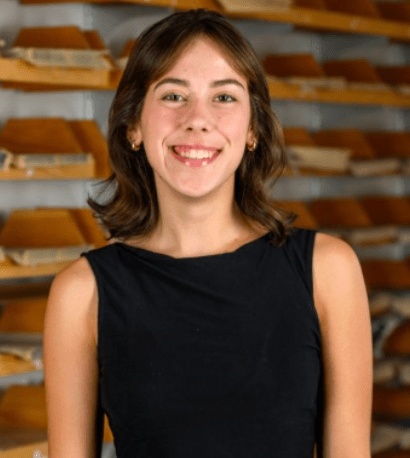
Emily Harris is a senior at the University of Pittsburgh studying History and Nonfiction Writing. She is Copy Chief at The Pitt News and has written criticism on contemporary memoir, narrative craft, and literary nonfiction.
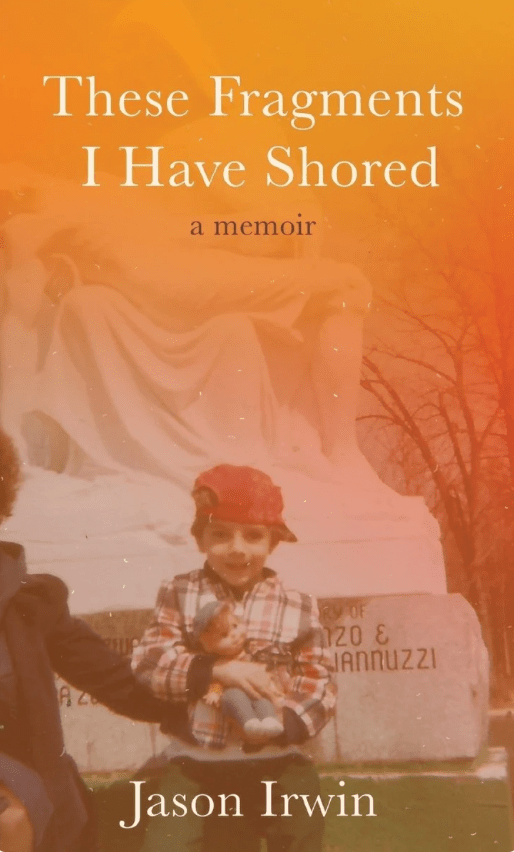
These Fragments I Have Shored: A Memoir
By Jason Irwin
Apprentice House Press, pre-order $31.68 / $21.43
Like this post? Comment below or on my FB page. And please share with your friends and social network.
Are you a Rust Belt writer interested in seeing if your own post, or author interview, or book review might be right for Rust Belt Girl? Hit me up through this site’s contact function.
Check out my categories above for more guest posts, book reviews, interviews, literary musings, and writing advice we can all use. Never miss a post when you follow Rust Belt Girl. Thanks! ~Rebecca
 Rust Belt Girl