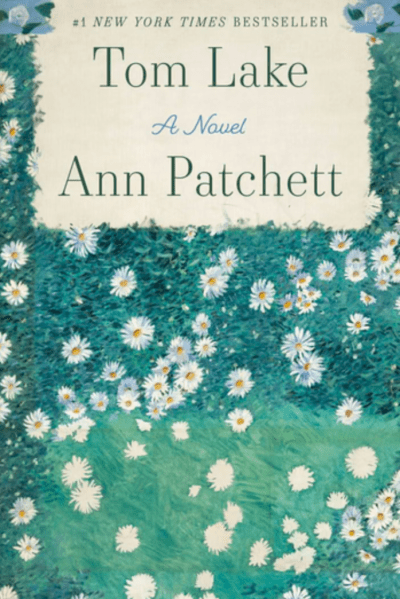
Ann Patchett’s Tom Lake, and playing God in our life stories:

Image of cover of Ann Patchett's novel Tom Lake

I am a writer who loves story—and homework. I’m sure I’m not alone there. So, before I sat down to read—or more specifically listen to Meryl Streep read—Ann Patchett’s most recent novel, Tom Lake, I watched Thornton Wilder’s classic play Our Town, which features quite a bit in Patchett’s story. I caught the excellent PBS “Great Performances” production from the 1980s featuring Spaulding Gray as the narrating stage manager, a young Penelope Ann Miller as Emily Webb, and Eric Stolz (swoon) as George Gibbs, her love interest.

Tom Lake, then, is a story about a story about telling stories—or, the act of dramatic portrayal. Lights, camera, characters. Confused yet?

Okay, the front story, or more immediate narrative of Tom Lake, follows 50-something Lara Nelson, a wife and mother living on a Northern Michigan cherry farm (another dramatic subtext) as she tells her three grown daughters, home during the 2020 pandemic, about her long-ago love affair with famous actor Peter Duke (think: a 1980s James Dean; I’m picturing 90210-era Luke Perry). 

Note that in this novel there is not a whole lot of Rust Belt significance to hang our hats on here at Rust Belt Girl. This setting is not Rust Belt Michigan, but the Michigan of the Upper Midwest’s Fruit Belt. But, hey, we contain—and read—multitudes, right? And, really, Patchett rarely disappoints.

Told as a dual narrative, Tom Lake’s backstory follows the love affair between then-young actors, Lara and Peter, at a summer stock theatre in Michigan where they perform both Our Town and Sam Shepard’s one-act Fool for Love, which I need to watch next. (A girl can only do so much homework.) Quick distillation, Our Town is a gentle (even genteel in that puritanical New England way) portrayal of young love; Fool for Love explores romantic love’s dark and destructive side.
Image: Harper Collins website

So, Patchett’s novel Tom Lake is a story about the light and dark of love. But it’s also—and this might be even more interesting and applicable to us writers—a story about storytelling. Who tells the story, when, how, why, and about whom and to whom. What’s included in the storytelling and, maybe even more importantly, what’s left out?

A dual narrative novel is difficult to pull off; I know because I’ve tried this twice. Invariably, a reader will like one narrative more than the other and grow impatient when their favorite narrative is offstage. For me, Tom Lake’s 1980s narrative, its backstory, is more compelling (because much more is happening) than the 2020 narrative, which is mostly telling, with less forward-moving action (think: literal cherry picking). Which left the modern timeline feeling more like a frame or bookends for the real story—a way to go back in time to the main action and a way to come out of it again. 

I won’t digress too long on why writers like Ann Patchett feel the need for modern-day frames for historical stories. (Yes, a novel set in the 1980s is considered a historical novel.) My guess is it’s because historical novels today are often relegated to the “genre” genre, as in not the literary fiction shelf. Okay, digression over.

My favorite (oft quoted) line from Our Town, which feels very instrumental to this discussion on storytelling (and okay there’s a little spoiler here): Toward the end of the play, the dead character Emily, who returns to her life for just one day, asks the stage manager if any living person ever realizes “life as they live it,” and he says no, but then adds an exception. “The saints and poets maybe—they do some.” 

There’s a lot of smart stuff happening in this novel of Patchett’s when it comes to the all-important telling of life’s story—our human way of re-living what we can’t grasp with our little human minds in the moment. We can’t all be—though maybe we can all aspire to be—saints and poets.

Patchett’s main character, Lara, who is narrating her story of young love, to her grown daughters, is basically the stage manager of her own story, choosing how and what to tell as she goes. At one point Lara equates the stage manager in Our Town with God, which brings up interesting ideas about faith (Patchett was raised Catholic and it often shows in her writing) as well as destiny/Providence in our lives, and agency in how we portray our life stories.

What about the part of our story we leave untold, for our hearts, alone? I thought about this a lot as I read Patchett’s novel. For the main character, Lara, it was a dark part, and (dare I say) foolish aspect of young romantic love she shields from her grown daughters. In not telling her whole story, the light and the dark, is she playing God? Are we all?

In my writerly opinion, the darkness in her story Lara keeps to herself isn’t earned by the character, un unusual flaw in character development on Patchett’s part. (Also very important to know when to wrap up a narrative.) But it is a stumble far outweighed by all the really fine storytelling she does in this novel. If this criticism feels vague, it’s because I don’t want to spoil the reveal. (Read it and tell me what you think!)

If there’s one author I’ve followed closely for some time, it’s Patchett. Her annotated version of Bel Canto—my favorite novel of hers—makes a great gift for the literary fiction (or opera) lover. Of her more recent novels, her 2019 release, The Dutch House, felt like a near perfect novel to me: quiet, to be sure, with none of the Le Carre-like action of Bel Canto, but an incredibly immersive read with characters who felt like my own brother and sister by the end of the book. Family ties Patchett writes about brilliantly, if she’s a little less adept at depicting romantic love and specifically sex.

Saints? I might know a few in the making. Poets? I’m honored to know a good handful. But for the rest of us, Patchett’s got me thinking about how lucky we writers are to get to craft our stories. How lucky we readers are to watch other writers and poets tell their stories just as they wish. We receive such instrumental gifts this way!

Have you read this novel? Have you seen the plays that informed this novel? What elements of craft and storytelling did they bring up for you?

And…what was your favorite bookish gift you gave or received so far this holiday season?

Check out my categories above for more guest posts, interviews, book reviews, literary musings, and writing advice we can all use. Never miss a post when you follow Rust Belt Girl. Thanks! ~Rebecca

Enter your email address to subscribe to this blog and receive notifications of new posts by email.


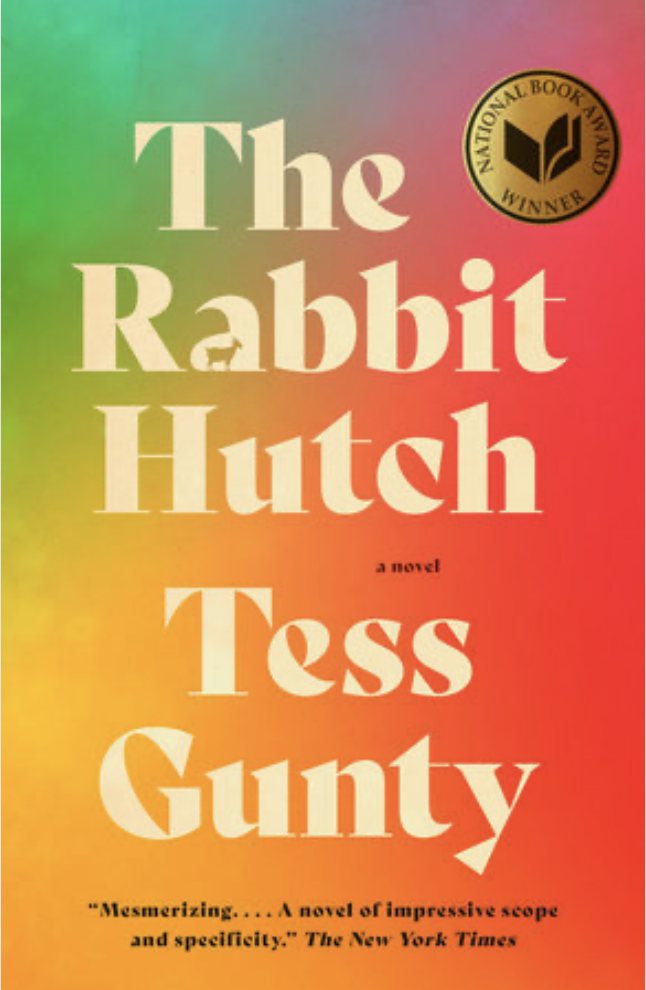
More from The Rabbit Hutch: Reflecting on a conversation with National Book Award winner Tess Gunty

Tess Gunty’s 2022 debut novel, The Rabbit Hutch, won that year’s National Book Award for Fiction (and other awards) and also won hearts—especially among Rust Belt readers.

Pittsburgh-based author and art writer Emma Riva wrote a wonderful essay about The Rabbit Hutch published here at Rust Belt Girl I encourage you to read next—if you haven’t already.

I was late to the novel, myself, and was struck by how Catholic it felt, despite not being marketed that way (for obvious reasons).

I was thrilled to “meet” Gunty yesterday evening through the Jesuit Media Lab‘s conversation over Zoom with the author. A sizable group of us avid readers tuned in to listen to Gunty talk about being raised Catholic and writing about The Rabbit Hutch main character’s deep interest in female mystics and mysticism, about researching Hildegard von Bingen and discovering her “extraordinary theatre of mental activity” and agency, about technology and art and how Mary Shelley’s Frankenstein is a “perfect allegory for AI,” and much more!

“I wanted to make art out of my characters’ lives, including their digital lives,” the author said about her novel that still feels very much of this technological moment. (Gunty herself doesn’t partake in social media and, clearly, it benefits her writing. “You need to keep the tool of your mind as sharp and clean as possible,” she said.)

Buy your own copy here

As for the novel’s fictional setting of Vacca Vale, Indiana, Gunty said that the place was the only thing she knew for certain she wanted to portray, going in, that the setting started out being the MC—until she was about three-quarters of the way through writing the first draft.

She said she wanted to capture the “purgatorial” nature of post-industrial cities like Youngstown, Ohio, Flint, Michigan, and Gary, Indiana. (No shade intended, I don’t think!) How to capture the sensation of such places, like her hometown of South Bend, on which the novel’s setting is based? In the books she read, Gunty said, “I never encountered any place like my hometown.” And yet politicians and movies portray a flat stereotype of such post-industrial Midwestern places.

Gunty’s description sparked pride in me, last night. She described our Midwestern and Rust Belt cities as places of mystery, magnitude, and complexity. When you don’t see a place like your home reflected in literature, “you feel like it doesn’t matter,” she said. For Gunty, writing this novel, then, was an attempt to insist upon the “dynamism and multi-dimensionality” of her hometown—and others like it.

Like mine. Maybe like yours, too.

I encourage you to check out JML for their book talks and other events.

Have you read The Rabbit Hutch? What did you think? Did you read Emma Riva’s essay about it?

Like this post? Comment below or on my FB page. And please share with your friends and social network. 

Are you a Rust Belt writer interested in seeing if your own post, or author interview, or book review might be right for Rust Belt Girl? Hit me up through this site’s contact function.

Check out my categories above for more guest posts, interviews, book reviews, literary musings, and writing advice we can all use. Never miss a post when you follow Rust Belt Girl. Thanks! ~Rebecca

Enter your email address to subscribe to this blog and receive notifications of new posts by email.


Ohio is Ohio, and I love it

You are forgiven if you’re not up on the middle school slang that has redefined the word “Ohio” (my beautiful native state) as cringey or weird.

Does that mean the writing from Ohio authors or about Ohio places is also weird? In some cases (and often my favorite cases) yes.

It has been more than a minute, Rust Belt Girl followers, and I appreciate you for hanging on. Busy days around here with a book project going and essays popping up here and there. And of course there’s work-work to contend with. And my teenagers who keep me hip (surely that’s not a word they’d use) through their generation’s reinvention of language, music, and fashion. (A whole wardrobe of hooded sweatshirts and oversized black jeans, anyone?)

But I’m thrilled to share with you my latest essay, which is part essay and part book review. The book? Matthew Meduri’s debut novel Collegiate Gothic. Part satirical campus novel, part crime procedural, and part Italian architectural treatise, this one is quite fun (and, yes, a little Ohio.)

I’d love it if you checked out my essay–“Campus Weird: Collegiate Gothic Skewers Academia (and Ohio) in Fine Form” at Belt Magazine. (Bonus points for identifying the Ohio college campus building in the photo. I only know because a friend told me.)

Then, go check out Matthew’s novel over at Bordighera Press.

What have you been reading and writing lately, readerly and writerly friends?

Hankering for Rust Belt author interviews, book reviews, and more? Check out my categories above. I hope you’ll follow me here, if you don’t already, so you never miss a (quite infrequent) post. Thanks! ~Rebecca
Enter your email address to subscribe to this blog and receive notifications of new posts by email.

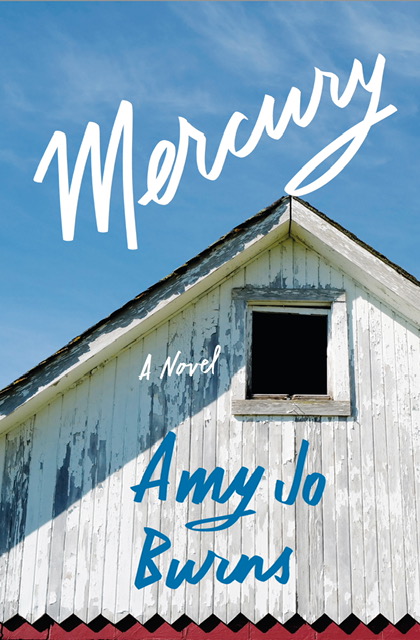
My interview with Amy Jo Burns, author of Mercury


Let’s begin with a sample paragraph from Amy Jo’s stunning literary (also mystery) family saga:

Spring was breaking through in lilac buds and daffodil shoots, but winter held on. Tufts of dirty snow clung to curbs, and porch steps, and parking lots. The heat had stopped working in the Citation, and Marley shivered. Theo was bundled in the backseat; she caught a glimpse of him in the rearview mirror. Then her eye snagged something else behind her–someone limping from a snowbank into the intersection. Marley slowed to a stop and turned around.

Whew. Good stuff.

Amy Jo, your main character in this Western-PA-set novel is Marley, whom we first meet when she’s 17. You left your Western-PA hometown for college around that age. What was it like to write this book and “inhabit” Marley’s character in a place (and time) similar to the one you were raised in? And how similar is your real-life family to Marley’s found family?

    Marley is a really special character to me. When I was creating her, I took the qualities I love most about my best friends from home and put them into her character. Her willingness to step into someone else’s messiness, her ability to tell the truth in such a loving way, and her desire to build a business with her own creative stamp on it are all qualities I really admire about my oldest friends. Marley showcases what I think real resilience actually looks like. It isn’t perfection or misery or loneliness—it just comes through in a big-hearted, flawed human who shows up for the people in her life. 

    The Joseph family in the novel is like mine in that we’re both a family of roofers—which means both houses were full of grand storytellers, brave hearts, and lots of tar-stained jeans. The house I imagined the Josephs living in was inspired by the old Victorian house my grandparents used to own in my hometown. I’d always loved that house and couldn’t imagine any other place a family of roofers would live. The characters in Mercury come from my imagination, but the bond they feel with each other—the sometimes too-close intimacy they have with one another is absolutely something any member of my extended family can relate to. When it comes down to it, I’d say both families care about the same thing—keeping people safe under roofs and on top of them.

    This novel is mostly set in the fictionalized town of Mercury. How did you go about constructing this place, this “forgotten Rust Belt town.” Did you use Pinterest boards or clip photos from magazines? Was there map-making involved to mark where the salon, post office, and library stand? And, as the daughter of real-life roofers, do you picture this town from an aerial/rooftop view?

    Mercury is heavily inspired by my own hometown, which I also wrote about in my memoir Cinderland. When I started writing the early pages of this book, I knew it had to be set in Mercury—a place I know, love, and left. So most of the early “research” came from my own memory, and then I squared it with pictures from the 1990s and also by talking with my parents. My dad drew a map of the church steeple and attic (which both play an important role in the story), and I talked with my mom about what it was like to help build a roofing business from an administrative perspective. It was really special to get to share a bit of this project with them, especially since so much of the book is about what it means to belong and how we claim home for ourselves.

    I hadn’t imagined my hometown from any aerial views until I started putting characters on roofs pretty early in the process of drafting the book, and it was the coolest thing to envision this place anew from an entirely fresh perspective. I was able to find a few aerial videos of my hometown to watch, which really helped me fill in the landscape for what these characters find when they’re up higher than everyone else.

    I’d call this book a literary family saga; however, there is also a lot of romance—some steamy! What’s your best tip for writing romance or sex that deepens character and moves plot?

    I would say my best tip is that sex is never just sex. Falling in love is one of the most monumental things we experience as humans—it shows us at our best and our worst—and I think it’s really important to reflect it in literature. When I’m writing romantic scenes, I’m always considering what each character is risking about themselves in a very unique way—are they sharing something no one else knows? Are they saying one thing and thinking another? What is it about falling in (or out of) love that changes how they see themselves? What past events have shaped how a person approaches their most intimate moments? Those scenes are such a great way to show what a character deeply wants and what they fear, whether they’re aware of it or not. And when all that juicy backstory collides with someone else who is just as complicated—it’s fictional gold!

    Like in your last (gorgeous) novel, Shiner, you explore profound female friendships in Mercury. Can you talk about how you developed the friendship on the page between Marley and Jade? When you’re writing, do you do character studies/background/backstory with detailed info–any that doesn’t make it into the book?

    Mostly what I do when I’m building relationships between characters is think about it A LOT. I write many drafts over a long period of time and throw out a lot of material, usually because that’s how I’m getting to know the characters. Scenes will start off as sketches and they get more detailed as I learn who the characters are. Many of the scenes between Jade and Marley felt very cliché for a long time as I was working, and I’d have to go back in and re-work them to go deeper so they felt earned and true. 

    I am such an impatient person (what a terrible trait for a writer!), so character studies always feel like they’re detracting from the real heat of the story I’m working on. The only thing I usually do outside of drafting itself is create a playlist for each book that I write, and I’ll include songs for each of the characters. It helps me track down their psyches, their moods, their secrets. You can learn a lot about a person if you know what songs they’re listening to when they’re alone.

    In this novel you touch on dementia. What kind of research was involved there? As this book is set in the 90s mostly, was there any other, historical research you had to conduct for verisimilitude?

    I had a family member with a form of dementia (though under different circumstances than those in the book), so I used that as the basis for building it in the novel. I decided not to do much clinical research on it because I wanted to portray it through the eyes of a family who isn’t sure what is going on. So often we don’t get the answers we are looking for in real life when it comes to medical diagnoses, and it was really important to me to give that truth a lot of space in the novel. 

    Motherhood is portrayed in a very real, and sometimes heartbreaking, way in this novel. Marley’s mother-in-law says, “This life is unmerciful to mothers.” You’ve got two young children at home. How has your writing practice (and product) changed since becoming a mom? And, follow-up, what is your favorite novel for exploring themes of motherhood?

    The biggest difference in my writing practice is that I have to keep my working hours to match my kids’ schedule. It is GIGANTICALLY easier now that they’re both in school, though I rarely get done what I’d like to in the course of a day. I remember when my son was an infant and my writing sessions were so short, I thought I’d never finish the book I was working on, which turned out to be Shiner. Sometimes my writing sessions would only produce a few hundred words. I had to learn to talk myself through it and say, “Maybe no one will ever see it, but I’d still like to try.” And I’d repeat that to myself over and over when my daily frustrations came. And the book got done!

    In terms of my favorite book about motherhood, I once attended a talk by Nicole Krauss just after she’d published Great House. Someone in the audience asked her how she was able to write and be a mother, and she said, “I wouldn’t have been able to write this book if I hadn’t become a mother.” It was so encouraging to me, as I was contemplating how I might have kids and continue to write. That story inspires me still.

    A lot of the plot of Mercury centers around the family’s church—but not necessarily around worship. No spoilers, but can you talk about how religion, faith, and or belief works in the world of this novel—and maybe also in your own life?

    My faith is a huge part of my life and my creative process. I think maybe writing books is a form of prayer for me. What I love about it is that the page becomes a place for my uncensored thoughts, my questions, my frustrations, and—most powerfully—the things that I love and I think are worth fighting for. It feels like a quiet place where I can meet God without judgment, where I don’t have to be any other version of myself but the real one. Also, I do a lot of listening when I’m writing which feels very peaceful.

    In this particular story, many of the characters have an idea of what “religion” is, but what they’re all hungry for is faith. Faith in a God who loves them just as they are, and faith in each other. I like to think each of them encounters God in an unexpectedly meaningful way in the book, and usually it’s through they way they learn to love each other.

    For those of us who aren’t just readers but who are also writers, what’s your favorite generative prompt for a writing day when the words just aren’t coming?

    I absolutely recommend starting with a memory from childhood you can’t get out of your head. Try retelling it to yourself from an adult perspective (which you can interpret any way you like). I actually began Mercury in just this way—the opening scene of the book is a memory of mine from a little league game when I was around nine years old. This exercise was how Waylon’s character first came to life.

    Tell us how the reaction to Mercury has been on your visits to libraries, bookstores, etc.?

    It’s been really wonderful. When Shiner came out in spring of 2020, there were no stores open, so getting to visit libraries and bookstores has been the best thing about publishing Mercury. My favorite thing is hearing about readers’ favorite characters and how they saw themselves in the story. I love it when that happens in a book I’m reading, so getting to provide that experience for fellow readers is a real gift.

    What are you writing and reading right now? And what are your kids’ favorite children’s books, lately?

      I love this question! This year I’ve been trying to take my time and read longer books (which I’m calling “biggies”), so right now I’m reading two—Iron Flame by Rebecca Yarros and East of Eden by John Steinbeck. I’m really enjoying them both. Right now my son, who is nine, is loving the entire Percy Jackson universe by Rick Riordan, and my six-year-old daughter is very into Dog Man by Dav Pilkey and the Max Meow series by John Gallagher. I love seeing them read!

      Writing-wise, right now I’m working on a novel about the true story behind a famous country-folk singer’s disappearance. I don’t know if it will be my next book or not, but I’m really enjoying the work itself. Thank you so much, Rebecca!


      Amy Jo Burns is the author of the memoir Cinderland and the novel Shiner, which was a Barnes & Noble Discover Pick, NPR Best Book of the year, and “told in language as incandescent as smoldering coal,” according to The New York Times. Her latest novel, Mercury, is a Barnes & Noble Book Club Pick, a Book of the Month Pick, a People Magazine Book of the Week, and an Editor’s Choice selection in The New York Times. Amy Jo’s writing has appeared in The Paris Review Daily, Elle, Good Housekeeping, and the anthology Not That Bad.

      You can find her on Instagram at @burnsamyjo.


      Mercury

      By Amy Jo Burns

      Celadon Books

      Many thanks to Amy Jo Burns for sharing her insights and time–and kid book recs– with us here at Rust Belt Girl. I know I can’t wait to read what’s next from Amy Jo!

      Like this interview? Comment below or on my fb page. And please share with your friends and social network. Want more? Follow Rust Belt Girl. Thanks! ~ Rebecca

      *Photos provided by Amy Jo Burns

      Enter your email address to subscribe to this blog and receive notifications of new posts by email.

      Welcome to the 2023 Rust Belt Girl round-up…

      I interrupt this Covid haze–mine, yes, I was gifted the virus for Christmas–to present a round-up of all the Rust Belt Girl goodness in 2023, made possible by you amazing readers and followers. (For you math and science types, here are your facts and stats):

      2023 total views: 5,069, from 3,575 viewers, for 231 likes, and 170 comments. Thank you for engaging!

      Most Viewed Post (MVP) 2023: A stellar review of Jason Irwin’s poetry collection, The History of Our Vagrancies, by Marjorie Maddox (Side note: I met Jason in person for the first time and reconnected with Marjorie in October at the Fall Literary Festival in Youngstown.)

      2nd Place for MVP 2023 (and tops for most–and most heartwarming–comments): “Mad Dog, “Steel Poet,” Tim Russell, a literary reflection by poet and publisher Larry Smith. Thank you to Larry for being such a pillar of this literary community. (I also met Tim’s widow, Jodi, for the first time, in October–there were hugs!)

      3rd Place for MVP 2023: The Rabbit Hutch‘s Rust Belt Renaissance, a review by Emma Riva, an author and art writer living in Pittsburgh, who is also the founder and EIC of Petrichor, Pittsburgh’s art scene magazine. Check it out!

      Most Viewed Author Interview: My interview with John W. Kropf, author of Color Capital of the World. (Though John and I both live in the Greater Washington D.C. area, as luck would have it, we were in Ohio at the same time earlier this year, and I was able to meet him and his lovely wife Eileen at a reading and book-signing not far from where Color Capital takes place.)

      And don’t miss all the other 2023 bloggo goodness, including interviews with Mitch James, author of the rural noir novel Seldom Seen; Valerie Neiman, author of YA novel The Lonely Backwater; and David Giffels, author of The Beginning Was the End: Devo in Ohio. (This makes three interviews with David at Rust Belt Girl, some kind of interviewing trifecta!)

      Then there was John W. Miller’s beautiful guest essay: From Belgium to the Rust Belt. (In a fun coincidence, John and I ended up in the same storytelling course this fall–the writing world is a small one.)

      And in other fun blog news, my 2022 review, Enlarging “Rust Belt lit” and Megan Giddings’ The Women Could Fly, was picked up by Belt Magazine in 2023.

      2023 felt pretty good and creative outside of the blog, too: I published a short story and a poem(!) and started querying a novel (a couple of you blog followers and friends beta-read!). I am infinitely lucky and grateful to cross paths with as many of you as I do–even if only on these interwebs.

      I think we deserve a happy and healthy 2024 with all the writerly and readerly connections we desire. Those of you local to these D.C./Baltimore parts, find me on January 14 at EC Poetry & Prose’s Salon Series. Thank you again to Patti, my fellow blogger–and extraordinary poet and spoken word artist “little pi”–for inviting me to read!

      As for Rust Belt Girl, keep in mind that I love a guest post–author interview, book review, or essay on the writing life and beyond–so hit me up.

      Want more Rust Belt writing, book reviewsauthor interviewswriting adviceessaysguest posts, and more in your life? Follow me here. Thanks! 

      Oh, and if you want to check out my reading superlatives for 2023, they’re at Goodreads. Or, find me on FB. Share your top posts or top reads for 2023 in the comments. I’d love to hear about your writerly, readerly year.

      (Off to nap…again.)

      *free header image courtesy of Pexels

      Lit Fest ’23 Lowdown (with slideshow)

      Much overdue, I’m back to recap Lit Youngstown’s 7th annual Fall Literary Festival. Who can put into words the inspiration and joy that happens when a couple hundred members of the literary community come together to create, share, and add to our towering TBRs, of course. (And did I mention nearly 50 sessions focused on various genres of writing and the writing process–how to choose, how to choose?) And, all in one fantastic Ohio city with the best Italian food around and against a backdrop of changing leaves for some extra fall magic. Well, I’ll give it a try…

      Perhaps what I love most about this festival is that I can reinvent my creative self each time. I make it a habit to step outside my usual writerly lane and try something new.

      Day 1

      The first day of the festival I did just that. Parma, Ohio, Poet Laureate, workshopper extraordinaire, and friend Jeremy Jusek started off the day with a craft talk called “Verbal Alchemy: Visualizing Poetic Structure as a Formula.” If you couldn’t tell, Jeremy is a science guy in addition to being a poetry guy. He used chemical formulas and definitions to help “shake up” the structure of our poems. The ultimate goal: “To give structure to figurative language.” My major takeaways: the graphing of a reader’s reaction to a poem to illustrate the overcoming of a reader’s ground state to the point of truly feeling. Also, the idea of developing unit cells for a poem. (For instance a unit cell might consist of 2 similes or metaphors and one question. A poem might contain 6 of these units.)

      Maybe it’s my uncertainty with writing poetry that makes me to want to learn all I can about poetic structure, but I stayed in the poetry lane that morning and attended superstar poet Sandra Beasley’s talk: “Lyric A to Z: Exploring Abecedarian Forms in Poetry and Creative Nonfiction.” If the term “Abecedarian” is new to you, you’re in good company. From Sandra’s handout: “In an ‘abecedarian,’ consecutive lines, sentences, or paragraphs lead with consecutive letters of the alphabet. Note that abecedarians can use any language system, not just American English.” (Abecedarian poetry and a Prince fan? Check out a fantastic example by poet Randall Man called, of course, “Alphabet Street.”)

      Another highlight of the day was sitting in on the conversation between poet, essayist, and educator Ross Gay and poet and educator Jennifer Sperry Steinorth. Much of the discussion was pedagogy-focused. They discussed the MFA workshop, a process that has received close scrutiny in recent years. The traditional way, Ross feels isn’t “good for our soul or our work.” Instead he tries to stick close to what he notices on the page. His workshop goals are not a stellar poem or essay but are “care and imagination” in the class.

      For my last session of the day, I moderated a roundtable led by author, editor and educator Meagan Lucas (whom I interviewed about her debut novel years ago for Parhelion and was excited to meet irl!). Called “I’m a Lit Mag Editor: Ask Me Anything,” the session allowed participants to get a behind-the-scenes on just what rises to the top of the “slush pile.” A couple tips I took with me: the fiction word count sweet spot for Reckon Review, where Meagan is EIC : about 3,000 words; and don’t forget the importance of a catchy title (when that’s all lit mag readers see in their queue!).

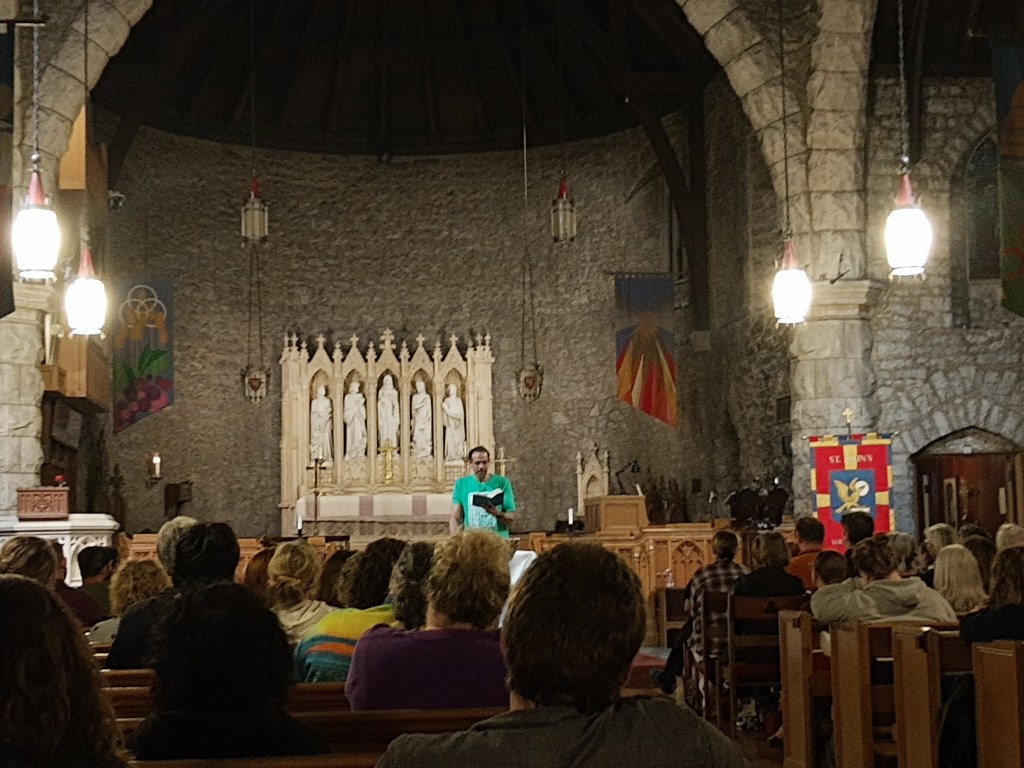
      Last, if you’ve been around these blog parts for a while, you know Ross Gay’s work has inspired some of mine, including this essay. And so I was prepared to be moved by his reading at the beautiful, historic St. John’s Episcopal Church–much from his new book of essays, Inciting Joy. But reader, I wasn’t just whelmed but overwhelmed. Ross’s mission of joy has been a guiding light not just for my fledgling essays and poetry, but for a new path where my art and faith can live together. And (in 2023, as I’m sure you can imagine) that’s a lot.

      Day 2

      The next day started off with a fantastic author reading. One essayist, my friend and editing co-conspirator Renée K. Nicholson; novelist Jason Kapcala, whom I interviewed here; and two poets, Amy M. Alvarez and Randi Ward read from their creative work “set in the mountains and hollers of Appalachia and the hardscrabble steel towns of the rust belt.” Themes of place and displacement ran through these works and I found myself transported–just what a creative reading should do!

      The next session found me back in my fiction-writing lane. Novelist Alison Stine focused on “the urgency of cli-fi as we deal with the worsening impacts of climate change” in her craft talk called “Writing Climate Fiction as the World Burns.” Alison has a really inspiring way of talking about writing, even if she writes dystopian stories that deal with tough stuff–like the end of the environment and nature as we know it. It’s clear writing has saved Alison time and again. Writing, she said “is making people sit up straight,” and is also something that can “give us hope” and “give us a way.” And my practical takeaway from her session: wait for your characters to start acting before you start to write your ideas.

      My final session of the festival found me marveling at the difference storytelling and writing can make–not just on our spirits but on our whole selves and in the ways we care for one another. Dani Naffziger led an inspiring talk called “Collaborative Writing with Adults with Disabilities,” a writing service she says “provides tangible and rewarding benefits for all involved,” highlighting stories from a population “rarely represented” and introducing “new writing processes for established and emerging writers.”

      Under the umbrella of The Healing Impact of Writing, for the other part of the session West Virginia University Humanities Center director Renée K. Nicholson and physician Ryan McCarthy talked about their Healthcare is Human initiative. Through a unique partnership between WVU Medicine and the WVU Humanities Center, the initiative promotes the work of narrative medicine and health humanities. Its seeds were planted during the pandemic, when Dr. McCarthy began journaling about his own experiences and then gathering the stories of his fellow front line workers. He has said: “…projects like this, which highlight the real human stories of healthcare workers, nurture our own humanity.”

      My own humanity certainly nurtured, my writing self restored, I left the festival inspired by the work of my fellow writers and by what’s to come. Thank you to Lit Youngstown director Karen Schubert and all who make it happen, year after year. And trust me, you won’t want to miss next year’s festival. Details here.

      Now, tell me in the comments, did you attend the festival? What was the highlight for you? Do you attend writing conferences in general, book fairs? What gets your creative juices flowing?

      Hankering for Rust Belt author interviews, book reviews, and more? Check out my categories above. I hope you’ll follow me here, if you don’t already, so you never miss a (quite infrequent) post. Thanks! ~Rebecca

      Enter your email address to subscribe to this blog and receive notifications of new posts by email.

      Behind the Scenes: “A New Nuclear”

      The lovely folks at Great Lakes Review published my story, “A New Nuclear,” about my favorite fictional dental hygienist Patty’s struggle to find herself during the last summer before her child leaves for college. It is a most Rust Belt-y story, and I’m grateful to editor Mitch James for giving it a fine home along my favorite Great Lake.

      One of the questions writers hear most–even about fictional works–is: “Is this story inspired by your life? Is this you?” Yes and no. Do I understand Patty’s situation? Do I feel a sense of my nest emptying out? Sure, my boys are 13 now, and every day becoming more independent. But also no. Patty is not me, and is definitely not my mom (read on). But I thought I’d give a little backstory in case my followers want a peek into the real-life influences and (really weird) brain of a fiction writer.

      Family might recognize Patty’s stint with the No Nukes! environmental chapter. My mom–who would have been proud to be called a tree hugger, if we used that term then–did a stint with the group that protested the local nuclear power plant. (The plant’s still in operation, btw. Planned to be deactivated in 2021, it’s now licensed to operate until 2037.) I remember my mom’s bright yellow No Nukes! shirt. She might have participated in one protest but was much more often spotted at the church basement food co-op she helped run. Also, note the spiderwort plants in my story–plants that are able to detect small amounts of radiation. My mom would have loved that fact. Maybe she knew it? I wish I could ask her.

      A writer friend–hi, Jessica!–who is more perceptive than I noted that I have teeth on the creative brain as of late. She also read a prose poem of mine, recently published in the print journal, Presence: A Journal of Catholic Poetry,” titled “Jesus, My Son’s Buckteeth.” What do they say about teeth dreams? Spurred on by anxiety, right? Should I be worried if teeth are taking over my creative mind? (Don’t tell me.)

      And a note on the craft of writing and the novel process: Writer friends who’ve read my WIP–a novel set over one Ohio summer, bridging two lakeshores and three generations–will recognize Patty. Early drafts of the novel included Patty’s perspective and more time for her on the page. In later revisions, Patty’s POV–but not Patty’s character–was cut. Still, I couldn’t leave the protest scene (or the dental chair scene!) on the cutting room floor. “Kill your darlings,” they say. But, also, sometimes those darlings can make for a good story.

      I hope you like it: “A New Nuclear”

      What are you reading and writing this week, this weekend? Want more stories from me, or author interviews, book reviews, guest posts, more? Follow me here:

      Enter your email address to subscribe to this blog and receive notifications of new posts by email.

      *free header image from Pexels

      THE RABBIT HUTCH’s Rust Belt Renaissance

      By Emma Riva

      People in Pittsburgh will tell you where things are based on what used to be there. Most of the time, the landmark that used to be there is food related. A fancy seafood restaurant. An ice cream shop. In a small city, those are the sorts of things people remember. To out-of-towners, this might seem like a quaint practice, but something I’ve come to realize is that it is a profoundly human one.

      As a fiction writer, I often find myself navigating the complicated narrative of how our memories and associations of the past interact with our experiences of the present. I look at a candle and think of my favorite candle store in Elizabeth, Pennsylvania, which I went to for the first time because I couldn’t use the bathroom on the Y46 bus and I bolted in not expecting them to have a restroom, but they did. The candle reminds me of my desire to go back there, of the friends I know in Elizabeth. All of this interacts with the energy of the place, the former boating hub, the Monongahela River Valley that built Lewis and Clark’s boat. All of that comes from the split second of looking at a burning wick. 

      Sharpsburg over the Allegheny River from the 62 St. Bridge; photo credit: Emma Riva

      Tess Gunty’s 2022 debut novel, The Rabbit Hutch, is a master class in this mixture of memory and present, owing in part to its setting within the Rust Belt. The novel’s setting of Vacca Vale, Indiana, is a facsimile of her hometown of South Bend, though she’s fictionalized a car manufacturer named Zorn as the ghost of industry haunting the town’s abandoned structures. “I wanted to be able to pull from Gary, Ind., and Flint, Mich., and Youngstown, Ohio, and a number of other cities in the Rust Belt whose economic devastation was much worse, I think, than it was in South Bend when Studebaker closed,” Gunty said in an interview with the South Bend Tribune

      The Rabbit Hutch is a genre-bending work that follows a cast of characters who all live in an affordable housing complex called La Lapiniére, nicknamed “The Rabbit Hutch.” Its central character is Blandine Watkins, née Tiffany, an eccentric former foster youth obsessed with Christian mystics to the point where she changed her own name to a martyred French woman’s. But the book switches between the past and the present and between the perspectives of different residents of the apartment complex, including one of Blandine’s roommates, another  former foster youth who serves as an omniscient narrator for several parts of the book which foreshadow some horror described as Blandine “leaving her body.” Though the characters’ Vacca Vale has its echoes of Gunty’s own South Bend, it’s an imaginary future where the University of Notre Dame didn’t fill the gaps in South Bend left behind by Studebaker. Here’s what Gunty’s characters say of Vacca Vale, while stoned and watching a commercial for a new apartment complex, much nicer than the titular complex they live in:

      “Vacca Vale, Welcome Home,” scoffed Todd, but he looked sort of emotional to me. “What the hell kind of slogan is that?”
      	“More like—Vacca Vale: Don’t Touch the Rust,” said Malik. 
      	“Vacca Vale: Excuse Me, Sir, Are You Lost?” I added.
      	“Vacca Vale: We’ll Clean That Up in the Morning,” said Todd.
              We laughed. We warmed. We didn’t know who we were trying to impress.
      	“Vacca Vale,” joked Malik. “We Used to Make Cars Here!” 
      	“Vacca Vale: Where the Churches Outnumber the Humans.” 
      	“Vacca Vale: Where the Rabbits Outnumber the Churches.” 
      	“Vacca Vale: At Least You Can Still Fuck Here.”

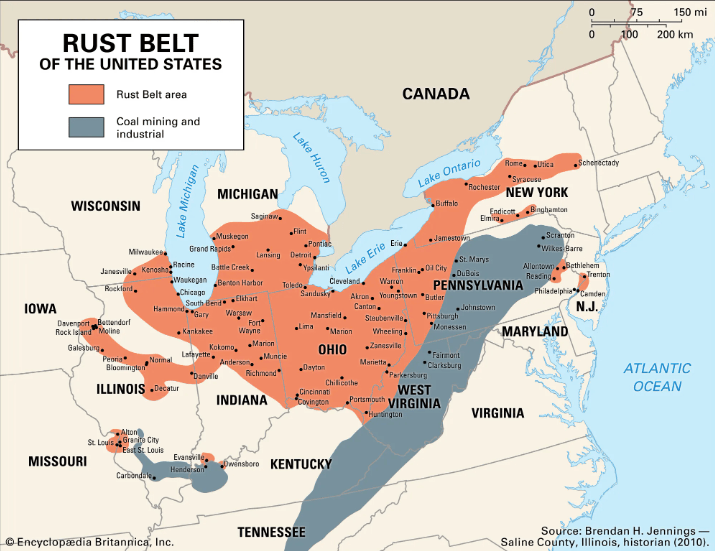
      For many in the literary publishing world Gunty has ascended into, the Rust Belt is only a feeling, not a region. It’s an image from the movie Flashdance or a short chapter in a history textbook. So, it’s important to define what it is exactly we’re talking about when we say “the Rust Belt.” There’s some confusion among people who don’t live here about the categorical differences between the Rust Belt, Appalachia, and the Midwest. Pittsburgh and Buffalo aren’t exactly in the Midwest, but they’re still in the Rust Belt. The map in the Encyclopedia Brittanica looks like a gasoline blotch on a sidewalk or an oddly shaped hickey.

      It’s a region defined by things which used to be there, sites of innovation and excess then turned to rot, now home to … what? Those of us who live there will be familiar with the exchange that takes place in one scene of The Rabbit Hutch. Blandine and Jack get into a heated argument in the loft of a real-estate developer who plans to “revitalize” their city. Blandine complains about how the real estate development is ruining Chastity Valley, one of her favorite parts of the city, and Jack shoots back: 

      “Look,” says Jack. “I know what you want me to say. You want everyone to hate the Valley plan as much as you do. But I just don’t. A lot of people are excited about it, and I think you’re being sort of judgmental and shortsighted. I mean, a lot people say it’s going to help our economy and make jobs and stuff. And I’ve only met him a couple of times, but Pinky doesn’t seem that bad. From what I’ve heard, he grew up poor, he knows what it’s like not to have what you need, and now he wants to help Vacca Vale get out of the gutter. Sure, he’s making money off it. But so what, if it helps people at the end of the day? We need to get out of the gutter.”

      Gunty then notes: “In the ensuing silence, Blandine spots a camera, situated atop a thick book called Rust Belt: The Second Coming.” There is much reference to Catholicism in The Rabbit Hutch, and “the Second Coming” refers to resurrection, that most American of impulses. It’s no coincidence that the nature park to be bulldozed for the buildings is called Chastity Valley. But The Rabbit Hutch is no hollow anti-gentrification plea. 

      From having grown up in New York, I have a keen and nuanced understanding of gentrification and the ways in which contemporary activism often ignores its tangled nature. The Rabbit Hutch frames the Chastity Valley developments and the so-called “revitalization” of Vacca Vale as part of a meditation on the uncomfortable truth about change. One of the most gutting lines in the book is: “Six months after Tiffany/Blandine had submitted her court papers, proof of birth and $210, she discovered that the name Blandine is Latin for ‘mild,’ while Tiffany is Greek for “Manifestation of God.’”  I, too, went through long stretches of hating my own name, wanting to replace it with something more elegant and powerful. In those lines, Blandine reveals how, though her activism comes from a genuine love for Vacca Vale, there’s a deeper hypocrisy and insecurity there. Though she wants Vacca Vale to retain its grit, the scars that give it character, she is unable to deal with her own scars, to the point where she threw away her own name for a fantasy. 

      The South Side from the Birmingham Bridge over the Monongahela River; photo credit: Emma Riva

      There is much more to talk about in The Rabbit Hutch, and the only way to truly experience all of it is to read it for yourself. But here are a few sneak peeks. There’s the death of an aging child star and the vengeance of her bitter, angry son—another scar of the past opened into a wound. There’s the woman who moderates content on a site for obituaries, who spurns that son by deleting his callous comment on his mother’s obituary—a marker of the absurdity of how we deal with loss. 

      The Rabbit Hutch is all about people on the margins, people who are orphaned by society in some way, regardless of their age or their circumstances. In the contemporary publishing industry, there’s a certain obsession with “marginalized” or “underrepresented” identities. It feels like a reduction, like generational oppression is a badge of suffering for coastal publishing executives to give out to those poor, unfortunate souls in quote-unquote Middle America. I’m perhaps one of the people Blandine and her friends might laugh at, who traded New York for this strange, desolate place. But I know exactly how Blandine feels about Chastity Valley, because I watched my childhood public library in Washington Heights get bulldozed to make space for an “affordable” housing complex with a supposed library inside of it, the skeleton of which now looms over Broadway like a dying animal. I know exactly how it feels to not care how many people get to live in that building or how many families get to make nicer dinners because of the paychecks the developer creates, because connecting to a sad, poor place makes you feel like your suffering matters in some grand story of socio-economic distress.

      In the same conversation, above, Jack says to Blandine: “’I’m not judging you.’ The tenderness in his expression catches Blandine off guard, makes the room glitter vertiginously. ‘I just want to know what happened to you.’”

      What happened to you? I hate the passive voice. As a literature tutor, my screed to my students is that passive voice makes them sound less confident. I don’t say weak but the implication is there. And of course, there are political and emotional implications. We’ve all heard mistakes were made or I was assaulted. Of course, it’s an important step in reclamation of your life and accountability to say You made mistakes or He assaulted me. But in modern American language, we are profoundly uncomfortable with the passive voice even when we overuse it. Being scarred by your history is a hard thing to admit. You have to admit that things affected you. That (how terrible to admit!) they damaged you. That (even worse!) you are damaged. The Rust Belt is one big, glaring scar of affectation and damage. Its very name is spoil and decay. We spend a lot of our lives teaching ourselves not to be affected by things. In The Rabbit Hutch, what Blandine seeks when she wants to leave her body, is truly to feel instead of simply to suffer. 

      The Rabbit Hutch, winner of the 2022 National Book Award for fiction, is available from Penguin Random House or wherever books are sold.


      Emma Riva is an author and art writer living and working in Pittsburgh. She serves as the managing editor of UP, an international online and print magazine covering street art, graffiti, fine arts, and their intersections in popular culture. She is also a staff writer at regional magazine Belt and a contributor to Pittsburgh-based art criticism site Bunker Review. You can find out more about her on her website and her Instagram and order her book Night Shift in Tamaqua wherever books are sold. 


      Rebecca here, with huge thanks to Emma for her fascinating review.

      What are you reading and writing this month, as we look forward to spring? Let’s discuss in the comments.

      Are you a Rust Belt writer? Do you write book reviews or conduct interviews of Rust Belt authors? If so, think of Rust Belt Girl for a guest post, like this one. And check out the categories above for more writing from rusty places.

      Find me on FB, and on IG and Twitter: @MoonRuark

      And follow me here. Thanks!

      Enter your email address to subscribe to this blog and receive notifications of new posts by email.

      Lit Fest Roundup (plus bonus nature content for the win)

      I know what you’re thinking. Where are all the leaf-peeping pics? We know you drove along the PA turnpike to Ohio, climbing, winding, glimpsing down into little hamlets surrounding the sweetest, steepled white churches. All around were reds and every other burnished color. Oh, the autumn leaves!

      Hold your trees for a moment, reader friends. First, a literary roundup. If you’ve never been to Lit Youngstown’s Fall Literary Festival, I’ll see you there next fall. In the meantime, here’s how I made my way through my favorite literary conference of the year (yes, even besting AWP, which I made it to in the spring).

      Thursday

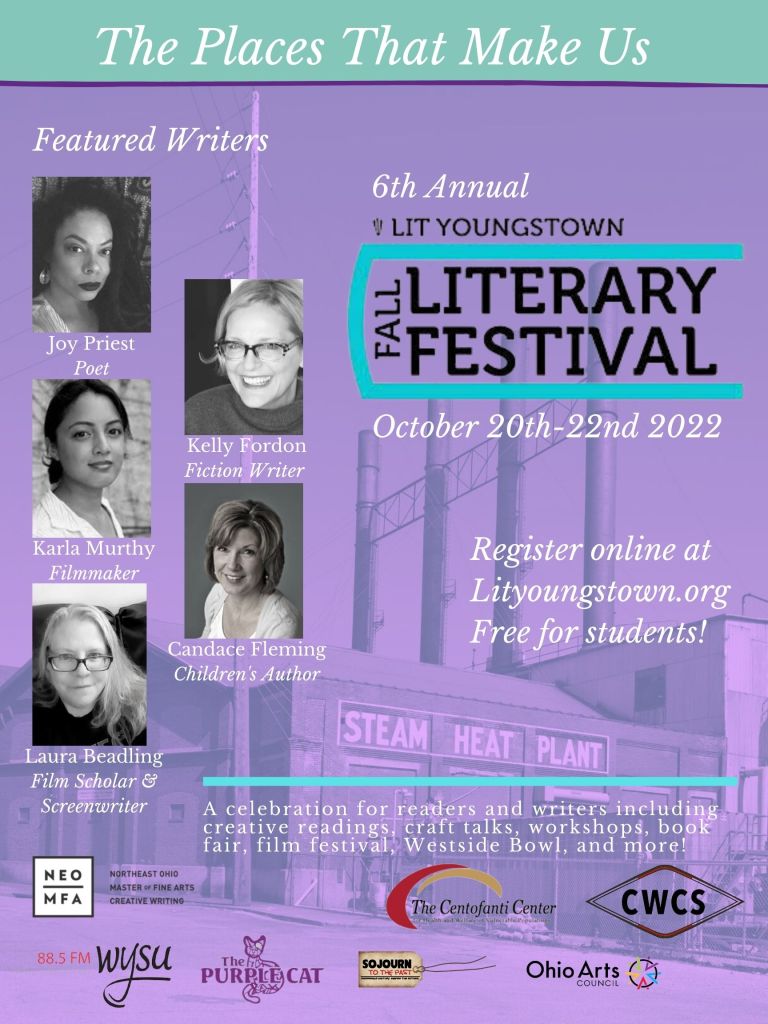
      This year’s festival featured the theme, The Places that Make Us, and I was so happy to be able to return–5th year running for me–to this conference held not far from the place where I grew up in Northeast Ohio. Big shoutout to all my fellow festival planning committee members. We did it (again)!

      Special in a lot of ways, besides all the usual literary goodness, this year’s festival provided attendees front-row access to three film screenings.

      But really, year in and year out, this festival always impresses me. What’s so special? Lit Youngstown’s director, Karen Schubert, is a literary conference alchemist, joining poets, fiction writers, memoirists, and even filmmakers this year for just the right mix of craft talks, generative workshops, creative readings, and roundtable and panel discussions. What do you get? Literary conference gold, no exaggeration.

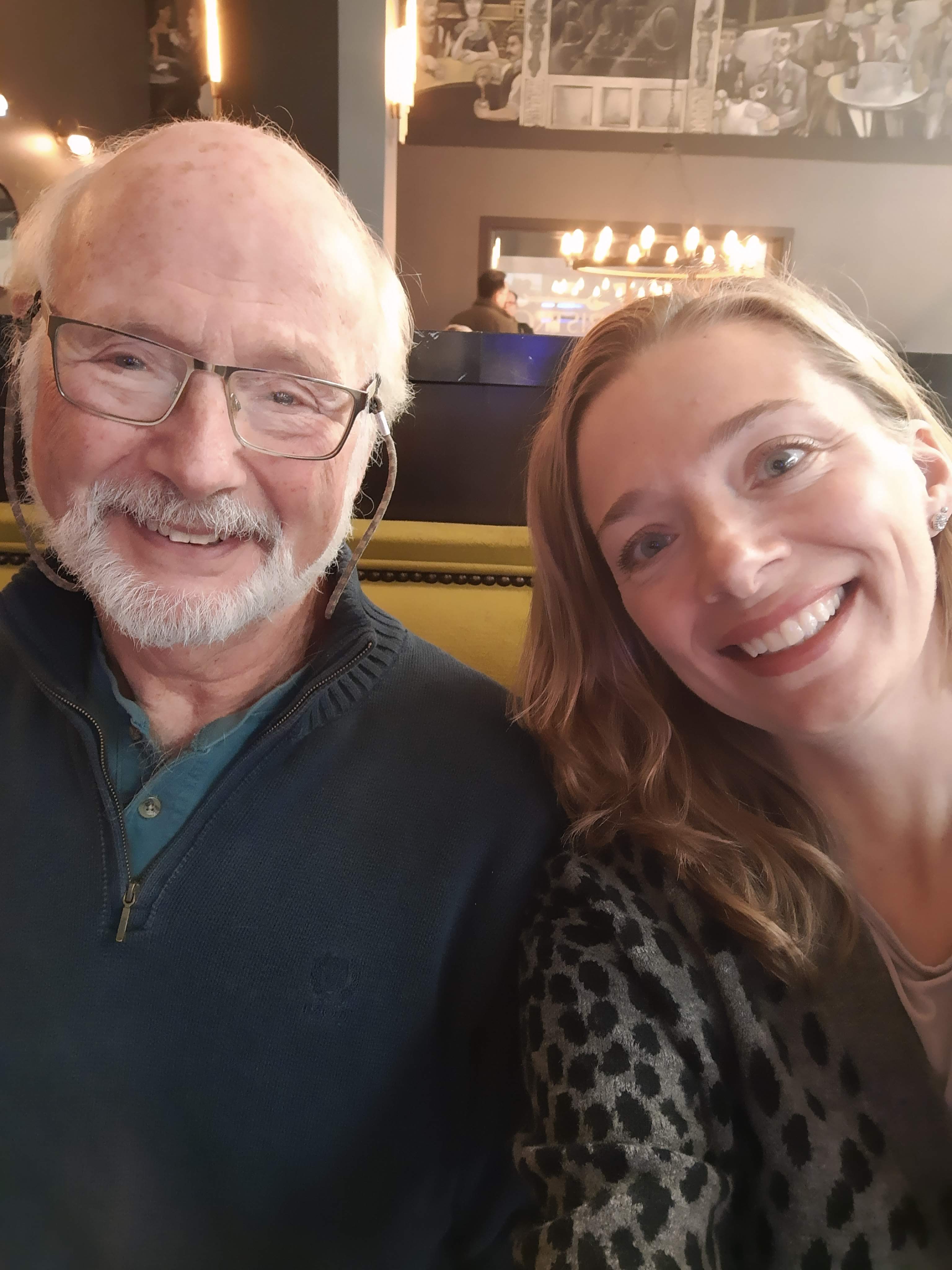
      OK, onward … Thursday evening featured the Gathering In, with a reception and open-mic to begin the conference. This year, I had a special guest in tow. My dad drove in from Port Clinton; we had dinner beforehand (your meatballs are outstanding, Bistro 1907) and then headed to the Gathering In. I will tell you, my dad did not even doze at what I believe was his first-ever open mic and found it delightful. We salute you poets and writers who can whittle your words down to a few minutes of magic!

      Friday

      My first full day of the festival began with a craft talk by novelist June Gervais titled Honoring Others with Our Fiction Research. Intentional and inspirational are the two words that come to mind when I think about this talk. In it, June described her research process for her debut novel, Jobs for Girls with Artistic Flair. Braving the sometimes-fraught conversation around appropriation, authenticity, and sensitivity, when it comes to depicting readers from different professions or backgrounds, June exuded positivity. So, how do we honor others with our research?

      First, have a goal. For June, she decided, “to make the most beautiful and honest book possible.” Second: do the research well–whether that’s in-person interviews, archival research, or hiring authenticity and sensitivity readers in later writing stages. Third (and this is June’s whole beautiful thing): show gratitude by thanking the helpers along the journey. Sometimes this means generous payment. Sometimes this means reciprocity–trading literary favors. Always this means a real thank-you in the mail and on social media and all the shoutouts possible, including on the old Acknowledgements page. “I try to be a living acknowledgement,” she said.

      This year, I was intentional about attending the sessions (there are so many, I wish I could attend them all!) in my writerly “lane.” But I don’t seem to be able to resist the poets. In a roundtable discussion called “Moving Past Influence,” poets Mary Biddinger, Ali Black, and Dylan Morris talked about influences in creative writing–model writers and how they influence a poet’s style, and moving past influences as we develop our craft. When asked why she writes and why poetry, Ali talked about writing as an act of remembrance for those who’ve gone before her, those she’s lost. The stories are hers to tell, and poetry her form, she said, before she delivered one of the best lines of the weekend: “Poetry is my baby, and I’m poetry’s baby.”

      Marketing-me felt right at home in Gabriel Welsch‘s craft talk Marketing Your Book–Tips From a Professional Marketer and Writer. How to generate pre-orders for your book … how to get it reviewed … how to develop a (shudder at the word) platform … and, ya know, actually sell your book. These were just a few of the practical tips covered. We listeners were asked first to consider our goal. What do we want from our book: readers? high regard? money? Gabriel covered Marketing’s 4 Ps: product, price, promotion, and place. Who said it first, I can’t remember now, but he repeated this gem a few times: “All arts marketing is local.” Along those lines, he said, don’t underestimate the wideness of one’s potential audience. Think about local clubs that aren’t book clubs, local fraternal organizations, historical societies, etc., etc. And, as if he and June had shared notes beforehand, he stressed gratitude. “Don’t underestimate the power of thanking.” (Thank you, Gabriel!)

      Short story writer and poet Kelly Fordon (of Let’s Deconstruct a Story podcast fame–do check it out) led a generative workshop. I caught the second of two parts: the first, a workshop to deconstruct a story to understand its parts and how they work together; the second, a chance to get some words of our own on the page. There’s something about a good writing prompt. The simpler the better seems to work for me. Kelly gave this prompt: “Start with ‘We lived then …'” I’m not always in the writerly frame of mind to churn it out on demand, but here’s what I got:

      We lived then spitting distance from the train tracks, the river, and the West Virginia border--so much winding, the running tracks leading not to any home I understood. A limbo, the twins not yet in school, not babies either. How many times did we stop the car by the tracks, watch the train pull tractors east and west--Kubota, Deere. In our rental house, the boys slept on a mattress on the floor, when they slept.

      One positive of the pandemic was finding a new writing group. I guess Zoom is good for some things. Among the Cleveland-area members is Jeremy Jusek, Parma, Ohio’s poet laureate, host of the Ohio Poetry Association’s podcast Poetry Spotlight (check it out), and consummate literary citizen. Jeremy’s craft talk, Strengthening Artistic Communication Through Podcasts, covered how podcasts can be used by small creative groups to humanize its members and strengthen communities. I love bookish podcasts and meeting the person behind the book. He called podcasts “the ultimate bridging medium,” and I can totally see that. He said that when he edits the podcast interviews of poets–the last one was with Hanif Abdurraqib(!)–he shoots for no more than 7 percent Jeremy, the rest the interviewee, an impressive stat I will remember when I conduct interviews.

      OK, this isn’t a great pic (sorry Karla, thank you, Rebe!) of one fantastic panel discussion with the featured presenters (minus Laura Beadling). The gist: the writers Karla Murthy, Candace Fleming, Joy Priest, and Kelly Fordon weighed in on “the element of place, real and imagined, in the literary arts.” Side note: if you can catch a Joy Priest poetry reading, run don’t walk to catch it.

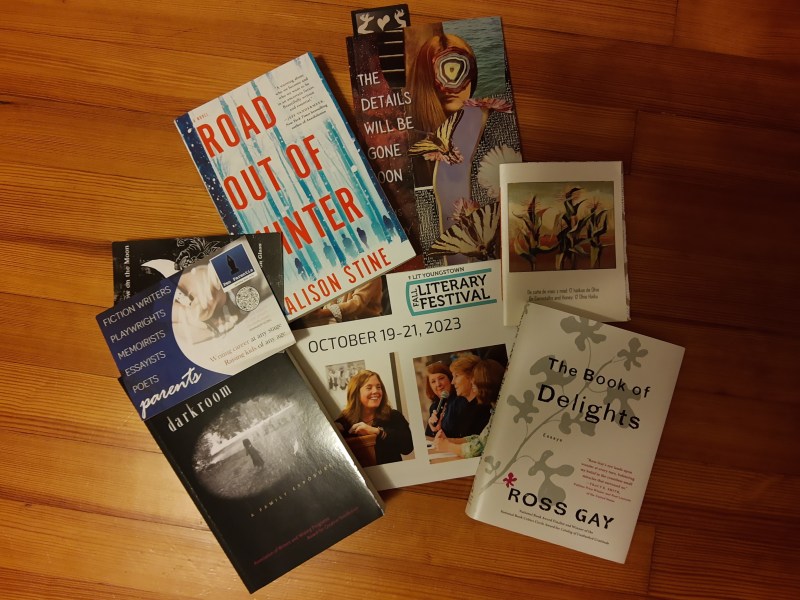
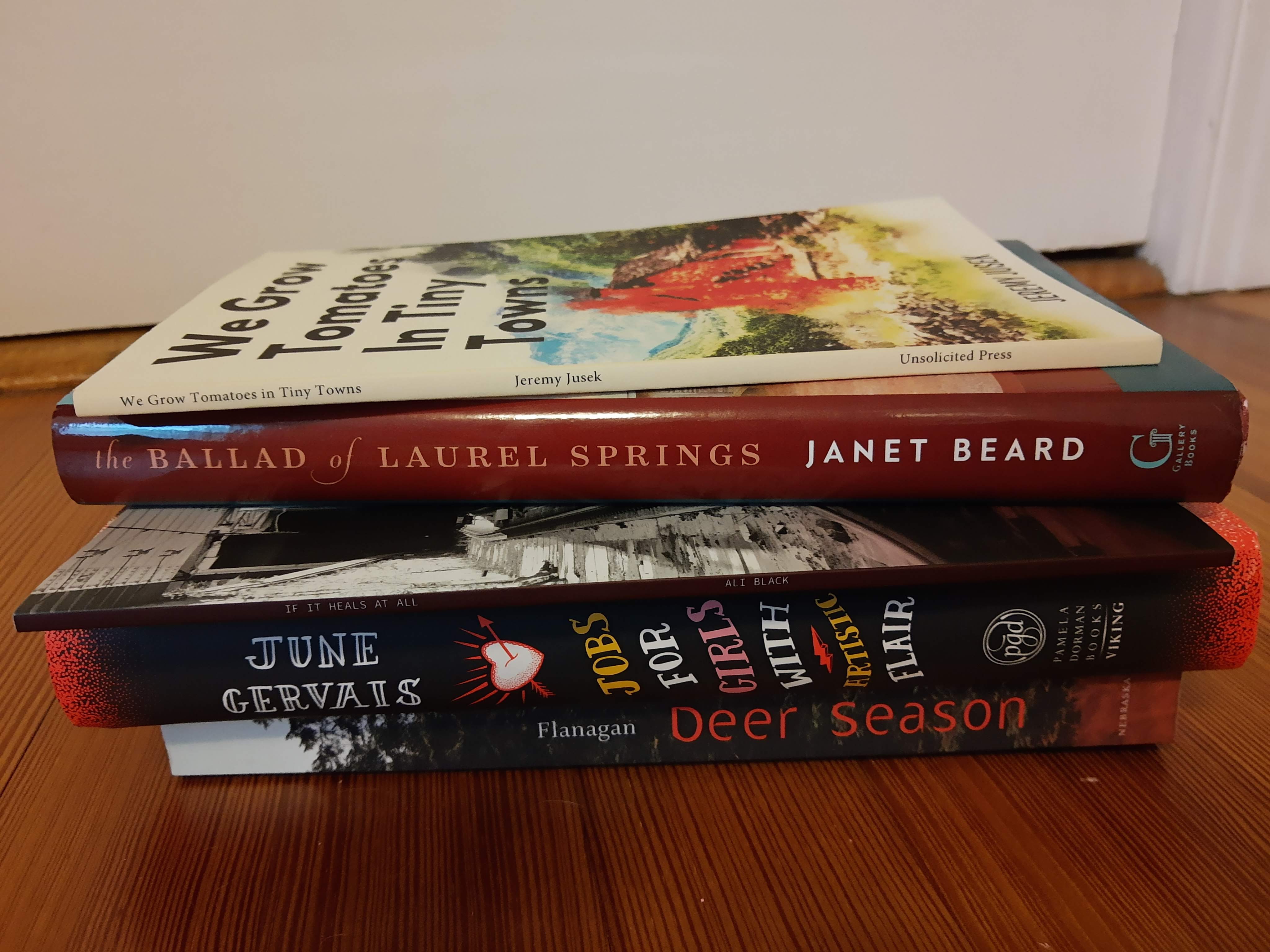
      Now, don’t let my festival book fair’s book haul–pictured below–throw you, I guarantee there was plenty of time in the evenings for catching up with literary friends over jazz and a local craft beer (and pierogi and pickle pizza–someone saw me coming!).

      Saturday

      June Gervais started off the second full day of the conference tackling a subject close to my heart–and that of anyone about to dive into the query trenches. In her craft talk, Persevering to Publication: Some Practical Tips, June covered her (long) journey to the publication of her debut novel. Again, she walked the line between inspiration and practical steps to take. “Expect difficulty, but leave room for wonder,” she said. Now, could I please have a June Gervais quote-a-day calendar?

      Along the practical side of things, she discussed making a practice of community while writing a novel (or anything else really). My favorite analogy she offered: think of the novel as the Thanksgiving turkey. It’s not enough. You need to support the turkey-novel with delicious sides, including the writing and publication of short pieces (short stories, essays, craft pieces, poems, etc.) Other crucial sides: an author website, a social media presence, and a literary community. (Check!)

      Oh, the literary agent querying-getting-sustaining process. Should you want to endure the agent search, be prepared for it to be long and winding, June said. Most of all, enjoy life in this tough stage of the writing, find gratitude in the work and in your community, and “become a master of the polite check-in.”

      I was happy to moderate two sessions during this festival. The first was a creative reading featuring poet and memoirist Jennifer Militello, whose love poems were nothing short of arresting and awe-inspiring. Youngstown native, poet Rikki Santer also read from her vast portfolio of poems, many centered on place–including some that explore the imaginary realm of place through old Twilight Zone episodes. And novelist Janet Beard read–and sang!–from her latest novel, The Ballad of Laurel Springs, which shares with readers some of the stories delivered by the old murder ballads Janet grew up hearing in her Appalachian hometown in East Tennessee.

      The second session I moderated was novelist Erin Flanagan’s The Window or the Door: Transitioning from Writing Stories to Novels. (Or, The Plight of the MFA Grad–ha.) This craft talk was super instructional and featured 13 handy novel-writing tips. I’ll give you just a few and you’re going to have to hunt Erin down for the rest. #2: Start a novel-writing journal. #6: Figure out where your novel ends in time. (Also check out The Art of Time in Fiction for help with pacing.) #10: (Oh, this one is hard–but so necessary–to swallow.) Keep in mind that chapters aren’t short stories, meaning your chapter end needs to create more questions, more tension, etc., to pull the reader through. 

      If I have pulled you through this post this far, you have shown your readerly diligence and win a star! Or, how about a slideshow of the foliage, cliffs, boulders, and even 200-year-old petroglyphs I enjoyed with one of my oldest (she’s not old, our relationship is) and best friends and her son (who poses for pics like a Jet from West Side Story–and this is my everything now!). Please enjoy the treasures of Cuyahoga Valley National Park, where I visited on a post-conference side trip.

      Have you attended this festival or another literary festival? What’s your favorite part of a writing conference? Have you been to this national park? Let’s chat in the comments.

      Want more Rust Belt writing, author interviews, book reviews, guest posts, writing advice, and more? Check out the handy categories above.

      Find me on FB and on IG and Twitter @MoonRuark. Find me at Goodreads and learn what novel I listened to on my way to and from the conference. Hint: I’m recommending it for fans of Tea Obrecht’s latest novel, Inland.

      Also, please follow me here at Rust Belt Girl, so you never miss a (fairly infrequent) post, and feel free to share this post with the world. Want me to consider a guest post featuring you, yep, you!? Hit me up. There’s a lot of Rust Belt literary goodness to spread around.

      *free header image of a fall foliage-colored door from Pexels

      What I did this totally unlazy Rust Belt summer…

      I take umbrage with whomever coined the phrase “lazy days of summer.” And I might demand a refund. Except, while my summer has been anything but lazy, it has been fun.

      After a little hiatus I return to you loveliest of followers with Rust Belt pics and books–and news of a reading in one of my favorite port cities (and rollercoaster capital), Sandusky, Ohio.

      Off to OHio

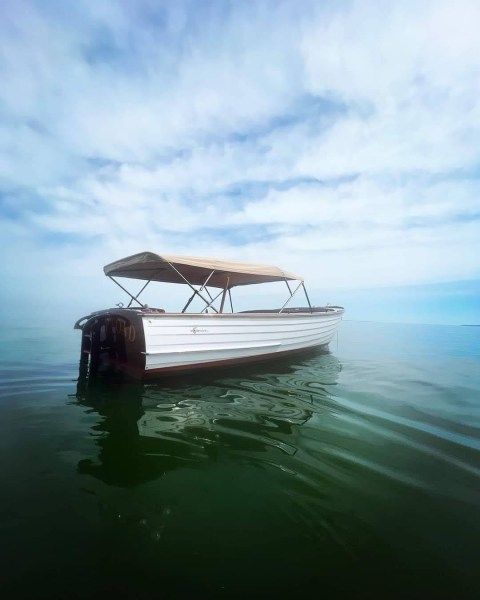
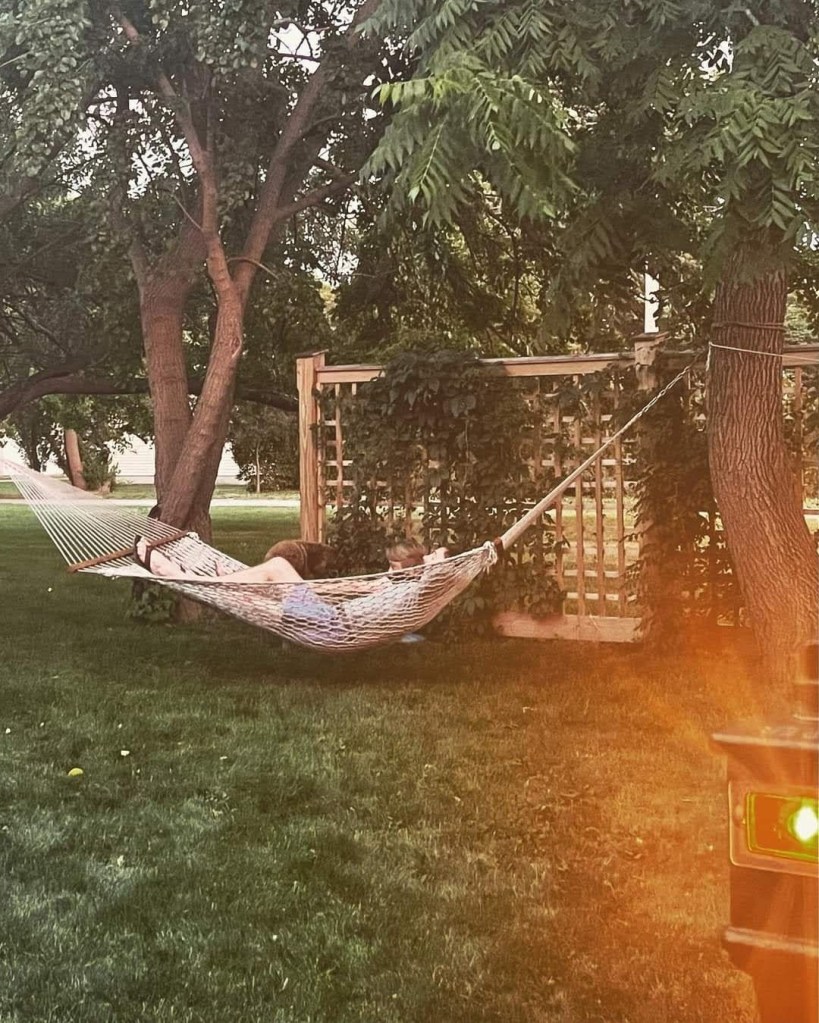
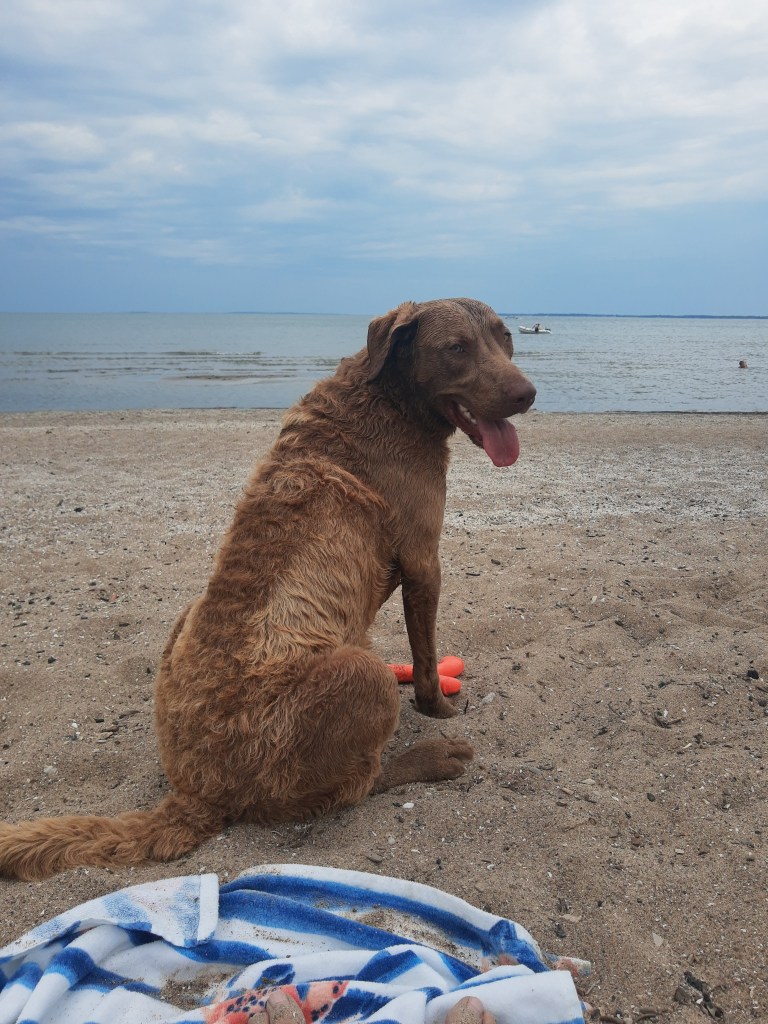
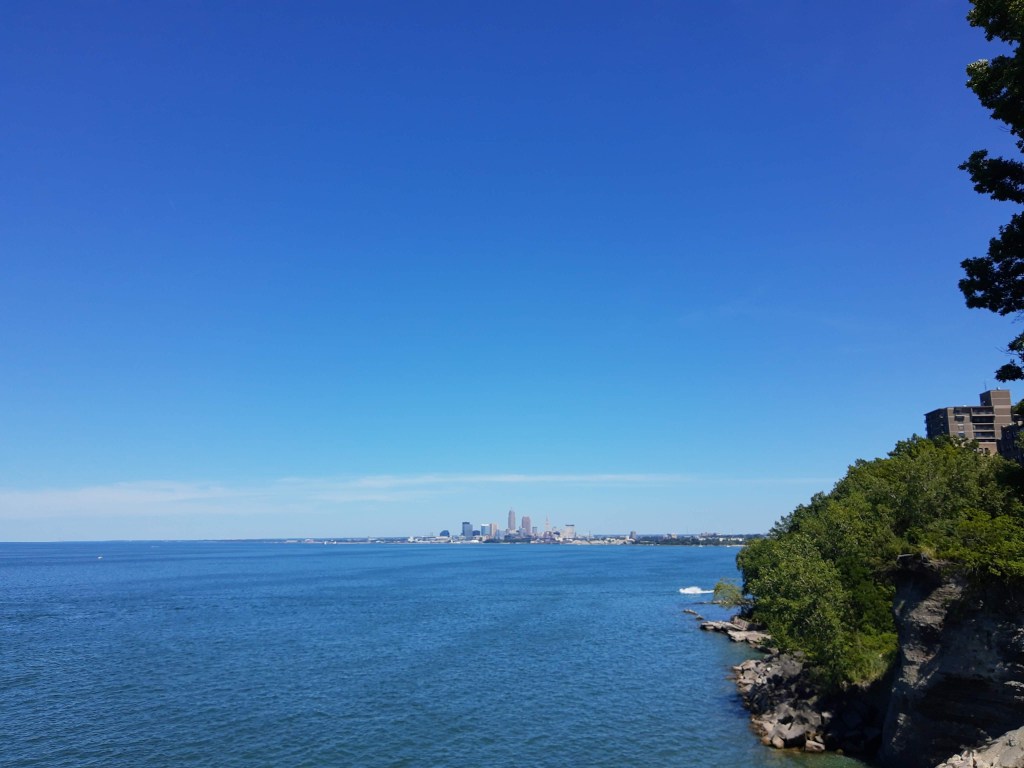
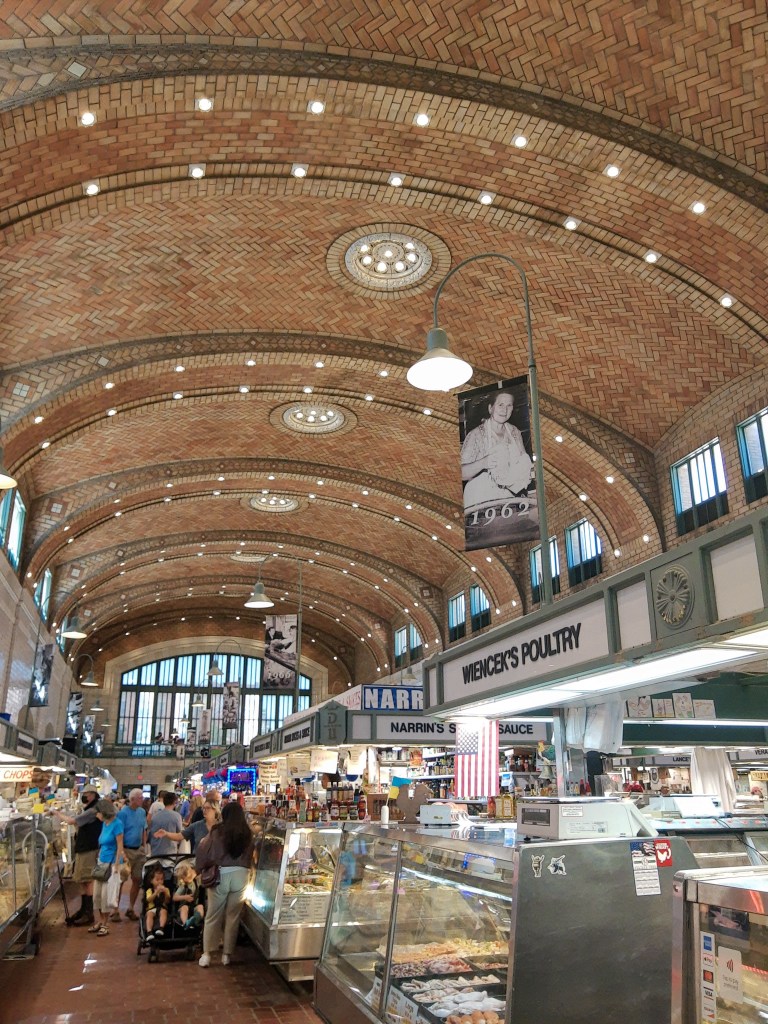
      The fam and I headed to Port Clinton, Ohio, walleye capital of the world–don’t fight me on this, MN friends–in June. Sailing for my little guys, boating for the rest of us, swimming, sisters-lunching, friends reuniting, and plenty of hammock-ing and back porch-sitting were the highlights. Of course, no visit to Northern Ohio is complete without a trip to Cleveland and a visit to the West Side Market. And who could forget Rufus, who lived his best Lake Erie Shores & Islands life for a week. Boat aficionados, make sure to check out my dad’s antique Lyman boat above, his fourth child basically. Boat name? Hoptoad, named for Pippi Longstocking’s father’s ship in the favorite book series. (Who woulda thunk I’d become a writer?)

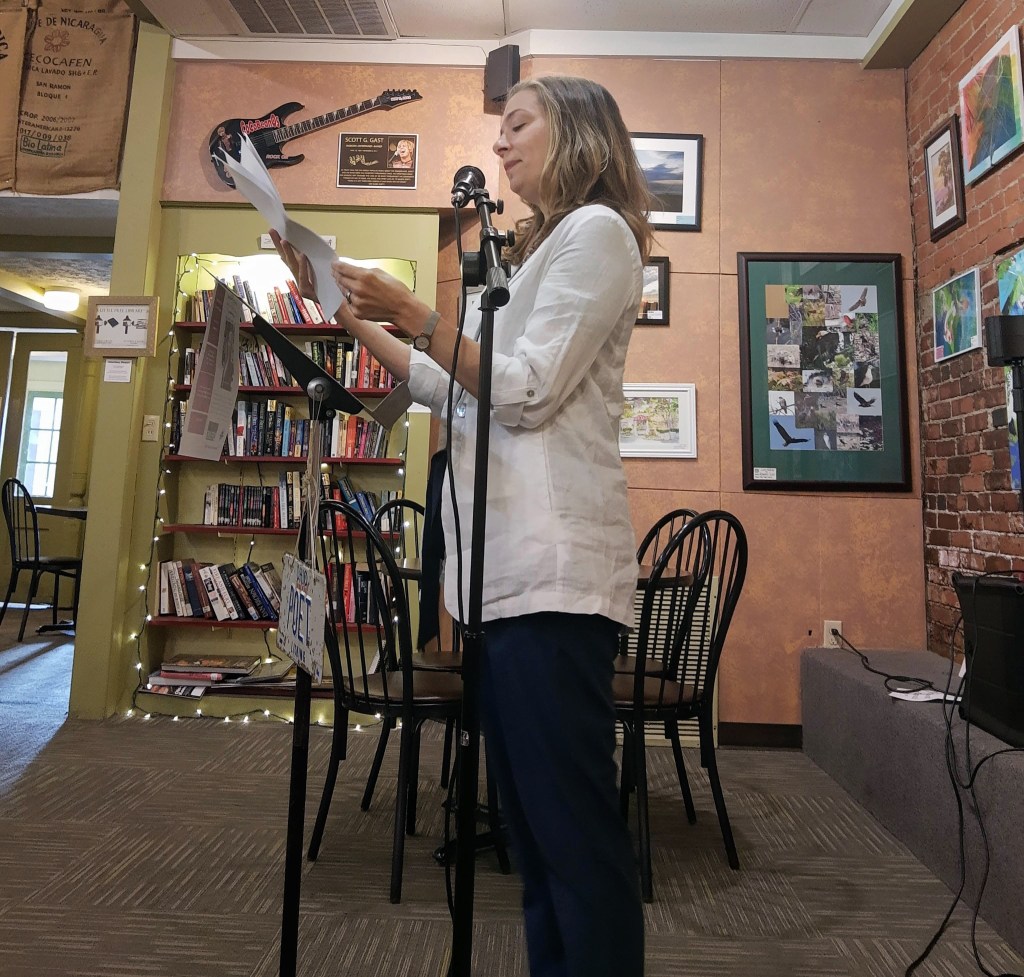
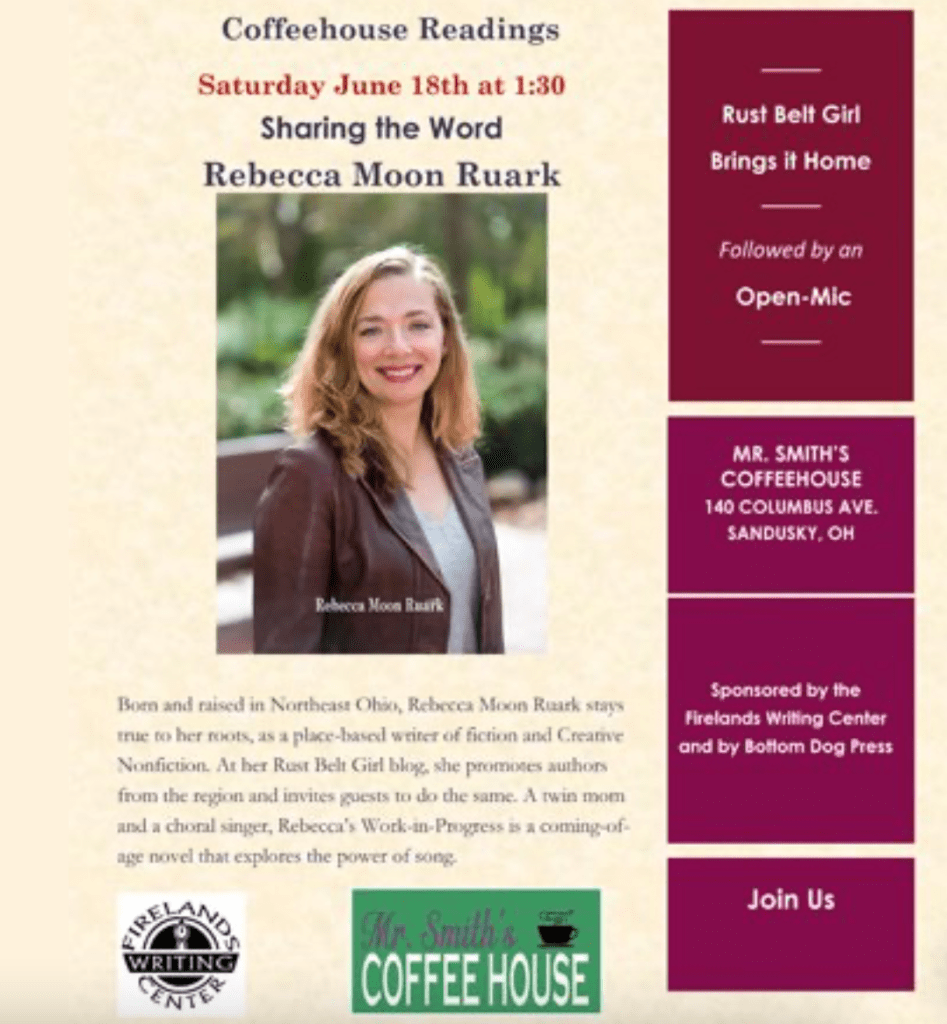
      While in the area, I had the honor of serving as the featured reader for the Firelands Writing Center’s monthly reading series in Sandusky. Thank you again to fearless leader Larry Smith and his Bottom Dog Press for sponsoring the event (and putting me on a flyer–that doesn’t happen often). I read some older work and some newer pieces from my WIP, a coming of age novel partly set in Ohio that explores the power of song. And thanks to those who came out (or in) on a beautiful afternoon to share their own work with the group. It felt very much like home. (Flyer photo credit: @melanieraebuonavolonta)

      Reading the Rust Belt…

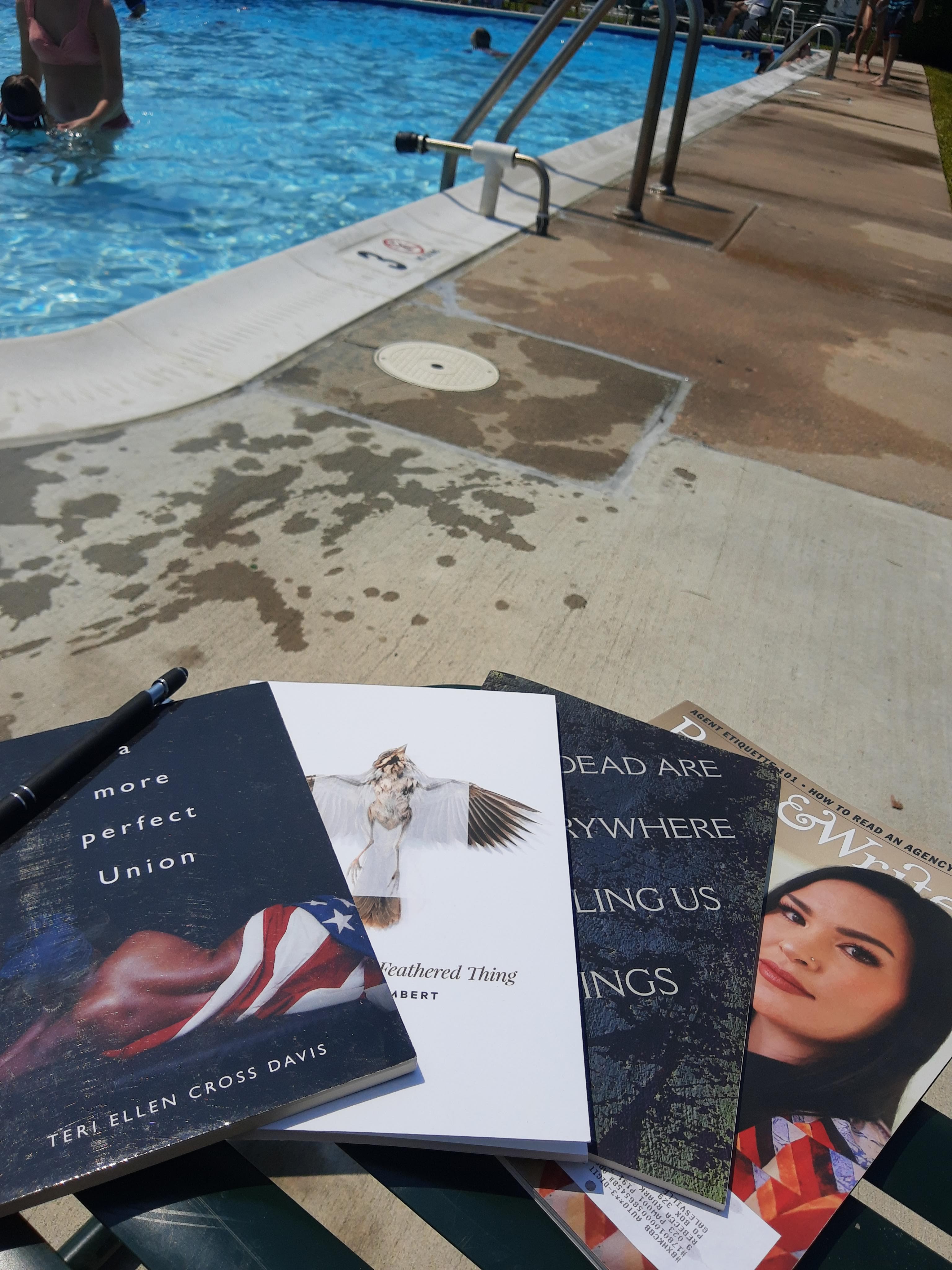
      Of course, I’ve fit in some Rust Belt reading. And who said summer reads can’t be deep? Poolside poetry is just my speed, and here are a few I’ve enjoyed immensely: Cleveland native Teri Ellen Cross DavisA More Perfect Union; Columbus, Ohio, poet Paula J. Lambert’s The Ghost of Every Feathered Thing, and Erie, Pennsylvania, poet Sean Thomas Dougherty’s The Dead are Everywhere Telling Us Things. Btw, if we’re not connected on Goodreads, where I recently reviewed another poetry collection, let’s do!

      And Beyond

      There’s an old, writerly adage that says if you’re talking about it you’re not writing it. So, let’s just keep all our fingers and toes crossed for my WIP as I begin to query literary agents for it this fall.

      Unfortunately, there’s no adage I know of that says if you’re talking about your editing you’re not working on it. But what would be the fun in that? You may know I’m the associate editor of Parhelion Literary Magazine, in charge of the features department. How I love my craft essays, book reviews, and author interviews! But you might not know that I got that gig because the magazine’s editor-in-chief saw what I was doing right here on Rust Belt Girl and wanted some for her Richmond, Virginia-based online publication.

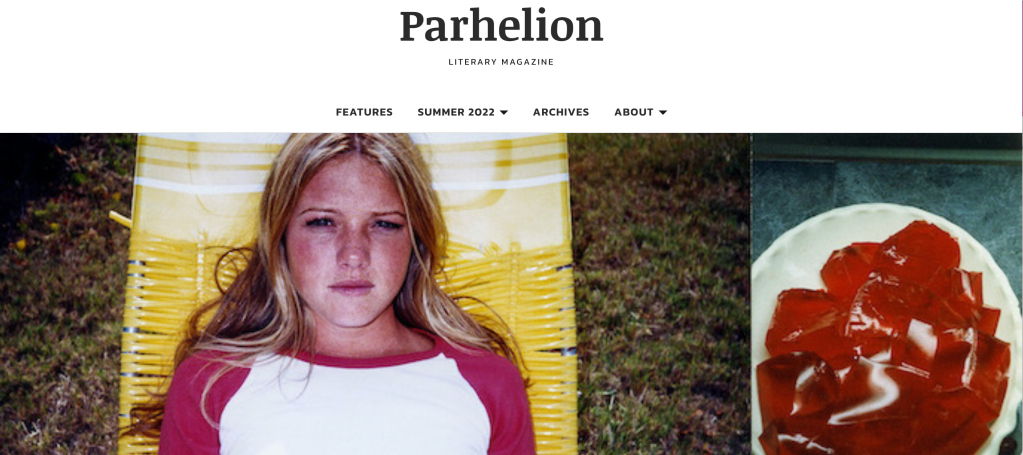
      In addition to editing features for Parhelion, I’m a reader for fiction. (If you aspire to write literary fiction, creative nonfiction, or poetry, there is no better way to become better at it than to read literary journal submissions, imho.) Parhelion’s summer issue (our journal’s 14th–not too shabby) launched this week. If you like fresh and bold fiction, CNF, and poetry I hope you’ll check it out.

      Parhelion Literary Magazine

      Summer 2022 Issue

      Looking Toward Fall

      Must we? OK, I suppose the pool days will come to a close. My small guys (who are quickly catching up to me) will head back to school. And I will start packing for the literary highlight of the season, Lit Youngstown’s Fall Literary Festival. If by some strange occurrence you live within driving distance of the festival and I haven’t hit you up, my apologies. This is the best literary conference of the year–if you like a supportive community, generative workshops, eye-opening and ear-bending panel discussions, inspiring readings, and affordability. Oh, and this year’s book fair promises to be the best yet. Also, there will be bowling and films. So, what are you waiting for? The Rust Belt calls.

      And that, most patient of readers, is what I’ve been up to. But, as blogging is a two-way street, let’s keep the convo going. What has your summer looked like–or whatever season it is where you hang your hat? Where are you visiting. What are you writing, reading, and discovering? Do tell!

      Want more Rust Belt writing, author interviews, book reviews, writing advice, and more? Check out the handy categories above.

      Find me on FB and on IG and Twitter @MoonRuark

      And follow me here. Thanks!

      Enter your email address to subscribe to this blog and receive notifications of new posts by email.