Stay- and Play-WP: Creativity is the writer’s cure for FOMO

Last month’s AWP (the Association of Writers & Writing Programs) Conference & Bookfair—think writer-prom—wasn’t in the cards for me this year. My rational brain knew this, but that doesn’t mean I didn’t suffer from some FOMO. Writer friends, the warm L.A. sun, and the lure of the unknown—will I meet the literary agent of my dreams in the hotel bar?!—are attractive elements, for sure. But I decided to save my pennies and hold out for next year’s event in nearby Baltimore. (Who’s in?)

Really, that March weekend, I hardly had time to wallow in my FOMO (the name of my upcoming memoir, stay tuned, ha). But seriously, the indomitable Justin Hamm, poet and super solid literary citizen, created StayWP, an online poet and writers conference, to slake our literary thirst, as it were. What’s better than poetry in your pajamas!? Here’s a sampling of what us nearly 100 participants from around the country enjoyed from Friday evening through Sunday evening:

  • Readings from novelists including Mark Ostrowski and poets including Sean Thomas Dougherty
  • Generative workshops with titles like “Where the Poetry Rises like Dough Workshop” and “Rooted in Place,” led by former Missouri Poet Laureate Karen Craigo, which I attended, and “Like it’s my job. (‘Cause it is): Writing, Motherhood, and the (Re)Formation of Work”
  • Enthralling discussions, including “In Dialogue,” “Casting Spells for the Future,” and “Power of the Poet Posse” (that’s a gang I could get behind!)

Saturday, my super talented friend Shemaiah Gonzalez (whose debut collection of essays launches next week!) hosted a generative workshop over Zoom. The hook: How do you even begin to get ideas on what to write: let alone something joyful? Looking at three pieces of writing, we participants came up with our own. I got a couple really good starts for essays and even a prayer (for our sweet neighbor who snowplows our drive in the winter, even before he does his cousin’s drive next door).

One of the prompts was so intriguing I’ll share it, paraphrased, with Shemaiah’s permission. We were asked to draw a sketch of a place we knew well: a home, or place of work or worship. Then, we were to pick a specific spot to interrogate. I think about writing about place a lot here on the blog, but Shemaiah made that importance plain: “We write about place because place is where we keep our stuff.” And, of course, the stuff we choose to keep is important to us. I ended up writing about the rattan rocking chair—the best seat—my dad would often occupy when our family would go out on to the porch to watch rain showers. (My kids think it’s hysterical we did this. But then I also truly enjoyed The Waltons. It was a different time.)

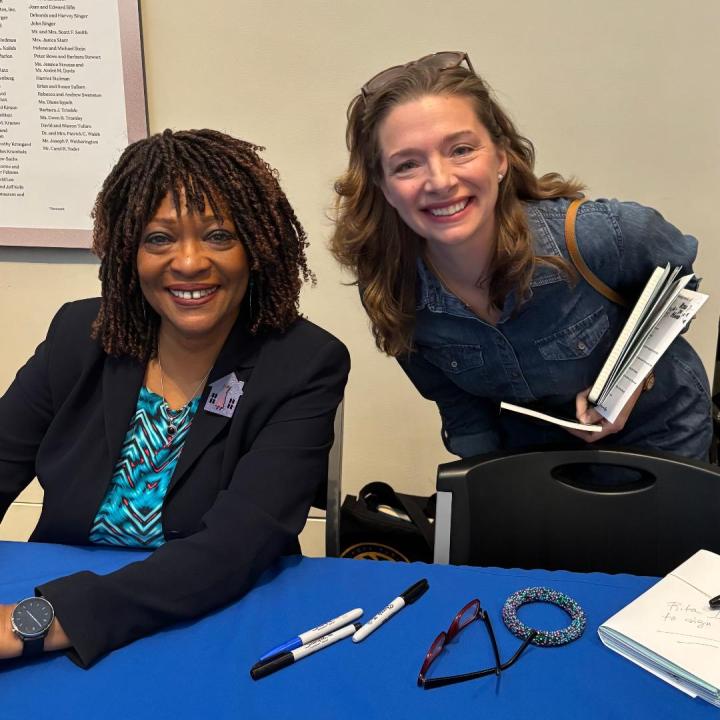
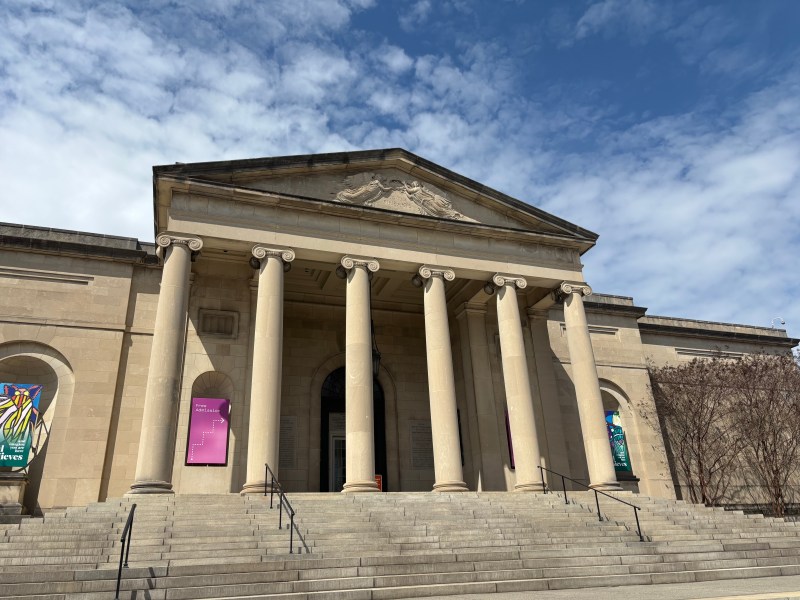
My weekend of creativity continued on Sunday, when I took one of my sons with me to hear Akron, Ohio, native poet Rita Dove (who received the National Humanities Medal from President Bill Clinton the National Medal of Arts from President Barack Obama—the only poet ever to receive both medals) at the Baltimore Museum of Art. (Thank you to co-sponsor Johns Hopkins Center for Talented Youth!) The little I knew of Dove, I learned from talking with Akron’s own David Giffels in an interview right here at Rust Belt Girl. This poetry reading was my son’s first, and so now he is ruined for all other poetry readings, I’m afraid. But what a way to go down!

As I’m wont to do, I took a notebook and jotted images I liked from the poems she read. Here are several lines from Dove’s beautiful work, which I smushed together like a found poem, a found Dove poem:

scabbed like a colt, our stuttering pride
my Cleveland cousins, hachety smiles
we were a musical lantern
tired of singing for someone else
what you bear is a lifetime of song
if you can't be free, be a mystery

There are few things that improve with age. Wine is one. Hutzpah is another, and don’t you know my hand was the first that shot up during the Q&A with Dove? Since I knew I’d be writing about this reading for Rust Belt Girl, I asked her what it meant to her poetry to be from the Rust Belt. Her answer was really interesting. She talked about understanding and appreciating work and its value from her family members and neighbors. She talked about the value of diversity, including a strong Hungarian presence among the immigrant groups in her part of town. A singular place, she also noted the term that makes Akron its own unique think: the “devil’s strip” for the tree lawn or berm between the sidewalk and the street. What do you call that strip, where you’re from?

Dove also talked about her journey from aspiring musician to poet. (She still plays the cello.) She noted that she was very shy and didn’t want to get up in front of people and so turned to words. Ha. There we were, all 200 or so of us. She later learned to play the viola de gamba and took voice lessons, and learned to sing opera, which helped her to “embody the words” in her poetry. She has worked with musicians on song cycles, collaborations that helped her feel “less afraid of being bold.”

I’ll end there. I know I wish for that. Here’s to words in poems and in song—and to being bold.

Now it’s your turn: tell me, if you’re a writer, have you been to AWP? Do you plan on attending next year? How do you quash FOMO in your creative life or otherwise? And how do you tap into your boldest self?

Hankering for Rust Belt author interviews, book reviews, and more? Check out my categories above. I hope you’ll follow me here, if you don’t already, so you never miss a (quite infrequent) post. Thanks! ~Rebecca
Enter your email address to subscribe to this blog and receive notifications of new posts by email.

Light in the Darkness: Literary Chiaroscuro in the Work of Tove Jansson

Photo by Tristan Pokornyi on Pexels.com

Warning: I am full-on author-crushing right now. The author: Tove Jansson (1914-2001), Finland’s most famous writer-illustrator, who introduced the world to the Moomins–a family of peace-loving trolls brought to life in illustrated children’s books–and also wrote some really fantastic literature for adults.

In light of the first feature film about Jansson releasing next month, I’ve recently devoted much of my reading time to her novel, The Summer Book, and her short stories. All capture Finland from the inside–in a way no travelogue ever could. Thank goodness for translations (and Thomas Teal, in particular, who translated much of Jansson’s work into English). Since I don’t read Swedish–Jansson was born into Finland’s Swedish-speaking minority–or Finnish. I’ve got enough on my plate trying to capture moments in Finland’s history in my novel-in-progress, set in part in this Nordic place–at once beautiful and dangerous, light and dark, like the best photograph, painting, or story. I’m looking for and finding much inspiration in Jansson’s work.

Read more

What your reading arc says about you

Image by Giacomo Zanni from Pixabay

Hi, and how are you?

If you’re well, I hope you’re reading. If you’re reading, maybe you want to consider your reading arc. I never really had before. But, a Twitter contact, @MattWeinkam, associate director of Lit Cleveland, proposed a fun exercise for us reader sorts:

Chart your reading arc from childhood to present day in 10 books. After a bit of thinking, here’s mine:

A Very Young Dancer>Are You There God? It’s Me, Margaret>Their Eyes Were Watching God>Come to Me: Stories>The Innocent>The Fortunate Pilgrim>Angela’s Ashes: A Memoir>Bel Canto>Magdalene: Poems>The Book of Delights: Essays

Of course, there are so many books I love that I had to leave out. If I had 11 slots, I would have added a craft book: maybe Stephen King’s On Writing, which was probably the first craft book I read; or maybe the classic, Donald M. Murray’s The Craft of Revision, which I return to again and again, of course; or maybe the recent Meander, Spiral, Explode (I talked about that one here) by Jane Alison, which upended so many writing “rules.”

What does my reading arc say about me? A lot you already know.

I was a dancer, myself, and a Catholic, drawn to the story aspects of both, I suppose. At 19, I moved from Ohio to Virginia–I left out my Tom Robbins obsession (remember Jitterbug Perfume?). College days brought courses like African American Autobiography and opened my eyes to stories outside what my mom had on her bookshelves from college in the 60s.

Short stories were my entry into the craft of writing–and Amy Bloom is one of my favorite story writers. (Good story collections are great writing teachers.)

Grad school left little time for pleasure reads, but when I could, I liked early Ian McEwan and books that informed my own writing.

If it’s not dance, song in story is a running theme. And for this writer who managed to get an MFA without writing a poem, I read a lot of poetry these days–and essays and hybrids of all sorts. And I think, you could say, I’m arcing toward joy in my reading habits.

I hope that means I’m arcing toward joy in life. I need it now more than ever.

So, show me your reading arc–in the comments or on your own blog. You might be surprised at what it reveals about your reading and your life.

Let’s read together. Check out my categories above, with Rust Belt author and photographer interviews, essays, stories, book reviews, writing advice, and more. Are we social? Find me at FB and at Twitter @MoonRuark

My musing on “The Everyday” at Ruminate Magazine

Happy Saturday to those of you around my side of the globe. A quick check-in: I know, I know, you just heard from me the other day with my take on Elena Ferrante’s My Brilliant Friend, the first of the Italian author’s Neapolitan quartet of novels exploring female friendship and much more. And, before that, I shared my dreams (and distractions) for 2020.

This year, I’m resolved to enjoy this writing-and-blogging community, the slow slog meditative process of writing and publishing, and the paths down memory lane I take as I write. And while I typically craft fiction–find some of it here at stories–I responded to a nonfiction call from the editors at Ruminate Magazine for readers to ruminate on “The Everyday.” That prompt led me to think of the joys of special holidays–like the baptism of my guys 10 years ago–and the joys of the mundane: Ordinary Time, ordinary time, and a warm piece of bread.

If you have a moment, my short essay (the second of the readers’ notes) is a two minute read–as are the other ruminations from readers around the country. But you might just want to stay a while, so we can, as the magazine’s About page says, “practice staying awake together.”

What are you ruminating about today?

See my mini-essay at Issue 54 The Everyday Readers Notes. (Scroll down.)

a bit of writerly advice for July 20, 2019

Free image courtesy or KathrynMaloney at Pixabay.com

It’s been a long time since I’ve shared some good writing advice from an author. This piece comes from Ross Gay, award-winning poet and essayist, whose latest collection, The Book of Delights: Essays came out earlier this year. He’s also a professor at Indiana University and a big sports fan and former college football player–and what delights Gay are many and varied things, which is, for this reader, delightful.

Before I share his advice, I’ll share a story: I’m a little embarrassed to say that while I’m only 27K into my new WIP, I already have its epigraph–you know, the quote or quotes at the start of a book that suggest theme. In my WIP’s case, the working themes are around loss, sorrow, and joy. Loss we can all try to get our heads around together.

But sorrow is really loaded–especially for me as a Catholic. Funny thing, a friend of ours recently learned what my family’s parish is called. “Our Lady of Sorrows,” he said. “How depressing.” I’d never thought about the name, a common descriptor for Jesus’s mother, Mary, as depressing. For, like Mary’s, our sorrows are borne together; sometimes, they’re necessary, even life-changing, lifting us all up. I couldn’t articulate this to our friend at the time, but his words got me to thinking about the transformative power of sorrow.

That’s about when I started reading Ross Gay, and who knows if his words will stick as one of two quotes in the epigraph of a novel not even half finished, but these words of his, from his essay “Joy is Such a Human Madness,” have served as a good thematic guide:

What if we joined our sorrows, I’m saying. / I’m saying: What if that is joy?

Ross Gay, The BOOK Of Delights: Essays

About the time I jotted this quote down was when I learned that Gay, like this aspiring author, is a Northeast Ohio native–making the possibility that I might one day hear him read in person pretty decent. (Joy!)

Until then, I’ll read his poems and essays and delight in learning about this inspirational author through interviews, like this one with Toni Fitzgerald in The Writer, in which Gay talks about his writing inspirations and process–our writing advice for the day:

…usually it’s thinking, reading, studying, trying to find something that turns you on and going for a bit.

Ross Gay