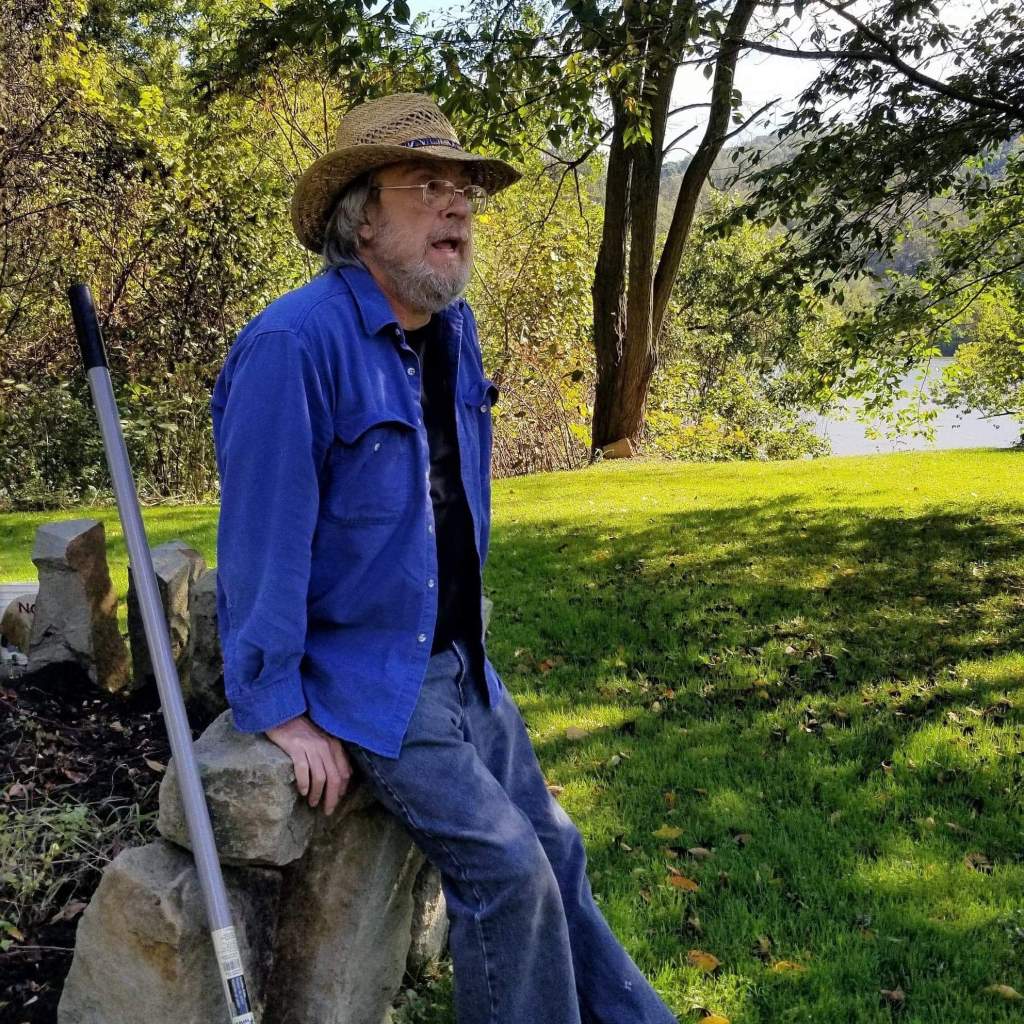
A review of Avoiding the Rapture by Karen J. Weyant

By Marjorie Maddox

In Karen J. Weyant’s first full-length book of poetry, Avoiding the Rapture, there is no avoiding the evocative and sometimes contradictory landscape and convictions of the Rust Belt. In a town defined by its bars and churches, river and railroad tracks, closed factories and forbidden swimming holes, Weyant gives us both the desire to leave and the need to cleave. No matter our background, she makes this space ours—ownership and rebellion a familiar if not always pleasant home.

We begin with belief so strong it takes hold of a town—“Every girl I knew got religion/at the same time they caught Disco Fever.” Salvation is a type of escape to be embraced or rejected. “Facing uncertain futures,” the poet explains, “we waited to be whisked away in [both kinds of] sparkle.” And yet by “avoiding the rapture,” she counters, “[w]hen everything disappears, everything you see will be yours,” a mixed motivator for a place that when you aren’t reveling in it, you’re scheming a quick departure.

Within this back-and-forth identity quest, the narrator looks for signs and visions in roadkill rising from the dead, in Jesus in dryer steam at the local laundromat, in “one of the Horsemen/in the hind leg of a Holstein cow,” and in “saints/in real estate signs buckling under buckshot.” There are also “man-made miracles” where the narrator­­ “dump[s] grape juice into Gallagher Run,/hoping the muddy swirl would turn into wine,/. . . [or] pretend[s] the stale angel food cake. . . was really manna.” 

Woven throughout the book is a sequence that often begins “The Girl Who…” and perceptively defines identity. “The Girl Who Parted Mill Creek with Her Toes” offers nature as one way to “ignore the grown-up talk/of factory closings, lost jobs, and foreclosures.” This path also allows for leaving the church while retaining its lore and, at times, alure. For example, the post-industrial mass exodus of families is linked to the narrator’s Exodus-like parting of the creek with her toes. Likewise, in another poem, an abandoned and deteriorating church evolves into a new type of sanctuary.

Throughout, insects swarm, dazzle, or sting. There is “the drone/of factories in a metallic round of cricket song” and “june bugs hurling against back doors.” Not unlike the town’s inhabitants, in “To the Girl Who Talked to Summer Insects” “[s]ome insects were silent, others angry or lost.” Elsewhere, mayflies—“ghost stories [come] alive”—become reminders “we lived among the dead.” The plague-like buzzing of blackflies usher in arguments over money and heat. “June/ [is] heavy with horseflies. . . .cicada shells. . .cracked under our feet.” In dreams, butterflies get “caught in backyard grills”; in real life yellowjackets die in/escape from a flaming nest; the narrator rescues grasshoppers from a ball of ice. Eventually, end-of-the-world prophesies drown out miracles.  

In this way, even the word “miracles” begins to lose its mystery. In family life, the word becomes synonymous with describing impossible situations: a truck that “would need a miracle to get through the summer,” a sister who “would need a miracle to get through high school,” and a father who “would need/a miracle to get a job at his age.” 

As tensions increase in the run-down town, so does the narrator’s desire for flight. “[W]e planned our new world. . . . we knew we had to leave,” she recalls. The coming-of-age departures are small and large: heels, makeup, drinking, boyfriends with the nicknames of beers, the recognition that, on many levels, “every ripple has danger” and that [r]eal girls learn to toughen/the soles of their feet. . . .Accept . . .fate.” 

That doesn’t mean, however, that there aren’t moments of daring and flight. Through sheer determination, the narrator “[spins] in the August heat until [she] could fly.” Bravely, she catches bees or reaches out to touch a two-headed calf. We watch as her father helps her bury a dead bird. Always drawn to water, she listens to rivers talk and “sw[ims] late at night/in the gravel pit pond.” She counsels, “Follow the fireflies.”  

In these ways and others, Avoiding the Rapture whoops and hollers with independence and survival. It is a stirring, well-crafted ode to place, where “girls still ride the beds of pickup trucks . . . .[and] learn how to catch maple seeds/in their teeth, and how to spit them out.” It is a depiction of individuals who, even if they don’t learn to fly, learn to balance while wind “comb[s] through their long hair.”

Here’s to the young women of the Rust Belt, fiercely and perceptively portrayed in Karen J. Weyant’s new collection, Avoiding the Rapture.  
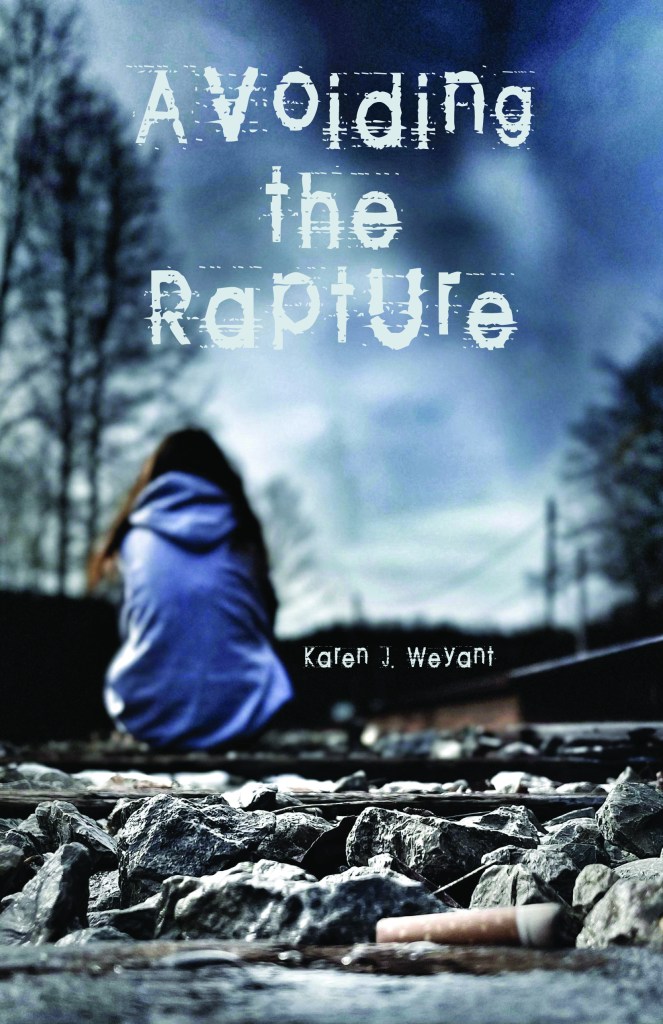

Avoiding the Rapture

By Karen J. Weyant

Riot in Your Throat $17


Karen J. Weyant‘s poems and essays have been published in Chautauqua, Crab Creek Review, Crab Orchard Review, Cream City Review, Fourth River, Lake Effect, Rattle, River Styx, Slipstream, and Whiskey Island.  The author of two poetry chapbooks, her first full-length collection is Avoiding the Rapture. She is an Associate Professor of English at Jamestown Community College in Jamestown, New York.  She lives, reads, and writes in Warren, Pennsylvania.


Professor of English at the Lock Haven campus of Commonwealth University, Marjorie Maddox has published 14 collections of poetry—including Transplant, Transport, Transubstantiation (Yellowglen Prize); Begin with a Question (International Book and Illumination Book Award Winners); and the Shanti Arts ekphrastic collaborations Heart Speaks, Is Spoken For (with photographer Karen Elias) and In the Museum of My Daughter’s Minda collaboration with her artist daughter, Anna Lee Hafer (www.hafer.work) and others. How Can I Look It Up When I Don’t Know How It’s Spelled? Spelling Mnemonics and Grammar Tricks (Kelsay) and Seeing Things (Wildhouse) are forthcoming in 2024. In addition, she has published the story collection What She Was Saying (Fomite) and 4 children’s and YA books. With Jerry Wemple, she is co-editor of Common Wealth: Contemporary Poets on Pennsylvania and the forthcoming Keystone: Contemporary Poets on Pennsylvania (PSU Press) and is assistant editor of Presence. She hosts Poetry Moment at WPSU. See www.marjoriemaddox.com 


Rebecca here, with many thanks to Marjorie for this beautiful review of Karen’s poetry collection. I can’t wait to dig in! What are you reading and writing this month, as we start working our way through the new year? Let’s discuss in the comments.

Are you a Rust Belt poet or writer? Do you write book reviews–or conduct interviews of Rust Belt authors? If so, think of Rust Belt Girl for a guest post, like this one. And check out the handy categories above for more writing from rusty places.

Find me on FB and on IG, Twitter, and Bluesky @MoonRuark

And follow me here. Thanks!

Enter your email address to subscribe to this blog and receive notifications of new posts by email.

“Mad Dog,” “Steel Poet” Tim Russell: a literary reflection by poet and publisher Larry Smith 

For those who don’t know poet Timothy (Tim) Russell, I want to introduce you to as solid a working-class poet as there is. Tim qualifies as a working-class poet not just because he wrote of that life (as did famed James Wright and Kenneth Patchen), but because he also lived it. He worked for 20 years as a boiler repairman in the Weirton Steel plant ‘til his lupus (MDS preleukemia disease) forced him to retire. He retired from the labor but not from the life and not from writing. For the next 30 years, he and his wife Jodi and kids lived along mile 61 of the Ohio River in small-town Toronto, Ohio. 

Tim Russell, featured in the book, A Red Shadow of Steel Mills (1991); photo credit: Jodi Russell

The Ohio River along the West Virginia panhandle is a ripe area for steel mills and poets.

I grew up about 20 minutes south of there in Mingo Junction, about 20 minutes north of Martin’s Ferry, Ohio, where Wright grew up. The Ohio River along the West Virginia panhandle is a ripe area for steel mills and poets. In 1991 David Shevin and I edited A Red Shadow of Steel Mills (a line from Wright) which included poetry chapbooks of Tim Russell, Richard Hague, David J. Adams, and Kip Knott. It was one of our first books in the Working Lives Series from Bottom Dog Press. 

Last month, other poets and I gathered with his family and friends for his memorial, at which Jodi and grandkids spread Tim’s ashes in the river about a block away from their home. Here’s a bit of West Virginia Poet Laureate Marc Harshman’s eulogy quoting Tim’s poem, “Plano.”

Because hills are not on the maps,
it's easy to get lost here, distant
neighborhoods appear to be adjacent.

“Even though I lived a long time in the rural heart of Appalachia,” Harshman said, “those words obviously ring true for Tim’s urban mill town as well. And it is ‘easy to get lost here,’ but Tim’s poems seemed always to be pointing a way, providing an anchor, enabling us, his readers, and his friends to feel just a little bit less lost. That’s a gift, a gift worth remembrance at any time but certainly here, today, as we do our best to remember and to honor Tim and know this is one of many reasons we miss him.”

Tim’s poems seemed always to be pointing a way, providing an anchor, enabling us, his readers, and his friends to feel just a little bit less lost.

In the mill, Tim was nicknamed “Mad Dog”; among poets he was the “Steel Mill Poet,” though he is equally a fine nature poet. A sample of his work reveals how enmeshed he was with the mills and his place, its people, and their language: 

In Adversa  by Timothy Russell

March is the nuthatch
skittering head-first
down the bare black walnut
or the bare silver maple.

April is forsythia
beneath hazy pastel willows
weeping over the bank
of the orange creek.

May is mock orange
scattered like mortar explosions,
the most delicate mist
rising all around.

June is the red squirrel
fleeing the blue joy
both of them caught in the morning
sun crackling in the sycamore.

August is sulfur
moths twirling above the crown
vetch, deer prints in silt
at the culvert.

September is crab
apples, so red
on the roadside
near the Tin Mill
carpenter shop.

October is a buck
swimming the river,
climbing the gray slag bank
toward red and yellow
trees on the island. 
Tim Russell; photo credit: Jodi Russell

Tim authored many books, each winning prizes and literary recognition. He is the author of the chapbook The Possibility of Turning to Salt 1987, which received the Golden Webb Award, 1987; of In Dubio 1988, which received State Street Press, 1988; and of In Medias Res, 1991. His full-length book, Adversaria, in 1993 received the Terrence des Pres Prizeia Poetry (Tri Quarterly Books). Chapbooks What We Don’t Know Hurts, 1995, and Lacrimae, 1997, followed; his haiku writing received the 4th Shiki International Haiku award Shiki team, Ehime Prefecture, Japan, 1999.

In Integrum by Timothy Russell

I’ve put my white shirt on
to celebrate my neighbor’s glaring roof,
the brick chimney leaning against its
own shadow,
the next of black branches above it all
dissolving into brilliance.
I’ve put my white shirt on
to celebrate cookies on a plate downstairs
and the pears and oranges in a bowl
with one perfectly curved banana.
I am celebrating the Christmas cactus
blooming in March.
I am celebrating nothing.
I am celebrating today.
I’ve put a white shirt on.

How did Tim share his days? Besides parenting, his wife Jodi says, “Tim tended to his gardens along the Ohio riverbank and built a stone henge across from his house fondly called ‘Tim Henge.’ He also grew poppies, zinnias, and sunflowers in it throughout the years. Battling knotweed on the hillside, he turned it into a bird and wildlife sanctuary. He would ride along the banks of the river in his boat collecting garbage and debris trying to keep the river clean. He was mindful of sharing and taking care of the earth for everyone and everything.”

Tim had a great sense of humor and a fine sense of image and form. He uses the common language to touch us. A world-published poet, he wrote many haiku and won many prizes with them, including a trip to Japan. Here is the last haiku he wrote, a few days before he died:

                 Snoozles
        The little dog knows
                 I’m toast 
   
                       – 9/13/21

A fund has been established at the University of Pittsburgh, Tim’s alma mater. It will help support a freshman majoring in English Creative Writing. Donations may be made online at http://www.giveto.pitt.edu/russellmemorial or a check may be made payable to “University of Pittsburgh” with a memo “Timothy W. Russell Fund” and mailed to: University of Pittsburgh, P.O. Box 640093, Pittsburgh, PA 15264-0093. 

~~~

Timothy W. Russell was born May 25, 1951, and raised in Follansbee, West Virginia. As a sergeant of the U.S. Army during the Vietnam Era he served as a handler of Military Police Sentry Dogs 1970-1972. He had graduated from Madonna High School (1969) in Weirton and following the war, went on to receive his bachelor’s degree from West Liberty College (1977) and master’s degree in Creative Writing from the University of Pittsburgh (1979). He passed away on September 16, 2021, at 70.

~~~

Larry Smith grew up in the industrial Ohio River Valley and graduated from Muskingum College and Kent State University with a doctorate in literature. He taught at Bowling Green State University’s Firelands College for over 35 years and is the author of 8 books of poetry, 5 books of fiction, a book of memoirs, 2 literary biographies, and more. He’s written film scripts for “James Wright’s Ohio” and “Kenneth Patchen: An Art of Engagement” and is director of Bottom Dog Press/Bird Dog Publishing in Ohio. He reviews for New York Journal of Books. Bottom Dog Press hopes to publish the collected poems of Timothy Russell soon.

Header image of Ohio River is credited to Larry Smith

~~~

Rebecca here–many thanks to Larry Smith for this beautiful tribute to the the life and work of Tim Russell. Please visit Bottom Dog Press’ website for his Working Lives series…and much more.

Are you a Rust Belt poet or writer? Do you write book reviews–or conduct interviews of Rust Belt authors? If so, think of Rust Belt Girl for a guest post. And check out the handy categories for more writing from rusty places.

Find me on FB and on IG and Twitter @MoonRuark

And follow me here. Thanks!

Enter your email address to subscribe to this blog and receive notifications of new posts by email.