This October I attended my eighth annual Fall Literary Festival hosted by Lit Youngstown. It was the Ohio literary organization’s ninth—and final—fall lit fest (at least for now). I could just be weepy about it (I’m weepy about much these days, tbh), but I’m too grateful to stay weepy. Since it’s a weekend to do grateful, let’s get into it…
Don’t worry, Lit Youngstown itself—with all of its amazing programming–is going strong at 10 years old. But before I get into my 2025 lit fest roundup I want to take a moment to share a few highlights from lit fests gone by (forgive my literary nostalgia), in no particular order:
Novelist Rachel Swearingen telling us craft session participants to, “Write towards change.” And “Stop thinking about characters and start thinking about relationships.” (Fiction writing changemaker right there!)
Me, getting to tell my story of my mom’s protesting of a nuclear power plant near my hometown when I was a kid (I wrote about it here) and detailing how that story turned into an integral part of my eco-novel (published someday, world!)
Exploring ekphrastic writing at the Butler Institute of American Art (great museum road-trip idea for you out of towners!) and exploring Youngstown writ large (getting to stay with friends and enjoying the local cuisine (there will never be enough pickle pizza, noggin-sized meatballs, and pierogis!))
Getting to be a student of Sandra Beasley, Ross Gay, Lawrence Coates, and so many other teacher-writers and getting to tell them over charcuterie and a glass of wine: “you wrote my favorite poem, essay, novella, thank you…”
Meeting writer friends (like the talented Melissa Fraterrigo) in person after years of reading her work (her novel Glory Days inspired a lot of what I’ve been trying to highlight at this blog these last nine years or so—stay tuned for a review of her memoir in essays, pictured). And meeting other friends year after year and weaving our stories—and lives—together.
The highest highlight? You. Becoming a member of the Lit Youngstown community through the fall lit fest has been incredibly rewarding for my literary life—and my life-life. Thank you, friends.
Now, 2025’s list fest was one for the books. (Peruse a few pics above and below.) And if you thought the environmental theme was going to mean a slew of nature poems…well, yes, and… Yes, and fascinating eco-fiction and challenging environmental memoir and poetry about nature redefined—from a place that was once an indigo plantation to the night sky over the Grand Canyon to trails cut by troubled teens into the Pacific Northwest woods—and so much more that “shapes our experience and identity, and represents our rootedness in earth.” Whew! I encourage you to read the impressive bios of the five 2025 featured presenters.
My preparation for this lit fest happily began months in advance of the event. (Once a student, always a student.) For my conversation with fiction writer David Huebert and memoirist and poet Sean Prentiss I read several of their books—she gestures to collage artfully displayed on her office floor—representing an array of what we lump under the term “environmental writing.” Look for a follow-up post with a good chunk of our discussion—fascinating and fun!
Other personal highlights from this year’s lit fest. (Know that this is just a fraction of the offerings and I, once again, wished I could have cloned myself, so I could make every single session.):
Day 1:
Narrative Medicine [definition: healthcare practiced with narrative competence]: A Generative Workshop, facilitated by family nurse practitioner and poet Dana Reeher. Imagine me taking furious notes for the anthology project I’m co-editing: Body of Work, essays at the intersection of dance and health. For a little workshop exercise, Dana asked us participants to respond to a writing prompt, “an expansive invitation to open the mind,” so I thought I’d write a very short piece about my own dancing and its impact on my physical and mental health outlook:
Maybe the mistake was I listened too well, that I pointed my feet too hard, that I really could feel that string coming out of the top of my head lifting me up to the studio ceiling. Maybe I postured too much, wanted too much. Maybe I turned out until I was turned in. Maybe all that looking in the mirror made me someone else. I can still spot a dancer, or an anorexic, from fifty paces.
My dancer friends here will likely recognize a lot of this, but especially the posture-reminder telling baby ballet dancers to imagine there’s a string coming out of the top of your head… After sharing my short piece of writing, a couple of the other workshop participants said the string image reminded them of a marionette. I’d never thought of that before, and I’ll tell you that image is still working on me!
The Pamela Papers: A Mostly E-pistolary Story of Academic Pandemic Pandemonium: The Musical. Based on the award-winning novel by Nancy McCabe, published by Outpost 19 in 2024, the presentation included a dramatic reading (with singing—who was expecting a musical at the lit fest? Not I. And it was such fun!).
Readings by David Huebert and Sean Prentiss in St. John’s (gorgeous limestone and stained glass) Episcopal Church sanctuary. Your girl provided introductions to both writers—thanks for putting up with my unorthodox investigative process to make sure they were exciting, guys!
Day 2:
Bengal Tiger Moments: Time Perception in Creative Writing, facilitated by Sean Prentiss. In this fascinating session, we talked about speed on the page, presented in five categories from fastest to slowest: Gaps, Summary, Scene, Dilation, and Pause. Sean presented examples of these techniques from creative nonfiction and explained the brain science behind our understanding of the movement of time—irl and on the page.
Rooting the Self: Writing as an Act of Person, Political & Environmental Transformation & Transcendence, a multi-genre workshop with (beautiful and talented) Rebe Huntman, author of My Mother in Havana: A Memoir of Magic & Miracle: Rebe took us through various stages/ways of honoring our voice and our writing by making space for it and celebrating it, including meditation, morning pages, repetitive activity (including list-making), “the writing cave,” and writing constraints and freewrites. My favorite prompt, a list-making exercise we did in this session, produced these lists, below. (From there I spun out a short prose piece, “Reasons to Revere Your Vagus Nerve” (we’ll see where that weirdness goes!):
5 Things I Consider a Miracle
High arches
Warm pie
The vagus nerve
Sweating carafes of water
Tanned leather
5 Recurring Obsessions
Ballet hands
Song
Accents, dialects, and regionalisms
Mom, mom, mom
Delight
Readings by poets Lauren Camp, Todd Davis & Kourtney Morrow: poems of cityscape to countryside to the night sky over the Grand Canyon left us audience members awed.
Days After
And then, after… there’s nothing better than returning home from a literary event inspired, nurtured, and with a few new ideas for writing already on the page.
If you’re reading this on Small Business Saturday, might I suggest you also read small and lit small by supporting your local indie bookstores and your favorite literary organizations today?!
Did you attend Lit Youngstown’s Fall Literary Festival last month? Another lit fest? What was your favorite part? Have an inspiration gleaned or a piece of writing captured you’d like to share? Feel free to jot it in the comments.
Like this post? Comment below or on my FB page. And please share with your friends and social network.
Are you a Rust Belt writer interested in seeing if your own post, or author interview, or book review might be right for Rust Belt Girl? Hit me up through this site’s contact function.
Check out my categories above for more guest posts, interviews, book reviews, literary musings, and writing advice we can all use. Never miss a post when you follow Rust Belt Girl. Thanks! ~Rebecca
Marjorie Maddox’s new poetry collection, Small Earthly Space (Shanti Arts Publishing, 2025) accompanies a series of dreamy digital visual collages by artist Karen Elias. Together, they depict a world not only fraught with imminent disaster, but one of beauty and hope. Maddox’s poems, inspired by Ali Smith’s lyrical novel, Companion Piece, place the curlew as a central, and recurring figure in the collection. Like a canary in the coal mine, Maddox’s curlew warns about the environmental devastation that is happening now.
Known as the bringer of bad omens in Celtic folklore, forecasting bad weather, sorrow and death, the curlew, with its haunting cries, is also associated with the passing of seasons, rebirth, and renewal. “When our planetary conditions render even the saints tongue-tied and stuttering,” Maddox writes in the introduction, “the bird appears as guide, as psychopomp, as Beatrice in a kind of Dantean descent,” requiring us to “grow humble,” to “pass through the smallest of doors” and experience “the long, slow burn of loss.”
Maddox’s poems are also deeply religious and read like prayers or holy visions. “How far would you go for wisdom?” Maddox asks in “Dive Down,” where she links humanity’s fate with nature’s and invites the reader to dig deeper and discover those epiphanies hidden in daily life, to find “one drenched syllable of rescued hallelujah.” In “Tightrope Walker,” we are instructed to “unzip all our divisions” and position ourselves on the “fine line that binds sky and dirt” and “welds together every season of belief and reason.”
Known as the bringer of bad omens in Celtic folklore, forecasting bad weather, sorrow and death, the curlew, with its haunting cries, is also associated with the passing of seasons, rebirth, and renewal.
“Still Life: 1950s,” which opens section two, leaves nature and moves inward. The poem speaks of the fraught relationships of generations and the societal demands placed on mothers. “What can be said to the perfect mother?/Poised, she smiles beautifully but doesn’t hear.” In the accompanying collage, Karen Elias has created a powerful scene: the mother as a stone statue, sitting in on the sofa, elegant and demure, yet deaf to the needs of her daughter, who crouches on the stairs, doing her best to “protect… this beautiful sculpture,” not daring to speak unpleasant syllables, words that might cause her mother grief, or destroy the facade of their silent perfection.
Other poems speak of the uncertainty and allure of the unknown that lies just outside the boundaries of our perceptions and manicured lawns, and the anxiety of returning to a home that only survives in memory: a place full of phantoms, where picket fences turn to stone. “Strange Light,” the eerie black and white photo collage that accompanies the poem “Calling Hours: August 21, 2017,” has a bed that floats on water in an otherwise empty room. From the window the eclipsed sun, like a voyeur, peers in. The poem uses the eclipse (the first total eclipse since 1979 to be visible from anywhere in the U.S. mainland) as a metaphor for the death of a loved one. “What can harm us lingers there/beneath the bright posthumous display/of the body…” Maddox writes, noting that “looking directly or too long/into the face of the loved” could, like looking at the eclipsed sun, permanently harm us.
Throughout these poems of impending environmental and spiritual doom, a tempered hope permeates, a hope made possible by our faith and resilience, as well as our willingness to accept blame for the state of the world. In “Snapshot,” the dead arise and call for mercy. “Will you listen?” Maddox asks, like the prophets of old. “Will I?” she responds, before observing, “The earth/waits impatiently.”
The curlew returns in “The Witnesses” to see the devastation wrought by the 2018 wildfire in Curlew, Washington. “Smoke rewrites the sky,” Maddox writes, as “Flames attack its map and habitat.” The collection ends with a nod toward Emily Dickinson. “The curlew is the thing,” Maddox states in “Hope Is the Thing with Feathers.” It is “The beak wildly waving its frayed/but flapping ribbons/of persistence, of hope.”
Throughout these poems of impending environmental and spiritual doom, a tempered hope permeates, a hope made possible by our faith and resilience, as well as our willingness to accept blame for the state of the world.
The poems in Small Earthly Space are a dire plea to take up arms against the “Chaos/of this human-caused catastrophic carnival.” With an “ecstasy of words” Maddox dares us to “Embody the action of verbs” and “Delete the expected ending,” to imagine a world where “IF” still exists. In Maddox’s vision, however, imagining isn’t enough. It is our responsibility in the here and now to do something to ensure a better future, a world brimming with the “intoxication of possibility.”
Jason Irwin is the author of three full-length poetry collections, most recently The History of Our Vagrancies (Main Street Rag, 2020), and the memoir These Fragments I Have Shored, forthcoming from Apprentice House Press. In 2022 he was a Zoeglossia Fellow and took part in the Poetry Foundation’s Disability Poetics Project.
Like this post? Comment below or on my FB page. And please share with your friends and social network.
Are you a Rust Belt writer interested in seeing if your own post, or author interview, or book review might be right for Rust Belt Girl? Hit me up through this site’s contact function.
Check out my categories above for more guest posts, interviews, book reviews, literary musings, and writing advice we can all use. Never miss a post when you follow Rust Belt Girl. Thanks! ~Rebecca
I’m thrilled to present the second in a series of guest posts interrogating place here at Rust Belt Girl. Christina Fisanick is a champion for Appalachian writing–and Appalachian voices, young and old. (Read her whole bio below.) “Taking the Cow Path to Culture” appears in her book, Pulling the Thread: Untangling Wheeling History, which was published in 2024 by North Meridian Press.
Taking the Cow Path to Culture
by Christina Fisanick
Route 88 meanders through the Ohio Valley countryside, connecting the city of Wheeling, West Virginia, to Oglebay Park and small, rural towns and farms along the way. More significantly, for some, Route 88 is the lifeline that carries students, faculty, staff and visitors to two of the area’s oldest institutions of higher education, West Liberty University and Bethany College. This important role earned Route 88 the seemingly humorous moniker, “The Cow Path to Culture,” and is a standing metaphor for much of life in the northern part of the Mountain State and throughout Appalachia.
Route 88 was once an actual cow path upon which animals were herded across the farmlands of the region. Like many other places in the country, it made more sense to locals to pave the beaten cow path than to blaze a new trail as modes of travel advanced. But as has been somewhat painfully obvious over the last century, maintaining the well-trodden road might not be the best way to go.
In 1893, a minor New England poet, Sam Walter Foss, wrote a poem with a major message. “The Calf-Path” tells the story in verse of a path driven by a calf through Boston, which, after years of other animals, and eventually humans, following the path, was paved and became a major thoroughfare. The funny, yet poignant, poem takes readers on a journey through time and encourages deep thought about life decisions. Mainly, Foss wonders, why should we continue going down the same road in deed and thought when it might not be the most direct or even the best route?
Just like the calf path in the poem, Route 88 rambles and turns and plunges on its trek from Wheeling past Oglebay Park beyond the farmlands and homes and on to West Liberty University and then Bethany College. I commuted to West Liberty in the 1990s and cursed the winding road more than once during the icy winter months. My classmates and I anxiously wondered who would build a college on top of that hill? More so, we jokingly wondered how we made it to graduation.
We were not the first students to ponder such things. A 1972 Sports Illustrated article tells the tale of four student-athletes from Israel—Avraham Melamed, Moshe Gertel, Yoel Kende and Danny Stern —and their “250-pound Irish Catholic coach,” Tom Grall. The students were recruited for the West Liberty swim team. Avraham Melamed described their journey from the Pittsburgh airport along Route 88 in harrowing, awe-struck terms then concludes: “It was easier getting from Ramat Yohanan [Israel] to Pittsburgh than it was to get from Pittsburgh to West Liberty.” Writer Mortin Sharnik paraphrases Melamed:
“All roads do not lead to West Liberty, but one that does, Route 88, is called the Cow Path to Culture. The Israeli was taken on a more scenic route, a roller-coaster ride over a ribbon of cracked concrete, with no guardrails to prevent a car from taking a shortcut down a ravine. Melamed kept his nose pressed to the car window, looking for the bright lights. Instead, he saw farms, strip mines and hairpin curves.”
The effort, of course, was worth it. The Israeli students went on to make the swim team as winning as West Liberty football, which at the time the article was written had two consecutive undefeated seasons. More so, they earned great educations from the oldest institution of higher education in the state of West Virginia.
While Sharnik’s article is a fascinating and humorous look at the past, it is the title that catches my attention: “Wandering Jews in an Unpromising Land.” Clearly, Sharnik was playing on the students’ ethnicity and well-known Biblical references. Regrettably, the term “unpromising” is simply the same old stereotype of West Virginia arrived at by taking the same old mental cow path. Now, 46 years later, that cow path has been paved over again and again, and few people outside the state (and even within its borders) are willing to blaze a new trail. West Virginia needs to free itself of the shackles of presupposition that continue to hold us back from achieving greater success.
These stereotypes not only negatively color West Virginia, but all of Appalachia. We are told time and again by the popular media (and even ourselves) that there is nothing here. Appalachia is a wasteland, people say. A no man’s land of little possibility and less opportunity, they echo. And more often than not, this lack is blamed not on politicians or exploitive company owners, but on Appalachians themselves.
This blame goes back decades to early literature, TV shows and movies that exploit the region’s hardships for book sales, ratings and box office records. Few can forget The Beverly Hillbillies and their clueless, backwoods characters with hearts of gold or the psychologically deranged figures from Deliverance. Popular culture tells us that Appalachians are poor, willfully ignorant souls who are too lazy to improve their lots in life. These ideals have been further entrenched by presidential “poverty tours” conducted by presidents and other politicians throughout the 1960s to prove to the American people outside the region that Appalachians are poor, white trash that need their help.
Unfortunately, many of our own people have embraced these ill-conceived views of ourselves and live accordingly. Of course, we never see ourselves as morally-bankrupt, ne’er-do-wells, but we willingly believe it of our neighbors. J.D. Vance does this in Hillbilly Elegy, of course. He encourages the country to continue to blame Appalachians for our misfortunes. It is our own fault that we suffer from the world’s highest rates of opiate addiction, he argues. It is our own fault that many of our children live in poverty, he states. By continuing to claim that Appalachia’s poor are responsible for their own conditions, the nation’s eyes can be averted, not out of guilt but out of blame. Our country’s hands can be washed clean since Appalachians create our own misery and wallow in it.
It is easy to see why this particular cow path has been well-worn and paved over. It is to the benefit of politicians whose pockets are lined with money from the oil and gas industry to continue to shame and blame our people so that they never ask for more. Our land has been raped of resources while our people have been underpaid and exploited. None of this could happen if not for desperation and mentally following a well-worn cow path that leads to broad, self-defeating conclusions about poverty, drug abuse, and job loss.
Even now, young men fight for jobs in the dying coal industry for the promise of what they believe once was but will never be (again). Now is the time to take a different path. One that is not littered with stereotypes and preconceived notions. I am reminded, as I am sure you are by now, of another poem that urges readers to take the road “less traveled by.” I urge you, my fellow West Virginians, imagine a different life for yourselves and for generations to come. I’ll always take the cow path to culture to serve my alma mater. West Liberty University is in my heart forever. But my mind will be on a different metaphorical route that allows for new possibilities for West Virginia, Appalachia, and its people.
We no longer have to play the role of eager simpletons to keep our jobs. There are no jobs. Let’s create our own through education, new industries, and innovation. A change in mindset will make all the difference. In this moment we must abandon who we are told we are and become who we know we are. We are West Virginians. We are Appalachians. Toughened by adversity, wizened by necessity, and softened by empathy.
Dr. Christina Fisanick is the author or editor of more than 30 books and dozens of articles, essays, and poems. Her latest book, Pulling the Thread: Untangling Wheeling History, is a collection of essays focusing on little known stories from Wheeling’s past. She is currently working on an historic novel which takes place at Fostoria Glass in Moundsville, WV, in the years immediately following WWII and co-editing an anthology, “We Are Here!”: New Writing from Northern Appalachian (forthcoming for University of Kentucky Press). In addition, Fisanick is an English professor and an internationally recognized scholar in the teaching of digital storytelling as public history. Fisanick serves as the president of the Writers Association of Northern Appalachia (WANA) and the co-host of WANA LIVE!: The Reading Series. Learn more: christinafisanick.com.
Doesn’t this essay just get you thinking? What are a place’s histories, byways, characteristics, and quirks–and how have they shaped its people and its art? How have they shaped the stories we tell? For this series, I suspect we will get some fascinating answers to these questions and many more I haven’t thought of. I hope you’ll join in and share your thoughts!
Like this post? Want more? Comment below or on my FB page. And please share with your friends and social network.
Are you a Rust Belt writer interested in seeing if your own post, or author interview, or book review might be right for Rust Belt Girl? Hit me up through this site’s contact function.
Check out my categories above for more guest posts, interviews, book reviews, literary musings, and writing advice we can all use. Never miss a post when you follow Rust Belt Girl. Thanks! ~Rebecca
Thank you, thank you to Jason Irwin, who kicks off a series of guest posts at Rust Belt Girl, and to you, for being here! What is a Rust Belt place–and who defines the perameters? What does post-industrial mean today? What are a place’s histories, characteristics, and quirks–and how have they shaped its people and its art? How have they shaped the stories we tell, and what have those stories meant for Grit Lit and Rural Noir writing and for other mediums of creative expression? For this series, I suspect we will get some fascinating answers to these questions and many more I haven’t thought of.
A guest post by Jason Irwin
Though I have used film in the past, as well as digital cameras, I consider myself an amateur. I owned a flip phone for 22 years but finally gave in and bought a smart phone during the summer of 2024. Do I love my smart phone? Well, no, but it makes life easier, and I do love the camera feature.
I believe my photos are already out there waiting for me to stumble upon. I like taking photos of people naturally, most often without them knowing I’m taking their photos. I prefer them off-center. I also like wide-open, desolate landscapes and cityscapes: derelict, sometimes abandoned buildings, windows, doorways, big skies, fields, and bodies of water. My hometown of Dunkirk, New York, is a perfect place for such photos. I hope the three photos in this post show this.
Serendipity, the storefront boutique in Madison, Indiana, looked lost in time to me, as my wife and I drove past. Maybe not in the 50s but still lost in time. Using the grayscale setting on my Samsung smartphone ads to the notion that this photo is older than it appears. Madison is her hometown, or rather Deputy, an unincorporated rural community about 18 miles northwest of Madison. Just outside the borders of what the Britannica website’s map marks as the Rust Belt. Madison was first settled in 1805, five years before my hometown of Dunkirk. Though not a Rust Belt town, Madison, like Dunkirk, was once a railroad town. The Madison and Indianapolis Railroad was completed in 1836. The first train stopped in Dunkirk on May 15, 1851, and at the time it was the last stop on the New York and Erie Railroad.
I chose color for the photo of the old Regent movie theater, which closed in the late 1980s, but still stands, minus its marquee, on the corner of Washington Avenue and Third Street in Dunkirk, because of the recent addition of the mural, which pays homage to Dunkirk’s Hispanic and African American communities. As a child I went to the Regent, owned by Mr. Burget and his sad-eyed basset hound, to see movies like Back to the Future, E.T., and Rocky II. Many nights my mother would have a craving for popcorn, and she’d park our car out front and send me in to the concession stand to buy a large tub with extra salt and butter and then we’d go home and eat it while watching TV.
The harbor in Barcelona, New York (a former fishing hamlet a few miles north of the village of Westfield), was where one of the scenes from the 2020 movie A Quiet Place Part II staring Cillian Murphy was filmed. Besides its huge commercial fishing industry that died out in the 1970s, the area is home to various wineries and agriculture, including Welch’s Grape Juice. Just out of frame to the left, up a small hill sits the Barcelona Lighthouse. Built in 1829, it is the first gas-powered lighthouse in the world. My father was born next door in the lighthouse keeper’s cottage in 1941. The grayscale setting gives this photo an eerie presence, but I love how the trees reflect in the water.
Jason Irwin is the author of three full-length poetry collections, most recently The History of Our Vagrancies (Main Street Rag, 2020), and the memoir These Fragments I Have Shored, forthcoming from Apprentice House Press. In 2022 he was a Zoeglossia Fellow and took part in the Poetry Foundation’s Disability Poetics Project.
Like this post? Comment below or on my FB page. And please share with your friends and social network.
Are you a Rust Belt writer interested in seeing if your own post, or author interview, or book review might be right for Rust Belt Girl? Hit me up through this site’s contact function.
Check out my categories above for more guest posts, interviews, book reviews, literary musings, and writing advice we can all use. Never miss a post when you follow Rust Belt Girl. Thanks! ~Rebecca
Last month’s AWP (the Association of Writers & Writing Programs) Conference & Bookfair—think writer-prom—wasn’t in the cards for me this year. My rational brain knew this, but that doesn’t mean I didn’t suffer from some FOMO. Writer friends, the warm L.A. sun, and the lure of the unknown—will I meet the literary agent of my dreams in the hotel bar?!—are attractive elements, for sure. But I decided to save my pennies and hold out for next year’s event in nearby Baltimore. (Who’s in?)
Really, that March weekend, I hardly had time to wallow in my FOMO (the name of my upcoming memoir, stay tuned, ha). But seriously, the indomitable Justin Hamm, poet and super solid literary citizen, created StayWP, an online poet and writers conference, to slake our literary thirst, as it were. What’s better than poetry in your pajamas!? Here’s a sampling of what us nearly 100 participants from around the country enjoyed from Friday evening through Sunday evening:
Readings from novelists including Mark Ostrowski and poets including Sean Thomas Dougherty
Generative workshops with titles like “Where the Poetry Rises like Dough Workshop” and “Rooted in Place,” led by former Missouri Poet Laureate Karen Craigo, which I attended, and “Like it’s my job. (‘Cause it is): Writing, Motherhood, and the (Re)Formation of Work”
Enthralling discussions, including “In Dialogue,” “Casting Spells for the Future,” and “Power of the Poet Posse” (that’s a gang I could get behind!)
Saturday, my super talented friend Shemaiah Gonzalez (whose debut collection of essays launches next week!) hosted a generative workshop over Zoom. The hook: How do you even begin to get ideas on what to write: let alone something joyful? Looking at three pieces of writing, we participants came up with our own. I got a couple really good starts for essays and even a prayer (for our sweet neighbor who snowplows our drive in the winter, even before he does his cousin’s drive next door).
One of the prompts was so intriguing I’ll share it, paraphrased, with Shemaiah’s permission. We were asked to draw a sketch of a place we knew well: a home, or place of work or worship. Then, we were to pick a specific spot to interrogate. I think about writing about place a lot here on the blog, but Shemaiah made that importance plain: “We write about place because place is where we keep our stuff.” And, of course, the stuff we choose to keep is important to us. I ended up writing about the rattan rocking chair—the best seat—my dad would often occupy when our family would go out on to the porch to watch rain showers. (My kids think it’s hysterical we did this. But then I also truly enjoyed The Waltons. It was a different time.)
My weekend of creativity continued on Sunday, when I took one of my sons with me to hear Akron, Ohio, native poet Rita Dove (who received the National Humanities Medal from President Bill Clinton the National Medal of Arts from President Barack Obama—the only poet ever to receive both medals) at the Baltimore Museum of Art. (Thank you to co-sponsor Johns Hopkins Center for Talented Youth!) The little I knew of Dove, I learned from talking with Akron’s own David Giffels in an interview right here at Rust Belt Girl. This poetry reading was my son’s first, and so now he is ruined for all other poetry readings, I’m afraid. But what a way to go down!
As I’m wont to do, I took a notebook and jotted images I liked from the poems she read. Here are several lines from Dove’s beautiful work, which I smushed together like a found poem, a found Dove poem:
scabbed like a colt, our stuttering pride
my Cleveland cousins, hachety smiles
we were a musical lantern
tired of singing for someone else
what you bear is a lifetime of song
if you can't be free, be a mystery
Baltimore Museum of Art
Piece of art from artist Raúl de Nieves
Yes, I got it signed and it’s special. What should I read next?
Rita Dove and me (taken and posted with the poet’s permission)
Baltimore street scene–gotta love some row houses
There are few things that improve with age. Wine is one. Hutzpah is another, and don’t you know my hand was the first that shot up during the Q&A with Dove? Since I knew I’d be writing about this reading for Rust Belt Girl, I asked her what it meant to her poetry to be from the Rust Belt. Her answer was really interesting. She talked about understanding and appreciating work and its value from her family members and neighbors. She talked about the value of diversity, including a strong Hungarian presence among the immigrant groups in her part of town. A singular place, she also noted the term that makes Akron its own unique think: the “devil’s strip” for the tree lawn or berm between the sidewalk and the street. What do you call that strip, where you’re from?
Dove also talked about her journey from aspiring musician to poet. (She still plays the cello.) She noted that she was very shy and didn’t want to get up in front of people and so turned to words. Ha. There we were, all 200 or so of us. She later learned to play the viola de gamba and took voice lessons, and learned to sing opera, which helped her to “embody the words” in her poetry. She has worked with musicians on song cycles, collaborations that helped her feel “less afraid of being bold.”
I’ll end there. I know I wish for that. Here’s to words in poems and in song—and to being bold.
Now it’s your turn: tell me, if you’re a writer, have you been to AWP? Do you plan on attending next year? How do you quash FOMO in your creative life or otherwise? And how do you tap into your boldest self?
Hankering for Rust Belt author interviews, book reviews, and more? Check out my categories above. I hope you’ll follow me here, if you don’t already, so you never miss a (quite infrequent) post. Thanks! ~Rebecca
William Heath, born in Youngstown, grew up in the nearby town of Poland. A graduate of Hiram College, he has a Ph.D. in American Studies from Case Western Reserve University and has taught American literature and creative writing at Kenyon, Transylvania, Vassar, the University of Seville, and Mt. St. Mary’s University, where the William Heath Award is given annually to the best student writer. He has published four poetry books: The Walking Man, Steel Valley Elegy, Going Places, and Alms for Oblivion; three chapbooks: Night Moves in Ohio, Leaving Seville, and Inventing the Americas; three novels: The Children Bob Moses Led (winner of the Hackney Award), Devil Dancer, and Blacksnake’s Path; a work of history, William Wells and the Struggle for the Old Northwest (winner of two Spur Awards and the Oliver Hazard Perry Award); and a collection of interviews, Conversations with Robert Stone. He received a Lifetime Achievement Award from Hiram. He and his wife Roser live in Annapolis, Maryland.
Let’s begin with a taste of “Steel Valley Elegy” from William Heath’s poetry collection of the same name. Here’s the first stanza:
I speak Steel Valley American. Once mills
lined the Mahoning River from Youngstown
Sheet and Tube’s Jeannette Blast Furnace
on Brier Hill to Republic Steel in Struthers.
Coal intensified to coke turned iron ore
into molten ingots that were rolled into slabs,
scarfed free of impurities, shaped for strength:
bridges to span waters, girders for skyscrapers,
tanks, ships, guns, and shells to win World War II,
machines and factories for our bounty.
What I love about this poem is how the poet unearths the beauty (and more obvious power and destruction) present in industry, a beauty borne by the transformation of a thing, like dirty coal, to another thing, like shining steel.
The transformation is accomplished by people and fire, which always lends to these scenes of the mills a sense of the miraculous for me, something to be found among the gods of Olympus. And if I spin out this analogy, steelworkers are mini gods then, prone to falling from on high, of course—so much transformation and story in this history of our shared native place.
William, you are from one of my favorite adopted cities, Youngstown, Ohio (“Little Chicago,” as you call it in the above poem). Can you tell us about your Rust Belt upbringing and how it perhaps sparked your creative work? Or has informed it? Did you dream of becoming a writer and teacher when you were young? How did place factor into those dreams?
I was born in Youngstown in 1942, spent my first six years in Gerard. I have few memories of that other than a big snow that we kids tunneled under and riding a neighbor’s large dog. My parents, Oberlin graduates, were teachers; my dad became principal at Hays Junior High in Youngstown; my mom substituted a lot in a variety of subjects. The family moved to Poland, a small New England style town nearby where my memories begin. Like most boys I was interested in sports and girls, not necessarily in that order; the poems that start off Steel Valley Elegy are based on my boyhood. For better or worse, I was better at sports than girls, especially basketball and track. Poland High won the sectional tournament, which meant beating the best Youngstown teams, then lost to Warren in the next round (I was guarded by the future Ohio State and Cleveland Browns star Paul Warfield). In track I qualified in the high jump for the state tournament in Columbus, where I was an also-ran against that top competition (no small school/large school divisions then).
When I was a boy I wanted be a high school history teacher and a basketball coach, then at Hiram College I widened my perspectives: switched from Republican to Democrat, decided to become an English professor. Since teenage boys love to brag, what was most notorious about my area were Mafia wars to control a gambling game called “the bug,” resulting in many bombings, at least a dozen deaths; Youngstown was dubbed “Little Chicago.” I never witnessed first-hand any of that violence, but when I was visiting my cousin in posh Shaker Heights, I saw the aftermath of a shooting described in “A Hit in Shaker Heights.” I once was a suspect in a robbery at a boathouse where I worked in the summers that brought me to the dreaded Youngstown police station for a lie-detector test, see “An Inside Job.” In sum, I lived a fairly typical small town Midwest boyhood, with the usual teenage antics that feature in some of my poems, while next door was a thriving steel city with a lot of good-paying union jobs but also a gangland war between the Cleveland and Pittsburgh mobs.
Your literary influences are many. With a Ph.D. in American studies, you became a professor, poet, and novelist. Your 1995 novel, The Children Bob Moses Led, is about the civil rights moment in Mississippi. Mississippi is fairly far afield from your Ohio beginnings. Can you talk about the inspiration for this historical novel?
After majoring in history with a minor in English at Hiram, I went to Case Western Reserve University in American Studies. As a college teacher, I realized my students knew little about the civil rights movement. I began my writing career as a poet, then switched to writing fiction, and decided to write a novel about Freedom Summer in 1964, when college students, mostly white, went to Mississippi where three young men were murdered by the Klan shortly after they arrived. That courageous effort was a moral high water mark of my generation, and I wanted to write a true account of it. Bob Moses (a charismatic Black man from Harlem who had studied philosophy as a graduate student at Harvard) was the key SNCC leader, indeed he was a legend in the movement; he died a few years ago and lamentably is largely forgotten. I had participated in the March on Washington in 1963, not Freedom Summer; I knew about the civil rights movement but not nearly enough. I devoted many years of research to the project, my most important archives were the SNCC papers at the Martin Luther King Center in Atlanta and the invaluable Sixties files at the Wisconsin Historical Society in Madison. My wife and I made several trips to Mississippi where I interviewed Black and white participants in Freedom Summer. I have a wealth of stories about those experiences, one is recounted in Alms for Oblivion, “Preacher Knox.” Several of my other poems about the South appeared in The Dead Mule School of Southern Literature, my favorite name for a poetry magazine.
I like to think that my skills as a novelist, historian, literary critic, and poet enrich each genre.
The Children Bob Moses Led was published by Milkweed Editions who made it their feature fall selection and nominated it for the Pulitzer Prize. It did win the Hackney Award for best novel, was reissued as a paperback, and then re-printed by NewSouth Books (now a part of the University of Georgia Press) in a twentieth-anniversary edition. It has sold the most of my novels and has been used in classes from junior high to graduate studies. My multi-award winning history book, William Wells and the Struggle for the Old Northwest, has also sold well and remains in print. Both books epitomize my interest in American Studies, since I was able to draw upon my extensive interdisciplinary training to cover multiple aspects of the topic to make them valid history and vivid literature. I think my early years as a poet also served to give my prose a distinctive tone. I like to think that my skills as a novelist, historian, literary critic, and poet enrich each genre.
You began publishing your poetry in the 60s. Can you talk about the differences between writing the novel and writing poetry? Have you found that there are seasons of life for each, when you are drawn to one form or the other? Or is it that the subject matter demands the form? Can you talk a little about your creative intuition or your creative process, or both?
My first teaching job was at Kenyon College, then the epicenter of contemporary writing thanks to John Crowe Ransom’s Kenyon Review, which drew a host of talented students and teachers to that lovely campus in rural Ohio. I attended his 80th birthday party and met several famous authors, including Robert Lowell, Kenneth Burke, Peter Taylor, et. al. Carl Thayler, an older student who had been a bit player in Hollywood films and was intensely interested in poetry, also brought writers to the campus—that is how I met Toby Olson and Paul Blackburn, who encouraged me to write. For the first fifteen years of my college teaching career I wrote mainly poetry and published some hundred poems in various little magazines, but that did not carry much weight when I came up for new contracts and tenure. Thus I went from Kenyon, to Transylvania (where my poetry writing improved markedly), to Vassar; in 1979 I was selected as a Fulbright professor of American literature at the University of Seville.
During phase one of my poetry career, I was influenced by William Carlos Williams, James Wright, Philip Levine, as well as other poets who wrote free verse with a sharp-eyed realism about the gritty side of American life. I was drawn to the idea that poets should be grounded in specific images that evoke the world of the poem and resonate with readers. I read poetry widely in those days and had strong opinions about many poets. At some point, however, I made a major mistake: I decided that the next poem I wrote should be better than the previous one; not surprisingly that proved counterproductive. I also was frustrated that my focus on poetry stood in the way of obtaining a permanent place in my profession. At Vassar, I solicited comments from contemporary poets I admired, but did not know personally; as a result I received high praise from James Wright, Philip Levine, Richard Wilbur, and others that was certainly encouraging, although their kind words did not move the tenure committee at Vassar.
More than one critic has noted your adept storytelling in your poetry. Do you come to a poem with a story in mind you’d like to tell? Or do you usually begin with an image and a story emerges from it? Can you point to a poem of yours I haven’t mentioned here that tells a particularly necessary or good story?
I like to tell stories, covering a wide range of topics; I think that is one of my strengths. My first poetry book, containing the best of my early work, The Walking Man, opens with “The Boy Who Would Be Perfect,” a true story based on a summer I spent as a counselor at a camp in the Adirondacks teaching boys from wealthy Jewish families in Great Neck, Long Island, how to play tennis. As it turned out, two of ten boys in my cabin were mentally disturbed, something I had not been told; they proved to be very difficult. I conflate the two boys into one in the poem, which is true to what transpired. That summer I also took my campers at night to see black bears (they didn’t believe bears existed anywhere near them) feeding at a garbage dump—but that’s another story yet to become a poem.
When I returned to writing poetry following my retirement in 2007, I realized that many of the stories I liked to tell had poetic possibilities—a particular focus and sharp images—so I turned them into poems. Steel Valley Elegy opens with autobiographical poems that tell stories; my next book, Going Places, features stories about the two years I lived in Seville, the next section contains poems based on the years (when you add up all the extended visits) I spent in or near Barcelona, where my wife was born. My most recent book, Alms for Oblivion, has narrative poems, a few several pages long. Some narrative poems are not from personal experience, rather on the experiences of my generation, such as “Chicago 1968,” “Bringing the War Home,” “Shut It Down,” “At the Commune,” and “Jail, No Bail.” As with The Children Bob Moses Led, they are designed to put the Sixties into critical perspective.
Your most recent poetry collection, Alms for Oblivion, is broken into six parts. Part II is titled Flyover Country. The poem by the same name concludes: “We folks down below look up / and out … Beware of our resentment.”
Reading that poem, of course the notion of “flyover journalism” comes to mind, when a place’s stories are told by outsiders. As I am like you, a NE Ohio native living on the East Coast, I’m wondering, how do you keep at least somewhat rooted to your native region in your work? Through memory and history? Do you return to Ohio? Are there literary organizations, local news outlets, or podcasts you seek out for a current, local perspective?
What is your relationship now to the notion of Flyover Country, and why do you think it keeps popping up in your work, despite having lived on the East Coast for many years now?
As you note, “Flyover Country” tries to capture how people in the Midwest feel about the rest of the nation looking down their noses at them. This is not always true, but has become an article of faith; the resulting “resentment” helped lead to the disastrous, in my view, reelection of Donald Trump, who has no interest in or understanding of the Midwest but an uncanny ability to play upon people’s fears and anxieties. My parents have been dead for years, but my sister still lives in Delaware, Ohio, and I visit her every year or so. I have attended the Buckeye Book Fair in Wooster, the Midwest Historians Convention in Grand Rapids, the Youngstown Lit festival, and the Ohioana Book Festival in Columbus. That enables me to keep in touch with what is happening on the ground in Ohio and elsewhere (I also lived in Kentucky for five years). I must admit I am delighted to do a Rust Belt Girl interview, because like you I love the Midwest (even if I sometimes weep for it).
For better or worse I am not a high tech person; my cell phone stays in my car, I respond to Facebook posts but rarely post myself; I’m on Linkedin but never use it; I have never twittered; when asked for my twitter name I sometimes respond “Curmudgeon.” This dates me, I know, yet I really would welcome poetry lovers who are active on the internet, if they are so inclined, to promote my work. I would love to see one of my poems go viral! George Bilgere, a poet we both admire, did include “The Vet” on his wonderful Poetry Town recently. And Grace Cavalieri featured me on her “The Poet and the Poem” series from the Library of Congress.
Before you lived in Maryland, you and your wife, the novelist Roser Caminals-Heath, lived in Europe and traveled extensively. While remaining rooted to your past, your poetry takes the reader to foreign shores, as it were. “The Starlings of Rome” is one I particularly like. Here are the first few lines:
At setting sun hundreds of thousands
swoop and swarm over the Vatican
and other vital organs of the city.
What I notice in these lines is a simplicity and a precision in the language and—and I might be reaching—a return to the body. We’re talking about starlings making their ethereal patterns in the sky; yet “organs” brings us back to ourselves, back to earth then. Do you see it this way? I’d love to know how you developed your poetic style that is at once reaching and reachable, if that makes sense.
I’m grateful you asked about my wife Roser, who as you mention is a distinguished writer in her native Barcelona. She writes in Catalan, a distinct language from Spanish, and has published ten highly praised novels, one won the prestigious Saint Joan prize. Steel Valley Elegy contains poems set in the United States, while its companion volume, Going Places, is set abroad. I met Roser when I was a Fulbright in Seville and she was at the University of Barcelona. For years we spent our summers at Vilanova i la Geltru on the coast, then her parents moved to Frederick, MD until their deaths. We love to travel, not only in Catalonia, which Roser considers a separate country from Spain, but extensively in Europe and elsewhere, including Russia, Morocco, Egypt, Turkey, Canada, the Dominican Republic, Guatemala, and Mexico. Our most exotic trip was to Nuku Hiva, in the Marquesan Islands, for a Melville conference. A few poems in Going Places are set in countries I have not visited in person, only in my imagination. Especially in my poems set in Spain and Catalonia, I try to speak not like a tourist and more like someone with personal knowledge of a people and place.
As you mention concerning “The Starlings of Rome,” my poems are based on concrete images and thus have “body.” The starlings make marvelous spirals in the sky, suggesting a spiritual dimension, while their droppings present a major problem. It’s that double-sided nature of life that appeals to me. The “Starlings” poem is part of a sequence detailing how strangely other creatures sense the world with its good and bad vibrations. Wallace Stevens once said “the greatest poverty is not to live in the physical world,” and William Carlos Williams added “No ideas / but in things.” Hence the human body and the “body” of the world are essential to me in poetry, which should draw on all of our senses—taste, touch, sight, hearing, smell. In my fiction, I also ground my work in a lot of physical detail, “How the weather was,” as Hemingway once said. Hence I keep my characters in fiction, and the speakers in my poems, in voice, each with a distinctive way of saying things.
With eco-fiction booming and nature poetry always compelling, I read with interest “The World at Low Tide,” which feels like a nature poem and cautionary tale all at once. Here’s the first stanza:
High above spruce trees
the rosy breast of a soaring gull
catches the glory of the risen sun.
Seabirds skim over tide flats
waiting to feed on what waves
bring in and leave behind.
Can you talk about the inspiration for this poem or other nature poems of yours? Does living on the crowded coast put into stark relief our relationship to the water and earth we call home? How does this place infuse your poetry?
Although I’m from the landlocked Midwest, I am very fond of coastal settings, especially the Mediterranean but also here in Annapolis on the Chesapeake Bay where we have lived since 2022. Every summer we go to Lewes, Delaware, for a week at the beach; and in the winter to Key West (I have written poems about both places). As Melville wrote, “meditation and water are wedded forever,” which also brings to mind a haunting Robert Frost stanza:
They cannot look out far
They cannot look in deep
But when was that ever a bar
To any watch they keep.
These lines capture the poignant, sometimes troubling, limited nature of us human beings. I must admit the lines are more troubling nowadays, since Trump’s re-election. I had hoped for more from my fellow citizens than they were able to give. As I say in one of my yet to be published poems on the election: “we are not / who we think we are / or pretend to be.”
Coastal areas do draw out a meditative dimension in us, I think, we gain a deep sense of time since we know the ocean and its waves have been doing the same thing for eons, and will continue to do so. Not much seems to change in the short term, but in the long run we know that continents shift position, species come and go, and thanks to climate change and human limitations, our species may not be around as long as we like to assume it will. I try to write poems that capture something of the processes that surround us: how do I love thee / let me count the waves, as the poet might have said.
As a professor for many years, what poem did you most love to teach—of your own, of another poet, either historical or contemporary? And why?
When I taught poets I admired like Whitman, Dickinson, Williams, Stevens, Frost, et. al., I used to look first for short poems—I call them “program poems”—that suggest what the poet’s sensibility and assumptions are. Williams’ “The Red Wheelbarrow” poem, for example, is by no stretch a major poem, yet it is a concise introduction to what he is up to in terms of images; then I would move on to poems I did consider major like “To Else,” the one that begins “beat hell out of it / beautiful thing.” A favorite statement about what makes a poem good poetry is by C. S. Lewis, which goes something like “To Write a great love poem, you may or may not have been greatly in love, but you must love language.” “On Poetry,” in Alms for Oblivion, is one of my attempts to say what poets should aim for. I would place my own poems in a tradition that goes back to Catullus, whose blunt, often obscene poems broke through social and poetic decorum to strike us with an irrepressibly lively human voice. Another favorite, by the way, is Keats’ “What shocks the virtuous philosopher delights the chameleon poet.” While opinions will always differ, I do believe that some poems are much better than others, and I made an effort to teach poems I thought were a poet’s best (I often disagree with those selected for anthologies). As a poet I use the analogy of baseball: a single is a poem, a double is a good poem, a triple is a very good poem, and a homerun is, well, a homerun. The more students are taught to appreciate those “homeruns” the better. Value judgments are relative, but they not absolutely relative.
I’m enthralled by creative couples. How do you and your wife inform each other’s work or creative life?
Contrary to popular belief about literary couples, my wife and I are not jealous of each other’s work and we see ourselves as co-conspirators in our life and our writing. Unfortunately, because I know very little Catalan, I can offer her no help with her prose, although I do serve as a sounding board for her ideas as a novel is in progress. I hope that I am of help in that way. Roser, on the other hand, is of enormous help to me. She reads drafts of all my work. I try to give her what I consider a polished draft—when it returns from her red pen I realize how wrong I was—and this serves as a welcome stimulus to try harder, as revision follows revision. I believe that the best poetry and fiction are written in a kind of reverie, producing rough drafts that must then be revised with lucidity. Vladimir Nabokov used the analogy that his pencils outlive his erasures. Everything I write is revised numerous times, a process I find very satisfying, since I always feel even the smallest changes make a manuscript better. I am astonished and appalled by the notion that all works of literature are created equal and value judgments are of no value. Why would any author strive so hard to write as well as possible if that were the case? When I wrote fiction, Roser often accompanied me on my research trips, some quite memorable like our various visits to Mississippi—Indiana, not so much—and I always enjoy going with her to Barcelona for her media interviews and other PR events related to the publication of one of her novels.
What are you reading and writing right now?
When I retired in 2007 to devote myself to writing, the first ten years of that resulted in a novel, Devil Dancer, begun during my Fulbright years in Spain then revised multiple times before coming out as a book. During the decade I also published a historical novel, Blacksnake’s Path: The True Adventures of William Wells, and a history of his life, William Wells and the Struggle for the Old Northwest (University of Oklahoma, 2015), which won two Spur Awards from the Western Writers of America and the Oliver Hazard Perry Award for military history. It is still available in paperback and sells well at book fairs and my talks at history centers. I didn’t devote myself fully to writing poetry again until 2017. Since then I have published some 350 poems and three full-length poetry books plus three chapbooks.
My next poetry book, Not My Country, will open with poems about the dangers Donald Trump presents to our democracy. While I think my poems stand out for my distinctive voice, the way I move a poem down the page, and the wide range of topics I dramatize, I believe poets are obligated to reflect what’s happening around them. The re-election of a person who is literally insane, with an acute case of malignant narcissism, presents a daunting challenge for our country that must be addressed; I plan a series of viable poems that depict the situation. Other sections of the book will deal with my usual topics: autobiography, meditations, Americana, travels abroad, and so forth. Some titles already published that will appear in my next book suggest that most of my poems won’t be about our dire political situation: “Killer Whales Attack Yachts Off Gibraltar,” “Trigger Warnings,” “Men’s Book Club,” “Walt and the Supremes,” “Prime Time,” “Bass Man,” “A Trip to Montreal,” and “Big Man on Campus.”
Since I’ve returned to writing poetry full time, my reading habits have changed. In my first incarnation as a poet I read as many poets as I could to find out whom to admire and emulate while keeping my own signature. I wrote a short poem about the process: “read a lot of poetry / until it starts / coming out your ears / then listen.” During the decades I was mainly a novelist, historian, and literary critic, my reading was in those genres, while now I read mostly poetry and books that I think might stimulate my poetic imagination. A good example of the latter is Ed Yong’s An Immense World, which inspired me to write a sequence of nature poems that appear in Alms for Oblivion. Some of the poets I’m reading nowadays are old friends, David Salner, Holly Bergon, Hope Maxwell Snyder, and Kit Hathaway, as well as new discoveries like George Bilgere, Bob Hicok, and David Stevenson. I also make good use of my extensive library that contains the selected or collected poems of many important poets.
I always keep in mind the words of William Carlos Williams that “it is difficult to get / the news from poems,” as well as his lines addressed to an old woman: “I wanted to write a poem / that you could understand / for what good is it to me / if you can’t understand it?” Most people are baffled by poetry, and go into a sort of panic mode when presented with poems to read. My poems are not “obscure,” I write in the American idiom in lines that are concise, direct, and clear. My poems often, as we noted, tell stories, and their images speak to each other, providing coherence and resonance. This year I once again will be working to open my imagination to new poems and trying to find the best words to bring them to life.
Signed copies of William Heath’s books can be at Bill’s Books, a part of abebooks.com.
Like this interview? Comment below or on my fb page. And please share with your friends and social network. Want more? Follow Rust Belt Girl. Thanks! ~ Rebecca
Last month, I attended Lit Youngstown‘s 8th annual Fall Literary Festival. From modest beginnings, the writing conference has grown to welcome some 200 attendees each year. Proud to be among them, I served on the planning committee for a couple years, have served as a session moderator, read my own creative work, sat on an editors’ panel, and, this year, engaged a featured writer in a conversation about her writing craft, process, and life.
I’ve met most of my writer friends through this literary festival. (You’re probably nodding your head, reading this. Such joy those in-between conversations, Elise, Susan, Jeremy!) Writers come to this conference for the genuine connections, the generative craft sessions, inspiring creative readings, and Youngstown pizza (or maybe that’s just me?). I was thrilled to walk away having experienced an abundance of all of the above again this year!
Can I entice you to make the trip, next year? Let’s hope this rundown does just that. (And, bring your friends.)
Day 1
My first day of the festival began with meeting Rachel Swearingen, Chicago-based author of the award-winning story collection How to Walkon Water. After reading through her stunning book, twice, I had a feeling Rachel would have a lot to teach fiction writers, like me, about the craft of writing–and the inspiration behind it. Her morning session, “The More the Merrier: Juggling Multiple Characters in a Single Scene” tackled one of those age-old fiction-writing conundrums: how to make the dinner party (or other large group) scene sing, rather than sink.
Main takeaway: big group scenes can invite drama and suspense (think: Shirley Jackson’s “The Lottery”) but things can go awry when the writer hasn’t anchored the scene. Especially helpful to me was Rachel’s discussion of panning out and zooming in, as if we’re creating a scene on film. Featuring compelling examples from classic and contemporary stories, Rachel illustrated how great writers make scenes active to “write toward change.” For those of us (all of us?) who sometimes struggle to create a propulsive plot, these tips promised to help us give our stories the jhuzh they need!
One thing I love about literary festivals is the opportunity for literary escape. (And not just geographically.) I make it my mission to get outside my usual genres and comfort zones. I’m not joking when I say it’s only been a few years since I learned what ekphrastic writing was. So, taking part in an ekphrastic poetry workshop is far outside my usual lane. Of course, I jumped at the chance, when I learned that award-winning poet (and dancer!) Ama Codjoe was leading a workshop titled “Doorways into Ekphrasis” held at the Butler Institute of American Art, right across the street from our festival headquarters. (Confession time: I usually play hooky for one session of a festival or conference to visit a museum or gallery or other local arts hotspot; this time, I didn’t have to.)
Crowdsourcing time: help me find the name and artist of the piece I wrote about, please! Yes, I stared at a stunning piece of transparent, aqua glass sculpture–two rectangular columns, one larger and standing, one smaller, reclined–and didn’t write down the name of the piece or artist. The three minutes we took to examine the art we chose, without jotting a note–which should be 10 minutes, says Ama–honestly felt like hours. But this works, folks.
It’s fascinating now to look back at the notes I made after my examination and see how I went from describing the artwork’s material–ruined glass, panes shattered, shards–to the artwork’s position and pose–teetering, discarded, toppled–to what the pose might suggest: he has dropped his partner, who does not shatter, small glass tower sheared. Finally, I wrote a little in lines, inspired by the art:
How many the pains of art we
layer and nudge and shimmy?
How shiny this body, this instrument,
until we lay it down, sharded,
but not discarded, dust to dust,
sand to glass to sand.
For my last session of the day, I caught up with a couple writers I follow on social media but had yet to meet in person, so I was thrilled (and got their books I brought from home signed–yes, I’m that kind of literary nerd). The prolific and super generous Sean Thomas Dougherty and Jennifer Sutherland (her debut collection is Bullet Points: A Lyric) are poets who spend some time writing in the “slipstream,” in between literary genres. They and Sarah Carson and Cynthia Maria Hoffman read from their work and talked about what writing in between genres (is it a poem, nonfiction flash, a prose poem?) means for their work and creative outlooks. I was so rapt by the writers’ creative readings that I didn’t take many notes, but I did take this gem down from Sean Thomas: “We push against genre” so forms can (paraphrasing here) dissolve and come together again to address neurodiversity, trauma, and more.
Day 2
I am often reluctant to read my creative work in public. Poetry is meant to be read aloud; not so fiction. However, I thought it might be instructive to read from a blog post I wrote here at Rust Belt Girl and then read the resulting scene that appeared in a story of mine published in Great Lakes Review last year. Like public journaling, I find blogging fertile ground for planting the seeds of story. Pro tip: keep your reading short and everyone will like it.
Thank goodness I read first, because there is no way I’d want to follow memoirist Kelley Shinn or poet Rikki Santer, whose readings were nothing short of incredible. Kelley is the author of the memoir, The Wounds That Bind Us, which I bought at the bookstore directly after her reading from it (I got the last signed copy: conference win!). Rikki read from her collection, Resurrection Letter: Leonora, her Tarot, and Me, which was inspired by the surrealist painter Leonora Carrington–fascinating stuff.
Later that day, Rachel and I joined “in conversation” in a small theater to discuss her stunning debut story collection and its influences: from contemporary art to cult film to a creepy old radio program. I wondered if she went searching for inspiration or if it found her (both). I wondered how her growing up with her family in rural Wisconsin impacted her work (a lot). I am seriously kicking myself for not recording this conversation, but also it would have been a shame to interfere with the intimacy of the conversation. Those of us who write know that it can be a sacred space, and so to share a deep conversation about the inspiration behind the writing work can also feel so meaningful–you hate to break the spell.
Craft takeaways from Rachel: her process involves repeating steps: drafting, reverse outlining, noting of turns in the narrative, noting of where things get sticky or stick out–and here, an earlier Rachel might have smoothed those over, but now she explores them–and an opening up and rooting out of those interesting sticky spots.
In chatting, Rachel and I discovered that we’re both at work on novels set in Nordic/Scandinavian places (must be a Midwest thing). We shared inspiring writers: mine, Dorthe Nors; hers, Jon Fosse.
I was also inspired by Rachel’s fierceness when it comes to trying new genres on for size–in her case, the screenplay.
And the last big takeaway from Rachel, which I jotted during our conversation and aim to never forget (ahem, there’s been a reason it’s taken me three weeks to write this rundown): “Writing is energy management.”
Oh, and there was so much more I missed–next year, I will clone myself–on editing and writing and querying and “unlocking plot.”
Thank you to Lit Youngstown director Karen Schubert and all who make it happen, year after year. And trust me, you won’t want to miss next year’s festival. Thank you also to Rebe Huntman for letting me use the beautiful photo collage she put together (now, go pre-order her gorgeous memoir).
Tell me in the comments, did you attend the festival? What was the highlight for you? What did I miss? Do you attend writing conferences in general, book fairs? What gets your creative juices flowing?
Hankering for Rust Belt author interviews, book reviews, and more? Check out my categories above. I hope you’ll follow me here, if you don’t already, so you never miss a (quite infrequent) post. Thanks! ~Rebecca
I’ve been operating far outside my comfort zone and way outside my fiction-writer lane lately.
Querying a novel will do that to a writer. Fiction-writing feels a little fraught when you’re trying to woo agents and presses with your fiction. So, I turned my attention to writing essays–and even a little poetry. Here’s:
Thanks to Trampoline Poetry‘s editor Justin Lacour. And many thanks to my writing critique group–present and past members alike–who, first, told me this long poem I was working on would work best as a sestina (a what?); and, second, gave me the permission to play with the form (just) a little.
If you’re interested, you can read my bio out at Trampoline Poetry, where I explain how the idea for this poem came to be. (Thank you, YouTube comments!)
If you’ve ever visited Pittsburgh, you’ve likely encountered “Pittsburghese,” the local dialect of the people of Pittsburgh that distinguishes residents of the city from their Rust Belt neighbors. Pittsburghese is partially defined by dropping the words “to be” from certain phrases, such as The car needs washed instead of The car needs to bewashed. It’s using words such as pop instead of soda, or buggy instead of shopping cart. Sure, many linguists may say that these examples are not pure Pittsburgh (my mother, for example, who grew up in rural Pennsylvania, always called shopping carts, buggies). But there is one word that always seems to be on the lips of Pittsburgh citizens and on the t-shirts found in city souvenir shops. That word is the second-person plural vernacular, Yinz, a contracted form of “you ones” or “you’ins.”
It’s the word Yinz that echoed through my head as I read the latest poetry collection by Robert Gibb. Pittsburghese is an elegy for a place: Homestead, Pennsylvania, a borough located about 11 miles southeast of Pittsburgh. Homestead is rich with labor history, but like so many places, saw a huge economic decline in the 1970s and 1980s. With every image, I am reminded of the tiny Rust Belt town of my youth and the importance of story and memory.
The poems in Gibb’s collection take us through an industrial world struggling to survive, and thus, the overarching images in most of these poems have to do with debris, or rust – a word that is celebrated in the poem “The Etymologies of Rust.” In this poem, the narrator describes the red-orange oxidation that appears in so many poems written about the Rust Belt as a “slow, remorseless kind of oxidation” that is “red, orange or tawny. The ferrous of flakes.” It’s a perfect description for those of us who know rust intimately as the corrosion that flakes metal mailboxes, parts of bicycles and chain-linked fences. For Gibb, the color of rust may be beautiful, but the effects of rust are devastating for it “cankers like corrosion on idled iron.”
Physical landscapes, often held together by rust, are at the heart of many of Gibb’s poems. As someone who grew up in a small factory town, I recognize some of the images while others are new. I don’t know the slag pots described in “Deskulling the Slag Pots,” but I know the descriptions of derelict phone booths and furniture being auctioned off from fancy buildings. No matter the image, there is a story. And for many readers, the stories may be a bit familiar. For example, in the poem “Elegy for the Park Theater” the narrator tells us about a time when “we’d be plunged into darkness/Beneath the beam of light figures rode/Onto the screen.” In this world, the images are “mantis-like invaders from Mars” and “several avatars of Tarzan.” Later, he explains that the theatre became a roller skating rink. The transformation of space is common in places struggling to survive. In Gibb’s world, the theater turns into a roller skating rink – in my world, the single movie theatre found in my tiny hometown was turned into a hardware store before it was finally torn down. Other stories can be found in such poems as “The Play of Memory of Childhood Spaces,” where a narrator remembers a class trip to St. Anthony’s Chapel in Pittsburgh, or in “Voice-Over,” where the narrator recounts working different shifts in the mills when he “never got used to eating dinner/First thing in the morning, heading to work/At bedtime.”
Clearly, the narrator is present in many of these poems, as if drawing from personal memory, but other poems reflect more historical memory, taking their inspiration from photos and works of arts. For instance, in “Homestead, ca 1929, Oil on Canvas,” the poet describes a John Kane painting where “Homestead/Is crowded rows of houses/Steel mills billowing/identical plumes of smoke.” The first lines may not be especially picturesque, but later, the poem captures the artist at work, “painting scenes on the sides of boxcars during the lunchbreaks/at work.” The final lines in this poem are a commentary on what is to come for this world, as the “slurry is just right” because the economy is “about to tank as if in another country.” In another poem, “Worker, Steel Mill,” Gibb focuses on the human being seen in a 1955 photograph by W. Eugene Smith, by explaining that at first, he is “anonymous in those glare-filled goggles.” Later, in the poem, however, there is praise for this man who is “garbed/to be garbed in fire” and who works for “weeks have been divided into shifts” all because “of the cost of production.”
In spite of my love of story and image, my favorite poem is one that interrogates etymology, echoing the title of the collection. In “Pittsburghese” the poet explores the word jaggers which is “vernacular for brambles.” Jaggers are thorns, and if one is caught in jaggers, it is painful, but it is very possible to lift the thorns away. Still, there are the ones that “splintered beneath your skin” that are the most painful, even when the jagger is removed. There is a strong metaphor here: pain may be left behind, even when the source of that pain is removed, but resilience stands. And with this resilience is some kind of hope for a less painful future. It’s this type of hope that is found in every poem in this collection – even those poems that recall painful pasts.
In the preface to this collection, Anita Skeen, Wheelbarrow Books Series Editor, quotes Thomas Wolfe by saying “You can’t go home again.” She explains, “I would argue that in poems and in memory, you can.” Skeen goes on to say that the images remind her of her childhood home located near Charleston, West Virginia. Anyone who grew up in the Rust Belt will be reminded of home, and perhaps inspired to write about that home through the lens of history, memory, and image.
Karen J. Weyant‘s poems and essays have been published in Chautauqua, Crab Creek Review, Crab Orchard Review, Cream City Review, Fourth River, Lake Effect, Rattle, River Styx, Slipstream, and Whiskey Island. The author of two poetry chapbooks, her first full-length collection is Avoiding the Rapture. She is an Associate Professor of English at Jamestown Community College in Jamestown, New York. She lives, reads, and writes in Warren, Pennsylvania.
In Karen J. Weyant’s first full-length book of poetry, Avoiding the Rapture, there is no avoiding the evocative and sometimes contradictory landscape and convictions of the Rust Belt. In a town defined by its bars and churches, river and railroad tracks, closed factories and forbidden swimming holes, Weyant gives us both the desire to leave and the need to cleave. No matter our background, she makes this space ours—ownership and rebellion a familiar if not always pleasant home.
We begin with belief so strong it takes hold of a town—“Every girl I knew got religion/at the same time they caught Disco Fever.” Salvation is a type of escape to be embraced or rejected. “Facing uncertain futures,” the poet explains, “we waited to be whisked away in [both kinds of] sparkle.” And yet by “avoiding the rapture,” she counters, “[w]hen everything disappears, everything you see will be yours,” a mixed motivator for a place that when you aren’t reveling in it, you’re scheming a quick departure.
Within this back-and-forth identity quest, the narrator looks for signs and visions in roadkill rising from the dead, in Jesus in dryer steam at the local laundromat, in “one of the Horsemen/in the hind leg of a Holstein cow,” and in “saints/in real estate signs buckling under buckshot.” There are also “man-made miracles” where the narrator “dump[s] grape juice into Gallagher Run,/hoping the muddy swirl would turn into wine,/. . . [or] pretend[s] the stale angel food cake. . . was really manna.”
Woven throughout the book is a sequence that often begins “The Girl Who…” and perceptively defines identity. “The Girl Who Parted Mill Creek with Her Toes” offers nature as one way to “ignore the grown-up talk/of factory closings, lost jobs, and foreclosures.” This path also allows for leaving the church while retaining its lore and, at times, alure. For example, the post-industrial mass exodus of families is linked to the narrator’s Exodus-like parting of the creek with her toes. Likewise, in another poem, an abandoned and deteriorating church evolves into a new type of sanctuary.
Throughout, insects swarm, dazzle, or sting. There is “the drone/of factories in a metallic round of cricket song” and “june bugs hurling against back doors.” Not unlike the town’s inhabitants, in “To the Girl Who Talked to Summer Insects” “[s]ome insects were silent, others angry or lost.” Elsewhere, mayflies—“ghost stories [come] alive”—become reminders “we lived among the dead.” The plague-like buzzing of blackflies usher in arguments over money and heat. “June/ [is] heavy with horseflies. . . .cicada shells. . .cracked under our feet.” In dreams, butterflies get “caught in backyard grills”; in real life yellowjackets die in/escape from a flaming nest; the narrator rescues grasshoppers from a ball of ice. Eventually, end-of-the-world prophesies drown out miracles.
In this way, even the word “miracles” begins to lose its mystery. In family life, the word becomes synonymous with describing impossible situations: a truck that “would need a miracle to get through the summer,” a sister who “would need a miracle to get through high school,” and a father who “would need/a miracle to get a job at his age.”
As tensions increase in the run-down town, so does the narrator’s desire for flight. “[W]e planned our new world. . . . we knew we had to leave,” she recalls. The coming-of-age departures are small and large: heels, makeup, drinking, boyfriends with the nicknames of beers, the recognition that, on many levels, “every ripple has danger” and that [r]eal girls learn to toughen/the soles of their feet. . . .Accept . . .fate.”
That doesn’t mean, however, that there aren’t moments of daring and flight. Through sheer determination, the narrator “[spins] in the August heat until [she] could fly.” Bravely, she catches bees or reaches out to touch a two-headed calf. We watch as her father helps her bury a dead bird. Always drawn to water, she listens to rivers talk and “sw[ims] late at night/in the gravel pit pond.” She counsels, “Follow the fireflies.”
In these ways and others, Avoiding the Rapture whoops and hollers with independence and survival. It is a stirring, well-crafted ode to place, where “girls still ride the beds of pickup trucks . . . .[and] learn how to catch maple seeds/in their teeth, and how to spit them out.” It is a depiction of individuals who, even if they don’t learn to fly, learn to balance while wind “comb[s] through their long hair.”
Here’s to the young women of the Rust Belt, fiercely and perceptively portrayed in Karen J. Weyant’s new collection, Avoiding the Rapture.
Karen J. Weyant‘s poems and essays have been published in Chautauqua, Crab Creek Review, Crab Orchard Review, Cream City Review, Fourth River, Lake Effect, Rattle, River Styx, Slipstream, and Whiskey Island. The author of two poetry chapbooks, her first full-length collection is Avoiding the Rapture. She is an Associate Professor of English at Jamestown Community College in Jamestown, New York. She lives, reads, and writes in Warren, Pennsylvania.
Professor of English at the Lock Haven campus of Commonwealth University, MarjorieMaddox has published 14 collections of poetry—including Transplant, Transport, Transubstantiation (Yellowglen Prize); Begin with a Question (International Book and Illumination Book Award Winners); and the Shanti Arts ekphrastic collaborations Heart Speaks, Is Spoken For (with photographer Karen Elias) and In the Museum of My Daughter’s Mind, a collaboration with her artist daughter, Anna Lee Hafer (www.hafer.work) andothers. How Can I Look It Up When I Don’t Know How It’s Spelled? Spelling Mnemonics and Grammar Tricks (Kelsay) and Seeing Things (Wildhouse) are forthcoming in 2024. In addition, she has published the story collection What She Was Saying (Fomite) and 4 children’s and YA books. With Jerry Wemple, she is co-editor of Common Wealth: Contemporary Poets on Pennsylvania and the forthcoming Keystone: Contemporary Poets on Pennsylvania (PSU Press) and is assistant editor of Presence. She hosts Poetry Moment at WPSU. See www.marjoriemaddox.com
Rebecca here, with many thanks to Marjorie for this beautiful review of Karen’s poetry collection. I can’t wait to dig in! What are you reading and writing this month, as we start working our way through the new year? Let’s discuss in the comments.
Are you a Rust Belt poet or writer? Do you write book reviews–or conduct interviews of Rust Belt authors? If so, think of Rust Belt Girl for a guest post, like this one. And check out the handy categories above for more writing from rusty places.
Find me on FB and on IG, Twitter, and Bluesky @MoonRuark

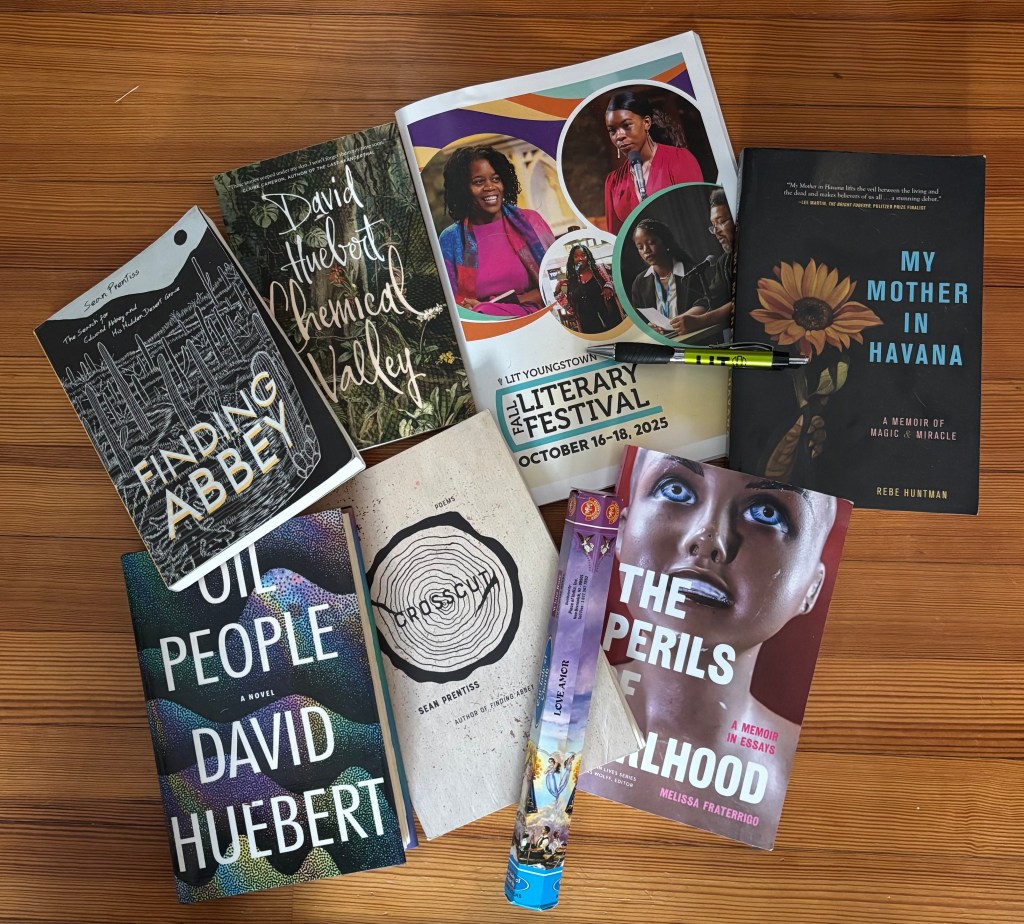
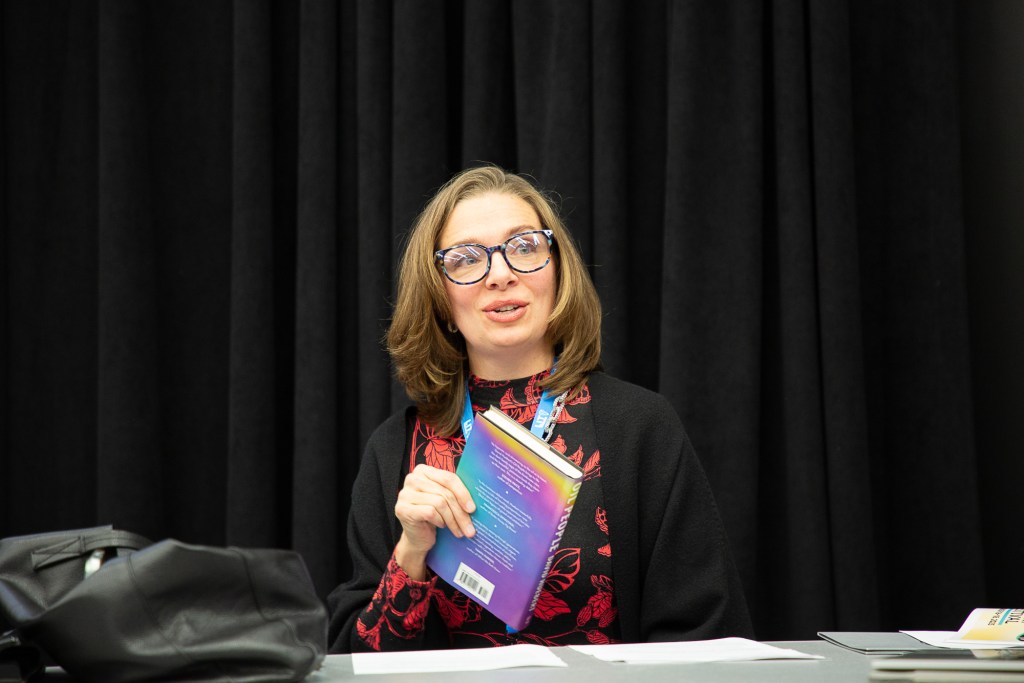
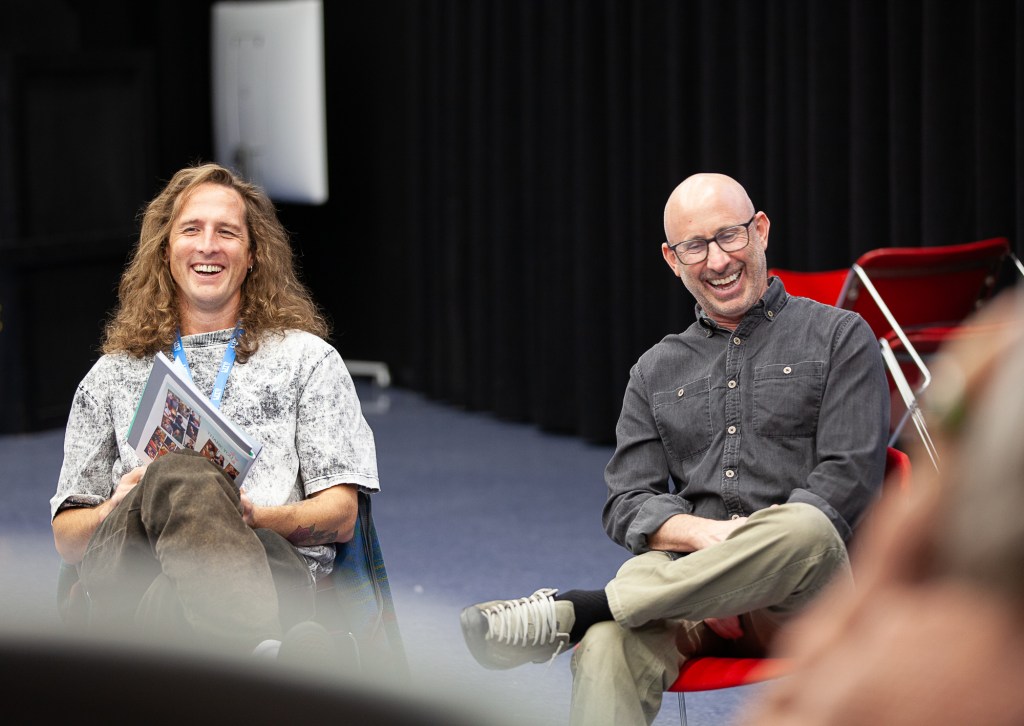
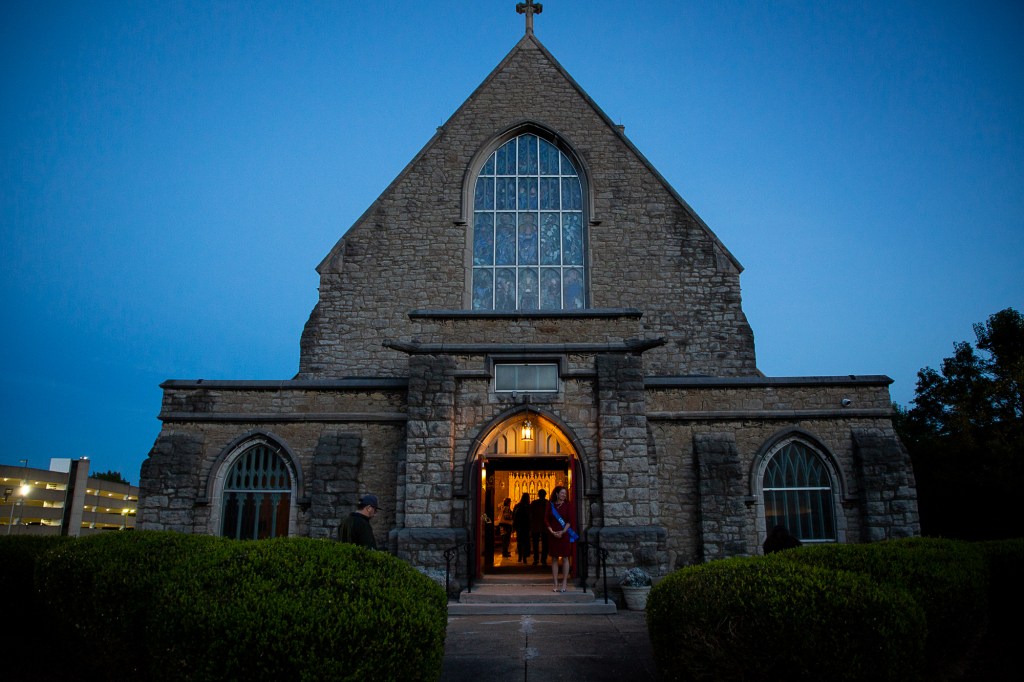
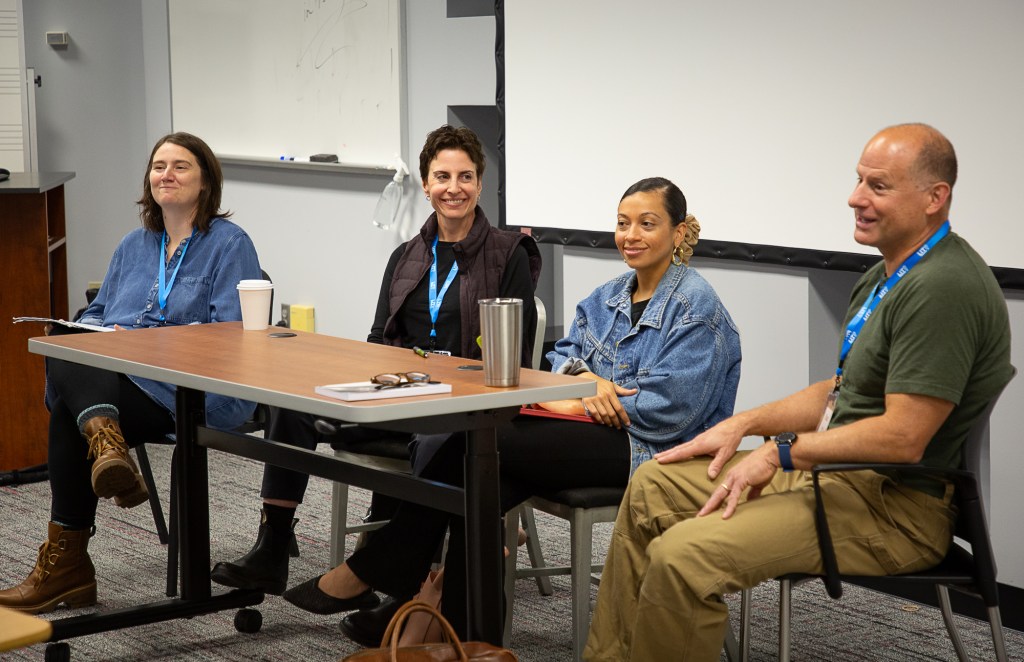


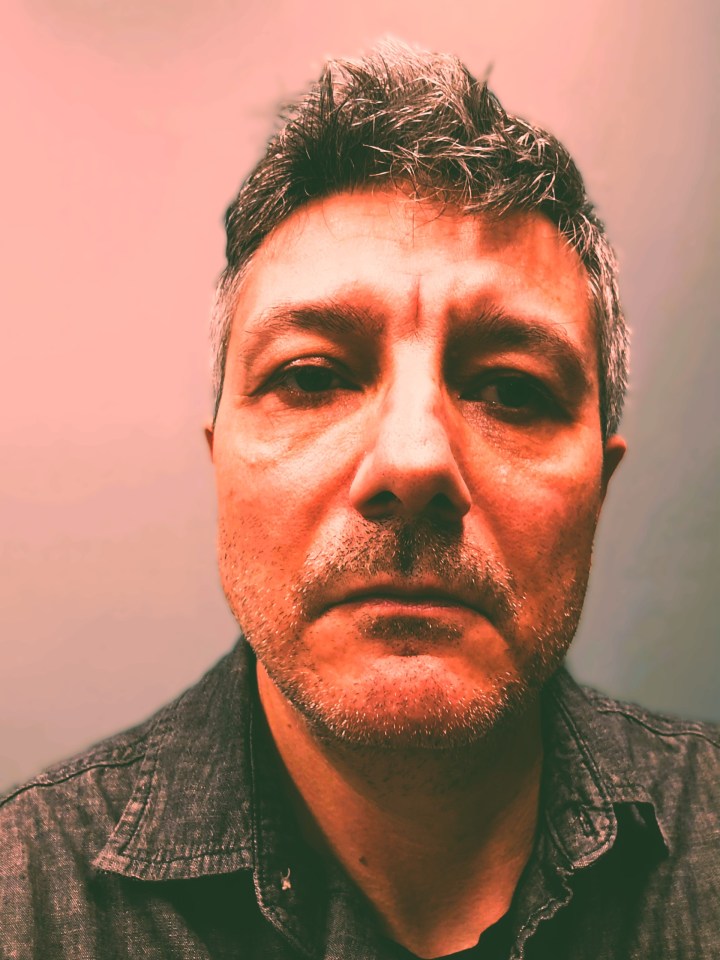
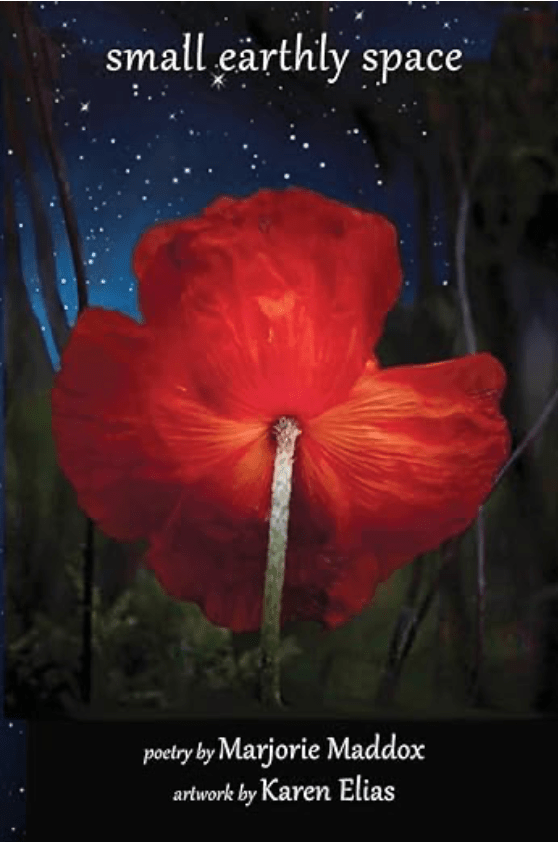



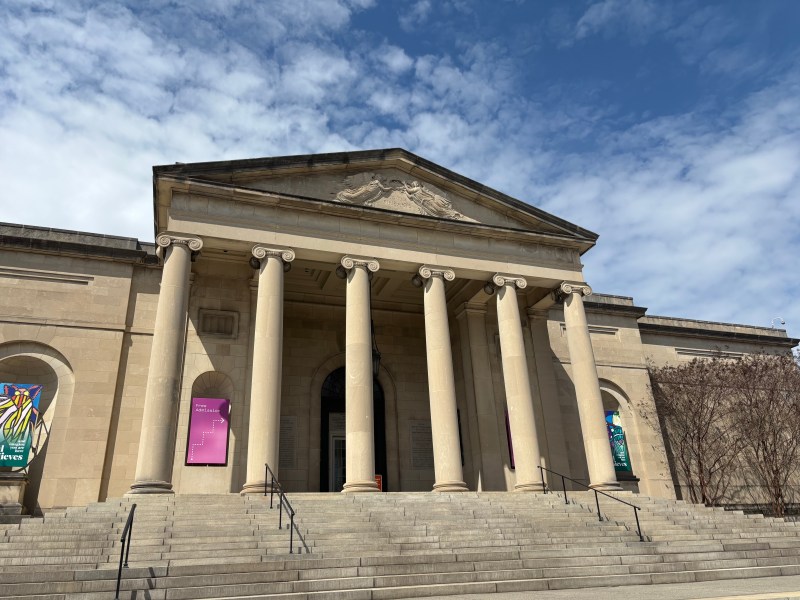


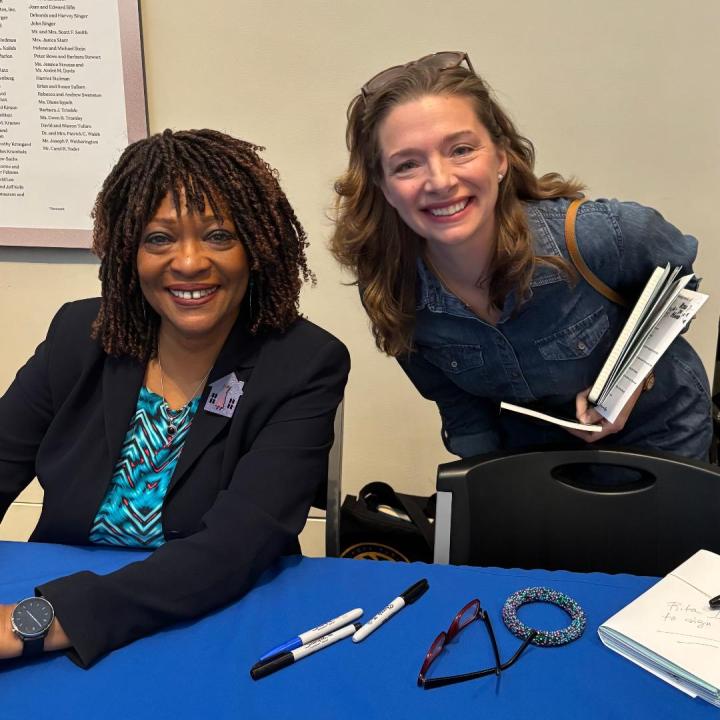

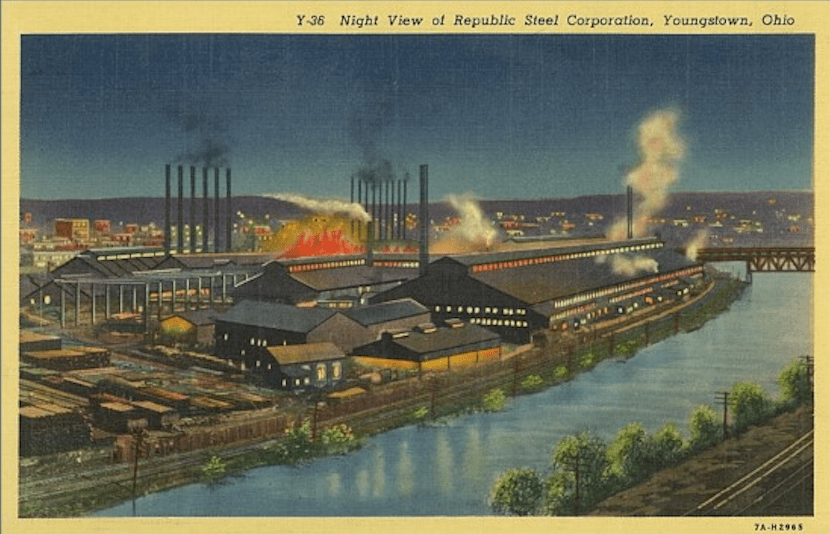
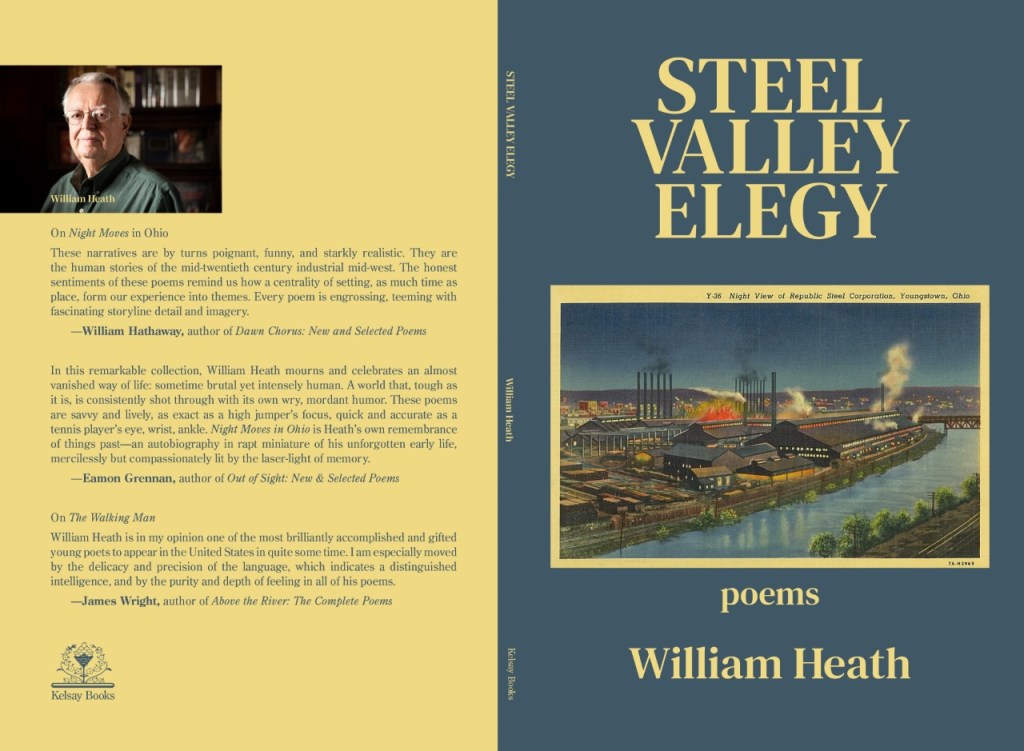
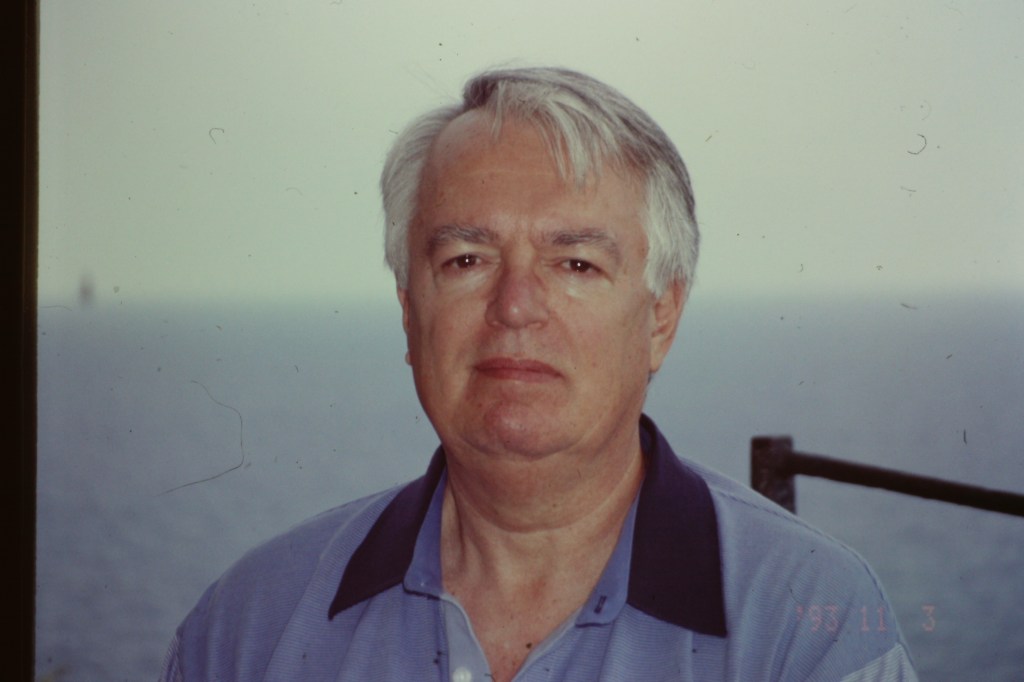
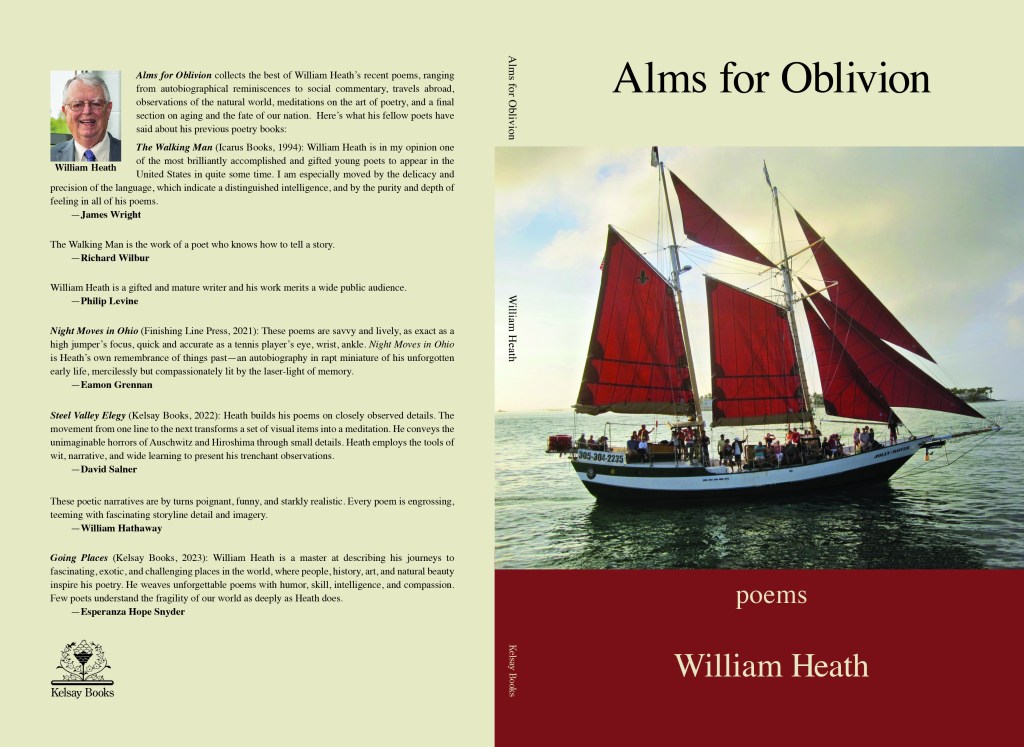

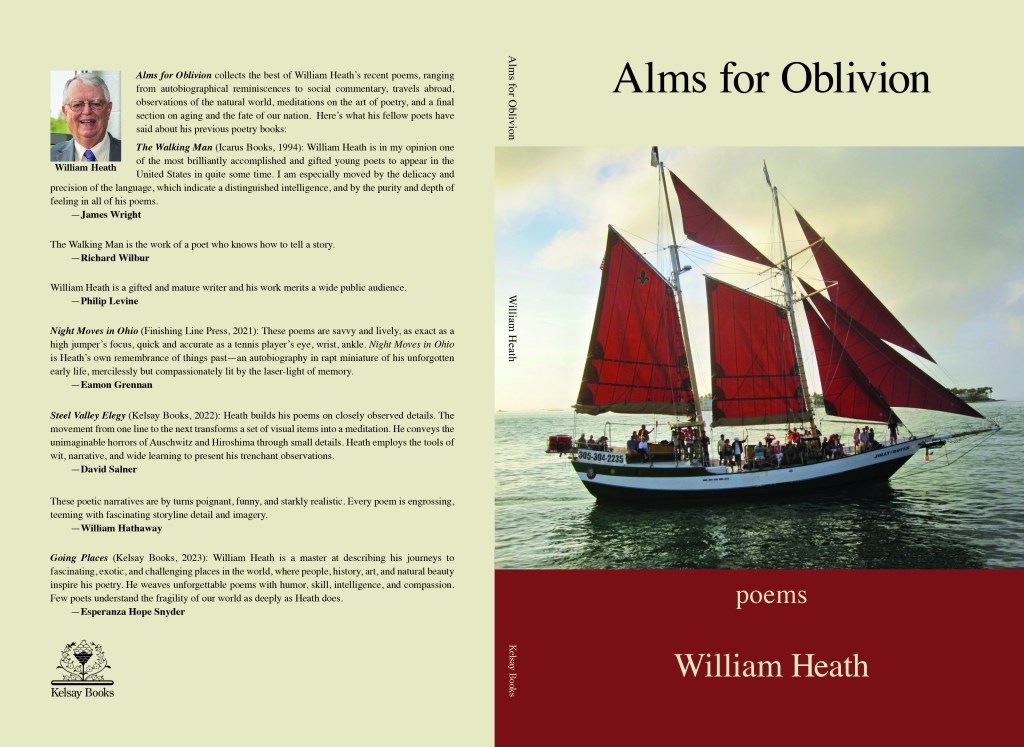

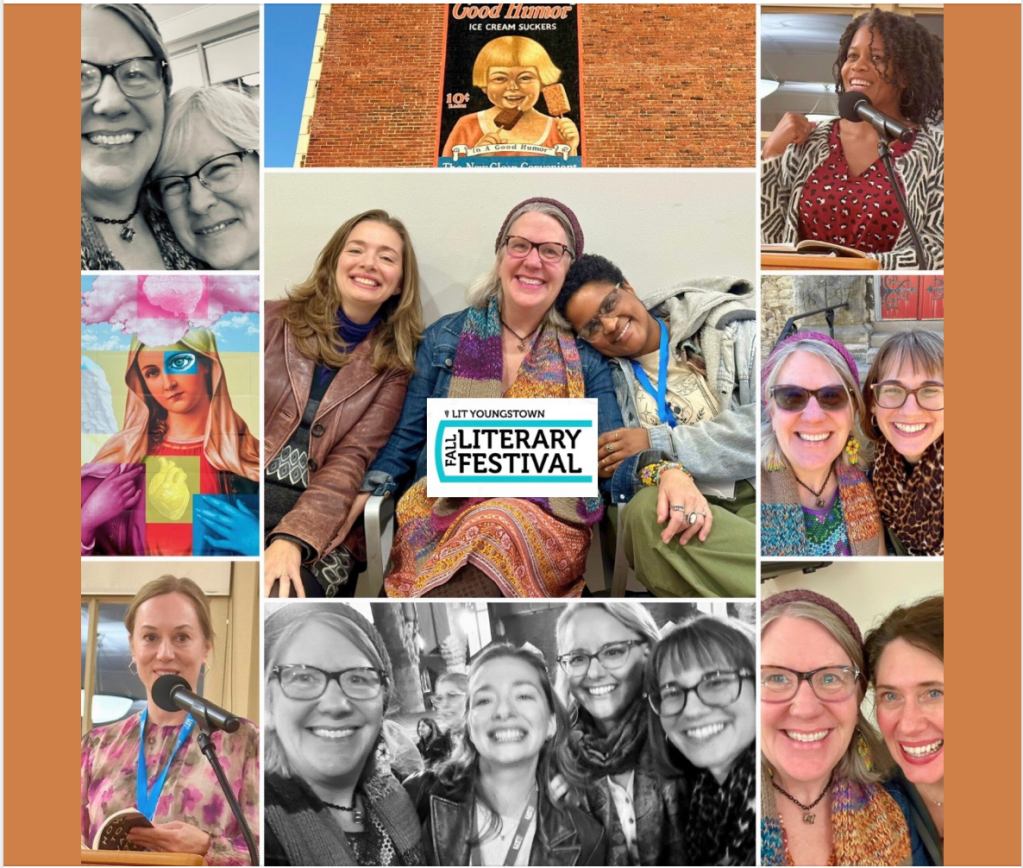
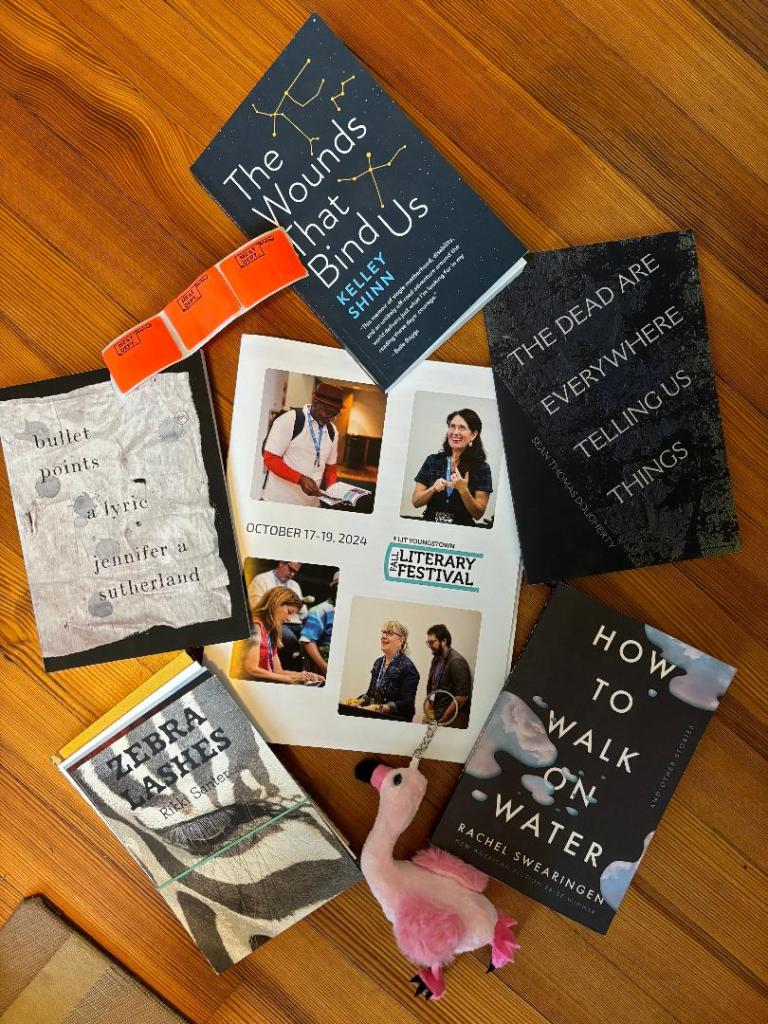


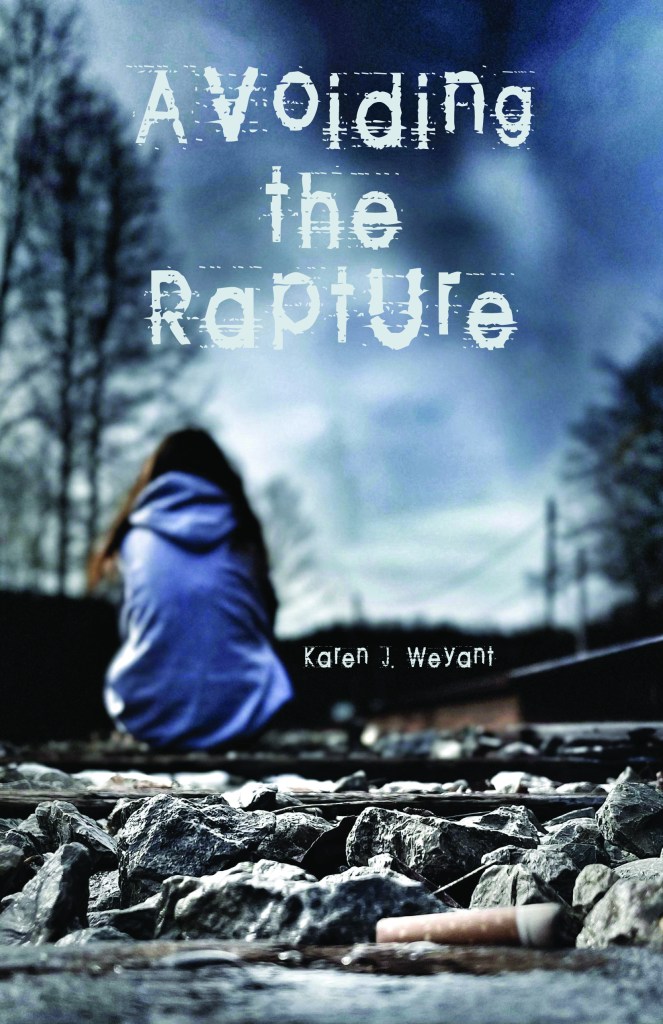
 Rust Belt Girl