“Ohio is a green world glazed”: An essay-review of the novels of Anesa Miller

Maybe each generation has its gaze.

If the Boomers looked outward and upward, Gen X-ers looked inward. Millennials examined the male gaze, the feminine gaze, the queer gaze. And, lately, Generation Z is perfecting the Gen Z stare. There are memes aplenty, but basically the Zoomer’s stare is an unblinking, powerfully defiant straight-in-the-eye gaze, less glare and more disaffected showdown. (I know it well—I have teens.) It’s a staring contest of disdain that flies in the face of the lowered-eyed, modest, “demure” vibe of 2024. In response to the Gen Z stare, the trad-fluencers—those pop culture paragons of all that is modest and retiring—would, indeed, demure. (Or pretend to.)

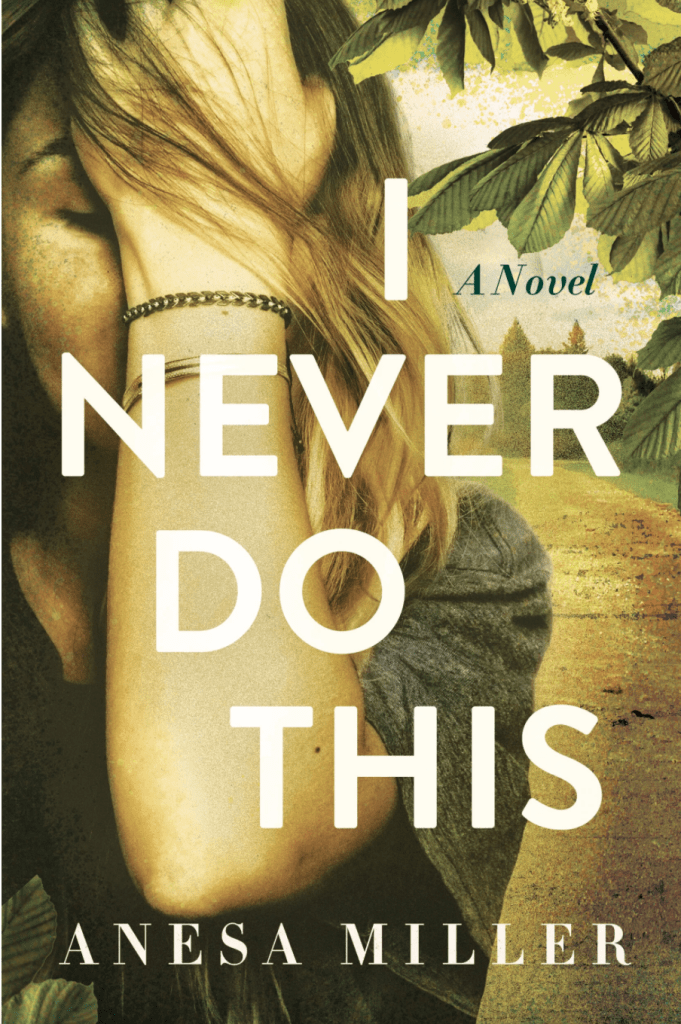
I’ve begun to consider the Gen Z stare as a kind of protest—particularly when employed by young women. I thought of this as I read the novels of Anesa Miller, an Ohio writer “exploring the lives of Midwestern white women in our polarized era,” according to her Instagram profile. Her second novel, I Never Do This (Sibylline Press, 2024) is set in modern-day small-town southern Ohio, and in rural Missouri. Here’s a taste of Miller’s description of the Ohio setting:

September in southern Ohio is a green world glazed in sun-honey wrapped in sweet air. Nothing had been touched by fall so far, but every color filled my eyes like something fresh from the day of creation. We were in flat country along that road. Deep-green trees lined the horizon, and the bean field across the way glowed ripe and tawny with yellow butterflies fitting over top. The sky cupped everything in its bottomless dome. A caravan of clouds drifted by real slow to the south, so blinding white I could hardly keep my eyes on their shifting shapes—

Rather than a coastal story that reads New York City gritty or Los Angeles sunny, Miller’s story feels decidedly Midwestern, the nuances of a place intent on establishing its personality, however contradictory—fiercely independent and forever loyal, traditional and broadminded, honest but (of course) nice. What’s freeing about writing from a, say, Ohio setting is that there isn’t a fixed archetype. After all, Sherwood Anderson’s Winesburg Ohio, often lauded as the Ohio novel is barely more than 100 years old—and what’s a century when talking literature? 

What is Ohio literature? What is an Ohio novel? These are questions Miller has asked herself. Her own two novels begin to answer these questions.

Our first-person main character in I Never Do This, 27-year-old LaDene Faye Howell tells her story in a page-turner of a (nearly 200-page) novel written as a monologue delivered to the police who are holding her in custody. LaDene confesses the details of the crime spree she engaged in with her paroled cousin Bobbie, and at the same time she reveals the pivotal secret of her past. The dual mystery twists and turns as she unwinds it in the telling, but the pacing never stalls. Our narrator’s voice is a fierce and fiery one.
Setting the scene of her Ohio upbringing, LaDene describes her clashing ancestors, the Twist-Howells: the Revolutionary War-era Howell line, who made their early fortune by establishing the area’s first ferry crossing; meets the Twist line, who made their way in the world through “scale-tipping, tax-dodging, all kinds of scamming, gambling. That’s what they get up to,” she says. “And by all accounts, they’re not one bit ashamed of it.”

I’m reminded of that famous warring family, the Hatfield-McCoys, and of the joke map of Ohio that circulates on social media, which labels the state (going counterclockwise from the northwest): “corn, The South, West Virginia, and Hillbillies.”

While LaDene is no hillbilly, she was not savvy enough at just 15 years old to get out from under her father’s performative-religious thumb before she gets “in trouble,” as we might have called an unplanned teen pregnancy when we were growing up. Of her secret past, LaDene describes being swiftly sent by her parents to a home for girls in the Kansas City hinterlands to wait out her pregnancy with other girls like her, girls from religious families embarrassed by a daughter’s mistake. Upon arrival at the home, LaDene dons the modest uniform of drab top and calf-length denim skirt and learns the ground rules. Among many other constraints: “We were especially not allowed to chat idly with each other, speak without permission, talk back to elders, look anyone in the eye unless so instructed…” To meet someone’s eye would have been a sign of disrespect, she tells the reader.

The U.S. did not have Magdalene Laundries, brought to our literary attention by Claire Keegan’s bestselling novel Small Things Like These, in the way that Ireland did. Indeed, the Catholic Church in Ireland kept thousands of girls in work camp-like conditions through their pregnancies; while the Irish story retold by Keegan as fiction—a story set in 1985—feels archaic, it is not (unless you yourself are Gen Z.) Likewise, reading Miller’s novel, it would be easy to dismiss such a tale as not of our time or place—culturally irrelevant. Surely this is someone else’s Midwest! But it is not, and you know what they say about history. What’s more, if the “trad” movement that has flooded my Instagram feed and my Catholic church pew of late has taught me anything, it’s that history repeats itself if we’re not careful. And everything old—whether better or worse—can be made new again. 

Just take “demure.” Rather than being relegated to times gone by, demure had its own social media moment only a year or two in our rear view. What started as a joke meme took off, and young women were encouraged by influencers to be modest, reserved, mindful. The religious trad wife set took the demure trend to heart, adding the vibe to their already-restrictive aesthetic, and bowing even lower to the male gaze—whether from husbands, fathers, or religious. Heaven forbid (quite literally) we meet his eye.

Miller’s women characters are products of their time, place, and upbringing and are expertly—and lovingly—drawn. While these young women don’t overthrow the systems of power, neither do they bow to them for long. They are forever changed by the patriarchal society that would keep them down, yet they do surface. They also remain loyal to their places and people, however flawed. In this, the novels’ narratives feel true-to-life—and very, well, Midwestern.

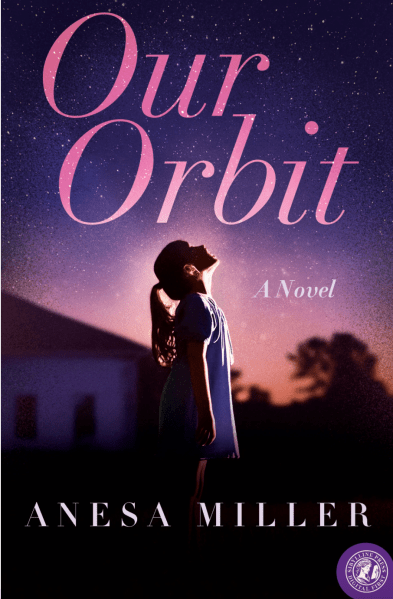
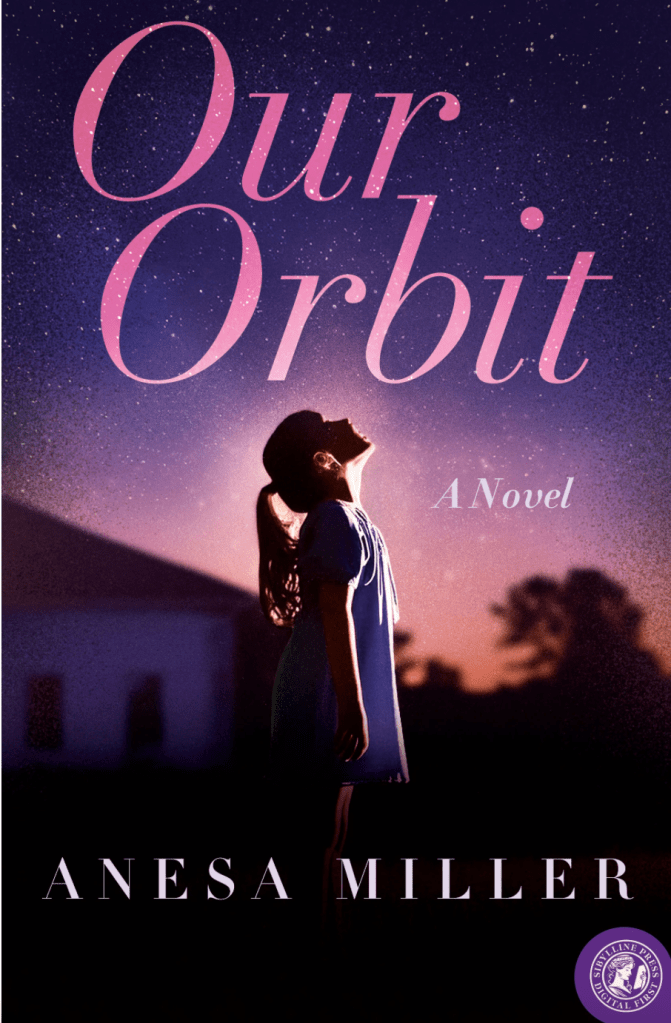
Miller’s debut novel, Our Orbit (Sibylline Digital First, 2024) is a multi-voiced novel that shines a light on a culture of guns, God, and tax evasion in Appalachian Ohio. The plot explodes out of the gate with the jailing of a father that sends nine-year-old Miriam Winslow to live with a foster family. Raised in a strictly religious home—one that abided by an evangelical purity code that demands that sinners must repent in dramatic acts of remorse—Miriam struggles to adapt to a more secular, mainstream culture. At the same time, her teenage sister Rachelle struggles to define for herself what womanhood will mean. All the while, their antagonist brother, teenaged Josh, aims to bring both sisters back into his destructive fold.
He is at once a mouthpiece for his jailed father and for the father in Heaven he purports to follow. He is a potent symbol of patriarchy’s power to void young people of agency—women and men alike. In scripture-laden language, he expresses his destructive frustration at his failure in becoming the authoritarian his father was: 

Not a bird falls from the nest, Josh thought, unless my Father wills it … So there has to be a reason … The water was so high, why couldn’t it rise a little higher? One more heavy rain and the creek could flood the park, wash out the county roads, add its torrent to the Ohio River. It might not be so bad to see the world swept away with all its troubles.

Still, Miller refrains from naming good and evil in the characters she’s created. The propulsive story makes use of multiple perspectives that work to provide a multi-faceted view of lives straddling tradition and modernity, religion and the secular world, and the myriad ways we engage with others in love. (How vital to see young characters wrestling with love beyond the romantic!) In doing so, Miller creates an empathetic and memorable story that rings as true today as it might have a hundred years ago. 

There are no simple plotlines and no easy answers—nothing that can be boiled down into a social media soundbite. There is searching. Late in Our Orbit, Rachelle muses on her emotions as she stands at the cusp of womanhood, what was “supposed to be the most important and mysterious event of a girl’s existence”: romantic love and sex. But perhaps what’s more important than the character’s rumination is that she allows herself the time and space for it: “The great thing about art class is that dreaming is permitted,” she thinks to herself, “… her eyes gazed out the window, her thoughts somewhere else.”

Through well-told, dynamic stories of family, tradition, faith—and self-love that flourishes outside scripture or strictures—Miller provides a window onto hope. All we need to do is gaze through it. 

By Rebecca Moon Ruark


Like this post? Comment below or on my FB page. And please share with your friends and social network. 

Are you a Rust Belt writer interested in seeing if your own post, or author interview, or book review might be right for Rust Belt Girl? Hit me up through this site’s contact function.

Check out my categories above for more guest posts, book reviews, interviews, literary musings, and writing advice we can all use. Never miss a post when you follow Rust Belt Girl. Thanks! ~Rebecca

Enter your email address to subscribe to this blog and receive notifications of new posts by email.

New poem published by Trampoline Poetry

I’ve been operating far outside my comfort zone and way outside my fiction-writer lane lately.

Querying a novel will do that to a writer. Fiction-writing feels a little fraught when you’re trying to woo agents and presses with your fiction. So, I turned my attention to writing essays–and even a little poetry. Here’s:

“Satie Sestina: YouTube Comments on Gymnopedies”

Thanks to Trampoline Poetry‘s editor Justin Lacour. And many thanks to my writing critique group–present and past members alike–who, first, told me this long poem I was working on would work best as a sestina (a what?); and, second, gave me the permission to play with the form (just) a little.

If you’re interested, you can read my bio out at Trampoline Poetry, where I explain how the idea for this poem came to be. (Thank you, YouTube comments!)

Now, who else is a Satie fan?

More Rust Belt literary goodness soon. ~Rebecca

To Dream: 2020 Distractions and Intentions

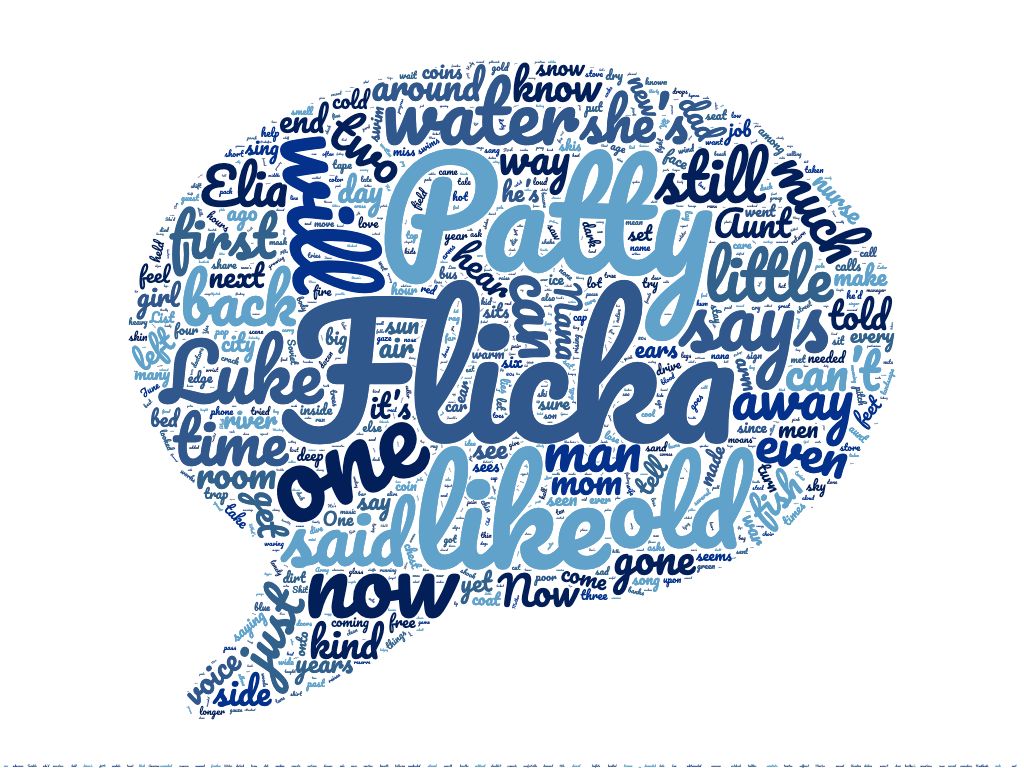
Dreamy word cloud from my current novel-in-progress created at wordclouds.com

Remember daydreaming? That old creativity-inducing distraction? I do–if just barely.

Now, even our distractions are automated and customized and curated by an algorithm that seems to know what we should be daydreaming about before we can even get to it. What’s more, the rabbit holes we find ourselves distractedly falling down end not in a constructively weird place–but all too often in a place that might be weird but probably will cost us money. So, a destination that leaves us both distracted and poorer. Happy 2020! From a fun piece by Kathryn Schulz from 2015 in The New Yorker. She saw it coming:

How did “rabbit hole,” which started its figurative life as a conduit to a fantastical land [in Lewis Carroll’s Alice’s Adventures in Wonderland], evolve into a metaphor for extreme distraction? One obvious culprit is the Internet, which has altered to an indescribable degree the ways that we distract ourselves.

Thank you for Internet-ing right here, this Monday morning, when there are so many rabbit holes clambering for us, desiring to drive us to distraction–to forget our intentions, our destinations, our worth, even ourselves.

Can I tell you I’ve been distracted?

While others have been setting down their 2020 resolutions, and even committing them to blog post (and, as such, according to the court of blog, making them treaties never to be broken!), I’ve been distracted. While others have been new-decade-to-do-ing and vision-boarding, I’ve been distracted.

Two weeks of 2020 in the crapper already, and I’ve made a word cloud. (See above.) Well, not me, but a website. OK, I plopped in the words–from my novel-in-progress–and out came a word cloud. I did pick the shape and the color scheme: blue.

Here’s another thing: I found a website, literature-map, that will show me (in an attractive visual-thesaurus web sort of way) which authors are most like my faves. A new-to-me fave:

If only I could pick the color scheme…

Hold up! You haven’t visited the visual thesaurus? Inconceivable! Here:

Which reminds me of The Princess Bride. What a movie. Inconceivable! Who was that actor? He’s still alive, right?

You see what I mean? This exercise in rabbit-holing isn’t to say that there’s anything wrong with distractions, or daydreams, but that I might be better served by being a little more intentional. You know: dreaming with intention, design, volition, even, dare I say, a goal.

So, I’m goal-setting-lite, meaning with enough wiggle room for constructive rabbit holes and even breaks. (Like, “intention” comes from the Latin intentus, meaning “a stretching out,” also “a leaning toward, a strain.” I mean, that sounds like exercise, which is never supposed to be easy, right?)

I’m reading with intention–right now Elena Ferrante’s My Brilliant Friend, the first of the Neapolitan quartet of novels by the highly-acclaimed Italian author–to inform my historical novel about an Italian family in WWII America. And I’m back over at Goodreads, where I’m going to try to keep better track of what I’ve read–outside of Rust Belt authors.

I’ve also been taking some lovely reading detours–having read over the last month a children’s book, a literary thriller, and a sci-fi screenplay–for friends and fellow bloggers who are highly-acclaimed in my eyes. And reading thinker-blogposts, like this one “On Breaks and Connections.” And next up on the ol’ TBR is a book of poetry–because poetry is the best kind of distraction.

Writing? OK, I didn’t use my Christmas break to gain great headway on my novel-in-progress (outside of the groovy word cloud)–what with Christmas and Christmas carols, cookies, and more cookies. However, I did get another chapter down. And then, in response to a call from a journal I admire, I wrote a thing–a creative nonfiction piece about Ordinary Time and ordinary time and making the everyday a holiday worth singing about and feasting over; and finding the blissfully mundane in a holiday. It’s a working rabbit hole, anyway. And the novel draft will be out of my brain and on paper, come June (wish me luck).

And editing. I wore that hat a lot over at Parhelion Literary Magazine, last year. My 2019 saw me shepherd three book reviews, five essays, and an author interview into the world, plus I conducted two interviews, and penned a piece on finding “twin skin” and solace in the essays of Randon Billings Noble. I adore this PLM gig and hope you’ll check me out over there, too. More good stuff to come in 2020.

Of course, it’s publishing that’s considered to be the big win, the brass ring, the dream destination for us writer-types. The agent querying continues, but I did have a couple short stories published last year in journals I love. And, lest I forget that this writing thing is about the path, and not the destination, I read this post for a different kind of “Resolution,” today.

Goals. I’ll get on it. I will. Right now, you’re here and I’m here, which means we’re in the very same rabbit hole (#bloggoals), if for only a few minutes–and that’s a win these days. As was being nominated for the Bloggers Recognition Award by one of my favorite blogging friends, Silvia, from Italian Goodness, who, when I told her I wasn’t sure if I was going to be able to hop on the nomination train, said these wise words: “Life is busy. Family comes first. Never stop dreaming, but prioritizing is the secret of happiness.” Truer words, folks… Thank you, Silvia! (And go make one her Italian recipes and make yourself so happy.)

Here’s to more connecting and dream-making in 2020–by a little luck and a pinch of intention.

Have you recovered from the Christmas cookie coma? New Year’s resolution-failure guilt getting to you, or is that just me?

Care to social media rabbit-hole together? You can find me at FB, on Twitter and IG @MoonRuark, and at Goodreads, where it appears as if I’m just getting the hang of this whole literary thing.

Submit, submit, submit

adult art artist artistic
Photo by Anthony on Pexels.com

It’s that time again: submission season.

It’s the season when we writers polish up our prose and poems and novel MS synopses to send out into the world, fresh-faced and optimistic, imbued with loads of potential–in the hopes of being published. I wave to them and smile (a little smugly). “I’ve done good,” I tell myself.

And then proceed to shudder in fear.

Oh, wait.

Maybe that’s my kids. Yep, silly me. September is also back-to-school season, when I send my actual offspring out into the world, fresh-faced. I wave and smile…Well, you get it.

Here’s the thing.

Let’s not confuse our creative offspring with our actual offspring, our stories with our kids. Really, I’m talking to myself here. Is it just me? Am I the only one who’s ever uttered: “That manuscript is my baby.” (Note that I had not yet endured screaming twin infants when I said that.) No, I can’t be the only one. In fact, I’m pretty certain there’s a country song with that title.

Read more

Our Characters, Ourselves*


OK, that title is a bit of a misnomer–this post isn’t wholly about bodies–but I liked it.

This post is about the characters we create: both on paper and on, well, us.

What happened is this: I was told I needed a headshot for story I wrote that will be published later this spring. My rarely-needed “headshots” are usually crop-jobs needed to extricate my face from the face of a small child or two. My last good headshot (above, left) was taken when I was 18 and an aspiring dancer–a whole lifetime and profession ago.

I figured it was time. So I made an appointment for a blow-out at my local salon, where they said they would also make sure my makeup was camera-ready. Then I had my husband shoot a couple pics of my face, sans offspring, so that this journal can have my modern-day visage (above, right) for viewing alongside my story.

Also, I will be recording myself reading my story, so that the journal can have my voice along with my story along with my face. This is all OK and even flattering; this is what we call exposure (ahem).

Do you ever think about your own character? As bloggers we all have a handle, a personality. Mine’s Rust Belt Girl.

I realize I spend so much time thinking about the characters I create on paper that I forget my own character, my dominant persona. I was a ballet dancer in my youth; then a student; then a young married woman; then an aspiring writer; then a mom.

The “mom” character is basically all-consuming. The funny “mom” memes you see online–that’s for real. In writing, what “mom” means is that I’m supposed to write children’s literature now that I’ve birthed children who read literature. Instead, lately, I like to write about taboo subjects; a little incest anyone? (Please don’t message me with weird responses to this aside I meant to be funny/not funny.)

Onward…this story of mine that will be published later this spring (or wet-winter), I actually let my children read. This is a first.

One of my boys said he thought it was going to be funnier; one said he didn’t. Both read it until “The End”–4,000 words–so in my eyes it passed 8-year-old-boy muster. But I did have to “clean it up” first, which my more astute of my astute sons said meant, “Take out the bad words.” And the drug references and the…

I create characters to live a different life, though I love mine. I’ve talked here before about my penchant for writerly distance. Still, the characters we create are extensions of ourselves.

The other night, I attended a lecture/Q&A on developing believable characters in our writing, hosted by the Maryland Writers Association’s Annapolis chapter and featuring author and editor Barbara Esstman. My character-building takeaways:

Characters inhabit a world–closed or confined systems can work well: think Lord of the Flies or The Handmaid’s Tale–with walls of some kind that will lean on and pressure a character. These boundaries that test a character can help the writer show what the character is made of.

At least one of the main characters must have a problem to solve; when the character arrives at a solution, the story ends.

Characters have a history before the start of the story. The writer should know it, but must decide what the reader needs to know and what the reader doesn’t.

You know, sorta like this whole blogging thing. The reader needs to know us writers and highlights of our history–the stuff that matters–to understand our character, to feel invested in us and want to follow our story.

I’ve said it before and I’ll say it again: Thank you for following my story.

Do you consider your blogging persona? (Is it just me?) Is it one in the same with you? Somehow different?

Have any tips for creating believable characters in essay, memoir, or fiction?

* A little nod to Our Bodies, Ourselves (a book about women’s health and sexuality first published in the late 1960s). A relevant character-building takeaway: characters, like real people, have needs and wants. Characters, like us, go grocery shopping and sneak ice cream at 10:30pm. (Oh, is that just me?)

Kill your inklings

books-768426_640

I’m playing fast and loose with the English language today, redefining inkling as: a little inking, or a bit of writing, a literary snippet, if you will. This post is in response to today’s Daily Prompt: Inkling.

Rust Belt Girl followers know where I am in my journey toward traditional book publishing. Rather than call myself stalled in editing, I’d like to say I’m at a rest stop along the journey–one of those rest stops with a fabulous overlook. Only, I’m not looking out onto rolling farmland or a lake vista. I’m looking over my WIP (a historical novel manuscript) and trying to do more than edit. I’m trying to genuinely revise–or re-see–my story.

This requires brutality.

This requires killing my inklings, my snippets of lovely language that don’t move the story forward, that don’t evolve the characters, that maybe draw too much attention to themselves.

Today’s dead inkling:

Pregnancy had meant an intense inversion, feeling sensations from the inside—hosting, feeding, growing this glorious parasite.

In the days of printing out drafts–huge reams of paper–I would actually snip this snippet and put it in a jar I have for such things. Then, if I felt blocked or needed a prompt for a new story, I would select one and start from there. Today, my dead inklings wind up getting lost in my Mac world.

William Faulkner is credited for “kill your darlings,” and there’s been discussion about that phrase and other great writing advice here at WP this week.

But, now I’m getting down to it: slashing and burning.

What’s your favorite dead inkling?


Hold up, wait a minute: Rust Belt Girl on ice

20180113_091524
Lake Erie, iced. One of the Lake Erie Islands (Green Island), is in the distance. (Thanks for the pic, Dad!)

Hold up, wait a minute. Hold up, wait a minute…

Nope, you haven’t stumbled on a 90s music blog (but if you now have that old club song in your head, you’re welcome!)

Here at Rust Belt Girl, I promised a new thread this new year: a journey into the terrifying abyss that is the world of book publishing. That’s agent querying, novel synopses, novel submitting, etc.

How’s it going so far?

Um. Yeah, that.

Let’s just say, like so much of the Rust Belt at present, this Rust Belt Girl is on ice–at least as far as that project.

What happened?

Shall I add another metaphor into the mix? Well, I got the cart before the horse (ie: the agent query letter, synopsis, etc.) before the manuscript itself. And, really, the horse is a little bit lame. Not so much that it has to be put down or even put out to pasture. (Yep, I’m just running with this metaphor.) But maybe re-shod, rested, exercised–certainly made stronger. Race horse strong.

Who says?

A former writing teacher of mine, an author and editor whose feedback I trust wholeheartedly.

What now?

Thaw out? Get back on the horse? (Can I stop talking about ice and horses?)

Really though, I’m revising my novel manuscript (yet again) because I only get one chance with agents, and I don’t want to blow it. I’m really trying to “re-see” this story that’s been with me for years; these characters that I’ve known longer than I’ve known my own kids, which is a little crazy. It’s not an easy task to really re-envision an 86,000-word manuscript, and so I can’t rush it.

“Time is a great editor,” said my editor friend.

So, bear with me if this thread takes its time.

I mean, there’s an order to things–like seasons and horse-drawn things, right?

In the meantime, more writing advice I pick up from experts along my way; more reading (and emulating!) great books; more author interviews.

And…in the publishing vein, more submitting short stories to journals and magazines. Keep your fingers crossed (and frost-bite free) for me.

Happy weekend! What’s on tap for yours? ~ Rebecca


Step 2: Reviewing the publishing road map

books-768426_640

Call it cold feet.

Nah, let’s call it, being truly prepared. Here at Rust Belt Girl, I’m documenting my journey into the frightening abyss that is traditional publishing. Only I haven’t set off just yet.

Here’s the deal: right now, I’m preparing to query literary agents about my completed behemoth 86,000-word novel manuscript. Only, there are steps I must take first. Or else I ruin my one-and-only chance with agents: professionals who don’t take kindly to, “just kidding” or “no, really, this is my finished manuscript” emails.

In Step 1, I covered the all-important agent query letter, which is like a passport that introduces the agent to the book (with a brief synopsis) and to the author (with a list of credentials.)

For Step 2, here I (optimistically) look toward the road ahead, which hopefully includes hearing back from at least one of the agents I query. In stalling planning, I reviewed a few old emails from writer-friends who were in the position I hope to be in soon.

One of these writer-friends received a request from an agent to read his entire manuscript, which the agent did. Her feedback on the novel manuscript was largely positive.

Then…she sent my writer-friend some questions. I will paraphrase the questions here, as I think they provide a window into the thought process of the agent.

Me, the writer, I’m thinking of securing an agent as an end–a conclusion to years of writing and revising and editing and rewriting. For the agent, signing a writer is only the beginning of the journey. As such, the agent asks the writer:

  1. Provide all your writing credentials in detail, including previous publications, short stories, screenplay writing, etc.
  2. List authors that you think have a style or write in a genre comparable to yours.
  3. Is there anything you could do to help promote your book, for instance contacts or friends who are writers and could provide blurbs, friends who could review, people you could leverage?
  4. Do you blog or have a following on Twitter, Facebook, or another social media platform?

Could I answer those questions? Mostly, I think I could.

  1. I’ve got some credentials under my belt, including a couple short stories published fairly recently.
  2. Here’s where I have to forget my humility. Genre- and subject-wise, my book compares to Snow Falling on Cedars, The Master Butchers’ Singing Club, and (more recently) Hotel on the Corner of Bitter and Sweet. Language- and subject-wise, my writing in general compares to Alice McDermott’s. (Of course if I were to meet any of these authors, I would faint straight away!)
  3. Thanks to this blog–and the writers I’ve met “reading and writing the Rust Belt”–I do think I could wrangle up a blurb or two, something I couldn’t have said last year at this time.
  4. And, why YES, I blog (thanks to you, followers). Yes, I’m on Facebook. A major following–not yet. But stay tuned…

What do you think of the agent’s questions? Does this make the road ahead for us would-be published authors appear any clearer? Are there any questions you’d add, if you were in an agent’s shoes?


100 Followers–woot, woot!

600px-Capital_C.svg

Apple may have their hot new Roman numeral-named phone. But I’ve got “C.”

That’s right, I hit 100 followers! A lot to some bloggers; a pittance to others; a gracious plenty to me.

Thanks for letting me stretch my reading, reviewing, and writing skills–and for witnessing my bumbling and stumbling into the blogosphere, as I try to plant my Rust Belt Girl flag. I know time is scarce and there are oh so many blogs. I appreciate every single one of you who tunes in!

A few more numbers of note since my blog was born on May 16, 2017:

1,628 views by 793 visitors from 37 countries around the globe

25 posts (not counting this one) including 2 author interviews, 2 book reviews, 2 story excerpts, 1 prize nomination (fingers crossed), 1 guest photographer, 1 sweet pie chart, and more references to pierogis than I can count.

225 likes and 103 comments (not all from me!)

What’s next? More, more, more. And new stuff, too. I’m currently smack dab in the middle of a short story/flash fiction submission frenzy; the more I get published, the more I can sample here (fingers and toes crossed).

I’m also interested in more collaboration with my fellow bloggers: photographers, authors, reviewers—from any and everywhere. Contact me if you’re up for it!

As always, I’m doing the Rust Belt Girl thing on Facebook, too. Find me—and self-deprecating Cleveland jokes—here.

~ Rust Belt Girl (Rebecca)