Lit Fest Roundup 2025: who I met, what I wrote, how much pizza I consumed


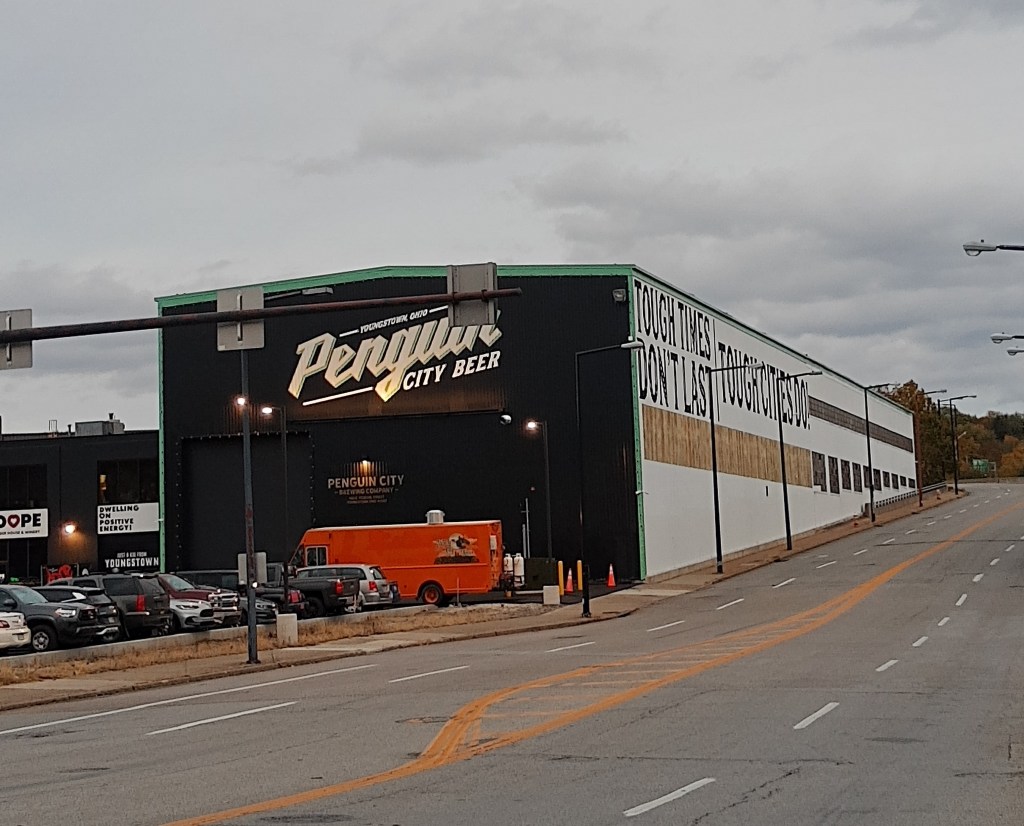
This October I attended my eighth annual Fall Literary Festival hosted by Lit Youngstown. It was the Ohio literary organization’s ninth—and final—fall lit fest (at least for now). I could just be weepy about it (I’m weepy about much these days, tbh), but I’m too grateful to stay weepy. Since it’s a weekend to do grateful, let’s get into it…

Don’t worry, Lit Youngstown itself—with all of its amazing programming–is going strong at 10 years old. But before I get into my 2025 lit fest roundup I want to take a moment to share a few highlights from lit fests gone by (forgive my literary nostalgia), in no particular order:

  • Novelist Rachel Swearingen telling us craft session participants to, “Write towards change.” And “Stop thinking about characters and start thinking about relationships.” (Fiction writing changemaker right there!)
  • Me, getting to tell my story of my mom’s protesting of a nuclear power plant near my hometown when I was a kid (I wrote about it here) and detailing how that story turned into an integral part of my eco-novel (published someday, world!)
  • Exploring ekphrastic writing at the Butler Institute of American Art (great museum road-trip idea for you out of towners!) and exploring Youngstown writ large (getting to stay with friends and enjoying the local cuisine (there will never be enough pickle pizza, noggin-sized meatballs, and pierogis!))
  • Getting to be a student of Sandra Beasley, Ross Gay, Lawrence Coates, and so many other teacher-writers and getting to tell them over charcuterie and a glass of wine: “you wrote my favorite poem, essay, novella, thank you…”
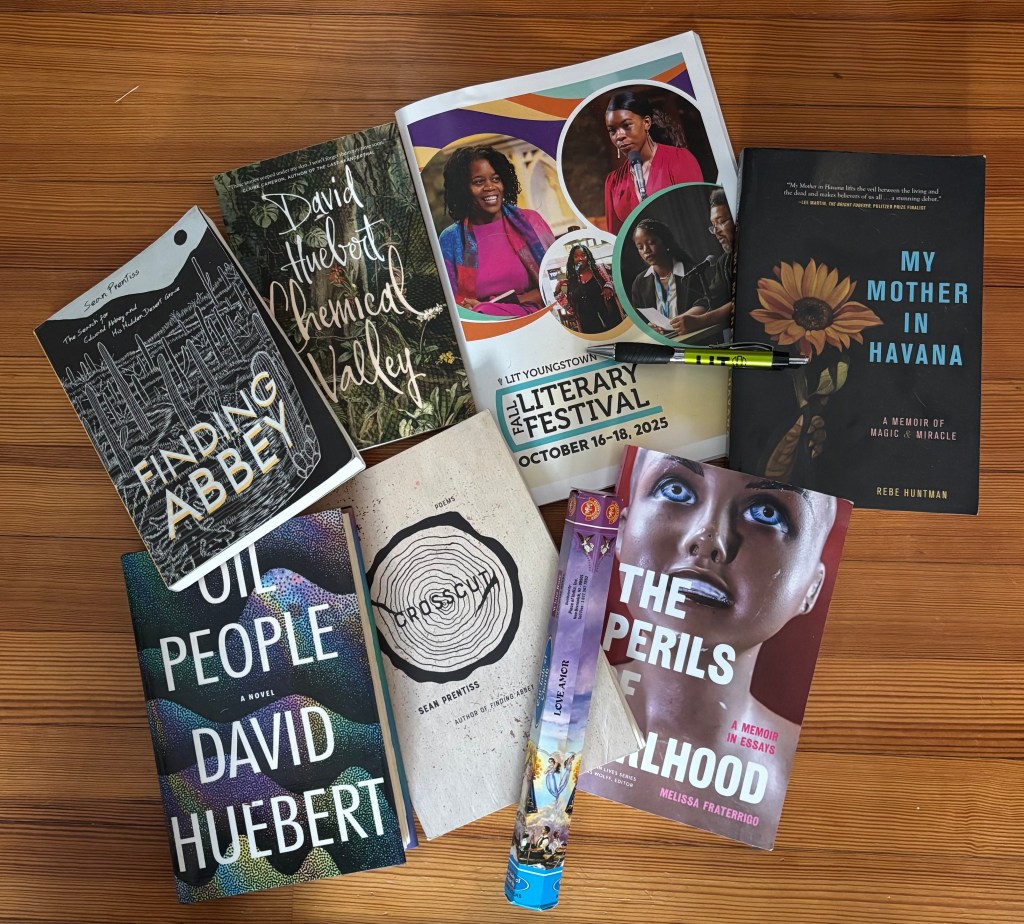
  • Meeting writer friends (like the talented Melissa Fraterrigo) in person after years of reading her work (her novel Glory Days inspired a lot of what I’ve been trying to highlight at this blog these last nine years or so—stay tuned for a review of her memoir in essays, pictured). And meeting other friends year after year and weaving our stories—and lives—together.
  • The highest highlight? You. Becoming a member of the Lit Youngstown community through the fall lit fest has been incredibly rewarding for my literary life—and my life-life. Thank you, friends.
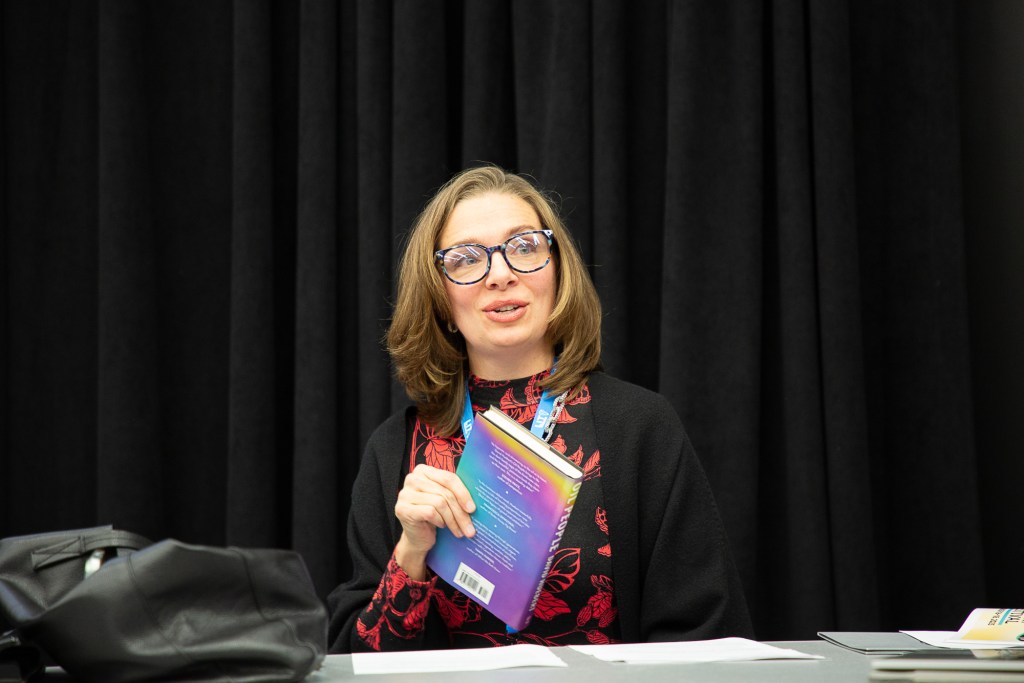
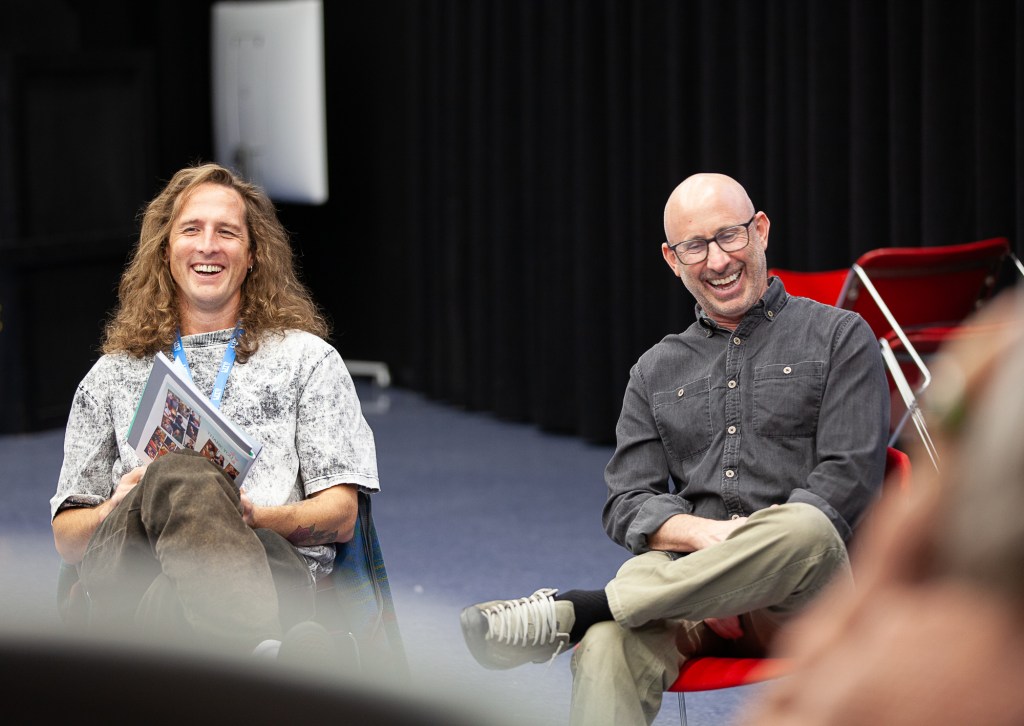
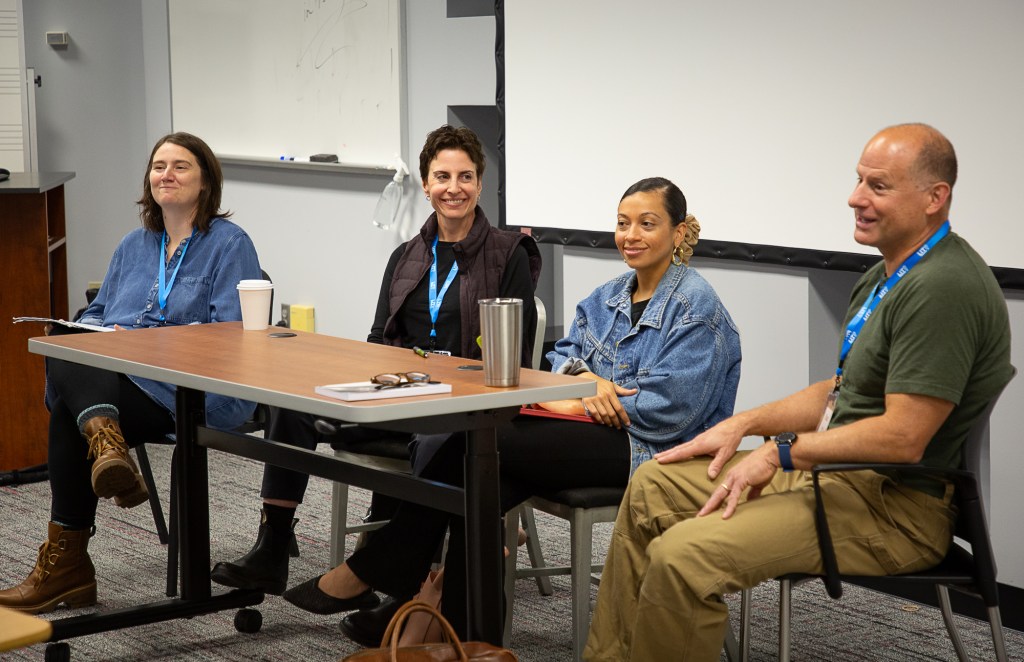
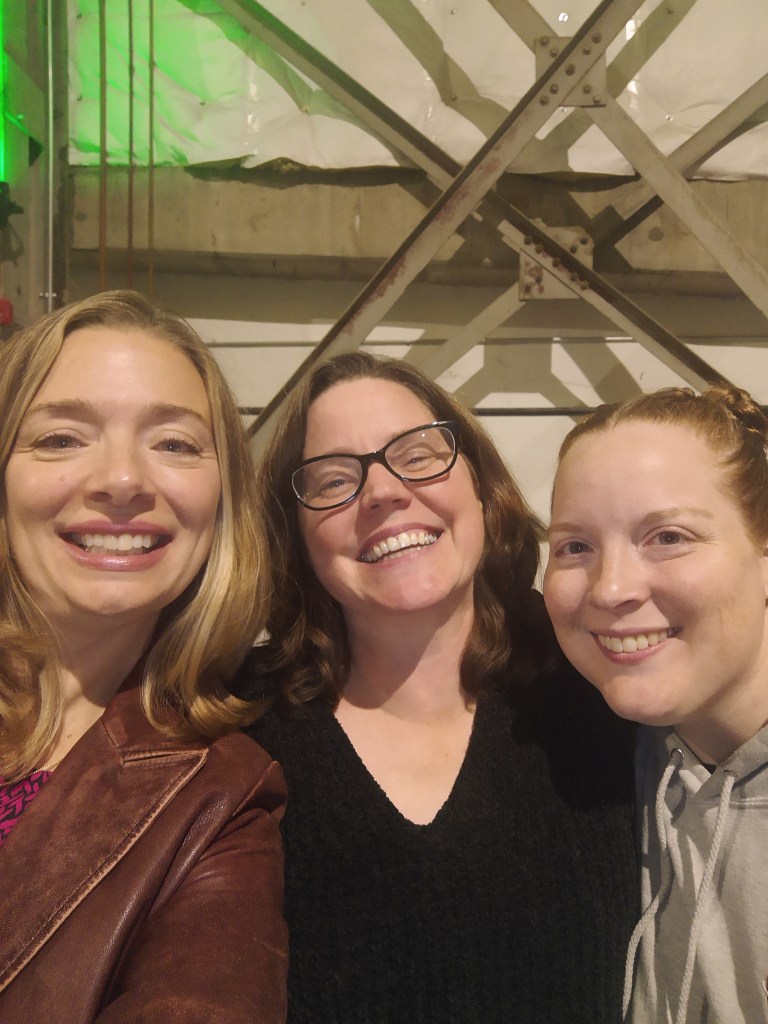
Now, 2025’s list fest was one for the books. (Peruse a few pics above and below.) And if you thought the environmental theme was going to mean a slew of nature poems…well, yes, and… Yes, and fascinating eco-fiction and challenging environmental memoir and poetry about nature redefined—from a place that was once an indigo plantation to the night sky over the Grand Canyon to trails cut by troubled teens into the Pacific Northwest woods—and so much more that “shapes our experience and identity, and represents our rootedness in earth.” Whew! I encourage you to read the impressive bios of the five 2025 featured presenters

My preparation for this lit fest happily began months in advance of the event. (Once a student, always a student.) For my conversation with fiction writer David Huebert and memoirist and poet Sean Prentiss I read several of their books—she gestures to collage artfully displayed on her office floor—representing an array of what we lump under the term “environmental writing.” Look for a follow-up post with a good chunk of our discussion—fascinating and fun!

Other personal highlights from this year’s lit fest. (Know that this is just a fraction of the offerings and I, once again, wished I could have cloned myself, so I could make every single session.):

Day 1:

  • Narrative Medicine [definition: healthcare practiced with narrative competence]: A Generative Workshop, facilitated by family nurse practitioner and poet Dana Reeher. Imagine me taking furious notes for the anthology project I’m co-editing: Body of Work, essays at the intersection of dance and health. For a little workshop exercise, Dana asked us participants to respond to a writing prompt, “an expansive invitation to open the mind,” so I thought I’d write a very short piece about my own dancing and its impact on my physical and mental health outlook:
Maybe the mistake was I listened too well, that I pointed my feet too hard, that I really could feel that string coming out of the top of my head lifting me up to the studio ceiling. Maybe I postured too much, wanted too much. Maybe I turned out until I was turned in. Maybe all that looking in the mirror made me someone else. I can still spot a dancer, or an anorexic, from fifty paces.

My dancer friends here will likely recognize a lot of this, but especially the posture-reminder telling baby ballet dancers to imagine there’s a string coming out of the top of your head… After sharing my short piece of writing, a couple of the other workshop participants said the string image reminded them of a marionette. I’d never thought of that before, and I’ll tell you that image is still working on me!

  • The Pamela Papers: A Mostly E-pistolary Story of Academic Pandemic Pandemonium: The Musical. Based on the award-winning novel by Nancy McCabe, published by Outpost 19 in 2024, the presentation included a dramatic reading (with singing—who was expecting a musical at the lit fest? Not I. And it was such fun!).
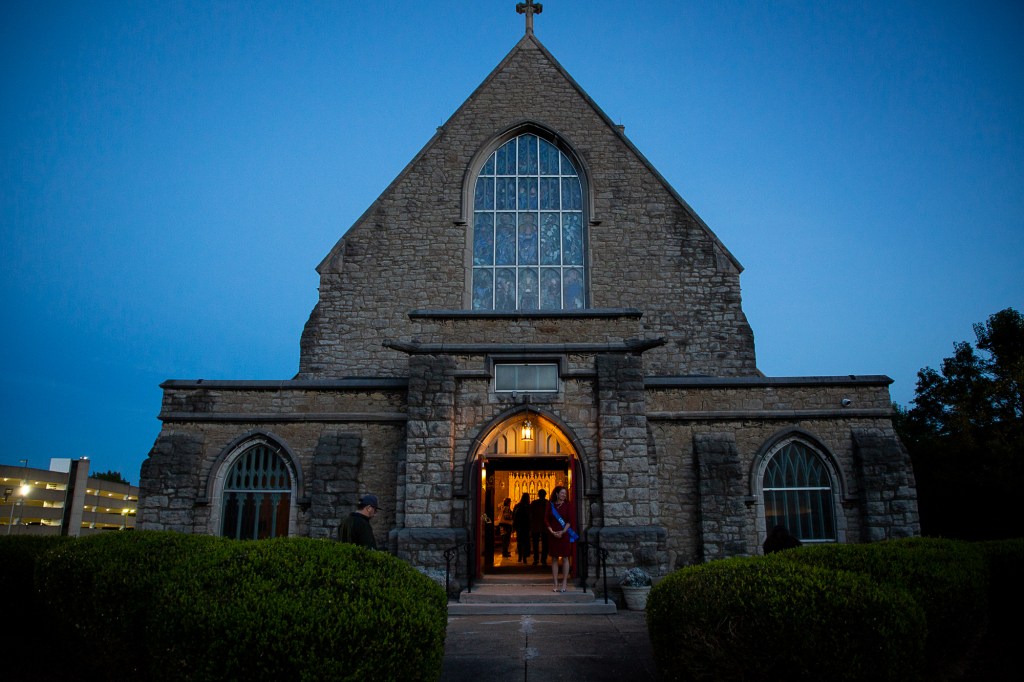
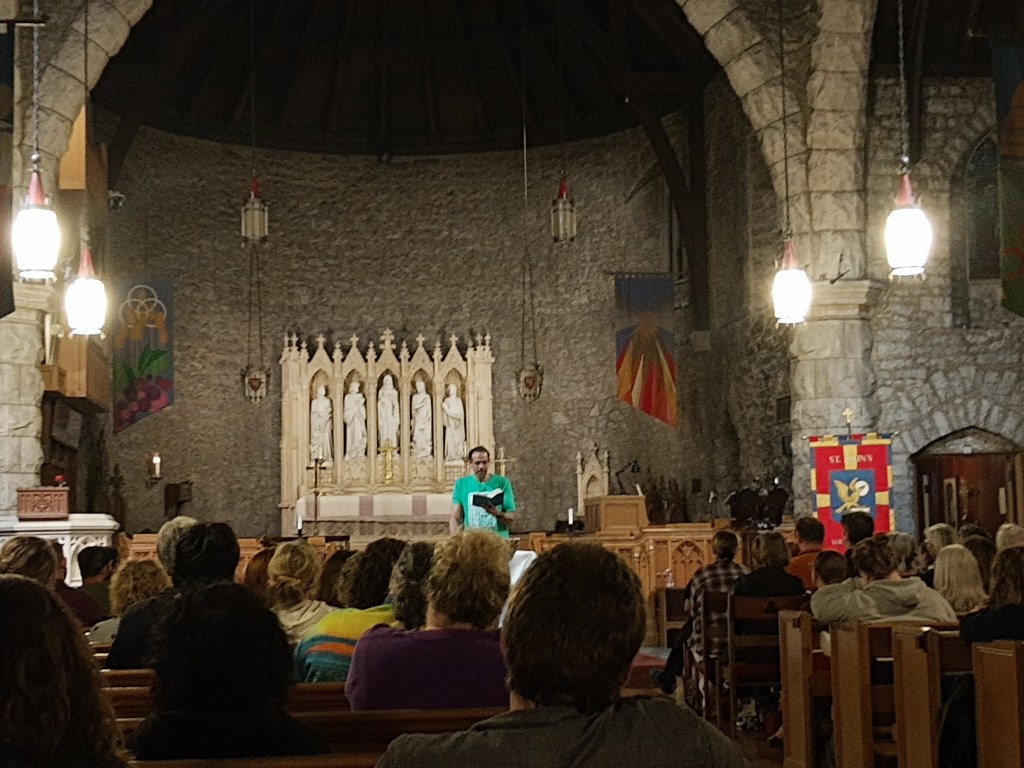
  • Readings by David Huebert and Sean Prentiss in St. John’s (gorgeous limestone and stained glass) Episcopal Church sanctuary. Your girl provided introductions to both writers—thanks for putting up with my unorthodox investigative process to make sure they were exciting, guys!

Day 2:

  • Bengal Tiger Moments: Time Perception in Creative Writing, facilitated by Sean Prentiss. In this fascinating session, we talked about speed on the page, presented in five categories from fastest to slowest: Gaps, Summary, Scene, Dilation, and Pause. Sean presented examples of these techniques from creative nonfiction and explained the brain science behind our understanding of the movement of time—irl and on the page.
  • Rooting the Self: Writing as an Act of Person, Political & Environmental Transformation & Transcendence, a multi-genre workshop with (beautiful and talented) Rebe Huntman, author of My Mother in Havana: A Memoir of Magic & Miracle: Rebe took us through various stages/ways of honoring our voice and our writing by making space for it and celebrating it, including meditation, morning pages, repetitive activity (including list-making), “the writing cave,” and writing constraints and freewrites. My favorite prompt, a list-making exercise we did in this session, produced these lists, below. (From there I spun out a short prose piece, “Reasons to Revere Your Vagus Nerve” (we’ll see where that weirdness goes!):
5 Things I Consider a Miracle
High arches
Warm pie
The vagus nerve
Sweating carafes of water
Tanned leather
5 Recurring Obsessions
Ballet hands
Song
Accents, dialects, and regionalisms
Mom, mom, mom
Delight
  • Readings by poets Lauren Camp, Todd Davis & Kourtney Morrow: poems of cityscape to countryside to the night sky over the Grand Canyon left us audience members awed.

Days After

And then, after… there’s nothing better than returning home from a literary event inspired, nurtured, and with a few new ideas for writing already on the page.

If you’re reading this on Small Business Saturday, might I suggest you also read small and lit small by supporting your local indie bookstores and your favorite literary organizations today?!

Did you attend Lit Youngstown’s Fall Literary Festival last month? Another lit fest? What was your favorite part? Have an inspiration gleaned or a piece of writing captured you’d like to share? Feel free to jot it in the comments. 

Like this post? Comment below or on my FB page. And please share with your friends and social network. 

Are you a Rust Belt writer interested in seeing if your own post, or author interview, or book review might be right for Rust Belt Girl? Hit me up through this site’s contact function.

Check out my categories above for more guest posts, interviews, book reviews, literary musings, and writing advice we can all use. Never miss a post when you follow Rust Belt Girl. Thanks! ~Rebecca
Enter your email address to subscribe to this blog and receive notifications of new posts by email.


Lit Fest ’23 Lowdown (with slideshow)

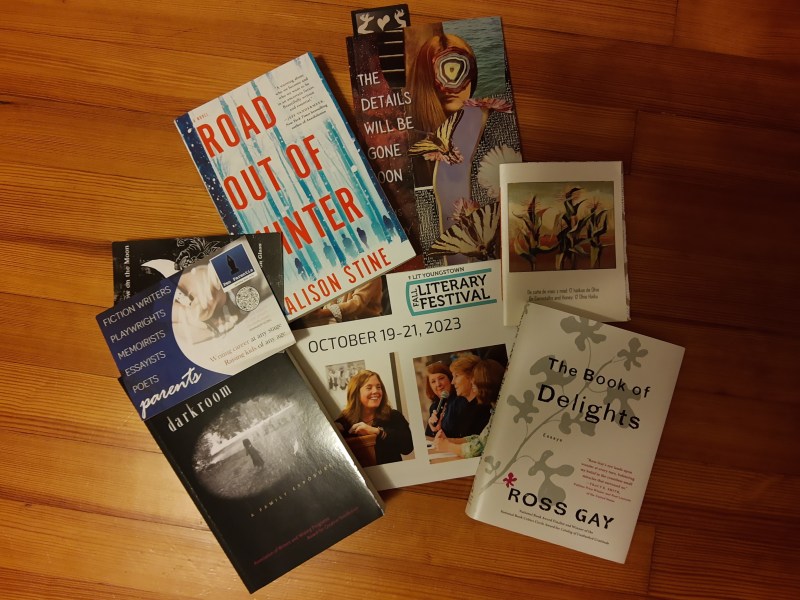
Much overdue, I’m back to recap Lit Youngstown’s 7th annual Fall Literary Festival. Who can put into words the inspiration and joy that happens when a couple hundred members of the literary community come together to create, share, and add to our towering TBRs, of course. (And did I mention nearly 50 sessions focused on various genres of writing and the writing process–how to choose, how to choose?) And, all in one fantastic Ohio city with the best Italian food around and against a backdrop of changing leaves for some extra fall magic. Well, I’ll give it a try…

Perhaps what I love most about this festival is that I can reinvent my creative self each time. I make it a habit to step outside my usual writerly lane and try something new.

Day 1

The first day of the festival I did just that. Parma, Ohio, Poet Laureate, workshopper extraordinaire, and friend Jeremy Jusek started off the day with a craft talk called “Verbal Alchemy: Visualizing Poetic Structure as a Formula.” If you couldn’t tell, Jeremy is a science guy in addition to being a poetry guy. He used chemical formulas and definitions to help “shake up” the structure of our poems. The ultimate goal: “To give structure to figurative language.” My major takeaways: the graphing of a reader’s reaction to a poem to illustrate the overcoming of a reader’s ground state to the point of truly feeling. Also, the idea of developing unit cells for a poem. (For instance a unit cell might consist of 2 similes or metaphors and one question. A poem might contain 6 of these units.)

Maybe it’s my uncertainty with writing poetry that makes me to want to learn all I can about poetic structure, but I stayed in the poetry lane that morning and attended superstar poet Sandra Beasley’s talk: “Lyric A to Z: Exploring Abecedarian Forms in Poetry and Creative Nonfiction.” If the term “Abecedarian” is new to you, you’re in good company. From Sandra’s handout: “In an ‘abecedarian,’ consecutive lines, sentences, or paragraphs lead with consecutive letters of the alphabet. Note that abecedarians can use any language system, not just American English.” (Abecedarian poetry and a Prince fan? Check out a fantastic example by poet Randall Man called, of course, “Alphabet Street.”)

Another highlight of the day was sitting in on the conversation between poet, essayist, and educator Ross Gay and poet and educator Jennifer Sperry Steinorth. Much of the discussion was pedagogy-focused. They discussed the MFA workshop, a process that has received close scrutiny in recent years. The traditional way, Ross feels isn’t “good for our soul or our work.” Instead he tries to stick close to what he notices on the page. His workshop goals are not a stellar poem or essay but are “care and imagination” in the class.

For my last session of the day, I moderated a roundtable led by author, editor and educator Meagan Lucas (whom I interviewed about her debut novel years ago for Parhelion and was excited to meet irl!). Called “I’m a Lit Mag Editor: Ask Me Anything,” the session allowed participants to get a behind-the-scenes on just what rises to the top of the “slush pile.” A couple tips I took with me: the fiction word count sweet spot for Reckon Review, where Meagan is EIC : about 3,000 words; and don’t forget the importance of a catchy title (when that’s all lit mag readers see in their queue!).

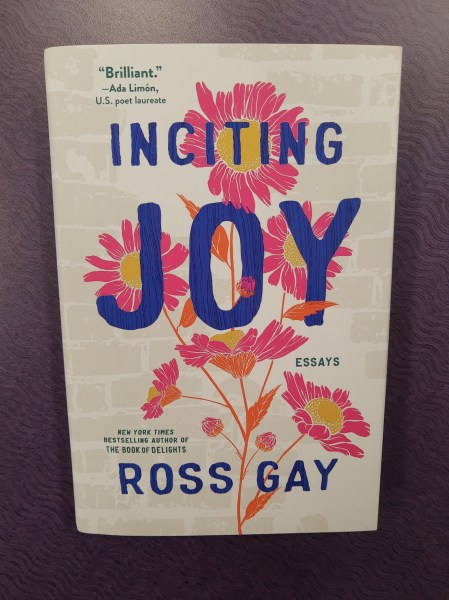
Last, if you’ve been around these blog parts for a while, you know Ross Gay’s work has inspired some of mine, including this essay. And so I was prepared to be moved by his reading at the beautiful, historic St. John’s Episcopal Church–much from his new book of essays, Inciting Joy. But reader, I wasn’t just whelmed but overwhelmed. Ross’s mission of joy has been a guiding light not just for my fledgling essays and poetry, but for a new path where my art and faith can live together. And (in 2023, as I’m sure you can imagine) that’s a lot.

Day 2

The next day started off with a fantastic author reading. One essayist, my friend and editing co-conspirator Renée K. Nicholson; novelist Jason Kapcala, whom I interviewed here; and two poets, Amy M. Alvarez and Randi Ward read from their creative work “set in the mountains and hollers of Appalachia and the hardscrabble steel towns of the rust belt.” Themes of place and displacement ran through these works and I found myself transported–just what a creative reading should do!

The next session found me back in my fiction-writing lane. Novelist Alison Stine focused on “the urgency of cli-fi as we deal with the worsening impacts of climate change” in her craft talk called “Writing Climate Fiction as the World Burns.” Alison has a really inspiring way of talking about writing, even if she writes dystopian stories that deal with tough stuff–like the end of the environment and nature as we know it. It’s clear writing has saved Alison time and again. Writing, she said “is making people sit up straight,” and is also something that can “give us hope” and “give us a way.” And my practical takeaway from her session: wait for your characters to start acting before you start to write your ideas.

My final session of the festival found me marveling at the difference storytelling and writing can make–not just on our spirits but on our whole selves and in the ways we care for one another. Dani Naffziger led an inspiring talk called “Collaborative Writing with Adults with Disabilities,” a writing service she says “provides tangible and rewarding benefits for all involved,” highlighting stories from a population “rarely represented” and introducing “new writing processes for established and emerging writers.”

Under the umbrella of The Healing Impact of Writing, for the other part of the session West Virginia University Humanities Center director Renée K. Nicholson and physician Ryan McCarthy talked about their Healthcare is Human initiative. Through a unique partnership between WVU Medicine and the WVU Humanities Center, the initiative promotes the work of narrative medicine and health humanities. Its seeds were planted during the pandemic, when Dr. McCarthy began journaling about his own experiences and then gathering the stories of his fellow front line workers. He has said: “…projects like this, which highlight the real human stories of healthcare workers, nurture our own humanity.”

My own humanity certainly nurtured, my writing self restored, I left the festival inspired by the work of my fellow writers and by what’s to come. Thank you to Lit Youngstown director Karen Schubert and all who make it happen, year after year. And trust me, you won’t want to miss next year’s festival. Details here.

Now, tell me in the comments, did you attend the festival? What was the highlight for you? Do you attend writing conferences in general, book fairs? What gets your creative juices flowing?

Hankering for Rust Belt author interviews, book reviews, and more? Check out my categories above. I hope you’ll follow me here, if you don’t already, so you never miss a (quite infrequent) post. Thanks! ~Rebecca

Enter your email address to subscribe to this blog and receive notifications of new posts by email.

Reading rn …

WordPress, the lovely content management system that hosts the Rust Belt Girl blog and so many others, is running something called #Bloganuary. Hmm. Not exactly catchy. However, today’s prompt spurred me to write to you, dear followers and readers.

“Who is your favorite author and why?”

Well, we could be here a year, and I hate to choose favorites. But let’s go with the author I’m reading right now, who is certainly among my favorites. If you’ve ever had a friend who knows just the right thing to say when you’re mourning or elated, terribly empty or full to bursting … you know what it’s like to read Ross Gay.

You know, that friend you can sit with in companionable silence (is there anything better for us avid readers?) without any awkwardness. How is it that an author whose business is words exudes a watchful, waiting, respectful quietude? Yet, at the same time, Gay’s words demand to be read–in the chillest come-and-stay-awhile kind of way. The latest book from the Youngstown, Ohio, native, Inciting Joy: Essays, is an open invitation. Yet, let me make clear there is nothing easy about Gay’s work. This is heart-opening-with-a-crowbar stuff, and that takes work on the reader’s part. But if there is a more grace-filled writer alive today I don’t know them. For comparison: think a secular Henri Nouwen (who was, of course, a Catholic priest.) I bet Gay would excel at the Jesuits’ daily examen, just sayin’.

But isn’t that what the best essays do? Examine something of the author’s life? And in our reading, then, our own understanding is enlarged, enlightened. My favorite essay of the book so far is “Through My Tears I Saw (Death: The Second Incitement). It’s my favorite for its subject matter, the author’s father, “an uncomplaining dude if ever there was one” in his last days on earth; and also for Gay’s humor and voice (see: “dude”) when grappling with a subject as difficult as a parent’s death. I’m not spoiling anything to give you a bit of the conclusion of that essay: “It was through my tears I saw my father was a garden.” (And, yes, if you’re wondering: this is a book about joy–creating it, fashioning it out of what you have. Find me someone who doesn’t have pains and sorrows. Joy can be ours, too.)

There’s a lot of gardening, a lot of tending and watering, nurturing, pruning, and surviving in Gay’s work. Read a couple essays and you’ll quickly learn that this is not only metaphorical gardening. The author is a founding board member of the Bloomington Community Orchard in Indiana, where he’s a professor and a poet and essayist, and, from the sounds of it, a fairly uncomplaining dude, himself.

One of his poems from a previous book, “Ode to Drinking Water from My Hands,” which begins in a garden, inspired a short essay of mine, “Ode to an Ode about Hands.” Written during the darker days of the pandemic, my essay is about grief. How we tend to it, what we make of grief, is directly related to the joy we feel. (It’s not free is what Gay’s saying, I think, and I agree.)

Are you new to Ross Gay? Where to begin? I think of his The Book of Delights: Essays as the gateway drug. This is the book I gift to family and friends who might not even be big readers. Short essays about absolutely everything (including joy)–there’s a great chance you’ll connect with (and come back to over and over) at least a few. From there, I recommend his Catalog of Unabashed Gratitude, an award-winning collection of poems that reviewer Evie Shockley called “shout-outs to the earth’s abundance.” The Ross Gay trinity of poetry, gardening, and basketball wouldn’t be complete without an ode to the hardcourt, which you can find in Be Holding, an epic poem and a “love song” to basketball legend Dr. J.

Now for a couple plugs: Lit Youngstown, my favorite community literary organization, is hosting Gay twice this year. The first is an online reading; the second is the in-person, weekend-long Fall Literary Festival in Northeast Ohio, where Gay will be one of the featured writers. I’ll be at both. Maybe I’ll see you there!


Who’s your favorite author? Who are you reading right now? Are you taking part in #bloganuary? Have you made any fun connections?

Want more Rust Belt writing, book reviews, author interviews, writing advice, essays, guest posts, and more? Follow me here. Thanks! 

And check back here next week, when I will be interviewing John Kropf, author of Color Capital of the World: Growing up with the Legacy of a Crayon Company. You won’t want to miss it!

*header image is the cover of Inciting Joy: Essays by Ross Gay (Algonquin Books, 2022); jacket design by Christopher Moisan

Enter your email address to subscribe to this blog and receive notifications of new posts by email.

The “us” in “writing life”–yeah, let’s go with that

A few years ago, while organizing my computer desktop, I changed a folder name. I know, I know, riveting inciting action, right? But stick with me.

I changed the name of that folder from “PR”–forgive me, I’m a marketing professional–to “Writing in Community.” There was little in that folder at that point, but I was starting to get out there, as in sitting on a panel and doing a reading at a literary conference, and figured I should be organized about it. Out there meant knowing there is a public side to writing and publishing that this introvert would have to get used to.

That folder grew when a publishing opportunity turned into an editing opportunity, and I started working for a literary magazine–and working with dozens of writers, so far. For some, I interviewed them about their new books; for others, I served as book reviewer; and for still others, I helped hone essays that got their stories, you know, out there.

There are lots of platitudes like: the best gift to yourself is to give of yourself; there is no “us” without “u,” I don’t know. So, insert your favorite one here. We bloggers know that connection with community is everything; it just took me a while to think of the writing life–one that’s often depicted as solitary and broody–in just the same way.

And that “Writing in Community” folder keeps growing: writing groups and beta readers live in that folder, as do notes on classes, conferences, and group retreats (again, someday!)–a whole lot of writing “us.” Recently, I was asked if I wanted to serve on the planning committee for my favorite literary festival, and of course I said yes.

So, here’s where the magic happens, where our folders could hang out together. Even better, we could hang out together–do all the writerly stuff, like in actual person! It’s two days of readings, craft talks, and panel discussions. In other words: writerly nirvana!

Here’s the pitch: Are you–or do you know–a terrific writer, reader, teacher, lit community organizer, or publisher? Please help me spread this call for proposals for Lit Youngstown’s 5th Annual Fall Literary Festival, with the theme of “Our Shared Story,” to be held in Youngstown, Ohio, October 7 – 9, 2021. Simply share the link with your literary-type friends (on social media, over email, on your blog) anywhere in the vicinity of Youngstown–which is halfway between Pittsburgh and Cleveland.

One last thing: read carefully, my gracious, frequent followers, and note the visiting writers at this year’s conference. (You see what I mean about good things coming to those writers who commune!?)

Lit Youngstown’s 5th Annual Fall Literary Festival
October 7-9, 2021
Youngstown, Ohio
Conference Theme: “Our Shared Story”
Visiting Writers: Ross Gay, Jan Beatty, Bonnie Proudfoot & Mike Geither

Light in the Darkness: Literary Chiaroscuro in the Work of Tove Jansson

Photo by Tristan Pokornyi on Pexels.com

Warning: I am full-on author-crushing right now. The author: Tove Jansson (1914-2001), Finland’s most famous writer-illustrator, who introduced the world to the Moomins–a family of peace-loving trolls brought to life in illustrated children’s books–and also wrote some really fantastic literature for adults.

In light of the first feature film about Jansson releasing next month, I’ve recently devoted much of my reading time to her novel, The Summer Book, and her short stories. All capture Finland from the inside–in a way no travelogue ever could. Thank goodness for translations (and Thomas Teal, in particular, who translated much of Jansson’s work into English). Since I don’t read Swedish–Jansson was born into Finland’s Swedish-speaking minority–or Finnish. I’ve got enough on my plate trying to capture moments in Finland’s history in my novel-in-progress, set in part in this Nordic place–at once beautiful and dangerous, light and dark, like the best photograph, painting, or story. I’m looking for and finding much inspiration in Jansson’s work.

Read more

2 workshops, 2 prompts, and 1 weird writing season

Image by DarkWorkX from Pixabay

Who even am I? Is pandemic time throwing anyone else’s writing for a loop? Just me then?

Really, I remember thinking to myself way back in March that I was going to use the time I was no longer spending driving my kids to and from school to write. I definitely wasn’t going to fill that time with shower-cries or deciding if I’m a chocolate-loving, peanut butter-loving, or original goodness-loving sort of Reese’s Peanut Butter Cups connoisseur.

Silly me.

I have, despite these pandemic extracurriculars, been writing some–but certainly not the same as I was. Fiction has been tough-going, but I’ve written some short essays and snippets someone really nice (or related to me) might call prose poems. I’ll say it again: I am not a poet.

And while I’m not a big fan of Zooming as substitute for activities I was engaged with, pre-pandemic; I’ve enjoyed new Zoom opportunities, in particular two writing workshops I wouldn’t have made in person because of distance.

I thought of these workshops, one I attended just yesterday, when Lorna over at Gin & Lemonade mentioned writing prompts. (You’re going to want to visit her if you don’t already.)

Ah, writing prompts. Controversial stuff, right? I’ll admit to assuming most of my writing teachers who started every class with a prompt were using the time to lesson-plan on the fly. Maybe some were. I know I did just that, once I began teaching. As a student, however, I generally used writing prompt time to work on whatever short story or novel chapter I was mulling over, largely ignoring said prompt.

Prompts were for memoirists and poets always gazing longingly out the window for inspiration.

What a stubborn idiot I was. Sure, some prompts don’t hit you right, some work better than others. But the best ones flip a kind of switch in your brain to get at often-forgotten and sometimes really-weird-good material in there. I’d wade through a million mediocre prompts, now, to come across the best ones.

That said, there was no wading in either of the workshops I took this spring–both of which included several generative writing prompts. So, here are a couple of my favorite prompts and my responses.

Maybe one of these will flip your writing switch today?

You might remember that I interviewed poet and editor Jessica Fischoff, just the day before I took her Persona Workshop. Over Zoom from her home in Cincinnati, Jessica discussed persona poetry and character in prose–and then let us writers loose, scribbling to her prompts. Jessica is a prompts queen, but the one that flipped the right switch for me was to…

Use an inanimate object as the persona of a poem or prose piece, and here’s my attempt:

Figures the Ferris Wheel

If I could count, I would tell you
how many proposals I've heard
proposed at the apex of my grand wheel.
How many rings dropped, how many squeals
of delight, and how many women murmured
under their breathes, looked down at their bare fingers
gripping my bar, and said something like
"I have to think," softly, as if they knew I was listening.
I am always listening.

If I could count, I'd tell you how many boys scared girls,
and girls scared boys, shaking my cars, pretending they would 
break a spoke, heave this wheel, and make it all come crashing down
to the ground, where they would keep falling out of fear.
How many times.

~~~

Yesterday’s workshop with memoirist, essayist, and writing professor Sonja Livingston, who I interviewed right here and here for Rust Belt Girl, was also just what I needed to get out of my own way and write for an afternoon: new stuff, which is gratifying (especially when at work on a novel). New starts mean the writing well is not dry, folks! One of my attempts came in response to a prompt inspired by the work of Ross Gay. (If you’ve been here a while you know I’m always, always inspired by Ross Gay.):

Write about a “delight” or a list of “delights” and I picked one of my little guys:

My Son's Buckteeth

the orthodontist wants to fix
the goofy faces he pulls with them
the way his cowlick makes his blond hair stick up
hair that will go dirty like mine
and fall out like my brother's
the fact he still gives a good squeeze I don't have to take
the fact his hugs put him at my chest height but
he doesn't yet think this is weird

~~~

What weird and wonderful stuff have you come up with from a good writing prompt? Let me know if the comments.

What are you reading and writing this week? Are we social? Find me at FB and on Twitter and IG @MoonRuark

Who comforts you now?

01 - tulane
Poet Rita Dove: Photo © by Fred Viebahn. Copied, with permission, from Rita Dove’s homepage at http://www.people.virginia.edu/~rfd4b/

Who comforts you now that the wheel has broken

the bodies of its makers? Beyond the smoke and
ashes, what you hear rising is nothing but the wind.
Who comforts you? Now that the wheel has broken,

grief is the constant. Hope: the last word spoken.

Rita Dove (from Testimony: 1968)

It’s been a minute. Or, many minutes over several days, minutes made long and weighty—even by coronavirus standards—by the turmoil raging across the U.S., in cities as close as Washington, D.C., and as close to my heart as Richmond, Virginia, and Cleveland. Racial turmoil that’s been roiling since, well, always in America, has erupted in protests.

And so the world grieves, again, more. But then, for many Black Americans grieving over human and civil rights injustices and violence is a constant. We writers like to tout our empathy, but while I’ve known grief, I’ve never known a grief that never subsides. So, what do I know?

As a reader and writer my instinct is to do just that: read and write. I read to know what I don’t know. I write to figure out what I do know and to raise new questions. And repeat. But between the reading and writing, we’re engaging—not just with text in an academic lit-crit way, but with the human being behind the words.

To engage with the community of readers and writers in the American Rust Belt and beyond is why I started this blog more than four years ago. I hope to keep this up, because I love connecting readers with the writers behind some of the literature I love most—poets (like Akron, Ohio, native Rita Dove, above), novelists, essayists, and memoirists—from a place I left behind but am still drawn to.

This blog is not a big platform, and my voice is small, but we bloggers do have the power to amplify the voices of Black writers and poets. There are many ways to do this. First, read Black authors. Thank you to novelist Courtney Maum for making me aware of a couple helpful hashtags to hone in on books for all ages by Black authors: #BlackBookReleases and #ReadingBlack.

If you’re looking to make taller your TBR, here’s a list of highly-anticipated 2020 releases by Black authors. If you’re a regular follower of this blog, you might expect that the 2020 release I’m most excited about this year is Ross Gay’s Be Holding: A Poem. Put a new book on your TBR today. Buy books, and buy them from Black-owned bookstores, if you can. Review these books. Share the work of Black authors whose work you love. I’ve been doing that over at my FB page. Maybe join me there?

Most of the poets and writers I’ve interviewed for Rust Belt Girl I met at literary festivals and readings, oftentimes fairly homogeneous events, if I’m honest. For my part, I aim to seek out more Black voices from my native Rust Belt to feature here. If you consider yourself among this group, I hope you’ll reach out when you can.

Keep safe and sane, everybody, and keep the stories coming.

With hope,

Rebecca

A pair of hands: Discover Prompts, Day 9

Photo by Vova Krasilnikov on Pexels.com

When did I stop thinking about my hands? I used to gaze over my hands with petal-fingers at the end of a port de bras, dancing. I wrote about how my hands are my mother’s hands, long-fingered and veiny, when my grief for her was fresh. A mother, myself, I watched my hands hold infant sons–one arm a sling, one hand cupping the back of a downy-soft head. Then I made a church and steeple of my hands for the toddler boys who needed entertainment in the pew. “And here’s all the people,” I would whisper, wiggling my fingers.

Mostly now, my hands are tools to get my thoughts on the page, tools to turn a page, to scroll and swipe. But I don’t think of them much. I think of my knee that grinds, my ankles that pop. I think of my hips, which sometimes hurt, and which I baby. I am pillow-between-my-knees-as-I-sleep years old.

Maybe I’m thinking more about my hands now because I’m washing them so much. This morning, my dad called to tell me that a bit of dish-washing liquid and water works in the foaming hand-soap dispensers. Just in case. We are all worrying over hand hygiene now. Do we glove-up or not? Wash, dry, repeat. Palmolive, he said. And I thought of those old commercials. “Soft on hands.” Palmolive was my mother’s dish-washing liquid.

Remember the George-as-a-hand-model episode of Seinfeld?

What’s the sound of one hand clapping? That’s from a Zen koan or philosophical riddle and is also a line from one of Van Morrison’s songs I like to sing. I neither chop wood nor carry water with my hands, but maybe I should.

This morning, over English muffins, my boys and I prayed a special one for Holy Thursday. I took little notice over how my pair of hands fits so neatly together in prayer, fingers interlocked. It took a pandemic for me to stop biting my fingernails–I’ve noticed that.

Then, beginning my writing day, I flipped through poet Ross Gay’s Catalog of Unabashed Gratitude, which I highly recommend whether you think you like poetry or not. I came to his “ode to drinking water from my hands,” which you can read in its entirety here at poems.com. (Or just buy the book to hold in your hands.)

As Gay’s poem begins in a garden, you won’t be surprised that, today, the first day of the Triduum, I had in mind another garden, the Garden of Gesthemene. Maybe Gay did, too. And maybe this small snippet will quench your poetic thirst and make you consider your own pair of hands, as I am now.

and I drink / to the bottom of my fountain / and join him / in his work.

From “an ode to drinking water from my hands” by Ross Gay

I’m chronicling our isolation with the help of WordPress Discover Prompts. This post was in response to Discover’s daily prompt: Pairs. Care to join in? Read others’ responses here. My other Prompts responses:

Like what you read? Check out my categories above, with author and photographer interviews, essays, stories, book reviews, writing advice, and more.

a bit of writerly advice for July 20, 2019

Free image courtesy or KathrynMaloney at Pixabay.com

It’s been a long time since I’ve shared some good writing advice from an author. This piece comes from Ross Gay, award-winning poet and essayist, whose latest collection, The Book of Delights: Essays came out earlier this year. He’s also a professor at Indiana University and a big sports fan and former college football player–and what delights Gay are many and varied things, which is, for this reader, delightful.

Before I share his advice, I’ll share a story: I’m a little embarrassed to say that while I’m only 27K into my new WIP, I already have its epigraph–you know, the quote or quotes at the start of a book that suggest theme. In my WIP’s case, the working themes are around loss, sorrow, and joy. Loss we can all try to get our heads around together.

But sorrow is really loaded–especially for me as a Catholic. Funny thing, a friend of ours recently learned what my family’s parish is called. “Our Lady of Sorrows,” he said. “How depressing.” I’d never thought about the name, a common descriptor for Jesus’s mother, Mary, as depressing. For, like Mary’s, our sorrows are borne together; sometimes, they’re necessary, even life-changing, lifting us all up. I couldn’t articulate this to our friend at the time, but his words got me to thinking about the transformative power of sorrow.

That’s about when I started reading Ross Gay, and who knows if his words will stick as one of two quotes in the epigraph of a novel not even half finished, but these words of his, from his essay “Joy is Such a Human Madness,” have served as a good thematic guide:

What if we joined our sorrows, I’m saying. / I’m saying: What if that is joy?

Ross Gay, The BOOK Of Delights: Essays

About the time I jotted this quote down was when I learned that Gay, like this aspiring author, is a Northeast Ohio native–making the possibility that I might one day hear him read in person pretty decent. (Joy!)

Until then, I’ll read his poems and essays and delight in learning about this inspirational author through interviews, like this one with Toni Fitzgerald in The Writer, in which Gay talks about his writing inspirations and process–our writing advice for the day:

…usually it’s thinking, reading, studying, trying to find something that turns you on and going for a bit.

Ross Gay