a bit of writerly advice…for Sept. 13, 2018

All the moments that make up a human being have to be written about, talked about, painted, danced, in order to really talk about life. –Rita Dove, Ohio native, Pulitzer Prize winner, and former U.S. Poet Laureate

banner-2748305__480
Free image courtesy of KathrynMaloney at Pixabay.com

The above quote is from an old interview with Rita Dove in which she talks about her background and her decision–not until college–to try to become a writer. “I always thought [writing] was something that you did as a child, then you put away childish things,” she said. “I didn’t know writers could be real live people, because I never knew any writers.”

There it is, isn’t it? This writing thing: childish, right? Ever feel guilty about writing? I do. Especially the writing I do that doesn’t buy groceries. Why? Because it’s unnecessary, a luxury, an escape, mere child’s play.

Or is it?

Maybe writing, as Rita Dove says, is essential to this life we’re all living here–necessary to becoming part and parcel of this existence.

What do you think?

Now…go write.

But first, sample Rita Dove’s poetry here at Kenyon Review with “Concert at Hanover Square” and try–I dare you–to forget the gray mice image!


a bit of writerly advice for July 31, 2018

banner-2748305__480
Free image courtesy of KathrynMaloney at Pixabay.com

Every parent knows the torment of a four-year-old’s interrogation. Why is the sky blue? How do birds fly? … Questions are the backflips of the mind. They are, as the early-twentieth-century explorer Frank Kingdon-Ward once said, ‘the creative acts of intelligence.’ –from Lisa Garrigues’ Writing Motherhood

The past couple years, I’ve gotten in touch with my inner four-year-old in a way I never thought I would. I don’t often talk about my work-work here (except for lessons learned from writing direct mail); however, I will now, briefly.

In the last year, I’ve conducted what feels like a bazillion but is probably closer to 50 interviews, in order to write articles. All have dealt with science–not exactly in my cozy-and-comfortable arts and humanities wheelhouse. I’ve queried doctors about the symptoms of stroke and about virtual medical delivery systems. I’ve asked engineering students about minuscule solar cells and unmanned aerial vehicles. And I’ve asked budding scientists to describe and describe again a headset that can help detect Alzheimer’s. And much, much more.

Have all my questions spurred Grade A scientific conversation? Probably not. Have I asked a dumb question or two. Probably.

But I asked, and oftentimes asked a second time. (In layman’s terms please, I ask. If I still don’t understand, I say, Pretend you had to teach this concept to a child.)

There it is.

Ask questions like a child. Listen. Ask again. That’s my writerly advice for the week.

(Looking for interviewing tips? Here you go.)

What’s your best “writerly” advice?


OH

37517946_10161121436100455_3609514206598004736_o

I have to say, I felt a little bit vindicated when reading author Lauren Groff‘s latest interview with Poets & Writers magazine (her short story collection, Florida, was released earlier this year) in which she asserts: “Florida is the biggest joke of all the states. It is the punchline to every other state’s joke.”

Oh?

That statement, itself, feels like a joke to this Cleveland, Ohio native. A quick recap for the Buckeye State-uninitiated: OH is flyover country; Cleveland is the “Mistake on the Lake”; the home team Cleveland Browns’ last season went 0 and 16. (Yep, it’s a rebuilding year–again.)

Read more

“…until you don’t suck as much.”

36341620

No, not you…me.

And so I sat at my computer last night, wondering…

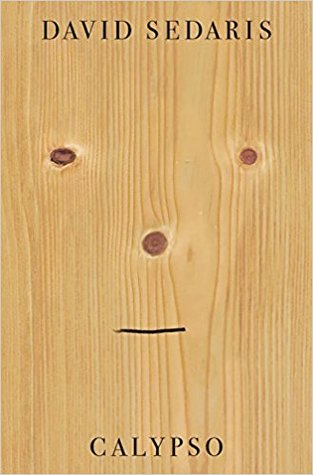
How to make David Sedaris apropos for the ol’ blog.

Hmm.

The author/humorist is a native of Binghamton, New York. That’s Rust Belt-ish, right?

Who cares? It’s David Sedaris! He’s got a new book out. Bookish Beck reviews it here. And so he’s been top-of-mind.

On a day when I’m feeling kind of stuck, creative writing-wise, and even a little sucky, I went searching for some writing advice and found Sedaris’s. It’s funny and wise and talks as much about our current share-heavy-and-share-often culture as it does about writing.

So, obviously, I will share it here, now.

“David Sedaris on Keeping a Diary in the Age of Over-Sharing” in The Atlantic.

I kept a diary for all of a week, when I was nineteen. I probably called it journaling, but it’s the same thing, I think. My mistake, according to Sedaris, is that I read what I had written–and was embarrassed by the detailing of overwrought emotions in response to a series of banal-at-best events. So I stopped journaling.

In my interview with memoirist David Giffels (another very funny guy), he had this to say about journaling:

I have journaled at various times, but to me, writing is getting down to work and doing it when it needs to be done. I think in banker’s hours. Once I’m working on a project, it’s all-consuming. I’m always taking notes. When you’re working on a writing project, you become a selective magnet, like all of a sudden everything in the world is being tested to see whether it’s going to be drawn to your subject. If it is, it comes flying at you and sticks. I’ll hear or see something and think, I have to write that down right away. That’s urgent journaling, I guess.

It’s good that I stopped journaling when I did, I think, because I hadn’t lived yet. I was writing about nothing. Certainly, I didn’t know enough to feel any sense of creative urgency.

So I started living and still try to; to do otherwise scares me. (Guess I should write about it). These days, when I’m writing, I’m writing, when I’m not, I’m reading–and attempting to live outside paper-and-ink worlds. How else does one have anything to write about?

Memoirists must have an abundance of personal story, but truth makes the narrative choices fewer. Amy Jo Burns, author of Cinderland, told me this in my interview with her this spring:

I’ll put it like this–novelists suffer from having too many choices, and memoirists suffer from the lack of them. I think I’ve used the same kind of creativity to solve both problems, but the boundaries are very separate.

Nonfiction and fiction writers alike trade in personal truths, of course. We are what and who we write–no matter the genre, no matter the distance we try to create between our characters and ourselves.

So, tell me, do you journal, write in a diary? When did you start? When did you first show it to someone? Does it spark your personal essays, blogs, stories?

Here’s to journaling–urgent or not. To writing and writing until we “don’t suck as much.” To funny writers. To beautiful weekend weather that took me outside to swim, bike, and shoot hoops with my boys. To live in the world off the page, so that I might feel inspired enough to get back to it today.

Happy Monday, all.

~Rebecca

*book image from goodreads.com

3 things we can learn from a not-great book

books-768426_640

There are great books and not-great books.

The joy of a great book is getting swept up in the narrative so that we forget the laundry that needs doing, the garden that needs weeding, the kids that need watering (kidding/not kidding).

Thing is, when we get swept up in a book, it can be hard to see the mechanics behind the thing: to discern where the scenes begin and end and where the author uses exposition; to follow the plot points and point to where the plot lines converge; to chart the character development; to consider the themes. And so on.

3 things a not-great book can teach us about writing:

The data dump: or, your research is showing

Any book takes some research; to write a historical novel takes a ton. Been there. The trick is digesting all your research so that it comes out through the natural interactions between the characters as they go about being testing and wrung out by the machinations of the author before coming out the other side changed. Whew!

A not-great historical novelist will reveal his or her research; often you’ll see it plunked down without much artistry in chunks at not-so-strategic points. Listen hard and you can hear the book’s editor saying: “You need to set this part of the story in time here; don’t forget World War Take-Your-Pick was going on…”

Backstory as dialogue: or, real people don’t talk like that

Novels are not screenplays, and vice versa. Screenplay writers have it tough. All scene (the showing part). No exposition (the telling part)! A little stage direction maybe–but, still, that’s tough stuff.

With exposition at our disposal, we fiction writers have it easy-ish. Exposition is an efficient way to dispense necessary information about the time and place where our story is set, about a character, or anything else. Exposition is also a good way to tell your reader about a character’s past (or backstory). It’s better than wrenching backstory into dialogue, which sounds kinda like this:

Character 1: “Remember the time we went on that train ride, and we met Jesse James, and fought Al Capone, and stopped for ice cream with Marilyn Monroe? And remember I said that was the best day ever and I felt like I knew what it was I needed to do with my life, and so here I am?”

Character 2: “Yep. Now, tell me more about that time I remember.”

And so this inane conversation goes…

I’m not saying I have backstory all figured out. More on my little backstory addiction here. But rather than try to wrench backstory into conversation, we can make it exposition. Or, think long and hard about whether that backstory is needed at all.

Got to start somewhere: or, an author’s earlier books

I’m a big fan of Amy Bloom, author of Lucky Us and Away. But, while I love these novels, which are later works of hers, her first book–a collection of stories called Come to Me: Stories–is the one I’ve studied. If you love to write and want to get better at it, give this a try: find early books by authors you admire and see how they crafted their stories.

Want to know what historical novel prompted this post? Hop on over to my FB page. And please share if you like.

What are you reading and writing this week?

via The Performance of Writing: What Writers Can Learn From Elite Athletes

Rebecca here: From “low dread” to sports psych to the art and patience of practice, this guest essay featured on Brevity’s Nonfiction Blog was spot-on for me. Hope it strikes a chord in you, too.

A quick story before I go–about humility and performance and the knowledge of our elders, etc., etc. My regular readers know I was a ballet dancer as a kid. It wasn’t just my thing; it was my only thing for a while, which is dangerous enough that one’s identity becomes wholly wrapped up in it. So that, when the pirouette fails, the person fails.

Anyway…about those pirouettes, I could practice and practice in a corner of the studio, sweating my proverbial balls off (sorry), but I wouldn’t entertain any other notions of practice besides putting myself in fourth position and taking off, spot, spot, spot, tight core, and land. Or fall. Or fall off pointe. Or spin out into the wall.

Before a performance of some kind, I remember my mom asking me if I ever visualized doing a perfect triple pirouette. I rolled my eyes in reply. Visualization, along with the self help-mumbo jumbo-yoga-reiki-dalai lama nonsense she’d gotten into since she got sick was just that.

Then, of course, she died (not just then, but years later) with more grace than I’d ever been able to perform with. No matter all my practice and all my sweat.

To borrow from this essay on the practice of writing, I wasn’t yet ready. I couldn’t yet plunge to the “deepest depths” for my art. My art is different now, but I think I can.

Yep, I’m ready.

Good evening and good writing and reading. Good practice–what ever that looks like for you.

What does writing practice look like for you?

In praise of twice-tolling timepieces and other miracles of invention: reading A GENTLEMAN IN MOSCOW

My powers of observation are not so keen that I’m going to brave the very crowded depths of reviews of A Gentleman in Moscow. (Want to read my reviews, I’ve got a whole category, above.)

Let’s just agree that Amor Towles’s second novel is a modern masterpiece, shall we? If you are one of the four people on the planet who haven’t read or at least heard about this story of Count Alexander Rostov, here’s a brief intro (from the jacket copy):

When, in 1922, the thirty-year-old Count is deemed an unrepentant aristocrat by a Bolshevik tribunal, he is sentenced to house arrest in the Metropol, a grand hotel across the street from the Kremlin…the [erudite and witty] Count’s reduced circumstances provide him entry to a much larger world of emotional discovery as he forges friendships…

Basically, drama, relationships, and meaningful meditations ensue. Just read this novel about the Russian soul–its art, history, toil, treasures, and catastrophes. (And be sure to watch the best novel trailer I’ve ever seen at Towles’s website, above.)

Just as this former kid ballet dancer (me) can’t watch a ballet without my feet twitching,  my calves contracting, my back straightening, and my head lilting this way and that with those on stage, I can’t read a book without wondering how?

But here’s not the place for a deep-dive into craft. I simply want to note a few miracles of invention in A Gentleman… and provide a word of caution to the dutifully outlining and character backstory-charting new(er) writers out there.

An image of note: the Count’s twice-tolling clock is much more than a clock that tells time by tolling only at noon and at midnight. It provides a mechanism to discuss industriousness, for Towles to tell us of the Count’s father, who had the clock made because a man (of a certain class, time, and place) should be too busy with work to heed the chimes between waking and noon. And by noon, having had an industrious morning, a man should then leave his work to commune with others. Should he hear the midnight chime, he is too late to bed. And the replete uses for this image are only beginning…

Description of note: readers come to a book like this expecting description befitting its learned main character. Towles delivers, but fear not, he doesn’t (like in real Russian novels) let his pacing lag in many-paged sections of description. No, his descriptions are just as clippy and cutting as his dialogue.

Take the goose chase section (trust me), a funny and farcical bit that brings together in a hotel hallway a melange of worldly guests: two French journalists, a Swiss diplomat, three Uzbek fur traders, a representative of the Roman Catholic Church, a Russian opera tenor with his family of five, and an American general. (All that’s missing is a partridge you know where, but then we do have geese!) Each becomes a character–and a caricature in the Count’s eyes–in the briefest of scenes, thanks to Towles’s powers of description. The ambassador from the Vatican advised; the Swiss diplomat heard the Russian and the Italian out, mouth shut; the tenor, “who spoke only a few words of Italian, informed the prelate (fortissimo) that he was not a man to be toyed with.” The American general, from “The Great State of Texas” took charge and threw the geese out the window.

A sleight of hand (and humor) of note: recently I read a wonderfully-informative and instructive piece on Brevity‘s nonfiction blog, “The Sound of a Memoir,” about shying away from using song lyrics in our writing (whether fiction or nonfiction). Practically-speaking, citing song lyrics (titles are OK) can be an expensive endeavor–if a writer manages to get permission to use them. Creatively-speaking, there are better ways to note a song in a story–to provide a bit of soundtrack to a piece, to get the reader’s foot tapping and put him or her in mind of a certain time when that song said so much! (If you now, as I do, have Elton John’s “Sad Songs (Say So Much)” in your head, you’re welcome.)

Back to Towles’s mastery: In A Gentleman… the author artfully explores the passing of time and trends, in one part commenting on jazz music. In not one but a few places the author has the Count muse about the popular jazz tune that speaks of a distinct absence of bananas, a lack of bananas, for want of bananas… You get the idea. Anyone who hasn’t lived his entire life in a cave knows the song is Louis Prima’s “Yes! We Have No Bananas,” (hear the song here) but by not citing even the title, the reference becomes more than a song but a clever running joke.

All that’s to gush, yes, and also to provide a word of caution to the new(er) writers out there looking for the keys–not only to plot but to imagery and motifs, the characterization and quirks–that make a piece of writing beautiful. How to make these little miracles happen on the page? If I knew, I would be doing it, right now. But I think one of the keys to being a great writer is being a great reader. Another is to trust your mind to make the miracles as you go. Call it a state of flow or the (ahem) muse catching you by the hand, whatever, but writing is more about writing than planning. (OK, you caught me; I’m a panster.)

Yes, you can plan for plot. Outline all you like. Get a sense of your characters before diving in. But can you plan for the clever bits, the brilliant tropes and descriptors and “bananas” that make a piece sing, I’m not so sure.

What do you think? What miracles of invention have you encountered thus far in your summer reads? I’d love to hear from you!


*I grabbed the American and UK cover (which I prefer) images from Goodreads.


We’re turning 1!

20170916_072703
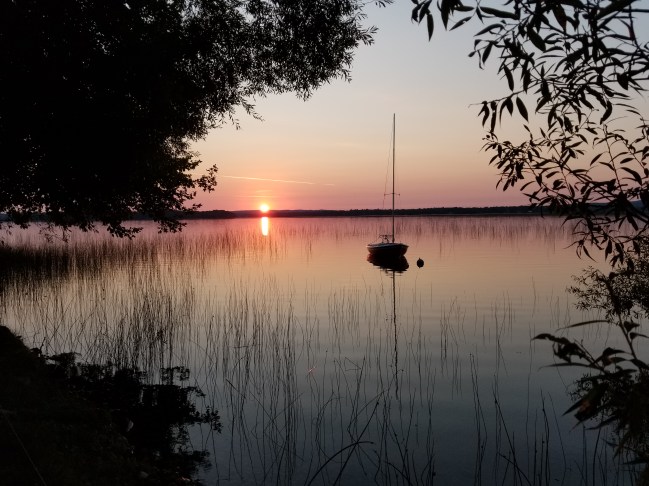
(Not my dinghy.) Thanks for the pic, Dad!

Happy Paper Anniversary! (Ironic, but true.) It’s Rust Belt Girl’s one year blogiversary.

Happy, happy day! We made it a year. I appreciate you sticking by me—and just think of all the writing paper we haven’t wasted!

For the obligatory anniversary stats: this post make 51, with an average word count of 370 (wordy me), for 347 total comments (lots by me) from 593 total followers, some of whom hopped on this train on that banner day when my post was a WordPress Discover feature. Thanks again, WordPress editors!

I started this blog to wrap my head around the literature of my native Rust Belt. For sure, one of my favorite comments, starting out in the Community Pool (best place to be on a Monday) went something like this: I don’t know where the *#$& the Rust Belt is, but I like it!

WordPress is definitely global. As much as I enjoy connecting with my fellow native or current Midwesterners (and I really do), one of the best things about this blog has been finding commonalities between far flung people and places—and the literature and art that comes out of those places.

Author interviews, photography, blogger collaborations, book reviews, apropos re-blogs (thank you, Belt Magazine), stories, essays, and—new this calendar year—writerly advice and notes on traditional publishing. Whew! Hopefully, even if you’ve never heard of the Rust Belt, you can find something here that suits your taste. Even if it’s funny. Especially if it’s weird.

This blogiversary coincides with the anniversary of my jump onto social media via FB. Yep, you read that right. When everyone else starts jumping ship, I’m like: that boat looks nice and sturdy! (Really, dinghy pics definitely forthcoming.) What have I found as a social media newbie? If I let it, social media zaps my focus so that I have the attention span of a hyper puppy. (Nope, still haven’t taken the real puppy plunge yet; I’ll keep you posted.) Social media also keeps me connected to friends, family, and writers too nice to ignore my friend requests! But those connections are more like taps on the shoulder—“remember me?”—than conversations.

We’re conversing here—real two-way street stuff. So, now it’s your turn. Happy Blogiversary to you, because it definitely takes two! What would you like to see from me in year two? (Cotton anniversary, btw.) I’ll try to oblige. ~ Rebecca


Our Place in the World: Water Ways

20171204_091327

We writers love to talk about finding our literary voice (good piece on that here), along with our favorite tropes, motifs, and images. Basically…stuff we know.

We’ve all heard the “write what you know” advice, often attributed to ol’ Papa Hemingway. What he really said (and more Hemingway writing advice here):

Write about what you know and write truly and tell them all where they can place it…Books should be about the people you know, that you love and hate, not about the people you study about.

So, we read, travel, meet, live, repeat, and read some more–to amass the places, people, and ideas that we know fully, that become an integral part of us. So much so that these places, people, and ideas pop up in our writing as setting, characters, tropes and all those other fun literary terms.

All that’s to say that our writerly voice and our place in the world (weekly photo challenge) go hand-in-hand. For me, the way to discovering my literary voice–my place on the page (definitely still a work in progress)–and my place in the world are parallel journeys. And both follow water.

They say the apple doesn’t fall far… My dad, a lifelong Lake Erie boater, went around the world’s waterways as a young man in the Navy and still didn’t get enough of the stuff. Being landlocked makes him itchy. (Here he is on his 1942 Lyman he restored himself.) I suppose I inherited some of his itch.

20170927_155709

From the Great Lake of my girlhood to the river I’m on now (header photo)–water makes its way into much of my creative writing. Not only as setting and a handy trope, but I’m interested in water’s relationship with our human bodies (which are so much water!), and I wish I could fish and swim and dive with an expert’s ease. And there’s where I write what I don’t know, because I want to know more.

This summer I will do more to know more to write more. How’s that? And I’ll do it in a dinghy! Yep, we bought a dinghy–my little family’s first foray onto the water.

Does your place in the world inform your place on the page? I’d love to hear about it and to see pics!


a bit of writerly advice… for National Licorice Day

It’s like driving a car at night. You never see further than your headlights, but you can make the whole trip that way.E.L. Doctorow, novelist, essayist and professor best known for his works of historical fiction (who also maybe adored licorice).

Yep, doing something new here: A little writing advice chased by a little trivia (with a dash of speculation).

The headlights writing advice was provided to me (in response to my novel manuscript) by a former writing instructor and current friend, David L. Robbins, who has written about a million historical novels at this point. (Don’t know if he’s a licorice fan, but I’ll inquire.)

Why that advice?

Because, I admit it, I am a lover of the flashback. Sometimes called an analepsis (but not by me), a flashback is an interjected scene that takes the reader to a time before the current action. You know, backstory.

I’m a lover of the flashback within a flashback. (Though I know this is terribly wrong and something for which I should flog my writerly self.) Here we’re interrupting the forward moving action to talk about something in the past and then interrupting that something to talk about another past something. Whew!

And, heck, while we’re here, what’s wrong with a little flash-forward now and then?

What did Doctorow know?

A lot.

Sometimes the problem is we didn’t start the story in the right spot. If we’re constantly looking back, maybe that’s where the story should start. (Looking forward? Maybe we started too early in time.) Just don’t fall into the trap of turning backstory into dialogue for characters to deliver. Too much “remember the time…?” reads false.

So, in my novel-in-progress I killed my prologue because it took place years before the current action (and it was a prologue); and I’m doing my darnedest to drive by my headlights.

Do I promise to use no flashbacks, no flash-forwards?

No. Moderation in all things, as the Greeks said…those Greeks who called licorice “sweet root.” Did you think I’d forgotten what day it is?

Officially a weed, licorice has been prized for its health benefits for thousands of years, and is even said to have properties that may slow the effects of aging on the brain.

So, maybe have a piece of licorice to stimulate your writerly brain, turn on those headlights and get back to work.

I am…