Creative Inspiration: Part 2 from Intensity Without Mastery’s Michelle Cole

How did we get here? Not here at Rust Belt Girl so much as here—writing, blogging, connecting? (Anyone else have that Talking Heads song running on repeat in their minds? You’re welcome.)

For me, it was my mom who was the reader in my young life, who made it okay to “waste” an hour or a day on a good book. She was my biggest fan, even when my writing hadn’t a prayer of reaching a larger audience than my immediate family. She made me feel like a writer—and sometimes a vote of confidence from someone you love is enough to begin to believe it, yourself.

As I emerge from my Thanksgiving Day food coma, I say thanks to memories of my mom and to everyone else who makes me feel like something of a writer.

Many thanks, in particular, to Intensity Without Mastery blogger and photographer Michelle Cole for this two-part collaboration. I’ve learned so much! (Please check out Part 1, here.)

For Part 2, I wanted to see where Michelle finds her inspiration, what sparks her creativity.

Michelle—what inspires you to take photographs, especially of your Ohio city? What do you shoot with?

I must first credit my parents with impressing me with the notion that hobbies are vital to happiness. My dad kept an aquarium and made pictures of ships with strings pulled around pins painstakingly positioned on canvas or velvet (there is a name for these sort of pictures that escapes me now; its popularity rose and fell alongside macramé). My mom painted and drew. She also read an ocean of genre fiction.

My dad had a significant interest in photography in the 70s. My parents’ bathroom did double duty as a dark room for a few years. My dad’s interest in photography was mostly confined to portraits of family members and some architectural photos. One of my earliest memories involves taking the elevator to the top of what was then the tallest building in Indianapolis, probably the National Bank Building. We went to the top so Dad could take a cityscape picture from that vantage point.

Like for so many Rust Belt families, the prosperity we knew in the 70s did not last, so Dad put aside his photography habit due to cost.

Despite that our fortunes rose and fell, the example of their hobbies endured. Creative pursuits had value. Eventually, my history of major depression intersected with this notion. When digital photography became widespread, I decided to try it because I wanted to see if I could develop a skill that I knew was not a total waste of my time. My parents taught me by example that all creative expression had inherent value.

Then I was struck by the idea that photography could remind me that life was worth living, that my life itself had value. The places I saw, my city especially, were a part of that value.

As I took more pictures of the places I had seen so often, I began to feel something akin to teaching a dying language. I was capturing scenes that should not be forgotten: this is how we lived, the good, the bad, the ugly . . .

I also have an enduring interest in nature photography. I feel serenity in documenting the change of seasons.

I shoot with three different cameras, a Nikon D5200, a Canon Rebel T6, and my cell phone camera (a budget LG V8). None of my equipment is expensive or super sophisticated. There is still much I should learn about the technical points of photography. My favorite shooting combo is my Nikon D5200 with a Nikkor 55-200 mm f4-5.6 VR lens.

What moves you to provide a short essay or story around your photographs?

I wish I had the time and consistent motivation to write about the pictures in every photography post on my blog. When I look at my pictures, I see shorthand for memories that I wish others could read. I suppose that great photographs past and present tell that story with no annotation necessary.

I feel like my inclination to write an essay to accompany a picture is a function of two things: time and depression. If my depression is flaring up, my picture posts have little or no text offered, and the writing is perfunctory or clinical in tone. If the text is short but optimistic in nature, I am simply too busy with work or parenting to write much more.

The photos I take of places in my city usually tap a rich vein of memory for me because I’ve seen them so often, and I really should offer an anecdote to accompany them.

Today I took a picture of a house near the downtown area that intrigues me with its longevity.

Lima house by Michelle Cole
Lima, Ohio, house by Michelle Cole

While this home has some striking Victorian details, its greatest distinction is being the last home left standing in its area. Every other home along that street for several blocks was taken by eminent domain for the construction of a new high school and stadium. I don’t know how this house escaped this dragnet that resulted in the razing of many aging homes and row houses in the vicinity. The powers that be made the school’s lawn large beyond reason to justify demolishing a problem public housing project that had been built in the 80s. This house reminds me that the place we call home stirs feelings of ambivalence.

At heart, I feel this project was like liposuction to this town; poverty and crime can’t be erased just by demolishing buildings and planting perfect lawns where they once stood. I wish some of the other houses had been spared. The perfect lawn and angled brick of the new high school are reminders that the Lima my parents and grandparents knew cannot be resurrected. At least we have this one home left from the old era.

Michelle—thank you for giving me a window into your world. Your personal journey captured in stunning images inspires me to keep growing by creating and connecting with bloggers like you. Anything else you’d like to say?

We live in a golden era of photography. Chances are you have at least one camera within reach almost all the time. No one’s life is just like yours. No one sees all of the places you’ve seen. What you’ve seen today could be gone tomorrow. Now is the time to share those images with the world.
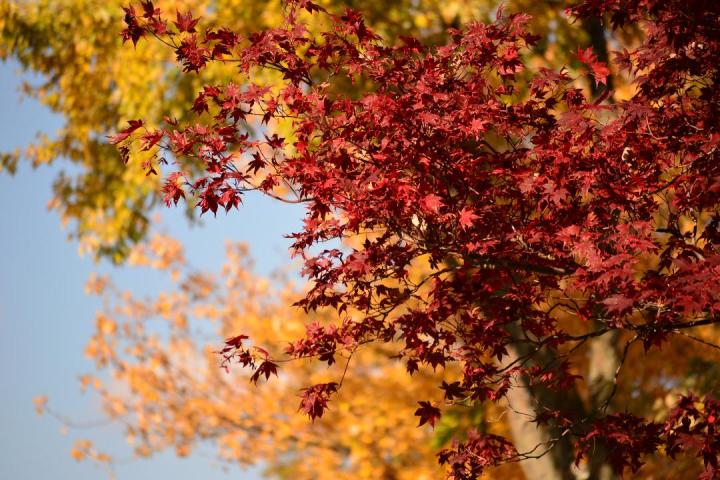
Lima fall foliage by Michelle Cole
Lima, Ohio, fall foliage by Michelle Cole

Thanks again to Michelle Cole at Intensity Without Mastery for reminding us to keep sharing our visions in words and images. And don’t forget to visit Michelle’s site.

Do you feel you, too, are “teaching a dying language” by resurrecting memories of the past through your writing or photography?

Please share!


Thank you, thank you all, thank yinz

Part 2 of my collaboration with photographer and blogger Michelle Cole from Intensity Without Mastery coming tomorrow! In the meantime, for all my followers on this Thanksgiving Day, heartfelt renewed thanks to you…

Rebecca Moon Ruark's avatarRust Belt Girl

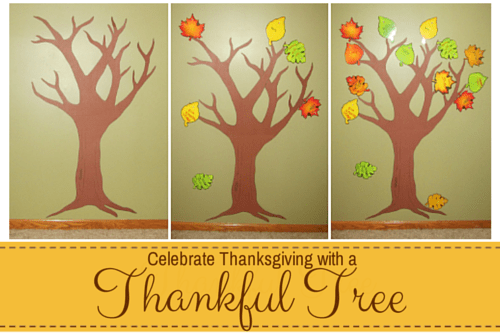
How-to-Make-a-Thankful-Tree-for-Thanksgiving You will be on my Thankful Tree this year.

No matter where you’re from–Rust Belt, Sun Belt, or elsewhere. No matter how you say, thanks, I hope you hear this bit of gratitude.

I delivered this blog in May, and like most five-month-old offspring, it is still in the babbling stage. During this developmental period, I’ve learned a lot about my native Rust Belt, its history and its present, and how it’s portrayed in fiction and nonfiction. I’ve called upon memories of growing up in Ohio–the distinct sounds and tastes that take a girl back home, if just for a moment. I’ve learned how I want to represent my home, creatively. I’ve learned blogging is much more than writing. It’s connecting. And I couldn’t do that without you.

Thanks for following!

Rust Belt Girl (Rebecca)

View original post

Life in Lima and more–from Intensity Without Mastery’s Michelle Cole

For my next two posts here at Rust Belt Girl, I am honored to present Michelle Cole, a fellow Ohio native, who blogs at Intensity Without Mastery. I first stumbled upon Michelle’s photographs of the city where she lives: Lima, Ohio. I have posted before about abandonment photography, or “ruin porn,” as leaving me cold. Michelle’s photography, on the other hand, struck me with its depth of feeling, and I knew I had to learn more about the woman behind the lens. She has agreed to guest post here at my blog, and I’m so grateful.

As Michelle will tell, life in Lima—like in many Rust Belt places—has seen its share of hard times: leaving and loss. There are also sweet spots.

Between her photographs and candid backstory, Intensity Without Mastery moves me with its intense truthfulness:

My life was a mess of attrition and despair until the Recession. As the economy crumbled, I got better, and I’m uncertain why. … In this blog, I explore my sometimes incomplete recovery from mental illness. While I am candid about this aspect of my health, I also explore a hodgepodge of interests, such as photography …

Michelle describes for Rust Belt Girl life in Lima, Ohio:

Lima is situated near the midpoint between Detroit, Michigan, and Cincinnati, Ohio [cities along the north and south edges of America’s post-industrial heartland]. My family has deep roots in the Lima area, but I did not move here until I was nine years old, in 1981. I did spend a total of five years outside Lima in my late teens and twenties, pursuing my education, first, and starting a family, second. By the way, both of these ventures were failures in a conventional sense. I didn’t get a degree, and I became a single parent, which begins in heartbreak unless that’s the outcome intended from the start. I didn’t truly feel at home in Lima until I had failed to create the sort of life I envisioned for myself when I was young. I think that sentiment is key to describing what Lima is like.

The longer I live in Lima, the more I get the sense that this city is full of people who once wished they had landed somewhere else more replete with wealth and growth, somewhere the countryside is perpetually bulldozed to make way for more homes, stores, and schools. Reality eventually tempers these dreams for those who don’t have the skills or wealth to move away.

abandoned storefront in Lima by Michelle Cole
Abandoned storefront in Lima, Ohio, 2006 by Michelle Cole

There’s a lot of healthy cynicism in those who inhabit the “post-fantasy” world of surviving in Lima. I found a perfect portrayal of it in a now-old article from The Onion (which, by the way, started in the bleeding edge of the Rust Belt: Madison, Wisconsin) called “Coca-Cola Introduces New 30-Liter Size.” This little satire is a clever critique of the conventional American urge toward that which is big, bright, and new.

It is necessary to reject those sort of values to be happy here.

The city of Lima has lots of reminders of its past glory days, from abandoned homes to empty or underused factories on the outskirts of town. Nowhere is this more evident than our downtown area. Where once finely dressed shoppers and business people trod the streets, now there are people who were broken and couldn’t quite be put back together. That’s another reason I feel at home in Lima.

Lima street scene by Michelle Cole
Lima, Ohio, street scene by Michelle Cole

I am one of those broken people, and when I am feeling well, I am proud of all I do. When I am depressed, I feel a bit resentful of rising to the occasion despite having some disabilities. I am hearing impaired. I have arthritis and spinal stenosis, along with a long history of clinical depression that’s been treated with varying degrees of success. This situation is not rare in people who’ve stayed in Rust Belt towns like Lima that are long past their prime. I encounter so many people who are trying to get by despite their medical problems. It’s so common that at times qualifying for disability benefits is like crossing a finish line, a mission accomplished instead of a surrender.

I’d be remiss not to mention that there is an enduring vitality to Lima despite its long-term decline in wealth and population. There’s a longstanding effort to revitalize the city and improve our local schools. We have a local symphony and community colleges.

There’s also the treasure I see in the fundamental dignity of all people as they go about the business of living, whether rich or poor, old or young.

No matter how cynical or depressed I feel at times, I see a beauty and notice innate intelligence and wit in every person I encounter. When I drive through the city of Lima or walk some of its streets with my camera in hand, I often think of the following lines from Walt Whitman from “Song of Myself” in Leaves of Grass:

“There was never more inception than there is now,

Nor any more youth or age than there is now;

And will never be any more perfection than there is now,

Nor any more heaven or hell than there is now.”

Part two, from photographer Michelle Cole at Intensity Without Mastery coming soon. Visit her wonderful site for stunning photography and more.

What is your song? Leaving? Loss? The sweet spots? How do you capture “home” in your stories? How do images factor in?


BLOG PARTY!

Traveling Shana–hello, Ohio!–is hosting a Blog Party this weekend (close enough), and we–this Rust Belt Girl and my lovely followers–are invited. Let’s see what new blogs we discover…

Traveling Shana's avatar Traveling Shana

It’s the Meet and Greet weekend everyone!! Strap on your party shoes and join the fun! Ok so here are the rules: Leave a link to your page or post in the comments of this post. Reblog this post. It helps you, it helps me, it helps everyone! Edit your reblog post and […]

via Meet and Greet: 11/9/17 — Dream Big, Dream Often

View original post

Bridges of Cleveland

Besides being engineering marvels, bridges are heavy with symbolism. Drawbridges, especially, speak to me, get me to stop, wait, watch the water. Thanks to photographer Kurt Wahlgren for letting me re-blog his post of Cleveland bridges. (Click on “View original post” to get to his photos.) Do you have a favorite bridge?

Kurt W.'s avatarK. Wahlgren

There’s a red moon rising
On the Cuyahoga River
Rolling into Cleveland to the lake

There’s an oil barge winding
Down the Cuyahoga River
Rolling into Cleveland to the lake

–Randy Newman “Burn On”

View original post

100 Followers–woot, woot!

600px-Capital_C.svg

Apple may have their hot new Roman numeral-named phone. But I’ve got “C.”

That’s right, I hit 100 followers! A lot to some bloggers; a pittance to others; a gracious plenty to me.

Thanks for letting me stretch my reading, reviewing, and writing skills–and for witnessing my bumbling and stumbling into the blogosphere, as I try to plant my Rust Belt Girl flag. I know time is scarce and there are oh so many blogs. I appreciate every single one of you who tunes in!

A few more numbers of note since my blog was born on May 16, 2017:

1,628 views by 793 visitors from 37 countries around the globe

25 posts (not counting this one) including 2 author interviews, 2 book reviews, 2 story excerpts, 1 prize nomination (fingers crossed), 1 guest photographer, 1 sweet pie chart, and more references to pierogis than I can count.

225 likes and 103 comments (not all from me!)

What’s next? More, more, more. And new stuff, too. I’m currently smack dab in the middle of a short story/flash fiction submission frenzy; the more I get published, the more I can sample here (fingers and toes crossed).

I’m also interested in more collaboration with my fellow bloggers: photographers, authors, reviewers—from any and everywhere. Contact me if you’re up for it!

As always, I’m doing the Rust Belt Girl thing on Facebook, too. Find me—and self-deprecating Cleveland jokes—here.

~ Rust Belt Girl (Rebecca)


Author Q&A with Paul Hertneky of RUST BELT BOY: Stories of an American Childhood

Rust-Belt-Boy-jacket-2-jpg.jpg

Here at Rust Belt Girl, I’m thrilled to connect with other writers who explore America’s post-industrial heartland, the Rust Belt, and find that its rich history is still being discovered. Paul Hertneky and I share no relation except for a love of these hardscrabble places and for representing the voices of these places truthfully. For more than twenty-six years, Paul Hertneky has written stories, essays, and scripts for the Boston Globe, Pittsburgh Post-Gazette, NBC News, and many more outlets. Rust Belt Boy: Stories of an American Childhood is his memoir.

“Rust Belt Boy brings to life in loving, lyric detail an essential but over-looked portrait of America’s blue collar heart,” writes National Book Award Finalist, Sy Montgomery. [It] illuminates moments that change our lives and the small recurrences that shape our decisions. In a millworker’s milieu—seldom seen by outsiders, filled with soot, solvents, and sharp edges—we encounter the work ethic of immigrants, then as now. These pages explore the push-and-pull of family and a hometown, the gravity—nearby or at a distance—that keeps us in orbit around our roots. (Book jacket copy)

Paul—Rust Belt Boy is an exploration of your roots, your personal history and the history of your hometown of Ambridge, Pennsylvania. In the writing of this memoir, what was the most surprising thing you learned about your native place?

That honor goes to the Harmonists. By most people’s reckoning [the Christian separatist society—a celibate “utopia”—founded in Pennsylvania in the early 1800s] was the most financially successful community of the time, probably anywhere. To have three stanzas devoted to the society in Lord Byron’s Don Juan; to be a subject of discussion between Marx and Engels; to have more money at the time under the bed of the founder than in the U.S. treasury. What a force these people were. How we ignored it! That might be the biggest surprise: the fact that we were not entirely cognizant of where we were.

6732025_orig
Image of Old Economy Village (the Harmonist Society’s historic settlement) courtesy of ambridgeconnection.com

The question is: does our writing in some way put people in touch with their past? That’s the role we can play. That was maybe most surprising. This place was far more pivotal in American history than we knew. It points out how little attention we paid to the past—that distance between the immigrant experience of the here and now and the heritage of where we were.

Read more

Beers & Opera: Feed Your Soul

“We grew up being told to get out of town after graduation.”–that line stuck with me. Kudos to the kids, like these singers, who stuck around their hometowns and now bring soul-feeding art and music–and even beer–to the ones they love. Musical performance with a side of ale. Love this! Sharing from “Voices from the Borderland,” Mansfield, Ohio. ~ Rust Belt Girl (Rebecca)

Llalan's avatarVoices from the Borderlands

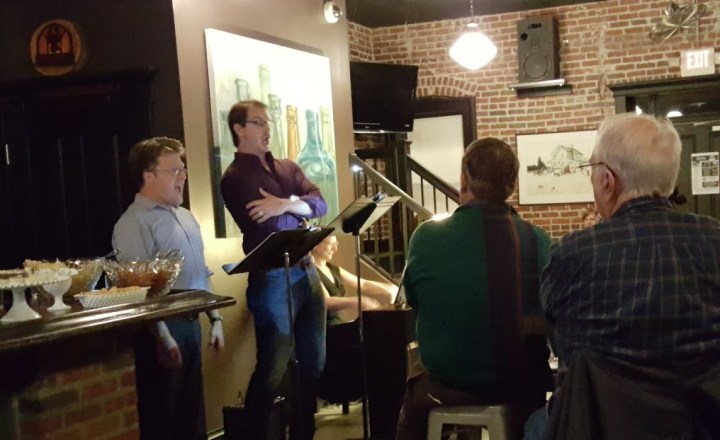
OperaAtPhoenix Joel Vega & Andrew Potter, singing at The Phoenix Brewing Company

I don’t know one bean about opera. What I do know, is that Andrew Potter produced a note Monday night so low and resonant I felt it in my bones. You don’t have to know much Wagner to appreciate the talent and hard work behind making that music.

I attended “Hopera2!” at The Phoenix Brewing Company — a pairing of Phoenix’s beer with music by Mid-Ohio Opera. The opera company was founded by Joel Vega, a name I knew growing up here as someone to watch out for at the yearly solo and ensemble music competitions. And now look at him! Maybe it was the beer, but the man couldn’t stop smiling. As someone who has created his own successful arts nonprofit in a town where many said, opera? he has every right to grin. Mid-Ohio Opera brings…

View original post 487 more words

Whose side are you on, anyway? What’s in a name?


tl-horizontal_main
The Cuyahoga River, flowing into Lake Erie, divides Cleveland into East and West sides. Photo credit: Kenneth Sponsler/Shutterstock

Does your town take sides? Take names?

Growing up in the Cleveland, Ohio, area of the U.S., the first question asked of a new acquaintance was: “What side of the city are you from—East Side or West Side?” Once that was settled (if you were still talking) and you exchanged surnames, then came the second question: “What kind of name is that?”

There’s a lot to the East Side/West Side rivalry this article delves into if you’re interested. But today I’m talking—and taking—names. What’s in a name? If you’re a Rust Belt native, a lot.

My husband, not a Rust Belt native, thinks the name question is gauche (okay, he doesn’t say gauche, but that’s what he means: tacky, uncouth, even rude.) I wouldn’t ask the question of my neighbors in the Maryland town where we now live, a town that was established in the 1600s. Here, talk of family names and countries of origin quickly gets really old—literally. (Of course, there are many exceptions—newer immigrants and many “come here’s,” like me, from other American places.) Still, for many longstanding Maryland natives, the Old Country—with its telling surnames—is a distant memory. They are Marylanders, plain and simple.

Being from the Rust Belt is a little more complicated. On a recent trip back to the Belt—the Pittsburgh, Pennsylvania, area to be specific—I made it my mission to have pizza. (Maryland is known for blue crab, not pizza, for good reason.) It’s true, Beaver, Pennsylvania, doesn’t have a particularly Italian ring, but it has a lot of Italians—who, thankfully, know their pizza. The next town over still had their banners flying for a Serbian food festival. The local grocery store featured homemade pierogies from a purveyor in town. Okay, we’ve established that the way to my head is through my stomach. But, really, the Old Country feels a little less distant in the Rust Belt.

On that trip back to the Belt, I visited with cousins and an aunt, and we talked about old times. We looked at black and white family photos shot in the 40s and 50s. “Looks like the Old Country,” said my husband of photos of barely-clad kids splashing in a tin tub in their Cleveland yard. We also talked about names: Polish names in my family’s Buffalo, New York, area towns; Italian names in a cousin’s new Pittsburgh, Pennsylvania, area town; a lot of German names in my Ohio hometown.

Me? I am the granddaughter of a Rossenbach and a Heineman. Next year, my most famous (or infamous, depending on how you like your wine) German-extracted relations, will celebrate 130 years of Heineman’s: Ohio’s oldest family owned and operated winery. The Old Country making it big in the New Country!

image001
My paternal grandmother, born Martina Heineman, at left. My dad, the pouty boy, at top right.

Whether examined through the lens of food and drink or neighborhood or family name, we are—to a large extent—who we came from. And who you are matters a lot to me, a writer, curious to a fault.

So, I’m not apologizing before asking you, “What kind of name is that?”

A conversation around CINDERLAND, a memoir by Amy Jo Burns (yes, spoilers)

20588664._UY400_SS400_

I don’t know about you, but I find the memoir in general a tough nut to crack. I’ll admit it’s not my favorite genre to read. As a fiction writer, I’m an escapist–I admit that too–always seeking new opportunities to inhabit the lives of fictional others.

The memoir also poses challenges for the reviewer: how to best critique a plotting of events in a life that really happened; how to critique a cast of characters who are actual people?

Then there are my own personal memoir hang-ups, which say much more about my issues–as a “good girl” raised on Rust Belt values (more on that later)–than the genre’s. As in:

  1.  Talking (or writing) about oneself is evidence of vanity.
  2.  Talking about one’s successes is risky business, as in you don’t want to jinx yourself.
  3.  Talking about one’s trials only invites more trials, as in, you think you’ve had it bad, I’ll show you bad; also as in, good girls bear their crosses with (quiet) grace or suffer the consequences.

Amy Jo Burns knows a lot about grace–and about suffering–and she has written a graceful memoir, one I can’t quite review but find myself drawn to write about.

Read more