On myth, taboo, and the making of boys

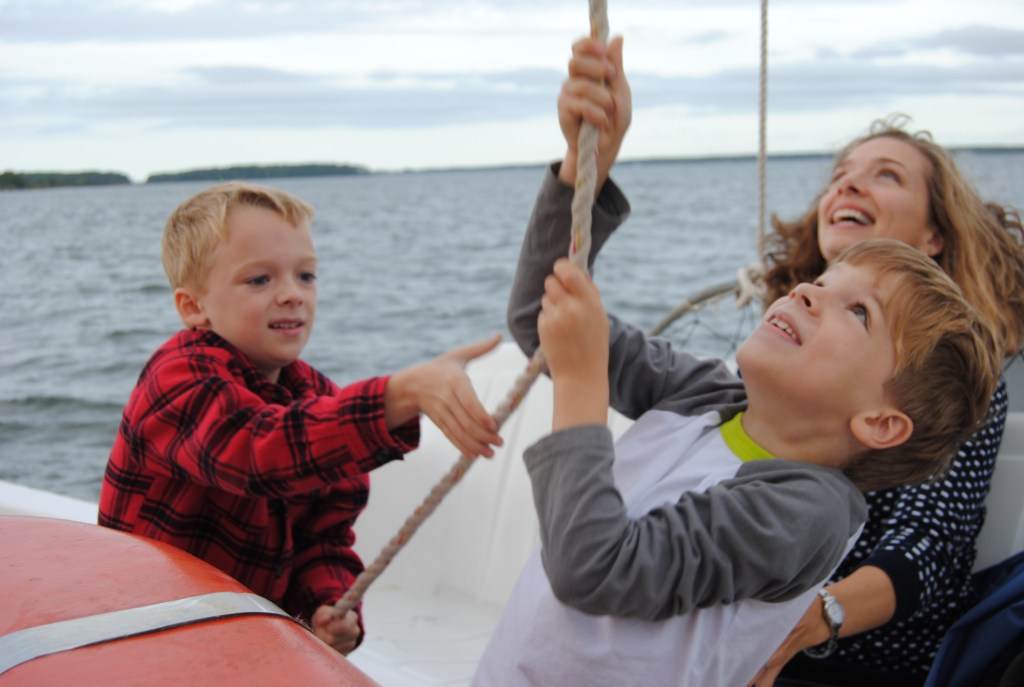
One of my favorite shots of my boys (age 6) and me (not age 6)

When I was on bed-rest, hugely pregnant with my twin boys, I did what I do in any anxiety-producing situation, especially one that would have me lying on my side for three months: I read. In addition to the care-and-feeding-of-babies books, I read about the raising of boys into men, the emotional aspects and the pitfalls to avoid.

In my reading, I found prevalent boy-myths to steer clear of (in life, not in writing–myths are fun there, but more on that in a bit). Two common ones: boy as animal (he simply can’t be good); and boy as prince (he can do no wrong, no matter how he tries).

Once I delivered my boys into the world, I became uber-focused not on their boyhood but on their infant hood–a precarious time made more precarious by sleep deprivation (mine, not theirs). “Your job is to keep them alive,” the pediatrician said. (If that sounds dire or needlessly heartless, I’ve since learned this is something pediatricians regularly say to moms of twins.) For me, nursing day and night, there was no time or energy for thinking ahead to boyhood–or mythologizing or otherwise romanticizing it in any way.

Amid the mental and physical haze of exhaustion, I did fall prey to infant-mom advertising: you know, the stuff of soft lighting illuminating mother placidly cradling baby in her arms–that’s one baby, not two. And so much gazing–lovingly–into each other’s bright eyes. Kenny G might have been playing his muzak as soundtrack to the ad–trying its best to sell me bottles, bjorns, fancy diapers, or other stuff I wasn’t buying.

What I was buying, however, (and internalizing like the marketing writer I am by day) was that romantic image presented. I was buying that hook, line, and sinker. Yet, I remember a turn of phrase that left me feeling heartless and creeped out all at once: fall in love with your baby boy.

Of course, myths abound in culture and literature through the ages that feature a mother falling in love with her son: not Pampers-love, but romantic–even erotic–love.

Read more

Don’t forget to stretch: A lit fest rundown…with not-pro tips

Nope. Not a churchy post. Hang tight, folks.*

It’s festival season around here. Whether that means discovering just the right pumpkin, a new lager, or a better, more flexible version of your writing self, don’t forget to stretch (more on that in a bit).

Earlier this month, I headed to Youngstown, Ohio, for the third annual Lit Youngstown Fall Literary Festival held on the YSU campus. Here’s a rundown, plus tips, and–of course–a list of the autographed books I lugged home! (First, shout-out to my cousin, Theresa and her husband, Steven, who kindly fed me homemade pizza and put me up for the night along my way through PA.)

Read more

On reading GLORY DAYS…and other summertime scares

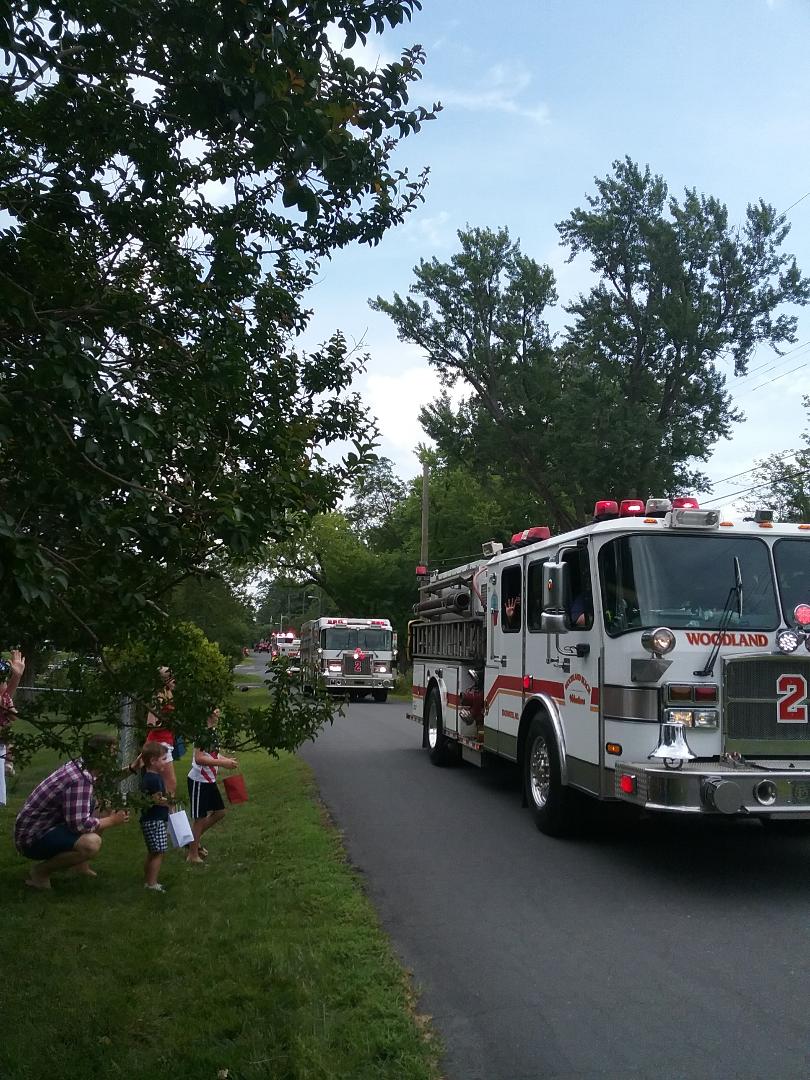
It starts with fire sirens, so loud the littlest children clap their hands over their ears. But not my guys, old enough now to tough it out–and join the parade on their decorated bikes to cheers from neighbors lined on both sides of the street.

Only … this Fourth of July Parade, one boy returned after he’d finished the short parade route, red-faced and sweating. The other wasn’t with him. “Where’s your brother?” was answered with a shrug. The street was empty. And I had the feeling of dread every parent knows, that hollowing out, followed by cold palms–on a very hot day.

Read more

Still Spiraling

Photo by iSAW Company on Pexels.com

Because spinning sounds like losing control.

And it’s not as dire as that, I’ve just been busy. Busy with my freelance writing work, with family–it’s my husband’s birthday today–and with moving forward with my creative writing process: create, recreate, revise, edit, submit, repeat. And that’s only for my short stories. As for my completed historical novel manuscript, I’m taking a break from querying agents. After receiving some constructive feedback, but no offers of representation, I will be back to the editing desk, come fall. For now, what better impetus to get a second manuscript under my belt than a little healthy rejection?

So, I’ve been working on my latest WIP, a multi-generational novel–and spiraling. Spirals are a shape I’ve had in mind for a while, since reading Sarah Smarsh’s Heartland (my take on that book, here) with her potent imagery of Kansan funnel clouds. (And, we had our first tornado warning of the season the other day, here in Maryland.) As it happened, the book I picked up as a tandem read to Heartland was Jane Alison’s Meander, Spiral, Explode: Design and Pattern in Narrative, a fascinating craft book that takes the traditional story arc (or wave) shape–ya know, rising action-climax-falling resolution–to task. Or, at least suggests various other shapes our stories can take: spirals, webs, radials.

This led me to thinking about the “shape” of my creative process, which feels very much like spiraling. If you picture a funnel cloud spiraling, I’m the still eye in the center (most of the time). Of all the swirling ideas around a theme, say song and singing (one of the major themes in my WIP), I need to grab hold of the ideas that might fit and let the rest blow on by. Thus far, I’ve grabbed onto Finnish lament singing and folk songs; American Blues; Christian hymns and spirituals; and the best of the 80s radio hits: Whitney Houston, Wham, Elton John. (As you can see, I’ve held onto more than I’ve let go.)

Yet, such amassing of material around a theme–this kind of gathering research–I find much more freeing than the longitudinal historical research I did for my completed novel. Following along a historical plot line (albeit with fictional characters) was a bit constraining. And I’d thought it would have been the other way around: plot line laid out would free me to explore the other elements more fully: character, theme, setting. And maybe it did. But I’m having fun, this time around, creating in a freer way.

Now, it’s your turn, how do you capture ideas for your writing? How do you construct a post, a story, or book? Do you follow a forward-moving path? Do you regress? Do you turn in circles?

Of course, narratives move forward–the stories we create and the stories we are. But, I’m finding, we don’t always have to push them forward quite so hard. In fact, I will have a wonderful opportunity to look back on my own personal history soon. My boys and I are headed to Ohio, and I’ll have the opportunity to show them the house on the old country road I still think of as home.

I was thinking about our trip as I had a funny exchange on Twitter with the novelist Ivelisse Rodriguez, author of Love War Stories. (She was a featured author and read at the Barrelhouse literary conference I talked about here.) A Cleveland venue where she was appearing blurbed her as a young writer and she corrected them. I joked that maybe we’re all young in Cleveland. But then I got to thinking that I always feel young when I return to Northeast Ohio, maybe because I left at 19 and time for me, like my memories, has frozen in place. Let’s just say, I’ll be glad to get back, feel young, and look afresh at my native place through the eyes of my boys. Maybe we’ll turn around in circles a few times–even get a little lost.

What are your upcoming summer adventures–in reading, in writing, in travel? I’d love to hear about it in the comments!

P.S. Want more Rust Belt? I’m always on at FB. Want the best in lit? Check out Parhelion Literary Magazine, where I am the new Features Editor.

The Shape of Things: Reading Sarah Smarsh’s HEARTLAND

Image by David Mark from Pixabay

One particular shape captured my attention freshman year of college. That was Maslow’s hierarchy of needs theory triangle. Remember that one? A foundation of basic needs building up, I.M. Pei style, to more lofty psychic needs, like self-actualization: the needs-lite, if you will, that keep people like us writing and reading.

I don’t recall taking any social science courses in high school, so introductory Psychology and Sociology were a revelation. Our high school courses were cut and dry: dates, times, rules of usage, facts, and figures that were set, that didn’t depend on personal or group experience. An isosceles triangle was the same, whether it sat in a wheat field in Kansas or a steel mill in Ohio.

Of course, like shapes, people are also the same everywhere. Isn’t this what we like to think? Americans are Americans, wherever they’re set down? Heck, I grew up in Ohio, The Heart of It All (my home state’s tourism slogan then). The world was my oyster, or, perhaps, zebra mussel. But I digress…

I did not grow up in Sarah Smarsh’s American heartland of Kansas. Yet, Smarsh, the author of HEARTLAND: A Memoir of Working Hard and Being Broke in the Richest Country on Earth, and I share enough similarities that I recognized much of the emotional terrain of her memoir. We’re both white females who were born into Catholic Midwestern families of German extraction with Amish down the road; we’re both college educated (at state schools). Only, our roads to college were decidedly different, due in large part to what sociologist and journalist Barbara Ehrenreich calls “America’s most taboo subject”: class.

Read more

Trash on Easter

“Tie-dyed variety this year–cute, right?

This Easter, I’m thinking about trash. Of course, I’m also thinking about the usual holiday trappings—the decorated eggs, the leg of lamb, and flowers for the table. Then, there are small shirts to be ironed, my slip to find… Wait. Why trash? Well, as I was listening to The Passion read at Good Friday mass, last night, arm around one of my boys, I tried to see myself in the “Crowd” role we congregants play. You know, the crowd, who witnesses the suffering and death of Jesus, the crowd who yells out in unison “crucify him,” several times—something which felt fairly naughty to me when I was a kid and feels just plain conflicting now.

Before I lose you… whether you view Jesus as a savior, a prophet, or simply a literary figure, today, it can be instructive to think how we might have viewed him if we were his contemporaries. This poor vagabond, wandering around preaching too loud, associating with prostitutes, beggars, and the diseased. We might have thought his sandal-ed feet smelled bad. We might have even called Jesus “trash.”

This one terrible word, “trash,” shorthand (on our worst days and in the worst ways) for something we Americans have a hard time discussing—class—is following me around in my wider reading and pondering.

I just finished the audio version of Elizabeth Strout’s novel, MY NAME IS LUCY BARTON, in anticipation of the sequel to her Pulitzer Prize-winning OLIVE KITTERIDGE. In the deft, character-studying way Strout has with fiction, her Lucy Barton character discusses her family’s poor upbringing in the Midwest with her mother, who visits at her hospital bedside. (And this is the thrust of the entire novel; do not expect plot from this one.) After a strained discussion between mother and daughter about Elvis Presley and his upbringing, Lucy’s mother says he was from a “trash” family. Then, in a moment of painful clarity, Lucy responds: “We were trash. That’s exactly what we were.”

Really, I should have pulled the car over, listening to those words, like a gut punch if there ever was one in literature. But, why? I wondered. Why is it so hard to even hear—from a character at that, not even a real person—that insult, “trash.”

In my tandem-reading way (find my last tandem read here) I consulted Sarah Smarsh’s well-researched HEARTLAND: A MEMOIR OF WORKING HARD AND BEING BROKE IN THE RICHEST COUNTRY ON EARTH (a finalist for the National Book Award) in which the journalist author examines class in America through her own personal lens, having grown up in a working poor family in Kansas.

We were “below the poverty line,” I’d later understand…And we were of a place, the Great Plains, spurned by more powerful corners of the country…”Flyover country,” people called it…Its people were “backward,” “rednecks.” Maybe even “trash.”

Sarah Smarsh in Heartland

And, so what? We read about it, think about it, write about it, publish the stories of the underdog if we have the means. For the rest of us, our influence may be small. But witnessing something is something. As is finding our voice, however small, in the crowd.

Now, it’s your turn. Have you read either of these books? Do you read or write about that other C-word: class?

And on a lighter, holiday note, Happy Easter to you and yours from me and mine…

~Rebecca

Today’s Book-Love Triangle…

Photo credit: me, on my recent writers retreat with a view of the Blue Ridge Mountains of Virginia

We know we must read–and “read enthusiastically and omnivorously”–to become better writers, and better everything else-ers, really.

Yet, for this reader, it sometimes feels like directionless reading. Oh, I have my reading piles: one to inform this blog, one to inform my completed historical MS; one to inform my new MS; one for pure pleasure, which typically dwarfs the others out of neglect.

And, so, to experience a moment of reading kismet, when one book I love references another book I love, is a thing of beauty: a book-love triangle, if you will. This particular book-love triangle also happens to connect my blog reading with my pleasure reading, making me feel on this cold and dreary “spring” day a little more whole.

Enough lead-up, here it is: In Anthony Doerr’s memoir, Four Seasons In Rome: On Twins, Insomnia, and the Biggest Funeral in the History of the World, he quotes a line from Marilynne Robinson’s novel, Gilead:

There are a thousand thousand reasons to live this life, every one of them sufficient.

There are as many reasons Doerr, the Pulitzer Prize-winning author who has long lived in Idaho, would quote the Pulitzer Prize-winning Robinson, who was born in and has set stories in Idaho. Doerr and Robinson share more than external landscape; they share a sensibility, an exploration of the internal landscape of the spirit, spirits accustomed to the miracle of the everyday.

Any parent of twin infants will tell you (if they’re being honest), one baby at a time would have been sufficient. Because I am a twin parent, myself, Doerr’s memoir was recommended to me, though it didn’t make the tough moments in the memoir easier to read from having gone through similar ones myself. Still, it always seemed, the fog of nursing, holding, walking, changing and bathing sleepless little people would eventually lift, if for only a fleeting moment.

In one such moment of sleep deprived twin-parent frustration, the fog lifts for Doerr by a baby’s “first,” one of those little everyday miracles in the life of a parent: the first finger-squeeze, first smile, first crawl. In this instance, one of Doerr’s boys says “Ciao” to a Roman man passing in the stairwell. His first “Ciao.”

One of “a thousand thousand” reasons… And we could spend time here talking about the meaning behind “sufficiency” and behind “thousand” for Doerr, who quotes Robinson, America’s most famous living religious author–who, no doubt, uses “thousand” as the Bible does, to signify a multitude, a vast abundance. You can read my thoughts on Robinson’s Gilead, which I read for the first time only recently, here. You can read my initial thoughts on Doerr’s memoir, which I tandem read with The Gondola Maker–for a centuries-spanning “trip” to Italy–here.

But here is where I stop, today, to return to reading, for the multitude of little miracles that happen when we make connections across the piles of tomes of words that are waiting for us.

Have you experienced a book-love triangle you’d like to share? A baby’s “first”? A fog lifted? I’d love to hear from you in the comments!

This week’s tandem read…

I spent the loveliest Sunday celebrating St. Patrick’s Day–my own way. After Mass and brunch at a Greek restaurant, I found the sunniest spot on my porch, enjoyed a Bailey’s, and started in on this week’s tandem read: Pulitzer-prize winning (Cleveland, OH, native) Anthony Doerr‘s memoir, Four Seasons in Rome: On Twins, Insomnia, and the Biggest Funeral in the History of the World and art historian and travel writer Laura Morelli‘s debut novel, The Gondola Maker.

Do you do much tandem reading?

Tandem reading provides many such textual mirrors and prisms. I highly recommend it.

Writer and Book-seller Michael Berger

This book pairing is pretty obvious: both are set in Italy (the first in the 2000s Rome; the second in 16th-century Venice), with all the inherent romance an Italian setting prescribes–from fine literature, art, and architecture to finely-honed craft and familial trades passed down through the generations. And there will be your standard romance to come–more in Morelli’s tale, I’m afraid, than in Doerr’s memoir. (Like Doerr, I suffered from sleepless nights due to twin boys, only not in Rome.)

What’s 400 years between stories? I’m enjoying the tandem view of Italy spanning centuries, geography, and outlooks.

So far, I’d recommend both books.

With humor and his trademark attention to detail, Doerr chronicles his family’s year in Rome, where he begins work on his novel ALL THE LIGHT WE CANNOT SEE–when he’s not distracted by the writing of Pliny, the Elder; struggling with his Italian phrasebook; or carting his twin babies around an ancient city not meant for hulking twin strollers.

My favorite excerpt so far:

Jet lag is a dryness in the eyes, a loose wire in the spine. Wake up in Boise, go to bed in Rome. The city is a field of shadows beyond the terrace railing. The bones of Keats and Raphael and St. Peter molder somewhere out there. The pope dreams a half mile away. Owen blinks up at me, mouth open, a crease in his forehead, as though his soul is still somewhere over the Atlantic, trying to catch up with the rest of him.

In The Gondola Maker, Morelli’s expert research makes Venice more than a vibrant backdrop but a fully-fleshed-out character among the cast of this historical coming-of-age novel. I find her description of the craft and trades surrounding gondolas fascinating. (I’m eager to read her latest novel, The Painter’s Apprentice.)

My favorite passage so far:

I begin to absorb the unspoken language of Venetian boatmen, a complex set of hand gestures this cadre of men has developed over generations to communicate silently to one another across the water. Some of the signals are easy to divine: twirling fingers for “Let’s met for a plate of pasta at the midday meal” or a left thumb over the right shoulder for “incoming tide.”

Communication–through language spoken and unspoken–is another bright thread that binds these two books and makes this tandem read interesting and relevant to my writing right now. Tomorrow, I head to a writers retreat where I will continue working on my latest project, a multi-generational novel, featuring, among other related characters, a young woman who is losing her hearing–and must gain the ability to communicate in new ways. (Best advice to bear the long wait after querying agents about the first novel? Work on the second!)

Quick shout-out to my new followers who found this blog by way of my second WordPress Discover feature, My interview with Ohio Poet Laureate Dave Lucas. And thank you for getting me past the 1,000 follower mark!

With other interviews, as well as book reviews, story excerpts, essays, and other musings on reading and writing the Rust Belt (and beyond), I hope you’ll stick around. See my categories above for more.

Now, it’s your turn. Are you a serial monogamist when it comes to reading books? Or, are you a tandem- or poly-reader? If so, what’s been your favorite tandem read so far? Comment away! I always respond.

Aloud: Off the Page, Into the World

Photo by Skitterphoto on Pexels.com

In my next life, I will be an opera singer. This is not the first time I’ve made this declaration and it won’t be the last. (Mind you, the next-life gods need to suit me up with a better voice and the ability to read music, at the very least.) It’s not that I believe in next lives, but such a dream–belting out “o mio babbino caro” a la Maria Callas–is more of a this-life mantra. The hot stage lights, the costumes, the adulation–none of this is what appeals. It’s the voice. Our first instrument. When I tilt to strains of a violin, it’s because it reminds me of singing or crying, even keening. Same for the clarinet played in a minor key, like a folk singer’s lament.

Still, my voice is generally reserved for the rote songs of Mass, a little shower-singing, and belting out Whitney’s “I Wanna Dance…” with one of my boys. Fairly private venues; certainly not performance-grade.

As a young adult, I went from one silent art form–ballet–to the next–creative writing. We college-age fiction writers kept fairly quiet–our work was there on the page–until our monthly reading series held at a local art gallery, called Movable Feast (after Hemingway’s memoir and the relocatable series, which featured brie-and-crackers and grocery store sushi, when my friend and I were in charge of said feast).

My friend did–and does–write poetry, an art form more suited to recitation. Mic-ed, there were those poets at our Movable Feast, whose words took flight on the strains of their voices, some breathy and soft, some staccato and sharp, some exotically-accented. Sometimes, the words all but disappeared in the song of those poets’ voices.

Tone. Mood. Interesting language and turns of phrase. Even a surprise rhyme scheme. Moments. These are the elements that shine in recitation and are perhaps more dense and readily-found in poetry than fiction.

How to recite fiction? It’s not an easy task: Plotlines and plot points. Character names and descriptions. Landscapes. These details are easily lost to the ear when recited and best read on the page, in the quiet.

I know now that my success and failure (I don’t remember what I read aloud in grad school, and I’ll bet no one else does, either) when it comes to readings is less about my actual voice than choice.

My actual voice is not breathy and light; I cannot master the soothing monotone of an NPR announcer. My accent might grate on some more gentile listeners. Still, to read our work aloud is an exercise in performance we writers should seize–and so I do.

It’s been a year or so of finding my reading voice. There was the audio feature I recorded of my short story “Recruit,” for Flock literary journal. Then, I read a piece of flash fiction at a literary festival near where I grew up, where I felt at home, where everyone’s voices sounded something like mine. Most recently, I read at Little Patuxent Review‘s issue launch event from my short story, “While Our Grown Men Played.”

I had five minutes. Five minutes–to a fiction writer who trades in thousands of words on the page, sometimes daily. Five minutes for time and place and character and mood and theme and… voice.

As it was when I was a dancer on the stage, the during part is a blur. But I remember the after-the-reading discussions with several fellow readers at that issue launch, including local author and poet, Alan King. Thinking on it further, I have a few takeaways. Here are five ways to deliver a good reading:

  1. Forget the frame of a story; keep it short and tight.
  2. Pick a pivotal scene.
  3. Sensory description lets the audience in.
  4. Humor helps, when appropriate.
  5. Use your own voice (accent be damned).

I’m coming a little late to spoken word, poetry meant to be read aloud– performed really, rather than simply recited. But I think it has a lot to offer, not only in and of itself, but as inspiration for writing–and reading aloud–works of fiction or anything else. Check out spoken word artist “little pi,” who I met at the LPR issue launch event. And many thanks to Miami University Press in Oxford, Ohio, for introducing me to Janice A. Lowe, poet and composer of musical theater and opera(!), whose collection Leaving CLE: poems of nomadic dispersal, I’m currently devouring. People, I dare you to “unhear” such compelling voices, even if you only get to read them to yourself on the page.

Do you attend poetry, spoken word, or fiction readings? Listen to podcasts? Is there a poet or author whose voice speaks volumes to you? Have you read your own stories or poems aloud?

All One Big Happy Hustle

Photo by Tookapic on Pexels.com

Thanks to a couple of my favorite bloggers*, I’ve been thinking about the “side hustle” lately. Seems the popular term for side job has shifted from “gig” to “hustle,” and with it, comes a more pejorative connotation.

Let’s start here: once upon a time, when graduating with my MFA in Creative Writing, I learned of an opportunity to do part-time contract work in internal communications—for the credit card company headquartered nearby. Not for a hip advertising firm. Not even for a nonprofit with a compelling cause. Nope, this job would require clocking in and out for the Fortune 500 company sometimes referred to around town as “the devil.”

Internal communications for the devil meant digesting leadership meeting notes on risk management and summarizing and synthesizing said notes into digestible PowerPoint presentations. (Oh, the myriad PowerPoint presentations!) And then came the fun of organizing the presentation highlights into multi-colored graphs on oversized Excel spreadsheets that required a special printer. This job was the opposite of every vision I’d had of my post-school self, teaching creative this and creative that.

Read more