The Taste of Home

201111035-1600px-1323487466

Two words–Tofu Manicotti–were enough to strike fear into the hearts and stomachs of us Moon kids.

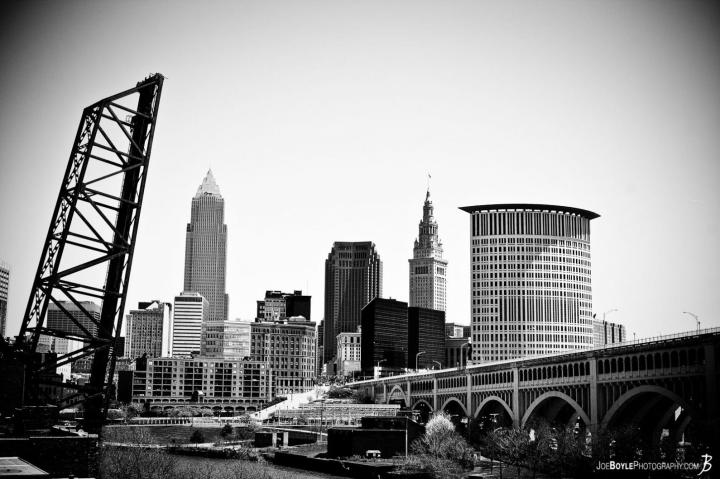
Long before the first Whole Foods Market made its way to Ohio, my mom bought into the 80s tofu craze and made it her mission to sneak soy into ordinarily tasty dishes. And so Tofu Manicotti was born. Other health-nutty adventures of hers were more successful. For years, she was a member of the Racoon County Co-op, which saw penny-pinching homemakers like her traveling to Cleveland’s food terminal before dawn to purchase natural foods in bulk. We got our honey from a beekeeper down the road. And Mom’s backyard vegetable garden kept us in zucchini, pepper, and tomato frittatas all summer long.

Before my mom passed away, she made each of us kids a cookbook, in which she hand wrote family recipes we wouldn’t want to forget. (Tofu Manicotti does not appear.) There’s frugal, egg-based dishes, like stratas; Midwestern standards like Ham Loaf and Dried Beef Casserole; an Italian aunt’s sauce and meatballs recipe. And so, these recipes–and memories–I can recreate.

Other dishes I have to return home for: good potato pancakes, homemade pierogi, a real-deal Lake Erie Perch fish fry.

I figured I’m not the only one who hankers for the foods of a Rust Belt upbringing. Turns out, I’m not. Thanks so much to the helpful folks in my *Fiction Writing FB group, who chimed in with their favorite hometown foods–or, in one case, the detestable food of her hometown she just can’t forget. Yep, I’m talking about you, Spam!

Did I forget your favorite hometown food? Reply here, or meet me on my Rust Belt Girl page on FB, where I muse about all things Rust Belt. Next week, I’ll feature a review of the memoir, Cinderland. Read it?

Here’s my uber-scientific survey response, below. Big winners: fish frys and pierogi; runner-up, coneys:

Screen Shot 2017-09-29 at 11.13.23 AM

*Thanks again to Daniel from Youngstown, Ohio; Chris; Amy from Northwest, Ohio; Adrian; Jules from Michigan; Dean; Brian; Dawn; Pumkin; Marguerite; and Carol, who has been through Erie, Pennsylvania, enough to adopt the local hotdog as her own.

That Hometown Sound

WMMS_logo.svgThe soundtrack to my adolescence and young adulthood in Northeast Ohio was unusual. While my peers were listening to Depeche Mode on the radio or catching a live show at the Grog Shop, I was in the ballet studio. While my high school classmates listened to the CHS band before Friday night football, I was in the ballet studio. Dancing to Miss Jackson (nasty or not) in the Burger King parking lot? Me? Not unless that parking lot had ballet barres and wrap-around mirrors.
You get the picture. Instead of memorizing every word to Sir Mix-A-Lot’s classic, “Baby Got Back,” I was enduring mandatory games of Name that Tune in the ballet studio. As in: pianist on the baby grand in the corner plays a few bars of classical music and we bun-heads guess the composer and piece. (Tip: Tchaikovsky is always a safe bet when betting on ballet music.)

My personal soundtrack during my formative years–and by extension my entire budding identity–felt terribly inaccurate. On my pathetic playlist: a little Whitney, some Tears for Fears, my parents’ Herb Alpert and Brothers Four records, and a smattering of Russian ballet compositions I couldn’t name.

Forgivable if I lived just anywhere. But I lived outside Cleveland, Ohio, rock ‘n’ roll capital. (Just go with me on that.)

My soundtrack’s saving grace: Cleveland’s rock station, WMMS. Really, I knew I wasn’t cool enough to blare that kind of music, while driving my parent’s Chevy Cavalier through the snow to and from classes and rehearsals, pink tights on, hair in a tight bun. Never could I have sported a t-shirt with the rock station’s mascot, the Buzzard, with the necessary cool-girl aplomb. -6f153e909dd14774

But I would listen to these rockin’ sounds of my city, and that tagline that gets me jazzed even today. Please enjoy this blast from Cleveland radio past:

What is your hometown’s sound? Let’s talk!

Find Rust Belt Girl on FB, too.


AMERICAN RUST, restless ruin: a book review

9781742374772American Rust by Philipp Meyer, reviewed.

Ah, America. Rags to riches. Dream fulfilled country, right?

Nope.

Without spoiling too terribly much, this is not that book. This is not romance.

American Lit. nerd time-out: in his Criticism and Fiction, realist writer of the 1800s, William Dean Howells, argued that a story where “all grows naturally out of character and conditions is the supreme form of fiction.” Down with the sentimentality of romantic fiction! Realism was best suited to express the spirit of America. Then, real got real-er, and naturalist writers like Theodore Dreiser and Jack London showed what happens when natural forces overwhelm us silly humans.

American Rust is real-natural in that way. And I like it. Realism has always appealed to this Rust Belt native for whom romantic lit. often feels at best, false, and at worst, dangerous.

For me, this debut novel’s strengths are in the real and natural way Philipp Meyer’s dark story grows out of the ruinous conditions of its modern Appalachian Pennsylvania setting: post-industry, post steel money, post employment, though still (or again) naturally beautiful.

This is a story of two very different young men from the same place. Isaac is small, awkward, and MIT-smart; Billy is handsome and strong, a former high school football star. One night, the friends get caught up in/perpetrate an act of terrible violence, just as restless Isaac has decided he must head to Stanford to put his genius to work. Post-crime, Isaac makes good on his promise to leave their hometown, and Billy stays. Each man suffers for his decision, Isaac on the road and in train yards where lawlessness reigns, and Billy in prison. The men’s families become entangled in the tragedy, as does the local police chief, Harris, who must weigh his job as a lawman against his love for Billy’s mother, Grace. All suffer in the aftermath of one violent mistake.

Read more

Water, water everywhere: or don’t die, Lake Erie!

The Maumee River does not begin. Formed out of the confluence of the St. Joseph River from the north, and the St. Marys River from the south, it is a continuation, flowing eastward and slightly northward through northeast Indiana and northwest Ohio, eventually opening out 137 miles later into the southwest corner of Lake Erie.…

via Introduction to In The Watershed: A Journey Down The Maumee River — Belt Magazine | Dispatches From The Rust Belt

Rust Belt Girl here with a shout-out to my underdog lake and its watershed. Read more

Re-sharing Rust Belt Arcana; and the natural history of my native place

Tarot and Natural History in the Exurban Wilds By Matt Stansberry with Illustrations by David Wilson People have used Tarot cards for over 500 years to reveal some hidden information The post New Book September 2018: Rust Belt Arcana appeared first on Belt Magazine | Dispatches From The Rust Belt.

via New Book September 2018: Rust Belt Arcana — Belt Magazine | Dispatches From The Rust Belt

Exploring this natural history helps us to find our place in the landscape, to know our home and ourselves.

Rust Belt Girl here. News of this new book got me to thinking… How much of my place’s natural history do I know? Read more

What kind of place is this?

APTOPIX Severe-Weather-Texas

I’ve been thinking a lot about place lately. In my recent interview with author David Giffels, the topic of place came up a lot. What makes a place–even an “unglamorous” one–worth sticking to and fighting for, in good times and bad?

Like anyone who hasn’t been living in a cave the past week or so, I’ve been thinking about how the places we call home can change overnight–from places of refuge to those that threaten our livelihood and even life.

And, since I’m an avid reader and writer, I’ve been thinking about how place figures into what we read and write. Remember that first writing class in school, when you learned about the elements of story: plot, character, setting… The setting is the place into which you dump your story, right? The teacher said, “go,” and then we all got started writing a (loosely autobiographical) story that resolved itself neatly–and then we dumped it into a place. Any old place would do. Read more

Interview with award-winning author and journalist David Giffels

David Giffels headshot 2017

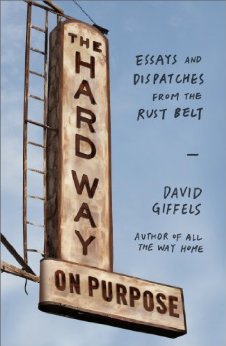
We are where we come from—and where we choose to make our home. For David Giffels, that’s one in the same: Akron, Ohio, Rubber Capital of the World, where he grew up and now lives, teaches, and writes. The Hard Way on Purpose: Essays and Dispatches From the Rust Belt (2014) is his fourth book, following his 2008 memoir, All the Way Home: Building a Family in a Falling-Down House. His new memoir, Furnishing Eternity, came out January 2, and I will be talking with David about it soon, right here!

In 2017, I spoke with David about Northeast Ohio’s brand of funny, fellow Akron native Lebron James, why the hard way is the best way, his latest book—and more.

David — In The Hard Way on Purpose, you use humor to great effect. You call Akron “the Ralph Malph of the American industrial belt.” With your identity so closely tied to the place, when the place gets beaten up—nearby Cleveland is “the mistake on the Lake” to many still—do you take it personally? Do you deflect with humor?

It’s part of the culture here to laugh at ourselves. When you’re in any culture that’s been misunderstood, degraded, or used as the punchline to a joke, one of your defense mechanisms is to get to the punchline, first. Most Rust Belt cities—but especially this area—have a long tradition of this kind of humor. Here, a lot of people have traced it back to Ghoulardi, a 60s late-night B-movie horror host on local TV. He had this dark, ironic, anti-authoritarian sense of humor that influenced a lot of the people who’ve become our local cultural spokes-heroes: bands Devo, The Cramps, and Pere Ubu; and filmmaker Jim Jarmusch. There’s a certain kind of homeliness to where we live, and instead of being ashamed of it, you can make fun of it—and be a part of it, too.

How did you learn to write funny?

I guess it partly comes from having two parents who had really good senses of humor. I don’t know if I learned how to do it. One of my first professional jobs was writing for MTV’s Beavis and Butthead. I learned a lot from that. I talk about this in my new book: I was writing these clever-sounding lines, but it was not working. I was trying to be the Noel Coward of MTV. And show creator Mike Judge said, “Just make it stupid.” It was a great piece of advice. A lot of humor writing comes from letting down your guard, letting things roll.

the hard way on purpose cover-1

You were a newspaper columnist before becoming a professor of creative writing and an author, and you wrote about Cleveland sports teams. One of the essays in The Hard Way on Purpose focuses on fellow Akron native, Lebron James. I have to ask, how do you like Lebron now? Read more

Rust Belt Funny

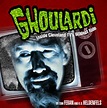
In a recent interview with Akron, Ohio, author David Giffels (interview post coming soon!), I was introduced to the 1960s local TV celebrity, Ghoulardi (played by Ernie Anderson). Ghoulardi was the late-night horror host of Shock Theater on Cleveland station WJW-TV.

Ghoulardi

According to David (and many others), Ghoulardi’s brand of irreverent humor helped shape Cleveland’s quirky sense of humor that continues today.

Who shaped your town’s brand of funny?

From an article celebrating 50 years since the ghoul’s first TV appearance, by John Petkovic on Cleveland.com.

He [Ghoulardi] ruled through mayhem and mockery. He turned followers into zombies. And he altered the gene pool, leaving a legion of freaky followers to continue in his wake.

Hey, groop, blow off some boom-booms for the 50th anniversary of the arrival of Ghoulardi.

Sharing: from Belt Magazine

The following is an excerpt from The Cleveland Neighborhood Guidebook. By Sally Martin I have a confession to make. I live in South Euclid and think it’s pretty freaking awesome. This The post When Your Neighborhood Just Can’t Get No Respect appeared first on Belt Magazine | Dispatches From The Rust Belt.

via When Your Neighborhood Just Can’t Get No Respect — Belt Magazine | Dispatches From The Rust Belt

How about your neighborhood?

Have a great Sunday!

Rebecca

Writerly distance, and a prize nomination (woo hoo!)

railway-2462751_640 copy
Image courtesy of GoranH via Pixabay

I like some writerly distance. Well, more than some.

For me, in order to write fiction, it has to feel like science fiction—building a world from thin air, not memory. Recalling real places stops my flow. Of course, memory is at work all the time, but not in a conscious what kind of trees were those? how long was that dock? kind of way.

How does memory work for you? In your reading, your writing? Read more