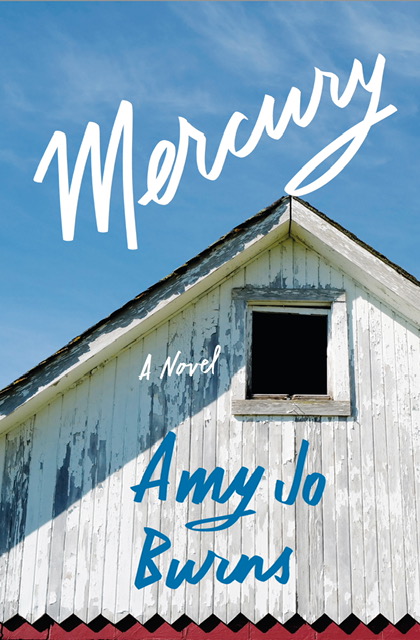
My interview with Amy Jo Burns, author of Mercury


Let’s begin with a sample paragraph from Amy Jo’s stunning literary (also mystery) family saga:

Spring was breaking through in lilac buds and daffodil shoots, but winter held on. Tufts of dirty snow clung to curbs, and porch steps, and parking lots. The heat had stopped working in the Citation, and Marley shivered. Theo was bundled in the backseat; she caught a glimpse of him in the rearview mirror. Then her eye snagged something else behind her–someone limping from a snowbank into the intersection. Marley slowed to a stop and turned around.

Whew. Good stuff.

Amy Jo, your main character in this Western-PA-set novel is Marley, whom we first meet when she’s 17. You left your Western-PA hometown for college around that age. What was it like to write this book and “inhabit” Marley’s character in a place (and time) similar to the one you were raised in? And how similar is your real-life family to Marley’s found family?

    Marley is a really special character to me. When I was creating her, I took the qualities I love most about my best friends from home and put them into her character. Her willingness to step into someone else’s messiness, her ability to tell the truth in such a loving way, and her desire to build a business with her own creative stamp on it are all qualities I really admire about my oldest friends. Marley showcases what I think real resilience actually looks like. It isn’t perfection or misery or loneliness—it just comes through in a big-hearted, flawed human who shows up for the people in her life. 

    The Joseph family in the novel is like mine in that we’re both a family of roofers—which means both houses were full of grand storytellers, brave hearts, and lots of tar-stained jeans. The house I imagined the Josephs living in was inspired by the old Victorian house my grandparents used to own in my hometown. I’d always loved that house and couldn’t imagine any other place a family of roofers would live. The characters in Mercury come from my imagination, but the bond they feel with each other—the sometimes too-close intimacy they have with one another is absolutely something any member of my extended family can relate to. When it comes down to it, I’d say both families care about the same thing—keeping people safe under roofs and on top of them.

    This novel is mostly set in the fictionalized town of Mercury. How did you go about constructing this place, this “forgotten Rust Belt town.” Did you use Pinterest boards or clip photos from magazines? Was there map-making involved to mark where the salon, post office, and library stand? And, as the daughter of real-life roofers, do you picture this town from an aerial/rooftop view?

    Mercury is heavily inspired by my own hometown, which I also wrote about in my memoir Cinderland. When I started writing the early pages of this book, I knew it had to be set in Mercury—a place I know, love, and left. So most of the early “research” came from my own memory, and then I squared it with pictures from the 1990s and also by talking with my parents. My dad drew a map of the church steeple and attic (which both play an important role in the story), and I talked with my mom about what it was like to help build a roofing business from an administrative perspective. It was really special to get to share a bit of this project with them, especially since so much of the book is about what it means to belong and how we claim home for ourselves.

    I hadn’t imagined my hometown from any aerial views until I started putting characters on roofs pretty early in the process of drafting the book, and it was the coolest thing to envision this place anew from an entirely fresh perspective. I was able to find a few aerial videos of my hometown to watch, which really helped me fill in the landscape for what these characters find when they’re up higher than everyone else.

    I’d call this book a literary family saga; however, there is also a lot of romance—some steamy! What’s your best tip for writing romance or sex that deepens character and moves plot?

    I would say my best tip is that sex is never just sex. Falling in love is one of the most monumental things we experience as humans—it shows us at our best and our worst—and I think it’s really important to reflect it in literature. When I’m writing romantic scenes, I’m always considering what each character is risking about themselves in a very unique way—are they sharing something no one else knows? Are they saying one thing and thinking another? What is it about falling in (or out of) love that changes how they see themselves? What past events have shaped how a person approaches their most intimate moments? Those scenes are such a great way to show what a character deeply wants and what they fear, whether they’re aware of it or not. And when all that juicy backstory collides with someone else who is just as complicated—it’s fictional gold!

    Like in your last (gorgeous) novel, Shiner, you explore profound female friendships in Mercury. Can you talk about how you developed the friendship on the page between Marley and Jade? When you’re writing, do you do character studies/background/backstory with detailed info–any that doesn’t make it into the book?

    Mostly what I do when I’m building relationships between characters is think about it A LOT. I write many drafts over a long period of time and throw out a lot of material, usually because that’s how I’m getting to know the characters. Scenes will start off as sketches and they get more detailed as I learn who the characters are. Many of the scenes between Jade and Marley felt very cliché for a long time as I was working, and I’d have to go back in and re-work them to go deeper so they felt earned and true. 

    I am such an impatient person (what a terrible trait for a writer!), so character studies always feel like they’re detracting from the real heat of the story I’m working on. The only thing I usually do outside of drafting itself is create a playlist for each book that I write, and I’ll include songs for each of the characters. It helps me track down their psyches, their moods, their secrets. You can learn a lot about a person if you know what songs they’re listening to when they’re alone.

    In this novel you touch on dementia. What kind of research was involved there? As this book is set in the 90s mostly, was there any other, historical research you had to conduct for verisimilitude?

    I had a family member with a form of dementia (though under different circumstances than those in the book), so I used that as the basis for building it in the novel. I decided not to do much clinical research on it because I wanted to portray it through the eyes of a family who isn’t sure what is going on. So often we don’t get the answers we are looking for in real life when it comes to medical diagnoses, and it was really important to me to give that truth a lot of space in the novel. 

    Motherhood is portrayed in a very real, and sometimes heartbreaking, way in this novel. Marley’s mother-in-law says, “This life is unmerciful to mothers.” You’ve got two young children at home. How has your writing practice (and product) changed since becoming a mom? And, follow-up, what is your favorite novel for exploring themes of motherhood?

    The biggest difference in my writing practice is that I have to keep my working hours to match my kids’ schedule. It is GIGANTICALLY easier now that they’re both in school, though I rarely get done what I’d like to in the course of a day. I remember when my son was an infant and my writing sessions were so short, I thought I’d never finish the book I was working on, which turned out to be Shiner. Sometimes my writing sessions would only produce a few hundred words. I had to learn to talk myself through it and say, “Maybe no one will ever see it, but I’d still like to try.” And I’d repeat that to myself over and over when my daily frustrations came. And the book got done!

    In terms of my favorite book about motherhood, I once attended a talk by Nicole Krauss just after she’d published Great House. Someone in the audience asked her how she was able to write and be a mother, and she said, “I wouldn’t have been able to write this book if I hadn’t become a mother.” It was so encouraging to me, as I was contemplating how I might have kids and continue to write. That story inspires me still.

    A lot of the plot of Mercury centers around the family’s church—but not necessarily around worship. No spoilers, but can you talk about how religion, faith, and or belief works in the world of this novel—and maybe also in your own life?

    My faith is a huge part of my life and my creative process. I think maybe writing books is a form of prayer for me. What I love about it is that the page becomes a place for my uncensored thoughts, my questions, my frustrations, and—most powerfully—the things that I love and I think are worth fighting for. It feels like a quiet place where I can meet God without judgment, where I don’t have to be any other version of myself but the real one. Also, I do a lot of listening when I’m writing which feels very peaceful.

    In this particular story, many of the characters have an idea of what “religion” is, but what they’re all hungry for is faith. Faith in a God who loves them just as they are, and faith in each other. I like to think each of them encounters God in an unexpectedly meaningful way in the book, and usually it’s through they way they learn to love each other.

    For those of us who aren’t just readers but who are also writers, what’s your favorite generative prompt for a writing day when the words just aren’t coming?

    I absolutely recommend starting with a memory from childhood you can’t get out of your head. Try retelling it to yourself from an adult perspective (which you can interpret any way you like). I actually began Mercury in just this way—the opening scene of the book is a memory of mine from a little league game when I was around nine years old. This exercise was how Waylon’s character first came to life.

    Tell us how the reaction to Mercury has been on your visits to libraries, bookstores, etc.?

    It’s been really wonderful. When Shiner came out in spring of 2020, there were no stores open, so getting to visit libraries and bookstores has been the best thing about publishing Mercury. My favorite thing is hearing about readers’ favorite characters and how they saw themselves in the story. I love it when that happens in a book I’m reading, so getting to provide that experience for fellow readers is a real gift.

    What are you writing and reading right now? And what are your kids’ favorite children’s books, lately?

      I love this question! This year I’ve been trying to take my time and read longer books (which I’m calling “biggies”), so right now I’m reading two—Iron Flame by Rebecca Yarros and East of Eden by John Steinbeck. I’m really enjoying them both. Right now my son, who is nine, is loving the entire Percy Jackson universe by Rick Riordan, and my six-year-old daughter is very into Dog Man by Dav Pilkey and the Max Meow series by John Gallagher. I love seeing them read!

      Writing-wise, right now I’m working on a novel about the true story behind a famous country-folk singer’s disappearance. I don’t know if it will be my next book or not, but I’m really enjoying the work itself. Thank you so much, Rebecca!


      Amy Jo Burns is the author of the memoir Cinderland and the novel Shiner, which was a Barnes & Noble Discover Pick, NPR Best Book of the year, and “told in language as incandescent as smoldering coal,” according to The New York Times. Her latest novel, Mercury, is a Barnes & Noble Book Club Pick, a Book of the Month Pick, a People Magazine Book of the Week, and an Editor’s Choice selection in The New York Times. Amy Jo’s writing has appeared in The Paris Review Daily, Elle, Good Housekeeping, and the anthology Not That Bad.

      You can find her on Instagram at @burnsamyjo.


      Mercury

      By Amy Jo Burns

      Celadon Books

      Many thanks to Amy Jo Burns for sharing her insights and time–and kid book recs– with us here at Rust Belt Girl. I know I can’t wait to read what’s next from Amy Jo!

      Like this interview? Comment below or on my fb page. And please share with your friends and social network. Want more? Follow Rust Belt Girl. Thanks! ~ Rebecca

      *Photos provided by Amy Jo Burns

      Enter your email address to subscribe to this blog and receive notifications of new posts by email.

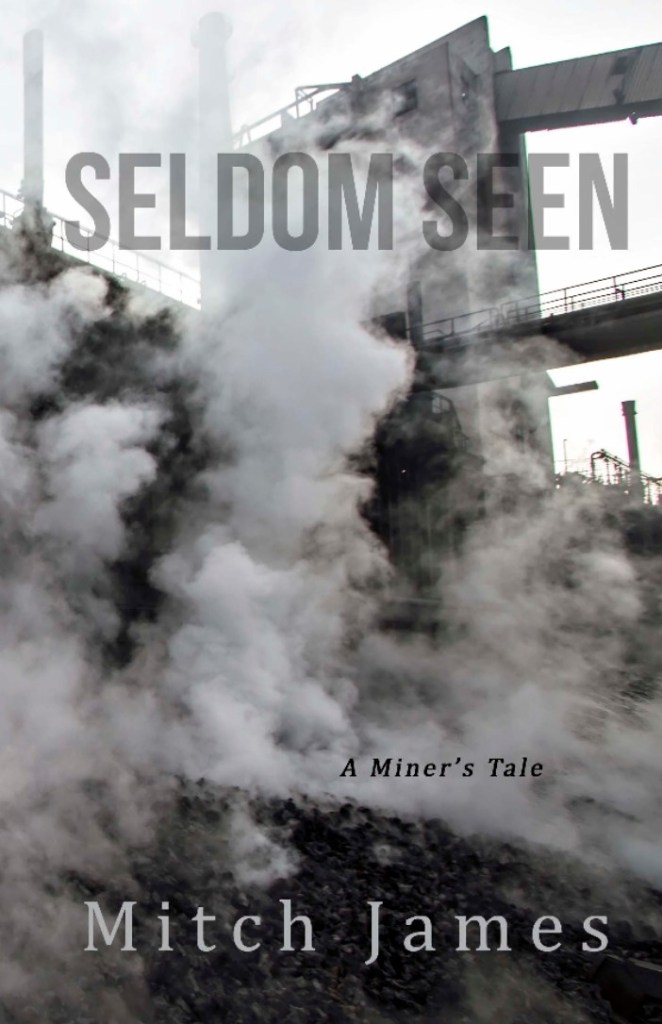
      My interview with Mitch James, author of Seldom Seen: A Miner’s Tale

      For my Appalachian lit aficionados, Grit Lit fans, and readers who aren’t afraid of the dark … I’m thrilled to share with you my conversation with author and professor Mitch James about his debut novel.

      From the back cover, an intriguing blurb:

      A dead mother. An auctioned childhood home. Loss in the womb of a coal mine.

      Seldom Seen follows main character Brander, who encounters a “specter of a man who promises him that the answers to life are in Seldom Seen Mine, the largest coal mine in the United States.

      With nothing holding him back, Brander … takes a job at Seldom Seen Mine, and fails at every attempt to amend his life, losing a friend, a lover, and maybe his mind.”

      Reader friends, how does an author make good on such a blurb? I’ll tell you. With prose like this. I’m prefacing my first question for Mitch with one of my favorite passages in the novel. This is from early in the story, when Brander first enters Seldom Seen Mine:

      Brander was surprised. The road was rather smooth and well-lit, the air stale but not dirty. They rolled along, everyone quiet. Brander stared around. The mine’s back had a skeletal structure of beams and crossbars and cribs, packed tight with backfill in places and all sealed up with gunite. It was surprisingly silent beneath the earth, the hum of the transport, the crunch of residue below the tires, the occasional whoosh of an air course. If not for the forced mechanization, there would be no sound, not like on the surface. Noise is life. But even free of men, the mine wasn’t dead, exactly; there was something, a kind of energy present in the long back road, an innate awareness, like the womb of a pulse-filled thing.

      Mitch, welcome to Rust Belt Girl! Let’s dive in. The mine in this story works as much more than a compelling setting but a real character. I’d say we readers end up knowing as much about the mine as we do about Brander. How did you decide where to set this story? How did you learn so much about mines and mining? What kind of research did this entail?

      I’m so happy to hear you’re engaging with the mine in that way because it is very much its own organism. It felt that way when writing the book, and it means a lot to hear that it felt that way to you as you read it. When I wrote the novel, I was up to my ears in rural Pennsylvania, working on farms, mountain biking old logging roads, kayaking rivers, and clearing land. I couldn’t get enough. I lived not far from the real Seldom Seen Mine. The research I did that allowed me to accidentally stumble into the idea for the novel also happened there. It was a perfect recipe—the need to express the region as I had experienced it as a transplant who had been there awhile, the need to tell Brander’s story, the need to imagine others’ lives and suffering alongside my own.

      As for research, I read literary books on mining. There aren’t many. And I read short stories about mining in the U.S. and abroad. I read historical writing about mining at different periods in the U.S. in microfilm and microfiche. I watched a lot of YouTube videos, read instructional handbooks on mining equipment, found out who sold it, and found videos on how to operate it. I was friends with a mining engineer who guided me some.  A little bit of everything.   

      Here at the Rust Belt Girl blog we’re a little fascinated with how place works in story. Place helps plots turn. Place also helps form characters. While a rural setting, I’d say that your Seldom Seen mine situates your novel squarely in Rust Belt lit territory. There are other commonly-appearing aspects to Rust Belt lit (or contemporary Grit Lit, writ large) that feature in your story: teenage pregnancy and the meth crisis for just two examples. Can you talk about how you explore such aspects of Rust Belt life and the characters living these lives without resorting to stereotypes in your novel (you do this well!)? 

      I’m relieved to hear you don’t think my characters are stereotypical. I would never want that. That said, though, if I’m being honest, I think all fiction runs off a little bit of stereotype. I think most readers need to see characters that are somewhat familiar and that present themselves as equations they believe they can calculate, at least at the start. Lucky’s the gruff, crude, masculine man. Brander is the wounded, self-loathing Midwesterner. But beneath the stereotypes that reveal a small percentage of what makes up who we are is the rest of us, the best of us, the parts of us that are unique. Brander and Lucky also have these qualities within them. It’s my job to complicate their stereotypes by fleshing out the rest of their characters, for they drive the story. I see stereotypes everywhere, including in myself. But by seeing them, I can perceive their limits, their boundaries; I can peer around them to what else presents itself, and that’s gold as a writer, the stories everyone tells but doesn’t mean to.

      Basically, look for the people within the people and write about that. Then be prepared to conscientiously employ a little stereotype to get the ball rolling.     

      For those of us who are writers, ourselves, I wonder if you could take us through the process of crafting this novel. What was the first idea/image that came to you? When did you know you had to write this story? How long did it take? What’s your writing process like? We craft junkies want all the details!

      The idea for the novel came to me when I was reading a translation of a Russian short story from the early 1800s, a story about a miner who encounters a ghost in a mine. The ghost starts manifesting in his life outside the mine until he goes insane and, if I remember correctly, kills himself. The story was so short. I wanted so much more. So I made it. 

      When did I know I had to write the story? Immediately. I can always tell the difference between something I could write and something I must write. I had to write Seldom Seen.

      As for the process, I woke up at 3 a.m., wrote a 1000 words a day five or so days a week, and had the first draft in a few months. Then it took me 10 years to publish the book, so you can imagine the revisions, drinking, and self-loathing that occurred after repeated failures. Brander had to get it from somewhere!  

      I often wonder how Rust Belt lit will appear in American Literature textbooks a hundred years from now. Since you’re a college professor—maybe you wonder about this too? For me, my most formative American Literature course introduced me to William Dean Howells, the father of American realism. I’m not going to draw a perfectly straight line from American realism of the late 19th century to Southern Gothic of the early 20th century and the Grit Lit of today, but somebody could try. All that’s to ask where you see Seldom Seen fitting into the canon of American Literature? What are your reading/literary influences? What literary characters informed Brander, who—despite hard work and, yes, grit, fails, fails, and fails again?

      It makes me feel a little pretentious to think of my work in any kind of canon. But my writing, including Seldom Seen, is influenced by myriad Appalachian, Midwestern, and American Western and South-Western writers, all rural and spread across the genres of fiction, nonfiction, and poetry. I would hope Seldom Seenwould be welcomed by the Appalachian literary community and rural literary communities more broadly. 

      As for character influences, I have to be honest, I don’t know that I’ve ever consciously (though certainly subconsciously I have) created characters based on other characters about whom I’ve read. The characters begin with me, but they take over their story, and I just try and keep up and do justice through my writing to what they show me. I know that sounds mystic and woo-woo, but it’s the truth. For example, Lucky wasn’t a character I intended to have in the story, but when he showed up, he had plans, and I went along with them. Now, I can’t imagine the novel without him. 

      As for the last part of your questions, I don’t need to read a book to see hard work, grit, and abundant failure in a person. I’ve witnessed it in the working poor rural communities I’ve lived in my entire life. But I want to make something clear; I’m not saying the working poor are failures or that their efforts are in vain. I was working poor until I was thirty-two years old. I worked fifty hours a week with multi-billion-dollar industries and still had no healthcare or money, and couldn’t afford a vacation or a car that could make it out of the county. Goals like a home instead of a rental, good health insurance, the ability to take a vacation or have a safe vehicle all create comfort and stability in one’s life. The working poor are grinding but failing to reach important thresholds like these and others. There are many reasons why, but amongst them are certainly socio-economic and political barriers. These folks, my mother and father, cousins, aunts, uncles, neighbors—they’ve taught me how to create characters with grit that fight and fight and fight.

      This world has shown me how to write characters who fail.

      And final question: What are you teaching, reading, and writing right now? What’s next?

      I’m teaching various writing composition courses. I’m reading, gosh, so many random things. I feel like I read and read and finish nothing. I’m reading Larry McMurtry’s Horseman, Pass By; Marilynne Robinson’s Gilead; Adam Grims’ The Art and Science of Technical Analysis; Pema Chödrön’s When Things Fall Apart, and a textbook on world history because I screwed around too much in school when I was younger. I’m ashamed by how much basic knowledge I missed out on for being too stupid to know better. 

      As far as writing goes, I just finished a book of poetry that a press requested and for which there is a promising chance of publication. I’m pitching a couple of short story collections and two novels and am kind of tinkering around on a new one, so if there are any publishers/agents out there who think my work and I might be a good fit, reach out. I’m doing some final revisions on two peer-reviewed articles due out soon as well. Keeping busy. 

      Upcoming? I’m excited about the Lit Youngstown Fall Literary Festival. It’s one of my favorite events all year!  


      Mitch James is a Professor of Composition and Literature at Lakeland Community College in Kirtland, OH and the Editor-at-Large at Great Lakes Review. Mitch is the author of the novel Seldom Seen: A Miner’s Tale (Sunbury Press) and has published works across the genres of short fiction, poetry, and academic scholarship. You can find his latest short fiction in Made of Rust and Glass: Midwest Literary Fiction Vol. 2Red Branch Review, and Bull; poetry at Shelia-Na-Gig, Watershed Journal, I Thought I Heard a Cardinal Sing: Ohio’s Appalachian Voices; and scholarship at Journal of Creative Writing Studies. Find more at mitchjamesauthor.com and on Twitter @mrjames5527. 


      Like this interview? Comment below or on my FB page. And please share with your friends and social network.

      Check out my categories above for more interviewsbook reviewsliterary musings, and writing advice we can all use. Never miss a post when you follow Rust Belt Girl. Thanks! ~Rebecca

      Enter your email address to subscribe to this blog and receive notifications of new posts by email.

      Behind the Scenes: “A New Nuclear”

      The lovely folks at Great Lakes Review published my story, “A New Nuclear,” about my favorite fictional dental hygienist Patty’s struggle to find herself during the last summer before her child leaves for college. It is a most Rust Belt-y story, and I’m grateful to editor Mitch James for giving it a fine home along my favorite Great Lake.

      One of the questions writers hear most–even about fictional works–is: “Is this story inspired by your life? Is this you?” Yes and no. Do I understand Patty’s situation? Do I feel a sense of my nest emptying out? Sure, my boys are 13 now, and every day becoming more independent. But also no. Patty is not me, and is definitely not my mom (read on). But I thought I’d give a little backstory in case my followers want a peek into the real-life influences and (really weird) brain of a fiction writer.

      Family might recognize Patty’s stint with the No Nukes! environmental chapter. My mom–who would have been proud to be called a tree hugger, if we used that term then–did a stint with the group that protested the local nuclear power plant. (The plant’s still in operation, btw. Planned to be deactivated in 2021, it’s now licensed to operate until 2037.) I remember my mom’s bright yellow No Nukes! shirt. She might have participated in one protest but was much more often spotted at the church basement food co-op she helped run. Also, note the spiderwort plants in my story–plants that are able to detect small amounts of radiation. My mom would have loved that fact. Maybe she knew it? I wish I could ask her.

      A writer friend–hi, Jessica!–who is more perceptive than I noted that I have teeth on the creative brain as of late. She also read a prose poem of mine, recently published in the print journal, Presence: A Journal of Catholic Poetry,” titled “Jesus, My Son’s Buckteeth.” What do they say about teeth dreams? Spurred on by anxiety, right? Should I be worried if teeth are taking over my creative mind? (Don’t tell me.)

      And a note on the craft of writing and the novel process: Writer friends who’ve read my WIP–a novel set over one Ohio summer, bridging two lakeshores and three generations–will recognize Patty. Early drafts of the novel included Patty’s perspective and more time for her on the page. In later revisions, Patty’s POV–but not Patty’s character–was cut. Still, I couldn’t leave the protest scene (or the dental chair scene!) on the cutting room floor. “Kill your darlings,” they say. But, also, sometimes those darlings can make for a good story.

      I hope you like it: “A New Nuclear”

      What are you reading and writing this week, this weekend? Want more stories from me, or author interviews, book reviews, guest posts, more? Follow me here:

      Enter your email address to subscribe to this blog and receive notifications of new posts by email.

      *free header image from Pexels

      My interview with Valerie Nieman, author of In the Lonely Backwater: Part I

      Author Valerie Nieman grew up in the Rust Belt of western New York State, lived and worked for many years in the northern coalfields of West Virginia, and now lives in a North Carolina town that’s still recovering from loss of the Lucky Strike plant. In short, Valerie explains, she’s “seen a lot of industrial wastelands.”

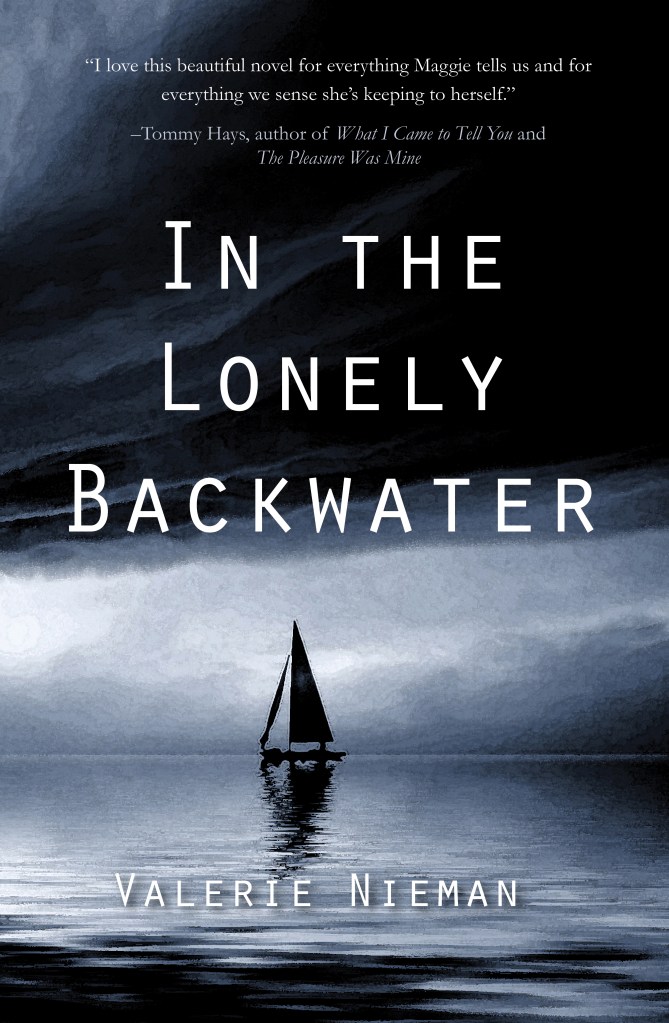
      How do these evocative locations inform her prose and poetry? In the following author interview, I asked Valerie about this, about her latest, award-winning novel–and much more.

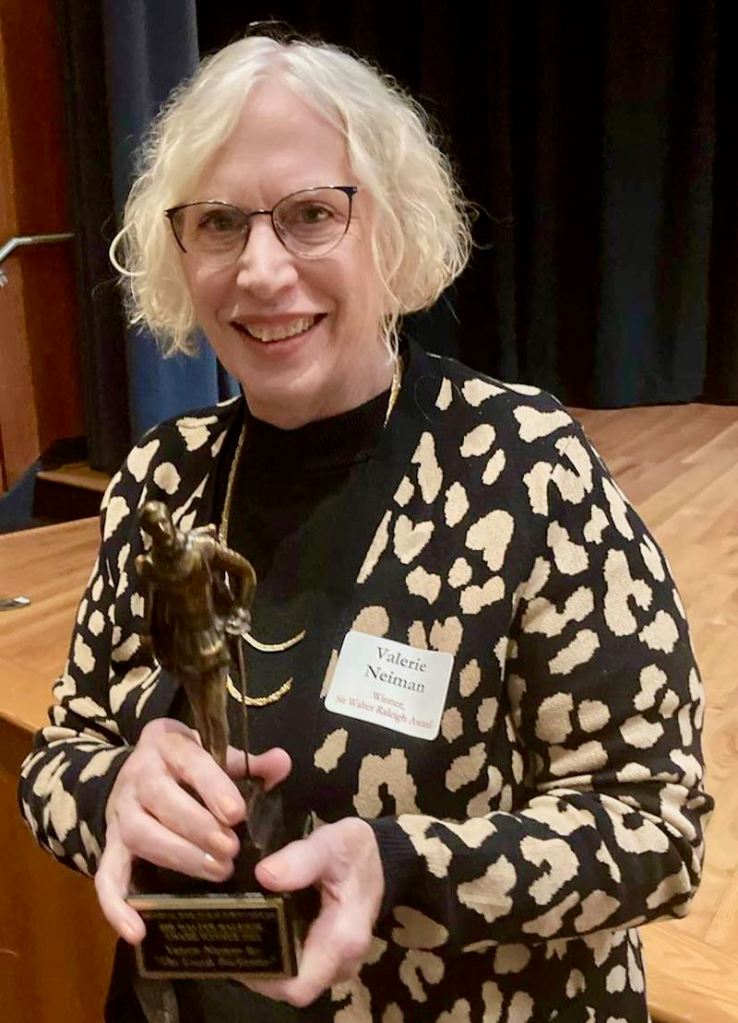
      Valerie Nieman’s latest, In the Lonely Backwater, a mystery in the Southern gothic tradition, has been named the 2022 Sir Walter Raleigh Award winner for the best novel by a North Carolina writer. To the Bones, her genre-bending folk horror/thriller about coal country, was a finalist for the 2020 Manly Wade Wellman Award. She is also the author of Blood Clay (Eric Hoffer Award) and two other novels. She has published a short fiction collection and three poetry collections, most recently, Leopard Lady: A Life in Verse, which was runner-up for the Brockman-Campbell Prize. She has published widely in journals and anthologies, and appears regularly in juried reading series such as Piccolo Spoleto, Why There Are Words, and Women of Appalachia. She has held state and NEA creative writing fellowships. Nieman has degrees from West Virginia University and Queens University of Charlotte, and was a reporter and farmer in West Virginia before moving to North Carolina, where she worked as an editor and a creative writing professor at NC A&T State University. 

      Valerie, can you tell us about your Rust Belt upbringing and how it informs your creative work? What was it like to not only live but work in the coalfields of West Virginia? You were both a farmer and a reporter there. Can you talk about how those roles are similar/different?

      I grew up the child of a factory worker who’d wanted to be a farmer. His plant in Jamestown, NY, built desks and filing systems. I remember copies of “The Machinist” in the bathroom, and the annual July shutdowns and factory picnics. Royal Metal was part of a thriving factory district that produced everything from heavy equipment to tools to furniture. Crescent Tool, Proto Tool, Blackstone, and so many others used to run three shifts. The last time I was there, I found a ghost district, post-apocalyptic. It’s been a long time and maybe things have gotten better, but this part of the Rust Belt was truly “rusty.”

      My father had to leave the factory when it closed and go to one in South Bend, IN, that carried on for a few more years. When he could no longer walk concrete floors as a foreman because of worsening knee injuries from the Korean War, he and Mom followed me to West Virginia. They opened a bait and tackle shop near the Monongahela River just outside Fairmont, WV, where I worked for the newspaper.

      That city had a prominent and troubled history as a coal center. Consolidation Coal was founded there, and the Watson mansion became an inspiration for the Kavanagh home in To the Bones. Marion County had two of the nation’s most deadly mine accidents, Monongah 1907 and Farmington No. 9 in 1968, both of which led to massive overhauls of mine safety regulations. The offices of UMWA District 31, headed by Richard Trumka, were next door to the church I attended.

      During my time as a reporter, I covered the coal industry and the environment, along with the police beat, so I got to see everything from murder investigations to the working longwall at Martinka Mine. I later became editor and helmed major investigations, one into the county’s secretive dealings with a waste coal entrepreneur and another about acid mine drainage, both of which won state AP public service awards and other recognition.

      My home was a small version of the classic Appalachian hill farm. It rested above some of the former Consol No. 9 workings and a mine crack furrowed the hayfield. My ex and I built a house and barn and were creating a partial subsistence lifestyle there, with beef cattle, organic garden and orchards, before divorce ended that part of my life.

      I’ve never regretted the newspaper years, despite the low pay and often difficult working situations, because I got to see and experience so much! My novels and poems draw on those years still.

      Valerie Nieman, Winner of the 2022 Sir Walter Raleigh Award

      Your poem, “The size of West Virginia,” begins “Few know the Mountain State…” Here’s a taste:

      “The size of West Virginia”
      
      Few know the Mountain State but all
      recognize it, easiest puzzle-piece of the states,
      its awkward panhandles and pendulous gut
      lolling into East Virginia.
      
      A vast aquifer "lake" lies trapped under southeastern 
      Greenland, larger than the size of West Virginia.
      
      It’s a convenient scale for journalists, 
      standard candle like the Cepheid Variables 
      or Type Ia Supernovae that allow 
      for dead reckoning on distant stars.
      
      As of July 15th, fires have blackened nearly 21,000 
      square miles. (That's nearly the size of West Virginia.)

      Can you talk about that—how being from a lesser-known (or maybe even unknowable to outsiders) kind of place informs your writing?

      Appalachia remains “the other” for so many in America, a stereotype compounded of Snuffy Smith comics and Disney cartoons and Deliverance. The people are lumped together as white, poor, ignorant, violent.

      This didn’t happen by accident. The dispossession of Irish and Scots crofters by “noble” landowners who considered them an impediment— “lice on the land” as one said—led to mass migrations and  provided many of the region’s early immigrants. That legacy of dispossession continued with the rape of Appalachia’s land for timber and coal, at the expense of smallholders and their communities. And writers from the Northeast found a willing market for stories of the region’s exotic and dangerous folk.

      The region was and is diverse, from the many Native American tribes that lived, traded, farmed, and hunted there, to German, Polish, Italian, Hungarian, Spanish immigrants who came to work the mines and mills, along with Black families moving up from the Deep South, Lebanese merchants who served the coal communities, and more recently, people from Nigeria to India and the world over who come to study at West Virginia University or  work in industry.

      I began to notice the repeated use of West Virginia as a unit of size comparison for other places, did a search online and found many more, and that brought about this poem. 

      Although I’ve lived in North Carolina for many years, West Virginia was where I became a writer and the place that continues to feed my work. Along the lines of this poem, my 2018 novel To the Bones uses and subverts some of those cliches about this “unknown place” in a genre-crossing tale about the coal industry and its enormous impact on the people and place.  

      How did you transition from journalism to poetry and fiction? How do these disciplines influence one another?

      Brevity, compression, observation are the watchwords for journalism. Equally true for poetry. And while I can wax descriptive in my prose writing, it’s always economical—no wasted words. At least I like to think so, and readers have said as much. 

      Your latest novel, In the Lonely Backwater, features a teen protagonist, Maggie Warshauer. What a voice! (Take note, fiction writers.) Here’s how Maggie describes a detective who’s come to her North Carolina high school to ask her and other students about a girl who’s disappeared, a girl Maggie is related to and with whom has had some “squabbles”:

      I didn't expect a detective to look like my dentist. He waited, watching me like an underfed hound. If I were going to place him in the marina, I'd say he was a fishing boat. A small one, from Sears, not on a slip but parked on the monthly lot. Plain aluminum johnboat with a little outboard.

      Can you tell us when and how Maggie first started speaking to you as a writer, when you knew you needed to write this story? 

      Maggie’s been speaking to me all my life: a version of my sarcastic inner voice that doesn’t get spoken aloud very often. She’s not me, but there’s a lot of me in her. Specifically, she began speaking with the opening line, “There wasn’t anything wrong between Charisse Swicegood and me except that she was her and I was me, and with the family history and all it was just natural.”

      Her character has many roots, including my lifetime of solo wandering in the woods, an interest in biology and ecology, and a number of years sailing a “pocket cruiser” at Kerr Lake. Like Maggie, I was a girl who preferred boy things, in a time when the terms gender-fluid and nonperforming had not yet appeared.

      The spark that brought together many disparate elements was the discovery of an inscription in my senior yearbook. A girl I do not remember wrote, “I hope all our misunderstandings are cleared up.” It’s signed Love. I do not remember anything about the disagreement, but I did recall the intensity of emotions in those years.

      The town you live in now, in North Carolina, is still recovering from the loss of the Lucky Strike plant. Coal and tobacco both had their boom and bust. I’m reminded of Emma Riva’s review here at Rust Belt Girl of Tess Gunty’s novel, The Rabbit Hutch, set in a fictionalized Indiana town decimated by the loss of an auto plant. What makes these “wastelands” fertile settings for your creative work, for suspense, and even horror?

      I think such hollowed-out industrial centers have much in common with haunted houses, and with the beloved ruins of the Romantic poets and artists, in the evocation of what once was and is now gone. I’m drawn to them, as I am to songs by Bruce Springsteen that depict these same broken places and the people who despair, maybe leave, or maybe find the grit to keep going and rise up again. I most like cities that have a past, Pittsburgh, Glasgow, Greensboro, but have reinvented themselves without losing that slight acrid tang of their former smokes, their former selves. 

      I remember when retraining programs were offered for West Virginia miners losing their jobs in the transition from conventional mining to long wall. They were offered welding or computer coding, both honorable careers, but pretty specific. It’s good to see current efforts to train miners and legacy factory workers for careers in new industries that may better fit or expand their existing skill sets, such as wind turbine maintenance, electric motor building, ecological remediation, and solar installation.

      Where I now live, in Reidsville, NC, the landscape is marked by the former tobacco warehouses, the mill houses and owner’s mansions, old curing sheds, and over all, the smokestack of the former Lucky Strike plant emblazoned with that logo. It’s been purchased and is being repurposed as an e-commerce hub. I hope they keep that emblematic stack standing as a symbol of this community.


      Please check back for Part II of my interview with Valerie Nieman–for more of her poetry, for what she loved to teach her students, and for what she’s writing and reading, right now. For more about her latest novel, follow the link below:

      In the Lonely Backwater

      By Valerie Nieman

      Regal House Publishing $18.95


      Like this interview? Comment below or on my FB page. And please share with your friends and social network. 

      Are you a Rust Belt writer interested in seeing if an author interview or book review of yours might be right for Rust Belt Girl? Pitch me through this site’s contact function.

      Check out my categories above for more interviewsbook reviewsliterary musings, and writing advice we can all use.

      In case you missed it, my review of Megan Giddings’ latest novel, The Women Could Fly, which first appeared here at Rust Belt Girl was republished at Belt Magazine last month. Check it out!

      Never miss a post when you follow Rust Belt Girl. Thanks! ~Rebecca

      Enter your email address to subscribe to this blog and receive notifications of new posts by email.

      THE RABBIT HUTCH’s Rust Belt Renaissance

      By Emma Riva

      People in Pittsburgh will tell you where things are based on what used to be there. Most of the time, the landmark that used to be there is food related. A fancy seafood restaurant. An ice cream shop. In a small city, those are the sorts of things people remember. To out-of-towners, this might seem like a quaint practice, but something I’ve come to realize is that it is a profoundly human one.

      As a fiction writer, I often find myself navigating the complicated narrative of how our memories and associations of the past interact with our experiences of the present. I look at a candle and think of my favorite candle store in Elizabeth, Pennsylvania, which I went to for the first time because I couldn’t use the bathroom on the Y46 bus and I bolted in not expecting them to have a restroom, but they did. The candle reminds me of my desire to go back there, of the friends I know in Elizabeth. All of this interacts with the energy of the place, the former boating hub, the Monongahela River Valley that built Lewis and Clark’s boat. All of that comes from the split second of looking at a burning wick. 

      Sharpsburg over the Allegheny River from the 62 St. Bridge; photo credit: Emma Riva

      Tess Gunty’s 2022 debut novel, The Rabbit Hutch, is a master class in this mixture of memory and present, owing in part to its setting within the Rust Belt. The novel’s setting of Vacca Vale, Indiana, is a facsimile of her hometown of South Bend, though she’s fictionalized a car manufacturer named Zorn as the ghost of industry haunting the town’s abandoned structures. “I wanted to be able to pull from Gary, Ind., and Flint, Mich., and Youngstown, Ohio, and a number of other cities in the Rust Belt whose economic devastation was much worse, I think, than it was in South Bend when Studebaker closed,” Gunty said in an interview with the South Bend Tribune

      The Rabbit Hutch is a genre-bending work that follows a cast of characters who all live in an affordable housing complex called La Lapiniére, nicknamed “The Rabbit Hutch.” Its central character is Blandine Watkins, née Tiffany, an eccentric former foster youth obsessed with Christian mystics to the point where she changed her own name to a martyred French woman’s. But the book switches between the past and the present and between the perspectives of different residents of the apartment complex, including one of Blandine’s roommates, another  former foster youth who serves as an omniscient narrator for several parts of the book which foreshadow some horror described as Blandine “leaving her body.” Though the characters’ Vacca Vale has its echoes of Gunty’s own South Bend, it’s an imaginary future where the University of Notre Dame didn’t fill the gaps in South Bend left behind by Studebaker. Here’s what Gunty’s characters say of Vacca Vale, while stoned and watching a commercial for a new apartment complex, much nicer than the titular complex they live in:

      “Vacca Vale, Welcome Home,” scoffed Todd, but he looked sort of emotional to me. “What the hell kind of slogan is that?”
      	“More like—Vacca Vale: Don’t Touch the Rust,” said Malik. 
      	“Vacca Vale: Excuse Me, Sir, Are You Lost?” I added.
      	“Vacca Vale: We’ll Clean That Up in the Morning,” said Todd.
              We laughed. We warmed. We didn’t know who we were trying to impress.
      	“Vacca Vale,” joked Malik. “We Used to Make Cars Here!” 
      	“Vacca Vale: Where the Churches Outnumber the Humans.” 
      	“Vacca Vale: Where the Rabbits Outnumber the Churches.” 
      	“Vacca Vale: At Least You Can Still Fuck Here.”

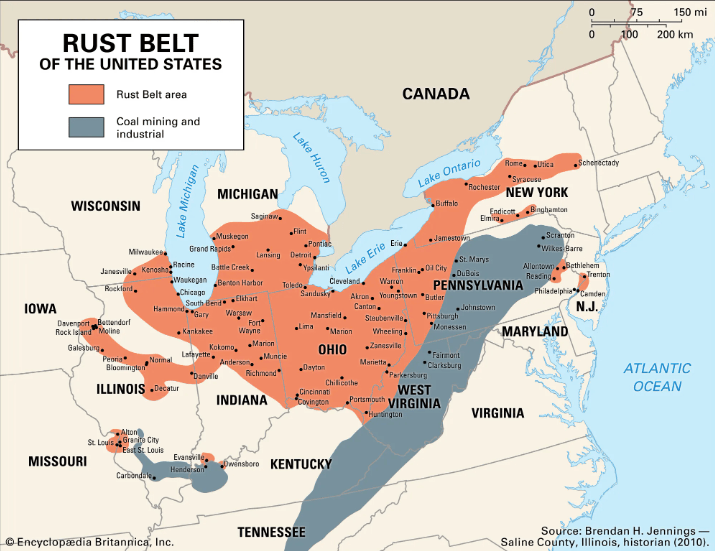
      For many in the literary publishing world Gunty has ascended into, the Rust Belt is only a feeling, not a region. It’s an image from the movie Flashdance or a short chapter in a history textbook. So, it’s important to define what it is exactly we’re talking about when we say “the Rust Belt.” There’s some confusion among people who don’t live here about the categorical differences between the Rust Belt, Appalachia, and the Midwest. Pittsburgh and Buffalo aren’t exactly in the Midwest, but they’re still in the Rust Belt. The map in the Encyclopedia Brittanica looks like a gasoline blotch on a sidewalk or an oddly shaped hickey.

      It’s a region defined by things which used to be there, sites of innovation and excess then turned to rot, now home to … what? Those of us who live there will be familiar with the exchange that takes place in one scene of The Rabbit Hutch. Blandine and Jack get into a heated argument in the loft of a real-estate developer who plans to “revitalize” their city. Blandine complains about how the real estate development is ruining Chastity Valley, one of her favorite parts of the city, and Jack shoots back: 

      “Look,” says Jack. “I know what you want me to say. You want everyone to hate the Valley plan as much as you do. But I just don’t. A lot of people are excited about it, and I think you’re being sort of judgmental and shortsighted. I mean, a lot people say it’s going to help our economy and make jobs and stuff. And I’ve only met him a couple of times, but Pinky doesn’t seem that bad. From what I’ve heard, he grew up poor, he knows what it’s like not to have what you need, and now he wants to help Vacca Vale get out of the gutter. Sure, he’s making money off it. But so what, if it helps people at the end of the day? We need to get out of the gutter.”

      Gunty then notes: “In the ensuing silence, Blandine spots a camera, situated atop a thick book called Rust Belt: The Second Coming.” There is much reference to Catholicism in The Rabbit Hutch, and “the Second Coming” refers to resurrection, that most American of impulses. It’s no coincidence that the nature park to be bulldozed for the buildings is called Chastity Valley. But The Rabbit Hutch is no hollow anti-gentrification plea. 

      From having grown up in New York, I have a keen and nuanced understanding of gentrification and the ways in which contemporary activism often ignores its tangled nature. The Rabbit Hutch frames the Chastity Valley developments and the so-called “revitalization” of Vacca Vale as part of a meditation on the uncomfortable truth about change. One of the most gutting lines in the book is: “Six months after Tiffany/Blandine had submitted her court papers, proof of birth and $210, she discovered that the name Blandine is Latin for ‘mild,’ while Tiffany is Greek for “Manifestation of God.’”  I, too, went through long stretches of hating my own name, wanting to replace it with something more elegant and powerful. In those lines, Blandine reveals how, though her activism comes from a genuine love for Vacca Vale, there’s a deeper hypocrisy and insecurity there. Though she wants Vacca Vale to retain its grit, the scars that give it character, she is unable to deal with her own scars, to the point where she threw away her own name for a fantasy. 

      The South Side from the Birmingham Bridge over the Monongahela River; photo credit: Emma Riva

      There is much more to talk about in The Rabbit Hutch, and the only way to truly experience all of it is to read it for yourself. But here are a few sneak peeks. There’s the death of an aging child star and the vengeance of her bitter, angry son—another scar of the past opened into a wound. There’s the woman who moderates content on a site for obituaries, who spurns that son by deleting his callous comment on his mother’s obituary—a marker of the absurdity of how we deal with loss. 

      The Rabbit Hutch is all about people on the margins, people who are orphaned by society in some way, regardless of their age or their circumstances. In the contemporary publishing industry, there’s a certain obsession with “marginalized” or “underrepresented” identities. It feels like a reduction, like generational oppression is a badge of suffering for coastal publishing executives to give out to those poor, unfortunate souls in quote-unquote Middle America. I’m perhaps one of the people Blandine and her friends might laugh at, who traded New York for this strange, desolate place. But I know exactly how Blandine feels about Chastity Valley, because I watched my childhood public library in Washington Heights get bulldozed to make space for an “affordable” housing complex with a supposed library inside of it, the skeleton of which now looms over Broadway like a dying animal. I know exactly how it feels to not care how many people get to live in that building or how many families get to make nicer dinners because of the paychecks the developer creates, because connecting to a sad, poor place makes you feel like your suffering matters in some grand story of socio-economic distress.

      In the same conversation, above, Jack says to Blandine: “’I’m not judging you.’ The tenderness in his expression catches Blandine off guard, makes the room glitter vertiginously. ‘I just want to know what happened to you.’”

      What happened to you? I hate the passive voice. As a literature tutor, my screed to my students is that passive voice makes them sound less confident. I don’t say weak but the implication is there. And of course, there are political and emotional implications. We’ve all heard mistakes were made or I was assaulted. Of course, it’s an important step in reclamation of your life and accountability to say You made mistakes or He assaulted me. But in modern American language, we are profoundly uncomfortable with the passive voice even when we overuse it. Being scarred by your history is a hard thing to admit. You have to admit that things affected you. That (how terrible to admit!) they damaged you. That (even worse!) you are damaged. The Rust Belt is one big, glaring scar of affectation and damage. Its very name is spoil and decay. We spend a lot of our lives teaching ourselves not to be affected by things. In The Rabbit Hutch, what Blandine seeks when she wants to leave her body, is truly to feel instead of simply to suffer. 

      The Rabbit Hutch, winner of the 2022 National Book Award for fiction, is available from Penguin Random House or wherever books are sold.


      Emma Riva is an author and art writer living and working in Pittsburgh. She serves as the managing editor of UP, an international online and print magazine covering street art, graffiti, fine arts, and their intersections in popular culture. She is also a staff writer at regional magazine Belt and a contributor to Pittsburgh-based art criticism site Bunker Review. You can find out more about her on her website and her Instagram and order her book Night Shift in Tamaqua wherever books are sold. 


      Rebecca here, with huge thanks to Emma for her fascinating review.

      What are you reading and writing this month, as we look forward to spring? Let’s discuss in the comments.

      Are you a Rust Belt writer? Do you write book reviews or conduct interviews of Rust Belt authors? If so, think of Rust Belt Girl for a guest post, like this one. And check out the categories above for more writing from rusty places.

      Find me on FB, and on IG and Twitter: @MoonRuark

      And follow me here. Thanks!

      Enter your email address to subscribe to this blog and receive notifications of new posts by email.

      Enlarging “Rust Belt lit,” and Megan Giddings’ THE WOMEN COULD FLY

      When I say “Rust Belt literature,” what comes to mind? Gritty, realistic narratives, no doubt. Hard-bitten characters. Upper Midwest settings redolent of industry and machines. Or settings found in a time of post-industry, a time of automation over humanity–of darkness. Coal or steel may factor in, or maybe it’s a landscape made barren by the extraction of one and the decline of the other. More recently, themes appear to be borne from loss after loss: environmental destruction, job loss, poverty, the opioid crisis … 

      When I said “Rust Belt literature,” did fantasy or speculative fiction come to mind? How about air, water, light? How about women? How about women flying?

      You won’t find Megan Giddings’ novels tagged as Rust Belt lit at your local library, but you will here. For Giddings chose to set her latest, feminist dystopian novel, The Women Could Fly (HarperCollins, 2022), a story in which witches are real, not in a fantastical place but in Michigan and the Great Lakes. And why not?

      The novel’s overarching plot: main character Jo is “offered the opportunity to honor a request from her mother’s will” by traveling to an island off Michigan’s Upper Peninsula, where she will explore the “powers women have to transgress and transcend” the limits women face in this larger world.

      And, of course, there will be trouble, a lot of trouble. But back to the setting.

      “She [Jo’s mother] had loved the lakes. Michigan was for luxury. Erie was for mourning. Ontario was for Canadians. Huron was for daydreaming. And Superior was for mystery. The lake that kept its secrets.”

      Why not set a story about the secrets women keep for self-preservation on an imaginary island off an imaginary shore? Why Michigan’s UP? Verity, I presume. In this novel, the speculative elements rub up against the very real setting, and say to this reader: don’t get too comfortable. The nightmare scenario you might think can’t happen in real life, absolutely can–and it can happen right in your backyard. For, what weight does social commentary have if it’s set in a fantastical place? Much less than if that commentary is grounded in a place we think we know so well.

      This is not your typical witch story (if there is such a thing) and my regular followers know this is outside my regular reading wheelhouse. From the dust jacket copy, so you get a sense (sans spoilers) of this dystopian time not altogether different from our own, here’s some backstory on Jo and her lost mother:

      “Josephine Thomas has heard every conceivable theory about her mother’s disappearance. That she’d been kidnapped; murdered; had taken on a new identity; started a new family. Most troubling of all was the charge that her mother had been a witch, for in a world where witches are real, peculiar behavior can raise suspicions and result in a woman–especially a Black woman–being put on trial for witchcraft.”

      How do we writers choose where to set our stories? Do we write of the places of our dreams? Google Earth and the ease of internet searching of local customs, accents, etc., mean a writer can set her story anywhere. (So you would think more writers would eschew the default American settings of NYC and Southern California–wonderful places both, but perhaps overexposed.) What makes us craft a setting after our home? I’ll let Giddings’ gorgeous riff on Michigan answer that question:

      “One of the pleasures of driving through Michigan is the trees. Farther and farther north, they shift, become taller and thinner, go from full Christmas trees to pipe cleaner versions. The sky changes too. The clouds come lower, the blue always feels a little brighter, the towns spread farther apart, and there are more dips, hills to make up the distance. It wakes up something animal in me …”

      In this novel, Giddings walks a literary tightrope between realism and speculative fiction, grief and humor, old prejudices and new possibilities, pragmatism and magic–and all in concise and biting prose. Enjoy the ride. You don’t even need to know how to fly!

      How would you define Rust Belt lit? What are you reading and writing this week? Let me know in the comments.

      Want more Rust Belt writing, book reviews, author interviews, writing advice, essays, guest posts, and more? Follow me here. Thanks! 

      And a Happy Thanksgiving to all who celebrate!

      *free header image courtesy of Pexels

      Enter your email address to subscribe to this blog and receive notifications of new posts by email.

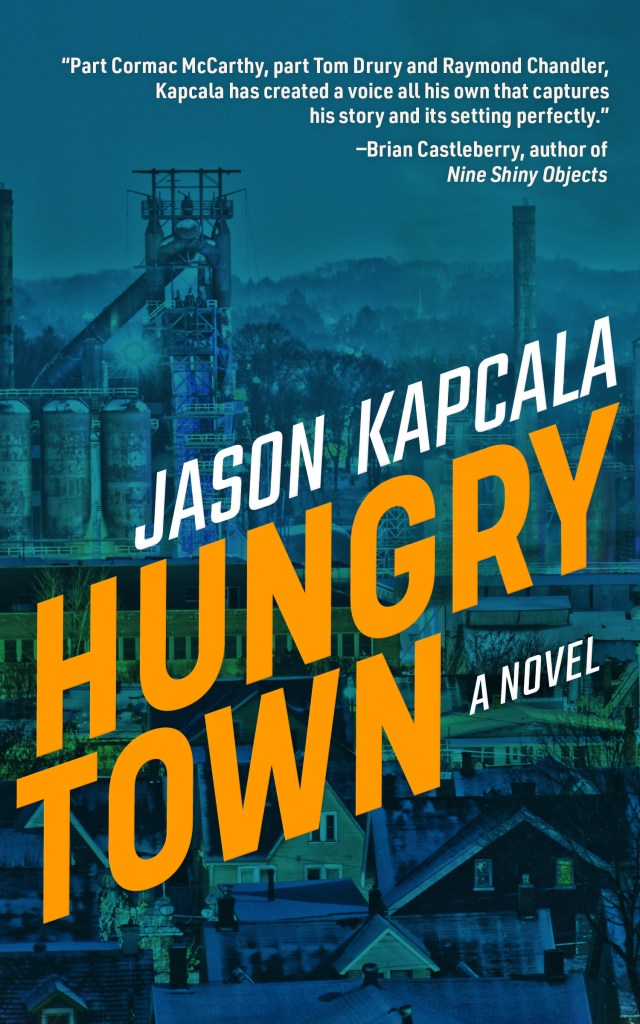
      My interview with Jason Kapcala, author of Hungry Town: A Novel

      For fans of American Rust by Philipp Meyer and Ohio by Stephen Markley . . . comes Jason Kapcala’s Hungry Town (2022), a Rust Belt-set crime drama with serious literary chops. From the back cover summary:

      "One October night in the depressed steel town of Lodi, Ohio, two police officers respond to a call about trespassers in the derelict Lodi Steel Machine shop. A chase through the crumbling cathedral of steel columns launches a chain of events that will test the officers' partnership and leave a boy to fend for himself in a decaying Rust Belt neighborhood choked by joblessness, boredom, and addition.
      
      On the opposite end of town, a young woman steps out of a rust-bucket Grand Marquis into an all-night diner...She doesn't realize her ex-boyfriend has hired two brothers to track her down and bring her back, by any means necessary."

      I was delighted to meet the author in person at AWP22 and even more delighted that he agreed to answer my questions about his novel—its literary (and culinary) influences, its Rust Belt influences, and more . . .

      Jason, of course definitions of noir vary, but the crime genre’s traditional elements consist often of an outsider perspective, systemic failure, economic insecurity, and existential despair. To my mind, the Rust Belt feels like a perfect tableau on which to set a noir. I mean, take for example this description of setting, your novel’s fictionalized Ohio town of Lodijust stunning:

      “Outside, night curdled into matte blackness, still and quiet, except for the breathy whine of motors on the hill, low rumblings as the delivery trucks downshifted on the steep grade and made their early morning runs into town.”

      How did you come up with the setting for this novel? Which came first, the setting or the story? Can you talk about influences—in literature, film, TV, or other artistic mediums—for this literary crime novel?

      It’s funny but I don’t know that I ever set out to write a noir. Of course, I realized, at a point, that I was working in that tradition, but I don’t recall sitting back and thinking about what makes a noir a noir, or from a definitional perspective, what I could do to adapt the noir genre to the Rust Belt setting. I just had this town—I knew it was a hard place where rusty steel meets barren farmland—and I had these characters who spent their days bearing the crucible of that place, and I followed that thread.

      To that point, most of the authors who influenced me aren’t overtly noir writers. My biggest influence was Kent Haurf, particularly his book Plainsong. I love the way he uses language and image, how he ends a scene by cinematically pulling back from the characters.

      For sure, Philipp Meyer’s American Rust is another novel I admire which opens with similar circumstances—an accident in an abandoned mill—but Hungry Town winds up being more related in spirit than in plot or style. 

      Laurie Lynn Drummond’s Anything You Say Can and Will Be Used Against You is a story collection about women police officers in New Orleans, and I admired how much time Drummond spent establishing the little evocative details of being a police officer, some of them quite mundane, some of them anything but. 

      Though it feels weird to say, I also remember thinking about William Faulkner’s As I Lay Dying when I was working with the character of Stanley Peach. Faulkner opens with the little boy Vardaman who has just caught a fish and who is processing the fact that his mother has recently died. Both the fish and his mother are dead, and Vardaman simply says, “My mother is a fish,” conflating the two. In Hungry Town, Stanley knows that his brother has died. He also knows that the last place he saw him alive was in the mill, and so he begins to believe, on some level, that his brother now resides in the mill.

      Cover design by Than Saffel / WVU Press

      Did you know when you began writing that the inciting action of the novel would happen in an old abandoned steel mill? And can you talk about how you how you went about researching what a mill is like in order to describe it? Did your hometown influence your selection of the mill as setting?

      You have an abandoned mill, a broken window at the end of the line . . . there’s really only a few places it can go from there.

      I would say the setting and the opening action came as a package deal. 

      I set all my writing in fictional locales—that freedom to manipulate setting provides a lot of freedom, but it still requires an internal coherence. Early on, in order to keep things straight, I drew a map of Lodi, the setting of Hungry Town, with the mill and all of the smaller boroughs located on it, street names, and so on. That helped ensure that I was remaining geographically consistent.

      Even though the setting is imagined, I took inspiration from a few places I know well. I grew up not far from Bethlehem, Pennsylvania, and have family who live in that area. I’d go there with my dad and brother to get my hair cut as a kid at the old-fashioned barber shop and then we’d stop and get hot dogs at one of the local stands in the Lehigh Valley. So I’ve probably passed the Bethlehem Steel Works hundreds of times in my life, and that wound up being an important analog for the mill in my novel.

      The Bethlehem Steel plant is not attractive in the way that a beautiful natural space is attractive—a forest or a mountain—but it has its own power of attraction, and I always found that frozen industry mysterious and intriguing, especially the Number 2 Machine Shop. It’s an immense building, a quarter-mile long and eight stories high, held up inside by a seemingly endless row of steel columns on each side. It’s practically a tunnel. I had a folder on my computer full of artistic photographs of the Bethlehem Steel Works that I looked at regularly while I was writing. You mention the big event that sets off the novel, and it sort of had to occur in that space. The mill was always going to be the key setting of the book just because of my fascination with it. 

      In Hungry Town, there is also a recurring image of an enormous shattered window at the very end of the machine shop. I borrowed that from the film The Crow, which opens with the main character being shot and falling through a large, round window. Not that I set out to lift it, but I know that’s where the image came from—to my knowledge, there’s no window like that in the actual machine shop. It’s just one of those images that stuck with me for whatever reason and wound up finding its way into the writing. 

      You have an abandoned mill, a broken window at the end of the line . . . there’s really only a few places it can go from there. I believe Ron Carlson calls that “building an inventory”—the idea that you gather up enough details, and images, and expressions, and you observe how they begin sticking together on their own to form Story. I always picture the story like it’s a hermit crab, scuttling along, adorning itself with whatever interesting detritus it comes across. That’s pretty close to how this novel started.

      I was also inspired by Athens, Ohio, where I lived for two years during grad school. It’s a much smaller town, but it shared some attributes with Bethlehem—river running through it, train tracks, an industrial past (in Athens it was the brick company), and a hot dog stand where all the dogs are named after burlesque dancers. That inspired the dog shop that Harry Mulqueen opens in the book (though Harry’s hot dogs are more pedestrian).

      Noir is often characterized by cynicism and fatalism—so much so in this novel that I think your setting rises to the level of full-blown villain. The reader gets a heavy dose of that here in one of the first few chapters:

      “…for all his grim toughness, Harry had trouble resigning himself to a world where kids were out screwing in mills when they should have been at home sleeping. A world where kids died of senselessness, impaled on hundred-year-old pieces of scrap in the middle of the night.”

      One of your main characters, Harry, an ex-cop, fights against the fatalistic sense of doom that pervades this town. Did you need him to leave the force to do this? Without spoiling the plot, do you think he succeeds?

      A lot of people have commented on how dark Hungry Town is, and they’re right, of course, but for whatever reason I don’t think of the story as being that dark or cynical. The characters do treat the mill like antagonist—at one point, Mulqueen thinks of it as a place that consumes people—but there’s beauty in Lodi, just as there is beauty in the abandoned Bethlehem Steel buildings. It may be a town of limited opportunity, but the characters are resilient and they have moments of grace, I think. They may or may not escape their circumstances—I like to think the jury is still out.

      Did Mulqueen need to quit the police force in order to retain his idealism or his sense of hope? Probably. That’s the sort of guy he is. That’s how he takes a stand. And his partner, Rieux—well, she had plenty of opportunities over the years to leave the force and plenty of reason, but she stayed and made her stand that way, because that’s how she’s built.

      Your cast of characters is varied, but each is an outsider in his or her own way. Even the good cop, Rieux, is an outsider; for all her excellence over many years on the police force, she is often seen as a woman playing at a man’s game. Other characters are old and dying, are on the run, are criminals, are neglected children left to their own devices. One way I think you turn traditional noir on its head is by featuring two females in main character roles. Why was that important for you to do? 

      I knew, from the moment I started, that I wanted to take the tropes of cop dramas and turn them on their heads.

      When I’m writing, I honestly don’t have many axes to grind. In fact, I try very hard not to make the story be “about” anything in a larger, moralistic sense. I have nothing to sell you. No lessons to impart. No greater Truths about life to reveal. Just curiosity about the characters and their circumstances, and a willingness to follow them wherever they go.

      Now, I say all that, but there is one exception that comes to mind. I knew, from the moment I started, that I wanted to take the tropes of cop dramas and turn them on their heads. I grew up watching cop movies—Dirty Harry and Lethal Weapon and so on—and they are great fun, but there are also a lot of problems with that mythos. The idea that a tough, anti-hero cop can take the law into his own hands, play by his own rules, sidestep bureaucracy, clean up a dirty town, and righteously mete out justice, all because his innate sense of right or wrong somehow remains intact on some higher moral plane—well, that’s starting to become less and less attractive as it ages. So I spent a lot of time thinking about tropes and how I could flip them or subvert them in interesting ways. 

      For instance, there’s usually a jaded veteran cop who gets paired with a rookie. That veteran will likely check off a number of boxes demographically. He’ll be an old-fashioned tough guy who lets his actions do the talking. His sidekick may be more emotionally intelligent but will probably also be portrayed as overeager and naïve. Often, that neophyte cop will be minoritized in some way—a woman, a person of color, an outsider of some sort. 

      In Hungry Town, I very intentionally chose to make the veteran cop a woman. Rieux is the gritty one, the one who’s just a bit jaded. She’s tough and instinctive. Mulqueen may be more physically imposing, but he’s the cerebral cop and the more sensitive of the two. They both take the work home with them, but Rieux drowns her bad feelings in alcohol whereas Mulqueen sits up all night feeling guilty and pondering whether or not Freud was right about there being no such thing as an accident. That inversion of stereotypes was a conscious choice and a part of the project itself.

      I find titles terribly difficult. At what point in your writing of this novel did you light on Hungry Town. And what does that title mean for you?

      I’m a huge fan of music, and I always put together playlist for every project I’m working on. I try to capture the feeling or atmosphere of the project in the music I select. One of the songs I chose for this project was “Hungry Town” by Chuck Prophet. It’s a great song with a killer line: “the devil eats for free in a hungry town.” I kept coming back to that. In the book, one of the characters, Bel, says something about there being a lot of hungry people in Lodi, most of them willing to do anything in exchange for a bite to eat. Her expression takes on a metaphorical double meaning that I like, and so I landed on Hungry Town as a title. 

      What are you writing, right now? What are you reading? What can you recommend?

      Currently, I am reading The Other Ones by Dave Housley, about a group of office workers who win the lottery. It’s a terrific book, funny but not without considerable depth. Next on my list is Neema Avashia’s Another Appalachia: Coming Up Queer and Indian in a Mountain Place, Mike Ingram’s Notes from the Road, and Mark Powell’s Lioness.

      I’m currently working on a novel that I’m calling “The Mourning Afters.” It’s set in the fictional ghost town of Stillwater, Pennsylvania, which I’m basing on Centralia, PA. There’s a mine fire that has been burning beneath the town for almost a decade, and the town is basically abandoned, most people having relocated to the neighboring town. 

      The protagonist is a rock singer named Kev Cassady. About nine years earlier, he was the front man of a band called The Mourning Afters. They were on the verge of a breakthrough, had finally gotten the attention of a record producer in California, when there was a falling out. Kev skipped town with their demo tapes, took the opportunity for himself, and wound up squandering it all. 

      Fast forward to the present, and Kev gets a late-night call from one of his former bandmates, Muzzie, who he hasn’t spoken to in years. He tells Kev that another member of the band has unexpectedly died. Kev decides to return to Pennsylvania for the funeral and winds up having to face all of the bandmates he left behind, including his drummer ex-girlfriend, Ramie Valentine. In the time since he left, she has raised an eight-year-old daughter, and Kev is trying to do the math on that to figure out if he’s the father. 

      It all sounds very dire in exposition, but it’s actually supposed to be a comedy and the characters find themselves in one ridiculous situation after another. It’s a departure from Hungry Town, in any case.

      I understand you did a lot of research into the culinary masterpiece that is the hot dog in writing this book. What do you take on your dog, and where can we find a good one if we’re in your neck of the woods in northern West Virginia?

      I appreciate you ending with the most important question, and I’ve really enjoyed having a chance to chat about Hungry Town.

      As I mentioned, I grew up not far from the Lehigh Valley where there’s a unique food culture and many excellent hot dog stands, so I’d been eating hot dogs a long time before writing this book. There, the hot dogs typically come with mustard and chopped onion on the bottom and chili on top. (The order of that is important.) It’s usually a thinner chili than you find other places. That’s how I’ve always taken my dogs.

      When it came to writing the novel, I didn’t necessarily need to do any research, but a good writing friend, Renée K. Nicholson, found out about the project early on and offered to take me to different hot dog stands all over West Virginia in the name of research, and I figured, well . . . who am I to argue? 

      We ate at a lot of hot dog joints. 

      I’m going to use the fact that I am a state employee and therefore forbidden to offer endorsements as a way to weasel out of having to declare a favorite, but I will say this: if you like hot dogs and you’ve never had a West Virginia slaw dog before, you need to remedy that as soon as possible. Until my “research” trips, I had never had one before, and I quickly became a fan. Mulqueen probably doesn’t sell them at his hot dog stand in northern Ohio—at least, I never recall seeing them when I lived in Ohio—but they would be a welcome addition, for sure.

      ~~~

      Jason Kapcala is the author of the short story collection North to Lakeville. His writing has been nominated for numerous prizes, including the Pushcart Prize. He grew up on northeastern Pennsylvania, near the ruins of the Bethlehem Steel Works, and now lives in northern West Virginia.

      ~~~

      Hungry Town

      by Jason Kapcala

      $19.99 West Virginia University Press

      ~~~

      Like this author interview? Comment below or on my FB page. And please share with your friends and social network. Want more author interviews, book reviews, writing advice, and general Rust Belt goodness? Follow me here. Thanks! ~Rebecca

      Enter your email address to subscribe to this blog and receive notifications of new posts by email.

      My review of RUNNING FOR HOME, Edward McClelland’s debut novel

      For many years, the Lordstown Complex, a GM auto factory in Northeast Ohio, was a landmark along my drive home to family.

      “Not long now,” I’d mutter to myself or say to my kids, if they were with me, and we’d marvel at the sea of cars in the auto plant’s gargantuan parking lot—and at the cars we couldn’t see, being made inside the plant’s operations. Lordstown, something like a prayer and a beacon both, calling me back to the place I still call home.

      Poetical references aside, Lordstown was an economic hub for the area, for decades. In the 60s, when my dad first moved to the Cleveland area, met my mom, and married, that plant was making the Chevy Impala and then the Pontiac Firebird. And the people who worked on the line were making salaries better than anything my dad could make as a draftsman. But we all know what happened to auto-making over the next few decades. And, with each pass in recent years, that Lordstown plant held fewer cars in the parking lot, meaning fewer employees working fewer shifts making fewer cars. Last I remember in its history as an auto plant, Lordstown was the home of the Chevy Cruze. I hate to disparage, but how many Cruze drivers do you know?

      It was with this point of reference—a familiar setting—that I came to Edward McClelland’s debut novel, Running for Home, out now from Bottom Dog Press. An accomplished journalist and writer of nonfiction—I loved his How to Speak Midwestern—McClelland has covered and written about the post-industrial Midwest, from which he hails, for a long time. This is the first novel for the Lansing, Michigan, native–and it hit home for me.

      Running for Home opens on the Empire Motors body plant, “a permanent symbol of my hometown, as well as a gateway to opportunity,” says the narrator, high-school student and runner, Kevin. What follows is a story of the fall of industry in a place, coinciding with the rise of “a slight Midwestern youth,” our protagonist, in this coming-of-age story.

      From the jacket copy: “In this moving new novel, [Kevin] deals with a rough high school and a vanishing factory town through a devotion to his running sport and his caring family. Aided by a spunky girlfriend, a humble-wise coach, loyal teammates, and his earned self-awareness, he learns the value of reliance and home.”

      What sets this coming-of-age story apart? A narrator with a voice and a passion that ring absolutely true. And they should. McClelland ran track and cross country at his high school, across the street from a Fisher Body plant. McClelland creates a Michigan town setting that leaves no detail of the early 80s unexplored; from the fashion and games popular with teenagers—like windbreakers and Galaga—to movies and music—like All the Right Moves and The Sex Pistols. 

      In this novel, the author doesn’t shy away from questions of economics and environmental concerns, things that are often at odds when it comes to industry. From Kevin’s perspective as a runner, we get a good view. There’s “the ever-visible rainbow slick on the river’s surface, the effluent of automaking” and the sweetly sick smell of chemicals on the air. Once the plant closes, Kevin both appreciates being able to breathe a little easier and knows life will be tougher, going forward. It hits home when his dad must take early retirement.

      The author is also adept at dramatizing and characterizing the generational differences among auto workers, like the narrator’s father and grandfather before him. What did cars mean to men, especially, through these decades? To build one with other men on a line? What does it mean when your life’s work is sent elsewhere? Of course, what is done to a place is also done to the psyche of a place. From this book, I got an insider’s view, including of union operations—and what striking and winning or losing looked like in this era of plant closures and relocations.

      What propels the plot, outside of the external forces of the town’s industry declining, is Kevin’s striving for success on the track. His passion is crystal clear: 

      I ran because I was a runner, because running was my nature. I believed the fastest form of myself was the most perfect form of myself.

      In writing fiction, we are often taught to have some kind of a “ticking clock,” to propel our plots and keep our readers turning pages. In this novel, the ticking clock is a stopwatch, and, race after race, we root for Kevin’s success in a sport where fractions of a second mean the difference between success and failure, between a scholarship to college or a ticket to an uncertain future.

      What I liked the most—and you might guess by the novel’s title—is that this is not a story about success by getting out. That is an all-too-common trope. But it’s not only a trope in fiction. In an American era of urban sprawl and overcrowding, the post-industrial Midwest still has many places that lose more people each year, many young people among them, than they gain.

      Leaving is easy. Just ask me. Staying, despite–or maybe because of–the odds is harder.

      Do you have a favorite coming-of-age story set in your native place? Did you stick close to your hometown? Do you run? I’d love to hear about it. And, what are you reading or writing this week? 

      Want more Rust Belt writing, author interviews, book reviews, writing advice, and more? Follow me here. Thanks!

      Enter your email address to subscribe to this blog and receive notifications of new posts by email.

      Running for Home

      $18 Bottom Dog Press

      A Different Kind of Beach Read: A Review of Dawn Newton’s THE REMNANTS OF SUMMER

      “Know that you will never fall asleep on a beach again.” That’s what I tell would-be mothers when they ask what to expect of motherhood (because the books don’t tell you the half of it). Oh, of course I tell them the good stuff, too: an enlarged heart and sense of purpose and connection with a tiny body-and-soul that needs you like water, like everything.

      And grief. To mother is to grieve–even if not actively–to know that one day this little being’s light will be extinguished. And we hope and pray that it happens after our own light is long gone, but we know that it will happen. Motherhood is carrying that knowledge around with us everywhere, while stoking our kids’ lights to make them brighter. To make them last.

      In the coming-of-age novel, The Remnants of Summer, debut novelist Dawn Newton plumbs the depths of grief after our 14-year-old protagonist, Iris, falls asleep on the beach while babysitting not her child but her younger brother–who drowns.

      “Iris is sinking.” So begins the novel’s summary, and Newton expertly weaves water into grief and redemption throughout this coming-of-age story set in a lakeside, working-class community in the 70s. It is grief-laden, this novel, but it’s also a balm–not only because the author taps into the nostalgia of youth, but because the author taps into the resilience of youth.

      My best childhood days were spent at the lake. What better reward for lake-effect snow from December through March (and sometimes April) than summer at the water’s edge? The Remnants of Summer is set not far from Detroit, Michigan, but you’ll find your lakeside town in this story, I promise. You’ll remember the bike rides and trips for ice cream, the fishing and daydreaming. You’ll be reminded of the way the sun turns the rippling lake to sparkles.

      Of course there’s a flip side to the idyllic lakeside story. The lake has taken Iris’s little brother the summer before, on Iris’s watch, and now the lake doesn’t shimmer like it always did. Her relationship with this place, her home, has changed; what’s more her relationships with her parents and older sister, Liz, have changed, too. Why won’t they blame her outright for her brother’s death, already? Instead Iris blames herself, over and over, and tries to keep afloat as she works a summer job and gets together with friends–but grief puts a shadow over everything.

      Meanwhile, a serial killer has nabbed and killed several children in Michigan. This development is less a plot point than atmosphere–but true-to-history-atmosphere–and not germane to the story, except that it allows for Iris to ruminate on death and guilt outside her family situation. Likewise, she considers those soldiers missing and presumed dead–a neighbor’s cousin is MIA–in the ongoing war in Vietnam. These historical points set the scene, but I admit to wondering if this quiet coming-of-age novel was about to turn into a mystery. And I admit to thinking that a plot thread along those lines, woven through the family saga, might have been a good way to raise the stakes even higher.

      When a neighbor’s uncle, a man about twice her age, makes a sexual pass, Iris considers new feelings, and new questions come burbling up: Did she want the attention? To feel special? Was she attracted or scared of him, or both? I was glad for these coming-of-age questions to round out Iris’s character and rescue her from her sinking grief.

      I was also glad for the ending, which doesn’t wrap things up too neatly. Anyone who has experienced grief for a lost loved one knows there’s no wrapping it up. Grief ebbs and flows, and you ride it as best you can.

      I won’t soon forget Iris. And I won’t soon forget the gorgeous prose the author uses to make this summertime story feel like it was mine for a time–language, characterization, and setting the novel’s strongest elements. One of my favorite passages, describing a summer concert on the water:

      “…she told Iris she and her husband lingered around the edges of the circle the boats made in the water, listening for the faint strain of the pitch pipe, then the blend of the rich voices, from bass and baritone to soprano, voices mingling with those of complete strangers from the other side of the lake, in search of the harmony that hung in the air, waiting to be sung.”

      How do you define “beach read” and what’s your favorite one? Got a favorite lake? Who writes your favorite settings the best? What are you reading, this week?

      Looking for more Rust Belt book reviews, author interviews, and more? Check out my categories above, and find me on my FB page and over at Twitter as @MoonRuark

      *Thanks to the folks at Mindbuck Media Book Publicity for sending me a copy of the novel for review! Pre-orders are available now, if you’re interested.

      A Distance Not Too Far to Fathom: My review of THE DISTANCE FROM FOUR POINTS

      book cover of THE DISTANCE FROM FOUR POINTS by Margo Orlando Littell, with illustrations of plants

      Picture London, Paris, or New York. Got it? Now picture Iowa farm country. How about Main Street USA? Easily imaginable places all, even in fiction. Right? Well, you can have them. I’m here to laud the lesser-known and in-between places in books, the fringes, places where the present hasn’t caught up to a promising past, where things are undefined, even messy—and the characters are gritty, trying to make a place their own. I’m here for the settings that remain open to interpretation, invention, and story.

      Take Margo Orlando Littell’s recent novel from University of New Orleans Press, for instance.  The Distance from Four Points is set in the Laurel Highlands of Pennsylvania, murky territory straddling the Rust Belt and Appalachia. Never heard of it? All the better stage for the author to play out that age-old question:

      Can you really go home again?

      Quick summary: “Soon after her husband’s tragic death, Robin Besher makes a startling discovery: He had recklessly blown through their entire savings on decrepit rentals in Four Points, the Appalachian town Robin grew up in. Forced to return after decades, Robin and her daughter, Haley, set out to renovate the properties as quickly as possible—before anyone exposes Robin’s secret past as a teenage prostitute. Disaster strikes when Haley befriends a troubled teen mother, hurling Robin back into a past she’d worked so hard to escape. Robin must reshape her idea of home or risk repeating her greatest mistakes.”

      In Rainer Maria Rilke’s Letters to a Young Poet, the poet says, “If your everyday life seems poor, don’t blame it; blame yourself; admit to yourself that you are not enough of a poet to call forth its riches; because for the creator there is no poverty and no poor, indifferent place.”

      By this definition, Margo Orlando Littell is a poet. For me, it’s the setting of Four Points, a fictionalized version of the author’s own hometown, that makes the novel shine. Forty-something MC Robin’s hometown appears to her to be a “poor, indifferent place.” This setting is a lot like the places that dot the Pennsylvania landscape that separates my home in Maryland and my childhood home in Ohio’s Rust Belt, places where invariably my car radio loses NPR’s signal and tunes in only country music. Where tunnels through the mountains, tiled like giant bathrooms, are the highlight of the trip. Where mock-alpine ski resorts attempt to lure passersby off the Pennsylvania turnpike. I’ve happily sped through these places seeking finer points, the reinvented and cosmopolitan Pittsburgh, for one.

      The author paints a picture of Four Points from Robin’s perspective: “It was coal country, or used to be, and it wasn’t always terrible. Long before she was born, businessmen made millions here, gaining wealth from the coke ovens in the foothills. Now the crumbling mansions…were barely audible echoes of the town’s better years.” This is a place many leave, but enough stay for unemployment to be high; a place old industry forgot and new-wave industry, like medicine, higher education, and tech, haven’t yet found.

      Still, a place like this, steeped in the glories of a crumbling past, isn’t past—but is fully present—to the residents eking out a living there, today. And, upon her return to Four Points, this is a reality Robin has to face, and quick.

      The novel starts off rather breathlessly, and we’re thrust into Robin’s predicament. Her husband died and left her with nothing to keep her and her daughter’s heads above water—except some pretty cruddy rentals in her hometown. A hometown she had tried her best to forget, living in a monied Pittsburgh-area enclave, where she’d remade herself—or fooled herself into thinking she had. A “decadence,” of forgetting where she came from and what she did to survive, the author calls it, of forgetting the “familiar equation” of “sex plus money.” This isn’t uncharted territory for women’s fiction—a salacious past comes to haunt the MC’s present—but the author handles it well.

      The details of land-lording, re-making this human-built landscape with her smarts and own two hands, raises this bookclub novel to a higher level. Robin, who only recently wouldn’t be caught without her “Va-Va Vino” nail polish, takes to ripping up ruined linoleum in her tenants’ places with those nails, breaking them to the quick. This kind of work, needed to sustain herself and her daughter, does a lot to renew Robin’s sense of self, even in grief. Work, as it often does, has a way of teaching characters (and, by extension, us readers) about their capacity for living: “Tonight, the paint would dry, and in the morning the apartment would be whole. Not new, not beautiful, but ready to live in.”

      The author exhibits a local’s keen sense of the distinct sights, sounds, and tastes of this place, where Sheetz and Walmart serve as modern beacons in the wintry gloom. But this is also the kind of place where communities still come out for parades on feast days and fill the same ethnic church pews their grandparents did; at home, old recipes, like Eastern European Halushki, are still passed down to the next generation. Maybe it is in such in-between times, teetering between ages—when will these hills experience their next Gilded age?—when we cling to the traditional foods that comfort, the language (all the “Yinzes!”) shared. Maybe it’s in these moments that we find grace.

      I would have liked a bit more rumination in these pages on the grace found in this novel’s place. We get a brief mention of it, and there are fleeting prayers for Robin, who won’t budge from the necessity of sending her daughter to Catholic school, even when money is terribly scarce.

      That touch of grace and Robin’s role as landlord reminded me of the biblical parable of the wicked tenants (Robin does have one or two), but more loosely about the need to be worthy “tenants” in this life leased to us here, in the earthly communities we call home. Will Robin turn her back again on her home, on a hard-won livelihood “cleaved to boilers and shingles, sewage stacks and electric grids.” Or, will she waste her gifts, trying to run away from herself again?

      I’ll let you read to find out.

      In a bit of life imitating art, the author also tried her hand at being a landlord in her hometown during the course of writing this book, and her expertise shows in her prose. You can read about that backstory and everything else related to The Distance from Four Points at her website: margoorlandolittell.com

      Paris in springtime? Let’s face it: none of us is flying anytime soon. So, how about Four Points at the turning of a season—from the pages of this engrossing novel:

      Robin left Four Points at five, the magical hour when the light over the mountains turned fiery and lit every branch on the maple-blanketed hills. The world was wet and weary, winter pulsing deep as blood, but in the pink sky and dripping ice from the bridges, she sensed spring. It really would come, softening those bristly mountains and coloring the sooty landscape of steel and coal. Another winter was breathing to a close…

      From Margo Orlando Littell’s The Distance From Four Points

      Anyone from such a place will tell you that harsh winters are worth it for the release of spring that follows—springs worth a whole book, and many more trips home.

      ~~~

      Margo Orlando Littell grew up in a coal-mining town in southwestern Pennsylvania. Her first novel, Each Vagabond by Name, won the University of New Orleans Publishing Lab Prize and an IPPY Awards Gold Medal for Mid-Atlantic Fiction. She lives in New Jersey with her family.

      Note: I received an electric copy of this book from the author’s publicist, in the hopes I would enjoy it, which I did. The book’s summary and the author’s bio, along with all the quotes, are from the book. The author was kind enough to supply photos (along with their captions) from her hometown.

      Like what you read? Check out my categories above, with author and photographer interviews, essays, stories, book reviews, writing advice, and more. What are you reading and writing this week?