I have long admired the art writing and advocacy of Emma Riva, Petrichor’s founder and editor-in-chief. After reading this exhibit review, you’re going to want to follow Petrichor and everything Emma does! Click below…
A little more from Emma about Pittsburgh’s art scene and her place in it:
“I do know one thing, whether Pittsburgh is in the Midwest, Appalachia, or the Mid-Atlantic, Pittsburgh is home. And something great is happening here. My writing background is in the novel, and I’ve struggled with whether being an art critic and being an author are mutually exclusive. But maybe I was never meant to tell stories by myself. This magazine is the novel of our art scene here in Pittsburgh. I want us all to create it together.”
I’m thrilled to present the second in a series of guest posts interrogating place here at Rust Belt Girl. Christina Fisanick is a champion for Appalachian writing–and Appalachian voices, young and old. (Read her whole bio below.) “Taking the Cow Path to Culture” appears in her book, Pulling the Thread: Untangling Wheeling History, which was published in 2024 by North Meridian Press.
Taking the Cow Path to Culture
by Christina Fisanick
Route 88 meanders through the Ohio Valley countryside, connecting the city of Wheeling, West Virginia, to Oglebay Park and small, rural towns and farms along the way. More significantly, for some, Route 88 is the lifeline that carries students, faculty, staff and visitors to two of the area’s oldest institutions of higher education, West Liberty University and Bethany College. This important role earned Route 88 the seemingly humorous moniker, “The Cow Path to Culture,” and is a standing metaphor for much of life in the northern part of the Mountain State and throughout Appalachia.
Route 88 was once an actual cow path upon which animals were herded across the farmlands of the region. Like many other places in the country, it made more sense to locals to pave the beaten cow path than to blaze a new trail as modes of travel advanced. But as has been somewhat painfully obvious over the last century, maintaining the well-trodden road might not be the best way to go.
In 1893, a minor New England poet, Sam Walter Foss, wrote a poem with a major message. “The Calf-Path” tells the story in verse of a path driven by a calf through Boston, which, after years of other animals, and eventually humans, following the path, was paved and became a major thoroughfare. The funny, yet poignant, poem takes readers on a journey through time and encourages deep thought about life decisions. Mainly, Foss wonders, why should we continue going down the same road in deed and thought when it might not be the most direct or even the best route?
Just like the calf path in the poem, Route 88 rambles and turns and plunges on its trek from Wheeling past Oglebay Park beyond the farmlands and homes and on to West Liberty University and then Bethany College. I commuted to West Liberty in the 1990s and cursed the winding road more than once during the icy winter months. My classmates and I anxiously wondered who would build a college on top of that hill? More so, we jokingly wondered how we made it to graduation.
We were not the first students to ponder such things. A 1972 Sports Illustrated article tells the tale of four student-athletes from Israel—Avraham Melamed, Moshe Gertel, Yoel Kende and Danny Stern —and their “250-pound Irish Catholic coach,” Tom Grall. The students were recruited for the West Liberty swim team. Avraham Melamed described their journey from the Pittsburgh airport along Route 88 in harrowing, awe-struck terms then concludes: “It was easier getting from Ramat Yohanan [Israel] to Pittsburgh than it was to get from Pittsburgh to West Liberty.” Writer Mortin Sharnik paraphrases Melamed:
“All roads do not lead to West Liberty, but one that does, Route 88, is called the Cow Path to Culture. The Israeli was taken on a more scenic route, a roller-coaster ride over a ribbon of cracked concrete, with no guardrails to prevent a car from taking a shortcut down a ravine. Melamed kept his nose pressed to the car window, looking for the bright lights. Instead, he saw farms, strip mines and hairpin curves.”
The effort, of course, was worth it. The Israeli students went on to make the swim team as winning as West Liberty football, which at the time the article was written had two consecutive undefeated seasons. More so, they earned great educations from the oldest institution of higher education in the state of West Virginia.
While Sharnik’s article is a fascinating and humorous look at the past, it is the title that catches my attention: “Wandering Jews in an Unpromising Land.” Clearly, Sharnik was playing on the students’ ethnicity and well-known Biblical references. Regrettably, the term “unpromising” is simply the same old stereotype of West Virginia arrived at by taking the same old mental cow path. Now, 46 years later, that cow path has been paved over again and again, and few people outside the state (and even within its borders) are willing to blaze a new trail. West Virginia needs to free itself of the shackles of presupposition that continue to hold us back from achieving greater success.
These stereotypes not only negatively color West Virginia, but all of Appalachia. We are told time and again by the popular media (and even ourselves) that there is nothing here. Appalachia is a wasteland, people say. A no man’s land of little possibility and less opportunity, they echo. And more often than not, this lack is blamed not on politicians or exploitive company owners, but on Appalachians themselves.
This blame goes back decades to early literature, TV shows and movies that exploit the region’s hardships for book sales, ratings and box office records. Few can forget The Beverly Hillbillies and their clueless, backwoods characters with hearts of gold or the psychologically deranged figures from Deliverance. Popular culture tells us that Appalachians are poor, willfully ignorant souls who are too lazy to improve their lots in life. These ideals have been further entrenched by presidential “poverty tours” conducted by presidents and other politicians throughout the 1960s to prove to the American people outside the region that Appalachians are poor, white trash that need their help.
Unfortunately, many of our own people have embraced these ill-conceived views of ourselves and live accordingly. Of course, we never see ourselves as morally-bankrupt, ne’er-do-wells, but we willingly believe it of our neighbors. J.D. Vance does this in Hillbilly Elegy, of course. He encourages the country to continue to blame Appalachians for our misfortunes. It is our own fault that we suffer from the world’s highest rates of opiate addiction, he argues. It is our own fault that many of our children live in poverty, he states. By continuing to claim that Appalachia’s poor are responsible for their own conditions, the nation’s eyes can be averted, not out of guilt but out of blame. Our country’s hands can be washed clean since Appalachians create our own misery and wallow in it.
It is easy to see why this particular cow path has been well-worn and paved over. It is to the benefit of politicians whose pockets are lined with money from the oil and gas industry to continue to shame and blame our people so that they never ask for more. Our land has been raped of resources while our people have been underpaid and exploited. None of this could happen if not for desperation and mentally following a well-worn cow path that leads to broad, self-defeating conclusions about poverty, drug abuse, and job loss.
Even now, young men fight for jobs in the dying coal industry for the promise of what they believe once was but will never be (again). Now is the time to take a different path. One that is not littered with stereotypes and preconceived notions. I am reminded, as I am sure you are by now, of another poem that urges readers to take the road “less traveled by.” I urge you, my fellow West Virginians, imagine a different life for yourselves and for generations to come. I’ll always take the cow path to culture to serve my alma mater. West Liberty University is in my heart forever. But my mind will be on a different metaphorical route that allows for new possibilities for West Virginia, Appalachia, and its people.
We no longer have to play the role of eager simpletons to keep our jobs. There are no jobs. Let’s create our own through education, new industries, and innovation. A change in mindset will make all the difference. In this moment we must abandon who we are told we are and become who we know we are. We are West Virginians. We are Appalachians. Toughened by adversity, wizened by necessity, and softened by empathy.
Dr. Christina Fisanick is the author or editor of more than 30 books and dozens of articles, essays, and poems. Her latest book, Pulling the Thread: Untangling Wheeling History, is a collection of essays focusing on little known stories from Wheeling’s past. She is currently working on an historic novel which takes place at Fostoria Glass in Moundsville, WV, in the years immediately following WWII and co-editing an anthology, “We Are Here!”: New Writing from Northern Appalachian (forthcoming for University of Kentucky Press). In addition, Fisanick is an English professor and an internationally recognized scholar in the teaching of digital storytelling as public history. Fisanick serves as the president of the Writers Association of Northern Appalachia (WANA) and the co-host of WANA LIVE!: The Reading Series. Learn more: christinafisanick.com.
Doesn’t this essay just get you thinking? What are a place’s histories, byways, characteristics, and quirks–and how have they shaped its people and its art? How have they shaped the stories we tell? For this series, I suspect we will get some fascinating answers to these questions and many more I haven’t thought of. I hope you’ll join in and share your thoughts!
Like this post? Want more? Comment below or on my FB page. And please share with your friends and social network.
Are you a Rust Belt writer interested in seeing if your own post, or author interview, or book review might be right for Rust Belt Girl? Hit me up through this site’s contact function.
Check out my categories above for more guest posts, interviews, book reviews, literary musings, and writing advice we can all use. Never miss a post when you follow Rust Belt Girl. Thanks! ~Rebecca
Thank you, thank you to Jason Irwin, who kicks off a series of guest posts at Rust Belt Girl, and to you, for being here! What is a Rust Belt place–and who defines the perameters? What does post-industrial mean today? What are a place’s histories, characteristics, and quirks–and how have they shaped its people and its art? How have they shaped the stories we tell, and what have those stories meant for Grit Lit and Rural Noir writing and for other mediums of creative expression? For this series, I suspect we will get some fascinating answers to these questions and many more I haven’t thought of.
A guest post by Jason Irwin
Though I have used film in the past, as well as digital cameras, I consider myself an amateur. I owned a flip phone for 22 years but finally gave in and bought a smart phone during the summer of 2024. Do I love my smart phone? Well, no, but it makes life easier, and I do love the camera feature.
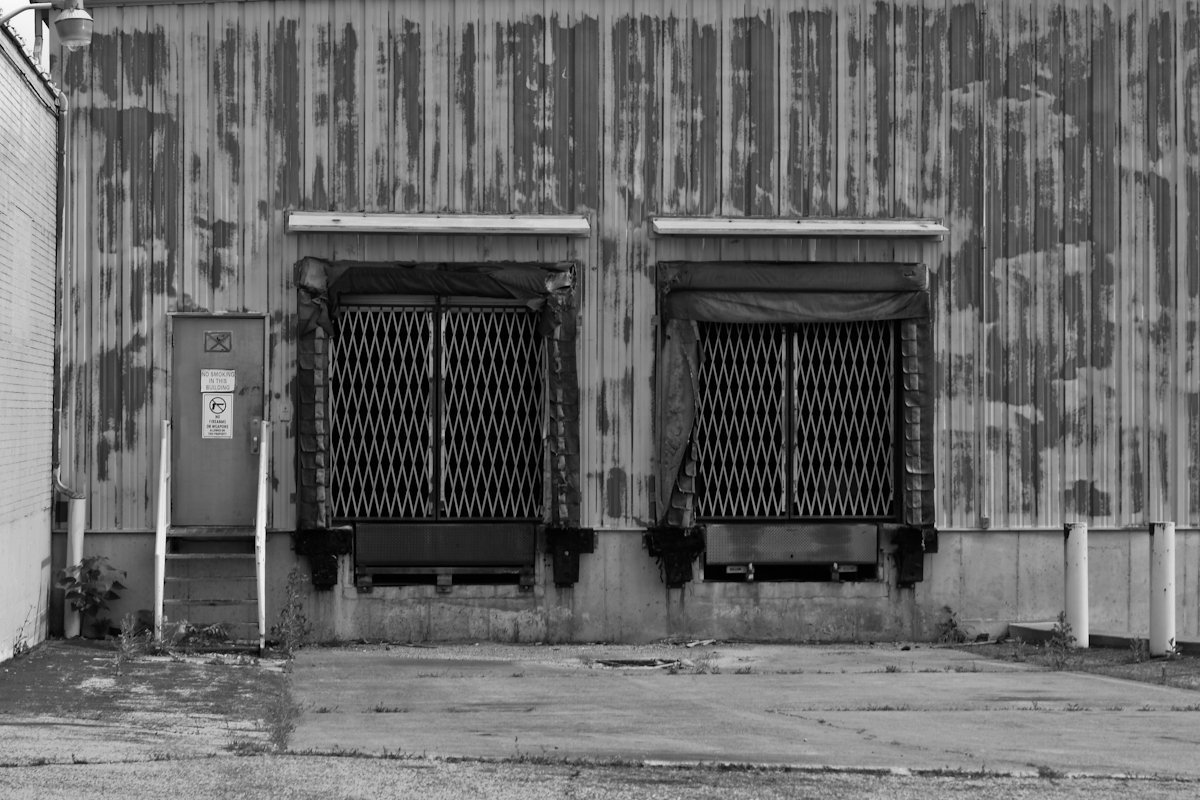
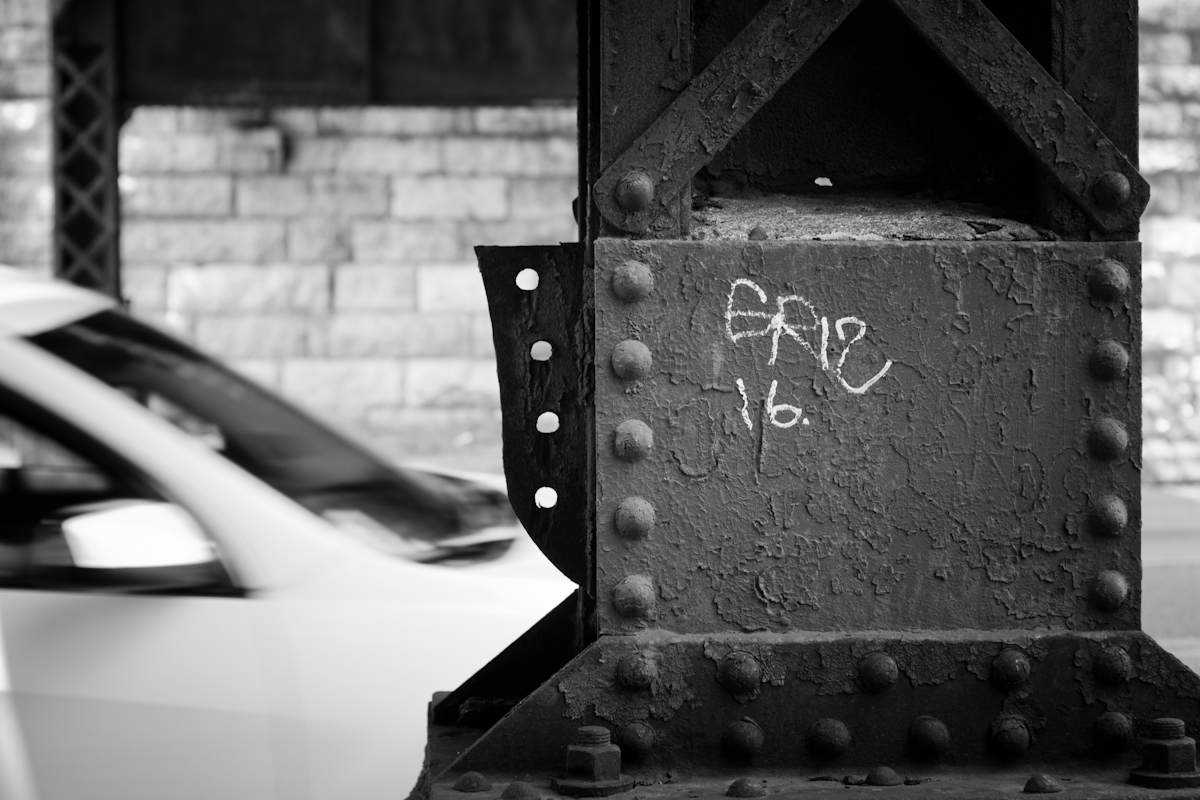
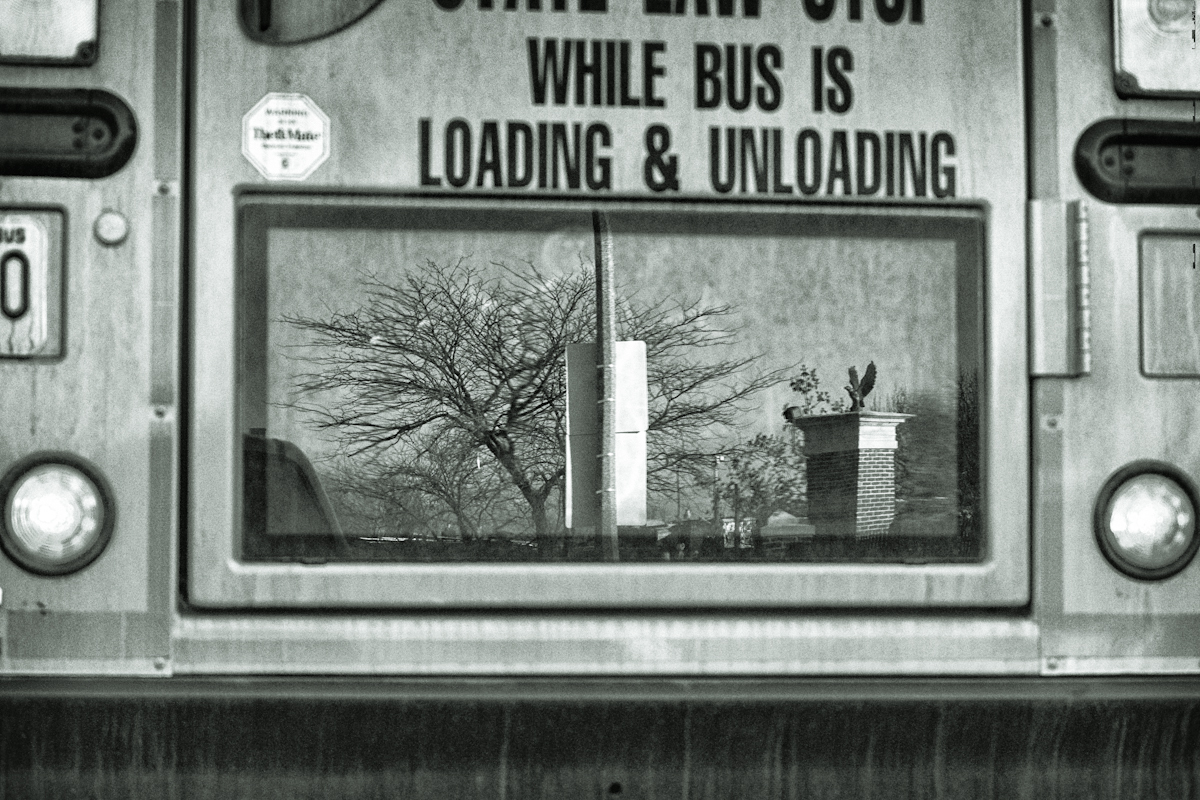
I believe my photos are already out there waiting for me to stumble upon. I like taking photos of people naturally, most often without them knowing I’m taking their photos. I prefer them off-center. I also like wide-open, desolate landscapes and cityscapes: derelict, sometimes abandoned buildings, windows, doorways, big skies, fields, and bodies of water. My hometown of Dunkirk, New York, is a perfect place for such photos. I hope the three photos in this post show this.
Serendipity, the storefront boutique in Madison, Indiana, looked lost in time to me, as my wife and I drove past. Maybe not in the 50s but still lost in time. Using the grayscale setting on my Samsung smartphone ads to the notion that this photo is older than it appears. Madison is her hometown, or rather Deputy, an unincorporated rural community about 18 miles northwest of Madison. Just outside the borders of what the Britannica website’s map marks as the Rust Belt. Madison was first settled in 1805, five years before my hometown of Dunkirk. Though not a Rust Belt town, Madison, like Dunkirk, was once a railroad town. The Madison and Indianapolis Railroad was completed in 1836. The first train stopped in Dunkirk on May 15, 1851, and at the time it was the last stop on the New York and Erie Railroad.
I chose color for the photo of the old Regent movie theater, which closed in the late 1980s, but still stands, minus its marquee, on the corner of Washington Avenue and Third Street in Dunkirk, because of the recent addition of the mural, which pays homage to Dunkirk’s Hispanic and African American communities. As a child I went to the Regent, owned by Mr. Burget and his sad-eyed basset hound, to see movies like Back to the Future, E.T., and Rocky II. Many nights my mother would have a craving for popcorn, and she’d park our car out front and send me in to the concession stand to buy a large tub with extra salt and butter and then we’d go home and eat it while watching TV.
The harbor in Barcelona, New York (a former fishing hamlet a few miles north of the village of Westfield), was where one of the scenes from the 2020 movie A Quiet Place Part II staring Cillian Murphy was filmed. Besides its huge commercial fishing industry that died out in the 1970s, the area is home to various wineries and agriculture, including Welch’s Grape Juice. Just out of frame to the left, up a small hill sits the Barcelona Lighthouse. Built in 1829, it is the first gas-powered lighthouse in the world. My father was born next door in the lighthouse keeper’s cottage in 1941. The grayscale setting gives this photo an eerie presence, but I love how the trees reflect in the water.
Jason Irwin is the author of three full-length poetry collections, most recently The History of Our Vagrancies (Main Street Rag, 2020), and the memoir These Fragments I Have Shored, forthcoming from Apprentice House Press. In 2022 he was a Zoeglossia Fellow and took part in the Poetry Foundation’s Disability Poetics Project.
Like this post? Comment below or on my FB page. And please share with your friends and social network.
Are you a Rust Belt writer interested in seeing if your own post, or author interview, or book review might be right for Rust Belt Girl? Hit me up through this site’s contact function.
Check out my categories above for more guest posts, interviews, book reviews, literary musings, and writing advice we can all use. Never miss a post when you follow Rust Belt Girl. Thanks! ~Rebecca
Issue No. 8 from Barren Magazineis out, and features my story, “The Virgins,” among among so much fantastic poetry, prose, and photography for your weekend entertainment. (Thank you to the editors for letting my story sit among such great company!) See also my friend (and Rust Belt Girl follower) DS Levy’s flash fiction piece, “Tengku,” my fave poem of the day, “Barrels of Fruit,” by Caroline Plasket, and more gritty, rusty photography–along with sweeping skies and far-off places–than a girl could shake a stick at.
Interior of Nativity of the Blessed Virgin Mary Roman Catholic Church in Cleveland, Ohio. Photo and story credit: Johnny Joo, architecturalafterlife.com
Maybe old buildings are in my blood. For forty years, my dad worked as a draftsman and designer for structural engineering firms, drawing up plans by hand. On trips into Cleveland for the art museum or bagels, Dad would point out the buildings he’d had a hand in. His job: ensuring they would stay standing.
So, it feels like a personal affront to watch buildings–especially beautiful historic places–go to ruin, abandoned.
I’ve talked on the blog before about “Ruin Porn,” a type of photography that glorifies falling-down structures, often in post-industrial places, like my native Cleveland. I’ve said before, that to me Ruin Porn looks like the American Dream on its knees with no dreamer in the scene. (I wrote a three-part essay you can read here, here, and here.) So, what do we do? How to salvage falling-down places?
The stadium had hosted over 1,500 football games for the high schools in Akron, as well as for Ohio High School Athletic Association playoff games. The Cleveland Browns had also used the stadium for 19 preseason games over the years.
Rebecca here: Photographer Johnny Joo is “Preserving History Through Imagery” at his site, Architectural Afterlife. You don’t have to be a Northeast Ohio native (like Johnny and this gal) to appreciate his stirring photography. Much more than capturing abandoned sites, he provides the history behind the sites–separating his work from the likes of “ruin porn,” in my opinion.
What do you think?
What’s on your plate today? Photography? A good summer read? I can’t get enough of discussing A Gentleman in Moscow. Otherwise, I’m buried under work-writing but hope to surface soon!
Happy Paper Anniversary! (Ironic, but true.) It’s Rust Belt Girl’s one year blogiversary.
Happy, happy day! We made it a year. I appreciate you sticking by me—and just think of all the writing paper we haven’t wasted!
For the obligatory anniversary stats: this post make 51, with an average word count of 370 (wordy me), for 347 total comments (lots by me) from 593 total followers, some of whom hopped on this train on that banner day when my post was a WordPress Discover feature. Thanks again, WordPress editors!
I started this blog to wrap my head around the literature of my native Rust Belt. For sure, one of my favorite comments, starting out in the Community Pool (best place to be on a Monday) went something like this: I don’t know where the *#$& the Rust Belt is, but I like it!
WordPress is definitely global. As much as I enjoy connecting with my fellow native or current Midwesterners (and I really do), one of the best things about this blog has been finding commonalities between far flung people and places—and the literature and art that comes out of those places.
This blogiversary coincides with the anniversary of my jump onto social media via FB. Yep, you read that right. When everyone else starts jumping ship, I’m like: that boat looks nice and sturdy! (Really, dinghy pics definitely forthcoming.) What have I found as a social media newbie? If I let it, social media zaps my focus so that I have the attention span of a hyper puppy. (Nope, still haven’t taken the real puppy plunge yet; I’ll keep you posted.) Social media also keeps me connected to friends, family, and writers too nice to ignore my friend requests! But those connections are more like taps on the shoulder—“remember me?”—than conversations.
We’re conversing here—real two-way street stuff. So, now it’s your turn. Happy Blogiversary to you, because it definitely takes two! What would you like to see from me in year two? (Cotton anniversary, btw.) I’ll try to oblige. ~ Rebecca
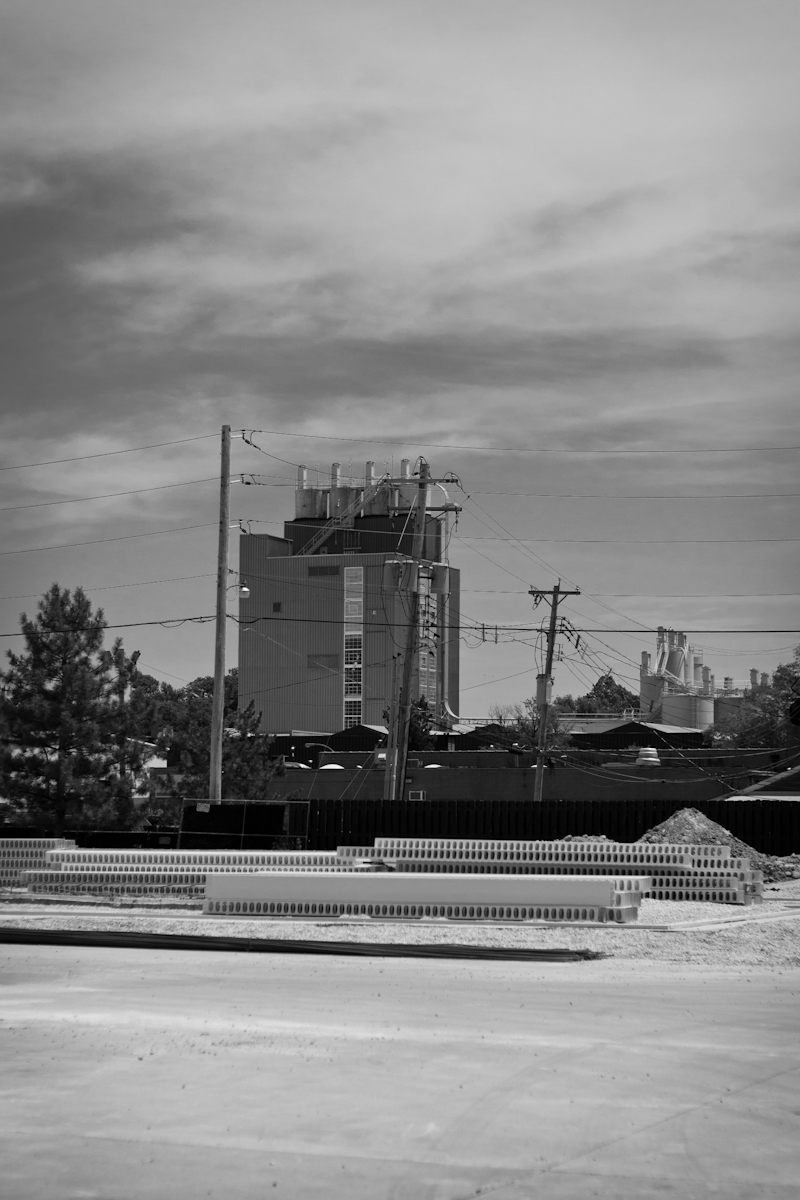
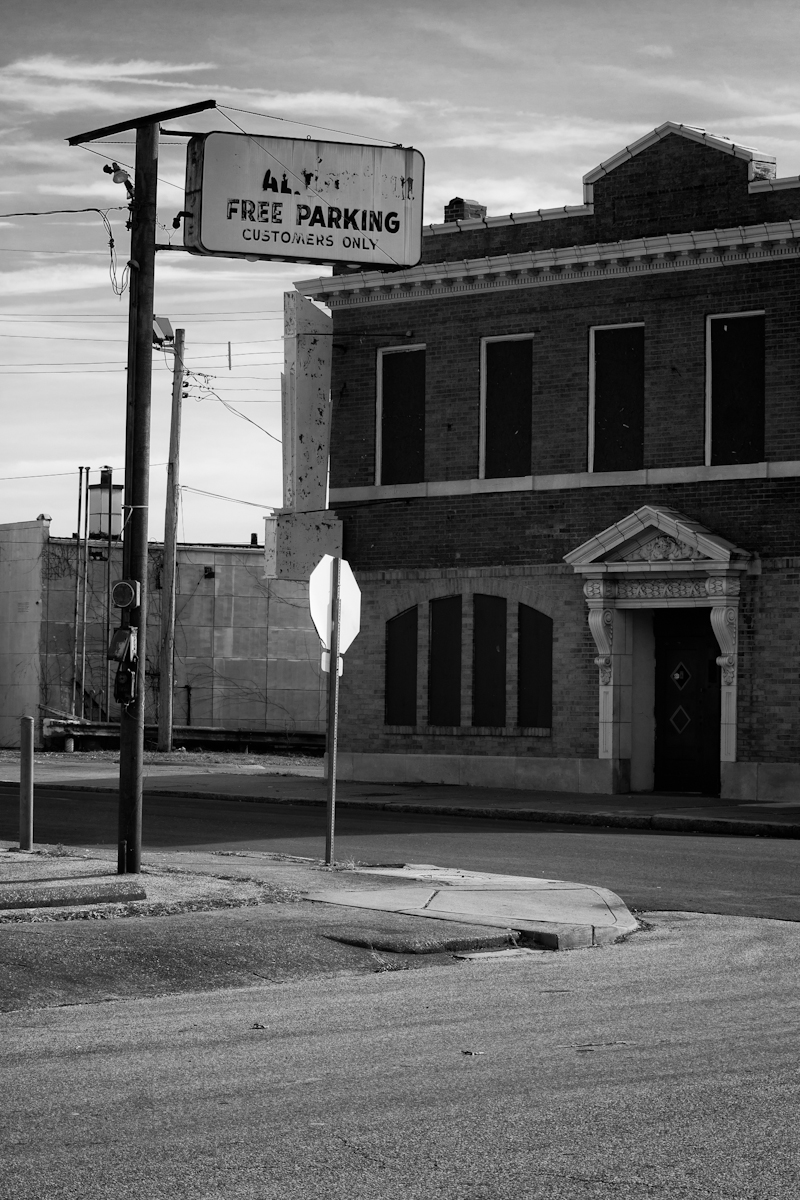
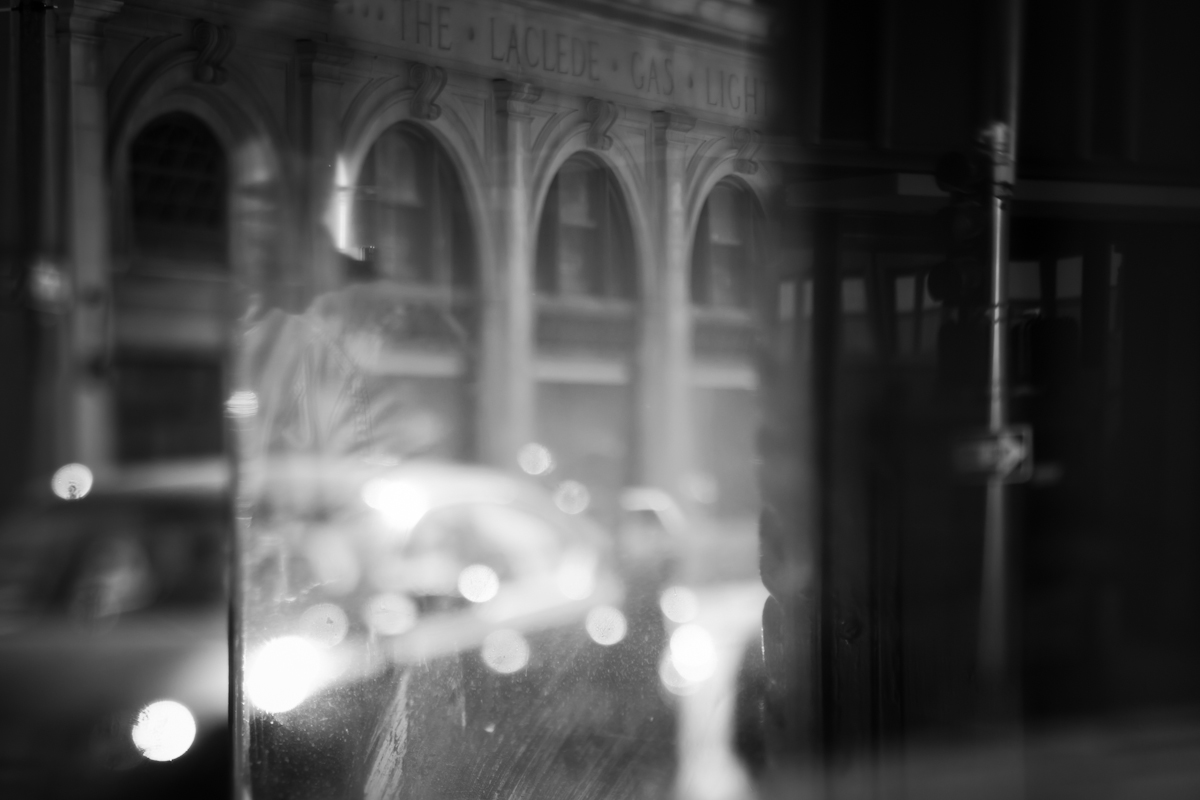
An island in the rust belt,
once perhaps a wayward
rhinestone jewel and now?
Some parts have seen
better times and some
have seen bitter times,…
…some hang around
like the ghosts of a
history of light and dark,…
…and some don’t see time
at all, but time sees them
and watches…..closely.
Like a rag or a bag snagged
on a stick in the river, some
parts moving, some standing still,…
…a city that seems at
times not to know where— or even when—it is.
“Watching Time” poem and images by Johnny Crabcakes at A Prayer Like Gravity
Rebecca here: thank you, thank you to Johnny Crabcakes at A Prayer Like Gravity for these fine photographs and words. Together, they provide a window into the Rust Belt city of St. Louis, always changing, ever still. Please visit A Prayer Like Gravity for much more.
I’ve said before that my lack of talent with a camera has turned out to be a blessing. Wanting to feature regional photography here at Rust Belt Girl, I’ve turned to the experts–like Johnny Crabcakes; along with my fellow Northeast Ohio native, Johnny Joo, who specializes in abandonment photography at architecturalafterlife.com; and Michelle Cole, who posts her thoughts and photography at Intensity Without Masteryand who shared with Rust Belt Girlhere and here what her life is like today in Lima, Ohio.
Want more photography? Check out my handy-dandy Categories.
Are you a photographer in a Rust Belt-ish place? I’d love to hear from you!
I suppose there’s always been a certain amount of fear around kids at school. There’s the letting go, the separation from family and home. For me, this means a willful disentanglement of my heart from my kids’, as I drop them off at school every day. There’s no drama, no tears–it’s a wonderful school–but I do have to tamp down my mother love, or else I’d never let them go.
Making the decision to have a child…is to decide forever to have your heart go walking outside your body.
She was right. So my little hearts leave my sight to beat and grow, and I have to remind myself it’s been eight years since we were skin to skin in the hospital at their birth. They are in their own skins now; they don’t need my mother heat like that.
They are strong. I tell myself this when they come home telling me–so nonchalantly–about lock down drills.
I don’t remember lock down drills in elementary school. I remember tornado drills, my knees pressed against the painted cement block walls of the hallway outside our classroom, my body curled like a potato bug, one in a long line of kids, our hands over the napes of our necks. I remember the Space Shuttle Challenger Disaster in fifth grade; when I returned home from school my mom was crying while folding laundry in the basement.
I wonder if my kids will associate school with fear or if, instead, they’ll think of my hand taking theirs and squeezing it before they tumble out of the car each morning, looking like mini sherpas with their packs and bags. I hope that’s all the burden they’ll ever have to carry.
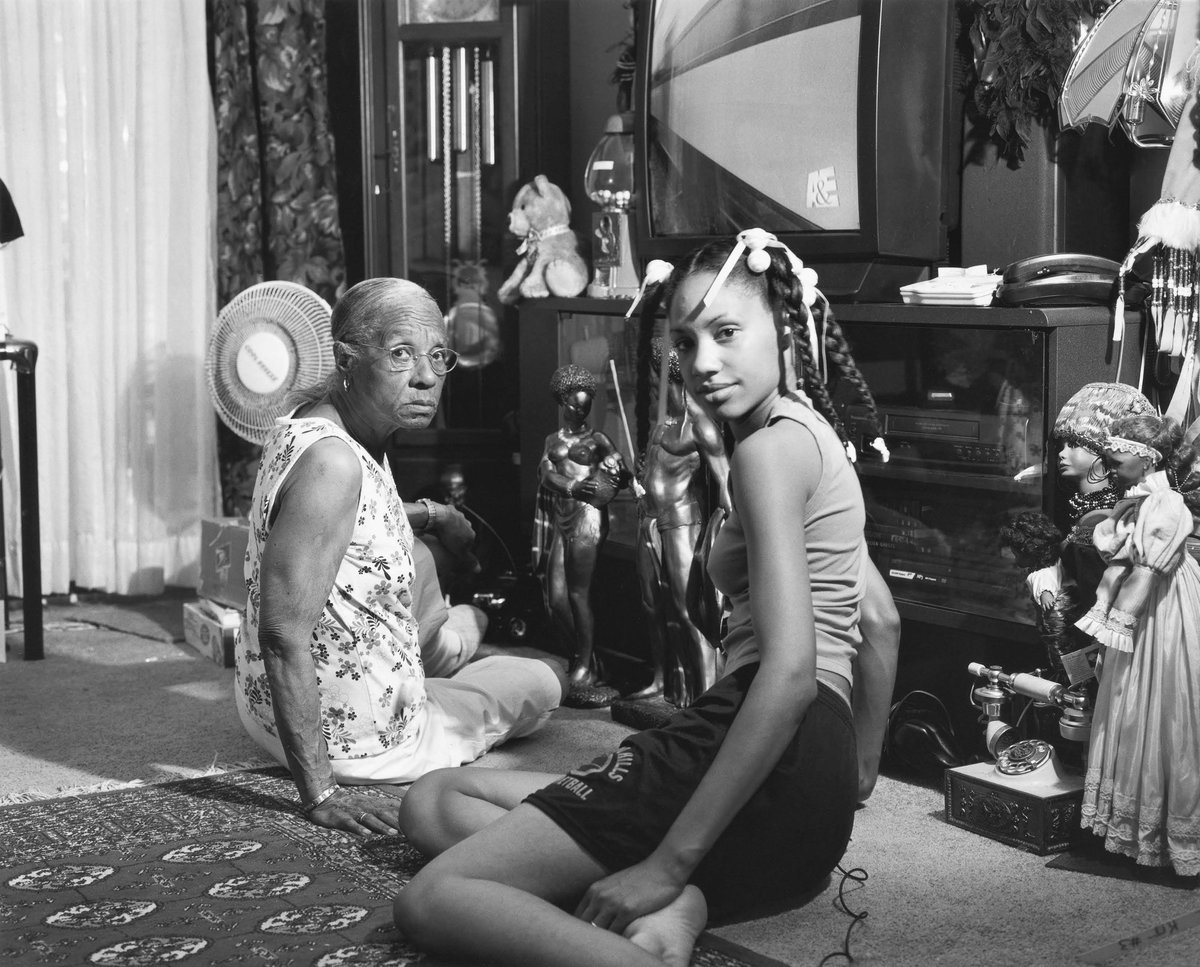
Grandma Ruby and Me, 2005, from The Notion of Family (Aperture, 2014). by LaToya Ruby Frazier; photo courtesy of npr.org
LaToya Ruby Frazier grew up in Braddock [Pennsylvania]. She’s a photographer who’s been taking pictures of her hometown for two decades, and she says that neither of [the common narratives of this place–as the birthplace of steel or a Rust Belt town revitalized] represent the Braddock she knows. Her Braddock is primarily black, primarily female and primarily poor.
I hope you’ll check out this eye-opening piece about a Rust Belt photographer, who provides an alternative view of the Mon Valley (former steel industry center, outside Pittsburgh, Pennsylvania) to the one featured in the novel, American Rust.






 Rust Belt Girl