Lit Fest Roundup 2025: who I met, what I wrote, how much pizza I consumed


This October I attended my eighth annual Fall Literary Festival hosted by Lit Youngstown. It was the Ohio literary organization’s ninth—and final—fall lit fest (at least for now). I could just be weepy about it (I’m weepy about much these days, tbh), but I’m too grateful to stay weepy. Since it’s a weekend to do grateful, let’s get into it…

Don’t worry, Lit Youngstown itself—with all of its amazing programming–is going strong at 10 years old. But before I get into my 2025 lit fest roundup I want to take a moment to share a few highlights from lit fests gone by (forgive my literary nostalgia), in no particular order:

  • Novelist Rachel Swearingen telling us craft session participants to, “Write towards change.” And “Stop thinking about characters and start thinking about relationships.” (Fiction writing changemaker right there!)
  • Me, getting to tell my story of my mom’s protesting of a nuclear power plant near my hometown when I was a kid (I wrote about it here) and detailing how that story turned into an integral part of my eco-novel (published someday, world!)
  • Exploring ekphrastic writing at the Butler Institute of American Art (great museum road-trip idea for you out of towners!) and exploring Youngstown writ large (getting to stay with friends and enjoying the local cuisine (there will never be enough pickle pizza, noggin-sized meatballs, and pierogis!))
  • Getting to be a student of Sandra Beasley, Ross Gay, Lawrence Coates, and so many other teacher-writers and getting to tell them over charcuterie and a glass of wine: “you wrote my favorite poem, essay, novella, thank you…”
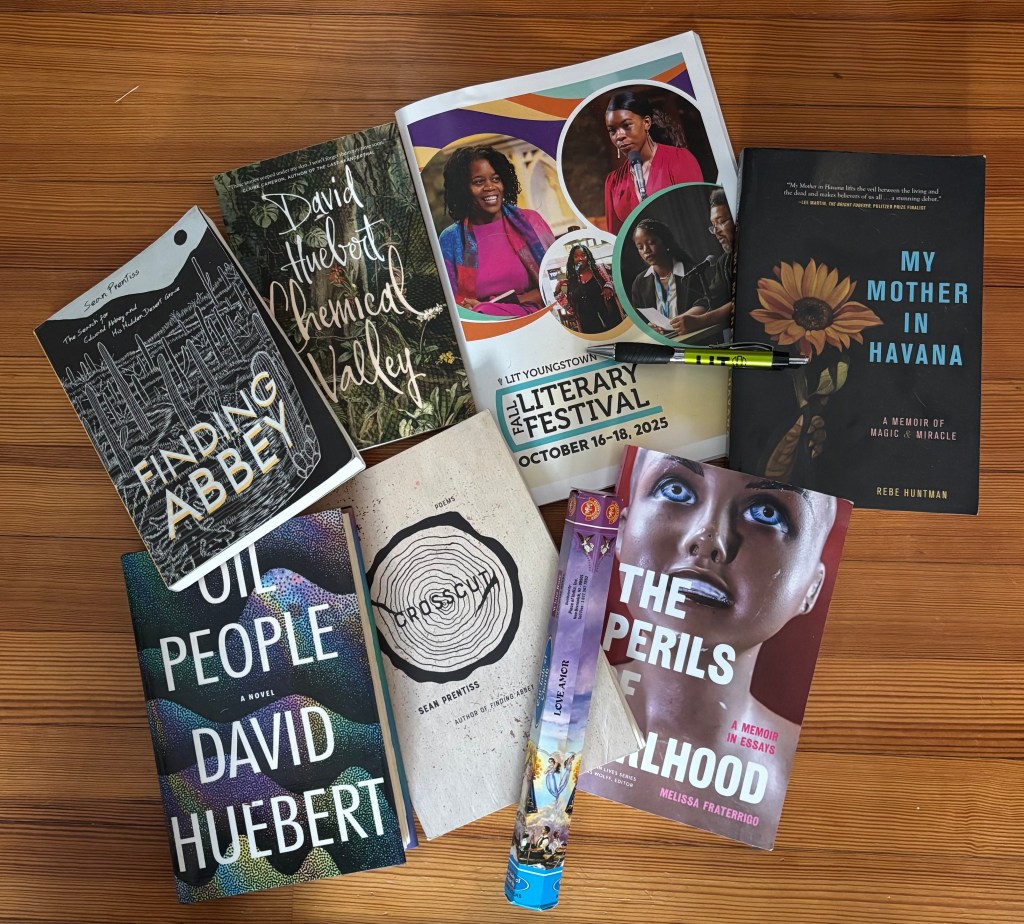
  • Meeting writer friends (like the talented Melissa Fraterrigo) in person after years of reading her work (her novel Glory Days inspired a lot of what I’ve been trying to highlight at this blog these last nine years or so—stay tuned for a review of her memoir in essays, pictured). And meeting other friends year after year and weaving our stories—and lives—together.
  • The highest highlight? You. Becoming a member of the Lit Youngstown community through the fall lit fest has been incredibly rewarding for my literary life—and my life-life. Thank you, friends.

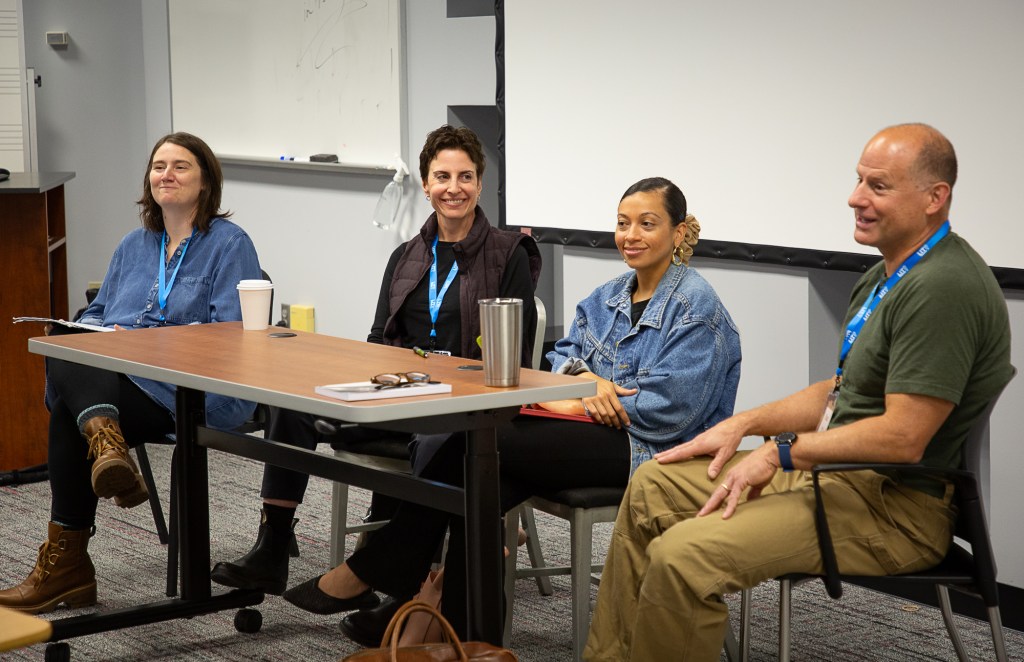
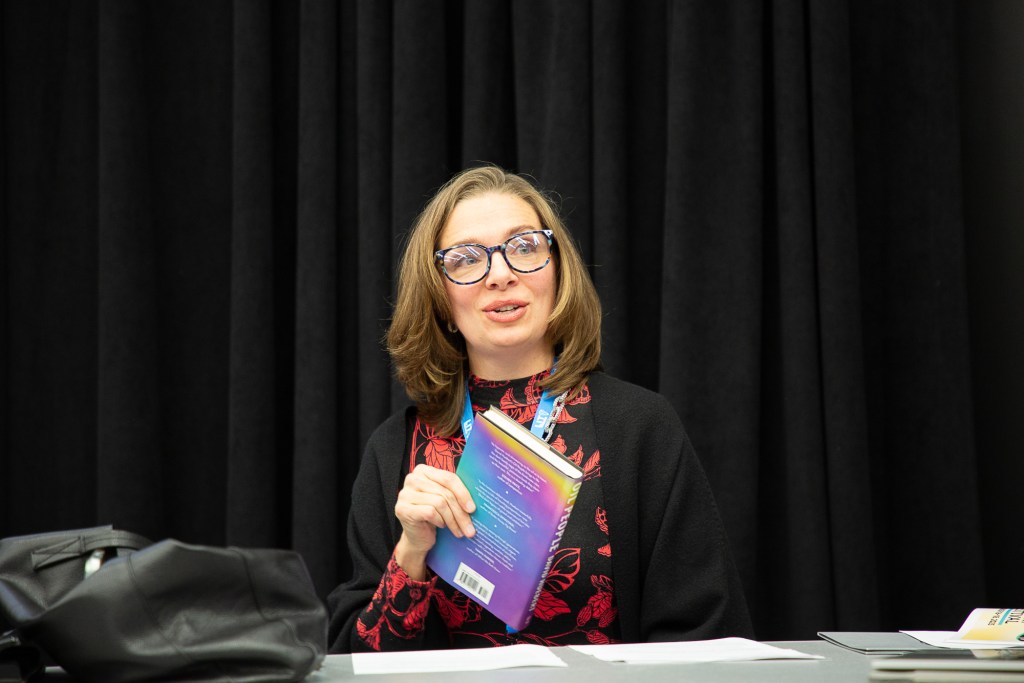
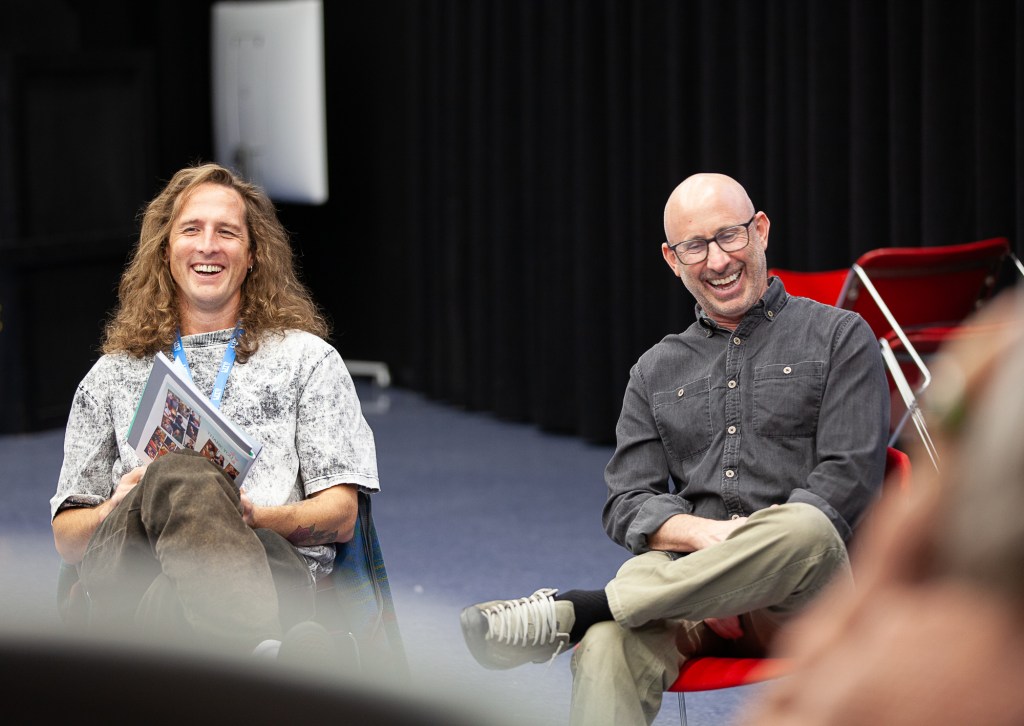
Now, 2025’s list fest was one for the books. (Peruse a few pics above and below.) And if you thought the environmental theme was going to mean a slew of nature poems…well, yes, and… Yes, and fascinating eco-fiction and challenging environmental memoir and poetry about nature redefined—from a place that was once an indigo plantation to the night sky over the Grand Canyon to trails cut by troubled teens into the Pacific Northwest woods—and so much more that “shapes our experience and identity, and represents our rootedness in earth.” Whew! I encourage you to read the impressive bios of the five 2025 featured presenters

My preparation for this lit fest happily began months in advance of the event. (Once a student, always a student.) For my conversation with fiction writer David Huebert and memoirist and poet Sean Prentiss I read several of their books—she gestures to collage artfully displayed on her office floor—representing an array of what we lump under the term “environmental writing.” Look for a follow-up post with a good chunk of our discussion—fascinating and fun!

Other personal highlights from this year’s lit fest. (Know that this is just a fraction of the offerings and I, once again, wished I could have cloned myself, so I could make every single session.):

Day 1:

  • Narrative Medicine [definition: healthcare practiced with narrative competence]: A Generative Workshop, facilitated by family nurse practitioner and poet Dana Reeher. Imagine me taking furious notes for the anthology project I’m co-editing: Body of Work, essays at the intersection of dance and health. For a little workshop exercise, Dana asked us participants to respond to a writing prompt, “an expansive invitation to open the mind,” so I thought I’d write a very short piece about my own dancing and its impact on my physical and mental health outlook:
Maybe the mistake was I listened too well, that I pointed my feet too hard, that I really could feel that string coming out of the top of my head lifting me up to the studio ceiling. Maybe I postured too much, wanted too much. Maybe I turned out until I was turned in. Maybe all that looking in the mirror made me someone else. I can still spot a dancer, or an anorexic, from fifty paces.

My dancer friends here will likely recognize a lot of this, but especially the posture-reminder telling baby ballet dancers to imagine there’s a string coming out of the top of your head… After sharing my short piece of writing, a couple of the other workshop participants said the string image reminded them of a marionette. I’d never thought of that before, and I’ll tell you that image is still working on me!

  • The Pamela Papers: A Mostly E-pistolary Story of Academic Pandemic Pandemonium: The Musical. Based on the award-winning novel by Nancy McCabe, published by Outpost 19 in 2024, the presentation included a dramatic reading (with singing—who was expecting a musical at the lit fest? Not I. And it was such fun!).
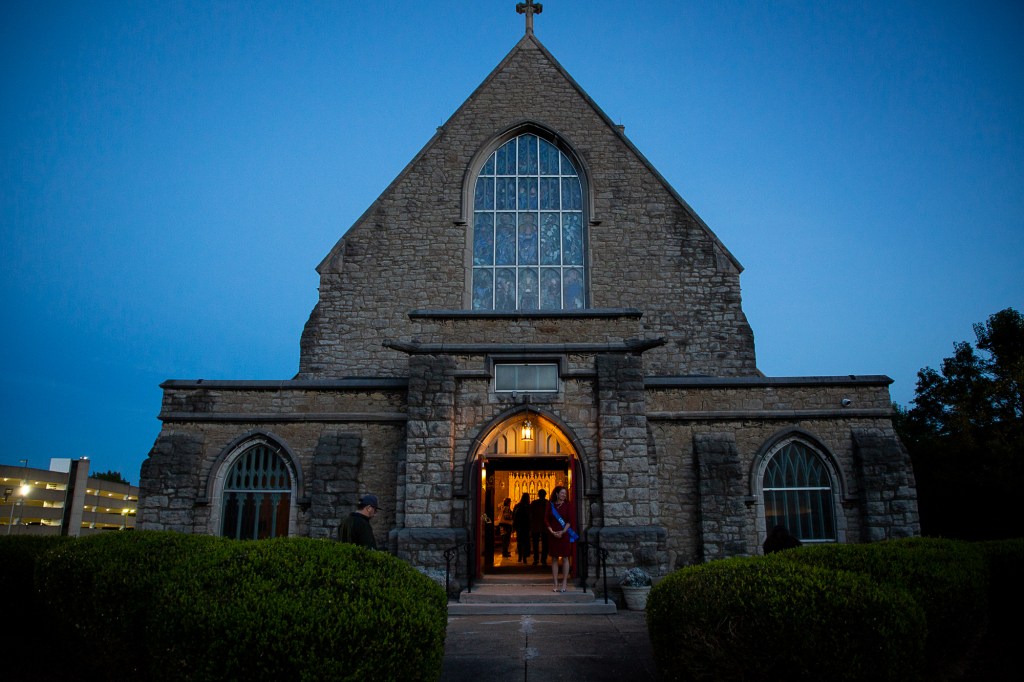
  • Readings by David Huebert and Sean Prentiss in St. John’s (gorgeous limestone and stained glass) Episcopal Church sanctuary. Your girl provided introductions to both writers—thanks for putting up with my unorthodox investigative process to make sure they were exciting, guys!

Day 2:

  • Bengal Tiger Moments: Time Perception in Creative Writing, facilitated by Sean Prentiss. In this fascinating session, we talked about speed on the page, presented in five categories from fastest to slowest: Gaps, Summary, Scene, Dilation, and Pause. Sean presented examples of these techniques from creative nonfiction and explained the brain science behind our understanding of the movement of time—irl and on the page.
  • Rooting the Self: Writing as an Act of Person, Political & Environmental Transformation & Transcendence, a multi-genre workshop with (beautiful and talented) Rebe Huntman, author of My Mother in Havana: A Memoir of Magic & Miracle: Rebe took us through various stages/ways of honoring our voice and our writing by making space for it and celebrating it, including meditation, morning pages, repetitive activity (including list-making), “the writing cave,” and writing constraints and freewrites. My favorite prompt, a list-making exercise we did in this session, produced these lists, below. (From there I spun out a short prose piece, “Reasons to Revere Your Vagus Nerve” (we’ll see where that weirdness goes!):
5 Things I Consider a Miracle
High arches
Warm pie
The vagus nerve
Sweating carafes of water
Tanned leather
5 Recurring Obsessions
Ballet hands
Song
Accents, dialects, and regionalisms
Mom, mom, mom
Delight
  • Readings by poets Lauren Camp, Todd Davis & Kourtney Morrow: poems of cityscape to countryside to the night sky over the Grand Canyon left us audience members awed.

Days After

And then, after… there’s nothing better than returning home from a literary event inspired, nurtured, and with a few new ideas for writing already on the page.

If you’re reading this on Small Business Saturday, might I suggest you also read small and lit small by supporting your local indie bookstores and your favorite literary organizations today?!

Did you attend Lit Youngstown’s Fall Literary Festival last month? Another lit fest? What was your favorite part? Have an inspiration gleaned or a piece of writing captured you’d like to share? Feel free to jot it in the comments. 

Like this post? Comment below or on my FB page. And please share with your friends and social network. 

Are you a Rust Belt writer interested in seeing if your own post, or author interview, or book review might be right for Rust Belt Girl? Hit me up through this site’s contact function.

Check out my categories above for more guest posts, interviews, book reviews, literary musings, and writing advice we can all use. Never miss a post when you follow Rust Belt Girl. Thanks! ~Rebecca

Enter your email address to subscribe to this blog and receive notifications of new posts by email.


More from The Rabbit Hutch: Reflecting on a conversation with National Book Award winner Tess Gunty

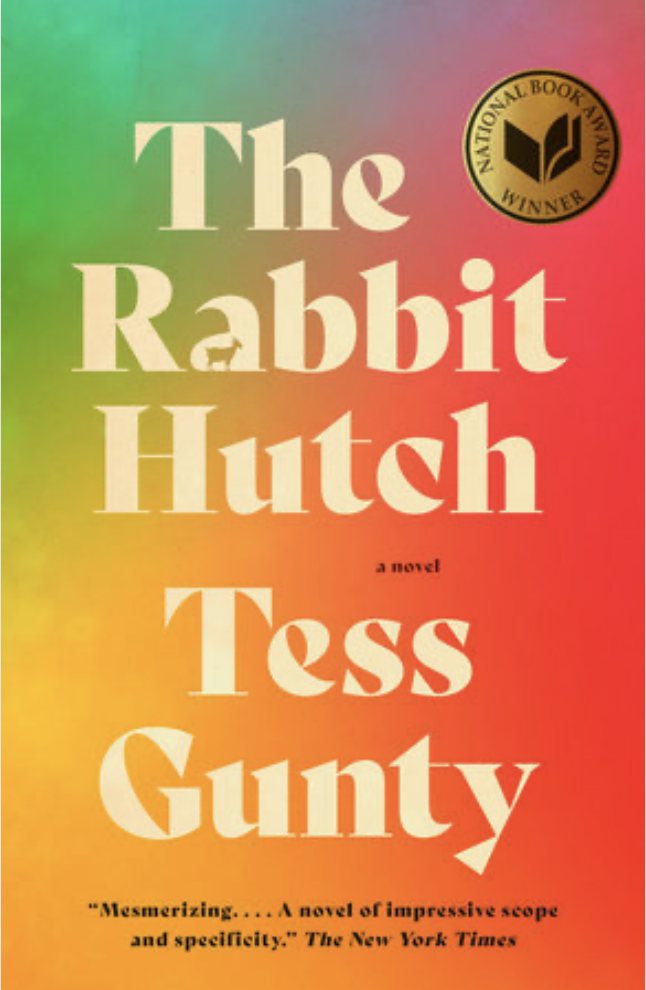
Tess Gunty’s 2022 debut novel, The Rabbit Hutch, won that year’s National Book Award for Fiction (and other awards) and also won hearts—especially among Rust Belt readers.

Pittsburgh-based author and art writer Emma Riva wrote a wonderful essay about The Rabbit Hutch published here at Rust Belt Girl I encourage you to read next—if you haven’t already.

I was late to the novel, myself, and was struck by how Catholic it felt, despite not being marketed that way (for obvious reasons).

I was thrilled to “meet” Gunty yesterday evening through the Jesuit Media Lab‘s conversation over Zoom with the author. A sizable group of us avid readers tuned in to listen to Gunty talk about being raised Catholic and writing about The Rabbit Hutch main character’s deep interest in female mystics and mysticism, about researching Hildegard von Bingen and discovering her “extraordinary theatre of mental activity” and agency, about technology and art and how Mary Shelley’s Frankenstein is a “perfect allegory for AI,” and much more!

“I wanted to make art out of my characters’ lives, including their digital lives,” the author said about her novel that still feels very much of this technological moment. (Gunty herself doesn’t partake in social media and, clearly, it benefits her writing. “You need to keep the tool of your mind as sharp and clean as possible,” she said.)

Buy your own copy here

As for the novel’s fictional setting of Vacca Vale, Indiana, Gunty said that the place was the only thing she knew for certain she wanted to portray, going in, that the setting started out being the MC—until she was about three-quarters of the way through writing the first draft.

She said she wanted to capture the “purgatorial” nature of post-industrial cities like Youngstown, Ohio, Flint, Michigan, and Gary, Indiana. (No shade intended, I don’t think!) How to capture the sensation of such places, like her hometown of South Bend, on which the novel’s setting is based? In the books she read, Gunty said, “I never encountered any place like my hometown.” And yet politicians and movies portray a flat stereotype of such post-industrial Midwestern places.

Gunty’s description sparked pride in me, last night. She described our Midwestern and Rust Belt cities as places of mystery, magnitude, and complexity. When you don’t see a place like your home reflected in literature, “you feel like it doesn’t matter,” she said. For Gunty, writing this novel, then, was an attempt to insist upon the “dynamism and multi-dimensionality” of her hometown—and others like it.

Like mine. Maybe like yours, too.

I encourage you to check out JML for their book talks and other events.

Have you read The Rabbit Hutch? What did you think? Did you read Emma Riva’s essay about it?

Like this post? Comment below or on my FB page. And please share with your friends and social network. 

Are you a Rust Belt writer interested in seeing if your own post, or author interview, or book review might be right for Rust Belt Girl? Hit me up through this site’s contact function.

Check out my categories above for more guest posts, interviews, book reviews, literary musings, and writing advice we can all use. Never miss a post when you follow Rust Belt Girl. Thanks! ~Rebecca
Enter your email address to subscribe to this blog and receive notifications of new posts by email.


“This Woman”: an Essay by Melissa Ballard

Essayist Melissa Ballard contributes the fourth in our series of guest posts here at Rust Belt Girl, and, let me tell you, you’re in for a treat. Melissa has a talent for bringing the past to life and making her ancestors feel like our shared family. In this essay we meet Phyllis, Melissa’s grandmother, a woman of Northern Appalachian Ohio, whom Melissa writes about in a loving yet candid way, deftly delving into what makes personhood–class, sex, education, place and much more. (We also hope Phyllis is having the “time of her life,” Melissa.)


This Woman

by Melissa Ballard

This woman is my grandma, but not yet. 

In this black and white photograph, a small, dark hat of woven straw covers her hair and shades her forehead. She wears a walking suit: a jacket and skirt in a light wool pin check with a belt of the same fabric, over a silky, patterned, blouse. The tips of the fingers of her left-hand rest in the pocket of her slim skirt. Her only jewelry is a ring on the little finger of that hand. I can imagine her cropped left foot pointing out, her dark stockings and t-straps. She slouches just a bit and turns her body toward the unidentified photographer. She looks directly at the camera. Her smile is slight, but it reaches her eyes. 

This woman’s slight curves contrast with the riveted metal beam, perhaps part of a railroad bridge, that rises at a sharp diagonal behind her. In the early 1920s, her family lived on a side street a few blocks from the train station in Dennison, Ohio. Her father was an inspector for the railroad, so she had a free pass to ride. 

This woman could be waiting for the early train to Pittsburgh or Columbus, where she will walk the streets with confidence, on her way to a job interview. But she is not. Or at least I don’t think so. I know little about this brief period, but I hope she is having the time of her life.      

In 1925 she has a job in an ice cream shop, lives with her parents. Both she and her mother, who is preoccupied with social status, are named “Margaret.” This woman has already started to express her individuality and goes by her middle name, Phyllis or, on documents, “M. Phyllis.”

On June 18, 1925, eleven days before her nineteenth birthday, Phyllis and her neighbor, Harry, will travel 65.3 miles, maybe by train, to Brooke County, a tapering finger of West Virginia tucked between Ohio and Pennsylvania, where they can get a marriage license with no waiting period. Later that day, they will return to Ohio and be married at the home of the groom’s family. 

I wonder whether Phyllis’ parents even attended. They had a reception for her later, but I gather it was her mother’s attempt at saving face. I can’t imagine she approved of my grandpa or his family, and I can easily hear her saying, “He’ll never make a decent living. You’ll end up in the poor house.” 

Five months and five days later, their first child will be born. On January 14, 1928, their second child, my dad, will be born.

Phyllis c. 1920

The woman I remember, my grandma, was in her fifties. She had slim legs but a solid middle. She wore silver, cat-eye glasses before they were retro. Her short, dark hair was streaked with gray and white, her fingernails chewed to the quick. Wearing a well-washed cotton housedress covered with a flowered or checked apron and heavy lace-up shoes, she kept chickens and goats, grew vegetables and flowers, ran the laundry through a wringer before hanging it outside to dry, cooked meals from scratch. She kept a battered pan under the kitchen sink, filling it with food scraps. Every morning she fed it to the three hound dogs Grandpa had brought home from the dog pound, kept in a pen at the back of the yard. “Oh, hush up,” she said as they yipped and howled at her. 

When Grandma wasn’t busy with chores, she answered the phone for Grandpa, who was the dog warden. She wrote messages in her flowery cursive: the name, address and phone number of the caller, and a brief description of the stray dog. She followed him to his dark green truck, reading her notes out loud. Grandpa never wrote anything down. Before she finished talking, he was backing out of the long driveway, kicking up gravel as he went. 

They lived in a worn-out house on a liminal strip of land in Brightwood, part of Goshen Township, Tuscarawas County; my parents and I had moved to a suburb of Cleveland. Once a month, we made the two-hour trip down home to visit, and I spent more time there during the summer. 

On hot afternoons, Grandma and I often sat together on the front porch swing, she doing her mending and me reading, trying to catch a breeze. A two-lane road ran close to the front of the house. The cars seemed to fly by, and the exhaust from the trucks taught me to mouth breathe, a skill I perfected when I ran into the hen house to collect eggs.  

This route was nicknamed the “slow road” after a highway, the “fast road,” was built behind the house. One summer Saturday, Grandpa drove us into town on the slow road to get ice cream. Grandma and I sat on a bench with our cones, people-watching while Grandpa ran one of his mysterious errands. If Grandma asked him where he was going, he always said, “I need to see a man about a horse.” Which was odd, because my grandparents didn’t have any horses.

On the way home, I noticed a large house on a hill. “Who lives there?” I asked.

Grandma stiffened. “That’s the poor house. Where you go to live if you don’t have any money. It’s not a nice place.” 

I immediately pictured a nineteenth-century orphanage from one of the many books I read. Rows of rusty metal cots with stained mattresses, thin sheets, and scratchy blankets. Peeling paint on crumbling walls. I shuddered and looked away. 

The dining room at Grandma’s was small, with windows on three sides, some covered in plastic to keep out drafts. It was an afterthought tacked on to one side of the house next to the living room. It contained a water-spotted stand of neglected African violets, a treadle sewing machine with a clove-studded dried orange tucked in one of its small oak drawers, a large dining room table and chairs, and a handmade oak China cabinet Grandma had purchased for ten dollars with the money she made selling eggs.  

When Grandma made Sunday dinner for our extended family it was served at noon. Grandma removed elegant pieces of stemmed glassware and individual salt cellars from the cabinet and set the dining room table with her good silverware. As we passed roasted chicken with gravy, noodles, and side dishes, Grandpa arrived late (he was known for having “girlfriends”), threw his work cap in the corner, and took his seat at the head of the table. 

Only now do I realize how little Grandma wasted. Usually, she cooked one of her own chickens on Sunday, but she occasionally made a pork roast. After the meal, any scraps of meat were set aside, combined with corn meal mush (I can only imagine her reaction to polenta recipes in upscale restaurants) and baked in a loaf pan. For breakfast the next day, she fried slices and we covered them with butter and syrup. They were delicious. 

Over time, and with deaths and disagreements, our extended family grew smaller, and we began eating all our meals in the large kitchen. The food was still delicious. One time, Grandma asked how everything tasted. Grandpa was the only one who didn’t answer. She stared at him, and he finally grumbled, “If anything’s not good, I’ll let you know.” Already showing signs of Parkinson’s, he poured a bit of his coffee into a saucer with shaky hands, and leaned down to slurp it. 

Eventually, an old couch was jammed into a corner of the dining room, next to the china cabinet. It became my reading space when I visited. Now, as I sit down to read on my own sofa, I look at that same cabinet on the front wall of my living room in Oberlin, just two hours away from where Grandma lived. I have covered the top with family photographs. 

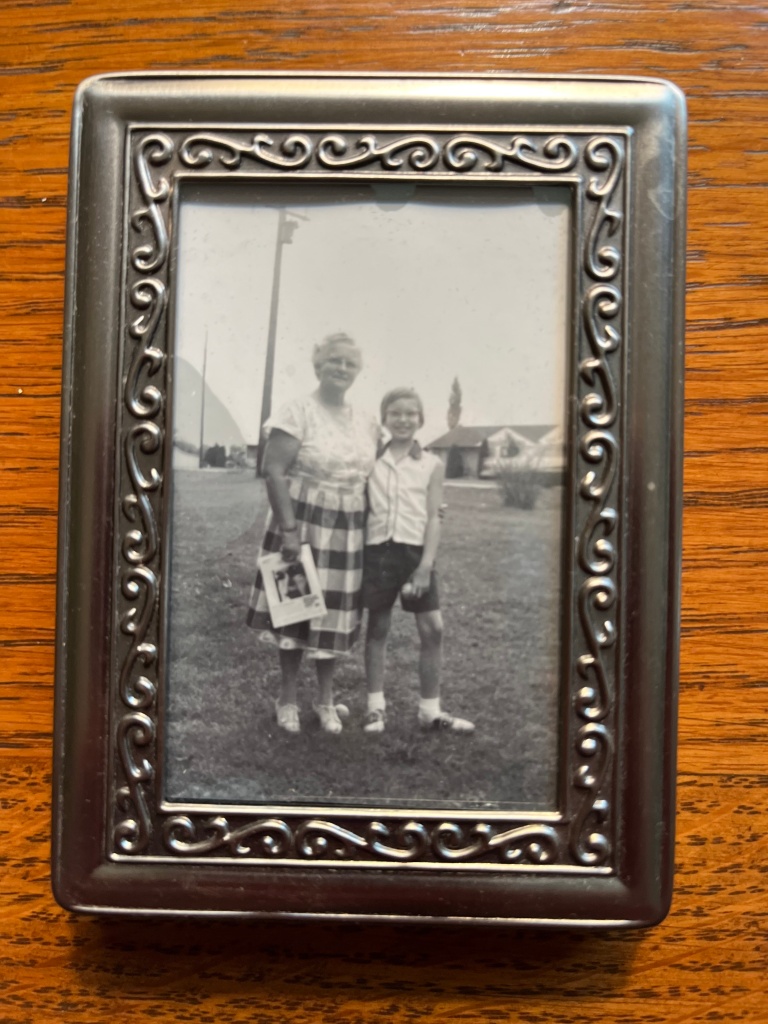
Phyllis and the author c. 1960

Grandma taught me how to tie my shoes–we were both left-handed–after everyone else had given up; gave me my first sip of coffee, strong but cut with generous portions of sugar and thick cream; slipped me some of her beer while we watched Gunsmoke. As I got older and visited less, we wrote letters.

Shortly after my twenty-first birthday, Grandma and I walk in her back yard. We stop under the hot sun to admire the clumps of purple, yellow, and white miniature pansies that flourish in the crumbling foundation of an old shed. I started college three years late; I tell her I am overwhelmed and don’t think I can do the work. She is quiet, removes a flowered hanky from her apron pocket, pats her damp forehead and the back of her neck. 

As we start slowly up the steps to the relative cool of the house, I link arms with her. I brush the cool copper of the bracelet she always wears because she believes it helps her arthritis. Her fingers are crooked, as mine are now. As I write this, I touch the copper cuff bracelet I bought years ago but have never worn. I keep it on my desk as a reminder of Grandma, and I wonder what happened to the soft, linked one she always wore. 

I open the back door with my other hand. Grandma suddenly stands as straight as she is able and says firmly, “You stay in school.” She adds this, which I will hear her say more than once: “You need to be able to make your own money.” 

After I’ve finished graduate school, married, and had a child. After Grandpa, who spent years in a nursing home with Parkinson’s, has died. On what will turn out to be the day my dad, her son, dies, Grandma moves into an assisted living facility.  With Dad being ill, no one has had the time to take Grandma to see the place prior to moving in. She’s been calling me several times a day, anxious about the change. 

She surveys the room: her favorite chair with an afghan she made folded over the back; her dresser, its top covered with a lacy scarf and family photographs, including several of my daughter; a large window that looks out on gardens; the new spread my mom placed on her bed that morning; a private bath.            

She leans close to me and whispers, “Oh, Melissa, this is beautiful. I was afraid it would be like the poor house.” 


Melissa Ballard has written essays for The Brevity Blog, BeltBerea College magazine, and other publications. She is currently working on a book-length collection of essays about the women in her Northern Appalachia family. 


Like this post? Want more? Comment below or on my FB page. And please share with your friends and social network. 

Are you a Rust Belt writer interested in seeing if your own post, or author interview, or book review might be right for Rust Belt Girl? Hit me up through this site’s contact function.

Check out my categories above for more guest posts, interviews, book reviews, literary musings, and writing advice we can all use. Never miss a post when you follow Rust Belt Girl. Thanks! ~Rebecca
Enter your email address to subscribe to this blog and receive notifications of new posts by email.

Stay- and Play-WP: Creativity is the writer’s cure for FOMO

Last month’s AWP (the Association of Writers & Writing Programs) Conference & Bookfair—think writer-prom—wasn’t in the cards for me this year. My rational brain knew this, but that doesn’t mean I didn’t suffer from some FOMO. Writer friends, the warm L.A. sun, and the lure of the unknown—will I meet the literary agent of my dreams in the hotel bar?!—are attractive elements, for sure. But I decided to save my pennies and hold out for next year’s event in nearby Baltimore. (Who’s in?)

Really, that March weekend, I hardly had time to wallow in my FOMO (the name of my upcoming memoir, stay tuned, ha). But seriously, the indomitable Justin Hamm, poet and super solid literary citizen, created StayWP, an online poet and writers conference, to slake our literary thirst, as it were. What’s better than poetry in your pajamas!? Here’s a sampling of what us nearly 100 participants from around the country enjoyed from Friday evening through Sunday evening:

  • Readings from novelists including Mark Ostrowski and poets including Sean Thomas Dougherty
  • Generative workshops with titles like “Where the Poetry Rises like Dough Workshop” and “Rooted in Place,” led by former Missouri Poet Laureate Karen Craigo, which I attended, and “Like it’s my job. (‘Cause it is): Writing, Motherhood, and the (Re)Formation of Work”
  • Enthralling discussions, including “In Dialogue,” “Casting Spells for the Future,” and “Power of the Poet Posse” (that’s a gang I could get behind!)

Saturday, my super talented friend Shemaiah Gonzalez (whose debut collection of essays launches next week!) hosted a generative workshop over Zoom. The hook: How do you even begin to get ideas on what to write: let alone something joyful? Looking at three pieces of writing, we participants came up with our own. I got a couple really good starts for essays and even a prayer (for our sweet neighbor who snowplows our drive in the winter, even before he does his cousin’s drive next door).

One of the prompts was so intriguing I’ll share it, paraphrased, with Shemaiah’s permission. We were asked to draw a sketch of a place we knew well: a home, or place of work or worship. Then, we were to pick a specific spot to interrogate. I think about writing about place a lot here on the blog, but Shemaiah made that importance plain: “We write about place because place is where we keep our stuff.” And, of course, the stuff we choose to keep is important to us. I ended up writing about the rattan rocking chair—the best seat—my dad would often occupy when our family would go out on to the porch to watch rain showers. (My kids think it’s hysterical we did this. But then I also truly enjoyed The Waltons. It was a different time.)

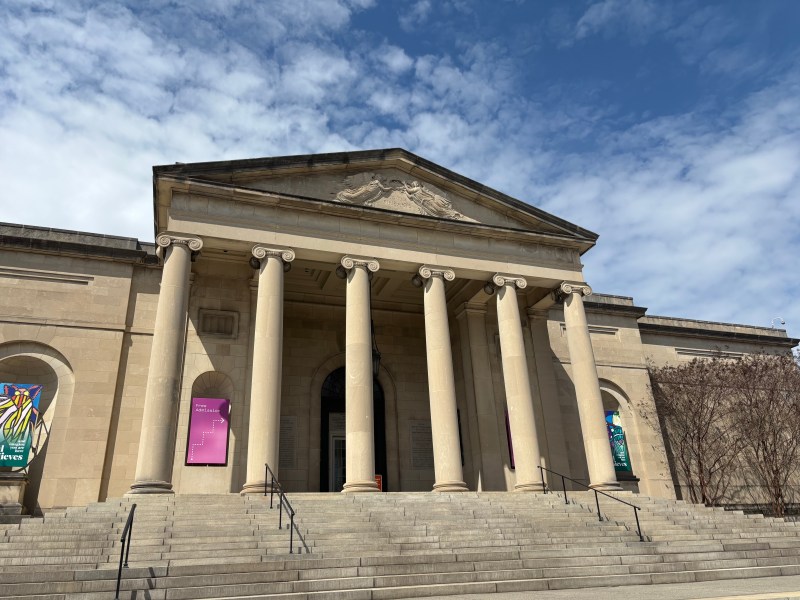
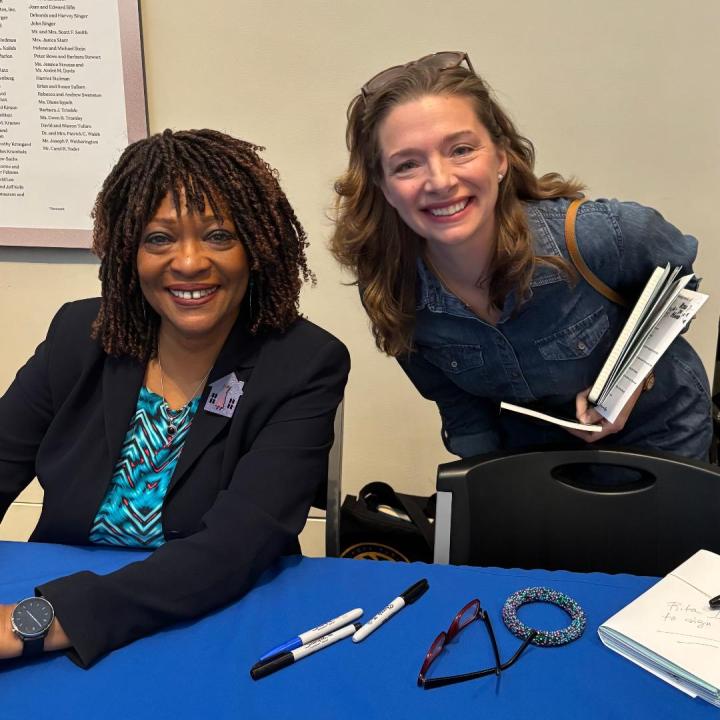
My weekend of creativity continued on Sunday, when I took one of my sons with me to hear Akron, Ohio, native poet Rita Dove (who received the National Humanities Medal from President Bill Clinton the National Medal of Arts from President Barack Obama—the only poet ever to receive both medals) at the Baltimore Museum of Art. (Thank you to co-sponsor Johns Hopkins Center for Talented Youth!) The little I knew of Dove, I learned from talking with Akron’s own David Giffels in an interview right here at Rust Belt Girl. This poetry reading was my son’s first, and so now he is ruined for all other poetry readings, I’m afraid. But what a way to go down!

As I’m wont to do, I took a notebook and jotted images I liked from the poems she read. Here are several lines from Dove’s beautiful work, which I smushed together like a found poem, a found Dove poem:

scabbed like a colt, our stuttering pride
my Cleveland cousins, hachety smiles
we were a musical lantern
tired of singing for someone else
what you bear is a lifetime of song
if you can't be free, be a mystery

There are few things that improve with age. Wine is one. Hutzpah is another, and don’t you know my hand was the first that shot up during the Q&A with Dove? Since I knew I’d be writing about this reading for Rust Belt Girl, I asked her what it meant to her poetry to be from the Rust Belt. Her answer was really interesting. She talked about understanding and appreciating work and its value from her family members and neighbors. She talked about the value of diversity, including a strong Hungarian presence among the immigrant groups in her part of town. A singular place, she also noted the term that makes Akron its own unique think: the “devil’s strip” for the tree lawn or berm between the sidewalk and the street. What do you call that strip, where you’re from?

Dove also talked about her journey from aspiring musician to poet. (She still plays the cello.) She noted that she was very shy and didn’t want to get up in front of people and so turned to words. Ha. There we were, all 200 or so of us. She later learned to play the viola de gamba and took voice lessons, and learned to sing opera, which helped her to “embody the words” in her poetry. She has worked with musicians on song cycles, collaborations that helped her feel “less afraid of being bold.”

I’ll end there. I know I wish for that. Here’s to words in poems and in song—and to being bold.

Now it’s your turn: tell me, if you’re a writer, have you been to AWP? Do you plan on attending next year? How do you quash FOMO in your creative life or otherwise? And how do you tap into your boldest self?

Hankering for Rust Belt author interviews, book reviews, and more? Check out my categories above. I hope you’ll follow me here, if you don’t already, so you never miss a (quite infrequent) post. Thanks! ~Rebecca

Enter your email address to subscribe to this blog and receive notifications of new posts by email.

Ohio is Ohio, and I love it

You are forgiven if you’re not up on the middle school slang that has redefined the word “Ohio” (my beautiful native state) as cringey or weird.

Does that mean the writing from Ohio authors or about Ohio places is also weird? In some cases (and often my favorite cases) yes.

It has been more than a minute, Rust Belt Girl followers, and I appreciate you for hanging on. Busy days around here with a book project going and essays popping up here and there. And of course there’s work-work to contend with. And my teenagers who keep me hip (surely that’s not a word they’d use) through their generation’s reinvention of language, music, and fashion. (A whole wardrobe of hooded sweatshirts and oversized black jeans, anyone?)

But I’m thrilled to share with you my latest essay, which is part essay and part book review. The book? Matthew Meduri’s debut novel Collegiate Gothic. Part satirical campus novel, part crime procedural, and part Italian architectural treatise, this one is quite fun (and, yes, a little Ohio.)

I’d love it if you checked out my essay–“Campus Weird: Collegiate Gothic Skewers Academia (and Ohio) in Fine Form” at Belt Magazine. (Bonus points for identifying the Ohio college campus building in the photo. I only know because a friend told me.)

Then, go check out Matthew’s novel over at Bordighera Press.

What have you been reading and writing lately, readerly and writerly friends?

Hankering for Rust Belt author interviews, book reviews, and more? Check out my categories above. I hope you’ll follow me here, if you don’t already, so you never miss a (quite infrequent) post. Thanks! ~Rebecca

Enter your email address to subscribe to this blog and receive notifications of new posts by email.

New poem published by Trampoline Poetry

I’ve been operating far outside my comfort zone and way outside my fiction-writer lane lately.

Querying a novel will do that to a writer. Fiction-writing feels a little fraught when you’re trying to woo agents and presses with your fiction. So, I turned my attention to writing essays–and even a little poetry. Here’s:

“Satie Sestina: YouTube Comments on Gymnopedies”

Thanks to Trampoline Poetry‘s editor Justin Lacour. And many thanks to my writing critique group–present and past members alike–who, first, told me this long poem I was working on would work best as a sestina (a what?); and, second, gave me the permission to play with the form (just) a little.

If you’re interested, you can read my bio out at Trampoline Poetry, where I explain how the idea for this poem came to be. (Thank you, YouTube comments!)

Now, who else is a Satie fan?

More Rust Belt literary goodness soon. ~Rebecca

Take that New York Times: My not-list of the best books of vague parameters according to me

If there’s anything readers like more than a Top Reads list, it’s complaining about a Top Reads list. Earlier this summer, the New York Times published “The 100 Best Books of the 21st Century.” Remember that? Of course you do. Reddit basically blew up that day.

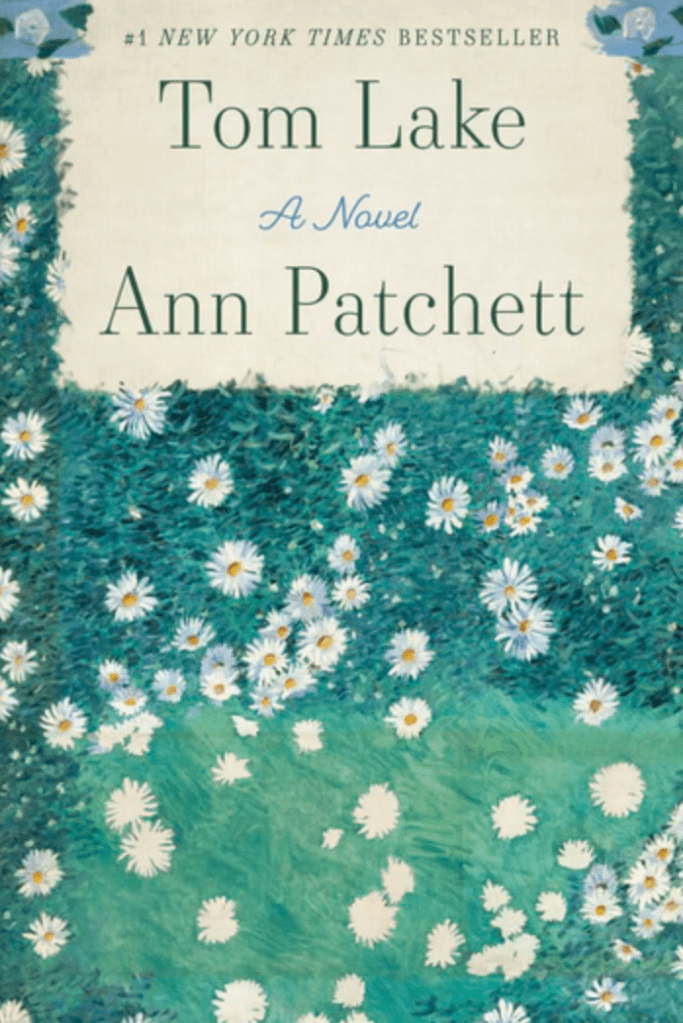
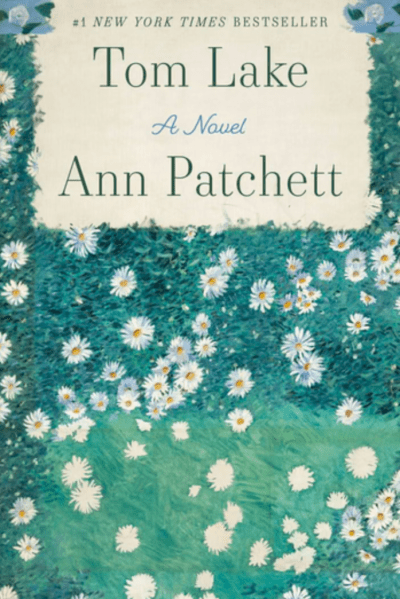
We all had definite feelings about said list. Namely, that it didn’t include genre fiction and books of poetry, the latter an egregious omission imo. It did include several of my favorites: Tayari Jones’s An American Marriage (gutting), Helen MacDonald’s H is For Hawk (gorgeous), Jhumpa Lahiri’s The Interpreter of Maladies (instructive in the very best way), Cormac McCarthy’s The Road (what’s a synonym for gutting?), Ann Patchett’s Bel Canto (magnificent), Elizabeth’s Strout’s Olive Kitteridge (sleepy in the best way), Marilynne Robinson’s Gilead (transcendent), and Donna Tartt’s The Goldfinch (masterful and also long).

Only a couple have I discussed here at Rust Belt Girl: Robinson’s Gilead (cue the car-sobbing) and the novel that came in at No. 1 on the NYT list: Elena Ferrante’s My Brilliant Friend. None of the books on the list that I’ve read could be described as Rust Belt books, so I protest! But not really.

The wonderful thing about Top Reads lists is that we avid readers read them, get mad, and then the maddening lists beget more lists. Which is great. After we got mad at the NYT, they featured another story, “Readers Respond to the ‘Best Books of the 21st Century,’” chock full of the books that should have been on the first list. I saw Best Books lists featuring Appalachian Reads and reading roundups galore. All this leads me to believe that there are never enough lists, the lists are never long enough, and yet they are also ALWAYS incomplete. There’s room for my book and there’s room for your book on those lists. So get to it, writers!

Really, my blog is my ever-changing (let’s say “curated,” cuz that sounds fancy) list. I’d love to know what your favorite book from my list is. (How about from your list?) And then Goodreads is my dump—everything goes there, unless I really hated it, in which case I probably DNF’ed anyway. Are we connected out there at the dump?

Recent (ly read) books that stunned this Rust Belt Girl but aren’t necessarily Rust Belt books are basically the books I keep thinking about and talking about: A Line in the World: A Year on the North Sea Coast by Dorthe Nors (let’s all read more essays in translation!); Sonata: A Memoir by Andrea Avery (lyrical, musical, and propulsive); The End of Drum-Time by Hanna Pylvainen (interestingly atmospheric); The Beginning Was the End: Devo in Ohio by Jade Dillinger and Akron’s own David Giffels (so that’s what New Wave was all about!?); and Shuggie Bain by Douglas Stuart (gutting x 12—what exactly is wrong with me?).

You see, once you get started list-making, it never stops.

Looking for a review or an author review–or even a little writerly advice (I try to take myself)? See my categories above. And find me on Goodreads, where I try to at least rank what I’ve read. Let’s be friends there and on FB and at all the places!

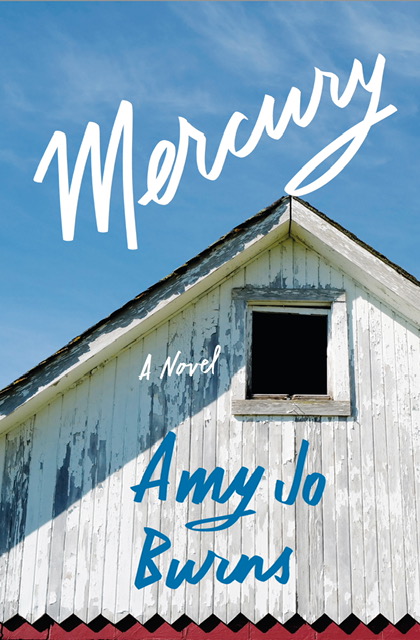
My interview with Amy Jo Burns, author of Mercury


Let’s begin with a sample paragraph from Amy Jo’s stunning literary (also mystery) family saga:

Spring was breaking through in lilac buds and daffodil shoots, but winter held on. Tufts of dirty snow clung to curbs, and porch steps, and parking lots. The heat had stopped working in the Citation, and Marley shivered. Theo was bundled in the backseat; she caught a glimpse of him in the rearview mirror. Then her eye snagged something else behind her–someone limping from a snowbank into the intersection. Marley slowed to a stop and turned around.

Whew. Good stuff.

Amy Jo, your main character in this Western-PA-set novel is Marley, whom we first meet when she’s 17. You left your Western-PA hometown for college around that age. What was it like to write this book and “inhabit” Marley’s character in a place (and time) similar to the one you were raised in? And how similar is your real-life family to Marley’s found family?

    Marley is a really special character to me. When I was creating her, I took the qualities I love most about my best friends from home and put them into her character. Her willingness to step into someone else’s messiness, her ability to tell the truth in such a loving way, and her desire to build a business with her own creative stamp on it are all qualities I really admire about my oldest friends. Marley showcases what I think real resilience actually looks like. It isn’t perfection or misery or loneliness—it just comes through in a big-hearted, flawed human who shows up for the people in her life. 

    The Joseph family in the novel is like mine in that we’re both a family of roofers—which means both houses were full of grand storytellers, brave hearts, and lots of tar-stained jeans. The house I imagined the Josephs living in was inspired by the old Victorian house my grandparents used to own in my hometown. I’d always loved that house and couldn’t imagine any other place a family of roofers would live. The characters in Mercury come from my imagination, but the bond they feel with each other—the sometimes too-close intimacy they have with one another is absolutely something any member of my extended family can relate to. When it comes down to it, I’d say both families care about the same thing—keeping people safe under roofs and on top of them.

    This novel is mostly set in the fictionalized town of Mercury. How did you go about constructing this place, this “forgotten Rust Belt town.” Did you use Pinterest boards or clip photos from magazines? Was there map-making involved to mark where the salon, post office, and library stand? And, as the daughter of real-life roofers, do you picture this town from an aerial/rooftop view?

    Mercury is heavily inspired by my own hometown, which I also wrote about in my memoir Cinderland. When I started writing the early pages of this book, I knew it had to be set in Mercury—a place I know, love, and left. So most of the early “research” came from my own memory, and then I squared it with pictures from the 1990s and also by talking with my parents. My dad drew a map of the church steeple and attic (which both play an important role in the story), and I talked with my mom about what it was like to help build a roofing business from an administrative perspective. It was really special to get to share a bit of this project with them, especially since so much of the book is about what it means to belong and how we claim home for ourselves.

    I hadn’t imagined my hometown from any aerial views until I started putting characters on roofs pretty early in the process of drafting the book, and it was the coolest thing to envision this place anew from an entirely fresh perspective. I was able to find a few aerial videos of my hometown to watch, which really helped me fill in the landscape for what these characters find when they’re up higher than everyone else.

    I’d call this book a literary family saga; however, there is also a lot of romance—some steamy! What’s your best tip for writing romance or sex that deepens character and moves plot?

    I would say my best tip is that sex is never just sex. Falling in love is one of the most monumental things we experience as humans—it shows us at our best and our worst—and I think it’s really important to reflect it in literature. When I’m writing romantic scenes, I’m always considering what each character is risking about themselves in a very unique way—are they sharing something no one else knows? Are they saying one thing and thinking another? What is it about falling in (or out of) love that changes how they see themselves? What past events have shaped how a person approaches their most intimate moments? Those scenes are such a great way to show what a character deeply wants and what they fear, whether they’re aware of it or not. And when all that juicy backstory collides with someone else who is just as complicated—it’s fictional gold!

    Like in your last (gorgeous) novel, Shiner, you explore profound female friendships in Mercury. Can you talk about how you developed the friendship on the page between Marley and Jade? When you’re writing, do you do character studies/background/backstory with detailed info–any that doesn’t make it into the book?

    Mostly what I do when I’m building relationships between characters is think about it A LOT. I write many drafts over a long period of time and throw out a lot of material, usually because that’s how I’m getting to know the characters. Scenes will start off as sketches and they get more detailed as I learn who the characters are. Many of the scenes between Jade and Marley felt very cliché for a long time as I was working, and I’d have to go back in and re-work them to go deeper so they felt earned and true. 

    I am such an impatient person (what a terrible trait for a writer!), so character studies always feel like they’re detracting from the real heat of the story I’m working on. The only thing I usually do outside of drafting itself is create a playlist for each book that I write, and I’ll include songs for each of the characters. It helps me track down their psyches, their moods, their secrets. You can learn a lot about a person if you know what songs they’re listening to when they’re alone.

    In this novel you touch on dementia. What kind of research was involved there? As this book is set in the 90s mostly, was there any other, historical research you had to conduct for verisimilitude?

    I had a family member with a form of dementia (though under different circumstances than those in the book), so I used that as the basis for building it in the novel. I decided not to do much clinical research on it because I wanted to portray it through the eyes of a family who isn’t sure what is going on. So often we don’t get the answers we are looking for in real life when it comes to medical diagnoses, and it was really important to me to give that truth a lot of space in the novel. 

    Motherhood is portrayed in a very real, and sometimes heartbreaking, way in this novel. Marley’s mother-in-law says, “This life is unmerciful to mothers.” You’ve got two young children at home. How has your writing practice (and product) changed since becoming a mom? And, follow-up, what is your favorite novel for exploring themes of motherhood?

    The biggest difference in my writing practice is that I have to keep my working hours to match my kids’ schedule. It is GIGANTICALLY easier now that they’re both in school, though I rarely get done what I’d like to in the course of a day. I remember when my son was an infant and my writing sessions were so short, I thought I’d never finish the book I was working on, which turned out to be Shiner. Sometimes my writing sessions would only produce a few hundred words. I had to learn to talk myself through it and say, “Maybe no one will ever see it, but I’d still like to try.” And I’d repeat that to myself over and over when my daily frustrations came. And the book got done!

    In terms of my favorite book about motherhood, I once attended a talk by Nicole Krauss just after she’d published Great House. Someone in the audience asked her how she was able to write and be a mother, and she said, “I wouldn’t have been able to write this book if I hadn’t become a mother.” It was so encouraging to me, as I was contemplating how I might have kids and continue to write. That story inspires me still.

    A lot of the plot of Mercury centers around the family’s church—but not necessarily around worship. No spoilers, but can you talk about how religion, faith, and or belief works in the world of this novel—and maybe also in your own life?

    My faith is a huge part of my life and my creative process. I think maybe writing books is a form of prayer for me. What I love about it is that the page becomes a place for my uncensored thoughts, my questions, my frustrations, and—most powerfully—the things that I love and I think are worth fighting for. It feels like a quiet place where I can meet God without judgment, where I don’t have to be any other version of myself but the real one. Also, I do a lot of listening when I’m writing which feels very peaceful.

    In this particular story, many of the characters have an idea of what “religion” is, but what they’re all hungry for is faith. Faith in a God who loves them just as they are, and faith in each other. I like to think each of them encounters God in an unexpectedly meaningful way in the book, and usually it’s through they way they learn to love each other.

    For those of us who aren’t just readers but who are also writers, what’s your favorite generative prompt for a writing day when the words just aren’t coming?

    I absolutely recommend starting with a memory from childhood you can’t get out of your head. Try retelling it to yourself from an adult perspective (which you can interpret any way you like). I actually began Mercury in just this way—the opening scene of the book is a memory of mine from a little league game when I was around nine years old. This exercise was how Waylon’s character first came to life.

    Tell us how the reaction to Mercury has been on your visits to libraries, bookstores, etc.?

    It’s been really wonderful. When Shiner came out in spring of 2020, there were no stores open, so getting to visit libraries and bookstores has been the best thing about publishing Mercury. My favorite thing is hearing about readers’ favorite characters and how they saw themselves in the story. I love it when that happens in a book I’m reading, so getting to provide that experience for fellow readers is a real gift.

    What are you writing and reading right now? And what are your kids’ favorite children’s books, lately?

      I love this question! This year I’ve been trying to take my time and read longer books (which I’m calling “biggies”), so right now I’m reading two—Iron Flame by Rebecca Yarros and East of Eden by John Steinbeck. I’m really enjoying them both. Right now my son, who is nine, is loving the entire Percy Jackson universe by Rick Riordan, and my six-year-old daughter is very into Dog Man by Dav Pilkey and the Max Meow series by John Gallagher. I love seeing them read!

      Writing-wise, right now I’m working on a novel about the true story behind a famous country-folk singer’s disappearance. I don’t know if it will be my next book or not, but I’m really enjoying the work itself. Thank you so much, Rebecca!


      Amy Jo Burns is the author of the memoir Cinderland and the novel Shiner, which was a Barnes & Noble Discover Pick, NPR Best Book of the year, and “told in language as incandescent as smoldering coal,” according to The New York Times. Her latest novel, Mercury, is a Barnes & Noble Book Club Pick, a Book of the Month Pick, a People Magazine Book of the Week, and an Editor’s Choice selection in The New York Times. Amy Jo’s writing has appeared in The Paris Review Daily, Elle, Good Housekeeping, and the anthology Not That Bad.

      You can find her on Instagram at @burnsamyjo.


      Mercury

      By Amy Jo Burns

      Celadon Books

      Many thanks to Amy Jo Burns for sharing her insights and time–and kid book recs– with us here at Rust Belt Girl. I know I can’t wait to read what’s next from Amy Jo!

      Like this interview? Comment below or on my fb page. And please share with your friends and social network. Want more? Follow Rust Belt Girl. Thanks! ~ Rebecca

      *Photos provided by Amy Jo Burns

      Enter your email address to subscribe to this blog and receive notifications of new posts by email.

      Emma Riva of Petrichor reviews WAYS OF PITTSBURGH

      Rust Belt Girl readers, don’t miss the latest from Petrichor–Pittsburgh, Pennsylvania’s art scene magazine. Founder and Editor-in-Chief Emma Riva is doing an incredible job covering the scene.

      Ways of Pittsburgh: Exploring and Painting our Skinny Streets captures the plein air painting of Pittsburgh’s own Ron Donoughe. Let me tell you, his work is like no plein air landscape painting I’ve ever seen! Donoughe paints the city’s narrow backstreets–even the graffiti. A real talent at capturing light, I think some of his paintings of houses resemble Edward Hopper’s work. See if you agree, when you check out Emma’s review–and give Petrichor a well-deserved follow!

      If Emma’s name seems familiar, you might remember her review of Tess Gunty’s National Book Award-winning novel: The Rabbit Hutch‘s Rust Belt Renaissance–published right here at Rust Belt Girl.

      We’re closing in on the end of the year, friends, which means reading roundup time! So, tell me, what’s been your favorite book of the year? Let me know in the comments.

      Let’s start a discussion! Comment below or on my FB page. And please share with your friends and social network.

      Check out my categories above for more interviewsbook reviewsliterary musings, and writing advice we can all use. Never miss a post when you follow Rust Belt Girl. Thanks! ~Rebecca
      *header image courtesy of Pexels Free Photos

      THE RABBIT HUTCH’s Rust Belt Renaissance

      By Emma Riva

      People in Pittsburgh will tell you where things are based on what used to be there. Most of the time, the landmark that used to be there is food related. A fancy seafood restaurant. An ice cream shop. In a small city, those are the sorts of things people remember. To out-of-towners, this might seem like a quaint practice, but something I’ve come to realize is that it is a profoundly human one.

      As a fiction writer, I often find myself navigating the complicated narrative of how our memories and associations of the past interact with our experiences of the present. I look at a candle and think of my favorite candle store in Elizabeth, Pennsylvania, which I went to for the first time because I couldn’t use the bathroom on the Y46 bus and I bolted in not expecting them to have a restroom, but they did. The candle reminds me of my desire to go back there, of the friends I know in Elizabeth. All of this interacts with the energy of the place, the former boating hub, the Monongahela River Valley that built Lewis and Clark’s boat. All of that comes from the split second of looking at a burning wick. 

      Sharpsburg over the Allegheny River from the 62 St. Bridge; photo credit: Emma Riva

      Tess Gunty’s 2022 debut novel, The Rabbit Hutch, is a master class in this mixture of memory and present, owing in part to its setting within the Rust Belt. The novel’s setting of Vacca Vale, Indiana, is a facsimile of her hometown of South Bend, though she’s fictionalized a car manufacturer named Zorn as the ghost of industry haunting the town’s abandoned structures. “I wanted to be able to pull from Gary, Ind., and Flint, Mich., and Youngstown, Ohio, and a number of other cities in the Rust Belt whose economic devastation was much worse, I think, than it was in South Bend when Studebaker closed,” Gunty said in an interview with the South Bend Tribune

      The Rabbit Hutch is a genre-bending work that follows a cast of characters who all live in an affordable housing complex called La Lapiniére, nicknamed “The Rabbit Hutch.” Its central character is Blandine Watkins, née Tiffany, an eccentric former foster youth obsessed with Christian mystics to the point where she changed her own name to a martyred French woman’s. But the book switches between the past and the present and between the perspectives of different residents of the apartment complex, including one of Blandine’s roommates, another  former foster youth who serves as an omniscient narrator for several parts of the book which foreshadow some horror described as Blandine “leaving her body.” Though the characters’ Vacca Vale has its echoes of Gunty’s own South Bend, it’s an imaginary future where the University of Notre Dame didn’t fill the gaps in South Bend left behind by Studebaker. Here’s what Gunty’s characters say of Vacca Vale, while stoned and watching a commercial for a new apartment complex, much nicer than the titular complex they live in:

      “Vacca Vale, Welcome Home,” scoffed Todd, but he looked sort of emotional to me. “What the hell kind of slogan is that?”
      	“More like—Vacca Vale: Don’t Touch the Rust,” said Malik. 
      	“Vacca Vale: Excuse Me, Sir, Are You Lost?” I added.
      	“Vacca Vale: We’ll Clean That Up in the Morning,” said Todd.
              We laughed. We warmed. We didn’t know who we were trying to impress.
      	“Vacca Vale,” joked Malik. “We Used to Make Cars Here!” 
      	“Vacca Vale: Where the Churches Outnumber the Humans.” 
      	“Vacca Vale: Where the Rabbits Outnumber the Churches.” 
      	“Vacca Vale: At Least You Can Still Fuck Here.”

      For many in the literary publishing world Gunty has ascended into, the Rust Belt is only a feeling, not a region. It’s an image from the movie Flashdance or a short chapter in a history textbook. So, it’s important to define what it is exactly we’re talking about when we say “the Rust Belt.” There’s some confusion among people who don’t live here about the categorical differences between the Rust Belt, Appalachia, and the Midwest. Pittsburgh and Buffalo aren’t exactly in the Midwest, but they’re still in the Rust Belt. The map in the Encyclopedia Brittanica looks like a gasoline blotch on a sidewalk or an oddly shaped hickey.

      It’s a region defined by things which used to be there, sites of innovation and excess then turned to rot, now home to … what? Those of us who live there will be familiar with the exchange that takes place in one scene of The Rabbit Hutch. Blandine and Jack get into a heated argument in the loft of a real-estate developer who plans to “revitalize” their city. Blandine complains about how the real estate development is ruining Chastity Valley, one of her favorite parts of the city, and Jack shoots back: 

      “Look,” says Jack. “I know what you want me to say. You want everyone to hate the Valley plan as much as you do. But I just don’t. A lot of people are excited about it, and I think you’re being sort of judgmental and shortsighted. I mean, a lot people say it’s going to help our economy and make jobs and stuff. And I’ve only met him a couple of times, but Pinky doesn’t seem that bad. From what I’ve heard, he grew up poor, he knows what it’s like not to have what you need, and now he wants to help Vacca Vale get out of the gutter. Sure, he’s making money off it. But so what, if it helps people at the end of the day? We need to get out of the gutter.”

      Gunty then notes: “In the ensuing silence, Blandine spots a camera, situated atop a thick book called Rust Belt: The Second Coming.” There is much reference to Catholicism in The Rabbit Hutch, and “the Second Coming” refers to resurrection, that most American of impulses. It’s no coincidence that the nature park to be bulldozed for the buildings is called Chastity Valley. But The Rabbit Hutch is no hollow anti-gentrification plea. 

      From having grown up in New York, I have a keen and nuanced understanding of gentrification and the ways in which contemporary activism often ignores its tangled nature. The Rabbit Hutch frames the Chastity Valley developments and the so-called “revitalization” of Vacca Vale as part of a meditation on the uncomfortable truth about change. One of the most gutting lines in the book is: “Six months after Tiffany/Blandine had submitted her court papers, proof of birth and $210, she discovered that the name Blandine is Latin for ‘mild,’ while Tiffany is Greek for “Manifestation of God.’”  I, too, went through long stretches of hating my own name, wanting to replace it with something more elegant and powerful. In those lines, Blandine reveals how, though her activism comes from a genuine love for Vacca Vale, there’s a deeper hypocrisy and insecurity there. Though she wants Vacca Vale to retain its grit, the scars that give it character, she is unable to deal with her own scars, to the point where she threw away her own name for a fantasy. 

      The South Side from the Birmingham Bridge over the Monongahela River; photo credit: Emma Riva

      There is much more to talk about in The Rabbit Hutch, and the only way to truly experience all of it is to read it for yourself. But here are a few sneak peeks. There’s the death of an aging child star and the vengeance of her bitter, angry son—another scar of the past opened into a wound. There’s the woman who moderates content on a site for obituaries, who spurns that son by deleting his callous comment on his mother’s obituary—a marker of the absurdity of how we deal with loss. 

      The Rabbit Hutch is all about people on the margins, people who are orphaned by society in some way, regardless of their age or their circumstances. In the contemporary publishing industry, there’s a certain obsession with “marginalized” or “underrepresented” identities. It feels like a reduction, like generational oppression is a badge of suffering for coastal publishing executives to give out to those poor, unfortunate souls in quote-unquote Middle America. I’m perhaps one of the people Blandine and her friends might laugh at, who traded New York for this strange, desolate place. But I know exactly how Blandine feels about Chastity Valley, because I watched my childhood public library in Washington Heights get bulldozed to make space for an “affordable” housing complex with a supposed library inside of it, the skeleton of which now looms over Broadway like a dying animal. I know exactly how it feels to not care how many people get to live in that building or how many families get to make nicer dinners because of the paychecks the developer creates, because connecting to a sad, poor place makes you feel like your suffering matters in some grand story of socio-economic distress.

      In the same conversation, above, Jack says to Blandine: “’I’m not judging you.’ The tenderness in his expression catches Blandine off guard, makes the room glitter vertiginously. ‘I just want to know what happened to you.’”

      What happened to you? I hate the passive voice. As a literature tutor, my screed to my students is that passive voice makes them sound less confident. I don’t say weak but the implication is there. And of course, there are political and emotional implications. We’ve all heard mistakes were made or I was assaulted. Of course, it’s an important step in reclamation of your life and accountability to say You made mistakes or He assaulted me. But in modern American language, we are profoundly uncomfortable with the passive voice even when we overuse it. Being scarred by your history is a hard thing to admit. You have to admit that things affected you. That (how terrible to admit!) they damaged you. That (even worse!) you are damaged. The Rust Belt is one big, glaring scar of affectation and damage. Its very name is spoil and decay. We spend a lot of our lives teaching ourselves not to be affected by things. In The Rabbit Hutch, what Blandine seeks when she wants to leave her body, is truly to feel instead of simply to suffer. 

      The Rabbit Hutch, winner of the 2022 National Book Award for fiction, is available from Penguin Random House or wherever books are sold.


      Emma Riva is an author and art writer living and working in Pittsburgh. She serves as the managing editor of UP, an international online and print magazine covering street art, graffiti, fine arts, and their intersections in popular culture. She is also a staff writer at regional magazine Belt and a contributor to Pittsburgh-based art criticism site Bunker Review. You can find out more about her on her website and her Instagram and order her book Night Shift in Tamaqua wherever books are sold. 


      Rebecca here, with huge thanks to Emma for her fascinating review.

      What are you reading and writing this month, as we look forward to spring? Let’s discuss in the comments.

      Are you a Rust Belt writer? Do you write book reviews or conduct interviews of Rust Belt authors? If so, think of Rust Belt Girl for a guest post, like this one. And check out the categories above for more writing from rusty places.

      Find me on FB, and on IG and Twitter: @MoonRuark

      And follow me here. Thanks!

      Enter your email address to subscribe to this blog and receive notifications of new posts by email.