Whose side are you on, anyway? What’s in a name?


tl-horizontal_main
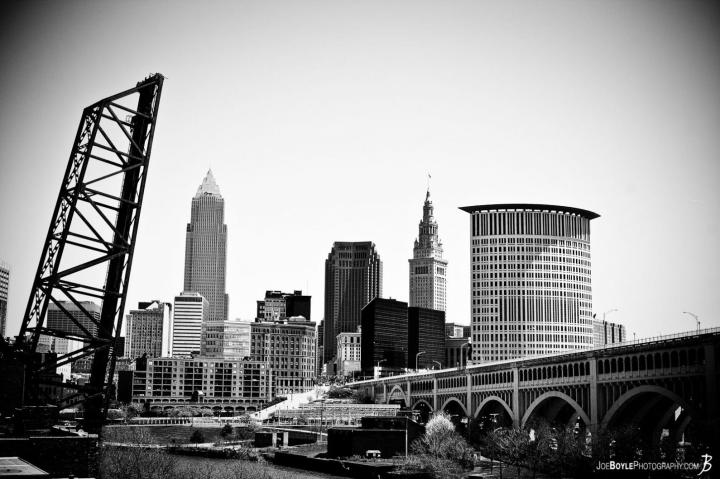
The Cuyahoga River, flowing into Lake Erie, divides Cleveland into East and West sides. Photo credit: Kenneth Sponsler/Shutterstock

Does your town take sides? Take names?

Growing up in the Cleveland, Ohio, area of the U.S., the first question asked of a new acquaintance was: “What side of the city are you from—East Side or West Side?” Once that was settled (if you were still talking) and you exchanged surnames, then came the second question: “What kind of name is that?”

There’s a lot to the East Side/West Side rivalry this article delves into if you’re interested. But today I’m talking—and taking—names. What’s in a name? If you’re a Rust Belt native, a lot.

My husband, not a Rust Belt native, thinks the name question is gauche (okay, he doesn’t say gauche, but that’s what he means: tacky, uncouth, even rude.) I wouldn’t ask the question of my neighbors in the Maryland town where we now live, a town that was established in the 1600s. Here, talk of family names and countries of origin quickly gets really old—literally. (Of course, there are many exceptions—newer immigrants and many “come here’s,” like me, from other American places.) Still, for many longstanding Maryland natives, the Old Country—with its telling surnames—is a distant memory. They are Marylanders, plain and simple.

Being from the Rust Belt is a little more complicated. On a recent trip back to the Belt—the Pittsburgh, Pennsylvania, area to be specific—I made it my mission to have pizza. (Maryland is known for blue crab, not pizza, for good reason.) It’s true, Beaver, Pennsylvania, doesn’t have a particularly Italian ring, but it has a lot of Italians—who, thankfully, know their pizza. The next town over still had their banners flying for a Serbian food festival. The local grocery store featured homemade pierogies from a purveyor in town. Okay, we’ve established that the way to my head is through my stomach. But, really, the Old Country feels a little less distant in the Rust Belt.

On that trip back to the Belt, I visited with cousins and an aunt, and we talked about old times. We looked at black and white family photos shot in the 40s and 50s. “Looks like the Old Country,” said my husband of photos of barely-clad kids splashing in a tin tub in their Cleveland yard. We also talked about names: Polish names in my family’s Buffalo, New York, area towns; Italian names in a cousin’s new Pittsburgh, Pennsylvania, area town; a lot of German names in my Ohio hometown.

Me? I am the granddaughter of a Rossenbach and a Heineman. Next year, my most famous (or infamous, depending on how you like your wine) German-extracted relations, will celebrate 130 years of Heineman’s: Ohio’s oldest family owned and operated winery. The Old Country making it big in the New Country!

image001
My paternal grandmother, born Martina Heineman, at left. My dad, the pouty boy, at top right.

Whether examined through the lens of food and drink or neighborhood or family name, we are—to a large extent—who we came from. And who you are matters a lot to me, a writer, curious to a fault.

So, I’m not apologizing before asking you, “What kind of name is that?”

A conversation around CINDERLAND, a memoir by Amy Jo Burns (yes, spoilers)

20588664._UY400_SS400_

I don’t know about you, but I find the memoir in general a tough nut to crack. I’ll admit it’s not my favorite genre to read. As a fiction writer, I’m an escapist–I admit that too–always seeking new opportunities to inhabit the lives of fictional others.

The memoir also poses challenges for the reviewer: how to best critique a plotting of events in a life that really happened; how to critique a cast of characters who are actual people?

Then there are my own personal memoir hang-ups, which say much more about my issues–as a “good girl” raised on Rust Belt values (more on that later)–than the genre’s. As in:

  1.  Talking (or writing) about oneself is evidence of vanity.
  2.  Talking about one’s successes is risky business, as in you don’t want to jinx yourself.
  3.  Talking about one’s trials only invites more trials, as in, you think you’ve had it bad, I’ll show you bad; also as in, good girls bear their crosses with (quiet) grace or suffer the consequences.

Amy Jo Burns knows a lot about grace–and about suffering–and she has written a graceful memoir, one I can’t quite review but find myself drawn to write about.

Read more

What our hometown’s brand says about us and a re-post from Belt Magazine

Cuyahoga-River-Fire-of-1969
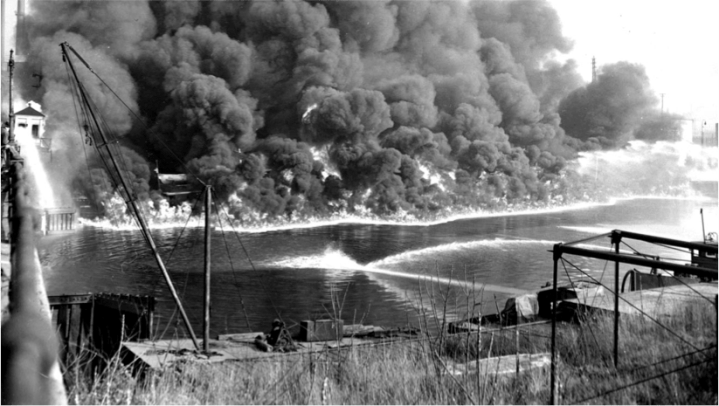
Cuyahoga River on fire, 1969. (Image courtesy of imgarcade.com.)

If there’s a city that is the butt of more jokes than Cleveland, I don’t know it. From burning waters (yep, that really happened–a long time ago) to crash-and-burn sports teams, my native city could use a re-brand. Or, so say the branders.

In this digital age, when we worry about our personal brand–imagine our grandparents pausing to consider what message they were sending with a profile pic?!–cities and states are also fighting to be presented in the best light.

Branding is such a big deal that Ohio’s Governor Kasich proclaimed that “Rust Belt” sends the wrong message; he likes “Tech Belt” for Ohio. So far that moniker hasn’t stuck.

My native place is rusty; its past is a bit sullied. Cleveland’s the opposite of slick: a brander’s nightmare. But we’ve been through the wringer (time and again) and come out tougher. Remember the “Cleveland: You Gotta Be Tough” t-shirts? The fact that native Clevelanders can wear defeat as a badge of pride, and laugh off the past while striving for a shinier future–that’s what makes me proud of my hometown.

Would you re-brand your hometown? Give it a catchy slogan? What would it be?

From “The Mistake On The Lake” To “Defend Together”: The Long (And Amusing) History Of Trying To Rebrand Cleveland — Belt Magazine | Dispatches From The Rust Belt

As the Cleveland Indians prepare for a postseason run as defending American League champions, fans are showing their support by purchasing T-shirts emblazoned with the slogan “Defend Together.”

xClevelandOrNowhereE-640x300.jpg.pagespeed.ic.MQvmiPZ5HF
Who needs branding when you’ve got this guy? (Image from Beltmag.com.)

Thank you, thank you all, thank yinz

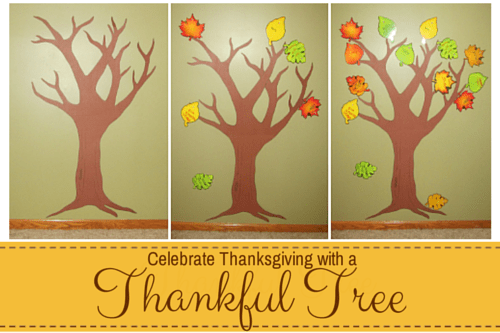
How-to-Make-a-Thankful-Tree-for-Thanksgiving
You will be on my Thankful Tree this year.

No matter where you’re from–Rust Belt, Sun Belt, or elsewhere. No matter how you say, thanks, I hope you hear this bit of gratitude.

I delivered this blog in May, and like most five-month-old offspring, it is still in the babbling stage. During this developmental period, I’ve learned a lot about my native Rust Belt, its history and its present, and how it’s portrayed in fiction and nonfiction. I’ve called upon memories of growing up in Ohio–the distinct sounds and tastes that take a girl back home, if just for a moment. I’ve learned how I want to represent my home, creatively. I’ve learned blogging is much more than writing. It’s connecting. And I couldn’t do that without you.

Thanks for following!

Rust Belt Girl (Rebecca)


The Taste of Home

201111035-1600px-1323487466

Two words–Tofu Manicotti–were enough to strike fear into the hearts and stomachs of us Moon kids.

Long before the first Whole Foods Market made its way to Ohio, my mom bought into the 80s tofu craze and made it her mission to sneak soy into ordinarily tasty dishes. And so Tofu Manicotti was born. Other health-nutty adventures of hers were more successful. For years, she was a member of the Racoon County Co-op, which saw penny-pinching homemakers like her traveling to Cleveland’s food terminal before dawn to purchase natural foods in bulk. We got our honey from a beekeeper down the road. And Mom’s backyard vegetable garden kept us in zucchini, pepper, and tomato frittatas all summer long.

Before my mom passed away, she made each of us kids a cookbook, in which she hand wrote family recipes we wouldn’t want to forget. (Tofu Manicotti does not appear.) There’s frugal, egg-based dishes, like stratas; Midwestern standards like Ham Loaf and Dried Beef Casserole; an Italian aunt’s sauce and meatballs recipe. And so, these recipes–and memories–I can recreate.

Other dishes I have to return home for: good potato pancakes, homemade pierogi, a real-deal Lake Erie Perch fish fry.

I figured I’m not the only one who hankers for the foods of a Rust Belt upbringing. Turns out, I’m not. Thanks so much to the helpful folks in my *Fiction Writing FB group, who chimed in with their favorite hometown foods–or, in one case, the detestable food of her hometown she just can’t forget. Yep, I’m talking about you, Spam!

Did I forget your favorite hometown food? Reply here, or meet me on my Rust Belt Girl page on FB, where I muse about all things Rust Belt. Next week, I’ll feature a review of the memoir, Cinderland. Read it?

Here’s my uber-scientific survey response, below. Big winners: fish frys and pierogi; runner-up, coneys:

Screen Shot 2017-09-29 at 11.13.23 AM

*Thanks again to Daniel from Youngstown, Ohio; Chris; Amy from Northwest, Ohio; Adrian; Jules from Michigan; Dean; Brian; Dawn; Pumkin; Marguerite; and Carol, who has been through Erie, Pennsylvania, enough to adopt the local hotdog as her own.

AMERICAN RUST, restless ruin: a book review

9781742374772American Rust by Philipp Meyer, reviewed.

Ah, America. Rags to riches. Dream fulfilled country, right?

Nope.

Without spoiling too terribly much, this is not that book. This is not romance.

American Lit. nerd time-out: in his Criticism and Fiction, realist writer of the 1800s, William Dean Howells, argued that a story where “all grows naturally out of character and conditions is the supreme form of fiction.” Down with the sentimentality of romantic fiction! Realism was best suited to express the spirit of America. Then, real got real-er, and naturalist writers like Theodore Dreiser and Jack London showed what happens when natural forces overwhelm us silly humans.

American Rust is real-natural in that way. And I like it. Realism has always appealed to this Rust Belt native for whom romantic lit. often feels at best, false, and at worst, dangerous.

For me, this debut novel’s strengths are in the real and natural way Philipp Meyer’s dark story grows out of the ruinous conditions of its modern Appalachian Pennsylvania setting: post-industry, post steel money, post employment, though still (or again) naturally beautiful.

This is a story of two very different young men from the same place. Isaac is small, awkward, and MIT-smart; Billy is handsome and strong, a former high school football star. One night, the friends get caught up in/perpetrate an act of terrible violence, just as restless Isaac has decided he must head to Stanford to put his genius to work. Post-crime, Isaac makes good on his promise to leave their hometown, and Billy stays. Each man suffers for his decision, Isaac on the road and in train yards where lawlessness reigns, and Billy in prison. The men’s families become entangled in the tragedy, as does the local police chief, Harris, who must weigh his job as a lawman against his love for Billy’s mother, Grace. All suffer in the aftermath of one violent mistake.

Read more

Re-sharing Rust Belt Arcana; and the natural history of my native place

Tarot and Natural History in the Exurban Wilds By Matt Stansberry with Illustrations by David Wilson People have used Tarot cards for over 500 years to reveal some hidden information The post New Book September 2018: Rust Belt Arcana appeared first on Belt Magazine | Dispatches From The Rust Belt.

via New Book September 2018: Rust Belt Arcana — Belt Magazine | Dispatches From The Rust Belt

Exploring this natural history helps us to find our place in the landscape, to know our home and ourselves.

Rust Belt Girl here. News of this new book got me to thinking… How much of my place’s natural history do I know? Read more

Sharing: from Belt Magazine

The following is an excerpt from The Cleveland Neighborhood Guidebook. By Sally Martin I have a confession to make. I live in South Euclid and think it’s pretty freaking awesome. This The post When Your Neighborhood Just Can’t Get No Respect appeared first on Belt Magazine | Dispatches From The Rust Belt.

via When Your Neighborhood Just Can’t Get No Respect — Belt Magazine | Dispatches From The Rust Belt

How about your neighborhood?

Have a great Sunday!

Rebecca

The Rust Belt: Photos by Howard Hsu

The great thing about blogging is the connections you make.

In a post a while back, I called for photos of the Rust Belt–and was subsequently linked to Howard Hsu, a photographer living in Seattle, who was kind enough to let me feature his work on my site. This post, and my previous post, feature photographs Howard took on his Rust Belt tour in 2014.

Been to any of these places? Were you as surprised as I was to learn that Toledo was once a major glass-making hub? Visited any of these spots since 2014? How have they changed.

Here’s what Howard Hsu, photographer, wrote about his Rust Belt visit:

Transition and reinvention in the U.S. rust belt in 2014–Cleveland, Detroit, Pittsburgh, Youngstown and Toledo.

The former bastions of the 20th Century industrial machine–empires built on auto, steel, glass, rubber and large-scale manufacturing–that changed the modern world but now struggle to keep up.

From art to biomedical and robotics to urban farming and community programs, each city is searching for ways to transform its economy and perhaps identity.


Part 3 of “‘Ruin Porn’ to Rust Belt beauty: her place in resurrecting the American Dream in the Belt,” and a 212-page prize

Kristen Hunninen, Senior Apprentice, Braddock Farms, PA
Photo by Howard Hsu, from his 2014 rust belt collection. Subject: “Kristen Hunninen, Senior Apprentice at Braddock Farms, an urban farm in the shadow of a working steel mill in Braddock, Pennsylvania.”

Essay continued from Part 2:

Salvage. To reclaim, recoup. In an often very subtle way, Bonnie Jo Campbell, Michigan author of 2009 story collection American Salvage (finalist for the National Book Award) saves her characters—and us in the reading. Her characters and the predicaments in which they find themselves are not pretty; yet, Campbell provides a modicum of redemption—the American Dream renewed—I’m looking for in the writing of the Rust Belt.

Campbell’s stories center on everyday people with everyday struggles—from farmers to salvage yard workers, meth addicts to the unemployed—striving to make do with the hand they’ve been dealt in the tough Michigan landscape. These stories are what Ruin Porn could do more of: show us the despairing scene and then populate it with characters to care about.

One of Campbell’s young characters, a 14-year old girl (whose story Campbell expands on for her gem of a novel, Once Upon a River), encapsulates the heart of Campbell’s fiction. In “Family Reunion,” the reader understands that the girl will take revenge by shooting the uncle who violated her. One sentence speaks volumes:

She had to do this thing for herself; nobody is going to do it for her.

Read more