What I did this totally unlazy Rust Belt summer…

I take umbrage with whomever coined the phrase “lazy days of summer.” And I might demand a refund. Except, while my summer has been anything but lazy, it has been fun.

After a little hiatus I return to you loveliest of followers with Rust Belt pics and books–and news of a reading in one of my favorite port cities (and rollercoaster capital), Sandusky, Ohio.

Off to OHio

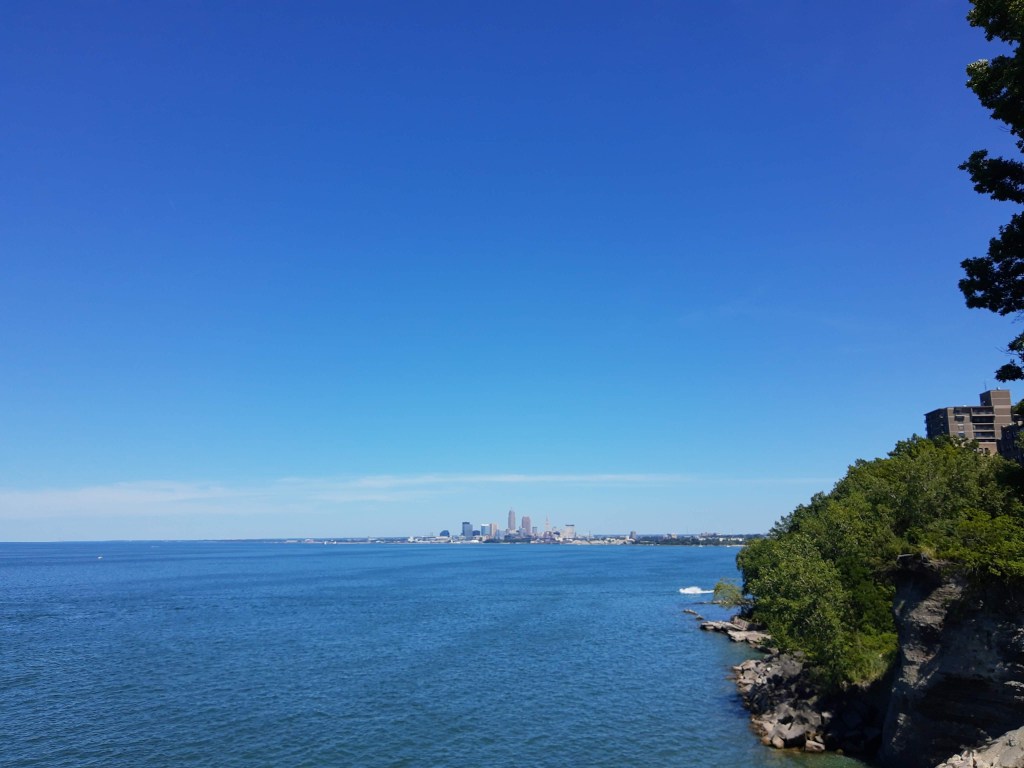
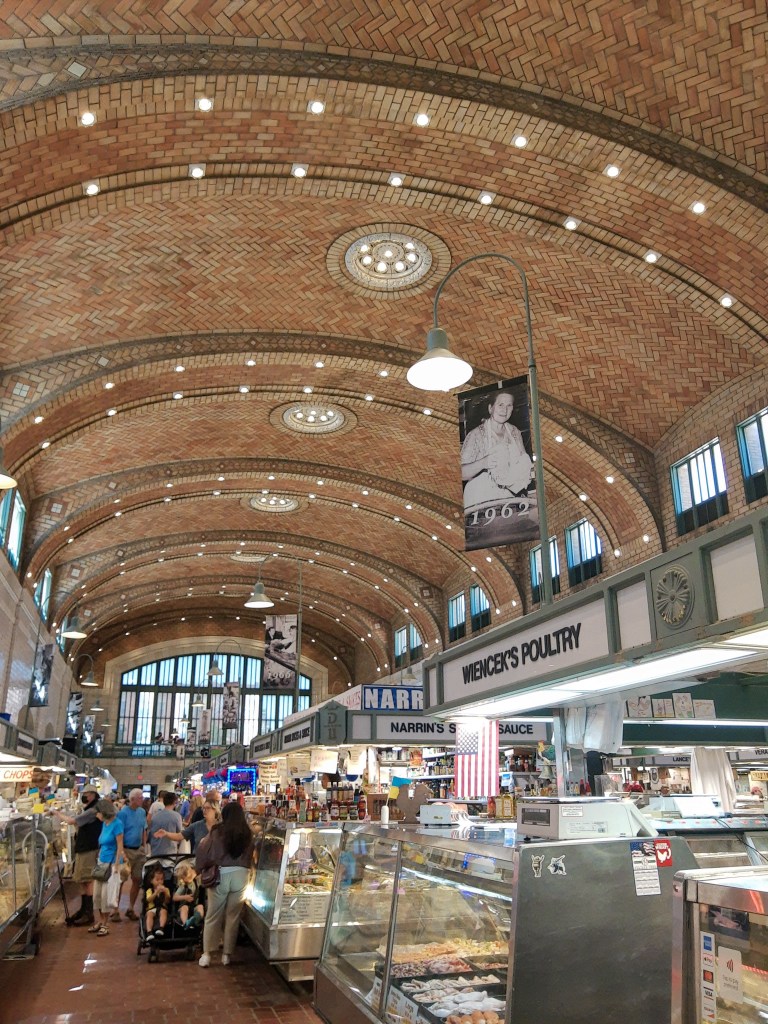
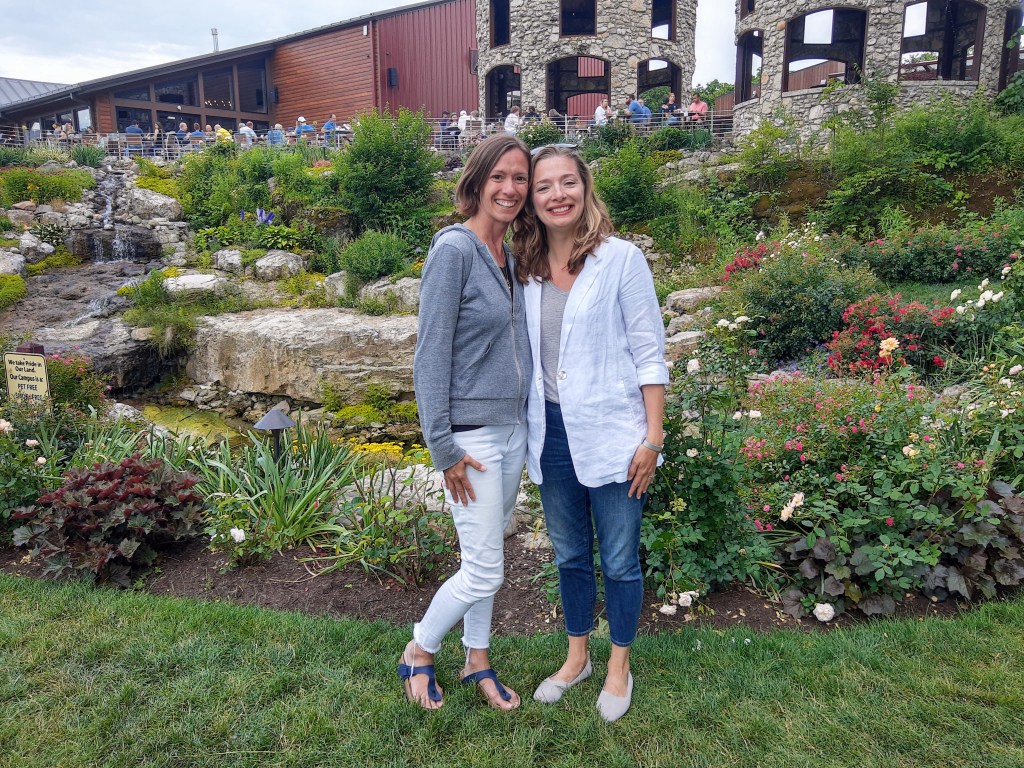
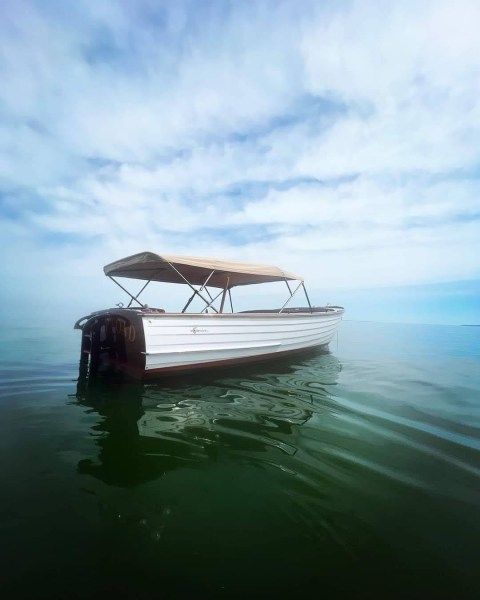
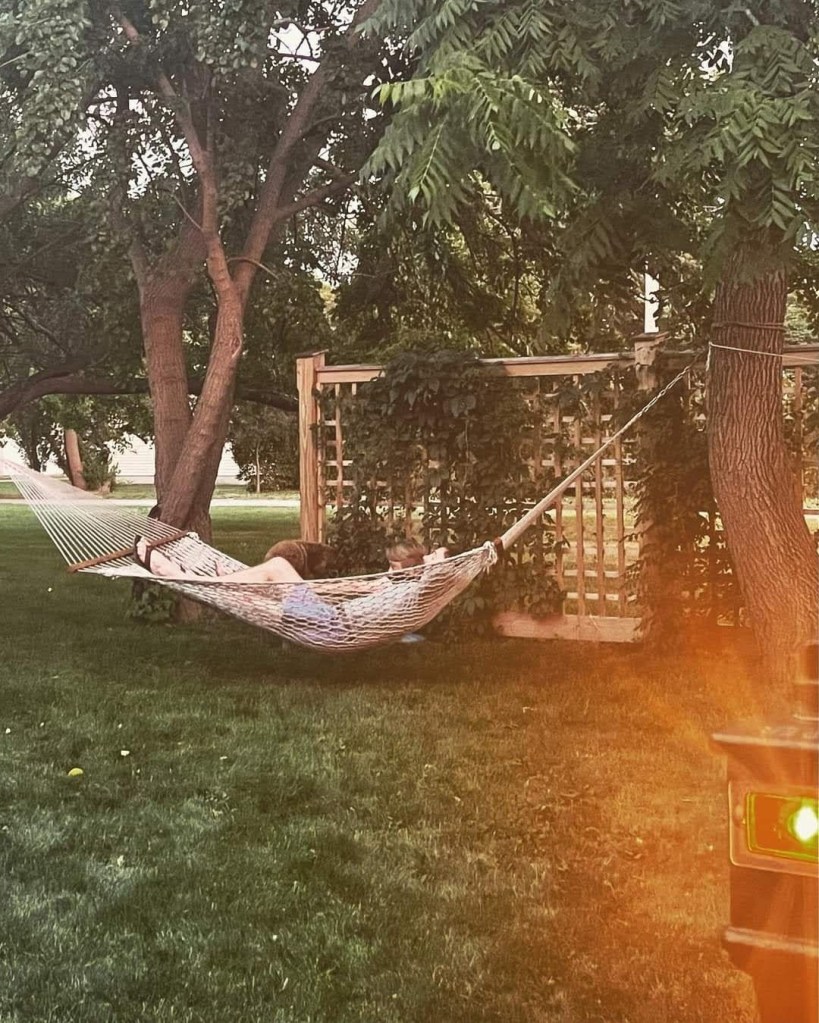
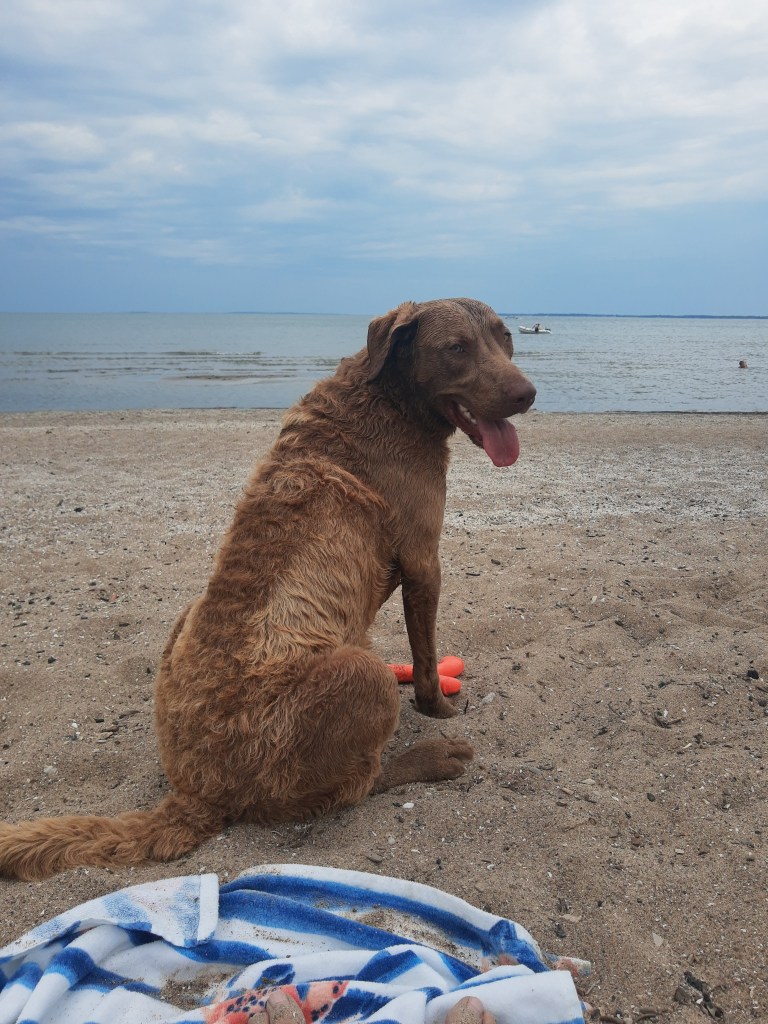
The fam and I headed to Port Clinton, Ohio, walleye capital of the world–don’t fight me on this, MN friends–in June. Sailing for my little guys, boating for the rest of us, swimming, sisters-lunching, friends reuniting, and plenty of hammock-ing and back porch-sitting were the highlights. Of course, no visit to Northern Ohio is complete without a trip to Cleveland and a visit to the West Side Market. And who could forget Rufus, who lived his best Lake Erie Shores & Islands life for a week. Boat aficionados, make sure to check out my dad’s antique Lyman boat above, his fourth child basically. Boat name? Hoptoad, named for Pippi Longstocking’s father’s ship in the favorite book series. (Who woulda thunk I’d become a writer?)
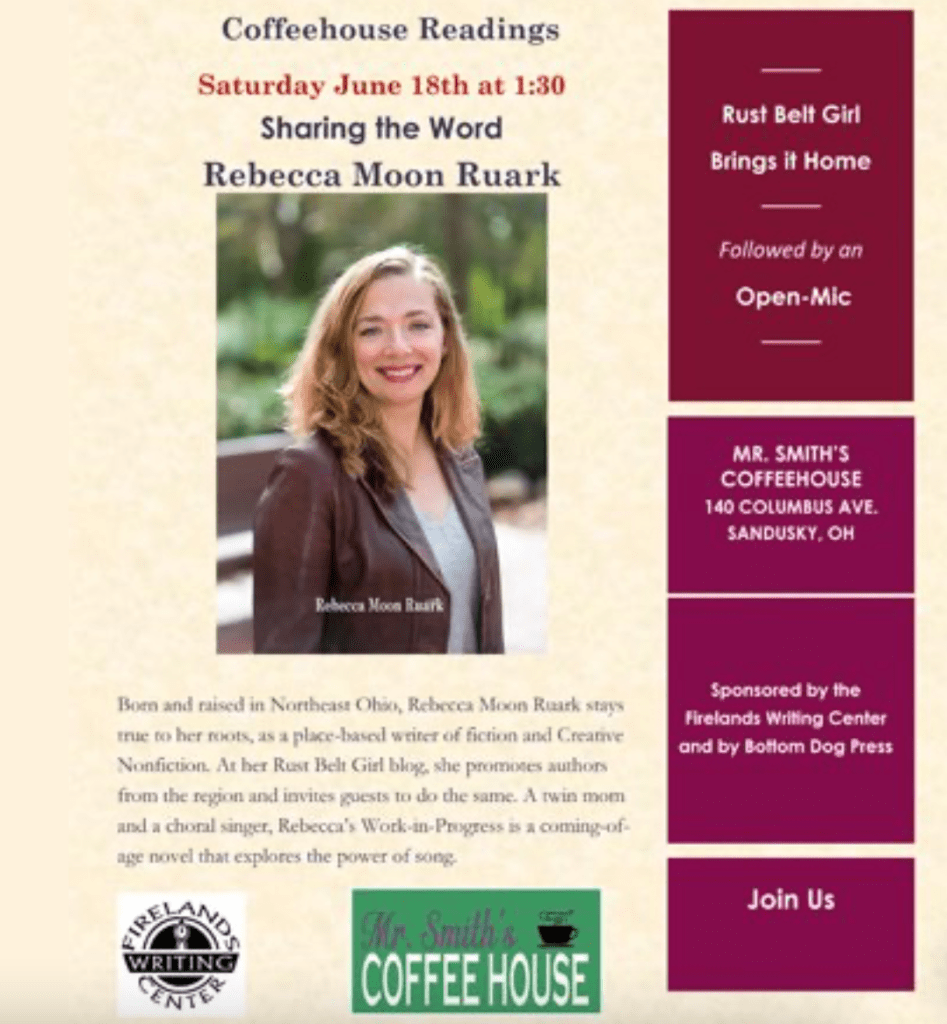
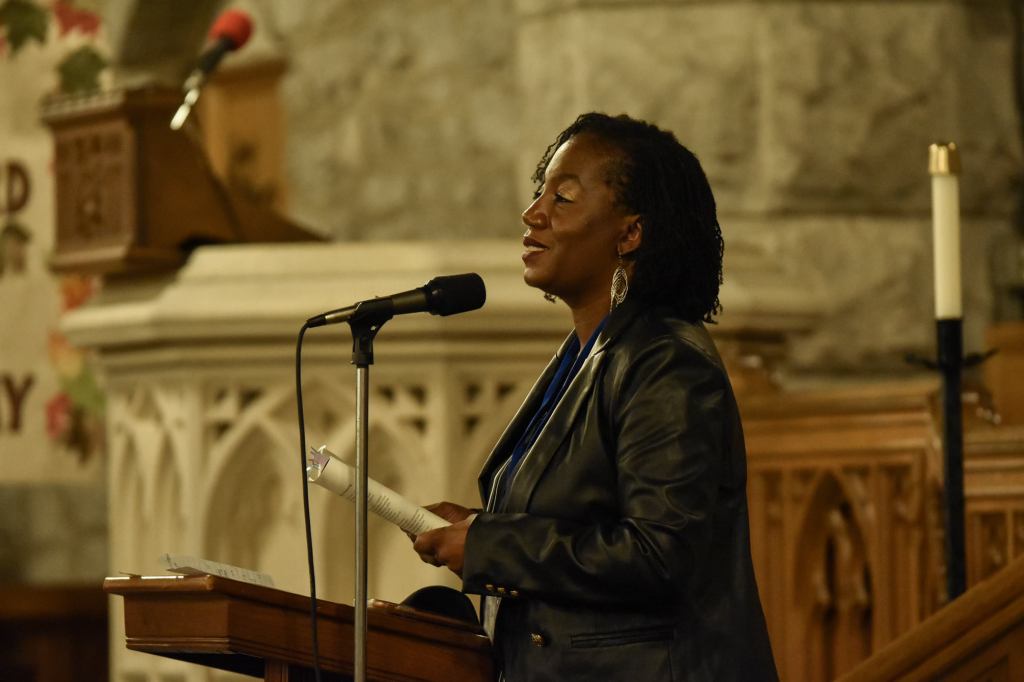
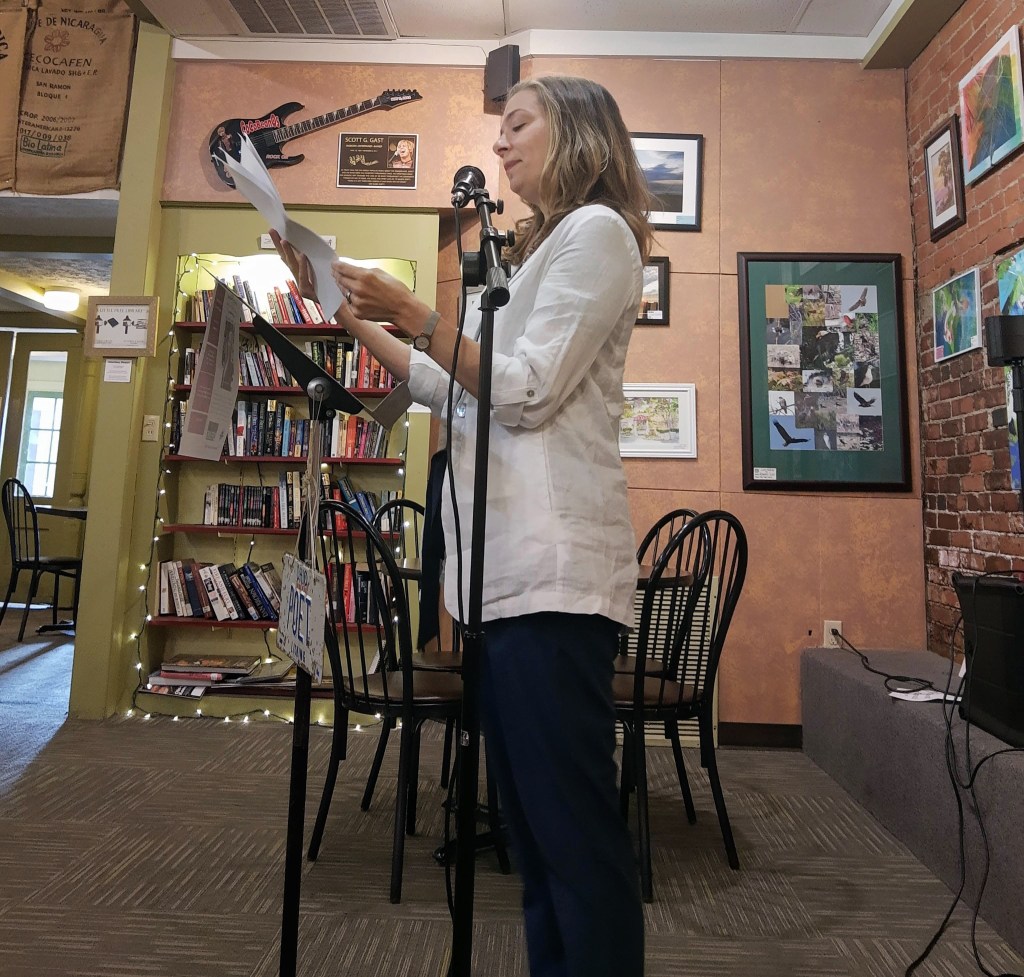
While in the area, I had the honor of serving as the featured reader for the Firelands Writing Center’s monthly reading series in Sandusky. Thank you again to fearless leader Larry Smith and his Bottom Dog Press for sponsoring the event (and putting me on a flyer–that doesn’t happen often). I read some older work and some newer pieces from my WIP, a coming of age novel partly set in Ohio that explores the power of song. And thanks to those who came out (or in) on a beautiful afternoon to share their own work with the group. It felt very much like home. (Flyer photo credit: @melanieraebuonavolonta)

Reading the Rust Belt…

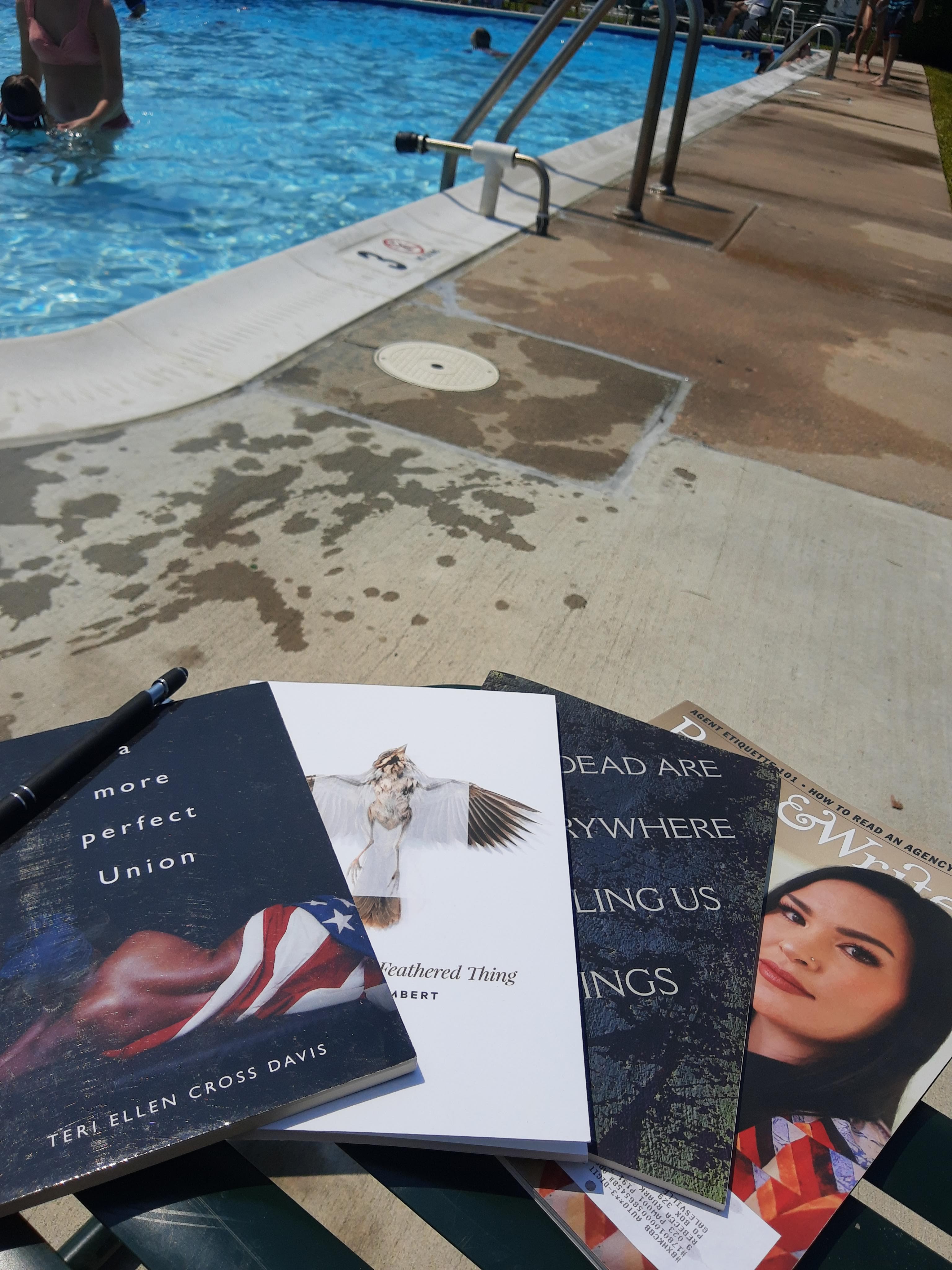
Of course, I’ve fit in some Rust Belt reading. And who said summer reads can’t be deep? Poolside poetry is just my speed, and here are a few I’ve enjoyed immensely: Cleveland native Teri Ellen Cross DavisA More Perfect Union; Columbus, Ohio, poet Paula J. Lambert’s The Ghost of Every Feathered Thing, and Erie, Pennsylvania, poet Sean Thomas Dougherty’s The Dead are Everywhere Telling Us Things. Btw, if we’re not connected on Goodreads, where I recently reviewed another poetry collection, let’s do!
And Beyond

There’s an old, writerly adage that says if you’re talking about it you’re not writing it. So, let’s just keep all our fingers and toes crossed for my WIP as I begin to query literary agents for it this fall.

Unfortunately, there’s no adage I know of that says if you’re talking about your editing you’re not working on it. But what would be the fun in that? You may know I’m the associate editor of Parhelion Literary Magazine, in charge of the features department. How I love my craft essays, book reviews, and author interviews! But you might not know that I got that gig because the magazine’s editor-in-chief saw what I was doing right here on Rust Belt Girl and wanted some for her Richmond, Virginia-based online publication.

In addition to editing features for Parhelion, I’m a reader for fiction. (If you aspire to write literary fiction, creative nonfiction, or poetry, there is no better way to become better at it than to read literary journal submissions, imho.) Parhelion’s summer issue (our journal’s 14th–not too shabby) launched this week. If you like fresh and bold fiction, CNF, and poetry I hope you’ll check it out.
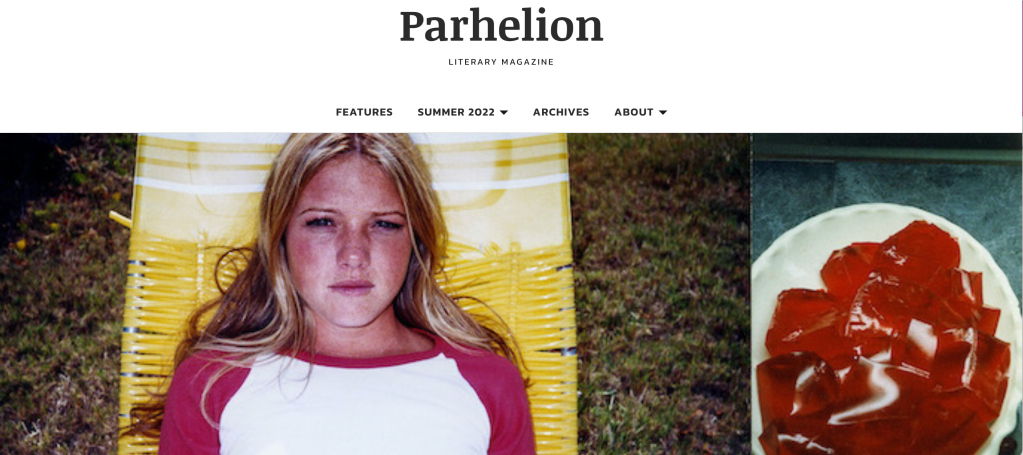
Parhelion Literary Magazine

Summer 2022 Issue

Looking Toward Fall

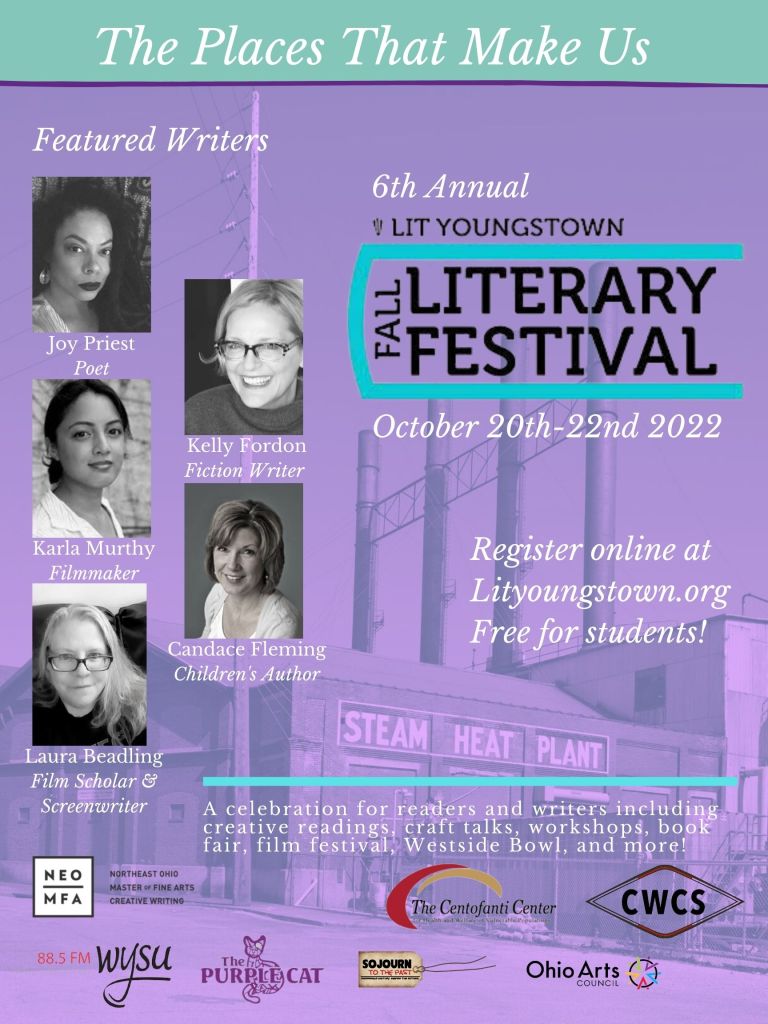
Must we? OK, I suppose the pool days will come to a close. My small guys (who are quickly catching up to me) will head back to school. And I will start packing for the literary highlight of the season, Lit Youngstown’s Fall Literary Festival. If by some strange occurrence you live within driving distance of the festival and I haven’t hit you up, my apologies. This is the best literary conference of the year–if you like a supportive community, generative workshops, eye-opening and ear-bending panel discussions, inspiring readings, and affordability. Oh, and this year’s book fair promises to be the best yet. Also, there will be bowling and films. So, what are you waiting for? The Rust Belt calls.
And that, most patient of readers, is what I’ve been up to. But, as blogging is a two-way street, let’s keep the convo going. What has your summer looked like–or whatever season it is where you hang your hat? Where are you visiting. What are you writing, reading, and discovering? Do tell!

Want more Rust Belt writing, author interviews, book reviews, writing advice, and more? Check out the handy categories above.

Find me on FB and on IG and Twitter @MoonRuark

And follow me here. Thanks!

Enter your email address to subscribe to this blog and receive notifications of new posts by email.

Not a post about a Christmas cookie

This is a post about a community Christmas cookie.

***

Bear with me, and hello! Happiest of holiday seasons to you and yours!

And back to the aforementioned cookie…

It was Christmas Eve Eve, and I’d waited too long to secure anise seed, a necessary ingredient in my favorite Christmas cookie, one I make religiously, each and every year: German Springerle.

I visited four stores on my search for the elusive, black licorice-scented seed and found none. I lamented supply chain issues and the state of commerce in particular and the world in general. But not for long, because Christmas.

In a last ditch attempt to keep my cookie tradition alive, my husband suggested I ask for anise seed on our village’s FB page. Within the hour, I had offers of fennel seed and star anise–the latter of which I believed just might work.

Because this is not a baking blog (you’re welcome), I won’t bore you with the recipe–unless you want it (I don’t believe in secret recipes). But suffice it to say the cookie turned out great with the substitution. Yes, it takes a village.

You probably have your own community cookie story. Maybe it’s an actual cookie. Maybe it’s something a little more poignant.

As Epiphany approaches, the Wise Men in our nativity set inch closer to the scene. These smart guys (rightly) get a lot of press. They brought pretty important ingredients to that out-of-the-way stable.

Our nativity set also features some more colorful comers–a rough-looking fellow bringing a chicken and eggs; a woman bringing several loaves of bread balanced on her head; a drummer and a bagpiper bringing the tunes.

Me, I’ve been bringing the music, this year, my first full year as a cantor at my Catholic parish and for weddings and funerals. And this singing way of things has found its way into my home-life (working on a Von Trapp vibe over here!) and my writing-life. In my novel-in-progress I ask: Can our songs save us? And in my recent nonfiction, I try to bring my voice closer to my heart.

If you know me out on Twitter–land of snark–you’ll know that in addition to cookies, I am the one who brings the shrimp ring to a party. (My Midwestern child-self would be duly impressed.) Snark aside, I try to do my small part at a time when it seems we’re all pulled apart, party-less.

Because, we can’t make all the good stuff entirely on our own. It takes community.

Community is why I started this blog way back in 2017. And it’s why I will continue to hype the poets and writers and literary-scene-makers of the Rust Belt in 2022.

If you haven’t yet checked out some of my favorite posts of this year, I hope you will. Among them: my interview with former steelworker and memoirist Eliese Colette Goldbach, author of Rust; and my interview with poet and memoirist Robert Miltner, author of Ohio Apertures: A Lyric Memoir. Many, many thanks go to those on the answering end of my queries.

2021 Rust Belt Girl blog superlatives? I’ve got those! 3,232 visitors hailing from 78 countries–not bad for a blog that reveres the regional.

My most viewed post (once again) is my gush-fest about Amor Towles’ A Gentleman in Moscow. (Have you read his new novel? On my TBR.)

My review of Michigander Dawn Newton’s The Remnants of Summer came up second.

My most-viewed interview this year was that with Cleveland native poet Teri Ellen Cross Davis, whom I got to meet in person–and even break bread with–at Lit Youngstown’s Fall Literary Festival in October. A festival I helped to plan, along with so many other members of that literary community.

The literary world just recently lost Joan Didion. The places she wrote about and from are not my places. But she has a lot to teach us about writing about place. I’m taking this quote of hers into 2022 as inspiration:

A place belongs forever to whoever claims it hardest, remembers it most obsessively, wrenches it from itself, shapes it, renders it, loves it so radically that he remakes it in his image.

Joan Didion, The White Album, 1979

Whatever place you’re shaping, whatever community you belong to, thank you for being here.

All the best in 2022, stay well, and keep in touch!

Hankering for Rust Belt author interviews, book reviews, and more? Check out my categories above. I hope you’ll follow me here, if you don’t already, so you never miss a (quite infrequent) post. ~Rebecca

Enter your email address to subscribe to this blog and receive notifications of new posts by email.

Poet for a weekend, and other literary festival miracles

I am not a poet, though some of my prose has aspirations. However, if writing is about invention–and re-invention–maybe my prose knows something I don’t.

How glorious to reinvent ourselves through our writing, over and over, on the page (or screen). I do find invention the most exciting part of being a fiction writer, blogger, and even a marketing professional–well, second only to the excitement of connecting with likeminded creative folks.

And so, I was in literary heaven at Lit Youngstown’s fifth annual Fall Literary Festival, held on the campus of Youngtown State University in Youngstown, Ohio. (Heaven is in Ohio? Yes, yes it is.)

Remember in-person literary events? I’d almost forgotten that some of my favorite writerly faces can been seen in the literary wild, outside of their confining Zoom boxes. For those of you readers who’ve been around these blog parts for a while, this festival gave the pleasure of meeting several of my Rust Belt interviewees in person for the first time: memoirist and poet Robert Miltner, poet Teri Ellen Cross Davis, and novelist Margo Orlando Littell. Also, in small-literary-world news, a writer friend I made while attending a writing retreat in Virginia in the spring made it to the fall conference (hi, Rebe!).

So, what exactly goes down at a literary festival? The “gathering in” night at a downtown art studio included a cookie table, a local tradition. And, not only did I cookie, but I also put on my brave writer pants and read a short piece at the open mic (following maybe some of my best advice for speaking–or singing–in public).

The first full day of the festival, I moderated a craft session on writing memoir; attended a panel discussion on rewriting women into history (take that Jack London–just trust me); attended a poetry discussion on transforming grief into a gift; and took an epistolary poetry workshop. Yes, me, the non-poet. At the risk of total embarrassment, here’s my epistolary poem from the class:

Dear Son,
A hotel bed big enough for the four of us, but it sleeps only me. I could say I wish you were here,
but Youngstown, this place I only discovered when I was no longer young, feels like mine
alone. Here, the people talk like me, the nasal accent that cuts through a crowd. You will love
a campus like this someday, a place that will watch you become a stronger you, tempered
like the steel of this place. Your Youngstown might be Annapolis or College Park or Cambridge.
You know we can't afford the Ivies, right? Do your homework, get a good night's sleep, and know
I love you.
~Mom

One of the coolest aspects of having a literary festival on a college campus is the other arts to be found. A short walk took me to a university art museum that was featuring an installation by artist Diane Samuels. My photos don’t do her work justice, so you’re going to want to check out her site. Here, you see Moby Dick, Romeo and Juliet, and The Overstory–with every word of those texts hand-transcribed on various materials. The quilt-like pieces are gorgeous from afar or up close, where you can read every word.

From the art museum, we then had dinner–pierogi and halushki–at a local, historic stone church, where after, in the sanctuary we heard from a jazz trio before the evening’s creative readings. (See pics above.) From there, I followed the locals to a tiny jazz and blues club where we heard, you guessed it, live jazz and blues–some originals and some covers of Marvin Gaye, Otis Redding, and other sing-alongable songs. And my weekend just kept getting more art-full.

The second day of the conference, I played hooky. It’s true. Rule-following me. Of course, before that I did my duty as part of the planning committee and worked at the book fair (which was a lot of fun!). I also took poet Teri Ellen Cross Davis’ poetry workshop about writing from family history (one of her best tips: to avoid sentimentality, get very specific and use details sparingly); I’m still working on that poem. And later, I took a poetry workshop on the Golden Shovel form (news-to-me: it has nothing to do with a shovel shape). And then, I played hooky.

Book fair book haul: Don’t miss Teri Ellen Cross Davis’ latest book of poems, A More Perfect Union.

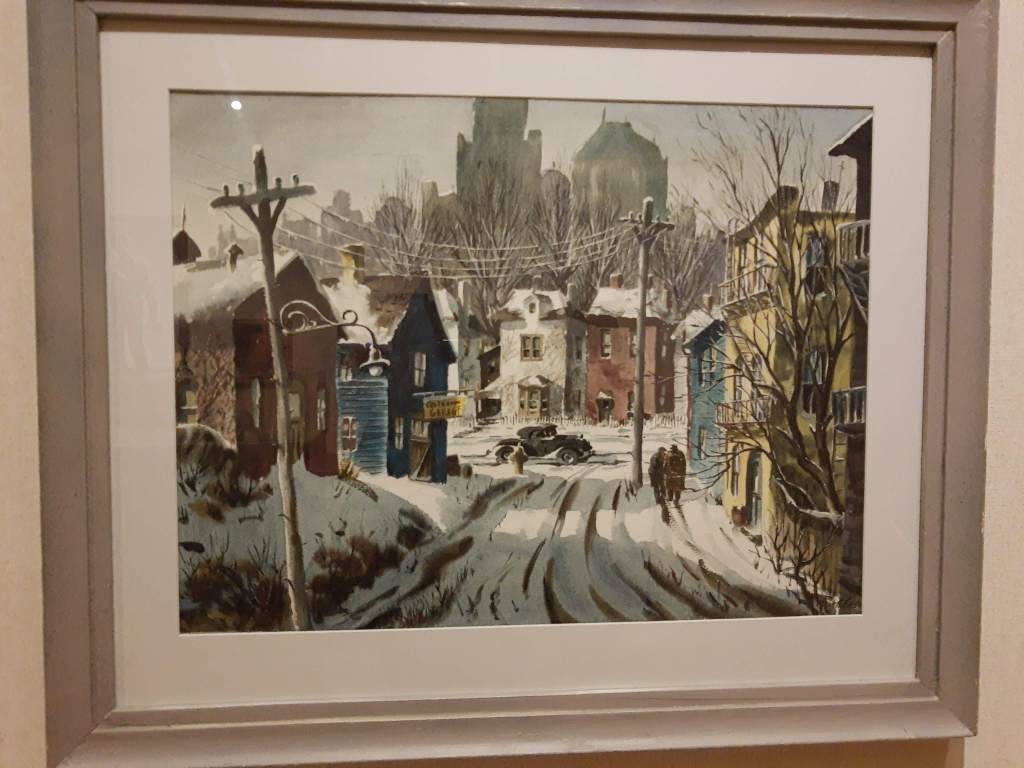
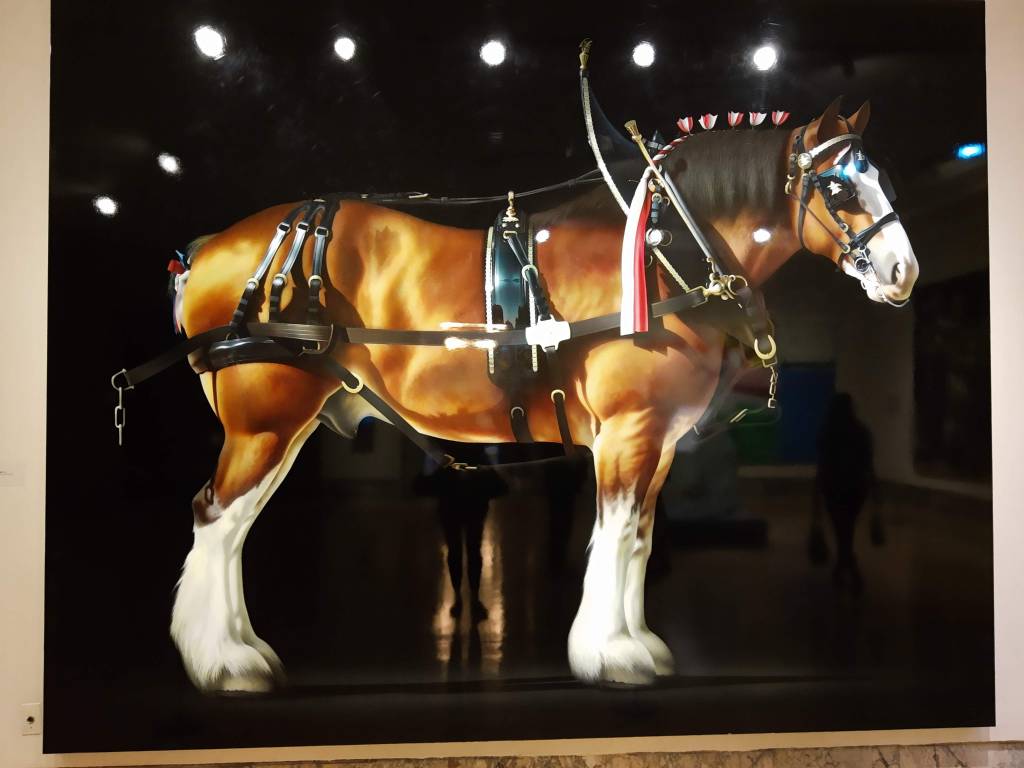
For the several years I’ve been attending this literary festival, everyone’s told me I must make it to the Butler Museum of American Art, a short walk from the conference venue. This time, a couple writer friends and I made it, took the tour, the whole thing. Reader, there was an Edward Hopper. I knew I was in the right place. (Pictured: Edward Hopper’s Pennsylvania Coal Town, William Gropper’s Youngstown Strike, Henry Martin Gasser’s Intersection, Grant Wood’s In the Spring, a name-that-abstract piece I didn’t take a good enough picture of the id card, Peter Maier’s Horse-Power (Ben)–a floor-to-ceiling rendering of a Clydesdale painted on metal–and Alfred Leslie’s High Tea.)

After my fill of American art, I enjoyed dinner (Italian, if you’re keeping track) and literary conversation that alternately had me jotting notes (the TBR pile grows ever taller) and laughing. There again, my idea of heaven. To cap off the final evening of the festival: another reading (at another downtown art gallery), this time by Jan Beatty–raw, real, and revelational! I can’t wait to dive into this one, too.

Huge kudos to Lit Youngstown director Karen Schubert and outreach coordinator Cassandra Lawton, the board, and planning committee folks–for another successful literary festival. It felt like a miracle that was over too soon!

Have you ever been to a literary festival or conference? What were the highlights for you? Did you stay in your literary lane or reinvent yourself in a weekend? Do you enjoy creative readings? What makes a reading memorable for you?

I’ve been terrible about keeping in touch, but I hope you’ll check in here. What are you reading, writing? What authors have moved you, lately? Are you getting out to any in-person activities?

Hankering for Rust Belt author interviews, book reviews, and more? Check out my categories above. I hope you’ll follow me here, if you don’t already, so you never miss a (quite infrequent) post. Thanks! ~Rebecca

Enter your email address to subscribe to this blog and receive notifications of new posts by email.

My interview with award-winning poet Teri Ellen Cross Davis

I’ve developed a love affair with poetry this year. So, I found Teri Ellen Cross Davis’ poetry collection, HAINT, at just the right time. I met the author at a recent literary conference and was delighted to discover that she too grew up in Northeast Ohio. Names and images of our home set the stage in her poems of childhood, such as “East 149th Street (Symphony for a Black Girl)” and “Akron at Night,” but many more of her poems present a powerful universal ode to girlhood, adolescence, and adulthood as a woman seeking love. Poet Ross Gay, another Northeast Ohio native, said of HAINT, “Although heartbreak is the origin of so many of these poems, it’s love that makes them go. Love to which they plead and aspire and pray.”

Teri was kind and generous enough to tell me more about what makes her poetry–and life–“go.”

Read more

Top 5 Things to Take from a Literary Conference (not just swag)

Photo by Pixabay on Pexels.com

Saturday, I attended Conversations and Connections, a one-day writer’s conference organized by literary magazine, Barrelhouse, chock full of practical lessons from published literary authors, editors, and publishers. Note: I said practical. (Leave your insta-agent-three-book-deal fantasies at the door.) Really, it was like transporting myself back to my MFA program for the day–complete with the insecurities and boxed wine! All right in my world.

  1. Advice: The first of three panels/workshops I attended featured a memoirist, a novelist, a nonfiction writer, and a poet who all engage with the past–and endure much historical research–for their writing. Some of the most helpful advice suggested writers utilize first-person accounts to better instruct our characters in how to engage with historical fact. There was also an interesting discussion exposing the differences between creative nonfiction and fiction when making meaning of historical events. In fiction, the research must become a part of the narrative arc; in nonfiction, the journey to understand can become another part of the story, a knew way of knowing.
  2. Beginnings: For my second session of the day, I attended a hands-on craft workshop on developing short story openings that grab a reader’s attention. Flash Fiction author, instructor, and editor Tommy Dean led us workshoppers using four prompts for four different story openings. All the prompts started with character/setting/conflict, then added another element to complicate the story start–like subverting the setting or flipping a normal, everyday activity. I am not a prompt person, relying instead on the ideas that fly at me and then stick–usually long about 4am–but even I came away with a few solid story starts, a real win.
  3. Connections: MFA programs are a wealth of information on the art and craft of writing. But then what? How do we get our work out there, and just where is there? Enter the literary journal editors with hands-on experience in the world of literary publishing for a 10-minute editing session, a la speed dating. I took a flash fiction piece of mine; however, I knew going in, I wanted to use that precious time to ask advice of the editor on the other side of the desk. My question was about chapbooks (short collections of poetry or stories). But the point is I used my 10 minutes to connect with someone I could learn from. Not to leave out my fellow conference attendees, time waiting in line for the editor session was a good chance to meet local writers (shout-out to Sonora!).
  4. Inspiration: With the growing popularity of spoken-word and oral storytelling heard on programs like The Moth Radio Hour, today’s creative writing readings are not the cure for insomnia they once were. The featured author readings at C&C did not disappoint. Going in, I knew of the work of only one of the authors, essayist Randon Billings Noble, who I connected with in an online critique group years ago (the writing world being both huge and small). I was delighted to be introduced to the poetry of Kyle Dargan and the fiction of Ivelisse Rodriguez and of Gabino Iglesias, who read their work with such passion–the highlight of my day and very inspiring.
  5. Books…and more books: Want to make an author (and their small press publisher) happy and earn your good literary citizen card? Buy the book. I came away with autographed copies of Billings Noble’s essay collection, Be With Me Always; Iglesias’ horror/crime novel Coyote Songs; Matthew Ferrance’s memoir, Appalachia North; and the poetry collection, Haint, from Cleveland native (yes, we are all over) Teri Ellen Cross Davis, who sat on the panel for the third of my three sessions, focused on publishing and offering great advice on connecting with the local literary community. (These last two authors, I plan to talk about more here on the blog!)

For writers across genres, and for bloggers alike–there’s a conference made for you. This one was a good fit for me, and I’ll be back next year.

Do you conference? What are your top tips? Have you read any of these books? How was your weekend? Comment below–I always love to hear from you… ~Rebecca