This October I attended my eighth annual Fall Literary Festival hosted by Lit Youngstown. It was the Ohio literary organization’s ninth—and final—fall lit fest (at least for now). I could just be weepy about it (I’m weepy about much these days, tbh), but I’m too grateful to stay weepy. Since it’s a weekend to do grateful, let’s get into it…
Don’t worry, Lit Youngstown itself—with all of its amazing programming–is going strong at 10 years old. But before I get into my 2025 lit fest roundup I want to take a moment to share a few highlights from lit fests gone by (forgive my literary nostalgia), in no particular order:
Novelist Rachel Swearingen telling us craft session participants to, “Write towards change.” And “Stop thinking about characters and start thinking about relationships.” (Fiction writing changemaker right there!)
Me, getting to tell my story of my mom’s protesting of a nuclear power plant near my hometown when I was a kid (I wrote about it here) and detailing how that story turned into an integral part of my eco-novel (published someday, world!)
Exploring ekphrastic writing at the Butler Institute of American Art (great museum road-trip idea for you out of towners!) and exploring Youngstown writ large (getting to stay with friends and enjoying the local cuisine (there will never be enough pickle pizza, noggin-sized meatballs, and pierogis!))
Getting to be a student of Sandra Beasley, Ross Gay, Lawrence Coates, and so many other teacher-writers and getting to tell them over charcuterie and a glass of wine: “you wrote my favorite poem, essay, novella, thank you…”
Meeting writer friends (like the talented Melissa Fraterrigo) in person after years of reading her work (her novel Glory Days inspired a lot of what I’ve been trying to highlight at this blog these last nine years or so—stay tuned for a review of her memoir in essays, pictured). And meeting other friends year after year and weaving our stories—and lives—together.
The highest highlight? You. Becoming a member of the Lit Youngstown community through the fall lit fest has been incredibly rewarding for my literary life—and my life-life. Thank you, friends.
Now, 2025’s list fest was one for the books. (Peruse a few pics above and below.) And if you thought the environmental theme was going to mean a slew of nature poems…well, yes, and… Yes, and fascinating eco-fiction and challenging environmental memoir and poetry about nature redefined—from a place that was once an indigo plantation to the night sky over the Grand Canyon to trails cut by troubled teens into the Pacific Northwest woods—and so much more that “shapes our experience and identity, and represents our rootedness in earth.” Whew! I encourage you to read the impressive bios of the five 2025 featured presenters.
My preparation for this lit fest happily began months in advance of the event. (Once a student, always a student.) For my conversation with fiction writer David Huebert and memoirist and poet Sean Prentiss I read several of their books—she gestures to collage artfully displayed on her office floor—representing an array of what we lump under the term “environmental writing.” Look for a follow-up post with a good chunk of our discussion—fascinating and fun!
Other personal highlights from this year’s lit fest. (Know that this is just a fraction of the offerings and I, once again, wished I could have cloned myself, so I could make every single session.):
Day 1:
Narrative Medicine [definition: healthcare practiced with narrative competence]: A Generative Workshop, facilitated by family nurse practitioner and poet Dana Reeher. Imagine me taking furious notes for the anthology project I’m co-editing: Body of Work, essays at the intersection of dance and health. For a little workshop exercise, Dana asked us participants to respond to a writing prompt, “an expansive invitation to open the mind,” so I thought I’d write a very short piece about my own dancing and its impact on my physical and mental health outlook:
Maybe the mistake was I listened too well, that I pointed my feet too hard, that I really could feel that string coming out of the top of my head lifting me up to the studio ceiling. Maybe I postured too much, wanted too much. Maybe I turned out until I was turned in. Maybe all that looking in the mirror made me someone else. I can still spot a dancer, or an anorexic, from fifty paces.
My dancer friends here will likely recognize a lot of this, but especially the posture-reminder telling baby ballet dancers to imagine there’s a string coming out of the top of your head… After sharing my short piece of writing, a couple of the other workshop participants said the string image reminded them of a marionette. I’d never thought of that before, and I’ll tell you that image is still working on me!
The Pamela Papers: A Mostly E-pistolary Story of Academic Pandemic Pandemonium: The Musical. Based on the award-winning novel by Nancy McCabe, published by Outpost 19 in 2024, the presentation included a dramatic reading (with singing—who was expecting a musical at the lit fest? Not I. And it was such fun!).
Readings by David Huebert and Sean Prentiss in St. John’s (gorgeous limestone and stained glass) Episcopal Church sanctuary. Your girl provided introductions to both writers—thanks for putting up with my unorthodox investigative process to make sure they were exciting, guys!
Day 2:
Bengal Tiger Moments: Time Perception in Creative Writing, facilitated by Sean Prentiss. In this fascinating session, we talked about speed on the page, presented in five categories from fastest to slowest: Gaps, Summary, Scene, Dilation, and Pause. Sean presented examples of these techniques from creative nonfiction and explained the brain science behind our understanding of the movement of time—irl and on the page.
Rooting the Self: Writing as an Act of Person, Political & Environmental Transformation & Transcendence, a multi-genre workshop with (beautiful and talented) Rebe Huntman, author of My Mother in Havana: A Memoir of Magic & Miracle: Rebe took us through various stages/ways of honoring our voice and our writing by making space for it and celebrating it, including meditation, morning pages, repetitive activity (including list-making), “the writing cave,” and writing constraints and freewrites. My favorite prompt, a list-making exercise we did in this session, produced these lists, below. (From there I spun out a short prose piece, “Reasons to Revere Your Vagus Nerve” (we’ll see where that weirdness goes!):
5 Things I Consider a Miracle
High arches
Warm pie
The vagus nerve
Sweating carafes of water
Tanned leather
5 Recurring Obsessions
Ballet hands
Song
Accents, dialects, and regionalisms
Mom, mom, mom
Delight
Readings by poets Lauren Camp, Todd Davis & Kourtney Morrow: poems of cityscape to countryside to the night sky over the Grand Canyon left us audience members awed.
Days After
And then, after… there’s nothing better than returning home from a literary event inspired, nurtured, and with a few new ideas for writing already on the page.
If you’re reading this on Small Business Saturday, might I suggest you also read small and lit small by supporting your local indie bookstores and your favorite literary organizations today?!
Did you attend Lit Youngstown’s Fall Literary Festival last month? Another lit fest? What was your favorite part? Have an inspiration gleaned or a piece of writing captured you’d like to share? Feel free to jot it in the comments.
Like this post? Comment below or on my FB page. And please share with your friends and social network.
Are you a Rust Belt writer interested in seeing if your own post, or author interview, or book review might be right for Rust Belt Girl? Hit me up through this site’s contact function.
Check out my categories above for more guest posts, interviews, book reviews, literary musings, and writing advice we can all use. Never miss a post when you follow Rust Belt Girl. Thanks! ~Rebecca
Tess Gunty’s 2022 debut novel, The Rabbit Hutch, won that year’s National Book Award for Fiction (and other awards) and also won hearts—especially among Rust Belt readers.
Pittsburgh-based author and art writer Emma Riva wrote a wonderful essay about The Rabbit Hutch published here at Rust Belt Girl I encourage you to read next—if you haven’t already.
I was late to the novel, myself, and was struck by how Catholic it felt, despite not being marketed that way (for obvious reasons).
I was thrilled to “meet” Gunty yesterday evening through the Jesuit Media Lab‘s conversation over Zoom with the author. A sizable group of us avid readers tuned in to listen to Gunty talk about being raised Catholic and writing about The Rabbit Hutch main character’s deep interest in female mystics and mysticism, about researching Hildegard von Bingen and discovering her “extraordinary theatre of mental activity” and agency, about technology and art and how Mary Shelley’s Frankenstein is a “perfect allegory for AI,” and much more!
“I wanted to make art out of my characters’ lives, including their digital lives,” the author said about her novel that still feels very much of this technological moment. (Gunty herself doesn’t partake in social media and, clearly, it benefits her writing. “You need to keep the tool of your mind as sharp and clean as possible,” she said.)
As for the novel’s fictional setting of Vacca Vale, Indiana, Gunty said that the place was the only thing she knew for certain she wanted to portray, going in, that the setting started out being the MC—until she was about three-quarters of the way through writing the first draft.
She said she wanted to capture the “purgatorial” nature of post-industrial cities like Youngstown, Ohio, Flint, Michigan, and Gary, Indiana. (No shade intended, I don’t think!) How to capture the sensation of such places, like her hometown of South Bend, on which the novel’s setting is based? In the books she read, Gunty said, “I never encountered any place like my hometown.” And yet politicians and movies portray a flat stereotype of such post-industrial Midwestern places.
Gunty’s description sparked pride in me, last night. She described our Midwestern and Rust Belt cities as places of mystery, magnitude, and complexity. When you don’t see a place like your home reflected in literature, “you feel like it doesn’t matter,” she said. For Gunty, writing this novel, then, was an attempt to insist upon the “dynamism and multi-dimensionality” of her hometown—and others like it.
Like mine. Maybe like yours, too.
I encourage you to check out JML for their book talks and other events.
Have you read The Rabbit Hutch? What did you think? Did you read Emma Riva’s essay about it?
Like this post? Comment below or on my FB page. And please share with your friends and social network.
Are you a Rust Belt writer interested in seeing if your own post, or author interview, or book review might be right for Rust Belt Girl? Hit me up through this site’s contact function.
Check out my categories above for more guest posts, interviews, book reviews, literary musings, and writing advice we can all use. Never miss a post when you follow Rust Belt Girl. Thanks! ~Rebecca
Thank you, thank you to Jason Irwin, who kicks off a series of guest posts at Rust Belt Girl, and to you, for being here! What is a Rust Belt place–and who defines the perameters? What does post-industrial mean today? What are a place’s histories, characteristics, and quirks–and how have they shaped its people and its art? How have they shaped the stories we tell, and what have those stories meant for Grit Lit and Rural Noir writing and for other mediums of creative expression? For this series, I suspect we will get some fascinating answers to these questions and many more I haven’t thought of.
A guest post by Jason Irwin
Though I have used film in the past, as well as digital cameras, I consider myself an amateur. I owned a flip phone for 22 years but finally gave in and bought a smart phone during the summer of 2024. Do I love my smart phone? Well, no, but it makes life easier, and I do love the camera feature.
I believe my photos are already out there waiting for me to stumble upon. I like taking photos of people naturally, most often without them knowing I’m taking their photos. I prefer them off-center. I also like wide-open, desolate landscapes and cityscapes: derelict, sometimes abandoned buildings, windows, doorways, big skies, fields, and bodies of water. My hometown of Dunkirk, New York, is a perfect place for such photos. I hope the three photos in this post show this.
Serendipity, the storefront boutique in Madison, Indiana, looked lost in time to me, as my wife and I drove past. Maybe not in the 50s but still lost in time. Using the grayscale setting on my Samsung smartphone ads to the notion that this photo is older than it appears. Madison is her hometown, or rather Deputy, an unincorporated rural community about 18 miles northwest of Madison. Just outside the borders of what the Britannica website’s map marks as the Rust Belt. Madison was first settled in 1805, five years before my hometown of Dunkirk. Though not a Rust Belt town, Madison, like Dunkirk, was once a railroad town. The Madison and Indianapolis Railroad was completed in 1836. The first train stopped in Dunkirk on May 15, 1851, and at the time it was the last stop on the New York and Erie Railroad.
I chose color for the photo of the old Regent movie theater, which closed in the late 1980s, but still stands, minus its marquee, on the corner of Washington Avenue and Third Street in Dunkirk, because of the recent addition of the mural, which pays homage to Dunkirk’s Hispanic and African American communities. As a child I went to the Regent, owned by Mr. Burget and his sad-eyed basset hound, to see movies like Back to the Future, E.T., and Rocky II. Many nights my mother would have a craving for popcorn, and she’d park our car out front and send me in to the concession stand to buy a large tub with extra salt and butter and then we’d go home and eat it while watching TV.
The harbor in Barcelona, New York (a former fishing hamlet a few miles north of the village of Westfield), was where one of the scenes from the 2020 movie A Quiet Place Part II staring Cillian Murphy was filmed. Besides its huge commercial fishing industry that died out in the 1970s, the area is home to various wineries and agriculture, including Welch’s Grape Juice. Just out of frame to the left, up a small hill sits the Barcelona Lighthouse. Built in 1829, it is the first gas-powered lighthouse in the world. My father was born next door in the lighthouse keeper’s cottage in 1941. The grayscale setting gives this photo an eerie presence, but I love how the trees reflect in the water.
Jason Irwin is the author of three full-length poetry collections, most recently The History of Our Vagrancies (Main Street Rag, 2020), and the memoir These Fragments I Have Shored, forthcoming from Apprentice House Press. In 2022 he was a Zoeglossia Fellow and took part in the Poetry Foundation’s Disability Poetics Project.
Like this post? Comment below or on my FB page. And please share with your friends and social network.
Are you a Rust Belt writer interested in seeing if your own post, or author interview, or book review might be right for Rust Belt Girl? Hit me up through this site’s contact function.
Check out my categories above for more guest posts, interviews, book reviews, literary musings, and writing advice we can all use. Never miss a post when you follow Rust Belt Girl. Thanks! ~Rebecca
William Heath, born in Youngstown, grew up in the nearby town of Poland. A graduate of Hiram College, he has a Ph.D. in American Studies from Case Western Reserve University and has taught American literature and creative writing at Kenyon, Transylvania, Vassar, the University of Seville, and Mt. St. Mary’s University, where the William Heath Award is given annually to the best student writer. He has published four poetry books: The Walking Man, Steel Valley Elegy, Going Places, and Alms for Oblivion; three chapbooks: Night Moves in Ohio, Leaving Seville, and Inventing the Americas; three novels: The Children Bob Moses Led (winner of the Hackney Award), Devil Dancer, and Blacksnake’s Path; a work of history, William Wells and the Struggle for the Old Northwest (winner of two Spur Awards and the Oliver Hazard Perry Award); and a collection of interviews, Conversations with Robert Stone. He received a Lifetime Achievement Award from Hiram. He and his wife Roser live in Annapolis, Maryland.
Let’s begin with a taste of “Steel Valley Elegy” from William Heath’s poetry collection of the same name. Here’s the first stanza:
I speak Steel Valley American. Once mills
lined the Mahoning River from Youngstown
Sheet and Tube’s Jeannette Blast Furnace
on Brier Hill to Republic Steel in Struthers.
Coal intensified to coke turned iron ore
into molten ingots that were rolled into slabs,
scarfed free of impurities, shaped for strength:
bridges to span waters, girders for skyscrapers,
tanks, ships, guns, and shells to win World War II,
machines and factories for our bounty.
What I love about this poem is how the poet unearths the beauty (and more obvious power and destruction) present in industry, a beauty borne by the transformation of a thing, like dirty coal, to another thing, like shining steel.
The transformation is accomplished by people and fire, which always lends to these scenes of the mills a sense of the miraculous for me, something to be found among the gods of Olympus. And if I spin out this analogy, steelworkers are mini gods then, prone to falling from on high, of course—so much transformation and story in this history of our shared native place.
William, you are from one of my favorite adopted cities, Youngstown, Ohio (“Little Chicago,” as you call it in the above poem). Can you tell us about your Rust Belt upbringing and how it perhaps sparked your creative work? Or has informed it? Did you dream of becoming a writer and teacher when you were young? How did place factor into those dreams?
I was born in Youngstown in 1942, spent my first six years in Gerard. I have few memories of that other than a big snow that we kids tunneled under and riding a neighbor’s large dog. My parents, Oberlin graduates, were teachers; my dad became principal at Hays Junior High in Youngstown; my mom substituted a lot in a variety of subjects. The family moved to Poland, a small New England style town nearby where my memories begin. Like most boys I was interested in sports and girls, not necessarily in that order; the poems that start off Steel Valley Elegy are based on my boyhood. For better or worse, I was better at sports than girls, especially basketball and track. Poland High won the sectional tournament, which meant beating the best Youngstown teams, then lost to Warren in the next round (I was guarded by the future Ohio State and Cleveland Browns star Paul Warfield). In track I qualified in the high jump for the state tournament in Columbus, where I was an also-ran against that top competition (no small school/large school divisions then).
When I was a boy I wanted be a high school history teacher and a basketball coach, then at Hiram College I widened my perspectives: switched from Republican to Democrat, decided to become an English professor. Since teenage boys love to brag, what was most notorious about my area were Mafia wars to control a gambling game called “the bug,” resulting in many bombings, at least a dozen deaths; Youngstown was dubbed “Little Chicago.” I never witnessed first-hand any of that violence, but when I was visiting my cousin in posh Shaker Heights, I saw the aftermath of a shooting described in “A Hit in Shaker Heights.” I once was a suspect in a robbery at a boathouse where I worked in the summers that brought me to the dreaded Youngstown police station for a lie-detector test, see “An Inside Job.” In sum, I lived a fairly typical small town Midwest boyhood, with the usual teenage antics that feature in some of my poems, while next door was a thriving steel city with a lot of good-paying union jobs but also a gangland war between the Cleveland and Pittsburgh mobs.
Your literary influences are many. With a Ph.D. in American studies, you became a professor, poet, and novelist. Your 1995 novel, The Children Bob Moses Led, is about the civil rights moment in Mississippi. Mississippi is fairly far afield from your Ohio beginnings. Can you talk about the inspiration for this historical novel?
After majoring in history with a minor in English at Hiram, I went to Case Western Reserve University in American Studies. As a college teacher, I realized my students knew little about the civil rights movement. I began my writing career as a poet, then switched to writing fiction, and decided to write a novel about Freedom Summer in 1964, when college students, mostly white, went to Mississippi where three young men were murdered by the Klan shortly after they arrived. That courageous effort was a moral high water mark of my generation, and I wanted to write a true account of it. Bob Moses (a charismatic Black man from Harlem who had studied philosophy as a graduate student at Harvard) was the key SNCC leader, indeed he was a legend in the movement; he died a few years ago and lamentably is largely forgotten. I had participated in the March on Washington in 1963, not Freedom Summer; I knew about the civil rights movement but not nearly enough. I devoted many years of research to the project, my most important archives were the SNCC papers at the Martin Luther King Center in Atlanta and the invaluable Sixties files at the Wisconsin Historical Society in Madison. My wife and I made several trips to Mississippi where I interviewed Black and white participants in Freedom Summer. I have a wealth of stories about those experiences, one is recounted in Alms for Oblivion, “Preacher Knox.” Several of my other poems about the South appeared in The Dead Mule School of Southern Literature, my favorite name for a poetry magazine.
I like to think that my skills as a novelist, historian, literary critic, and poet enrich each genre.
The Children Bob Moses Led was published by Milkweed Editions who made it their feature fall selection and nominated it for the Pulitzer Prize. It did win the Hackney Award for best novel, was reissued as a paperback, and then re-printed by NewSouth Books (now a part of the University of Georgia Press) in a twentieth-anniversary edition. It has sold the most of my novels and has been used in classes from junior high to graduate studies. My multi-award winning history book, William Wells and the Struggle for the Old Northwest, has also sold well and remains in print. Both books epitomize my interest in American Studies, since I was able to draw upon my extensive interdisciplinary training to cover multiple aspects of the topic to make them valid history and vivid literature. I think my early years as a poet also served to give my prose a distinctive tone. I like to think that my skills as a novelist, historian, literary critic, and poet enrich each genre.
You began publishing your poetry in the 60s. Can you talk about the differences between writing the novel and writing poetry? Have you found that there are seasons of life for each, when you are drawn to one form or the other? Or is it that the subject matter demands the form? Can you talk a little about your creative intuition or your creative process, or both?
My first teaching job was at Kenyon College, then the epicenter of contemporary writing thanks to John Crowe Ransom’s Kenyon Review, which drew a host of talented students and teachers to that lovely campus in rural Ohio. I attended his 80th birthday party and met several famous authors, including Robert Lowell, Kenneth Burke, Peter Taylor, et. al. Carl Thayler, an older student who had been a bit player in Hollywood films and was intensely interested in poetry, also brought writers to the campus—that is how I met Toby Olson and Paul Blackburn, who encouraged me to write. For the first fifteen years of my college teaching career I wrote mainly poetry and published some hundred poems in various little magazines, but that did not carry much weight when I came up for new contracts and tenure. Thus I went from Kenyon, to Transylvania (where my poetry writing improved markedly), to Vassar; in 1979 I was selected as a Fulbright professor of American literature at the University of Seville.
During phase one of my poetry career, I was influenced by William Carlos Williams, James Wright, Philip Levine, as well as other poets who wrote free verse with a sharp-eyed realism about the gritty side of American life. I was drawn to the idea that poets should be grounded in specific images that evoke the world of the poem and resonate with readers. I read poetry widely in those days and had strong opinions about many poets. At some point, however, I made a major mistake: I decided that the next poem I wrote should be better than the previous one; not surprisingly that proved counterproductive. I also was frustrated that my focus on poetry stood in the way of obtaining a permanent place in my profession. At Vassar, I solicited comments from contemporary poets I admired, but did not know personally; as a result I received high praise from James Wright, Philip Levine, Richard Wilbur, and others that was certainly encouraging, although their kind words did not move the tenure committee at Vassar.
More than one critic has noted your adept storytelling in your poetry. Do you come to a poem with a story in mind you’d like to tell? Or do you usually begin with an image and a story emerges from it? Can you point to a poem of yours I haven’t mentioned here that tells a particularly necessary or good story?
I like to tell stories, covering a wide range of topics; I think that is one of my strengths. My first poetry book, containing the best of my early work, The Walking Man, opens with “The Boy Who Would Be Perfect,” a true story based on a summer I spent as a counselor at a camp in the Adirondacks teaching boys from wealthy Jewish families in Great Neck, Long Island, how to play tennis. As it turned out, two of ten boys in my cabin were mentally disturbed, something I had not been told; they proved to be very difficult. I conflate the two boys into one in the poem, which is true to what transpired. That summer I also took my campers at night to see black bears (they didn’t believe bears existed anywhere near them) feeding at a garbage dump—but that’s another story yet to become a poem.
When I returned to writing poetry following my retirement in 2007, I realized that many of the stories I liked to tell had poetic possibilities—a particular focus and sharp images—so I turned them into poems. Steel Valley Elegy opens with autobiographical poems that tell stories; my next book, Going Places, features stories about the two years I lived in Seville, the next section contains poems based on the years (when you add up all the extended visits) I spent in or near Barcelona, where my wife was born. My most recent book, Alms for Oblivion, has narrative poems, a few several pages long. Some narrative poems are not from personal experience, rather on the experiences of my generation, such as “Chicago 1968,” “Bringing the War Home,” “Shut It Down,” “At the Commune,” and “Jail, No Bail.” As with The Children Bob Moses Led, they are designed to put the Sixties into critical perspective.
Your most recent poetry collection, Alms for Oblivion, is broken into six parts. Part II is titled Flyover Country. The poem by the same name concludes: “We folks down below look up / and out … Beware of our resentment.”
Reading that poem, of course the notion of “flyover journalism” comes to mind, when a place’s stories are told by outsiders. As I am like you, a NE Ohio native living on the East Coast, I’m wondering, how do you keep at least somewhat rooted to your native region in your work? Through memory and history? Do you return to Ohio? Are there literary organizations, local news outlets, or podcasts you seek out for a current, local perspective?
What is your relationship now to the notion of Flyover Country, and why do you think it keeps popping up in your work, despite having lived on the East Coast for many years now?
As you note, “Flyover Country” tries to capture how people in the Midwest feel about the rest of the nation looking down their noses at them. This is not always true, but has become an article of faith; the resulting “resentment” helped lead to the disastrous, in my view, reelection of Donald Trump, who has no interest in or understanding of the Midwest but an uncanny ability to play upon people’s fears and anxieties. My parents have been dead for years, but my sister still lives in Delaware, Ohio, and I visit her every year or so. I have attended the Buckeye Book Fair in Wooster, the Midwest Historians Convention in Grand Rapids, the Youngstown Lit festival, and the Ohioana Book Festival in Columbus. That enables me to keep in touch with what is happening on the ground in Ohio and elsewhere (I also lived in Kentucky for five years). I must admit I am delighted to do a Rust Belt Girl interview, because like you I love the Midwest (even if I sometimes weep for it).
For better or worse I am not a high tech person; my cell phone stays in my car, I respond to Facebook posts but rarely post myself; I’m on Linkedin but never use it; I have never twittered; when asked for my twitter name I sometimes respond “Curmudgeon.” This dates me, I know, yet I really would welcome poetry lovers who are active on the internet, if they are so inclined, to promote my work. I would love to see one of my poems go viral! George Bilgere, a poet we both admire, did include “The Vet” on his wonderful Poetry Town recently. And Grace Cavalieri featured me on her “The Poet and the Poem” series from the Library of Congress.
Before you lived in Maryland, you and your wife, the novelist Roser Caminals-Heath, lived in Europe and traveled extensively. While remaining rooted to your past, your poetry takes the reader to foreign shores, as it were. “The Starlings of Rome” is one I particularly like. Here are the first few lines:
At setting sun hundreds of thousands
swoop and swarm over the Vatican
and other vital organs of the city.
What I notice in these lines is a simplicity and a precision in the language and—and I might be reaching—a return to the body. We’re talking about starlings making their ethereal patterns in the sky; yet “organs” brings us back to ourselves, back to earth then. Do you see it this way? I’d love to know how you developed your poetic style that is at once reaching and reachable, if that makes sense.
I’m grateful you asked about my wife Roser, who as you mention is a distinguished writer in her native Barcelona. She writes in Catalan, a distinct language from Spanish, and has published ten highly praised novels, one won the prestigious Saint Joan prize. Steel Valley Elegy contains poems set in the United States, while its companion volume, Going Places, is set abroad. I met Roser when I was a Fulbright in Seville and she was at the University of Barcelona. For years we spent our summers at Vilanova i la Geltru on the coast, then her parents moved to Frederick, MD until their deaths. We love to travel, not only in Catalonia, which Roser considers a separate country from Spain, but extensively in Europe and elsewhere, including Russia, Morocco, Egypt, Turkey, Canada, the Dominican Republic, Guatemala, and Mexico. Our most exotic trip was to Nuku Hiva, in the Marquesan Islands, for a Melville conference. A few poems in Going Places are set in countries I have not visited in person, only in my imagination. Especially in my poems set in Spain and Catalonia, I try to speak not like a tourist and more like someone with personal knowledge of a people and place.
As you mention concerning “The Starlings of Rome,” my poems are based on concrete images and thus have “body.” The starlings make marvelous spirals in the sky, suggesting a spiritual dimension, while their droppings present a major problem. It’s that double-sided nature of life that appeals to me. The “Starlings” poem is part of a sequence detailing how strangely other creatures sense the world with its good and bad vibrations. Wallace Stevens once said “the greatest poverty is not to live in the physical world,” and William Carlos Williams added “No ideas / but in things.” Hence the human body and the “body” of the world are essential to me in poetry, which should draw on all of our senses—taste, touch, sight, hearing, smell. In my fiction, I also ground my work in a lot of physical detail, “How the weather was,” as Hemingway once said. Hence I keep my characters in fiction, and the speakers in my poems, in voice, each with a distinctive way of saying things.
With eco-fiction booming and nature poetry always compelling, I read with interest “The World at Low Tide,” which feels like a nature poem and cautionary tale all at once. Here’s the first stanza:
High above spruce trees
the rosy breast of a soaring gull
catches the glory of the risen sun.
Seabirds skim over tide flats
waiting to feed on what waves
bring in and leave behind.
Can you talk about the inspiration for this poem or other nature poems of yours? Does living on the crowded coast put into stark relief our relationship to the water and earth we call home? How does this place infuse your poetry?
Although I’m from the landlocked Midwest, I am very fond of coastal settings, especially the Mediterranean but also here in Annapolis on the Chesapeake Bay where we have lived since 2022. Every summer we go to Lewes, Delaware, for a week at the beach; and in the winter to Key West (I have written poems about both places). As Melville wrote, “meditation and water are wedded forever,” which also brings to mind a haunting Robert Frost stanza:
They cannot look out far
They cannot look in deep
But when was that ever a bar
To any watch they keep.
These lines capture the poignant, sometimes troubling, limited nature of us human beings. I must admit the lines are more troubling nowadays, since Trump’s re-election. I had hoped for more from my fellow citizens than they were able to give. As I say in one of my yet to be published poems on the election: “we are not / who we think we are / or pretend to be.”
Coastal areas do draw out a meditative dimension in us, I think, we gain a deep sense of time since we know the ocean and its waves have been doing the same thing for eons, and will continue to do so. Not much seems to change in the short term, but in the long run we know that continents shift position, species come and go, and thanks to climate change and human limitations, our species may not be around as long as we like to assume it will. I try to write poems that capture something of the processes that surround us: how do I love thee / let me count the waves, as the poet might have said.
As a professor for many years, what poem did you most love to teach—of your own, of another poet, either historical or contemporary? And why?
When I taught poets I admired like Whitman, Dickinson, Williams, Stevens, Frost, et. al., I used to look first for short poems—I call them “program poems”—that suggest what the poet’s sensibility and assumptions are. Williams’ “The Red Wheelbarrow” poem, for example, is by no stretch a major poem, yet it is a concise introduction to what he is up to in terms of images; then I would move on to poems I did consider major like “To Else,” the one that begins “beat hell out of it / beautiful thing.” A favorite statement about what makes a poem good poetry is by C. S. Lewis, which goes something like “To Write a great love poem, you may or may not have been greatly in love, but you must love language.” “On Poetry,” in Alms for Oblivion, is one of my attempts to say what poets should aim for. I would place my own poems in a tradition that goes back to Catullus, whose blunt, often obscene poems broke through social and poetic decorum to strike us with an irrepressibly lively human voice. Another favorite, by the way, is Keats’ “What shocks the virtuous philosopher delights the chameleon poet.” While opinions will always differ, I do believe that some poems are much better than others, and I made an effort to teach poems I thought were a poet’s best (I often disagree with those selected for anthologies). As a poet I use the analogy of baseball: a single is a poem, a double is a good poem, a triple is a very good poem, and a homerun is, well, a homerun. The more students are taught to appreciate those “homeruns” the better. Value judgments are relative, but they not absolutely relative.
I’m enthralled by creative couples. How do you and your wife inform each other’s work or creative life?
Contrary to popular belief about literary couples, my wife and I are not jealous of each other’s work and we see ourselves as co-conspirators in our life and our writing. Unfortunately, because I know very little Catalan, I can offer her no help with her prose, although I do serve as a sounding board for her ideas as a novel is in progress. I hope that I am of help in that way. Roser, on the other hand, is of enormous help to me. She reads drafts of all my work. I try to give her what I consider a polished draft—when it returns from her red pen I realize how wrong I was—and this serves as a welcome stimulus to try harder, as revision follows revision. I believe that the best poetry and fiction are written in a kind of reverie, producing rough drafts that must then be revised with lucidity. Vladimir Nabokov used the analogy that his pencils outlive his erasures. Everything I write is revised numerous times, a process I find very satisfying, since I always feel even the smallest changes make a manuscript better. I am astonished and appalled by the notion that all works of literature are created equal and value judgments are of no value. Why would any author strive so hard to write as well as possible if that were the case? When I wrote fiction, Roser often accompanied me on my research trips, some quite memorable like our various visits to Mississippi—Indiana, not so much—and I always enjoy going with her to Barcelona for her media interviews and other PR events related to the publication of one of her novels.
What are you reading and writing right now?
When I retired in 2007 to devote myself to writing, the first ten years of that resulted in a novel, Devil Dancer, begun during my Fulbright years in Spain then revised multiple times before coming out as a book. During the decade I also published a historical novel, Blacksnake’s Path: The True Adventures of William Wells, and a history of his life, William Wells and the Struggle for the Old Northwest (University of Oklahoma, 2015), which won two Spur Awards from the Western Writers of America and the Oliver Hazard Perry Award for military history. It is still available in paperback and sells well at book fairs and my talks at history centers. I didn’t devote myself fully to writing poetry again until 2017. Since then I have published some 350 poems and three full-length poetry books plus three chapbooks.
My next poetry book, Not My Country, will open with poems about the dangers Donald Trump presents to our democracy. While I think my poems stand out for my distinctive voice, the way I move a poem down the page, and the wide range of topics I dramatize, I believe poets are obligated to reflect what’s happening around them. The re-election of a person who is literally insane, with an acute case of malignant narcissism, presents a daunting challenge for our country that must be addressed; I plan a series of viable poems that depict the situation. Other sections of the book will deal with my usual topics: autobiography, meditations, Americana, travels abroad, and so forth. Some titles already published that will appear in my next book suggest that most of my poems won’t be about our dire political situation: “Killer Whales Attack Yachts Off Gibraltar,” “Trigger Warnings,” “Men’s Book Club,” “Walt and the Supremes,” “Prime Time,” “Bass Man,” “A Trip to Montreal,” and “Big Man on Campus.”
Since I’ve returned to writing poetry full time, my reading habits have changed. In my first incarnation as a poet I read as many poets as I could to find out whom to admire and emulate while keeping my own signature. I wrote a short poem about the process: “read a lot of poetry / until it starts / coming out your ears / then listen.” During the decades I was mainly a novelist, historian, and literary critic, my reading was in those genres, while now I read mostly poetry and books that I think might stimulate my poetic imagination. A good example of the latter is Ed Yong’s An Immense World, which inspired me to write a sequence of nature poems that appear in Alms for Oblivion. Some of the poets I’m reading nowadays are old friends, David Salner, Holly Bergon, Hope Maxwell Snyder, and Kit Hathaway, as well as new discoveries like George Bilgere, Bob Hicok, and David Stevenson. I also make good use of my extensive library that contains the selected or collected poems of many important poets.
I always keep in mind the words of William Carlos Williams that “it is difficult to get / the news from poems,” as well as his lines addressed to an old woman: “I wanted to write a poem / that you could understand / for what good is it to me / if you can’t understand it?” Most people are baffled by poetry, and go into a sort of panic mode when presented with poems to read. My poems are not “obscure,” I write in the American idiom in lines that are concise, direct, and clear. My poems often, as we noted, tell stories, and their images speak to each other, providing coherence and resonance. This year I once again will be working to open my imagination to new poems and trying to find the best words to bring them to life.
Signed copies of William Heath’s books can be at Bill’s Books, a part of abebooks.com.
Like this interview? Comment below or on my fb page. And please share with your friends and social network. Want more? Follow Rust Belt Girl. Thanks! ~ Rebecca
If you’ve ever visited Pittsburgh, you’ve likely encountered “Pittsburghese,” the local dialect of the people of Pittsburgh that distinguishes residents of the city from their Rust Belt neighbors. Pittsburghese is partially defined by dropping the words “to be” from certain phrases, such as The car needs washed instead of The car needs to bewashed. It’s using words such as pop instead of soda, or buggy instead of shopping cart. Sure, many linguists may say that these examples are not pure Pittsburgh (my mother, for example, who grew up in rural Pennsylvania, always called shopping carts, buggies). But there is one word that always seems to be on the lips of Pittsburgh citizens and on the t-shirts found in city souvenir shops. That word is the second-person plural vernacular, Yinz, a contracted form of “you ones” or “you’ins.”
It’s the word Yinz that echoed through my head as I read the latest poetry collection by Robert Gibb. Pittsburghese is an elegy for a place: Homestead, Pennsylvania, a borough located about 11 miles southeast of Pittsburgh. Homestead is rich with labor history, but like so many places, saw a huge economic decline in the 1970s and 1980s. With every image, I am reminded of the tiny Rust Belt town of my youth and the importance of story and memory.
The poems in Gibb’s collection take us through an industrial world struggling to survive, and thus, the overarching images in most of these poems have to do with debris, or rust – a word that is celebrated in the poem “The Etymologies of Rust.” In this poem, the narrator describes the red-orange oxidation that appears in so many poems written about the Rust Belt as a “slow, remorseless kind of oxidation” that is “red, orange or tawny. The ferrous of flakes.” It’s a perfect description for those of us who know rust intimately as the corrosion that flakes metal mailboxes, parts of bicycles and chain-linked fences. For Gibb, the color of rust may be beautiful, but the effects of rust are devastating for it “cankers like corrosion on idled iron.”
Physical landscapes, often held together by rust, are at the heart of many of Gibb’s poems. As someone who grew up in a small factory town, I recognize some of the images while others are new. I don’t know the slag pots described in “Deskulling the Slag Pots,” but I know the descriptions of derelict phone booths and furniture being auctioned off from fancy buildings. No matter the image, there is a story. And for many readers, the stories may be a bit familiar. For example, in the poem “Elegy for the Park Theater” the narrator tells us about a time when “we’d be plunged into darkness/Beneath the beam of light figures rode/Onto the screen.” In this world, the images are “mantis-like invaders from Mars” and “several avatars of Tarzan.” Later, he explains that the theatre became a roller skating rink. The transformation of space is common in places struggling to survive. In Gibb’s world, the theater turns into a roller skating rink – in my world, the single movie theatre found in my tiny hometown was turned into a hardware store before it was finally torn down. Other stories can be found in such poems as “The Play of Memory of Childhood Spaces,” where a narrator remembers a class trip to St. Anthony’s Chapel in Pittsburgh, or in “Voice-Over,” where the narrator recounts working different shifts in the mills when he “never got used to eating dinner/First thing in the morning, heading to work/At bedtime.”
Clearly, the narrator is present in many of these poems, as if drawing from personal memory, but other poems reflect more historical memory, taking their inspiration from photos and works of arts. For instance, in “Homestead, ca 1929, Oil on Canvas,” the poet describes a John Kane painting where “Homestead/Is crowded rows of houses/Steel mills billowing/identical plumes of smoke.” The first lines may not be especially picturesque, but later, the poem captures the artist at work, “painting scenes on the sides of boxcars during the lunchbreaks/at work.” The final lines in this poem are a commentary on what is to come for this world, as the “slurry is just right” because the economy is “about to tank as if in another country.” In another poem, “Worker, Steel Mill,” Gibb focuses on the human being seen in a 1955 photograph by W. Eugene Smith, by explaining that at first, he is “anonymous in those glare-filled goggles.” Later, in the poem, however, there is praise for this man who is “garbed/to be garbed in fire” and who works for “weeks have been divided into shifts” all because “of the cost of production.”
In spite of my love of story and image, my favorite poem is one that interrogates etymology, echoing the title of the collection. In “Pittsburghese” the poet explores the word jaggers which is “vernacular for brambles.” Jaggers are thorns, and if one is caught in jaggers, it is painful, but it is very possible to lift the thorns away. Still, there are the ones that “splintered beneath your skin” that are the most painful, even when the jagger is removed. There is a strong metaphor here: pain may be left behind, even when the source of that pain is removed, but resilience stands. And with this resilience is some kind of hope for a less painful future. It’s this type of hope that is found in every poem in this collection – even those poems that recall painful pasts.
In the preface to this collection, Anita Skeen, Wheelbarrow Books Series Editor, quotes Thomas Wolfe by saying “You can’t go home again.” She explains, “I would argue that in poems and in memory, you can.” Skeen goes on to say that the images remind her of her childhood home located near Charleston, West Virginia. Anyone who grew up in the Rust Belt will be reminded of home, and perhaps inspired to write about that home through the lens of history, memory, and image.
Karen J. Weyant‘s poems and essays have been published in Chautauqua, Crab Creek Review, Crab Orchard Review, Cream City Review, Fourth River, Lake Effect, Rattle, River Styx, Slipstream, and Whiskey Island. The author of two poetry chapbooks, her first full-length collection is Avoiding the Rapture. She is an Associate Professor of English at Jamestown Community College in Jamestown, New York. She lives, reads, and writes in Warren, Pennsylvania.
In Karen J. Weyant’s first full-length book of poetry, Avoiding the Rapture, there is no avoiding the evocative and sometimes contradictory landscape and convictions of the Rust Belt. In a town defined by its bars and churches, river and railroad tracks, closed factories and forbidden swimming holes, Weyant gives us both the desire to leave and the need to cleave. No matter our background, she makes this space ours—ownership and rebellion a familiar if not always pleasant home.
We begin with belief so strong it takes hold of a town—“Every girl I knew got religion/at the same time they caught Disco Fever.” Salvation is a type of escape to be embraced or rejected. “Facing uncertain futures,” the poet explains, “we waited to be whisked away in [both kinds of] sparkle.” And yet by “avoiding the rapture,” she counters, “[w]hen everything disappears, everything you see will be yours,” a mixed motivator for a place that when you aren’t reveling in it, you’re scheming a quick departure.
Within this back-and-forth identity quest, the narrator looks for signs and visions in roadkill rising from the dead, in Jesus in dryer steam at the local laundromat, in “one of the Horsemen/in the hind leg of a Holstein cow,” and in “saints/in real estate signs buckling under buckshot.” There are also “man-made miracles” where the narrator “dump[s] grape juice into Gallagher Run,/hoping the muddy swirl would turn into wine,/. . . [or] pretend[s] the stale angel food cake. . . was really manna.”
Woven throughout the book is a sequence that often begins “The Girl Who…” and perceptively defines identity. “The Girl Who Parted Mill Creek with Her Toes” offers nature as one way to “ignore the grown-up talk/of factory closings, lost jobs, and foreclosures.” This path also allows for leaving the church while retaining its lore and, at times, alure. For example, the post-industrial mass exodus of families is linked to the narrator’s Exodus-like parting of the creek with her toes. Likewise, in another poem, an abandoned and deteriorating church evolves into a new type of sanctuary.
Throughout, insects swarm, dazzle, or sting. There is “the drone/of factories in a metallic round of cricket song” and “june bugs hurling against back doors.” Not unlike the town’s inhabitants, in “To the Girl Who Talked to Summer Insects” “[s]ome insects were silent, others angry or lost.” Elsewhere, mayflies—“ghost stories [come] alive”—become reminders “we lived among the dead.” The plague-like buzzing of blackflies usher in arguments over money and heat. “June/ [is] heavy with horseflies. . . .cicada shells. . .cracked under our feet.” In dreams, butterflies get “caught in backyard grills”; in real life yellowjackets die in/escape from a flaming nest; the narrator rescues grasshoppers from a ball of ice. Eventually, end-of-the-world prophesies drown out miracles.
In this way, even the word “miracles” begins to lose its mystery. In family life, the word becomes synonymous with describing impossible situations: a truck that “would need a miracle to get through the summer,” a sister who “would need a miracle to get through high school,” and a father who “would need/a miracle to get a job at his age.”
As tensions increase in the run-down town, so does the narrator’s desire for flight. “[W]e planned our new world. . . . we knew we had to leave,” she recalls. The coming-of-age departures are small and large: heels, makeup, drinking, boyfriends with the nicknames of beers, the recognition that, on many levels, “every ripple has danger” and that [r]eal girls learn to toughen/the soles of their feet. . . .Accept . . .fate.”
That doesn’t mean, however, that there aren’t moments of daring and flight. Through sheer determination, the narrator “[spins] in the August heat until [she] could fly.” Bravely, she catches bees or reaches out to touch a two-headed calf. We watch as her father helps her bury a dead bird. Always drawn to water, she listens to rivers talk and “sw[ims] late at night/in the gravel pit pond.” She counsels, “Follow the fireflies.”
In these ways and others, Avoiding the Rapture whoops and hollers with independence and survival. It is a stirring, well-crafted ode to place, where “girls still ride the beds of pickup trucks . . . .[and] learn how to catch maple seeds/in their teeth, and how to spit them out.” It is a depiction of individuals who, even if they don’t learn to fly, learn to balance while wind “comb[s] through their long hair.”
Here’s to the young women of the Rust Belt, fiercely and perceptively portrayed in Karen J. Weyant’s new collection, Avoiding the Rapture.
Karen J. Weyant‘s poems and essays have been published in Chautauqua, Crab Creek Review, Crab Orchard Review, Cream City Review, Fourth River, Lake Effect, Rattle, River Styx, Slipstream, and Whiskey Island. The author of two poetry chapbooks, her first full-length collection is Avoiding the Rapture. She is an Associate Professor of English at Jamestown Community College in Jamestown, New York. She lives, reads, and writes in Warren, Pennsylvania.
Professor of English at the Lock Haven campus of Commonwealth University, MarjorieMaddox has published 14 collections of poetry—including Transplant, Transport, Transubstantiation (Yellowglen Prize); Begin with a Question (International Book and Illumination Book Award Winners); and the Shanti Arts ekphrastic collaborations Heart Speaks, Is Spoken For (with photographer Karen Elias) and In the Museum of My Daughter’s Mind, a collaboration with her artist daughter, Anna Lee Hafer (www.hafer.work) andothers. How Can I Look It Up When I Don’t Know How It’s Spelled? Spelling Mnemonics and Grammar Tricks (Kelsay) and Seeing Things (Wildhouse) are forthcoming in 2024. In addition, she has published the story collection What She Was Saying (Fomite) and 4 children’s and YA books. With Jerry Wemple, she is co-editor of Common Wealth: Contemporary Poets on Pennsylvania and the forthcoming Keystone: Contemporary Poets on Pennsylvania (PSU Press) and is assistant editor of Presence. She hosts Poetry Moment at WPSU. See www.marjoriemaddox.com
Rebecca here, with many thanks to Marjorie for this beautiful review of Karen’s poetry collection. I can’t wait to dig in! What are you reading and writing this month, as we start working our way through the new year? Let’s discuss in the comments.
Are you a Rust Belt poet or writer? Do you write book reviews–or conduct interviews of Rust Belt authors? If so, think of Rust Belt Girl for a guest post, like this one. And check out the handy categories above for more writing from rusty places.
Find me on FB and on IG, Twitter, and Bluesky @MoonRuark
For my Appalachian lit aficionados, Grit Lit fans, and readers who aren’t afraid of the dark … I’m thrilled to share with you my conversation with author and professor Mitch James about his debut novel.
From the back cover, an intriguing blurb:
A dead mother. An auctioned childhood home. Loss in the womb of a coal mine.
Seldom Seen follows main character Brander, who encounters a “specter of a man who promises him that the answers to life are in Seldom Seen Mine, the largest coal mine in the United States.
With nothing holding him back, Brander … takes a job at Seldom Seen Mine, and fails at every attempt to amend his life, losing a friend, a lover, and maybe his mind.”
Reader friends, how does an author make good on such a blurb? I’ll tell you. With prose like this. I’m prefacing my first question for Mitch with one of my favorite passages in the novel. This is from early in the story, when Brander first enters Seldom Seen Mine:
Brander was surprised. The road was rather smooth and well-lit, the air stale but not dirty. They rolled along, everyone quiet. Brander stared around. The mine’s back had a skeletal structure of beams and crossbars and cribs, packed tight with backfill in places and all sealed up with gunite. It was surprisingly silent beneath the earth, the hum of the transport, the crunch of residue below the tires, the occasional whoosh of an air course. If not for the forced mechanization, there would be no sound, not like on the surface. Noise is life. But even free of men, the mine wasn’t dead, exactly; there was something, a kind of energy present in the long back road, an innate awareness, like the womb of a pulse-filled thing.
Mitch, welcome to Rust Belt Girl! Let’s dive in. The mine in this story works as much more than a compelling setting but a real character. I’d say we readers end up knowing as much about the mine as we do about Brander. How did you decide where to set this story? How did you learn so much about mines and mining? What kind of research did this entail?
I’m so happy to hear you’re engaging with the mine in that way because it is very much its own organism. It felt that way when writing the book, and it means a lot to hear that it felt that way to you as you read it. When I wrote the novel, I was up to my ears in rural Pennsylvania, working on farms, mountain biking old logging roads, kayaking rivers, and clearing land. I couldn’t get enough. I lived not far from the real Seldom Seen Mine. The research I did that allowed me to accidentally stumble into the idea for the novel also happened there. It was a perfect recipe—the need to express the region as I had experienced it as a transplant who had been there awhile, the need to tell Brander’s story, the need to imagine others’ lives and suffering alongside my own.
As for research, I read literary books on mining. There aren’t many. And I read short stories about mining in the U.S. and abroad. I read historical writing about mining at different periods in the U.S. in microfilm and microfiche. I watched a lot of YouTube videos, read instructional handbooks on mining equipment, found out who sold it, and found videos on how to operate it. I was friends with a mining engineer who guided me some. A little bit of everything.
Here at the Rust Belt Girl blog we’re a little fascinated with how place works in story. Place helps plots turn. Place also helps form characters. While a rural setting, I’d say that your Seldom Seen mine situates your novel squarely in Rust Belt lit territory. There are other commonly-appearing aspects to Rust Belt lit (or contemporary Grit Lit, writ large) that feature in your story: teenage pregnancy and the meth crisis for just two examples. Can you talk about how you explore such aspects of Rust Belt life and the characters living these lives without resorting to stereotypes in your novel (you do this well!)?
I’m relieved to hear you don’t think my characters are stereotypical. I would never want that. That said, though, if I’m being honest, I think all fiction runs off a little bit of stereotype. I think most readers need to see characters that are somewhat familiar and that present themselves as equations they believe they can calculate, at least at the start. Lucky’s the gruff, crude, masculine man. Brander is the wounded, self-loathing Midwesterner. But beneath the stereotypes that reveal a small percentage of what makes up who we are is the rest of us, the best of us, the parts of us that are unique. Brander and Lucky also have these qualities within them. It’s my job to complicate their stereotypes by fleshing out the rest of their characters, for they drive the story. I see stereotypes everywhere, including in myself. But by seeing them, I can perceive their limits, their boundaries; I can peer around them to what else presents itself, and that’s gold as a writer, the stories everyone tells but doesn’t mean to.
Basically, look for the people within the people and write about that. Then be prepared to conscientiously employ a little stereotype to get the ball rolling.
For those of us who are writers, ourselves, I wonder if you could take us through the process of crafting this novel. What was the first idea/image that came to you? When did you know you had to write this story? How long did it take? What’s your writing process like? We craft junkies want all the details!
The idea for the novel came to me when I was reading a translation of a Russian short story from the early 1800s, a story about a miner who encounters a ghost in a mine. The ghost starts manifesting in his life outside the mine until he goes insane and, if I remember correctly, kills himself. The story was so short. I wanted so much more. So I made it.
When did I know I had to write the story? Immediately. I can always tell the difference between something I could write and something I must write. I had to write Seldom Seen.
As for the process, I woke up at 3 a.m., wrote a 1000 words a day five or so days a week, and had the first draft in a few months. Then it took me 10 years to publish the book, so you can imagine the revisions, drinking, and self-loathing that occurred after repeated failures. Brander had to get it from somewhere!
I often wonder how Rust Belt lit will appear in American Literature textbooks a hundred years from now. Since you’re a college professor—maybe you wonder about this too? For me, my most formative American Literature course introduced me to William Dean Howells, the father of American realism. I’m not going to draw a perfectly straight line from American realism of the late 19th century to Southern Gothic of the early 20th century and the Grit Lit of today, but somebody could try. All that’s to ask where you see Seldom Seen fitting into the canon of American Literature? What are your reading/literary influences? What literary characters informed Brander, who—despite hard work and, yes, grit, fails, fails, and fails again?
It makes me feel a little pretentious to think of my work in any kind of canon. But my writing, including Seldom Seen, is influenced by myriad Appalachian, Midwestern, and American Western and South-Western writers, all rural and spread across the genres of fiction, nonfiction, and poetry. I would hope Seldom Seenwould be welcomed by the Appalachian literary community and rural literary communities more broadly.
As for character influences, I have to be honest, I don’t know that I’ve ever consciously (though certainly subconsciously I have) created characters based on other characters about whom I’ve read. The characters begin with me, but they take over their story, and I just try and keep up and do justice through my writing to what they show me. I know that sounds mystic and woo-woo, but it’s the truth. For example, Lucky wasn’t a character I intended to have in the story, but when he showed up, he had plans, and I went along with them. Now, I can’t imagine the novel without him.
As for the last part of your questions, I don’t need to read a book to see hard work, grit, and abundant failure in a person. I’ve witnessed it in the working poor rural communities I’ve lived in my entire life. But I want to make something clear; I’m not saying the working poor are failures or that their efforts are in vain. I was working poor until I was thirty-two years old. I worked fifty hours a week with multi-billion-dollar industries and still had no healthcare or money, and couldn’t afford a vacation or a car that could make it out of the county. Goals like a home instead of a rental, good health insurance, the ability to take a vacation or have a safe vehicle all create comfort and stability in one’s life. The working poor are grinding but failing to reach important thresholds like these and others. There are many reasons why, but amongst them are certainly socio-economic and political barriers. These folks, my mother and father, cousins, aunts, uncles, neighbors—they’ve taught me how to create characters with grit that fight and fight and fight.
This world has shown me how to write characters who fail.
And final question: What are you teaching, reading, and writing right now? What’s next?
I’m teaching various writing composition courses. I’m reading, gosh, so many random things. I feel like I read and read and finish nothing. I’m reading Larry McMurtry’s Horseman, Pass By; Marilynne Robinson’s Gilead; Adam Grims’ The Art and Science of Technical Analysis; Pema Chödrön’s When Things Fall Apart, and a textbook on world history because I screwed around too much in school when I was younger. I’m ashamed by how much basic knowledge I missed out on for being too stupid to know better.
As far as writing goes, I just finished a book of poetry that a press requested and for which there is a promising chance of publication. I’m pitching a couple of short story collections and two novels and am kind of tinkering around on a new one, so if there are any publishers/agents out there who think my work and I might be a good fit, reach out. I’m doing some final revisions on two peer-reviewed articles due out soon as well. Keeping busy.
Mitch James is a Professor of Composition and Literature at Lakeland Community College in Kirtland, OH and the Editor-at-Large at Great Lakes Review. Mitch is the author of the novel Seldom Seen: A Miner’s Tale (Sunbury Press) and has published works across the genres of short fiction, poetry, and academic scholarship. You can find his latest short fiction in Made of Rust and Glass: Midwest Literary Fiction Vol. 2, Red Branch Review, and Bull; poetry at Shelia-Na-Gig, Watershed Journal, I Thought I Heard a Cardinal Sing: Ohio’s Appalachian Voices; and scholarship at Journal of Creative Writing Studies. Find more at mitchjamesauthor.com and on Twitter @mrjames5527.
Like this interview? Comment below or on my FB page. And please share with your friends and social network.
Rebecca here–and absolutely thrilled to present this guest post featuring the poetry of Moundsville, West Virginia native, poet and professor Carrie Conners. All three poems shared here explore Rust Belt themes and can be found in Carrie’s latest collection, titled Species of Least Concern. Please read, share, and join in the conversation in the comments.
Carrie Conners, originally from Moundsville, West Virginia, lives in Queens, New York and is an English professor at LaGuardia Community College-CUNY. Her first poetry collection, Luscious Struggle (BrickHouse Books, 2019), was a 2020 Paterson Poetry Prize Finalist. Her second collection, Species of Least Concern was published by Main Street Rag in 2022. Her poetry has been nominated for a Pushcart Prize and has appeared in Bodega, Kestrel, Split Rock Review, RHINO, and The Monarch Review, among others. She is also the author of the book, Laugh Lines: Humor, Genre, and Political Critique in Late Twentieth-Century American Poetry (University Press of Mississippi, 2022).
Are you a Rust Belt poet or writer? Do you write book reviews–or conduct interviews of Rust Belt authors? If so, think of Rust Belt Girl for a guest post. And check out the handy categories for more writing from rusty places.
I know what you’re thinking. Where are all the leaf-peeping pics? We know you drove along the PA turnpike to Ohio, climbing, winding, glimpsing down into little hamlets surrounding the sweetest, steepled white churches. All around were reds and every other burnished color. Oh, the autumn leaves!
Hold your trees for a moment, reader friends. First, a literary roundup. If you’ve never been to Lit Youngstown’s Fall Literary Festival, I’ll see you there next fall. In the meantime, here’s how I made my way through my favorite literary conference of the year (yes, even besting AWP, which I made it to in the spring).
Thursday
This year’s festival featured the theme, The Places that Make Us, and I was so happy to be able to return–5th year running for me–to this conference held not far from the place where I grew up in Northeast Ohio. Big shoutout to all my fellow festival planning committee members. We did it (again)!
Special in a lot of ways, besides all the usual literary goodness, this year’s festival provided attendees front-row access to three film screenings.
But really, year in and year out, this festival always impresses me. What’s so special? Lit Youngstown’s director, Karen Schubert, is a literary conference alchemist, joining poets, fiction writers, memoirists, and even filmmakers this year for just the right mix of craft talks, generative workshops, creative readings, and roundtable and panel discussions. What do you get? Literary conference gold, no exaggeration.
OK, onward … Thursday evening featured the Gathering In, with a reception and open-mic to begin the conference. This year, I had a special guest in tow. My dad drove in from Port Clinton; we had dinner beforehand (your meatballs are outstanding, Bistro 1907) and then headed to the Gathering In. I will tell you, my dad did not even doze at what I believe was his first-ever open mic and found it delightful. We salute you poets and writers who can whittle your words down to a few minutes of magic!
Friday
My first full day of the festival began with a craft talk by novelist June Gervais titled Honoring Others with Our Fiction Research. Intentional and inspirational are the two words that come to mind when I think about this talk. In it, June described her research process for her debut novel, Jobs for Girls with Artistic Flair. Braving the sometimes-fraught conversation around appropriation, authenticity, and sensitivity, when it comes to depicting readers from different professions or backgrounds, June exuded positivity. So, how do we honor others with our research?
First, have a goal. For June, she decided, “to make the most beautiful and honest book possible.” Second: do the research well–whether that’s in-person interviews, archival research, or hiring authenticity and sensitivity readers in later writing stages. Third (and this is June’s whole beautiful thing): show gratitude by thanking the helpers along the journey. Sometimes this means generous payment. Sometimes this means reciprocity–trading literary favors. Always this means a real thank-you in the mail and on social media and all the shoutouts possible, including on the old Acknowledgements page. “I try to be a living acknowledgement,” she said.
This year, I was intentional about attending the sessions (there are so many, I wish I could attend them all!) in my writerly “lane.” But I don’t seem to be able to resist the poets. In a roundtable discussion called “Moving Past Influence,” poets Mary Biddinger, Ali Black, and Dylan Morris talked about influences in creative writing–model writers and how they influence a poet’s style, and moving past influences as we develop our craft. When asked why she writes and why poetry, Ali talked about writing as an act of remembrance for those who’ve gone before her, those she’s lost. The stories are hers to tell, and poetry her form, she said, before she delivered one of the best lines of the weekend: “Poetry is my baby, and I’m poetry’s baby.”
Marketing-me felt right at home in Gabriel Welsch‘s craft talkMarketing Your Book–Tips From a Professional Marketer and Writer. How to generate pre-orders for your book … how to get it reviewed … how to develop a (shudder at the word) platform … and, ya know, actually sell your book. These were just a few of the practical tips covered. We listeners were asked first to consider our goal. What do we want from our book: readers? high regard? money? Gabriel covered Marketing’s 4 Ps: product, price, promotion, and place. Who said it first, I can’t remember now, but he repeated this gem a few times: “All arts marketing is local.” Along those lines, he said, don’t underestimate the wideness of one’s potential audience. Think about local clubs that aren’t book clubs, local fraternal organizations, historical societies, etc., etc. And, as if he and June had shared notes beforehand, he stressed gratitude. “Don’t underestimate the power of thanking.” (Thank you, Gabriel!)
Short story writer and poet Kelly Fordon (of Let’s Deconstruct a Story podcast fame–do check it out) led a generative workshop. I caught the second of two parts: the first, a workshop to deconstruct a story to understand its parts and how they work together; the second, a chance to get some words of our own on the page. There’s something about a good writing prompt. The simpler the better seems to work for me. Kelly gave this prompt: “Start with ‘We lived then …'” I’m not always in the writerly frame of mind to churn it out on demand, but here’s what I got:
We lived then spitting distance from the train tracks, the river, and the West Virginia border--so much winding, the running tracks leading not to any home I understood. A limbo, the twins not yet in school, not babies either. How many times did we stop the car by the tracks, watch the train pull tractors east and west--Kubota, Deere. In our rental house, the boys slept on a mattress on the floor, when they slept.
One positive of the pandemic was finding a new writing group. I guess Zoom is good for some things. Among the Cleveland-area members is Jeremy Jusek, Parma, Ohio’s poet laureate, host of the Ohio Poetry Association’s podcast Poetry Spotlight (check it out), and consummate literary citizen. Jeremy’s craft talk, Strengthening Artistic Communication Through Podcasts, covered how podcasts can be used by small creative groups to humanize its members and strengthen communities. I love bookish podcasts and meeting the person behind the book. He called podcasts “the ultimate bridging medium,” and I can totally see that. He said that when he edits the podcast interviews of poets–the last one was with Hanif Abdurraqib(!)–he shoots for no more than 7 percent Jeremy, the rest the interviewee, an impressive stat I will remember when I conduct interviews.
OK, this isn’t a great pic (sorry Karla, thank you, Rebe!) of one fantastic panel discussion with the featured presenters (minus Laura Beadling). The gist: the writers Karla Murthy, Candace Fleming, Joy Priest, and Kelly Fordon weighed in on “the element of place, real and imagined, in the literary arts.” Side note: if you can catch a Joy Priest poetry reading, run don’t walk to catch it.
Now, don’t let my festival book fair’s book haul–pictured below–throw you, I guarantee there was plenty of time in the evenings for catching up with literary friends over jazz and a local craft beer (and pierogi and pickle pizza–someone saw me coming!).
Saturday
June Gervais started off the second full day of the conference tackling a subject close to my heart–and that of anyone about to dive into the query trenches. In her craft talk, Persevering to Publication: Some Practical Tips, June covered her (long) journey to the publication of her debut novel. Again, she walked the line between inspiration and practical steps to take. “Expect difficulty, but leave room for wonder,” she said. Now, could I please have a June Gervais quote-a-day calendar?
Along the practical side of things, she discussed making a practice of community while writing a novel (or anything else really). My favorite analogy she offered: think of the novel as the Thanksgiving turkey. It’s not enough. You need to support the turkey-novel with delicious sides, including the writing and publication of short pieces (short stories, essays, craft pieces, poems, etc.) Other crucial sides: an author website, a social media presence, and a literary community. (Check!)
Oh, the literary agent querying-getting-sustaining process. Should you want to endure the agent search, be prepared for it to be long and winding, June said. Most of all, enjoy life in this tough stage of the writing, find gratitude in the work and in your community, and “become a master of the polite check-in.”
I was happy to moderate two sessions during this festival. The first was a creative reading featuring poet and memoirist Jennifer Militello, whose love poems were nothing short of arresting and awe-inspiring. Youngstown native, poet Rikki Santer also read from her vast portfolio of poems, many centered on place–including some that explore the imaginary realm of place through old Twilight Zone episodes. And novelist Janet Beard read–and sang!–from her latest novel, The Ballad of Laurel Springs, which shares with readers some of the stories delivered by the old murder ballads Janet grew up hearing in her Appalachian hometown in East Tennessee.
The second session I moderated was novelist Erin Flanagan’s The Window or the Door: Transitioning from Writing Stories to Novels. (Or, The Plight of the MFA Grad–ha.) This craft talk was super instructional and featured 13 handy novel-writing tips. I’ll give you just a few and you’re going to have to hunt Erin down for the rest. #2: Start a novel-writing journal. #6: Figure out where your novel ends in time. (Also check out The Art of Time in Fiction for help with pacing.) #10: (Oh, this one is hard–but so necessary–to swallow.) Keep in mind that chapters aren’t short stories, meaning your chapter end needs to create more questions, more tension, etc., to pull the reader through.
If I have pulled you through this post this far, you have shown your readerly diligence and win a star! Or, how about a slideshow of the foliage, cliffs, boulders, and even 200-year-old petroglyphs I enjoyed with one of my oldest (she’s not old, our relationship is) and best friends and her son (who poses for pics like a Jet from West Side Story–and this is my everything now!). Please enjoy the treasures of Cuyahoga Valley National Park, where I visited on a post-conference side trip.
Have you attended this festival or another literary festival? What’s your favorite part of a writing conference? Have you been to this national park? Let’s chat in the comments.
Want more Rust Belt writing, author interviews, book reviews, guest posts, writing advice, and more? Check out the handy categories above.
Find me on FB and on IG and Twitter @MoonRuark. Find me at Goodreads and learn what novel I listened to on my way to and from the conference. Hint: I’m recommending it for fans of Tea Obrecht’s latest novel, Inland.
Also, please follow me here at Rust Belt Girl, so you never miss a (fairly infrequent) post, and feel free to share this post with the world. Want me to consider a guest post featuring you, yep, you!? Hit me up. There’s a lot of Rust Belt literary goodness to spread around.
*free header image of a fall foliage-colored door from Pexels
This is a post about a community Christmas cookie.
***
Bear with me, and hello! Happiest of holiday seasons to you and yours!
And back to the aforementioned cookie…
It was Christmas Eve Eve, and I’d waited too long to secure anise seed, a necessary ingredient in my favorite Christmas cookie, one I make religiously, each and every year: German Springerle.
I visited four stores on my search for the elusive, black licorice-scented seed and found none. I lamented supply chain issues and the state of commerce in particular and the world in general. But not for long, because Christmas.
In a last ditch attempt to keep my cookie tradition alive, my husband suggested I ask for anise seed on our village’s FB page. Within the hour, I had offers of fennel seed and star anise–the latter of which I believed just might work.
Because this is not a baking blog (you’re welcome), I won’t bore you with the recipe–unless you want it (I don’t believe in secret recipes). But suffice it to say the cookie turned out great with the substitution. Yes, it takes a village.
You probably have your own community cookie story. Maybe it’s an actual cookie. Maybe it’s something a little more poignant.
As Epiphany approaches, the Wise Men in our nativity set inch closer to the scene. These smart guys (rightly) get a lot of press. They brought pretty important ingredients to that out-of-the-way stable.
Our nativity set also features some more colorful comers–a rough-looking fellow bringing a chicken and eggs; a woman bringing several loaves of bread balanced on her head; a drummer and a bagpiper bringing the tunes.
Me, I’ve been bringing the music, this year, my first full year as a cantor at my Catholic parish and for weddings and funerals. And this singing way of things has found its way into my home-life (working on a Von Trapp vibe over here!) and my writing-life. In my novel-in-progress I ask: Can our songs save us? And in my recent nonfiction, I try to bring my voice closer to my heart.
If you know me out on Twitter–land of snark–you’ll know that in addition to cookies, I am the one who brings the shrimp ring to a party. (My Midwestern child-self would be duly impressed.) Snark aside, I try to do my small part at a time when it seems we’re all pulled apart, party-less.
Because, we can’t make all the good stuff entirely on our own. It takes community.
Community is why I started this blog way back in 2017. And it’s why I will continue to hype the poets and writers and literary-scene-makers of the Rust Belt in 2022.
My most-viewed interview this year was that with Cleveland native poet Teri Ellen Cross Davis, whom I got to meet in person–and even break bread with–at Lit Youngstown’s Fall Literary Festival in October. A festival I helped to plan, along with so many other members of that literary community.
The literary world just recently lost Joan Didion. The places she wrote about and from are not my places. But she has a lot to teach us about writing about place. I’m taking this quote of hers into 2022 as inspiration:
A place belongs forever to whoever claims it hardest, remembers it most obsessively, wrenches it from itself, shapes it, renders it, loves it so radically that he remakes it in his image.
Joan Didion, The White Album, 1979
Whatever place you’re shaping, whatever community you belong to, thank you for being here.
All the best in 2022, stay well, and keep in touch!
Hankering for Rust Belt author interviews, book reviews, and more? Check out my categories above. I hope you’ll follow me here, if you don’t already, so you never miss a (quite infrequent) post. ~Rebecca

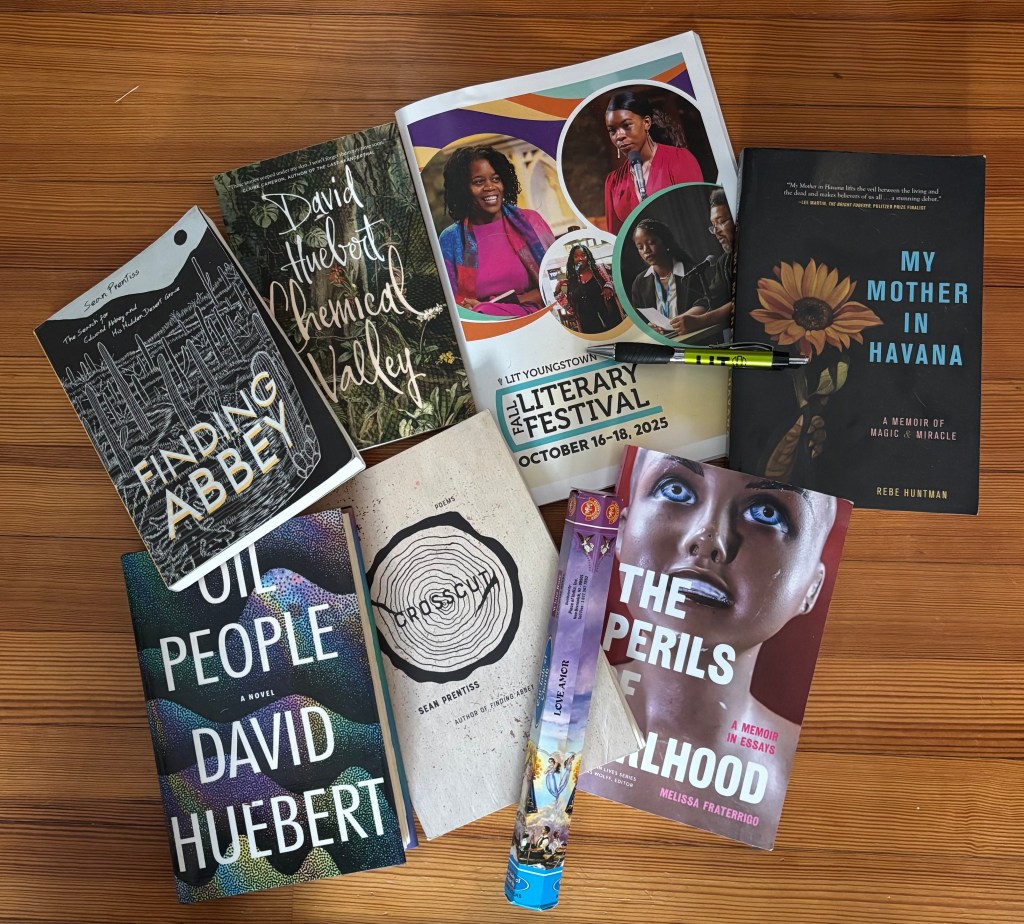
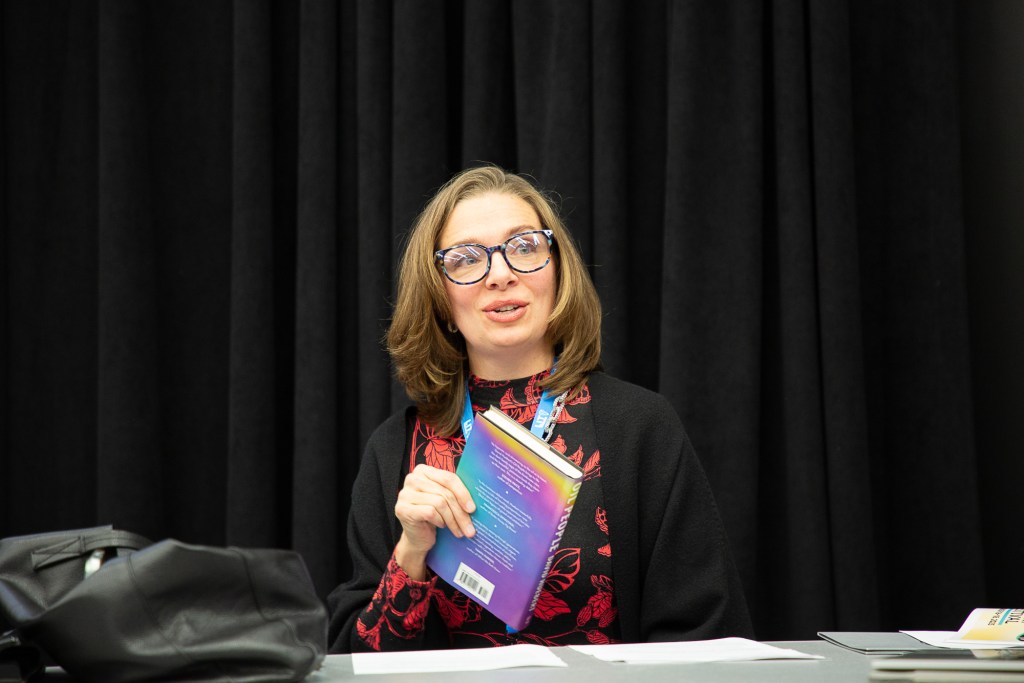
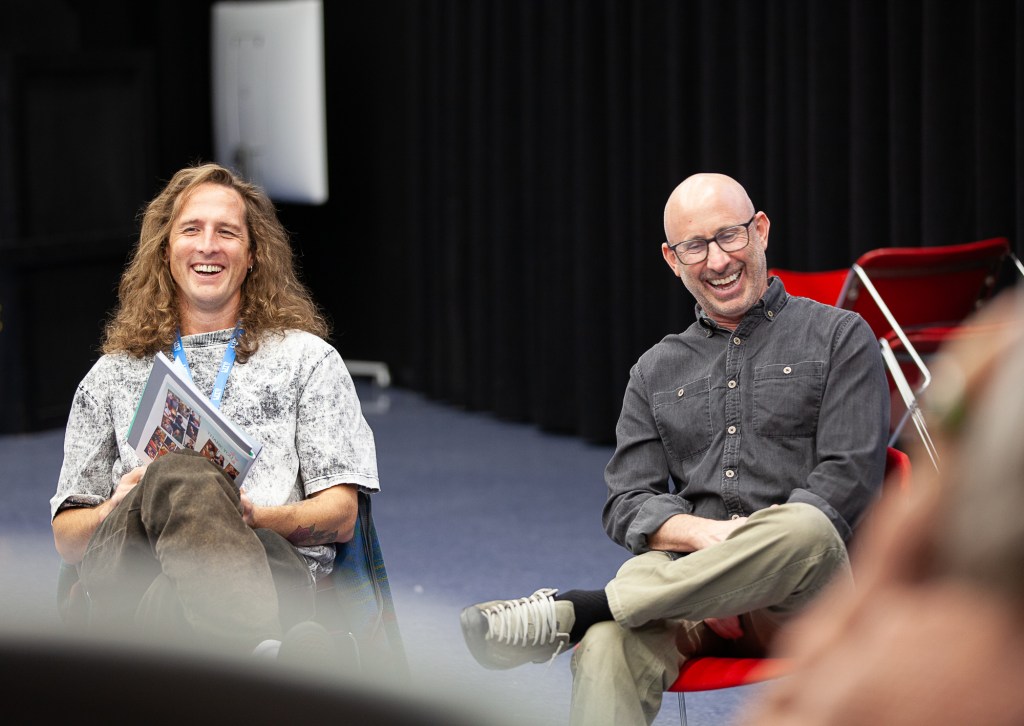
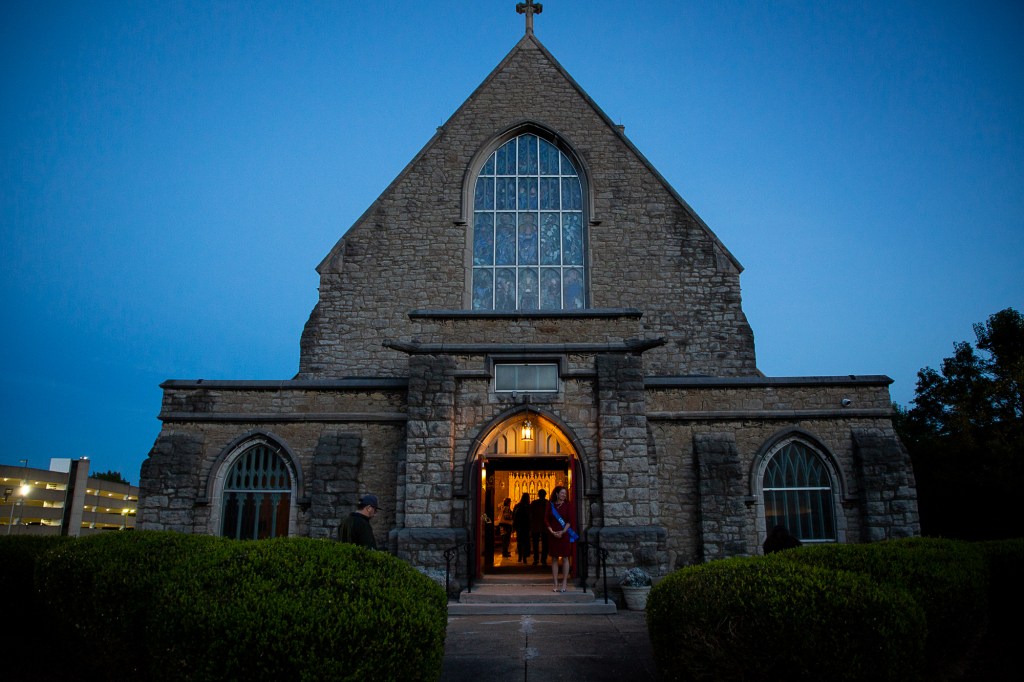
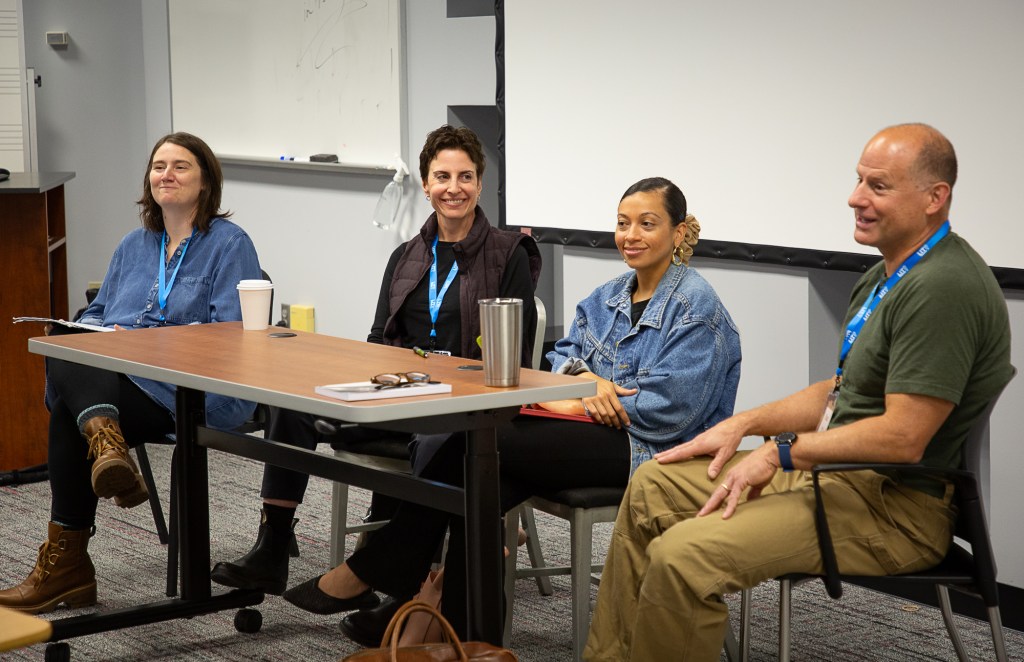


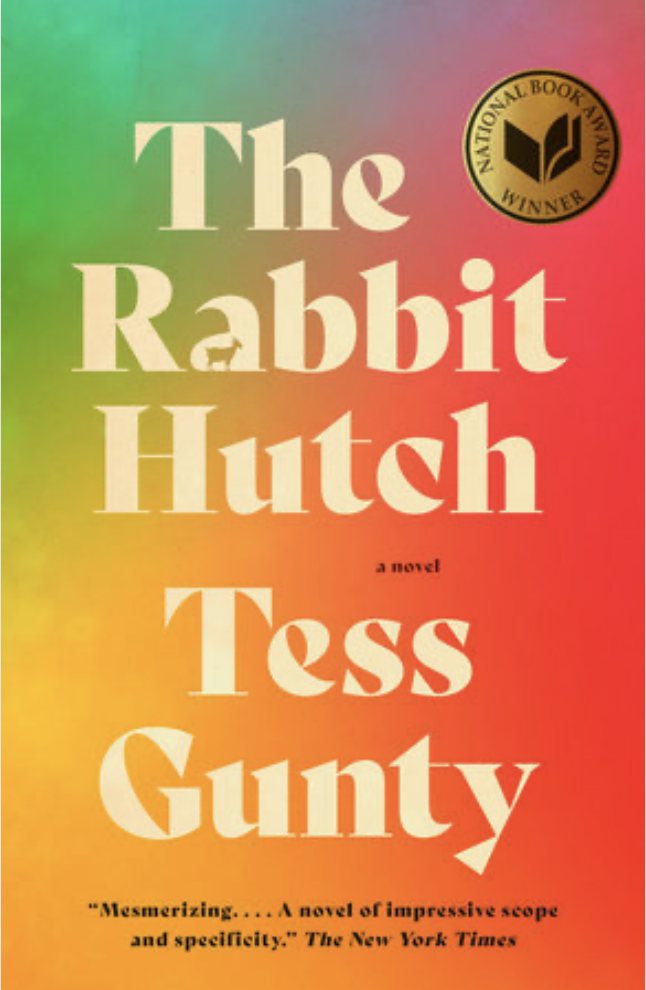


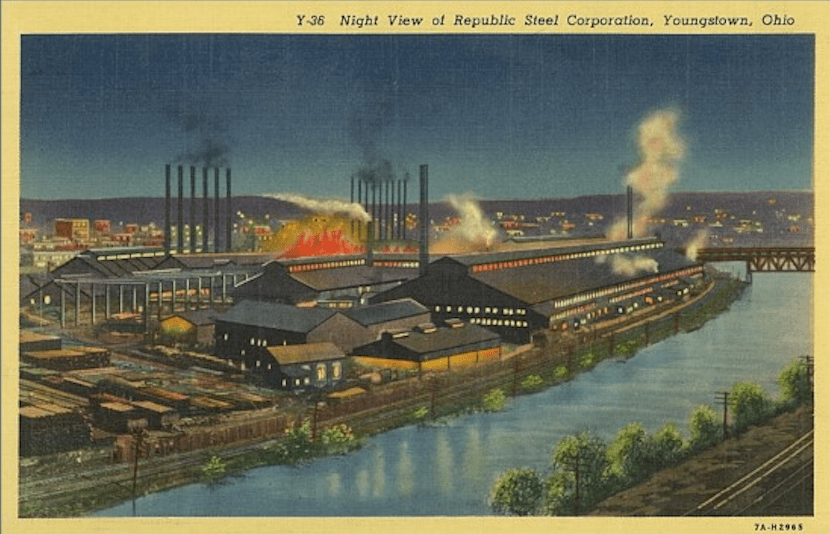
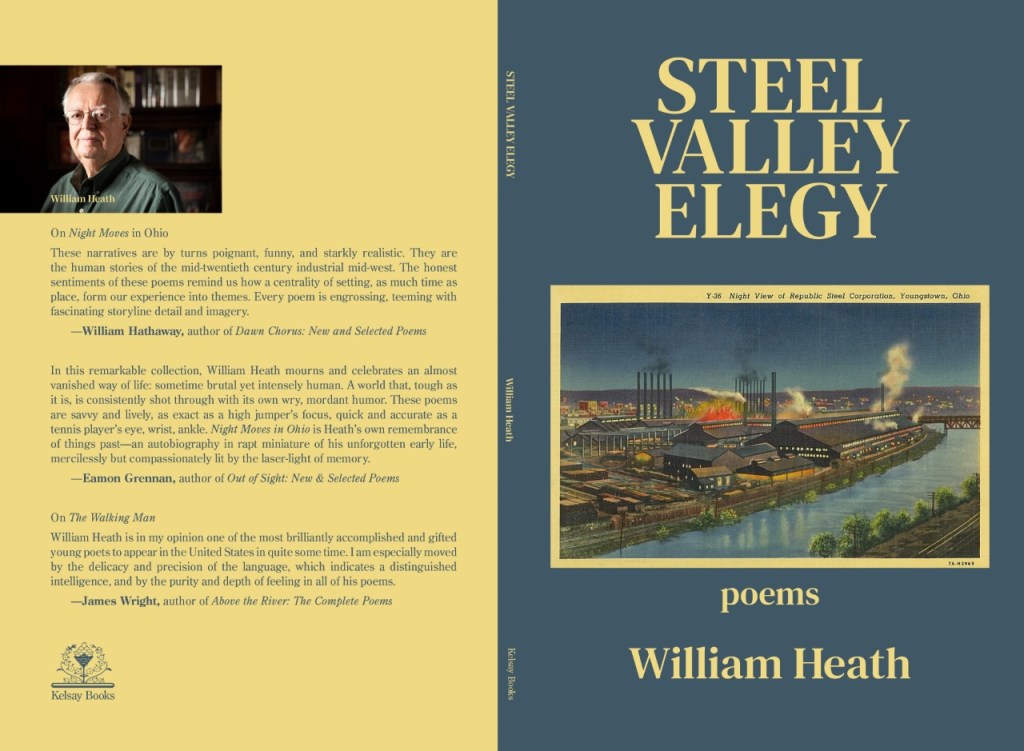
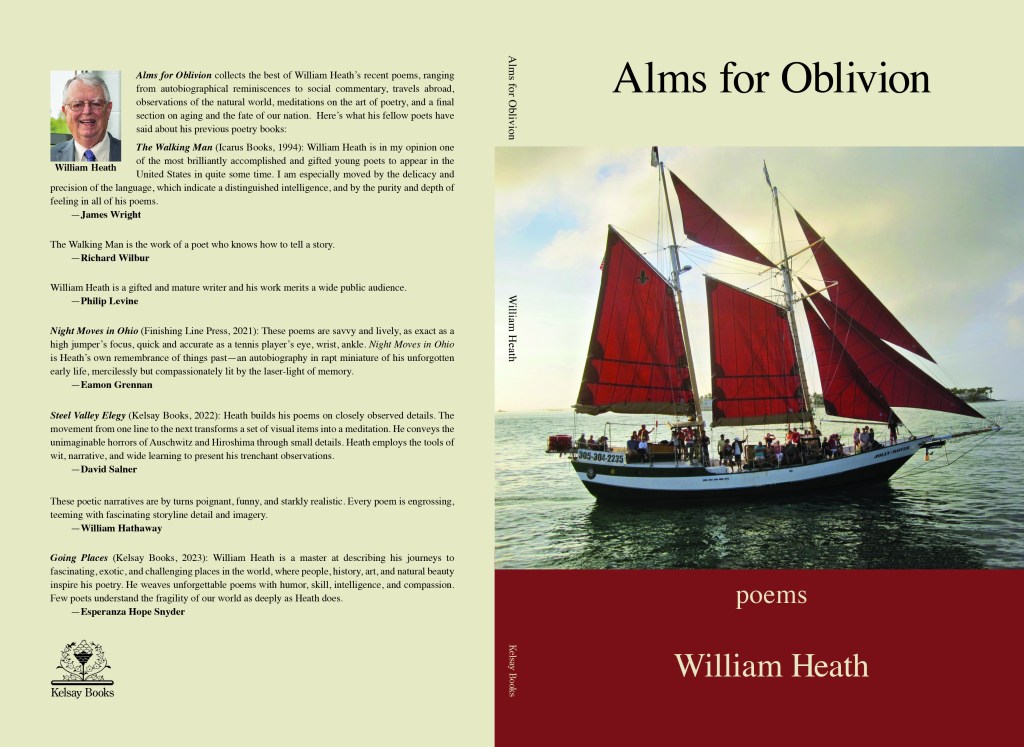

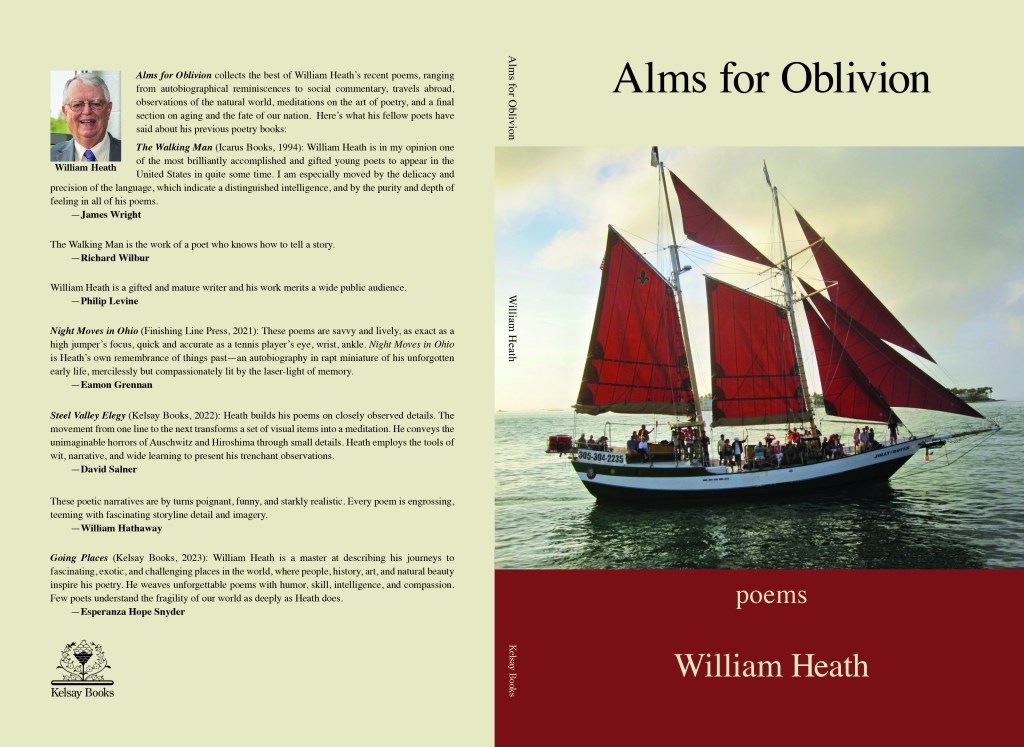


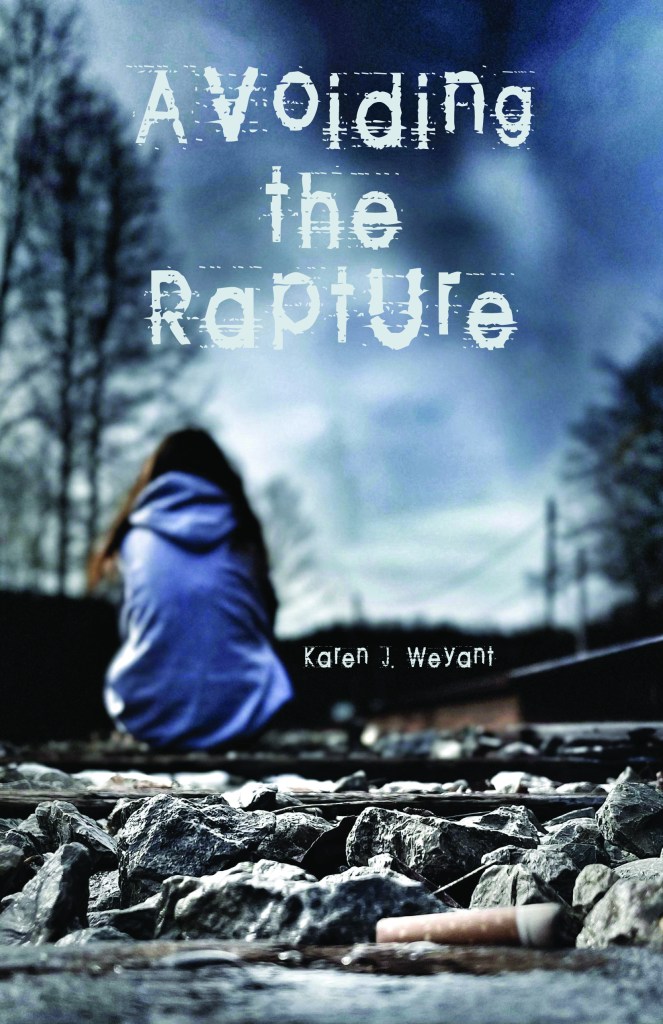

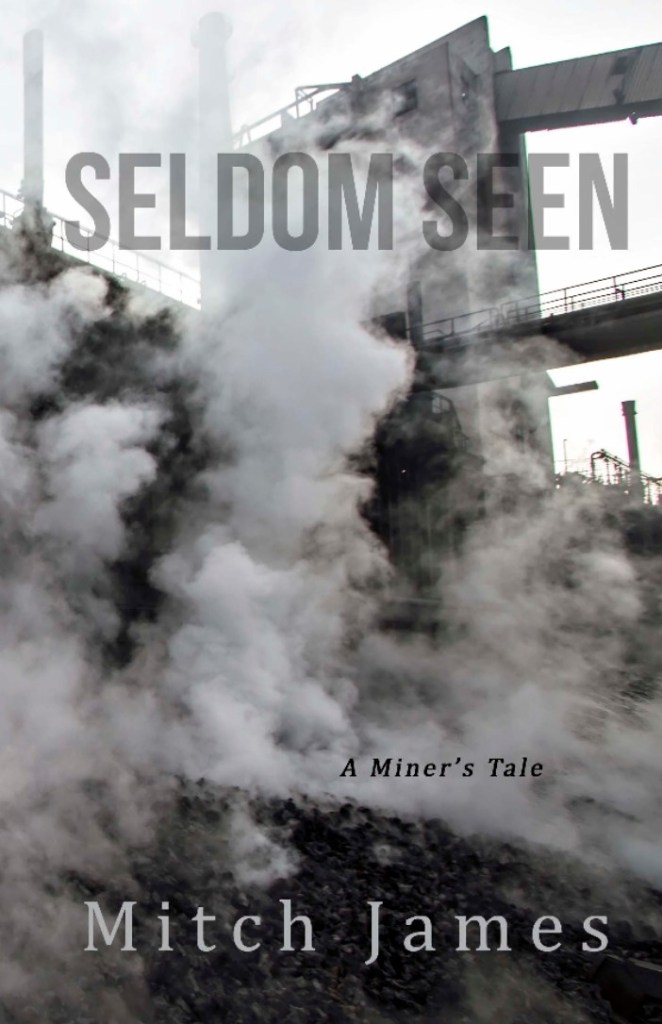


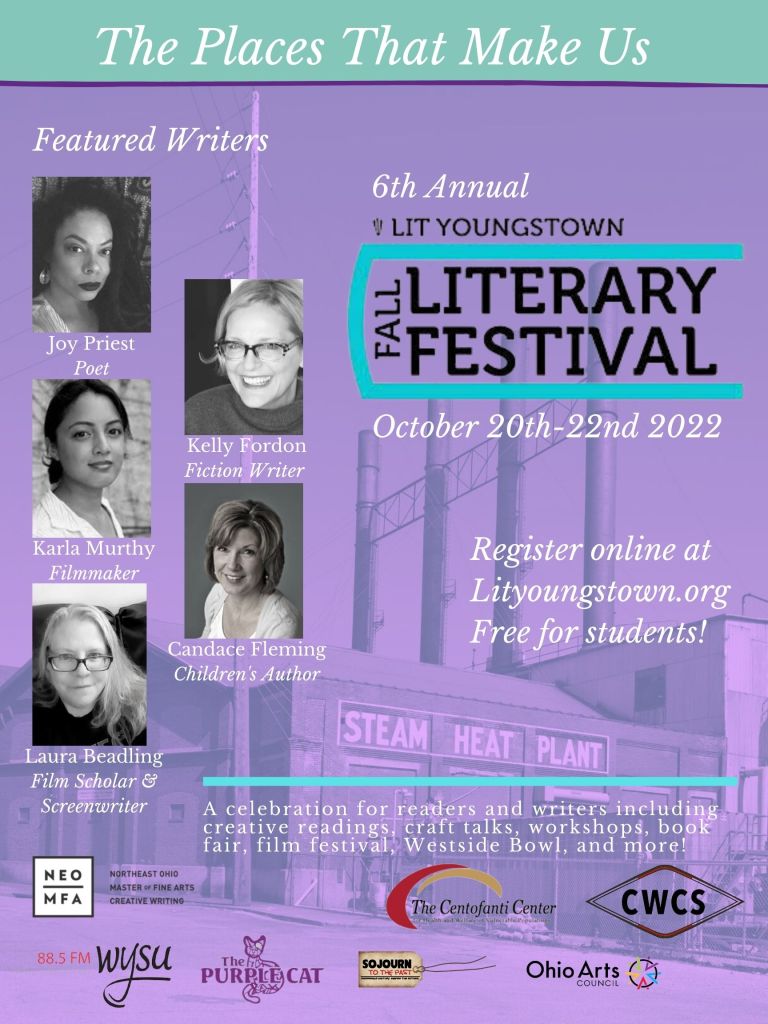
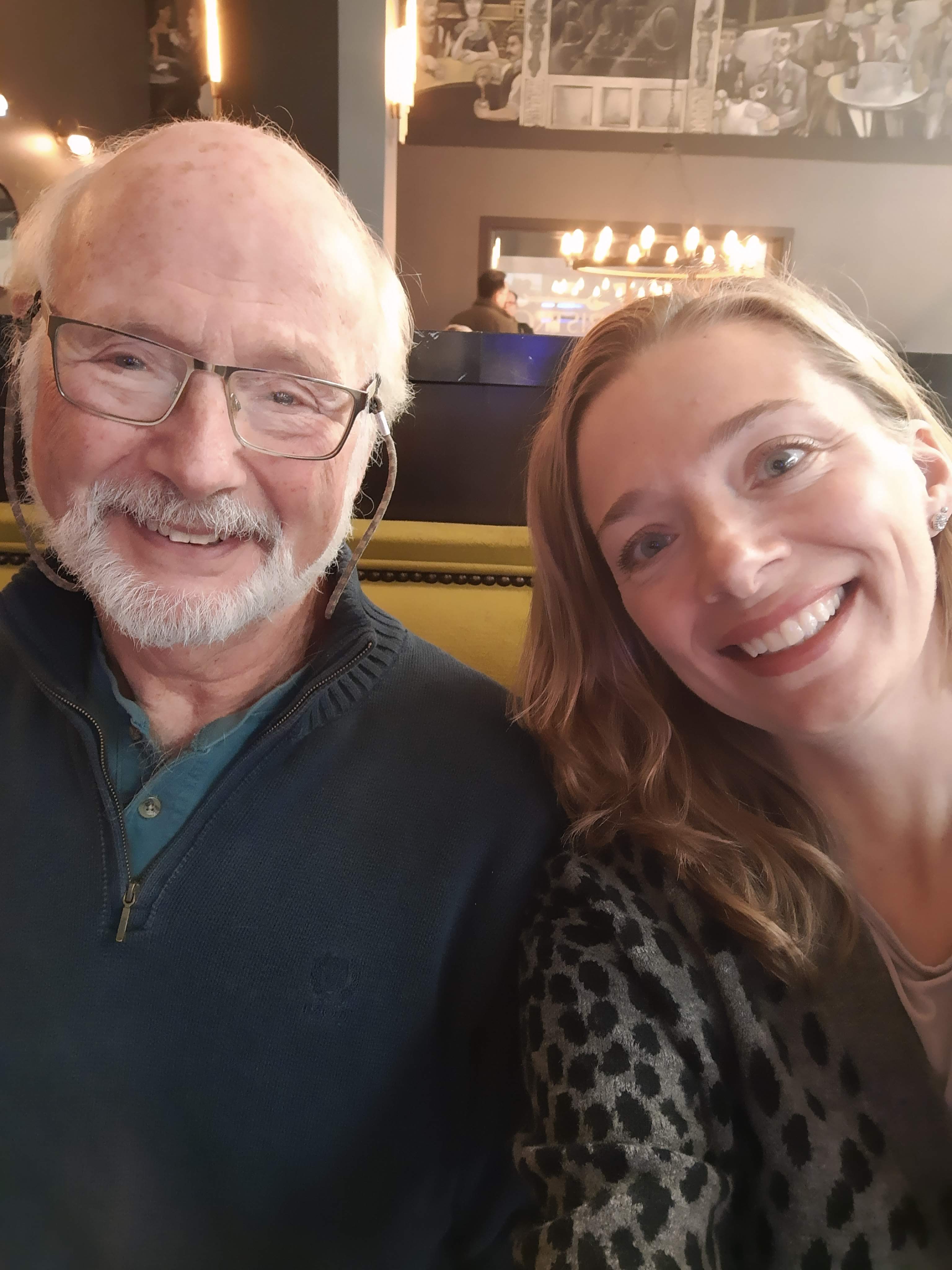

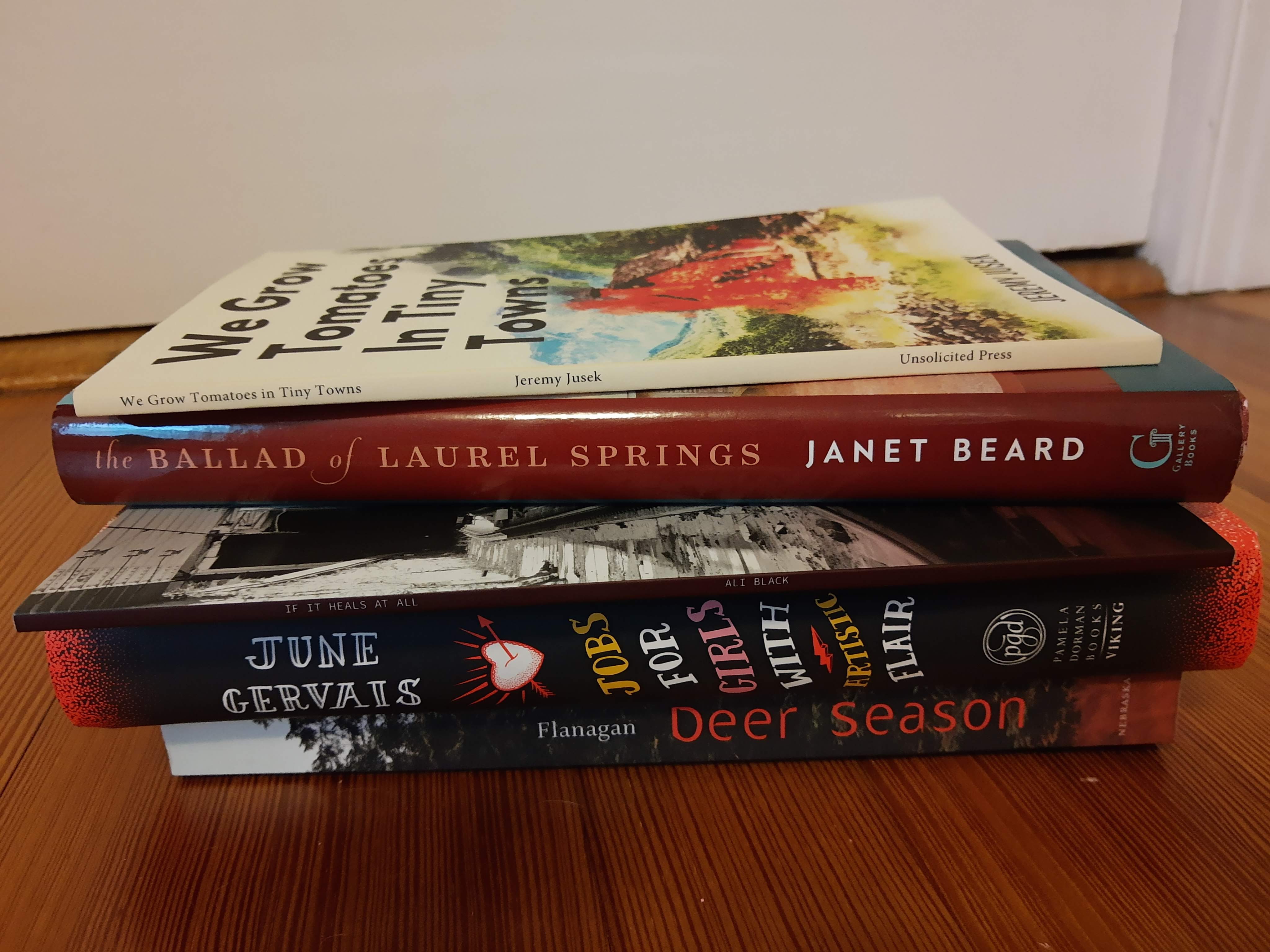
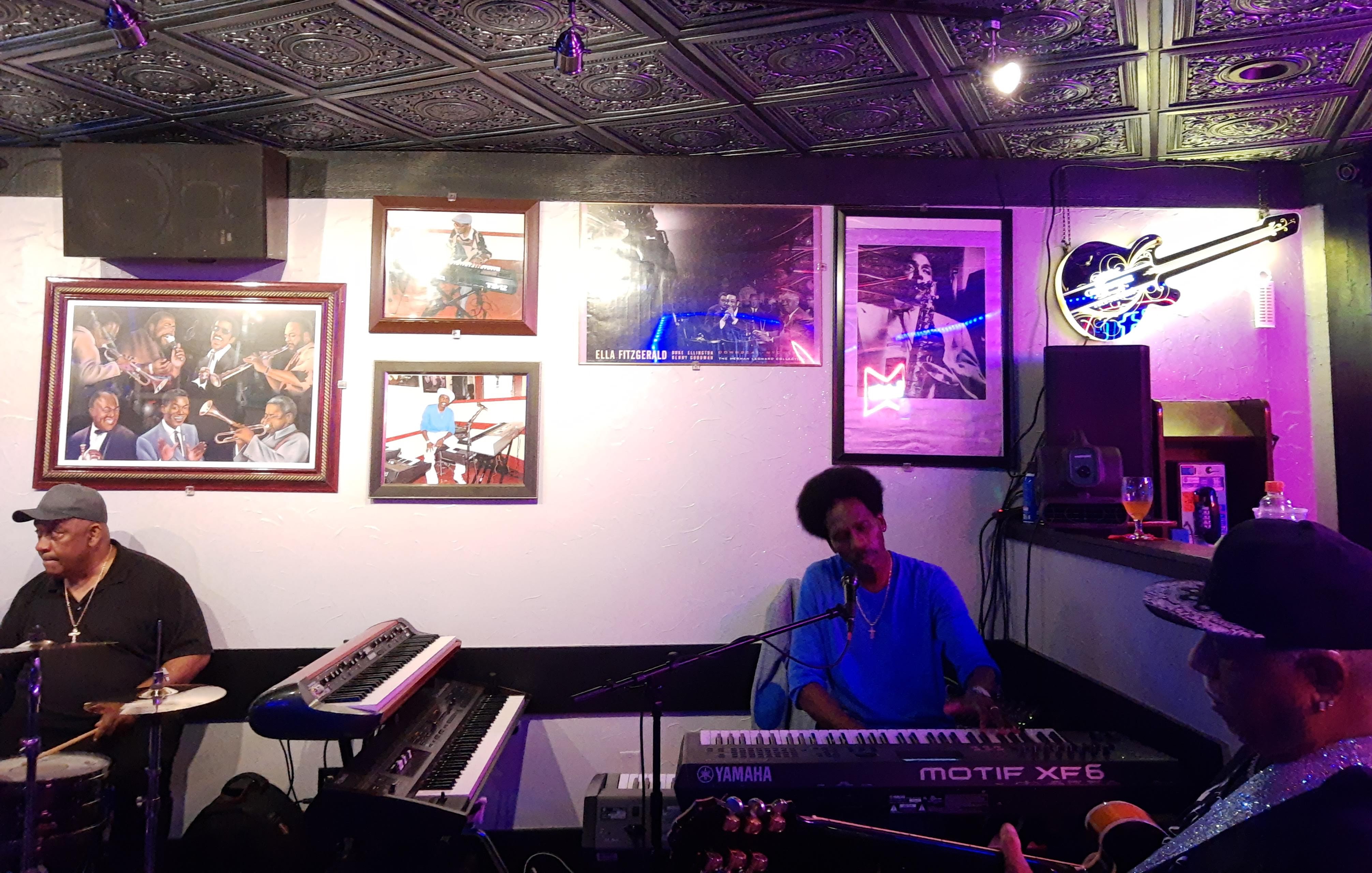



 Rust Belt Girl