Aloud: Off the Page, Into the World

Photo by Skitterphoto on Pexels.com

In my next life, I will be an opera singer. This is not the first time I’ve made this declaration and it won’t be the last. (Mind you, the next-life gods need to suit me up with a better voice and the ability to read music, at the very least.) It’s not that I believe in next lives, but such a dream–belting out “o mio babbino caro” a la Maria Callas–is more of a this-life mantra. The hot stage lights, the costumes, the adulation–none of this is what appeals. It’s the voice. Our first instrument. When I tilt to strains of a violin, it’s because it reminds me of singing or crying, even keening. Same for the clarinet played in a minor key, like a folk singer’s lament.

Still, my voice is generally reserved for the rote songs of Mass, a little shower-singing, and belting out Whitney’s “I Wanna Dance…” with one of my boys. Fairly private venues; certainly not performance-grade.

As a young adult, I went from one silent art form–ballet–to the next–creative writing. We college-age fiction writers kept fairly quiet–our work was there on the page–until our monthly reading series held at a local art gallery, called Movable Feast (after Hemingway’s memoir and the relocatable series, which featured brie-and-crackers and grocery store sushi, when my friend and I were in charge of said feast).

My friend did–and does–write poetry, an art form more suited to recitation. Mic-ed, there were those poets at our Movable Feast, whose words took flight on the strains of their voices, some breathy and soft, some staccato and sharp, some exotically-accented. Sometimes, the words all but disappeared in the song of those poets’ voices.

Tone. Mood. Interesting language and turns of phrase. Even a surprise rhyme scheme. Moments. These are the elements that shine in recitation and are perhaps more dense and readily-found in poetry than fiction.

How to recite fiction? It’s not an easy task: Plotlines and plot points. Character names and descriptions. Landscapes. These details are easily lost to the ear when recited and best read on the page, in the quiet.

I know now that my success and failure (I don’t remember what I read aloud in grad school, and I’ll bet no one else does, either) when it comes to readings is less about my actual voice than choice.

My actual voice is not breathy and light; I cannot master the soothing monotone of an NPR announcer. My accent might grate on some more gentile listeners. Still, to read our work aloud is an exercise in performance we writers should seize–and so I do.

It’s been a year or so of finding my reading voice. There was the audio feature I recorded of my short story “Recruit,” for Flock literary journal. Then, I read a piece of flash fiction at a literary festival near where I grew up, where I felt at home, where everyone’s voices sounded something like mine. Most recently, I read at Little Patuxent Review‘s issue launch event from my short story, “While Our Grown Men Played.”

I had five minutes. Five minutes–to a fiction writer who trades in thousands of words on the page, sometimes daily. Five minutes for time and place and character and mood and theme and… voice.

As it was when I was a dancer on the stage, the during part is a blur. But I remember the after-the-reading discussions with several fellow readers at that issue launch, including local author and poet, Alan King. Thinking on it further, I have a few takeaways. Here are five ways to deliver a good reading:

  1. Forget the frame of a story; keep it short and tight.
  2. Pick a pivotal scene.
  3. Sensory description lets the audience in.
  4. Humor helps, when appropriate.
  5. Use your own voice (accent be damned).

I’m coming a little late to spoken word, poetry meant to be read aloud– performed really, rather than simply recited. But I think it has a lot to offer, not only in and of itself, but as inspiration for writing–and reading aloud–works of fiction or anything else. Check out spoken word artist “little pi,” who I met at the LPR issue launch event. And many thanks to Miami University Press in Oxford, Ohio, for introducing me to Janice A. Lowe, poet and composer of musical theater and opera(!), whose collection Leaving CLE: poems of nomadic dispersal, I’m currently devouring. People, I dare you to “unhear” such compelling voices, even if you only get to read them to yourself on the page.

Do you attend poetry, spoken word, or fiction readings? Listen to podcasts? Is there a poet or author whose voice speaks volumes to you? Have you read your own stories or poems aloud?


From Architectural Afterlife: “This Cleveland Church has Sat Abandoned for 27 Years”

Interior of Nativity of the Blessed Virgin Mary Roman Catholic Church in Cleveland, Ohio. Photo and story credit: Johnny Joo, architecturalafterlife.com

Maybe old buildings are in my blood. For forty years, my dad worked as a draftsman and designer for structural engineering firms, drawing up plans by hand. On trips into Cleveland for the art museum or bagels, Dad would point out the buildings he’d had a hand in. His job: ensuring they would stay standing.

So, it feels like a personal affront to watch buildings–especially beautiful historic places–go to ruin, abandoned.

I’ve talked on the blog before about “Ruin Porn,” a type of photography that glorifies falling-down structures, often in post-industrial places, like my native Cleveland. I’ve said before, that to me Ruin Porn looks like the American Dream on its knees with no dreamer in the scene. (I wrote a three-part essay you can read here, here, and here.) So, what do we do? How to salvage falling-down places?

Read more

ALL THE WAY HOME and the back- and heart-breaking art of the DIY

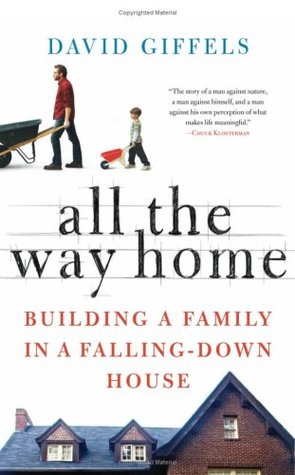
I’m re-posting this review-lite of David Giffels’s first memoir, _All the Way Home: Building a Family in a Falling-Down House_ in response to a writing prompt–Dream House–over at Lorna’s site, Gin & Lemonade. As my house is still recovering (slowly) from the excitement of a burst pipe, I thought a bit of house reno humor was in order. To respond to Lorna’s prompt, yourself, go here: https://ginlemonade.com/2019/02/13/house-hunting-as-a-wheelchair-user-other-stories/ Happy Friday! ~ Rebecca

Rebecca Moon Ruark's avatarRust Belt Girl

2205542

I was sixteen before I knew a dad who didn’t drive a pickup truck.

Of course, this speaks as much to my limited teenage powers of observation as it does to my rural Ohio upbringing. Still…

My dad’s life was–and is–in his truck. A dad without a truck? How else would one: haul his 84 Lumber finds to turn the attic into proper living quarters; bring home fresh-split logs–and the log-splitter–to stoke the wood stove in winter; tow a rotted shell of a boat to be restored from the ribs up–in the workshop designed and built yourself?

In my eyes, my dad was the original DIY-er, before that catchy name was put to skillful industriousness, craftsmanship, and thrift.

As such…reading award-winning Akron, Ohio, author David Giffels’ memoir All the Way Home: Building a Family in a Falling-Down House felt like going home. Cursory jacket copy summary:

With their infant son…

View original post 786 more words

All One Big Happy Hustle

Photo by Tookapic on Pexels.com

Thanks to a couple of my favorite bloggers*, I’ve been thinking about the “side hustle” lately. Seems the popular term for side job has shifted from “gig” to “hustle,” and with it, comes a more pejorative connotation.

Let’s start here: once upon a time, when graduating with my MFA in Creative Writing, I learned of an opportunity to do part-time contract work in internal communications—for the credit card company headquartered nearby. Not for a hip advertising firm. Not even for a nonprofit with a compelling cause. Nope, this job would require clocking in and out for the Fortune 500 company sometimes referred to around town as “the devil.”

Internal communications for the devil meant digesting leadership meeting notes on risk management and summarizing and synthesizing said notes into digestible PowerPoint presentations. (Oh, the myriad PowerPoint presentations!) And then came the fun of organizing the presentation highlights into multi-colored graphs on oversized Excel spreadsheets that required a special printer. This job was the opposite of every vision I’d had of my post-school self, teaching creative this and creative that.

Read more

Name your bliss

I’m feeling deep blog love on this Valentine’s Day. Really, I am. I only wish I had the time to devote to crafting a post about the many positive connections–and even a free book or two (now that’s love!)–I’ve made through this site. Work calls–and so I’m relying on the ol’ reblog. Happy Day, whatever kind of love you’re celebrating. More soon. ~Rebecca

Rebecca Moon Ruark's avatarRust Belt Girl

paper-romance-symbol-valentine-159526.jpeg


Is it weird to mourn your mom on Valentine’s Day—with the holiday’s declarations of love, its overtures and SWAKs? This is love stuff, yes, but this is also word stuff.

In the dozen years since my mom left this life, I’ve become more fluent in the language of loss—and of life. Do not pity this post. I happily speak for me and her now, tell her stories to my kids who never knew her, keep her voice alive in mine.

This is mother-love, reborn, but it’s also language-love. Foreign at first and then familiar—even taken for granted—and all the more cherished when it’s gone.

Who among us writers doesn’t ascribe to “show don’t tell?” We illustrate and demonstrate; we craft a tactile scene. But let’s not forget to tell, while we have a voice to do it.

Did you see this coming?

Call your mom. (Or dad or kid…

View original post 183 more words

When a journal editor says no more death stories* **

Photo by Kat Jayne on Pexels.com

I submitted “Scooter Kid,” a story about conception (of a couple different kinds)–of creation, chaos, and control. (Spot the nod to Stockard Channing’s character in the 1993 movie, Six Degrees of Separation? Yeah, I’m still a little obsessed.)

Many thanks to Elizabeth Varel, Editor in Chief and Fiction Editor, and all the editors of Parhelion Literary Review for publishing my story in your lovely journal. Alongside my fiction, you’ll find a trove of thought-provoking prose, poetry, and art: right here.

Happy weekend. Happy reading. What’s on tap for you?

Thanks for stopping by!

~Rebecca

*Seriously though, submitting to literary journals? Check those submissions guidelines.

**OK, OK, all stories are death stories.

Of Fathers, Sons, and Seasons: Reading Marilynne Robinson’s GILEAD

The first good snow of the season on our Crepe Myrtle

I was weeping before 8:30 am. Not because of the cold and old pipes and our living room soaked, stripped, and drying now–like a child pulled from a furtive dip in the lake. No, I was weeping over a book about fathers and sons and the seasons of life–and wouldn’t you think my avid reader-cynicism could have borne me up better than that? Nope, there I was weeping, listening to the end of the story, as I trained my eyes on the winding roads that take me from my sons’ school to home and back, again and again.

Not a chance I could have held it together in the face of Marilynne Robinson’s Pulitzer Prize-winning novel Gilead, narrated by Tim Jerome of Broadway fame. From the cursory Goodreads summary: Gilead presents an “intimate tale of three generations from the Civil War to the twentieth century: a story about fathers and sons and the spiritual battles that still rage at America’s heart.”

I will admit right here that it took me this long to read anything by the matriarch of the Midwestern religious novel, and I’ll tell you why. I thought it would be not just “churchy”–an attribute Robinson has said did not define her background–but preachy. After reading (and weeping), I’d define the novel as “teachy” maybe, but only in the best way–as the narrative is presented as a sort of last will and testament from an elderly father, the Reverend John Ames, to the seven-year-old son he won’t get to see grow up. In short, it’s a quiet wonder of a book.

Read more

My interview with Ohio Poet Laureate Dave Lucas

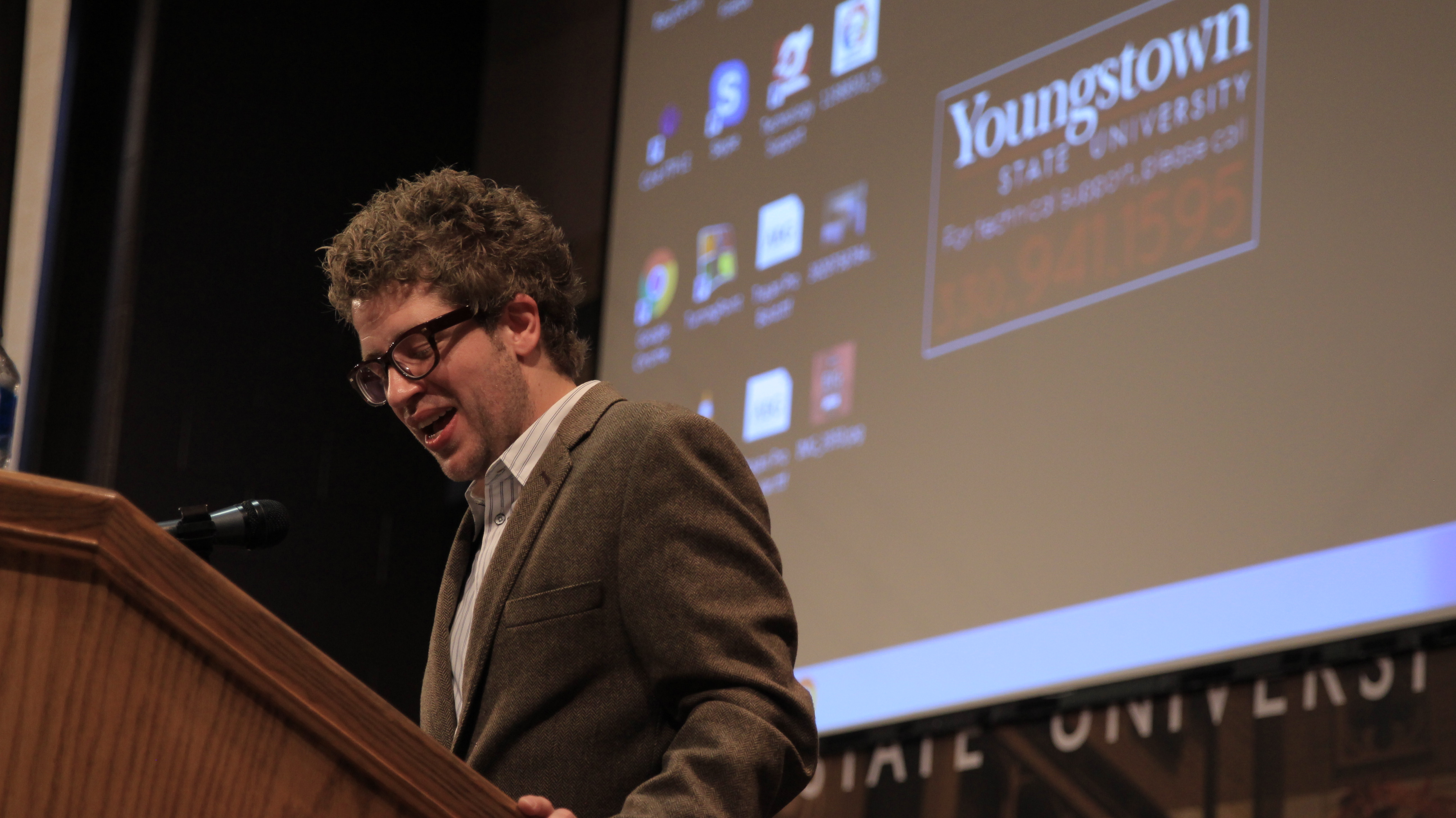
Ohio Poet Laureate Dave Lucas presenting at Lit Youngstown’s 2018 Fall Literary Festival*

Love poetry or hate it (btw, you don’t really hate it), Ohio Poet Laureate Dave Lucas is right there with you.

What’s it like to be a poet laureate? I asked Dave Lucas that–and more–in this interview over email. Here’s what the author, teacher, and “poetry evangelist” had to say.

Dave, how much does it mean for you to have been chosen as Poet Laureate of Ohio, and what’s up next for 2019?

If you’d asked me this a year ago, I would have said how honored I felt by the selection and how excited I was for the two years to come.  A year into my term I still feel honored and excited, but more than anything I feel gratitude.  I’m grateful for the opportunity to see parts of my home state I’ve never visited before, to talk about poetry in such varied settings and with so many people for whom poetry is a way of making meaning of their lives.

In 2019 I hope to continue those travels, but I also hope to “meet” more Ohioans virtually through the “Poetry for People Who Hate Poetry” project.  The project entails a monthly column syndicated in Ohio newspapers and media outlets; this year we hope to create a podcast version as well, so that we can promote poetry in whatever medium Ohioans get their information and culture.

As Poet Laureate, I imagine you’ve met many Ohioans in your travels around the state. What has surprised you most?

I’ve certainly been struck by the number and quality of poetry programs taking place at the regional and local levels.  These are workshops, reading groups, recitations, slams, and more, and I’ve encountered them everywhere I’ve traveled in Ohio.  The internet has of course been revolutionary for bringing people together around a common interest, but there’s something wonderful about seeing people gather in common physical space to talk about poetry.

In your Poet Laureate column on the Ohio Arts Council site, as well as in the classroom, you send the message that most of us love poetry, even if we don’t know it yet. Can you talk a little about how you define poetry and give us a couple examples of the kinds of poetic language we can find outside of what we traditionally think of as poetry?

Literary history tells us that anyone who attempts to define poetry today is about to be proven wrong tomorrow.  That’s both the pleasure and challenge of trying to say what poetry is or isn’t.  So I try to maintain as broad and flexible a definition as possible.  I think that poetry is the aesthetic pleasure we take in language.  Words are for play as well as work, as the groan-worthy puns of any good “Dad joke” will demonstrate.

So puns and jokes in general might be examples of the poetry we find outside of “poems.”  So are the metaphors we use to describe the world.  Riddles, jingles, lyrics, mnemonics, and more.  For instance, I’ve just finished a column (my sixth installment) about the artistry of slang, which Walt Whitman treats as the democratic aspect of poetry.  In this column I argue that even if you haven’t read a poem since high school, you participate every day in the artistry of language simply via the creativity of the slang you use. Read more

Little Patuxent Review issue launch

Photo by Pixabay on Pexels.com

I’m delighted that my story, “While Our Grown Men Played,” will appear in the Winter 2019 issue of Little Patuxent Review. I’m also delighted to be reading at the issue launch event. For more information or to purchase the issue–or subscribe to this lovely regional literary magazine–click on through.

There’s truth in every piece of fiction, of course–despite my penchant for writerly distance. But if there’s one story of mine that tells the tale of my mom and me, it’s this one. In it, I got to call my mom a “world-class whiner,” which she was. But she never whined about what mattered: the breasts that failed her when they let cancer in, twice; the chemo and wig; the daughter living 12 hours away by Greyhound bus. She whined about the little things we could share: overdue library book fines, our pear shapes, cold noses in winter.

“While Our Grown Men Played” is a story about being female, sure; but even more so, it’s about being together, despite distance over roads and time–and cosmos, even. As I write, she’s still with me in the way I am, the things I whine about, and in my body: our ballet bearing, my veiny hands that are hers, the accent that won’t leave me.

Maybe most stories don’t take years and great personal loss to write, but this one did. It is a bittersweet thing to let it go, to read from it in front of others, to somehow tie a bow on grief. But it is sweet, and a testament to perseverance in writing and in living. I hope my mom would agree.

So, today I urge against writerly distance. Let’s try it, together. Let’s close the distances between past and present, between the living and the dead, between fact and fiction–and mine for story that heals.

That’s what I’ll be doing anyway.

~ Rebecca

Powerful conversations and an essay by Melissa Ballard

A nuclear power plant near home

My mom wasn’t a hippie, though she lived on Hessler Road as a college student–a Cleveland street where hippie power still reigns. Late 60s, with my bearded dad at the wheel of their VW bug, they looked the hippie part, anyway. Enough to be stopped by a police officer, as they traveled country roads to my mom’s parents’ house in upstate New York. The checkpoint was in a little place called Woodstock. The officer tapped on the driver’s-side window. “Going to the music festival?”

“What music festival?”

Alas. My lovely parents weren’t hippies, but they weren’t content to become carbon copies of their parents, either. Starting fresh, newly-married, they moved to the country, where they would raise a few ducks, some chickens, a goat named Esmeralda, and eventually us human kids. What veggies she couldn’t grow in her lush garden, my mom got from the natural food co-op she helped to run. We had a local honey man and a pumpkin man. None of this struck us kids as any kind of resistance against the powers of 80s consumerism powered by…well, power.

Read more