Ann Patchett’s Tom Lake, and playing God in our life stories:

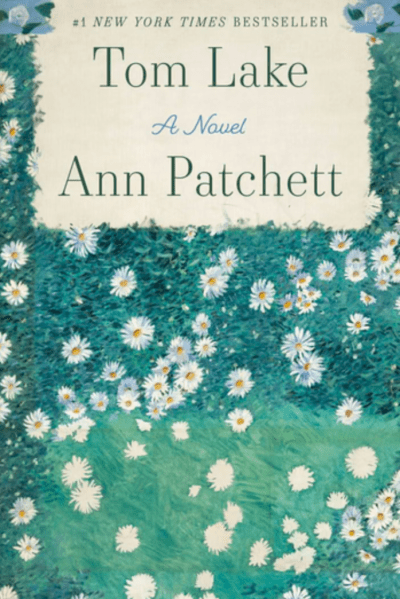
Image of cover of Ann Patchett's novel Tom Lake

I am a writer who loves story—and homework. I’m sure I’m not alone there. So, before I sat down to read—or more specifically listen to Meryl Streep read—Ann Patchett’s most recent novel, Tom Lake, I watched Thornton Wilder’s classic play Our Town, which features quite a bit in Patchett’s story. I caught the excellent PBS “Great Performances” production from the 1980s featuring Spaulding Gray as the narrating stage manager, a young Penelope Ann Miller as Emily Webb, and Eric Stolz (swoon) as George Gibbs, her love interest.

Tom Lake, then, is a story about a story about telling stories—or, the act of dramatic portrayal. Lights, camera, characters. Confused yet?

Okay, the front story, or more immediate narrative of Tom Lake, follows 50-something Lara Nelson, a wife and mother living on a Northern Michigan cherry farm (another dramatic subtext) as she tells her three grown daughters, home during the 2020 pandemic, about her long-ago love affair with famous actor Peter Duke (think: a 1980s James Dean; I’m picturing 90210-era Luke Perry). 

Note that in this novel there is not a whole lot of Rust Belt significance to hang our hats on here at Rust Belt Girl. This setting is not Rust Belt Michigan, but the Michigan of the Upper Midwest’s Fruit Belt. But, hey, we contain—and read—multitudes, right? And, really, Patchett rarely disappoints.

Told as a dual narrative, Tom Lake’s backstory follows the love affair between then-young actors, Lara and Peter, at a summer stock theatre in Michigan where they perform both Our Town and Sam Shepard’s one-act Fool for Love, which I need to watch next. (A girl can only do so much homework.) Quick distillation, Our Town is a gentle (even genteel in that puritanical New England way) portrayal of young love; Fool for Love explores romantic love’s dark and destructive side.

Image: Harper Collins website

So, Patchett’s novel Tom Lake is a story about the light and dark of love. But it’s also—and this might be even more interesting and applicable to us writers—a story about storytelling. Who tells the story, when, how, why, and about whom and to whom. What’s included in the storytelling and, maybe even more importantly, what’s left out?

A dual narrative novel is difficult to pull off; I know because I’ve tried this twice. Invariably, a reader will like one narrative more than the other and grow impatient when their favorite narrative is offstage. For me, Tom Lake’s 1980s narrative, its backstory, is more compelling (because much more is happening) than the 2020 narrative, which is mostly telling, with less forward-moving action (think: literal cherry picking). Which left the modern timeline feeling more like a frame or bookends for the real story—a way to go back in time to the main action and a way to come out of it again. 

I won’t digress too long on why writers like Ann Patchett feel the need for modern-day frames for historical stories. (Yes, a novel set in the 1980s is considered a historical novel.) My guess is it’s because historical novels today are often relegated to the “genre” genre, as in not the literary fiction shelf. Okay, digression over.

My favorite (oft quoted) line from Our Town, which feels very instrumental to this discussion on storytelling (and okay there’s a little spoiler here): Toward the end of the play, the dead character Emily, who returns to her life for just one day, asks the stage manager if any living person ever realizes “life as they live it,” and he says no, but then adds an exception. “The saints and poets maybe—they do some.” 

There’s a lot of smart stuff happening in this novel of Patchett’s when it comes to the all-important telling of life’s story—our human way of re-living what we can’t grasp with our little human minds in the moment. We can’t all be—though maybe we can all aspire to be—saints and poets.

Patchett’s main character, Lara, who is narrating her story of young love, to her grown daughters, is basically the stage manager of her own story, choosing how and what to tell as she goes. At one point Lara equates the stage manager in Our Town with God, which brings up interesting ideas about faith (Patchett was raised Catholic and it often shows in her writing) as well as destiny/Providence in our lives, and agency in how we portray our life stories.

What about the part of our story we leave untold, for our hearts, alone? I thought about this a lot as I read Patchett’s novel. For the main character, Lara, it was a dark part, and (dare I say) foolish aspect of young romantic love she shields from her grown daughters. In not telling her whole story, the light and the dark, is she playing God? Are we all?

In my writerly opinion, the darkness in her story Lara keeps to herself isn’t earned by the character, un unusual flaw in character development on Patchett’s part. (Also very important to know when to wrap up a narrative.) But it is a stumble far outweighed by all the really fine storytelling she does in this novel. If this criticism feels vague, it’s because I don’t want to spoil the reveal. (Read it and tell me what you think!)

If there’s one author I’ve followed closely for some time, it’s Patchett. Her annotated version of Bel Canto—my favorite novel of hers—makes a great gift for the literary fiction (or opera) lover. Of her more recent novels, her 2019 release, The Dutch House, felt like a near perfect novel to me: quiet, to be sure, with none of the Le Carre-like action of Bel Canto, but an incredibly immersive read with characters who felt like my own brother and sister by the end of the book. Family ties Patchett writes about brilliantly, if she’s a little less adept at depicting romantic love and specifically sex.

Saints? I might know a few in the making. Poets? I’m honored to know a good handful. But for the rest of us, Patchett’s got me thinking about how lucky we writers are to get to craft our stories. How lucky we readers are to watch other writers and poets tell their stories just as they wish. We receive such instrumental gifts this way!

Have you read this novel? Have you seen the plays that informed this novel? What elements of craft and storytelling did they bring up for you?

And…what was your favorite bookish gift you gave or received so far this holiday season?

Check out my categories above for more guest posts, interviews, book reviews, literary musings, and writing advice we can all use. Never miss a post when you follow Rust Belt Girl. Thanks! ~Rebecca
Enter your email address to subscribe to this blog and receive notifications of new posts by email.


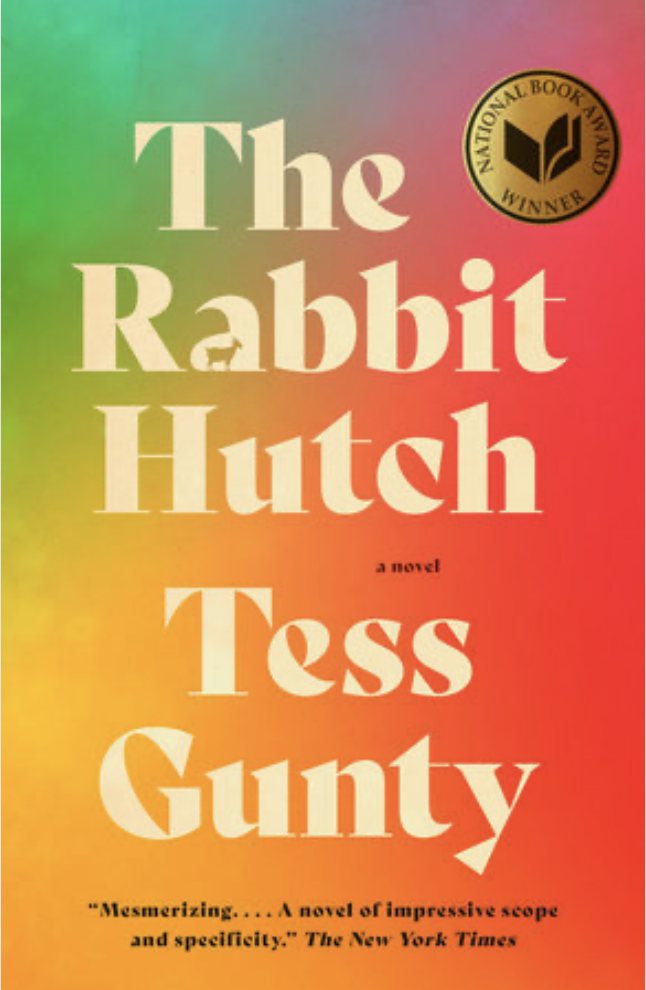
More from The Rabbit Hutch: Reflecting on a conversation with National Book Award winner Tess Gunty

Tess Gunty’s 2022 debut novel, The Rabbit Hutch, won that year’s National Book Award for Fiction (and other awards) and also won hearts—especially among Rust Belt readers.

Pittsburgh-based author and art writer Emma Riva wrote a wonderful essay about The Rabbit Hutch published here at Rust Belt Girl I encourage you to read next—if you haven’t already.

I was late to the novel, myself, and was struck by how Catholic it felt, despite not being marketed that way (for obvious reasons).

I was thrilled to “meet” Gunty yesterday evening through the Jesuit Media Lab‘s conversation over Zoom with the author. A sizable group of us avid readers tuned in to listen to Gunty talk about being raised Catholic and writing about The Rabbit Hutch main character’s deep interest in female mystics and mysticism, about researching Hildegard von Bingen and discovering her “extraordinary theatre of mental activity” and agency, about technology and art and how Mary Shelley’s Frankenstein is a “perfect allegory for AI,” and much more!

“I wanted to make art out of my characters’ lives, including their digital lives,” the author said about her novel that still feels very much of this technological moment. (Gunty herself doesn’t partake in social media and, clearly, it benefits her writing. “You need to keep the tool of your mind as sharp and clean as possible,” she said.)

Buy your own copy here

As for the novel’s fictional setting of Vacca Vale, Indiana, Gunty said that the place was the only thing she knew for certain she wanted to portray, going in, that the setting started out being the MC—until she was about three-quarters of the way through writing the first draft.

She said she wanted to capture the “purgatorial” nature of post-industrial cities like Youngstown, Ohio, Flint, Michigan, and Gary, Indiana. (No shade intended, I don’t think!) How to capture the sensation of such places, like her hometown of South Bend, on which the novel’s setting is based? In the books she read, Gunty said, “I never encountered any place like my hometown.” And yet politicians and movies portray a flat stereotype of such post-industrial Midwestern places.

Gunty’s description sparked pride in me, last night. She described our Midwestern and Rust Belt cities as places of mystery, magnitude, and complexity. When you don’t see a place like your home reflected in literature, “you feel like it doesn’t matter,” she said. For Gunty, writing this novel, then, was an attempt to insist upon the “dynamism and multi-dimensionality” of her hometown—and others like it.

Like mine. Maybe like yours, too.

I encourage you to check out JML for their book talks and other events.

Have you read The Rabbit Hutch? What did you think? Did you read Emma Riva’s essay about it?

Like this post? Comment below or on my FB page. And please share with your friends and social network. 

Are you a Rust Belt writer interested in seeing if your own post, or author interview, or book review might be right for Rust Belt Girl? Hit me up through this site’s contact function.

Check out my categories above for more guest posts, interviews, book reviews, literary musings, and writing advice we can all use. Never miss a post when you follow Rust Belt Girl. Thanks! ~Rebecca

Enter your email address to subscribe to this blog and receive notifications of new posts by email.


Reading rn…

Shoutout to Belt Publishing for all the great Rust Belt-ish books they put out. I don’t get around to reading enough of them, but when I pick one up, I know it’s going to be good. Belt Publishing’s 2016 release The New Midwest by Mark Athitakis is still a bible of Rust Belt lit for me, and my copy resides permanently in my bookshelves. And then there’s Edward McClelland’s super clever How to Speak Midwestern (linguistics is never not fun!).

Of Belt’s newer releases, I’m most excited to read Patrick Wensink’s The Great Black Swamp: Toxic Algae, Toxic Relationships, and the Most Interesting Place in America that Nobody’s Ever Heard Of. (I am so here for long titles and of books that make me feel like a somebody–in that I have heard of the Great Black Swamp, since my dad lives in Northern Ohio. Also, when the personal and the environmental collide–which should be often–fantastic storytelling happens, imo.)

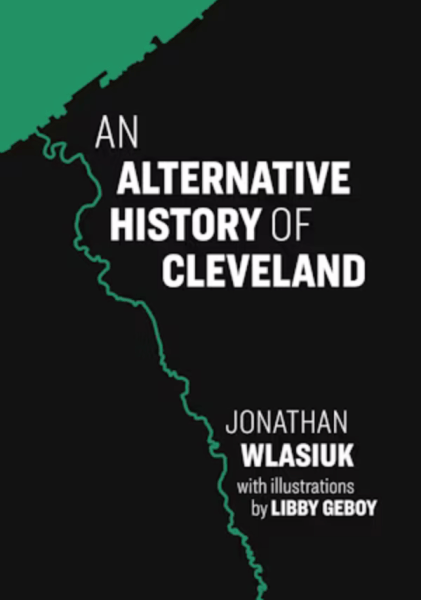
I just finished Jonathan Wlasiuk’s An Alternative History of Cleveland, and thought, yep, Belt Publishing did it again. (I think Ed Simon–of Belt Magazine, now Rust Belt Magazine–wrote An Alternative History of Pittsburgh, which is bound to be as great, if not even better.) I’ve been dipping in and out of this history of my native northeast Ohio for months, not because it isn’t gipping but because it’s so layered. A summary for you from the back jacket copy:

Part natural history, part archaeological essay, and part a contemporary call to arms to reclaim and rewild Cleveland’s future, this unforgettable trek into the heart of ‘the land’ will change the way you see the city forever.

No easy task, the author attempts to provide at least a bird’s eye view (both figuratively and literally, as you’ll see) of 10,000 years of human history. He zooms in on the relationship (fraught, as you can imagine) between humans and the environment–of which there’s a lot to find interesting, as northeast Ohio is situated along the eastern shore of Lake Erie, bountiful in flora and fauna, when it’s left alone, that is.

Incredibly well-researched and cited, the parts of the book that “sang” to me best were those moments where the personal and the environmental intersected in a visceral way. In the final chapter, “The Land,” Wlasiuk describes his work for an organization called Lights Out Cleveland, which has him looking for dead birds on the sidewalks of Cleveland before dawn during the heart of migration season. These birds came to an untimely end along their journeys due to humans’ penchant for light, of course, and see-through buildings.

This might sound like a depressing chapter start, but the author has a knack for involving fascinating local voices–including the “irreverent” and mostly-anonymous voice behind the @trashfish_cle account on IG, who spends his days in a kayak fishing trash out of the Cuyahoga River–and for providing hope, often in the way of a call to action. Or, at least we get lessons by watching locals who are doing their part to “remediate the environment and spread awareness.”

And look, we can do our part–not just for the Rust Belt-ish literary world but for the world at large, for our flora and fauna neighbors–by talking about the books we read that not only entertain but open our eyes to the ways we are connected to each other and to these ancient environments we call home. Right?

What are you reading, reading, or watching right now? Let me know in the comments.

Like this post? Comment below or on my FB page. And please share with your friends and social network. 

Are you a Rust Belt writer interested in seeing if your own post, or author interview, or book review might be right for Rust Belt Girl? Hit me up through this site’s contact function.

Check out my categories above for more interviews, book reviews, guest posts, literary musings, and writing advice we can all use. Never miss a post when you follow Rust Belt Girl. Thanks! ~Rebecca
Enter your email address to subscribe to this blog and receive notifications of new posts by email.

An Alternative History of Cleveland

By Jonathan Wlasiuk

Belt Publishing, 2024


To Dream of Curlews and Stars: A review of Marjorie Maddox’s Small Earthly Space

By Jason Irwin

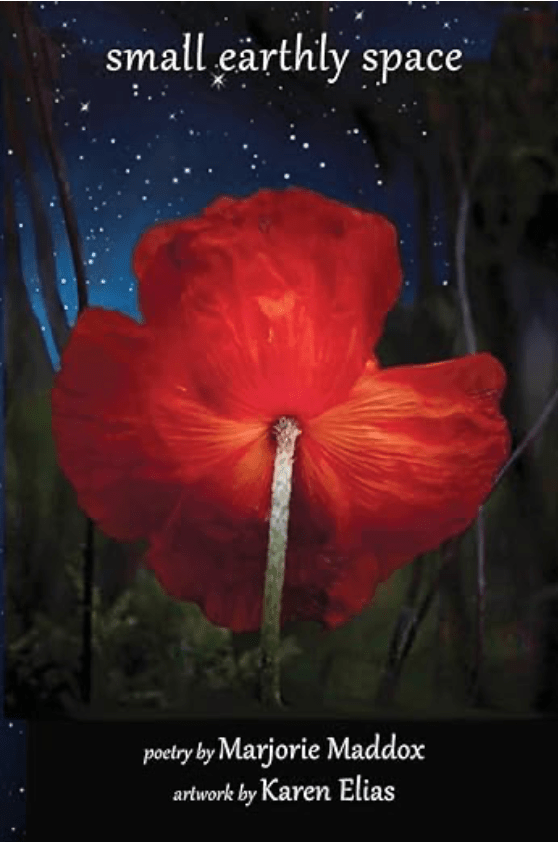
Marjorie Maddox’s new poetry collection, Small Earthly Space (Shanti Arts Publishing, 2025) accompanies a series of dreamy digital visual collages by artist Karen Elias. Together, they depict a world not only fraught with imminent disaster, but one of beauty and hope. Maddox’s poems, inspired by Ali Smith’s lyrical novel, Companion Piece, place the curlew as a central, and recurring figure in the collection. Like a canary in the coal mine, Maddox’s curlew warns about the environmental devastation that is happening now.  

Known as the bringer of bad omens in Celtic folklore, forecasting bad weather, sorrow and death, the curlew, with its haunting cries, is also associated with the passing of seasons, rebirth, and renewal. “When our planetary conditions render even the saints tongue-tied and stuttering,” Maddox writes in the introduction, “the bird appears as guide, as psychopomp, as Beatrice in a kind of Dantean descent,” requiring us to “grow humble,” to “pass through the smallest of doors” and experience “the long, slow burn of loss.”  

Maddox’s poems are also deeply religious and read like prayers or holy visions. “How far would you go for wisdom?” Maddox asks in “Dive Down,” where she links humanity’s fate with nature’s and invites the reader to dig deeper and discover those epiphanies hidden in daily life, to find “one drenched syllable of rescued hallelujah.” In “Tightrope Walker,” we are instructed to “unzip all our divisions” and position ourselves on the “fine line that binds sky and dirt” and “welds together every season of belief and reason.” 

Known as the bringer of bad omens in Celtic folklore, forecasting bad weather, sorrow and death, the curlew, with its haunting cries, is also associated with the passing of seasons, rebirth, and renewal.

“Still Life: 1950s,” which opens section two, leaves nature and moves inward. The poem speaks of the fraught relationships of generations and the societal demands placed on mothers. “What can be said to the perfect mother?/Poised, she smiles beautifully but doesn’t hear.” In the accompanying collage, Karen Elias has created a powerful scene: the mother as a stone statue, sitting in on the sofa, elegant and demure, yet deaf to the needs of her daughter, who crouches on the stairs, doing her best to “protect… this beautiful sculpture,” not daring to speak unpleasant syllables, words that might cause her mother grief, or destroy the facade of their silent perfection. 

Other poems speak of the uncertainty and allure of the unknown that lies just outside the boundaries of our perceptions and manicured lawns, and the anxiety of returning to a home that only survives in memory: a place full of phantoms, where picket fences turn to stone. “Strange Light,” the eerie black and white photo collage that accompanies the poem “Calling Hours: August 21, 2017,” has a bed that floats on water in an otherwise empty room. From the window the eclipsed sun, like a voyeur, peers in. The poem uses the eclipse (the first total eclipse since 1979 to be visible from anywhere in the U.S. mainland) as a metaphor for the death of a loved one. “What can harm us lingers there/beneath the bright posthumous display/of the body…” Maddox writes, noting that “looking directly or too long/into the face of the loved” could, like looking at the eclipsed sun, permanently harm us. 

Throughout these poems of impending environmental and spiritual doom, a tempered hope permeates, a hope made possible by our faith and resilience, as well as our willingness to accept blame for the state of the world. In “Snapshot,” the dead arise and call for mercy. “Will you listen?” Maddox asks, like the prophets of old. “Will I?” she responds, before observing, “The earth/waits impatiently.” 

The curlew returns in “The Witnesses” to see the devastation wrought by the 2018 wildfire in Curlew, Washington. “Smoke rewrites the sky,” Maddox writes, as “Flames attack its map and habitat.” The collection ends with a nod toward Emily Dickinson. “The curlew is the thing,” Maddox states in “Hope Is the Thing with Feathers.” It is “The beak wildly waving its frayed/but flapping ribbons/of persistence, of hope.” 

Throughout these poems of impending environmental and spiritual doom, a tempered hope permeates, a hope made possible by our faith and resilience, as well as our willingness to accept blame for the state of the world. 

The poems in Small Earthly Space are a dire plea to take up arms against the “Chaos/of this human-caused catastrophic carnival.” With an “ecstasy of words” Maddox dares us to “Embody the action of verbs” and “Delete the expected ending,” to imagine a world where “IF” still exists. In Maddox’s vision, however, imagining isn’t enough. It is our responsibility in the here and now to do something to ensure a better future, a world brimming with the “intoxication of possibility.” 


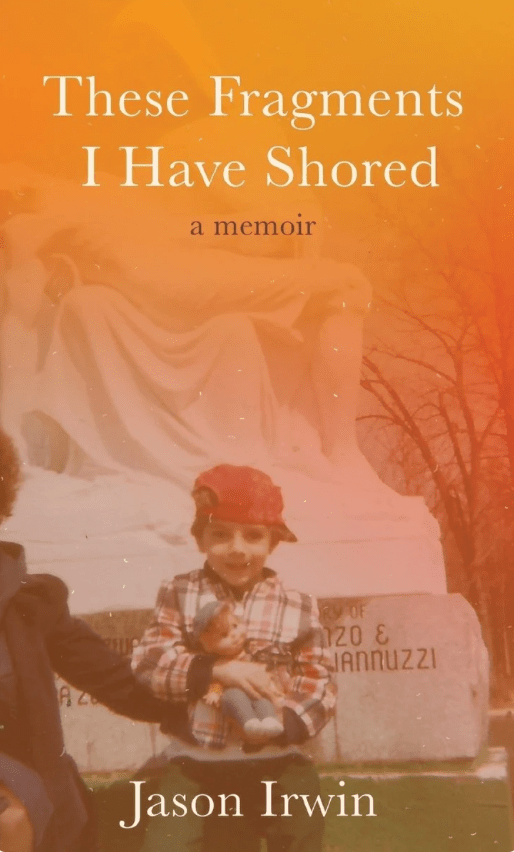
Jason Irwin is the author of three full-length poetry collections, most recently The History of Our Vagrancies (Main Street Rag, 2020), and the memoir These Fragments I Have Shored, forthcoming from Apprentice House Press. In 2022 he was a Zoeglossia Fellow and took part in the Poetry Foundation’s Disability Poetics Project. 

https://jasonirwin.blogspot.com/


Small Earthly Space

Poetry by Marjorie Maddox; Artwork by Karen Elias

Shanti Arts $28.95


Like this post? Comment below or on my FB page. And please share with your friends and social network. 

Are you a Rust Belt writer interested in seeing if your own post, or author interview, or book review might be right for Rust Belt Girl? Hit me up through this site’s contact function.

Check out my categories above for more guest posts, interviews, book reviews, literary musings, and writing advice we can all use. Never miss a post when you follow Rust Belt Girl. Thanks! ~Rebecca
Enter your email address to subscribe to this blog and receive notifications of new posts by email.

Ohio is Ohio, and I love it

You are forgiven if you’re not up on the middle school slang that has redefined the word “Ohio” (my beautiful native state) as cringey or weird.

Does that mean the writing from Ohio authors or about Ohio places is also weird? In some cases (and often my favorite cases) yes.

It has been more than a minute, Rust Belt Girl followers, and I appreciate you for hanging on. Busy days around here with a book project going and essays popping up here and there. And of course there’s work-work to contend with. And my teenagers who keep me hip (surely that’s not a word they’d use) through their generation’s reinvention of language, music, and fashion. (A whole wardrobe of hooded sweatshirts and oversized black jeans, anyone?)

But I’m thrilled to share with you my latest essay, which is part essay and part book review. The book? Matthew Meduri’s debut novel Collegiate Gothic. Part satirical campus novel, part crime procedural, and part Italian architectural treatise, this one is quite fun (and, yes, a little Ohio.)

I’d love it if you checked out my essay–“Campus Weird: Collegiate Gothic Skewers Academia (and Ohio) in Fine Form” at Belt Magazine. (Bonus points for identifying the Ohio college campus building in the photo. I only know because a friend told me.)

Then, go check out Matthew’s novel over at Bordighera Press.

What have you been reading and writing lately, readerly and writerly friends?

Hankering for Rust Belt author interviews, book reviews, and more? Check out my categories above. I hope you’ll follow me here, if you don’t already, so you never miss a (quite infrequent) post. Thanks! ~Rebecca

Enter your email address to subscribe to this blog and receive notifications of new posts by email.

Lit Fest ’24 Rundown

Or, the post you’ve been waiting for, maybe.

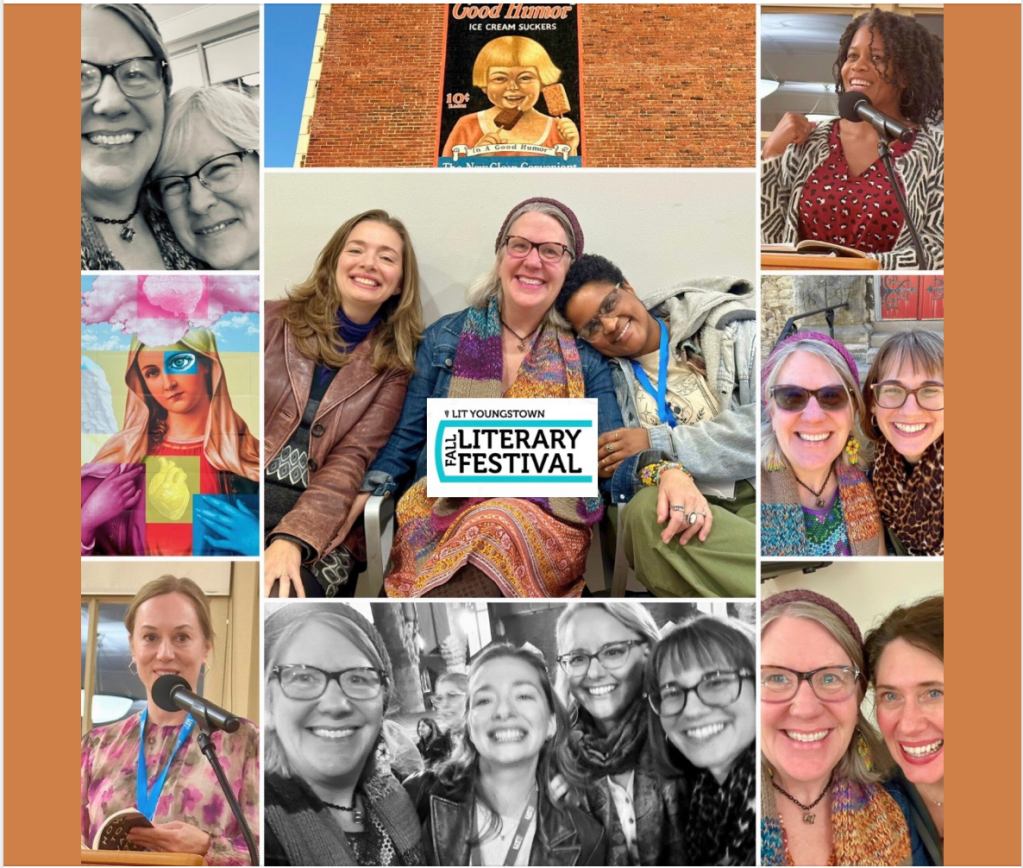
Last month, I attended Lit Youngstown‘s 8th annual Fall Literary Festival. From modest beginnings, the writing conference has grown to welcome some 200 attendees each year. Proud to be among them, I served on the planning committee for a couple years, have served as a session moderator, read my own creative work, sat on an editors’ panel, and, this year, engaged a featured writer in a conversation about her writing craft, process, and life.

I’ve met most of my writer friends through this literary festival. (You’re probably nodding your head, reading this. Such joy those in-between conversations, Elise, Susan, Jeremy!) Writers come to this conference for the genuine connections, the generative craft sessions, inspiring creative readings, and Youngstown pizza (or maybe that’s just me?). I was thrilled to walk away having experienced an abundance of all of the above again this year!

Can I entice you to make the trip, next year? Let’s hope this rundown does just that. (And, bring your friends.)

Day 1

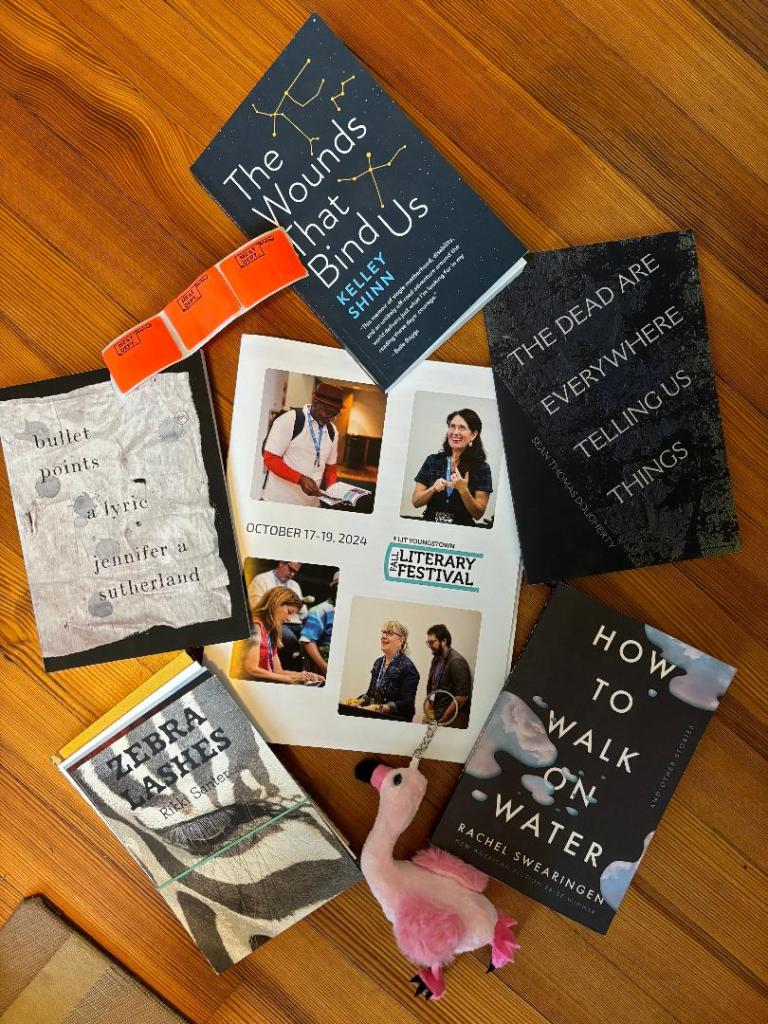
My first day of the festival began with meeting Rachel Swearingen, Chicago-based author of the award-winning story collection How to Walk on Water. After reading through her stunning book, twice, I had a feeling Rachel would have a lot to teach fiction writers, like me, about the craft of writing–and the inspiration behind it. Her morning session, “The More the Merrier: Juggling Multiple Characters in a Single Scene” tackled one of those age-old fiction-writing conundrums: how to make the dinner party (or other large group) scene sing, rather than sink.

Main takeaway: big group scenes can invite drama and suspense (think: Shirley Jackson’s “The Lottery”) but things can go awry when the writer hasn’t anchored the scene. Especially helpful to me was Rachel’s discussion of panning out and zooming in, as if we’re creating a scene on film. Featuring compelling examples from classic and contemporary stories, Rachel illustrated how great writers make scenes active to “write toward change.” For those of us (all of us?) who sometimes struggle to create a propulsive plot, these tips promised to help us give our stories the jhuzh they need!

One thing I love about literary festivals is the opportunity for literary escape. (And not just geographically.) I make it my mission to get outside my usual genres and comfort zones. I’m not joking when I say it’s only been a few years since I learned what ekphrastic writing was. So, taking part in an ekphrastic poetry workshop is far outside my usual lane. Of course, I jumped at the chance, when I learned that award-winning poet (and dancer!) Ama Codjoe was leading a workshop titled “Doorways into Ekphrasis” held at the Butler Institute of American Art, right across the street from our festival headquarters. (Confession time: I usually play hooky for one session of a festival or conference to visit a museum or gallery or other local arts hotspot; this time, I didn’t have to.)

Crowdsourcing time: help me find the name and artist of the piece I wrote about, please! Yes, I stared at a stunning piece of transparent, aqua glass sculpture–two rectangular columns, one larger and standing, one smaller, reclined–and didn’t write down the name of the piece or artist. The three minutes we took to examine the art we chose, without jotting a note–which should be 10 minutes, says Ama–honestly felt like hours. But this works, folks.

It’s fascinating now to look back at the notes I made after my examination and see how I went from describing the artwork’s material–ruined glass, panes shattered, shards–to the artwork’s position and pose–teetering, discarded, toppled–to what the pose might suggest: he has dropped his partner, who does not shatter, small glass tower sheared. Finally, I wrote a little in lines, inspired by the art:

How many the pains of art we 
layer and nudge and shimmy?
How shiny this body, this instrument,
until we lay it down, sharded,
but not discarded, dust to dust,
sand to glass to sand.

For my last session of the day, I caught up with a couple writers I follow on social media but had yet to meet in person, so I was thrilled (and got their books I brought from home signed–yes, I’m that kind of literary nerd). The prolific and super generous Sean Thomas Dougherty and Jennifer Sutherland (her debut collection is Bullet Points: A Lyric) are poets who spend some time writing in the “slipstream,” in between literary genres. They and Sarah Carson and Cynthia Maria Hoffman read from their work and talked about what writing in between genres (is it a poem, nonfiction flash, a prose poem?) means for their work and creative outlooks. I was so rapt by the writers’ creative readings that I didn’t take many notes, but I did take this gem down from Sean Thomas: “We push against genre” so forms can (paraphrasing here) dissolve and come together again to address neurodiversity, trauma, and more.

Day 2

I am often reluctant to read my creative work in public. Poetry is meant to be read aloud; not so fiction. However, I thought it might be instructive to read from a blog post I wrote here at Rust Belt Girl and then read the resulting scene that appeared in a story of mine published in Great Lakes Review last year. Like public journaling, I find blogging fertile ground for planting the seeds of story. Pro tip: keep your reading short and everyone will like it.

Thank goodness I read first, because there is no way I’d want to follow memoirist Kelley Shinn or poet Rikki Santer, whose readings were nothing short of incredible. Kelley is the author of the memoir, The Wounds That Bind Us, which I bought at the bookstore directly after her reading from it (I got the last signed copy: conference win!). Rikki read from her collection, Resurrection Letter: Leonora, her Tarot, and Me, which was inspired by the surrealist painter Leonora Carrington–fascinating stuff.

Later that day, Rachel and I joined “in conversation” in a small theater to discuss her stunning debut story collection and its influences: from contemporary art to cult film to a creepy old radio program. I wondered if she went searching for inspiration or if it found her (both). I wondered how her growing up with her family in rural Wisconsin impacted her work (a lot). I am seriously kicking myself for not recording this conversation, but also it would have been a shame to interfere with the intimacy of the conversation. Those of us who write know that it can be a sacred space, and so to share a deep conversation about the inspiration behind the writing work can also feel so meaningful–you hate to break the spell.

Craft takeaways from Rachel: her process involves repeating steps: drafting, reverse outlining, noting of turns in the narrative, noting of where things get sticky or stick out–and here, an earlier Rachel might have smoothed those over, but now she explores them–and an opening up and rooting out of those interesting sticky spots.

In chatting, Rachel and I discovered that we’re both at work on novels set in Nordic/Scandinavian places (must be a Midwest thing). We shared inspiring writers: mine, Dorthe Nors; hers, Jon Fosse.

I was also inspired by Rachel’s fierceness when it comes to trying new genres on for size–in her case, the screenplay.

And the last big takeaway from Rachel, which I jotted during our conversation and aim to never forget (ahem, there’s been a reason it’s taken me three weeks to write this rundown): “Writing is energy management.”

Oh, and there was so much more I missed–next year, I will clone myself–on editing and writing and querying and “unlocking plot.”

Thank you to Lit Youngstown director Karen Schubert and all who make it happen, year after year. And trust me, you won’t want to miss next year’s festival. Thank you also to Rebe Huntman for letting me use the beautiful photo collage she put together (now, go pre-order her gorgeous memoir).

Tell me in the comments, did you attend the festival? What was the highlight for you? What did I miss? Do you attend writing conferences in general, book fairs? What gets your creative juices flowing?

Hankering for Rust Belt author interviews, book reviews, and more? Check out my categories above. I hope you’ll follow me here, if you don’t already, so you never miss a (quite infrequent) post. Thanks! ~Rebecca

Enter your email address to subscribe to this blog and receive notifications of new posts by email.

Take that New York Times: My not-list of the best books of vague parameters according to me

If there’s anything readers like more than a Top Reads list, it’s complaining about a Top Reads list. Earlier this summer, the New York Times published “The 100 Best Books of the 21st Century.” Remember that? Of course you do. Reddit basically blew up that day.

We all had definite feelings about said list. Namely, that it didn’t include genre fiction and books of poetry, the latter an egregious omission imo. It did include several of my favorites: Tayari Jones’s An American Marriage (gutting), Helen MacDonald’s H is For Hawk (gorgeous), Jhumpa Lahiri’s The Interpreter of Maladies (instructive in the very best way), Cormac McCarthy’s The Road (what’s a synonym for gutting?), Ann Patchett’s Bel Canto (magnificent), Elizabeth’s Strout’s Olive Kitteridge (sleepy in the best way), Marilynne Robinson’s Gilead (transcendent), and Donna Tartt’s The Goldfinch (masterful and also long).

Only a couple have I discussed here at Rust Belt Girl: Robinson’s Gilead (cue the car-sobbing) and the novel that came in at No. 1 on the NYT list: Elena Ferrante’s My Brilliant Friend. None of the books on the list that I’ve read could be described as Rust Belt books, so I protest! But not really.

The wonderful thing about Top Reads lists is that we avid readers read them, get mad, and then the maddening lists beget more lists. Which is great. After we got mad at the NYT, they featured another story, “Readers Respond to the ‘Best Books of the 21st Century,’” chock full of the books that should have been on the first list. I saw Best Books lists featuring Appalachian Reads and reading roundups galore. All this leads me to believe that there are never enough lists, the lists are never long enough, and yet they are also ALWAYS incomplete. There’s room for my book and there’s room for your book on those lists. So get to it, writers!

Really, my blog is my ever-changing (let’s say “curated,” cuz that sounds fancy) list. I’d love to know what your favorite book from my list is. (How about from your list?) And then Goodreads is my dump—everything goes there, unless I really hated it, in which case I probably DNF’ed anyway. Are we connected out there at the dump?

Recent (ly read) books that stunned this Rust Belt Girl but aren’t necessarily Rust Belt books are basically the books I keep thinking about and talking about: A Line in the World: A Year on the North Sea Coast by Dorthe Nors (let’s all read more essays in translation!); Sonata: A Memoir by Andrea Avery (lyrical, musical, and propulsive); The End of Drum-Time by Hanna Pylvainen (interestingly atmospheric); The Beginning Was the End: Devo in Ohio by Jade Dillinger and Akron’s own David Giffels (so that’s what New Wave was all about!?); and Shuggie Bain by Douglas Stuart (gutting x 12—what exactly is wrong with me?).

You see, once you get started list-making, it never stops.

Looking for a review or an author review–or even a little writerly advice (I try to take myself)? See my categories above. And find me on Goodreads, where I try to at least rank what I’ve read. Let’s be friends there and on FB and at all the places!

A review of Pittsburghese, Poems by Robert Gibb

By Karen J. Weyant

If you’ve ever visited Pittsburgh, you’ve likely encountered “Pittsburghese,” the local dialect of the people of Pittsburgh that distinguishes residents of the city from their Rust Belt neighbors. Pittsburghese is partially defined by dropping the words “to be” from certain phrases, such as The car needs washed instead of The car needs to be washed. It’s using words such as pop instead of soda, or buggy instead of shopping cart. Sure, many linguists may say that these examples are not pure Pittsburgh (my mother, for example, who grew up in rural Pennsylvania, always called shopping carts, buggies). But there is one word that always seems to be on the lips of Pittsburgh citizens and on the t-shirts found in city souvenir shops. That word is the second-person plural vernacular, Yinz, a contracted form of “you ones” or “you’ins.” 

It’s the word Yinz that echoed through my head as I read the latest poetry collection by Robert Gibb. Pittsburghese is an elegy for a place: Homestead, Pennsylvania, a borough located about 11 miles southeast of Pittsburgh. Homestead is rich with labor history, but like so many places, saw a huge economic decline in the 1970s and 1980s. With every image, I am reminded of the tiny Rust Belt town of my youth and the importance of story and memory.

The poems in Gibb’s collection take us through an industrial world struggling to survive, and thus, the overarching images in most of these poems have to do with debris, or rust – a word that is celebrated in the poem “The Etymologies of Rust.” In this poem, the narrator describes the red-orange oxidation that appears in so many poems written about the Rust Belt as a “slow, remorseless kind of oxidation” that is “red, orange or tawny. The ferrous of flakes.” It’s a perfect description for those of us who know rust intimately as the corrosion that flakes metal mailboxes, parts of bicycles and chain-linked fences. For Gibb, the color of rust may be beautiful, but the effects of rust are devastating for it “cankers like corrosion on idled iron.”

Physical landscapes, often held together by rust, are at the heart of many of Gibb’s poems. As someone who grew up in a small factory town, I recognize some of the images while others are new. I don’t know the slag pots described in “Deskulling the Slag Pots,” but I know the descriptions of derelict phone booths and furniture being auctioned off from fancy buildings. No matter the image, there is a story. And for many readers, the stories may be a bit familiar. For example, in the poem “Elegy for the Park Theater” the narrator tells us about a time when “we’d be plunged into darkness/Beneath the beam of light figures rode/Onto the screen.”  In this world, the images are “mantis-like invaders from Mars” and “several avatars of Tarzan.” Later, he explains that the theatre became a roller skating rink. The transformation of space is common in places struggling to survive. In Gibb’s world, the theater turns into a roller skating rink – in my world, the single movie theatre found in my tiny hometown was turned into a hardware store before it was finally torn down. Other stories can be found in such poems as “The Play of Memory of Childhood Spaces,” where a narrator remembers a class trip to St. Anthony’s Chapel in Pittsburgh, or in “Voice-Over,” where the narrator recounts working different shifts in the mills when he “never got used to eating dinner/First thing in the morning, heading to work/At bedtime.” 

Clearly, the narrator is present in many of these poems, as if drawing from personal memory, but other poems reflect more historical memory, taking their inspiration from photos and works of arts. For instance, in “Homestead, ca 1929, Oil on Canvas,” the poet describes a John Kane painting where “Homestead/Is crowded rows of houses/Steel mills billowing/identical plumes of smoke.” The first lines may not be especially picturesque, but later, the poem captures the artist at work, “painting scenes on the sides of boxcars during the lunchbreaks/at work.” The final lines in this poem are a commentary on what is to come for this world, as the “slurry is just right” because the economy is “about to tank as if in another country.”  In another poem, “Worker, Steel Mill,” Gibb focuses on the human being seen in a 1955 photograph by W. Eugene Smith, by explaining that at first, he is “anonymous in those glare-filled goggles.”  Later, in the poem, however, there is praise for this man who is “garbed/to be garbed in fire” and who works for “weeks have been divided into shifts” all because “of the cost of production.” 

In spite of my love of story and image, my favorite poem is one that interrogates etymology, echoing the title of the collection. In “Pittsburghese” the poet explores the word jaggers which is “vernacular for brambles.” Jaggers are thorns, and if one is caught in jaggers, it is painful, but it is very possible to lift the thorns away. Still, there are the ones that “splintered beneath your skin” that are the most painful, even when the jagger is removed. There is a strong metaphor here: pain may be left behind, even when the source of that pain is removed, but resilience stands. And with this resilience is some kind of hope for a less painful future. It’s this type of hope that is found in every poem in this collection – even those poems that recall painful pasts. 

In the preface to this collection, Anita Skeen, Wheelbarrow Books Series Editor, quotes Thomas Wolfe by saying “You can’t go home again.”  She explains, “I would argue that in poems and in memory, you can.”  Skeen goes on to say that the images remind her of her childhood home located near Charleston, West Virginia. Anyone who grew up in the Rust Belt will be reminded of home, and perhaps inspired to write about that home through the lens of history, memory, and image.


Pittsburghese

Poems By Robert Gibb

Wheelbarrow Books $15.95


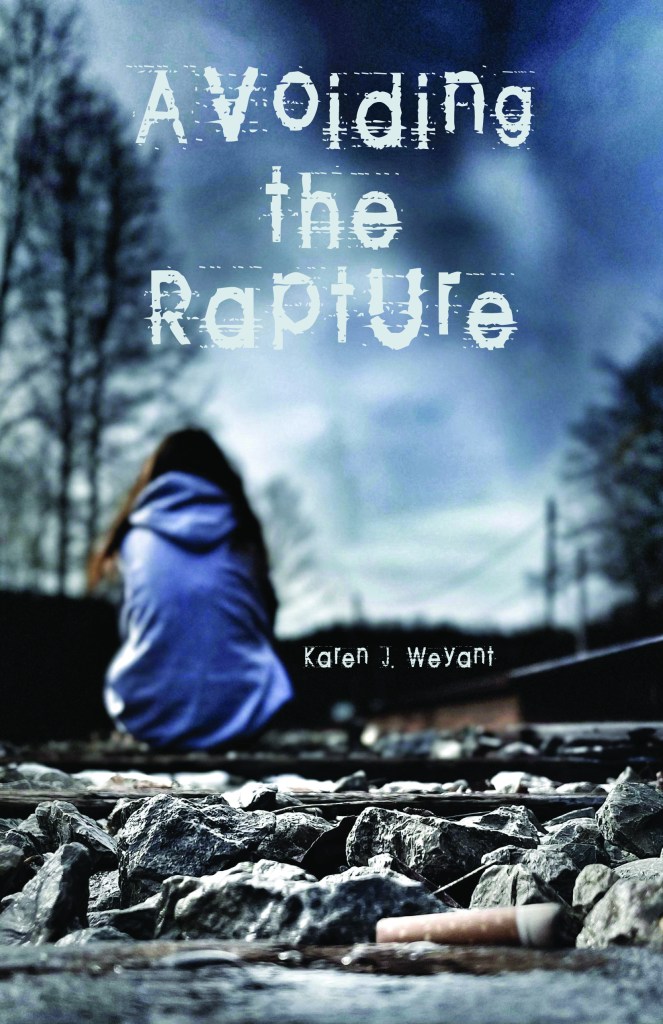
Karen J. Weyant‘s poems and essays have been published in Chautauqua, Crab Creek Review, Crab Orchard Review, Cream City Review, Fourth River, Lake Effect, Rattle, River Styx, Slipstream, and Whiskey Island.  The author of two poetry chapbooks, her first full-length collection is Avoiding the Rapture. She is an Associate Professor of English at Jamestown Community College in Jamestown, New York.  She lives, reads, and writes in Warren, Pennsylvania.

A review of Avoiding the Rapture by Karen J. Weyant

By Marjorie Maddox

In Karen J. Weyant’s first full-length book of poetry, Avoiding the Rapture, there is no avoiding the evocative and sometimes contradictory landscape and convictions of the Rust Belt. In a town defined by its bars and churches, river and railroad tracks, closed factories and forbidden swimming holes, Weyant gives us both the desire to leave and the need to cleave. No matter our background, she makes this space ours—ownership and rebellion a familiar if not always pleasant home.

We begin with belief so strong it takes hold of a town—“Every girl I knew got religion/at the same time they caught Disco Fever.” Salvation is a type of escape to be embraced or rejected. “Facing uncertain futures,” the poet explains, “we waited to be whisked away in [both kinds of] sparkle.” And yet by “avoiding the rapture,” she counters, “[w]hen everything disappears, everything you see will be yours,” a mixed motivator for a place that when you aren’t reveling in it, you’re scheming a quick departure.

Within this back-and-forth identity quest, the narrator looks for signs and visions in roadkill rising from the dead, in Jesus in dryer steam at the local laundromat, in “one of the Horsemen/in the hind leg of a Holstein cow,” and in “saints/in real estate signs buckling under buckshot.” There are also “man-made miracles” where the narrator­­ “dump[s] grape juice into Gallagher Run,/hoping the muddy swirl would turn into wine,/. . . [or] pretend[s] the stale angel food cake. . . was really manna.” 

Woven throughout the book is a sequence that often begins “The Girl Who…” and perceptively defines identity. “The Girl Who Parted Mill Creek with Her Toes” offers nature as one way to “ignore the grown-up talk/of factory closings, lost jobs, and foreclosures.” This path also allows for leaving the church while retaining its lore and, at times, alure. For example, the post-industrial mass exodus of families is linked to the narrator’s Exodus-like parting of the creek with her toes. Likewise, in another poem, an abandoned and deteriorating church evolves into a new type of sanctuary.

Throughout, insects swarm, dazzle, or sting. There is “the drone/of factories in a metallic round of cricket song” and “june bugs hurling against back doors.” Not unlike the town’s inhabitants, in “To the Girl Who Talked to Summer Insects” “[s]ome insects were silent, others angry or lost.” Elsewhere, mayflies—“ghost stories [come] alive”—become reminders “we lived among the dead.” The plague-like buzzing of blackflies usher in arguments over money and heat. “June/ [is] heavy with horseflies. . . .cicada shells. . .cracked under our feet.” In dreams, butterflies get “caught in backyard grills”; in real life yellowjackets die in/escape from a flaming nest; the narrator rescues grasshoppers from a ball of ice. Eventually, end-of-the-world prophesies drown out miracles.  

In this way, even the word “miracles” begins to lose its mystery. In family life, the word becomes synonymous with describing impossible situations: a truck that “would need a miracle to get through the summer,” a sister who “would need a miracle to get through high school,” and a father who “would need/a miracle to get a job at his age.” 

As tensions increase in the run-down town, so does the narrator’s desire for flight. “[W]e planned our new world. . . . we knew we had to leave,” she recalls. The coming-of-age departures are small and large: heels, makeup, drinking, boyfriends with the nicknames of beers, the recognition that, on many levels, “every ripple has danger” and that [r]eal girls learn to toughen/the soles of their feet. . . .Accept . . .fate.” 

That doesn’t mean, however, that there aren’t moments of daring and flight. Through sheer determination, the narrator “[spins] in the August heat until [she] could fly.” Bravely, she catches bees or reaches out to touch a two-headed calf. We watch as her father helps her bury a dead bird. Always drawn to water, she listens to rivers talk and “sw[ims] late at night/in the gravel pit pond.” She counsels, “Follow the fireflies.”  

In these ways and others, Avoiding the Rapture whoops and hollers with independence and survival. It is a stirring, well-crafted ode to place, where “girls still ride the beds of pickup trucks . . . .[and] learn how to catch maple seeds/in their teeth, and how to spit them out.” It is a depiction of individuals who, even if they don’t learn to fly, learn to balance while wind “comb[s] through their long hair.”

Here’s to the young women of the Rust Belt, fiercely and perceptively portrayed in Karen J. Weyant’s new collection, Avoiding the Rapture.  


Avoiding the Rapture

By Karen J. Weyant

Riot in Your Throat $17


Karen J. Weyant‘s poems and essays have been published in Chautauqua, Crab Creek Review, Crab Orchard Review, Cream City Review, Fourth River, Lake Effect, Rattle, River Styx, Slipstream, and Whiskey Island.  The author of two poetry chapbooks, her first full-length collection is Avoiding the Rapture. She is an Associate Professor of English at Jamestown Community College in Jamestown, New York.  She lives, reads, and writes in Warren, Pennsylvania.


Professor of English at the Lock Haven campus of Commonwealth University, Marjorie Maddox has published 14 collections of poetry—including Transplant, Transport, Transubstantiation (Yellowglen Prize); Begin with a Question (International Book and Illumination Book Award Winners); and the Shanti Arts ekphrastic collaborations Heart Speaks, Is Spoken For (with photographer Karen Elias) and In the Museum of My Daughter’s Minda collaboration with her artist daughter, Anna Lee Hafer (www.hafer.work) and others. How Can I Look It Up When I Don’t Know How It’s Spelled? Spelling Mnemonics and Grammar Tricks (Kelsay) and Seeing Things (Wildhouse) are forthcoming in 2024. In addition, she has published the story collection What She Was Saying (Fomite) and 4 children’s and YA books. With Jerry Wemple, she is co-editor of Common Wealth: Contemporary Poets on Pennsylvania and the forthcoming Keystone: Contemporary Poets on Pennsylvania (PSU Press) and is assistant editor of Presence. She hosts Poetry Moment at WPSU. See www.marjoriemaddox.com 


Rebecca here, with many thanks to Marjorie for this beautiful review of Karen’s poetry collection. I can’t wait to dig in! What are you reading and writing this month, as we start working our way through the new year? Let’s discuss in the comments.

Are you a Rust Belt poet or writer? Do you write book reviews–or conduct interviews of Rust Belt authors? If so, think of Rust Belt Girl for a guest post, like this one. And check out the handy categories above for more writing from rusty places.

Find me on FB and on IG, Twitter, and Bluesky @MoonRuark

And follow me here. Thanks!

Enter your email address to subscribe to this blog and receive notifications of new posts by email.

Welcome to the 2023 Rust Belt Girl round-up…

I interrupt this Covid haze–mine, yes, I was gifted the virus for Christmas–to present a round-up of all the Rust Belt Girl goodness in 2023, made possible by you amazing readers and followers. (For you math and science types, here are your facts and stats):

2023 total views: 5,069, from 3,575 viewers, for 231 likes, and 170 comments. Thank you for engaging!

Most Viewed Post (MVP) 2023: A stellar review of Jason Irwin’s poetry collection, The History of Our Vagrancies, by Marjorie Maddox (Side note: I met Jason in person for the first time and reconnected with Marjorie in October at the Fall Literary Festival in Youngstown.)

2nd Place for MVP 2023 (and tops for most–and most heartwarming–comments): “Mad Dog, “Steel Poet,” Tim Russell, a literary reflection by poet and publisher Larry Smith. Thank you to Larry for being such a pillar of this literary community. (I also met Tim’s widow, Jodi, for the first time, in October–there were hugs!)

3rd Place for MVP 2023: The Rabbit Hutch‘s Rust Belt Renaissance, a review by Emma Riva, an author and art writer living in Pittsburgh, who is also the founder and EIC of Petrichor, Pittsburgh’s art scene magazine. Check it out!

Most Viewed Author Interview: My interview with John W. Kropf, author of Color Capital of the World. (Though John and I both live in the Greater Washington D.C. area, as luck would have it, we were in Ohio at the same time earlier this year, and I was able to meet him and his lovely wife Eileen at a reading and book-signing not far from where Color Capital takes place.)

And don’t miss all the other 2023 bloggo goodness, including interviews with Mitch James, author of the rural noir novel Seldom Seen; Valerie Neiman, author of YA novel The Lonely Backwater; and David Giffels, author of The Beginning Was the End: Devo in Ohio. (This makes three interviews with David at Rust Belt Girl, some kind of interviewing trifecta!)

Then there was John W. Miller’s beautiful guest essay: From Belgium to the Rust Belt. (In a fun coincidence, John and I ended up in the same storytelling course this fall–the writing world is a small one.)

And in other fun blog news, my 2022 review, Enlarging “Rust Belt lit” and Megan Giddings’ The Women Could Fly, was picked up by Belt Magazine in 2023.

2023 felt pretty good and creative outside of the blog, too: I published a short story and a poem(!) and started querying a novel (a couple of you blog followers and friends beta-read!). I am infinitely lucky and grateful to cross paths with as many of you as I do–even if only on these interwebs.

I think we deserve a happy and healthy 2024 with all the writerly and readerly connections we desire. Those of you local to these D.C./Baltimore parts, find me on January 14 at EC Poetry & Prose’s Salon Series. Thank you again to Patti, my fellow blogger–and extraordinary poet and spoken word artist “little pi”–for inviting me to read!

As for Rust Belt Girl, keep in mind that I love a guest post–author interview, book review, or essay on the writing life and beyond–so hit me up.

Want more Rust Belt writing, book reviewsauthor interviewswriting adviceessaysguest posts, and more in your life? Follow me here. Thanks! 

Oh, and if you want to check out my reading superlatives for 2023, they’re at Goodreads. Or, find me on FB. Share your top posts or top reads for 2023 in the comments. I’d love to hear about your writerly, readerly year.

(Off to nap…again.)

*free header image courtesy of Pexels