Maybe each generation has its gaze.
If the Boomers looked outward and upward, Gen X-ers looked inward. Millennials examined the male gaze, the feminine gaze, the queer gaze. And, lately, Generation Z is perfecting the Gen Z stare. There are memes aplenty, but basically the Zoomer’s stare is an unblinking, powerfully defiant straight-in-the-eye gaze, less glare and more disaffected showdown. (I know it well—I have teens.) It’s a staring contest of disdain that flies in the face of the lowered-eyed, modest, “demure” vibe of 2024. In response to the Gen Z stare, the trad-fluencers—those pop culture paragons of all that is modest and retiring—would, indeed, demure. (Or pretend to.)
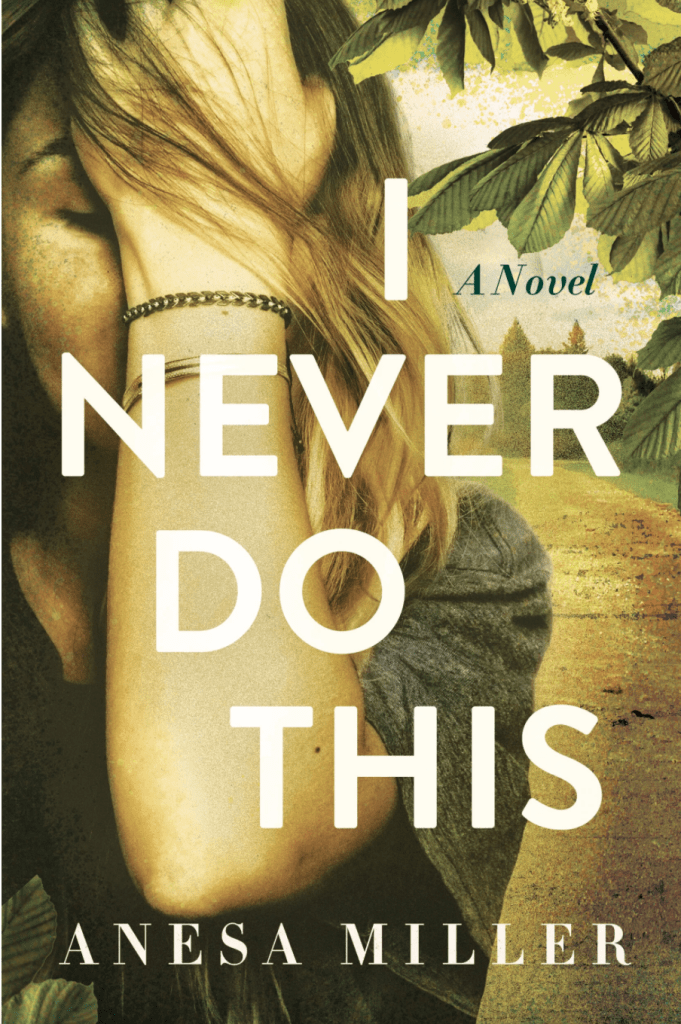
I’ve begun to consider the Gen Z stare as a kind of protest—particularly when employed by young women. I thought of this as I read the novels of Anesa Miller, an Ohio writer “exploring the lives of Midwestern white women in our polarized era,” according to her Instagram profile. Her second novel, I Never Do This (Sibylline Press, 2024) is set in modern-day small-town southern Ohio, and in rural Missouri. Here’s a taste of Miller’s description of the Ohio setting:
September in southern Ohio is a green world glazed in sun-honey wrapped in sweet air. Nothing had been touched by fall so far, but every color filled my eyes like something fresh from the day of creation. We were in flat country along that road. Deep-green trees lined the horizon, and the bean field across the way glowed ripe and tawny with yellow butterflies fitting over top. The sky cupped everything in its bottomless dome. A caravan of clouds drifted by real slow to the south, so blinding white I could hardly keep my eyes on their shifting shapes—
Rather than a coastal story that reads New York City gritty or Los Angeles sunny, Miller’s story feels decidedly Midwestern, the nuances of a place intent on establishing its personality, however contradictory—fiercely independent and forever loyal, traditional and broadminded, honest but (of course) nice. What’s freeing about writing from a, say, Ohio setting is that there isn’t a fixed archetype. After all, Sherwood Anderson’s Winesburg Ohio, often lauded as the Ohio novel is barely more than 100 years old—and what’s a century when talking literature?
What is Ohio literature? What is an Ohio novel? These are questions Miller has asked herself. Her own two novels begin to answer these questions.
Our first-person main character in I Never Do This, 27-year-old LaDene Faye Howell tells her story in a page-turner of a (nearly 200-page) novel written as a monologue delivered to the police who are holding her in custody. LaDene confesses the details of the crime spree she engaged in with her paroled cousin Bobbie, and at the same time she reveals the pivotal secret of her past. The dual mystery twists and turns as she unwinds it in the telling, but the pacing never stalls. Our narrator’s voice is a fierce and fiery one.
Setting the scene of her Ohio upbringing, LaDene describes her clashing ancestors, the Twist-Howells: the Revolutionary War-era Howell line, who made their early fortune by establishing the area’s first ferry crossing; meets the Twist line, who made their way in the world through “scale-tipping, tax-dodging, all kinds of scamming, gambling. That’s what they get up to,” she says. “And by all accounts, they’re not one bit ashamed of it.”
I’m reminded of that famous warring family, the Hatfield-McCoys, and of the joke map of Ohio that circulates on social media, which labels the state (going counterclockwise from the northwest): “corn, The South, West Virginia, and Hillbillies.”
While LaDene is no hillbilly, she was not savvy enough at just 15 years old to get out from under her father’s performative-religious thumb before she gets “in trouble,” as we might have called an unplanned teen pregnancy when we were growing up. Of her secret past, LaDene describes being swiftly sent by her parents to a home for girls in the Kansas City hinterlands to wait out her pregnancy with other girls like her, girls from religious families embarrassed by a daughter’s mistake. Upon arrival at the home, LaDene dons the modest uniform of drab top and calf-length denim skirt and learns the ground rules. Among many other constraints: “We were especially not allowed to chat idly with each other, speak without permission, talk back to elders, look anyone in the eye unless so instructed…” To meet someone’s eye would have been a sign of disrespect, she tells the reader.
The U.S. did not have Magdalene Laundries, brought to our literary attention by Claire Keegan’s bestselling novel Small Things Like These, in the way that Ireland did. Indeed, the Catholic Church in Ireland kept thousands of girls in work camp-like conditions through their pregnancies; while the Irish story retold by Keegan as fiction—a story set in 1985—feels archaic, it is not (unless you yourself are Gen Z.) Likewise, reading Miller’s novel, it would be easy to dismiss such a tale as not of our time or place—culturally irrelevant. Surely this is someone else’s Midwest! But it is not, and you know what they say about history. What’s more, if the “trad” movement that has flooded my Instagram feed and my Catholic church pew of late has taught me anything, it’s that history repeats itself if we’re not careful. And everything old—whether better or worse—can be made new again.
Just take “demure.” Rather than being relegated to times gone by, demure had its own social media moment only a year or two in our rear view. What started as a joke meme took off, and young women were encouraged by influencers to be modest, reserved, mindful. The religious trad wife set took the demure trend to heart, adding the vibe to their already-restrictive aesthetic, and bowing even lower to the male gaze—whether from husbands, fathers, or religious. Heaven forbid (quite literally) we meet his eye.
Miller’s women characters are products of their time, place, and upbringing and are expertly—and lovingly—drawn. While these young women don’t overthrow the systems of power, neither do they bow to them for long. They are forever changed by the patriarchal society that would keep them down, yet they do surface. They also remain loyal to their places and people, however flawed. In this, the novels’ narratives feel true-to-life—and very, well, Midwestern.
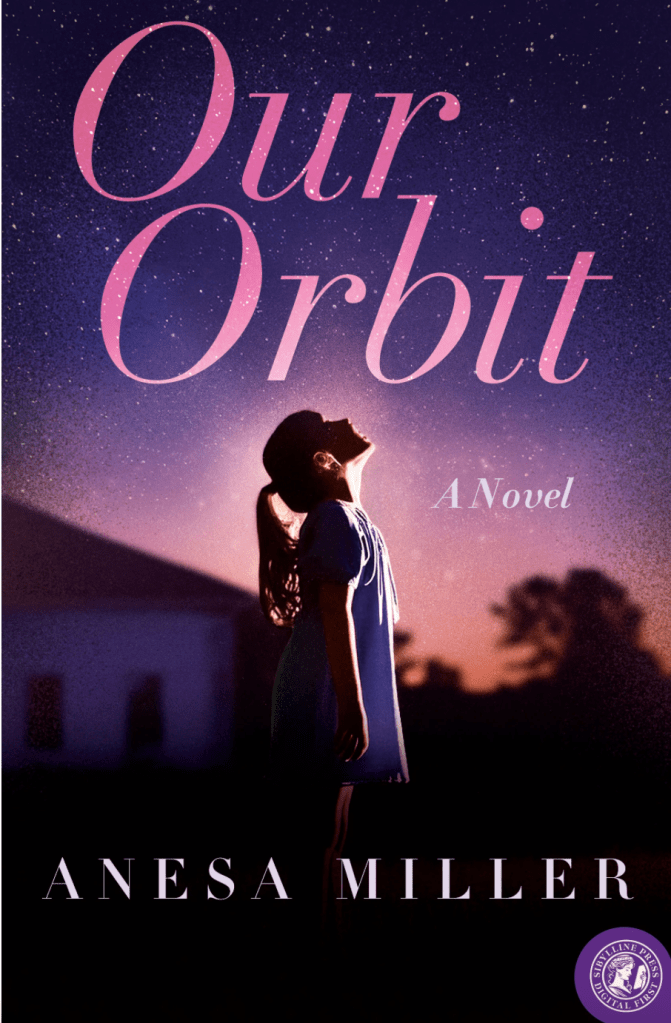
Miller’s debut novel, Our Orbit (Sibylline Digital First, 2024) is a multi-voiced novel that shines a light on a culture of guns, God, and tax evasion in Appalachian Ohio. The plot explodes out of the gate with the jailing of a father that sends nine-year-old Miriam Winslow to live with a foster family. Raised in a strictly religious home—one that abided by an evangelical purity code that demands that sinners must repent in dramatic acts of remorse—Miriam struggles to adapt to a more secular, mainstream culture. At the same time, her teenage sister Rachelle struggles to define for herself what womanhood will mean. All the while, their antagonist brother, teenaged Josh, aims to bring both sisters back into his destructive fold.
He is at once a mouthpiece for his jailed father and for the father in Heaven he purports to follow. He is a potent symbol of patriarchy’s power to void young people of agency—women and men alike. In scripture-laden language, he expresses his destructive frustration at his failure in becoming the authoritarian his father was:
Not a bird falls from the nest, Josh thought, unless my Father wills it … So there has to be a reason … The water was so high, why couldn’t it rise a little higher? One more heavy rain and the creek could flood the park, wash out the county roads, add its torrent to the Ohio River. It might not be so bad to see the world swept away with all its troubles.
Still, Miller refrains from naming good and evil in the characters she’s created. The propulsive story makes use of multiple perspectives that work to provide a multi-faceted view of lives straddling tradition and modernity, religion and the secular world, and the myriad ways we engage with others in love. (How vital to see young characters wrestling with love beyond the romantic!) In doing so, Miller creates an empathetic and memorable story that rings as true today as it might have a hundred years ago.
There are no simple plotlines and no easy answers—nothing that can be boiled down into a social media soundbite. There is searching. Late in Our Orbit, Rachelle muses on her emotions as she stands at the cusp of womanhood, what was “supposed to be the most important and mysterious event of a girl’s existence”: romantic love and sex. But perhaps what’s more important than the character’s rumination is that she allows herself the time and space for it: “The great thing about art class is that dreaming is permitted,” she thinks to herself, “… her eyes gazed out the window, her thoughts somewhere else.”
Through well-told, dynamic stories of family, tradition, faith—and self-love that flourishes outside scripture or strictures—Miller provides a window onto hope. All we need to do is gaze through it.
By Rebecca Moon Ruark
Like this post? Comment below or on my FB page. And please share with your friends and social network.
Are you a Rust Belt writer interested in seeing if your own post, or author interview, or book review might be right for Rust Belt Girl? Hit me up through this site’s contact function.
Check out my categories above for more guest posts, book reviews, interviews, literary musings, and writing advice we can all use. Never miss a post when you follow Rust Belt Girl. Thanks! ~Rebecca


As a former Ohioan and current Midwesterner, I appreciate stories set around here!
LikeLiked by 1 person
Thanks for reading, Mark!
LikeLiked by 1 person